







Abstract
This study aimed to develop theory on how Naturally Occurring Retirement Communities (NORC) Supportive Service Programs potentially transform social relationships within communities to promote aging in place. Data were analyzed from semi-structured in-depth interviews with 10 lead agencies representing 15 NORC programs in New Jersey. Results indicated that professionals seek to infuse capital within three domains of relationships: lead agency staff’s relationships with older adults, formal service providers’ relationships with each other, and older adults’ relationships with each other. This social capital potentially enhances the amount of community-based services and supports within a residential area, as well as their accessibility, appropriateness, responsiveness, and coherence.
Keywords
In response to present concerns over the inadequacy of health and social service systems to support adults in their own homes as they face social, physical, psychological, and economic challenges in later life (MetLife Mature Market Institute, 2010), an increasing number of initiatives have emerged with the aim of making communities more supportive of aging in place (Lehning, Scharlach, & Price Wolf, 2012). NORC Supportive Service Programs constitute one of the most long-standing models that have been implemented at the national level. NORC programs have been described as community-level initiatives that bring together older adults and diverse stakeholders within a geographic area with a large number of older residents (e.g., an apartment building, neighborhood, or town) to facilitate and coordinate a range of activities and services to promote aging in place (Altman, 2006; Bedney, Goldberg, & Josephson, 2010; Bronstein, Gellis, & Kenaley, 2011).
Despite enthusiasm for NORC programs as an innovative model for the future of home- and community-based service delivery (e.g., U.S. Senate, 2006), there has been relatively little research on the underlying processes through which NORC programs’ service and activities potentially promote aging in place. Systematically developing theories of change for initiatives such as NORC programs is especially important, given that there has been scant research on community change processes within gerontology (Austin, Des Camp, Flux, McClelland, & Sippert, 2005). Owing to a large and growing population of older adults in need of supportive services (Federal Interagency Forum, 2010)—in combination with demographic changes, such as smaller family sizes, that raise concerns over families’ ability to serve as the foundation of long-term care in the United States (Szinovacz & Davey, 2008)—there is increasing need to understand how communities can support optimal functioning in later life. Advancing theory on program processes is also critical for developing frameworks to guide evaluation research on the NORC program model and related initiatives. For example, to advance rigorous outcomes research on the NORC program model, one would first need to identify the implementation sites that have applied the theory of change underlying the model within their practice, with the idea that programs whose practice adheres to the theory are most likely to achieve the model’s long-term goals. Systematically developing theories of change for NORC programs is essential for advancing outcomes research in this way.
Brief History and Overview of the NORC Program Model
The NORC program concept began in 1986 in New York City within large apartment buildings where a significant proportion of residents were facing challenges around aging in place (Altman, 2006). Since that time, NORC program advocates have secured private philanthropic and government funds to support the expansion of the model throughout New York and to other regions in the United States (Altman, 2006; Bedney et al., 2010). To date, there have been approximately 100 NORC programs developed throughout the country, with about half located in the state of New York.
As a housing-plus-services program (Cohen, Mulroy, Tull, Bloom, & Karnas, 2007), NORC programs involve linking people to services in the context of where they live to enhance their quality of life. NORC programs are distinguishable from other place-based services for older adults (such as planned retirement communities) in that the programs are implemented within residential communities that were not intentionally developed as senior housing, but that still house a large proportion of older adults (Hunt & Gunter-Hunt, 1985). Whereas NORC programs originally targeted age-integrated apartment complexes with designated housing managers, NORC programs have expanded to include neighborhoods of single-family homes (Bronstein et al., 2011).
NORC programs are typically administered as part of a parent organization as opposed to constituting a freestanding organizational entity. The parent organization, which oftentimes is a community-based nonprofit social service provider (e.g., Jewish Family Services), serves as the lead agency and is responsible for developing partnerships, managing finances, and coordinating the services that are facilitated by the program (Vladeck, 2004). Common services include social services, health care services, educational and recreational opportunities, volunteer opportunities, and ancillary services (e.g., transportation and home repairs).
A Social Capital Perspective
In an overview report on NORC programs in New York, Vladeck (2004) described a key objective of the model as developing activities and services that “promote a reweaving of the social fabric” to support community-residing older adults (p. 6). Similarly, in reference to NORC programs across the United States affiliated with the Jewish Federations of North America (JFNA), Bedney et al. (2010) characterized the NORC program model as a “community-level intervention . . . to change the nature of a community and the manner in which services are provided . . . to have a positive impact on the older adults who live there” (p. 308). These descriptions suggest the relevance of theory on how community processes influence individual outcomes to formally develop theories of change for NORC programs.
For this purpose, this study draws on theory regarding social capital and health. Although conceptual and operational definitions of social capital vary (Adam & Roncevic, 2003), this study was guided by a broad definition of social capital as “a variety of different entities” that facilitate “productive” actions when people, groups, and social institutions transact with each other in particular ways (Coleman, 1988, p. S98). In other words, social capital is a resource rooted within relationships among people and yields value that would not exist without those relationships. Kiwachi, Subramanian, and Kim (2008) further describe two forms of social capital that have been emphasized within research on health specifically: (a) social capital that exists at a group level, which is accessible to all members of a cohesive social group, such as norms of trust within a residential community, and (b) social capital that is accessible to individuals based on particular relationships within their social networks, such as having access to others who can provide information and support. Others have differentiated among bonding, bridging, and linking social capital, which refers to the relative positions of the persons involved in the transaction (Szreter & Woolcock, 2004).
The concept of social capital has been utilized within empirical research to examine the extent to which aspects of social relationships and neighborhoods are associated with a range of individual health benefits, including physical health (Kim, Subramanian, & Kiwachi, 2008), mental health (Almedom & Glandon, 2008), and health behaviors (Lindstrom, 2008). Scholars have posited a variety of causal mechanisms through which social capital might influence individual outcomes, such as shaping norms that promote health-enhancing behaviors and healthy environments, as well as providing access to health-promoting resources and reciprocal support (McNeill, Kreuter, & Subramanian, 2006; Sampson, 2003). This theorizing provides a foundation for exploring how NORC programs potentially influence social relationships within a residential community to create social capital, or “value added” within social relationships, to benefit older adults specifically in terms of their ability to age in place.
Empirical Background
Most previous studies on NORC programs have focused on describing the types of services that they provide, as well as staff and residents’ perceptions of program outcomes (e.g., Bronstein et al., 2011; Cohen-Mansfield, Dakheel-Ali, & Frank, 2010; Ivery & Akstein-Kahan, 2010; MacLaren, Landsberg, & Schwartz, 2007). There has been relatively less research on the potential processes through which NORC programs aim to change relationships within communities, as well as how these processes relate to aging in place.
Several case studies, however, provide preliminary insights regarding some of the social–relational aspects of communities that NORC programs aim to change. Ivery and Akstein-Kahan (2010) examined the development of NORC programs in the Atlanta (Georgia) metropolitan area and described various ways in which lead agencies partnered with other service providers to strengthen services for community-residing older adults. For example, the lead agencies developed advisory councils through which partnering organizations helped develop and implement core activities. The lead agencies also developed formal working agreements with service partners to offer a greater number of services to community-residing older adults. Focusing on a program in New York, Cohen and colleagues (2007) similarly highlighted the central role of the program’s advisory board, which consisted of residents and other organizations that advocated for older adults’ unmet needs and that coordinated on-site services.
Previous research also has documented that NORC programs influence older adults’ relationships with their neighbors. In a survey of NORC program participants in Ohio, Anetzberger (2010) reported that “interaction with neighbors or making friends” was by far the most common theme regarding what participants liked most about the program (p. 7). Similarly, in a national survey of NORC programs, more than 80% of respondents reported that they knew more people and participated in more social events because of the NORC program (Bedney et al., 2010).
These findings provide preliminary insights on how NORC programs change social relationships within a residential community to support aging in place. Guided by a social capital perspective, this study seeks to build from this previous scholarship by using data from multiple NORC program sites, as well as a grounded theory analytic framework, to more formally and fully develop an empirically derived framework regarding how NORC programs influence social–relational aspects of communities to support aging in place.
Method
Sample and Procedure
This exploratory study used data from a statewide project on NORC programs in New Jersey (NJ), which is herein referred to as the “parent study.” Because the data collection for the parent study did not focus specifically on the topic of community change processes and social capital, the current study can be considered secondary analysis of qualitative data (Heaton, 2004). The parent study was developed in partnership among the investigator (study author), the NJ State Association of Jewish Federations, and the NJ Association of Jewish Family Service Agencies. The primary purpose of the parent study was to summarize how NORC programs have been developed and implemented in NJ. NJ is especially well suited for research on NORC programs given that organizations in the state have received a greater number of federal grants to implement the programs relative to other states (JFNA, 2010). This circumstance, in combination with the state’s relatively small size, allowed the investigator to gain access to many implementation sites that varied from each other in terms of their program and community characteristics (see Table 1 for a summary).
Program and Community Characteristics of NORC Supportive Service Program Sites in New Jersey.
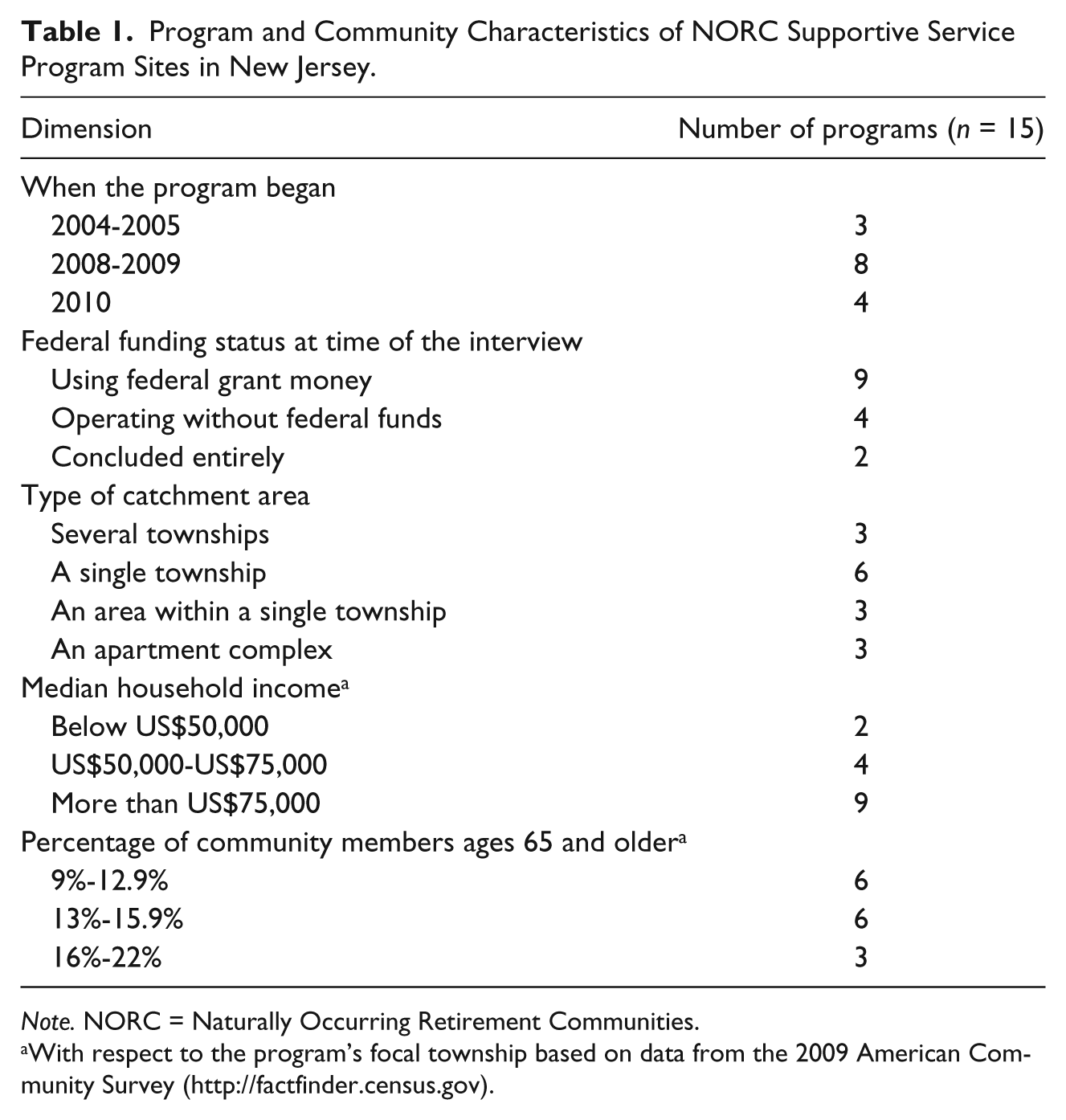
Note. NORC = Naturally Occurring Retirement Communities.
With respect to the program’s focal township based on data from the 2009 American Community Survey (http://factfinder.census.gov).
The study’s investigator conducted interviews with representatives from 10 lead agencies (Greenfield, 2011). These 10 agencies constituted all lead agencies of NORC programs in NJ, with the exception of two organizations that did not respond to requests to participate and whose programs had already closed at the time of data collection (personal communication, J. Toporek, May 3, 2013). All but one agency (which constituted a Jewish Federation) were faith-based (Jewish) multi-service, nonprofit organizations, typically working in partnership with their local Jewish Federation to develop and implement NORC programs. All projects aimed to benefit older adults of diverse religious backgrounds. Because four of the 10 agencies had served as the lead agency for NORC programs in more than one community, the 10 agencies collectively represented 15 programs.
The researcher conducted a single interview at each of the 10 lead agencies, and nearly all interviews were attended by the lead agencies’ executive director and the staff person(s) assigned to the program. Informed consent was obtained from each professional who participated in the interviews, which were conducted from August through November of 2010 and lasted approximately two hours. To maximize believability of the data, which refers to ensuring that participants are honest and open in their responses (Rubin & Rubin, 2005), the investigator communicated to participants at the beginning of the interview that no identifying information would be included in reports without prior approval.
Each interview was audiotaped, and 9 of the 10 were transcribed. Because the first interview was used for practicing and revising the interview protocol, and the initial protocol was significantly altered for subsequent interviews, data from the first interview were not transcribed, although detailed notes from the interview were used in the analysis. The transcripts were entered into Atlas Ti (version 6.0) for analysis. The study received institutional review board approval prior to data collection.
Instrumentation
The parent study used an interview guide approach, which involved identifying topics to be covered in advance, yet allowed the interviewer flexibility to formulate, sequence, and make choices about which information to pursue in greater depth (Patton, 2002). As a qualitative study, questions intended to solicit open-ended responses that allowed individuals to express their views in their own words. The content of the interview protocol was based on input from practice leaders, as well as a review of research on the NORC program model. Sample topic areas included program goals, community characteristics, and activities and services.
Data Analytic Approach
This study used a grounded theory approach, which has been developed as a general framework for generating theoretical concepts and their inter-relations directly from data. The author conducted a thematic analysis through a multi-phase and iterative process of coding, which involved applying interpretive labels that assign meaning to pieces of information to discover patterns across qualitative data (Charmaz, 2006). In the initial phase of coding, the researcher generated codes that were closely grounded in the participants’ own words. Although sensitizing concepts from a social capital perspective and the existing literature on NORC programs were used, in part, as a lens, all data were considered potentially theoretically relevant. In the next phase, the researcher engaged in focused coding, which involved generating codes at a more abstract level of meaning that related more directly to this study’s research question. At the third stage, the researcher engaged in axial coding, which focused on describing ways in which themes derived from the second stage of coding related to one another. At the last stage of analysis, the researcher drew on memos (which were developed throughout the data analysis) and used the constant comparative method to explore how the themes related to each other, as well as their patterns of emergence across interviews (Glaser, 1992). The themes were woven together to create a cohesive, empirically grounded framework to describe how NORC programs influence social–relational aspects of communities to promote aging in place.
To ensure credibility, which refers to agreement between the views of the participants and the researcher’s interpretations (Padgett, 2008), the researcher engaged in a member check. The member check was conducted at a regional meeting of NORC program coordinators following data collection, at which time the researcher presented preliminary findings. Results from the member check affirmed that the researcher had identified the primary themes from the interviews relevant to this study’s research question and had connected the themes together into a framework that accurately reflected the professionals’ perspectives.
Results
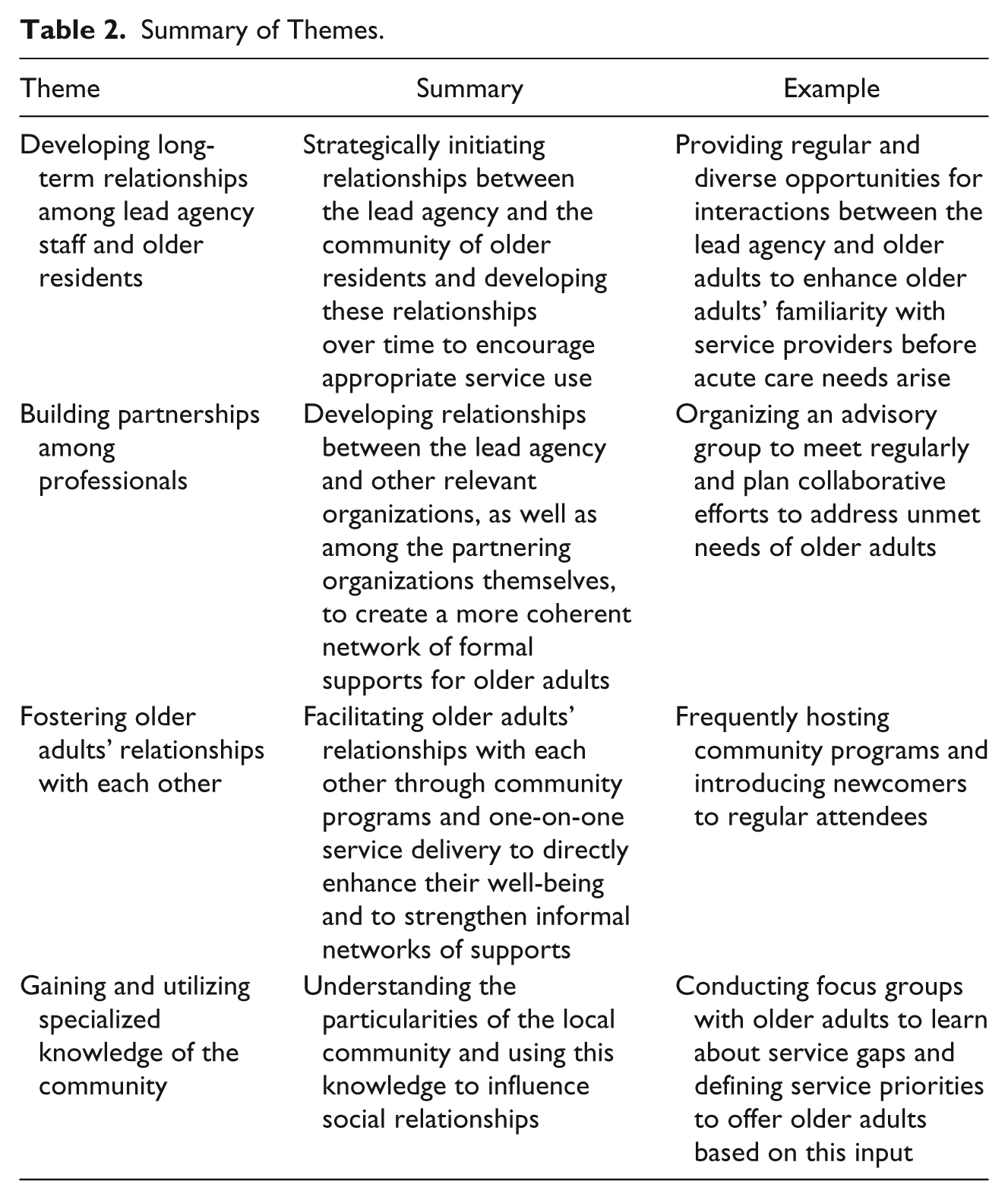
Three overarching themes emerged that address the domains of social relationships that NORC program staff reported aiming to change at a community level to promote aging in place: (a) relationships among the lead agency staff and older adults, (b) formal service providers’ relationships with each other, and (c) older adults’ relationships with each other. A fourth theme revealed that efforts to influence these relationships took place in the context of the lead agencies’ gaining and utilizing specialized knowledge of the community. Each of these themes is described below, and Table 2 summarizes findings with respect to each theme.
Summary of Themes.
Developing Long-Term Relationships Among Lead Agency Staff and Older Residents
Professionals from each of the lead agencies described their strategic efforts to develop vast and deep relationships with older adults in the focal community from the very beginning of the program implementation. Much of this initial relationship building was done in the context of offering group activities that were “fun” or providing services with concrete value. These offerings served to attract a large number of older residents so as to expose them to the program and the lead agency staff. For example, one participant remarked,
If we came in just as counselors, I don’t think we would have been welcomed at all. I think it was the perception that we were able to bring some of these other services, like the socialization piece, home health aides, the light maintenance program, (which) really made us welcomed.
Participants further described deliberately offering a variety of services across several different locations (e.g., community centers, churches, libraries, and in residents’ homes) to involve a large number of older adults in the NORC program. Also, by offering different types of services, staff reported being able to engage older adults with a wide range of interests, strengths, and needs.
Program professionals also explained ways in which their programs deliberately sought to overcome stigma around older adults’ engaging with formal service providers. For example, some participants reported that they purposely branded the NORC programs as detached from “welfare” agencies by creating a unique name for the program that emphasized it as a community program rather than as a “senior” program. Also, staff explained that the programs’ deliberate efforts to engage older adults as contributors to the initiative sometimes led to their greater engagement as service recipients as well. For example, one participant said,
There were many people who joined the advisory council, who would have never admitted that they were lonely or at risk. And rather than participating in the (therapeutic) groups, (they) used their activity as a volunteer to empower themselves to feel more involved in the community.
The program professionals described how their continuous relationships with older adults allowed them to create a history of success in helping residents, which gained the older adults’ trust and made them increasingly likely to reach out to professionals over time. Participants also stated that because the NORC programs provided opportunities for the lead agency staff and partnering organizations to interact with residents regularly, such as at monthly seminars, residents would become familiar and comfortable with formal service providers over time and would know how to reach out to them, particularly during times of great need. Furthermore, one type of service or activity could serve as a gateway to participants’ use of other services. For example, the professionals reported providing outreach on individual services—such as in-home safety checks—at community events, as well as motivating older adults at one-on-one case management sessions to attend community events, such as monthly luncheons.
NORC program staff reported the variety of ways in which they were able to activate their long-term relationships with older residents in a timely fashion. First, long-term relationships provided the foundation for the program to help meet individuals’ changing needs. For example, in some cases, community activities provided opportunities to establish relationships with clients before more serious and threatening needs would arise. Also, because of the programs’ long-term presence within communities and provision of group and individual services, staff reported being able to detect emergency situations more readily and being able to follow up immediately, such as if a participant did not show up for a regular event or if another resident expressed concern that they had not seen their neighbor recently.
In addition to these successes in developing relationships with older adults, program professionals also described challenges. Several respondents described difficulties in overcoming older residents’ misconception that the NORC program served exclusively Jewish elders. Others reported that in spite of efforts to overcome stigma associated with receiving services, some residents were still hesitant to accept services from the program, particularly in-home services.
Building Partnerships Among Professionals
Staff described the ways in which they deliberately sought to foster relationships with and among professionals and the significance of these relationships for enhancing service delivery systems at the community level. Relationships with professionals—including other local service providers (e.g., hospital staff) and other stakeholders (e.g., business leaders)—emerged within a variety of contexts. In some cases, the lead agency collaborated with the organization prior to the NORC program. In other cases, the program provided an opportunity for the agency to develop new inter-organizational relationships. For example, one professional explained that although the agency had prior relationships with local synagogues, the NORC program allowed the agency to reach out to leaders of other faith-based organizations, such as churches. Participants partnered with organizations around a variety of instrumental purposes, such as co-organizing community programs, making and receiving referrals, discounting services, and serving on each other’s advisory boards. Although the professionals reported occasionally using NORC program funding to contract services from a partnering organization, many partnership activities were offered in-kind in the spirit of better serving the focal community, as well as for mutual exchange and long-term financial benefit.
The staff explained that through inter-agency partnerships, NORC programs aimed not only to create more services, but also to create a more coherent and coordinated network of services, providers, and funding mechanisms. Several participants explicitly described the programs’ efforts to develop relationships with and among professional partners as part of efforts to de-fragment existing community resources. For example, one participant said,
I think a lot of seniors just get frustrated with the system. They don’t really get the answers. They don’t get results. I think the more we work with other collaborators at developing relationships, (the) more seamless path to getting people help.
The staff described the ways in which they sought to develop this network by working at the community and individual levels. At the community level, lead agencies formalized partnerships through facilitating other professionals’ participation on NORC program governance structures. The governance structures typically were advisory groups consisting of professionals and older adults, who would meet regularly to exchange information and ideas around aging-related concerns. Participants explained that the councils served to formalize and strengthen not only relationships among the lead agency and other professionals, but also among the other professionals themselves. One participant described this function as “connecting the dots,” with the lead agency forging linkages among partners so that the partners could collaborate with each other, even independent of the lead agency.
Partnerships established through the advisory council strengthened supports for older adults, particularly for those who might otherwise “fall through the cracks” of service delivery. One participant explained,
Everyone’s doing what they do, but when people come together around that table, (they) become much more aware of the players and the services . . . If they don’t know who the players are, they can say, “I have this client,” and someone within the network can figure it out. Even though the resources were there before, no one knew how to tap into them.
In addition to these community-level efforts, participants described how their efforts to assist individual older adults through case management and care coordination strengthened, and relied upon, relationships with other professionals. Respondents explained how NORC program service delivery extended beyond linking individual families with individual agencies and, instead, sought to connect a community of older adults with a network of providers—providers who have a relationship with the lead agency and each other.
Several professionals explained ways in which the lead agency’s relationships with other service providers led to better quality of services over time. Staff reported that they vetted NORC program providers by following up with residents who received services in the past and linking subsequent residents only with organizations that had gained the lead agency’s trust. Furthermore, because of the long-term nature of relationships among the lead agency and other professionals, some staff reported being able to encourage greater in-kind contributions from partnering organizations, particularly for economically vulnerable older adults. For example, one program professional explained,
We know that if we have someone who can’t afford something, (our partnering agencies) will try to find creative ways to help or they’ll do things pro bono because they know that we’ll keep referring to them . . . (and) they know us, believe in us.
In addition to successes around developing relationships with other professionals, lead agency staff also reported challenges. Barriers to fostering inter-professional partnerships included other professionals’ misunderstandings around the purposes of NORC program grants, insufficient staff training in outreach to engage partners effectively, poor timing for the development of new relationships, and perceived competition over clients and funding.
Fostering Older Adults’ Relationships With Each Other
In addition to the program professionals’ efforts to develop long-term relationships with older adults and other service providers, program staff also emphasized ways in which they strived to connect older adults to each other and how these relationships among older adults further served to enhance community supports for aging in place. Many participants commented that although residents had lived in relatively close proximity to each other prior to the programs, the NORC programs were useful for creating deliberate opportunities for residents to interact and form more meaningful relationships with each other. For example, one professional explained that before the implementation of the program, residents in buildings across the street from each other typically did not interact with each other. However, the program’s Wii bowling team was successful in attracting older residents from both buildings. The participant stated,
So all of a sudden, you have people who are friends from other buildings. They’re going out on Saturday night. They’re doing things. They’ve never known each other beforehand because they had no reason to.
In addition to community programs that focused explicitly on socialization, professionals also indicated ways in which one-on-one work with older adults served to promote older adults’ relationships with others. For example, one professional explained that the NORC programs’ subsidized housekeeping service, which was offered as an ancillary service, helped clear away clutter that had been preventing some individuals from allowing others into their homes. Professionals also described ways in which they helped individuals navigate informal social networks within the community, such as by introducing newcomers to regular attendees at group activities. Others indicated that their programs linked residents with community volunteers—such as through a friendly visitor program—which was cited as an especially important way to foster social connection for homebound elders.
Professionals indicated that these efforts to foster relationships among older adults served to benefit older adults directly and indirectly. Many professionals cited the direct psychological benefits of enhancing residents’ social relationships, particularly in terms of preventing social isolation that could lead to more serious mental and physical health problems that would significantly jeopardize individuals’ ability to age in place. Helping older adults to develop relationships also served to foster a network of informal social support that could benefit older adults more indirectly—networks that, once established, could function relatively independent of formal services and help older adults manage subsequent challenges. For example, a participant explained that a NORC program socialization group “took people who didn’t know each other, who were complete strangers, (yet) who are now completely dependent on each other and have become a social circle.”
In addition to noting successes in developing relationships among older adults, participants identified one type of social relationship that was, at times, difficult to facilitate. Staff from several programs stated that older residents seemed uninterested, unable, or unwilling to volunteer to help others and therefore did not focus on engaging older adults as formal volunteers to help other older adults.
Gaining and Utilizing Specialized Knowledge of the Community
In addition to the themes described hereinbefore regarding domains of social relationships that staff strategically aimed to strengthen to enhance community supports for aging in place, the professionals also frequently cited their specialized knowledge of the community in which the programs were implemented and the significance of this knowledge for all other program activities. Domains of knowledge included political (e.g., knowing key community leaders), historical (e.g., understanding the changing composition of a neighborhood), demographic (e.g., knowing the educational background of local residents), geographic (e.g., knowing which spaces are accessible to adults with disabilities), instrumental (e.g., understanding the existing service infrastructure), and cultural (e.g., understanding specific town traditions).
Staff described how their knowledge of the community developed formally and informally. Some reported that they understood the focal community before implementing the program because the agency had past experiences with providing services in that area. Many agencies also reported engaging in formal community assessment activities—such as surveys and focus groups with older adults—to gather information for developing program activities. Other respondents set out to deliberately learn about communities by “walking the streets” and learning of key community leaders and institutions—particularly in those communities with which the lead agency had little prior involvement.
Specialized knowledge of the community served as a foundation for the programs’ efforts to strategically develop relationships between the lead agency and the older adults, as well as among service providers and among older adults themselves. For example, many program professionals noted the importance of being knowledgeable about existing resources in the community so as not to create redundant services, and, instead, to develop services that would address gaps and enhance other services. For example, one professional said,
We’ve really tried to figure out our niche and not compete. There’s not, for example, much on a lawyer talking about what you need to put together to have your house in order, but there’s plenty on music and poetry and art (because) a lot of (the residents) audit classes (at the local college).
By purposefully offering activities that did not compete with existing community resources, the staff reported being better able to attract older adults to the program, to create more opportunities for older adults to interact with each other, and to potentially position the lead agency to collaborate rather than compete with other local service providers.
Lead agencies also reported using their specialized knowledge of the people and places within the community to appropriately market services to older adults. Based on their understanding of the community, professionals were able to use existing information channels to disseminate information about program services and activities and attract older adults to the program. For example, one participant explained that based on the understanding that residents in the focal community were, on the whole, well educated and computer literate, the organization used email to disseminate information about the program, which served to inform older adults about ways to access supportive resources in their community.
Professionals also indicated how their knowledge of the community’s geography and local culture led to offering services and programs in places that were physically and psychologically accessible to participants. For example, one agency offered the majority of its programs in the local senior center. The participant explained that initially, the agency believed that they could not offer programs in a senior center because they would be perceived as duplicating existing services. Over time, however,
the clients kept saying, “We just want to go to the senior center.” There is transportation there . . . (The center is) a place that was comfortable for them.
Building on this knowledge, the agency used the senior center for outreach, meeting with participants, and hosting community events. In contrast, other agencies indicated that because in their communities, the senior center was not physically accessible for older adults or was not perceived to be a welcoming place for all seniors, they developed programs and offices in alternative locations. For example, one participant said,
(Our town) is a huge area, and there are maybe five senior centers. None of them are in (our neighborhood) though. Our neighborhood has a little tiny park that’s very nice, and it has a little building. That’s where we had programs in the past.
These contrasting examples demonstrate how the agencies used their specialized knowledge of the community to attract older adults to the program and provide them with more accessible services and supports.
Although the participants described many instances in which they used their specialized knowledge of the community as a foundation for core program activities and relationship building, participants also noted instances in which they were unable to act on this knowledge. For example, some respondents reported that limited funds and lack of existing resources prevented them from being able to fully respond to known unmet needs, such as not being able to locate or offer additional transportation to community events.
Discussion
This exploratory, qualitative study aimed to develop an empirically derived framework for characterizing the processes through which NORC programs influence social relationships within communities to enhance older adults’ ability to age in place. Findings indicated four primary themes. Three themes addressed the domains of social relationships that NORC programs aim to influence, and the fourth theme indicated the specialized knowledge of the community that program professionals reported utilizing to and influence social relationships to promote aging in place.
Figure 1 provides a visual representation of how these themes relate to each other to develop an empirically derived framework on how NORC programs potentially change social–relational aspects of communities to promote aging in place. The figure suggests that NORC programs theoretically utilize resources to enhance three domains of social relationships. These domains include long-term relationships among the lead agency staff and older residents; partnerships among professionals, including the lead agency; and older adults’ relationships with each other. Efforts to enhance these relationships are embedded within the lead agency’s specialized knowledge of the community. These change efforts—taken as a whole—serve to enhance services and supports at the community level for older adults. They increase not only the amount of community-based services and supports within a residential area, but also potentially improve their accessibility, appropriateness, affordability, utilization, and coherence.
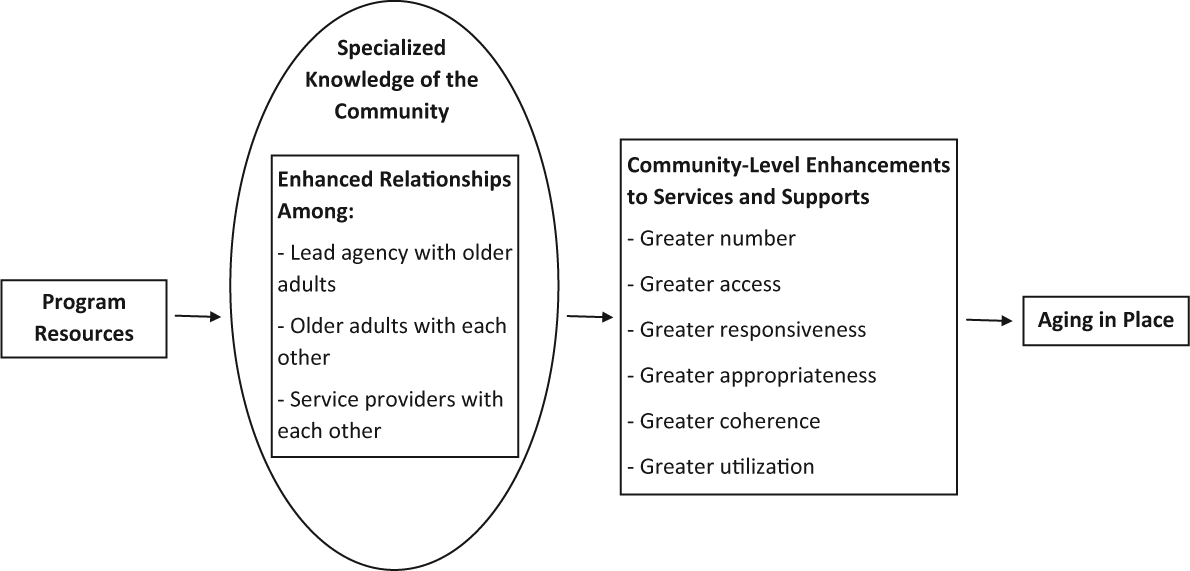
An empirically derived framework on processes through which NORC Supportive Service Programs change social relationships to enhance services and supports at the community level to promote aging in place.
This framework builds from a social capital perspective, which broadly orients attention to value created when people groups and institutions relate to each other in certain ways. The theory developed in this study specifies how NORC programs can be conceptualized as initiatives that seek to initiate, develop, and strengthen relationships in three domains to enhance supports for aging in place. Drawing on prior distinctions among types of social capital (Szreter & Woolcock, 2004), this study found that NORC programs focus most strongly on two types. First, NORC programs aim to enhance bonding social capital—or relationships among members who are similar to each other—vis-à-vis strengthening older adults’ relationships with each other and service providers’ relationships with each other. Furthermore, NORC programs’ emphasis on older adults’ relationships with service providers indicates their aim to enhancing linking capital, which refers to individuals’ connections with institutions or people with greater power than them that can provide access to resources. There was little evidence of NORC programs’ attention to bridging social capital, which emerges from relationships among people who differ from each other. For example, participants did not emphasize the centrality of intergenerational activities, such as linking older and younger neighbors for the purpose of mutual assistance. Previous research has found that different types of social capital serve distinct purposes (e.g., Hawkins & Maurer, 2010), which suggests that NORC programs might be most effective when engaging in activities to enhance all three types of social capital.
Fitting with the distinction between social capital that exists at a group level versus capital that exists on a one-to-one basis (Kiwachi et al., 2008), results demonstrate that the needed social capital from NORC programs cuts across varying levels of older adults’ social environments. Using concepts from Bronfenbrenner’s bioecological systems theory (Bronfenbrenner & Morris, 2006), results suggest that NORC programs seek to transform relationships within older adults’ micro-social environments (e.g., their one-on-one relationship with a specific staff person), meso-social environments (e.g., how they relate with a community of service providers as a whole), and even more distal social environments that do not directly involve them (e.g., how service providers relate with each other).
The various types and levels of relationships that NORC programs aim to alter suggest challenges to situating the program model within one specific model of community intervention. For example, the action of engaging older adults in mutually supportive relationships with each other is indicative of locality development, which focuses on enhancing the ability of residents to connect with each other and solve problems (Rothman, 1996). At the same time, situating activities within knowledge of the community is more indicative of a social planning approach, which emphasizes the role of data and formalized plans to address a social issue (Rothman, 1996).
One theoretical construct that can be especially useful for unifying these different elements is comprehensive community initiatives (CCIs). Although CCIs have developed largely in the field of youth and families (Gray, Duran, & Segal, 1997), findings of this study suggest that NORC programs similarly seek to improve the lives of community members by embedding efforts to benefit individuals through changing the collective life of a community (e.g., facilitating the creation of interpersonal networks among older adults) and advocating for systems-level changes (e.g., developing a more coordinated community of service providers to assist older adults; Torjman & Leviten-Reid, 2003). In this way, the framework suggests that NORC programs do not simply provide more community-based services, or services rooted within communities that are targeted to individuals to improve their health and well-being (Patrick & Wickizer, 1995). NORC programs aim to operate as a community-level intervention—an entity that is intended to alter communities as a whole. Overall, the framework developed in this study can help strengthen the NORC program model and related models for community aging initiatives by contributing to the development of theories of change. Theories of change address the contexts, activities, and intermediate outcomes—as well as the relationships among them—that are posited to influence a long-term goal (Anderson, 2005), such as aging in place. As with research on community-based interventions that address other social issues (Chaskin, 2009), theories of change have been under-developed in the area of community aging initiatives (Austin et al., 2005). Although researchers recently have specified ways in which different types of NORC program services and activities potentially create changes at the individual-level of functioning (author citation), the framework in the current study suggests the community-level change processes through which NORC programs potentially influence aging in place.
Overall, results build from prior descriptions of the NORC program model, which has been developed largely by program leaders (Bedney et al., ; United Hosptial Fund, n.d.; Vladeck, 2004). Many prior descriptions focus on the program model in terms of what services and activities are provided (e.g., health and social services), who provides them (e.g., social service providers and housing), and how they are funded (e.g., through public–private partnerships). This study’s findings deepen the understanding of a fourth dimension of the program model: how benefits are provided (Gilbert & Terrell, 2005). By specifying the three focal domains of social relationships, as well as the context of specialized knowledge of the community to deepen and broaden connections within each domain, the framework helps identify more specific ways in which NORC programs strive toward “reweaving . . . the social fabric” of a community to promote aging in place (Vladeck, 2004, p. 6).
The framework presented in this study can help guide future empirical studies of NORC program implementation and related initiatives, especially given that prior research has focused on service utilization, implementation issues, and perceived outcomes (e.g., Ivery, Akstein-Kahan, & Murphy, 2010; MacLaren et al., 2007). Most critically, additional research is necessary to examine whether programs that fully engage in the relational change processes highlighted by this framework are more effective than those that do not in terms of their benefiting older adults’ long-term ability to age in place. Such findings would have implications not only for NORC programs, but also for other national models for community aging initiatives (Lehning et al., 2012). These findings could also be informative for the efforts of more traditional, long-standing community institutions to support community-residing elders—such as such as senior centers and area agencies on aging (O’Shaughnessy, 2008; Turner, 2004).
Furthermore, results of this study indicated that professionals reported challenges in influencing particular aspects of social relationships. Because of space limitations and the study’s relatively small sample size, this study was not able to fully analyze the organizational, community, and program characteristics associated with encountering such challenges. Examining the necessary resources and conditions for fully implementing the framework identified in this study—as well as maintaining these processes over time—is especially important in light of findings that sustainability is a key challenge for NORC programs and other community aging initiatives (Lehning et al., 2012). In addition to future research, findings of this study can be used to advance practice NORC programs and related community aging initiatives. Practitioners within lead agencies can use the framework developed in this study, in part, to assess the strengths and limitations of their program implementation beyond the types of services and activities that they provide. For example, the “NORC Blueprint,” which is an online resource created by a national working group that specifies guidelines for designing and maintaining NORC programs, describes NORC program implementation at two levels: first, developing “a basic service package for individual residents,” and, second, creating “projects that address community-wide issues and strengthen the community as a whole” (United Hospital Fund [UHF], n.d.). The framework in this study suggests the importance of evaluating the extent to which the implementation of these services and projects strategically enhance social relationships within the community to promote aging in place. For example, based on this framework, program leaders can assess the extent to which the services and activities are successful in creating long-term relationships between the lead agency and older residents, which can be activated, for example, in times of individual need. Program leaders can also evaluate the extent to which the programs’ services and activities forge greater partnerships among professionals and the promise of these partnerships for defragmenting local networks of care. The framework also encourages program leaders to assess whether the programs’ services and activities facilitate more meaningful relationships among older adults in ways that yield direct and indirect health benefits to promote aging in place.
Despite the implications of this study’s empirically derived framework for research and practice, it is important to note several study limitations. First, the sample was limited to lead agencies of NORC programs in NJ. Although the organizations varied in their program duration, types of catchment area, and sociodemographic features, the agencies were homogenous in that they all were Jewish communal agencies located in NJ that had received initial funding as part of the JFNA’s national NORCs Aging in Place Initiative (Bedney et al., 2010). Accordingly, the findings might not apply to NORC programs in other geographic, fiscal, or political contexts. Also, findings might have differed if the sample had included the two organizations in NJ the programs of which were no longer operational at the point of data collection. For example, perhaps these organizations would have suggested additional challenges within the social–relational domains that potentially contributed to their closure. Also, the data were collected as part of a larger study that aimed to provide a general, descriptive overview of NORC program implementation in NJ. Because the data collection period for this statewide project had a discrete end date, it was not feasible to re-contact participants for further, in-depth follow-up on the current study’s findings beyond the group member check. Furthermore, findings of this study are based solely on interviews with lead agency staff as analyzed by the investigator, which is an appropriate step toward developing theories of change for NORC programs. To further advance this area, however, additional research is necessary to compare insights from older residents and professional partners of NORC programs with those presented in the current study, as well as to triangulate findings among multiple analysts.
In summary, this study’s preliminary findings are useful for formalizing the understanding of the NORC program model and how it intends to enhance the lives of older adults by creating social–relational changes at the community level. Overall, the empirically derived framework presented in this study can be used to guide additional research and practice to more systematically and fully capitalize on the promise of the NORC program model to promote aging in place.
Footnotes
Declaration of Conflicting Interests
The author declared no potential conflicts of interest with respect to the research, authorship, and/or publication of this article.
Funding
The author received no financial support for the research, authorship, and/or publication of this article.
Author Biography
References
Supplementary Material
Please find the following supplemental material available below.
For Open Access articles published under a Creative Commons License, all supplemental material carries the same license as the article it is associated with.
For non-Open Access articles published, all supplemental material carries a non-exclusive license, and permission requests for re-use of supplemental material or any part of supplemental material shall be sent directly to the copyright owner as specified in the copyright notice associated with the article.
