







Abstract
Career resilience provided a frame for understanding how Licensed Nursing Facility Administrators (LNFAs) sustain role performance and even thrive in stressful skilled nursing facility work environments. Quantitative and qualitative analyses of in-depth interviews with18 LNFAs, averaging 24 years of experience were conducted by a five-member research team. Analysis was informed by evidence-based frameworks for career resilience in the health professions as well as the National Association of Long-Term Care Administrator Boards’ (NAB) five domains of competent administrative practice. Findings included six sources of work stressors and six sources of professional satisfaction. Also, participants identified seven strategic principles and 10 administrative practices for addressing major sources of stress. Recommendations are provided for research and evidence-based application of the career resilience perspective to LNFA practice aimed at reducing role abandonment and energizing the delivery of the quality of care that each resident deserves.
Licensed Nursing Facility Administrators (LNFAs) serve in one of the most challenging leadership roles in the health care industry. They daily navigate a complex regulatory environment, low levels of community prestige, vulnerable clientele, uncertain public revenue streams, and civil and criminal penalties for administrative misconduct. In addition, the profession is facing rising costs and declining revenue streams for long-term care, challenging requirements for more person- and relationship-centered care, and increasing emphasis on coordination of care with other health care providers. Furthermore, the quality of their leadership and decision making has a direct and substantial impact on our most vulnerable citizens (Castle & Banaszak-Holl, 2003).
Depending on how turnover rates are calculated, turnover rates in the 40% (Castle & Shugarman, 2005; Castle, Engberg, & Anderson, 2007) to 60% (Singh & Schwab, 2000) range are the outcome when demands of the leadership role exceed the personal and professional capacities of those who are hired into the position (Leister, 2009). Given these complex role demands and high rates of turnover, staying and being effective in the role are indicators of resilient leadership, a trait essential for healthy functioning in the long-term care industry. In this study, we change the research perspective on the LNFA role from the prevailing attention on the impact and deleterious outcomes of a stressful work environment to recognizing strategic assets and resilient responses to this environment.
Personal resilience is a broad concept with intuitive appeal and complex meanings. The Defense Centers of Excellence for Psychological Health and Traumatic Brain Injury (DCoE) arrived at the following definition of resilience after an extensive review of the literature: “the ability (of a person) to withstand, recover, and/or grow in the face of stressors and changing demands” (DCoE, 2011 as cited in 2015 RAND report, p. 10). From this perspective, resilience is always associated with stress, is a process and not a static or unchangeable trait, and includes the potential for personal recovery and growth.
Our study focuses on LNFA resilience within the context of stressors related to enacting a career within a skilled nursing facility (SNF). Research on the impact of stress on organizational leadership validates a direct relationship between the sustained exposure to stressors and leaders’ capacity to remain resilient in their career (Heifetz & Linsky, 2004). We define career resilience as the capacity of the LNFA to stay, thrive, and remain productive in the context of personal, relational, and/or environmental stressors (Connor & Davidson, 2003). Career resiliency is a construct that can be practically applied to improve leadership and organizational functioning. Organizations such as SNFs fulfill their mission and grow based on their ability to retain and develop resilient administrative leaders.
Purpose and Rationale
Ultimately, our research goal is to contribute evidence-based knowledge that energizes LNFAs’ delivery of the quality of care that each resident deserves. As an initial study in a longer term research agenda, we offered experienced LNFAs an opportunity to reflect on the source of their career resilience as well as report on the resilience-promoting resources they activate to deal with the stressors of the role. This study was guided by the questions: Why and how do LNFAs remain and thrive in this demanding role? Our interest in knowing why LNFAs are resilient led us to explore what motivates them to stay, including beliefs, values, expectations, and satisfiers. Examining how they are able to stay in their role for a significant period of time involved identifying what knowledge (lessons learned, strategies, and principles) serves them well in making difficult administrative decisions, as well as what they do administratively to deal with the most challenging stressors they face.
The findings of this study are needed to help bridge the gap between what newly licensed and struggling administrators have learned during their formal education and what is required for them to succeed in the role. Through analysis of professional practice, the National Association of Long-Term Care Administrator Boards (NAB) has identified five domains of competency (leadership and management, finance, human resources, environment, and resident-centered care and quality of life), 74 tasks, 156 knowledge units, and 22 core skills for practice. The NAB’s contributions to LNFA role specification are complimented by research findings (Dana & Olson, 2007; Geletta & Sparks, 2013; McCarthy, 2005; Murphy & Fridkin, 2004). This work serves as basis for the development of licensure examinations and for accreditation of educational programs that prepare future nursing home administrators (NHAs) and provide continuing education for the profession. In addition, textbooks used in preparatory programs (Allen, 2011; Pratt, 2010; Singh, 2005; Townsend & Davis, 2013) offer knowledge and skills that inform the competencies, as taught in the classroom and preceptorships. By intention, these resources are normative and prescriptive, based on the assumption that achievement of the competencies through application of the skills equips administrators sufficiently for entering the profession.
Unfortunately, the complexities of the role are such that LNFAs who demonstrate competence through obtaining a license, completing courses, and meeting the requirements of the preceptorship have low levels of career resilience and a high likelihood of sanctioning by regulatory agencies and/or their employers, as well as frequent position changes and leaving the profession. The complexity, volatility, and volume of the knowledge and practices required cannot be delivered through classroom and preceptor experiences alone.
To supplement their preparatory education, LNFAs rely on continuing education, regulatory agency updates, corporate consultants, and information disseminated by professional organizations through publications, websites, blogs, and presentations at professional meetings. Nevertheless, far too many LNFAs who are well versed on the requirements of their role still struggle to bridge the gap between what they know and how to enact a satisfying career of effective leadership.
Resilient LNFAs are a potential, yet untapped reservoir of practice wisdom for addressing this gap. However, the motivations, strategic thinking, and practices of successful administrators with long tenures have not been the subject of systematic investigation. As a result, the collective wisdom of career resilient LNFAs about how to maximize the assets and navigate the stressors of the SNF environment is only randomly and episodically available.
Our research is consistent with the call by others who have recognized the need to investigate this fertile ground. Ledesma (2014) concluded her review of organizational leadership and resilience with a recommendation for more qualitative studies of how leaders adapt as reflected in their stories of resilient responses to the stressors of the role. Geletta and Sparks (2013) also called for studies that reveal the personal and facility characteristics that create increased job satisfaction.
Career Resilience
A resilience perspective offers researchers a substantive conceptual tool for understanding LNFA role performance and career sustainability. Career resilience has been the object of extensive research across a variety of health and mental-health related professions such as psychologists, physicians, counselors, and nurses (McCann et al., 2013). Although some studies of resilience among LNFAs have been conducted (Barry, Parsons, Peter Passmore, & Hughes, 2012; Liditka, Liditka, Cornman, Davis, & Richter, 2009; Peterson, Hyer, & Brown, 2014), they report on the responses of administrators to specific resident issues such as pain management and weather-related disasters. LNFA career resilience related to everyday role performance has not been examined.
Conceptually, career resilience is a complex variable with multiple definitions, dimensions, and specifications in research. Many studies of health care professionals focus on individual attributes or contextual antecedents presumed or empirically demonstrated to be associated with resiliency (Hart, Brannane, & De Chesnay, 2014). In addition, several reviews yield helpful typologies of resilience and its correlates (McCann et al., 2013; Polk, 1997). Also, career resilience has been specified as a predictor of outcomes such as burnout, turnover, and job satisfaction (Lee & Cha, 2015; McGee, 2006). Lumanlan (2013) reported that resilience was a significant predictor of nurse-educators’ level of job satisfaction. Hudgins (2015) found that resilience, job satisfaction, and anticipated turnover were correlated, generating a new variable, intent to remain (ITR) significantly associated with resilience. The resilience-job satisfaction linkage among LNFAs has not been studied; however, LNFA job satisfaction, turnover, and retention have received significant attention (McCarthy, 2004; Singh & Schwab, 2000; Tellis-Nayak, 2007).
Researchers who have examined factors that contribute to turnover and retention have primarily identified organizational and structural facets associated with the length of LNFA tenure. This evidence contributes an understanding of the contextual features that influence career resilience. A summary of these findings is available in Heineman (2010). Retention was found to be positively associated with the following LNFA and SNF characteristics: facility size, independently owned facilities as opposed to multi-owned (chain) facilities (Singh & Schwab, 1998), community environment compatible with LNFA’s lifestyle, facility performance (Singh & Schwab, 2000), and membership in a professional organization (Castle & Shugarman, 2005). Higher turnover rates were associated with for-profit status (Singh & Schwab, 1998) and facility regulatory deficiencies (Castle, Engberg, & Anderson, 2007). These studies of retention and turnover contribute to developing a comprehensive model of LNFA career resilience that will guide the development of individual, educational, and organizational assets to nurture leadership development and counter the adverse effects of excessive leadership turnover.
LNFA Work Life Stressors and Dissatisfaction
Identification of stressors and sources of workplace dissatisfaction are the first step in predicting employee and organization outcomes. Unfortunately, there is a deficit in the existing literature on what causes job dissatisfaction in LNFAs. In searching approximately 250 articles via 13 academic databases, only 20 articles directly addressed NHA job dissatisfaction. The identification of sources of stress that may contribute to job dissatisfaction is vitally important, given that administrators handle dissatisfaction “by changing positions every 31 months” (Leister, 2009, p. 42), and administrator turnover is linked with poorer quality of care (Castle, 2001; Decker & Castle, 2009; Singh & Schwab, 1998, 2000). A study by Andrucci-Armstrong (2001) found that not a single administrator reported himself or herself as “not stressed” (p. 120). Job stress is correlated with job dissatisfaction and “preparatory and active intention to leave” (Leister, 2009, p. 117). Our review of the findings regarding work-related stress and job dissatisfaction are organized using Whetten and Cameron’s (2011) typology: Anticipatory, Encounter, Time, and Situational stressors.
Anticipatory Stressors
The anticipation of financial and/or professional loss due to complex liability and other legal issues may be a threat to resiliency. From 1996 to 2004, the number of claims filed against nursing homes per year doubled, and the severity of such claims tripled in that same time span (Tellis-Nayak, 2007). Such actions can result in “hassle, emotional trauma, and injury to professional reputation” for administrators (Kapp, 2003, p. 115) and “shifts their focus from the bedside to the courtroom, from caregiving to paper compliance” (Tellis-Nayak, 2007, p. 13).
Encounter Stressors
Problems with coworkers and displeasure with work demands, as well as dealing with families of residents, are among the most commonly cited factors that cause job dissatisfaction (Castle, 2006; Castle et al., 2007; McCarthy, 2004; Murphy & Fridkin,2004). Other consistent encounter stressors included unrealistic expectations of families and inspectors and “maintain[ing] high quality care” (Andrucci-Armstrong, 2001, pp. 85, 93).
Singh and Schwab (2000) found that when job expectations were unfulfilled, turnover among NHAs was more likely to occur. Many NHAs see their job as a calling and expect to serve people, making a difference in their lives (Leister, 2009; Tellis-Nayak, 2007). However, they do not expect to have to deal with “state surveyors, insurers, advocates, trial lawyers, accrediting agencies, unions, the labor market, hospitals, the general public, and even one’s regional and corporate manager,” or to “feel they have little control over these forces that make the rules they have to live by” (Tellis-Nayak, 2007, p. 12). Compounding the problem, the many inspectors and surveyors that come through a nursing home are seen as having differing expectations for the facility. This results in “inconsistent, unclear, and contradictory expectations” (Kapp, 2003, p. 116).
Time Stressors
Dana and Olson (2007) described the duties of the LNFA to include a “hectic, unrelenting pace of work; frequent, unplanned interactions with others; many reactive activities that are brief and unconnected; and varied work content that covers everything from building maintenance to clinical performance” (p. 10). These authors of a position paper by the American College of Healthcare Administrators describe LNFA administrative leadership challenges to include working in a reactive, crisis management environment with limited time for strategic planning, team building, relationship development, and identification of best practices.
Situational Stressors
Administrators seek autonomy from their supervisors (Singh & Schwab, 2000), and a lack of it is one of the most common reasons why administrators are dissatisfied with their job (McCarthy, 2004; McCarthy & Friedman, 2006). Specifically, administrators become dissatisfied when they are not granted the autonomy to make decisions and “engage in meaningful work” (McCarthy & Friedman, 2006, pp. 62-63). Although problem solving is one element of meaningful work, all too often administrators express not having enough autonomy to generate changes that can solve problems (McCarthy & Friedman, 2006, p. 61).
The responsibility of administrators to maintain fiscal productivity while preserving regulatory compliance is a constant challenge. Facility staff members are increasingly wary that their inadvertent regulatory infractions may result in costly penalties for the organization (McKnight’s Staff, 2012).
Policy and regulatory attention has been directed toward creating environments that nurture person-centered care. Harris, Poulsen, and Vlangas (2006) documented the trend of implementing a culture of caring in long-term care facilities along with a variety of culture change models. These models emphasize empathy and compassion, focusing on consumer strengths, staff hospitality, and relationship-centered care. Some LNFAs report confusion in implementing the models, particularly around balancing resident safety with resident autonomy.
LNFA Work Life Satisfaction
The findings of research on LNFA job satisfaction/dissatisfaction focus disproportionately on what LNFAs do not like about their job. Consequently, there is a relative paucity of insight into the satisfying aspects of LNFA work life. In a study examining turnover among 685 NHAs, Tellis-Nayak (2007) found that almost two thirds of them were satisfied being NHAs, and that low satisfaction did not provoke the NHAs to seriously consider quitting their role. Research by Singh and Schwab (1998) revealed that the factor of met expectations had a higher correlation with job retention than any other variable studied. Expectations are met when LNFAs are included in making decisions; have agreed upon goals, values, and management philosophies with the organization; and view the company’s expectations placed on them as reasonable (Singh & Schwab, 1998; Tellis-Nayak, 2007). Murphy and Fridkin (2004) found that LNFAs’ satisfaction with the quality of their coworkers was a primary factor predicting their job satisfaction, and the researcher postulated that the expectations of the more educated professionals were not being met by the lower-level employees.
Multiple studies have found a connection between NHAs’ salaries and rewards and their job satisfaction (Castle et al., 2007; Holecek, Dellmann-Jenkins, & Curry, 2010; Murphy & Fridkin, 2004; Singh, Fujita, & Norton, 2004). However, there is some disagreement about how LNFAs felt about their pay. Castle et al. (2007) found that NHAs were not unhappy with their pay, whereas Murphy and Fridkin (2004) found that they were indeed unhappy with it. Perhaps the difference lies in administrator experience and education. Administrators who are highly satisfied with their pay are “likely to be younger, directing a smaller nursing home, not the holder of a nursing degree, and working fewer hours” (Singh et al., 2004, p. 236).
LNFAs who indicate that they were involved in highly significant tasks also tend to report greater satisfaction (McCarthy, 2004). In addition, relationships with residents and their families and making a difference in people’s lives are great sources of satisfaction for NHAs (McCarthy, 2004; Tellis-Nayak, 2007). Other factors such as “positive performance results” (e.g., successful and efficient use of budget) and “low turnover among department heads and licensed staff” also lead to satisfaction (Singh & Schwab, 2000, p. 316).
Conclusion
A focus on career resilience offers a new lens for research aimed at sorting out the complex array of variables that help explain LNFA leadership tenure in work environments marked by overwhelming ambiguity and complex stressors. Ledesma (2014) summarized three possible ways that the stressor-resilience relationship may benefit the career longevity of organizational leaders. Resilience-promoting factors may offer LNFAs resources to compensate for the stressors that accompany the role. Alternatively, the stressors may provide the LNFA with an opportunity to learn from the challenges and develop resilience for future encounters. Thriving is the result when the LNFA’s stress response moves beyond survival and recovery and transforms them in substantive ways (Nishikawa, 2006 as cited in Ledesma, 2014). Finally, resilience may provide protection of the LNFA from the stressful effects of the SNF environment.
Whatever the role of resilience in LNFA leadership, identifying the satisfactions they seek and the dissatisfactions they perceive is essential in explaining and predicting LNFAs’ continued resilience and commitment to the role in spite of significant stressors. Answers to questions around the stressor-resilience relationship are best addressed through the narratives of experienced LNFAs, such as those reported in this study.
Method
After receiving approval from the university’s Institutional Review Board (Project Title: [207919-1] Social Workers and Administrators in Residential Long-Term Care Settings: Role Performance, Challenges, and Possibilities), semi-structured, face-to-face, in-depth, 60- to 90-min interviews were conducted with a purposive sample of 18 LNFAs in two waves in 2011 to 2012. Researchers operationalized career resilience by focusing the study on administrators with a minimum of 5 years of LNFA experience. Eleven males and seven females were included in the sample. The LNFAs represented 18 licensed nursing facilities (LNFs) in the greater Central Texas region. We oversampled for administrators in private for-profit SNFs, known to present the most challenging setting for this profession (Singh & Schwab, 1998). The diverse types of facilities in the sample, which represented half of the 36 LNFs in the area, included Private, Non-Profit (n = 4); Private, For-Profit-Individually Owned/Limited Partnerships (n = 5); Private, For-Profit-Corporately Owned (n = 4); Limited Liability Company (n = 3); Private, For-Profit-Medical Center Affiliated (n = 1); and Public (n = 1).
A lengthy interview protocol was used in the interviews with the LNFAs. Interviewees provided the following: years of LNFA experience, educational attainment, role preparation, current description of responsibilities, sources of workplace joy, role expectations and challenges, and family involvement. Interviews were conducted both in person and via telephone, transcribed, and audit-checked. Participants and locations were de-identified to assure confidentiality.
The research team consisted of three social work researchers, one of whom is an experienced long-term care administrator who serves on a state advisory board reviewing LNFA incompetence claims, another who has expertise in workforce development, and the third who has clinical experience in residential care facilities. Other members were a gerontological psychologist who specializes in behavioral management in long-term care facilities, an independent qualitative research consultant who studies organizations and leadership, and several graduate assistants. An external research advisory group comprised of five active LNFAs (not interview subjects) provided consultation on the research process and affirmed the relevance of the findings. The research was funded by the Danny and Lenn Prince Endowed Fund for the Residential Care of Older Adults Initiative.
Quantifiable data on years of experience, educational attainment, types of work stressors, sources of job satisfaction, best-practice principles, and practices in responding to work stressors were analyzed by calculating frequencies of responses by category. Narrative data were examined through a thematic analysis approach supported by Atlas ti (Version 6.0) qualitative software, which supported the identification of LNFA responses to interview questions on work life stressors, joys (sources of satisfaction), and resilient principles and practices.
The qualitative data analysis began with extensive reviews of transcripts to gain familiarity with the data. We applied a modified constant comparison analysis approach (CCA; Glaser & Strauss, 1967) to iteratively and inductively reduce the LNFA narratives. Following Fram (2013), we applied the CCA processes outside of the intention to create grounded theory. We observed the similarities and differences among the LNFAs’ response to our open-ended inquiries about their experience. When segments of the narratives addressed a common idea, we used initial codes with definitions to ascribe meaning to the segment. Every segment within the database was compared with one another and with the codes to ascertain if it was illustrative of an established code or offered new understanding of the LNFA experience, thus requiring a new code.
After initial codes were set, code sub-categories as well as higher order axial codes were proposed. The process of revisiting segments and codes continued until conceptual saturation was attained and all segments were analyzed (Elliott & Jordan, 2010). The entire set of data were then reviewed to ensure congruence between codes and segments. Researchers organized initial data into approximately 180 codes and sub-codes with accompanying rich descriptions. Deidentified transcripts and data analysis documentation are available from the first author.
Transcript analyses occurred in regularly scheduled research team meetings to increase trustworthiness and accuracy of findings, process insights from research memos, and triangulate independent analysis of codes into emerging axial categories (Cresswell & Plano Clark, 2011). Differences in code-to-segment relationships, code and sub-code names and definitions, and data interpretations were debated until consensus was formed regarding the findings. A draft of the findings and emerging themes was then shared with the external advisory group (member checking) who further validated the relevance of the codes, themes, and illustrative segments. To further increase the accuracy of the findings, study participants were also invited to review the findings and recommend edits.
Findings
Sample
Overall, the participant group represented a diverse background of experiences, extensive time in practice, and training in a variety of facility contexts, providing a substantive foundation for in-depth findings. The average years of experience in the LNFA role for the sample (N = 18) was 24 years. Forty percent (n = 8) had baccalaureate degrees in business-related fields, 10% (n = 2) reported baccalaureate degrees in social work, and the remainder an assortment of degrees and certificates in gerontology, nursing, science, and other fields.
Stressors
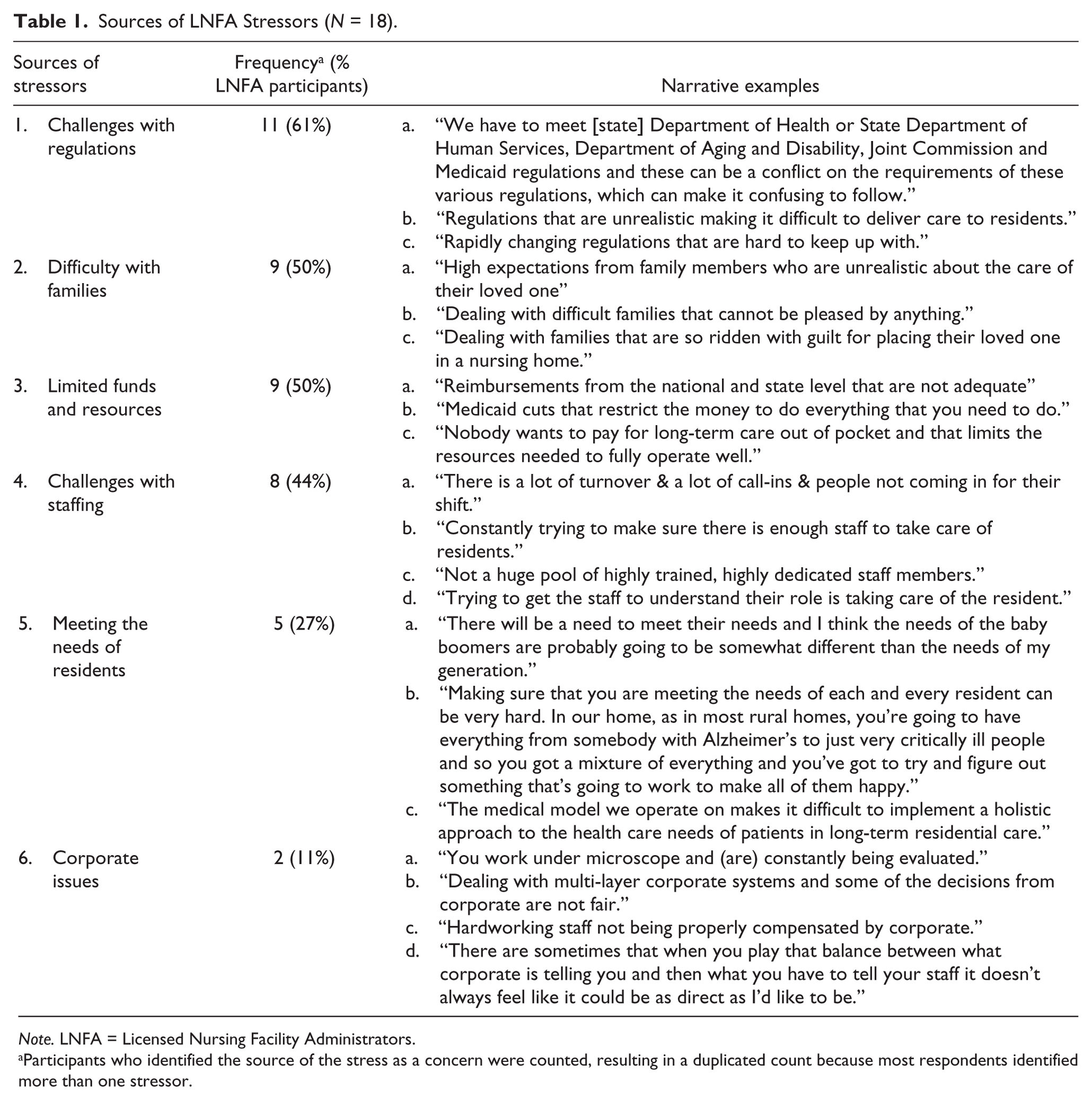
To identify aspects of their role that they defined as stressors, LNFAs were asked to indicate what they would change to improve their work experience. Responses were collected under the major theme of LNFA Stressors, with codes applied to indicate the types of challenges the narratives reflected. In Table 1, we report the six most frequently reported sources of work life stressors and selected quotes by the LNFAs to illustrate how the stressor was experienced in everyday role performance.
Sources of LNFA Stressors (N = 18).
Note. LNFA = Licensed Nursing Facility Administrators.
Participants who identified the source of the stress as a concern were counted, resulting in a duplicated count because most respondents identified more than one stressor.
Using Whetten and Cameron’s (2011) typology of job stressors, four sources of stressors in Table 1 are situational: Challenges With Regulations (60%; n = 11), Limited Funds and Resources (50%; n = 9), Meeting the Needs of Residents (27%; n = 5), and Corporate Issues (11%; n = 2). Difficulty With Families (50%; n = 9) is primarily an encounter-related stressor, and elements of Challenges With Staffing (44%; n = 8) overlap both the situational and encounter categories. None of the sources of stress are primarily anticipatory or time-related.
Another way to look at the data is by sorting the sources of stressors according to the five NAB domains of nursing facility administrator competency. The Leadership and Management domain was associated with three sources of stressors—Challenges With Regulations, Difficulty With Families, and Corporate Requirements. Three domains had one source each: Finance—Limited Funds and Resources, Human Resources—Challenges With Staffing, and Resident-Centered Care—Meeting the Needs of Residents. None of the stressors were associated with the domains of Environment and Quality of Life.
Sources of Work Satisfaction
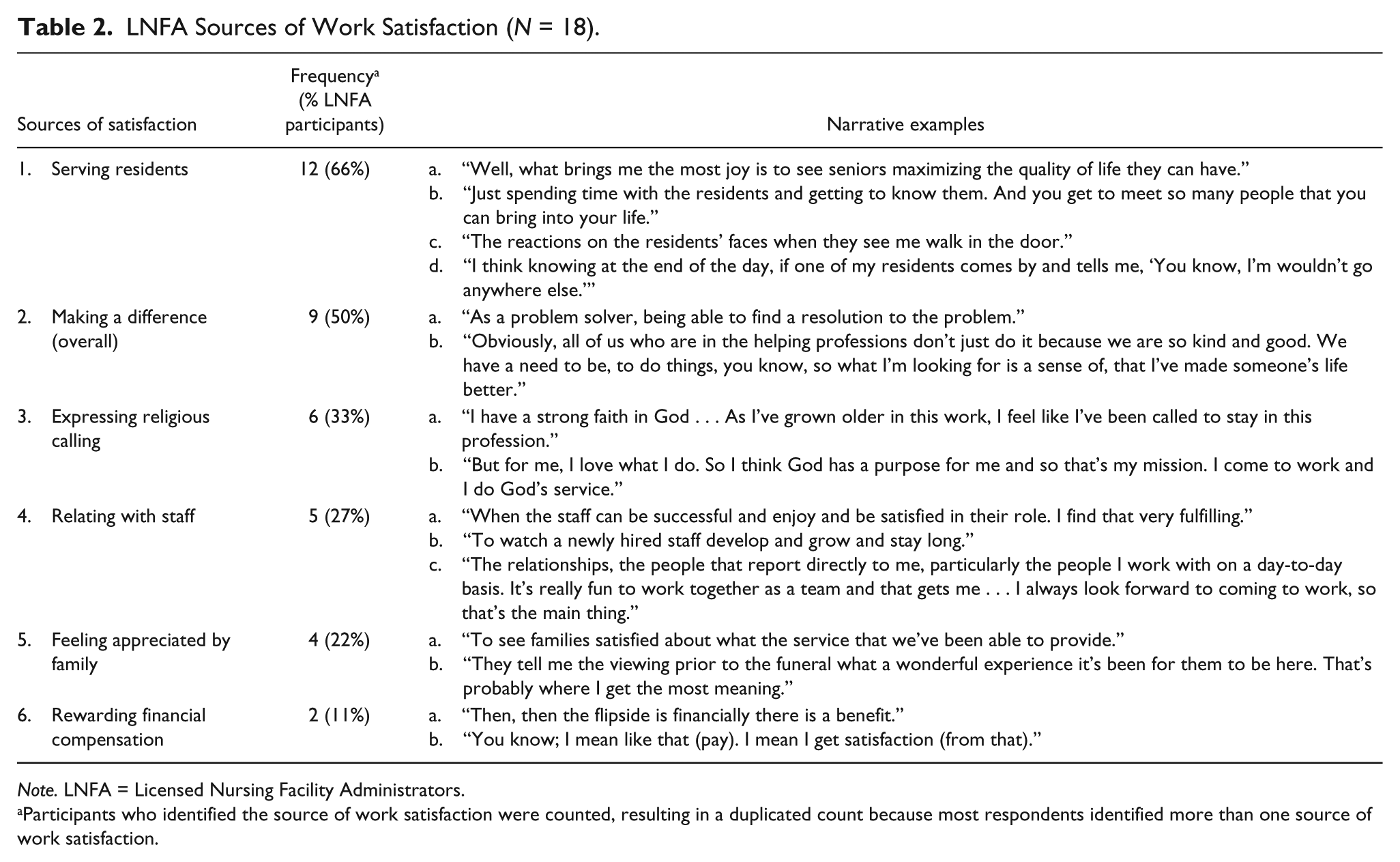
The work environment can offer opportunities to fulfill internal motivations and expectations, helping to explain why LNFAs remain in the role while simultaneously managing work life stressors. Table 2 displays six primary sources of work satisfaction among the LNFAs in our sample.
LNFA Sources of Work Satisfaction (N = 18).
Note. LNFA = Licensed Nursing Facility Administrators.
Participants who identified the source of work satisfaction were counted, resulting in a duplicated count because most respondents identified more than one source of work satisfaction.
The opportunity to serve and relate with residents is an often reported source of work satisfaction among LNFAs (McCarthy, 2004; Tellis-Nayak, 2007) and is replicated in this study. Singh and Schwab’s (2000) findings on performance efficacy as an important factor in satisfaction was consistent with the LNFA’s desire to make a difference. Opportunities to express a religious call or serve God were a significant source of satisfaction in our sample. This source had not been previously reported in research on LNFA job satisfaction, but was a correlate of resilience in studies of other health care professionals (Maldonado Feliciano, 2006). The two LNFA’s who reported satisfaction with their financial compensation confirm the findings of other studies that they tend to report satisfaction with the compensation they receive Castle et al., 2007).
Strategic Principles for Resilient Practice
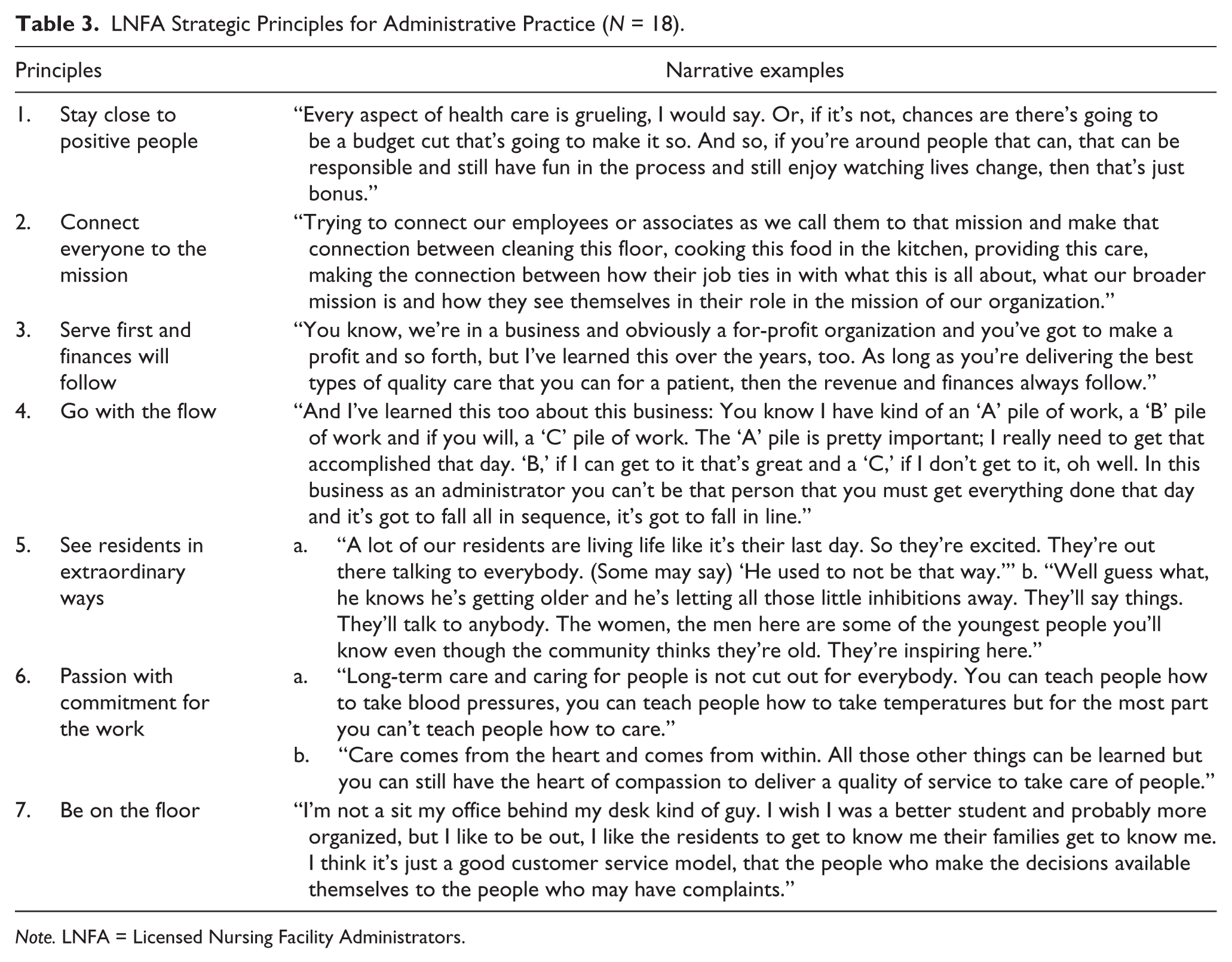
As we reached for more elaboration of how the LNFAs in our sample experienced stressors, the LNFAs shifted the focus to more general or core ideas that framed their administrative response to the stressors they identified, offering a glimpse into the thought processes of resilient and effective LNFAs. We organized common statements to form categories under the theme of strategic principles, defined as the assumptions and guidelines LNFAs follow in addressing the stressors of the work context. These principles constitute time-tested practice wisdom that addresses the gap between knowing what is expected and not knowing how to respond. After analyzing the data, the researchers invited a team of five experienced LNFAs to select and validate the statements that offered the most substantial guidance for LNFAs as they address the domains of competent practice. In Table 3, we provide summary statements of the principles and sample quotes.
LNFA Strategic Principles for Administrative Practice (N = 18).
Note. LNFA = Licensed Nursing Facility Administrators.
These strategic principles are leadership “lessons learned” shaping LNFA decisions and increased capacity to survive and even thrive, irrespective of the specific stressors they encountered. Similar to leadership guidelines in other professions, these principles are anchors for career-sustaining action to remain resilient while encountering the demands of the role; relating with staff, family, and residents; and responding to the organizational and regulatory context.
Administrative Practices for Resilient Practice
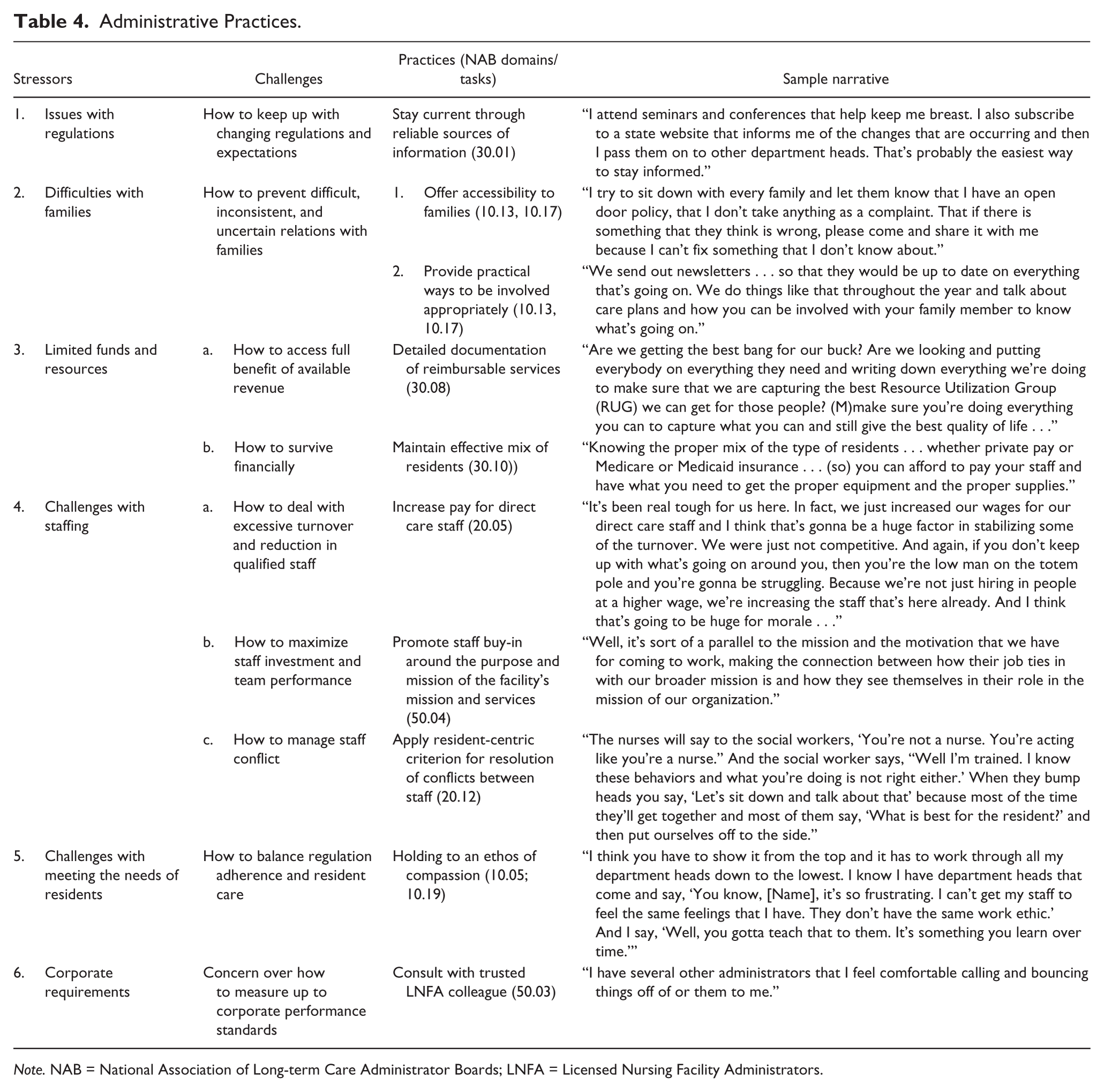
The narratives provided by our sample were helpful in understanding how resilient LNFAs responded to the work life stressors identified in Table 1. Researchers were interested in observing what decision-making and resiliency strategies were adopted by the participants for each source of stress, knowing that each one required resolving complex challenges. The analysis was focused on what action (practice/strategy/decision) they used to address the challenge presented by the stressor. We also linked their responses to the NAB competency domains, illustrating how resilient LNFAs’ action to reduce the impact of the stressor also demonstrated competent practice. Identifying what they do when faced with the stressor was the intention of the analysis. In Table 4, we identify the challenge that the LNFA associated with a stressor; specify the administrative practice response along with the related NAB domain and task; and provide a narrative example of what the LNFAs did.
Administrative Practices.
Note. NAB = National Association of Long-term Care Administrator Boards; LNFA = Licensed Nursing Facility Administrators.
The 10 practices identified through narratives of the resilient LNFAs in our sample represent a first attempt at documenting what resilient LNFAs do when confronted with the stressors of their role. Table 4 links stressors with adaptive practices organized within the NAB competencies framework. Several advantages of this integrative approach can be noted. LNFAs and those invested in their successful leadership can readily access prescriptive actions because they are indexed by the stressor at play. In addition, the stressor-practice relationship is organized within the NAB competencies, task, knowledge, and skills structure, thereby providing very practical recommendations for enacting the task identified within the domain.
These practices of resilient LNFAs bridge the gap between what should be done (tasks) and how to actually demonstrate competence. This “implementation” guidance also demonstrates how the NAB-identified knowledge and skills associated with competent task performance can be applied to the real life stressor the LNFA is experiencing. Finally, the practices of resilient LNFAs can be categorized with the five domains of competence, making them available for instructional venues that use them to design and deliver educational units.
Discussion, Limitations, and Implications
Discussion
The researchers’ interest in this study is grounded in understanding how LNFAs are able to stay and thrive in the role in spite of extensive work life stressors and exceptional turnover and role abandonment in the profession. This exploratory study of long-tenured LNFAs introduces career resiliency as a substantive frame for understanding how they remain in the role and navigate the work-related challenges they encounter. This study moves the conversation beyond documenting stressors and identifying structural factors predictive of turnover. The findings provide evidence of how LNFAs adapt to stressors and what factors (sources of satisfaction, Table 2; strategic principles, Table 3; and administrative practices, Table 4) contribute to role resilience. Extensive evidence (McCann et al., 2013) supports the shift from a deficit-based (what is wrong) to a resilience-based (what is right) perspective that informed our analysis of the interviews.
The six sources of satisfaction for LNFAs identified in Table 2 are congruent with the job satisfaction findings in other health care professions (Hart et al., 2014). We interpreted the six sources as both expectations that LNFAs were seeking to actualize through their role performance and outcomes or rewards that energize their resiliency. In addition, opportunities to engage these sources may provide protective energy to offset work stressors. This speculation awaits further study aimed at clarifying if and how LNFA job satisfaction and resiliency are related.
Rather than asking how resilient LNFAs utilized personal strategies of stress reduction or how they benefitted from organizational attempts to reduce it, the researchers explored how resiliency was expressed through their administrative acts—explicit cognitive and behavioral responses to specific stressors. (We concur with Bartelt, 1994, that resilience is never directly observed—it is always imputed.) In our view, this approach provides the most productive path to understanding how resilience is translated into everyday practice, essentially operationalizing “unobservable” LNFA resilience in the SNF setting and increasing the likelihood that it could be strengthened by applying evidence-based, LNFA-generated practice wisdom.
Analysis of the interviews revealed seven strategic principles or core guidelines (Table 3) LNFAs follow when addressing stressors in the work context. We also reported 10 practices (Table 4) that competent LNFAs use when presented with dilemmas that emerge as they encounter work life stressors (Table 1). These findings may appear familiar because they are part of the practice wisdom imparted by experienced administrators in classrooms and curriculum reading materials, and through exchanges with their mentors in preceptorships. However, we are not aware of any previous systematic inquiry into resilient LNFA practice wisdom that has elevated these principles and practices from the realm of anecdotal to empirical. All involved in the preparation and retention of LNFAs would benefit from an inventory of vetted principles and practices offered by colleagues who have demonstrated that they know how to bridge the gap between what they are expected to do and how to do it.
NAB’s competency domains provide scaffolding for linking career-sustaining principles and practices with knowledge and task expectations for the LNFA role. For example, the seven strategic principles our participants offered can be related to four of the five domains of competent practice: Resident-Centered Care and Quality of Life (See Residents in Extraordinary Ways, and Be on the Floor), Human Resources (Connect Everyone to the Mission), Finance (Serve First and Finances Will Follow), and Leadership and Management (Stay Close to Positive People, and Go With the Flow). Perhaps another category needs to be added to the NAB framework that shows the relationship of these and other vetted principles and practices to the domains, tasks, knowledge units, and core skills for practice. Integrating them in this way would put them in the mainstream of preparatory and continuing education.
Our interpretation of the compelling narratives and descriptions of work life provided by the LNFAs offers evidence and language to empower professional organizations and other groups to improve the public image of the profession, promote less stressful work environments, and sensitize consumers and their families with a more empathic appreciation for the position. The study could also serve as a catalyst for collegial consultation at professional conferences and among networks of colleagues locally.
Study Strengths, Limitations, and Future Research
Although current research on resilience among health care professions is extensive (McCann et al., 2013), no previous studies have investigated how resilience applies to the work life experience of LNFAs. In response, this exploratory study is the first to introduce career resilience as a heuristic organizing frame in understanding LNFA responses to a stress-intensive work setting. McCann et al. (2013) organized health care professional research on resilience along two dimensions—personal and contextual. This study focuses on the LNFA’s response to key contextual stressors of the SNF environment such as relationships with staff, families, corporate management, and regulators. Our findings offer initial insight into resilient principles and practices but did not provide an in-depth understanding of how resilient LNFAs navigated the stressors of these relationships, a focus of future research. In addition, we did not examine personal resilience resources (meditation, exercise, work life balance, etc.; McCann et al., 2013) that also play a pivotal role in LNFA resilience. Inquiry into this aspect of resilience is a critical next step to have a holistic view of their capacity to stay and thrive in the role and inform the development of valid measures of LNFA resilience.
The sampling strategy delivered study participants from a variety of facility types with over-sampling from private, for-profit facilities. The inclusion of an experienced panel of LNFAs in vetting the narrative interpretation process strengthens the trustworthiness and accuracy of the findings. The generalizability of the findings was limited by the size and non-random nature of the sample and the decision to limit sample selection to regional SNFs.
Based on our findings, future research should expand understanding of career resilience as an explanatory variable in the LNFA work life experience. Selecting a larger and more representative sample, organized around the NAB domains of competency may produce a rich inventory of strategic principles for career resiliency and administrative practices for managing work life stressors. Exit interviews with LNFAs who are terminated or voluntarily abandon the role should be conducted to gain a perspective on the barriers to activating resilience strategies. Consistent with recent calls (Siegel, Leo,Young & Castle, 2014) for research to inform classroom and internship education, research initiatives such as these will result in the dissemination of evidence-based principles and administrative actions.
Recommendations for LNFAs
Based on our findings, we offer the following recommendations to professional organizations, educators, regulators, and employers for strengthening LNFA resilience and increasing resilience-promoting resources within the SNF environment. Our recommendations are informed by McAllister and McKinnon’s (2009) comprehensive review of research on resilience of health care professionals. Our caveat about these recommendations is that full implementation will need to be grounded in evidence that emerges as researchers provide the kind of understanding of LNFA career resilience that is already available in studies of other health care professions.
Introduce the concept of career resilience into the curriculum of licensure, preceptorship, and continuing education programs, drawing on the research and educational programs (e.g., Jackson, Firtko, & Edenborough, 2007) from other health care professions to inform instruction and resilience-building initiatives.
Disseminate future research findings on strategic principles and practices by organizing them within the five NAB competency domains in order to improve educational preparation and continuing education. Delivery of content viewed as relevant to work skills is a predictor of LNFA retention (Castle et al., 2007). This approach would deliver guidance in knowing how to achieve competencies in the context of stressors inherent in the SNF environment.
Usesocial media, such as blogs, websites, and other venues, to communicate with LNFAs about the effective practices adopted by their resilient peers to deal with the most significant stressors associated with the role. Expand opportunities for mentoring and coaching centered in strengthening career resilience, creating what McAllister and McKinnon (2009) call a generative health professional culture.
Promote a LNFA-centered, strengths-based perspective on administrative development and retention. Facilitate LNFAs’ awareness of the unique resilience-promoting assets available within themselves and within the context of their work. Offer hardiness training programs customized for the unique stressors they face, emulating work life fitness enhancement associated with other professions (nurses, first responders, service members) in high stress and trauma-inducing contexts.
Avoid the tendency to view the promotion of LNFA-centered resilience as a stand-alone initiative. The possibility that LNFAs can remain and thrive in their role is contingent upon deep recognition that external actors and accountability structures such as corporate managers and regulatory officials may limit the freedom of LNFAs to actualize their intention to remain in the role. Resilient administrators recognize the ambiguity of the political and cultural context in which they work, and have developed principles and practices to address these external realities to the extent possible. The task of future researchers will be to collect and disseminate this nuanced narrative.
Summary
The researchers in this exploratory study sought to understand how career resiliency is manifested in LNFA administrative practice. Resilient LNFAs have much to offer in understanding how staying and flourishing in the role is possible. Through their willingness to tell the story of their daily experiences, those who regulate, supervise, enact, and aspire to the role are offered a small glimpse of what resiliency looks like for those serving and leading in this way. With ongoing research, the career resiliency of the LNFA can be strengthened, enriching the quality of life of residents and families served by long-term care facilities.
Footnotes
Declaration of Conflicting Interests
The authors declared no potential conflicts of interest with respect to the research, authorship, and/or publication of this article.
Funding
The authors received no financial support for the research, authorship, and/or publication of this article.