







Abstract
Prior research on gerontology and housing has frequently adopted a perspective that aging-in-place is the “goal.” Despite these meaningful results and policy implications, opportunities to explore consequences of aging-in-place, such as the association of this with overall well-being, have been overlooked. This study aims to fill this gap by investigating perceptions of well-being that could act as a driver or result of aging-in-place. With a nationwide random sample of non-Hispanic White, older individuals (60+), living in their homes (N = 328), three segments of senior residents based on their reasons for aging-in-place were identified. Results reinforce the importance of community-based integrative programs and policies by indicating that the three identified clusters were not homogeneous; however, inclusive community-based supports and services can provide what each cluster needs to successfully age-in-place. Discussion provides a perspective on how to support successful aging-in-place, including the role of the federal government in funding and legislation.
Introduction
Aging-in-Place Research
The most prevalently cited definition of aging-in-place is “the ability to live in one’s own home and community safely, independently, and comfortably, regardless of age, income, or ability level” (Center for Disease Control and Prevention, 2013). It has been considered a desirable response to the needs of aging individuals. We agree with the prevalent value of the psychological and emotional benefits from aging-in-place reported by numerous researchers (e.g., Fried, 2000; Shenk, Kuwahara, & Zablotsky, 2004); however, we also strongly agree with Golant’s (2015) argument that “we need to rethink conventional wisdom regarding the virtue of aging in place” (p. 70). He argued that older individuals cannot avoid being exposed to the aging-in-place messages from various media.
Thomas and Blanchard (2009) also pointed out that a commitment to remain a current “house” which has been cultivated in various values in America may actually do harm. Their point is not against aging-in-place, rather emphasizes more “relationships” in communities than “dwellings,” indicating the shift of aging-in-place concept. As indicated in the research done by Vasunilashorn, Steinman, Liebig, and Pynoos (2012), over three decades, researchers have placed greater emphasis on conceptualizing aging-in-place as an “attainable and worthwhile goal” (p. 2). In a study of the evolution of research topics in aging-in-place from 1980 to 2010, they reported that aging-in-place has been a focal concept in the gerontology field for 30 years and presented the evolution of the research topics from environmental factors to technology and service-related factors by tracking aging-in-place research topics in gerontology fields. Unlike this “goal” perspective, one of the valuable perspectives different from this view was discussed by Scharlach and Moore (2016). They claimed aging-in-place is not just a goal “rather an adaptive process of ongoing person-place transactions over time” (p. 420). In their discussion, “place” has richer and dynamic meanings including a dimension of “time” based on the ecological framework of place (EFP) developed by Moore (2014).
In Vasunilashorn et al.’s (2012) study, not surprisingly, a few studies highlighted the potentially negative experiences of aging-in-place. It seems that attention to issues related to stuck-in-place, staying in the current place without other options, had not been paid by either researchers or housing policymakers during this period (1980-2010). It could be because this segment of the population does not represent the majority of the elderly in the United States. Although it is true, it does not mean the negative side of aging-in-place phenomena can be ignored, especially considering that psychological and environmental well-being in later life is closely related to the living arrangements of older adults (Cornwell, Laumann, & Schumm, 2008). We assume that studies reporting negative experiences on aging-in-place would be more prevalent if Vasunilashorn et al. (2012) included research conducted after 2010 which represented a more recent conceptualization of aging-in-place and diverse interpretations of the value of aging-in-place, such as paying more attention to the stuck-in-place or involuntary stayers (Oswald, Jopp, Rott, & Wahl, 2011; Strohschein, 2012). These critical perspectives on the aging-in-place have been discussed in recent research. For example, Scharlach and Moore (2016) indicated that aging-in-place for specific segments (e.g., females, living alone, less than high school education) might directly and indirectly deteriorate their well-being as they age. Moore and Ekerdt (2011) also pointed out the desire to age-in-place should not be understood as a simple, universal concept, considering the variations of the meanings of home across cultures and generations.
Well-Being in Later Life
Overall well-being can be understood as the sum of individual well-being domains, such as psychological, financial, and environmental well-being. Each individual well-being domain plays an important role as a component of overall well-being; however, some well-being domains play a more salient role in later life. One is living arrangements in later life. Supportive and well-designed residential environments, including home and community, are crucial for maintaining individual quality of life for older adults (Stoeckel & Litwin, 2015; World Health Organization [WHO], 2007).
In an environmental gerontology field, these environmental features, such as Universal Design and services, have been recognized as critical to older adults since Lawton and Nahemow (1973) proposed the environmental press theory (Scharlach & Moore, 2016). This seminal work emphasizes the interactions between the residential environment (environmental press) and the physical capabilities of older adults (individual competence) in achieving positive effects and status between the adaptive behavior and presented environment. Within this theory, environments can act as a resource or pressure. In the current study, environmental well-being was conceptualized as individual’s balanced and controllable feelings on residential environments. Housing satisfaction and neighborhood satisfaction have been used as good indicators of environmental well-being (Hur & Morrow-Jones, 2008) and overall well-being for older adults (Stoeckel & Litwin, 2015).
In addition to these environmental factors, psychological, financial, and health factors are closely related to the overall well-being of older persons. One of the critical domains of older persons’ psychological well-being is social connectedness, the feeling of being connected to other people and communities (Giummarra, Haralambous, Moore, & Nankervis, 2007). Social connectedness is important for older people not only because it provides older adults with the feeling that they are valuable to others (Rowe & Kahn, 1987) but also because a lack of social connectedness can threaten their physical and mental health (Pettigrew, 2007). Social connectedness may be important across generations; however, it is emphasized more among older people given that age is negatively related to the scope and intensity of social network whereas age is positively related to the experience of loneliness (Bowling & Gabriel, 2004; Cornwell et al., 2008).
Numerous studies claim that self-esteem, summed feelings of self-worth, and positive self-regard (Kaplan, 1975) are significant factors in psychological well-being in later life. Self-esteem has been found to be positively associated with happiness, alleviating stress among older people (Murrell, Meeks, & Walker, 1991), physical health, and longevity (Levy, Slade, & Kasl, 2002). Collins and Smyer (2005) showed that maintaining self-esteem was important for older adults’ psychological well-being and highlighted the importance of managing losses and protecting self-esteem in later life.
Physical well-being, a subjective perception of physical health, is also one of the strongest indicators of life satisfaction for older adults (Abu-Bader, Rogers, & Barusch, 2002), and thus, maintaining physical health is critical for overall well-being in later life (Liffiton, Horton, Baker, & Weir, 2012). Through in-depth interviews with 99 low-income, frail elderly individuals living in a community in the United States, Abu-Bader et al. (2002) found four predictors of these seniors’ life satisfaction, and among those four, the most significant predictor was perceived physical health. They highlighted that the subjective measure of physical health is a more important and significant predictor of life satisfaction than the objective measure of actual functional ability. Gerontology studies also have indicated a negative relationship between the reduced capacity to perform activities and the life satisfaction of older adults (Borg, Hallberg, & Blomqvist, 2006).
Regarding a financial well-being, many studies showed that poor financial resources are negatively related to life satisfaction for older people (Borg et al., 2006; Kim & Gordon, 2014). Financial strains lead to negative well-being (Kim & Gordon, 2014), including a feeling of alienation and a sense of low control over life situations (Mirowsky & Ross, 2003). In addition, such negative effects of financial strains worsen in later life (Dannefer, 2003). More importantly, perceived financial strain or need, which is a subjective measure of financial state, was reported as a significant predictor of well-being even when household income (an objective measure) was not (Sun, Hilgeman, Durkin, Allen, & Burgio, 2009). According to a study by Borg et al. (2006), poor financial resources in relation to need, along with poor self-reported physical health, showed the strongest explanatory power of life satisfaction for those aged 65 and above.
Based on the previous studies that demonstrate the significant influence of the domains of well-being to the overall well-being of older persons, this study included environmental, psychological, physical, and financial well-being as indicators of overall well-being.
Purpose of the Current Study
Stoeckel and Porell (2010) found that older adults with low income were less likely to move, and proposed this may be due to limits in the availability of affordable housing options. This segment of the elderly population could be involuntary stayers as mentioned by Strohschein (2012). Lehning, Smith, and Dunkle (2015) also found that respondents who were older, had lower incomes, and resided in urban areas were more likely to expect to age-in-place. However, scholars reported that it was uncertain whether the desire was due to their satisfaction with the environment or the recognition of no other place to live. These studies provide meaningful insights of who wants to age-in-place; however, the implications of these studies are not clear in terms of how to support the individuals’ aging-in-place. More importantly, they did not clearly indicate if staying in the current place is beneficial to these older persons. The house where older adults want to stay might not be the right place in which to age. We argue that these studies took a perspective on the aging-in-place concept as a “goal,” thus did not focus on the association of aging-in-place with well-beings. We evidently disagreed with the perspective that the concept of aging-in-place is understood as a “goal” and wanted to explore the relationships among the reasons for aging-in-place and perception of well-being. Taking this perspective would be beneficial in understanding the aging-in-place issues better; however, little research has incorporated this perspective with aging-in-place studies in the United States. This study aims to fill this gap by integrating well-being factors for a better understanding of aging-in-place issues.
The purpose of this study was to identify segments of senior residents based on their reasons for aging-in-place. It also examined the significant differences among the identified segments based on their demographic and housing characteristics and perceptions of four well-being domains (psychological, environmental, physical, and financial). Considering the nature of federal policies that put priorities on the majorities, we only included older non-Hispanic Whites who represent the current majority race in the United States to this current study.
Method
Sampling and Participants
The target population of this study was non-Hispanic, White individuals aged 60 and older, living in their home in the United States. Data were collected in May 2016, through an online survey that was offered to a random sample of non-Hispanic, White (n = 328) and Hispanic (n = 322) older persons. For this study, data from Whites (N = 328) were analyzed. The sample was sourced by Qualtrics, who directed respondents matching the desired demographics to the survey link from their national-based list. Through the series of screening out questions, those who were below 60 and living in an institutional facility were excluded.
Measures
The questionnaires consisted of four sections: (a) reasons for aging-in-place, (b) four domains of well-being, (c) demographic and housing characteristics, and (d) desire to age-in-place.
Reasons for aging-in-place
A definition of aging-in-place was provided at the beginning of the survey questionnaire. Questions were developed based on Wiseman’s (1980) elderly migration process model, Litwak and Longino’s (1987) elderly migration framework, and other relevant literature (Kwon & Beamish, 2014; Oswald et al., 2007). Wiseman (1980) proposed a conceptual model of push and pull factors and indigenous and exogenous factors that influence on the decision to remain in a current home or to move based on the aging-related triggering mechanisms. The factors were related to health condition, family, housing market, environmental design, and social bonds. Litwak and Longino (1987) suggested three groups of seniors who consider relocation based on their health and financial status. Other studies (Kwon & Beamish, 2014; Oswald et al., 2007) emphasized the importance of accessible housing design and local amenities and services for aging-in-place. This current study identified 35 reasons for aging-in-place items related to health condition, financial situation, familial status, and housing condition, and neighborhood. Each item was measured using a 7-point Likert-type scale (1 = strongly disagree to 7 = strongly agree).
Well-being
Four domains of well-being were included: psychological, environmental, physical, and financial well-being. Psychological well-being was measured with 10 items about self-esteem developed by Rosenberg (1965) and five items about social connections developed by Lee and Robbins (1995). Items for measuring environmental well-being were modified from a bref version of the World Health Organization Quality of Life Instruments (WHOQOL-BREF) developed by the WHO (Skevington, Lotfy, & O’Connell, 2004). Environmental well-being was measured with three items about the micro-environment and four items regarding the macro-environment. Physical well-being was measured with eight items developed by Reker and Wong (1984). Financial well-being was measured with eight items used in Prawitz et al.’s (2006) study. Each item was measured with a 7-point Likert-type scale. The mean score of each well-being domain and the sum score of the four well-being domains were used for further analyses.
Desire to age-in-place
Participants answered a single question, “I want to age-in-place in the future,” using a 7-point Likert-type scale (1 = strongly disagree to 7 = strongly agree).
Analyses
SPSS 20.0 was used to analyze the data. Descriptive statistics were used for demographic and housing characteristics of the participants, reasons for aging-in-place, and desire to age-in-place. Through exploratory factor analyses, key reasons for aging-in-place were identified. A cluster analysis was used to group respondents based on the reasons for aging-in-place factors. One-way ANOVA and cross-tabulation analyses were used to analyze significant differences across the groups regarding the four well-being domains, demographic and housing characteristics, and desire to age-in-place.
Results
Profile of the Participants
As Table 1 shows, the average age of the participants was 67.3 years old (SD = 5.9). Particularly, almost 70% were 60 to 69 years old, 16% were 70 to 79 years old, and 4% were 80 years old or older. Almost two thirds of the participants were females (68%). Fifty-four percent were married and 46% were divorced/separated, widowed, or never married. The mean number of individuals per household was 1.9 (SD = 0.9). Almost 30% were employed or partly employed. Forty-six percent had a bachelor’s degree, 39% graduated high school or less, and 15% had a graduate degree. Thirty percent earned US$30,000 to US$49,999, 26% earned less than US$30,000, 24% earned US$50,000 to 69,999, and 20% earned more than US$70,000 per year.
Descriptive Information of the Participant (N = 328).
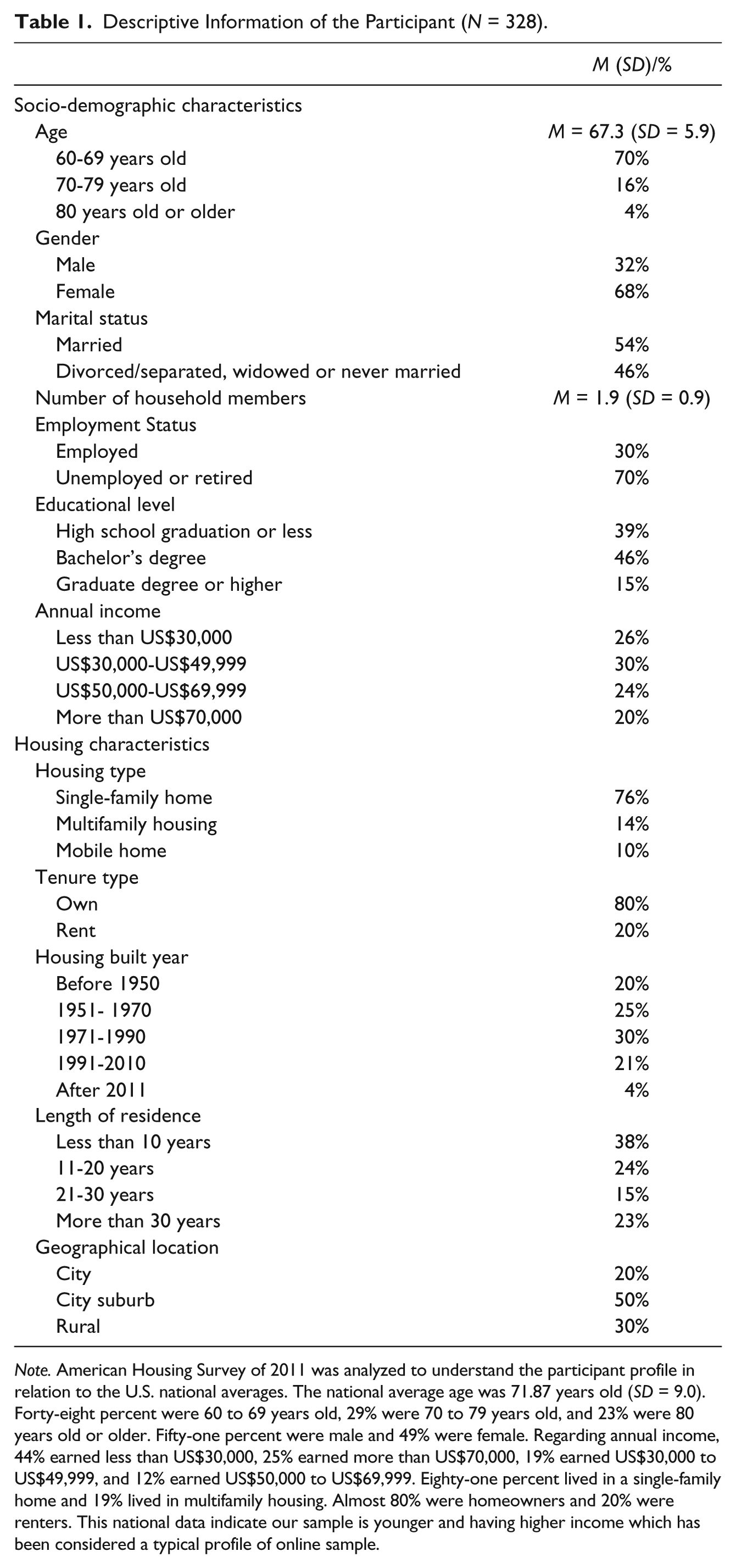
Note. American Housing Survey of 2011 was analyzed to understand the participant profile in relation to the U.S. national averages. The national average age was 71.87 years old (SD = 9.0). Forty-eight percent were 60 to 69 years old, 29% were 70 to 79 years old, and 23% were 80 years old or older. Fifty-one percent were male and 49% were female. Regarding annual income, 44% earned less than US$30,000, 25% earned more than US$70,000, 19% earned US$30,000 to US$49,999, and 12% earned US$50,000 to US$69,999. Eighty-one percent lived in a single-family home and 19% lived in multifamily housing. Almost 80% were homeowners and 20% were renters. This national data indicate our sample is younger and having higher income which has been considered a typical profile of online sample.
Seventy-six percent lived in a single-family home, 14% lived in multifamily housing, and 10% lived in a mobile home. Almost 80% were homeowners and 20% were renters. Almost 20% of respondents lived in a house built before 1950, 25% were built between 1951 and 1970, 30% were built between 1971 and 1990, 21% were built between 1991 and 2010, and only 4% were built after 2010. Thirty-eight percent lived in their current housing for less than 10 years, 24% for 11 to 20 years, another 23% for more than 30 years, and 15% lived for 21 to 30 years. Slightly more than half lived in city suburbs, 30% lived in rural areas, and 20% lived in city areas.
Among the four domains of well-being, items with higher mean scores were the psychological well-being (M = 5.88) and the environmental well-being (M = 5.62). Items with lower mean scores were the physical well-being (M = 4.80) and the financial well-being (M = 4.57). Ninety percent of the respondents desired to age-in-place.
Reasons for Aging-in-Place
Table 2 shows the distribution of 35 reasons for the aging-in-place items. Items with the highest mean scores included a strong desire to be independent in daily living (M = 6.50) and a strong sense of controlling my personal space (M = 6.29).
Description of Reasons for Aging-in-Place (N = 328).
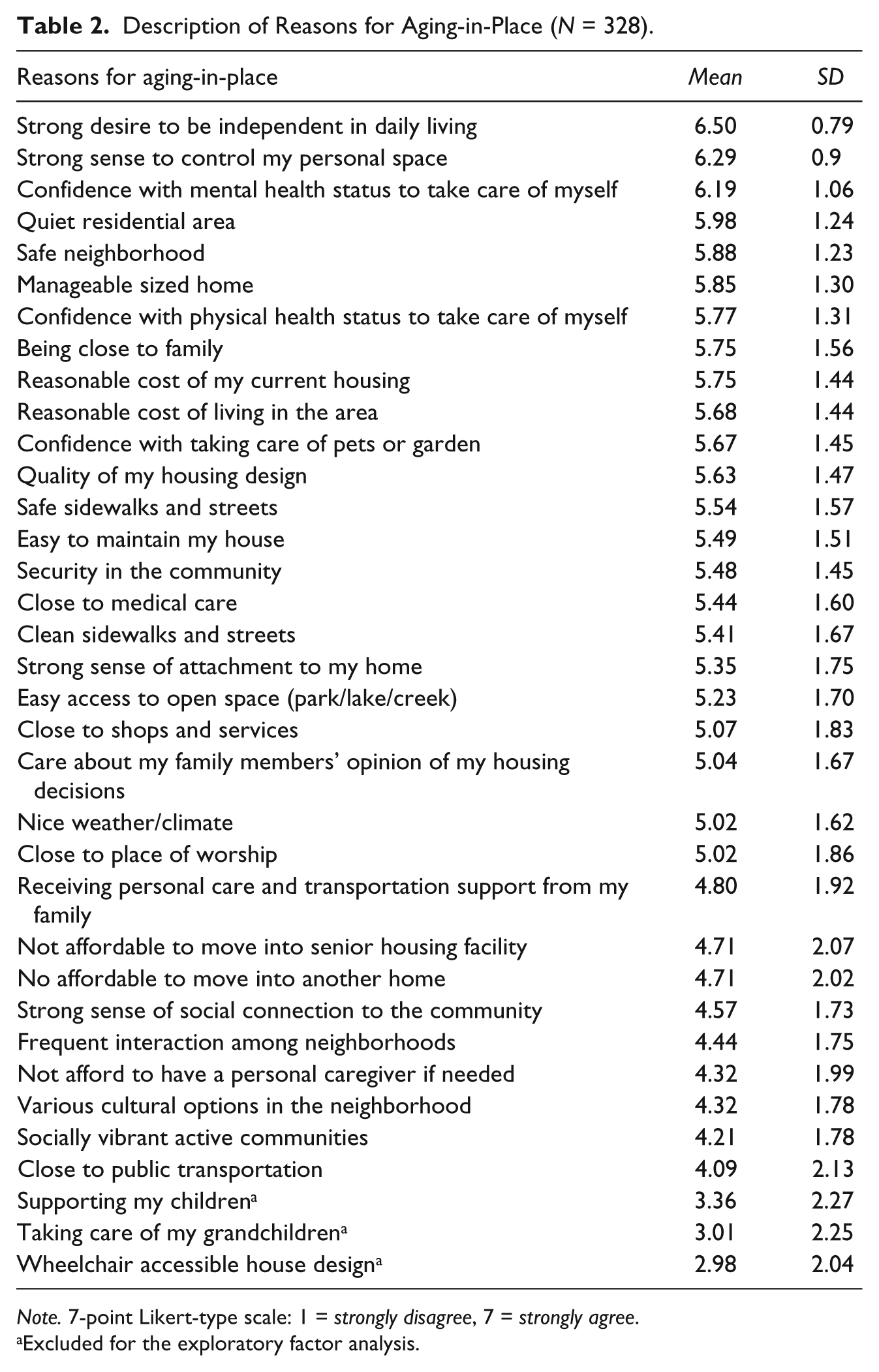
Note. 7-point Likert-type scale: 1 = strongly disagree, 7 = strongly agree.
Excluded for the exploratory factor analysis.
Among the 35 reasons for aging-in-place, three items were rated less than 4.0 mean scores: supporting my children (M = 3.36), taking care of my grandchildren (M = 3.01), and wheelchair-accessible housing design (M = 2.98). These items were considered unimportant reasons and excluded from the following exploratory factor analyses.
Factor analyses of reasons for aging-in-place
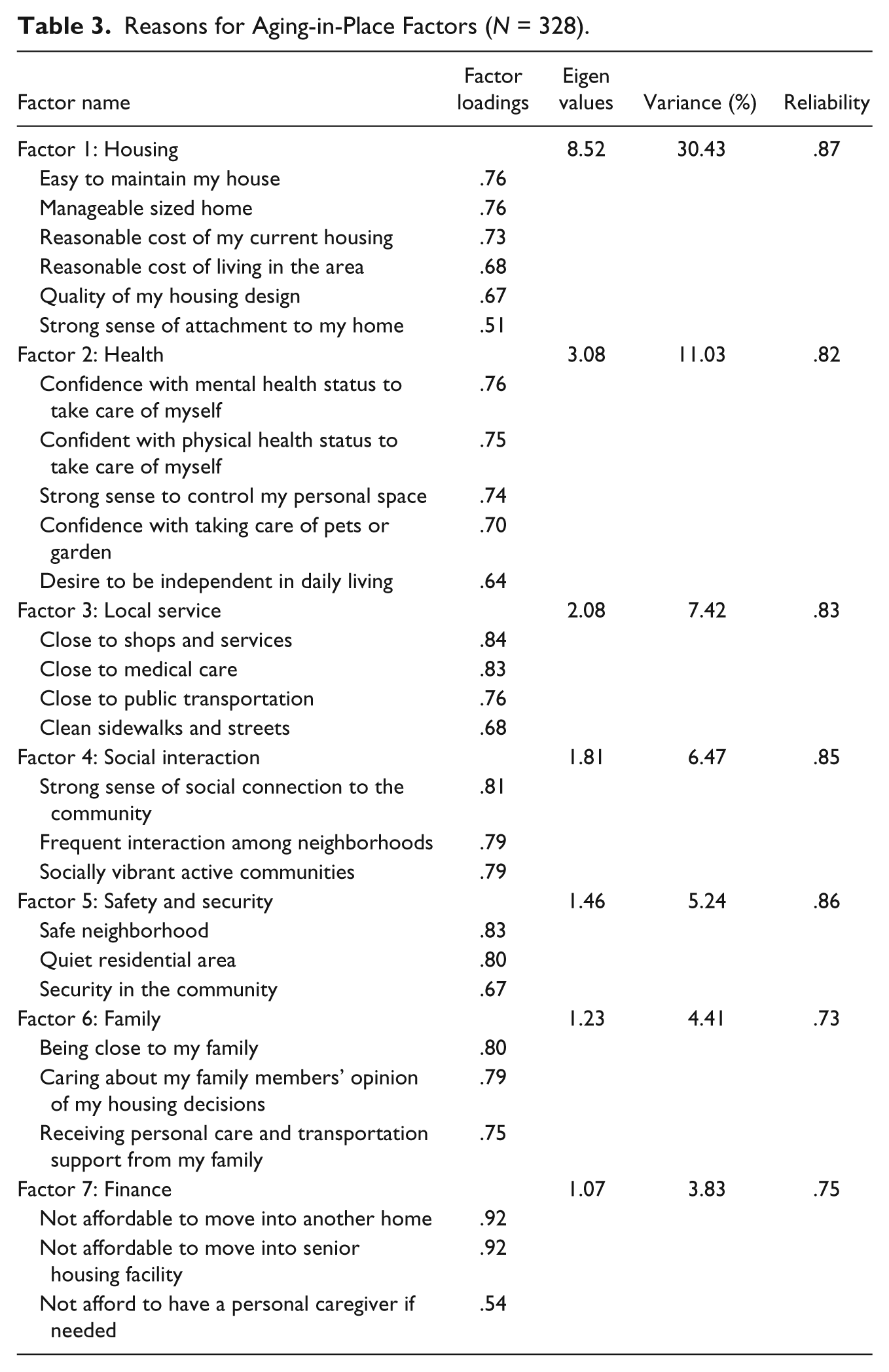
Thirty-two items for reasons for aging-in-place were analyzed using a principal components factor analysis with varimax rotation and eigenvalues exceeding 1. Non-loaded and highly cross-loaded items were sequentially excluded. As Table 3 shows, seven factors were extracted after the series of factor analysis. This explained 70.7% of the total variance of the 27 items. The first factor, named Housing, included housing-related reasons, such as easy to maintain my house and manageable size of my home. The second factor, named Health, contained items related to health reasons, such as confidence in mental and physical health status to take care of myself and a strong sense of controlling my personal space. The third factor consisted of items regarding proximity to local services, such as close to shops and services, medical care, and public transportation, named Local Services. The fourth factor, named Social Interaction, included items about social interaction in a community, such as a strong sense of social connection to the community and frequent interactions among neighbors. The fifth factor was named Safety and Security, which included safe neighborhood and quiet residential area. The sixth factor, Family, was related to family reasons, such as being close to my family and caring about my family members’ opinion of my housing decisions. The last factor contained items related to financial status, such as not affordable to move into another home and not affordable to move into a senior housing facility, named Finance. Cronbach’s alpha values for the inter-item reliability of the items within each factor were acceptable and ranged from .73 to .87 (Hair, Black, Babin, & Anderson, 2008).
Reasons for Aging-in-Place Factors (N = 328).
Cluster analysis and segment characteristics
A cluster analysis was used to identify distinctive groups of people based on the reasons for aging-in-place. A K-means cluster analysis was selected for a three-cluster solution that presented the greatest differences among the clusters. The univariate F tests confirmed significant differences between the three groups. They were named Easygoing Town Keepers, Finance-Cautious Worriers, and Balanced Achievers (see Table 4). Cluster names were created based on the combination of objective findings from the analysis and subjective interpretations of findings by the authors.
Segment Mean Scores.
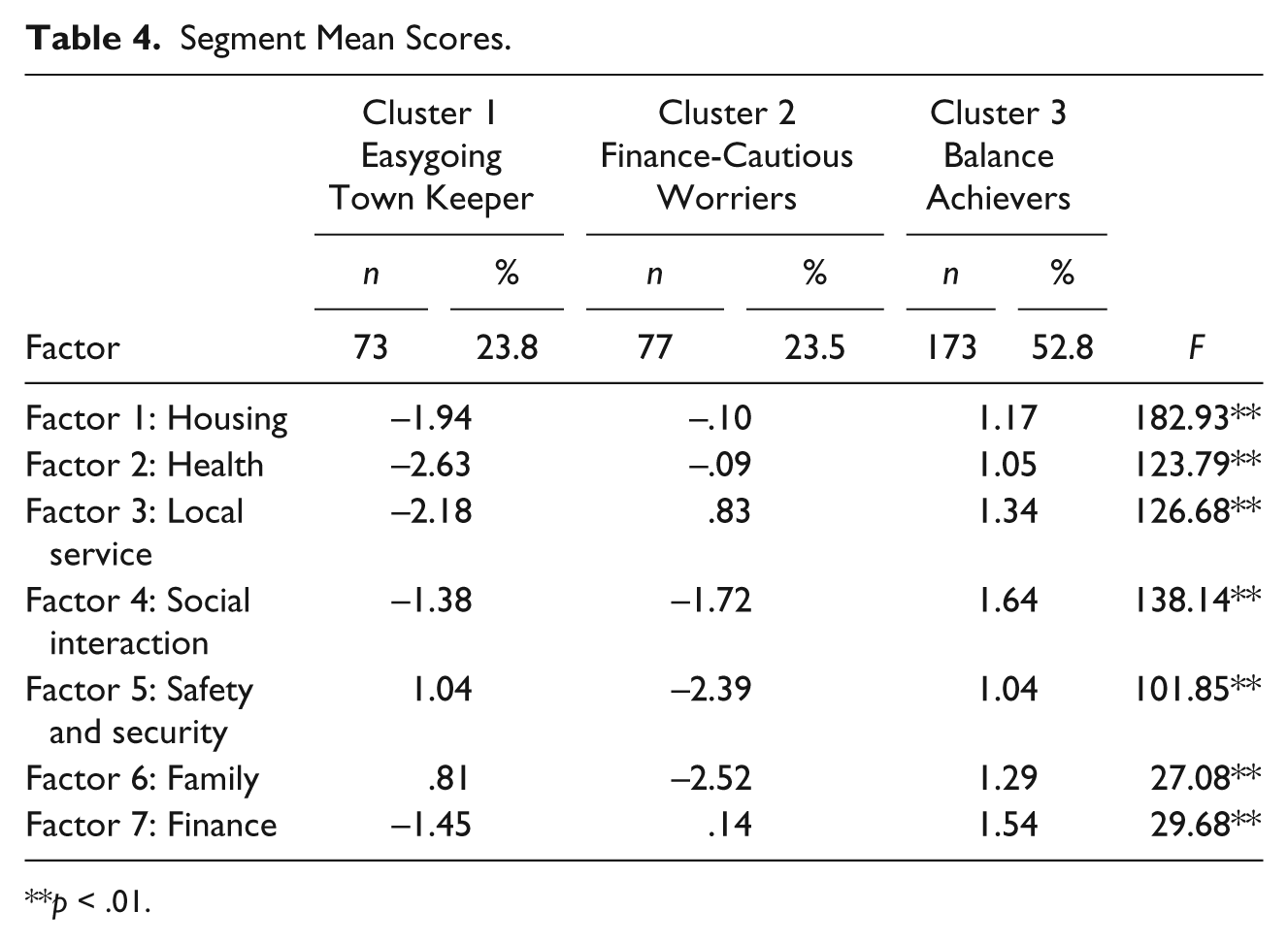
p < .01.
Easygoing Town Keepers (n = 78, 23.8% of the sample)
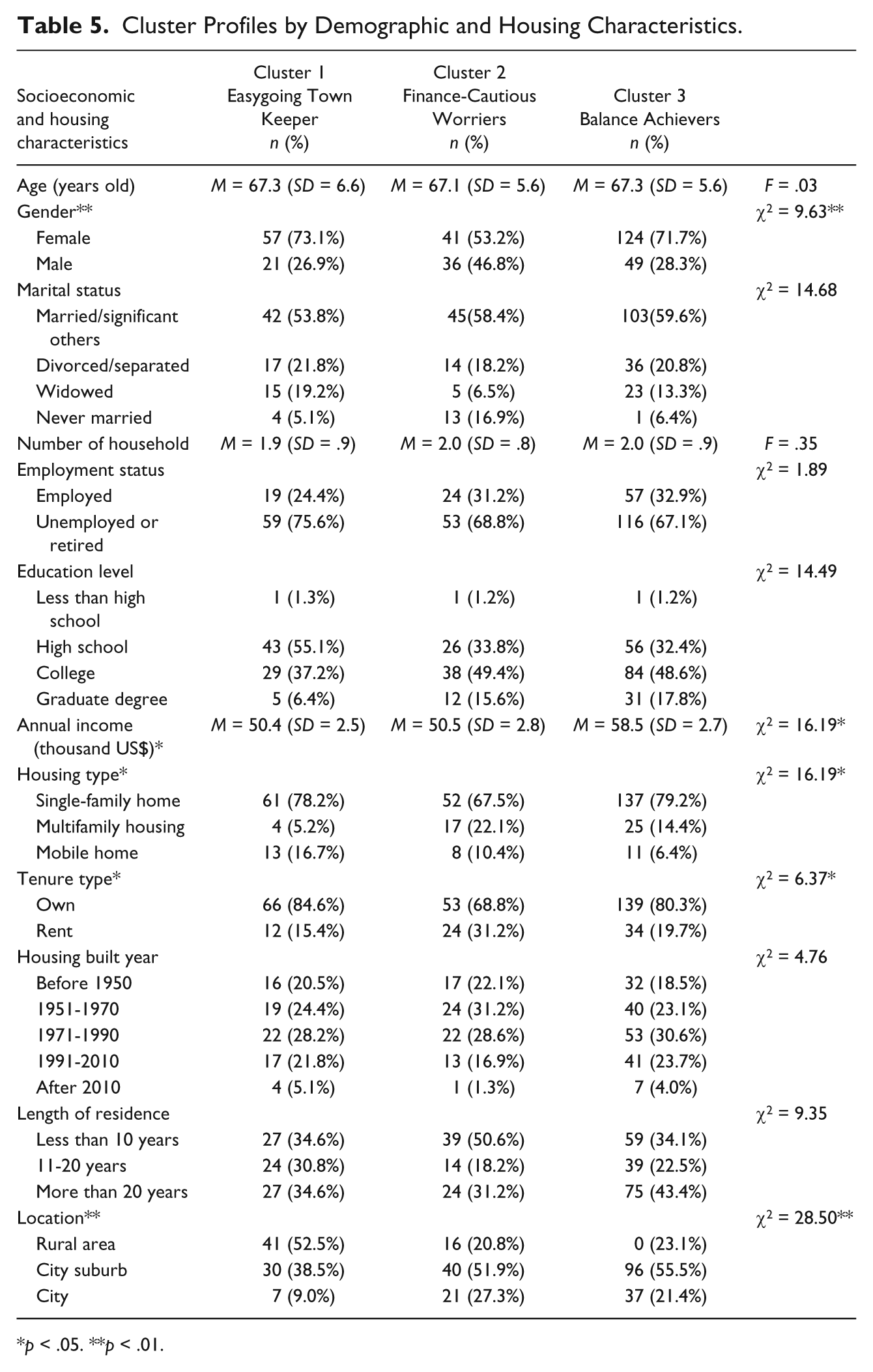
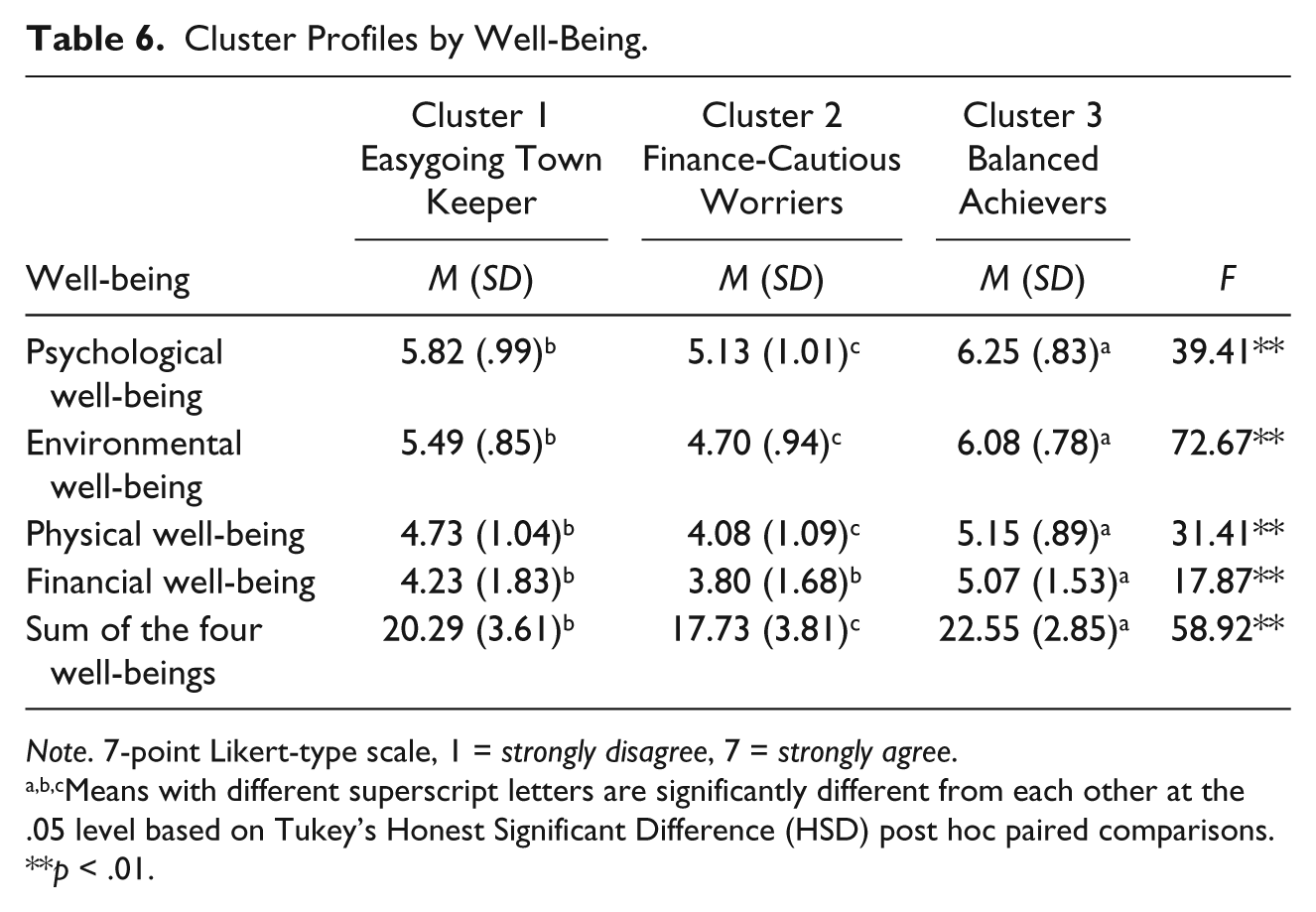
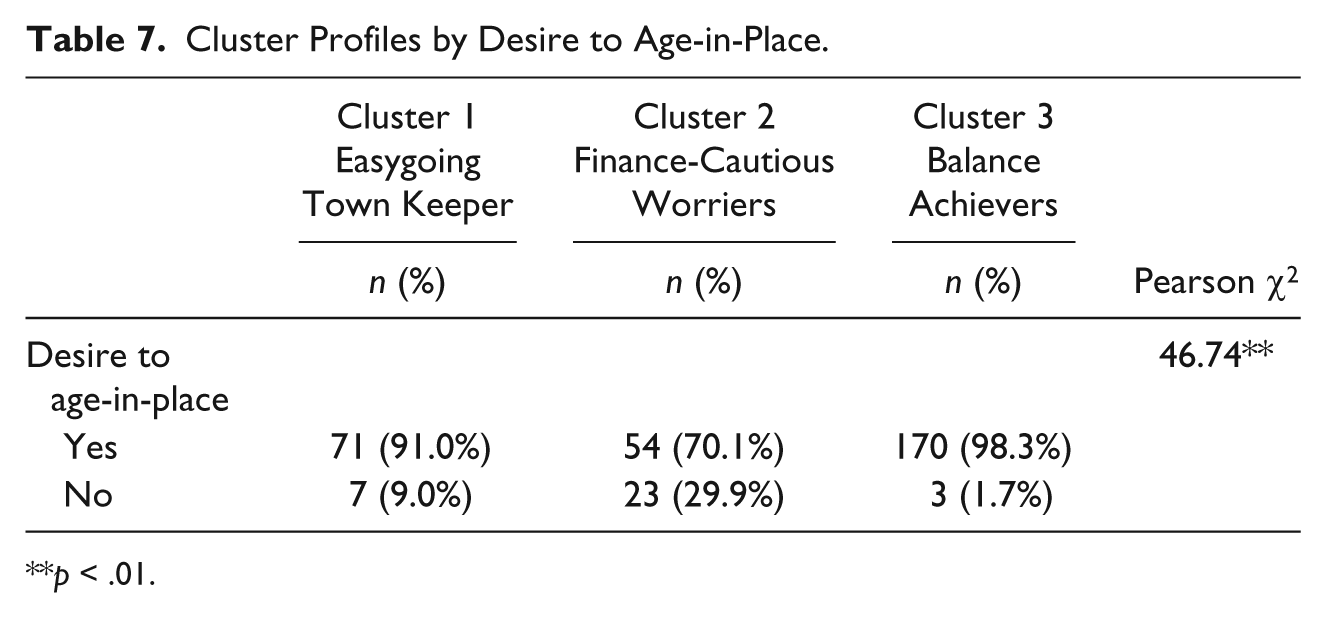
Safety and Security and Family factors were important reasons for aging-in-place for this group (see Table 4). Compared with the other two groups, this group had significantly more women, high school graduates, mobile home residents, and homeowners living in a rural area (see Table 5). Seniors in this group and the Finance-Cautious Worriers had lower incomes than the Balanced Achievers. Easygoing Town Keepers showed medium scores in psychological well-being (M = 5.82), environmental well-being (M = 5.49), physical well-being (M = 4.73), and financial well-being (M = 4.23) among the three groups. The sum score of the four well-being domains of the Easygoing Town Keepers was the second highest among the three clusters (M = 20.29; see Table 6). Ninety-one percent of the Easygoing Town Keepers desired to age-in-place which was the second highest among the three groups (see Table 7).
Cluster Profiles by Demographic and Housing Characteristics.
p < .05. **p < .01.
Cluster Profiles by Well-Being.
Note. 7-point Likert-type scale, 1 = strongly disagree, 7 = strongly agree.
Means with different superscript letters are significantly different from each other at the .05 level based on Tukey’s Honest Significant Difference (HSD) post hoc paired comparisons.
p < .01.
Cluster Profiles by Desire to Age-in-Place.
p < .01.
Finance-Cautious Worriers (n = 77, 23.5% of the sample)
Local Services and Finance factors were important reasons for aging-in-place for this group (see Table 4). Finance-Cautious Worriers group included significantly more men, college graduates, multifamily housing residents, and renters living in a city compared with the other two groups (see Table 5). More than half of the seniors in this group had lived in their current home for less than 10 years although the length of residence was not statistically significantly different from the other two groups. This group had lower incomes compared with the Balanced Achievers but similar to the Easygoing Town Keepers. The mean scores for psychological well-being (M = 5.13), environmental well-being (M = 4.70), physical well-being (M = 4.08), and financial well-being (M = 3.80) were significantly lower in this group compared with the other two groups (see Table 6). In particular, the mean score of the financial well-being domain (M = 3.80) was the lowest among the four well-being domains. In addition, the total score of the four well-being domains of this group was the lowest among the three groups (M = 17.73). Only two thirds of the Finance-Cautious Worriers desired to age-in-place which was the lowest percentage among the three groups (see Table 7).
Balanced Achievers (n = 173, 52.8% of the sample)
All seven factors of reasons for aging-in-place were important for this group (Table 4). Balanced Achievers segment included significantly more people with graduate degrees and higher income and single-family home residents living in city suburb areas compared with the other groups (see Table 6). Two fifths of the seniors in this group had lived in their current home for more than 20 years even though it was not statistically significantly different from the other two groups. This group scored the highest in the psychological well-being (M = 6.52), environmental well-being (M = 6.08), physical well-being (M = 5.15), and financial well-being (M = 5.07) domains. The sum score of the four well-being domains of this group was the highest among the three groups (M = 22.55; see Table 6). The vast majority of the Balanced Achievers (98.3%) desired to age-in-place which was the highest percentage among the three groups (see Table 7).
Discussion
This study identified three clusters. The needs identified for each cluster and implications based on our interpretation are provided.
Balanced Achievers
Half of the respondents, Balanced Achievers, could be described as an ideal segment of the older population in the United States because they demonstrated a balance among all scores and had the highest scores in the various well-being domains. Their desire to age-in-place could be described as an unforced, reasonable response to their aging process, as their desire to age-in-place did not seem to be an attempt to counterbalance lack of well-being in a particular domain. However, recognition of their future needs derived from health conditions needs to be considered. According to a national study in the United States, more than half of seniors aged 75 and older reported disabilities (Erickson, Lee, & von Schrader, 2016). Many researchers have suggested that even minor physical home modifications could support older adults with health declines and mobility limitations (e.g., Pynoos, Caraviello, & Cicero, 2009). Given the annual income of Balanced Achievers and their financial well-being scores, which were the highest among the three groups, this group would likely be able to afford home modifications if desired. However, even if there are no budgetary constraints, many seniors are unaware of the benefits of home accessibility (Pynoos, Liebig, Alley, & Nishita, 2005) or misunderstand home modification processes and costs. Therefore, providing relevant educational opportunities and easy access to information about home modification would be beneficial to support successful aging-in-place, along with maintaining current levels of physical well-being.
Supporting aging in the community for this group would significantly contribute to their quality of life. As almost half of those in this group had lived in their current housing for more than 20 years, it was not surprising that the social interaction factor was the most important reason for aging-in-place. In addition, they desired to stay in their current home because they could not afford to move into a senior housing facility or hire a personal caregiver. Providing affordable and flexible public nursing home care or locally based personal care services to meet short-term care needs could support individuals’ ability to remain in their current homes and communities. Enhancing housing affordability through land-use regulation is one option that federal and local governments could support older adults to stay in their current communities (Rosenthal, 2009). However, current local zoning ordinances may not facilitate the development of various housing types regarding size, type, and price, or control of additions of accessory dwelling units (Rosenthal, 2009). Regarding flexibility, Nelson (2009) reported that there were older adults’ rising demands and preferences for other types of housing, such as town homes or condominiums. Considering this, additional flexible options for affordable housing could be provided.
Easygoing Town Keepers
Another group (almost 25% of the respondents) who represented a stronger desire to age-in-place was the Easygoing Town Keepers. It seems that their desire to age-in-place either naturally originated, or was reflected from a perceived balanced well-being. This segment was more likely to live in rural areas and endorsed safety, security, and family as critical reasons for their successful aging. Given that, a community-based preventive approach to support their aging-in-place, such as creating a strong sense of community along with providing better opportunities to keep their family closer, rather than providing direct financial assistance for home modification, would be desirable for this segment. Therefore, family caregivers, support programs (e.g., education programs), and services (e.g., adult day care service and transportation service), including initiatives encouraging multigenerational living, could encourage successful aging-in-place for this group.
As observed from the perceived well-being scores, one of the significant discussion points drawn from this study is the gap between the actual and perceived conditions described by the respondents. For example, their incomes were as low as those in the Finance-Cautious Worriers; however, the financial well-being score of the Easygoing Town Keepers was higher than that of the Finance-Cautious Worriers. Although this difference was not statistically significant, it could provide meaningful implications for supporting their aging-in-place. This difference might suggest something that could facilitate maintenance of their psychological adjustment to their current financial situation would be a crucial factor contributing to their overall well-being and ability to successfully age-in-place. For example, providing affordable medical services or cost-free home maintenance could positively contribute to sustain psychological adjustment in this group.
Home modifications with accessible design features may be helpful to support aging-in-place for the Easygoing Town Keepers. Almost 95% of the Easygoing Town Keepers lived in a single-family home or mobile home. Although an increasing number of local communities and jurisdictions have adopted home accessibility features, most are voluntary or for new housing construction, and there is no federal regulation of single-family home accessibility in the United States (Nishita, Liebig, Pynoos, Perelman, & Spegal, 2007). Providing accessibility in the same community and sufficient promotions for adding necessary home accessibility features would support successful aging-in-place for this group. Finally, given that this segment is more likely to live in rural areas, providing alternative transportation options or public transits would play a key role to support successfully aging-in-place (Boldy, Grenade, Lewin, Karol, & Burton, 2011).
Finance-Cautious Worriers
The last group is described as the Finance-Cautious Worriers who demonstrated the weakest desire to age-in-place with the lowest well-being scores. In this group, the desire to age-in-place could be interpreted differently, compared with the other two segments, given this group’s lower level of well-being and different housing situations. Finance-Cautious Worriers indicated parallel perceptions of their financial hardships (income), unlike the Easygoing Town Keepers. Although this group reported a similar financial status score as the Easygoing Town Keepers, they had lower financial well-being scores. This could be explained by the location, housing type, and home tenure type. They were more likely to be renters, live in urban areas, and multifamily housing compared with the other two groups. High living expenses as a renter in urban areas may have been a prominent factor in the perception of the group’s overall well-being. Their desire to age-in-place was weaker than the other two groups. For this group, direct financial support and local services to enhance their finances were revealed as the most significant reasons to support their successful aging-in-place.
It has been well-documented that living in rental housing with a limited income could cause severely low quality of life (Desmond, 2016). Desmond suggested that a universal housing voucher program would be a good solution to rebalance the profits of landlords and the minimum rights of tenants. Research on older, compared with younger or immigrant, tenants in urban areas has not been focused. Moreover, the aging-in-place issue for renters or public housing residents has rarely been the focus of research. Given that tenureship shifts from homeowner to renter occur in later life (Kwon & Beamish, 2013; Lee & Ahn, 2013; Wiseman & Roseman, 1979), supporting aging-in-place in a rental unit needs to be seriously considered.
Increasing energy efficiency is one of the solutions to reduce housing-related costs (Kwon & Jang, 2017), and, therefore, enhance older persons’ well-being. It has been reported that those who pay high energy costs reduce their expenditures for food and medical care, which negatively influences their health and quality of life (Cohen, 2010; Joint Center for Housing Studies of Harvard University, 2014; U.S. Department of Energy, 2008). Although since 1978, an increasing number of states have adopted energy-efficient home legislation for new housing buildings (Cohen, 2010), most seniors cannot get this benefit because they live in housing units built before the regulations applied (U.S. Census Bureau, 2011). More than half of the Finance-Cautious Worriers lived in housing units built before 1970 that were far less energy-efficient. This study found that almost one third of the Finance-Cautious Worriers were renters and approximately one fourth lived in multifamily housing. Therefore, in addition to supporting homeowners, it would be helpful to mandate and encourage property owners to improve housing quality.
Conclusion and Implications
By 2030, older adults will account for about one fifth of the population in the United States (Pynoos, Bresette, & McCleskey, 2012). Considering 23 distinct federal housing programs that were identified as programs “targeted or had special features for the elderly” in 2005 (Schwartz, 2015) and growing number of initiatives have been developed within the past two decades to transform social systems to promote aging-in-place (Scharlach, 2009), it seems that aging-in-place issues along with this demographic trend have been seriously recognized nationwide. Although Greenfield (2012) criticized a lack of integrating these initiatives as a whole, she indicated recent federal programs have showed a progress by demonstrating more organized support for local efforts to promote aging-in-place. One example of these federal efforts Greenfield (2012) mentioned is the 2010 Patient Protection and Affordable Care Act that provides additional federal support for improved access to home- and community-based services under state-based Medicaid programs (McGuireWoods, 2010). Another example of supporting local communities includes the Community Innovations for Aging in Place Program (CIAIP) established by the 2006 Reauthorization of the Older Americans Act (U.S. Administration on Aging, n.d.). In addition to the federal efforts, numerous state and local initiatives to promote aging-in-place, such as Communities for All Ages Communities for a Lifetime by American Association of Retired Persons (AARP) and programs by National Association of Area Agencies on Aging (N4A), have emerged. Although local governments play a crucial role, the role of federal government cannot be ignored considering it assigns the fund to state and local governments. Thus, the following questions shaped our discussion: At the current point, are these federal initiatives or programs adequate to help those who want to age-in-place successfully? If not, where should we begin to investigate the cause?
We strongly agree with the point made by Lehning, Scharlach, and Wolf (2012) that the federal long-term-care system is fragmented and insufficient especially for middle-class older adults. Considering most initiatives have focused on seniors with limited resources, such as individuals with lower income, or those with disabilities, it is understandable. However, these programs exclude the majority of elderly individuals who do not have extremely critical hardship but still need a support to age-in-place. Programs geared toward these needy individuals might induce initiatives such as remedies, rather than ones that can enhance the individual’s current status or prevent a non-desirable situation in advance. The reasons for this direction and the scope of the majority of federal initiatives were that it was easier and less complicated not only to initiate but also manage programs and services that focus on one striking factor, such as income, location, or health. Although we agree that recent efforts by the federal government have been more organized (Greenfield, 2012), we still argue that these types of initiatives funded and managed by the federal government cannot provide sufficient support for the majority of older persons who want to age-in-place.
It is expected that the results of this study can provide practical assistance for policymakers and community service providers to develop policies and programs to support aging-in-place more effectively and appropriately. Considering the current intricate profiles of seniors in the United States seen as clusters, various levels of locally based initiatives are recommended. The finding from this current study justifies many emerging research emphasizing local governments’ roles (Keyes & Benavides, 2017; Lehning, 2012) and reinforces the necessity of integration of federal programs (Greenfield, 2012). High visibility and easy access to these programs should be the key factors for motivating older adults to seek appropriate and effective services. Along with this suggestion, we also recommend that more federal funding needs to be allocated for encouraging local initiatives that capture specific needs in a community for desirable outcomes. Successful programs, such as Communities for All Ages Communities for a Lifetime by AARP, or numerous local initiatives funded by N4A, has been in the across United States. However, without strong support from the federal programs, these local-based initiatives are hard to be sustainable (Scharlach, 2012).
Smaller scaled programs are more flexible and can respond to the change easily. We can learn significant lessons from the efforts to support healthy Naturally Occurring Retirement Communities (NORCs). Congressional interest in NORC-Supportive Services Programs (SSPs) began in 2002. Although there has been funding for the NORC-SSPs only from 2002 to 2005, a total of 41 NORC-SSPs across 25 states were funded by the Administration on Aging (Colello, 2007). These programs are customized based on the needs from each community, supporting not only individuals but addressing community (Greenfield, 2012). Within this concept of supporting all seniors residing in a community, services for couples could be easily transferred to those for single persons or elderly women, in other words, supporting the aging process. In addition, federal legislation should be more involved in the enforcement of laws for accessible home features in single-family housing, accessory dwelling units, and stricter standards for energy-efficient practices and products.
We had expected to see that distinctively identified clusters could provide opportunities to discuss more customized programs or services with the findings that each cluster indicates more distinctive needs and situations associated with the various well-being domains and socio-economic statuses. However, it seems to be ironic that we drew the conclusion that federal and local programs and initiatives need to provide more inclusive, yet simple and small-scale, programs targeting broader individuals or the entire residents in a community. Also government programs should emphasize the integrated supports including housing, transportation, financial security, and health. It might require the modifications on land-use regulations or zoning from the government side and active civic participation in developing and discussing the solutions. This conclusion could be controversial if some believe federal funds should be targeted to needy individuals only and not to affluent individuals as indicated in Colello’s (2007) report. He mentioned the services within NORC-SSPs are available to all older adults in the community unlike other programs that require eligibility to receive benefits. We believe that federal funds should assist a broad range of individuals; especially initiatives for supporting aging-in-place should target a broader range of older individuals considering their future needs because everyone will go through a similar aging process even if their current status is not critical.
Limitations and Future Studies
Some limitations of this study come from the data collection process and sample. Although an online survey is the most cost- and time-effective way for this current study to access a nationwide sample, this study may have excluded seniors who do not have easy access to the Internet which might be significantly associated with income levels or educational attainment. Also the sample of this study comprised only non-Hispanic White older adults who currently represent the majority race of older American, and the average age of the respondents was fairly young, 63.7 years old. Thus, the results from this study cannot be generalized to the entire population of older adults aged 60 and above in the United States. Given the assumption of the cultural variations in the perception of well-being, including other ethnic groups could provide more meaningful implications for the entire senior population of the United States. Last, we did not investigate the region where respondents lived. If we assume the cultural variations, the region, such as Hispanic-concentrated areas, could expand the discussion for more local-based programs.
Limitations related to the measurements need to be mentioned. Although we used validated scales adopted from previous research, employing diverse data collection methods would be recommended to yield rich and deep implications. Regarding the naming system for the four clusters identified in current study, the names were created based on the distinctive factors to help to delineate uniqueness of each group based on the combination of objective findings from the analysis and subjective interpretations of findings by the authors. We understand, however, each name would provide preconception to the group, as these names reflect subjective interpretation by the authors.
Last, an investigation of the perceptions of the other side of stakeholders, such as service providers or house designers, on the law enforcement of accessible home features or energy-efficient homes is recommended. These future studies could fill the gap between the recommendations by researchers and actual barriers and motivations perceived by professional practitioners on the benefits of energy-efficient homes and home accessibility.
Footnotes
Declaration of Conflicting Interests
The author(s) declared no potential conflicts of interest with respect to the research, authorship, and/or publication of this article.
Funding
The author(s) disclosed receipt of the following financial support for the research, authorship, and/or publication of this article: The authors would like to acknowledge the support of the Research Enhancement Program funding from Texas State University for this study.