







Abstract
This study performed a systematic review and meta-analysis to evaluate the health effects of Baduanjin exercise on adults aged 65 years and older. Chinese and English databases were electronically searched using search terms related to the PICO model from inception through June 2021. The study quality assessment and meta-analysis were conducted using the PEDro scale and RevMan 5.4 software. Eleven included Chinese studies, published between 2015 and 2021, recruited participants from the mainland of China. The aggregated results showed significant benefits of Baduanjin on physical function, walking ability, balance, and anxiety. A long-term Baduanjin intervention could also improve quality of life and reduce falls and pain. Baduanjin appears to have the potential to improve the health of older adults, but conclusions are limited due to the lack of rigorous and robust studies within and outside of mainland China. Larger, well-designed RCTs are needed to confirm these findings.
Introduction
The proportion of older adults in the world population is expanding rapidly. Age-related reductions in functional fitness, including muscle strength and flexibility, are common in older adults, especially those aged 65 years and older (Jing et al., 2018; Liu et al., 2020). A large proportion of this population also experiences reduced social interactions and increased feelings of loneliness, resulting in various mental health issues (Cheung et al., 2019; Jing et al., 2018). Additionally, it is reported that over half of the older population experience sleep disturbances, which are associated with risk of falls, cognitive impairment, and decreased quality of life (QoL) (Chen et al., 2018; Fan et al., 2020). Advancing age is also correlated with heart failure, pain symptoms, and mortality (Bell et al., 2015; Strand et al., 2018). As a result, there is a growing concern for older adults’ health and well-being, which has led to an exploration of interventions to promote physical activity in this population (Liu et al., 2020).
Traditional Chinese exercises such as Tai Chi and Baduanjin require a meditative mind and mental focus while executing body movements. Therefore, these two types of exercises are helpful low-intensity physical activities for different physical and mental health purposes in older adults (Jiang & Zou, 2013; Li et al., 2021; Tao et al., 2017). Tai Chi is suitable to energize the liver and kidney, and Baduanjin is associated with substantial improvement in cognition, followed by Tai Chi (Jiang & Zou, 2013; Li et al., 2021). Baduanjin and Tai Chi also challenge age-related memory loss (Tao et al., 2017). Tai Chi has gained significant international recognition as a means of promoting health (e.g., body strength, balance, and mood) of older adults with a sedentary lifestyle (Qi et al., 2019, 2020)and cancer survivors (Rebecca et al., 2013). Researchers have also examined the health benefits of older adults practising Baduanjin, including walking ability (Wu et al., 2019), pain (Sun, Ma, et al., 2021), and QoL (Li, 2017). Such findings highlight the potential benefits of Baduanjin exercise in improving health and well-being in older adults.
Baduanjin consists of eight low-intensity individual movements characterized by symmetrical body postures and movements and aims to modulate mind spirit and promote the circulation of blood and Qi (energy) (Ran et al., 2014). Previous studies have systematically synthesized the emerging literature and evaluated the effects of Baduanjin on health and well-being of older adults (Li et al., 2021; Zou et al., 2017; Zou et al., 2018). However, these studies did not focus solely on adults aged 65 years and over and only considered certain aspects of their health such as anxiety, QoL, and balance. Furthermore, these studies only reviewed the application and benefits of Baudanjin in older adults with specific health conditions like knee osteoarthritis (Zeng et al., 2020), cancer (Chi–Chun et al., 2021), mental illness (Zou et al., 2018), and cognitive impairment (Yu et al., 2020). To date, the health benefits of Baduanjin in older adults, specifically aged 65 years and older, have not been systematically documented. In recent times, there has been increasing interest in Baduanjin exercise intervention for adults aged 65 years and over. Thus, this study adopted a systematic review and meta-analysis approach to determine the benefits of Baduanjin exercise for older adults.
Methods
Search Strategy
The protocol of this review complied with the Preferred Reporting Items for Systematic Reviews and Meta-Analysis (PRISMA) guidelines and was registered with the International Prospective Register of Systematic Reviews (PROSPERO, registration number: CRD42020200029). English databases searched included PubMed, Scopus, Web of Science, CINAHL and Medline (via EBSCO), Physiotherapy Evidence Database (PEDro), and Cochrane Central Register of Control Trials (CENTRAL). The Chinese databases searched included the China National Knowledge Infrastructure (CNKI), Wanfang, and China Biology Medicine (CBM). Additional manual searches were performed on reference lists of included studies and relevant systematic reviews. The literature was searched from the earliest available date of publication to June 2021. Both the medical subject heading (MeSH) and words related to the PICO model (i.e., Population, Intervention, Controls, and Outcomes) were used to develop the search terms (see Supplementary Material for detailed search terms and strategy).
Eligibility
Studies published in Chinese or English were included for review if they met the inclusion criteria: (1) adults aged 65 years and older; (2) RCTs reporting the use of Baduanjin on older adults, excluding Baduanjin combined with other therapies; and (3) conducted in all contexts (e.g., community and aged care facilities). Reviews, nonrandomized studies, study protocols, case studies, pre-post studies without a control group, qualitative studies, and conference abstracts without full text were excluded. Studies that did not examine health as an outcome were also excluded. After removing duplications, two authors (MQ and ZX) screened the titles and abstracts of selected citations to exclude any irrelevant articles. Two authors (MQ and CJ) then independently assessed the full texts of potential studies according to the inclusion and exclusion criteria for eligibility. The inter-rater agreement among reviewers was high (κ = 0.86, p < .001). Any disagreements were resolved by discussion and consensus with other authors via email or meetings.
Data Extraction and Quality Assessment
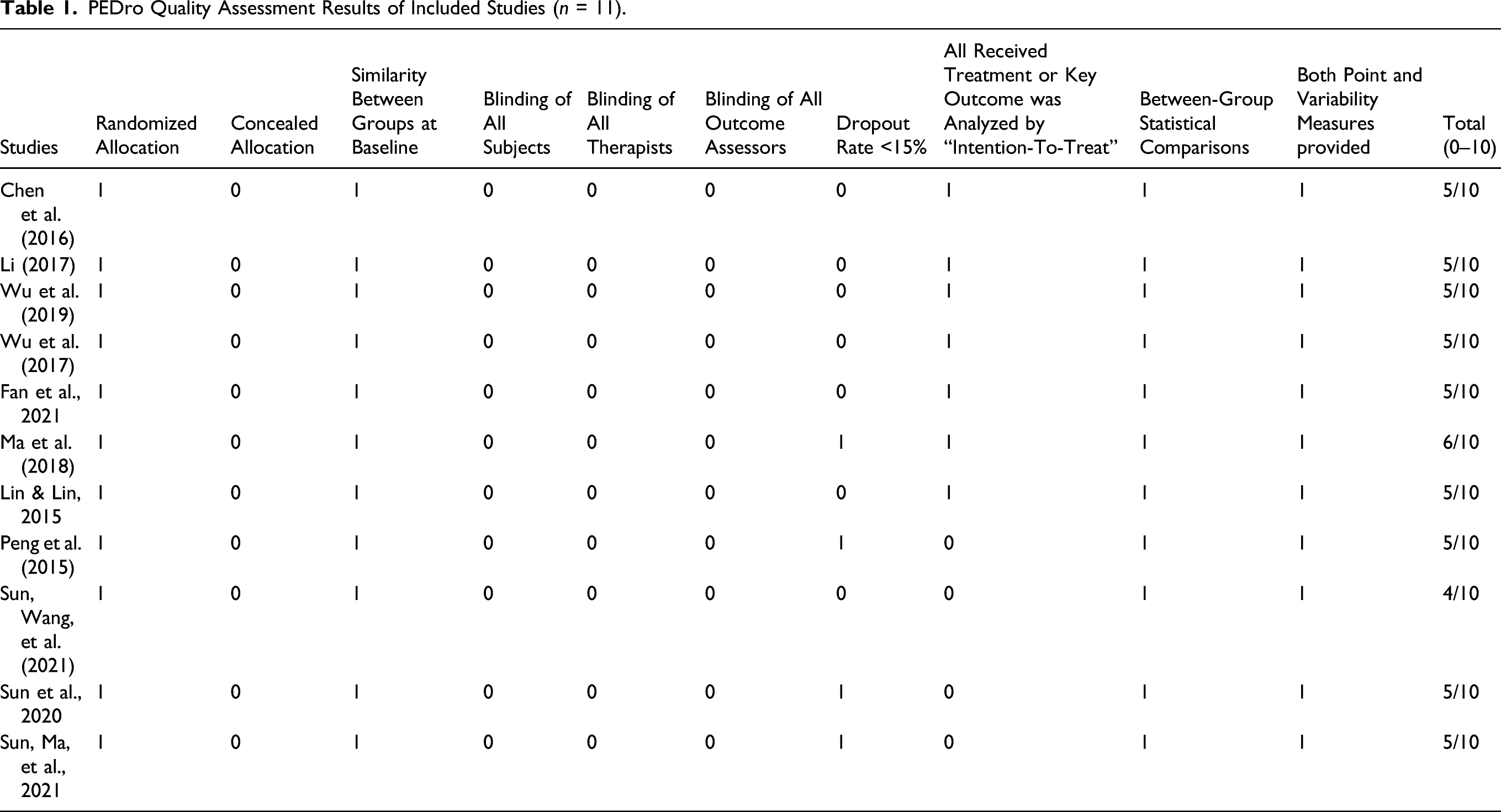
PEDro Quality Assessment Results of Included Studies (n = 11).
Participant Characteristics of Included Studies (n = 11).
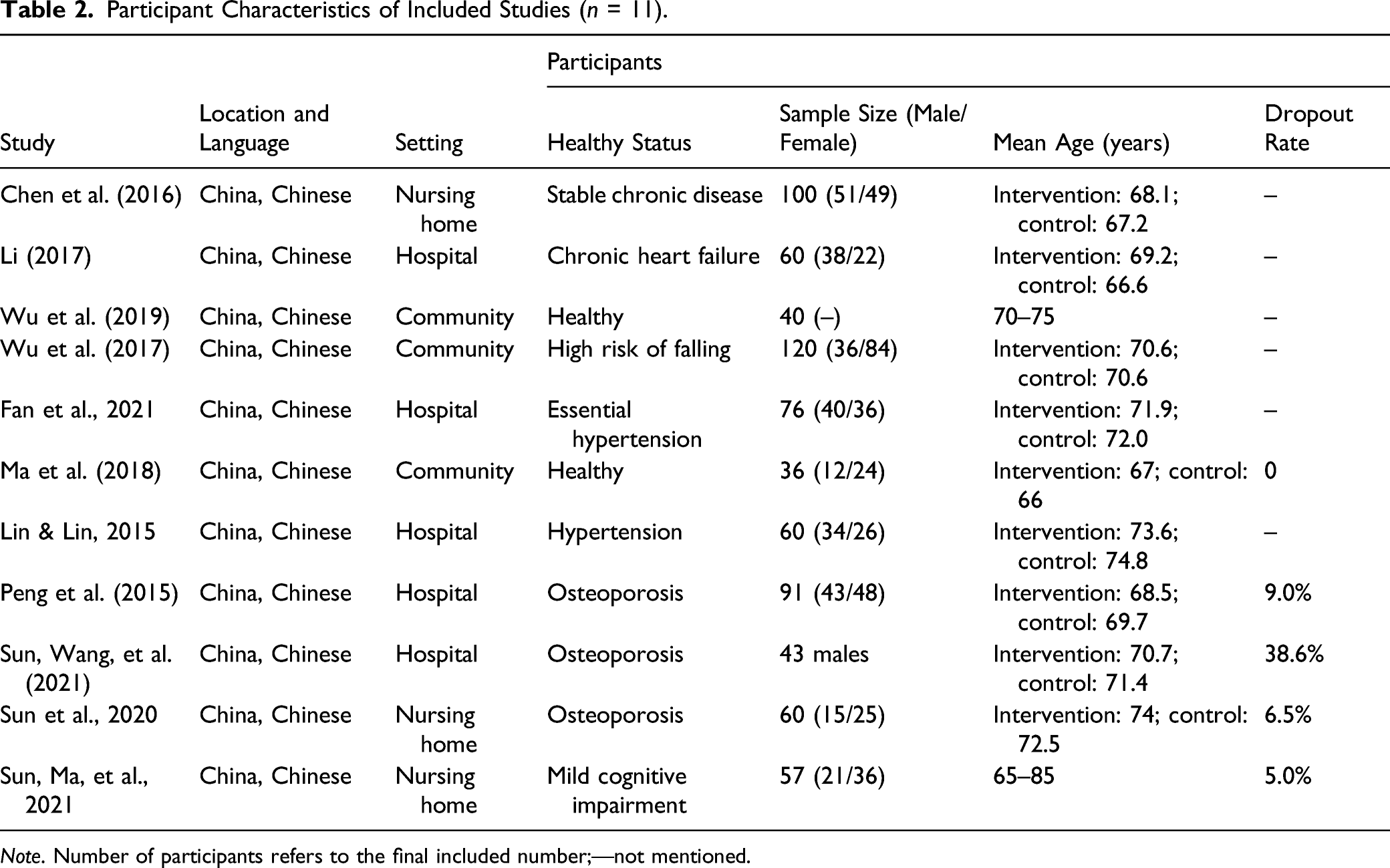
Note. Number of participants refers to the final included number;—not mentioned.
Intervention Characteristics of Included Studies (n = 11).
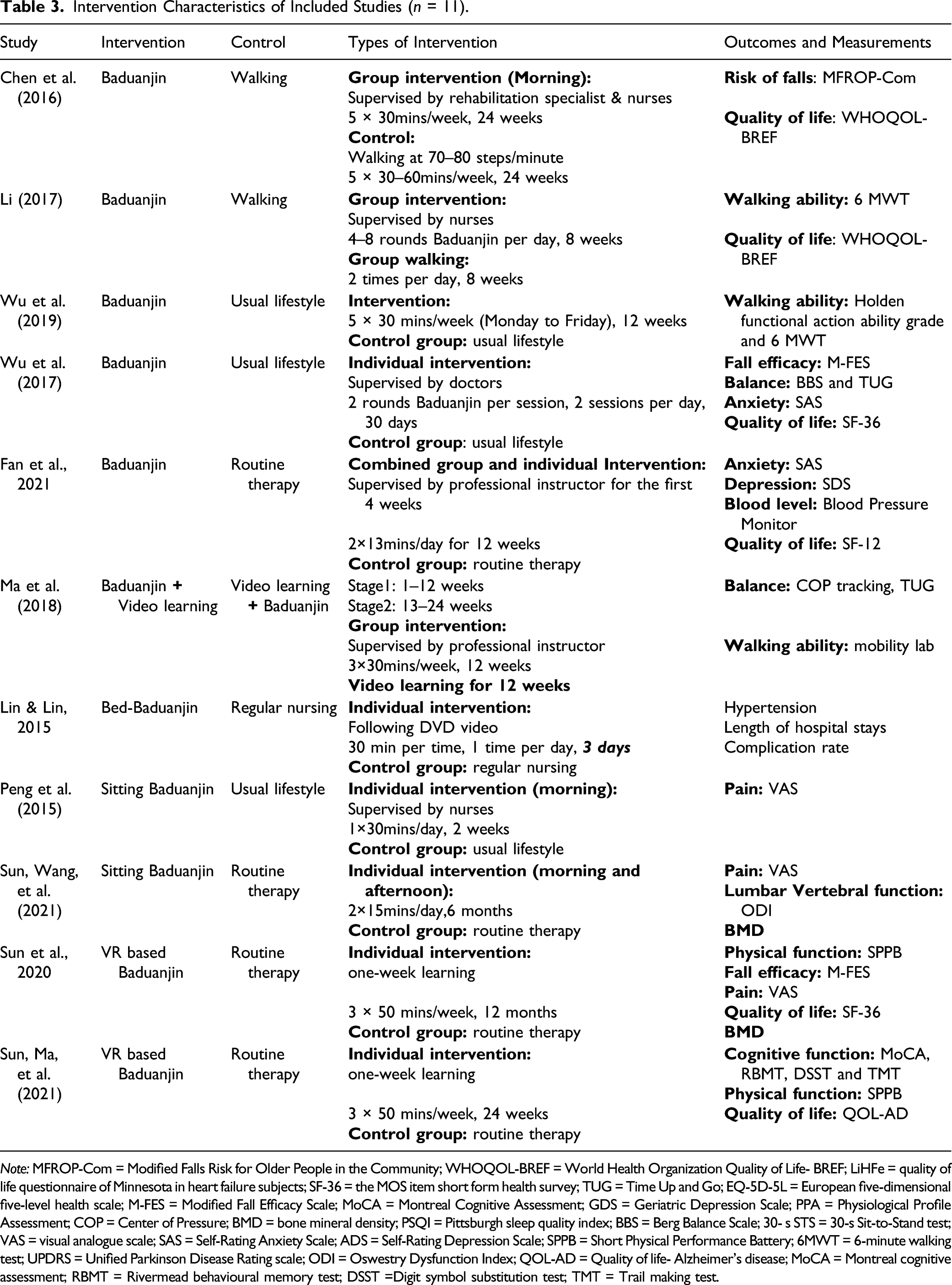
Note: MFROP-Com = Modified Falls Risk for Older People in the Community; WHOQOL-BREF = World Health Organization Quality of Life- BREF; LiHFe = quality of life questionnaire of Minnesota in heart failure subjects; SF-36 = the MOS item short form health survey; TUG = Time Up and Go; EQ-5D-5L = European five-dimensional five-level health scale; M-FES = Modified Fall Efficacy Scale; MoCA = Montreal Cognitive Assessment; GDS = Geriatric Depression Scale; PPA = Physiological Profile Assessment; COP = Center of Pressure; BMD = bone mineral density; PSQI = Pittsburgh sleep quality index; BBS = Berg Balance Scale; 30- s STS = 30-s Sit-to-Stand test; VAS = visual analogue scale; SAS = Self-Rating Anxiety Scale; ADS = Self-Rating Depression Scale; SPPB = Short Physical Performance Battery; 6MWT = 6-minute walking test; UPDRS = Unified Parkinson Disease Rating scale; ODI = Oswestry Dysfunction Index; QOL-AD = Quality of life- Alzheimer’s disease; MoCA = Montreal cognitive assessment; RBMT = Rivermead behavioural memory test; DSST =Digit symbol substitution test; TMT = Trail making test.
Statistical Analysis
Data analysis was performed with the RevMan 5.4 software. The mean difference (MD) or standardized mean difference (SMD) with 95% confidence interval (CI) was chosen to calculate the effect size of continuous outcomes. The outcomes (i.e., balance, physical function, anxiety, and pain) were measured using the same assessment scale; MD is more appropriate to be calculated in the meta-analysis. Baseline data of intervention and control groups were similar in the included studies without significant differences, and all reported the final score rather than analysis of covariance(ANCOVA) estimates. Thus, the final score with its SDs was synthesized to calculate the effect size. Missing data were obtained from the corresponding author of the articles whenever possible, otherwise missing SDs of final scores were imputed using the average SDs of other similar studies. The number of participants included in the summary statistics was based on each outcome measured in both groups. Statistical heterogeneity was evaluated using the Chi-squared test and I 2 statistics, with a fixed-effects model used when p < 0.01 and I 2 < 50%. Otherwise, the random-effect model was applied to provide more conservative estimates of the intervention effects. Subgroup analysis based on different intervention durations was performed for QoL, falls and pain. In addition, subgroup analysis of bone mineral density (BMD) was conducted using different outcomes.
Additionally, the carry-over effect was considered for studies using a cross-over RCT design. This review included one cross-over study (Ma et al., 2018) with no washout period to eliminate carry-over effects. Therefore, only the results of the first period from this study were included in the meta-analysis to avoid the persistent effects of one period into the subsequent period. A funnel plot of publication bias was used to assess publication bias when at least seven studies were included in a meta-analysis. A narrative summary of results (i.e., depression, cognitive function, and lumbar vertebral function) was presented as the meta-analysis could not include them.
Results
Search Results
A total of 3020 articles were identified, including seven articles retrieved from reference lists of the included studies and relevant systematic reviews. Thus, 1735 articles remained following the removal of duplicates. After removing 1587 articles following title and abstract screening, the full text of 148 potential articles was independently assessed for eligibility. Of these, 137 articles were excluded as they did not meet the inclusion criteria. Eleven articles were included in this systematic review (Chen et al., 2016; Fan et al., 2021; Li, 2017; Lin & Lin, 2015; Ma et al., 2018; Peng et al., 2015; Sun et al., 2020, 2021b, 2021a, Wu et al., 2017, 2019). The PRISMA flow chart of study selection is presented in Figure 1. Flow chart of articles selection.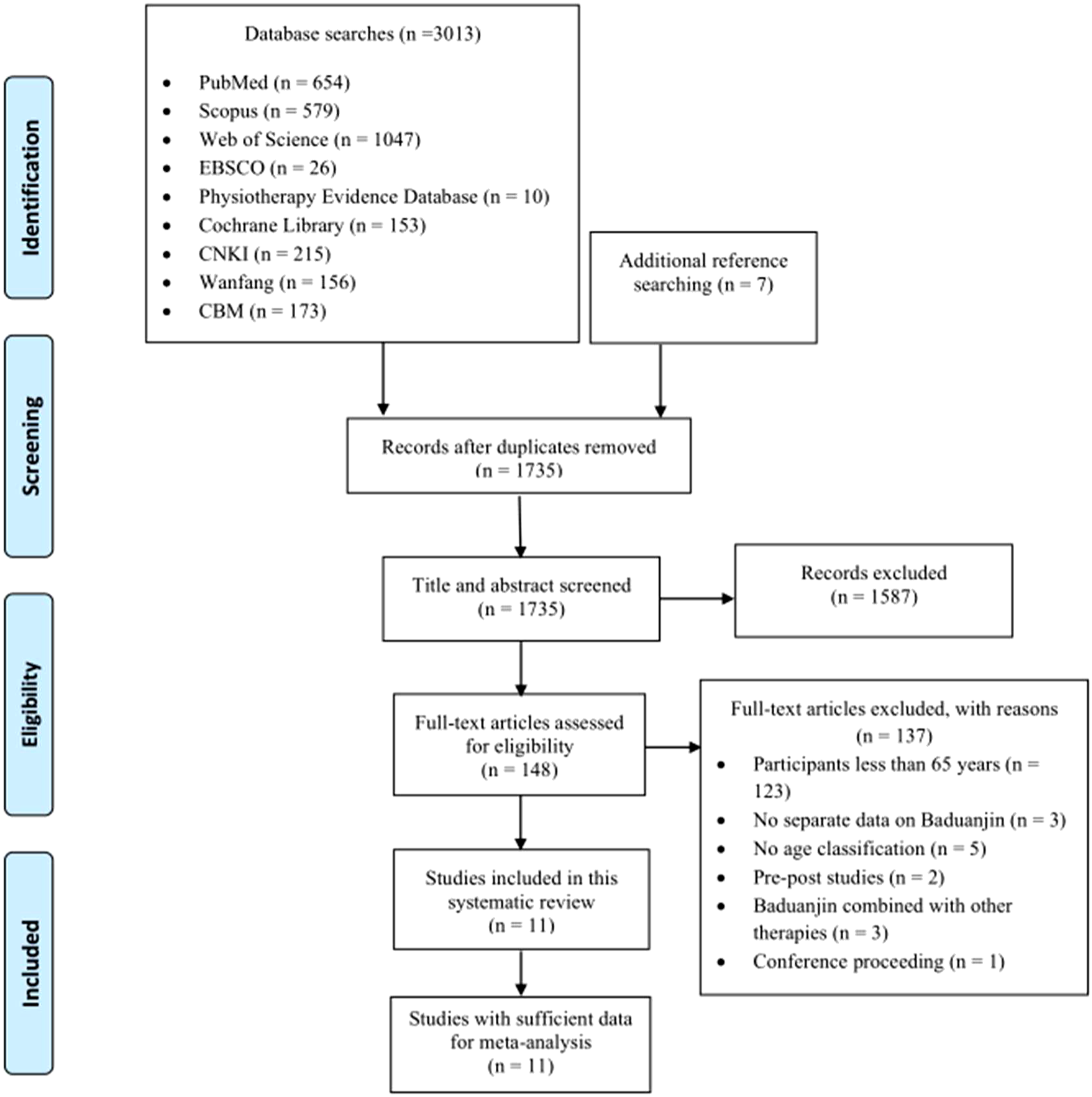
Risk of Bias
The quality of included studies ranged from 4 to 6 on the PEDro scale (fair-to-good methodological quality) (see Table 1). Generally, a low-quality study classification was mainly attributed to selection bias (unconcealed allocation), performance bias (failure to blind therapists), and measurement bias (failure to blind participants and outcome assessors). To avoid selection bias, most of the studies reported random sequence generation, including random list generator (Fan et al., 2021; Sun et al., 2020, 2021b, 2021a), block randomization (Chen et al., 2016; Li, 2017; Ma et al., 2018; Wu et al., 2019; Wu et al., 2017), and inpatient numbers (Lin & Lin, 2015; Peng et al., 2015). Only four studies (Ma et al., 2018; Peng et al., 2015; Sun et al., 2020, 2021) reported a less than 15% dropout. All included studies reported between-group differences with point estimates and measures of validity.
Description of Included Studies
The characteristics of the included studies and participants are presented in Table 2. Among the 11 included articles, one cross-over study (Ma et al., 2018) and 10 two-arm (parallel) RCTs were identified. All studies were conducted in mainland China and published in Chinese. Included studies were published between the years 2015 and 2021, and all involved Chinese participants. In addition, three studies were conducted in a community-based environment (Ma et al., 2018; Wu et al., 2019; Wu et al., 2017), and three studies in nursing homes (Chen et al., 2016; Sun et al., 2020, 2021). The remaining five studies were conducted in hospitals (Fan et al., 2021; Li, 2017; Lin & Lin, 2015; Peng et al., 2015; Sun et al., 2021).
Participants
Studies sampled a total of 743 older adults, including adults with chronic disease (n = 1) (Chen et al., 2016), heart failure (n = 1) (Li, 2017), hypertension (n = 2) (Fan et al., 2021; Lin & Lin, 2015), osteoporosis (n = 3) (Peng et al., 2015; Sun et al., 2020, 2021), mild cognitive impairment (n = 1) (Z. Sun et al., 2021), high risk of falling (n = 1) (Wu et al., 2017), and healthy older adults (n = 2) (Ma et al., 2018; Wu et al., 2019). More than half of all participants were males (n = 392, 55.76%), with one study (D. Sun et al., 2021) recruiting only older males from a hospital setting. Participants had an average age range of 66–75 years. Five studies reported an average dropout rate of 11.82% (Lin & Lin, 2015; Peng et al., 2015; Sun et al., 2020, 2021b, 2021a).
Baduanjin and Control Condition
Interventions used in studies included Baduanjin (Chen et al., 2016; Fan et al., 2021; Li, 2017; Ma et al., 2018; Wu et al., 2017, 2019) and modified versions of Baduanjin, that were sitting Baduanjin (Peng et al., 2015; D. Sun et al., 2021), bed-Baduanjin (Lin & Lin, 2015), and virtual relation (VR)-based Baduanjin (Sun et al., 2020, 2021). Two studies applied walking as a control condition (Chen et al., 2016; Li, 2017). One study guided participants to view the Baduanjin video without practice (Ma et al., 2018). In the remaining eight studies, Baduanjin was compared with routine therapies and usual care.
Traditional Baduanjin training sessions ranged from 90 minutes to 180 minutes per week and lasted between 30 days and 24 weeks. Participants performed modified Baduanjin between 150 minutes and 210 minutes per week for 2 weeks to 12 months. Both group (n = 3) and individual interventions (n = 6) were conducted in the included studies. To ensure participants’ safety during the intervention, participants in six of the included studies performed exercises under professional guidance (Chen et al., 2016; Fan et al., 2021; Li, 2017; Ma et al., 2018; Peng et al., 2015; Wu et al., 2017), for example, training instructors, nurses, rehabilitation doctors, and sports teachers.
Meta-Analysis Results of the Baduanjin Intervention
Physical Function, Walking Ability, Balance, and Risk of Falls
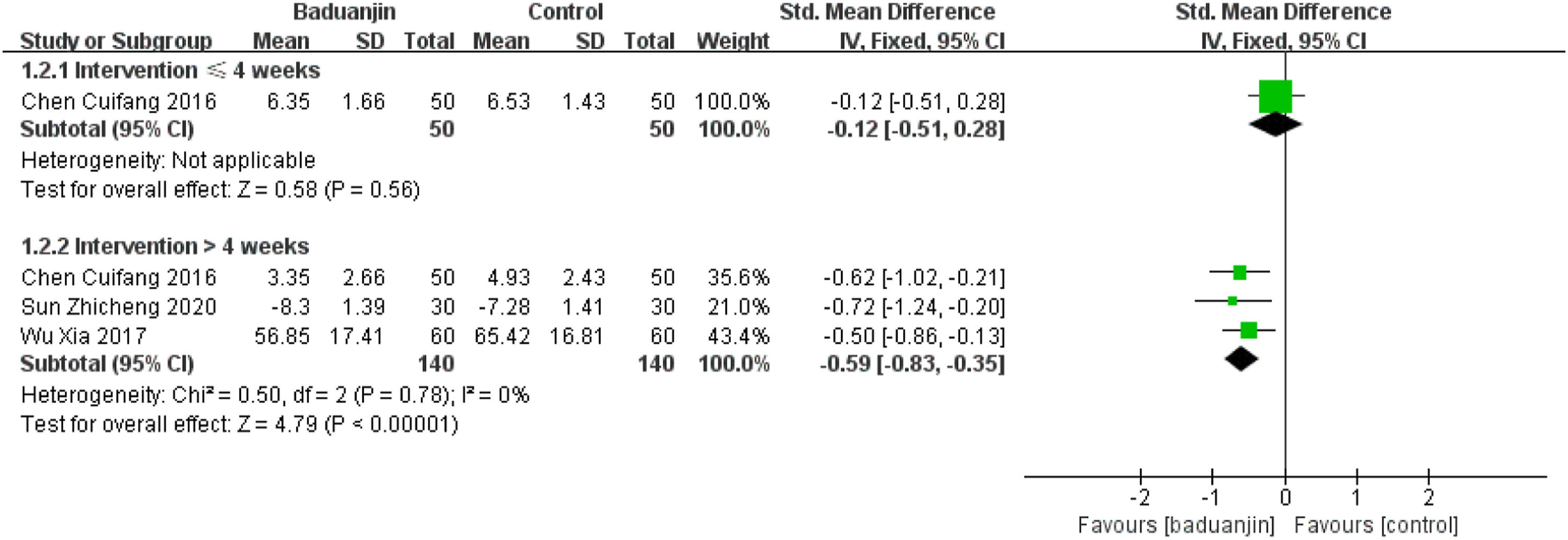
Physical function was assessed by the Short Physical Performance Battery (SPPB) in two studies (Sun et al., 2020, 2021), where a significant improvement was observed for physical function (117 participants, MD: 1.79, 95%, CI: 1.00 to 2.57; p < 0.00001, Figure 2). In addition, three studies measured the effects of Baduanjin on walking ability using the 6-Minute Walk Test (6MWT) (Li, 2017), Holden Functional Ability Grade (Wu et al., 2019), and Mobility Lab Test (Ma et al., 2018). The Baduanjin intervention significantly improved walking ability (136 participants, SMD: 6.95, 95% CI: 2.27 to 11.64, p = 0.004, Figure 3). Two studies examined the effect of Baduanjin on balance using the Timed-Up-and-Go Test (TUG) (Ma et al., 2018; Wu et al., 2017) and demonstrated that Baduanjin could positively improve older adults’ balance (156 participants, MD: −1.35, 95%, CI: −2.40 to −0.30; p = 0.01, Figure 4). In addition, three studies examined the effect of Baduanjin on falls risk using the Modified Falls Risk for Older People in the Community (MFROP-Com) and Modified Fall Efficacy Scale (M-FES) (Chen et al., 2016; Sun et al., 2020; Wu et al., 2017). Baduanjin has the potential to reduce falls risk of older adults if the intervention was ≥4 weeks (280 participants, SMD: −0.59, 95% CI: −0.83 to −0.35, p < 0.00001, Figure 5), but not ≤4 weeks (100 participants, SMD: −0.12, 95% CI: −0.51 to 0.28). Forest plot: Baduanjin for physical function (n = 2). Forest plot: Baduanjin for walking ability (n = 3). Forest plot: Baduanjin for balance (n = 2). Forest plot: Baduanjin for falls (n = 3).


QoL, Anxiety, and Pain
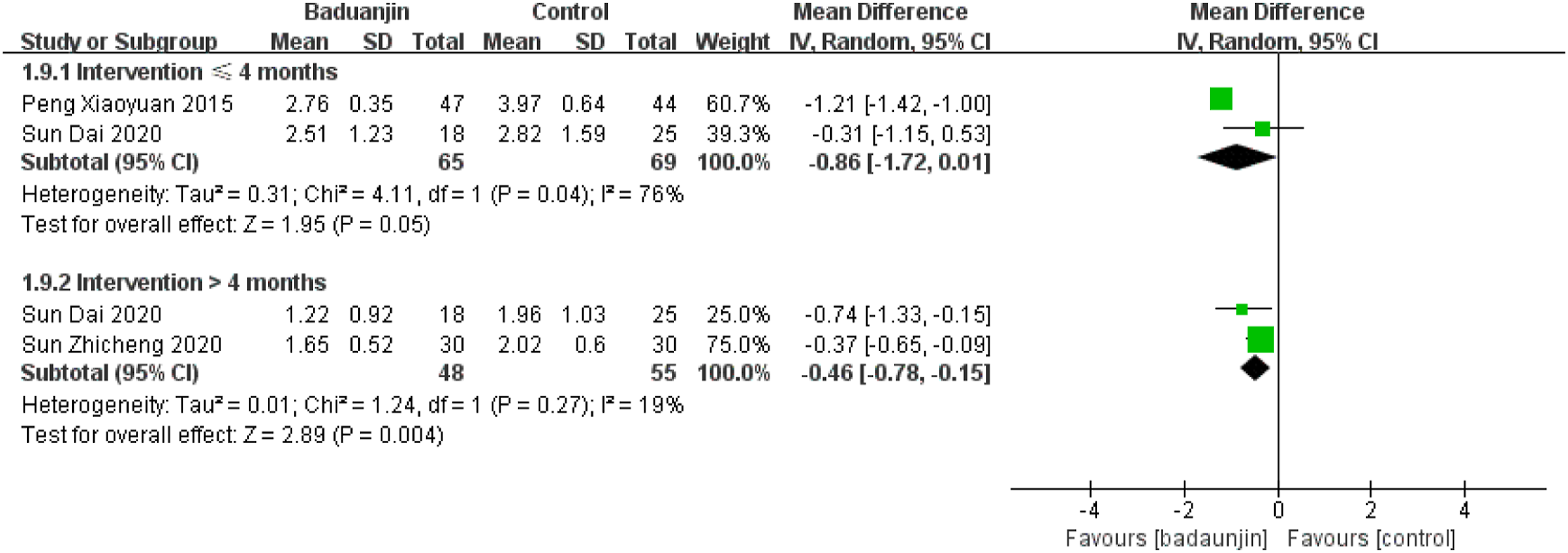
Six studies evaluated QoL using the 36-item Short-Form Health Survey (SF-36) (Sun et al., 2020; Wu et al., 2017), the 12-item Short-Form Health Survey (SF-12) (Fan et al., 2021), World Health Organization Quality of Life-BREF(WHOQOL-BREF) (Chen et al., 2016), quality of life questionnaire from Minnesota in heart failure subjects (LiHfe) (Li, 2017), and Quality of life-Alzheimer’s disease (QOL-AD) (Z. Sun et al., 2021). There were no significant effects for QoL in studies where Baduanjin interventions were Forest plot: Baduanjin for quality of life (n = 6). Forest plot: Baduanjin for anxiety (n = 2). Forest plot: Baduanjin for pain (n = 3).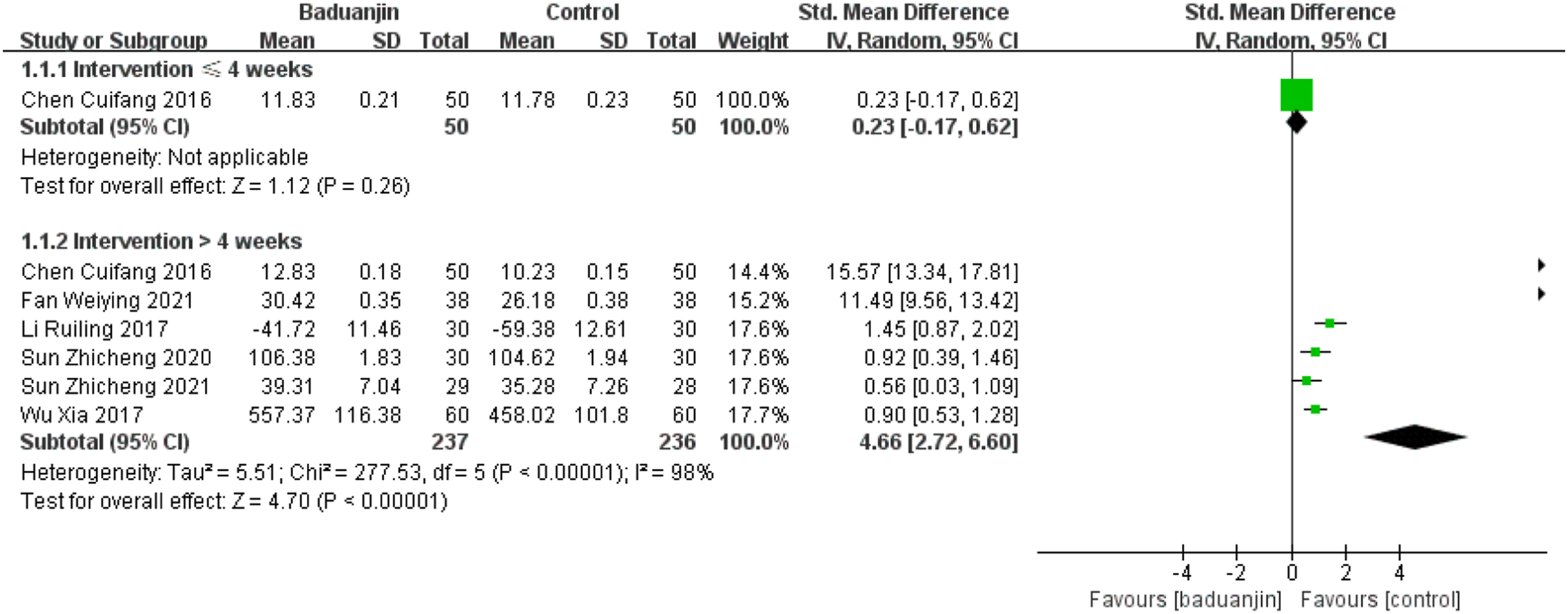

BMD and Blood Pressure
Two studies explored the benefits of Baduanjin on BMD of older adults with osteoporosis using different bone densitometers (Sun et al., 2020, 2021). No significant result was observed on spine BMD (103 participants, MD: 0.40, 95% CI: −0.15–0.95) or femoral neck BMD (103 participants, MD: 0.19, 95% CI: −0.44–0.82; Figure 9). Another two studies explored the effect of Baduanjin on the blood pressure of older adults with hypertension (Fan et al., 2021; Lin & Lin, 2015). Similarly, Baduanjin had no significant benefits on blood pressure (136 participants, MD: −2.63, 95% CI: −0.68–1.55; Figure 10). Forest plot: Baduanjin for bone mineral density (n = 2). Forest plot: Baduanjin for blood pressure (n = 2).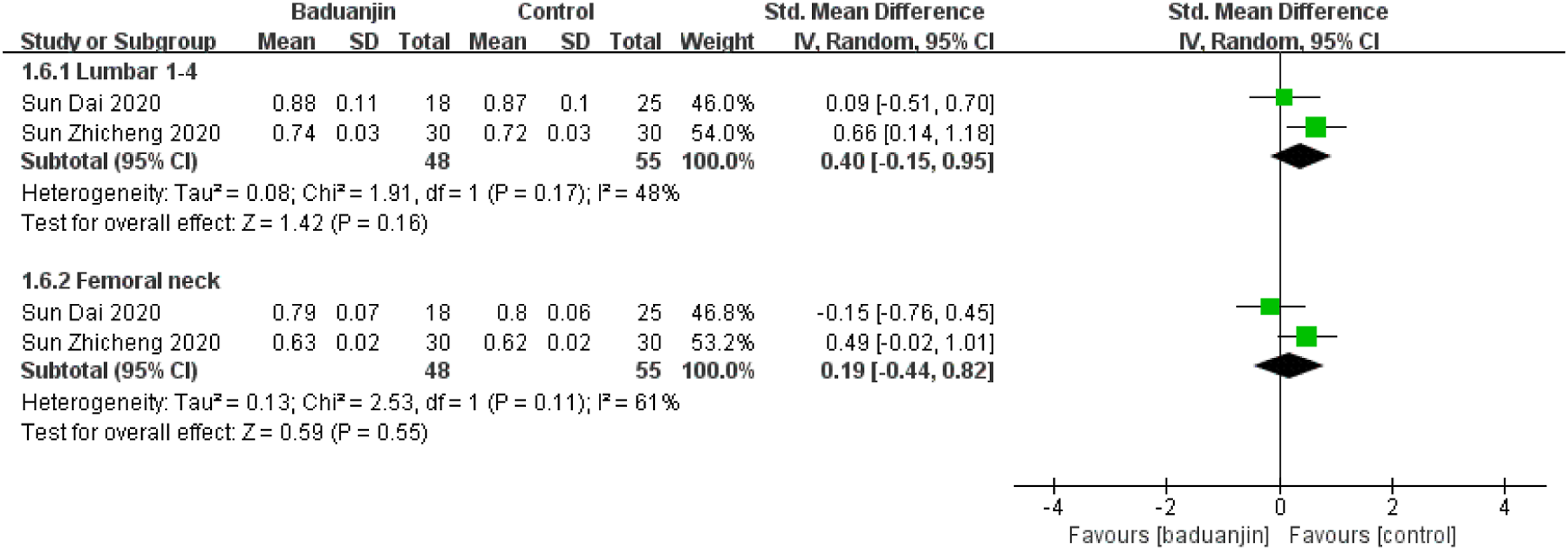

Description of Outcomes Not Suitable for Meta-Analysis
Meta-analysis was not applied for cognitive function, depression, and lumbar vertebral function. These outcomes were reported in only one study, and they were not feasible to be included in the meta-analysis. Overall, compared to routine therapies, a 12-week Baduanjin intervention has the potential to reduce depression in older adults with essential hypertension (Fan et al., 2021). Baduanjin exercise can also improve older adults’ cognitive function measured by the Montreal cognitive assessment (MoCA), Rivermead behavioural memory test (RBMT), Digit symbol substitution test (DSST), and Trail making test (TMT) within 24 weeks compared with routine therapies (Z. Sun et al., 2021). In addition, evidence from one study (D. Sun et al., 2021) suggested that Baduanjin positively increased senior male patients’ lumbar vertebral function assessed by the modified Oswestry Dysfunction Index (ODI) score.
Discussion
This systematic review evaluated the effects of Baduanjin on the health and well-being of adults aged 65 years and older. The Baduanjin intervention used in this review varied mainly in the intervention’s frequency and duration, and settings. None of the included studies evaluated the sustained effects of Baduanjin exercise after the interventions. Traditional and modified Baduanjin were used among older adults with different characteristics, including chronic disease, heart failure, hypertension, and osteoporosis. All studies were conducted in mainland China, and the participants were predominantly Chinese. Therefore, it remains unclear whether the results are generalizable to a non-Chinese population. Furthermore, none of the included studies applied concealed allocation and blinding, leading to the potential for subjective and social desirability bias. Therefore, further research using rigorous study design is needed, with consideration for concealed allocation and blinded subjects, therapists and assessors, to robustly assess the benefits of Baduanjin on adults aged 65 years and older.
The pooled results from the RCTs indicated that Baduanjin effectively improves physical function, walking ability, and balance. The observed walking and balance benefits may be attributed to the lower body isometric exercises during Baduanjin routines (Zou et al., 2017). Baduanjin activates the natural self-regulation capacity and stimulates the balanced release of endogenous neurohormones and a wide array of natural health recovery mechanisms (Liu et al., 2016). However, due to a limited number of studies investigating the effects of Baduanjin on physical function, walking ability and balance, it is also challenging to infer which training frequency and duration will improve physical function, walking ability, and balance.
The results of this systematic review suggested that the beneficial effects of Baduanjin on QoL and falls prevention can be observed with longer training programs (e.g., 8 weeks or more) when compared to walking and routine therapies. One study showed no significant effects on QoL and falls prevention within a short-term (4 weeks) intervention compared with walking controls. This finding implies that Baduanjin and walking both provide similar health benefits on QoL and falls risk. It is noted that Baduanjin may be more beneficial when compared to walking as it requires lower metabolic demands but still yields similar health benefits when considering the intensity and safety of Baduanjin exercise. However, the appropriate duration (i.e., 4 or 8 weeks) of Baduanjin intervention that is required to positively affect QoL and reduce falls risk remains unknown due to the limited number of studies that examine Baduanjin and walking (n = 1). Many studies have shown that Tai Chi was an appropriate exercise for older adults in improving QoL and reducing falls risk beyond a 6-week intervention (Chewning et al., 2019; Huang, 2011). Another similar modality of 4-weeks Healthy Beat Acupunch was also found to positively improve the gait speed of older adults with reduced physical capacity or probable sarcopenia (Jones et al., 2020). However, this study applied a pre-post study design that is not methodologically robust to confirm the effects on falls-related outcomes compared with controls. As a result, more studies are needed to further explore the effects of Baduanjin on QoL and fall prevention, especially within a short-duration intervention.
The data from the emerging literature also provides support for Baduanjin as an intervention to reduce anxiety. Results of current studies suggest substantive benefits of Baduanjin for older adults with mental disorders, combined with meditation, deep breathing, and relaxation (Liu et al., 2016). Baduanjin training influences participants’ mood during practice, particularly to assist in the down regulation of anxiety and negative emotions. For example, mind concentration and breathing control during the motion “Holding the hands high with palms up” could strengthen the neural connections and help people to develop and exercise control over negative thoughts (e.g., anxiety and depression) (Jing et al., 2018). However, there remains a lack of evidence-based research for its effects on depression, with only one study (Fan et al., 2021) finding a potential for Baduanjin to decrease depression in older adults with hypertension. In addition, a significant result was found for cognitive function after a 12-week Baduanjin exercise compared with routine therapy (Z. Sun et al., 2021). Another pre-post study found that Baduanjin exercise could effectively improve frail older adults’ cognitive performance after a 16-week intervention (Liu et al., 2020). Baduanjin could improve brain self-regulation which benefits executive function as it incorporates physical, cognitive, and meditative components into one single exercise activity and involves the training of attention and executive ability (Wang et al., 2021). Similar to Tai-Chi exercise that has been established to improve older adults’ cognitive function, Baduanjin could also decrease the speed of cognitive decline by training slow motions that allow older adults to avoid consequences and complications of cognitive impairment (Li et al., 2021). However, it is still difficult to draw a confirmative decision based on a small number of studies and inconsistent study design. As a result, more research is needed to confirm the benefits of Baduanjin on depression and cognitive function.
The literature suggests that cognitive control and emotional regulation may play important roles in mind-body interventions targeting chronic pain (Liu et al., 2019). As indicated earlier, Baduanjin could enhance the cognitive function of older adults, which might also assist with pain relief. However, this review found that a short-duration (less than 4 months) Baduanjin intervention was insufficient to reduce pain symptoms. Additionally, Baduanjin also appears to improve spine and femoral neck BMD of older adults with osteoporosis after 6-month and 12-month interventions, respectively, but the results did not reach statistical significance. It is not surprising that the summarized results did not show a significant difference as only two studies with the majority having a small sample size (i.e., a total of 103 participants) were included in this review. Nevertheless, the studies found that Baduanjin could help improve the lumbar vertebral function of older adults after a 6-month exercise intervention (D. Sun et al., 2021) and improve the femoral neck and spine BMD compared to controls of postmenopausal women with osteoporosis after 12-months (Liu et al., 2015). Thus, further investigation of longer duration Baduanjin interventions is needed to ascertain its impact on pain and BMD in older adults.
Strengths and Limitations
Strengths of this study include using meta-analysis to evaluate the effects of Baduanjin of adults aged 65 years and older and using a standardized scale to assess the methodological quality of included studies. However, due to the limited number of studies examining the effects of Baduanjin on specific health outcomes of older adults, this study included literature with participants spanning different health conditions. Subgroup analysis based on participants’ characteristics was not performed in this review because of the limited number of studies included, which limits our ability to determine the benefits of Baduanjin objectively to the health condition of each group. A large variation of Baduanjin intervention types may also influence the pooled results due to the substantial clinical heterogeneity. Importantly, publication bias was not assessed using funnel plot analysis because of the insufficient number of trials for each outcome (fewer than seven studies).
Implications and Conclusions
Several implications for research and practice are presented to help advance understanding of the benefits of Baduanjin on the health and well-being of older adults. Based on the existing literature, this systematic review suggests that Baduanjin may be effective in improving physical function, walking ability, balance, and reducing anxiety levels. Baduanjin was also found to affect QoL positively and falls prevention over a 4-week intervention and relieve pain symptoms beyond a 4-month intervention. However, further studies are necessary to confirm the effects of Baduanjin on depression and cognitive function. Furthermore, due to the methodological limitations (e.g., unconcealed allocation, performance bias, and measurement bias) reported in the included studies, additional rigorously designed studies should be conducted to confirm the effectiveness of Baduanjin for adults 65 years and older. This study, in addition, suggests a need for future research to investigate the benefits of Baduanjin on the health and well-being of the non-Chinese population.
Supplemental Material
Supplemental Material - Baduanjin Exercise for Adults Aged 65 Years and Older: A Systematic Review and Meta-Analysis of Randomized Controlled Studies
Supplemental Material for Baduanjin Exercise for Adults Aged 65 Years and Older: A Systematic Review and Meta-Analysis of Randomized Controlled Studies by Cindy Jones, Meiling Qi, Zihui Xie, Wendy Moyle, Benjamin Weeks, Ping Li in Journal of Applied Gerontology
Supplemental Material
Supplemental Material - Baduanjin Exercise for Adults Aged 65 Years and Older: A Systematic Review and Meta-Analysis of Randomized Controlled Studies
Supplemental Material for Baduanjin Exercise for Adults Aged 65 Years and Older: A Systematic Review and Meta-Analysis of Randomized Controlled Studies by Cindy Jones, Meiling Qi, Zihui Xie, Wendy Moyle, Benjamin Weeks, Ping Li in Journal of Applied Gerontology
Footnotes
Declaration of Conflicting Interests
The author(s) declared no potential conflicts of interest with respect to the research, authorship, and/or publication of this article.
Funding
The author(s) received no financial support for the research, authorship, and/or publication of this article.

References
Supplementary Material
Please find the following supplemental material available below.
For Open Access articles published under a Creative Commons License, all supplemental material carries the same license as the article it is associated with.
For non-Open Access articles published, all supplemental material carries a non-exclusive license, and permission requests for re-use of supplemental material or any part of supplemental material shall be sent directly to the copyright owner as specified in the copyright notice associated with the article.
