







Abstract
The Caring Callers Program was developed as a telephone-based intervention utilizing Senior Companion volunteers to reach older adults at greater risk for loneliness during the COVID-19 pandemic. This pilot program consisted of trained volunteers who provided supportive, weekly calls as well as community resources with their Caring Callers clients. The purpose of this study was to qualitatively explore the experiences of Senior Companion volunteers in the Caring Callers Program through the lens of productive aging. We completed semi-structured interviews with 18 Caring Callers volunteers. We used Rapid and Rigorous Qualitative Date Analysis (RADaR) which yielded four themes: (1) reciprocity; (2) purposeful use of time; (3) learning new skills; and (4) gaining perspective. Our findings provide insight for gerontological researchers examining volunteering as a productive aging activity and offer strategies for designing peer-led, telephone-based interventions to promote social connectedness in an unprecedented time.
• Our findings suggest performing the role of telephone-based volunteering is meaningful in the lives of older volunteers during public health crises such as COVID-19.
• Telephone-based reassurance programs such as Caring Callers may eliminate barriers to volunteering for older adults who might otherwise be limited by mobility, geography, and resources required for face-to-face interactions. • The findings of this study suggest telephone-based reassurance programs such as Caring Callers are a viable option for older adults to continue volunteering regardless of social distancing restrictions.What this paper adds
Applications of study findings
Introduction
Social distancing mandates implemented due to COVID-19 have had significant impacts on older adults, a subpopulation already predisposed to greater risk of social isolation and loneliness prior to the global pandemic (Brooke & Clark, 2020). In particular, the heightened level of isolation brought on by COVID-19 may increase risk of depression and cognitive decline (Banerjee, 2020). In response, there has been a resounding call across disciplines for psychosocial interventions to address the significant challenges that social distancing orders pose for older adults (Brooke & Clark, 2020; Gresh et al., 2021).
An emerging body of evidence regarding the efficacy and feasibility of various interventions implemented during the COVID-19 pandemic to address the heightened risk of social isolation among older adults, highlight telephone-based support programs dependent on community partnerships (Chan et al., 2021; Gresh et al., 2021). In light of COVID-19, Boulton et al. (2021) conducted a systematic review to identify which study components were significantly associated with reduced social isolation and loneliness when implementing remote interventions among older adults. Three key components were found: (1) providing participants with opportunities to speak openly and develop meaningful relationships with others; (2) facilitating shared experiences among participants; and (3) providing professional guidance to participants (Boulton et al., 2021). Telephone-based reassurance programs may reflect these qualities and are evidenced to be associated with reduced feelings of loneliness and social isolation as well as to promote social connectedness in older adults (Boulton et al., 2021; O’Rourke et al., 2018). Furthermore, studies of telephone-based supportive interventions often aim towards reducing levels of social isolation and report positive outcomes from using peer-volunteers (Gould et al., 2017; Lowthian et al., 2018).
Telephone reassurance programs
Telephone reassurance programs may combat social isolation by offering “check ins,” as well as offer companionship and referrals to community resources (Boulton et al., 2021). Some telephone reassurance programs include safety checks related to mental health well-being (Gresh et al., 2021). Existing telephone reassurance programs such as TeleBridges, based in Virginia, utilizes volunteers aged 18 years and older to provide encouraging phone calls multiple times per week to adults aged 60 and older (Senior Navigator, n.d.). Similarly, Social Call, based in California, aims to increase social connection among older adults and employs volunteers aged 18 and older to provide 30-minute phone or video calls on a weekly basis to older adults aged 60 and older. Majority of Social Call matches are intergenerational (70%), and the program requires volunteers to pass a background check and complete a virtual volunteer training prior to being matched with older adults across the United States (Covia, n.d.).
However, limited research has examined older adult volunteer experiences regarding telephone reassurance interventions. Bradley (1999) suggests older adults who volunteer to make telephone reassurance calls may feel an “enhanced sense of purpose” (p. 47). Generally, evidence indicates older adult volunteerism may have a positive impact on health and well-being outcomes (Carr, 2018; Chen et al., 2020; Kim et al., 2020). Studies have reported volunteerism to share positive influence on older adults psychosocial outcomes (Kim et al., 2020), personal and social identities (Chen et al., 2020), and levels of social engagement (Carr, 2018). Furthermore, a positive relationship between older adult volunteerism and reductions in depression and anxiety levels has been identified (Chen et al., 2020; Kim et al., 2020).
Volunteering is highlighted by the concept of productive aging which refers to activities attractive to older adults that may also benefit their social, physical, and emotional health and well-being (Dommaraju & Wong, 2021; Gonzales et al., 2015). Studies have indicated participation in productive aging activities can lead to reduced stress, depression, and loneliness (Cao et al., 2021; Cheng et al., 2022). Within the larger framework of role theory, older adults involved in productive roles, such as a volunteering in a telephone reassurance program, may experience role enhancement, increased resources, and expanded social ties (Moen et al., 1992).
Volunteering is considered a social and altruistic activity which benefits the health of older adults and contributes to the greater good of society (Morrow-Howell et al., 2019). The altruistic nature of volunteerism has been cited to promote resilience to feelings of helplessness during public health crises such as, COVID-19 (Gordon et al., 2021). A key goal of productive aging is to promote older adults’ abilities to engage in purposeful activities which Dommaraju and Wong (2021) argue can be achieved by using technologies, reducing systemic barriers and providing opportunities for lifelong learning. Older adults may feel motivated to engage in volunteering activities to increase their socialization and feelings of usefulness to others (Hood et al., 2018).
Given the dearth of research on volunteers in telephone reassurance programs, the purpose of the current study was to explore volunteer experiences in the Caring Callers program, through the lens of productive aging. We sought to contribute to the literature through a community-engaged study using peer-volunteers in a pilot program for homebound older adults. In addition, we explored the volunteers’ feedback about the program, skills gained through their participation, and how their experience impacted their own loneliness/isolation and overall well-being during COVID-19.
Methods
The caring callers program
The research team co-created the Caring Callers program in partnership with a community agency that serves older adults in a large metropolitan city in North Texas. As a pilot study, this telephone-based intervention aimed to have older adult peer-volunteers provide friendly weekly telephone calls to socially isolated older adults (i.e., clients) while also connecting clients with community resources. Though Caring Callers was developed prior to the COVID-19 pandemic, the implementation of the program coincided with social distance mandates which prevented in-person volunteering. The Caring Callers program provided a timely response to concerns of social isolation and loneliness among older adults as the program focused on offering emotional support and community-based resources to meet unmet needs (e.g., transportation, financial assistance).
The Caring Callers Program consisted of trained Senior Companion volunteers (N = 20) and community-dwelling socially isolated older adult
The volunteers also learned skills related to active listening. Volunteers did not follow a script and each call was composed of “(1) basic safety checkups, (2) events of the week and the clients’ reactions to the events, (3) topics raised by the clients, and (4) discussion of coping methods” (Lee et al., 2021b: p. 5). Volunteers were provided a list of existing community resources that may adequately address some common issues (e.g., food assistance or transportation) reported by their clients (see Lee et al., 2021a for an overview of the Caring Callers training).
Study design
This qualitative study explored the experiences of Senior Companion volunteers in the Caring Callers Program through the lens of productive aging.
Recruitment
Volunteers
Prior to participant recruitment, the study was approved by the University Institutional Review Board (# 2019-0364). Following convenience sampling methods, older adult volunteers were recruited from a local Senior Companion Program which is part of the national AmeriCorps program (AmeriCorps, n.d.). We recruited participants by sharing the research opportunity at a monthly in-service (pre-pandemic) of the Senior Companions in February 2020. The eligibility criteria included (1) currently enrolled Senior Companions who passed a criminal background check; (2) English proficiency; and (3) must have a landline or cell phone. Those who could not complete the mandatory Caring Callers virtual training using Zoom video or telephone conferencing technologies were excluded for this study. Individuals interested in participating provided their name and contact information to the research team. Initially, 39 Senior Companions expressed interest in participating in the program (pre-pandemic). During the COVID-19 pandemic, research team members contacted those interested to explain the study and obtained verbal informed consent. In total, 20 participants were enrolled and completed training. However, two volunteers withdrew from the program due to personal reasons (n = 18).
Clients
Homebound older adults were also recruited by working with the Senior Companion Program. The partner organization staff identified individuals who may benefit from the program and referred them to the research team. After receiving referrals, we screened potential participants. The clients’ eligibility criteria included: (1) English proficiency; (2) must have a landline or cell phone; (3) aged 55 and older; and (4) no physical limitations preventing ability to speak over phone. We used the Callahan’s six screener test to ensure cognitive ability to consent for the study and communicate with volunteers. Initially, 20 clients were enrolled and 15 completed the program. The majority of clients were socially isolated and had financial difficulties with limited informal support.
Data collection
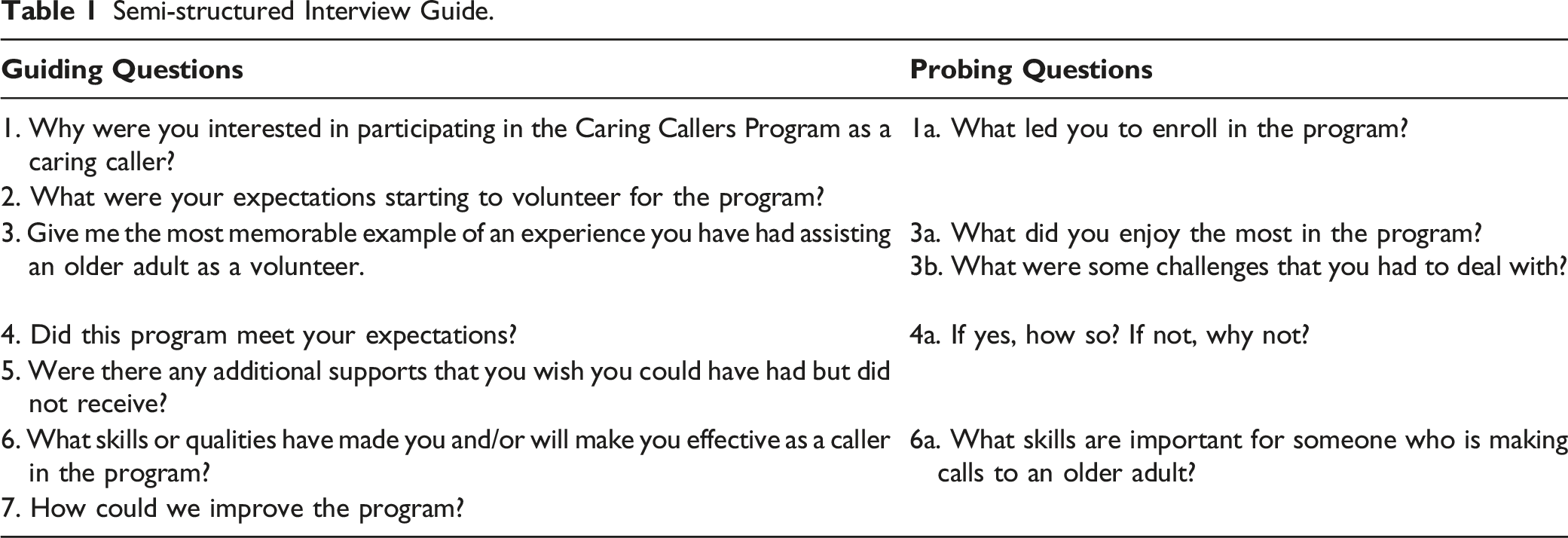
Semi-structured Interview Guide.
Analysis
Demographic data were analyzed using SPSS version 27. Our qualitative analysis was guided by the RADaR (Rigorous and Accelerated Data Reduction) method in the Supplementary Material (Watkins, 2017). All study participants were assigned ID numbers and pseudonyms. First, two researchers (NF and JC) began by formatting and organizing the data in preparation to build our phase one data reduction table. This step involved highlighting each question and the relevant responses. Additionally, we inserted comments denoting which question from the interview guide corresponded with the highlighted text. Secondly, a phase one data reduction table was created by copying and pasting the qualitative data into a Microsoft Excel spreadsheet. Two researchers then read and familiarized themselves with the data set. Thirdly, the researchers compared notes and came to consensus regarding the guiding research question. Qualitative data irrelevant to the research question was then eliminated to produce the phase two data table. Following this, the researchers worked independently to develop open codes, came together to reach consensus, and then, developed “focused codes” (Watkins, 2012) in Watkins, 2017: p. 3). An iterative process was applied until the coded data presented volunteer experiences on participating in the Caring Callers Program and their suggestions for the program improvement and lastly, produced the final themes. To establish trustworthiness of findings, we had multiple coders and identified focused codes through processes of consensus. Key stakeholders and a researcher whose expertise includes productive aging also reviewed the themes (Nowell et al., 2017).
Results
Participants
Caring Caller Volunteers Demographics (n=18).
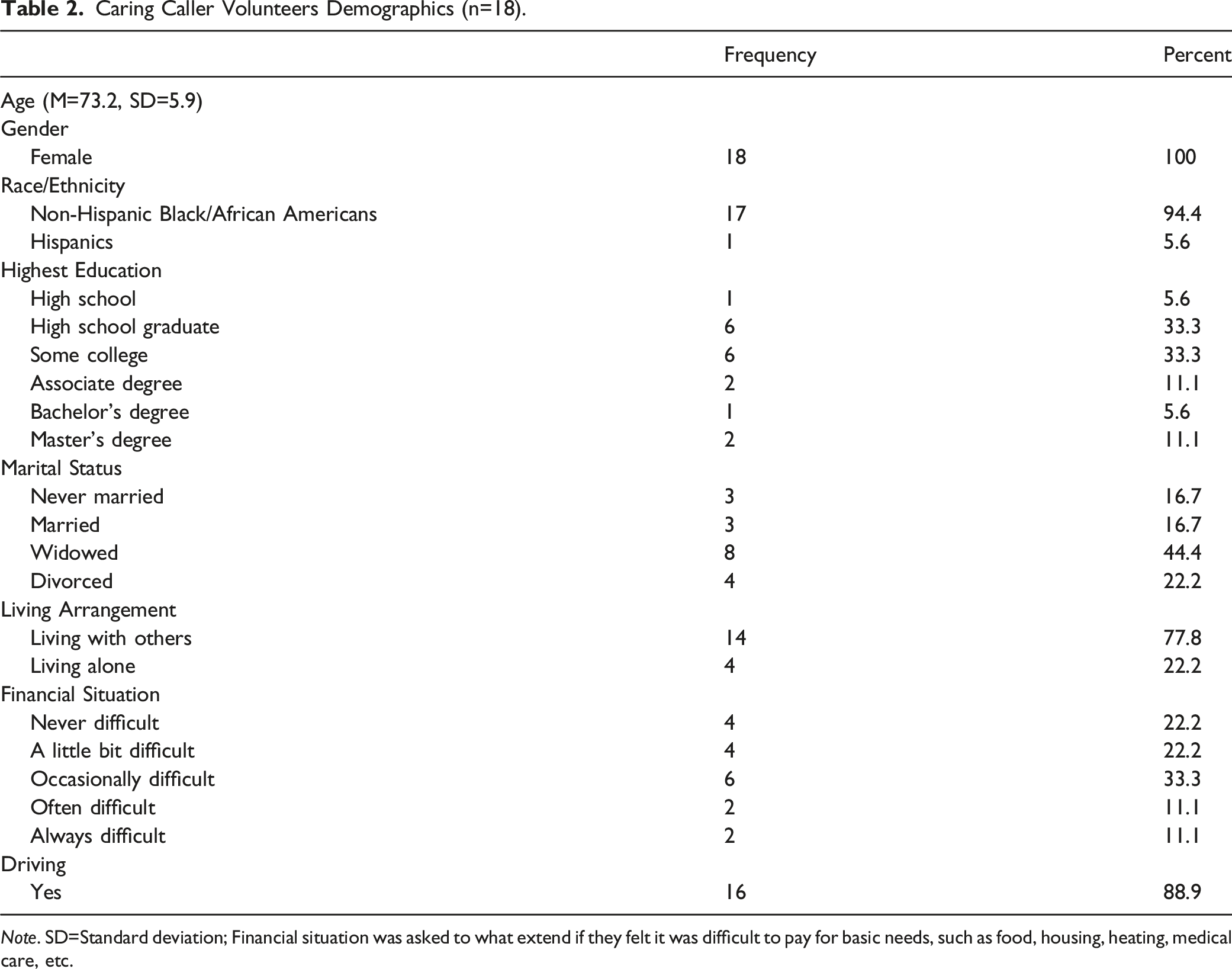
Note. SD=Standard deviation; Financial situation was asked to what extend if they felt it was difficult to pay for basic needs, such as food, housing, heating, medical care, etc.
A majority of the Caring Callers volunteers expressed initial interest in the program stemmed from strong personal values for helping others. They often described the program closely aligned with their perceived self-identity which sparked their interest in participating. Volunteers that described being well-matched with their clients (i.e., sharing similar interests, similar life experiences) were observed to report greater satisfaction with the Caring Callers Program. Nearly all Caring Callers volunteers reported increased feelings of confidence from making their weekly calls and expressed interest in continuing as a Caring Callers volunteer. Four themes emerged: (1) reciprocity, (2) purposeful use of time, (3) learning new skills, and (4) gaining perspective.
Reciprocity “We were helping each other”
Reciprocity captures a prevalent theme observed across the interviews in which Caring Caller volunteers described the program was mutually beneficial to themselves as well as their clients. Caring Callers volunteers frequently expressed a mutual benefit from their weekly phone calls due to social engagement with their clients’ offsetting feelings of isolation associated with social distancing and COVID-19.
Prior to COVID-19, Pam had served as an active Senior Companion volunteer and assisted with activities, such as crafts and community outings. Pam described adjusting to COVID-19 was a drastic change from her normal routine and explained how the Caring Callers Program was a source of resilience against her own feelings of loneliness: That was very helpful to be able to help someone else and also helped me to call and check on someone. So they will be helping me so I won't be lonely either, cause I live alone.
Another participant, Beth described her interest in the Caring Callers Program was partly due to her enjoyment for helping others. Here, Beth explained calling her Caring Callers client provided her with a routine distraction from the burden imposed by COVID-19 which was helpful to both of them: You know, to meet someone over the phone and you are not gonna ever meet that person, you haven’t ever met that person, was kinda—it was kinda a challenge but it was interesting. And we laughed about it and you know, so it helped me to help her. Especially now that I’m shut in too [due to COVID-19], so I go out maybe once or twice a week but still, I have to be so careful when I do go out.
Vera also explained she was interested in participating in the Caring Callers Program because of her natural gift for encouraging others which she felt would be beneficial for homebound older adults. She found her client had a highly positive outlook on life, regardless of limited physical functioning, which allowed her to realize ways she could improve upon herself. She particularly described the mutual benefits of talking with someone from the same generation and the special connection that was created due to their memories and experiences of the past: I enjoyed the conversation. I live alone and my kids are grown and so I don't get to talk to them every day. I would like having a friend, you know what I'm saying? That's somebody in my age and we could laugh and talk about how we were raised and how we behaved when we were growing up in school and all that.
Purposeful use of time “It gave me something to do”
The majority of clients described benefits due to the responsibility associated with making the phone calls. The participants described their role as a Caring Caller volunteer was meaningful to them and contributed to their sense of identity by fulfilling their value for civic duty. They also expressed they felt a sense of importance in fulfilling their role as a Caring Caller. This benefit was observed to alleviate the loss of role and identity as a volunteer that was frequently attributed to the quarantine brought on by COVID-19 and being unable to visit with their clients in the Senior Companion program.
For example, Linda described her interest in the Caring Callers Program stemmed from her passion for helping others. Linda expressed that she felt well-matched with her client, and they shared similar interests and life experiences that resulted in lively and engaging conversations. Linda noted that she reviewed her notes from previous phone calls with her client to prepare for their next phone call. She related her prep work to doing her “homework” and described having the purposeful activity afforded through the Caring Callers Program gave her something to look forward to: … it was like my homework, you know, I would do that...I had something to do. You get up in the morning? Uh, not doing the work as a retired person, and you have something, you know, you say, okay, good.
Beth also described that calling her client every week was meaningful which added to her motivation to fulfill her responsibility: You know there is a lot we can do but it’s not what you wanna do….so it gave me something to do. Gave me something very constructive, and I feel like it was very important to call her at that time every Tuesday.
Interestingly, the majority of our volunteers indicated their initial expectation for joining the Caring Callers Program was to be tasked with a purposeful activity. Given their background as Senior Companion volunteers, many explained how helping someone or brightening someone’s day was critical and matched their personal values and interests. Lastly, Carla reported her expectation for joining the Caring Callers Program was to give her a chance “to think about someone besides herself.”
Learning new skills “I learned to just listen”
One of the primary objectives of the Caring Callers Program was to develop new skills and skillsets among our volunteer participants. Although the majority of the participants had previous experience as a Senior Companion volunteer, many described calling individuals they had never met in person as a unique challenge. Several participants reported gaining new skills through the Caring Callers training materials as well as the program prepared them to successfully navigate such challenge. For some, the Caring Callers Program allowed them to revisit skills they had but had not utilized for many years.
Suzie said she was interested in joining the Caring Callers Program initially to meet someone new and felt an instant connection with her client after learning they were alumni of the same high school. Suzie shared that she learned to respect her client’s mood and feelings by listening to cues from her client: So I learned to respect her privacy-- I could tell by the tone of her voice that she really didn't have a lot of time on certain days when I spoke with her…so it didn't make me feel bad. I understood it. I respected that.
Linda also reported a strong connection with her client; however, she described it was initially challenging to find topics to get her client to open up and communicate at length. She discussed the listening and conversational skills learned through her volunteer experience in the Caring Callers Program: I learned, you know, how to introduce myself and, um, like what questions to ask them, you know--- and they tell you things they have in there, inside, and you just have to bring them out.
Vera shared she felt like she learned greater listening and communication skills through the Caring Callers Program. She demonstrated her understanding of reflective listening and how these skills are useful for helping others: You're telling me he's doing this and that. [I was] able to listen and be understanding and compassionate towards whatever the situation was. So, you know, that way you have to be able to, if you want to help people, you got to know what the problem is or what knowledge they need.
Gaining perspective “It taught me something too”
Several participants described gaining new perspectives regarding their own situations through interacting with their Caring Callers clients. We noted volunteers frequently described internalizing their experiences with their clients and applying lessons learned to their own lives. One volunteer, Julia experienced a number of personal hardships over the course of the Caring Callers Program. Despite these personal obstacles, she completed the program and cited her client as a source of inspiration in overcoming her own challenges: But he was very optimistic himself within his situation that he was in. And so that was a good thing, uh, for me and for him. So he was wanting to talk, even though he was...his breathing problems but he always glad that I called. And so that experience right there, you know, it taught me something too…
Another volunteer, Suzie was matched to a client with very different life experiences than her own and reflected upon the perspectives gained through their conversations. Suzie described developing a greater appreciation for her own life experiences through learning about the difficulties experienced by her client: Because she explained that to me, how it was so hard for her to make friends again when she got back home with her mom and then the same, vice versa when she went back with her dad—she had to start over all over again. And a lot of people kinda carry that with them, you know, through life. So I guess I was lucky I never had to, uh, be split up like that from my parents because my mom and dad were together and we were all right there in house together.
Lastly, Phyllis mentioned her volunteer experience with the Caring Callers Program was a great learning experience and helped her continue her volunteer work when she could not continue her Senior Companion responsibilities due to COVID-19. She emphasized “I realized that we are old, but we can still help you guys.”
Discussion
Research suggests volunteering is an important dimension of productive aging and can benefit health and well-being outcomes in later life (Cao et al., 2021; Kim et al., 2020). Volunteering provides older adults with outlets and opportunities to continue and strengthen existing social roles or to develop new ones. Many older adults struggle with decreased social roles as they get older and transition from those previously occupied (Rook & Sorkin, 2003). Especially during the midst of the COVID-19 pandemic, our Senior Companion volunteers appreciated the opportunity to continue their volunteer work via a telephone-based reassurance program and experienced feelings of reciprocity, found a purposeful way to use their time and opportunities to learn new skills, and broadened their perspectives.
Consistent with previous research on productive aging and volunteering in later life (Wiles et al., 2019), participants in the study reported volunteering as a Caring Callers Program promoted feelings of reciprocity. The adage that “giving is receiving” was evident among many participants. Resnick et al. (2014) highlights volunteer programs as an innovative approach to increase resilience among older adults by providing protective factors due to increased social connections. Participants reported involvement in the Caring Callers program contributed to their role identity as a volunteer despite inability to engage in their usual capacity as a Senior Companion. Thus, the Caring Callers Program may offer an opportunity for role enhancement to its volunteers. Findings also revealed the program benefited volunteers in addition to clients. For some volunteers, the calls helped minimize feelings of loneliness during COVID-19. Our findings bolster support for telephone-based programs to help ameliorate loneliness among older adult volunteers as well as socially isolated older adults.
Older volunteers are more likely to develop self-esteem and perceptions of purpose of life compared to those who do not volunteer (Cao et al., 2021). Research related to Senior Companions also suggests volunteering provides a sense of meaning and purpose as well as feelings of accomplishment (Hood at el., 2018). However, COVID-19 has limited in person volunteer opportunities for many older adults. After two years since the onset of COVID-19, many volunteer opportunities for older adults remain closed. The telephone-based approach of the Caring Callers Program allowed for volunteers to receive training remotely and opportunity to continue in their volunteer endeavors which may otherwise have been missed due to the pandemic. Our findings point toward the potential use of the Caring Callers Program as a productive aging strategy to promote feelings of purpose among volunteers (Johnson et al., 2018).
Senior Companion volunteers reported learning new skills from the Caring Callers Program, including active listening skills. Volunteering is often viewed as an opportunity for older adults to apply the knowledge and skills acquired throughout their lives (Cook, 2015). However, our volunteers discussed learning new skills from participating in the Caring Callers Program and shared positive feedback for the training materials. Similar to work by Kleiner et al. (2022), developing new skills as a Caring Caller volunteer may be considered one advantage of volunteering. Moreover, skill building is an important aspect of volunteering as it can enhance older adults’ productive role as volunteers and promote lifelong learning (Xu et al., 2021).
Caring Caller volunteers reported gaining perspective from interactions with clients, particularly during the pandemic. The process of helping another older adult may have facilitated personal reflections (e.g., loneliness during COVID-19) and changed their perceptions. Similarly, Pistrang et al. (2013) found cancer patient volunteers in their telephone-based program began to “take a step back” from their own situation which allowed them to put their “own experience in perspective” (p. 889). Cook (2015) explains productive activities can provide opportunities for older adults to reshare their life expectations and circumstances. We observed the exchange of life experiences between volunteers and clients resulted in many volunteers perceiving their role as a Caring Caller improved their outlook on life.
The findings of this study suggest telephone-based reassurance programs such as Caring Callers are appropriate regardless of social distancing restrictions. There is much literature on barriers to volunteering among older adults such as monetary reimbursement for travel and scheduling flexibility (Gonzales et al., 2015) as well as transportation disadvantage (Adorno et al., 2018; Fields et al., 2019). Telephone-based reassurance programs such as Caring Callers may eliminate barriers to volunteering for older adults limited by mobility, geography, and resources required for face-to-face interactions. Finally, the Caring Callers Program may offer a promising path forward for individuals who may be excluded from volunteering as a productive aging activity.
Limitations and future directions
Study results should be interpreted with caution. Bias may have been introduced during data collection due to participants completing pre- and post-interviews with the same interviewer. Also, the small, convenience sample of volunteers drawn from one agency serving older adults limits the generalizability of the findings. The sample was predominantly lower income, as Senior Companions must meet income eligibility guidelines to participate in the Senior Companion Program (AmeriCorps Seniors, 2021). The study participants were predominantly African American/Black women who did not live alone and more than half had some college education. It is important to note these demographics differ from the average older adult population. Research suggests that African American/Black older adults may experience greater gains from volunteering, including feeling empowered through meaningful involvement in the community, as well as improved psychosocial quality of life (Tang et al., 2012) than other racial and ethnic groups. Future studies may include older adult volunteers from diverse backgrounds to further explore various benefits from a telephone-based reassurance program.
Additionally, our sample may have excluded volunteers who were less technologically savvy, as the Caring Callers Program required an online training through Zoom. When training was provided via Zoom, all participants except one joined the training via telephone (i.e., audio only) by calling the Zoom number with the research team’s help. Additional training on videoconferencing may not only benefit training outcomes but also extend an option for volunteers to virtually interact with clients.
Lastly, Caring Caller volunteers were randomly matched with their clients. Some volunteers suggested that matching them with clients that shared more closely related interests (e.g., spiritual beliefs, cultural backgrounds, hobbies) would have improved their experience in the Caring Callers Program. Lastly, the experiences of the Caring Callers volunteers should be interpreted within the context of the COVID-19 pandemic, which has resulted in broad biopsychosocial impacts on the lives of older adults. Despite these limitations, the findings of this study indicate telephone-based interventions may be an appropriate intervention during unprecedented times when social distancing mandates are enforced and the risk of social isolation among older adults increases.
Conclusion
Our findings suggest that telephone-based volunteering activities can serve as an important and meaningful role in the lives of older volunteers during public health crises such as COVID-19. While helping socially isolated older adults, the volunteers shared mutual benefits with their clients, utilized time in a purposeful way, and learned new skills and perspectives. COVID-19 restrictions did not necessarily pose a barrier to productive aging when the Caring Callers Program was conducted. With a telephone-based approach, an increased number of older adults, including older adults with limited resources (e.g., no reliable internet or no transportation), will be able to volunteer as they age, making positive impacts on their communities.
Supplemental Material
Supplemental Material - It Gave Me Somebody Else to Think About Besides Myself: Caring Callers Volunteer Experiences With a Telephone-Based Reassurance Program for Socially Isolated Older Adults
Supplemental Material for It Gave Me Somebody Else to Think About Besides Myself: Caring Callers Volunteer Experiences With a Telephone-Based Reassurance Program for Socially Isolated Older Adults by Noelle L. Fields, Kathy Lee, Jessica Cassidy, Alan Kunz-Lomelin, Mary K. Stringfellow and Gretchen Feinhals in Journal of Applied Gerontology
Footnotes
Declaration of Conflicting Interests
The author(s) declared no potential conflicts of interest with respect to the research, authorship, and/or publication of this article.
Funding
The author(s) disclosed receipt of the following financial support for the research, authorship, and/or publication of this article: This study was supported in part by funds from the Roy E. Dulak Professorship in Community Practice Research Fellowship.
IRB Statement
IRB number (# 2019-0364)

Supplemental Material
Supplemental material for this article is available in online.
References
Supplementary Material
Please find the following supplemental material available below.
For Open Access articles published under a Creative Commons License, all supplemental material carries the same license as the article it is associated with.
For non-Open Access articles published, all supplemental material carries a non-exclusive license, and permission requests for re-use of supplemental material or any part of supplemental material shall be sent directly to the copyright owner as specified in the copyright notice associated with the article.
