






Abstract
Independent-living senior housing (ILSH) is viewed as a promising housing alternative for promoting active aging, yet evidence remains limited on how spatial design and programming support social engagement. This study examined residents’ use of common spaces, evaluations of community programs, and perceived social opportunities in affordable ILSH. A three-site case study in Metro Boston used mixed methods, including a randomly sampled resident survey (N = 152, aged 59–101, English- and Chinese-speaking), a staff Delphi survey (N = 8), and participatory observations. Despite varying spatial conditions, centrally located shared spaces were used more frequently than specialized activity spaces. Residents rated programs positively, particularly gardening, holiday celebrations, music and dance, and technology support. Most residents (90%) reported strong opportunities for social interactions and low levels of loneliness. Findings highlight the importance of integrated design and management strategies anchoring common spaces to strengthen social connections and support community well-being in later life.
Keywords
• Socially enabled design and inclusive programming of common spaces in independent-living senior housing jointly sustain opportunities for meaningful engagement and community building in later life. • Community-dwelling residents’ overall well-being is supported not only by perceived quality of common spaces and programs but also by confidence in access to resources when desired. • Language barriers may prevent residents from participating in community activities fully, but shared environmental and organizational features can have a stronger impact on shaping resident experiences.
• Invest in common space in senior housing infrastructure, not only through physical design but also through programming and staffing, to support everyday social interaction and community experience. • Place communal spaces centrally and visibly, offer inclusive and easy-access programs, and align design and management practices to make social environments welcoming, safe, and responsive to diverse needs. • Provide quality programs and staffing that facilitate natural connections among residents through organized activities and spontaneous encounters, without pressure to participate.What This Paper Adds
Applications of Study Findings
Introduction
Population aging has made age-friendly environments a global priority. The World Health Organization’s age-friendly cities and communities framework emphasizes that physical and social environments shape healthy aging, including through housing, social participation, transportation, communication, inclusion, and community support (World Health Organization, 2018). Although many older adults prefer to remain in their own home, evolving healthcare needs, housing accessibility, financial considerations, and isolation risks can make successfully aging in place challenging (Molinsky, 2017). This mismatch between preference and feasibility of aging in place has given rise to the concept of aging in the right place (Golant, 2015, 2024; Nordeström et al., 2024; Weldrick et al., 2022), emphasizing environments where people age—familiar or new—enable safety, autonomy, connection, and belonging, with attention to equity.
Independent-living senior housing (ILSH) offers one potential pathway for supporting aging in the right place by combining private, age-restricted residences with shared amenities, on-site services and programs, and opportunities for facilitated and informal social interactions. Although ILSH has been recognized as supporting active aging, reducing isolation (Carbone et al., 2022; Durrett, 2009), and potentially delaying severe health decline (Iwarsson, 2024; Jolanki, 2021), less is known about how spatial configurations, programming strategies, and organizational practices shape residents’ opportunities for interaction, relationship building, and belonging. This gap is especially salient in affordable and subsidized ILSH, where residents may benefit from proximity to peers and on-site support while also facing intersecting challenges related to low income, health, mobility, language, transportation, and limited family support (Jeong et al., 2022). This Boston-based, community-engaged pilot case study was conducted across three affordable ILSH sites. It examines how common spaces, programming, and management together shape residents’ experiences of space use, community activities, and perceived social opportunities, generating practice-relevant insights for housing providers, designers, and policymakers working to create more inclusive, socially connected, and age-friendly housing environments.
Conceptual Framework
Person-Environment Fit and Aging in the Right Place
Environmental gerontology emphasizes the importance of person-environment fit, that well-being in later life arises when individuals’ capacities, needs, and preferences align with environmental conditions (Lawton, 1983; Lawton & Nahemow, 1973). When this fit is disrupted by inaccessible physical environments or changing individual circumstances, autonomy, participation, and well-being may decline. Building on this foundation, Wahl et al. (2012) proposed an Integrative Model of Aging Well, emphasizing agency, belonging, and the dynamic ways older adults negotiate their physical and social environments over time. Aging outcomes thus emerge from ongoing interactions between individuals and environmental supports rather than static residential conditions.
Golant’s (2015) formulation of aging in the right place further extended these theoretical traditions, focusing on residing in environments capable of meeting evolving functional and psychological needs. Recent empirical studies show that aging in the right place depends not only on access to safe housing and neighborhoods but also on environmental resources, affordable mobility options, and opportunities to participate in meaningful activities (Canham et al., 2022, 2024). Within ILSH contexts, communal spaces and services may reduce environmental barriers and create opportunities for social participation and a sense of belonging, thereby supporting residents’ ability to age well. However, language and immigration background may influence residents’ experiences in affordable ILSH, including risks of social isolation and loneliness due in part to linguistic barriers, acculturation stress, and limited access to culturally responsive services and programs (Jeong et al., 2022; Yu et al., 2023).
Activating Common Spaces as Social Infrastructure
Klinenberg (2018) defines social infrastructure as physical and organizational settings that shape social interaction, including shared spaces and amenities that facilitate relationship building and mutual support. In ILSH communities, common spaces such as community rooms, courtyards, and hallways can function as social infrastructure by enabling routine encounters and structured activities that foster interaction and a sense of community. Research showed that spatial characteristics, including spatial configuration, scale, accessibility, and adaptability, influence residents’ opportunities to meet neighbors and participate in community life (Nguyen & Levasseur, 2023; Tyvimaa, 2011). Furthermore, common spaces have also been linked to broader community resilience by supporting mutual assistance and collective response during emergencies and recovery processes (Verma, 2024).
The importance of common spaces is reflected in policy frameworks such as the Massachusetts state regulation Chapter 667, which mandates communal spaces for resident activities and social functions in state-subsidized senior housing. However, physical provision alone does not guarantee social participation or automatically make shared spaces socially meaningful. Studies emphasize that social infrastructure is co-produced by people and organizations through everyday practice (Latham & Layton, 2019; Simone, 2014). In affordable ILSH communities, where residents often navigate multiple social, economic, health, and mobility-related constraints, programming, staffing, communication routines, and responsiveness to residents’ needs and feedback are critical conditions for activating common spaces as social infrastructure to facilitate social participation and foster a sense of belonging (Jolanki, 2021; Park et al., 2025). These practices shape whether shared spaces become active social hubs or remain underused amenities.
Integrating Perspectives
Drawing these perspectives together, this study conceptualizes common spaces in ILSH as a form of social infrastructure through which spatial design, programming, and management practices may shape residents’ use of shared spaces, program experiences, and perceived opportunities for social connection and belonging. Person–environment fit and aging in the right place provide broader interpretive perspectives on how these housing environments may support residents’ changing needs, preferences, and sense of belonging over time. Guided by these conceptual lenses, the study addresses three research questions: (1) What patterns of common-space use do residents report across the three housing sites? (2) How do residents evaluate community programs across sites? and (3) How do residents perceive opportunities for social interaction in their housing communities?
Materials and Methods
Study Design
This study employed a community-engaged research approach (Taffere et al., 2024) to ensure that research aims, measures, and interpretations reflected residents’ lived experience and housing communities’ organizational practices. 2Life Communities in Boston, Massachusetts—a dense, high-cost region with a growing and increasingly diverse older population and uneven access to affordable housing, transportation, and neighborhood resources (Fuccione, 2025) —was selected as an instrumental-critical case study (Mills et al., 2009). Within this context, 2Life’s community-focused model and exceptional COVID-19 outcomes marked by unusually low mortality and severe infection rates (Bratt, 2022) position it as a case through which broader mechanisms linking common space design, management practice, and perceived social opportunities in ILSH can be examined.
Study Area
Summary of Case Study Sites
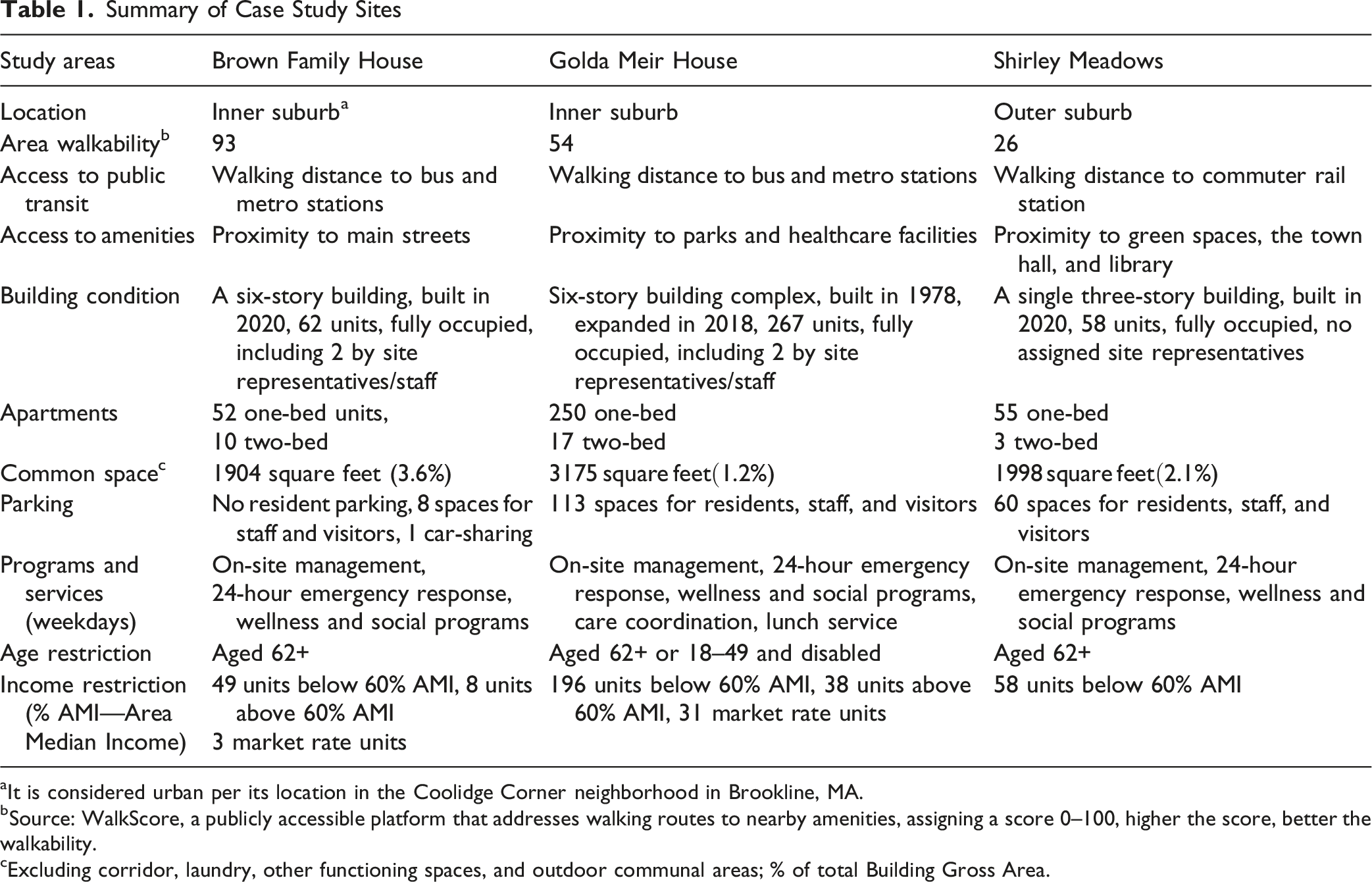
aIt is considered urban per its location in the Coolidge Corner neighborhood in Brookline, MA.
bSource: WalkScore, a publicly accessible platform that addresses walking routes to nearby amenities, assigning a score 0–100, higher the score, better the walkability.
cExcluding corridor, laundry, other functioning spaces, and outdoor communal areas; % of total Building Gross Area.
Participant Recruitment
2Life serves a linguistically diverse population, with the majority of residents speaking languages other than English, including Russian, Chinese, and other Eastern European languages (Verbuk, 2025). At the study sites, English-, Russian-, and Chinese-speaking residents were the largest language groups. Given the pilot nature of the study and resource constraints, recruitment focused on residents fluent in English or Chinese and without diagnosed cognitive impairments. Based on these criteria, the local teams identified 251 eligible residents. To ensure language subgroups were proportionally represented, the sample size for each site was calculated separately using simple random sampling (95% CI, 5% ME). Recruitment material, including flyers, digital announcements, and phone outreach, was distributed by local staff and resident volunteers to 218 eligible participants randomly selected through apartment rosters, using 70% as a conservative response rate based on prior community experience. Participants were offered a chance to win one of ten $50 gift cards through a raffle. Local managers and a senior officer supported staff survey recruitment and introduced the researcher to resident representatives to support rapport-building.
Data Collection
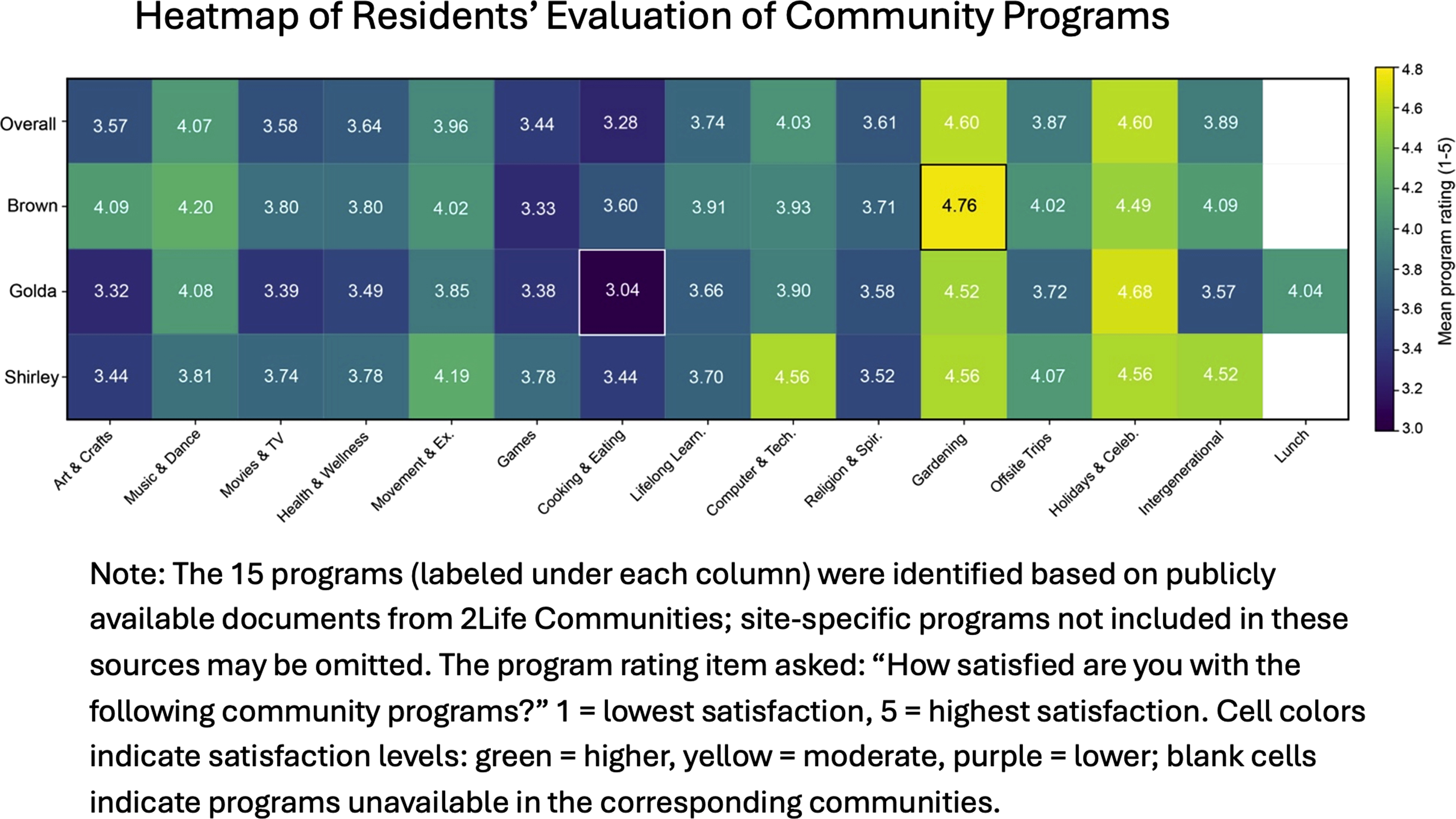
Data were collected between April and May 2025 through surveys and participatory observations, conducted by a trained English- and Chinese-speaking postdoctoral researcher with experience in aging research and a Social & Behavioral Research Investigator certificate from the Massachusetts Institute of Technology (Record ID: 62208706). 152 residents individually completed a 30-min, in-person, researcher-administered survey, in English or Chinese, per primary language, at study sites’ conference or community rooms. Residents rated use frequency for 14 common spaces and satisfaction with 15 programs using 4-point and 5-point scales, respectively; item wording and anchors are reported in Figures 1 and 2. Eight local staff members participated in a two-round online anonymous Delphi-informed survey to develop a shared understanding (Gnatzy et al., 2011) of strategies to promote social connections while accommodating the time constraints of professionals working in senior housing settings. After first completing the survey independently, participants reviewed anonymized group feedback and were invited to revise or confirm their responses; all retained their initial answers except for one minor modification. The purpose was to assess response stability and contextualize resident and observational data, rather than to establish formal expert consensus. Heatmap of use of common spaces Heatmap of program rating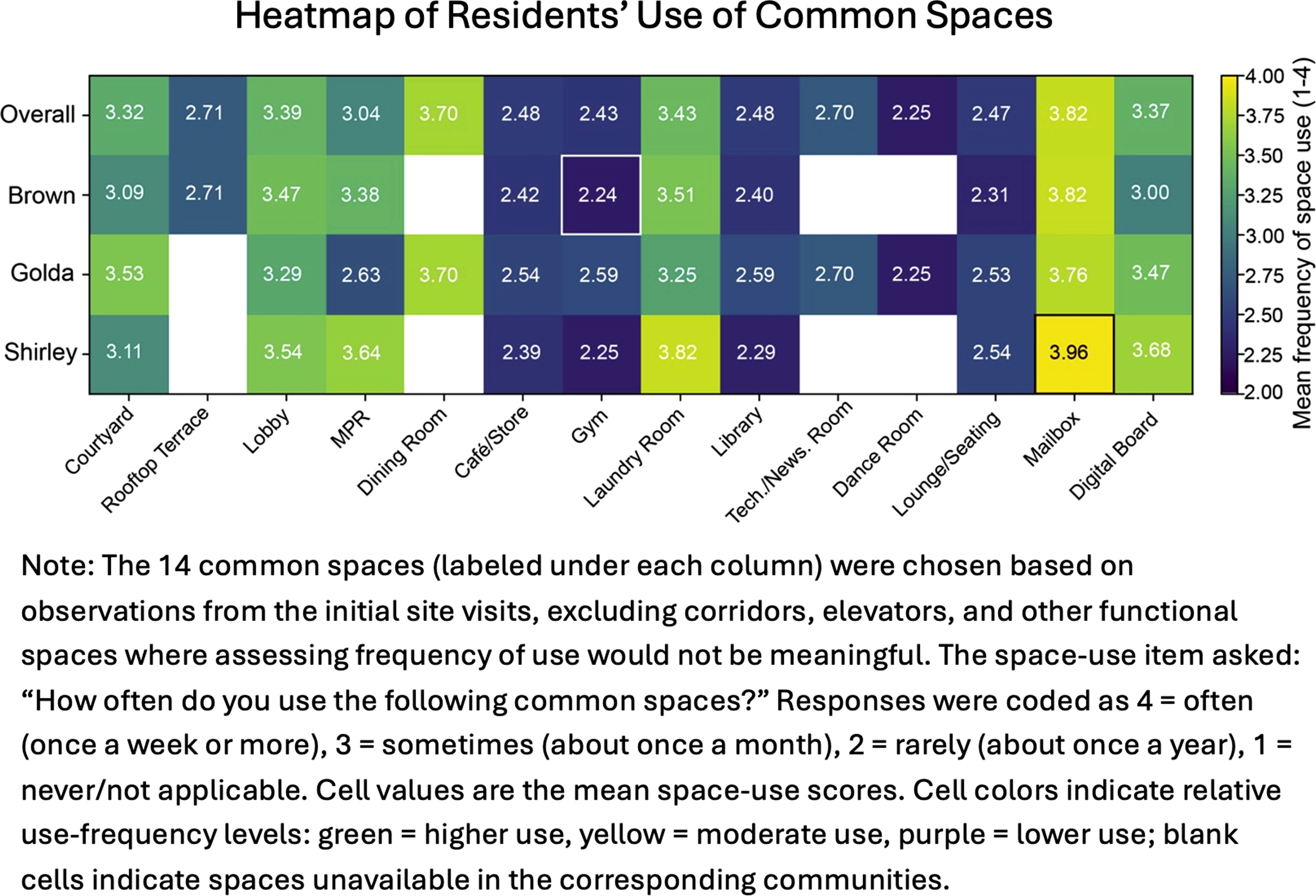
At each site, the researcher conducted three 20-min participatory observations per fieldwork day to gain contextual insight, taking notes on residents’ interactions and use of common spaces, including those of non-survey participants. In line with site scales and interviewing demands, fieldwork lasted 5 days at Brown, 11 at Golda, and 3 at Shirley; total observation time varied accordingly (300, 660, and 180 min, respectively). Additionally, two resident-initiated walk-throughs of Golda’s common spaces (30–40 min each) provided supplementary contextual field notes.
Ethics
The study has received ethical approval from the Institutional Review Board of the Massachusetts Institute of Technology (Reg. No. 2502001561). The participants provided written or verbal informed consent before the study. Both the resident and staff surveys were anonymous. Per community preferences, no audio or visual recording was used; instead, field notes were taken during in-person interactions.
Data Analysis
Resident survey data were manually entered into Survey 123 and exported into spreadsheets for analysis in IBM SPSS Statistics v.29.0. Given the ordinal outcomes and unequal sample sizes across sites (Conover, 1999), cross-site comparisons of residents’ space uses, program evaluations, and loneliness scores were assessed using nonparametric Kruskal–Wallis tests. For outcomes with significant omnibus results, post hoc pairwise comparisons were conducted using Dunn’s tests with Benjamini–Hochberg adjusted p-values. Due to space and program variations across sites, exploratory language-subgroup differences in space use, program ratings, and loneliness scores were examined within sites using Mann–Whitney U tests and the Benjamini–Hochberg correction to control the false discovery rate, and findings were interpreted cautiously.
Resident responses to the open-ended question “How would you describe your opportunities for socializing at 2Life?” were manually analyzed using reflexive thematic analysis (Braun & Clarke, 2019) following the phases of familiarization, coding, theme development, review, definition, and reporting. The researcher repeatedly read all responses, generated initial codes, and grouped codes into candidate themes. Coding was primarily inductive, with the conceptual framework used as a sensitizing lens for residents’ descriptions of space, programs, support, social connection, and belonging. Broader concepts of person-environment fit and aging in the right place informed later interpretation of how these experiences related to residents’ evolving needs and preferences. Themes were refined through iterative review against the full dataset to capture recurring patterns and meaningful variation across sites and language groups. Staff responses to the open-ended question “What strategies and programs are designed to promote social connections among residents?” were analyzed descriptively to assess stability between rounds and to triangulate areas of convergence or divergence with residents’ responses and field notes from participatory observations. Together, quantitative analyses identified patterns of space use and program experience, while qualitative resident data, staff perspectives, and observations contextualized how perceived social opportunities may relate to spatial and organizational conditions. Participant checking was undertaken through study finding presentations to residents and staff, and relevant feedback was incorporated into the final analysis.
Results
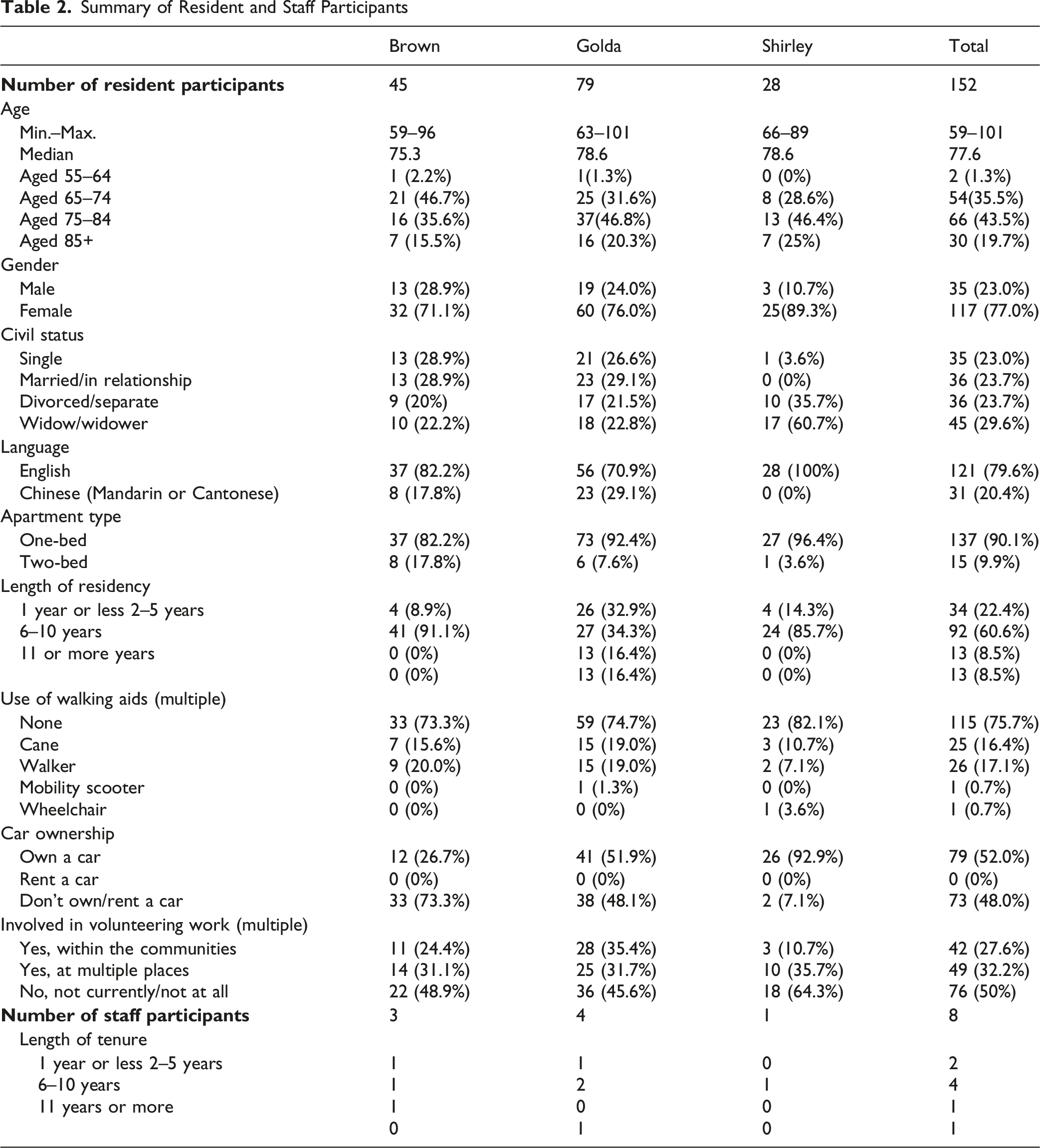
Characteristics of Resident and Staff Participants
Summary of Resident and Staff Participants
Residents’ Use of Common Spaces in Communities
The three communities differed in common space conditions. Golda, the largest site, offered the widest range of dedicated rooms. Brown uniquely featured a rooftop terrace and a public bakery-coffee shop, while gyms and libraries were integrated into open spaces. Shirley’s central community space combined an open kitchen and activity spaces. Broadly similar use patterns emerged amongst the 10 shared spaces across sites: residents most frequently used core functional spaces, including the mailbox area, laundry room, lobby, digital board area, and courtyard; more specialized activity spaces, such as gym, library, café/store, and lounge/seating, were used less often; the MPR was routinely used with varied site-level engagement (Figure 1).
Cross-Site Comparison of Space Use
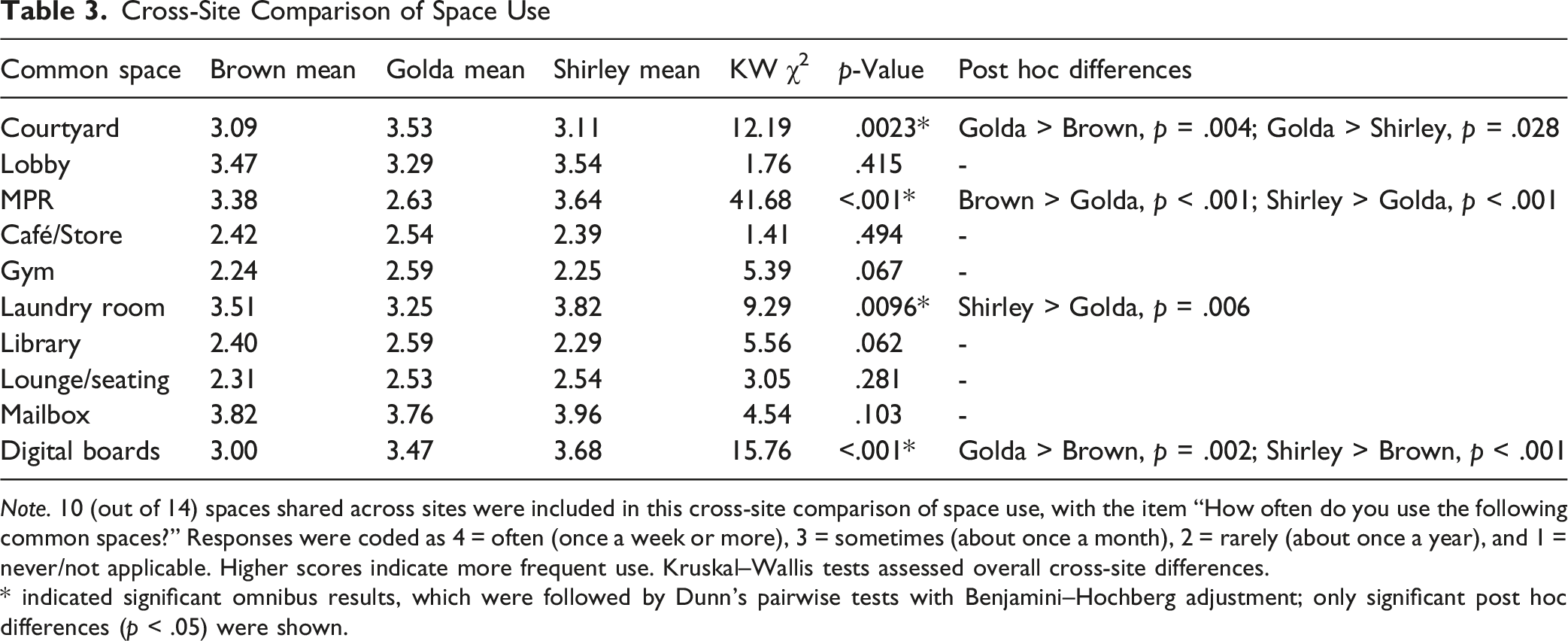
Note. 10 (out of 14) spaces shared across sites were included in this cross-site comparison of space use, with the item “How often do you use the following common spaces?” Responses were coded as 4 = often (once a week or more), 3 = sometimes (about once a month), 2 = rarely (about once a year), and 1 = never/not applicable. Higher scores indicate more frequent use. Kruskal–Wallis tests assessed overall cross-site differences.
* indicated significant omnibus results, which were followed by Dunn’s pairwise tests with Benjamini–Hochberg adjustment; only significant post hoc differences (p < .05) were shown.
Within-Site Language Subgroup Comparison of Space Use in Brown and Golda Communities
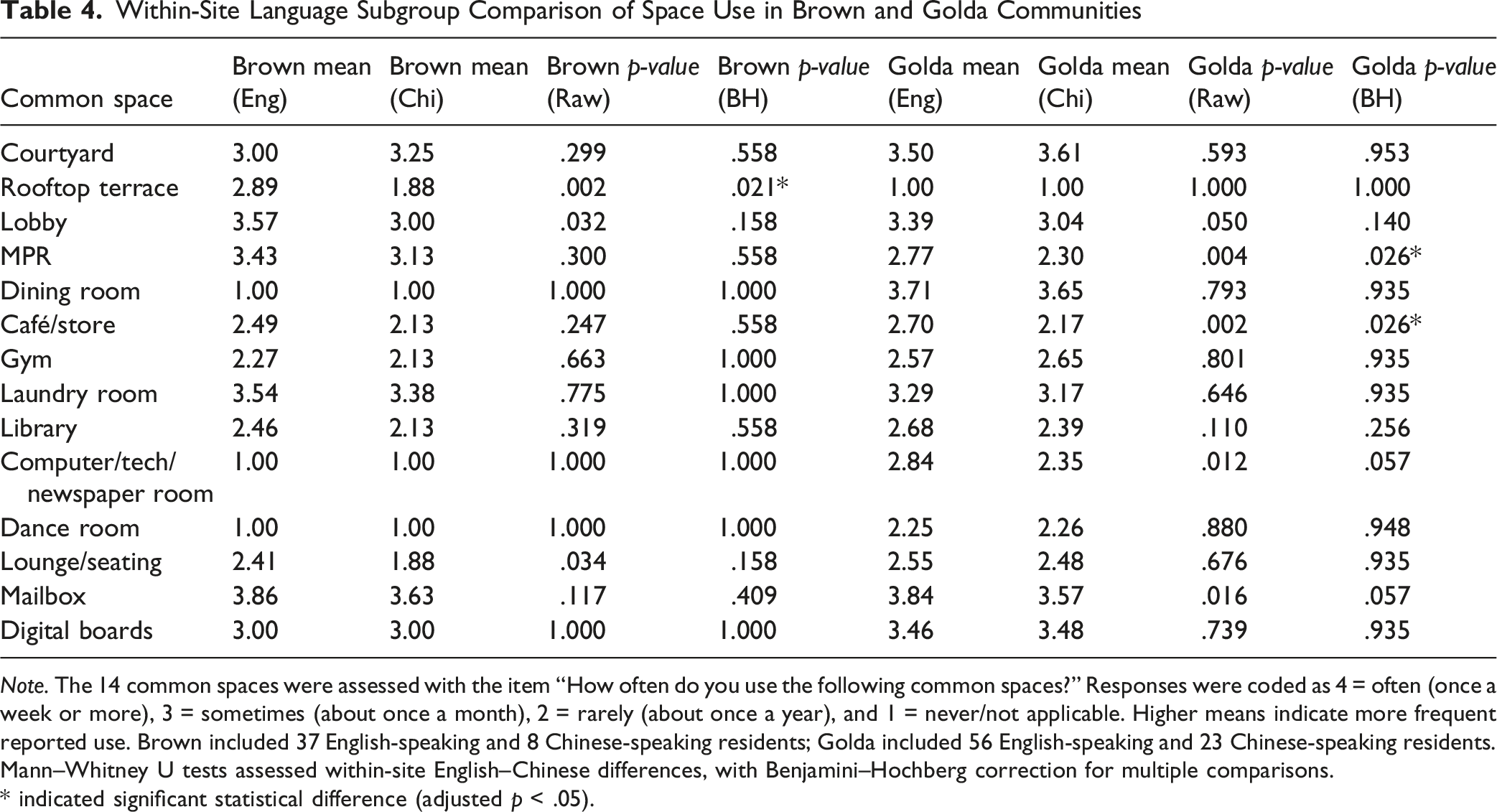
Note. The 14 common spaces were assessed with the item “How often do you use the following common spaces?” Responses were coded as 4 = often (once a week or more), 3 = sometimes (about once a month), 2 = rarely (about once a year), and 1 = never/not applicable. Higher means indicate more frequent reported use. Brown included 37 English-speaking and 8 Chinese-speaking residents; Golda included 56 English-speaking and 23 Chinese-speaking residents. Mann–Whitney U tests assessed within-site English–Chinese differences, with Benjamini–Hochberg correction for multiple comparisons.
* indicated significant statistical difference (adjusted p < .05).
Residents (Brown: 16%, Golda: 68%) reported additional site-specific spatial resources that were frequently used. This included Brown’s card room (shared with a wellness-checking function) and outdoor seating (part of the street-facing building facade), and several newly added spaces following Golda’s recent expansion (e.g., activity room, Ping-Pong room, and art room).
Residents’ Evaluations of Community Programs
Residents consistently evaluated all 15 listed programs positively, with mean scores ranging from 3.04 to 4.76 on a 1–5 scale (Figure 2). Among the 14 programs shared across sites, the overall highest ratings were gardening, holidays & celebrations, music & dance, and computer & technology, while cooking & eating and games received comparatively lower but still positive ratings. Golda, as the only site delivering weekday lunch service, received positive evaluations. Overall, Brown residents showed the strongest enthusiasm across programs, whereas Golda showed moderate but stable engagement. Shirley residents particularly highlighted technology support and intergenerational programs.
Cross-Site Comparison of Program Evaluation
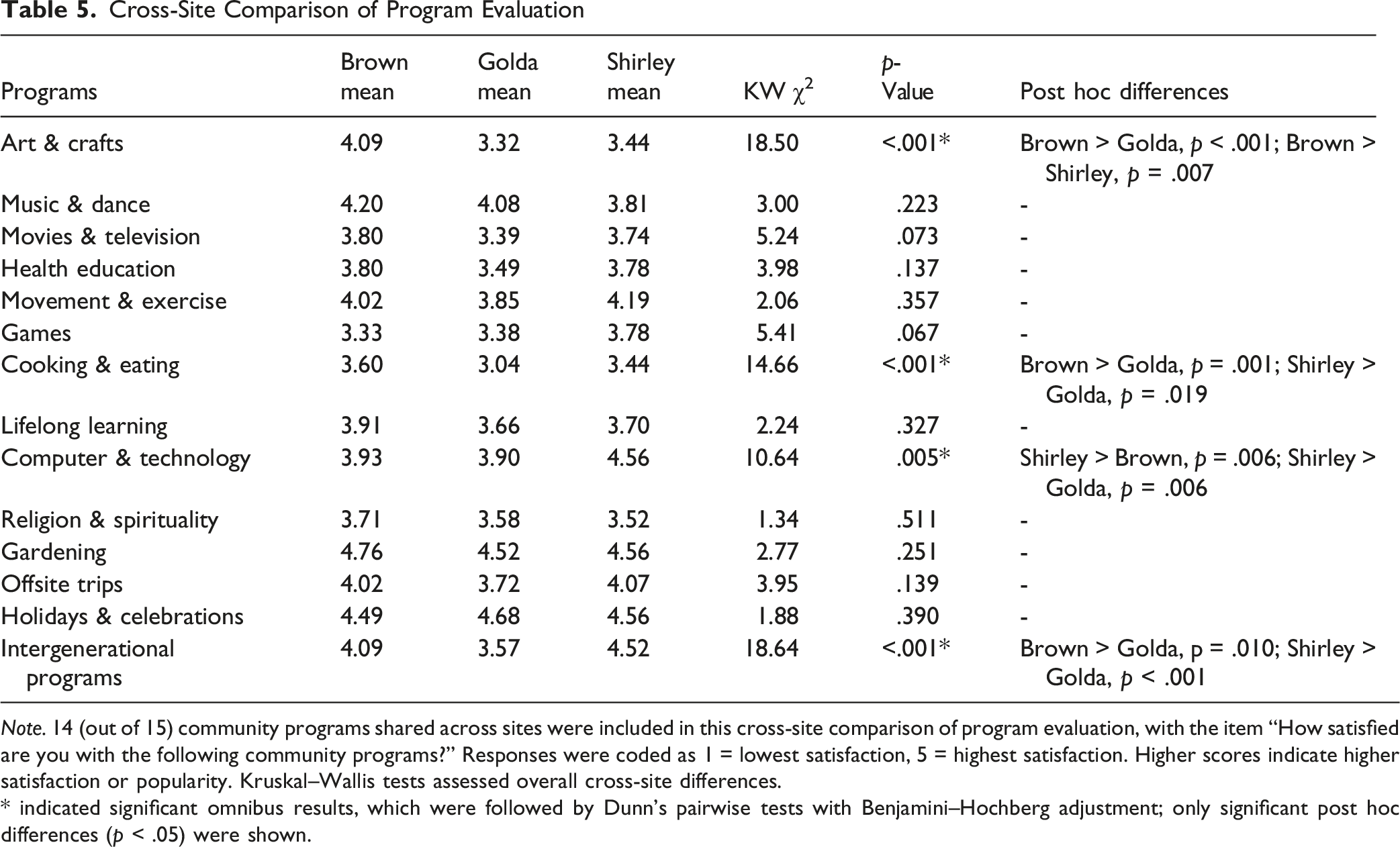
Note. 14 (out of 15) community programs shared across sites were included in this cross-site comparison of program evaluation, with the item “How satisfied are you with the following community programs?” Responses were coded as 1 = lowest satisfaction, 5 = highest satisfaction. Higher scores indicate higher satisfaction or popularity. Kruskal–Wallis tests assessed overall cross-site differences.
* indicated significant omnibus results, which were followed by Dunn’s pairwise tests with Benjamini–Hochberg adjustment; only significant post hoc differences (p < .05) were shown.
Within-Site Language Subgroup Comparison of Program Rating in Brown and Golda Communities
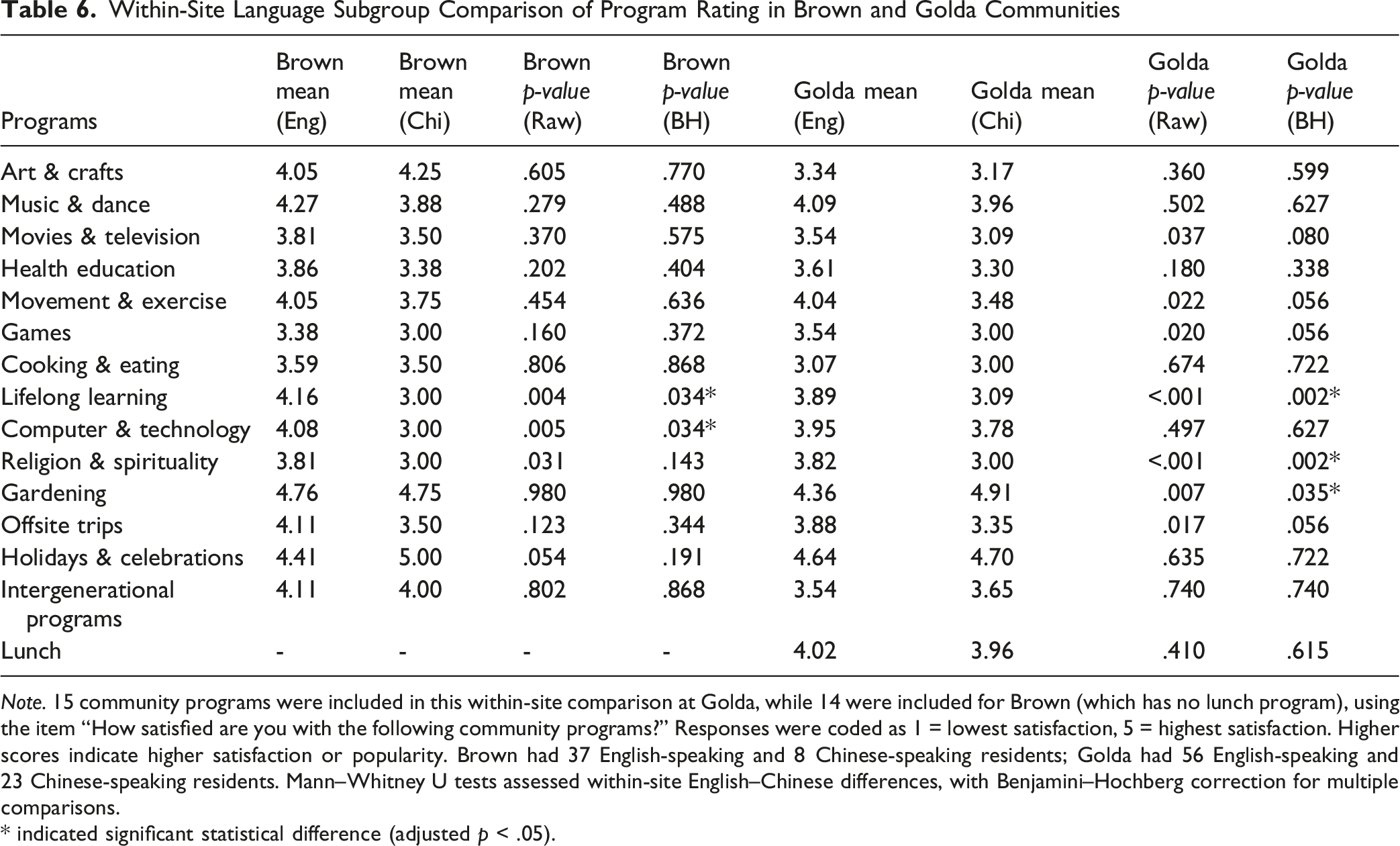
Note. 15 community programs were included in this within-site comparison at Golda, while 14 were included for Brown (which has no lunch program), using the item “How satisfied are you with the following community programs?” Responses were coded as 1 = lowest satisfaction, 5 = highest satisfaction. Higher scores indicate higher satisfaction or popularity. Brown had 37 English-speaking and 8 Chinese-speaking residents; Golda had 56 English-speaking and 23 Chinese-speaking residents. Mann–Whitney U tests assessed within-site English–Chinese differences, with Benjamini–Hochberg correction for multiple comparisons.
* indicated significant statistical difference (adjusted p < .05).
Residents (Golda: 54%, Shirley: 46%, and Brown: 27%) identified additional valued programs within their specific communities. Notably, residents consistently highlighted tenant meetings, advocacy groups, and other socially and culturally enriching activities (e.g., card games, meditation, and music events). Locally relevant, resident-led initiatives were especially appreciated, such as the Creative Connection at Golda, the tenant committee fundraising at Brown, and the Shirley Time at Shirley Meadows. Golda residents further noted meaningful offerings, including Ping-Pong, storytelling, poetry, and Chinese singing programs, while their staff highlighted an additional popular memory-care program called Joyful Connection.
Residents’ Perceptions of Social Opportunities
UCLA 3-Item Loneliness Scores by Site and Language Group
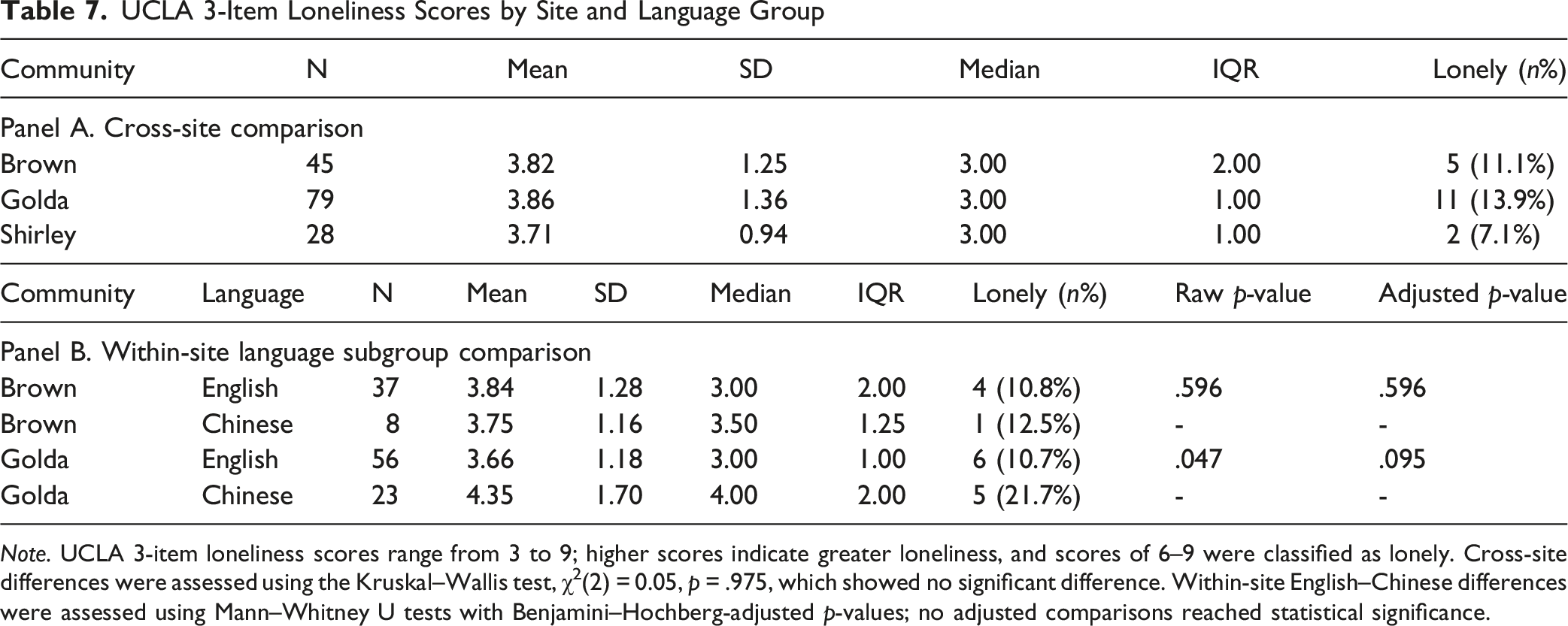
Note. UCLA 3-item loneliness scores range from 3 to 9; higher scores indicate greater loneliness, and scores of 6–9 were classified as lonely. Cross-site differences were assessed using the Kruskal–Wallis test, χ2(2) = 0.05, p = .975, which showed no significant difference. Within-site English–Chinese differences were assessed using Mann–Whitney U tests with Benjamini–Hochberg-adjusted p-values; no adjusted comparisons reached statistical significance.
Three key themes emerged, illustrating the dynamic interplay among common spaces, activities, perceived social opportunities, and overall residential satisfaction.
Residents Feel Socially at Ease When Common Spaces Enable Safe, Casual, and Optional Encounters
Across sites, participants described their communities as “safe,” “comfortable,” “welcoming,” “helpful,” “blessed,” and “fun,” supporting social interaction while preserving autonomy and privacy.
Golda residents consistently considered the community dining space a major social hub. Some enjoyed dining together, whereas others visited primarily for informal interactions with neighbors and staff, as P68 (female, 91 years, English-speaking) shared: There are many social opportunities, such as holiday celebrations, bingo, and entertainment…It is worth noting that the dining room is a major social site, not necessarily for food. I appreciate no assigned seats and long tables.
At the smaller sites, Brown and Shirley, routine movements through the lobbies, MPRs, and hallways facilitated encounters, conversations, and participation in organized activities and spontaneous interactions, as P123 (female, 73 years, English-speaking) elaborated: I often sit in the lobby, next to the fireplace, which is conducive to conversations. I also enjoy sitting in the courtyard listening to audiobooks when the weather is good. That involves me passing through the elevator area and the MPR, where I often run into people and have a small chat.
Staff accounts further highlighted intentional spatial adaptation to enable flexible use of common spaces, allowing residents to engage socially while maintaining choice and comfort. As a Brown staff member shared: About 2 years later [after our opening], we remodeled the MPR with a sliding wall that opens into the lobby, allowing more residents and their friends and families, and community members to participate in programs.
Similar strategies, including movable partitions and modular furniture, were observed at Golda and Shirley to support both programmed and spontaneous interactions. Brown residents also noted that nearby neighborhood amenities and public transit supported independence and casual social encounters beyond the community.
Residents Feel Included When Programs Are Accessible and Support Participation at Different Comfort Levels
Participants consistently endorsed community programs, particularly those that were locally tailored, flexible, and resident-led (e.g., birthday parties, creative artwork, and walking groups). Regular participation in structured and informal activities supported meaningful engagement and friendship building. As P70 (female, 81 years, English-speaking) described: I meet with my knitting group friends regularly at the activity room, and we often laugh together…I enjoy being around different people.
However, participation was not guaranteed by the availability of space or programs. As many residents observed, programs facilitated social interactions “only if you take the opportunities,” and for some residents, solitude was a preferred and intentional choice. P125 (female, 67 years, English-speaking) explained: Everyone here is friendly, warm, and welcoming. I appreciate people’s efforts. But I enjoy my own company… I know the neighbors on my floor better, and I recognize many others by their faces. I help people when I can.
Language barriers limited non-English-speaking residents’ full access to programs, though many joined non-language-dependent activities (e.g., gardening and holiday celebrations). Other engagement barriers included time constraints, gender imbalance, fewer younger-old residents, residence tenure, communication comfort, motivation, lingering COVID-19 concerns, and ambivalence toward deeper connections beyond “acquaintances,” These factors underscored residents’ need for inclusive, low-barrier, and varied engagement opportunities accommodating diverse preferences and capacities.
Staff perspectives echoed residents’ accounts, highlighting efforts to create regular and low-barrier activities within and beyond the communities (e.g., excursions and shopping trips) that encouraged participation across language subgroups, mobility levels, and personal preferences. As one staff member explained, programs and spaces were designed to enable interaction and collective experience, including simple practices such as seating residents next to one another at events. Such efforts helped reduce barriers and create welcoming environments where residents could engage at their own comfort levels.
Residents Feel Socially Supported When Opportunities Help Them Maintain Familiar Ties While Building New Connections as Needs Change Over Time
Residents described how forming new connections within communities and nurturing familiar bonds externally helped maintain a sense of identity and social support during relocation and aging transitions. This balance between continuity and change led some to describe their community as “the right place for me.” For many, meaningful social connection was both a motivation for relocation and a valued residential feature. As P73 (male, 95 years, English- and Chinese-speaking) explained: I take care of my wife. She didn't want to leave our previous home. But I wanted her to be able to go out for walking and relaxation. Knowing that some friends had already moved here [Golda], I applied for us to join too. It is safe and convenient, the neighbors are nice, and they often share homemade food with us.
Familiarity with surrounding neighborhoods and the friendly atmosphere cultivated by neighbors and staff also supported residential adaptation and satisfaction. Formal supports, such as the “Welcome Buddy” program and resident volunteering, helped residents rebuild social networks after relocation and eased transitions associated with aging and housing change. As P72 (female, 73 years, English-speaking) reflected: The second day after I moved in, a resident introduced me to twelve other neighbors. We later became close friends. We visit each other's apartments often and go out to do things together.
Everyday informal interactions, such as (dog) walking, sharing food, coordinating errands, or assisting neighbors, further sustained familiarity and collective care, often blurring boundaries between private and communal life. As P121(female, 70 years, English-speaking) summarized, “It’s like living with a big family.”
Residents also adapted their social strategies over time, selectively engaging in community activities or prioritizing other support networks as needs evolved. P60 (female, 78 years, Mandarin-speaking) elaborated that limited English proficiency led her to rely on Chinese-speaking senior daycare via shuttle services, while proximity to public transit and family supported her overall well-being, leading her to describe her living situation as “a little paradise.”
Discussion
This study advances the understanding of how design and management of common spaces in affordable ILSH can strengthen social connections and reduce loneliness-related risks. Through a three-site case study, the findings provide empirical support for the key theory of person-environment fit and its extensions, that is, Integrated Model of Aging Well (Wahl et al., 2012), and “aging in the right place” (Canham et al., 2024; Golant, 2015). The study adds to existing literature on aging and senior housing by highlighting how socially enabled design and inclusive, well-curated programming of common spaces, and thoughtful management practices in ILSH jointly sustain social participation, sense of community, and opportunity for meaningful engagement in later life.
Despite varied spatial conditions across sites, similar space use patterns emerged. Residents favored central, visible common spaces (e.g., MPRs and lobbies at Brown and Shirley, dining room at Golda, and courtyards across sites) over designated activity spaces (e.g., gyms, libraries, and cafés). These spaces also hosted the highest-rated programs, including gardening, holidays & celebrations, music & dance, and computer & technology. Cross-site space use comparisons showed differences for a subset of common spaces (Table 3), reflecting combined spatial, managerial, and local contextual factors. Golda residents identified additional valued activities enabled by site expansion, though some spaces (e.g., dance room and movie room) were underused due to limited awareness or wayfinding challenges. At Brown and Shirley, residents acknowledged shared use of staff office spaces for community activities, highlighting thoughtful management practices. Staff perspectives aligned with residents’ experiences, emphasizing the importance of accessibility, program diversity, and culturally attuned engagement in activating physical and programmatic resources into meaningful social outcomes.
Somewhat counterintuitively, greater spatial provision did not necessarily translate into higher program rating. Although Golda, the largest site, offered the most common space types, total square footage, and the broadest program range, residents at the smaller site, Brown, reported the highest overall evaluations of shared community programs. Residents across sites reported lower use of gym spaces with fitness equipment, but consistently endorsed group exercise programs. Cooking & eating received lower overall ratings, yet residents expressed interest in communal dining. Shirley residents particularly valued the technology support program despite the absence of a designated space, with sessions often taking place in staff offices. Cross-site differences in program rating (Table 5) suggest program experience is shaped by local implementation, resident interests, and site context.
Exploratory within-site comparisons suggest common-space use and program experience may vary between language groups, but the patterns were selective rather than uniform. Differences in space use (i.e., rooftop terrace, MPR, and café/store) and program rating (i.e., lifelong learning, computer & technology, religion & spirituality, and gardening) may reflect variation in space design, cultural relevance, communication, or residents’ prior interests and routines. Given small subgroup sizes and the exploratory nature of the analyses, these findings should be interpreted cautiously and examined further in future research. Overall, these patterns suggest shared environmental and organizational features may have a stronger impact on shaping resident experiences than demographic and linguistic differences alone.
Low loneliness scores across sites, with no significant differences, indicate relatively strong and comparable levels of perceived social connection. Although adjusted language-group comparisons were not significant, the higher descriptive loneliness scores among Golda’s Chinese-speaking residents warrant further contextual discussions and operational attention. The relative consistency of perceived social opportunities across subgroups further suggests that culturally responsive programming and multilingual communication may support more equitable social environments. Importantly, while challenges among Chinese-speaking residents likely reflect broader barriers faced by non-English-speaking older adults, on-site programs and services appeared to provide accessible resources for engagement that may not be readily accessible elsewhere.
In line with these findings, residents across sites overwhelmingly reported strong opportunities for social interactions, with 90% rating community social life positively, and even ambivalent residents expressing overall satisfaction with their residential experience. This means that residents’ overall well-being is supported not only by perceived quality of common spaces, programs, and participation, but by confidence that meaningful social connection is accessible when desired. Such confidence is rooted in the residential environment that supported their ongoing efforts to balance between familiarity and change, selectively engage in activities, and mobilize person-environment resources—what can be understood as the dynamic interplay of agency and belonging across time (Wahl et al., 2012) to feel oneself aging in the right place (Golant, 2015). Taken together, these findings suggest that space availability alone does not determine program engagement or perceived quality. These novel findings imply that common spaces in ILSH function as social infrastructure only when they are visible, accessible, programmatically activated, and supported through responsive management practices (Klinenberg, 2018; Latham & Layton, 2019; Simone, 2014). While physical space is a necessary condition for collective activities, it is insufficient on its own to generate social value.
Limitations and Strengths
Several limitations should be acknowledged. First, the study was conducted within a single non-profit housing organization serving middle- and low-income older adults, and the findings may be most transferable to organizations with similar values, financing structure, and resident demographics. Second, self-reported data may be subject to recall bias or social desirability bias, though these are acceptable limits given the nature of the study. Third, subgroup participation was limited by English- and Chinese-speaking individuals with a modest sample size within sites, potentially reducing statistical power to detect small but meaningful differences. Finally, observational data were collected during weekdays and daytime, which may underrepresent weekend usage patterns (e.g., family visits and resident-led activities); observation time was greater at Golda because fieldwork required more days, which might have provided comparatively richer contextual material for that site. Future longitudinal research, including other non-English speaking subgroups, could further explain how design, management, and social engagement interact over time to shape aging trajectories. Nonetheless, demonstrating positive outcomes within an affordable-housing context and using a randomly sampled resident population that was broadly representative of English- and Chinese-speaking residents within each site are key strengths of the study, highlighting the potential for supportive environmental and management strategies to promote social connectedness among older adults even in resource-constrained settings.
Conclusion
Amid rising housing insecurity, an increasingly diverse aging population, and growing recognition of social connection as a determinant of health, ILSH represents a critical setting to promote active and healthy aging. This study demonstrates that common space in senior housing is not merely an amenity, but a strategic built-environment component that can foster social connection and strengthen community belonging. Notably, the findings show that high-quality social environments can be achieved within affordable ILSH when common spaces are intentionally activated through integrated design and management strategies accounting for flexibility, adaptability, and resident-driven use. By sustaining residents’ agency while reinforcing opportunities for belonging, such environments enable older adults to age in the right place, one that meets individuals’ evolving needs while preserving opportunities for connection, purpose, and participation. These findings offer actionable insights for policymakers, housing providers, and aging-service practitioners seeking to strengthen social infrastructure within senior communities and contribute to healthier, more inclusive aging environments.
Footnotes
Author Note
The study was presented at the GSA late-breaking Community-Engaged Research Approaches in November, 2025. And the conference proceeding was published in Innovation in Aging. This manuscript is original and includes substantial new technical content, expanded analysis, additional results, and discussions that deepen the interpretation of findings. The manuscript has not been published or submitted elsewhere.
Acknowledgments
The author sincerely thanks all participants, facilitators, and community partners for their engagement and collaboration in co-creating the study outcomes.

Ethical Considerations
The study has received ethical approval from the Institutional Review Board of Massachusetts Institute of Technology (Reg. No. 2502001561).
Consent to Participate
All participants provided written or verbal informed consent prior to the study.
Funding
The author received no financial support for the research, authorship, and/or publication of this article.
Declaration of Conflicting Interests
The author declared no potential conflicts of interest with respect to the research, authorship, and/or publication of this article.
Data Availability Statement
Data and materials are available on request from the author.