







Abstract
Spanning over two decades, this systematic review includes 35 studies that focus explicitly on probation and parole revocations in the United States. Findings reveal that studies vary in their operationalization of “revocation” and that researchers have depended primarily on quantitative monomethod approaches to study revocations. Studies suggest that revocations are contributing to incarceration rates, although the extent to which this occurs is not clear. Violation trends show that the accumulation of technical violations, especially ongoing program and treatment noncompliance, contributes to revocation outcomes. Probation/parole client sociodemographic characteristics, such as race, ethnicity, and sex, are differentially associated with supervision outcomes, and these characteristics often work distinctly and in tandem to impact revocation trends. Research implications include providing clear and consistent measurements of revocation outcomes and engaging in more diverse research methodologies. Policy implications focus on empirically evaluating structured decision-making instruments and implementing more extensive reentry programs, especially those focused on employment.
Introduction
In 2020, 3.9 million adults were under some form of community supervision, representing approximately twice the number of persons incarcerated in state and federal prisons and local jails (Kluckow & Zeng, 2022). Although probation/parole (P/P) has increasingly been touted as an opportunity to reduce incarcerated populations, studies suggest that community corrections have actually expanded carceral control in some states (Phelps, 2013, 2020), resulting in what has been termed “mass supervision” (Williams et al., 2019). In 2020, statistics suggest that P/P revocations comprised about a third of all prison intakes (Carson, 2021); that same year, revocations accounted for approximately 63% and 71% of P/P sentences, respectively, that ended in reincarceration (Kaeble, 2021). This unanticipated “net widening” effect, largely driven by revocation rates (Phelps, 2017), emphasizes the importance of scholarly research that explores revocations. Although researchers have engaged in these efforts, there has been no comprehensive review of their research approaches, and the most recent review of probation outcomes was published three decades ago (Morgan, 1993). To contribute to a holistic understanding of revocations, the current study provides a systematic review of the methodological approaches used to study revocations and an updated review of research findings from the last few decades.
Probation and Parole Supervision
Initially, P/P was developed to assist individuals’ rehabilitation within the community (Steen & Opsal, 2007), and rehabilitation remained the focus of community corrections until Martinson's (1974) assessment that “nothing works.” This dismal review, coupled with political pressure to “get tough on crime,” caused an increased reliance on punitive approaches within P/P departments over the following decades (Morgan, 1993; Viglione et al., 2018). As agencies implemented strict supervision approaches, revocation rates began to increase dramatically, ultimately contributing to already massive incarcerated populations in some states (Lin et al., 2010; Phelps, 2017; Wodahl et al., 2011). Partially in response to overwhelmed corrections departments, collaborative efforts between researchers and policymakers have led to the development and adoption of evidence-based practices (EBPs), wherein correctional departments have worked to implement supervision practices based on empirical evidence of effective supervision strategies and positive outcomes for P/P clients (Guevara & Solomon, 2009). These approaches focus simultaneously on encouraging desistance by identifying and responding to clients’ criminogenic needs and providing appropriate supervision to ensure P/P compliance (Taxman, 2002, 2008; Viglione et al., 2018). Research suggests that punitive approaches alone are not conducive to positive P/P outcomes, but instead, effective supervision must integrate surveillance and programming (Taxman, 2002).
Revocation Process
When individuals are placed on P/P, an important caveat to their terms of supervision includes the court/parole board's ability to revoke their community supervision and incarcerate them in a jail or penitentiary. A revocation can occur when a person violates the conditions set forth in their probation sentence or parole certificate, known as a technical violation (TV), or when the defendant commits a new crime that violates state or federal law, known as a law violation (LV; Wodahl et al., 2011). Standard conditions of community corrections apply to all P/P clients within a specific jurisdiction and can include provisions such as maintaining stable employment, refraining from illegal drug use, and minimizing contact with other persons convicted of a felony (Phelps, 2020). Additionally, P/P clients may have special conditions included in their probation sentence or parole certificate that is specific to that person's supervision (Baillargeon et al., 2009), such as the required completion of a substance abuse class or compliance with electronic monitoring. The number of mandated supervision conditions can range between 10 and 24, although jurisdictions on average require clients to abide by 19 distinct supervision conditions (Travis & Stacey, 2010); a violation of any of these conditions can result in sanctions against the defendant, including a revocation (Wodahl et al., 2011).
As line officers, P/P agents are often the first practitioners to identify that a violation has occurred, and they subsequently have discretion regarding how to respond to those violations (Hepburn & Griffin, 2004; Steen et al., 2012). Officer discretion is generally regulated by the P/P department, wherein some departments allow officers more or less discretion when responding to violations. Additionally, in an effort to align with EBP's and reduce recidivism while maintaining public safety, some P/P departments have introduced structured decision-making tools that provide guidance to officers on how to respond to specific violations (Turner et al., 2012). These matrices often require officers to consider clients’ previous violation history, the primary offense for which they have been placed on supervision, and the seriousness of the current violation (Turner et al., 2012). Once these factors are considered, the instruments provide possible response options, often ranging from intermediate sanctions to filing a motion to revoke (MTR; Turner et al., 2012).
If a P/P officer opts to pursue a revocation in response to a violation, they can recommend an MTR, which must then be approved by the appropriate supervisors before being submitted to the court, parole board, or other administrative body (depending on the jurisdiction). Once an MTR is successfully filed, a series of revocation hearings follow to determine the validity of the alleged violation(s) and decide the appropriateness of revocation in the client's case. Ultimately, the judge or parole board member(s) make the final judgment to revoke a defendant's case and incarcerate them for some period of time, to continue their case under supervision, and/or to provide some modification of their original sentence.
Revocation Trends
Although most probationers (65%) and parolees (69%) successfully complete their supervision sentences, P/P revocations account for the majority of cases that end in incarceration (63% of probation failures and 71% of parole failures; Kaeble, 2021). Additionally, P/P revocations accounted for one-third of all prison intakes in 2020 (Carson, 2021), suggesting that revocation trends are a significant feature of back-end sentencing within the criminal justice system, specifically for marginalized communities (Lin et al., 2010; Phelps, 2017), state corrections budgets (Lin et al., 2010), and nationwide incarceration trends (Phelps, 2017).
Microlevel Predictors of Revocation
Current P/P revocation research has most frequently focused on the predictive power of sociodemographic characteristics of clients for P/P outcomes. Most consistently, revocation studies have observed that age, race, and sex are associated with revocation outcomes, wherein young clients, male clients, and clients of color are at greater risk of having their supervision revoked (Steen et al., 2012; Steinmetz & Koeppel, 2017). Additionally, employment, income, and, to some extent, education and marital status, tend to be protective against failure outcomes for P/P clients (Kassebaum et al., 2001; Olson & Lurigio, 2000), while clients with histories of substance abuse (Degiorgio & DiDonato, 2014; Olson & Stalans, 2001) and, to a lesser extent, mental health issues (Steinmetz & Henderson, 2016), are at a greater risk of revocation.
Studies suggest that P/P clients with more extensive criminal histories are at greater risk of revocation (Grattet et al., 2009; Olson & Lurigio, 2000). Notably, the inclusion of a client's primary offense has yielded mixed results, wherein some research suggests clients with violent primary offenses and sex offenses are at a greater risk of revocation (Lin et al., 2010; Steinmetz & Anderson, 2015), while other studies have failed to identify significant associations with revocation (Steen et al., 2012; Verrecchia & Ling, 2013). Sentence length has not generally been observed as a significant predictor for revocation risk, although a few studies have found that clients with longer P/P sentences are more likely to have their supervision revoked (Olson & Lurigio, 2000; Steinmetz & Koeppel, 2017). Unsurprisingly, clients with more extensive violation histories during supervision are generally at a greater risk of revocation (Grattet et al., 2009; Zettler & Martin, 2020).
Mesolevel Predictors of Revocation
Beyond clients’ sociodemographic characteristics, some research has considered the role that officers and departments may play in revocation decisions. Depending on departmental policies, officers can have broad discretion when deciding to file an MTR (Ricks & Eno Louden, 2015; Steen et al., 2012), ultimately impacting supervision outcomes for P/P clients. Some scholars have observed officers’ sociodemographic characteristics and professional experiences may impact decision-making regarding filing MTR's, observing that older, female officers of color, and agents with greater educational attainment and job tenure may be less likely to file MTR's (Steiner et al., 2011), although other research failed to observe significant differences in these variables and their association with officer behaviors (Grattet et al., 2009).
Other research in this area has focused on officer orientation, including how officers view their jobs and whether they tend to emphasize surveillance, social work, or a combination of these professional approaches (for more information about officer orientation, see Miller, 2015). Studies that have considered officer attitudes, beliefs, and professional orientation in the context of revocations have yielded mixed results, wherein some research suggests officer orientation may impact an agent's likelihood of filing an MTR (Steiner et al., 2011), while other research has failed to find such associations (Bolin & Applegate, 2018). Moreover, officers may be less likely to pursue revocations for clients whom they perceive to be more cooperative (Sheil et al., 2019), believe could successfully complete their supervision (Steen et al., 2012), or are living a traditional and productive lifestyle (Steen & Opsal, 2007).
Macrolevel Predictors of Revocation
Although officers may have discretion regarding filing an MTR, studies suggest that revocation outcomes are likely heavily influenced by departmental policies, specifically the formal guidelines of an organization, and agency culture, including the informal traditions observed by organization members (Clear et al., 1992; Steiner et al., 2011). Research suggests that supervisory philosophies and directives influence line–level officer decision-making (Clear et al., 1992), and practical constraints, such as prior experiences with how judges are likely to rule on revocation cases and current jail/prison capacities, may impact revocation rates (Clear et al., 1992; Grattet et al., 2009; Lin et al., 2010). Additionally, departmental and agency factors, such as caseload size and type, may be significantly related to revocations, wherein larger caseloads are associated with fewer MTRs, and caseloads comprised of only high-risk offenders are more likely to generate MTRs (Albonetti & Hepburn, 1997; Steiner et al., 2011).
Current Study
Although decades of research exist surrounding P/P revocations and potential predictors of supervision failure, the most recent comprehensive review of probation outcomes is Morgan's (1993) review of this literature. Conducted at the height of the “get tough on crime” era, Morgan (1993) identified that probation outcome studies tended to focus on supervision outcomes, probation failure, and predictors of probation failure. Studies included in her review were conducted by independent researchers and state P/P departments, were published between 1950 and 1990, and reported failure rates between 14% and 52%. When predictors were included, only clients’ sociodemographic characteristics were considered; no mesolevel or macrolevel predictors were discussed. Consistent with the current literature regarding revocations, Morgan's (1993) review generally suggested that client age, sex, socioeconomic status and related factors, and prior criminal offending were significant microlevel predictors of failure.
Although Morgan's (1993) work offered a useful and concise review of the findings from probation outcome studies, it did not include a comprehensive discussion or critique of the methods and measurements used. Moreover, this work, though useful at the time, is currently 30 years old (Morgan, 1993), and the landscape of P/P has changed since this time, specifically through the implementation of EBP's and recognition that meso- and macrolevel factors likely influence P/P revocations. In an effort to address the gap in the literature, this systematic review aims to provide a review of the revocation research conducted within the last three decades, including a critical discussion of the methods and measurements used and a comprehensive overview of the findings from these studies. The study objectives of this review include: (1) identify the ways that researchers operationalize “revocation” in their studies; (2) review the methodological approaches that have been used in recent decades to understand revocation trends; and (3) provide an aggregate review of the findings of this body of work to provide a current understanding of revocations in the United States.
Methodology
Data Collection
This study uses the systematic review process outlined by Newman and Gough (2020), wherein the selection criteria and search strategy were identified following the development of the research objectives. As the current study includes a review of the operationalization of “revocation” and focuses on the methodological approaches used in the current literature, only empirical studies and technical reports were reviewed, and legal analyses, theoretical manuscripts, and other comparable work were excluded. To ensure that revocations themselves were the primary focus of the study, program evaluations that included revocation as an outcome variable, but where revocations were not the primary focus of the study itself, were deemed outside the scope of the study. To be included, studies must also have been conducted in the United States and focus on adult P/P populations, to exclude studies that focused exclusively on juvenile populations. As a gauge of quality research, only studies published in peer-reviewed journals, peer-edited volumes, or technical reports were included. Although not a rigid control for research quality, this approach allows for a more comprehensive review of revocation studies that match the inclusion criteria.
The literature search was conducted using Google Scholar, 1 as recent research suggests that this search engine provides more comprehensive results than several of the top databases, to include EBSCO and ProQuest (Gusenbauer, 2019). Because one strength of Google Scholar is that it returns superior listings, especially after the first 50 search returns (Walters, 2011), the researcher reviewed 100 article listings for each search term used. In consideration of the current literature and objectives of the study, the following search terms were entered into the database: probation revocation, parole revocation, probation outcome, parole outcome, community corrections revocation, revocation, and revocation decision. 2 The literature search was conducted in September 2021 with results limited to studies published between 1994 and 2021. Beginning search results with research published during and after 1994 enables this study to expand on Morgan's (1993) literature review.
Data Analysis
As search results were returned, study titles were reviewed to determine initial eligibility for inclusion within the study (Newman & Gough, 2020). Manuscripts that were immediately observed as beyond the scope of the study were discarded (e.g., article titles that specified the study were exploring parole board decision-making regarding releasing clients on parole). Any manuscript that did not immediately justify removal from the study had its citation information recorded in a bibliographic spreadsheet with a note of the search term(s) associated with each study. First-round coding included removing studies that were clearly beyond the scope of the review based on the article title, removing duplicate search returns, identifying each remaining article's bibliographic information, and recording the search term used to identify the article. At the completion of the first round of coding, 152 unique full-text manuscripts were downloaded into Zotero (see Figure 1 to review the article selection process).
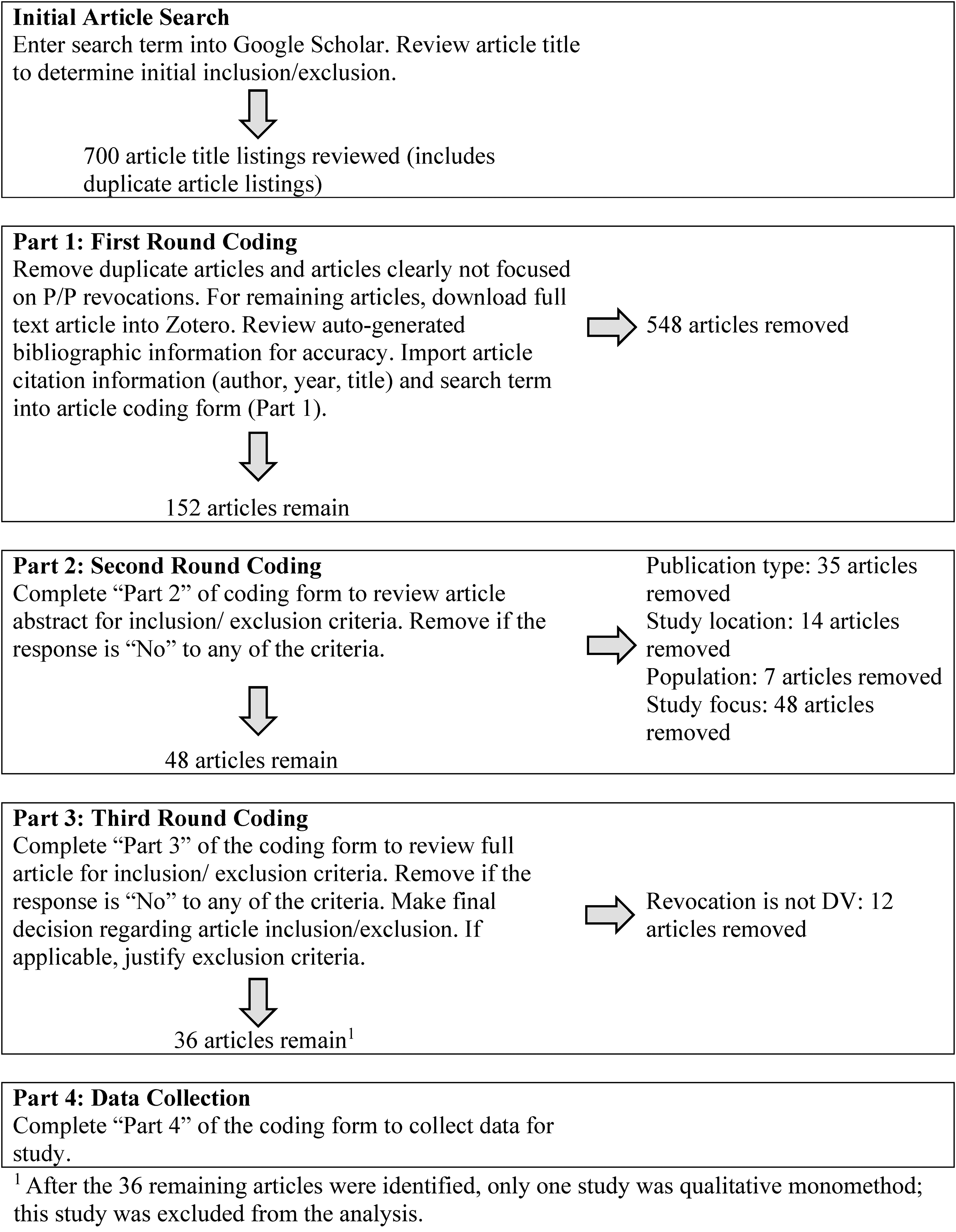
Article selection process.
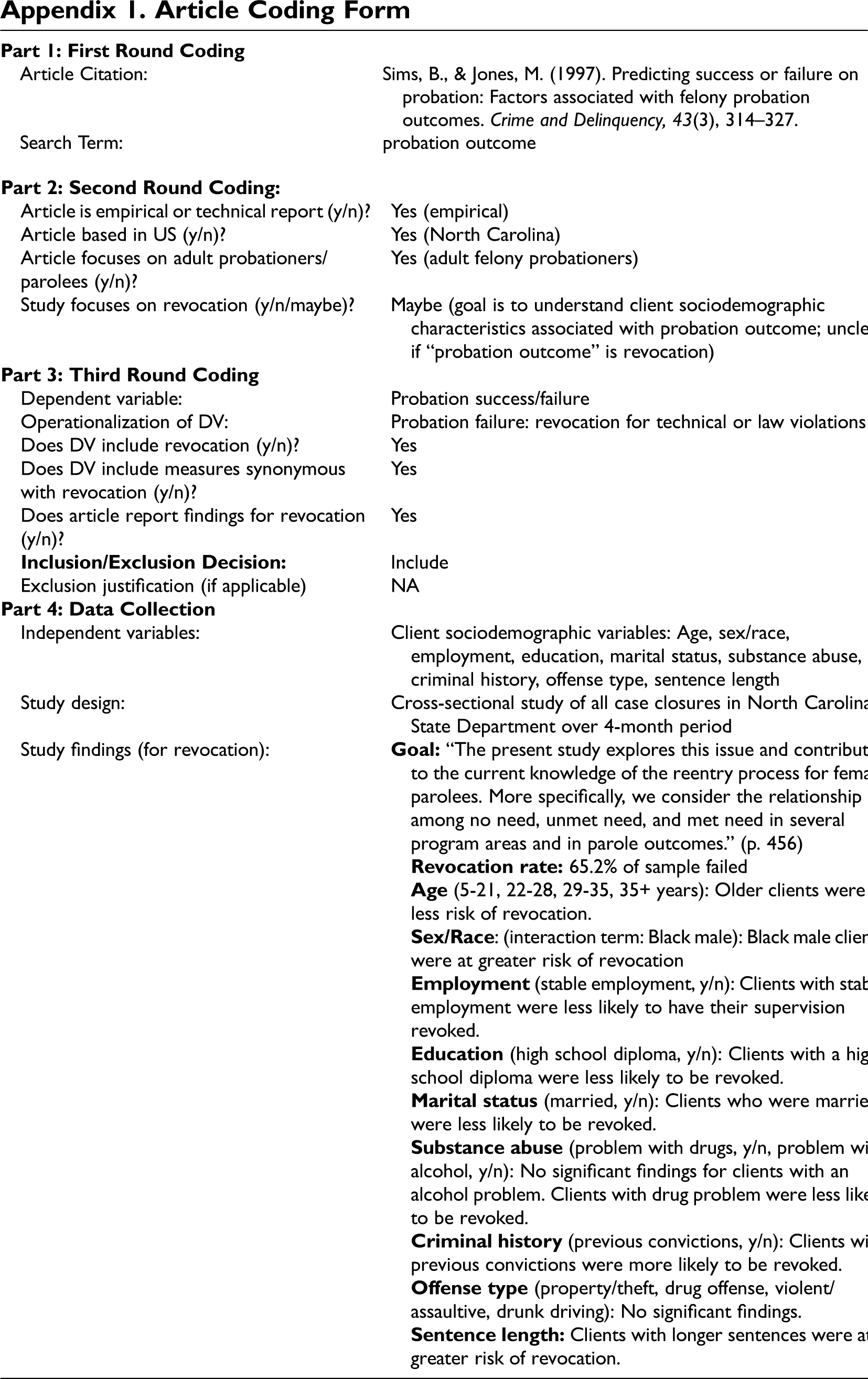
The second round of coding involved reviewing article abstracts to identify initial inclusion/exclusion criteria, namely the type of article (Is the article an empirical study or technical report, y/n), location of study (Is the article based in the US, y/n), population of interest (Does the article focus on adult P/P clients, y/n), and whether or not revocation itself is a primary focus of the study (Does the study focus on revocation, y/n/maybe; articles were removed when coded “no,” but remained in the sample if coded “yes” or “maybe;” see Appendix 1 to review the Article Coding Form with coded article for example). 3 At the conclusion of the second round of coding, 48 articles remained.
The third round of coding required the identification and operationalization of the dependent variable. Although some studies specify the use of “revocation” as a dependent variable, revocations were often subsumed in other measures, such as “recidivism” or “supervision success/failure.” Although these studies were not immediately removed from the review, they did require further investigation to identify their inclusion eligibility. Ultimately, studies were included if the dependent variable explicitly included revocation, included failure outcomes generally recognized as synonymous with revocation within the context of the study, or reported separately on revocation outcomes. For example, Schram and colleagues (2006) measured parole failure as occurring when a parolee was “reincarcerated as a result of a new crime or technical violation” (p. 458); while the authors do not specify revocation, this study was included as it is likely that reincarceration for a TV or LV is the result of, or a precursor to, revocation. Using these criteria, 12 articles were removed from the study. As the manuscripts were reviewed, only one study was identified as using a qualitative approach; to report aggregate-level findings across studies, the decision was made to remove the qualitative study from the current systematic review. At the end of this process, 117 articles were removed from the original 152 identified articles; the final study sample included 35 articles.
Once the eligible articles were identified (n = 35), article information (citation information and operationalization of revocation) was extracted from the article coding form and entered into a spreadsheet to allow for aggregate data analyses (Newman & Gough, 2020). Data analysis included identifying each study's operationalization of “revocation,” the data collection and study design used, and findings produced from each study as they related to the revocation outcome variable. These results were entered into the spreadsheet with the article's associated citation information. After the data were entered into the spreadsheet, another round of analysis occurred wherein the findings were further aggregated as needed. For example, many studies considered client sociodemographic factors, such as race and/or ethnicity, but studies differed in how these variables were measured. This higher-level round of coding identified researchers’ race/ethnicity measurements, including “White and non-White,” “White, Black, and Hispanic,” or another approach, such as focusing on skin tone instead of separate racial or ethnic variable categories. These aggregate-level analyses were synthesized and provided in accordance with the goals of the systematic review (Newman & Gough, 2020).
Findings
Operationalization of Revocation
Studies varied on how they conceptualized and operationalized revocations. Most of the studies included cases where a client's supervision was explicitly revoked for both TV's and/or LV's (57%), although a few studies focused exclusively on TV's (9%) or LV's (3%), and several studies did not differentiate between TV's and LV's (31%) for their research purposes (see Table 1). Additionally, some of the revocation studies also measured MTR (17%) and/or revocation hearings (3%). These operationalization decisions likely resulted from study-specific goals. For example, in their study of officer decision-making, Steen and her colleagues (2012) explained that departmental policy dictated that officers must file an MTR for all new charges, so researchers focused only on TV's wherein officer discretion was allowed to better explore officer decision-making. Similarly, several studies utilized both an MTR measure and a measure of the number of cases revoked to provide a more nuanced understanding of both individual officers’ and institutional responses to P/P noncompliance (i.e., these studies are able to capture aggregate data for how many MTR's are submitted by officers and aggregate data for how many revocations are actually granted by the court or parole board; Grattet et al., 2009).
Operationalization of Revocation Measures.
Methodological Approaches
The majority of the studies utilized monomethod quantitative approaches (91%), and only three studies used a mixed method design (see Table 2). Over half of the revocation studies utilized a cross-sectional sampling approach, wherein all cases, case closures, violations, or revocations that occurred within a set time frame were measured (60%). The remaining studies utilized a longitudinal design, with most studies following a new cohort of people just entering P/P supervision or completing a retrospective cohort analysis, and a few researchers focusing specifically on cases with violations or revocation hearings occurring during the study time frame. Depending on the study design, study time periods ranged from 4 weeks to 10 years, and sample sizes ranged from 123 to 151,750 P/P clients.
Study Designs and Frequency of Revocation Outcomes.
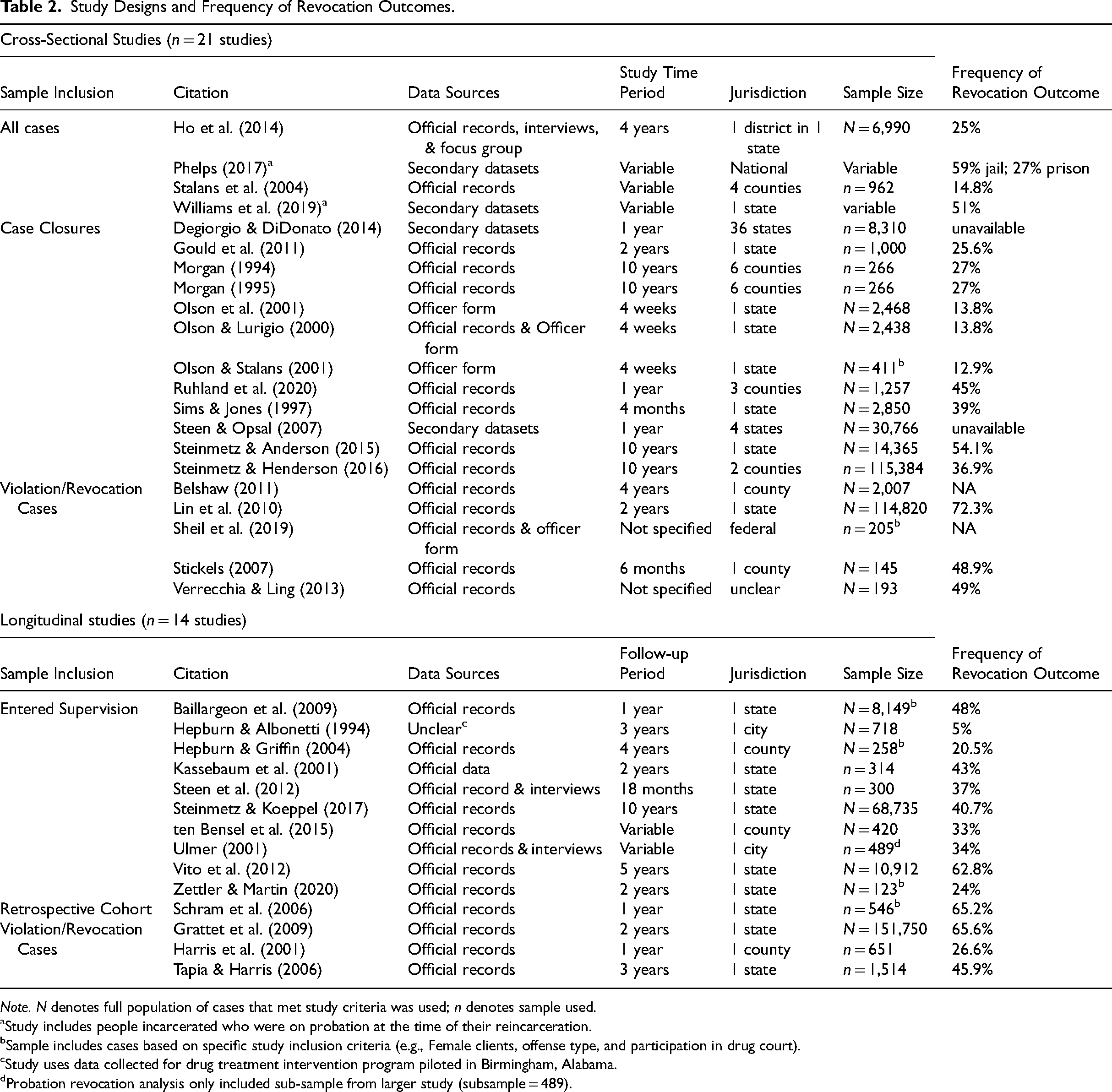
Note. N denotes full population of cases that met study criteria was used; n denotes sample used.
aStudy includes people incarcerated who were on probation at the time of their reincarceration.
bSample includes cases based on specific study inclusion criteria (e.g., Female clients, offense type, and participation in drug court).
cStudy uses data collected for drug treatment intervention program piloted in Birmingham, Alabama.
dProbation revocation analysis only included sub-sample from larger study (subsample = 489).
Studies overwhelmingly depended on official records (77%), although some studies depended on secondary datasets (11%), utilized officer forms (11%), or incorporated interviews or focus groups (9%). 4 Official records included a variety of administrative data, often from P/P agencies or the State Department of Corrections. Other official records included P/P clients’ self-reported information during intake (Olson & Lurigio, 2000) and supervision case notes (Sheil et al., 2019; Steen et al., 2012; Zettler & Martin, 2020), as these become official records once they are entered into departmental databases. Researchers also depended on court records (Hepburn & Griffin, 2004; Kassebaum et al., 2001; Olson & Lurigio, 2000; Stickels, 2007), parole board records (Steen et al., 2012), or records from other law enforcement agencies (Hepburn & Griffin, 2004). Secondary datasets describe data maintained external to the P/P Department, including government (i.e., Bureau of Justice Statistics, National Corrections Reporting Program, Substance Abuse and Mental Health Services Administration's National Survey on Drug Use and Health; Phelps, 2017; Steen & Opsal, 2007; Williams et al., 2019) and privately maintained databases (Degiorgio & DiDonato, 2014). Officer forms include data collected by supervising officers or departmental staff specifically for research purposes.
Study Findings
The studies included in this systematic review not only provide insights into current research approaches but they also highlight revocation trends and associated research over the last few decades. On average, between 1 and 2 revocation studies were published each year during the study time frame (M = 1.4), although more studies were produced in the 2010s than were produced during the other individual decades included. Studies overwhelmingly focused on probation (71%), with fewer studies focusing on parole (26%) or combined P/P populations (3%), although these distinctions did not differentially impact study outcomes. Studies whose units of analysis included violation cases or revocation hearings reported revocation rates ranging between 26.6% and 72.3%, whereas studies that included all P/P clients observed revocation rates between 5% and 65% (see Table 2). Notably, study length was not correlated with revocation outcomes, r(7) = −.03, p = 0.94. 5 The revocation studies largely focused on three primary areas: (1) violation trends and behaviors that lead to revocations (namely TV's and LV's associated with P/P failure); (2) clients’ sociodemographic characteristics or sentence characteristics as predictors of revocation; and (3) differential revocation trends based on location.
Violation Trends
Several studies considered the role that differential offending behavior may play in determining revocations, namely distinctions around TV's and LV's. Most P/P clients successfully completed their supervision, but research findings were mixed regarding why revocations occurred in failed cases. Several studies found that the majority of failed cases were revoked due to TV's (Belshaw, 2011; Kassebaum et al., 2001; Lin et al., 2010; Ruhland et al., 2020; Sheil et al., 2019; Sims & Jones, 1997; Williams et al., 2019; Zettler & Martin, 2020), although other researchers observed LV's as the leading cause of revocations (Morgan, 1995; Phelps, 2017; Steen et al., 2012).
Studies that conducted analyses for TV's frequently concluded that the number and severity of TV's were significant, wherein P/P clients were more likely to have MTR's filed in their cases or to be revoked when multiple TV's were simultaneously detected (Belshaw, 2011; Ruhland et al., 2020; Sheil et al., 2019; Steen et al., 2012; Zettler & Martin, 2020) and when these violations were more serious (Grattet et al., 2009; Harris et al., 2001; Lin et al., 2010). These patterns could be the result of officers “stacking” TV's when filing MTR's, wherein officers purposefully highlight all violated supervision conditions in an effort to ensure that a client is revoked (Lin et al., 2010). Additionally, these trends suggest that continued noncompliance may be especially relevant in revocation decisions based solely on TV's, as studies observed that most P/P clients revoked for TV's had more than two violations listed on their MTR (Belshaw, 2011; Sheil et al., 2019).
Notably, continued noncompliance appeared to be especially salient in populations who were provided ongoing programming to address their criminogenic needs. Several studies observed that for clients receiving substance abuse programming, positive urinalysis results were significantly related to revocations (Zettler & Martin, 2020), even as other TVs were included in models but were not found to be significant (Olson & Lurigio, 2000). Similar findings were observed for clients supervised for sex offenses, wherein treatment noncompliance was a significant predictor of revocation (Stalans et al., 2004). These findings suggest that continued noncompliance, especially when individuals are receiving assistance for their identified needs, may be especially relevant in revocation decisions. As research suggests that P/P clients are often offered opportunities to participate in intermediate sanctions in response to TV's before revocation proceedings are initiated (Belshaw, 2011), especially in the context of meeting clients’ criminogenic needs (Harris et al., 2001), departments and officers may be less tolerant of continued noncompliance.
Clients’ Sociodemographic Characteristics
Most revocation literature focuses on clients’ sociodemographic characteristics, such as age, sex, and socioeconomic status, as predictors of revocation. Consistent with prior research, most of the revocation studies found either that age was not a significant factor (16 outcomes; 52%) 6 or that older clients were at a lower risk of revocation than younger clients (13 outcomes; 42%; see Table 3). Notably, findings varied somewhat based on each study's outcome measure. For example, age seemed to differently impact a clients’ likelihood of having an MTR filed in their case (either negatively, Hepburn & Griffin, 2004; Steen et al., 2012; or positively, Hepburn & Albonetti, 1994), but age ultimately failed to produce any significant results for actual revocations in these studies.
Client Sociodemographic Characteristics.
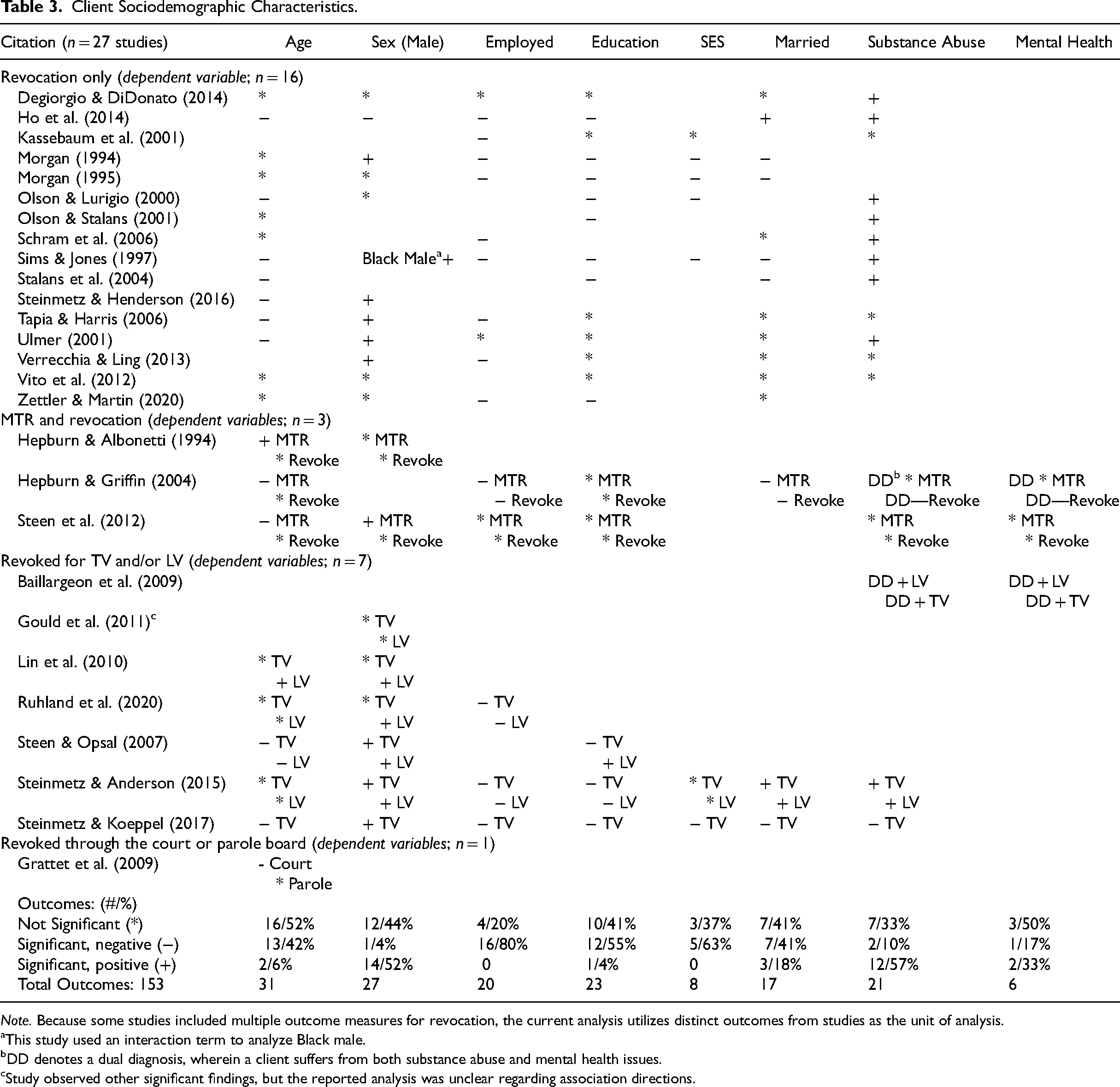
Note. Because some studies included multiple outcome measures for revocation, the current analysis utilizes distinct outcomes from studies as the unit of analysis.
aThis study used an interaction term to analyze Black male.
bDD denotes a dual diagnosis, wherein a client suffers from both substance abuse and mental health issues.
cStudy observed other significant findings, but the reported analysis was unclear regarding association directions.
Almost all of the studies that included clients’ sex found that male clients were either at greater risk of revocation (52%) or observed no significant findings associated with sex (44%). Studies generally found that employment (80%) and sometimes education (55%) 7 were protective against revocation. Notably, several studies that incorporated both employment and education measures observed that employment, but not education, was protective against MTR and revocations granted. Relatedly, most studies observed that higher socioeconomic status was protective against revocation (63%), and marriage was generally negatively associated (41%) or not significantly related (41%) to revocation outcomes.
Studies that included substance abuse, using measures of drug abuse, alcohol abuse, or combined measures, consistently found either positive associations between substance abuse and revocation (57%) or that the two were not significantly associated (33%). Findings around mental health issues and likelihood of revocation were mixed and potentially convoluted as several studies combined mental health and substance abuse disorders (i.e., measured clients’ dual diagnosis of both substance abuse and mental health issues). When study measures are independently reviewed, 8 the findings from these studies suggest that substance abuse may be primarily driving the risk of revocation for clients with a dual diagnosis.
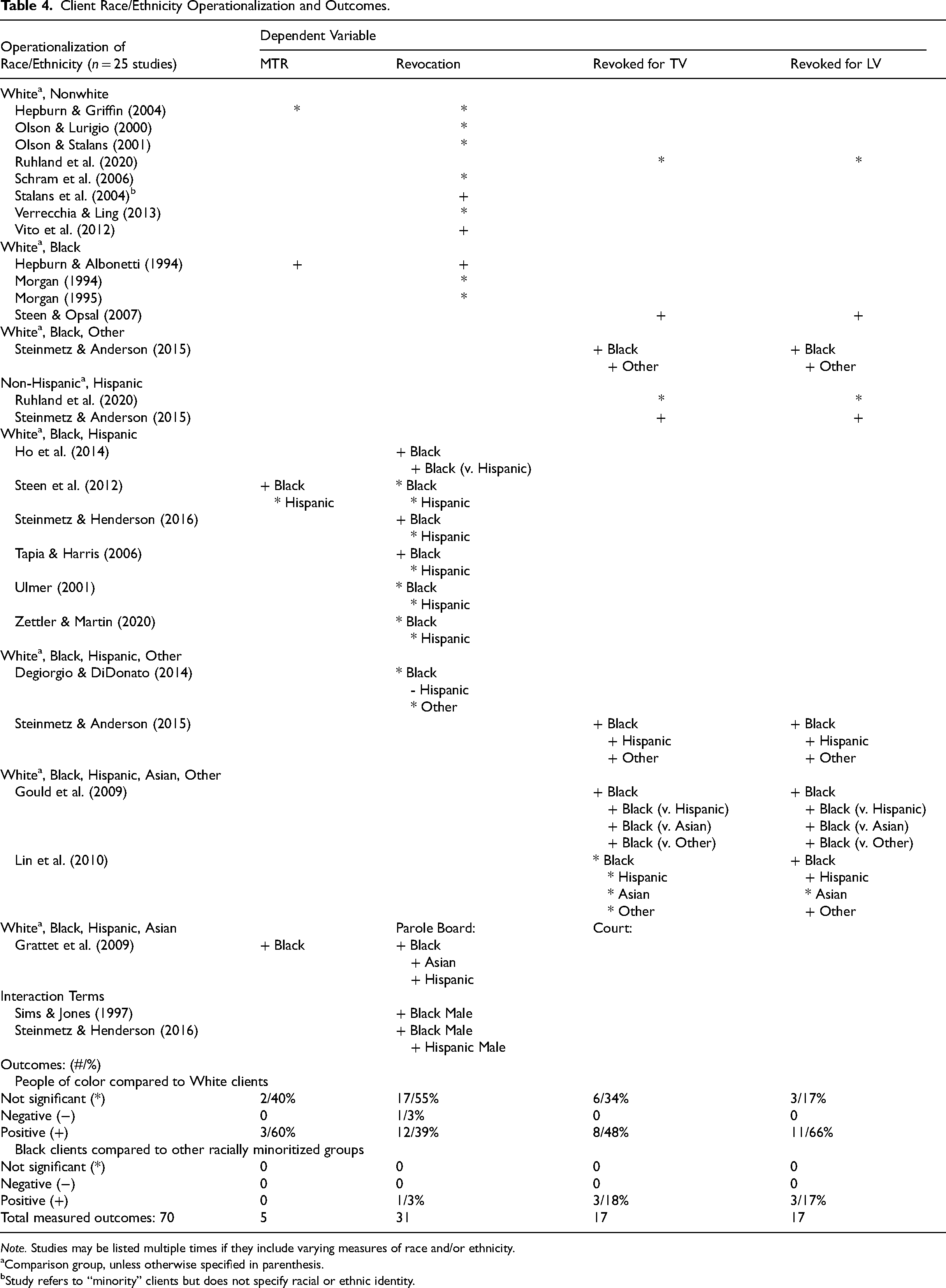
Client Race and Ethnicity. Findings from studies that included race and/or ethnicity were notable, first for the trends observed around race and/or ethnicity and secondly for the distinctions that emerged based on how race and/or ethnicity and revocation outcomes were operationalized within studies. Overall, when compared to White P/P clients, clients of color were generally more likely to experience revocation outcomes (34 outcomes; 54%) or were not significantly more or less likely to experience revocation outcomes (44%; see Table 4). Only one study found that Hispanic P/P clients had a reduced risk of revocation. Every study that compared revocation outcomes of Black clients to other racially minoritized groups revealed that Black clients were at greater risk of revocation than any other racially minoritized group. Additionally, the studies that utilized interaction terms for race and sex found that Black males (Sims & Jones, 1997) and Hispanic males were significantly more likely to experience revocation outcomes (Steinmetz & Henderson, 2016). Notably, Steinmetz and Henderson (2016) suggest that the interaction effects were “more intense” for Black P/P clients than Hispanic clients (p. 11).
Client Race/Ethnicity Operationalization and Outcomes.
Note. Studies may be listed multiple times if they include varying measures of race and/or ethnicity.
aComparison group, unless otherwise specified in parenthesis.
bStudy refers to “minority” clients but does not specify racial or ethnic identity.
About half of the studies that incorporated race and/or ethnicity used a dichotomous measure, collapsing groups into White or non-White (32% of studies) or White or Black (16% of studies). The remaining studies included multiple measures of race and ethnicity, while a few studies used interaction terms for race and sex or separately measured race and ethnicity. Although not included as a separate measure for race, Steinmetz and Koeppel (2017) measured P/P clients’ skin tone to identify impacts on revocation outcomes, observing that P/P clients with darker skin tones were generally at a greater risk of revocation outcomes than clients with lighter skin tones. Notably, findings from the full model (all P/P clients in the sample) conflicted with results from individual models for White, Black, and Hispanic P/P clients, wherein darker skin tone was associated with reduced likelihood of revocation. In consideration of other factors, skin tone was more salient for Hispanic P/P clients than White or Black clients.
Like Steinmetz and Koeppel's (2017) work, other studies observed that measurement distinctions around race and ethnicity served to provide a more nuanced understanding of racialized and ethnic experiences in the context of revocation outcomes. Two studies found that Black P/P clients were at a greater risk of having their supervision revoked, but identifying as Hispanic was not significantly associated with revocation (Steinmetz & Henderson, 2016; Tapia & Harris, 2006), while another study observed a reduced risk of revocation for Hispanic probationers, but not Black probationers (Degiorgio & DiDonato, 2014). Additionally, revocation measures may also highlight differential patterns associated with P/P client race and ethnicity. Grattet, Lin, and colleagues reported that parolees of color generally were more likely to be revoked than their White counterparts, although they observed distinctions between violation types and race/ethnicity, wherein race was salient for increased risk for revocation for LVs for Black, Hispanic, and “other” clients, but was not significant for TVs (Grattet et al., 2009; Lin et al., 2010). Moreover, being Asian did not significantly impact clients’ risk of revocation, regardless of violation type (Lin et al., 2010). Taken together, these findings ultimately suggest that inter- and intraracialized and ethnic experiences differ, and how researchers measure race and ethnicity likely impacts these findings.
Criminal History and Sentencing Characteristics. Overwhelmingly, studies observed a significant, positive association between a P/P client's criminal history and revocation outcomes (22 of 29 outcomes; 76%). A few studies failed to observe any significant associations between criminal history and revocation outcomes (21%), and only one study found a negative association between criminal history and revocation outcomes. Similarly, studies generally observed significant, positive associations between revocation outcomes for clients with more extensive violation histories (5 of 6 outcomes; 83%), whereas only one study failed to find any significant relationship between violation history and revocation outcomes for P/P clients. Longer supervision sentences were frequently associated with a greater risk of revocation outcomes (7 of 12 outcomes; 58%), whereas other findings suggest sentence length is either not significantly associated (25%) or negatively associated with P/P clients’ revocation outcomes. Studies that focused on P/P clients’ primary offenses yielded mixed results with no discernable patterns in the outcomes.
Trends by Location
Several studies included some measures of location, highlighting communities where P/P clients reside, focusing on the office location of supervising departments, or studying ways that location characteristics may impact revocation decisions. These studies frequently observed that adults supervised in urban areas were more likely to have their supervision revoked than those living in rural areas (Olson et al., 2001; Olson & Lurigio, 2000; Steinmetz & Anderson, 2015; Steinmetz & Koeppel, 2017), although one study failed to find significant distinctions in revocation outcomes between urban and rural locations (Vito et al., 2012). Researchers also considered neighborhood-level factors, observing that P/P clients residing in more punitive communities, neighborhoods with a greater percentage of Black residents (Grattet et al., 2009; Lin et al., 2010), and more socially and economically disadvantaged neighborhoods were at a greater risk of having their supervision revoked (ten Bensel et al., 2015). Notably, though, these relationships may not necessarily be linear, as ten Bensel and colleagues (2015) explain that “the degree [emphasis added] of neighborhood disadvantage does not play a significant role in parolee outcomes” (p. 394).
Several studies that included a comparison between offices observed differential patterns in revocation risks, although it was unclear why these differences occurred (Grattet et al., 2009; Steen & Opsal, 2007; Steinmetz & Henderson, 2016). Researchers suggested several possible explanations for these findings, including variations in agency culture and procedural approaches, differential policing techniques, and distinctions in supervision populations, to include disparities in access to social services or employment opportunities for P/P clients (Grattet et al., 2009; Steinmetz & Henderson, 2016). Revocation outcomes, and to some extent community supervision approaches in general (Olson et al., 2001), may also be the result of logistic constraints on the criminal justice system, as evidenced by observations that where prisons were operating closer to maximum capacity, parole cases were more likely to be continued instead of revoked (Grattet et al., 2009; Lin et al., 2010). These findings highlight the impact that mesolevel factors, such as neighborhood infrastructure, community policing, and supervision tactics, and the availability of detention centers to incarcerate revoked adults may all contribute to revocation outcomes.
Practitioner Decision-Making
Although some studies contextualized research findings as potential products of practitioner discretion, a very small number of the revocation studies focused specifically on practitioner decision-making. These studies focused on officers’ decision-making regarding whether and when to file an MTR and judicial considerations when responding to MTR's. Ultimately, practitioners reported considering P/P clients’ cases holistically, including clients’ pattern of (non)compliance under supervision, their likelihood of long-term success, and their potential impact on public safety (Sheil et al., 2019; Steen & Opsal, 2007), especially in the context of specialized caseloads such as sex offenses (Stalans et al., 2004). A few studies revealed that officers were more likely to pursue MTR's against racially minoritized P/P clients (Steen et al., 2012), even when using structured decision-making instruments (Stalans et al., 2004). These findings coincide with qualitative data from practitioners who described witnessing racial bias within revocation outcomes (although interviewees also suggested that other factors, such as poverty and rural/urban cultural differences, may be at play; Ho et al., 2014). Although these findings are notable, it is difficult to draw extensive conclusions from so few studies.
Discussion
As states have begun to turn to P/P in an effort to reduce incarcerated populations and state corrections budgets, researchers have worked to understand the role that community corrections play within jurisdictions. In her extensive research in this area, Phelps (2017) observed that some states have been successful in using P/P as an alternative to incarceration, whereas other locations have instead created “net-widening” policies, wherein the use of P/P has actually contributed to mass incarceration. Although the revocation studies included in this review did not conclusively determine the extent of net-widening occurring at the state level, several studies observed that revocations did contribute to state incarceration rates (Stickels, 2007; Zettler & Martin, 2020).
When revocations were the result of TV's, studies generally observed that multiple violations were present, often with violations accumulating over time. These findings suggest that the system response to ongoing violations becomes increasingly punitive as clients remain noncompliant (Sheil et al., 2019), particularly in the context of substance abuse program and sex offender treatment noncompliance (Harris et al., 2001; Olson & Lurigio, 2000; Stalans et al., 2004; Zettler & Martin, 2020). These findings are especially notable because no significant patterns emerged regarding clients’ supervision offenses. Taken holistically, this suggests that a client's primary offense is less a contributor to their risk of revocation than whether or not they complete their assigned needs-based treatment or programming. These trends may reflect the adoption of EBPs, wherein intermediate sanctions are implemented, especially in the context of needs-based programming, but ongoing noncompliance is ultimately not tolerated.
Most of the revocation studies included some measurement of P/P client sex, race, and ethnicity, and several studies observed notable findings regarding how race, ethnicity, and sex may work in tandem to impact supervision outcomes. These studies frequently observed that being Black and male placed P/P clients in an especially vulnerable position for revocation, supporting the idea that Black men are viewed primarily as “criminalblackmen.” Alexander (2012) explains that the “social construction of the ‘criminalblackman’” stigmatizes Black men and equates their gender- and racial-identity with criminality (p. 199). Notably, conflicting findings sometimes emerged across and within studies that included varying measures of race and ethnicity, suggesting that the intersections of race, ethnicity, and gender differentially impact P/P clients across genders, race, and ethnic groups (for more information on intersectionality, see Crenshaw, 1989).
Notably, how revocations are studied may also have important implications, including understanding the role that race and ethnicity play. Although most studies found that clients of color were generally more vulnerable to revocation than White clients, several studies observed that Black clients were at greater risk of having an MTR filed in their case, being revoked by the parole board, or being revoked for TVs—all more discretionary routes to revocation. Again, outcomes somewhat differed based on how race and ethnicity were measured, but the results generally found that Black clients were at greater risk of revocation even than other racially minoritized groups. These findings suggest that clients of color, especially Black or African American clients, are especially vulnerable to revocations, particularly in systems or processes where practitioners maintain greater discretion in decision-making.
Future Research
One of the important findings of this review includes the differential revocation operationalizations that studies use, namely because these measurements can have significant implications on research outcomes (Ostermann et al., 2015). The studies used a variety of measures for revocation, and several studies incorporated multiple measures of revocation outcomes. Consequentially, while each study has uniquely contributed to the current understanding of revocation trends, study findings can be difficult to generalize and synthesize, which may impede their incorporation into departmental policies and practices. Future research should streamline measures of revocation and be explicit about their approaches within studies. For example, future research might specify the use of formal revocation as an appropriate measure, instead of approaches such as reincarceration, which may or may not indicate a revocation has occurred or is even being pursued (Williams et al., 2019). Additionally, the careful selection and clear articulation of revocation measures can contribute to a better understanding of the role that discretion plays within revocation decisions, specifically how discretionary decision-making may disparately impact certain groups of justice-involved adults and marginalized communities.
Future research should also consider the incorporation of a variety of methods to study revocations, as the vast majority of the current revocation literature is comprised of quantitative studies. Although the strengths of quantitative monomethod studies include more generalizable findings and the identification of aggregate-level patterns, the mixed method approaches reviewed in this study also make meaningful contributions to understanding the individual-level aspect of revocations (Brent & Kraska, 2010). Moreover, qualitative work would provide additional context and a richer understanding of the current quantitative literature and revocation trends, especially if that research focuses extensively on those most integral to the revocation process, such as P/P clients, line-level officers, and judges/parole board members. Those most closely involved in the revocation process would likely contribute to a more comprehensive understanding of how to meet P/P clients’ needs in order to reduce revocations, how back-end sentencing decisions are made, and what factors contribute to differential revocation trends.
As researchers explore revocations through a lens that emphasizes the experiences of P/P clients and supervising agents, these approaches should incorporate an intersectional framework to consider influential factors related to revocations. The current racialized, ethnic, and gendered findings, especially in studies where outcomes differed for men and women of color, highlight the need for intersectional research. Although race/ethnic categories are frequently collapsed for statistical purposes, future research on the differential experiences of P/P clients with distinct racial and ethnic ties should be separately considered. As disparate revocation outcomes can serve to further marginalize already at-risk communities and contribute to disproportionate representation in detention facilities, understanding the ways that race, ethnicity, gender, class, etc., intersect to frame probationer/parolee outcomes is paramount to providing more equitable supervision.
Policy Implications
Several studies highlight the opportunity for discretion in revocation decisions, by individual P/P officers, localized departments, or parole boards that function on a reduced standard of evidence for proof of violations. These findings emphasize the need for more consistency in revocation decision-making, potentially obtained through structured decision-making instruments. Ideally, these approaches could serve to address discrepancies in revocation outcomes, which ultimately could reduce the impact of race- or gender-based bias. However, these approaches should be carefully considered, as research suggests instruments may not be consistently followed (Turner et al., 2012) and may fail to temper racial disparities in supervision outcomes (Ho et al., 2014; Stalans et al., 2004). Therefore, departments considering implementing these instruments should carefully review evaluation data from these approaches.
Additionally, a more extensive offering of programs for incarcerated individuals and those supervised in the community could help reduce revocation rates. Research in this review found overwhelmingly that employment, and to a lesser extent education, is protective against revocation. Continued and expanded educational and vocational programming should be considered, initially not only as institutional and community corrections programming but also as a collaborative effort between departments and community stakeholders. Community corrections departments could cultivate relationships with local technical colleges that offer GED courses, Department of Labor staff who may better facilitate job placement, and other service providers and nonprofit organizations within the community. These groups may already have the infrastructure necessary to help returning citizens be successful in the community, even if adults on community supervision are not necessarily their target clients. These partnerships could help ensure that returning citizens have a more cohesive transition into the community and may serve to reduce violations and subsequently reduce departments’ dependence on revocations.
Footnotes
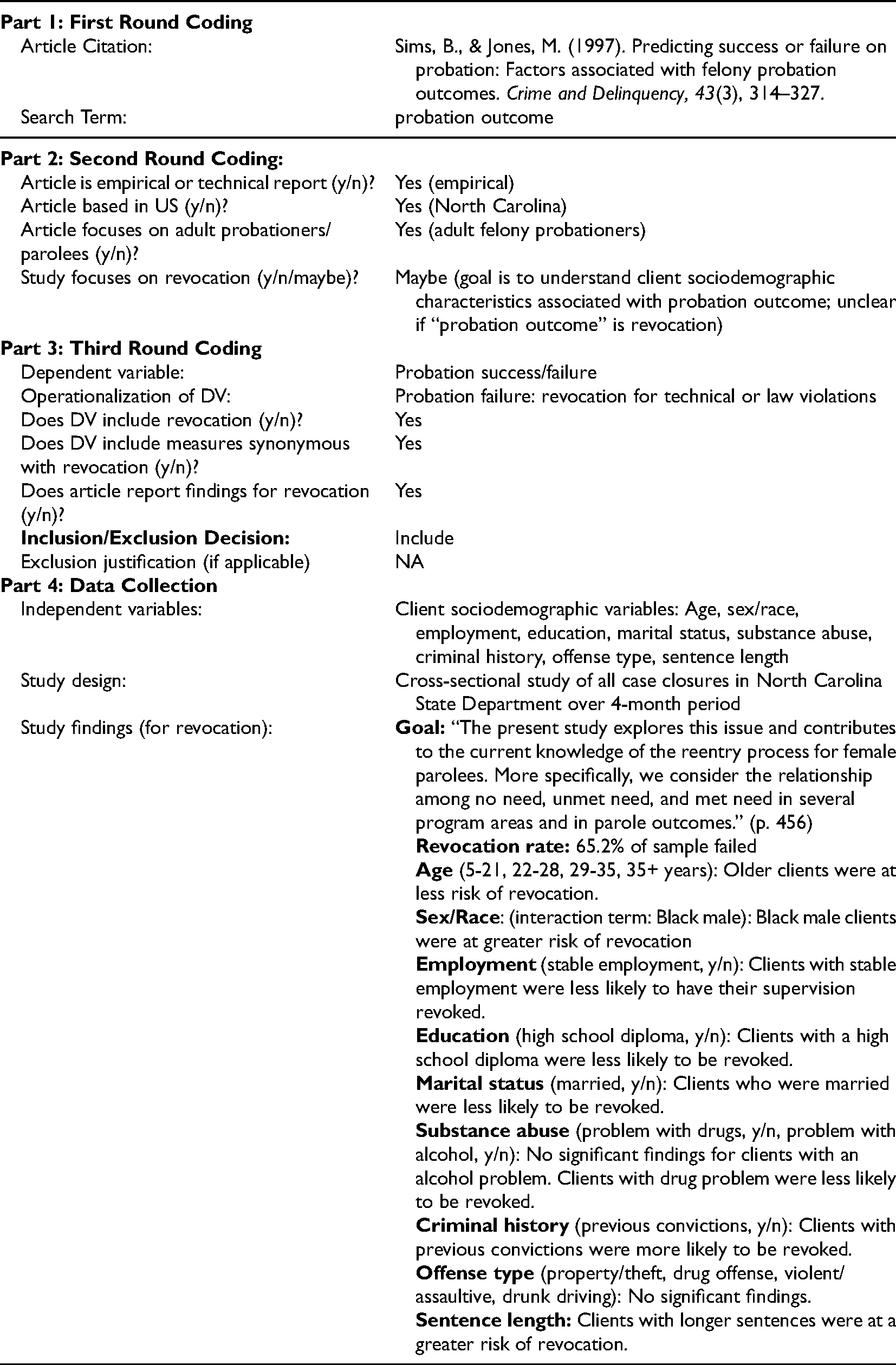
Appendix 1. Article Coding Form
|
|
|||
| Article Citation: | Sims, B., & Jones, M. (1997). Predicting success or failure on probation: Factors associated with felony probation outcomes. Crime and Delinquency, 43(3), 314–327. | ||
| Search Term: | probation outcome | ||
|
|
|||
| Article is empirical or technical report (y/n)? | Yes (empirical) | ||
| Article based in US (y/n)? | Yes (North Carolina) | ||
| Article focuses on adult probationers/ parolees (y/n)? | Yes (adult felony probationers) | ||
| Study focuses on revocation (y/n/maybe)? | Maybe (goal is to understand client sociodemographic characteristics associated with probation outcome; unclear if “probation outcome” is revocation) | ||
|
|
|||
| Dependent variable: | Probation success/failure | ||
| Operationalization of DV: | Probation failure: revocation for technical or law violations | ||
| Does DV include revocation (y/n)? | Yes | ||
| Does DV include measures synonymous with revocation (y/n)? | Yes | ||
| Does article report findings for revocation (y/n)? | Yes | ||
| |
Include | ||
| Exclusion justification (if applicable) | NA | ||
|
|
|||
| Independent variables: | Client sociodemographic variables: Age, sex/race, employment, education, marital status, substance abuse, criminal history, offense type, sentence length | ||
| Study design: | Cross-sectional study of all case closures in North Carolina State Department over 4-month period | ||
| Study findings (for revocation): | |||
Acknowledgments
The author appreciates the careful consideration and thoughtful feedback the anonymous reviewers provided on earlier drafts of this paper. Their questions and comments were invaluable in the development of this manuscript.
Declaration of Conflicting Interests
The author declared no potential conflicts of interest with respect to the research, authorship, and/or publication of this article.
Funding
The author received no financial support for the research, authorship, and/or publication of this article.
