







Abstract
Leachates collected at two (active and closed) municipal solid waste (MSW) landfills were examined for colloids and particles by transmission electron microscopy, energy dispersive spectrometry, selected area electron diffraction and for the chemical compositions of the filtrates after the filtration to 0.1 µm and ultrafiltration to 1 kDa (~ 1 nm). Six groups of colloids/particles in the range 5 nm to 5 µm were determined (in decreasing order of abundance): carbonates, phyllosilicates (clay minerals and micas), quartz, Fe-oxides, organics and others (salts, phosphates). Inorganic colloids/particles in leachates from the active landfill predominantly consist of calcite (CaCO3) and minor clay minerals and quartz (SiO2). The colloids/particles in the leachates from the closed landfill consist of all the observed groups with dominant phyllosilicates. Whereas calcite, Fe-oxides and phosphates can precipitate directly from the leachates, phyllosilicates and quartz are more probably either derived from the waste or formed by erosion of the geological environment of the landfill. Low amounts of organic colloids/particles were observed, indicating the predominance of organic molecules in the ‘truly dissolved’ fraction (fulvic compounds). Especially newly formed calcite colloids forming particles of 500 nm and stacking in larger aggregates can bind trace inorganic contaminants (metals/metalloids) and immobilize them in landfill environments.
Introduction
Solid particles with a size between 1 nm and 1 µm in waters are considered to be aquatic colloids (Christian et al., 2008; IUPAC, 2010; Wigginton et al., 2007). The upper limit for the colloidal fraction, leading to coagulation and sedimentation, can vary, for example according to the amount of total dissolved salts or hydrodynamics of the system (Buffle and Leppard, 1995; Gustafsson and Gschwend, 1997). In certain aquatic environments, colloids may form larger aggregates and even particles with diameters of up to 10 µm can behave as colloids (Chanudet and Filella, 2008; Gustafsson and Gschwend, 1997). Colloids have a key role in the transport of elements in uncontaminated aquatic environments (Chanudet and Filella, 2008; Doucet et al., 2005, 2007; Pokrovsky et al., 2006) as well as in environments contaminated by mining/smelting (Filella et al., 2009; Wigginton et al., 2007) or other anthropogenic activities, such as waste storage (Baumann et al., 2006; Baun and Christensen, 2004; Jensen and Christensen, 1999; Matura et al., 2010).
Aqueous colloids are generally studied by particle counting techniques (Chanudet and Filella, 2008; Filella et al., 2009), sequential filtration and subsequent chemical analysis of filtrates and/or retentates (Baun and Christensen, 2004; Jensen and Christensen, 1999; Matura et al., 2010; Pokrovsky et al., 2006), scanning electron microscopic (SEM) techniques (Baumann et al., 2006; D’Abzac et al., 2010; Doucet et al., 2005; Jensen and Christensen, 1999; Wigginton et al., 2007) or transmission electron microscopic (TEM) techniques (Chanudet and Filella, 2008; Wigginton et al., 2007). In particular, TEM coupled to energy dispersive spectroscopy (EDS) and the selected area electron diffraction (SAED) technique, is extremely useful for visualization and chemical/structural analysis of submicron particles forming the colloidal matter (Chanudet and Filella, 2006; Wigginton et al., 2007).
Colloids in landfill leachates have been studied mainly by combination of frontal filtration/ultrafiltration techniques and subsequent chemical analyses of leachates (Baumann et al., 2006; Baun and Christensen, 2004 and references therein; Gounaris et al., 1993). To the authors’ knowledge, less attention has been paid to the detailed (ultra)microscopic investigation of particles and colloids in landfill leachates. For this reason, this study focused on the (HR)TEM–EDS–-SAED investigation of colloids/particles in leachates from two municipal solid waste (MSW) landfills of various ages (active and closed) to evaluate the variability in their chemical and mineralogical compositions and possible environmental significance in these contaminated aqueous environments.
Materials and methods
Landfill leachate samples
Leachates were sampled from two MSW landfill sites located in the vicinity of Prague, the capital of the Czech Republic. The samples from the old landfill at Dolní Chabry (hereafter called CH; GPS: No. 50°8′58.3′′, E 14°27′4.1′′) were taken from tubes draining the leachate from the landfill body and conducting it directly to a small stream. This landfill served as the main disposal site for MSW from Prague and was active from 1984 to 1993. The landfill contains approximately 3 millions m3 of mixed MSW, probably also including hazardous waste and filling two parallel valleys without any engineering barriers to prevent leakage of the leachate except for the soil layer at the bottom of the landfill body (Ettler et al., 2006a; Matura et al., 2010). The geological basement consists of Cretaceous marl, Tertiary sandy gravel with minor amounts of Quaternary loess. More information on this landfill site is also given in our previous publications (Ettler et al., 2006a, 2008; Matura et al., 2010).
The samples from the active landfill at Ďáblice (hereafter called D; GPS: No. 50°9′18.8′′, E 14°28′57.6′′) were taken directly from the tube draining the leachate into the settling basin. 5 -L HDPE containers were used for the sample collection. The landfill has been in operation since 1993, contains approximately 3.5 million m3 of waste and receives up to 340 000 t of MSW and inert construction waste annually. The geological basement of the landfill is identical to the previous one. The landfill is equipped with impermeable technical barriers composed of 0.5 m of mineral barrier (marl and clay-rich soil and loess, K < 10−9 m s−1) covered with a 2.5-mm HDPE geomembrane. The leachate is collected by tubing in the drainage layer placed directly on the geomembrane and recycled back to the landfill body (Matura et al., 2010).
Two sampling campaigns were performed for each landfill sites (CH: November 2007 and November 2008; D: November 2007 and October 2008). The physicochemical parameters (temperature, pH, Eh and specific conductivity) were recorded in the field using Schott Handylab multimeters. The leachate samples were immediately transported to the laboratory and treated within 1 h after sampling. The first aliquot of each sample was prepared for chemical analysis as a raw leachate. The second aliquot of each leachate sample was pre-filtered through a 0.1-µm nitrocellulose membrane filter (Millipore®, USA) using a Sartorius® polycarbonate filtration unit. Subsequently, ultrafiltration was carried out using the Amicon (Millipore®) 50-mL stirred ultrafiltration cell and Millipore® membrane with diameter 47 mm and pore size 1 kDa (~ 1 nm) to obtain the ‘truly dissolved’ fraction. The subsamples resulting from each filtration or ultrafiltration step were collected, diluted and prepared for analysis. The samples were stored in clean 10-mL polyethylene (PE) vials for inorganic analysis and in clean 100-mL borosilicate glass bottles (Schott Duran®, Germany) for organic carbon analysis. Comparison between the chemical composition of the unfiltered and ultrafiltered leachates helped to determine the importance of colloids in binding the chemical elements.
Analytical determinations
Leachates
Major anions were determined on a Dionex ICS-2000 ion chromatography system (Dionex, USA) and the alkalinity was obtained by microtitration using the Schott TitroLine Easy automatic titrator (Schott, Germany) with 0.05 mol L−1 HCl. The DOC content was determined using the Skalar FormacsHT total organic carbon (TOC) analyser (Skalar Ltd., UK). Major cations were analysed using a Varian SpectrAA 280 FS flame atomic absorption spectrophotometer (FAAS; Varian, Australia) and ThermoScientific iCAP 6500 inductively coupled plasma optical emission spectrometry (ICP-OES; ThermoScientific, USA). Trace elements were determined using a ThermoScientific X Series 2 inductively-coupled plasma mass spectrometer (ICP-MS; ThermoScientific). The reproducibility of the analytical determinations was always better than 15%. Certified reference materials were used for quality control of the instrumental analyses. For control of the anion measurements by high-performance liquid chromatography, certified reference material CRM CZ9102 (Analytika Ltd., Czech Republic) was used and the accuracy of the measurements was better than 5% of the relative standard deviation (RSD). The analysis of major cations was checked by a Merck IV solution (ICP multielement standard IV; Merck Ltd, Germany) and trace elements by a NIST 1640 standard reference material (Trace elements in natural water; NIST, USA). The accuracy of the measurement was within 10% RSD for the majority of the elements except Cr, Mn, Ni and Pb, yielding an accuracy of < 14% RSD.
Colloids and particles
Colloids and particles were collected on a holey-carbon film supported by copper-mesh TEM grids (300 mesh; SPI Supplies/Structure Probe Inc., USA) in order to study their morphology, chemical composition and structure. In agreement with previously published papers on colloids and particles in natural aqueous environments (Chanudet and Filella, 2006, 2008; Filella et al., 2009), particles in the 0.1–5 µm range were considered to be most suitable for observation and analysis by TEM. In order to obtain samples with this particle-size range as well as particles < 100 nm, the specimens for TEM were prepared from (i) the original leachate sample and (ii) from the 0.1 µm-filtrate. The carbon-coated Cu-grids were placed directly on the membrane filters during the raw leachate filtration down to a filter pore size of 0.1 µm and subsequently the filtrate was passed through the filtering unit again to obtain the specimen with colloids smaller than 100 nm. In order to eliminate overloading of the Cu-grid by particles (Lienemann et al., 1998), we experimentally tested the appropriate volume of leachate to be filtered. For both filtration steps, the optimal volume was 500 mL for leachate CH and 50 mL for leachate D. The grids were dried in the air at ambient temperature for 15 min and immediately studied by TEM.
The TEM investigations were carried out on a JEOL JEM 3010 microscope (JEOL Ltd., Japan) operated at 300 kV (LaB6 cathode, point resolution 1.7 Å) with an attached Oxford Instruments (Oxford Intruments plc, UK) energy dispersive X-ray spectrometer. The images were recorded on a CCD camera with resolution 1024 × 1024 pixels using the Digital Micrograph software package (Gatan Inc., UK). EDS analyses were acquired and treated in the INCA software package (INCA software, UK). Electron diffraction patterns were evaluated using the Process Diffraction software package (Lábár, 2005). The individual particles were studied by selected-area electron diffraction (SAED) as well as by the high-resolution TEM.
Results and discussion
Leachate composition
The physico-chemical and chemical characterization of leachates from the two contrasting landfill sites is reported in Table 1. The leachate from landfill D (active site) yields approximately six times higher specific conductivity, which is mainly reflected by high concentrations of alkalis (Na, K), Cl, dissolved organic carbon (DOC) and HCO3. With the exception of Mn and Sr, trace metals and metalloids are also significantly higher at the D site. As revealed by thermodynamic calculations using the PHREEQC-2 speciation-solubility code described in the authors’ previous paper, the leachates are oversaturated with respect to carbonates, chalcedony (SiO2) and clays (kaolinite, Al2Si2O5(OH)4) (Matura et al., 2010). Given the fact that the inorganic and organic colloidal particles may bond a large number of major and trace elements, Table 1 shows how the chemical composition of the leachates varies during the (ultra)filtration with different cut-offs. The 0.1-µm filter eliminated the majority of larger colloids and particles from the leachate and the filtrate obtained by the ultrafiltration (1 kDa) is colloid-free and contains only ‘truly dissolved’ species. The concentration trend obtained by sequential filtration is generally decreasing (with some exceptions probably caused by contamination; for example, DOC in the CH leachate), showing that, whereas some elements are mostly present in truly dissolved form (Na, K, Mg, Cl, SO4, As, Rb), others may be fully or partly bound to colloidal particles (Ca, HCO3, Fe, Al and the remaining trace elements). This observation is in agreement with previously published data (Jensen and Christensen, 1999; Matura et al., 2010).
Physico-chemical and chemical properties of raw leachates and leachates obtained by filtration to 0.1 µm and ultrafiltration to 1 kDa (~ 1 nm) (mean ± standard deviation, n = 2)
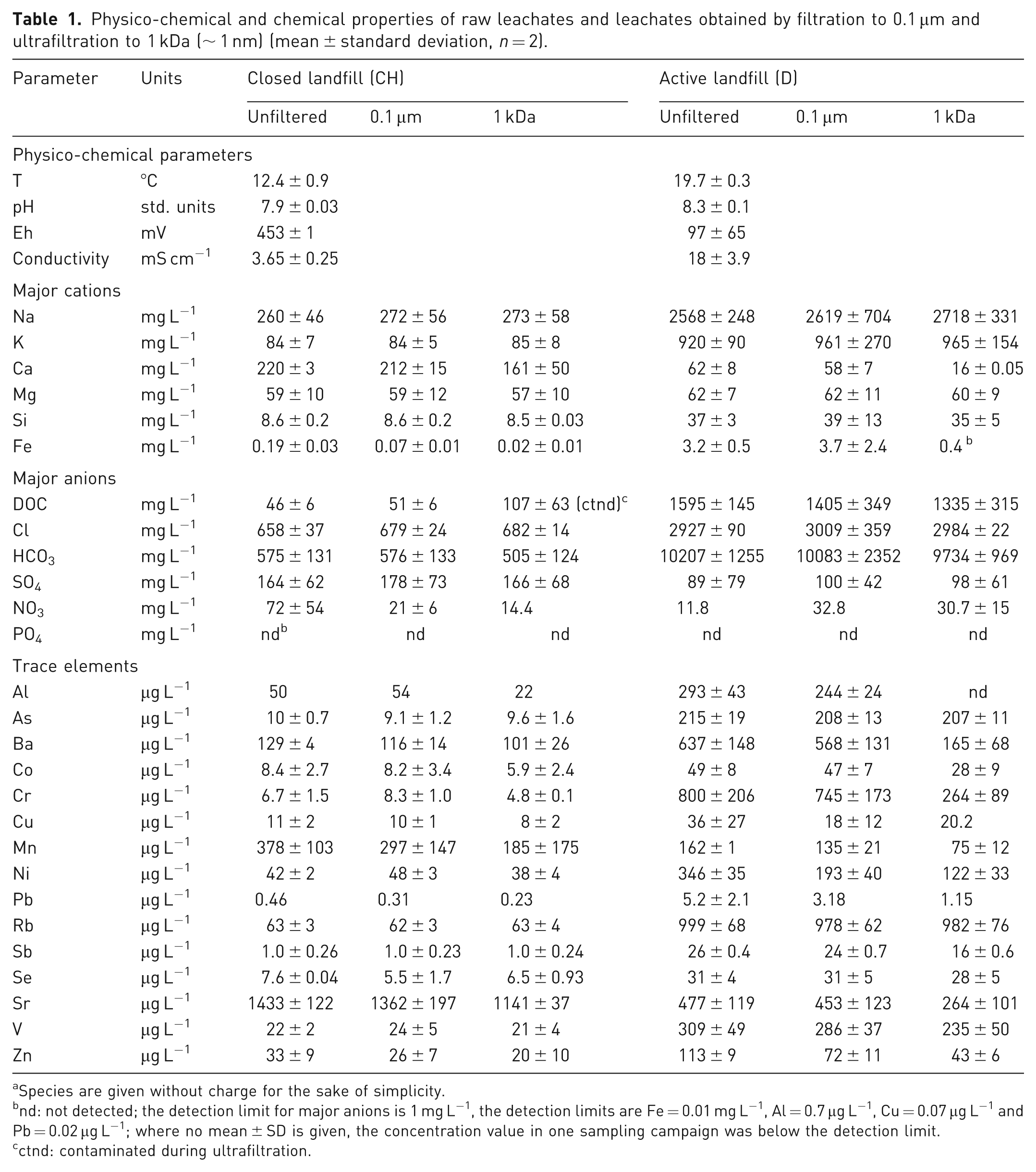
Species are given without charge for the sake of simplicity.
nd: not detected; the detection limit for major anions is 1 mg L−1, the detection limits are Fe = 0.01 mg L−1, Al = 0.7 µg L−1, Cu = 0.07 µg L−1 and Pb = 0.02 µg L−1; where no mean ± SD is given, the concentration value in one sampling campaign was below the detection limit.
ctnd: contaminated during ultrafiltration.
Mineralogical composition of leachate colloids and particles
Several groups of inorganic colloids/particles were distinguished: carbonates, phyllosilicates (clay minerals and micas), quartz, oxides and others (salts, phosphates). A few organic carbon-rich particles were also observed. Table 2 shows the numbers of individual colloids and particles observed from both leachates according to the TEM–EDS–SAED observations. A total of 307 particles were analysed by TEM coupled to EDS and/or SAED (101 particles for leachates CH and 206 particles for leachates D). Representative examples of colloids and particles observed in both types of leachates are reported in Figures 1, 3 and 6 below.
Mineralogical composition of colloids and particles (n = 307) in the landfill leachate samples as determined by TEM-EDS-SAED
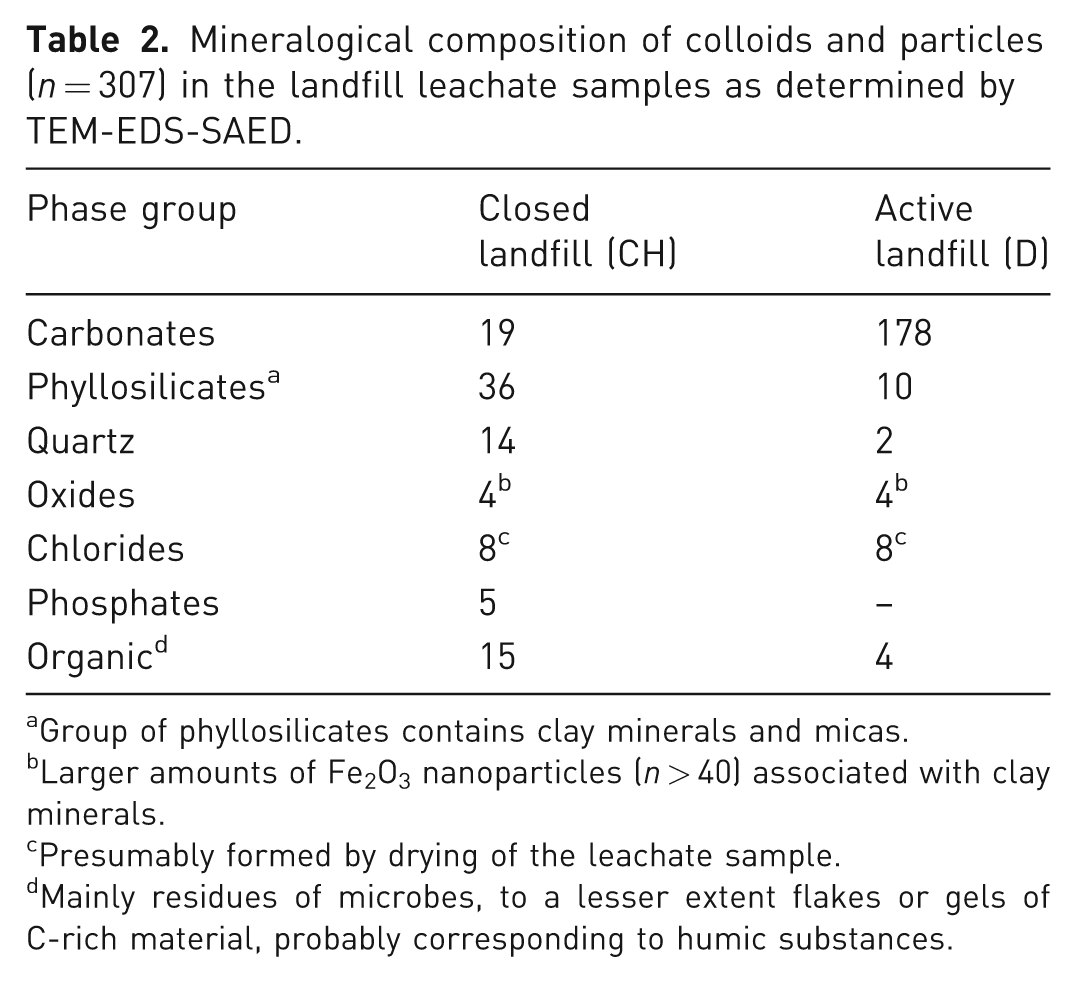
Group of phyllosilicates contains clay minerals and micas.
Larger amounts of Fe2O3 nanoparticles (n > 40) associated with clay minerals.
Presumably formed by drying of the leachate sample.
Mainly residues of microbes, to a lesser extent flakes or gels of C-rich material, probably corresponding to humic substances.
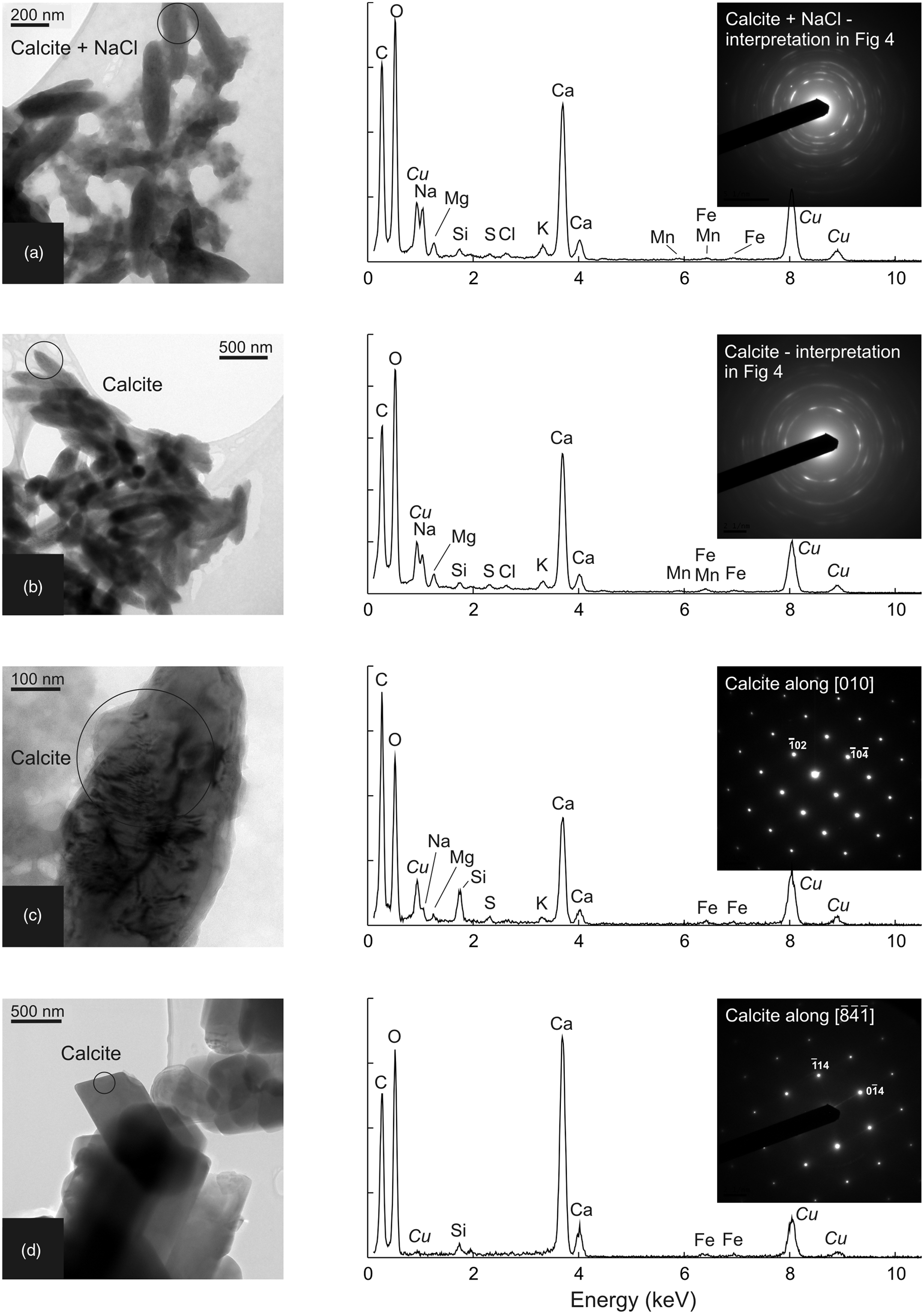
Representative TEM images, EDS spectra and SAED patterns of carbonates from landfill leachates: (a) oval crystals of calcite with trace admixtures of halite (landfill D); (b) assemblage of stacked oval calcite crystals (landfill D); (c) zoom on a calcite particle with inhomogeneous internal structure (landfill D); (d) assemblage of well defined quasi pure calcite single crystals (landfill CH). The Cu signal in EDS spectra stems from the Cu supporting grid, not from the samples (given in italics).
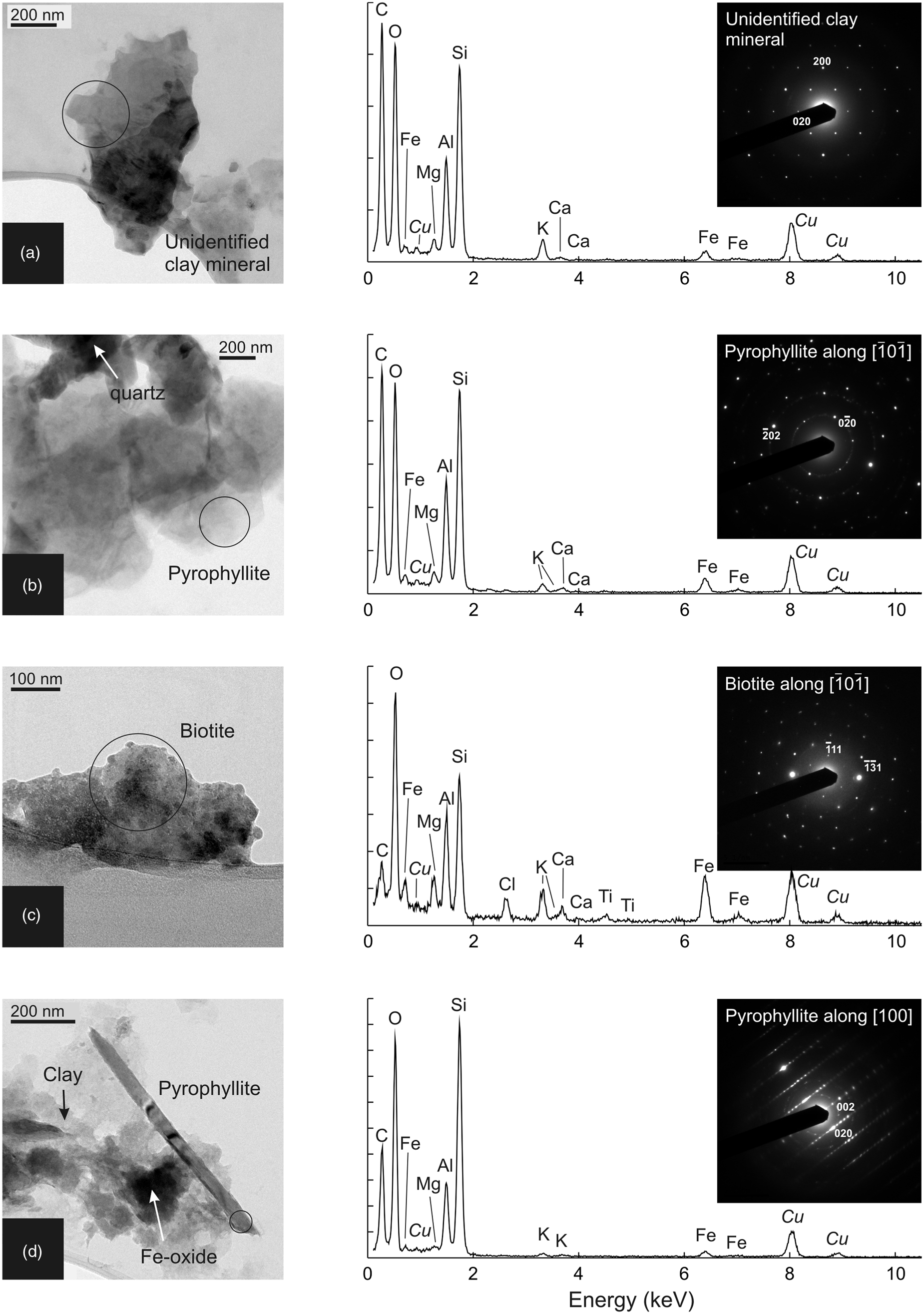
Representative TEM images, EDS spectra and SAED patterns of phyllosilicates from landfill leachates: (a) particle of unidentified clay mineral with complex chemical composition (Si–Al–K–Fe–Mg) (landfill CH); (b) plates of pyrophyllite single crystals associated with quartz (landfill CH); (c) biotite particle with inhomogeneous internal structure (landfill CH); (d) needle-shaped pyrophyllite associated with complex K–Ca-rich clay matrix and dark Fe-oxide particle (landfill CH).
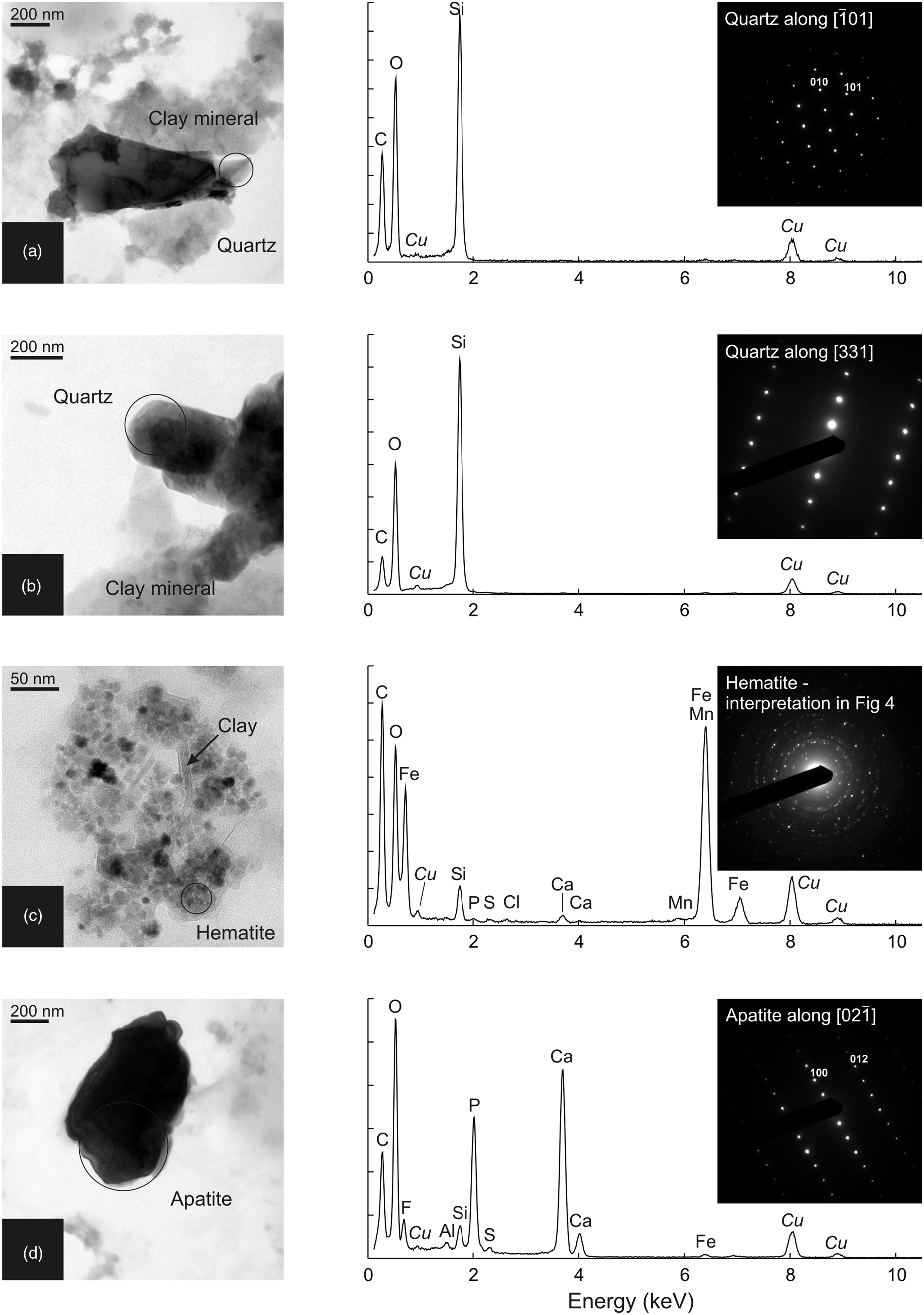
Representative TEM images, EDS spectra and SAED patterns of quartz, oxides and phosphates from landfill leachates: (a) quartz particle in the clay matrix (landfill CH); (b) quartz crystals associated to the unidentified clay mineral with composition (Si–Al–K–Fe) (landfill CH); (c) needle-shaped clay particles associated with rounded nanoparticles of hematite (landfill CH); (d) apatite particle (landfill CH).
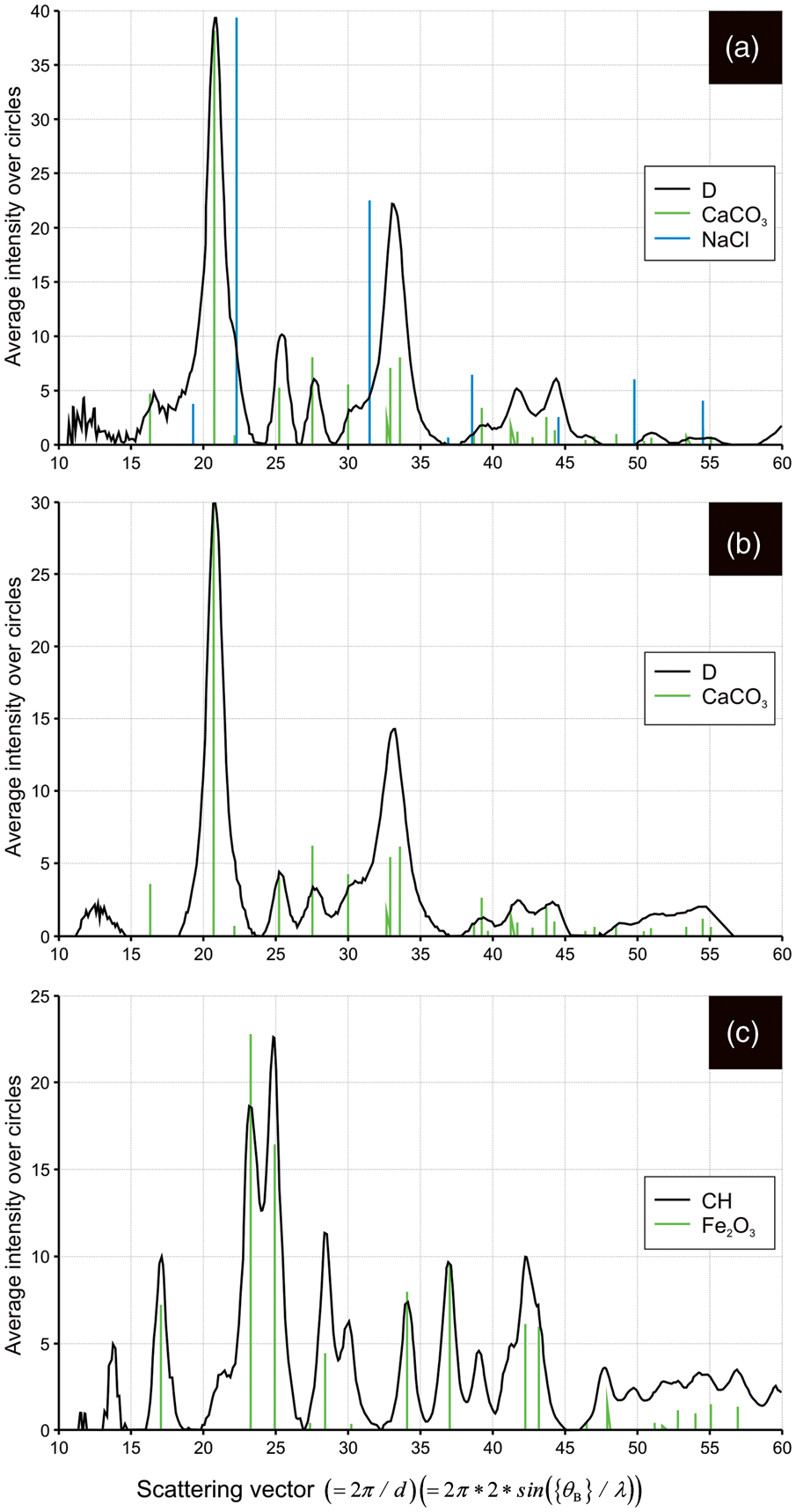
Interpretation of selected SAED patterns calculated by the Process Diffraction program (Lábár, 2005): (a) calcite with halite admixtures (landfill D, Figure 1(a)); (b) calcite (landfill D, Figure 1(b)); (c) nanoparticles of Fe-oxides corresponding to hematite (landfill CH; Figure 3(c)).
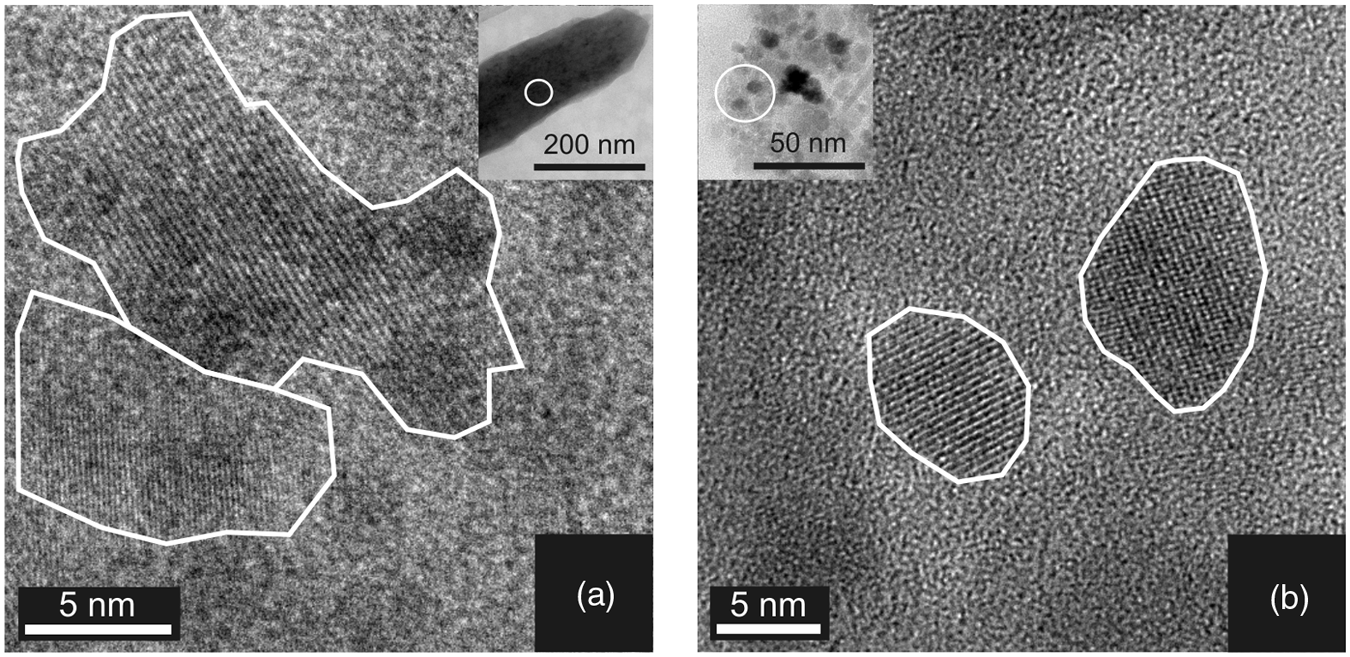
High resolution TEM images showing lattice fringes and well-crystallized nanodomains in (a) calcite from leachate D and (b) hematite from the CH leachate.
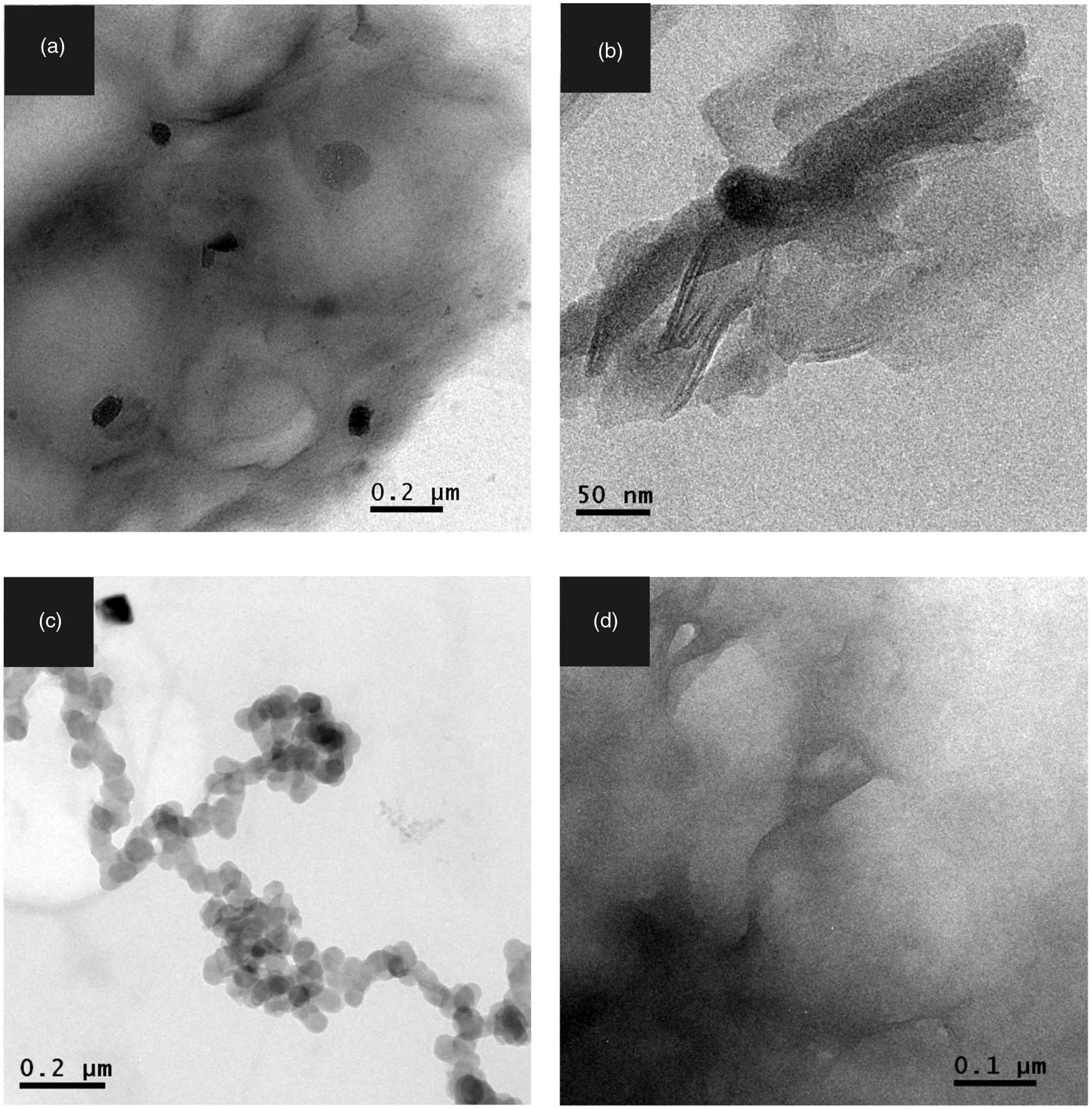
TEM images of organic colloids/particles presumably corresponding to biomolecules or humic substances: (a) aggregate of microorganisms with darker cell nuclei (landfill CH); (b) 300 nm fragment of organic matter associated with a 50 nm grain of NaCl (landfill D); (c) fibrils composed of 50 nm globular biomolecules (landfill D); (d) gel-like fragment of humic substance (landfill D).
Carbonates were the commonest inorganic phases in leachate D and less abundant in the CH leachate. This finding is in agreement with other studies, which suggested that calcite (CaCO3) is a key newly forming phase in landfill systems (Baumann et al., 2006; Baun and Christensen, 2004; Ettler et al., 2006a, 2006b, 2008; Gounaris et al., 1993; Manning, 2001; Strnad et al., 2009). Calcite forming stacked assemblages of oval crystals was observed in leachate from the active landfill D up to 500 nm in length (Figure 1(a), (b) and (c)). According to EDS analysis and interpretation of SAED (Figure 4(a)), calcite from leachate D was often associated with minor amounts of halite (NaCl), probably due to high leachate salinity (Table 1). Within oval calcite crystals, ultramicroscopic well-crystallized domains expressed as darker zones in TEM images (Figure 1(c)) and lattice fringes in the high-resolution TEM images have been also observed (Figure 5(a)). Calcite from the CH leachate formed well-defined rhombohedral crystals up to 1 µm in size (Figure 1(d)) or smaller crystals of variable size (50–300 nm). According to EDS, trace elements were detected within this calcite (Figure 1), indicating either possible binding by ion substitution in the crystal structure (Fe, Mn, Mg) or adsorption at the calcite crystals. These phenomena were observed for both calcites from landfills (Ettler et al., 2006a, 2006b; Strnad et al., 2009) and wastewater treatment systems (D’Abzac et al., 2010). The origin of calcite at site CH may be at least partly related to the geological environment (Cretaceous marl, Quaternary loess) (Ettler et al., 2006a), whereas calcite grains observed in leachate D precipitated from the solution (Manning, 2001) or were derived entirely from the waste environment.
Phyllosilicates (clay minerals and micas) were observed in both types of leachate, but to a greater extent in leachate from the closed landfill CH, derived probably from the geological environment underlying the bottom of the landfill (presence of marl and clay-like soil in the underlying substrate; Ettler et al., 2006a). These phyllosilicates generally had dimensions larger than 200 nm, often forming larger aggregates up to several micrometres in size (Figure 2). Fewer phyllosilicate particles were observed in leachate from landfill D, where the leachate is not in contact with the isolating layer composed of clay-rich material, but is drained by tubing through the drainage (gravel) layer situated below the waste. In this case, phyllosilicates can originate either directly from the waste layer or from the surface cover layer in the re-cultivated area of the landfill. Phyllosilicates from landfill D were smaller than 200 nm in size with the highest proportion of particles between 50 and 20 nm, only rarely forming larger aggregates up to 1 µm in size. In a number of cases, it was not possible to determine the exact species of clay minerals; nevertheless EDS and SAED indicated the resemblance to illite-family clays [K(Al,Mg,Fe)2(Si,Al)4O10(OH)2] (Figure 2(a)). Pyrophyllite [Al2Si4O10(OH)2] was detected in a number of cases by combination of EDS and SAED (Figure 2(b) and (d)). Its EDS indicated possible binding/sorption of other cations to the pyromorphite surfaces (Ca, K, Mg, Fe) (Figure 2(b) and (d)). The presence of clay minerals in landfill leachates was suggested by a number of authors, especially in the fractions > 0.1 µm (Baumann et al., 2006; Baun and Christensen, 2004; Matura et al., 2010). For example, Jensen and Christensen (1999) reported that colloids > 0.4 µm might be clay minerals according to the SEM-EDS analysis with predominant peaks of Si and Al. Micas were significantly less abundant and were observed only in the CH leachate. Biotite [K(Mg,Fe)3AlSi3O10(OH)2] forming particles up to 600 nm in size was the only mica species identified (Figure 2(c)). Similarly to other surface water or groundwater environments where phyllosilicates are the dominant colloidal species, they are probably formed by erosion of the geological environment, reflecting the mineralogical composition of the source zone (Chanudet and Filella, 2006, 2008; Filella et al., 2009). This is in clear contrast to carbonates, which can at least partly precipitate directly from solutions highly oversaturated with respect to these phases (Ettler et al., 2006a, 2006b; Filella et al., 2009).
Quartz (SiO2) was a ubiquitous colloidal phase in both types of leachate and was slightly more abundant in the CH leachate. It typically formed angular crystals up to 1 µm in size, often associated with clay minerals (Figure 3(a) and (b)). Similarly to phyllosilicates, quartz is probably derived from the erosion of the geological environment (Filella et al., 2009) and/or waste material deposited on the landfill, but will have no specific effect in controlling the mobility of trace metals and metalloids (Baun and Christensen, 2004). In both leachates, diatom-derived cell debris up to 15 µm in size representing biogenic silica was also occasionally observed.
Oxides were present in trace to minor amounts in both the studied leachates. Mainly Fe-oxides were observed, although EDS analysis indicated that a mixture with Mn-oxides can also be present (Figure 3(c)). In uncontaminated aquatic environments, Fe-oxides are relatively rare but always associated with other elements like Si, Al, K, S and Cl, suggesting alumosilicate coatings (Chanudet and Filella, 2008). This can also be true for our oxides according to EDS analysis, showing that other trace elements can be related to associated phases (e.g. clays) or adsorbed on oxide surfaces (Figure 3(c)). Interpretation of the SAED pattern indicated that these nanoparticles corresponded closely to hematite (Fe2O3) (Figure 4(c)). Hematite formed assemblages up to 300 nm in size (Figure 3(c)) and the high-resolution TEM observation indicated that these several-nanometre large particles were composed of rounded domains with well-developed lattice fringes (Figure 5(b)). In landfill systems, Fe-oxides were suggested to be key phases precipitating directly from the leachate and having a significant impact on contaminant mobility (Baun and Christensen, 2004; Ettler et al., 2006a, 2008). Baumann et al. (2006) observed Fe-rich colloids especially in > 0.1 µm fractions of landfill leachates. This phenomenon is in agreement with our observations, showing that Fe-rich nanoparticles from the landfill leachates can form larger assemblages or can be associated with larger, mostly clay-like particles (Figures 2(d) and 3(c)).
The group ‘others’ includes two trace phases, which were observed in the studied landfill leachates: salts and phosphates. Salts, mainly halite (NaCl), were either intimately associated with calcite (Figure 1(a) and (b) and Figure 4(a)) or formed individual grains (Figure 6(b)). The latter can be an artifact of the sample preparation formed during evaporation of the leachate on a Cu-grid due to high Na and Cl concentrations in the solution (see the chemical compositions in Table 1). Using the SEM-EDS technique, Baumann et al. (2006) also observed large amounts of chlorides, especially in colloidal fractions below 0.1 µm. In contrast, the present authors’ earlier investigation of colloidal fractions in landfill leachates showed that Na and Cl are elements present mainly in the truly dissolved fraction (see also Table 1). For this reason, it is assumes that the chloride colloids massively observed by Baumann et al. (2006) may also be an artifact of sample preparation for SEM-EDS (evaporation). The second rare phase observed in the CH leachate was apatite [Ca5(PO4)3(OH,F,Cl)], forming grains up to 800 nm in size (Figure 3(d)). The rareness of this phase is probably related to the extremely low concentrations of phosphate ions in the leachate (Table 1), although the oversaturation of leachates with respect to phosphates was observed by a number of researchers (Gounaris et al., 1993, Jensen and Christensen, 1999). Phosphates are also very common in the similarly contaminated environments of wastewater treatment plants (D’Abzac et al., 2010). These phases may have implications for other trace element binding/mobility (Baun and Christensen, 2004) as was also revealed by the EDS analysis (Figure 1(d)).
Our previous investigation based on cascade filtration/ultrafiltration of the landfill leachates (Matura et al., 2010) showed that organic carbon is mostly present in smaller colloidal fractions (< 0.1 µm and even more < 1 kDa; see also Table 1). These organics probably correspond to fulvic acids, which were considered to be the predominant fraction in the landfill leachates (Baumann et al., 2006; Christensen et al., 1998; Gounaris et al. 1993). Fulvic compounds in natural aqueous (Buffle et al., 1998) and landfill environments (Zhang et al., 2009) typically have small molecular mass (around 1000 Da) and are very difficult to visualize by TEM. Fulvic acids are assumed to form small rigid globules with diameters between 1 and 3 nm but, at higher ionic strengths and in the pH range 5–8 (corresponding to our experimental conditions), they can aggregate to form larger structures (Buffle et al., 1998). Nevertheless, only a few fragments (~20) of colloidal/particulate organic matter were observed in our samples by TEM. They were of two types: (i) organic C-rich biomolecules, probably related to the microbial activity (cell fragments and aggregates from 50 nm to 1.5 µm in size) (Figure 6(a) and (c)); (ii) flakes and gel-like structures presumably corresponding to humic substances (Figure 6(b) and (d)). Another feature consists in the possible adsorption of organic matter (mainly fulvic/humic compounds) onto larger inorganic colloids, which can lead to stabilization of the colloidal suspension due to electrostatic repulsion and possible embedding of inorganic colloids in the gel-like structures (Buffle et al., 1998; Filella, 2007; and Figure 6(b)). This phenomenon can be expected especially in leachate D with high DOC concentration (Table 1), although the adsorption of fulvic/humic compounds onto inorganic colloids could not be experimentally verified by TEM. Drying of the samples can induce artifacts when studying the colloidal organic matter in aqueous environments (Wilkinson et al., 1999). In contrast to TEM, atomic force microscopy (AFM) is less sensitive to dehydration (Wilkinson et al., 1999) and would be a promising technique for more detailed investigation of the organic carbon-based colloidal matter in landfill leachates; however, this is beyond the scope of the present study.
Environmental implications
Previous investigation of colloids in landfill leachates showed that carbonates and silicates (especially clay minerals) are the predominant colloids in these systems (Baumann et al., 2006; Baun and Christensen, 2004; Jensen and Christensen, 1999). Clay minerals were found to be efficient in binding contaminants, although their importance for binding metals in landfill leachates was not directly proven (Baun and Christensen, 2004). In contrast, the capacity of calcite to bind metals and metalloids in landfill systems has been demonstrated in a number of studies (Baumann et al., 2006; Baun and Christensen, 2004; Ettler et al., 2006a, 2006b; Strnad et al., 2009). In situ analytical investigation of landfill calcites showed that they can contain a number of trace elements (e.g. Ba, Sr, Mn), which either are substituents in the crystal structure or are bound to the calcite surfaces by sorption (Ettler et al., 2006a, 2006b; Strnad et al., 2009). Investigation of the size fractionation of the leachates from three German landfills showed that carbonates generally form aggregates >1 µm (Baumann et al., 2006). Similarly, the present TEM investigation of landfill colloids showed that calcite formed larger aggregates composed of particles approximately 500 nm in size (Figure 1). Colloidal particles of larger size (>1 µm) are generally less mobile in the porous environment (Baumann et al., 2006). As a result, the formation of calcite colloids can have a potential in limiting the mobility of inorganic contaminants (metals/metalloids). This phenomenon can have direct implications for decontamination of landfill leachates based on controlled calcite precipitation and subsequent sedimentation of larger colloidal particles (Øygard and Opedal, 2007; Renou et al., 2008).
Surprisingly low amounts of organic colloids/particles were observed in our landfill leachates by TEM (Table 2, Figure 6). This phenomenon is probably related to the fact that fulvic and humic compounds predominantly have small molar mass, around 1000 Da (Zhang et al., 2009) and cannot be successfully visualized by TEM. Although the surface coatings of inorganic colloids by fulvic/humic compounds were not experimentally demonstrated by TEM, this phenomenon must be taken into account, because it leads to changes in the binding properties and to stabilization of the inorganic colloids due to their high charge density. This occurs mainly under neutral to alkaline conditions, as was also observed in natural aquatic systems with high concentrations of organic carbon (Buffle et al., 1998; Doucet et al., 2007; Filella, 2007). The authors’ previous investigation showed that some metals (e.g. Co, Cr, Ni, Cu, Zn Sr, Ba) are associated with colloids to a lesser extent (20–50%) and occur in the ‘truly dissolved’ fraction below 1 kDa (Matura et al., 2010). These trace elements can be significantly complexed by fulvic compounds, which are also present in this ‘truly dissolved’ fraction (Table 1). A high degree of metal complexation with organic ligands in the dissolved fraction was also observed at numerous other landfill sites (Baumann et al., 2006; Baun and Christensen, 2004 and references therein).
Conclusions
The (HR)TEM–EDS–SAED technique was used to study colloids and particles in the size range of 5 nm to 5 µm from leachates collected at two, active and closed, MSW landfill sites. A total of 307 particles were examined, analysed and divided into six main groups of phases: carbonates, phyllosilicates (clay minerals and micas), quartz, Fe-oxides, others (salts and phosphates) and organics. Whereas calcite was the predominant type of inorganic colloid in the leachate from the active landfill, all the groups of phases were observed in the leachate from the closed landfill. The calcite colloids forming aggregates between 500 nm and 5 µm in size have a great potential for binding trace inorganic contaminants (metals/metalloids) and limiting their mobility in landfill environments, in particular if the leachates were to migrate from the landfill body into the surrounding environment. Relatively few organic colloids and particles were observed, mostly corresponding to biomolecules related to microbial activity (e.g. cell fragments) and to a lesser extent to gel-like structures of fulvic/humic aggregates. As the majority of organic carbon in the leachate is present in the fraction <1 kDa, it is suggested that organics can play a significant role in complexation of ‘truly dissolved’ trace elements or these elements may be adsorbed onto the surfaces of larger inorganic colloids/particles, subsequently modifying their surface properties and/or stabilizing them.
Footnotes
Acknowledgements
Radka Klimošová and Hynek Horák of the A.S.A. company kindly provided us with access to one landfill site. Dr Ondřej Šebek and Professor Martin Mihaljevič are thanked for analytical determinations in the leachates using ICP techniques. Dr Madeleine Štulíková is thanked for revision of the English in the manuscript. We are indebted to the three anonymous reviewers for their constructive comments, which helped to substantially improve the original version of the manuscript.
This study was supported by institutional funding obtained from the Ministry of Education, Youth and Sports of the Czech Republic (MSM0021620855) and Academy of Sciences of the Czech Republic (AV0Z40320502). MM was supported by the University Student Project No. SVV261203.