






Abstract
An overview of the municipal solid waste (MSW) management in Beijing, a city with a resident population of about 19.61 million in 2010, is presented in the article. Economic development and population growth have resulted in a MSW generation increase from 2.96 million tons in 2000 to 6.20 million tons in 2007, fluctuating to 6.35 million tons in 2010. The components of MSW over the past decade are characterized by increasing food and paper contents, and a decreasing ash content. The percentage of food waste, the main putrescible component, increased steadily from 45.77% in 2002 to 66.98% in 2010. Combustible materials, such as plastic, paper, textile, wood and food waste, accounted for 94.66% of MSW in 2008. There are 15 landfill sites, 2 incinerators and 2 composting plants in Beijing, with a total designed capacity of 15,380 tons/day in 2010. The main waste disposal technology used in Beijing is landfill, which accounts for 92.27% of the total designed capacity in 2008 and 78.54% in 2009. The designed capacity of the existing disposal plants cannot cope with the actual quantity of waste generation, resulting in overloading and premature closure of landfill sites. Solid waste incineration has been given priority in technology development and financial support over other disposal methods.
Introduction
Beijing, located on the northern edge of the North China Plain, has an area of 1368.32 km2 and a resident population of 19.61 million in 2010 (BMBS, 2011). Followed by rapid urbanization and population growth, the total municipal solid waste (MSW) generated in Beijing increased steadily over the past decade, from 2.96 million tons in 2000 to 6.35 million tons in 2010, with an average annual increase of 7.18%. This increase exerts obvious pressure on the environment, human health and MSW management system (Zhao et al., 2009).
Effective waste management through MSW composition studies is necessary for environmental protection and for the selection of facilities, which are the main responsibilities of the Beijing Solid Waste Administration Department (BSWAD). MSW management is a major challenge in urban areas worldwide, not only because of the tremendous quantity of waste generated, but also because of waste components and elements, which are variables as a consequence of economic, geographic, seasonal, lifestyle and demographic factors (Huang et al., 2007). The main components of MSW are ash, food waste, paper, construction debris, plastics, textiles, glass, wood and metal (Chen and Christensen, 2010). These materials are related directly to elemental composition (commonly carbon, nitrogen, hydrogen, sulfur and oxygen) and calorific value (Luo and Liao, 2006). These data are essential in waste management to develop stoichiometric equations for MSW incineration (Zhang and Nie, 2006), to establish biochemical models for compost and digestion (Valencia et al., 2009) or to simulate the stabilization process of landfills (Lou et al., 2007).
Several studies on waste composition in Beijing have been conducted (Li, 2009; Liu, 2006). This article investigates the basic properties of MSW over the last decade and reviews waste management systems in Beijing. The resulting information is necessary for policy-making decisions in future waste management programs.
Materials and methods
Materials
Waste was selected from two transfer stations according to the national standard in China, Sampling and Analysis Methods for Domestic Waste (CJ/T313-2009). A minimum waste capacity of 30 kg was collected once a month within a year, and the obtained samples were dried to a constant weight at 105 ± 5°C and then shattered to a size of <0.5 mm. The weighted averages were adopted to represent the mean composition of MSW in Beijing.
Analytical measurements
The elemental composition (carbon, hydrogen and nitrogen) of the waste was determined by CE-440 elemental analyzer (EAI Company, Lexington, KY, USA). Moisture content was measured from the difference between the sample weight before and after heating at 105°C for 24 h. The volatile solid and ash contents were determined from the difference between the sample weight prior to and after heating at 600v°C for 2 h. The calorific value of the sample was measured using an oxygen bomb calorimeter (AC-350, LECO, St. Joseph, MI, USA). The mean value from the three measurements was accepted as a result for higher calorific value (HCV). The lower calorific value of wet substrates [the real calorific value (RCV)] can be calculated applying by the following equation (Ministry of Housing and Urban-Rural Development China, 2009):
where W is the moisture content of the samples (%), 24.4 is the gasification heat constant for water (KJ/kg), and HD is the hydrogen content of the dried sample (%).
Results and discussion
Waste quantity
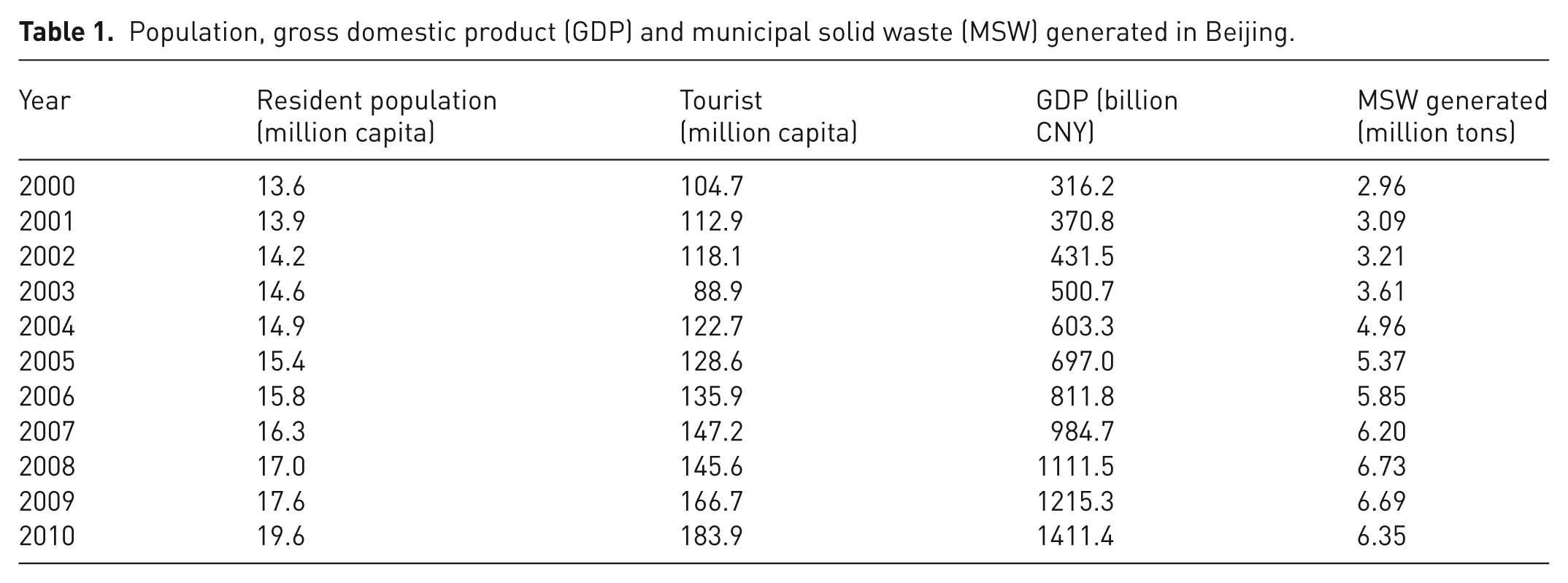
The statistics of population growth and MSW production in the study area is shown in Table 1 (BMBS, 2011). The resident population was 13.6 million in 2000 and 19.6 million in 2010, of which 16.8 million are urban populations, with an average annual increase of 3.38%. The tourist population increased from 104.7 million in 2000 to 183.9 million in 2010, with an average annual increase of 5.25%, while the gross domestic product (GDP) increased more quickly than the population with an average annual increase of 14.57%. As a function of population and GDP, the total MSW generated was 2.96 million tons in 2000 and reached a maximum of 6.73 million tons in 2008. After that, waste minimization occurred as a positive signal in 2009 and 2010. The reduction in waste quantity was obviously observed in 2010, wherein a decrease of 5.08% from 6.69 million tons in 2009 to 6.35 million tons in 2010 was recorded. Source sorting and recycling of MSW in 600 communities were implemented in 2010, along with the zero waste emission program in 100 public institutions. Moreover, franchise services of kitchen waste and waste oil were enforced for waste minimization.
Population, gross domestic product (GDP) and municipal solid waste (MSW) generated in Beijing.
Waste composition
Beijing has a dry, monsoon-influenced, humid, continental climate characterized by hot, humid summers and generally cold, windy and dry winters. Climate, urban functional zoning and economic development are also important factors with regard to waste components. The urban functional zoning of Beijing in 2010 is shown in Figure 1 (BMBS, 2011). The annual waste component weighted means in urban and rural areas are depicted in Figure 2 (BSWAD, 2011).
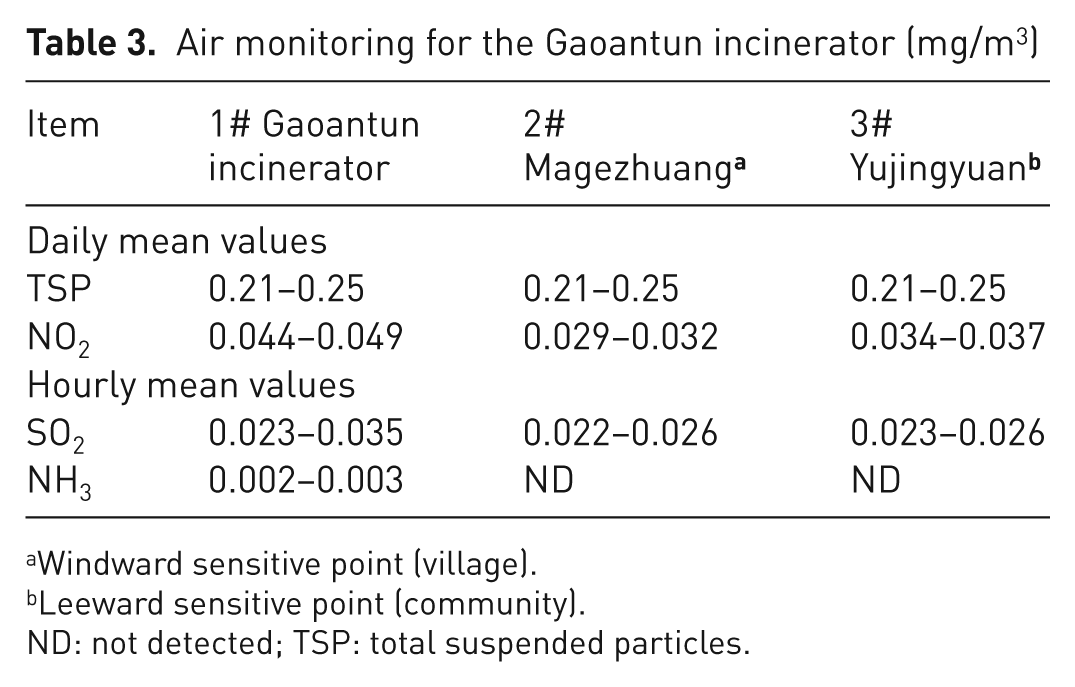
The urban functional zoning of Beijing.
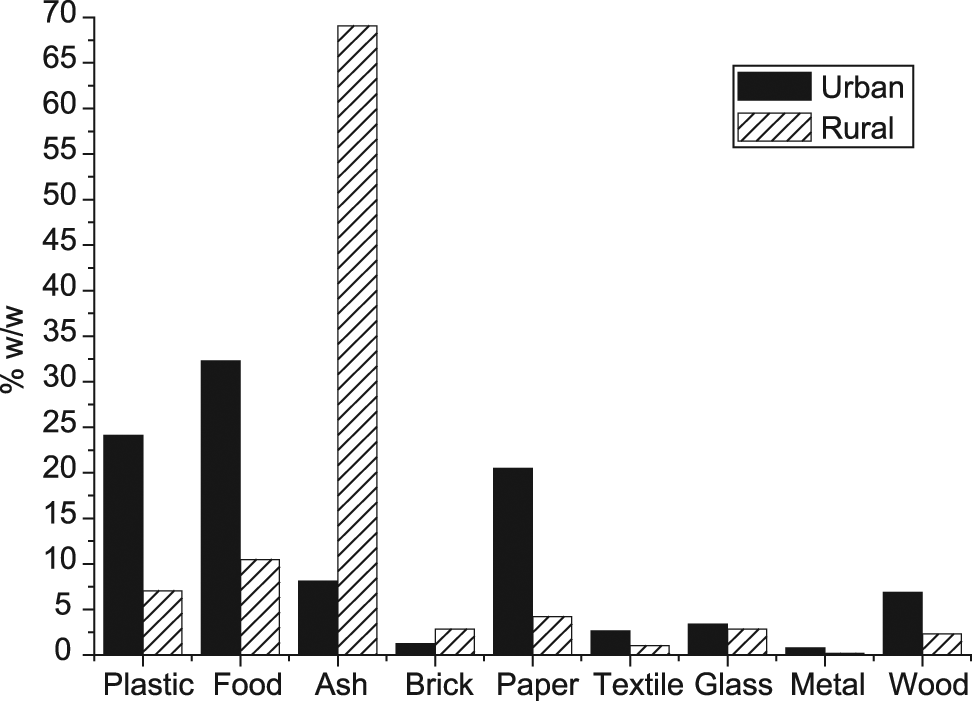
Waste composition analysis in 2008 (dry base %).
Beijing city is shown in areas 1 and 2, which contains 6 administrative districts, contributing to 60% of the total MSW generation. Area 4 is regarded as a rural region with five administrative districts characterized by low population density, low waste generation and ecological planning conservation. Area 3 is a combination of urban and rural areas, which has five administrative districts with widely different waste components compared with the other areas, as shown in Figure 2.
Food residue and plastic, which are specific pollutant indices of resident living standards (Gidarakos et al., 2006; Kaplan et al., 2009), account for 32.30% and 24.11% of urban waste, respectively, and are three times more than the amount of rural waste. The content ratio of paper for urban waste is 20.5, which is nearly 5 times more than the amount for rural waste. The result depicts the business development of different areas. The ash composition ratio of rural waste is extremely high (69.09) because of the use of coal for cooking and heating in rural areas. The metal content in both types of waste is low because of artificial sorting prior to waste transportation.
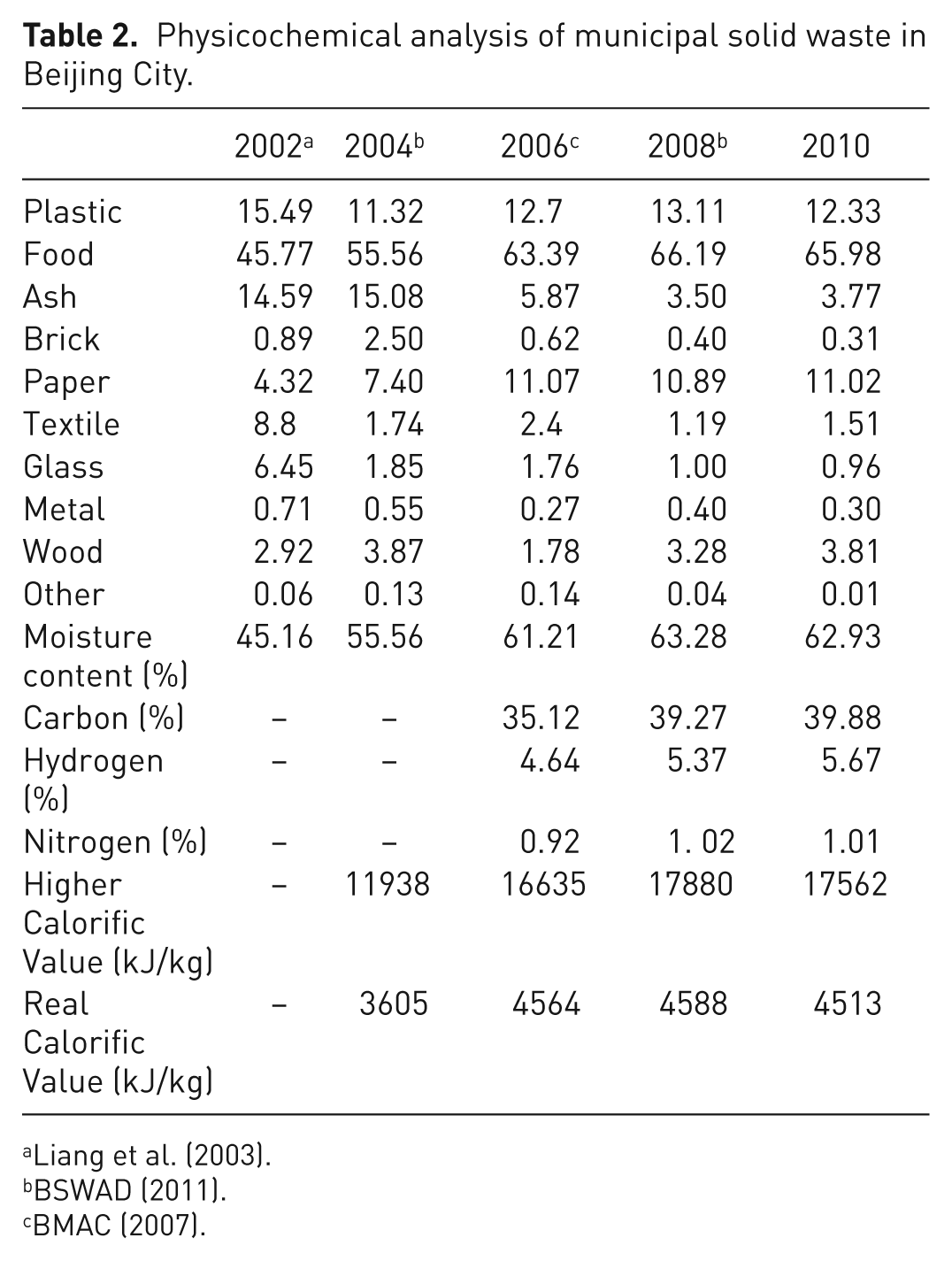
The long-term waste components (wet base) and the element composition variation of urban waste (areas 1 and 2) are shown in Table 2.
Physicochemical analysis of municipal solid waste in Beijing City.
The components of MSW over the past decade are characterized by increasing food and paper content, and decreasing ash content. The percentage of food waste, the main putrescible component, increased steadily from 45.77% in 2002 to 66.98% in 2010, which was related directly to the moisture content of waste. Although increasing food waste content was observed in recent years as a result of economic development, it is expected to decrease in the near future for enhanced waste sorting and minimizing, as mentioned above. The percentage of paper waste showed an abrupt increase from 4.32% in 2002 to 11.07% in 2006 and has remained at about 11% in subsequent years. This increase may be attributed to thriving businesses and the extensive use of paper packaging materials.
The percentage of refractory components, such as plastic, wood and textile, has changed slightly since 2004. The plastic content of MSW in 2010 was slightly higher than that in 2004, but both were lower than that in 2002. Combustible materials, such as plastic, paper, textile, wood and food waste, accounted for 94.66% of MSW in 2008, and supports a high HCV of MSW (17880 KJ/kg). The high moisture content, however, resulting in a low RCV of MSW, indicates that the waste can not be incinerated effectively. The case was identified in the Gaoantun waste incineration plant, where more than 600 tons of leachate is generated from MSW per day in summer—nearly one third of actual waste quantity.
The amount of the recyclables such as glass and metal was low, except for plastic and paper. The former two recyclables have accounted for less than 2% of MSW since 2004, owing to full resource recycling of these components before disposal. With regard to inert materials, the percentage of ash decreased from 14.59% in 2002 to 3.77% in 2010. Construction and demolition waste were particularly low, as these were collected and transported to separate disposal sites.
The characteristics of waste composition are also identified in another report . In an analysis of waste composition in 20 cities on 6 continents, paper percentages appear relatively low outside of high-income countries. Organic levels in the 5 high-income cities are reported to be 24–34% (average 28%), whereas those in 13 of the 15 ‘Southern’ middle- and low-income countries are within the range of 48–81% (average 67%) (Wilson et al., 2012). The comprehensive disposal of MSW is based on waste characteristics, which differentiate waste into compost, combustible components and inert materials.
Current waste management
The collection and transportation of MSW have been contracted to the Beijing Environment Sanitation Engineering Group Company since 2006. The company has four branches that are tasked to collect waste daily from the streets, and transporting waste to transfer stations and disposal plants.
MSW collection
Sorting at the source prior to collection has been the preferred method of MSW management over the past decade in Beijing. MSW is generally separated into kitchen waste, recyclables and other types of waste at the source. Kitchen waste from restaurants is collected independently and transported to compost plants to be manufactured into fertilizer by authorized companies. Kitchen waste from domestic households, however, is not separated effectively from miscellaneous solid waste, as shown in Table 2. Mixed collection in community and business districts makes waste disposal and recycling more difficult. Failure in sorting may be attributed to the absence of compulsory measures and the insufficiency of vehicle transport capacity. However, roads are cleaned by both manual and mechanical sweepers in Beijing City, of which mechanical sweep accounts for more than 60% of road waste quantity. Mechanical sweeping is often used to clean main roads, whereas manual sweeping is more suitable for side roads. The advantage of human sweeping is that waste can be sorted as it is collected, although it seems to be ambiguous for MSW classification. The high amount of food waste is supposed to be separated at the next stage by mechanical sortation in transfer stations.
MSW transportation
Waste collected from urban centers is delivered to the transfer stations for compaction and storage in purposely-built containers for transportation and disposal. Transportation accounts for the main cost in the MSW management system, as waste treatment sites are constructed far from urban areas to protect people from their adverse effects. By the end of 2005, 929 small-scale transfer points were used in Beijing, of which 713 transfer points were located in urban areas. Furthermore, there are six transfer stations in Beijing, andh Xiaowuji and Majialou Stations are equipped with mechanical sorting machines with an enhanced designed capacity of 2000 tons/day respectively. The transfer station is an important part of the MSW management system in that transporting waste in bulk reduces the overall transportation cost and greatly decreases the traffic and environmental nuisance. Mechanical sortation and recycling also play an integral role in waste management systems. These activities significantly reduce the weight, volume and cost of waste materials requiring disposal.
MSW disposal
There are 15 landfill sites, 2 incinerators and 2 composting plants in Beijing with a total designed capacity of 15,380 tons/day in 2010, as shown in Figure 3. The main waste disposal technology used in Beijing is landfill, which accounts for 92.27% of MSW disposal in 2008. The ratio of landfill decreased to 78.54% in 2009 as a result of the operation of the Gaoantun waste incineration plant and capacity enlargement of the Nangong composting plant. Composting is employed to dispose of kitchen waste and medium-sized (15 mm to 80 mm), mechanically-sorted MSW.
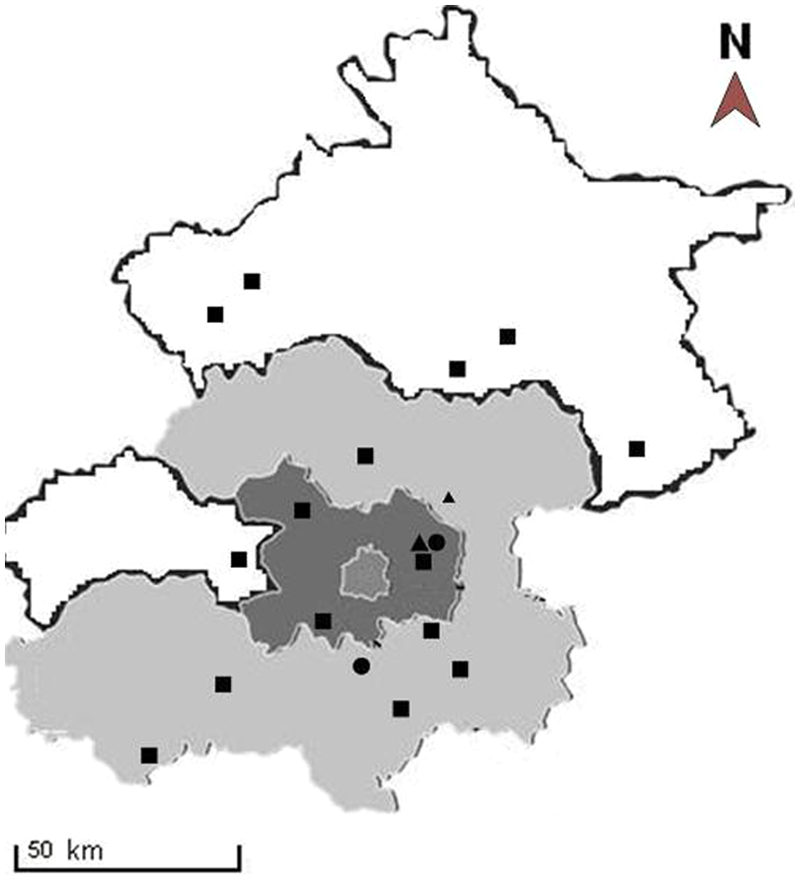
MSW disposal facilities in 2010 (▲: incinerator;■: landfill; ●: composting plant).
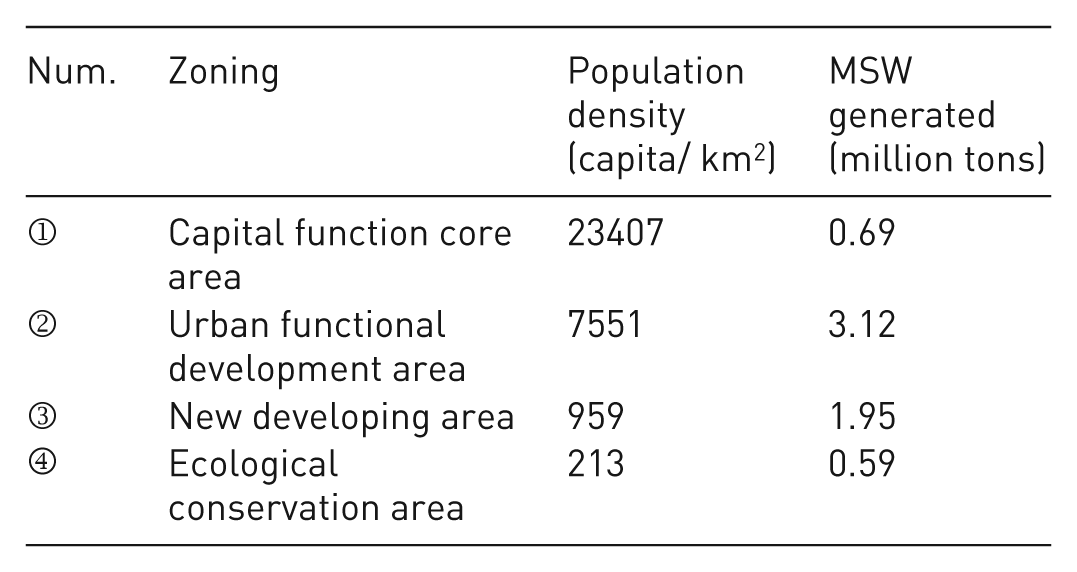
According to statistical data, the waste generation rate was 13,589 tons/day in 2004 and 17,397 tons/day in 2010; the total designed capacity was 9830 tons/day in 2004 and 15,380 tons/day in 2010, so most of the plants have been overloaded since 2004. The situation results in the expected closure of nine of the landfill sites in the next few years, ahead of their supposed service lives (Zhao et al., 2011), and requires new facilities and strategies for waste management. Incineration is considered to be the preferred technology for waste disposal owing to the absence of land resources and the high proportion of combustible MSW materials. The problem of low RCV caused by the high water content of MSW may be properly resolved by waste dewatering or bio-drying techniques before incineration. A test report, from 8 April to 22 April 2010 for the Gaoantun waste incineration plant was submitted to assess environmental pollution concerns caused by MSW incineration. The indices of the total suspended particle (TSP), SO2, NO2, NH3 and H2S were consistent with the Ambient Air Quality Standards (GB 3095-1996) in China, of which the daily and hourly mean values of pollutants are depicted in Table 3 (Centre Testing International Corporation, 2010). The test results demonstrated that the operation of the incinerator did not significantly influence the air environment, although strict monitoring should be continuously enforced in the future.
Air monitoring for the Gaoantun incinerator (mg/m3)
Windward sensitive point (village).
Leeward sensitive point (community).
ND: not detected; TSP: total suspended particles.
Owing to the limited geographic urban area, the high cost of land and transportation, solid waste incineration has been given priority over other waste disposal methods. There are nine waste incineration plants planned or under construction at present, and the total incineration ratio is expected to hit 50% or more in the foreseeable future. The Beijing government is presently in charge of planning more incineration plants, and supervising the management and operation of them. The combustion gas emitted from new incinerators should be monitored strictly to make sure that it does not exceed the permissible values of national standards. The unavoidable obstacle is protest from residents around the planned incineration sites who are concerned about pollution and personal health. One such protest has delayed the construction of the Liulitun incinerator.
Challenge
Although total MSW generation has showed minor changes since 2007, the overload of landfills and insufficient land resources for waste disposal are the main challenges confronting solid waste management in Beijing. Waste minimization is expected to be the first strategy and needs to be implemented more strictly as it involves public attitudinal changes. Effective waste sorting at the source is important for the next step of waste management.
Recently, waste incineration has been given priority status and may play a more important role than landfills in waste management systems in the near future. A number of incineration plants are too small, with limited flue gas cleaning and incomplete energy recovery. This problem prompted several alternative solutions, such as increasing capacities or building more incinerators. As many incineration plants are located in suburban areas, and considering transportation costs, it is important to set strict standards for actual emissions from these plants. As for an energy recovery policy mechanism, a feed-in tariff designed to accelerate investment in renewable energy technologies for the Gaoantun waste incineration plant reached 3.97 million Chinese Yuan in 2009. The fly ash from incineration can be disposed of as hazardous waste or be used as a partial replacement for cement in concrete (Raungrut and Chai, 2004).
Conclusions
Economic development and population growth in Beijing have resulted in an increase in MSW generation. However, the amount of MSW generated has exhibited minor annual changes since 2007. Waste minimization has been implemented effectively since 2009 in order to reduce the amount of solid waste quantity. The components of MSW over the past decade are characterized by increasing food and paper content, and decreasing ash content, which is in concordance with waste composition in middle-income countries.
Source sortation and mechanical sortation are both employed in the current waste management system. Kitchen waste from domestic households, however, is not separated effectively from miscellaneous solid waste. The main waste disposal technology used in Beijing is landfill, accounting for 92.27% of total designed capacity in 2008 and 78.54% in 2009. The designed capacity of existing disposal plants cannot cope with the actual quantity of waste generation, resulting in overload and premature closure of landfill sites. It is necessary to construct more disposal plants, and incineration is considered to be the preferred technology owing to the absence of land resource and suitable waste composition. Proper financial measures, as well as new regulations and standards, are expected to be implemented for a more effective and efficient integrated solid waste management system.
Footnotes
Acknowledgements
The authors would like to thank Beijing Solid Waste Administration Department for their help.
Funding
This study was supported by the Fundamental Research Funds for the Central Universities (TD2011-23) and the Science and Technology Innovation Program of Beijing Forestry University (No. BLYX200911).