







Abstract
In this study, the potential utilization of fly ash was investigated as an additive in solidification process of radioactive waste sludge from research reactor. Coal formations include various percentages of natural radioactive elements; therefore, coal fly ash includes various levels of radioactivity. For this reason, fly ashes have to be evaluated for potential environmental implications in case of further usage in any construction material. But for use in solidification of radioactive sludge, the radiological effects of fly ash are in the range of radioactive waste management limits. The results show that fly ash has a strong fixing capacity for radioactive isotopes. Specimens with addition of 5–15% fly ash to concrete was observed to be sufficient to achieve the target compressive strength of 20 MPa required for near-surface disposal. An optimum mixture comprising 15% fly ash, 35% cement, and 50% radioactive waste sludge could provide the solidification required for long-term storage and disposal. The codisposal of radioactive fly ash with radioactive sludge by solidification decreases the usage of cement in solidification process. By this method, radioactive fly ash can become a valuable additive instead of industrial waste. This study supports the utilization of fly ash in industry and the solidification of radioactive waste in the nuclear industry.
Introduction
Fly ash is one of the residues generated in combustion of coal at coal-fired power plants. It comprises the fine particles that rise with the flue gases. Fly ash is generally captured by electrostatic precipitators or other particle filtration equipment before the flue gases reach chimneys. The properties of fly ash mainly depend on the coal type. Coal formations include various percentages of natural radioactive elements; therefore, coal fly ash includes various levels of radioactivity. On the other hand, utilization of coal fly ash has many economic advantages.
In this study, fly ashes were collected from lignite-fired power plants in Turkey and radiological evaluation was carried out on fly ash samples collected from fly ash ponds of thermal power plants. The construction industry uses large amounts of byproducts from other industries. Research related to radioactivity of fly ash additives in concrete or other construction materials have been carried out by many researchers (Baykal and Saygili, 2011; Baykara et al., 2011; Fucic et al., 2011; Gupta et al., 2012; Kovler et al., 2012; Lu et al., 2012; Nisnevich et al., 2008). The utilization of the fly ash from lignite power plants depends on their chemical and mineralogical properties. In Turkey, about 20 billion tonnes of lignite were burned in lignite-fired power plants between 1970–2013. From this, about 2 billion tonnes of lignite combustion products were produced, including about 150 million tonnes of fly ash.
Lignite fly ashes are predominantly used for cement and concrete production as well as for immobilization purposes. In case of using fly ash in construction material, the Raeq and the Hex values are more than the limit of 0.370 Bq/g (UNSCEAR, 2000). Because of their high radioactivity levels, these fly ashes cannot be used as construction material. For this reason, this study investigated fly ashes in solidification of radioactive waste sludge; the radiological limit for solidified radioactive waste is not as low as construction materials. Fly ash can be considered as concentrated radioactive waste and it should be solidified for maintaining stability of the waste form in storage. In this process, the fly ash was used as an additive for the production of concrete.
The solidification study presented in this paper differs from previous immobilization studies because the primary objective was to solidify radioactive liquid waste by using fly ash. This study used fly ashes generated from lignite coal combustion in Turkey.
Materials and methods
Lignite samples were collected from lignite power plants having boilers burning high-sulphur lignite coal. Approximately 2 kg from each of nine fly ashes were dried and sieved to determine humidity and ash content. Measurements were made on ash samples from 11 representative fly ashes collected in full-scale power plants.
Fly ash samples were collected from nine different thermal power plants in Turkey. First all samples were pulverized for maintaining homogeneity. For removal of moisture, samples were dried at 110°C. They were then transferred to 1000-ml Marinelli beakers as well as 100-ml containers for gamma-ray measurement, which were sealed for 8 weeks to ensure secular equilibrium between radium and its radioactive progeny, 228Th, with short-lived decay products of 222Rn (218Po, 214Pb, 214Bi, 214Po) and prevent radon loss. Then all samples were taken for gamma-ray spectrometric analysis to determine radiological properties and radioactivity concentrations. The spectrometric system consisted of a coaxial type high-purity germanium detector, linked with a multichannel buffer which was computerized via a PCI card consisting of a analogue-to-digital converter. For data acquisition, multichannel analyser software ACCUSPEC was used. The energy resolution is full width at half maximum (FWHM) gained in the measurements was 1.8 keV at the 1.33 MeV by 60Co reference transition. The minimum detectable activities of the counting system varied within the range of 100–200 kBq/g for 238U and 232Th and within the range of 0.2–0.8 Bq/kg for 40K. Counting time was arranged up to 20,000 s to provide suitable counting efficiency. The detector was surrounded by lead and copper to suppress background gamma radiation.
Fly ash is generally stored at coal power plants or placed in landfills. Fly ash particles are generally spherical in shape and range in size from 0.5 to 300 μm. Fly ash is a heterogeneous material: SiO2, Al2O3, Fe2O3, and occasionally CaO are the main chemical components. Specific gravity of fly ash is between 2.2–2.7 g/cm3. The chemical properties of the fly ash are largely influenced by the chemical content of the coal burned (i.e., anthracite, bituminous, and lignite) (ASTM, 2008). Fly ash is divided into groups related to their chemical and physical compositions according to ASTM C618. These are class F and class C fly ash. The main difference between these classes is the amount of calcium, silicon, aluminium, and iron in the ash. Class C fly ash is produced from the burning of younger lignite or sub-bituminous coal and generally contains more than 20% CaO. Class F fly ash is generated from burning older anthracite and bituminous coal. It is pozzolanic in nature and contains less than 20% CaO.
Solidification process
To determine the optimum mixture, different proportions of fly ash instead of cement were added to sludge. Solidification was performed in an in-drum mixer to avoid contamination. Radioactive sludge was pumped directly into the drum and then the calculated amounts of fly ash and cement were poured added (Figure 1).
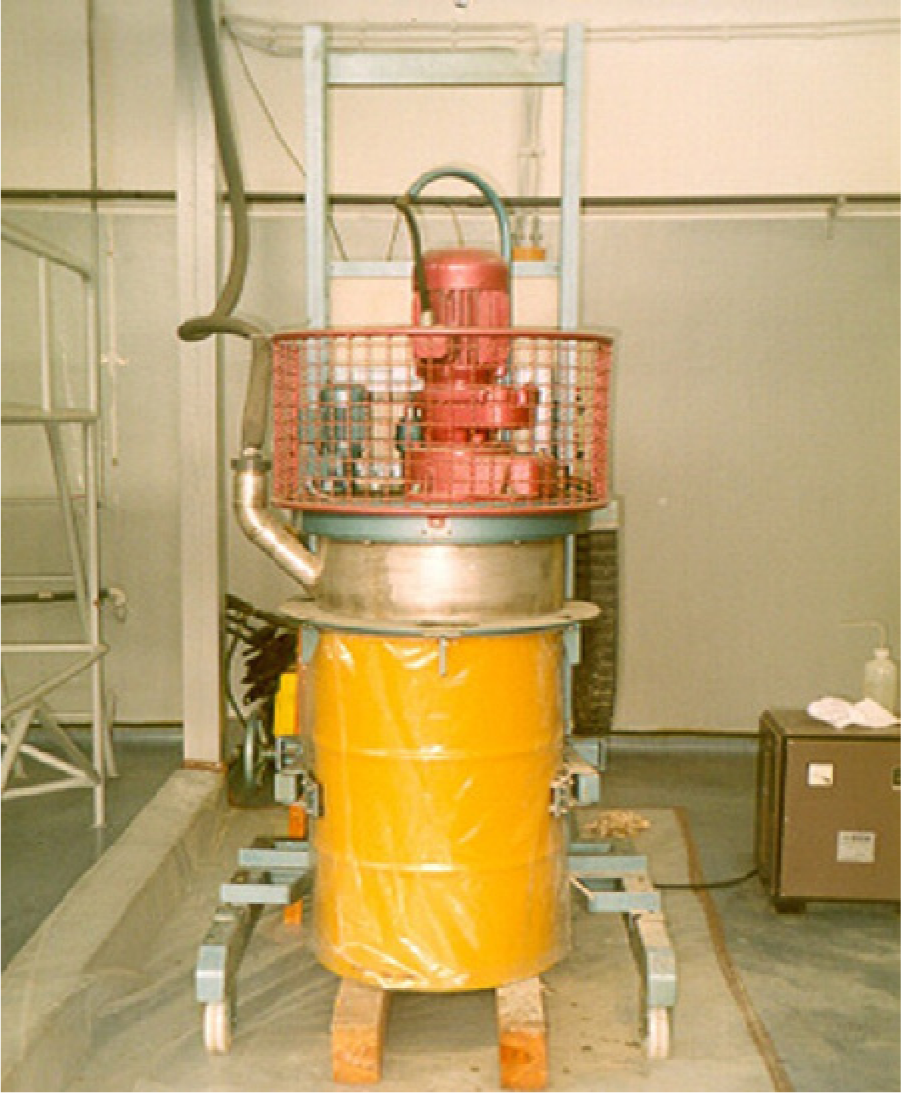
Solidification process.
Fly ashes from nine lignite-fired power plant ponds were used to prepare concrete samples. Different amounts of fly ash were used at each concrete sample (Figure 2). Ordinary Portland cement was used with different amounts of fly ash contents. Cement comprises 15% of the concrete mix, and 10–80% of the cement was replaced with fly ash. Samples were taken to a curing table at constant temperature (24°C) and humidity for 21 days. Portable Delta Dynamic XRF analysis showed that quartz (SiO2) and mullite (3Al2O32SiO2) were determined in structure of concrete samples (Figure 3). After a curing period, concrete samples were taken for radioactivity measurement.
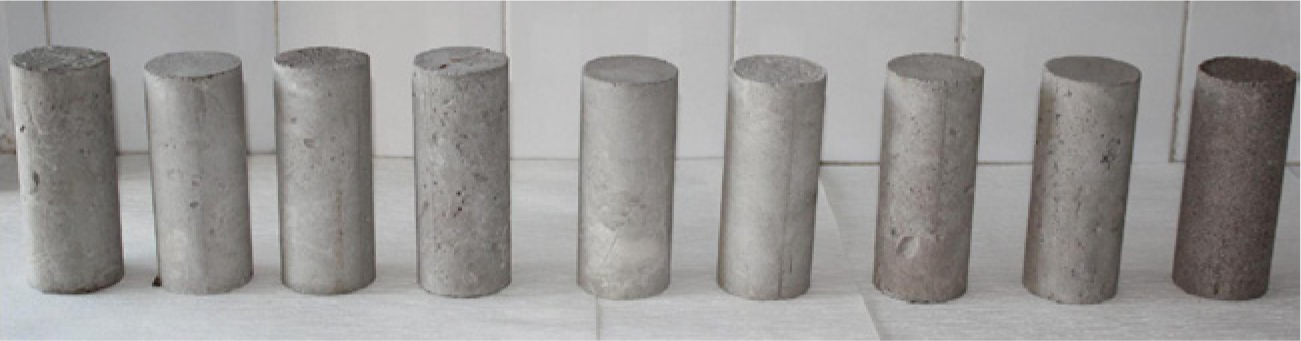
Concrete samples with different amounts of fly ash.
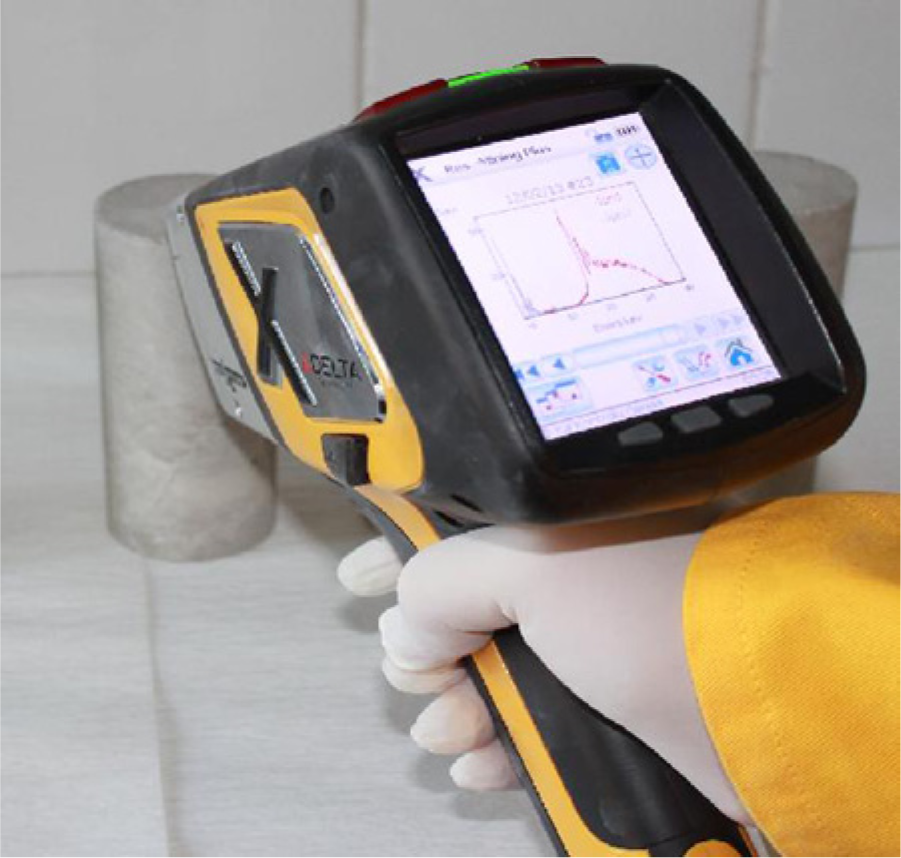
Portable Delta Dynamic XRF.
Radium-equivalent activity
The radium-equivalent index is based on the estimation that 0.370 Bq/g 226Ra, 0.259 Bq/g 232Th, and 4.810 Bq/g 40K produce the same gamma ray dose. In this manner, the radiological hazard of fly ash in construction material can be assessed by the radium-equivalent activity (Raeq) and external hazard index (Hex; Beretka and Mathew, 1985):
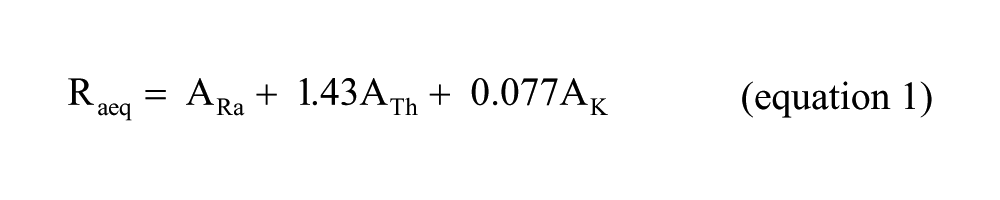

where ARa, ATh, and AK are the activities of 226Ra, 232Th, and 40K respectively in Bq/kg. Raeq mainly depend on the external γ-dose and internal dose due to radon and its short-lived decay products.
Samples were taken for each application and taken into curing table for further analysis. After waiting 21 curing days mechanical strength of concrete samples were carried out. Strength of the concrete is affected by the content of fly ash amount.
Results and discussion
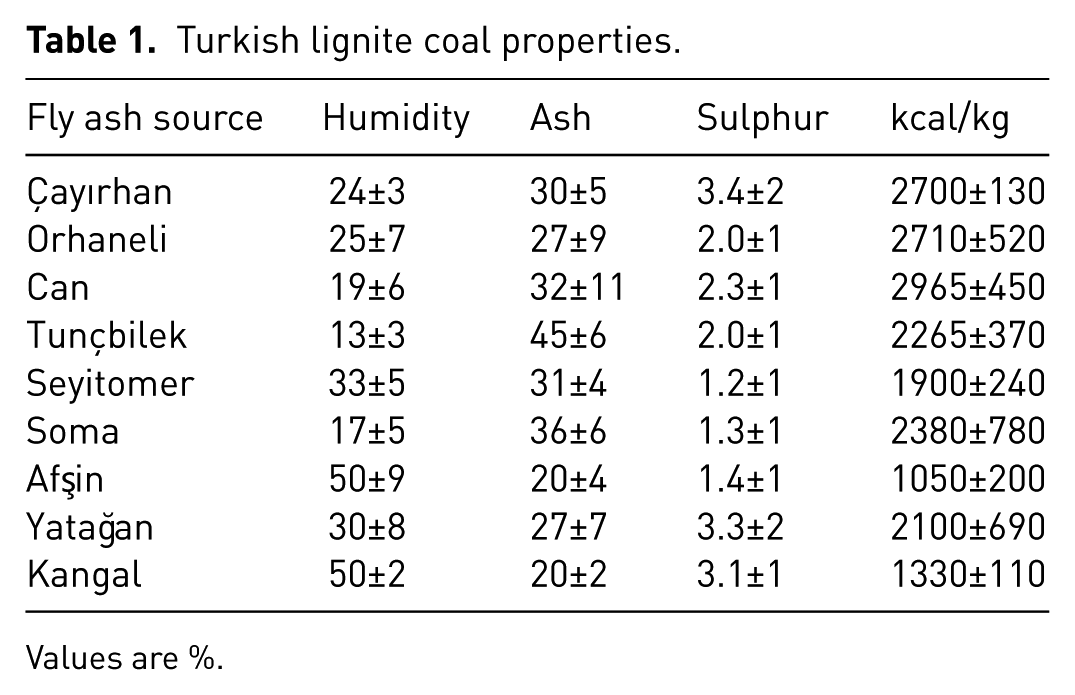
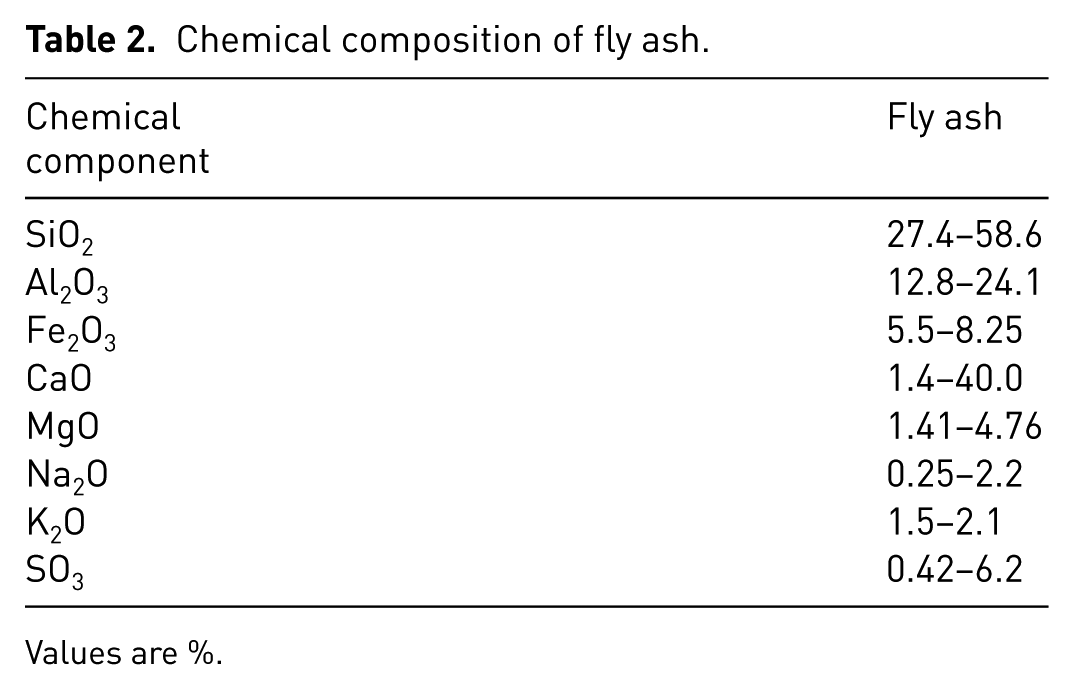
The properties of Turkish lignite coals and fly ashes are shown in Tables 1 and 2. The mineralogy of fly ash is very diverse. Analyses showed that quartz, mullite, iron oxides haematite, magnetite, and/or maghaemite were determined in structure of fly ash samples. Other phases often identified are SiO2, CaSO4, CaO, Ca(OH)2, MgO, CaCO3, KCl, NaCl, and TiO2. The Ca-bearing minerals anorthite, gehlenite, akermanite, and various calcium silicates and calcium aluminates identical to those found in Portland cement can be identified in Ca-rich fly ashes (Snellings et al., 2012).
Turkish lignite coal properties.
Values are %.
Chemical composition of fly ash.
Values are %.
According to unburned carbon amount of fly ash, colour varies from grey to darker. It includes very small particles of glassy materials, of 1–200 μm in diameter. JSM-6390/LV scanning electron microscopy was used to determine grain shapes. An image of Orhaneli fly ash is shown in Figure 4.
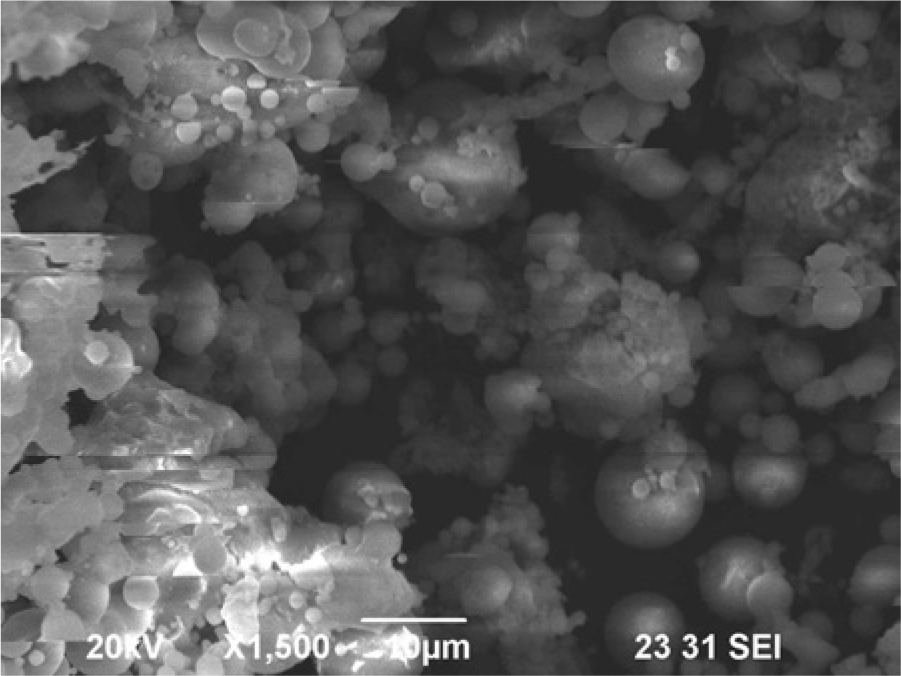
Scanning electron micrograph of fly ash from Orhaneli.
The radioactivity concentration of 226Ra in Kangal fly ash is found much higher than the others, as shown in Table 3. Specific activities of these fly ashes show that radiological evaluation should be taken into account before reuse of fly ashes as construction material in Turkey.
Radioactivity concentrations of Turkish lignite fly ashes.
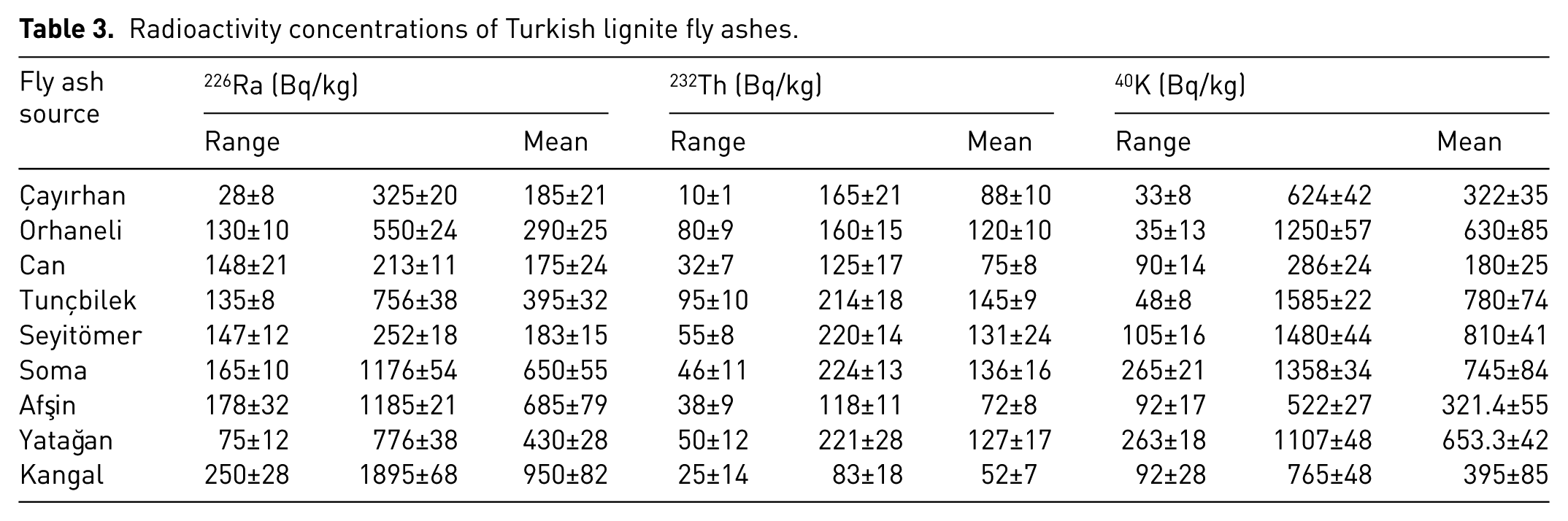
Activities of fly ashes which were taken from power plants were measured for potential hazardous level. Each particular sample has different concentrations of natural radioactive elements and short-lived decay products of 222Rn (218Po, 214Pb, 214Bi, 214Po) depending on initial concentrations and chemical form of the fly ash. Activities of 226Ra, 232Th, and 40K were determined in laboratory by using a high resolution gamma-ray spectrometric system with a high-purity germanium detector. The highest 226Ra, 232Th, and 40K activities found as 1.895; 0.224, and 1.585 Bq/g respectively in these samples. The exemption levels for radionuclides in construction materials are 1 Bq/g for 232Th and 10 Bq/g for 226Ra. The radioactivity levels of 232Th and 226Ra were lower than the exempt radioactivity concentrations for fly ash releases as established in the basic safety standards (IAEA, 1996). For controlling exposure via radon pathway; this pathway is often the main contributor of radiation to members of the public living in areas affected by fly ash admixtures in construction materials. Potential hazardous impacts of current fly ash piles in Turkey were determined by calculating several radiological hazardous indices. These are the radium-equivalent index and absorbed and effective dose rates. The concentration of the radioactive elements in most of the samples which were taken from fly ash ponds was found higher than background activities. According to these high-radioactivity fly ash samples, radium-equivalent activity ranged from 0.0065 to 3.450 Bq/g (mean 1.750 Bq/g). The Raeq values and the Hex values for some of the fly ash samples were more than the limit of 0.370 Bq/g. Tunçbilek, Soma, Seyitomer, and Orhaneli fly ashes are enriched in radionuclide 40K compared to the others. The radioactivity of 232Th was higher in Tunçbilek, Soma, and Yatağan fly ashes.
The radioactivity of each concrete sample was determined by gamma spectrometry (Figure 5). Radioactivity of each concrete sample was changed according to the fly ash content.
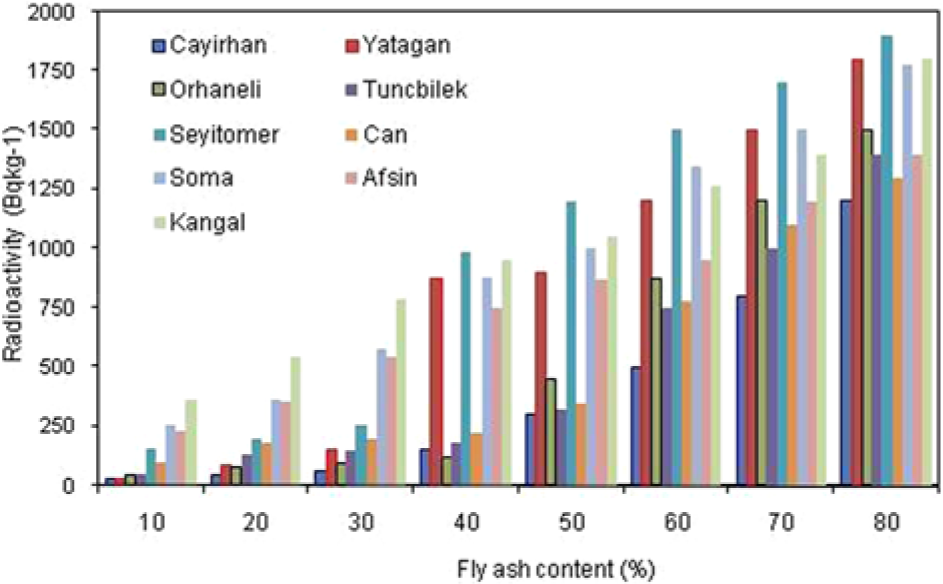
Radioactivity of concrete samples with fly ash.
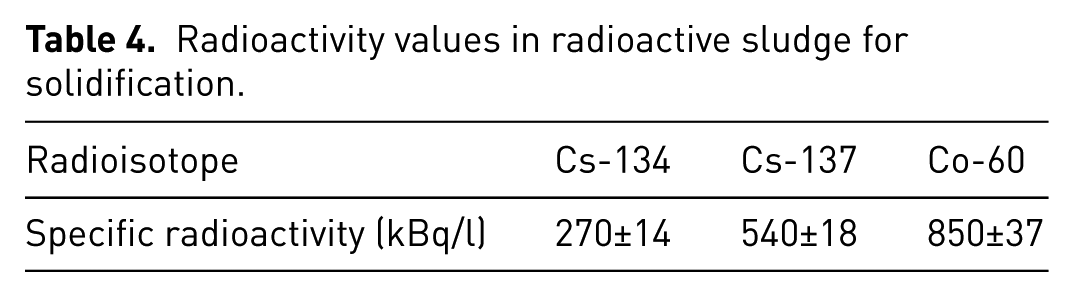
Radioactive sludge was generated from chemical precipitation of liquid radioactive waste of research reactor. All radioactivity of the liquid waste was concentrated in the bottom sludge by chemical precipitation. For this reason the sludge includes high radioactive isotopes as presented in Table 4.
Radioactivity values in radioactive sludge for solidification.
This study determined the effect of changing the composition of concrete samples, depending on amount of fly ash. The results show that the addition of up to 25% fly ash instead of cement provided increased in compressive strength of the solidified waste (Figure 6).
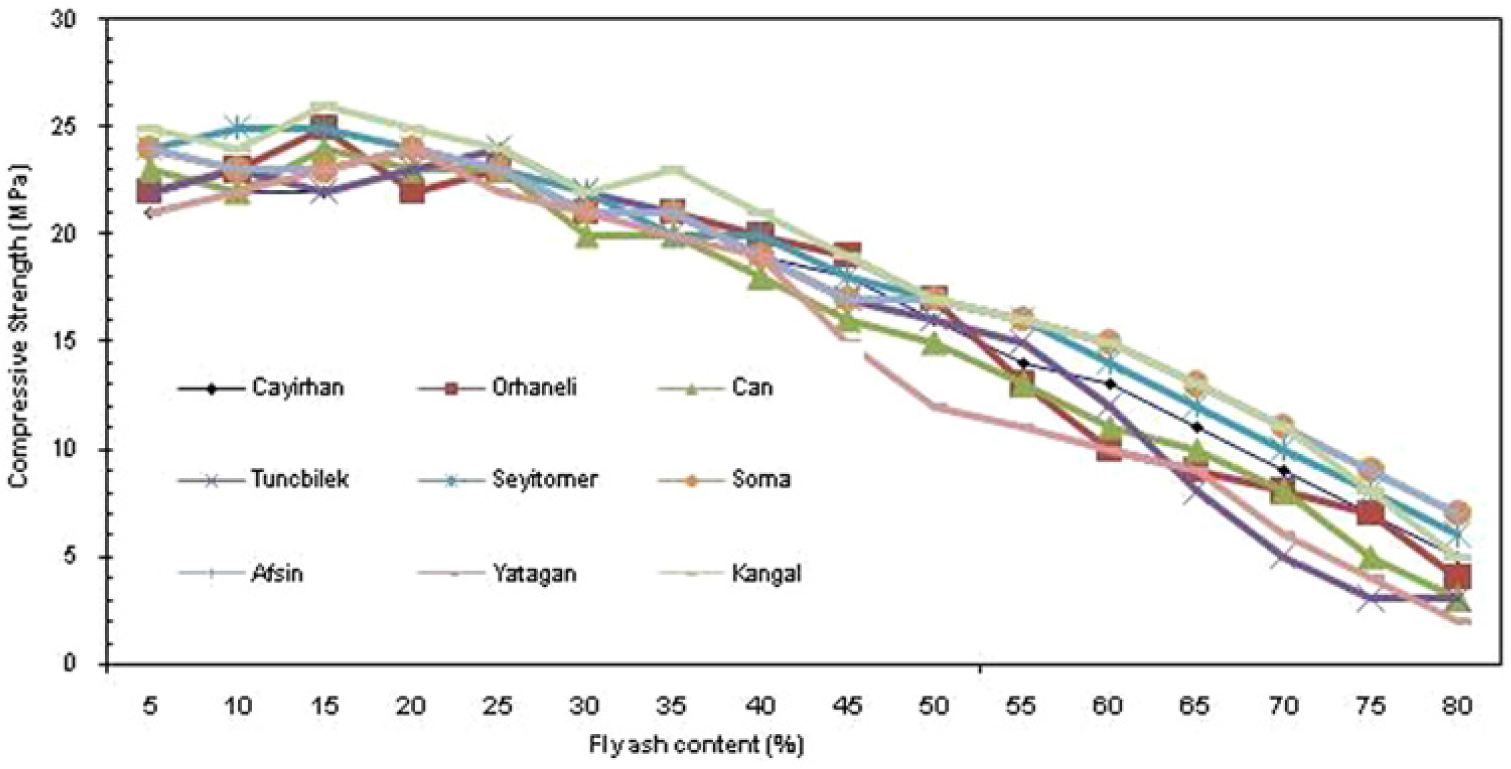
Compressive strength of solidified sludge.
Conclusion
The natural radioactivity content and hazard indices of fly ashes from lignite-fired power plants in Turkey were determined. High 226Ra, 232Th, and 40K activities were found (1.895±68, 0.224±13, and 1.585±22 Bq/g respectively). Concerning the waste regulatory and waste management guidelines, fly ashes have to be evaluated for potential environmental implications in case of further usage. Results show that radioactive fly ash can be used safely in solidification process of radioactive waste sludge. Fly ash has been used instead of cement to stabilize nuclear waste sludge. By this method it becomes convenient for long term as stabilized hazardous waste. In a disposal facility nobody will be in contact with these stabilized solids. An optimum mixture comprising 15% fly ash, 35% cement, and 50% radioactive waste sludge could provide the required solidification for long-term storage and disposal. By using this method, radioactivity of fly ash does not cause any radiological problem in solidifying radioactive waste. Fly ash additives improve integrity of the solidified waste form. The long-term safety of near-surface disposal of the solidified waste can be achieved by using fly ash through an appropriate form and content.
Footnotes
Acknowledgements
The author is thankful to Turkish electricity production companies and lignite mining companies for providing lignite and fly ash samples.
Declaration of conflicting interest
The author declares that there is no conflict of interest.
Funding
This research received no specific grant from any funding agency in the public, commercial, or not-for-profit sectors.