







Abstract
This study discussed the effects of different concentrations (0.625, 1.875 and 3.125 mM) of copper (Cu) in the form of CuSO4 on biomethane production and on the dynamics of microbial communities during the mesophilic anaerobic digestion (AD) of cow manure. The effects on biomethane production were found to depend on CuSO4 concentrations. After 50 days of AD, treatment A3 (3.125 mM) had lower cumulative biomethane production than the no-Cu control. The maximum value of cumulative biomethane production was detected under treatment A2 (1.875 mM). These results suggested that the stimulation or inhibition to biomethane production might be related to the concentration and chemical forms of Cu. Moreover, polymerase chain reaction-denaturing gradient gel electrophoresis (PCR-DGGE) was used to discuss the dynamics of microbial communities. Results revealed that different concentrations of CuSO4 had effects on the richness and diversity of bacterial and archaeal communities. The predominance of Bacteroidetes bacterium (GU339485.1) was verified through the sequencing of the dominant DGGE bands. Furthermore, Bacteroidetes bacterium could be detected during the whole AD process and is adaptable to a certain concentration range of CuSO4.
Introduction
Copper (Cu) is extensively used in China as a feed supplement for livestock. Cu can stimulate animal growth and prevent disease in poultry production (Hill and Spears, 2001). Cromwell et al. (1989) found that adding 250 mg kg−1 of Cu to feeds can improve growth rate by 24–39%. Excessive dosages of Cu were added to the feed because of its low bioavailability in animals (Jondreville et al., 2003). This excessive dosage also caused a large amount of Cu to remain in manure. Hölzel et al. (2012) reported that the residual Cu in pig manure ranged from 22.4 to 3387.6 mg kg−1 dry matter. In China, livestock manure production has reached 2.5–3.0 billion tons per year (Gao et al., 2010). High concentrations of residual Cu, ranging from 50 to 2017 mg kg−1, were found in pig manure (Li et al., 2007). The residual Cu in manure will accumulate in soil, because animal manure is used as fertilizer for crop farming or stored directly in agricultural land (Ogiyama et al., 2005). Residual Cu has a long-term negative effect on the soil ecosystem and reduces the fertility of soil. Furthermore, residual Cu in the soil can be absorbed by plants and affect plant growth (Jiang et al., 2001; Xue et al., 2010).
Anaerobic digestion (AD) has been used to treat various organic wastes and is considered to be an effective waste management solution to treat manure (Appels et al., 2011; Callegari et al., 2013; Di Maria et al., 2013; Martinez et al., 2013; Rada et al., 2013). AD is a complex biological reaction that converts some organic matter into biogas. The use of biogas as an energy source is an effective way to deal with the global challenges of greenhouse gas emissions and global warming (Grosso et al., 2012; Wang et al., 2013).
AD is a complex microbial process involving bacterial and archaeal communities. AD is composed of four stages: hydrolysis, acidogenesis, acetogenesis and methanogenesis (Demirel and Scherer, 2008). A combination of numerous microbial communities can transform organic compounds into biomethane. The main microorganisms during AD are acidogens and methanogens (Ahn et al., 2006). Acetogenic bacteria can convert some intermediates that appear during AD into acetate and one-carbon compounds. These products can then be metabolized by methanogenic archaea to produce methane and carbon dioxide (Wang et al., 2009). With the occurrence of AD, different microbial communities are present in the appropriate balance (Kundu et al., 2012). The variety of microbial communities is vital to the stability and sustainability of the digestion process (Girvan et al., 2005). Despite numerous studies on the microbial communities in AD, the dynamics of microflora have not been fully elucidated.
The effects of Cu on AD can be stimulatory, inhibitory or toxic. The effects depend on different concentrations, chemical forms, and so on (Lin and Chen, 1999; Zayed and Winter, 2000). Yenigün et al. (1996) found that 1 to 10 mg l−1 of Cu (dosed as CuSO4) exhibited an inhibitory effect on volatile fatty acid production in AD. Singh and Singh (1996) reported that the production of biogas in the AD of cow manure increased by 22% when 1 g kg−1 of Cu(NO3)3 was added. However, few reports have focused on the effect of Cu in the form of CuSO4 during the AD of cow manure.
Consequently, this study aimed to evaluate the biomethane production and the dynamics of archaeal and bacterial communities with different treatment concentrations: 0, 0.625, 1.875 and 3.125 mM of CuSO4. The study on the dynamics employed the polymerase chain reaction-denaturing gradient gel electrophoresis (PCR-DGGE) method and phylogenetic tree analysis.
Materials and methods
Experimental set-up
The cow manure samples were obtained from Shenyang City. Samples were delivered to the laboratory and placed into a refrigerator at −4°C to 4°C. The physical and chemical properties of the cow manure were analysed by the Standard Methods (APHA, 1995) as follows: total solids, 25.67%; pH, 8.26; volatile organic acids, 878.4 mg l−1; ash, 23.06%; alkalinity (CaCO3), 1643.4 mg l−1 and organic carbon, 42.75%. A total of 200 g of cow manure was placed into each 1 l digester, which was then inoculated with 200 ml of digested cow manure fermentation broth. Then, 0 (A0), 0.625 (A1), 1.875 (A2) and 3.125 (A3) mM of CuSO4 was added to four digesters. Anaerobic digesters were continuously stirred and placed in a water bath to maintain a mesophilic condition of 37°C. The samples were taken from four digesters on days 1, 10 and 40. All of these experiments were performed in triplicate. The measurement of biomethane content was carried out as described previously (Ke et al., 2014).
DNA extraction and polymerase chain reaction amplification
Total genomic DNA was extracted from cow manure samples by an automated nucleic acid extractor (MO BIO Laboratories, Carlsbad). Extracted DNA was stored at −20°C. After checking the quality through agarose gel electrophoresis, genomic DNA was employed as the PCR template. The bacterial primers 341F with 40 bp GC-clamps and 907R (Yu and Morrison, 2004) were used to amplify the highly variable V3 regions of the bacterial 16S-rRNA gene. The PCR reaction was completed by using a PTC−200 PCR instrument (Bio-Rad, USA). The bacterial PCR amplification process was as follows: initial denaturation at 94°C for 5 min, followed by 40 cycles of denaturation at 94°C for 30 s; annealing at 60°C for 45 s and elongation at 72°C for 45 s; and an extension of 5 min at 72°C. The PCR products were verified by electrophoresis in 1% agarose gel with ethidium bromide for further analysis. The archaeal 16S-rRNA gene fragments were amplified with F357 with 40bp GC-clamps and R691 as primers (Konishi et al., 2009). The archaeal PCR amplification was similar to that of the bacterial, except that the process was performed in 30 cycles, with annealing for 30 s and elongation for 60 s.
DGGE analysis
Dynamics of microbial communities were evaluated using the DGGE method (Ding et al., 2013). DGGE was performed on a D-Code Detection System (Bio-Rad, USA). Electrophoresis was performed in a 7 L 1×TAE buffer at 60°C for 16 h at 70 V. After electrophoresis, the gels were stained with GeneFinderTM dyestuff (Bio-Rad, USA) and then photographed by a Bio-Rad gel documentation system (Bio-Rad, USA).
Sequencing of 16S-rRNA gene fragments and phylogenetic tree analysis
The DGGE bands were excised from the gels. Then bands were re-amplified with a primer without being GC-clamped and electrophoresed to confirm mobility. PCR products were delivered to Beijing Huada Gene Company (Beijing, P.R. China) for sequencing. The 16S-rRNA gene sequence similarity analysis was performed using the GenBank data with the BLAST Program (http://www.ncbi.nlm.nih.gov/BLAST/). Phylogenetic trees were established by CLUSTAL X and MEGA 4.0 software.
Nucleotide sequence accession numbers
The bacterial and archaeal nucleotide sequences were submitted to the GenBank database under the following accession numbers: bacterial sequences KF569487–KF569492 and archaeal sequences KF569493–KF569498.
Results and discussion
Effects of Cu on biomethane production
The AD of cow manure lasted for 50 days. The effects of different Cu concentrations in the form of CuSO4 on cumulative biomethane production are shown in Figure 1. The first 20 days could be considered as the start-up of AD. Therefore, the biomethane production was not stable enough. After 50 days of AD, the cumulative biomethane production of treatments A0, A1, A2 and A3 reached 6817.30 ± 279.89, 7115.72 ± 295.38, 8078.02 ± 205.94 and 5822.39 ± 322.1 ml, respectively. These results showed that CuSO4 addition affected the biomethane production. Treatment A2 (1.875 mM) exhibited the maximum cumulative biomethane production, whereas treatment A3 (3.125 mM) exhibited the minimum at the end of the AD. The cumulative biomethane production of treatment A1 (0.625 mM 1–1) and treatment A2 (1.875 mM) were higher than that of treatment A0 (control). This result may be attributed to the fact that the heavy metal Cu is among the essential enzymes that drive AD (Oleszkiewicz and Sharma, 1990). Nevertheless, treatment A3 (3.125 mM) had the lowest cumulative biomethane production compared with the other treatments. This may be due to high concentrations of CuSO4 having toxicity to anaerobic fermentation. By contrast, Ahring and Westermann (1983) found that 300 mg l−1 of Cu in the form of CuCl2 had an absolute inhibition effect on methane production during the thermophilic AD of sewage sludge. Wong and Cheung (1995) reported that 150 mg l−1 of CuSO4 caused a slight inhibition of biogas production during the AD of sewage sludge. In addition, when the Cu concentration (dosed as nitrate salts) was 40 mg l−1, biogas was reduced by 50% (Tijero et al., 1991). Our results vary from the results of other studies, possibly because of the different raw fermentation materials, as well as chemical forms and concentrations of Cu.
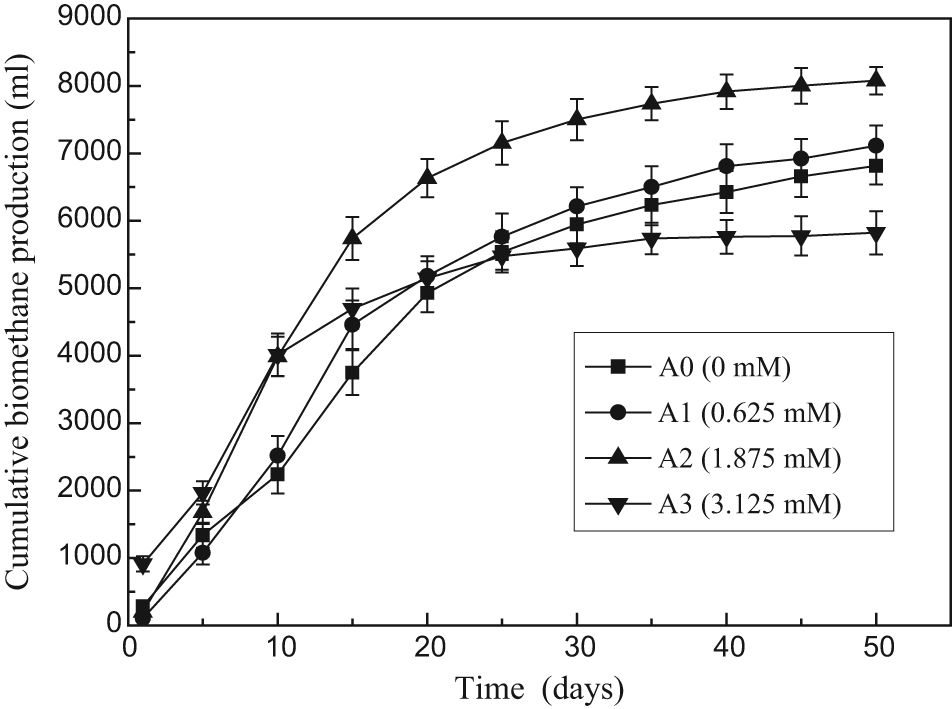
Profiles of the cumulative biomethane production over 50 days of anaerobic digestion under the different CuSO4 treatments (A0, 0 mM; A1, 0.625 mM; A2, 1.875 mM; A3, 3.125 mM).
Analysis of the dynamics of microbial communities
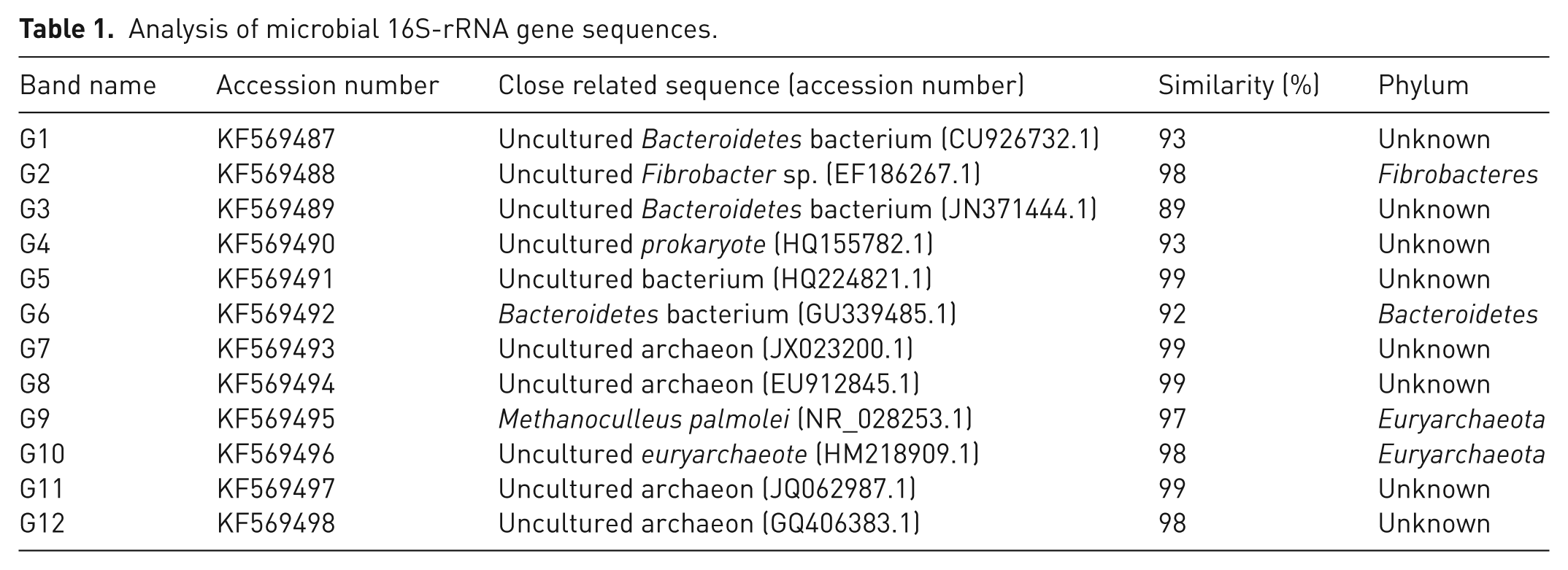
The samples were extracted from each of the four anaerobic digesters at 1, 10 and 40 d, with 1 d as the control. The bacterial and archaeal DNA sequences were compared with known sequences for phylogenetic analysis using the BLAST Program (Table 1).
Analysis of microbial 16S-rRNA gene sequences.
Bacterial communities
The dynamics of bacterial communities at different CuSO4 concentrations are shown by the DGGE fingerprints in Figure 2. The bacterial phylogenetic trees based on the 16S-rRNA gene sequence were established by using a bootstrap neighbour-joining method (Figure 3). Six bacterial DGGE bands were identified. These six bacterial DGGE bands demonstrated that the diversity and species richness of the bacterial communities were affected by the different CuSO4 concentrations. Further changes were detected in which bacterial communities showed some variations at 10 d and 40 d. Higher diversity was observed at 10 d, in which bands G1, G2, G3 and G6 were detected, and G6 appeared as a dominate band. Then, the G4, G5 and G6 bands emerged at 40 d, whereas the G1, G2 and G3 bands were absent. Furthermore, band G6 was present under all CuSO4 concentrations, although its intensity varied on different days. According to the sequence similarity analysis, bands G1 and G3 were identified as two uncultured Bacteroidetes bacterium. Band G6 was closely related to Bacteroidetes bacterium (GU339485.1) and was the dominant bacterial community. Bacteroidetes bacterium (GU339485.1) was observed throughout the whole AD process and could thus be considered as the functional bacteria in the AD. And it showed higher resistance to CuSO4. This bacterium may also serve a significant function in maintaining the stability of the digester. This conclusion is in agreement with that of Trzcinski et al. (2010), who reported that the phylum Bacteroidetes was considered as the major microbial component of anaerobic reactors. Moreover, Jaenicke et al. (2011) found that Bacteroidetes served a major function in hydrolysis, which was considered as the rate-limiting step during AD. Wang et al. (2010) also reported that the class Bacteroidetes was abundant in the manure of warm-blooded animals. Experimental results also showed that Bacteroidetes bacterium (GU339485.1) could possess certain adaptability at 0.625, 1.875 and 3.125 mM of CuSO4. Previous studies have shown that some microorganisms that belong to the phylum Bacteroidete have a certain degree of Cu resistance. Shi et al. (2011) investigated the dominance of the phylum Bacteroidete in the rhizosphere soil of rice under Cu pollution. Uncultured Bacteroidetes bacterium still exists even with sulphur treatments. Similar findings were reported by Giudice et al. (2013), who studied the response of microorganism isolated from Antarctic sediments to heavy metal salts, including CuCl2. According to their research, some microorganisms belonging to the phylum Bacteroidete exhibit tolerance to CuCl2. This result is comparable with that of a previous study, which reported that the relative abundance of the phylum Bacteroidete obtained from the soil decreased with long-term Cu exposure (Berg et al., 2012). Berg et al. (2012) also found that the changes in the relative richness of classes could deviate from the responses to the phylum. In this paper, we can conclude that Bacteroidetes bacterium (GU339485.1) exhibits some resistance to CuSO4. However, the study on the effects of Cu to Bacteroidetes is limited. Therefore, a further study with a focus on the species levels is required.
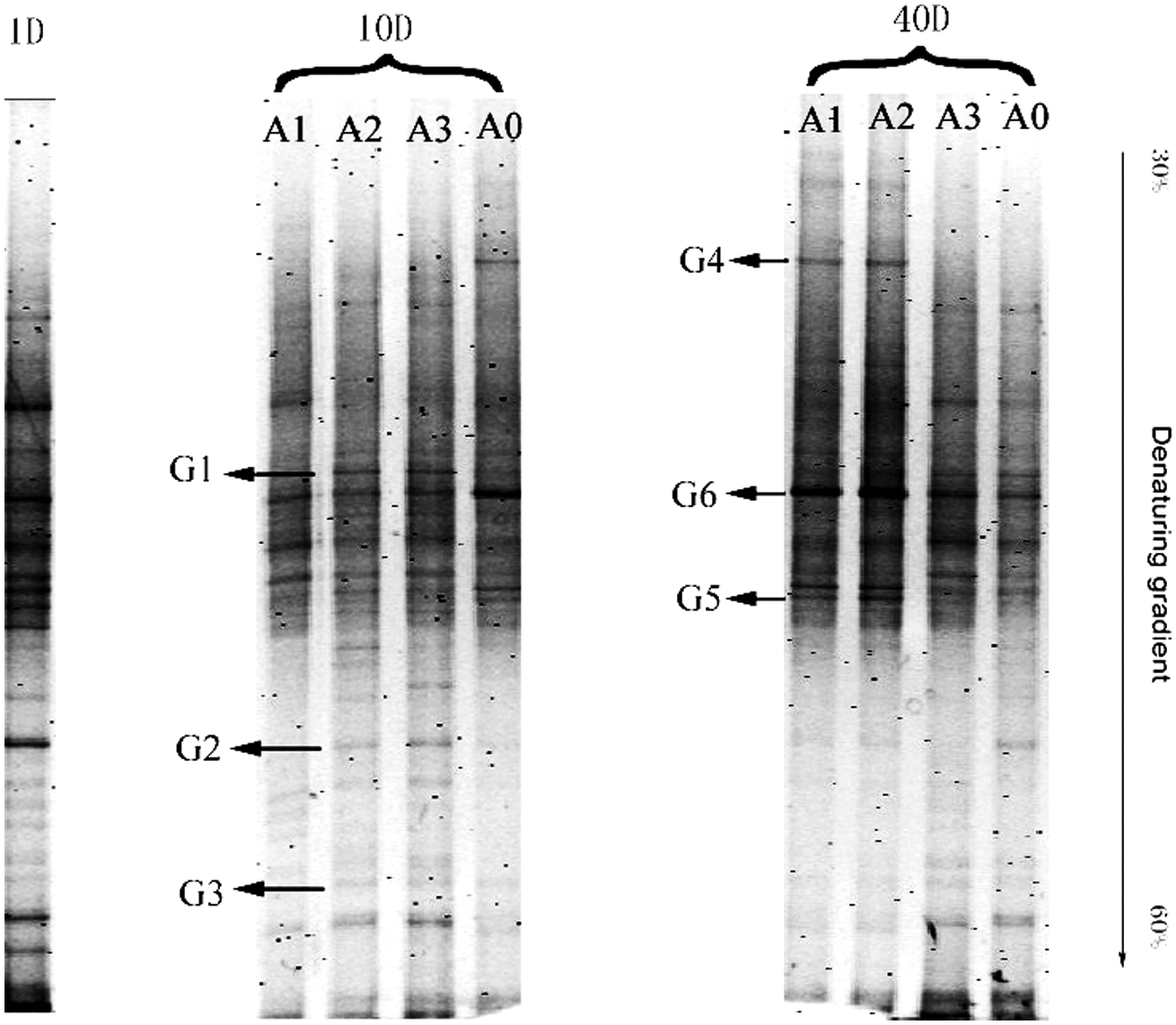
DGGE (denaturing gradient gel electrophoresis) analysis of the bacterial communities from cow manure samples under different treatments of CuSO4 in four digesters. 1 D is the control.
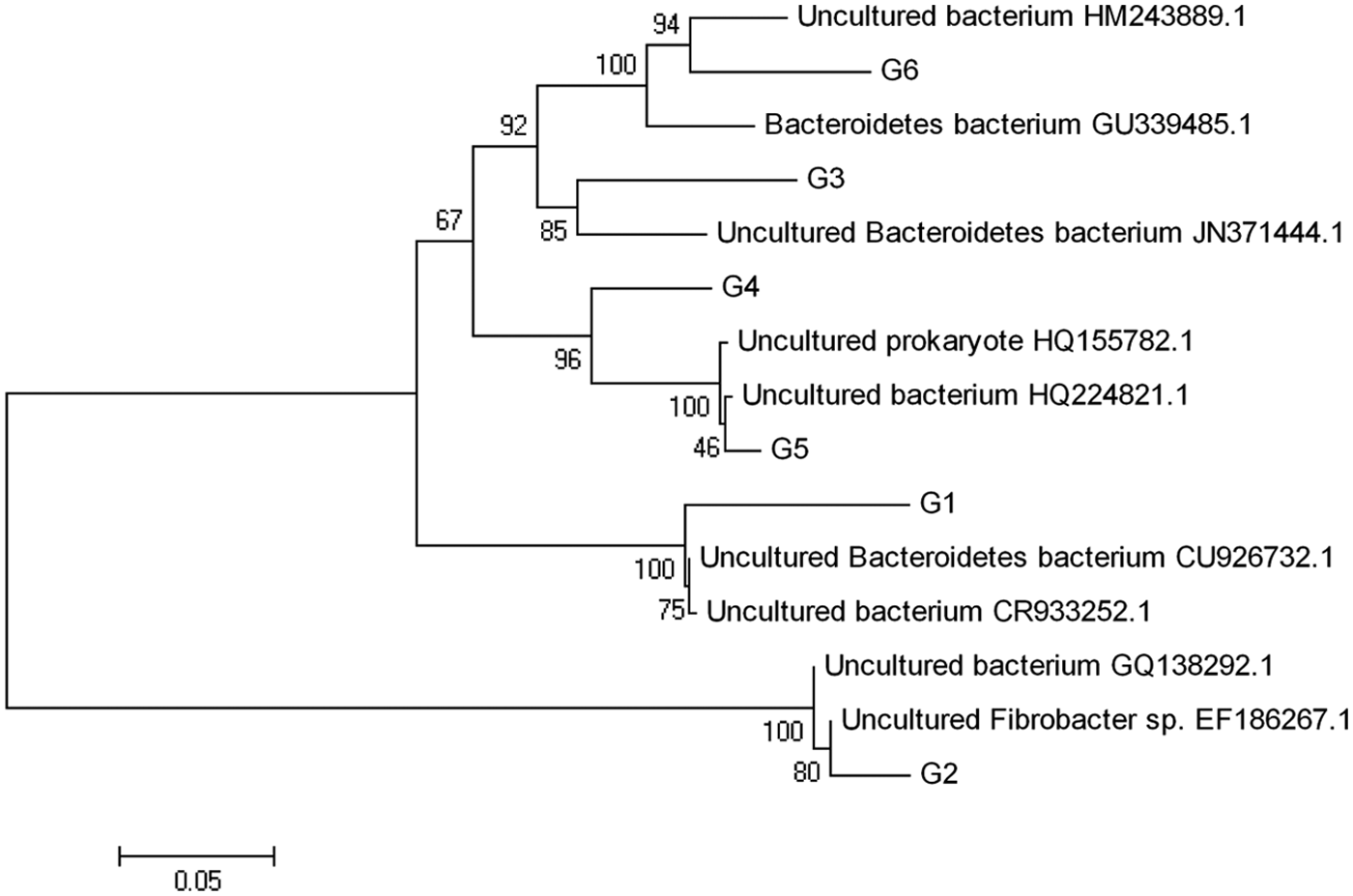
Phylogenetic tree of the bacterial 16S-rRNA gene sequences isolated from samples in four digesters and the most closely related sequences from the Genebank. The scale bar represents 0.05 substitutions per nucleotide position.
Archaeal communities
Six bands were amplified and sequenced from the DGGE fingerprints of archaeal communities. The archaeal DGGE bands exhibited some apparent shifts of archaeal communities during AD over time. Dynamics were detected, because archaeal communities were affected by the addition of different concentrations of CuSO4. Figure 4 shows the differences in banding patterns at different CuSO4 concentrations. The changing patterns and number of bands differed from 10 d to 40 d. The 40 d samples had lower archaeal diversity compared with that of the 10 d samples. Some bands (G7, 8, 9 and 10) were observed at 10 d but became almost invisible at 40 d. Furthermore, a new strong band G12 and a new weak band G11 appeared at 40 d. The phylogenetic analysis of archaeal sequences is shown in Figure 5. Bands G7, G8, G11 and G12 are closely related to the uncultured archaeon. Band G10 exhibits high similarity to uncultured euryarchaeote (HM218909.1). Band G9 is closely related to the Methanoculleus palmolei (NR_028253.1), which grows optimally at 40°C (Zellner et al., 1998). M. palmolei was also found to belong to the species hydrogenotrophic methanogen, which uses H2, formate, 2-propanol, 2-butanol and cyclopentanol (Zellner et al., 1998). According to the archaeal DGGE band analysis, Methanoculleus palmolei may have a significant function in biomethane production during the AD of cow manure under the effect of CuSO4.
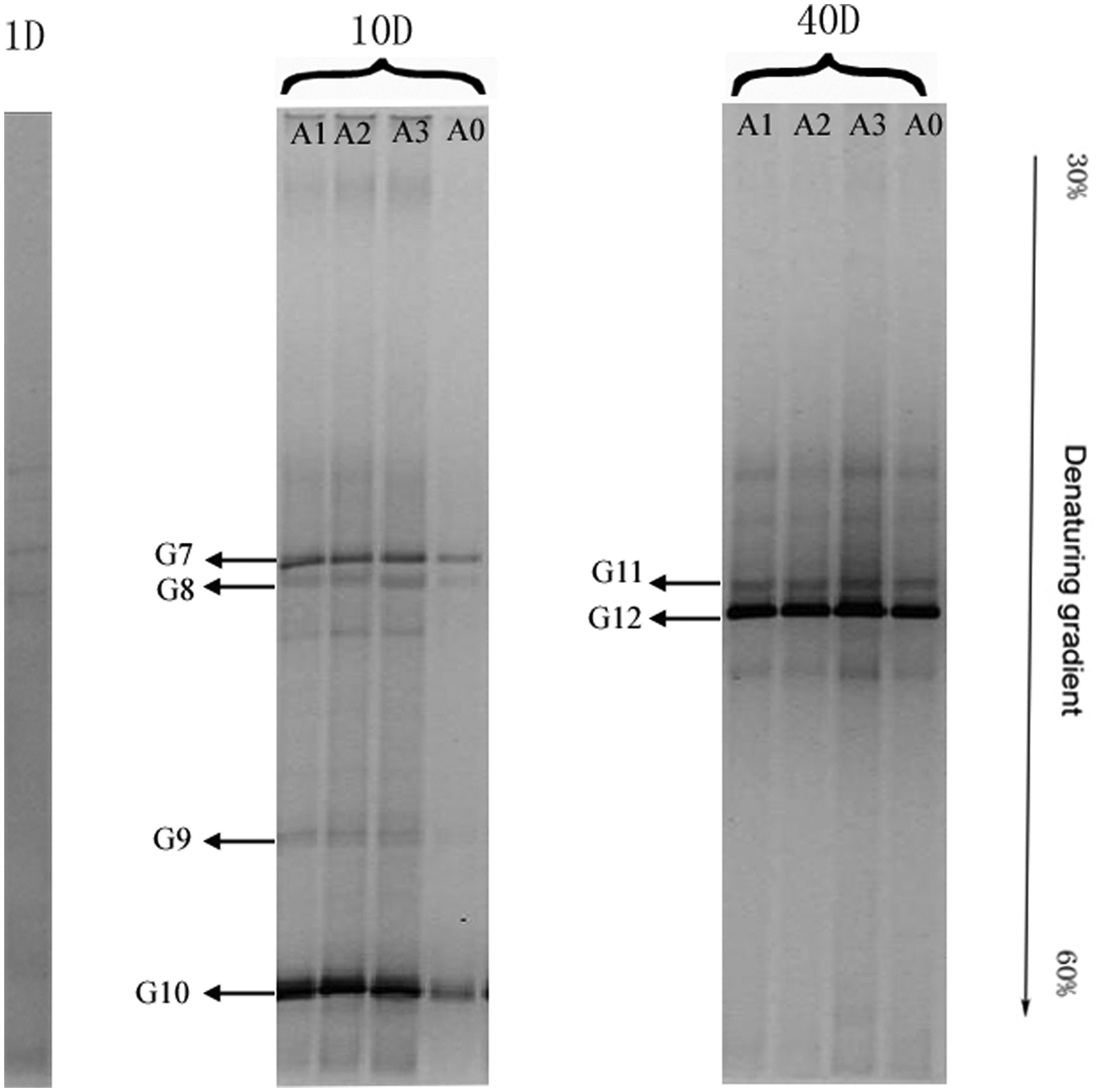
DGGE (denaturing gradient gel electrophoresis) analysis of archaeal communities from cow manure samples under different treatments of CuSO4 in four digesters. 1 D is the control.
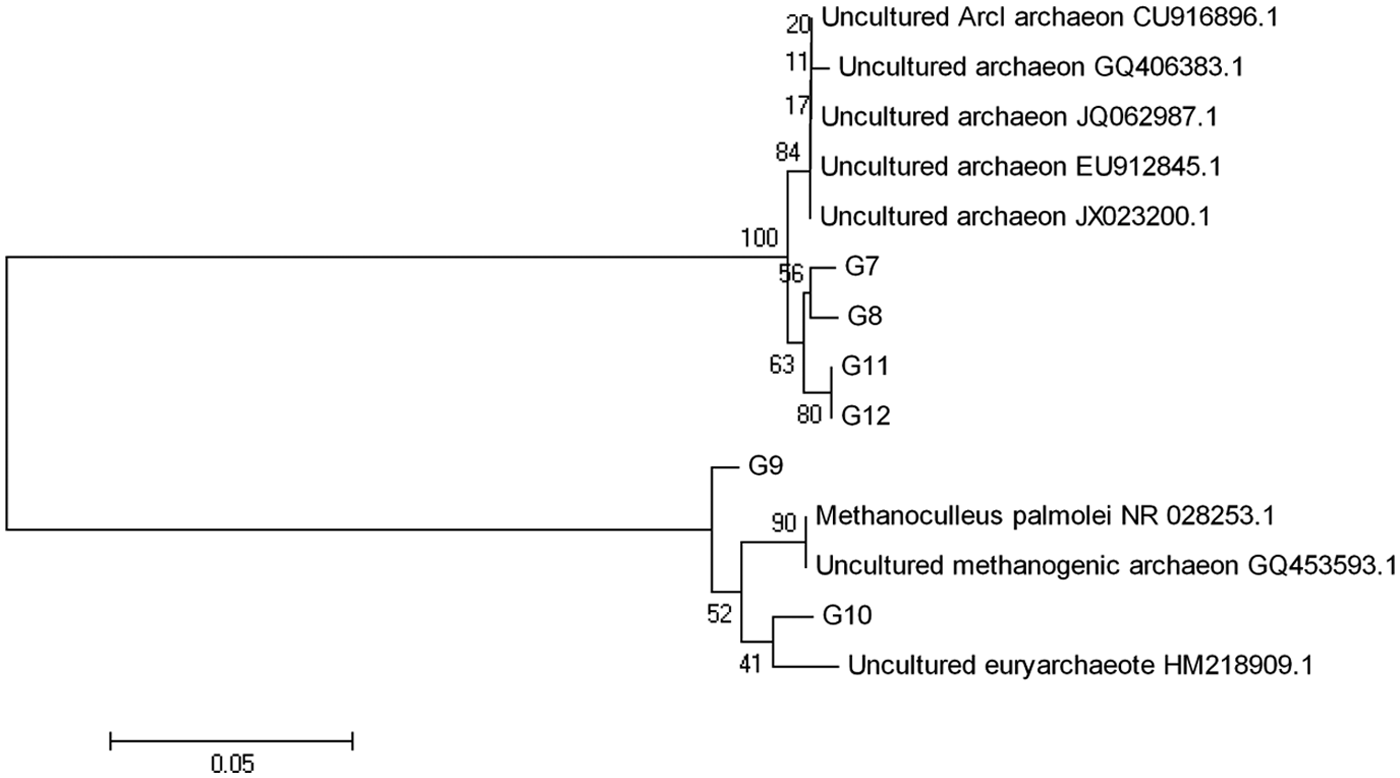
Phylogenetic tree of the archaeal 16S-rRNA gene sequences isolated from samples in four digesters and the most closely related sequences from the Genebank. The scale bar represents 0.05 substitutions per nucleotide position.
Conclusions
This study demonstrated that different Cu concentrations in the form of CuSO4 affected biomethane production. Treatments A3 (3.125 mM) inhibited biomethane production. Meanwhile, treatment A2 (1.875 mM) had the maximum cumulate biomethane production. The richness and diversity of bacterial and archaeal communities were affected by CuSO4 addition. Our results show that the AD of cow manure at different CuSO4 concentrations is correlated to the microbial dominance of Bacteroidetes bacterium (GU339485.1) that was detected throughout the process. Bacteroidetes bacterium exhibited adaptation under a certain CuSO4 concentration range.
Different concentrations of CuSO4 have stimulation or inhibition effects on different kinds of microflora in AD and should thus be seriously considered. The stimulation of CuSO4 can be used as a basis to improve digestion performance and biomethane production. In addition, further research is needed to study the functional genes and the underlying mechanisms that influence Bacteroidetes bacterium to dominate communities. Furthermore, it is necessary to control the content of heavy metals such as Cu in manure. This is very significant to reduce environmental risks and optimize the waste management of manure in the future.
Footnotes
Declaration of conflicting interests
None declared.
Funding
This research was supported by the Major Science and Technology Program for Water Pollution Control and Treatment (Grant No. 2012ZX07202-004-02) and Program for Liaoning Excellent Talents in University (LJQ2013019).