






Abstract
Waste management is an important issue all over the world and it will become even more urgent in the near future due to the increase of global volumes of waste. Waste prevention is at the top of the European waste hierarchy, followed by reuse, recycling, other recovery (including energy recovery), and safe disposal. In Italy, municipalities are the authorities that concretely choose the prevention actions to be applied in their territory and therefore they are crucial in promoting a decrease in waste amounts. In our research we investigated costs and benefits of prevention actions in three small municipalities in the north of Italy. We found that the “Pay as You Throw” (PAYT) scheme is an effective action in preventing waste production, with many instances, on analyzing the collection data. The specific effect of the other actions (such as the awareness raising campaigns) is difficult to isolate, even if we found positive impacts. We analyzed some external drivers, such as the migration effect, in order to understand the real effectiveness of the implemented actions. One of the objectives of the study was to comprehend the consequences of political choices at a bigger scale than the individual municipality. Analyzing the results obtained in three typical small Italian municipalities, this study suggests that local authorities, with their choices, can greatly affect the efficacy of selected waste collection and waste prevention.
Keywords
Introduction
The Waste Framework Directive (2008/98/EC) set a legal obligation for European Union Member States to adopt waste prevention programs by 12 December 2013. Indeed, prevention is at the top of the European waste hierarchy, followed by reuse, recycling, other recovery (including energy recovery) and safe disposal. Moreover, in December 2015 the European Commission presented the Circular Economy Package that also addresses the waste sector, emphasizing the reuse, repair, refurbishing, remanufacturing, and recycling of existing materials and products. Waste prevention has been defined by the Organization for Economic Co-operation and Development (OECD, 2002) as strict avoidance (not generating waste in the first place), source reduction, product reuse (in its original form), as well as reducing the hazardousness of waste. This definition does not include recycling, food collection, commercial composting, and remanufacturing. However, these latter actions can be included in the broader definition of “waste minimization” (Cox et al., 2010). The Waste Framework Directive (EU Directive 2008) specifies prevention as all measures taken before a substance, material, or product has become a waste that reduce: the quantity of waste (also through reuse or extension of the life span of products), the adverse impacts of the generated waste on the environment and human health, or the content of harmful substances in materials and products. It is important to note that reuse means any operation by which products or components that are not waste are used again for the same purpose for which they were conceived.
The purpose of the integration between prevention actions and waste management can be found in specific studies concerning the life cycle assessment (LCA) approach (Cleary, 2010; Iriarte et al., 2009; Parkes et al., 2015).
In recent years, both total and per-capita municipal waste production have been decreasing in the whole European Union area (ISPRA, 2014). This could be due to the international economic crisis started in 2009 and/or to new production and consumption models that are more attentive regarding the environment. In a qualitative investigation, ISPRA (2014) found that waste production was dissociated from the economic driver investigated (i.e. final consumption expenditure of households), suggesting that the decreasing trend found in waste production was not merely due to the economic crisis. Indeed, in these last decades awareness regarding the waste problem is rising at both political and civil level.
Actions aimed to prevent waste can be taken at different stages of the product’s life cycle, including the production stage, the supply/purchase stage, the consumption stage, the discarding stage, and the collection stage. These actions can involve different stakeholders, such as producers, consumers, and public administrations, and can be promoted by different authorities. The Waste Framework Directive (EU Directive 2008) prioritized what constitute the best environmental options and following that hierarchy the European Union Member States must promote actions and solutions that guarantee the best final result, considering sanitary, social, and economic impacts.
In Italy, the Environmental Code is the main national law on the environmental topic and it is found in the Legislative Decree n. 152 of 2006. It clarifies the different authorities regarding waste management ascribing specific duties to the different institutional levels (i.e. central government, regions, provinces, and municipalities). In this pecking order, municipalities are the authorities that concretely choose the management system and prevention actions to be applied in their territory in order to address the targets fixed by the higher level authorities. Therefore, municipalities can be crucial in promoting waste prevention. In our research we were interested in exploring costs and benefits of waste prevention actions carried out by municipalities. Moreover some of the actions implemented in one municipality can influence the neighboring cities, altering the positive impact highlighted locally. This effect has been analyzed in other studies, for example, that described as “waste tourism” by Dahlén and Lagerkvist (2010). Many researchers have investigated municipal solid waste (MSW) management in medium and big cities, and in big areas (Mazzanti et al., 2008; Ragazzi and Rada, 2008; Ranieri et al., 2014), while small municipalities have been neglected. Nevertheless, in Italy about 70% of municipalities are little villages with less than 5000 inhabitants that represent 16.56% of the whole Italian population. In order to fill this lack of data about MSW management in small suburbs, we decided to focus our investigation on three little villages situated in Piedmont, in the northwest of Italy. Specifically we studied four different aspects: collection system (i.e. door to door (DtD), drop-off), adoption of a Pay as You Throw (PAYT) scheme, home composting practices, and awareness raising campaigns.
Material and methods
Study model
In Italy there are 8003 municipalities (Table 1) and about 70% of these are little villages with less than 5000 inhabitants. Overall, a sixth of the whole Italian population lives in these little villages (16.56%); nevertheless, data on waste management in these small centers are lacking.
Italian municipality populations (according to the official data provided by the Italian National Institute of Statistics).
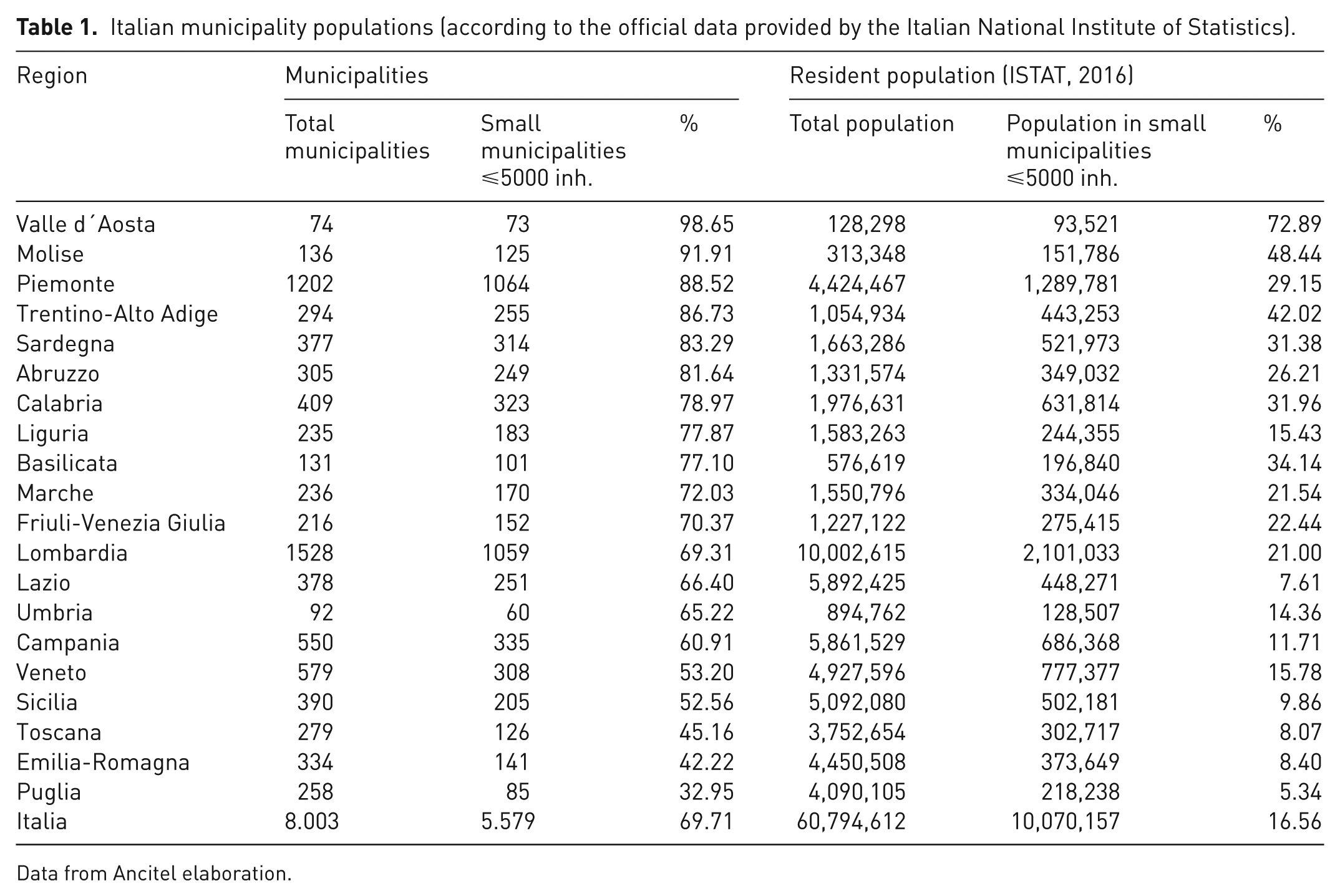
Data from Ancitel elaboration.
We have chosen as a study model three municipalities (Table 2) with a population varying between approximately 3000 and 6000 inhabitants, in order to describe a significant size of the Italian communities.
Municipalities considered for the study model.
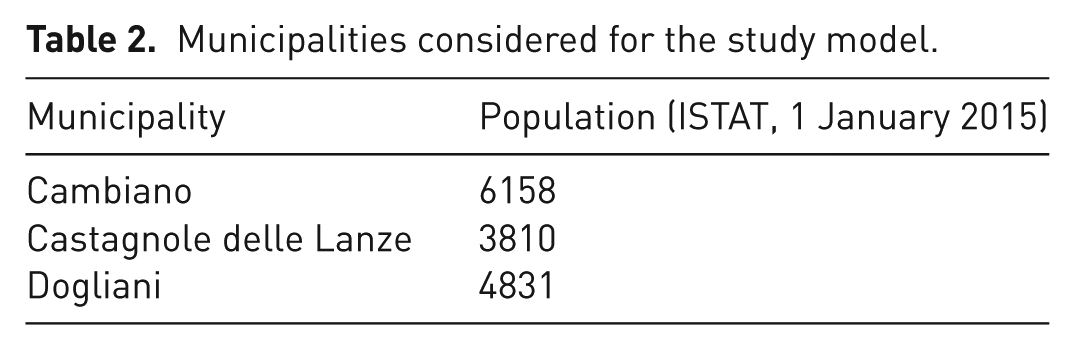
Castagnole delle Lanze and Dogliani are strictly rural villages situated in the province of Cuneo on the hilly area named Langhe. In 2014, this area was added to the UNESCO World Heritage list and it is particularly famous for the production of fine wines.
Dogliani is 295 m above sea level and its population density is 130 inhabitants per km2, while Castagnole delle Lanze is 271 m above sea level and its population density is 177 inhabitants per km2.
Cambiano is a slightly less rural village than Dogliani and Castagnole delle Lanze and it is located about 13 km southeast of Turin (the capital of Piedmont). It is found at about 253 m above sea level and its population density is 446 inhabitants per km2.
Data collection
We produced a questionnaire to be submitted to the municipalities in which we investigated several aspects of municipal waste management.
Specifically we asked them to report about:
- type of waste collection system;
- adoption of the PAYT scheme;
- awareness raising campaigns;
- promotion of home composting;
Composting is not included in the definition of prevention given by the OECD (2002). Nevertheless, we decided to include this action in our investigation because composting can greatly reduce the quantity of organic waste delivered by citizens to the municipal collection system.
We decided to examine the effect of waste prevention actions on the most common municipal waste types, which are plastic, paper and cardboard, glass, metals, organic waste, and the unsorted residual waste (URW).
For all three villages, we collected data about the waste production during the decade 2003 – 2013. Data were obtained from the resolutions of the Piedmont regional council and were subdivided into the different selected typologies of waste (http://www.catasto-rifiuti.isprambiente.it/index.php?pg=findComune).
Effects of PAYT and collection system on URW and SW
In order to disentangle the effects of the studied actions we analyzed separately the influence of the PAYT scheme on the URW data and the impact of the collection system on selected waste (SW) data (where SW is the amount of the MSW typologies separately collected in a year for recovery operations).
Derivative function
In order to better visualize variations in URW per capita quantities throughout the years and to test a replicable analysis method, we determined the derivative function of URW. This function can have both positive and negative values, and the more the value is negative, the more the waste quantity is decreasing. In this way we obtained a value of reduction/increase for each year.
Disposal and PAYT costs
Regarding the economic aspects, costs of URW landfilling have been calculated by multiplying the total amount of URW produced during the year by the municipality for the disposal tariff of the landfill. We also estimated the cost paid by municipalities for the introduction and maintenance of the PAYT scheme using reference values for low-frequency transponders installed on the bins, reading radiofrequency identification (RFID) devices, transponder data management software, RFID device replacement and maintenance, an enterprise resource planning (ERP) upgrade, and the awareness raising campaign.
Migration effect
The application of strict economic measures, such as the PAYT scheme, could result in negative effects at a major scale, such as waste migration.
The waste migration effect can be defined as the phenomenon occurring when people bring their waste to neighboring municipalities and this can happen when neighboring cities are characterized by a collection system with road bins.
In Italy, many municipalities, such as the three villages of the study model, are grouped in consortia (the name of the public authority formed by the municipalities) to manage together all the activities related to the MSW. The migration effect can easily occur in the neighboring cities that belong to other consortia or that do not apply the same waste management system (i.e., collection system).
In order to figure out this effect, we compared the quantities of MSW collected in Cambiano (belonging to a consortium called “Consorzio Chierese Servizi (CCS)”), Castagnole delle Lanze (belonging to a consortium called “Consorzio di Bacino dei Rifiuti dell’Astigiano (CBRA)”), and Dogliani (belonging to a consortium called “Azienda Consortile Ecologica Monregalese (ACEM)”), with those of their neighboring municipalities.
Results
As described below, we analyzed the evolution of URW and SW production in each municipality of the study model during the time span 2003–2013.
Cambiano
As shown in Figure 1, the introduction of the DtD collection system in 2003 resulted in a significant reduction of the URW due to a relevant augmentation of SW (as shown in other studies, e.g., Dahlén et al., 2007; Gallardo et al., 2007). However, in the following years the URW started to increase, until the introduction of the PAYT scheme (through the low-frequency transponder method); since 2008, the URW has been progressively decreasing.
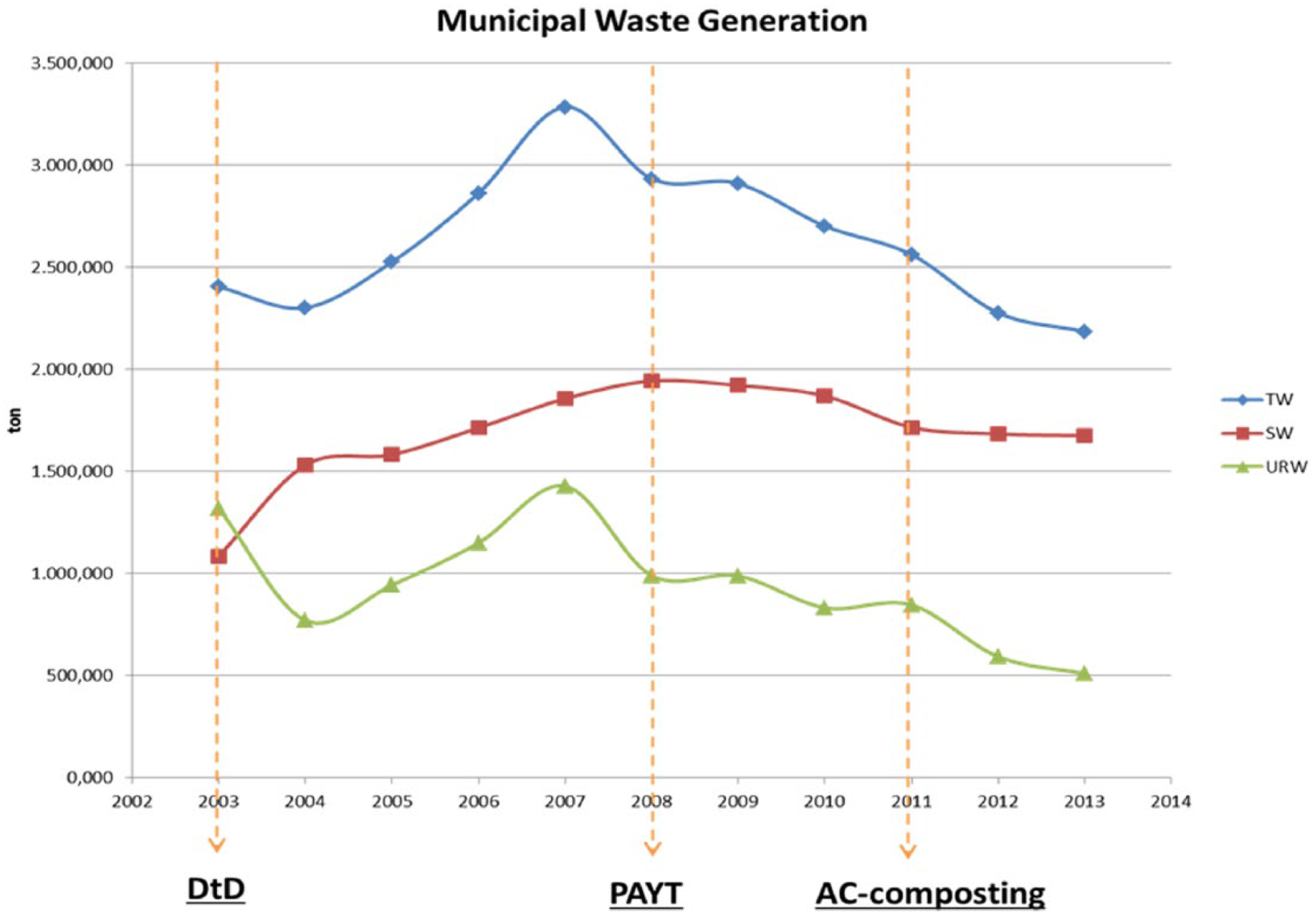
TW (total MSW collected), SW, and URW 2003–2013 trends of Cambiano (referring to official data published by ISPRA). Orange arrows represent the implementation of specific actions. “AC-composting” means the awareness raising campaign concerning the home composing practice.
In 2011, an awareness raising campaign was carried out, concerning the home composting practice, in order to explain to citizens its technical aspects and its environmental and economic advantages. It has been formalized using a specific register containing households that joined the practice. Subscribers received a reduction of their tax, fixed at 20% of the variable part, and they agreed to be monitored by the municipality in order to guarantee the effectiveness of the initiative.
In 2012, it registered a lower amount of URW compared to data of the previous three years, while the SW showed a steady trend. This inconsistency between the URW and SW trends could be due to the effectiveness of home composting practice.
Dogliani
In 2004, three important systems have been introduced in the municipality of Dogliani (in 2003 a specific awareness raising campaign was carried out): the DtD collection system (paper, plastic, organic, glass and URW), the PAYT scheme (measuring the URW generation through the pre-payed bag method), and the tax reduction through the subscribing of the households to the home composting register (Figure 2).
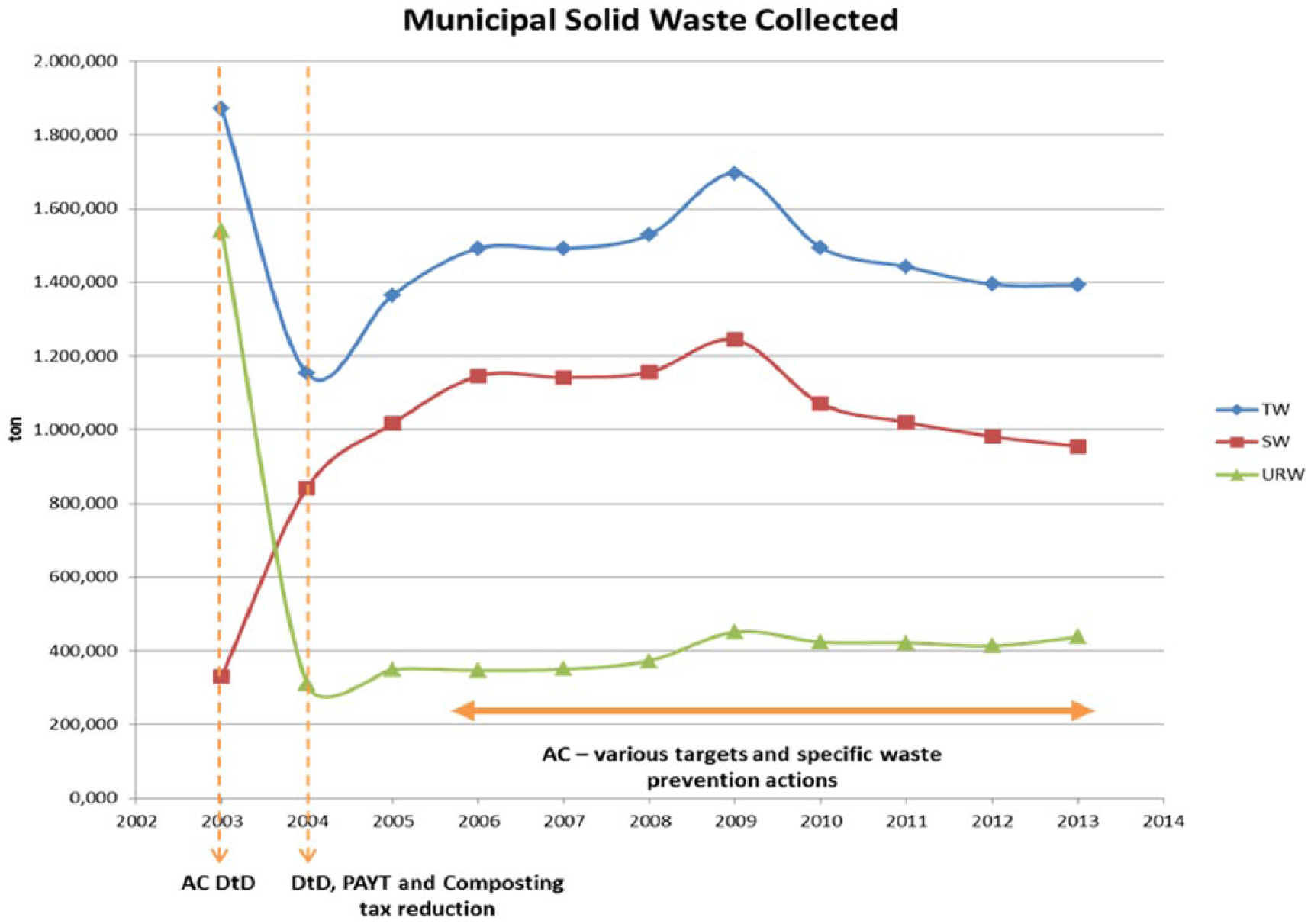
TW, SW, and URW 2003–2013 trends of Dogliani (referring to official data published by ISPRA). Orange arrows represent the implementation of specific action. AC DtD means the startup of the DtD collection system with an awareness raising campaign.
Waste collection data (TW trend) registered a significant reduction in 2004, a subsequent increase in 2005, and an oscillatory state from 2006 to 2013. Fluctuations in TW from 2004 to 2013 seem to be related mainly to SW quantities, while URW values remain substantially stable.
Castagnole delle Lanze
In 2005, three important systems have been introduced in the municipality of Castagnole delle Lanze: the DtD collection system of the URW, the PAYT scheme (measuring the URW generation through the pre-payed bag method), and the tax reduction through the subscribing of the households to the home composting register.
The waste collection data (Figure 3) have registered a significant reduction in 2005, with a significant variation of the waste streams (reduction of URW and increase of SW). In 2006 the TW was increased, due to the augmentation of the SW quantity (maintaining substantially stable URW value). From 2007 to 2013, TW values fluctuated and this appears to be related to the SW data, while the URW values remain substantially stable.
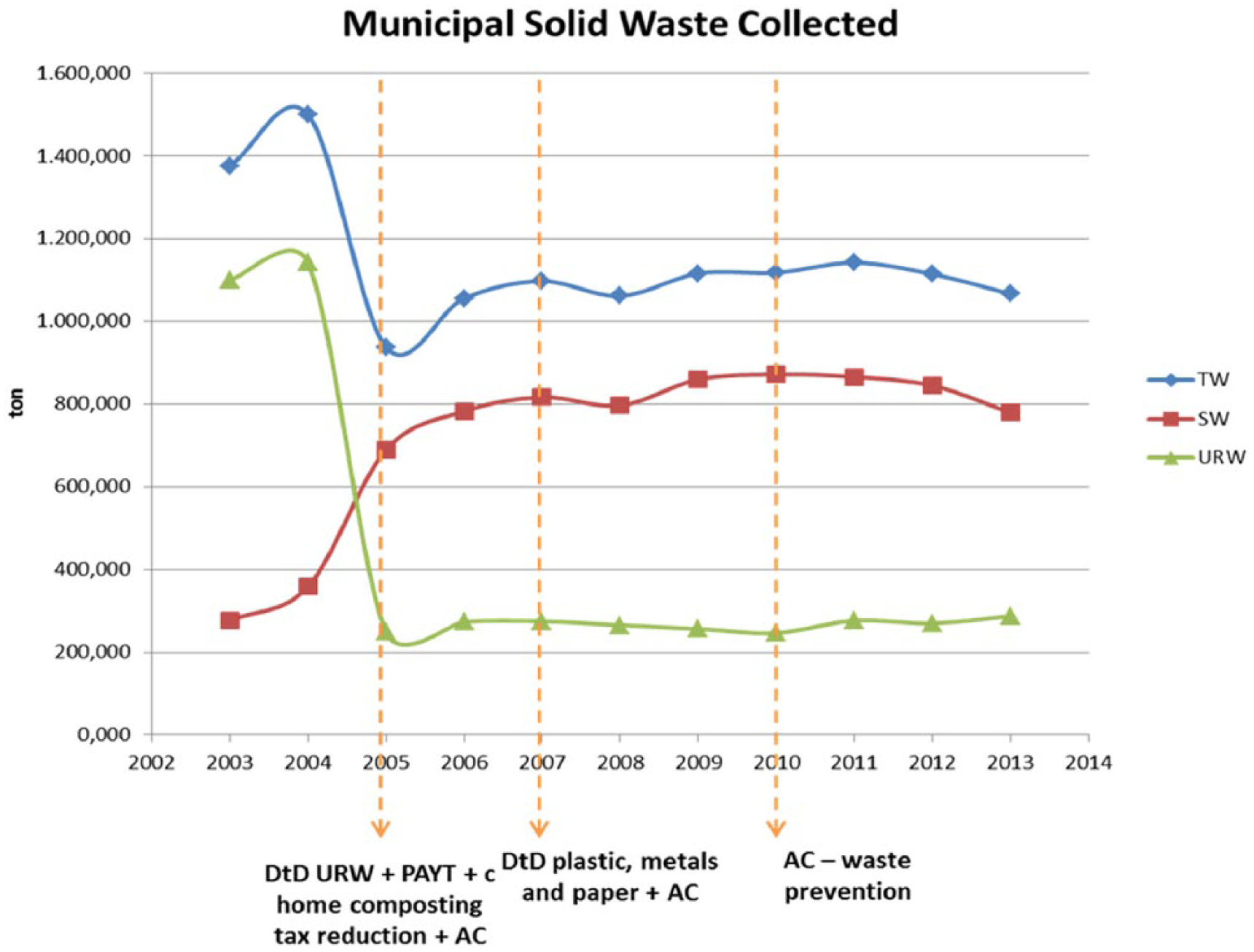
TW, SW, and URW 2003–2013 trends of Castagnole delle Lanze (referring to official data published by ISPRA). Orange arrows represent the implementation of specific action. DtD URW means the DtD collection system for the unsorted residual waste.
In Castagnole delle Lanze, plastic and metals were collected together, and this type of collection is called “mixed material.” If we look at the graph showing the different types of SW, we can see that all waste types increased their quantities with the introduction of DtD collection system and PAYT scheme (Figure 4). However, around the years 2009/2010 all waste types showed a decrease in their amounts, with the exception of mixed material (i.e. plastic and metals). The SW quantity reduction seen between 2011 and 2013 therefore should be due to the decline in quantities of paper, glass and organic waste.
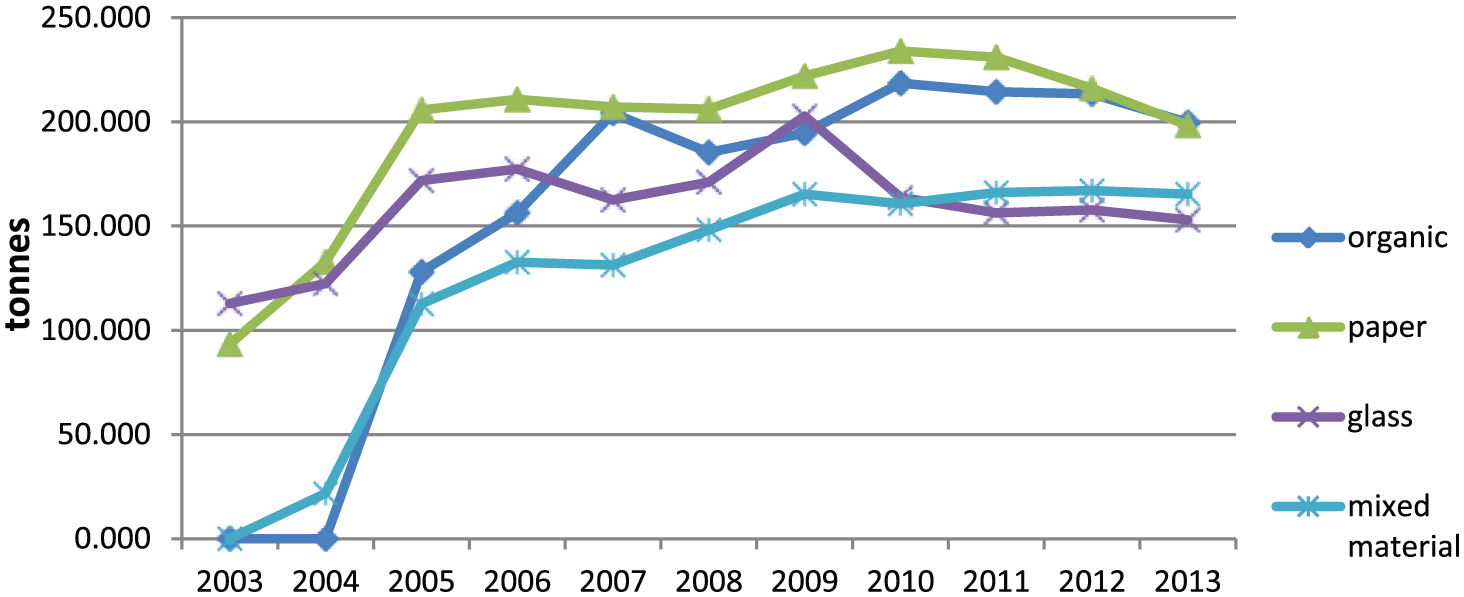
SW collection 2003–2013 data of Castagnole delle Lanze (referring to official data published by ISPRA).
Effects of PAYT and collection system on URW and SW
In Cambiano, the PAYT scheme is characterized by the electronic registration of each URW bin emptying through low-frequency transponders installed on each plastic bin. Castagnole delle Lanze and Dogliani adopted the pre-payed bag method.
The URW trends of Castagnole delle Lanze and Dogliani are similar, with a significant URW reduction in the year of the PAYT scheme implementation and substantially steady quantities in the following years.
In Figure 5 we have schematized the URW per capita trends of the three municipalities. Yellow points represent the PAYT implementation years. URW values in 2013 are less than half the national average in northern Italy (i.e. about 227 kg per person; ISPRA, 2014).
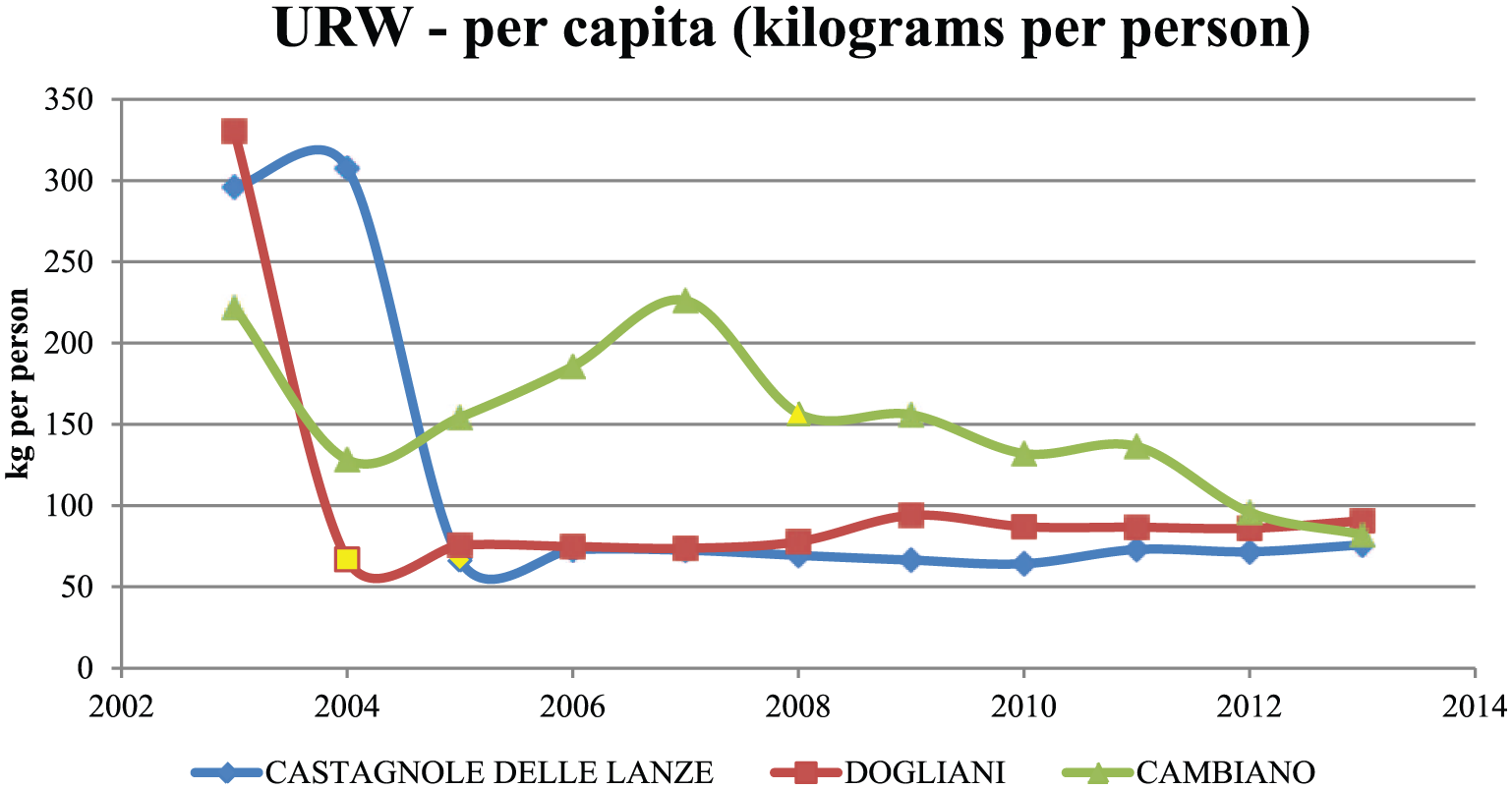
URW per capita quantities collected during the time span 2003–2013 in the three municipalities.
In Cambiano and Dogliani, the DtD system was activated at the same time for all waste types, while Castagnole delle Lanze introduced the DtD collection for URW only in 2005 and after two years also for paper and mixed materials (i.e. plastic and metal). Interestingly, quantities of paper, mixed material, and organic waste collected in Castagnole had already significantly increased in 2005, even if the DtD collection system for these fractions of waste was applied only in 2007. However, it is worth noting that Castagnole delle Lanze also introduced the PAYT scheme for URW in 2005.
In order to study the relationship between the urban characteristics and the potential TW reduction through the PAYT scheme, we analyzed two indicators: the average TW reduction (considering the difference between the average values pre and post PAYT system) and the population density values.
The relationship between these indicators in the three municipalities is shown in the Figure 6.
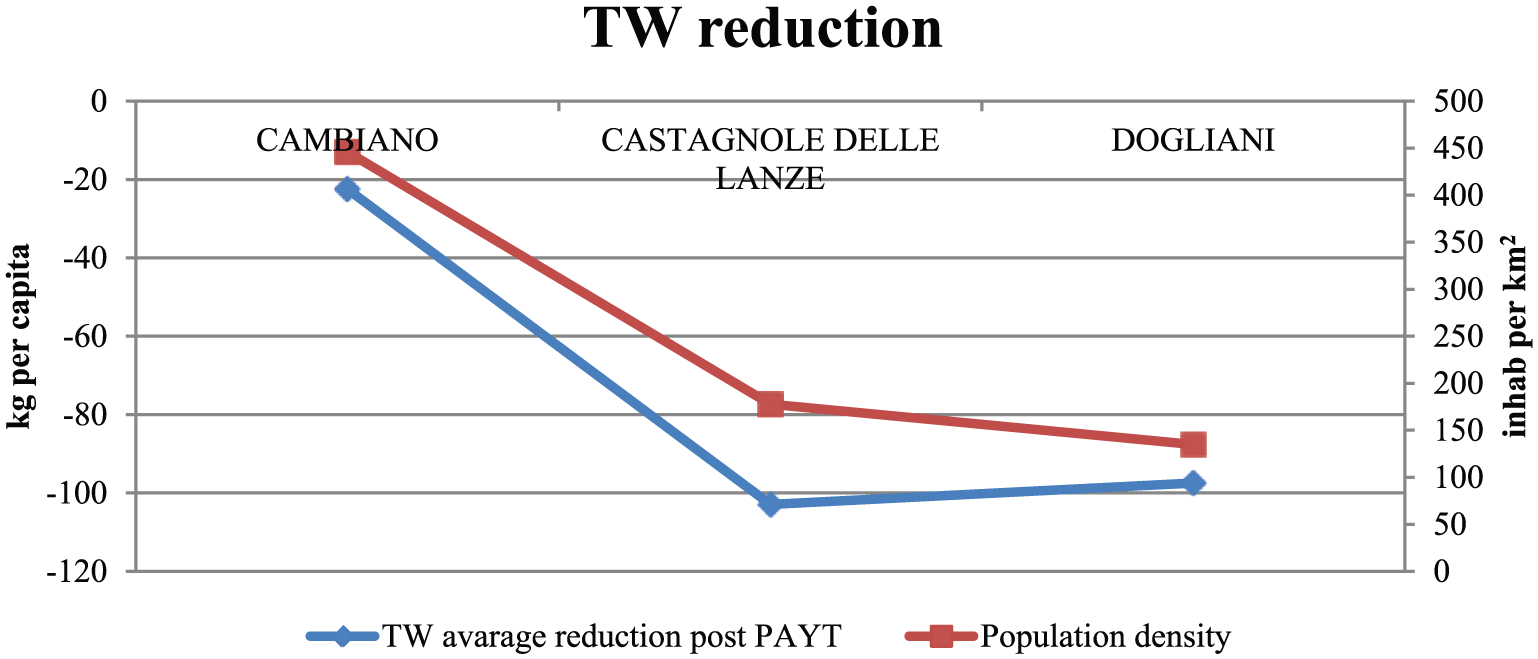
Relationship between the urban characteristics and the potential TW reduction.
Derivative function
Figure 7 shows the derivative function that allows us to visualize the variations in URW per capita quantities throughout the years. Connecting the different years with the prevention actions implemented in those years, we can assign efficacy values to the prevention actions.
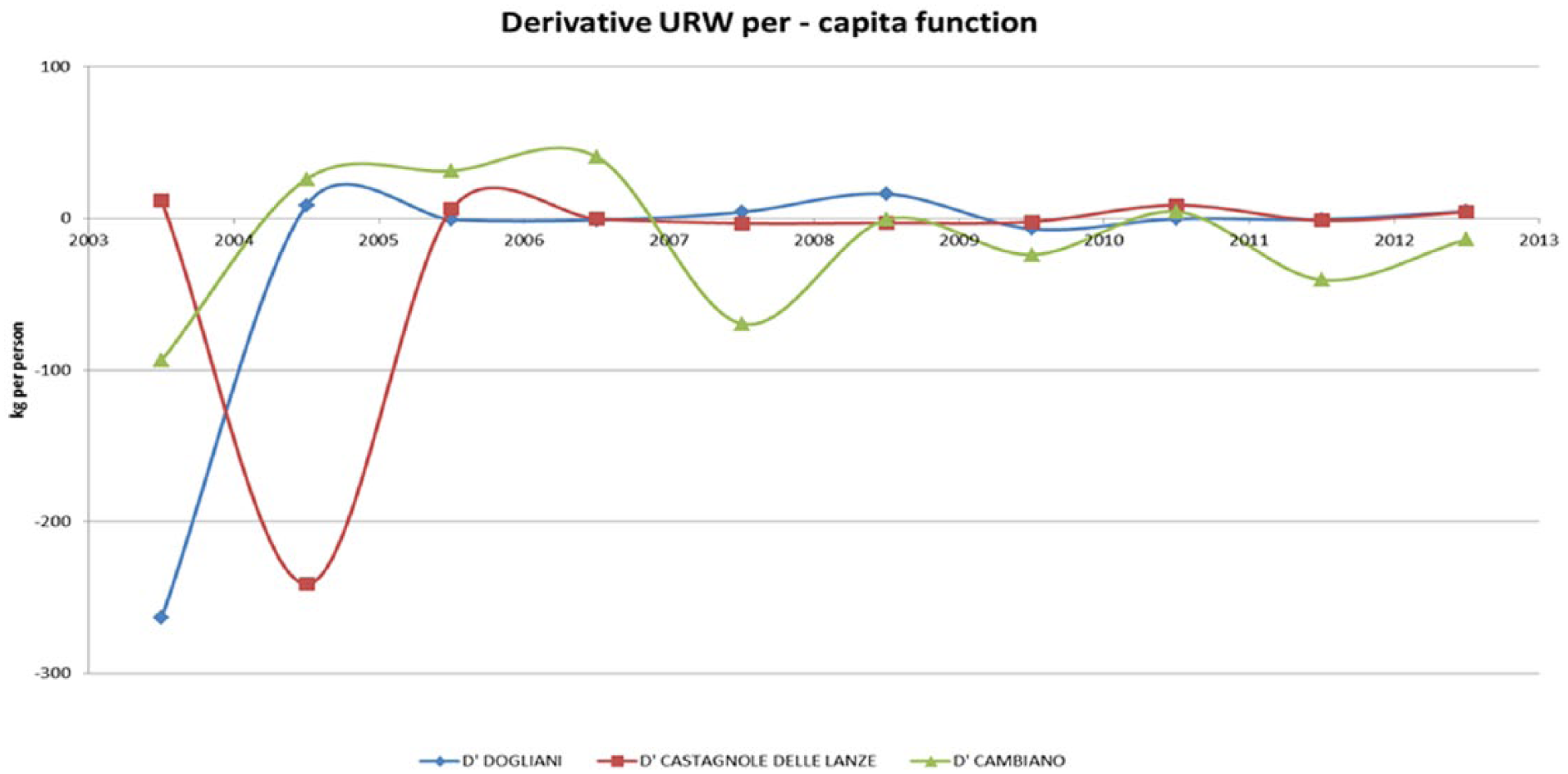
Derivative function of the URW trend for the time span 2003–2013.
The minimum values of the URW per capita derivative function correspond to the PAYT implementation in Castagnole delle Lanze and Dogliani, while in Cambiano there are two relevant points corresponding to the DtD system activation and the PAYT application.
Disposal and PAYT costs
We analyzed the waste disposal costs in order to evaluate the impact of the implemented waste prevention actions.
In Figure 8 the waste disposal costs are represented and we can see that in Cambiano and Dogliani waste disposal costs decreased in 2004, while in Castagnole delle Lanze there is a significant reduction in 2005.
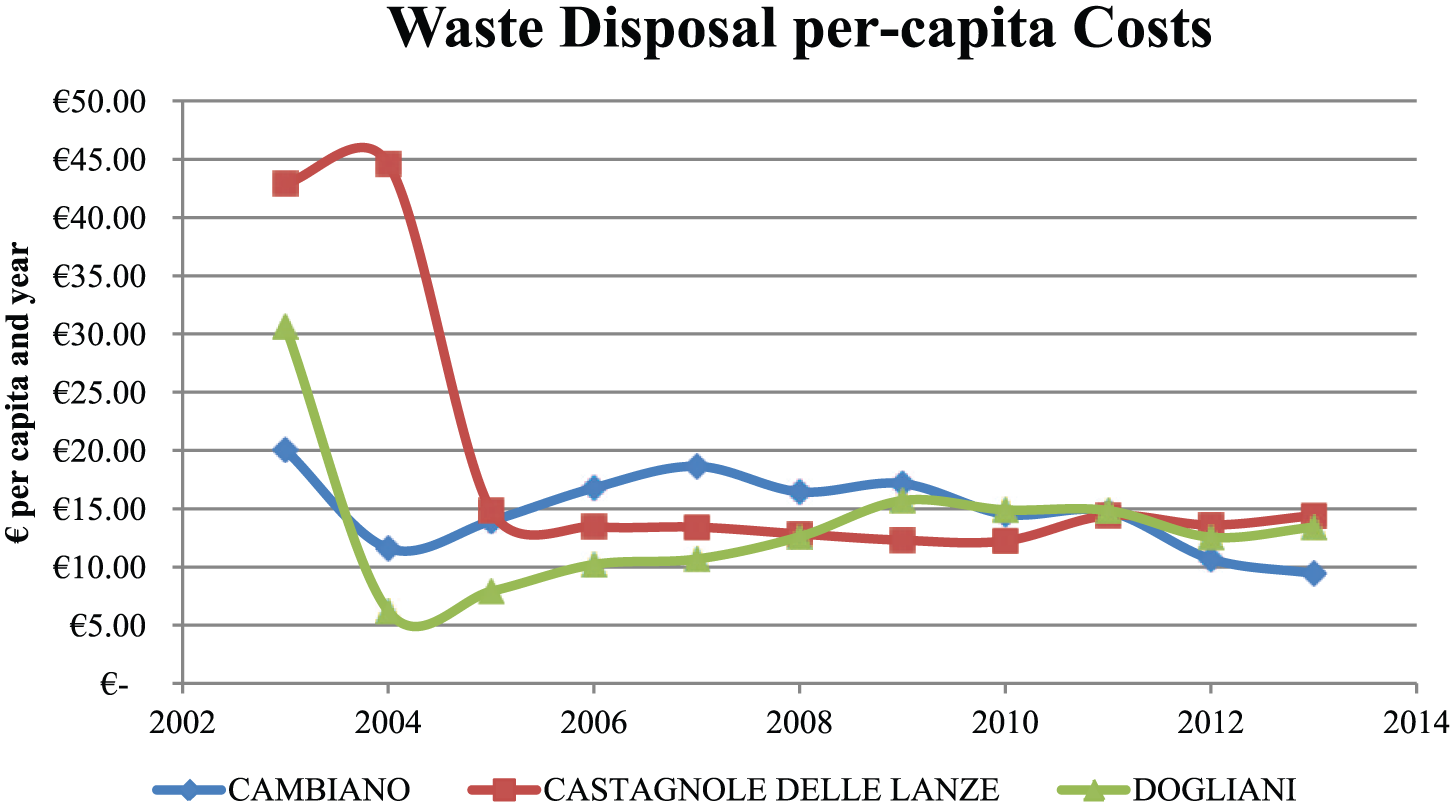
Waste disposal costs (per capita data) of the three municipalities of the study model for the time span 2003–2013 (Source: questionnaires and official data provided by Regione Piemonte).
In Table 3 the main impacts of the PAYT system are listed.
Main impacts of the PAYT scheme introduction in the study model.
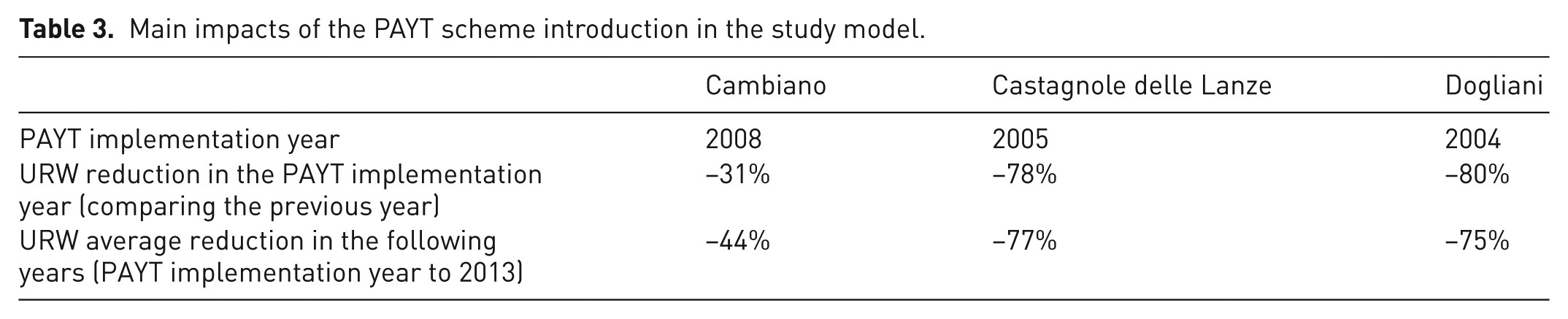
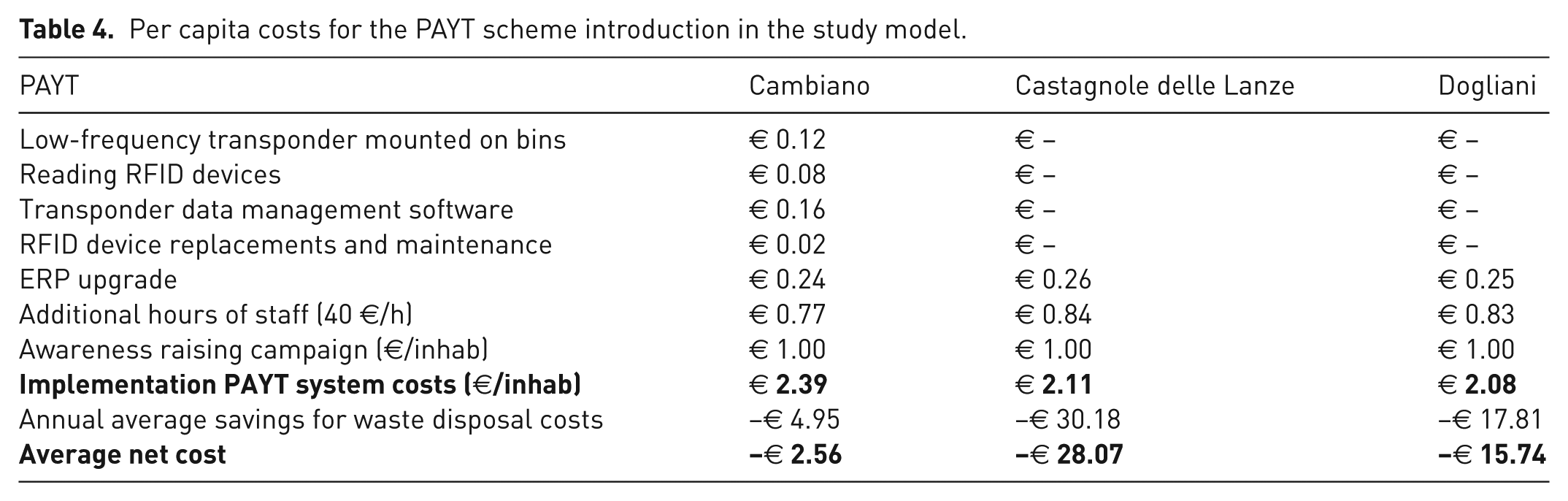
We estimated the costs of PAYT scheme implementation in the three municipalities in order to make a balance between costs and savings of the action (as shown in Table 4 and Figure 9).
Per capita costs for the PAYT scheme introduction in the study model.
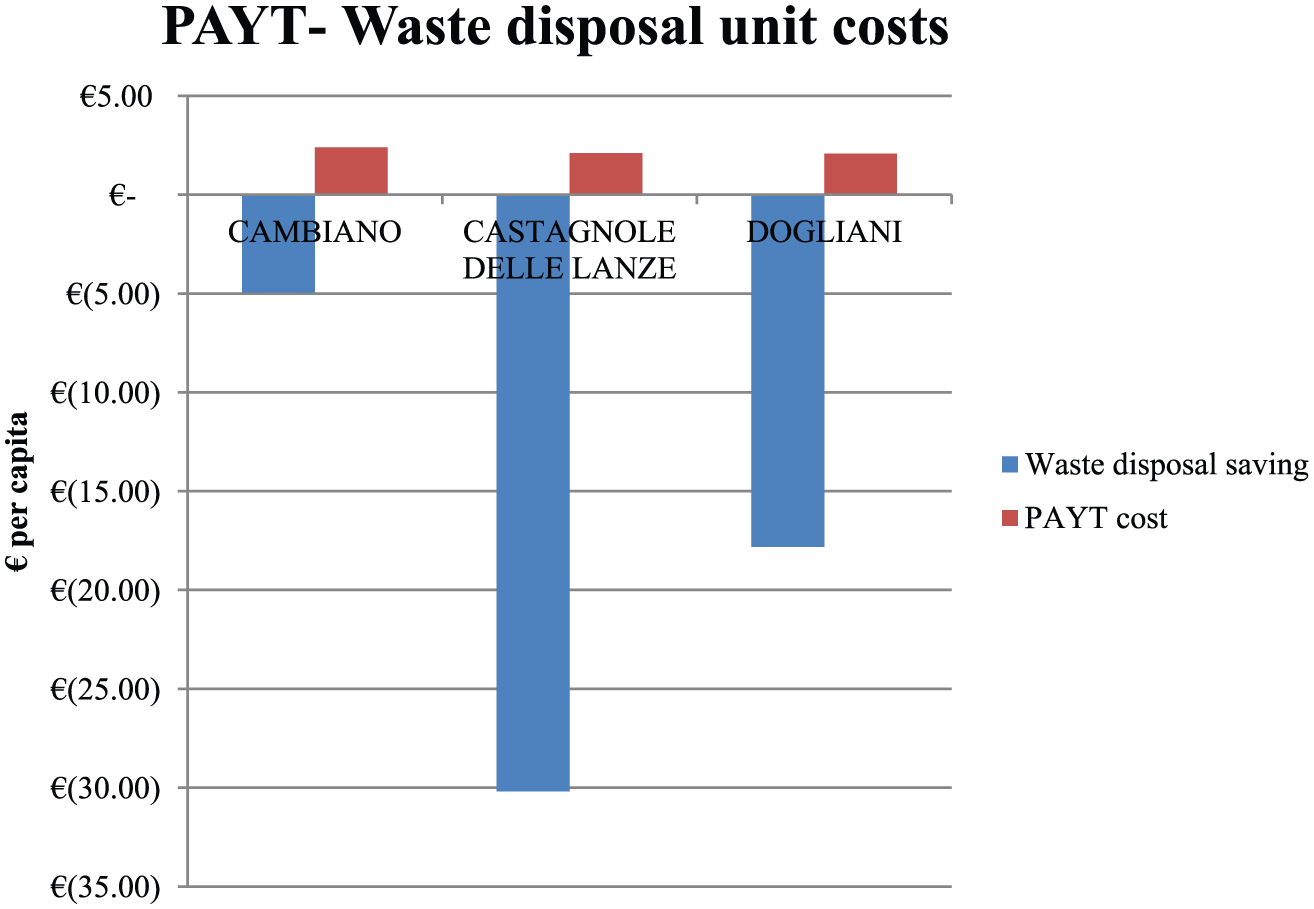
Costs and savings resulting from the PAYT scheme introduction.
Migration effect
We investigated this effect by comparing the TW per capita data of Cambiano, Castagnole delle Lanze, and Dogliani with those of their neighboring municipalities.
Cambiano
In Figure 10 we represent the 2003–2013 trend of the TW per capita collected in Cambiano and in its neighboring municipalities. Cambiano belongs to the CCS consortium, which does not include all the municipalities in the surrounding area.
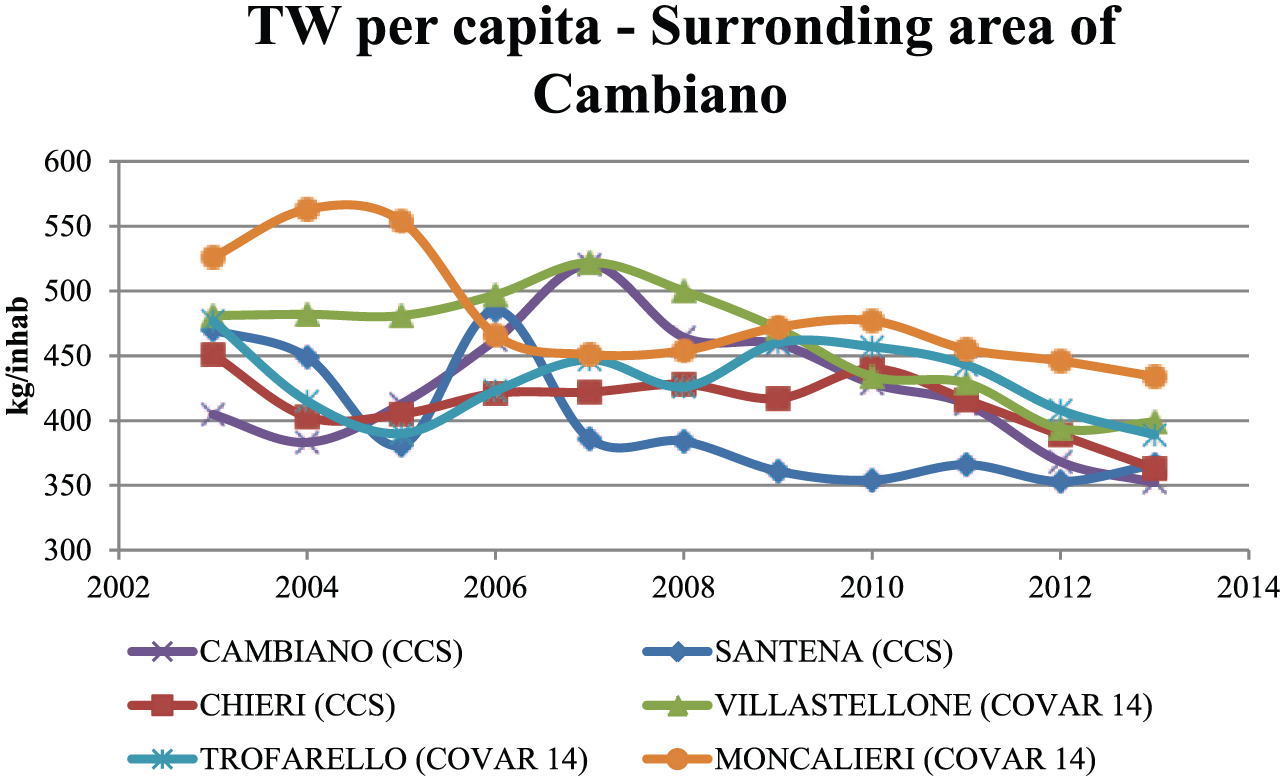
TW of the neighboring municipalities of Cambiano. In the legend, the name of the municipality is followed by the name of the consortium. The CCS consortium has been applying homogenous waste management policies in all its affiliate municipalities.
In Figure 11 we summarize the 2003–2013 TW trends of the analyzed area, considering both the general area (composed by all the neighboring municipalities) and the reduced area (composed by the neighboring municipalities belonging to other consortia), in order to understand the general trend.
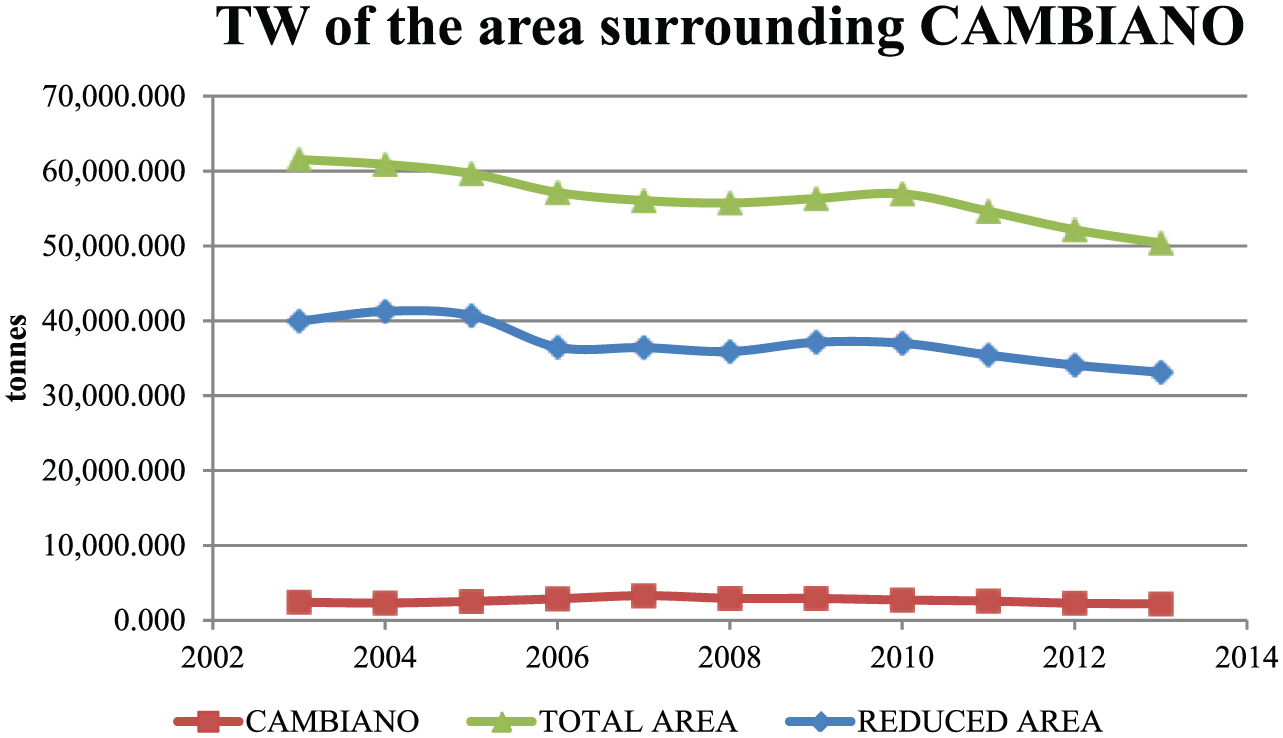
TW trend (from 2003 to 2013) of Cambiano (Cambiano), TW trend (from 2003 to 2013) considering the TW collected in the neighboring municipalities (total area), and TW trend (from 2003 to 2013) considering the TW collected in the neighboring municipalities belonging to different waste management authorities from Cambiano (reduced area).
The comparison between the TW trend of Cambiano and the surrounding area (both the general and the reduced area) shows an inconsistent correlation: this phenomenon demonstrates a marginal presence of the migration effect, which could not be detected by this analysis. It is interesting to note the general reduction trend of TW in the surrounding area.
Castagnole delle Lanze
Castagnole delle Lanze belongs to the CBRA consortium, which does not include all the municipalities in the surrounding area.
Figure 12 shows a comparison between the TW trend of Castagnole delle Lanze and the neighboring municipalities.
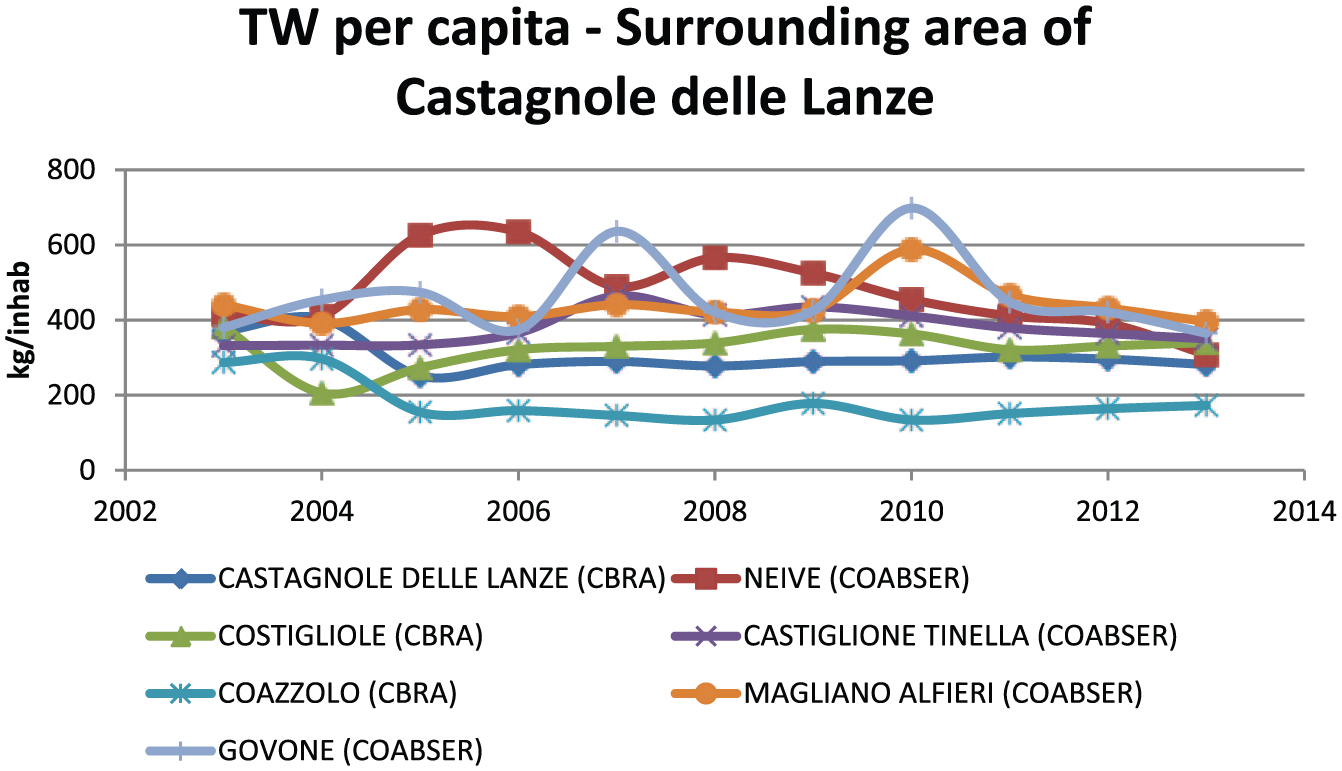
TW of the neighboring municipalities of Castagnole delle Lanze. In the legend, the name of the municipality is followed by the name of the consortium.
Neive seems to be target of the migration effect in 2005 and 2006, even if the TW trend of Castagnole delle Lanze follows a substantially steady trend, independently of the fluctuating 2007–2013 TW trend of Neive.
In Figure 13 we summarize the 2003–2013 TW trends of the reduced area (composed by the neighboring municipalities belonging to other consortiums), in order to understand the general trend.
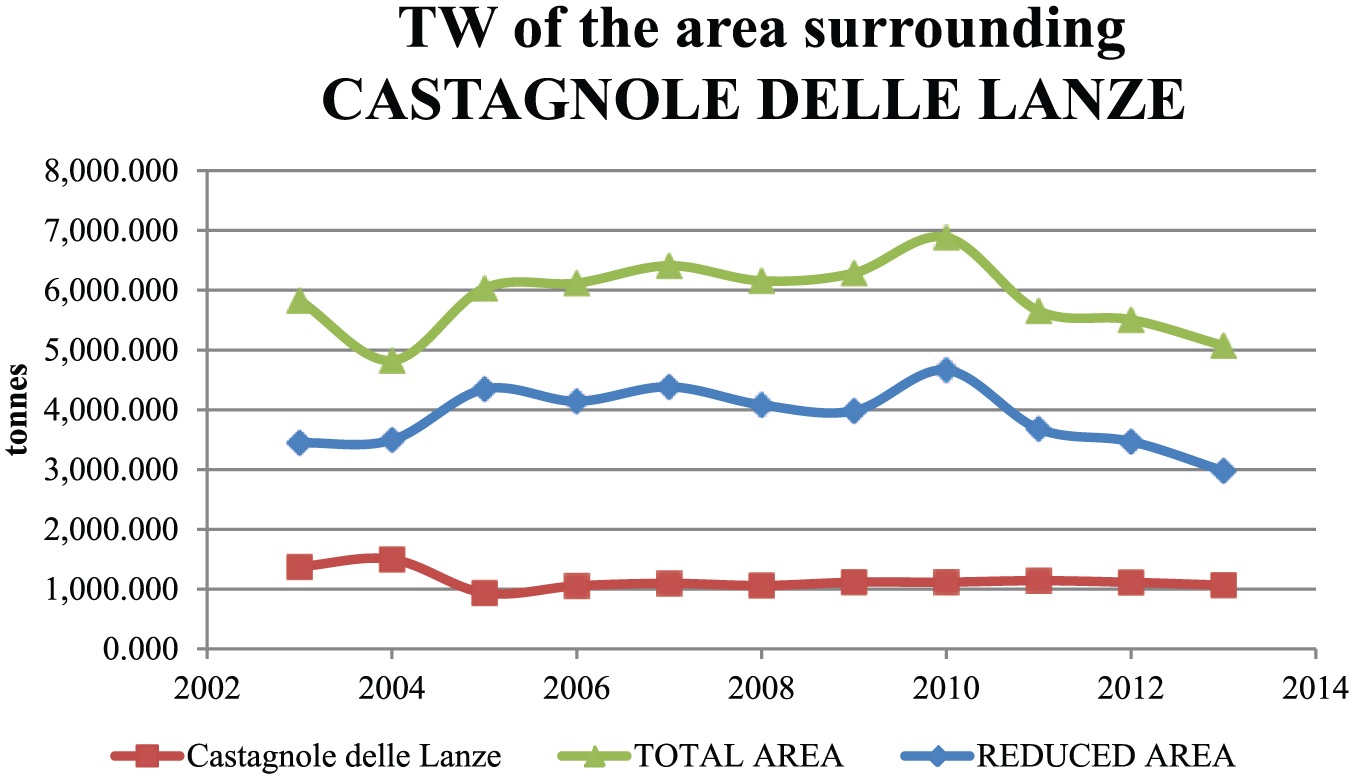
TW trend (from 2003 to 2013) of Castagnole delle Lanze (Castagnole delle Lanze), TW trend (from 2003 to 2013) considering the TW collected in the neighboring municipalities (total area), and TW trend (from 2003 to 2013) considering the TW collected in the neighboring municipalities belonging to different waste management authorities from Cambiano (reduced area).
The comparison between the TW trend of Castagnole delle Lanze and the area (both the general and the reduced area) shows a probable presence of the migration effect, concentrated in 2005 and 2006 (the first two year of the PAYT system).
Dogliani
In Figure 14 we represent the 2003–2013 trend of the total MSW collected in Dogliani and in its neighboring municipalities.
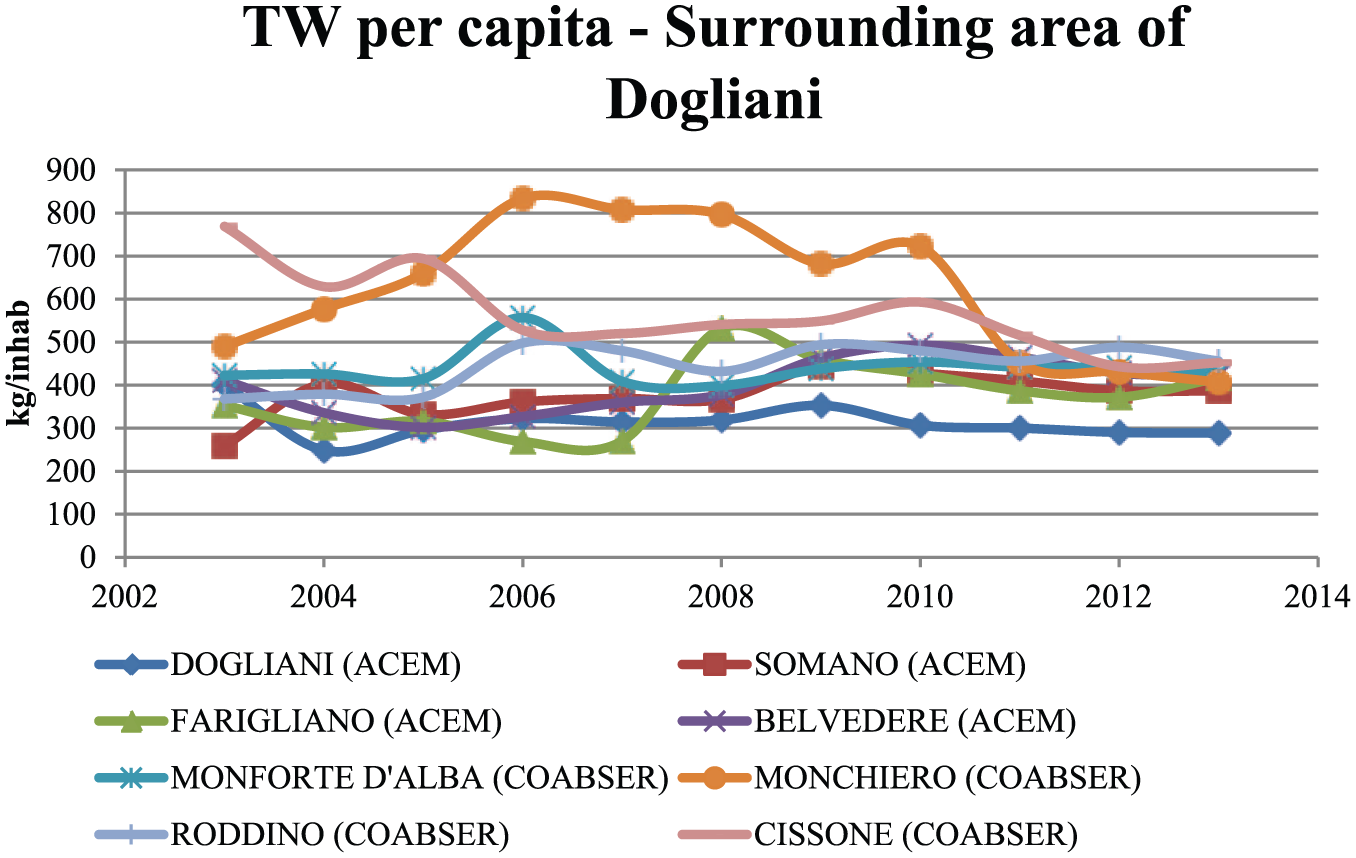
TW of Dogliani and the neighboring municipalities from 2003 to 2013.
Dogliani belongs to the ACEM consortium that does not apply homogeneous policies; therefore it is difficult to understand which municipality could be a potential target of the migration effect. For this reason we did not identify the reduced area.
Monchiero is characterized by an increase of TW in 2004–2008, which could be related to the effect that we are focusing on. Furthermore, Monchiero is on the way to Alba and Bra, the two main urban centers of the area.
In Figure 15 we summarize the 2003–2013 TW trends of the analyzed area, in order to understand the general trend.
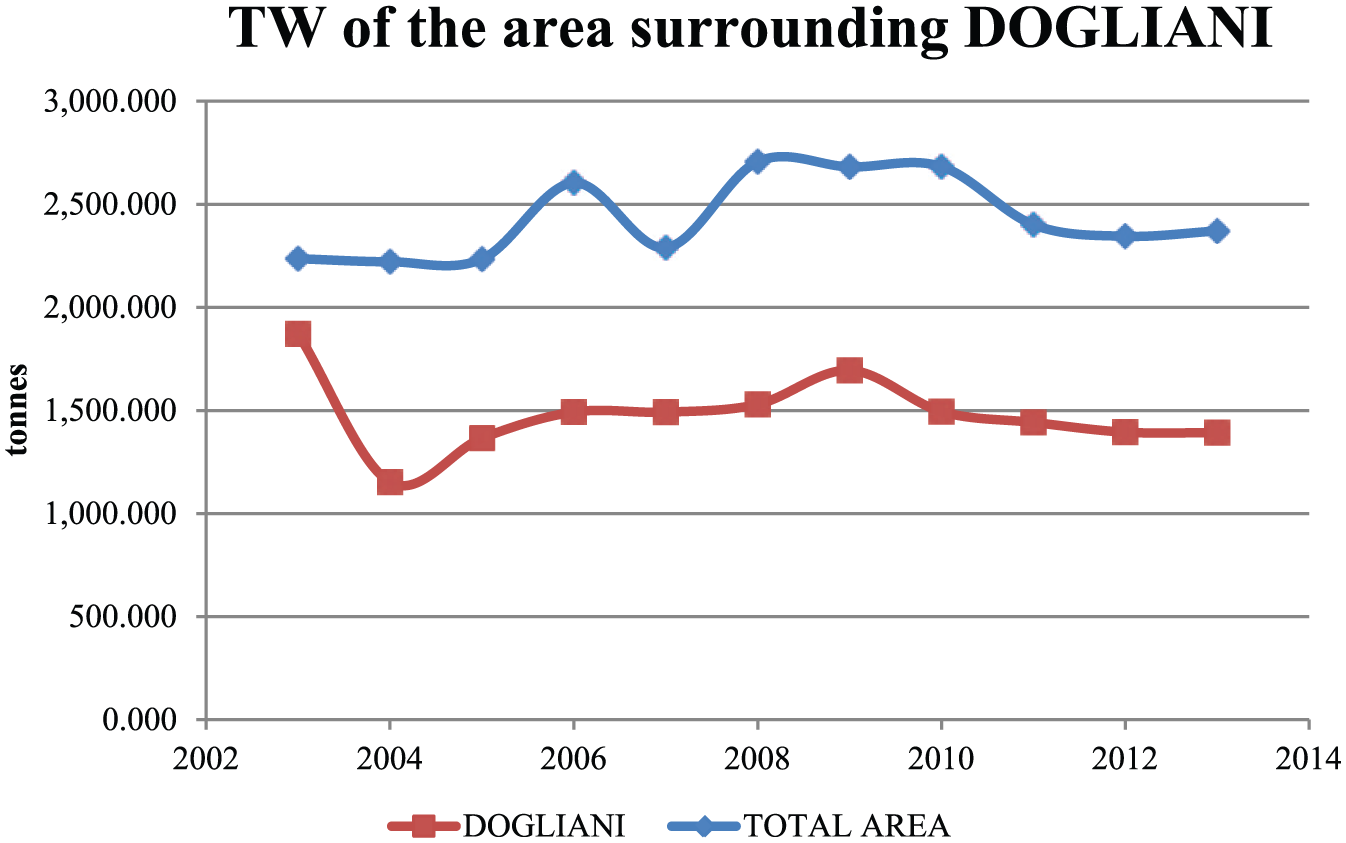
TW trend (from 2003 to 2013) of Dogliani (Dogliani) and TW trend (from 2003 to 2013) considering the TW collected in the neighboring municipalities (total area).
The comparison between the TW trend of Dogliani and the general area showed an inconsistent correlation: this phenomenon suggests that the migration effect is marginal and cannot be detected by this analysis.
Discussion
Looking at the data from the three municipalities it is clear that the introduction of the DtD collection system and of the PAYT scheme elicited important changes in the quantities of TW, URW, and SW produced. The DtD collection scheme induced a decrease in URW quantities and an increase in SW values; however, in the experience of Cambiano, waste quantities started to increase again until the PAYT scheme were introduced. It seems therefore that the introduction of a scheme that makes people pay for what they really throw is a crucial aspect in order to reduce waste quantities. Interestingly, in order to increase waste separation it is not needed to introduce the DtD collection system for all waste typologies, but rather it seems to be important the synergy of the DtD collection system with the PAYT scheme. Indeed, in all the three studied municipalities, after the introduction of the PAYT scheme URW values were less than half the national average in northern Italy (i.e., about 227 kg per person; ISPRA, 2014).
These observations are confirmed also by the derivative function analysis, were we found that the minimum values of the URW per capita derivative function correspond to the PAYT implementation in Castagnole delle Lanze and Dogliani, while in Cambiano we found two minimum points of the URW per capita derivative function, one in correspondence of the PAYT implementation and the other one in correspondence of the DtD implementation.
Therefore, after PAYT application the URW general trend is characterized by a decrease, and this trend has been highlighted in several other studies, such as those by Goorhuis et al. (2012), Kling et al. (2016), and Su et al. (2010).
We found that the two municipalities with low population densities (Castagnole delle Lanze and Dogliani) had a higher total TW reduction potential through the PAYT scheme compared to the one with high population density (Cambiano). This could be related to the home composting practice and to the low incidence of commercial activities. Indeed, several studied have highlighted that MSW generation rates in small towns are lower than in big ones (Bhide and Shekdar, 1998; Dayal, 1994; Kansal, 2002; Kansal et al., 1998; Khan, 1994; Rao and Shantaram, 1993; Sharholy et al., 2005; Siddiqui et al., 2006; Singh and Singh, 1998).
The analysis of disposal costs showed clearly how municipalities spend less money for disposal after the introduction of a DtD collection system and PAYT scheme. Even if the introduction of the PAYT scheme entails some costs, the balance between costs and savings is always positive. In Dogliani and Castagnole delle Lanze, DtD and PAYT schemes were introduced simultaneously and therefore we cannot disentangle the effect of these two actions on the disposal savings. On the contrary, in Cambiano the PAYT scheme was introduced five years after the introduction of DtD collection system, and we can see how in Cambiano the saving due to the PAYT is lower compared to those found in Castagnole delle Lanze and Dogliani, and this is a side effect due to the implementation of the two actions together.
The more a municipality used to pay for landfilling the more it will save from a reduction of URW and from an augmentation of SW; therefore, since the disposal cost is defined by public authority, it can be a good political driver to promote management systems aiming to reduce the amount of landfilled waste.
We found some support for the migration effect, even if its impact on waste production of the surrounding area is not completely clear. Nevertheless, this phenomenon seems to occur especially during the first year after the introduction of a PAYT scheme and DtD collection system.
Conclusion
This investigation showed that DtD is the most effective collection system in order to enhance SW quantities. However, it is difficult to find a direct relation with the TW reduction.
The PAYT scheme is an effective action in order to significantly reduce the amount of MSW. The scheme adopted in the three municipalities of the study model is specifically targeted to the URW. This scheme guaranteed both the reduction of URW quantities, with economical savings on disposal costs, and the increase of SW with recycle opportunities.
The pre-payed bag scheme, applied in Castagnole delle Lanze and Dogliani, ensured significant results through lower costs than the transponder-based model (Cambiano).
Awareness raising campaigns had significant impacts, as demonstrated by the results obtained very quickly after the PAYT scheme implementation. It is also important to provide annually specific communication actions, in order to maintain and improve the performance.
Home composting, even if it is not strictly considered a prevention-oriented action, demonstrated significant results, especially in rural areas (as shown in the municipalities of Castagnole delle Lanze and Dogliani).
The migration effect analysis is an effective tool for municipalities, in order to understand the impact of their waste management policies at a bigger scale.
Footnotes
Declaration of conflicting interests
The authors declared no potential conflicts of interest with respect to the research, authorship, and/or publication of this article.
Funding
The authors received no financial support for the research, authorship, and/or publication of this article.