






Abstract
This study analyzes the feasibility of putrescible components of municipal solid waste (PCMSW) such as food waste (FW) and yard waste (YW) for methane production in Pakistan. The batch experiments have been conducted at two different inoculums to substrate ratios (ISRs) by using various inoculums under mesophilic condition. The highest methane yield of FW and YW is achieved to be 428 Nml g-1 volatile solids (VS) added and 304 Nml g-1 VS added respectively by using buffalo dung inoculum at ISR-5. While, lowest methane yield of FW and YW is obtained as 236 Nml g-1 VS added and 151Nml g-1 VS added respectively by using effluent from a continuous stirrer tank reactor as inoculum at ISR-3. The first order decay model has been introduced, which gives best fit for methane potential of PCMSW with buffalo dung inoculum. Additionally, the feasibility of PCMSW in terms of power generation potential has been analyzed. About 60.63 million m3/year energy can be generated by converting PCMSW into methane gas leading to power generation. The finding of this study concludes that the replacement of imported energy and reduction up to 1.62% in other primary energy sources would be achieved, if PCMSW are properly converted into energy through anaerobic digestion in Pakistan.
Keywords
Introduction
The epic challenge of the present era is filling the gap between energy demand and supply with clean, reliable, and affordable energy. Akin to renewable sources of energy such as wind and solar, waste-to-energy at a low environmental and economic cost is accelerating throughout the world. Converting waste to a renewable energy source has two-fold benefits. One, it reduces environmental degradation and two, fulfills the energy needs necessary for economic growth. The traditional opposition between the stewardship of the Earth and interests of economy no longer stands. In addition, it also addresses rapidly increasing costs associated with energy supply and waste disposal (Korai et al., 2016a; Prabhudessai et al., 2013; Tan et al., 2015; Thornley et al., 2015). Proper disposal of municipal solid waste (MSW) has raised many challenges throughout the world, especially in the developing countries (Achillas et al., 2013; Guerrero et al., 2013). In Pakistan, due to rapid urbanization a huge amount of MSW is being generated at an alarming rate. According to the study of Korai et al. (2015), major cities of Pakistan generate about 25.42 million tons/year of MSW. The contribution of putrescible components of municipal solid waste (PCMSW) in Hyderabad city is about 45% (Figure 1) which is mostly disposed of with other waste components without any proper treatment (Korai et al., 2016b).
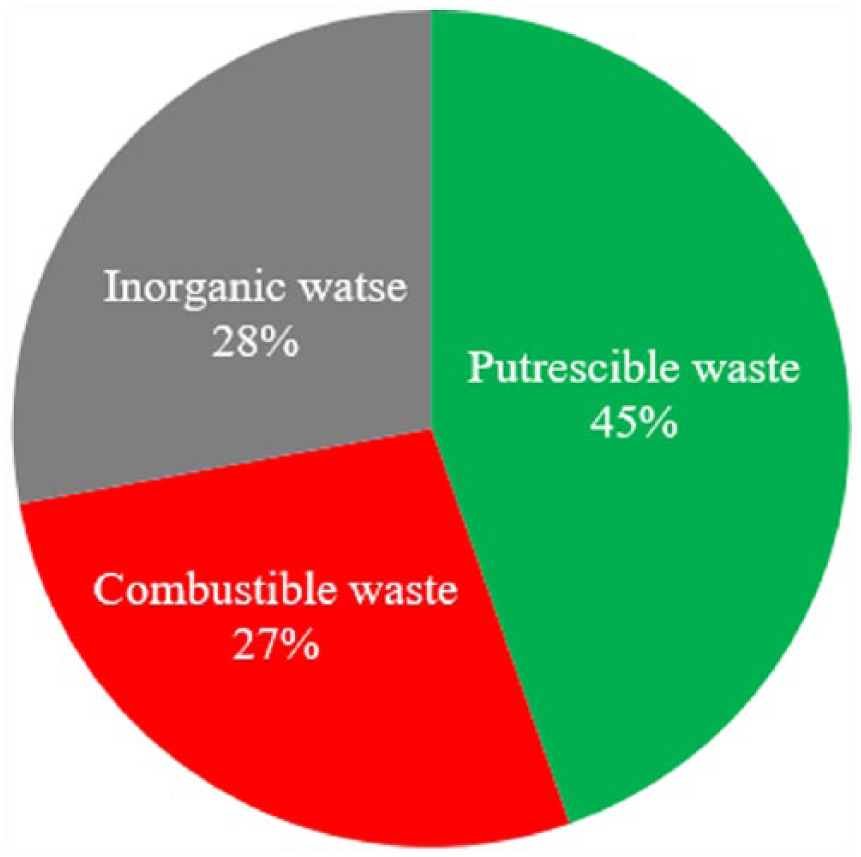
Composition of municipal solid waste generated in Hyderabad, Pakistan (Korai et al., 2016b).
The proper management of MSW for energy recovery is a current pressing. Like other developing countries, Pakistan is seriously facing environmental issues because of open dumping and burning of MSW. There is not any proper waste to energy facility even in the major cities of the country. On the other hand, the shortage of energy has remained as the headache of every governing body for many years in the country. The PCMSW have numerous constituents (Korai et al., 2014) that degrade rapidly (Tchobanoglous et al., 1993). These components are very rich in organic matters which are particularly useful for anaerobic digestion (AD) and yielding biogas (Rao et al., 2000). The PCMSW contaminate recyclable components of MSW when garbage is disposed of. They emit methane into the atmosphere from landfill (Browne and Murphy, 2013). Moreover, there is a need for effective source segregation of food waste (FW) for maximizing the diversion waste from landfill as acknowledged by other developed nations (Curtis, 2008). In the absence of a source segregation system, there should be mechanical biological treatment for the separation of food and other organic waste material. The segregated organic fraction of MSW (OFMSW) possesses excellent AD characteristics with a carbon to nitrogen ratio of 25:1. This is a suggested range for the stable digestion treatment process (Browne and Murphy, 2013; Zhang et al., 2012). Maximum methane production from an organic substance is globally analyzed by adopting the biochemical methane potential (BMP) test system. Moreover, the BMP test system plays a vital role to analyze the methane potential of biomass. There are various factors such as substrate separation, source of inoculum, inoculum to substrate ratio (ISR), etc. which effect the BMP of biomass (Angelidaki et al., 2000; Nizami et al., 2012).
In the present-day scenario, either composting or AD is considered as a sustainable OFMSW method in order to lower the environmental pressure caused by landfill disposal (Cabbai et al., 2013). The applicability of the AD process is becoming increasingly popular due to three main reasons (Álvarez et al., 2010; Karagiannidis and Perkoulidis, 2009; Pöschl et al., 2010): (a) ability to treat the organic component of MSW; (b) as non-exhaustible energy production from organic waste; and (c) low start-up and management cost. The AD treatment process has globally been given importance for the generation of renewable sources of energy that are is economical and environmentally friendly (Alatriste et al., 2006; Allesch and Brunner, 2014).
In Pakistan, there are more than 6000 AD domestic plants, in which cattle manure is being used as a substrate (Sahito et al., 2014). Whereas, the lack of AD plant working on PCMSW in the country has prompted the move towards a properly engineered AD plant. In order to achieve this target, this study is carried out to determine the feasibility of PCMSW for biomethane production by the semi-automatic methane potential test system (SAMPTS).
Materials and methods
Feedstock and seed inoculum
The PCMSW was used as substrate in this study. Various samples of FW were collected from fruit shops and vegetable markets, whereas samples of yard waste (YW) were collected from gardens and parking areas of the study area according to sampling methodology (ASTM International, 2011; Esposito et al., 2012). By using the quartering method (Korai et al., 2014; Prasada et al., 2010), cutting and mixing of components were carried out manually. Representative samples of FW and YW were used as feedstock for a batch assay of the BMP test which was performed in triplicate form of each substrate. Prior to BMP tests, samples of substrate were dried in an oven at 105°C until a constant weight was achieved (Mou et al., 2014). After that, the size of samples was reduced by a blender and passed through mesh in order to have a particle size between 1 and 2 mm (Esposito et al., 2012; Gunaseelan, 2004; Prabhudessai et al., 2013). Finally, samples were placed into the plastic bags for their later use (Sahito et al., 2013). Fresh samples (Angelidaki et al., 2000; Raposo et al., 2012) of sewage sludge (SS), buffalo dung (BD), and effluent from continuous stirrer tank reactor (CSTRE) were used as inoculums. The sample of SS was taken from a gravity sludge thickener as suggested by Kim et al. (2004). The BD was taken from the small cattle farm within the vicinity of the study area and the third inoculum was the effluent of laboratory scale CSTR working at 37 ± 0.2°C.
Composition of FW
It has been realized that the composition of organic substances is highly influenced by their anaerobic biodegradability (Gunaseelan, 2009; Oslaj et al., 2010; Schievano et al., 2008). The composition of FW is given in Figure 2, whereas mixed YW was used.
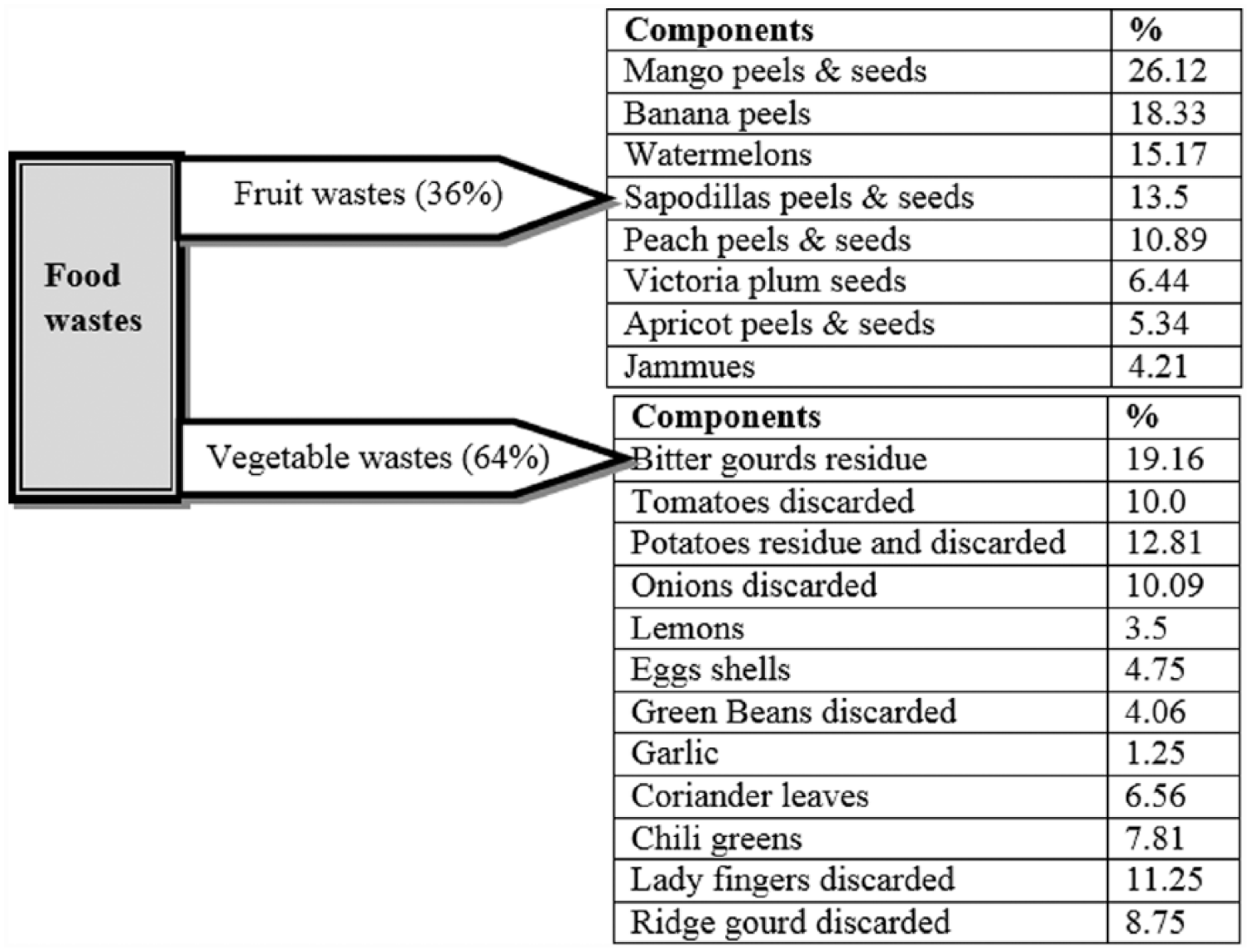
Composition of food waste sample for biomethane potential tests.
ISR
It has been described that the methane production rate and ultimate methane potential not only depend upon the inoculums but also specific substrates (Cabbai et al., 2013). High microbial activity, low risk for overloading and for inhibition, is ensured by using larger inoculation volumes (Angelidaki and Sanders, 2004). It has never been reported (Raposo et al., 2011) that higher or equal to two (ISR ≥ 2) ISR has any inhibitory effect. Further, ISR ≥ 2 has been proved to be necessary for a standardized BMP assay. In this study two different ISRs (i.e., 3.0 and 5.0) with each inoculum were used for the methane production potential of PCMSW. Total wet mass, total solids (TS) of substrate and inoculums were determined by using equations 1 and 2 respectively
where, TW (s, i), TZ (s, i), x1, x2, y1, y2, z1, and z2 are used for total wet mass of substrate plus inoculum (gl-1), TS of substrate plus inoculum (gl-1), VS of substrate per liter (gVSl-1), VS of inoculum per liter (gVSl-1), volatile solids in substrate (%), VS in inoculum (%), TS in substrate (%), and TS in inoculum (%) respectively.
Analytical method
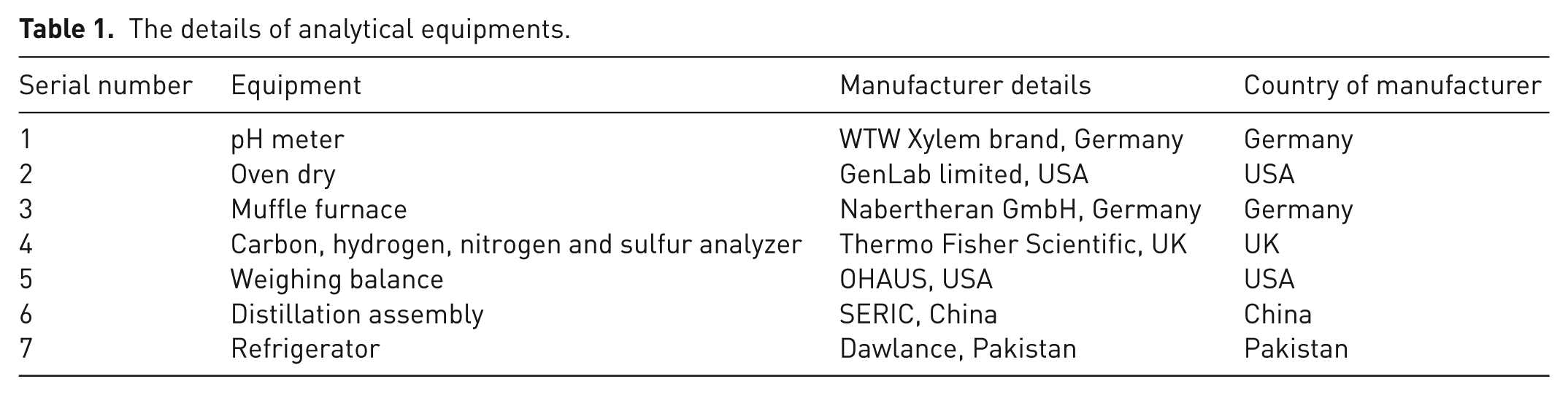
The moisture content (MC), TS, and VS/TS of samples were carried out by considering standard methods (APHA, 1998). The power of hydrogen (pH), alkalinity, and volatile fatty acids (VFA) of dry waste samples were determined by mixing the sample with deionized water at the ratio of 1:10 for fifteen minutes and then testing the supernatants (Zhang and Banks, 2013). Titration to pH 4.5 with 0.05M H2SO4 was adopted to measure alkalinity and the distillation method followed by titration with 0.1M NaOH with a phenolphthalein indicator was used to determine VFA of samples before and at the end of BMP test (Callaghan et al., 2002). The pH of solution before and after the BMP test was measured by using a portable pH meter (APHA, 1998; Sahito et al., 2013). The free ammonia (CH3-N) concentration at the end of the test was measured with a specific ion electrode method (Challaghan et al., 2002) and its formula is available in the literature (Kayhanian, 1999). Ultimate analysis (C%, H%, N%, O% and S%) of samples was conducted according to the BBOT23122013 method. Details of analytical equipment used are given in Table 1.
The details of analytical equipments.
BMP tests setup and procedure
The SAMPTS was designed and fabricated containing fourteen reactor bottles from both sides (Figure 3).
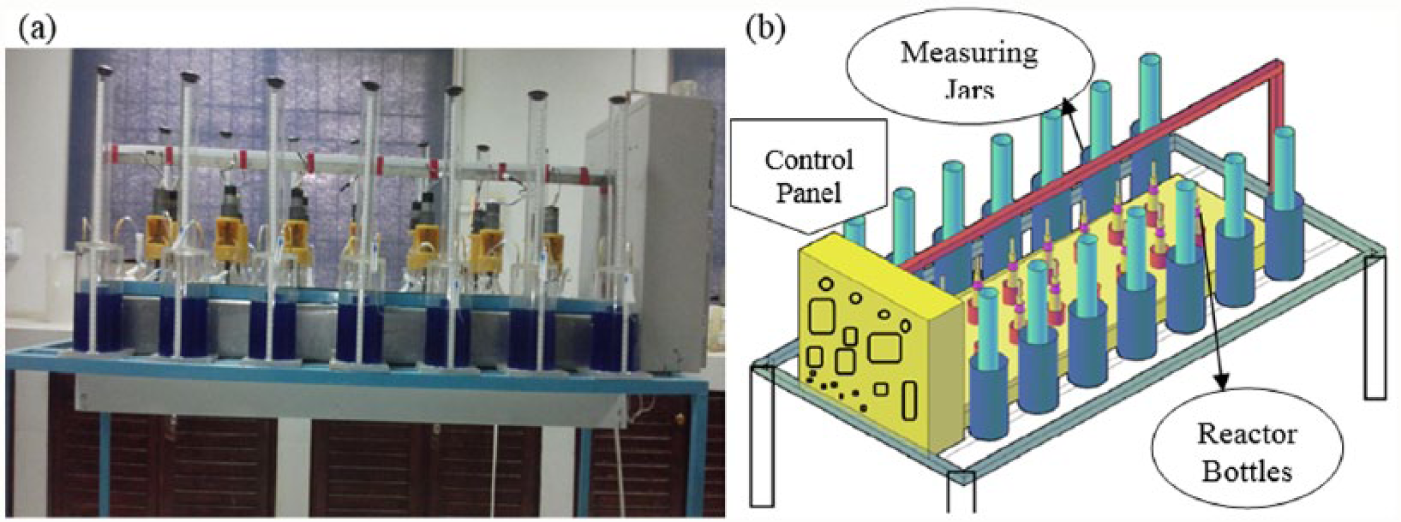
(a) Designed and fabricated semi-automatic methane potential test (SAMPT) setup; and (b) three- dimension view of setup.
The triplicate samples of each BMP test were performed and the final result was achieved as average of their values. The maximum capacity of each test reactor was as 500ml with sealed hermetic rubber stoppers and controlled opening valves for gas. From 500ml volume reactor, 400ml was used as an effective volume for BMP with 100ml of gas as head space. In each test reactor, the organic loading was about 1.88 and 1.25 g VSl-1 of substrate and selected inoculum adjusting the ISR as 3.0 and 5.0 respectively in terms of gram volatile solids of each one. After adding substrate along with inoculums, all test reactors were filled with water up to 400ml. In one test reactor, only inoculum was used as a blank in order to get biomethane potential.
The BMP test was conducted at a favorable temperature (i.e., 37ºC) of methanogenic microbes (Horan et al., 2011; Krishania et al., 2013; Sahito and Mahar, 2014) for thirty days and stirred by means of mechanical mixing for 60 s after 1000 s. Prior to starting digestion, all test reactors were flushed by purging N2 gas to expel out O2 present in the reactors. To adjust pH and alkalinity, about 0.5 g of sodium bicarbonate was added in each of the reactor bottles (Cabbai et al., 2013; Sahito et al., 2013; Sosnowski et al., 2003). All the test reactors were covered with the plastic screw thread caps. Bent stir rod mixer was connected to the direct current (DC) motor which was attached with the plastic screw thread cap by carefully threading it into the Tygon tubing piece which was connected to the DC motor. Subsequently all reactors were placed in the water bath and parallel motor connections were set for getting electric power.
Biogas volume measurement
Biogas was passed through the solution of sodium hydroxide (NaOH) solution in order to separate out methane (Shanmugam and Horan, 2009). The CO2 was absorbed by 3M solution of NaOH. Also about 5 ml of 0.4% thymolphthalein pH indicator was added in the solution. Then half of a carbon dioxide separating bottle (CO2-SB) was filled with the prepared solution of NaOH. The bottles were hermetically closed with rubber stoppers containing two metal tubes, one for inlet and other for outlet. Then, these were sealed by placing plastic lids on top and screwed in order that the thread on the bottles disappeared. One end of the CO2-SB was connected to the gas measuring equipment with the help of Tygon tubing while the other end was attached to the test reactor. The methane gas was measured by liquid displacement method.
Theoretical and accumulated biochemical methane potential
Generally, chemical formula (i.e., CaHbOcNd) is used to represent the organic constituents of substance for estimating theoretical methane potential (MPT). It was determined with the help of the modified Dulong formula (MDF) (equation 3) and Buswell formula (BF) (equation 4) (Buswell and Mueller, 1952; Horan et al., 2011; Sosnowski et al., 2003; Tchobanoglous et al., 1993) by assuming that the biodegradable organic material is completely converted into CH4 and CO2
There are various ways to represent the result of a BMP test. From which, one common technique is specific methane yield or the volume of CH4 produced per unit mass of volatile solids added also known as accumulative CH4 production. The accumulated biochemical methane potential (BMP (accumulated)) in Nml g-1VS added was calculated by using equation 5 (Shi, 2012)
where, V (s & i), Vi, WMi, VSs are used for volume of methane produced by substrate plus inoculum, volume of methane produced by blank, wet mass of inoculum, and volatile solids of substrate respectively.
Statistical method
The significance of difference between duplicate sampling means was calculated by using the Student’s t-test method.
Results and discussion
Characterization of substrate and inoculum
The results of proximate analysis (i.e., MC%, TS%, and VS% of TS), ultimate analysis (C%, H%, N%, O%, and S%), Carbon–Nitrogen ratio (C/N) (% of TS), pH, alkalinity (mgl-1), VFA (mgl-1), NH3-N (mgl-1), and lignin contents (LC) (% of TS) of substrates and inoculums are summarized in Table 2 as their mean value along with standard deviation.
Characteristic of substrates and inoculums.
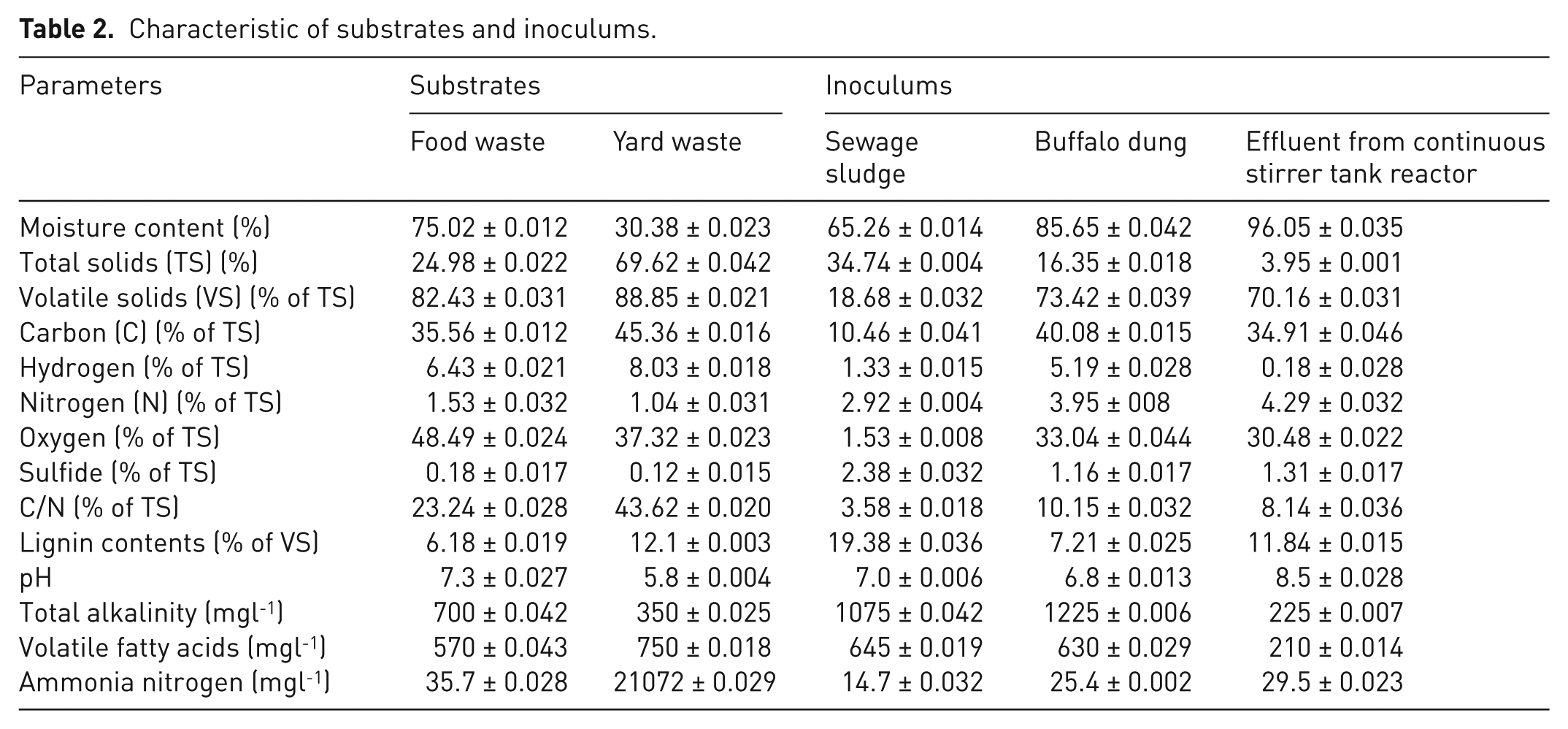
Table 2 reports that the MC of samples ranged from 30.38 to 96.05%; lowest value was for YW sample whereas the highest value was for CSTRE. TS of substrate samples ranged between 24.98% and 69.62%; the lowest and highest values were for FW and YW respectively. The TS of FW of the present study was lower than the TS of food waste obtained from canteens, restaurants, domestic, and commercial wastes (Banks et al., 2011; Cabbai et al., 2013) because of the physical composition of food wastes. The TS contents of SS, BD, and CSTRE were observed as 34.74%, 16.35%, and 3.95% correspondingly. The VS of TS for samples were observed in the range of 18.62–88.85%. The lowest was for SS while the highest value was for YW. The results regarding TS and VS of BD are not much different from buffalo manures of Vietnam (Cu et al., 2015) and other industrial countries (Moller et al., 2004). Substrates possess higher VS than inoculums. Bajon et al. (2015) determined the VS of FW as 83.1% of TS that was slightly higher than FW of the present study (Table. 2). Higher VS of substrate indicated high energy content that is favorable from an economic point of view with respect to energy yield (El-Mashad and Zhang, 2010).
During the AD, the methane production is highly influenced by the biodegradable VS and the nature of the solids (Buffiere et al., 2006). The pH of FW, YW, SS, BD, and CSTRE was observed to be 7.3, 5.8, 7.0, 6.8, and 8.5 respectively (Table 2). The alkalinity and VFA of FW, YW, SS, BD, and CSTRE were found to be 700, 350, 1075, 1225, and 225 mgl-1 and 570, 750, 645, 630, and 210 mgl-1 respectively (Table 2). Substrate and inoculums’ characteristics are very important for the biogas yield from the point of view of various researchers (Horan et al., 2011). According to the current study, the effect of pH on biogas production from food waste by AD (Jayaraj et al., 2014) and the effect of pH on biogas production from spoiled milk (Sivakumar et al., 2012) show that the substrate with pH 7 resulted in the highest biogas production.
BMP results
Daily and specific methane potential of substrates at different ISRs by using three types of inoculums are shown in Figures 4 and 5 respectively.
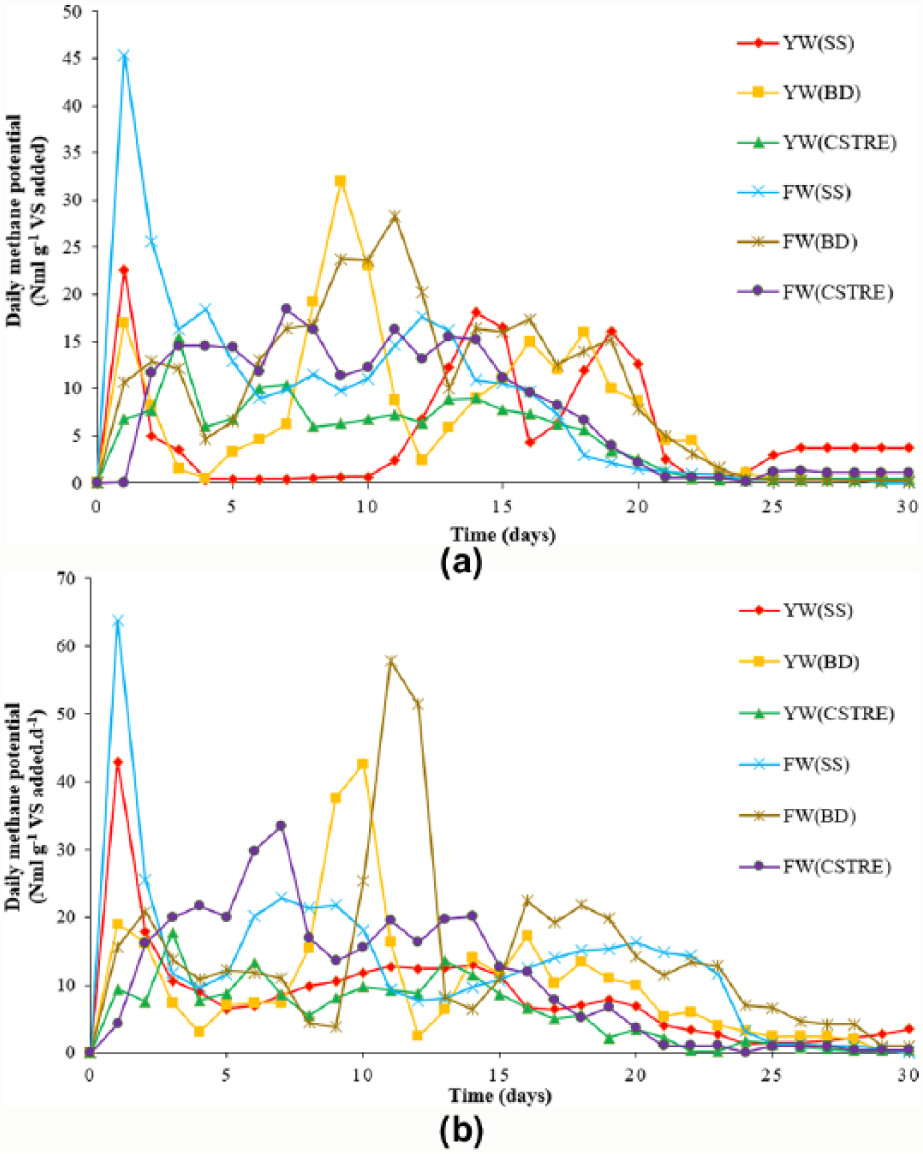
Daily methane potential of food waste (FW) and yard waste (YW) with inoculums (i.e., sewage sludge (SS), buffalo dung (BD) and effluent from continuous stirrer tank reactor (CSTRE)) at: (a) inoculum to substrate ratio (ISR)-3; and (b) (ISR)-5.
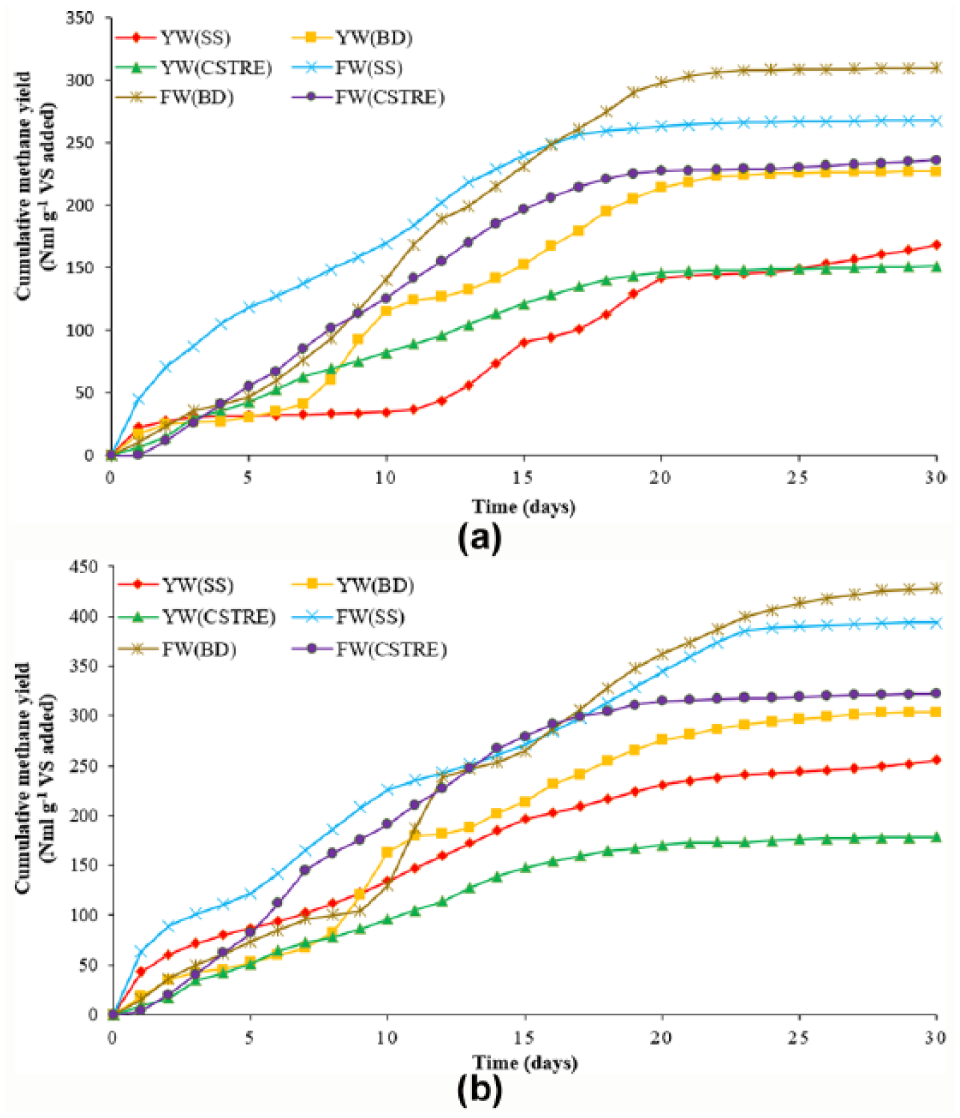
Cumulative methane yield of food waste (FW) and yard waste (YW) with inoculums (i.e., sewage sludge (SS), buffalo dung (BD) and effluent from continuous stirrer tank reactor (CSTRE)) at: (a) inoculum to substrate ratio (ISR)-3; and (b) (ISR)-5.
Figures 4 and 5 represent that in all BMP test results, a similar trend of increasing methane production was observed as ISR increased and vice versa. This phenomenon of direct relationship between ISRs and methane yield ensures that high microbial activity was observed because of a larger volume of inoculation (Abbassi et al., 2012; Cabbai et al., 2013; Esposito et al., 2012; Liu et al., 2009; Raposo et al., 2011). Higher methane potential of FW was observed than YW at all ISRs with different inoculums. This is because of higher pH and lower LC of FW than YW (Jayaraj et al., 2014; Sivakumar et al., 2012). Methane potential of FW with SS were observed at the higher rate after first day as more than 45 and 60 Nml g-1 VS day-1 at ISR-3 (Figure 4a) and ISR-5 (Figure 4b) respectively. Similarly, methane flow rate of YW with SS was observed higher than 25 and 40 Nml g-1 VS day-1 at ISR-3 (Figure 4(a)) and ISR-5 (Figure 4(b)) respectively. Then methane rate decreased and again increased after 10 days but peaks became lower than the previous point. At all ISRs, the methane potential of substrate with BD was initially lower than the methane potential of substrate with SS. This is because of lower pH of BD than SS. At day 12, methane potential rate of FW and YW with BD reached their highest peaks (i.e., 28 and 33 and 58 and 42 Nml g-1 VS day-1 at ISR-3 and 5 respectively) as in Figure 4. In case of methane potential of substrate with CSTRE, flow rate of methane reached its highest point after day 5 with all ISRs (Figure 4). Then it decreased and even its decreasing rate and increasing rate were seen as lower than previous inoculums because of its alkaline pH value. The higher pH results in an increase in ammonia nitrogen, which is toxic for methanogens (Chen et al., 2008; Lesteur et al., 2010). Sahito et al. (2013) and Song et al. (2013) also reported that the AD process becomes toxic due to excessive alkalinity. The average MPT and experimental methane potential of substrates and inoculums with standard deviation are given in Table 3.
Theoretical and experimental methane potential (Nml g-1 volatile solids added).
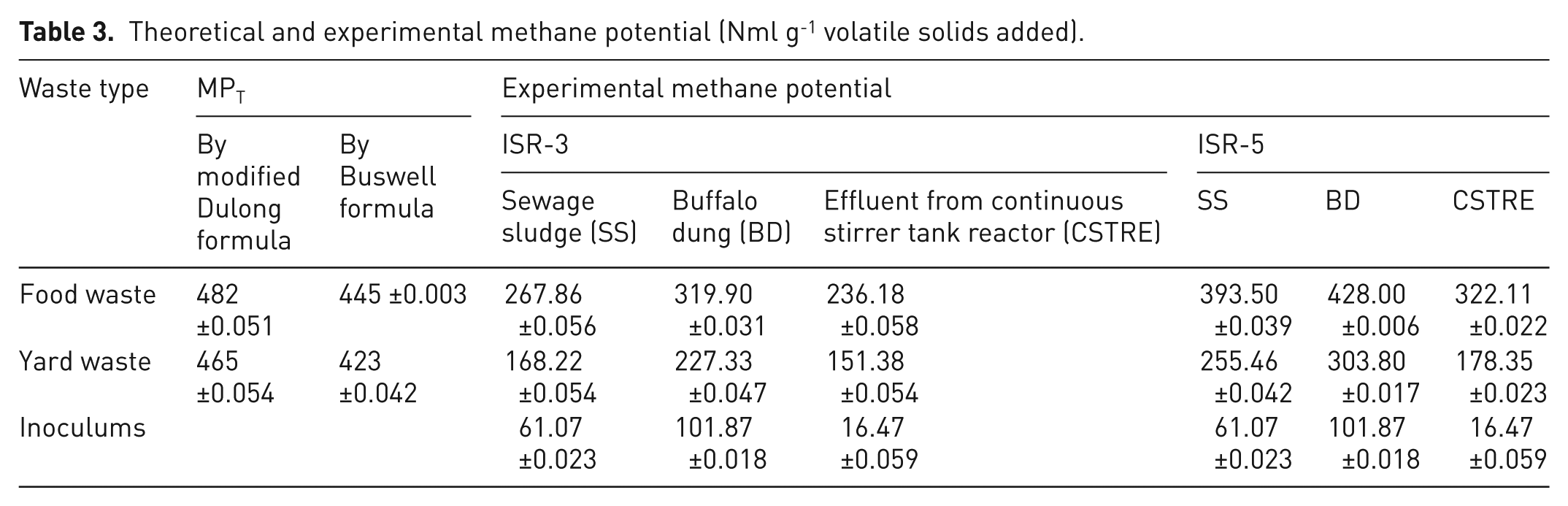
The methane potential of SS, BD, and CSTRE of the present study were observed lower than SS (Cabbai et al., 2013), BD (Cu et al., 2015), and CSTRE (Gunaseelan, 2004). According to Table 3, the MPT of FW was obtained to be 482 and 445 Nml g-1 VS by MDF and BF respectively. Whereas, MPT of YW was obtained as 465 and 423 Nml g-1 VS by MDF and BF correspondingly. After 30 days, experimental y (methane yield) of FW was observed significantly higher (p < 0.05) than YW with all inoculums at all selected ISRs (Table 3). According to the results of Browne and Murphy (2013), the average experimental y of FW was 396 Nml g-1 VS at ISR-3 by using farm inoculum. This value is 19.21% higher and 8.0% lower than the y of FW at ISR 3 and 5 by BD inoculum of present study respectively. It was observed that, the methane potential of FW and YW by using CSTRE and SS was significantly lower (p > 0.05) in sequences than methane potential of FW and YW by BD at all ISRs. This is because of biological failure. The route of failure was inhibition of acetogenic bacteria which resulted due to lack of trace elements as reported by Thamsiriroj et al. (2012). This hypothesis is also in agreement with the view point of Walker et al. (2009) working on mono-digestion of food wastes. In all cases, biodegradability of substrates including FW and YW with BD inoculum based on BF was significantly higher (p < 0.05) than their biodegradability based upon MDF with other inoculums (i.e., SS and CSTRE) and show a direct relationship with ISR. This means BD used as an inoculum gives better BMP results of PCMSW as compared to the rest of inoculums. Moreover, using BD as an inoculum for biogas from PCMSW is more beneficial in the context of Pakistan because BD is available in abundance in Pakistan. It has about 70 million heads of cattle and buffaloes and more than 90 million of sheep and goats (Kayhanian, 1999). Thus, AD for PCMSW with BD inoculum could potentially be used to overcome the energy crises by fulfilling the energy demand of the country.
Final characterization of BMP tests
Parameters like pH, VFA, and alkalinity affect the AD process. For a successful AD process, the optimum range for pH and alkalinity should be 6.5–7.5 and 2000–18000 mgl-1 respectively depending upon the decomposition of substrates (Cuetos et al., 2008; Gelegenis et al., 2007). Other studies (Callaghan et al., 2002; Lane, 1984) suggested that the alkalinity should not be less than 1500 mgl-1 for a balanced digestion system. The pH decreases because of accumulation of VFA in the case of insufficient alkalinity (Chen et al., 2008; Lesteur et al., 2010). In this regard, effluent of each reactor was analyzed at the end of the test for pH, ammonia nitrogen (CH3-N) alkalinity, and VFA. The average results of pH and CH3-N with standard deviation are given in Table 4.
pH and ammonia nitrogen (CH3-N) at the end of biochemical methane potential test.
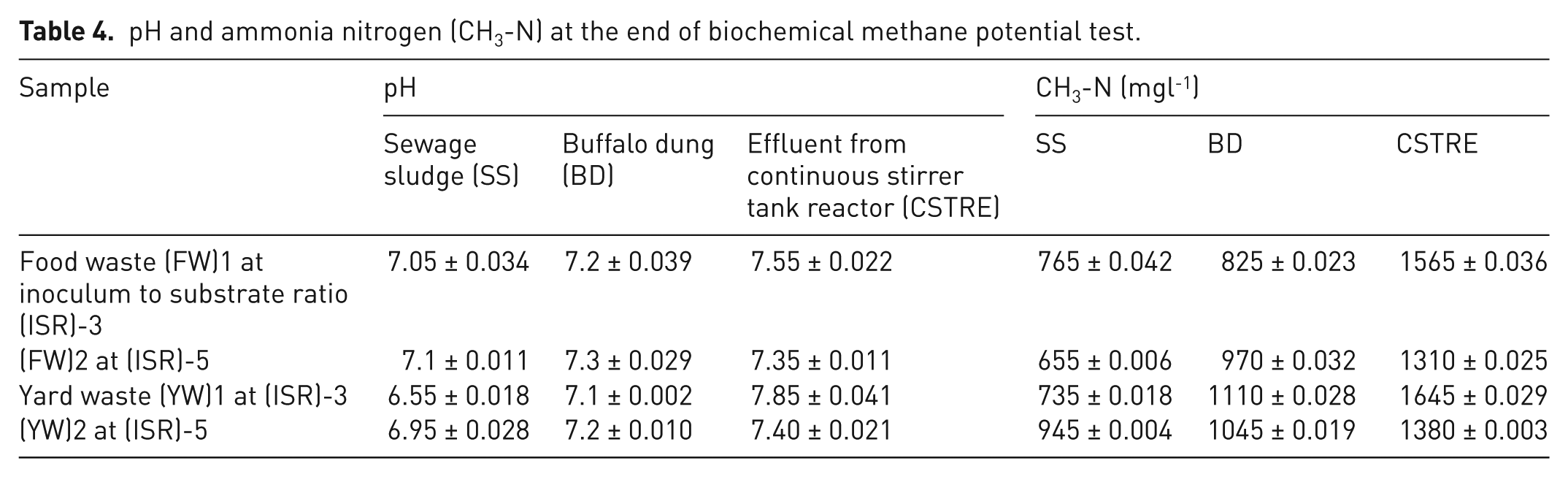
Table 4 shows that the pH of tests at all ISRs with SS, BD and CSTRE were within the range of 6.55 to 7.1, 7.1 to 7.3, and 7.4 to 7.85 respectively. The findings of CH3-N at the end of batch assays by using SS, BD, and CSTRE ranged from 655 to 945, 825 to 1110, and 1310 to 1645 mgl-1 respectively (Table 3). In case of CSTRE, ammonia inhibition was observed because of higher values of CH3-N than the optimum range with all batch assays except at ISR-5. Due to which, low quantity of methane was obtained with CSTRE as inoculum. The ammonia inhibition was observed in the range of 1500–3000mgl-1 at a pH above 7.4 as reported (Koster and Lettinga, 1988). The stability of digester is affected by CH3-Nin two ways: either inhibiting enzyme which synthesizes methane; or by spreading into cells and resulting in a proton imbalance (Kayhanian, 1999). The average results for VFA and alkalinity along with standard deviation are given in Table 5.
Volatile fatty acids (VFA) and alkalinity ratio at the end of biochemical methane potential test.
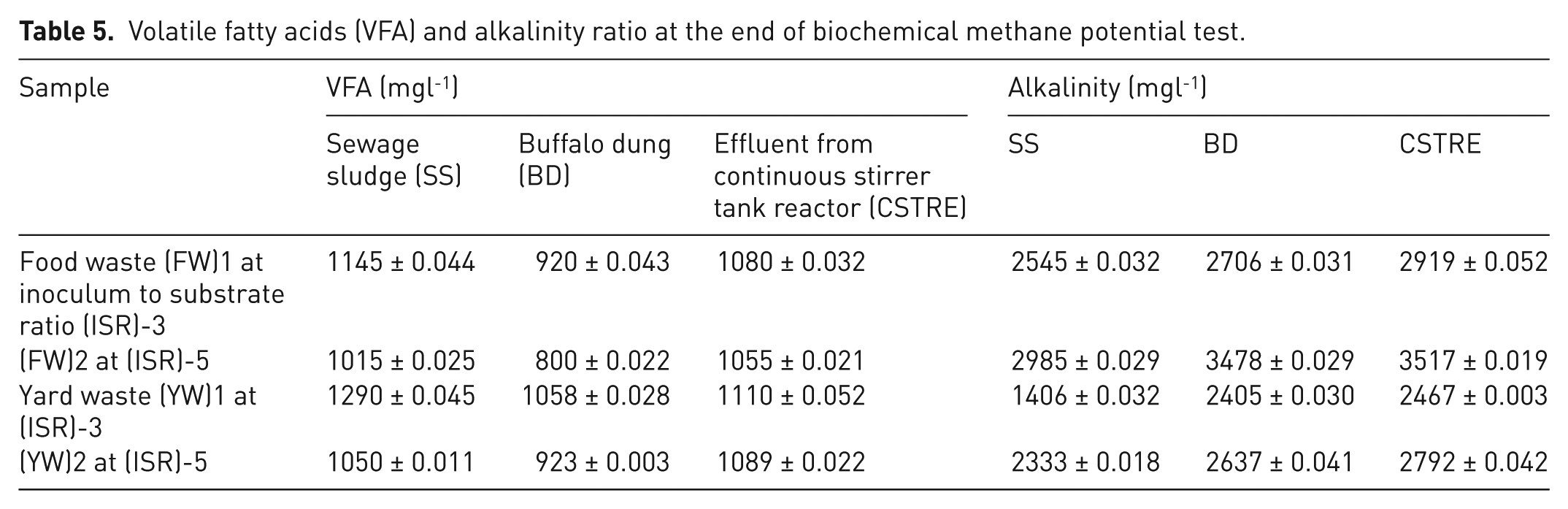
The obtained values of VFA of BMP batches with SS, BD, and CSTRE were ranged from 1015 to 1290, 800 to 1058, and 1055 to 1110 mgl-1 accordingly (Table 5). The alkalinity of BMP batches by using SS, BD, and CSTRE was observed in the range of 1406 to 2985, 2405 to 3478, and 2467 to 3517 mgl-1 correspondingly. The alkalinity and VFA result was lowest and highest respectively because of decreasing pH in the case of YW with SS at ISR of 3 due to which inhibition was observed in this inoculum at that ratio.
The effect of inoculums on methane production
By using the commonly cited first order decay estimator equation (Browne and Murphy, 2013; Zhang et al., 2012), the effects of inoculums on methane production were observed
where, S is the cumulative specific methane yield at a time t, Sm is the maximum methane yield and k is called the first order decay constant. The cumulative methane data points from each BMT test at all ISRs were estimated and plotted by using simple Excel tools. Effect of inoculum on the methane production of substrate at ISR-3 and ISR-5 is represented in Figures 6 and 7 respectively.
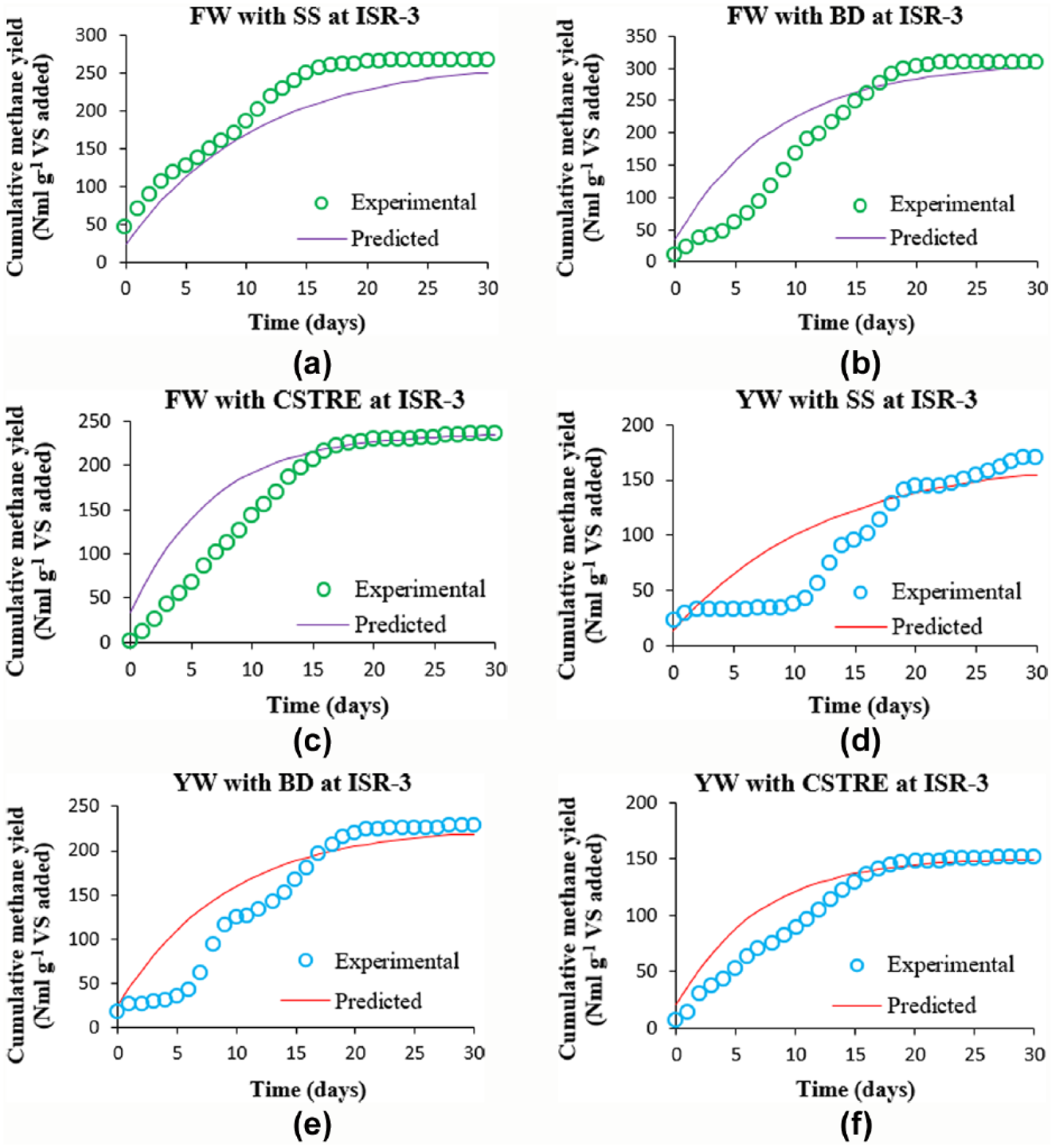
Effect of inoculums on the methane production of food waste (FW) by using: (a) sewage sludge (SS); (b) buffalo dung (BD); and (c) effluent from continuous stirrer tank reactor (CSTRE) and yard waste (YW) by using (d) SS, (e) BD, and (f) CSTRE at inoculum to substrate ratio (ISR)-3.
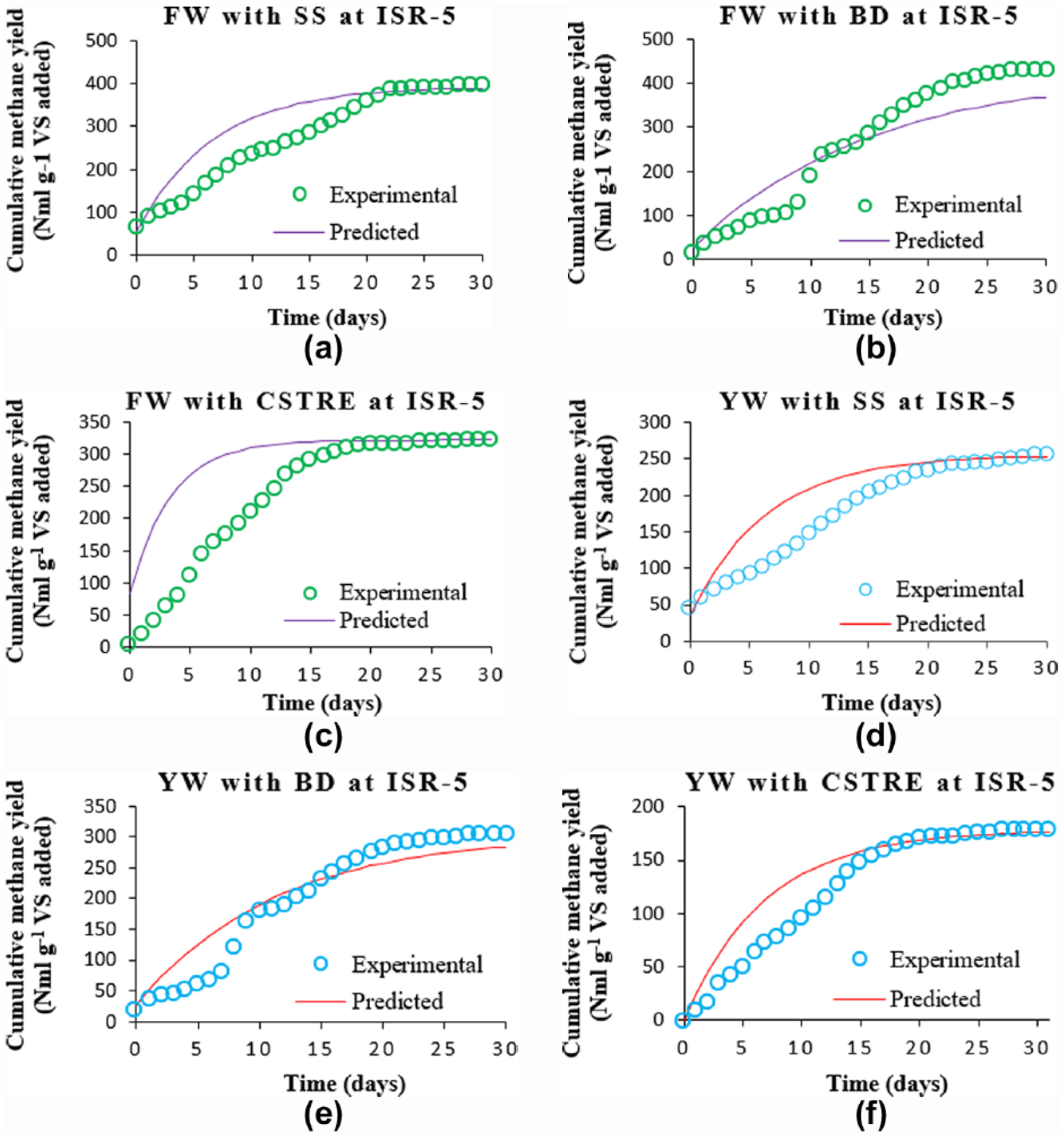
Effect of inoculums on the methane production of food waste (FW) by using: (a) sewage sludge (SS); (b) buffalo dung (BD); and (c) effluent from continuous stirrer tank reactor (CSTRE) and yard waste (YW) by using (d) SS, (e) BD, and (f) CSTRE at inoculum to substrate ratio (ISR)-5.
The list of values regarding first order decay constants (k) and coefficient of determinants for each BMP test with all inoculums and ISRs is given in Table 6.
Kinetic constants and co-efficient of determination for biochemical methane potential tests.
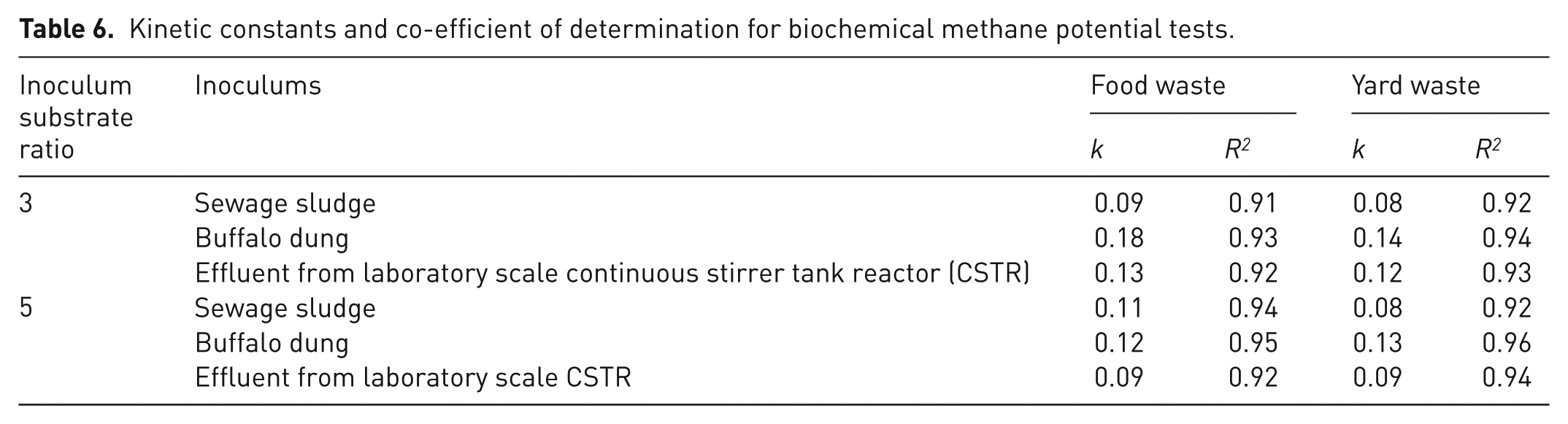
Table 6 and Figures 6 and 7 report that the first order decay model gave a good fit for BMP of FW (R2 = 0.93 and 0.95 and k = 0.18 and 0.12 at ISR = 3 and 5 respectively) and YW (R2 = 0.94 and 0.96 and k = 0.14 and 0.13 at ISR = 3 and 5 respectively) with BD inoculum. The results of the first order decay model were in favor of the BD inoculum. In this case, y rate was reached in approximately 12 days which is slightly greater than studied by Browne and Murphy (2013) in which, the methane yield of FW was reached within 10 days with acclimatized inoculum at ISR-3. This means the PCMSW are rapidly degradable substrates under favorable conditions. From this it can be said that BD is a good AD inoculum which is rich in anaerobic microbes and trace elements.
Comparison of results with literature
The BMP results of the present study show approximate similarity with the literature BMP values especially with BD inoculum. High methane production from FW has also been reported from other authors. Banks et al. (2011) observed that source separated FW have more methane yield than mechanically derived OFMSW. This is also indicated by Walker et al. (2009) and Cecchi et al. (2003). The BMP of FW with BD inoculum is within the range or near to the methane potential of FW obtained from literature as given in Table 7.
Comparison of biochemical methane potential (BMP) results with literature.
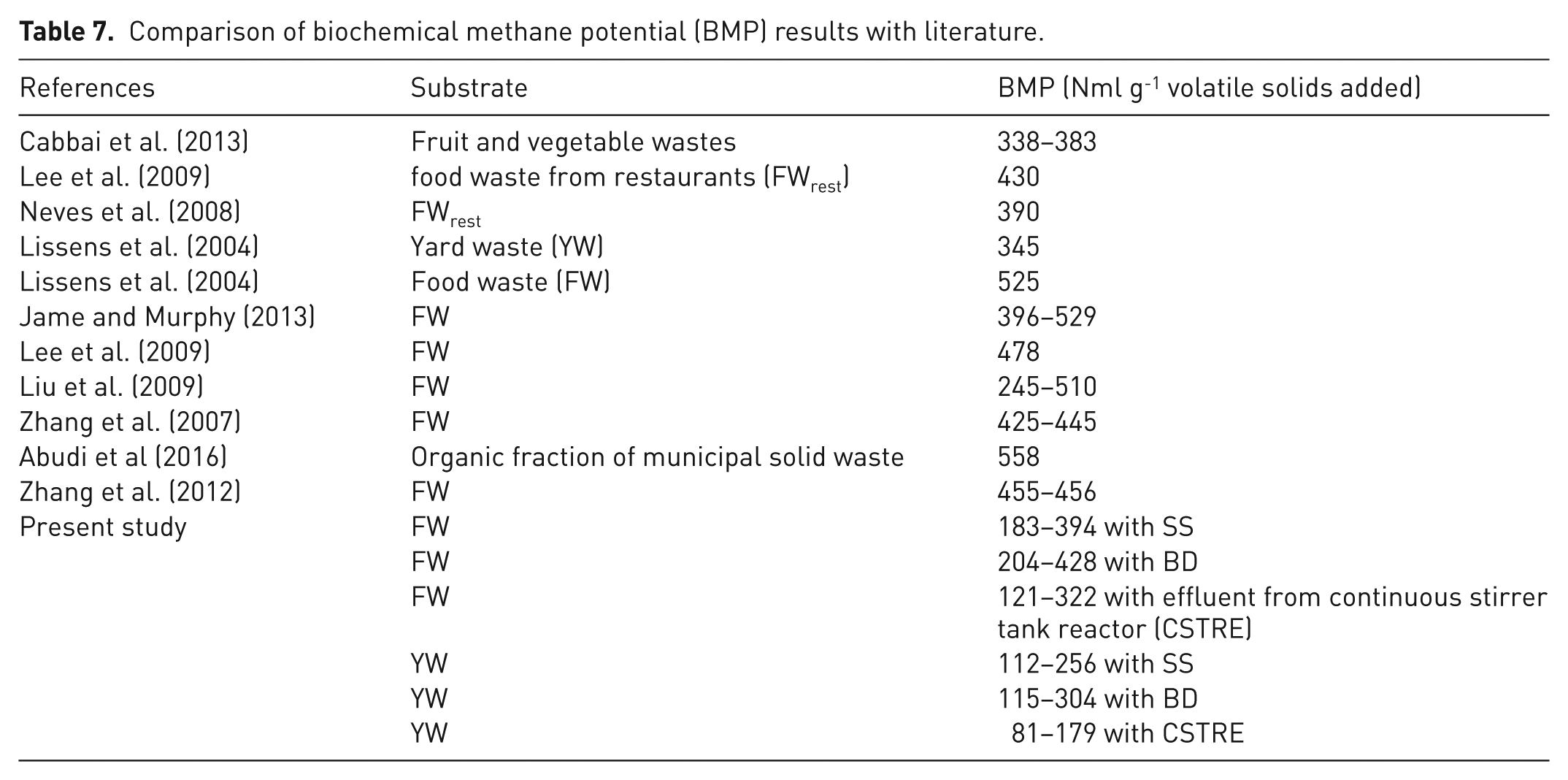
Moreover, the BMP of FW by using SS and CSTRE of the present study show smaller results than literature values. Similarly, BMP of YW with SS and CSTRE is in less agreement with the results of other authors without BD inoculums (Table 7). This variance between the results of the present study and previous studies might be because of various factors which include heterogeneous nature of substrates, type of substrate generated from region under different climatic conditions, etc. Also type of inoculums, its composition and source of generation, and ISRs influence the rate of generation of methane from various substrates. Besides that, the results of BMP of biomass also vary because of operating conditions of the BMP test system such as temperature, loading rate, rotation per minute (rpm) of mixture, etc.
Contribution of energy from PCMSW into the total energy supply of Pakistan
A rapid growth in population and the economy of the country have pressurized the federal government to invest and revise its energy portfolio. Despite being rich in renewable energy resources, Pakistan is not using these resources significantly due to lack of policy and technological advancement (Zuberi et al., 2015). Arbab and Faisal (2015) report that energy shortage is a perennial problem in Pakistan stemming from policy and planning failures. In this regard, the power generation potential of PCMSW was estimated by using mathematical equations as given in Table 8.
Equations for energy recovery and power generation potential of waste.
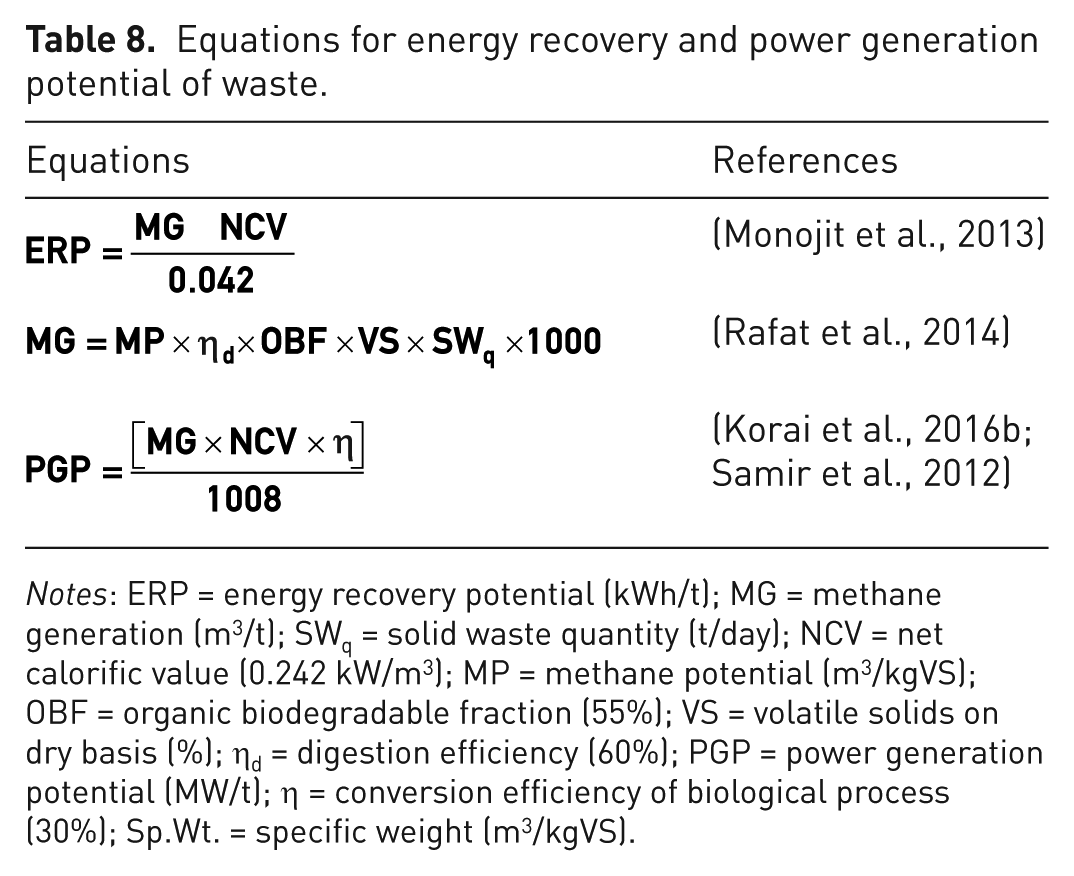
Notes: ERP = energy recovery potential (kWh/t); MG = methane generation (m3/t); SWq = solid waste quantity (t/day); NCV = net calorific value (0.242 kW/m3); MP = methane potential (m3/kgVS); OBF = organic biodegradable fraction (55%); VS = volatile solids on dry basis (%); ηd = digestion efficiency (60%); PGP = power generation potential (MW/t); η = conversion efficiency of biological process (30%); Sp.Wt. = specific weight (m3/kgVS).
The potential contribution of energy from PCMSW has been estimated to be 0.25% as shown in Figure 8(b) along with the present primary energy consumption of the country (GoP, 2015) as in Figure 8(a) and findings of previous studies, conducted in 2015 (Zuberi et al., 2015) and 2013 (Zuberi et al., 2013) as illustrated in Figure 8(c) and (d) respectively.
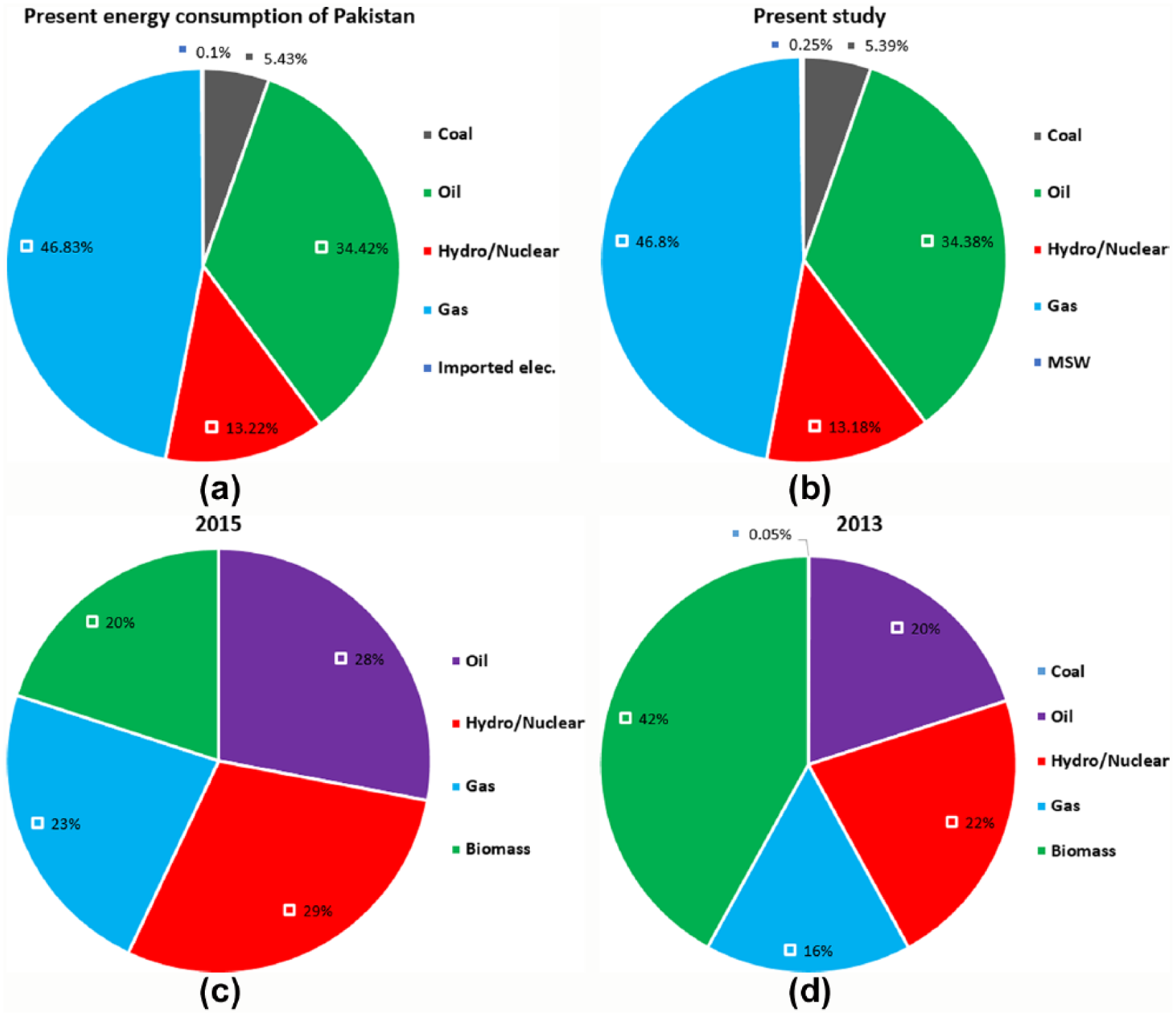
Contribution of energy from different sources in Pakistan.
In Pakistan, the primary energy consumption has grown at the annual compound growth rate of 3.6% and is shared by coal (5.43%), oil (34.42%), hydro/nuclear (13.22%), gas (46.83%), and 0.1% from imports (GoP, 2015) as show in Figure 8(a). In this study, it has been estimated that about 60.36 million m3/year power can be generated by AD of PCMSW in Pakistan. The result of a previous study (Muhammad and Kumar, 2013) shows that 244 million m3/year power can be generated from OFMSW in Pakistan. The difference between power generation potential of the previous study (Muhammad and Kumar, 2013) and the present study is because of the contribution of different waste components. In the present study, only PCMSW were considered to analyze their feasibility in terms of power generation. Whereas, Muhammad and Kumar (2013) predicted power generation potential from OFMSWs.
Future perspective of the study and its applications
The energy demand is mounting over time in Pakistan with economic growth due to increasing population and is projected to reach 142 million tonnes oil equivalent by 2025 (Arbab and Faisal, 2015; PIEP, 2013). Nowadays, deriving energy from waste products is becoming increasingly important throughout the world. In Pakistan, MSW is either dumped in low lying areas or burned in the open atmosphere. A huge quantity of MSW is generated in Pakistan which has significant energy potential as estimated in this study (i.e., 60.36 million m3/year). It is clear that the complete replacement of imported energy can be obtained by converting PCMSW into energy through biological processes in Pakistan (Figures 8a and 8b). Not only this, but also 0.91%, 0.17%, 0.44%, and 0.1% of coal, oil, hydro/nuclear, and gas respectively can be reduced through the digestion process of PCMSW in the country. The energy from PCMSW could be used in the country in the form of biogas leading to power generation by AD technology. It is recommended that co-digestion and tri-digestion of FW and YW must be performed by using BD as an inoculum at ISR-5 because co-digestion and tri-digestion have many advantages over digestion of a single substrate. Low C/N ratio and low pH during AD of individual components of MSW cause instability and deficiency of the AD process (Lin et al., 2011). Moreover, lower pH and C/N ratio result in the accumulation of VFA which causes AD to become unstable and, in turn, leads to lower methane production (Garcia et al., 2011). To obtain optimum values of C/N ratio, pH, etc., substrates with higher C/N ratio mixed with substrates of lower ratio before starting co and/or tri digestion processes are required. Other benefits of co and/or tri-digestion over AD of single substrate are to increase biogas yield, to produce better quality of sludge, to improve C/N ratio of substrates, etc. (Álvarez et al., 2010; Brown and Li, 2013). The segregation of FW and YW from MSW at the source of generation should be implemented at national level as both materials are renewable energy sources. Moreover, policies regarding segregation of MSW at sources, selection of appropriate treatment technologies with respect to components of MSW, and usage of products of AD should be made at the provincial and national levels.
Conclusion
The urban environment of cities in Pakistan is degraded and becoming unsustainable for citizens because of the open dumping of MSW. The entrances and exits of cities are mostly accumulated with burning of solid waste. This study was conducted to evaluate the feasibility of PCMSW for biomethane production at two ISRs by using various inoculums at Hyderabad, Pakistan. All the batch digestion was performed under mesophilic temperature (37°C) for 30 days. The average methane potential of PCMSW was observed higher at ISR-5 by using BD and lower at ISR-3 by using CSTRE. At all ISRs, average methane potential of FW (236–428Nml g-1 VS added) was higher than YW (151–304Nml g-1 VS added) by using different inoculums. The cumulative methane potential of substrates was modelled by the first order decay predictor equation. Results of this model showed good fit to the methane potential of FW as well as YW with BD inoculum at all ISRs. Moreover, power generation potential of PCMSW was estimated to be 60.36 million m3/year. The finding of study concludes that PCMSW are more feasible for power generation in Pakistan rather than dumping MSW along with other wastes. The study also leads to conclude that the complete replacement of imported energy and cumulative reduction up to 1.62% in other primary energy sources can be obtained through AD of PCMSW in Pakistan.
Footnotes
Appendix
FW = Food waste
YW = Yard waste
TS = Total solids
BD = Buffalo dung
VS = Volatile solids
SS = Sewage sludge
TA = Total alkalinity
LC = Lignin contents
BF = Buswell formula
MC = Moisture content
VFA = Volatile fatty acids
pH = Power of hydrogen
AD = Anaerobic digestion
RPM = Rotation per minute
C/N = Carbon nitrogen ratio
MSW = Municipal solid waste
MDF = Modified Dulong formula
ISR = Inoculum to substrate ratio
FWrest. = Food waste from restaurants
MPT = Theoretical methane potential
BMP = Biochemical methane potential
CSTRE = Effluent from continuous stirrer tank reactor
SAMPTS = Semi-automatic methane potential test system
PCMSW = Putrescible components of municipal solid waste
Acknowledgements
The authors would like to thank and appreciate the support of the Institute of Environmental Engineering and Management, Mehran University of Engineering and Technology, Jamshoro during experimental working in the laboratories.
Declaration of conflicting interests
The authors declared no potential conflicts of interest with respect to the research, authorship, and/or publication of this article.
Funding
The authors received no financial support for the research, authorship, and/or publication of this article.