







Abstract
Waste pickers (WPs) play an indispensable role by helping to control municipal solid waste (MSW). However, they constitute the entry-level workforce of the waste recycling industry and receive little attention from the general public. In China, approximately 4 million WPs make their living by collecting MSW recyclable materials. To assess the role of WPs, an extensive social survey including urban management decision-makers, recycling industrial circle insiders, WPs, as well as common citizen respondents has been conducted in the city of Nanjing, China. The results confirmed that 70–80% of recyclable MSW materials were collected by WPs in the informal sector, which are an integral component of the waste recycling system. In Nanjing, the recyclable material collected annually by WPs is about 505,000 tons, which creates annual economic value of about 78.6–84.7 million USD. However, WPs account for only 6.8–7.3% of the entire industrial chain of the recycling economy. In Nanjing, WPs are able to save an annual MSW disposal cost of about 17.6–22.0 million USD. The resource recovery rate is also increased by 1.9–8.0%. The survey results support the experience of establishing a community-based semi-official picker organizational framework, accompanied by relevant laws, regulations, and preferential policies that would improve the resource recovery rate and pickers’ living and working conditions in order to achieve more effective and hazard-free MSW resource utilization. It is anticipated that the results of this research will be instrumental for the improvement of the MSW recycling system and WP management in other cities in China and other developing countries.
Introduction
The fast-growing economy and urbanization have led to the rise of municipal solid waste (MSW) worldwide (Kaushal et al., 2012). Although developed and developing countries are trying hard to reduce the emission of solid waste (Ali, 2006), MSW is projected to exceed 2.2 billion tons until 2025 (Hoornweg et al., 2013). The MSW load is especially large in China, which has approximately 0.7 billion people living in cities (He et al., 2016), causing MSW to exceed 3 million tons in 2015 (National Bureau of Statistics China, 2016). However, MSW disposal has been left out of the top-priority area of urban management, and the limited financial resources of most Chinese cities have been preferentially applied to infrastructure and public facilities, including public transport, electricity, and water supply; hence, current urban management decision-makers have to face the consequences of this short-sighted policy (Chan, 2016). A failure of the collection, disposal, and recycling system of MSW to keep pace with the increasing MSW volume is vividly illustrated by nearly a thousand “garbage hills” of various sizes covering an area of 5.33 km2 at the outskirts of China’s capital, Beijing (Tong and Tao, 2016). This “garbage siege” phenomenon is common in other developing countries (Han et al., 2016; Hird, 2013; Zaman and Lehmann, 2011). Meanwhile, developed countries attach great importance to the CO2 emission reduction achieved by MSW recycling, since MSW increases urban greenhouse gases (Arafat et al., 2015; Hoornweg et al., 2013; Intergovernmental Panel on Climate Change, 2006).
Waste classification and separation being the critical link in the recycling system, the European Union, Australia, and some developing countries have implemented a strict waste classification system to ensure that most recyclable resources are separated from household waste, which greatly simplifies waste disposal (Wen et al., 2014). The Chinese government has also tried to tackle problems posed by MSW and launched waste source separation programs in eight pilot cities in 2000 (Tai et al., 2011; Zhang et al., 2010). Unfortunately, all of these pilot programs have experienced very slow progress, and no effective source-separated collection system has yet been established in China (Zhang et al., 2016). In 2012, a so-called Green House program was established in Beijing as the first formal central waste sorting program for a community in China with recorded daily waste separation data (Zhang et al., 2016). However, at present, this program is reported to be running with huge financial losses because, while its benefits from waste reduction are distributed among the whole society as positive environmental externalities, in the absence of mandatory measures for enforcing residents to source separate waste, Beijing residents avoid implementation of the Green House program since it is not supported by the central government (Zhang et al., 2016). Furthermore, some studies have found that the living habits and weak environmental awareness of urban residents and the defective design of the current waste management system have a significant impact on recycling in China (Han and Zhang, 2017; Li et al., 2009). However, this drawback creates favourable conditions for the marginalized special group of waste pickers (WPs).
The WPs play an important role throughout MSW collection, sorting, and recycling in developing countries such as India Brazil (Wilson et al., 2006), South Africa (Schenck and Blaauw, 2011), and China (Zhang et al., 2010). Ideas of scientifically justified management, work coordination, and cost-effective guidance of this large group of informal MSW recycling helpers have been floated, but cannot be grasped by Chinese urban decision-makers. Their acceptance of these ideas requires a multi-factor comprehensive approach since the problem involves not only the survival of a large low-income group and the recycling of solid waste but also other aspects, such as public health and social security. So far, recent efforts made in cities such as Beijing, Hangzhou, and Xiamen to implement the innovative modes of “government direct management”, “assistant management-corporatization”, or “marketization” of WP activities have not yielded satisfactory results (Havukainen et al., 2016; Liu et al., 2015; Xiao et al., 2017).
In light of the above topical issues, we designed and conducted a social survey of the management decision-makers, recycling traders, and residents in the city of Nanjing, China. Therefore, the aims of this study are as follows: (a) investigating and mapping the socioeconomic profile of WPs in the current MSW management system; (b) estimating the economic benefit of the picker-related informal sector in the MSW recycling system; and (c) establishing a feasible community-based integrated management mode, which can improve the standardized management of MSW recycling and increase the garbage recovery rate as well as the income of picker groups. This study may provide a useful reference for MSW management in China and other developing countries.
Current debates on WPs in China
Waste pickers, who are also referred to as garbage pickers, recyclers, reclaimers, scavengers, and waste salvagers, are small-scale, self-employed agents constituting the bottom tier of the urban informal sector (Hayami et al., 2006; Schenck and Blaauw, 2011). Socioeconomic studies have shown some differences in the classification and stratification of WPs in the informal sector throughout different countries (Dias, 2016; Ferri et al., 2015; Wilson et al., 2006; Ghisolfi et al., 2017). In China, this term is used in a broader sense, being applied not only to street WPs, who collect the recyclables and useful waste from public places and trash cans, or those who perform the same activities at informal garbage dumps, but also to higher-level waste traders, such as street hawkers or junkmen, who buy recyclables from urban inhabitants for reselling, or even to municipal street cleaners and garbage collectors (Mian et al., 2017). However, the mainstream opinion toward informal WPs is negative or prejudiced in China. These current debates on WPs in China are as follows:
WPs have no official status or organization that can manage and control their activities within the legal field, which makes them unable to attain social status or security (Colombijn and Morbidini, 2017). Most WPs have no fixed abode and thus fall under the urban category of “the homeless”. Therefore, some criminals easily evaded punishment by hiding in WPs. Meantime, some WPs tend to steal, while they cannot pick enough valuable materials for their livelihood. This law-breaking reputation is exacerbated by the widespread violation of China’s national family planning policy among WPs (Jiang, 2009).
WPs are unable to change their relative poverty situation, and some of their actions deteriorate the city image. Indeed, WPs do not have access to the current social security system in China, which is intended for urban residents. Therefore, parts of their wages are lower than the urban minimum subsistence level, such as street pickers. They have a weak standing in terms of housing, medical care, education, and so forth, which deteriorates the living habits, educational level, and outlook of their next generations. Thus, the activities of WPs in ripping open bags of garbage, combined with their physical appearance which is often dirty or unkempt, strengthen broad social disapproval of these activities (Zhang, 2007).
There exists a risk of WPs to urban public health. Most of WPs violate sanitary norms due to the lack of basic medical and epidemic prevention conditions, while their daily contact with garbage makes them prone to germ infections. Moreover, some of them pick up garbage in the places with a high disease infection rate, including hospitals and epidemic prevention stations, without realizing the related hazards. Due to the high operation fluidity of pickers, their possible infections are easily spread among larger urban groups, thus jeopardizing the urban public health (Yang, 2016).
WPs may proliferate fake goods. In order to maximize their economic benefits, some WPs act as indirect accomplices to counterfeiters, that is, illegal manufacturers of fake goods, by reselling them packaging or glassware of popular-brand products found in the process of garbage collection and disposal (Dong, 2006).
However, WPs in China constitute a huge group of more than 4 million people, and their livelihood is relevant to the stability and inclusive development of Chinese society (World Bank, 2014; Zhang et al., 2010). In China, some cities have adopted various efforts to regulate the incorporation or differentiation of WP groups. The two most common patterns are the market management of collection and the direct use of administrative power by the government (Fu, 2004). Unfortunately, because of formal and passive management by the government or the company collecting fees associated with the WP, the results obtained through these efforts have been dispiriting (Havukainen et al., 2016; Li, 2002; Xiao et al., 2017).
The emergence of informal WP groups can be treated as an inevitable by-product of a certain stage of socioeconomic development. In particular, in China, a large urban–rural economic gap is observed in the available dual system. The income from picking waste is usually higher than that from rural farming. The main reason is the lack of arable land per capita, which is less than 0.10 hm2 (Kuang et al., 2016). This accounts for a massive overflow of surplus rural labour and their migration to cities. At present, there are more than 0.6 billion rural residents in China (Liu et al., 2013), and the inadequate job skills of most surplus rural labor migrants limit their opportunities to find formal employment in the city, leading them to take on work as WPs. Finally, the MSW management systems of all developing countries are seriously lagging behind urban development, and China is no exception (Dong et al., 2001). MSW classification and recycling depend entirely on municipal governments’ financial resources, while that adapted to the market economy have not yet obtained the required support or manifested their viability or/and economic feasibility. Meanwhile, by the year 2000, the number of formal waste junk shops in Beijing was less than 200, as compared to 2000 in 1965, with the greatest reduction occurring after 1980 (Liu et al., 2015). This left a large survival space for informal WPs and reflected the evolution of their contribution to MSW management.
Previous studies on WPs in India (Hayami et al., 2006), Brazil (Wilson et al., 2006), and South Africa (Schenck and Blaauw, 2011) have established their role in the MSW informal economy. However, only a few studies have focused on the social contributions of WPs in China (Fei et al., 2016; Li, 2002; Zhou et al., 2008). In China, a WP sorts and utilizes about 40–50 kg of recyclable waste on a daily basis, thus alleviating the problem of the deficient managing capacities of formal MSW utilities (Zhang, 2007). In Beijing alone, 100,000 WPs are able to recycle about 1.5–2 million tons of valuable materials annually, which amounts to 20% of the city’s total MSW (Guo, 2004). However, in other developing countries, for example, in Jakarta, Indonesia, 37,000 waste pickers recover 25% of the city’s waste (378,000 tons a year) (Medina, 2007). Mexican cities found that nearly 3,000 informal refuse collectors collect 353,000 tons of waste a year (Medina, 2008). Not only can a waste disposal fee of 300–500 million CNY (43.5–75.5 million USD) be saved every year, but a recovery value of about 10 billion CNY (145 million USD) can also be created, which makes WPs “the most prominent actors of the Chinese resource recycling,” according to Dong (2006) and the Nanjing Environmental Protection Bureau (2016). Therefore, the decision-makers on urban management policy can no longer ignore the indispensable effect of the marginalized group of WPs on MSW disposal, the deprived standing of WPs in the current resource-recycling industry, and their promising potential in the future of this industry.
Methodology and data collection
Study area
Nanjing is the capital of Jiangsu Province, located in the Yangtze River Delta area at the centre of east China at 31°14′~32°37′ N, 118°22′~119°14′ E. In 2016, the total population of the city was 8.2 million, with an official urban population of 6.7 million. The urban built-up area is 923.8 km2, and the per capita gross domestic product (GDP) is $19,000. In the current economy of the city, service industries are dominating, accounting for about 60% of the city’s GDP; the financial industry, culture industry, and tourism industry are the top three of these industries. Additionally, the industries of information technology, energy saving and environmental protection, new energy, smart power grid, and intelligent equipment manufacturing have become pillar industries. The MSW generation of Nanjing in 2016 amounted to 3,139 million tons (Figure 1a, Table 1), consistent with the growth of the urban population and economy (Figure 1b). The single disposal method used in Nanjing leads to a low incinerating disposal rate of less than 10%, and most MSW is treated as landfill waste (Nanjing Environmental Protection Bureau, 2016). At present, there are five formal refuse landfills in Nanjing. Multiple historically formed “garbage hills” exist in three districts (Pukou, Jiangning, and Xixia), and there are about 20 million tons of stock waste (Ma et al., 2017). This opens up work opportunities for informal WPs, whose number in 2015 was estimated at around 31,000, according to the results of the 1% census of the Nanjing Statistical Bureau and Civil Affairs Bureau (Nanjing Bureau of Statistics, 2016).
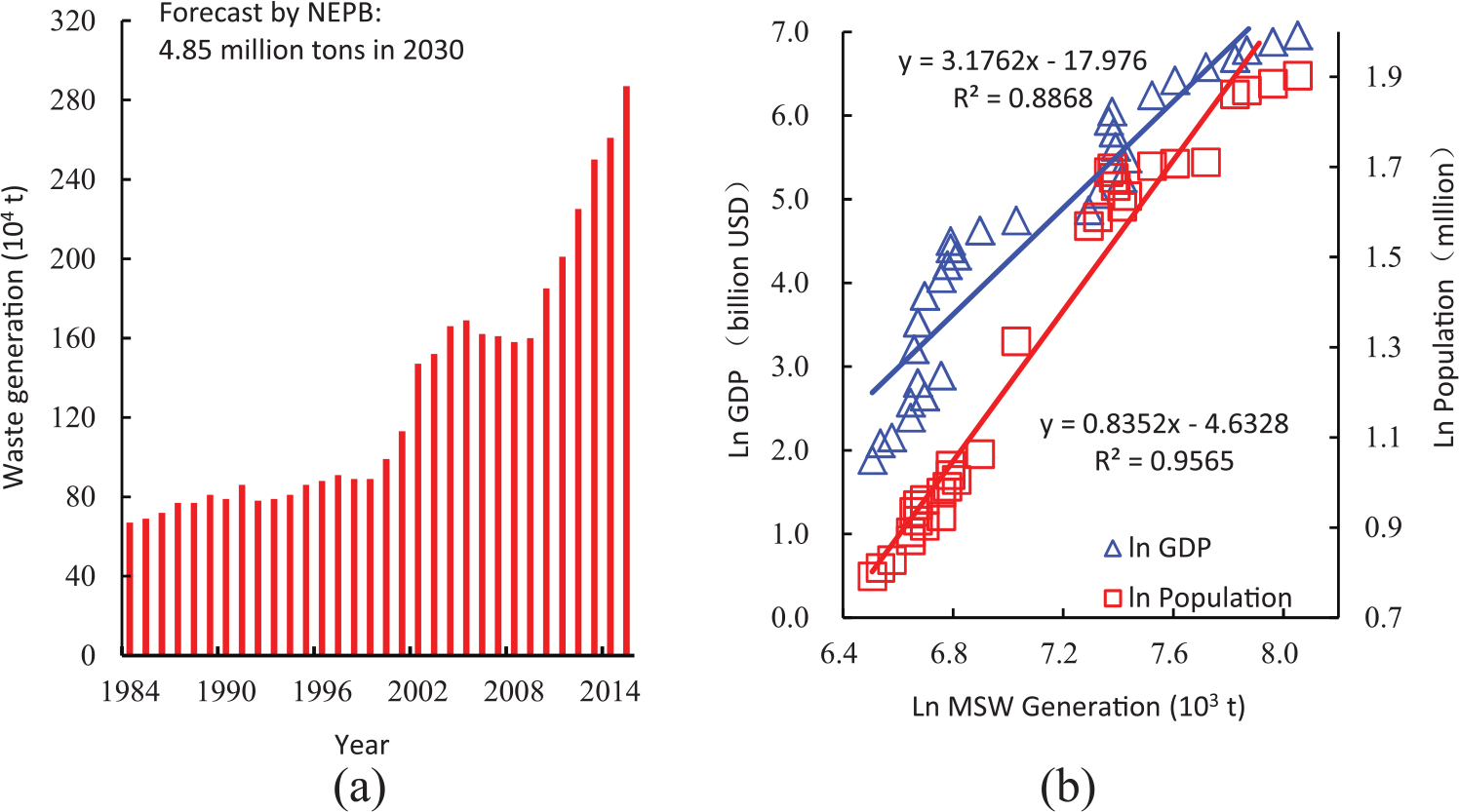
(a) Evolution of municipal solid waste (MSW) generation in Nanjing, China, in 1984–2016; and (b) correlation of MSW with gross national product and urban population.
The municipal solid waste composition in Nanjing, China (%).
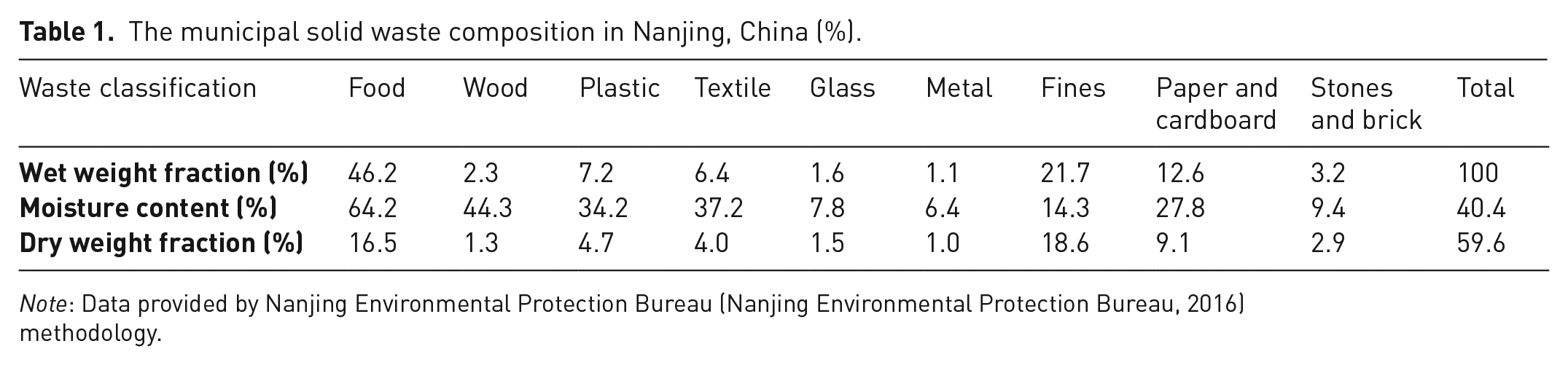
Note: Data provided by Nanjing Environmental Protection Bureau (Nanjing Environmental Protection Bureau, 2016)
methodology.
The informal economy sector of MSW in China is difficult to assess via the official statistical reports and requires a special investigation. Since the prices of useful recycling waste are not regulated but fully market-oriented, there is hardly any cross-regional sale of the recycling waste recycled by pickers (Schrnck and Blaauw, 2011). Therefore, through pickers’ informal waste recycling, the waste eventually flows into the recycling industrial system of the formal economy. In order to clarify the input of WPs into the waste recycling system, a qualitative and quantitative research framework was developed (Figure 2):
The social survey was an indispensable part of this research. Through this survey, we obtained the first-hand information of the WPs that revealed the disadvantages of the current MSW management and the pickers’ working and living conditions.
Using a flowchart, we plotted a map profiling the formal and informal sectors in MSW recycling in order to provide a brief overview of the socioeconomic profile of MSW recycling in Nanjing, China.
The impact of WPs on MSW recycling was assessed. The economic value obtained from the WP informal recycling sector can be assessed by recycled material flow analysis, which helps compensate for the lack of tracking of informal economic activities by the government statistics department (Sembiring and Nitivattananon, 2010). This analysis provides a systematic evaluation of the flow and storage of the recycled material under study at a specific time and place, which is related to the informal waste recycling sector of the MSW disposal system (Brunner and Rechberger, 2003). The cost–benefit analysis (CBA) used in this research was based on the recycled material flow model, and the following equation was used to estimate the economic value of the informal waste recycling sector related to WP (Sasaki et al., 2014):
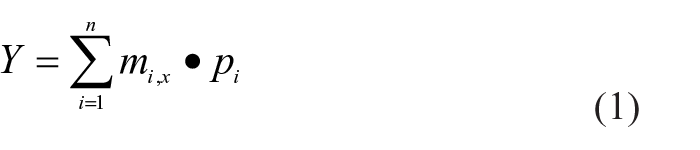
where Y is the economic value of the informal waste recycling sector relevant to WPs, mi,x is the number of recycled materials collected by different pickers, i represents the type of material (such as iron, copper, paper, plastics, glass, etc.), x represents the type of picker (such as street pickers, itinerant buyers, dump scavengers, and municipal cleaners), and pi is the price of material type i.
A model of an enhanced MSW recycling system with established community-based picker management was developed for improving waste recycling and policy implementation.
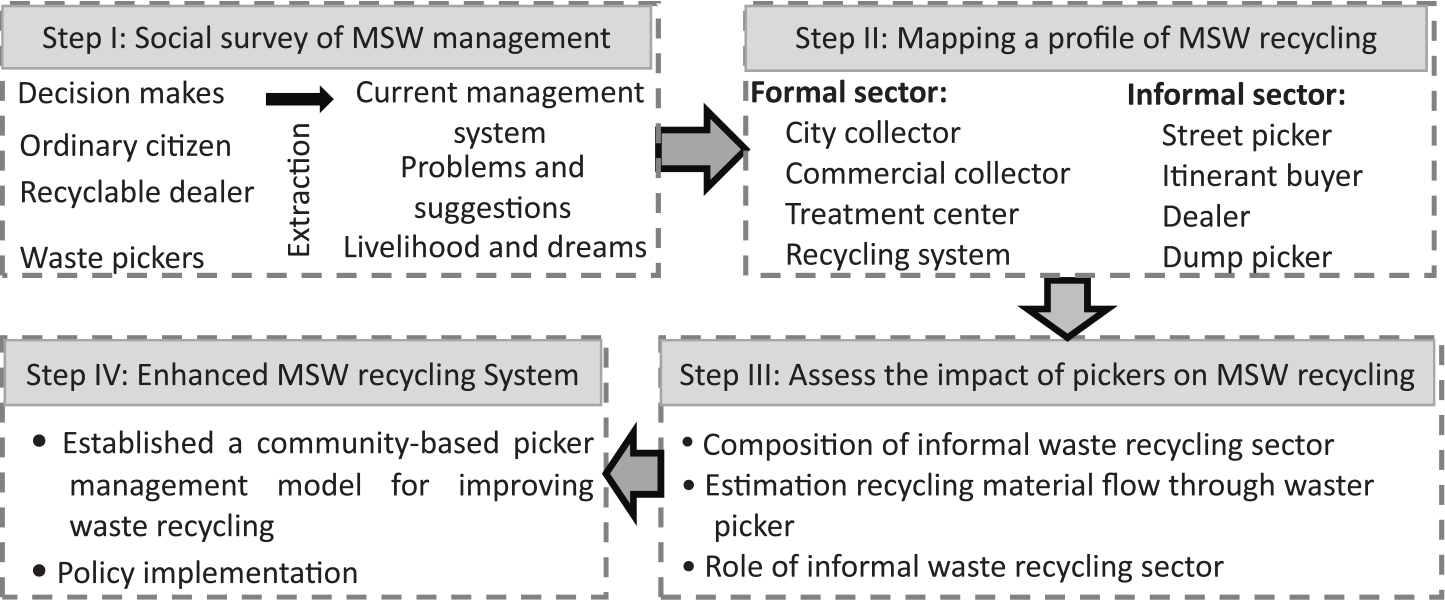
Research framework for waste recycling through pickers.
Data collection
Pickers are considered “hard-to-reach” research subjects due to the nature of their work (Viljoen et al., 2012). Some pickers do not have a definite residence, wandering around the city during the day to collect waste, and their work completely depends on the availability of waste (Viljoen et al., 2016). Therefore, it is difficult to ensure that their sampled data probabilities satisfy the normal distribution. Based on the research of Blanche et al. (2007), snowball sampling, as a type of non-probability sampling technique, was applied in this study for picker data collection. Because of pickers’ low level of education, a face-to-face interview survey was used instead of a questionnaire survey. Thirteen interviewers were selected and recruited among graduate students with social survey experience to participate in the field investigation. Within the framework of this research, three typical city blocks of Nanjing and one specific high-technology location with an independently operating MSW management system were each investigated three times, in April, June, and October of 2016 (Figure 3). Fenghuang West Street is a typical residential area in Nanjing, whose visitor flowrate is close to 1.32 million per year (Nanjing Bureau of Statistics, 2016). Hanzhong Road, which is adjacent to the central business district, contains hundreds of shops and hotels. Yaohuamen Street is a suburban area surrounded by a landfill, dump, and shanty town. Singapore-Nanjing Eco-tech Island, which has an MSW management system, is independent; it was used as a control group with zero informal waste-picking input to MSW recycling.
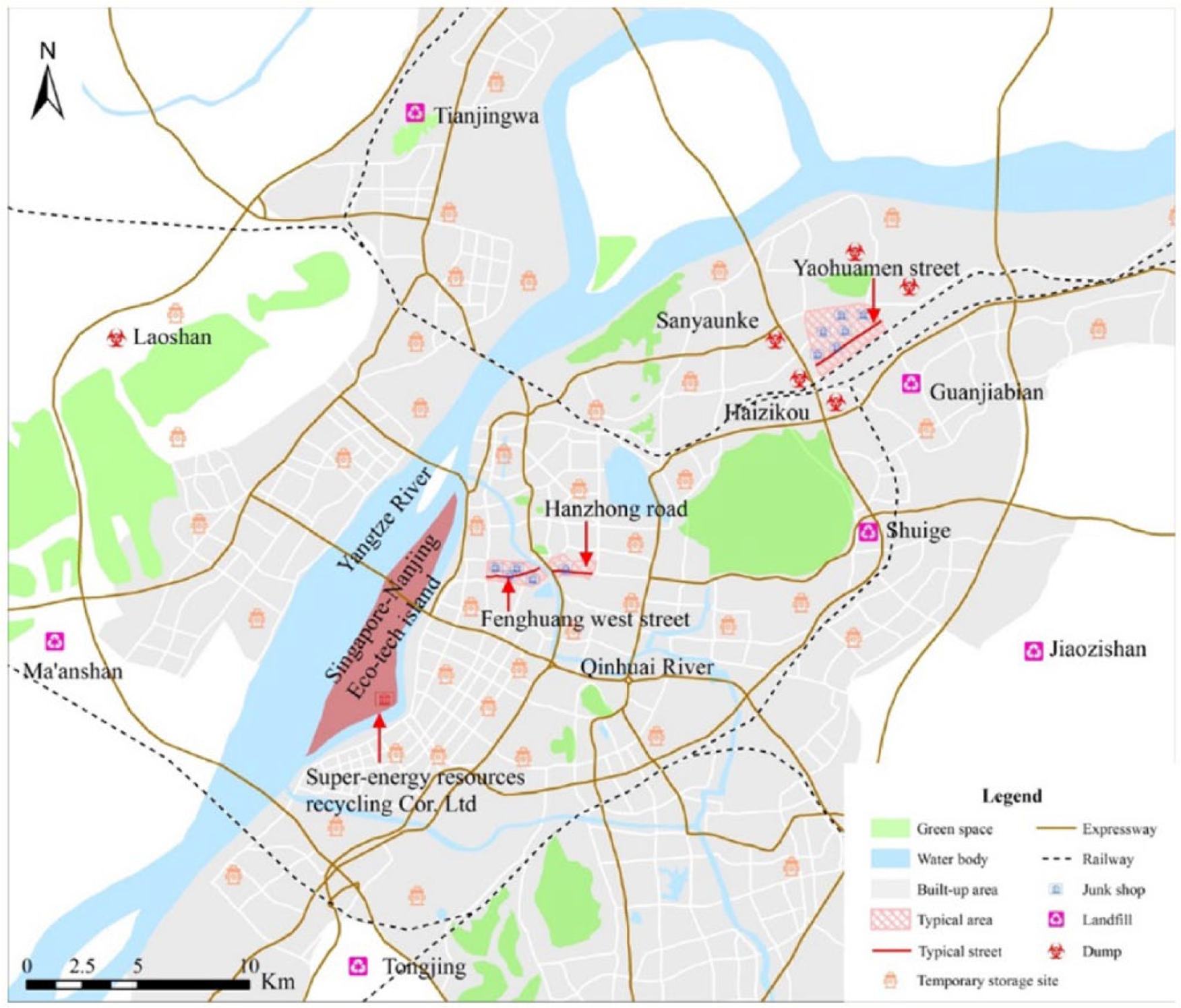
The city districts in Nanjing, China, covered by the field investigation in this research.
In the above research area, 422 WPs, who participated in all three interviews and account for 1.36% of the total population of WPs in Nanjing, were investigated through the face-to-face interview survey at 11 fixed private junk shops of Nanjing. In order to estimate the input of WPs into MSW recycling, from June to October 2016, the investigators were stationed at 11 junk shops, wherein the source, category, and quantity of recycling waste were recorded. Equation (1) was then used to calculate the income of WPs.
In addition to the WPs, 12 MSW management offices that centralized treatment of household garbage (belonging to the Nanjing Environmental Protection Bureau), 8 WP management organizations which focused on the individual behaviour of WPs under the Nanjing Urban Management Law Enforcement Bureau, and 40 related people of the waste recycling industry, who worked in the 11 waste junk shops, were also interviewed by the survey team. Additionally, a random interview survey of 80 ordinary citizens was performed to collect their opinions and suggestions on MSW management optimization. All ethical norms were strictly followed in this research. All of the analyses were conducted using SPSS 19.0 software, and the significance level was set at 1%.
Results and discussion
Socioeconomic data of 422 WPs interviewed in Nanjing
The socioeconomic characteristics of the surveyed WP group, containing 422 interviewed persons, are depicted in Table 2, including their breakdown by gender (53.3% male and 46.7% female), age (44.3% over 60, 8.8% below 18), education level (over 32% being illiterate), and so forth. In this social investigation, waste-related occupation types breakdown as follows: 43.8% of interviewed persons were street pickers; 21.15% were dump scavengers; 18.7% were municipal cleaners; 13.7% were itinerant buyers; and 2.65% were junk shoppers.
Socioeconomic data of 422 waste pickers (WPs) interviewed in Nanjing, China.
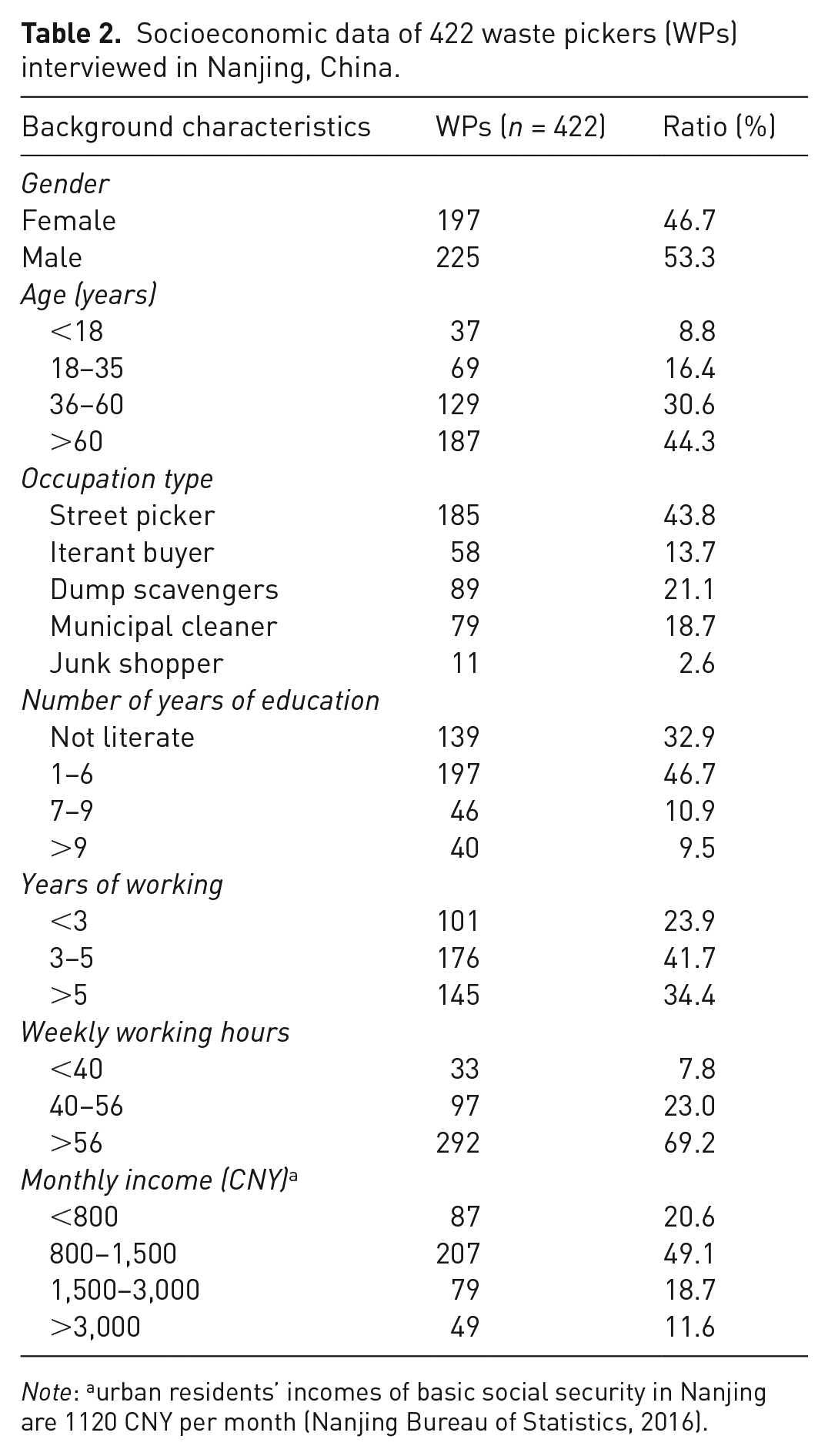
Note: aurban residents’ incomes of basic social security in Nanjing are 1120 CNY per month (Nanjing Bureau of Statistics, 2016).
Mapping a socioeconomic profile of MSW recycling in Nanjing, China
Based on the interview survey of the decision-makers of MSW management, personnel of waste recycling industry, citizens, and pickers, a socioeconomic profile of MSW recycling was constructed (Figure 4), which outlines both sectors: formal; and informal.
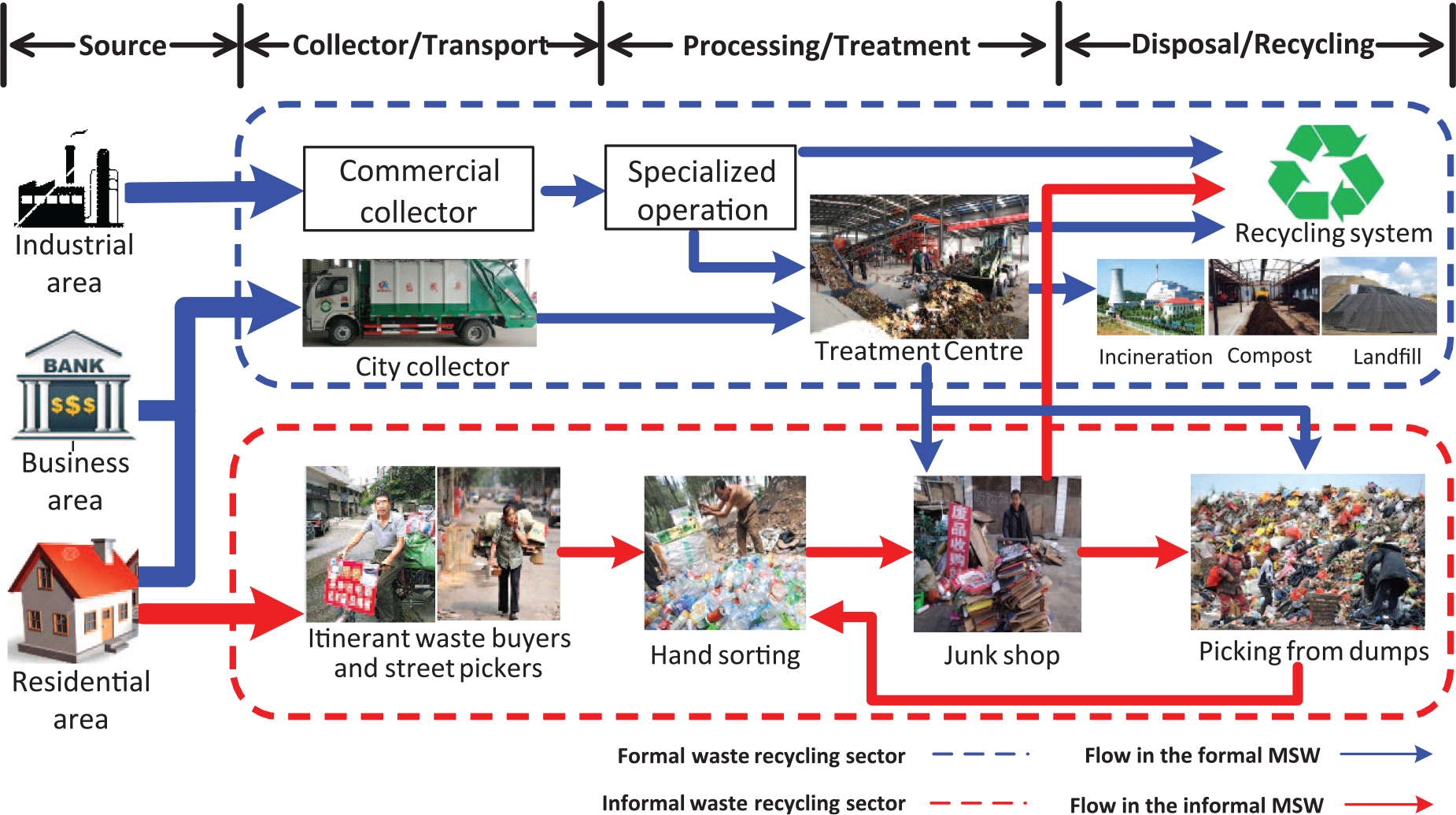
Formal and informal municipal solid waste recycling sectors in Nanjing, China.
In the formal waste recycling sector, the municipal treatment system is a complete industrial chain, from collection to decomposition/disposal to disposal/recycling, and there are some professional waste recycling companies.
The informal sector, which mainly includes pickers, some higher-level traders, and buy-back centres (small junk shops), is unable to constitute a complete industrial chain and instead deals with two links of the chain: the collection; and simple classification/sorting of waste. In fact, some municipal cleaners also pick recyclables from streets or waste transfer stations and then sell to junk shops. The waste recycled by these junk shops would eventually flow into the formal waste recycling sector. Thus, the informal waste recycling sector is an instrumental complement to the formal sector that not only relieves the disposal pressure of MSW but also enhances the economic value of recyclable waste in the MSW management system. However, the informal waste recycling sector through pickers exhibits purely market-oriented economic behaviour, so that only the most economically lucrative recyclables, such as iron, copper, paper, plastics, and glass are recycled, leaving the “leftovers” to the municipal cleaners and the formal MSW treatment system.
Estimation of the economic value of the informal waste recycling sector through pickers
Table 3 shows the number of recyclable materials collected in the informal waste recycling sector by pickers in Nanjing. Each street picker, municipal cleaner, or dump scavenger collected from 28.1 to 50.0 kg of recyclable materials on a daily basis based on interviews and checking their waste registers. However, the economic value of recyclable materials (metal, paper, and packing materials) picked by itinerant buyers and street pickers is obviously higher than that of the materials picked by a dump scavenger. Itinerant buyers shuttle between the central business district and residential community and acquire the recyclable materials with the highest economic value. However, itinerant buyers need more capital and social skills than other WPs. This trend is reflected in the new motto of Chinese garbage collectors: “Rather than digging garbage in dumps, you better pick it in the streets, but picking it is not as good as just buying and re-selling it.” While WPs are at the bottom of MSW recycling (Women in Informal Employment: Globalizing and Organizing, 2013), itinerant buyers are at the most significant end of the informal MSW recycling system, which can buy the most economical recyclable materials. By comparison, the dump scavenger is at the least significant end of the informal MSW recycling system. The interview survey of WPs has revealed that their social relationships are limited to their relatives, colleagues, and former fellow-townsmen or fellow-villagers. After settling down in a certain city area, they seldom move elsewhere, which is completely different from the WP groups of other countries (Ramsay et al., 1998). Most WPs sell recyclable materials once a week. Because of the transparent price, heavy weight, and relatively low economic value of recyclable materials, no cross-regional sales are conducted, since waste transportation costs make them a non-profit commodity. Instead, the recyclable materials are usually sold to familiar buy-back centres based on long-term cooperation ties. This is different from other countries, such as South Africa (Schenck and Blaauw, 2011) or India (Hayami et al., 2006), which have fixed recycling companies to manage the buy-back centres. In the three typical blocks that were surveyed, the amounts of recyclable materials collected by WPs and junk shoppers (Tables 2 and 3) were significantly correlated at the 0.01 level (r = 0.9943), which validates the reliability of the above results.
Breakdown of collected recycling materials monitored in the field survey of waste pickers (WPs) in Nanjing, China.
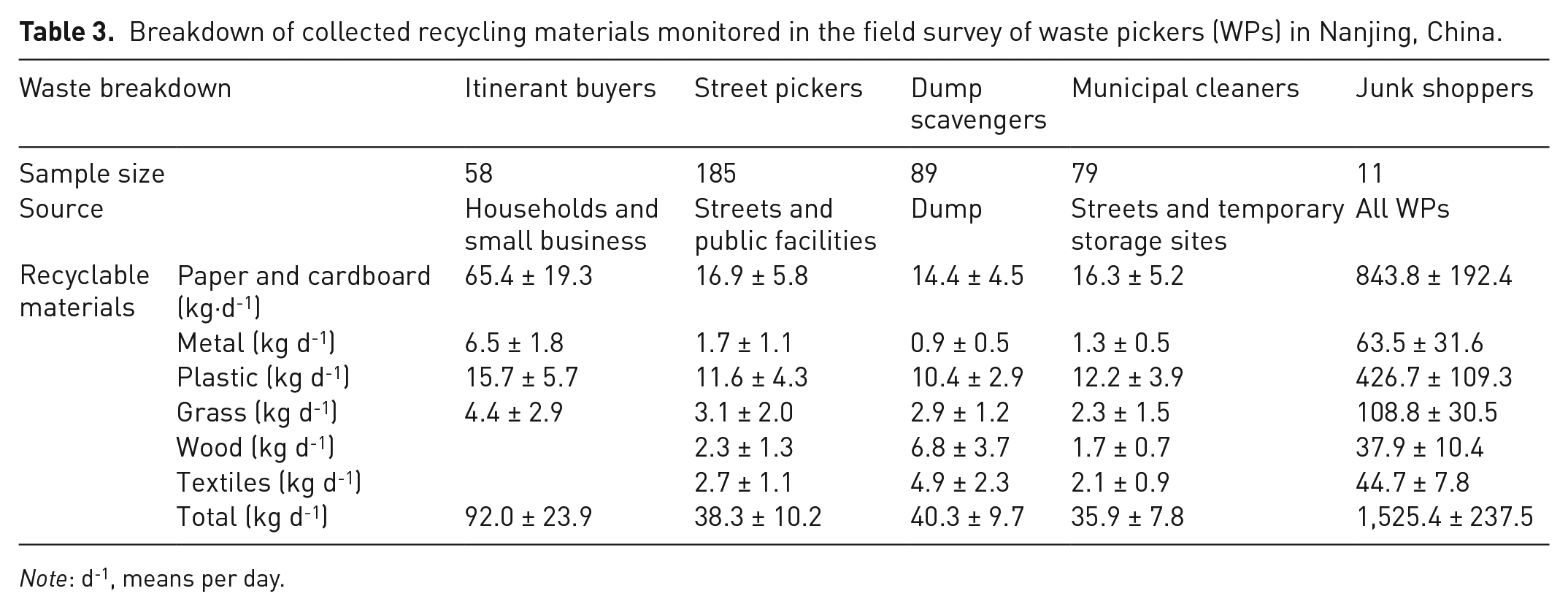
Note: d−1, means per day.
Table 4 shows the contributions of the informal waste recycling sector through WPs to the MSW recycling industry. It can be seen that 70–80% of the final recyclable materials were contributed by the informal waste recycling sector. As calculated by equation (1), the economic value of the informal waste recycling sector in 2016 was about 78.6–84.6 million USD. The average annual income of the WPs in Nanjing is about 2535.1–2730.0 USD, which exceeds the annual minimum subsistence security standard of 1950.4 USD per person in Nanjing by 30.0–39.0% (Nanjing Bureau of Statistics, 2016). Additionally, WPs in Nanjing collect about 505,000 tons of recyclable materials annually (Nanjing Bureau of Statistics, 2016). According to the calculation taking 34.8–43.5 USD t−1 as the MSW disposal expense, the saved disposal expense is 17.6–22.0 million USD per year. For other developing countries, the economic impact of these activities is: an estimated $650 million a year – 1 billion a year in Mumbai; $178 million a year in Buenos Aires; and $50 million a year in Jakarta (Medina, 2008).
Recyclable material flow in the municipal solid waste (MSW) management system in Nanjing, China.
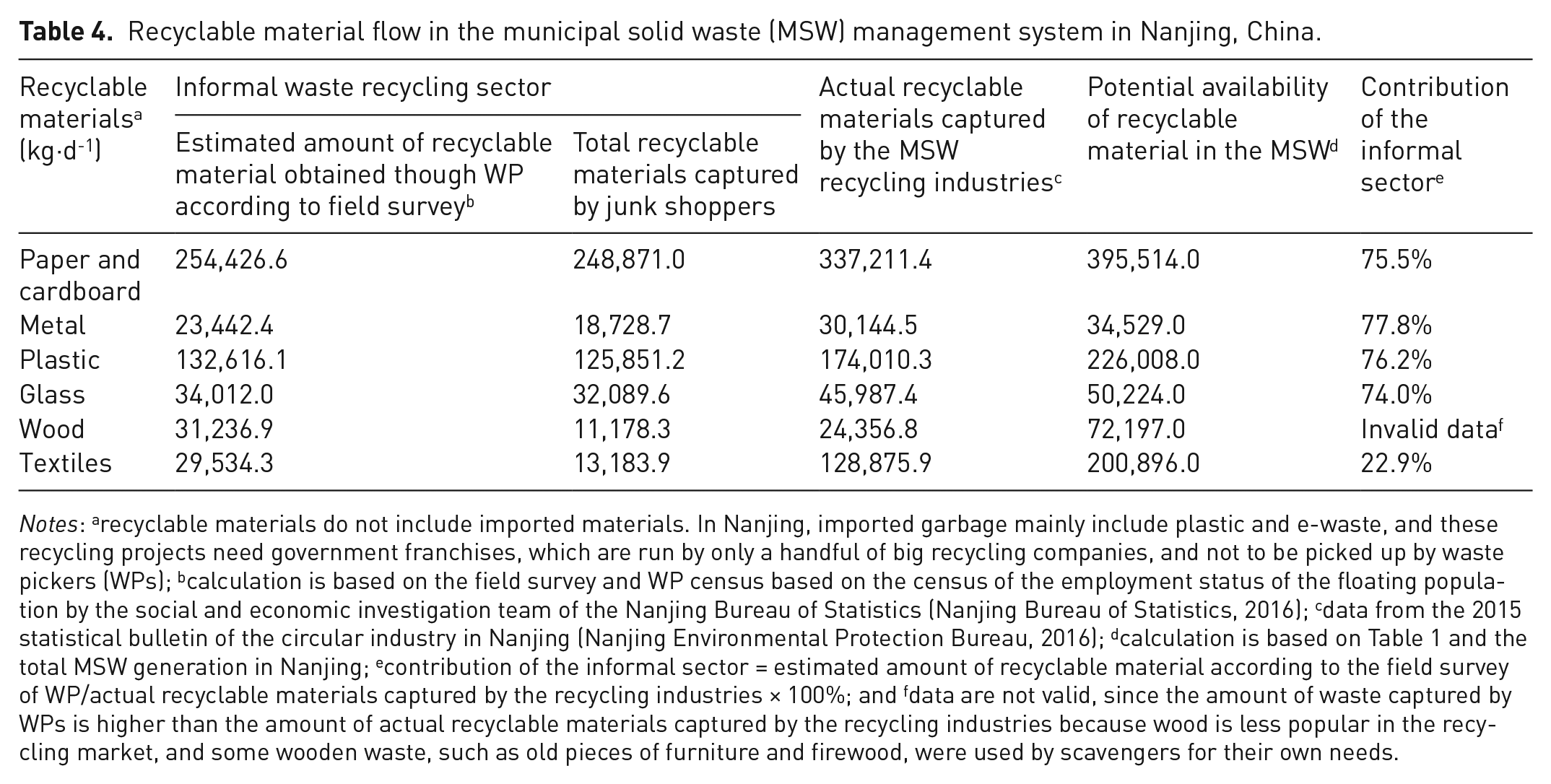
Notes: arecyclable materials do not include imported materials. In Nanjing, imported garbage mainly include plastic and e-waste, and these recycling projects need government franchises, which are run by only a handful of big recycling companies, and not to be picked up by waste pickers (WPs); bcalculation is based on the field survey and WP census based on the census of the employment status of the floating population by the social and economic investigation team of the Nanjing Bureau of Statistics (Nanjing Bureau of Statistics, 2016); cdata from the 2015 statistical bulletin of the circular industry in Nanjing (Nanjing Environmental Protection Bureau, 2016); dcalculation is based on Table 1 and the total MSW generation in Nanjing; econtribution of the informal sector = estimated amount of recyclable material according to the field survey of WP/actual recyclable materials captured by the recycling industries × 100%; and fdata are not valid, since the amount of waste captured by WPs is higher than the amount of actual recyclable materials captured by the recycling industries because wood is less popular in the recycling market, and some wooden waste, such as old pieces of furniture and firewood, were used by scavengers for their own needs.
Influence of WPs on the MSW recovery rate
Table 5 shows the actual MSW recovery rate of Nanjing and Singapore-Nanjing Eco-tech Island in 2016. Of note is that the latter has an independent MSW management system, which is under the commercial operation of Super-Energy Resources Recycling Corporation, Ltd. Since any informal waste picking activities on Singapore-Nanjing Eco-tech Island are forbidden, its recovery rate of recyclable materials implies a zero contribution from WPs. From Table 5, it can be seen that the MSW resource recovery rates of the city as a whole are higher than those of Singapore-Nanjing Eco-tech Island – by 1.9% for metal, by 3.5–4.5% for glass, plastics, and textiles, and by 8.0% for paper and cardboard. This can be attributed to the contribution of WPs. The resource recovery rate is the most important index of MSW recycling. Developed countries widely use innovative technologies and CBA to constantly improve the resource recovery rate. However, most developing countries, including China, have to rely on vast human resources and informal activities of WPs, which are labour-intensive and characterized by limited or no use of technology, to improve the resource recovery rate. In the MSW system of Nanjing, the recovery rates of metal, paper, packing boxes, and glass are all higher than 85%, exceeding the recovery rates of other developing countries (Scheinberg et al., 2011). In fact, the comprehensive utilization ratio of China’s MSW is not high, especially the end utilization ratios of direct incineration and biogas power generation, which are even lower than those of other developing countries (Fei et al., 2016; Johari et al., 2012; Yang et al., 2012, 2014; Zuberi and Ali, 2015).
The potential contribution of waste pickers (WPs) to the municipal solid waste (MSW) recycling ratio in Nanjing, China.
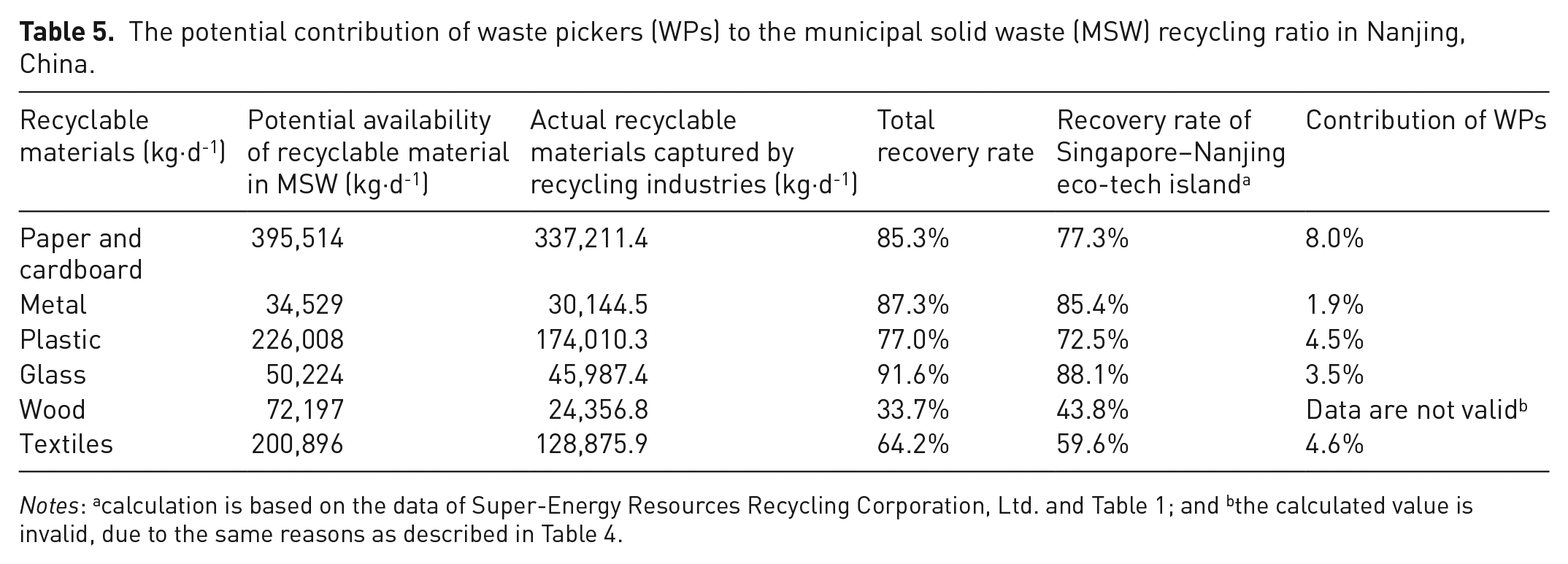
Proposed options for MSW management improvement and policy implementation in Nanjing
Establishment of a community-based semi-official WP organizational framework to improve the resource recovery rate and income of WPs
At present, the Chinese government uses multiple management schemes incorporating WPs: the civil administration deals with their social status; the environmental protection branch deals with the environmental pollution by their picking activities; the epidemic prevention branch treats their health problems; and the public security bureau keeps them in a safe situation (Table 6). However, none of these organizations can solve the key issue of picker management, which is the pickers’ livelihood. In order to organize pickers and improve their contribution, some cities in China have passed the managerial authority over urban solid waste to commercial companies, which have become responsible for recruiting pickers who participate in MSW-related activities. However, only a small share of WPs can be hired by these companies, and the resulting activities of these companies are hindered by the conflict of interest with the rest of the WPs (Havukainen et al., 2016; Xiao et al., 2017). In some other cities, the direct supervision model is implemented with a mandatory “three unification rules concerning obligatory uniform, vehicle, and certificate”, but because of the annual management fees they need to pay, it is difficult for them to accept (Li, 2002; Liu et al., 2015).
Main statutory and regulatory measures related to waste picker management in Nanjing, China.
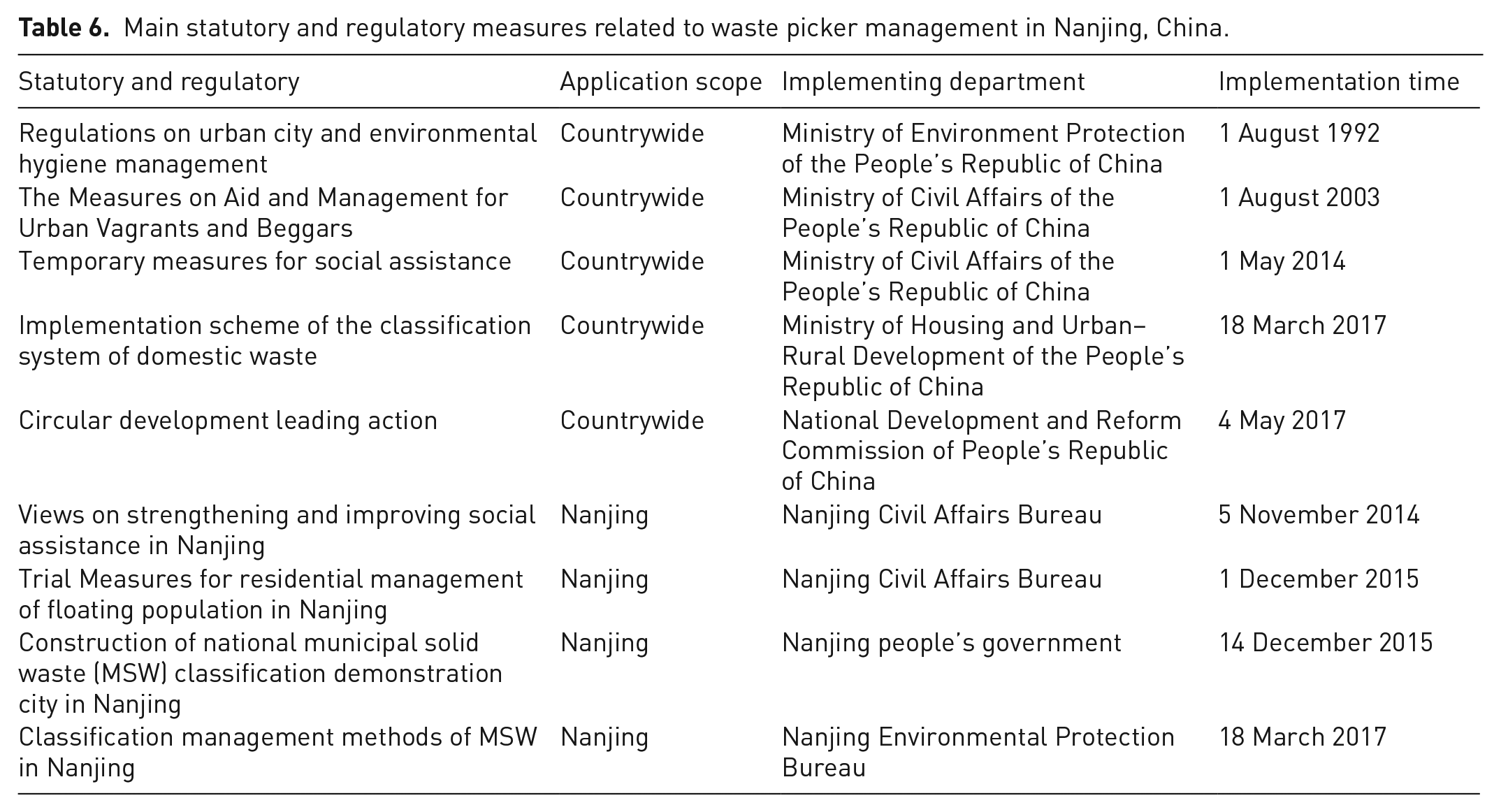
Considering the huge numbers of WPs, the city government has to manage them properly to reduce social risks (security risks and public health risks) and to realize inclusive growth. Therefore, to double the growth of WP income and recovery rate, we establish a pilot structure of a new semi-official picker organizational framework based on the community which was proposed in conjunction with the survey participants in this study (Figure 5), who also envisage that the relevant supporting policies and systems should be improved and formulated. This framework possesses the following advantages.
The grassroots community organization (GCO), which is a bottom non-profit management organization with the basic function of population mobility management and low-income population support in China, could uniformly deploy and use the original support fund and some social resources, including the intensively managed shelters for the urban category of “the homeless” people and community care centres dispersed in different departments. Furthermore, GCO is a non-profit organization, which is due to the previous failure of some cities to introduce a profit organization management model, and which was resisted by WPs (Havukainen et al., 2016; Xiao et al., 2017).
A new independent operating company has to be formed from the combination of WPs and municipal cleaners, which would undertake the front-end work of MSW management, including collection and transportation. It is a labour-intensive task with low technical content that would not only reduce the government’s financial pressure but also increase the income of WPs.
The comprehensive integration of WPs would not only reduce the cost of human resources but also improve the recovery rate of recyclable materials. This is an important step to implement, especially in view of the insufficient awareness of Chinese citizens of garbage classification expediency. In the future, some WP staff can be dispatched to each residential area to collect heavy environmental pollution waste, such as waste batteries and electronic products.
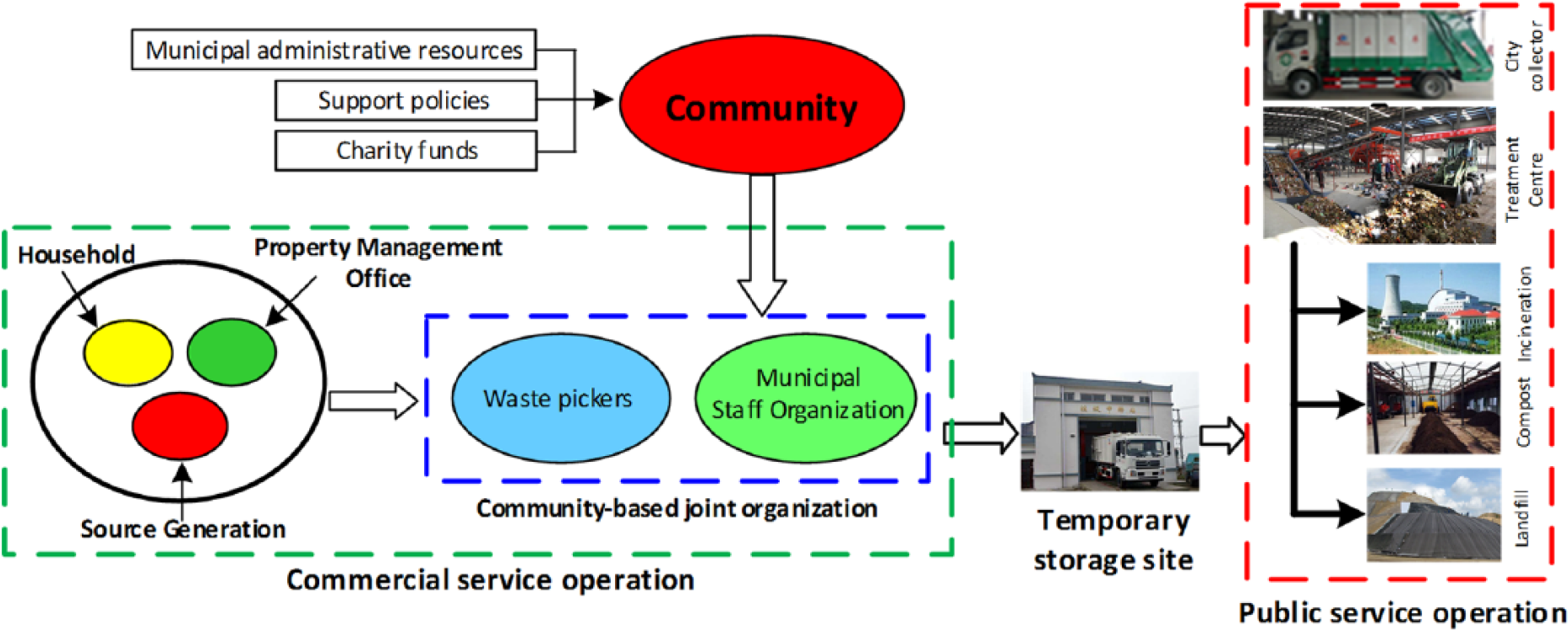
Proposed community-based pickers’ organizational framework linked with public service of municipal solid waste management in Nanjing, China.
Policy implementation
The successful implementation of a semi-official, community-based picker organizational mode must be supported by relevant laws and regulations. However, the current management policies in China are lagging; no amendments have yet been made to the 2002 regulation concerning “the way to salvage and manage the vagrants and beggardom in the cities.” In our field investigation, WPs are at the bottom of the MSW recycling system, they have lower relative wages, and their management is out of control. However, WPs play an important role in enhancing MSW recycling. Furthermore, MSW-related participants made it possible to formulate the following recommendations on the improvement of the MSW management and integration of informal pickers in Nanjing.
Implement a semi-official, community-based picker organizational mode as a pilot project and delegate the dispersed resources, financial abilities, and rights to GCOs. It would be the most optimal government agency for dealing with WPs, which would be beneficial for coordinating and handling various complicated relationships in an emergency.
Accelerate the formulation of relevant laws or regulations, and promote the marketization of MSW disposal. Previously, scholars have appealed to the Chinese government to transfer MSW disposal from public welfare to commercial operations, which would increase the waste recycling rate and reduce the operating costs (Dong, 2001). The experience of developed countries can be used to establish such laws and regulations as “the law of waste disposal” and “the law on recycling economy and waste utilization” and issue a “technical guide for waste classification and disposal in residential area,” “technical guidelines for special disposal and storage of waste,” and some other general administrative regulations (Idris et al., 2004). The enforcement of these laws, regulations, and technical guidelines should be promoted.
Ensure a better balance in the value chain of MSW recycling and promote the healthy development of MSW recycling. At present, the preferential policies of recycling industries in China, such as tax relief and financial subsidies, are all concentrated at the end of the industrial chain, which consists of the final products of recycled materials. WPs, who are at the front end of the industrial chain, hardly receive any preferential treatment throughout the recycling industries. Taking Nanjing as an example, the economic value created by recycling industries in 2016 was about 8 billion CNY (1.16 billion USD), with WPs accounting for only 6.8–7.3% of these industries, which does not seem very motivating. Financial support should be provided for the purchase of recyclable raw materials in order to improve the MSW recovery rate.
Conclusions
In China, the activities and living habits of WPs are mostly disapproved of, as WPs are at the bottom of the MSW recycling profit pyramid. However, the number of WPs in China is exceeding 4 million. Their proper management is not only beneficial for improving the waste recovery rate and creating a resource-saving society but also for improving their own living standards and realizing their integration into the social economy. Our social survey of Nanjing’s urban management decision-makers, citizens, and WPs has yielded the following results.
The informal sector of waste recycling through pickers is an important component of the urban MSW management system. Approximately 70–80% recyclable materials are collected and classified by WPs.
In Nanjing, WPs collect about 505,000 tons of recyclable materials annually and create about 541.9–583.7 million CNY (78.6–84.7 USD) of the annual economic value, but account for only 6.8–7.3% of the entire recycling industry chain.
The pickers in Nanjing are able to save MSW disposal costs of approximately 121.2–151.5 million CNY (17.6–22.0 million USD) and increase the resource recovery rate by 1.9–8.0%.
It is difficult for the multiple managements of WPs to achieve satisfactory effects. The survey results support the expedience of establishing a community-based semi-official picker organizational framework, accompanied by relevant laws, regulations, and preferential policies that would improve the resource recovery rate and pickers’ living and working conditions in order to achieve more effective and hazard-free MSW management.
It is anticipated that the results of this research will be instrumental for the improvement of the MSW recycling system and WP management in other cities in China as well as other developing countries.
Footnotes
Acknowledgements

Declaration of conflicting interests
The authors declared no potential conflicts of interest with respect to the research, authorship, and/or publication of this article.
Funding
The authors disclosed receipt of the following financial support for the research, authorship, and/or publication of this article: This work was supported by the Fundamental Research Funds for the Central Universities (2017XKQY070).