







Abstract
Polycyclic aromatic hydrocarbons (PAHs) are considered to be persistent organic pollutants, which pose a great threat to human health and the surrounding environment. In order to explore the influence of informal electronic waste (e-waste) dismantling activities on inhabitants who live nearby, soil samples were collected from informal e-waste dismantling areas in Xinqiao, China and analysed for 16 United States Environmental Protection Agency (USEPA) priority PAHs. Results indicated that the 16 USEPA priority PAHs were found at all seven sampling locations. Sampling location 3, which was only 10 m away from a residential area, had 1053.69 μg kg−1 of PAHs and seriously exceeded the standard value specified by the Netherlands. The total percents of 4-ring and 5-ring PAHs accounted for 61.74 and 71.70%, respectively, indicating that most of the detected PAHs belonged to high-ring PAHs. The informal e-waste dismantling activities are the major sources of soil PAHs in Xinqiao. Furthermore, the concentration of seven carcinogenic PAHs was 114.76 μg kg−1 and represented a potential health risk to humans. Thereinto, benzo[a]pyrene contributed the most, accounting for more than 50% in these locations. Our results may provide a reference about the influence of informal e-waste dismantling activities on the surrounding inhabitants and suggest that e-waste dismantling activities must be conducted in a formal enterprise which is far away from residential areas.
Keywords
Introduction
Persistent organic pollutants (POPs) refer to chemical substances which can persist in the environment and accumulate through biological food chains, thus causing harmful effects on human health (Bakir et al., 2014; Cao et al., 2017). In recent years, the attention paid to POPs has increased significantly. Polycyclic aromatic hydrocarbons (PAHs) are considered to be one of the common representatives of POPs in nature (Kuang et al., 2011; Yang and Hayakawa, 2018). Due to the potential mutagenesis and carcinogenesis of various PAHs, the United States Environmental Protection Agency (USEPA) has ascertained 16 species of PAHs to be priority pollutants – naphthalene (NAP), acenaphthylene (ACY), acenaphthene (ACE), fluorene (FLO), phenanthrene (PHE), anthracene (ANT), fluoranthene (FLU), pyrene (PYR), chrysene (CHR), benzo[a]anthracene (BaA), benzo[b]fluoranthene (BbF), benzo[k]fluoranthene (BkF), benzo[a]pyrene (BaP), dibenzo[a,h]anthracene (DahA), benzo[g,h,I]perylene (BgP), indeno[1,2,3-cd]pyrene (IcdP) – and seven of them are considered to be probable human carcinogens (Ene et al., 2012; Tsibart and Gennadiev, 2013; Wang et al., 2015). In general, two pathways of activities will generate PAHs pollution. One is anthropogenic sources, such as the incomplete combustion of fossil fuels, e-waste and sewage sludge (Peng et al., 2011). The other is natural sources, like forest fires and volcanic eruptions (Cho et al., 2009). Their influences on human health and ecosystems are of great concern to researchers.
With the increase of e-waste in China and e-waste input from abroad, China has become the largest e-waste processing country (Duan et al., 2015). According to the latest statistics, continuously being derived by a research group at the United Nations University, the production of global e-waste was 47 million tons in 2016, with an increasing rate of 4.6% per year, and is expected to reach approximately 52.2 million tons in 2021 (Baldé et al., 2017). Since October 2015, China has had 109 formal e-waste treatment enterprises and about 14 kinds of e-waste products were entered into the fund subsidies (Song et al., 2017). In fact, manual and mechanical dismantling has frequently been adopted to dispose of e-waste in China in recent years (Li et al., 2017). Even so, a lot of e-waste was still processed without a technical standard. For example, informal e-waste dismantling areas still exist in Xinqiao, China. Several methods, including pyrometallurgy, acid and alkali processes, were adopted to deeply separate metals and non-metals inside e-waste (Gu et al., 2017; Lee and Mishra, 2018). Generally, e-waste contains plastics, metals, fiberglass, epoxy resin and brominated flame retardants (Wang et al., 2009). The irregular dismantlement of e-waste leads to serious pollution. Numerous investigations have reported heavy metal pollution at e-waste dismantling areas (Fujimori and Takigami, 2014; Quan et al., 2015), but fewer studies have focused on pollution by PAHs at e-waste dismantling areas, especially at informal e-waste dismantling areas (Leung et al., 2015). Conversely, large amounts of research have focused on contamination of oil mining areas and riverbank sediments by PAHs (Qiao et al., 2006; Kafilzadeh, 2015). Usually, informal dismantling of e-waste happens frequently in developing countries, such as China, Ghana, India and Vietnam. The PAHs pollution generated by the open burning of e-waste was investigated by researchers (Awasthi et al., 2018; Nishimura et al., 2017; Tue et al., 2017). In addition, the characterisation of PAHs in soils, plants and sediments at Guiyu was also performed (Gao et al., 2015; Wang et al., 2017; Xu et al., 2016). Compared to the e-waste dismantling areas at Guiyu, Xinqiao is a relatively new area where some of the informal e-waste dismantling activities are still happening. It is essential to investigate the PAHs pollution of soil caused by informal e-waste dismantling activities and evaluate its influence on human health.
The major objective of this study was to investigate and assess the characterisation and probable source of soil PAHs at informal e-waste dismantling areas in Xinqiao, China. In addition, a risk assessment of soil PAHs in these areas was also determined. Considering the complexity of PAHs, in this study, soil PAHs refer to the 16 USEPA priority PAHs These results may be useful for designing measures to conduct e-waste dismantling activities.
Materials and methods
Study area and sampling
Xinqiao is located in the Luqiao district in Taizhou, and it is known as the ‘e-waste dismantling area’ in China, covering an area of 13 km2. E-waste was disposed of through pyrometallurgy, acid and alkali processes at informal dismantling areas for years. Seven sampling locations were chosen for detecting the concentration of soil PAHs in Xinqiao. These locations were chosen based on the informal dismantling activities of e-waste. Locations of the sampling areas are shown in Figure 1. Samples were taken at a depth of 0–20 cm from the surface of soil and tailing (Li et al., 2008). All collected samples were put into polyethylene bags and transferred to the laboratory for further immediate study. Prior to analysis, samples were air dried in dark conditions for 72 hours.
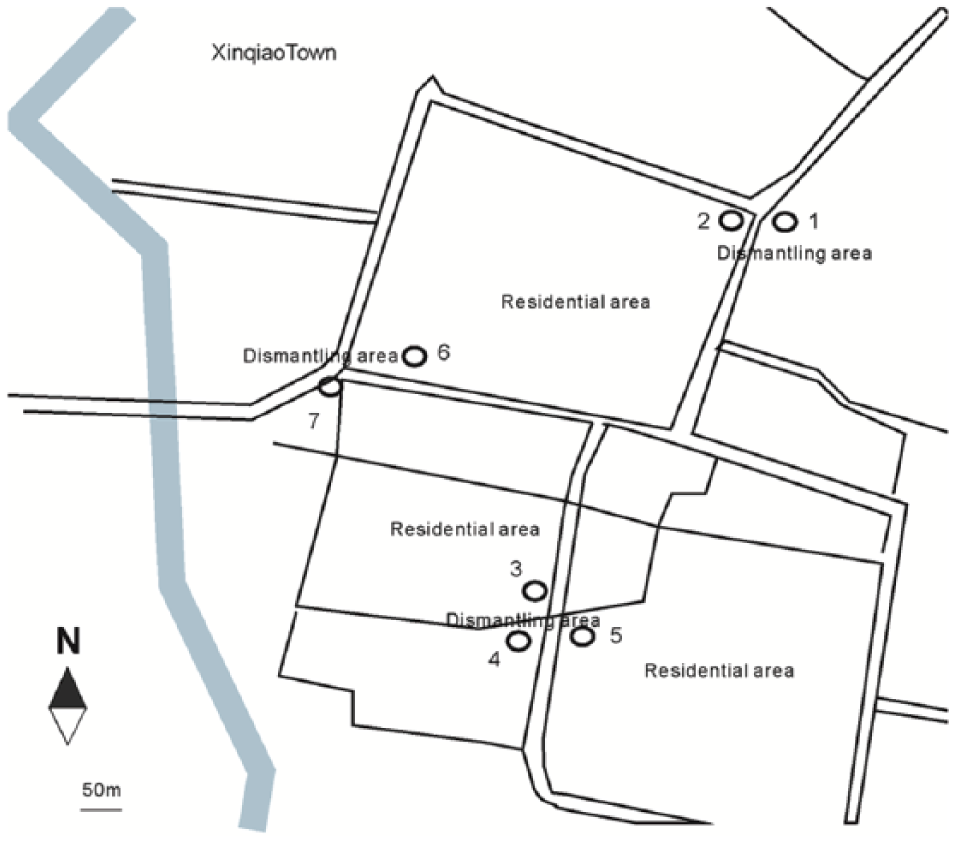
Locations of sampling areas.
Chemicals
Standards of 16 PAHs (16 compounds specified in USEPA method 610) were purchased from J&K Chemical Ltd., China. All organic solvents (dichloromethane, hexane and acetone) of HPLC grade were obtained from Fisher Co. Anhydrous sodium sulfate of analytical grade was purchased from Sinopharm, China. Silica gel (100–200 mesh) was purchased from Merck, Germany.
Sample extraction and clean-up
All dried samples were ground by mortar and pestled through a stainless-steel sieve (100 mesh). Each sample was weighed precisely (5 g) and extracted by the Soxhlet method (Method 3450C) (USEPA, 1996) with a 250 ml solvent mixture of dichloromethane and acetone (1:1, v/v) for 16 h at 60 °C. The mixture solvent was evaporated by a rotary evaporator. Then, the eluent was concentrated to 3–5 ml and evaporated to dryness by a mild steam of pure nitrogen. Finally, it was dissolved to 1 ml with hexane. The concentrated extracts were cleaned up using a chromatographic column which consisted of activated silica gel and anhydrous sodium sulfate. The column was eluted with a 20 ml solvent mixture of hexane and dichloromethane (7:3, v/v), further concentrated to 1 ml and dissolved to 2 ml with hexane. Deuterated PAHs (naphthalene-d8, chrysene-d12, phenanthrene-d10, perylene-d12 and acenaphthene-d10) were added into the extract as internal standards prior to gas chromatography/mass spectrometry (GC/MS) analysis.
Analytical procedure
All the samples were analysed on a GC/MS system (Agilent 7890A GC equipped with 5975C MS). A capillary column (30 m × 0.25 mm (i.d.) × 0.25 μm) was used for analysis of soil PAHs. The oven temperature was listed as follows: 60 °C for 2 min, 60–290 °C at a heating rate of 5 °C min−1, 290 °C for 35 min. Prepared samples were injected by an auto-injector.
Quality assurance and quality control
The instrument was calibrated before testing. The analysis of procedural blanks and spiked samples showed that there were no target compounds detected. The mean recoveries for the surrogates were as follows: naphthalene-d8: 60 ± 15%; chrysene-d12: 75 ± 12%; phenanthrene-d10: 82 ± 8%; perylene-d12: 92 ± 6%; acenaphthene-d10: 74 ± 10%. The concentrations of soil PAHs were corrected precisely according to the recoveries of the surrogate standards. The detection limits for various PAHs ranged from 0.4–1.5 μg kg−1.
Data analyses
Test data were calculated using excel® and figures were drawn using origin 8.0.
Results and discussion
Characterization of PAHs
The average concentrations of 16 USEPA priority PAHs at informal e-waste dismantling areas in Xinqiao are shown in Table 1. Basically, most PAHs were detected at all seven sampling locations. Usually, low polycyclic aromatic hydrocarbons (LPAHs) have low molecular weight (2–3 ring), and high polycyclic aromatic hydrocarbons (HPAHs) have high molecular weight (4–6 ring) (Kafilzadeh, 2015). Through field survey, sampling locations 1 and 2 are informal e-waste (plastic) dismantling sites. Sampling locations 3, 4 and 5 are informal e-waste dismantling sites. The difference between these sampling locations is the distance from the residential areas. Sampling location 6 is an e-waste treatment tailing site, and sampling location 7 is the informal e-waste (metals) dismantling site. According to the investigation, total LPAHs concentration at all sampling locations ranged from 1.55 μg kg−1 (sampling location 4) to 302.73 μg kg−1 (sampling location 3) with an average value of 85.41 μg kg−1. Total HPAHs concentration at all sampling locations ranged from 31.06 μg kg−1 (sampling location 4) to 750.96 μg kg−1 (sampling location 3) with an average value of 328.64 μg kg−1. The concentration of LPAHs at informal e-waste dismantling areas was lower than that of HPAHs. According to the standards (Suman et al., 2016; Tian et al., 2006), the concentrations of PAHs at sampling location 3 exceeded the standard values. Considering the distance between sampling location 3 and residential areas, long term exposure in these areas may lead to adverse effects on human health.
Concentrations of soil PAHs (μg kg−1) at sampling locations in Xinqiao.
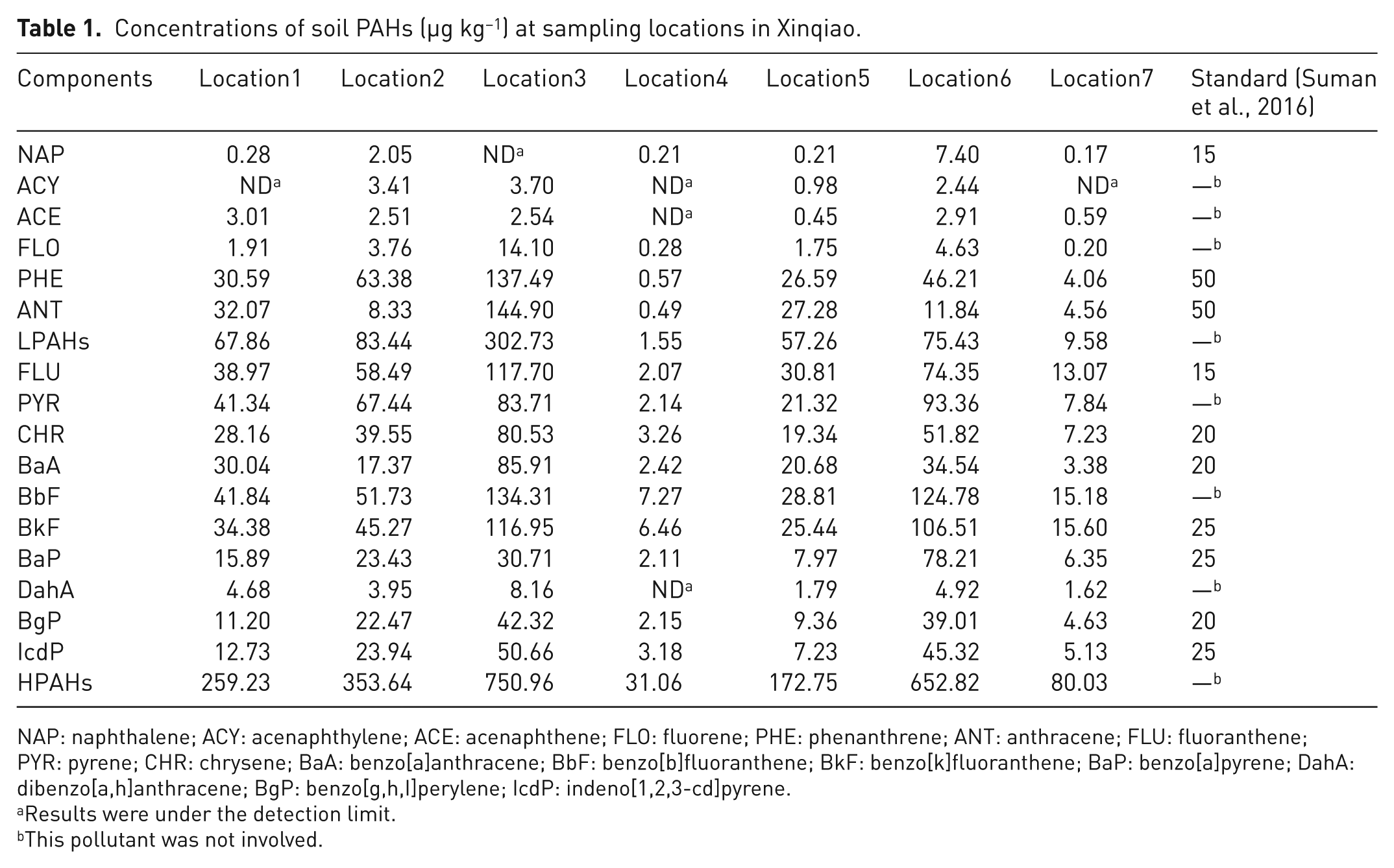
NAP: naphthalene; ACY: acenaphthylene; ACE: acenaphthene; FLO: fluorene; PHE: phenanthrene; ANT: anthracene; FLU: fluoranthene; PYR: pyrene; CHR: chrysene; BaA: benzo[a]anthracene; BbF: benzo[b]fluoranthene; BkF: benzo[k]fluoranthene; BaP: benzo[a]pyrene; DahA: dibenzo[a,h]anthracene; BgP: benzo[g,h,I]perylene; IcdP: indeno[1,2,3-cd]pyrene.
Results were under the detection limit.
This pollutant was not involved.
Several countries have regulated the total PAHs concentration in soil (Cao et al., 2013; Duan et al., 2015). Usually, the classification system proposed by Maliszewska-Kordybach (Maliszewska- Kordybach, 1996) was used frequently. This system includes non-contaminated soil (<200 μg kg−1), weakly contaminated soil (200–600 μg kg−1), contaminated soil (600–1000 μg kg−1), and highly contaminated soil (>1000 μg kg−1). Total concentrations of soil PAHs at informal e-waste dismantling areas in Xinqiao are shown in Figure 2. According to this classification system, sampling locations 1, 2 and 5 fell into the weakly contaminated soil level. Sampling locations 4 and 7 fell into the non-contaminated soil level. Sampling location 6 fell into the contaminated soil level, and sampling location 3 fell into the highly contaminated soil level. The last one had a total PAHs concentration of 1053.69 μg kg−1. Sampling location 3 is located near the residential areas, where its inhabitants participate in informal e-waste dismantling activities frequently. During the sampling period, it was found that some plants were growing at sampling location 4. On the contrary, there were no plants growing at sampling location 3, and many dismantling residues were even stacked there. The results indicated that the concentration level of soil PAHs at sampling location 3 was much higher than that at sampling location 4. These phenomena may indicate that informal e-waste dismantling activities will produce soil PAHs contamination, and the concentration of soil PAHs may be decreased by growing crops.
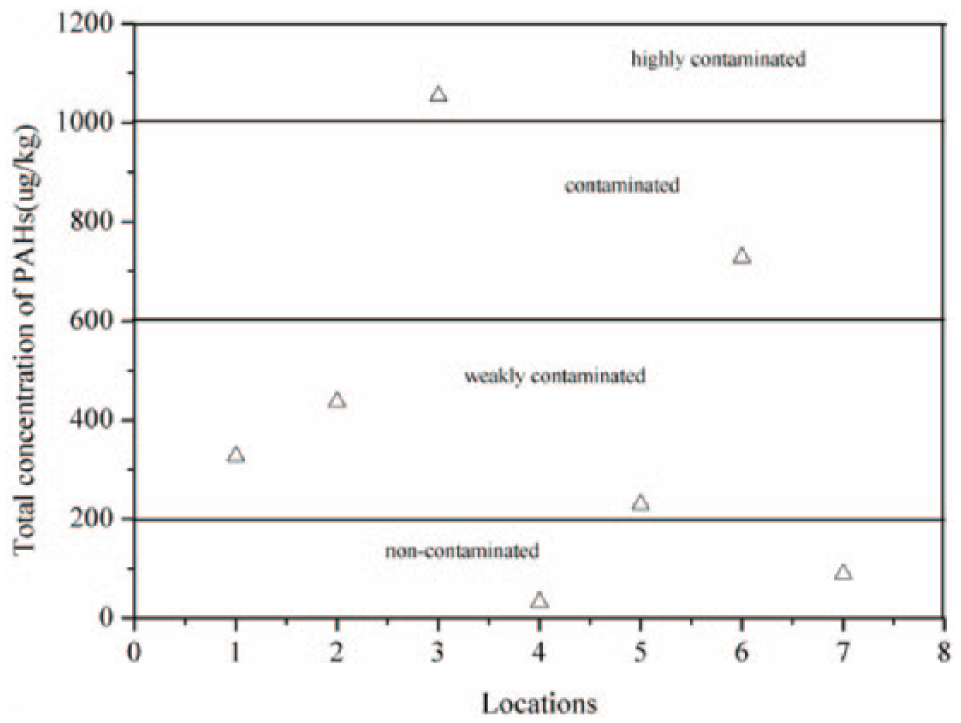
Total concentrations of soil PAHs at sampling location sites.
PAHs can be divided into 2–6 ring PAHs based on the number of benzene rings in a given PAH. In general, more rings in PAHs means higher molecular weight (Obayori and Salam, 2010). In Figure 3(a), the average concentration percents of LPAHs were 1.15 (2-rings) and 14.68% (3-rings), while 39.59, 27.25, and 17.33% were calculated for the 4-ring, 5-ring and 6-ring HPAHs, respectively. In Figure 3(b)–(d), the average concentration percents of LPAHs were 0.12, 21.24% and 3.60, 6.63% and 0.69, 7.68%, while 34.54, 27.20, 16.89% and 30.94, 38.29, 20.54% and 32.16, 39.54, 19.92% were detected for the HPAHs, respectively. The common characteristic among them was that the concentrations of LPAHs were lower than those of HPAHs. According to the existing literature (Nikolaou et al., 2009), HPAHs often exist in soils and sediments. Due to their hydrophobicity and high ring numbers, they are more resistant to decomposition when compared with LPAHs. It is indicated that these HPAHs may exist in the environment around residential areas for a long time and will produce an adverse impact on human health.
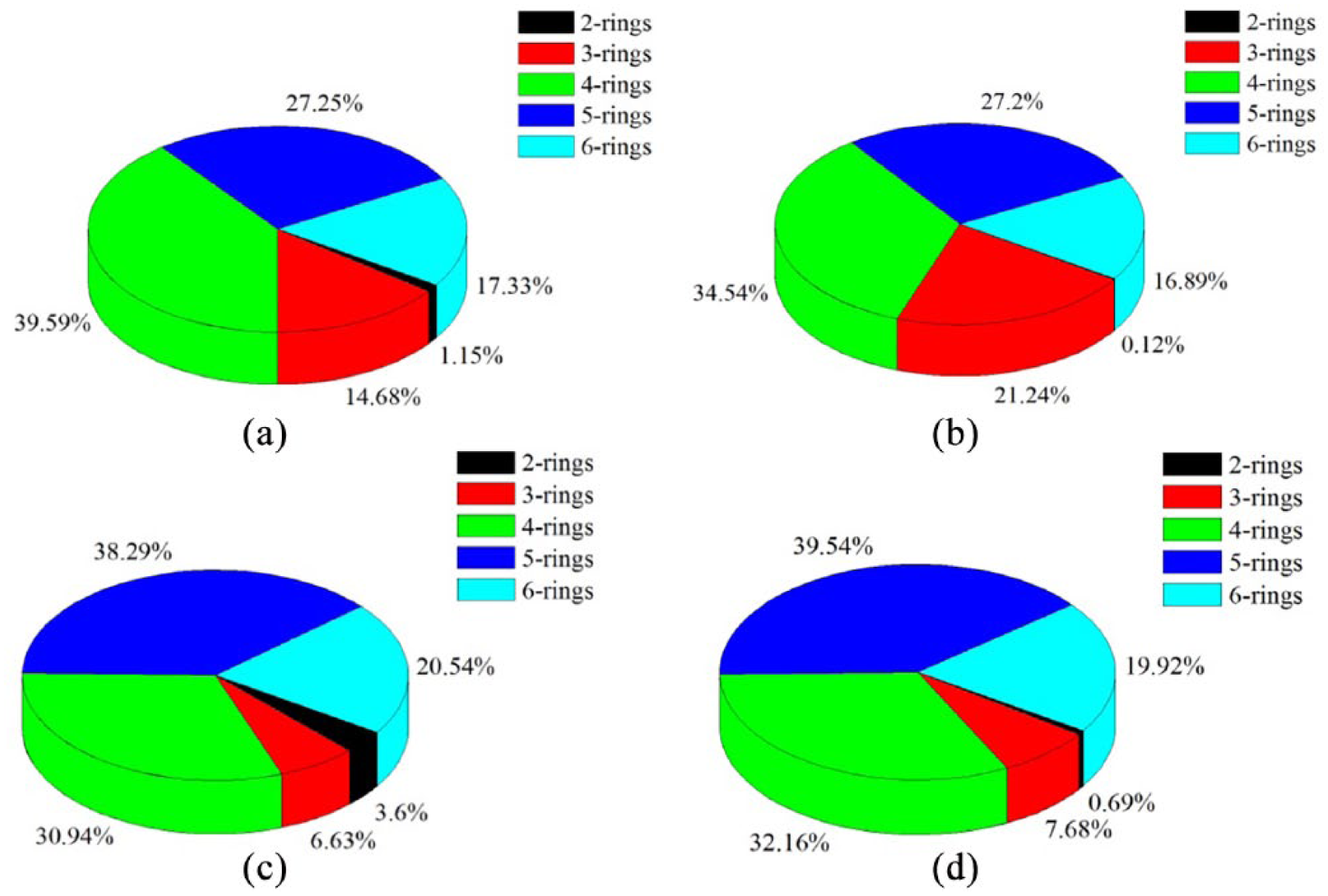
Average concentration percents of 2–6 ring PAHs in (a) soil samples of informal e-waste (plastic) dismantling site; (b) soil samples of informal e-waste dismantling site; (c) tailing samples of e-waste treatment tailing sampling site; (d) soil samples of informal e-waste (metals) dismantling site.
Sources of PAHs
In this section, including Figure 4, Fluoranthene, Pyrene, Phenanthrene, and Anthracene, is abbreviated as Fl, Py, Ph, and An, respectively. Usually, anthropogenic activities are the main reasons for the generation of PAHs contamination. The concentration ratios of Fl/Py, Ph/An, and Fl/(Fl + Py), An/(An + Ph) are made as standards to estimate the sources of PAHs. In general, when the concentration ratio of Fl/Py > 1, these PAHs mainly come from combustion of fossil fuel. Conversely, the sources of these PAHs come from oil products (Sicre et al., 1987). The sources of PAHs are identified as petroleum spillage when the ratio of Ph/An > 10. Conversely, when the ratio of Ph/An < 10, the sources of PAHs are characterised as the results of combustion (Qiu et al., 2009). A more detailed classification is listed as follows: when the ratio of An/(An + Ph) < 0.1, it represents that petroleum is a source of PAHs, and the ratio > 0.1, it indicates that the sources of PAHs come from combustion (Yunker et al., 2002). A ratio of Fl/(Fl + Py) < 0.4 means that PAHs come from petroleum, and a ratio which ranges from 0.4–0.5 indicates the sources of PAHs come from the combustion of fossil fuel, while a ratio > 0.5 implies that the sources of PAHs are the combustion of e-waste, coal and plastic (Wang et al., 2010).
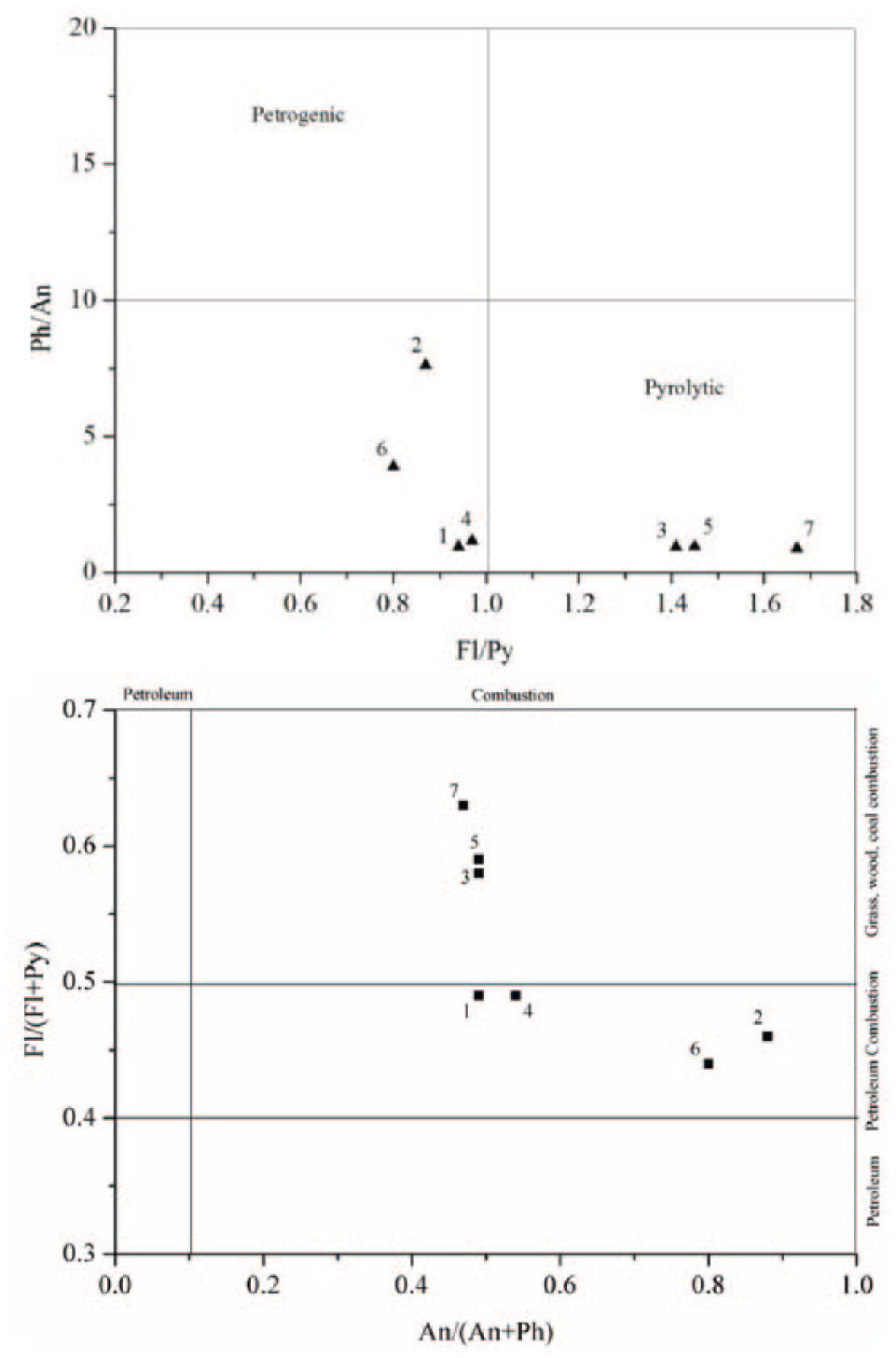
PAHs cross plots for Fl/Py vs. Ph/An ratios and for An/(An+Ph) vs. Fl/(Fl+Py) ratios found at informal e-waste dismantling areas.
The ratios of Fl/Py vs. Ph/An and An/(An+Ph) vs. Fl/(Fl+Py) are shown in Figure 4. Compared with the classifications listed above, the source of PAHs at sampling locations 3, 5 and 7 was combustion, or rather, the combustion of e-waste resulted in these consequences. These might be explained by the fact that sampling locations 3, 5 and 7 were situated where people use acidic and pyrogenic methods for leaching purposes; thus, e-waste dismantling was the major contributor of PAHs at these locations. As previously noted, sampling locations 1 and 2 were informal e-waste (plastic) dismantling sites, and a pyrogenic method was also used for disposal purposes. Due to the transportation of e-waste and tailing, the combustion of petroleum might be the source of PAHs at sampling locations 4 and 6. The results of these ratios indicated that the informal e-waste dismantling activities were the major sources of PAHs in Xinqiao.
Risk assessment
As previously mentioned, 16 USEPA priority PAHs are considered harmful to both human health and ecosystems. Seven of them have potential health risks of carcinogenicity and mutagenicity. There are different indexes made to evaluate the level of hazard to human health and ecosystems caused by PAHs. The Toxic Equivalence Factor (TEF) is established to evaluate the real values of various PAHs, which can reflect the toxicological effects on humans (Li et al., 2008; Yang et al., 2012). Effects Range-Low (ERL) and Effects Range-Median (ERM) values are used for soil assessment, which can reflect the impact upon the ecosystem caused by PAHs (Qiao et al., 2006).
Due to the different levels of carcinogenicity of various PAHs, the concentration of PAHs can’t be simply added up to evaluate the contamination situation around residential areas. The USEPA has supplied an approach to quantify the relative impact of each PAH. It is calculated as the BaP-equivalent (BaPeq) concentration. The results of this approach are listed in Table 2 (Nisbet and Lagoy, 1992). As can be seen in Table 2, the total BaPeq concentration of 16 USEPA priority PAHs at sampling location 6 was 115.50 μg kg−1. At sampling location 3, the concentration of 16 USEPA priority PAHs was 80.69 μg kg−1, which was less than that of the former one. The concentration at sampling location 4 was only 4.11 μg kg−1. Across all sampling locations, the BaPeq concentration of 16 total PAHs ranged from 4.11 to 115.50 μg kg−1. In summary, a high total concentration of PAHs resulted in a high BaPeq concentration. From Table 2, a phenomenon could be observed that the total BaPeq concentration of the seven carcinogenic PAHs was high. At sampling location 6, the total BaPeq concentration of the seven carcinogenic PAHs was 114.76 μg kg−1, while sampling location 4 was 4.08 μg kg−1. Overall, the BaPeq concentration of the seven carcinogenic PAHs ranged from 4.08 to 114.76 μg kg−1 at all sampling locations. The concentration of the 16 USEPA priority PAHs was associated with the distance between the dismantling areas and the sampling environment.
BaPeq concentrations of soil PAHs at informal e-waste dismantling areas (μg kg−1).
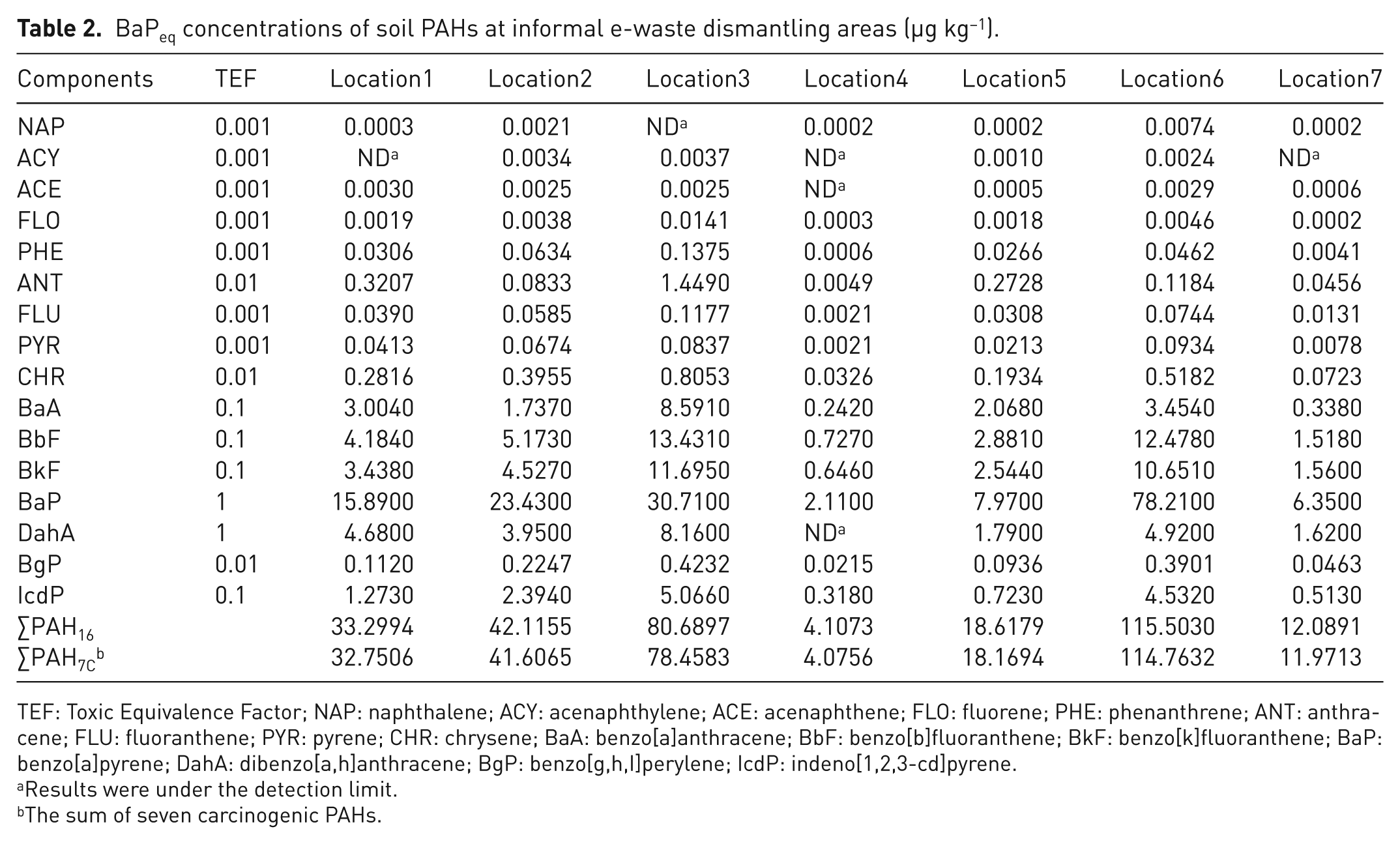
TEF: Toxic Equivalence Factor; NAP: naphthalene; ACY: acenaphthylene; ACE: acenaphthene; FLO: fluorene; PHE: phenanthrene; ANT: anthracene; FLU: fluoranthene; PYR: pyrene; CHR: chrysene; BaA: benzo[a]anthracene; BbF: benzo[b]fluoranthene; BkF: benzo[k]fluoranthene; BaP: benzo[a]pyrene; DahA: dibenzo[a,h]anthracene; BgP: benzo[g,h,I]perylene; IcdP: indeno[1,2,3-cd]pyrene.
Results were under the detection limit.
The sum of seven carcinogenic PAHs.
Researchers have established that the seven carcinogenic PAHs are CHR, BaA, BbF, BkF, BaP, DahA, IcdP (Tsibart and Gennadiev, 2013; Ene et al., 2015). As seen in Figure 5, BaP contributed the most among the seven carcinogenic PAHs, accounting for more than 50% at informal e-waste dismantling areas. From the preceding discussion, a conclusion could be reached that the pollution at sampling location 3 was relatively heavy, in which BaA, BbF, BkF and DahA accounted for more than 10%. It was important to control the BaPeq of the combined carcinogenic PAHs around the residential areas.
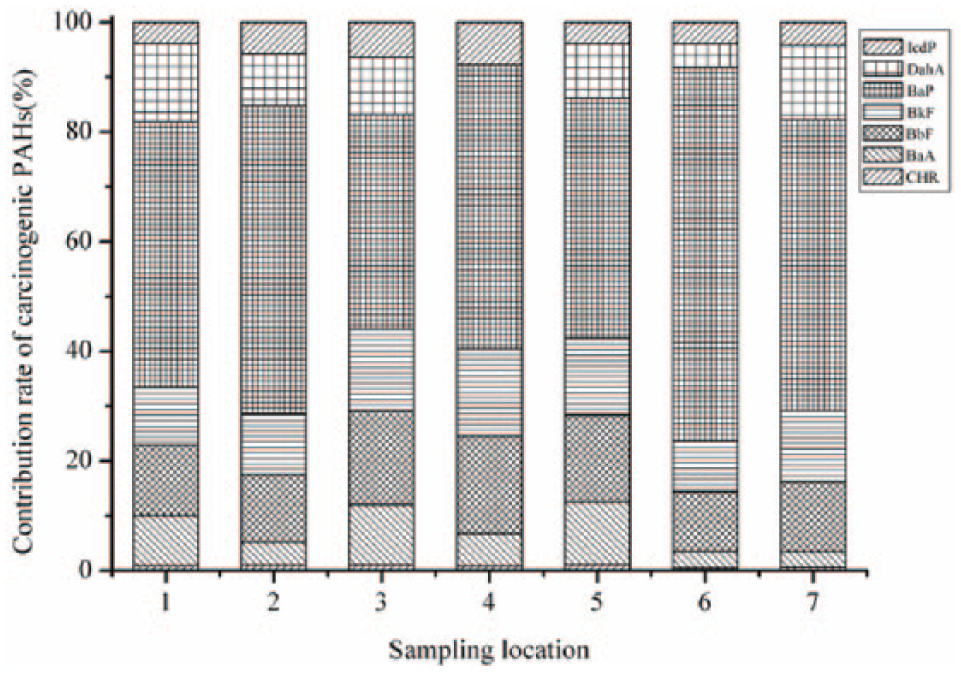
Contribution rates of carcinogenic PAHs at different sampling locations in Xinqiao.
Up to now, there are no relevant standards designed by Chinese government for the 16 kinds of USEPA priority PAHs. Regulations are formulated by China to analyse and conduct part of 16 USEPA priority PAHs (HJ784-2016 and GB36600-2018). Based on these results, relevant management measures and pollution control standards for the 16 USEPA priority PAHs must be established. In addition, pollution pathways and control methods for the 16 USEPA priority PAHs caused by informal e-waste dismantling activities must also be systematically investigated.
Conclusion
The results revealed that the soil PAHs generated from the informal dismantling of e-waste near residential areas would endanger human health. The main compositions of soil PAHs at informal e-waste dismantling areas were HPAHs. The source analysis indicated that the informal e-waste dismantling activities were the major sources of soil PAHs in Xinqiao. The pollution of soil PAHs at sampling location 3, which was only 10 m away from a residential area, was heavy and measures should be adopted, like greening or forbidding informal e-waste dismantling activities. Overall, the increased soil PAHs require a standardised dismantling behaviour to minimise the adverse effects of long-term exposure on local people. Concretely, relevant management measures and pollution control standards must be established for the 16 USEPA priority PAHs. Furthermore, pollution pathways and control methods for the 16 USEPA priority PAHs caused by informal e-waste dismantling activities must also be systematically investigated.
Footnotes
Declaration of conflicting interests
The authors declared no potential conflicts of interest with respect to the research, authorship, and/or publication of this article.
Funding
The authors disclosed receipt of the following financial support for the research, authorship, and/or publication of this article: The authors are grateful for support received from the Research Center of Resource Recycling Science and Engineering, Shanghai Polytechnic University, Gaoyuan Discipline of Shanghai–Environmental Science and Engineering (Resource Recycling Science and Engineering), and Key Discipline of Shanghai Polytechnic University (XXKZD1602).