






Abstract
The poorly controlled discharge of coffee husks in Ethiopia causes severe environmental pollution and is a waste of resources. The volatile solid and carbon content in coffee husks waste indicates that it is rich in organic matter and has huge potential to produce biogas. This study investigated the feasibility of coffee husks to produce biomass through anaerobic digestion, based on temperature, initial pH, inoculum/substrate (I/S) ratio and carbon/nitrogen (C/N) ratio. The study demonstrated that the maximum production of biogas and methane reached 3359.6 ml and 2127.30 ml, respectively, under the conditions of mesophilic temperature (35±1°C), an initial pH of 7, an I/S ratio of 0.75 and a C/N ratio of 30. Based on this result, the effects of trace elements (Fe2+, Ni2+, Co2+) on biogas production and methane content were also explored. Compared with the group with no addition of trace elements, the experiment adding trace elements had significant enhancement effects on the production of biogas and methane, in which Fe2+ played a leading role (p<0.05). Fe2+ promoted the hydrolysis and acidification of coffee husks, resulting in the production of a series of intermediates such as volatile fatty acids and the other kinds of dissolved organic matter. Furthermore, the cooperation of Ni2+, Co2+ and Fe2+ enhanced the activity of the enzyme system in methanogens, promoting methane production. The results in this paper show that coffee husks have clear biogas potential through anaerobic digestion, and its effective utilization could fulfill the dual purpose of solid waste reclamation and local environmental protection in Ethiopia.
Introduction
Coffee cherries collected from coffee trees need to undergo several processes before being sold on the market. There are two ways to process coffee cherry: wet and dry processing. In the wet mills, coffee cherries undergo a series of pulping, washing, drying and polishing. Wet processing generates wastewater and solid wastes with high moisture content such as pulp, mucilage and parchment. In contrast to wet processing, dry processing mainly includes hulling and drying. The dry processing by-product is mostly coffee husks, about 50% of dry coffee cherry (Zoca et al., 2014). These coffee wastes are rich in high organic matter, nutrients, tannins and phenolic compounds. However, tannins and phenolic compounds in coffee husks are harmful to plants, humans and aquatic biota (Jenkins et al., 1998).
In East Africa, especially in parts of Ethiopia, coffee husks are considered as an economically useless by-product, and are discarded in streams and fields with no significant utilization or treatment (Beyene et al., 2012). This disposal of coffee husks not only wastes biomass energy and land resource, but also causes certain environmental harms such as affecting the soil and water quality (Preethu et al., 2007). According to Chala et al.’s (2018) report, from 2007 to 2016, annual coffee production increased from 273,400 ton (t) to 469,091 t, while the planting area increased from 407,147 ha to 700,475 ha. Consequently, the coffee waste grew as the amount of processed coffee cherries increased. Thus, it is of special importance for Ethiopia to make use of coffee husks for value addition, disposing of coffee waste and reducing environmental pollution. Currently, research on the reuse of coffee husks is mainly focused on the production of ethanol (Franca et al., 2008), activated carbon (Ahmad and Rahman, 2011; Hernández Rodiguez et al., 2018), mushrooms (Mateus et al., 2017) and biogas (Passos et al., 2018). Franca et al. (2008) obtained ethanol production of 8.49 ± 0.29 g per 100 g dry under the condition of 30°C, 3 g yeast l−1 substrate, indicating that coffee husks exhibited excellent potential for ethanol production (Franca et al., 2008). Hernández Rodiguez et al. (2018) investigated the adsorption of Ni(II) by activated carbon from coffee husks. The result showed the removal of Ni(II) was more than 94% at a low initial concentration of Ni(II) (30 mg l−1) and higher reaction temperatures (308–328 K). These studies all exhibited the value of coffee husks. Nevertheless, more value-addition techniques for coffee husks should be based on local realities. Most of the Ethiopian population lives in rural areas and is particularly dependent on agriculture (World Bank Group, 2017). Nearly 90% of the energy demand comes from biomass, such as woody biomass and agricultural residues, which are used for cooking and baking (Gabisa and Gheewala, 2018). The ubiquitous dependence on forestry fuels has caused significant deforestation for the last 35 years, and farmers have to spend a lot of time and money to access wood (Kamp and Bermúdez Forn, 2016). Thus it is timely for Ethiopia to look for new biomass energy to replace wood.
Considering the current situation of energy use in rural Ethiopia, production of biogas from coffee husks containing a higher percentage of organic matter through anaerobic digestion may be recognized as a favored option (Ryckebosch et al., 2011). Anaerobic digestion of solid wastes has long been investigated and implemented in full-scale facilities for converting biomass into bioenergy. In this context, it may be a better choice to use coffee husks as a raw material for biogas production. The production of biogas from coffee husks has been investigated by various researchers. dos Santos et al. evaluated the biogas production performance of ozone pretreatment of coffee husks. It was found that the biogas production of coffee husks increased after the ozone pretreatment (dos Santos et al., 2018). Likewise, Passos et al. (2018) reported the effect of thermal hydrolysis pretreatment on biogas and methane production of coffee husks (Passos et al., 2018). In the study of Baêta et al., the steam explosion pretreatment of coffee husks for improving the bio-methane was explored (Baêta et al., 2017). Chala et al. (2008) investigated the methane production of coffee husks at a temperature of 37°C. It was found the mean specific methane yield of coffee husks was 159.4±1.8 kg−1VS (Beyene et al., 2012). The factors affecting of anaerobic digestion include temperature (Komemoto et al., 2009), initial pH (Zhang et al., 2019), inoculum /substrate ratio (I/S) (Hobbs et al., 2018), carbon/nitrogen ratio (C/N) (Nurliyana et al., 2015) and trace elements (Demirel and Scherer, 2011), of which Fe, Ni and Co have an influence on the anabolism of the microorganism cell and activation of enzyme systems in methane production (Schmidt et al., 2014). Nevertheless, there is very little research on the comprehensive analysis of the factors affecting the anaerobic digestion of coffee husks.
Based on these findings, the objective of this study was divided into two parts. (1) The effects of temperature, pH, I/S ratio and C/N ratio on biogas and methane production in coffee husks were systematically investigated by a single-factor method. Through measuring the pH, volatile fatty acids (VFA) and coenzyme F420 in the anaerobic digestion process, the in-depth functional mechanism of each factor was explored. (2) The effects of Fe2+, Ni2+ and Co2+ on biogas production and methane content under five different concentrations were evaluated. By comparing the biogas and methane production, the impacts of individual and synergistic effects of Fe2+, Ni2+ and Co2+ on biogas production were assessed.
Materials and methods
Substrate and inoculum
Coffee husks were collected from a mill located in the Gidabo watershed (6°33′N 38°03′E), Ethiopia, and were then reduced into 0.3 mm-long pieces using a grinder. The anaerobic sludge used as inoculum was collected from a sewage treatment plant in Wuhan, China. The substrate and inoculum were stored at 4°C until use.
Anaerobic fermentation experiment
In this study, the influences of four factors (temperature, initial pH, I/S ratio and C/N ratio) and trace elements (Fe2+, Ni2+, Co2+) on biogas and methane production were investigated by using the control variable method. The anaerobic experimental device consisted of four 1 l bottles which functioned as the anaerobic digester, gasbag and thermostat water bath to achieve the required temperature as shown in Figure 1.
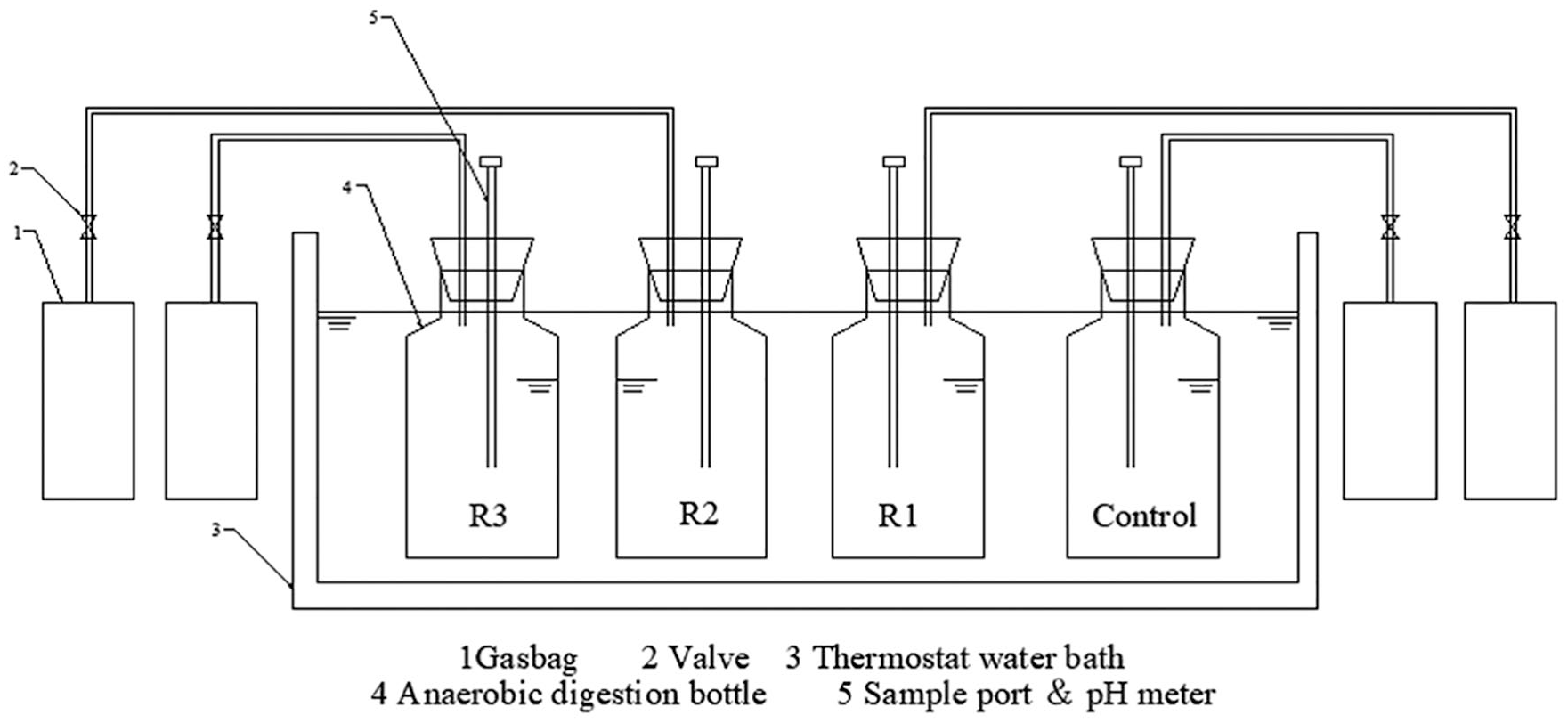
Schematic diagram of batch experiment set-up.
The four factors experiment
Temperature (35±1°C, 55±1°C), initial pH (5, 6, 7, 8, 9), I/S ratio (0.1, 0.25, 0.5, 0.75, 1.0, 1.25), C/N ratio (15, 25, 30, 35 45) were designed to evaluate their effect on the production of biogas and methane. Each value was evaluated in triplicate from R1 to R3, and one set of control experiment was conducted without any treatment (Figure 1). In this part of the experiment, there were no trace elements in all anaerobic reactors. The treatment group contained a 10 g sample of coffee husks, inoculum and distilled water, while coffee husks were not applied in the control group. Initial pH in all experiments was adjusted by using a 0.5 M NaOH and 0.5 M HCl solution. Urea was added to adjust the C/N ratio.
Trace elements experiment
The operating temperature, initial pH, I/S ratio and C/N ratio of the trace elements experiment were obtained from the results of the four factors experiment. Firstly, five levels of Fe2+ (1 mg l−1, 3 mg l−1, 5 mg l−1, 7 mg l−1, 10 mg l−1), Ni2+ (0.2 mg l−1, 0.5 mg l−1, 1 mg l−1, 1.5 mg l−1, 2 mg l−1) and Co2+ (0.2 mg l−1, 0.5 mg l−1, 1 mg l−1, 1.5 mg l−1, 2 mg l−1) were designed to evaluate their effects on biogas and methane production. Each concentration was evaluated in triplicate from R1 to R3 (Figure 1). Based on the above experiment, different combinations of optimum concentration of Fe2+, Ni2+ and Co2+ were also carried out to investigate the impact of multiple trace elements on biogas and methane production. Similarly, each combination was explored in triplicate from R1 to R3, and one set of control experiment was conducted without any trace metals (Figure 1). Trace element solutions were prepared from the reagent-grade salts of FeCl2·4H2O, CoCl2·6H2O and NiCl2·6H2O (⩾99.7% purity).
Analytical methods
Biogas was collected using a gasbag. The biogas production was measured by using the water displacement method, and the methane content in biogas was analyzed using gas chromatography (PerkinElmer, USA). The total solids (TS) and volatile solids (VS) of the materials and inoculum were determined in accordance with the standard water and wastewater examination methods (American Public Health Association, 1967). The pH was measured using a pH analyzer, and the carbon, hydrogen, oxygen, nitrogen and sulfur contents of the coffee husks were determined by elemental analyzer (Vario EL cube, Germany). The coenzyme F420 was quantitatively determined by UV spectrophotometry (Hutschemackers et al., 1982) and the VFA were determined by gas chromatographer (PerkinElmer, USA) equipped with a flame ionization detector. The concentrations of Fe2+, Co2+ and Ni2+ were determined using an inductively coupled plasma mass spectrometer (Optima 4300DV, PerkinElmer, USA).
Gas production kinetics is the study of dynamic quantitative relationships between microbial growth, product synthesis and substrate consumption. The cumulative methane production data from the experiments were fitted to the first-order kinetic model that calculated the conversion rate constant k (Li et al., 2015).

where Mt is the cumulative methane yield at digestion time t (ml g−1VS); Mmax is the maximum cumulative methane yield (ml g−1VS); k is the conversion rate constant; t is the digestion time (d).
Data collection and analysis
Data were expressed as mean ± standard deviations (SD) of triplicate measurements. A one-way ANOVA was performed using Microsoft Excel 2010, and a p-value of results less than 0.05 was considered statistically significant. All graphs were drawn with Origin 2017 software.
Results and discussion
Physicochemical characteristics of the coffee husks and the inoculum
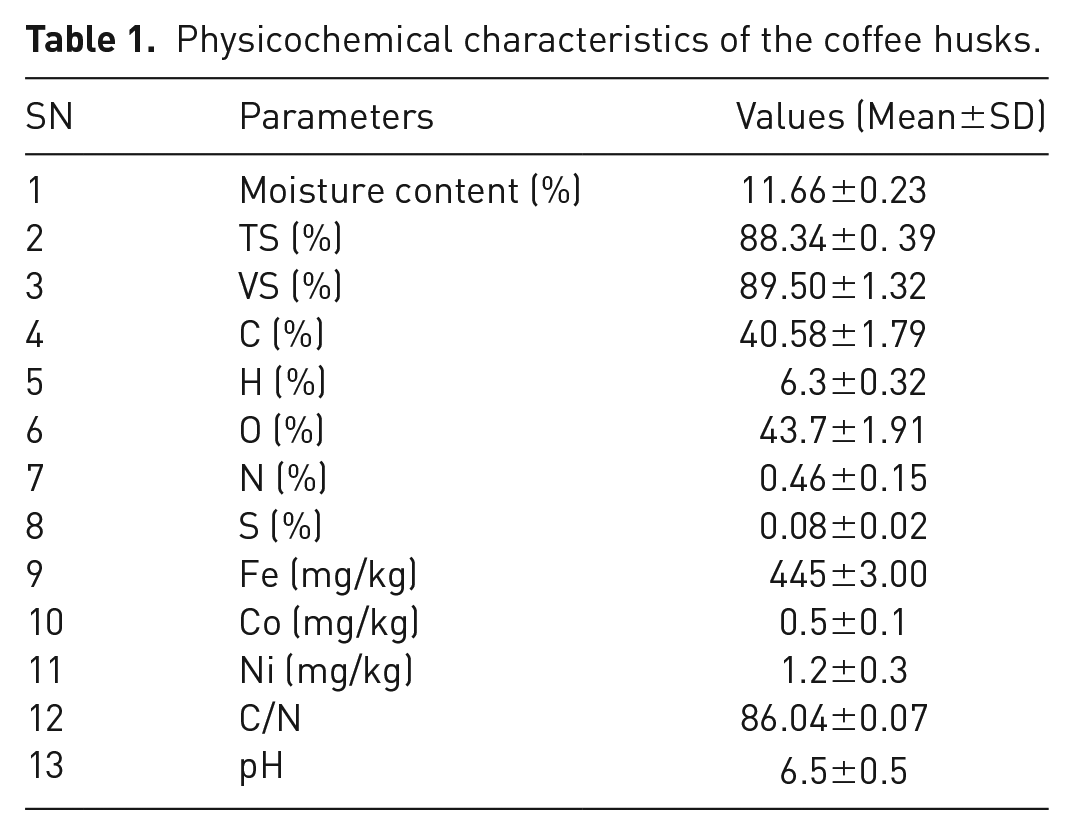
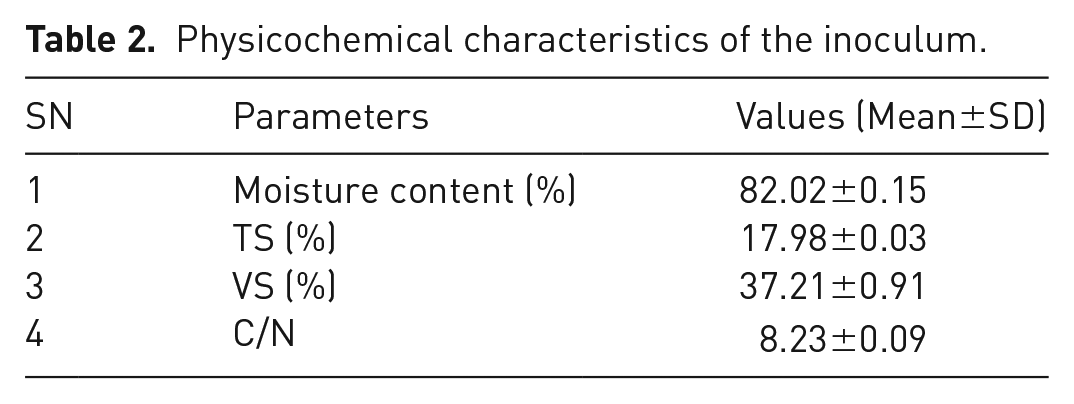
Coffee husks and inoculum used in this study were individually analyzed for their initial physicochemical characteristics and the results are presented in Tables 1 and 2. The coffee husks contained 88.34±0.39% of TS and 89.50±1.32% of VS (based on TS). The results of the elemental analysis made on this material suggested that the coffee husks were an aggregation of carbon (40.58±1.79%), hydrogen (6.3±0.32%), oxygen (43.7±1.91%), nitrogen (0.46±0.15%) and sulfur (0.08±0.02%). The lower content of sulfur could reduce the effect of H2S on microorganisms to some extent. Therefore, coffee husks exhibited a high content of organic matter and relatively low content of sulfur, which would be of benefit in biogas production.
Physicochemical characteristics of the coffee husks.
Physicochemical characteristics of the inoculum.
Effect of temperature on gas production
Temperature is one of the influencing factors of anaerobic digestion due to its effect on the performance of biogas production. The effects of temperature on the daily biogas production, the cumulative biogas production and the methane production are shown in Figure 2. In Figure 2(a), the daily biogas production had a similar trend under a high-mesothermal temperature, continuously reaching the highest points and then decreasing. It was observed that the maximum value of daily biogas production was 356.90 ml after the fifth day of mesophilic (35±1°C) digestion. A peak biogas production shown after the third day of thermophilic (55±1°C) digestion was 435.90 ml. The increase of anaerobic digestion temperature was beneficial in enhancing biogas production and shortening fermentation time. This is because the activity of the microbial community increased with an increase in temperature. Moreover, the high-temperature fermentation accelerated the reproduction of bacteria and promoted the hydrolysis of organic matter in the coffee husks.
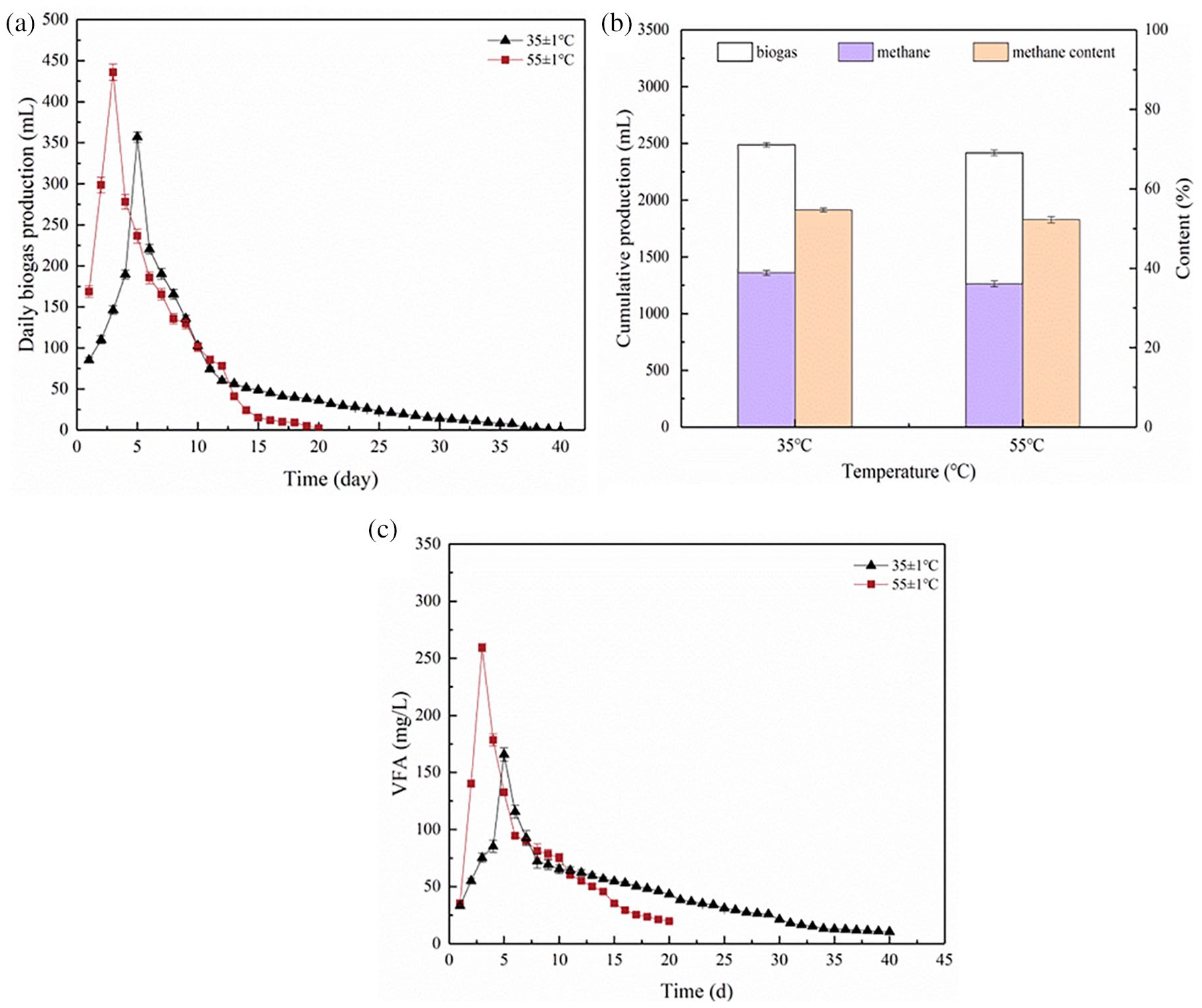
Effect of temperature on anearobic digestion of coffee husks: (a) daily biogas prodution, (b) cumulative biogas production and methane content, and (c) the concentration of VFA.
The cumulative biogas and methane production from the high-mesothermal temperature are shown in Figure 2(b). The cumulative biogas and methane production of mesophilic digestion were 2488.36 ml and 1361.13 ml, respectively. The cumulative biogas and methane production values for thermophilic digestion were 2417.17 ml and 1262.49 ml, respectively. Compared with mesophilic digestion, the accumulative biogas and methane production values at high temperature were slightly lower. However, the number of fermentation days of thermophilic (20 d) was half of that of the mesophilic (40 d) and the corresponding daily average biogas production values were 120.86 ml and 62.2 ml, respectively. This indicated that thermophilic anaerobic digestion had a rate-advantage of substrate over mesophilic digestion. A similar result was found in Zhang et al.’s 2016 report. VFA is an important intermediate in the anaerobic digestion and acted as substrates for methanogens. The conversion rate of the substrate was characterized by the concentration of VFA. As seen in Figure 2(c), the variations in VFA of the two conditions were roughly similar, reaching the peak value, and then decreasing. The maximum peak in both conditions appeared on day 5 and 3, which were 165.83 and 259.41 mg l−1 for mesophilic and thermophilic conditions. In the early fermentation period, coffee husks were rapidly converted into VFA, alcohol, CO2 and H2 in hydrolysis and acidification processes, while the activity of methanogens was lower, resulting in the slow conversion rate of VFA, therefore the VFA concentration increased. Because of the increased activity of methanogens, the intermediates such as VFA, CO2 and H2 were quickly converted to methane. So, the VFA consumption rate was greater than yield, leading to a reduction in the concentration of VFA. It was observed that the concentration of VFA under the thermophilic condition rapidly dropped, while the concentration of VFA under the mesophilic condition slowly decreased. This indicates that the consumption rate of substrate under the thermophilic condition was higher than that of the mesophilic condition.
In this study, although the thermophilic temperature digestion period was shorter than that of mesophilic temperature, the biogas and methane production of both conditions were quite similar. Considering that the power requirements of thermophilic digestion were higher than those of mesophilic digestion, the mesophilic temperature was chosen to explore the effects of other factors on anaerobic fermentation gas production.
Effect of initial pH on gas production
The effect of initial pH of digester on biogas production in this study is shown in Figure 3(a). The cumulative biogas production exhibits an increasing then decreasing trend with the initial pH rising. The maximum biogas production was obtained from an initial pH 7, and it was 2725.69 ml. The values for accumulative biogas production of an initial pH 5 and pH 9 were 1103.20 ml and 2256.9 ml, respectively, which were obviously lower than that of the initial pH 7. Comparing the methane production of each group, it was found that the methane production of different initial pH was significantly different (p<0.05). The methane production with the initial pH 7 was evidently higher than that of the other groups, and the initial pH 5 group had a minimum methane production of 353.02 ml. These results suggest that the initial pH greater than 7 or less than 7 would inhibit the metabolic activity of methanogens, but the initial pH 7 greatly promoted the metabolic activity of methanogens so as to significantly increase cumulative biogas and methane production. Coenzyme F420 is an enzyme unique to methanogens which can represent the methanogenic activity (Pender et al., 2004). The trends of coenzyme F420 for different initial pH during the fermentation process are presented in Figure 3(b). The coenzyme F420 content of different initial pH showed a similar trend that was “decrease–increase–decrease.” The content of the initial pH 7 was 2.9 μmol l−1, which was obviously higher than that of other groups.
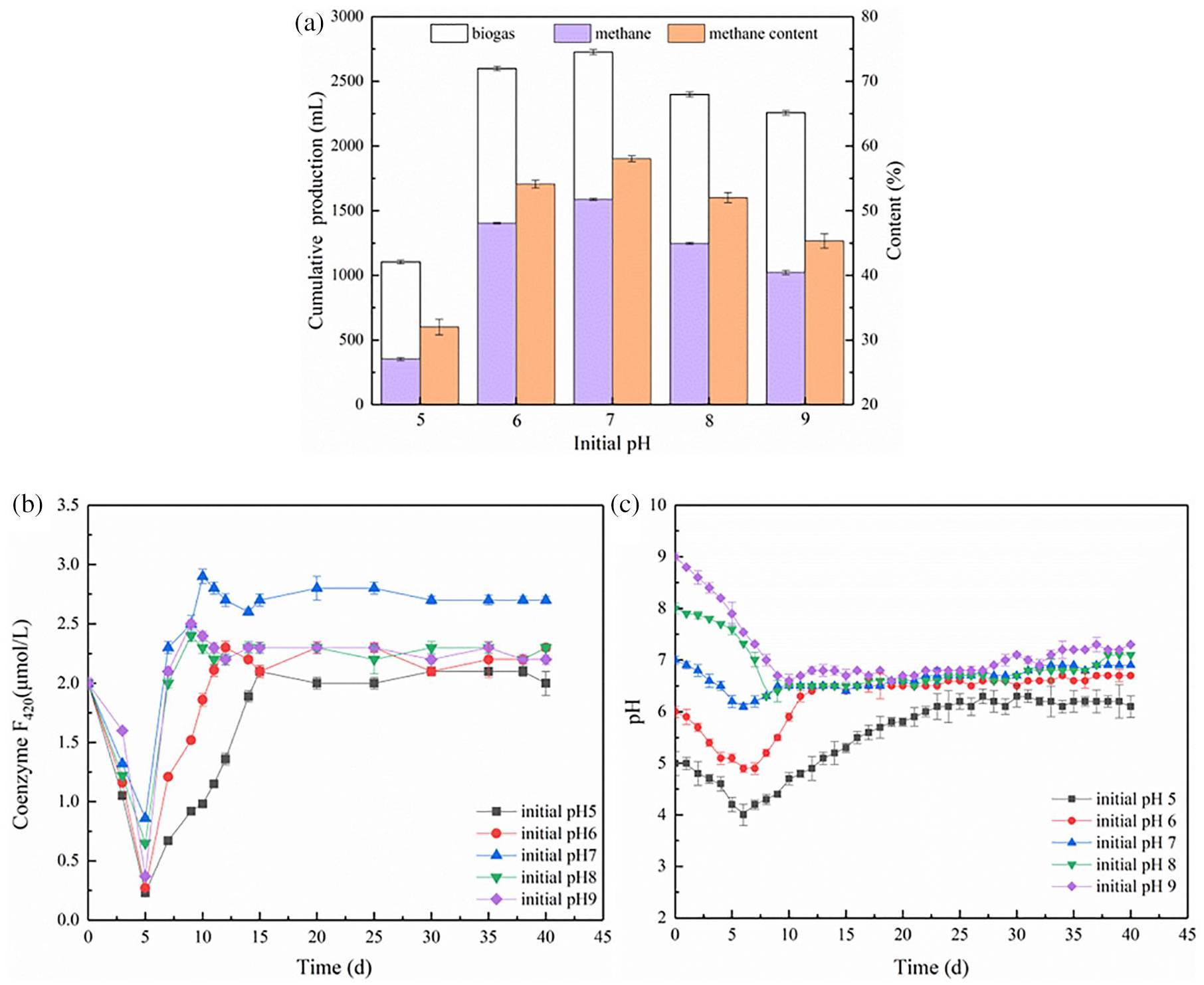
Effect of initial pH on anearobic digestion of coffee husks: (a) cumulative biogas production and methane content, (b) the coenzyme F420concentration, and (c) pH value.
The cumulative biogas production and methane content of the initial pH 7 were higher than any other groups, which were closely related to the pH during the fermentation process. Therefore, the pH value during the fermentation was monitored. In Figure 3(c), the pH value of different groups all drops, rises, and gradually comes to a standstill. The pH value of group with an initial pH 5 and 6 rapidly decreased due to the production of VFA and gradually recovered to 6.5–7.2 on day 13, while the group with an initial pH 7, 8 and 9 was on the 8 d, 9 d and 10 d, respectively. It took longer time for those experiments with initial pH value much lower or higher than 7 to recover to the suitable range of pH, which inhibited the activity of methanogens, resulting in the lower biogas and methane production. Therefore, the initial pH 7 was of benefit to the metabolic activity of methanogens and the cumulative biogas and methane production of initial pH 7 was the largest.
Effect of I/S ratio on gas production
The results for cumulative biogas production and methane content of all groups are presented in Figure 4. According to Figure 4(a), the cumulative biogas production and methane content shows an increasing trend with the growth of the I/S ratio. The lowest cumulative biogas production and methane content values were obtained from an I/S ratio of 0.1, which were 503.20 ml and 26.78%, respectively. The amount of microorganism of this I/S ratio was low, which resulted in the lower biogas production and methane content. On the other hand, when the I/S ratio was low, the organic loading of the fermentation system was high, which was prone to acidification because of the accumulation of VFA in the fermentation process. In Figure 4(b), the total VFA and pH at the end of the digestion period were recorded. It was observed that the total VFA and end pH varied from 2021.23 to 75.36 mg l−1 and 5.7 to 7.3, respectively. Compared with other groups, the total VFA and end pH of I/S ratios of 0.1 were the largest and the lowest, which indicated that the souring of digesters occurred in I/S ratios of 0.1. Previous reports pointed out that a limited range of 6.5–7.2 was favorable for the metabolic activity of methanogens (Syaichurrozi et al., 2018). The pH at the end of the fermentation was 5.7 at an I/S ratio of 0.1, which was not suitable for the metabolism of methanogens.
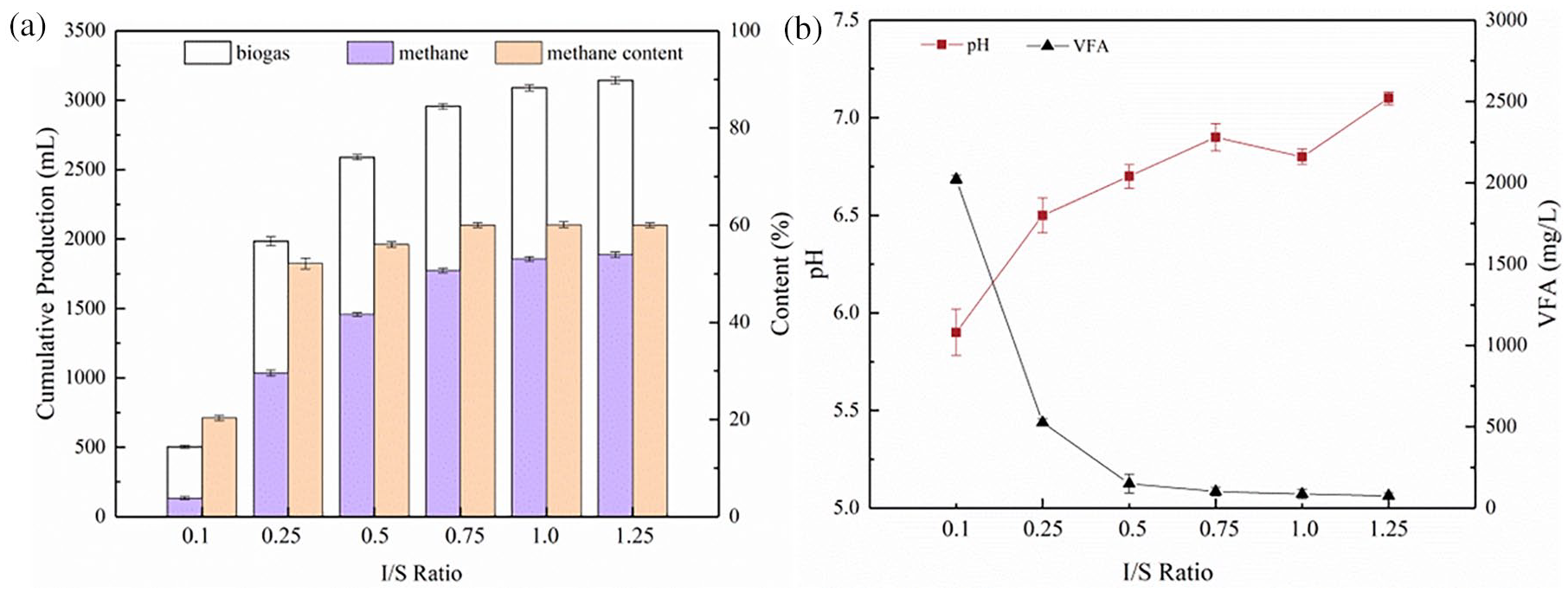
Effect of I/S ratio on anearobic digestion of coffee husks: (a) cumulative biogas production and methane content and (b) pH value and the concentration of VFA.
Upon increasing the I/S ratio to 1.25, the cumulative biogas production and methane content reached the maximum values, which were 3143.45 ml and 60.04%. The cumulative biogas production and methane content significantly increased by 2453.12 ml and 33.26%, respectively, with an increase in the I/S ratio from 0.1 to 0.75, which resulted from the growth of the concentration of the microorganisms. More microorganisms caused the fast conversion rate of VFA, which promoted the cumulative biogas production and methane content. However, the cumulative biogas production and methane contents slightly increased when the I/S ratio further went up from 0.75 to 1.25. The concentration of anaerobic microorganisms at an I/S ratio of 1.25 was large, but the amount of organic matter that could be degraded by anaerobic microorganisms was fixed. So, competition for survival was prone to occur, which led to a decrease in the activity of microorganisms. Previous research also reported that the activity of methanogens slowed down, resulting in a decrease in the generation of methane with decreasing I/S ratio (Sri Bala Kameswari et al., 2011).
In this study, it was observed that the I/S ratio of 0.75 was the most appropriate, whose conversion rate of substrate reached the highest point.
Effect of C/N ratio on gas production
The C/N ratio of the fermented raw material is one of the important factors affecting gas production by anaerobic fermentation. It was generally considered that the C/N ratio was 20–30, which was favorable for biogas production and methane content (Estevez et al., 2012). In this study, the biogas production and methane content of coffee husks were explored under different C/N ratios of 15, 25, 30, 35 and 45. It can be seen from Figure 5(a) that the biogas and methane production results from different C/N ratios were significantly distinct (p<0.05). The biogas and methane production of lowest C/N ratio was 1459.80 ml and 568.74 ml. The methane production sharply declined from 1740.91 ml to 568.74 ml with the C/N ratio decreased from 25 to 15. When the C/N ratio was less than 20, the carbon source in the system was rapidly consumed, and the nitrogen element rapidly accumulates in the form of ammonium, causing the pH of the system to rise, affecting the activity of the microorganism and the methanogen (Gunaseelan, 1998; Gupta et al., 2012). As shown in Figure 5(b), the pH of the group with C/N ratio 15 fell slowly, reaching the lowest value of 6.71, which indicated that there was no obvious accumulation of VFA. This may be related to the nitrogen content whose excessiveness inhibited the activity of the methanogen because of the accumulation of ammonia, resulting in lower methane production. With the C/N ratio increasing, the cumulative biogas and methane production exhibited an increase–decrease trend. The maximum values for cumulative biogas and methane production were obtained from a C/N ratio of 30, which were 3359.6 ml and 2127.30 ml, respectively. The result revealed that the cumulative biogas and methane production would decline with the C/N ratio increasing when the C/N ratio was greater than 30. The same conclusion was reported by Syaichurrozi (2018), who found that that the methane content increased from 29.09 to 74.34% when the C/N value decreased from 57.39 to 29.50. The methane production exhibited a decreasing trend with the C/N ratio increasing further, probably because the nitrogen source was at a low level leading to poor buffering capacity. In Figure 5(b), the pH values of the group with a C/N ratio 35 and 40 decreased quickly, reaching minimum values (6.03 and 5.89, respectively), then started to increase. It took a longer time for both groups to recover to the suitable range of 6.5–7.2; thus, the activity of methanogen was weak, resulting in lower methane production.
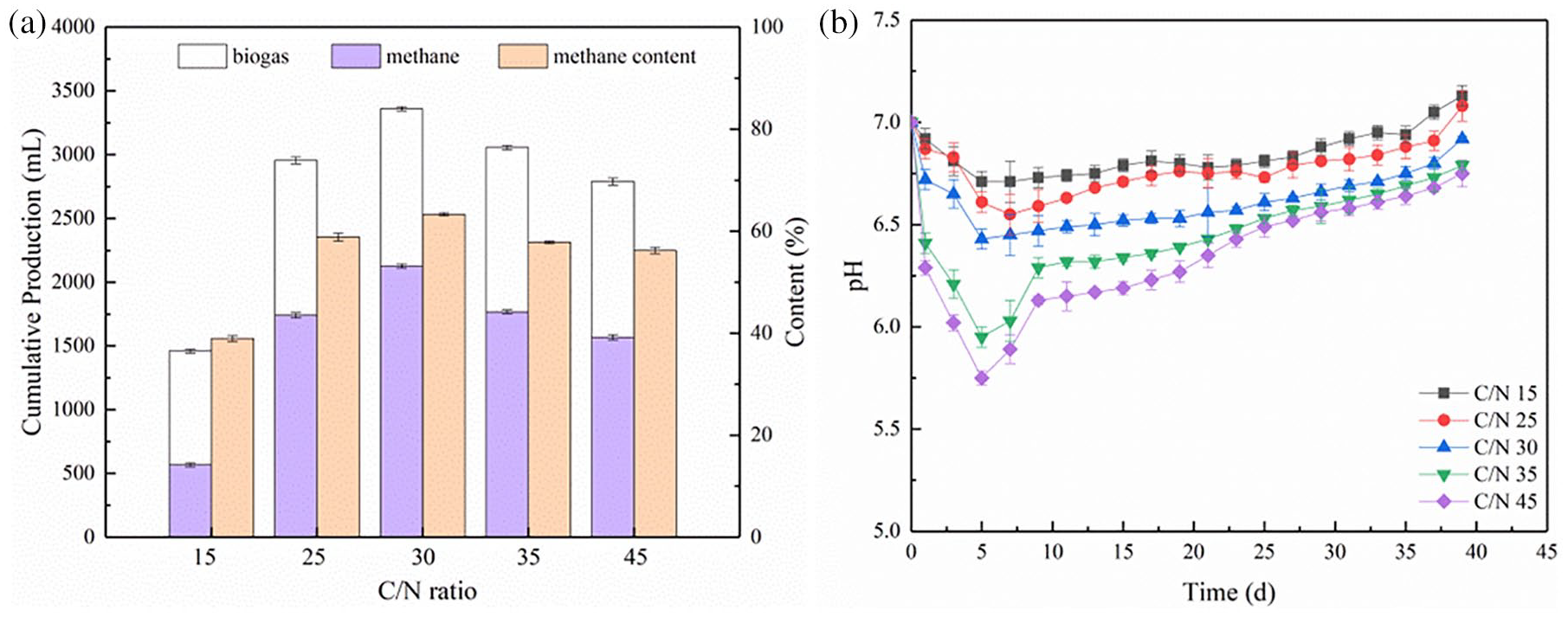
Effect of C/N ratio on anearobic digestion of coffee husks: (a) cumulative biogas production and methane content and (b) pH value.
Based on these results, it was found that the biogas and methane production were improved through adjusting the C/N ratio of substrate. Yet, the high concentration of nitrogen would inhibit the growth of methanogen when the C/N ratio was low, while this was also inhibited at higher C/N ratio as a result of poor buffering capacity. According to the biogas and methane production, the optimal C/N ratio was 30.
Effect of trace element on gas production
As shown in Figure 6(a), Fe2+ addition at all concentrations (1 mg l−1, 3 mg l−1, 5 mg l−1, 7 mg l−1 and 10 mg l−1) had significant effects on the biogas and methane production (p<0.05). For the different Fe2+ concentrations, the biogas production reached 3443.59 ml, 3493.98 ml, 3661.96 ml, 3460.39 ml and 3158.02 ml, respectively. Comparing with the experiment with no addition of Fe2+, the cumulative biogas production increased 2.5%, 4%, 9%, 3% and −6%, respectively. The biogas production was augmented with the increasing Fe2+ concentration within limits. A similar trend of cumulative biogas production was found in the report of Yang et al. (2015). The methane production increased from 2127.30 ml to 2449.49 ml when the concentration of Fe2+ increased from 0 mg l−1 to 5 mg l−1, and accordingly the methane content increased from 63.32% to 64.67%. However, the increasing slope of the methane production gradually slowed down and then showed a negative growth. This result illustrated that Fe2+ could improve the biogas and methane production within a certain concentration range; beyond this appropriate range, it exhibited a repressive effect. Feng et al. (2014) examined anaerobic digestion of waste-activated sludge digestion by the addition of zero-valent iron (ZVI), the result of which indicated that ZVI raised the methane production by 43.5%.
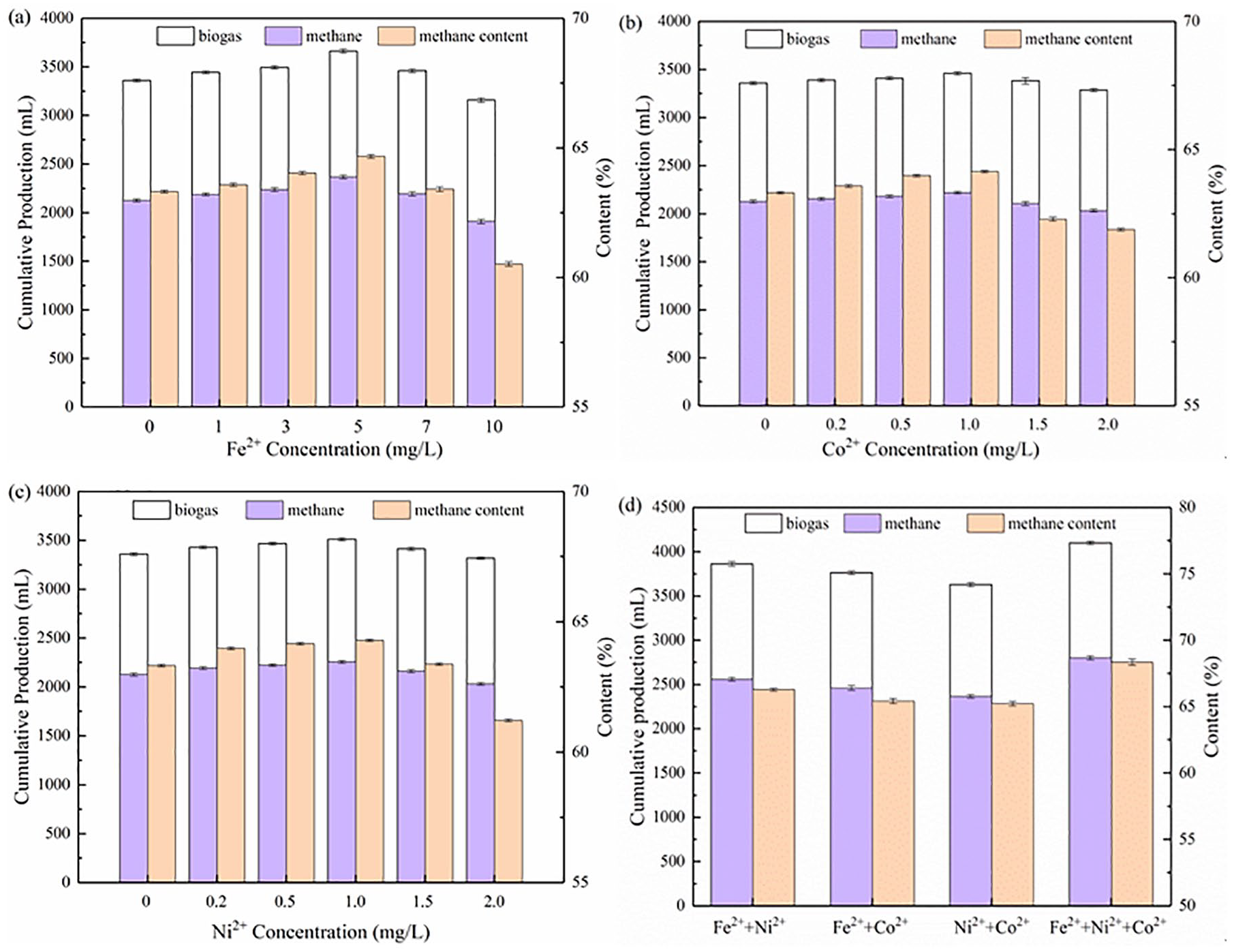
Effect of trace element on cumulative biogas production and methane content: (a) the supplementation of Fe2+, (b) the supplementation of Co2+, (c) the supplementation of Ni2+, and (d) the different combinations supplementation of Fe2+, Ni2+and Co2+.
Figure 6(b) shows the effect of Co2+ on biogas production and methane content. The biogas production and methane content gradually grew along with the Co2+ concentration increasing from 0.2 mg l−1 to 1 mg l−1, but that declined and even was lower than the control test when the Co2+ concentration further increased to 2.0 mg l−1. The highest biogas production and methane were 3460.39 ml and 64.14%, obtained from the Co2+concentration of 1.0 mg l−1. Comparing with the experiment with no addition of Co2+, the biogas production and methane content increased 3% and 0.82%, respectively.
The biogas production and methane content of different Ni2+ concentrations are given in Figure 6(c). As a result of Ni2+ addition, values for both biogas production and methane content were higher than those of the control test. The biogas production varied from 3359.6 ml to 3413.35 ml and methane content varied from 63.32% to 63.38% when the concentration of Ni2+ increased from 0 mg l−1 to 1.5 mg l−1. With a supplementation of Ni2+ at a concentration of 1.0 mg l−1 in batch digesters, the highest biogas production and methane content was obtained, which were 3510.78 ml and 64.29%, respectively. When the concentration of Ni2+ increased to 2 mg l−1, the addition of Ni2+ displayed a negative effect on the biogas production and methane content.
As seen in Figure 6(d), the different combinations of adding Fe2+, Ni2+ and Co2+ stimulated the biogas production and methane production, and the simultaneous addition of three trace elements significantly improved the biogas production and methane content (p<0.05). Compared with the control test, the cumulative biogas production and methane content increased by 15% and 2.96% through adding Fe2+ (5 mg l−1) and Ni2+ (1 mg l−1), respectively. The group with adding Fe2+ (5 mg l−1) and Co2+ (1 mg l−1) increased by 12% and 2.1%, while the group with adding Co2+ (1 mg l−1) and Ni2+ (1 mg l−1) only increased by 8% and 1.9%. Evranos and Demirel (2015) also found a similar conclusion, that biogas production and methane content exhibited no significant enhancement through adding both Co2+ and Ni2+ at a concentration of 0.1 mg l−1, alone or together. The biogas production and methane content of the simultaneous addition of three trace elements was 4098.71 ml and 68.34%, which increased by 22% and 5.02% compared with the experiment with no addition of the three elements. Compared with the experiments without adding Fe2+, the biogas production and methane content of the experiments with adding Fe2+ were obviously high. These results demonstrated that the combined addition of trace elements had a synergistic effect on anaerobic digestion, in which Fe2+ played a key role.
The favorable impact of trace elements was directly related to their function as cofactors in enzyme systems during anaerobic digestion. The reasons why Fe2+ played a key role and the three trace elements had synergistic effects on anaerobic digestion were as follows. The addition of Fe2+ enhanced the activities of several key enzymes in the hydrolysis and acidification, creating an increase in intermediates such as VFA and other kinds of dissolved organic matter used by methanogens (Liu et al., 2012). Fe2+ also participated in the enzyme systems of methanogens. Similarly, the addition of Fe2+ could eliminate the inhibitory effect of the sulfur in coffee husk. Fe2+ may be directly used as an electron donor for the conversion of CO2 to CH4 through autotrophic methanogens, leading to an increase in methane production (Vintiloiu et al., 2013). Ni participates in some enzyme systems in methanogens, such as CO-dehydrogenase, acetyl coenzyme A synthase and Methyl-CoM-reductase (Fournier and Gogarten, 2007; Ko et al., 2018; Romero-Güiza et al., 2016), and Ni is a component of the cofactor F430 (Thauer et al., 2008), which was of benefit in converting acetic acid or CO2, H2 to methane. Co is a cofactor for methyl transferase and carbon monoxide dehydrogenase (CODH), promoting the conversion of acetic acid and methane. Therefore, Ni2+ and Co2+ contributed to promoting the methane biosynthesis process. The results of cumulative methane production resulting from adding different combinations of Fe2+, Ni2+ and Co2+ are presented in Figure 7(a). The cumulative methane production of the experiment only adding Fe2+ smoothly increased. In contrast to the experiment adding Fe2+, the cumulative methane production of simultaneous addition of the Fe2+, Ni2+ and Co2+ rapidly grew, and its lag phase was shorter. In addition, in Figure 7(b) and (c), the first-order kinetic simulation results suggested that the experiments with only adding Fe2+ and adding Fe2+, Ni2+ and Co2+ both exhibited obvious two-stage characteristics. The k1 and k2 of the group with only adding Fe2+ were 0.017 d−1 and 0.14 d−1, respectively, while those of the group with adding Fe2+, Ni2+ and Co2+ were 0.03 d−1 and 0.16 d−1. The k1 and k2 of the group adding Fe2+, Ni2+ and Co2+ were higher than the group with only adding Fe2+, illustrating that the simultaneous addition of the three trace elements not only shortened the lag period but also accelerated the conversion rate of methane.
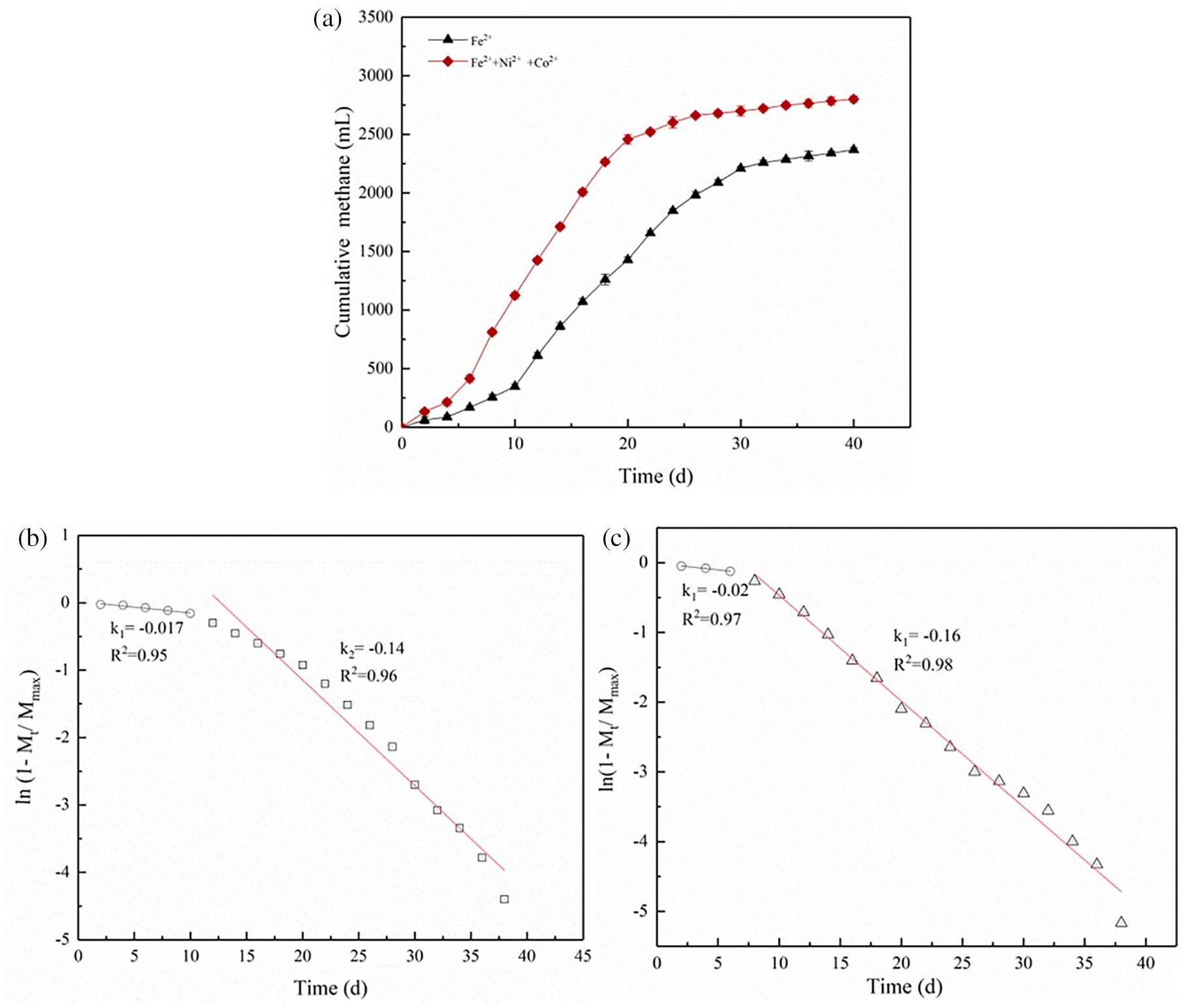
(a) The cumulative methane production of adding Fe2+,Ni2+and Co2+, adding Fe2+, (b) the first-order kinetic model of group adding Fe2+, and (c) the first-order kinetic model of group adding Fe2+,Ni2+and Co2+.
According to these results, the positive effects of adding Fe2+, Ni2+and Co2+in biogas production and methane content were observed, and the different combinations of adding Fe2+, Ni2+ and Co2+ was better than a separate addition of the three trace elements.
Conclusion
(1) The physicochemical characteristics of coffee husks revealed that they contained high organic matter and low sulfur, which were favorable for biogas production.
(2) The results of the batch experiment indicated that coffee husks had real potential as raw materials for anaerobic digestion. The maximum production of biogas and methane reached 3359.6 ml and 2127.30 ml, respectively, under the conditions of mesophilic temperature (35±1°C), initial pH of 7, I/S ratio of 0.75 and C/N ratio of 30.
(3) The addition of Fe2+, Co2+ and Ni2+, individually or in combination, during anaerobic digestion of coffee husks could stimulate biogas production and increase methane content; of these, the contribution of Fe2+ was higher than the other elements.
(4) Fe2+ promoted the hydrolysis and acidification process, resulting in a high amount of intermediates. And further, with the synergy of Fe2+, Ni2+ and Co2+, the activity of the enzyme system in methanogens was enhanced, which led to high biogas and methane production, reaching 4098.71 ml and 2801.06 ml, respectively.
Footnotes
Declaration of conflicting interests
The authors declared no potential conflicts of interest with respect to the research, authorship, and/or publication of this article.
Funding
The authors disclosed receipt of the following financial support for the research, authorship, and/or publication of this article: This work was supported by the “Fundamental Research Funds for the Central Universities (WUT: 2019III105CG and 2019-zy-130)”.
