







Abstract
The current disposal of biosludge generated in wastewater treatment has high costs and causes environmental problems, anaerobic digestion (AD) of solid waste is a promising alternative. Thermal hydrolysis (TH) is an accepted technology to enhance anaerobic biodegradability of sewage sludge, but this technology has not been developed to be used with biological sludge from industrial wastewater treatment. In this work, the improvements to the AD of biological sludge from cellulose industry when thermal pretreatment is carried out were experimentally determined. The experimental conditions for TH were 140 °C and 165 °C for 45 minutes. Batch tests were carried out to quantify methane production evaluated as biomethane potential (BMP), anaerobic biodegradability according to volatile solids (VS) consumption and kinetic adjustments. An innovative kinetic model based on the serial mechanism of fast and slow biodegradation fractions was tested for untreated waste, and parallel mechanism was also evaluated. Increases in BMP and biodegradability values according to VS consumption were determined with increasing TH temperature. The results of 241 NmL CH4 gVS substrate−1 for BMP and 65% biodegradability are reported for the 165 °C treatment. AD rate increased for the TH waste compared to the untreated biosludge. Improvements of up to 159% for BMP and 260% for biodegradability according to VS consumption were quantified for TH biosludge compared to untreated biosludge.
Keywords
Introduction
The most commonly used process for the treatment of effluents from pulp production industries is the aerobic activated sludge system, which generates biological waste for disposal (Dahl et al., 2008). Secondary sludge can be disposed of in several ways; a common practice is to thicken or dewater it and then dispose of it by incineration or landfilling (Dahl et al., 2008). Disposal of biosludge in landfills or by incineration leads to a loss of the value of the biosludge and greenhouse gas emissions (Bayr et al., 2013; Mahmood and Elliott, 2006). Therefore, modifying the current forms of biosolids disposal is advantageous from both an environmental and an economic point of view. In this context, anaerobic digestion (AD) has emerged as an alternative disposal method. The use of anaerobic technologies promotes the production of renewable energy under the concepts of both circular economy and biorefinery by evaluating the generation of digestate as a soil improver (Romero-Güiza et al., 2016).
There are laboratory-scale studies in which low methane production has been confirmed by AD of secondary sludge from pulp and paper industries using the kraft method. Based on several previous studies, it can be concluded that the typical biomethane potential (BMP) value for biological sludge from a kraft pulp mill effluent treatment plant is in the range of 50–100 Nm3 per tonne of volatile solids (VS) (Bayr et al., 2013; Elliott et al., 2012; Karlsson et al., 2011; Lopes et al., 2018; Wood et al., 2009). The low BMP levels are owing to one of the technological challenges commonly present in the AD of biosludge and limitations in hydrolysis. The limitations in the hydrolysis of biosludge include the difficulty in degrading the cell membranes of the microorganisms found in the waste, thus failing to obtain high amounts of dissolved organic matter (Li and Noike, 1992). Owing to the degradation difficulties of the hydrolysis step, it is of interest to evaluate pretreatment alternatives that increase the speed of the hydrolysis step. Thermal hydrolysis (TH) is a widely used and effective pretreatment technology for improving the biodegradability of biological sludge from sewage treatment systems (Barber, 2016).
The mechanism behind thermal pretreatments can be described by physical and chemical effects, in which organic materials that are difficult to anaerobically degrade are transformed into forms that are more available to microorganisms.
For thermal treatment design, two key parameters are the temperature and exposure time. For sewage sludge treatment, the temperature parameter values are in the range of 120 °C–225 °C, whereas the time parameter values range from 15 to 60 minutes (Barber, 2016; Bougrier et al., 2008; Sapkaite et al., 2017; Wilson et al., 2009). Exposure of sludge for extended periods to temperatures ranging from 140 °C to 190 °C can lead to undesired caramelization and/or Maillard reactions (Bougrier et al., 2008; Wilson et al., 2009). The generation of soluble recalcitrant compounds has been demonstrated in other studies on biological sludge from sewage treatment (Bougrier et al., 2008; Choi et al., 2018; Dwyer et al., 2008; Park et al., 2021; Sapkaite et al., 2017; Wilson et al., 2009). It has been observed that more severe TH conditions lead to solubilization of more organic matter but not necessarily to increased biogas production from the anaerobic degradation of the hydrolysed sludge from sewage treatment (Bougrier et al., 2008; Choi et al., 2018; Park et al., 2021; Sapkaite et al., 2017).
The information and related work cited on the use of TH to improve AD of biosludge from sewage treatment is extensive, but there is limited published work on the improvements achieved in the AD of biosludge from the industry of pulp and paper mills. The reference works for the pretreatment of biosludge from pulp and paper industries are those published by Bayr et al. (2013) and Wood et al. (2009), which also work with thermal pretreatments in addition to ultrasound and others. Both Wood et al. (2009) and Bayr et al. (2013) test different pretreatment options of several indoles to improve the AD of biosludge from pulp and paper industries. The work of Bayr et al. (2013) reported BMP increases of 45% with TH conditions of 150 °C for 10 minutes, whereas Wood et al. (2009) obtained a BMP increase of 280% at 170 °C for 60 minutes, both with AD periods of 20–35 days without steam explosion. Both conclude that thermal pretreatment is one of the best options. But both works only test a single TH condition, which implies that one temperature and time was tested. These works were not focused on observing only the variables associated with TH.
The BMP value for untreated biosludge from sewage treatment ranges from 150 to 250 Nm3 tonne VS−1 (Bougrier et al., 2007; Donoso-Bravo et al., 2010; Park et al., 2021; Sapkaite et al., 2017). This range is higher than the one presented previously for the biosludge from pulp and paper industries (50–100 Nm3 per tonne of VS). The difference between the BMP ranges for biosludge from sewage treatment and from the pulp industry is caused by compositional differences in the amounts of lignocellulosic biomass (Meyer and Edwards, 2014). Therefore, because of the differences between biosludge from different origins, it is not possible to know how the performance and optimum temperature values obtained in technologies and tests developed for thermal pretreatment of biosludge from sewage treatment will be affected when using biosludge from pulp and paper industries. This is due to the absence of information related to testing different TH conditions in the same TH work to cellulose industry biosludge. For these reasons, it is interesting to study the effect of thermal pretreatment on sludge from cellulose-producing industries, as well as to evaluate new temperature and time conditions.
In the same sense, it is of interest to evaluate the methane production kinetics as they are affected by thermal pretreatment and how they vary with a modification of the TH conditions. A variety of single-equation cumulative models are commonly used to describe time variation of total methane production from substrates. They are often used to evaluate the BMP as the kinetic constant associated with methane production and most models are non-linear (Emebu et al., 2022). There is a wide variety of models with these characteristics, but particularly simple is the first order (FO) model (Pavlostathis and Giraldo-Gomez, 1991). Despite its age, it is still in use (Catenacci et al., 2022). On the other hand, there is the empirical model known as modified Gompertz (MG) (Lay et al., 1997). As mentioned in Emebu et al. (2022), the MG model is the best applied to the degradation of simple organic substrates. However, there are so-called heterogeneous substrates that are composed of substrates with different degradation rates, a recurring case in complex degradation wastes, such as biosludges. One of the models developed for heterogeneous waste is the two-substrate parallel model (Rao et al., 2000). Similarly, it is innovative to consider mathematical models describing methane production kinetics through serial mechanisms. There is an initial stage that consumes the rapidly biodegradable and releases a second, less biodegradable substrate. Therefore, it is of interest to develop and compare the results of serial models with those obtained for single-equation models such as parallel models.
In this study, the goal was to evaluate the effect of TH as a pretreatment, testing different TH boundary conditions in the same study. Therefore, the work sought to focus on TH, being the novelty of this work based on determining the variations of BMP, anaerobic biodegradability, organic matter solubilization and kinetic parameters when testing thermal pretreatments at different TH conditions in industrial sludge. In our case, biological sludge from the activated sludge reactor of the effluent treatment system of a kraft pulp industry. There is a lot of information about TH of sewage sludge; however, there are few references on TH for aerobic sludge from treatment systems of industrial wastewater. The most relevant parameter for TH design is temperature (Devos et al., 2021). Therefore, it was necessary to select which thermal levels to use. Devos et al. (2021) mention an optimal temperature range for TH of sewage sludge between 140 °C and 160 °C. On the other hand, the value of 165 °C is recurrently used as the optimum temperature in already established commercial-scale technologies for sewage biosludge, as in the case of Exelys and well reported in the work of Gahlot et al. (2022) recently. In addition, it was reported that 140 °C is generally the lower limit for currently developed sewage sludge technologies. Thus, the temperatures selected were 140 °C and 165 °C for 45 minutes without the use of steam explosion. The main hypothesis is that thermal pretreatment achieves solubilization of organic matter, which increases with pretreatment temperature. As a second hypothesis, it is assumed that the increased solubilization of organic matter increases the anaerobic biodegradability, and thus methane production from the pretreated biosludge is faster than that in the absence of pretreatment. Kinetic parameters provide new information regarding the kinetic changes that occur because of thermal pretreatment of pulp industry biosludge. In addition, parallel and serial kinetic models were evaluated to adjust the methane production of the untreated biosludge which compared to hydrolysed sluges have a more heterogeneous composition. As mentioned, there are currently technologies for thermal pretreatment of sewage sludge, so it is relevant to know whether cellulose industry sludge has comparable results to sewage waste. On the other hand, Kraft and sewage sludge have a point in common, both come from aerobic treatment, but it is of interest to consider whether this is enough to expect them to behave in the same way or, on the contrary, other parameters affect them depending on the origin of the process rather than the nature of the treatment that generates them. Due to the above, a comparison of the results obtained with those reported on the pretreatment of sludge from sewage treatment was carried out.
Materials and methods
Substrate and inoculum
The substrate was biomass from the extended aeration system of a Kraft cellulose production plant in Uruguay. At the industry, the biomass purged from the extended aeration system is centrifuged and then dried at high temperature (approximately 150 °C). The dried biomass was the only one available and sent by the industry to be used in this work as the substrate. To replicate the concentration of sludge prior to drying, this biosludge had to be hydrated by suspension in distilled water to a percentage of 1.3% of total solids (TS).
The inoculum used was biomass from an anaerobic lagoon used for the treatment of slaughterhouse effluent. This sludge was pre-incubated at 37 °C for 4 days to remove the remaining organic matter. Its acetoclastic activity was determined by the method described in Soto et al. (1993).
Thermal pretreatment of biosludge
The hydrated substrate was thermally pretreated using a 2 L Parr® reactor operated in batch mode. The conditions tested were: 140 °C and 165 °C for 45 minutes in each case. The reactor was kept hermetically sealed at the corresponding steam pressure during the time between heating, pretreatment and cooling. After thermal pretreatment, the sludge samples were cooled down to room temperature without a steam explosion.
Analytical methods
Quantification of TS, VS and chemical oxygen demand (COD) was performed according to the methods described in ‘Standard Methods for the Examination of Water and Wastewater’ by Rice et al. (2012). The quantification of the solid’s concentration was adapted from the reference mentioned above, to be reported in mass concentration, gVS g−1 and gTS g−1 for the VS and TS, respectively.
Characterization of biosludge samples
For all samples with and without thermal pretreatment, VS and TS were determined in triplicate. The chemical oxygen demand for the soluble fraction (

In Equation (1), VS represents the concentration of volatile solids determined for the corresponding sample in units of gVS L−1 and
BMP tests
Biomethane potential
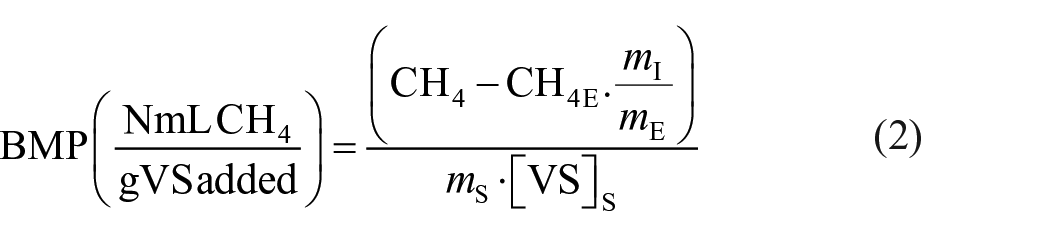
The AMPTS® II (Automatic Methane Potential Test System) was used to determine the BMP of each of the substrates in each of the conditions tested. The tests were performed in triplicate in 580 mL glass vials with 300 mL usable volume. In each vial, 1.3 gVS of the substrate and the inoculum necessary to obtain a ratio of 0.5 g g−1 VS between them were loaded. The working volume was supplemented with buffer and nutrient solution as suggested by Angelidaki et al. (2009). Each vial was purged for 1 minute with N2. The vials were incubated at 37 °C with intermittent shaking (60 seconds on/300 seconds off). The gas produced, after passing through the CO2 absorption unit included in the equipment, is recorded online approximately every 8 mL at standard conditions (NmL) defined at 273 K and 1 atm pressure. Endogen tests were also carried out with inoculum, but without substrate under the same conditions described above to determine the endogenous methane production and subtract it from the production obtained in the substrate tests. The tests were completed when no gas production was detected for 3 days. At the end of the trials, volatile suspended solids (VSS) and COD in the supernatant were determined for each vial, obtaining both phases from centrifugation for 20 minutes at 5000 rpm.
Determined parameters
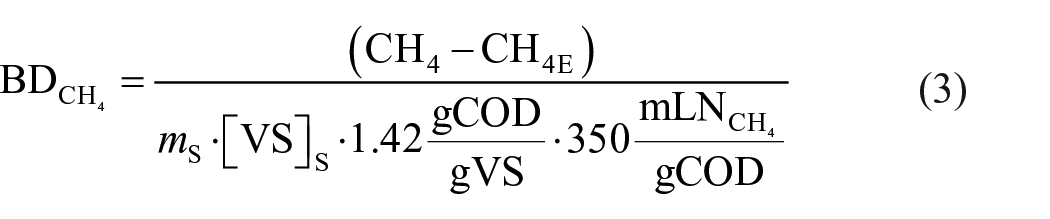
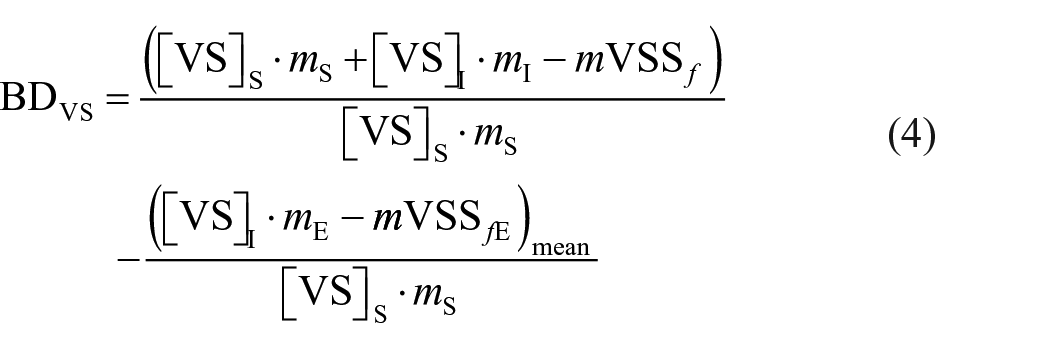
The parameters calculated based on the analyses performed are shown in Equations (2)–(4). In Equations (2)–(4),
Adjustments to kinetic models
The FO kinetic model is presented in Equation (5), and the empirical model of MG is presented in Equation (6) and will be used to contrast the results. The models presented are defined by kinetic parameters such as μmax and


The BMP curves obtained from the different substrates were adjusted by an objective function based on the minimization of the quadratic sum of the errors obtained between the experimentally points and those calculated using the model. This minimization obtained the parameters that describe the model with the minimum error for each substrate tested. The calculations and the necessary adjustments were carried out with Octave 5.2.0 software Eaton et al. (2019).
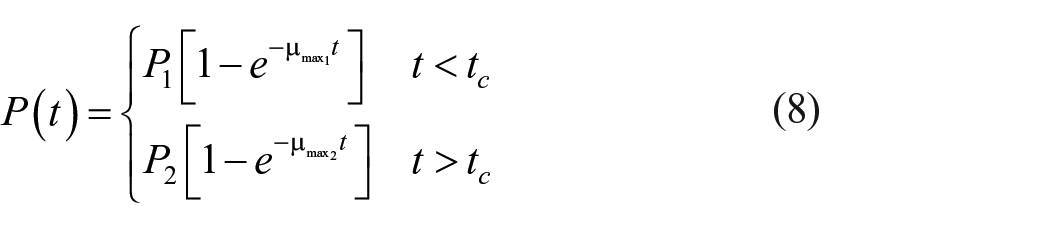
Based on the FO, two additional models are proposed to describe the methane production obtained with the untreated biosludge. The mentioned models are based on series and parallel configurations. Both models will be used only for the untreated biosludge.
The proposed parallel model is presented in Equation (7), where

The serial model is shown in Equation (8), where the parameters
Results and discussion
Thermal pretreatment
The results of COD and %CODs (soluble COD) for the rehydrated sludge used as the substrate and the thermally pretreated sludge at different temperatures are reported in Table 1. Items that do not have an associated value are represented as not applicable (NA). The increase in the %CODs for the thermally pretreated samples with respect to the untreated sample and its standard deviation (σ) is presented. An increase in COD was obtained in the cases where thermal pretreatment was carried out, and this value increased with increasing temperature.
Increases in mean soluble COD (CODs) and percentage soluble COD (%CODs) with increasing thermal pretreatment temperature.

The experimental results validate the hypothesis that it is possible to increase the solubilization of organic compounds by heat treatment. CODs concentrations were comparable to those reported by Bayr et al. (2013), where 9000 mg COD L−1 was obtained for the treatment of biological sludge from the pulp and paper kraft industry at 150 °C for 10 minutes. However, the increase in %CODs obtained by heat treatment reported by Bayr et al. (2013) was higher (800%). The difference in the %CODs may have been caused by the low %CODs of 1.8% from the untreated sample in the work of Bayr et al. (2013) compared to that in the present work, which was 20 times higher.
High %CODs values were obtained for the heat-treated samples as well as for the untreated sample in comparison to related works. For biological sludge from pulp and paper industries, percentages of 1.1 to 1.8% were reported for untreated samples, and levels of 17 and 26% were reached with treatments at 150 °C and 170 °C, respectively (Bayr et al., 2013; Wood et al., 2009). These differences may have been caused by the hydration of the dried biosludge obtained from the cellulose industry, which allowed the solubilization of compounds before the heat treatment. Another possibility to explain the difference could be in the estimation of the %CODs. The estimation of the total COD considered that all organic matter came from microorganisms assuming for them a composition of C5H7O2N. The real value of the total COD maybe was underestimated because of the presence of different compounds with a higher amount of organic matter, such as compositions of microorganisms that are different from the postulated one and the presence of lignocellulosic compounds. Therefore, the solubilization percentage was overestimated. Despite the possible deviations in the estimation, there is clear evidence that thermal treatment increased the solubilization levels, which was related to temperature, as expected.
BMP and biodegradability
Before the BMP tests, the acetoclastic activity of the inoculum obtained from the slaughter industry was quantified, and a value of 0.19 ± 0.01 gCOD (gVSS day)−1 was obtained. Table 2 shows the average BMP and biodegradability values obtained for the three replicates for each substrate and each treatment. The results show that methane production is higher with increasing pretreatment temperature within the range studied. The samples with higher levels of organic matter solubilization correspond to those with higher BMP and
Average values of BMP and biodegradability after heat treatment.

The
Similar to the work of Wood et al. (2009) and Bayr et al. (2013), increases in BMP were obtained when thermal pretreatment was performed on biosludge from the cellulose kraft industry. Under the condition of 165 °C, an increase of 159% in BMP was obtained for the untreated biosludge, whereas Wood et al. (2009) and Bayr et al. (2013) reported increases of 280% and 45%, respectively. The difference in the percentage increase in BMP is related to the more demanding conditions of temperature and time applied by Wood et al. (2009), which were 170 °C for 1 hour, compared to the less demanding conditions used by Bayr et al. (2013), which were 150 °C for 10 minutes. The BMP value obtained for the biosludge without pretreatment at the end of the trial at day 24 (Table 2) was comparable to those reported in previous studies related to biological sludge from kraft pulp and paper mills, where BMP values in the range of 30–100 NmL gVS−1 were reported in batch trials with periods of 23–35 days (Bayr et al., 2013; Karlsson et al., 2011; Lopes et al., 2018; Wood et al., 2009).
Kinetic model
FO and MG kinetic model
Figure 1 present the fits of the FO and MG models, respectively, together with the experimental data without subtracting the amount produced by the endogenous tests and their corresponding deviation from the cumulative volume of methane for each test. Table 3 presents the parameters and coefficient of determination (
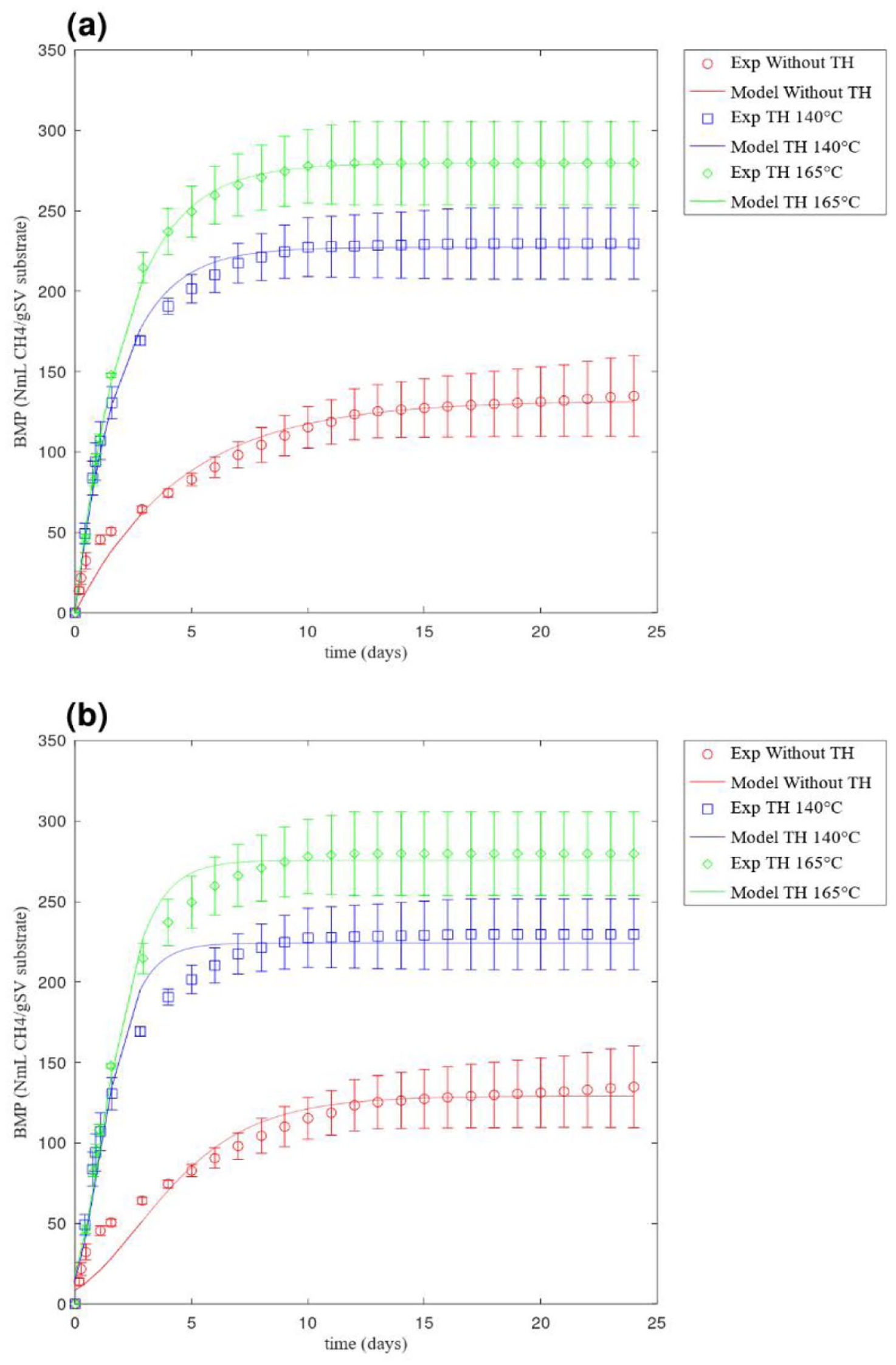
Fit of the FO model (a) and MG (b) to the cumulative methane production for the substrate with and without pretreatment, together with their respective standard deviations at each point. The fit model is represented by a solid line and the experimental points by circles, squares and diamonds, depending on the substrate.
Kinetic parameters and fit of the FO kinetic model.
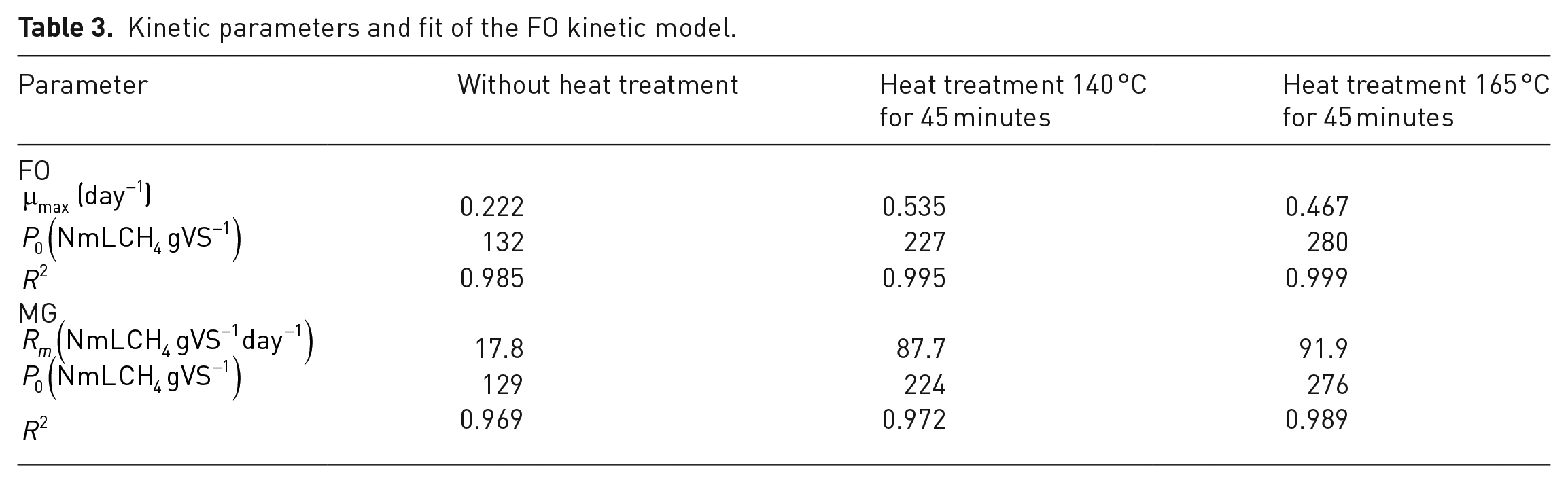
Satisfactory fits were obtained with both models tested, which are visually verified in Figure 1, as well as by observing the coefficient of determination in Table 3, which is close to 1 for each substrate and model. Improvements were observed in the fits of the FO model compared to the MG model; in the same way, both models reproduced similar values of parameter
Figure 1 demonstrates how the treated samples reached the production peak earlier than the untreated samples, showing that the heat treatment not only increased the maximum production but also the consumption rate of the substrate in question. This is supported by the observed increases in
Series and parallel FO kinetic model for the untreated biosludge
According to Figure 1, the fit for the untreated biosludge was not adequate using the FO and MG models, which was concluded based on the deviation of the first methane production points and the value of
Parallel model
Figure 2(a) shows the fit of the parallel model for the experimental points of the untreated sludge, confirming a better fit compared to the simple FO model. The value obtained for
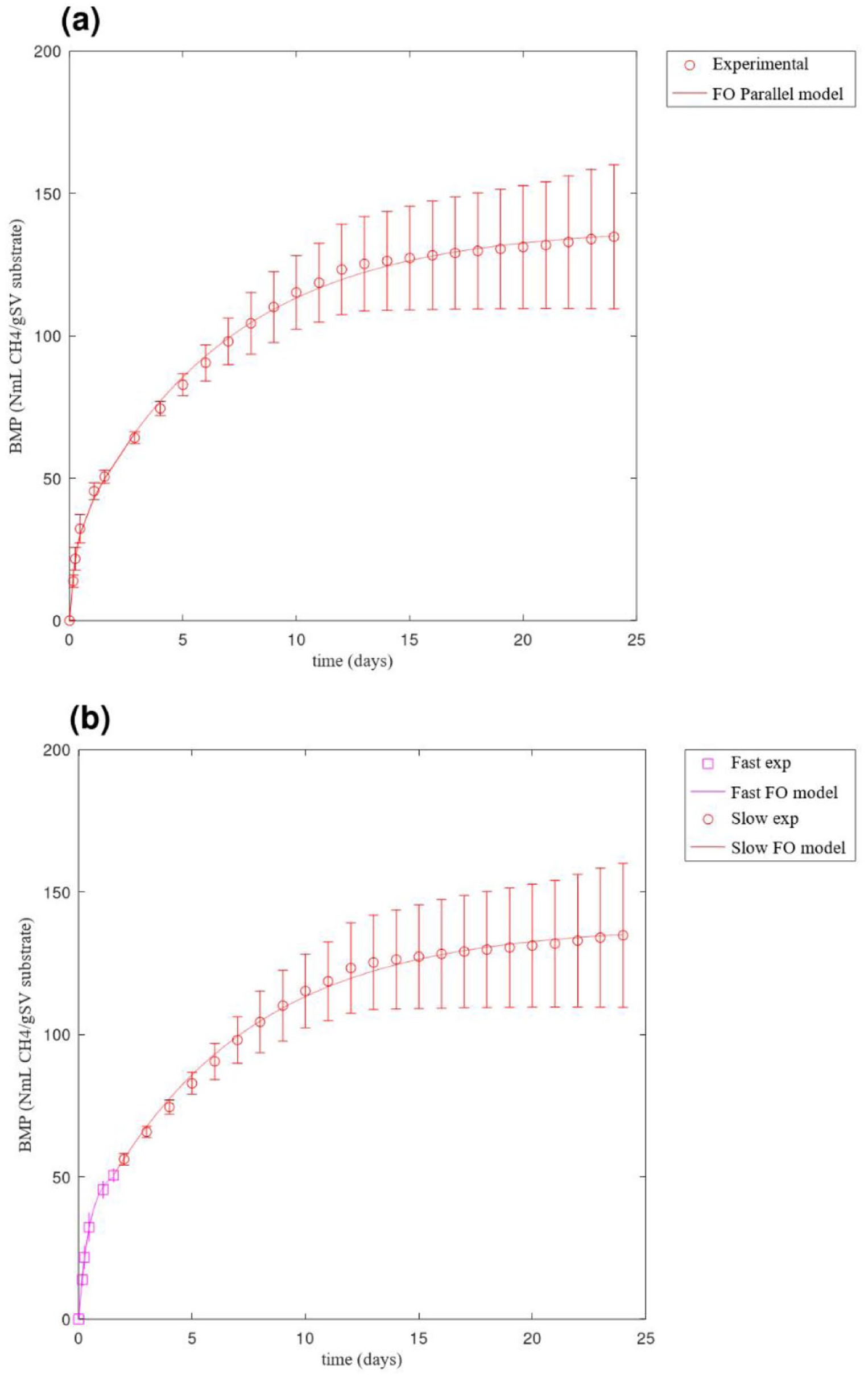
Fitting of the FO parallel model (a) and serial model (b) to the cumulative methane production for the substrate without pretreatments.
Kinetic parameters and fit of the parallel FO kinetic model.

Serial model
Figure 2(b) shows the fit of the serial model for the experimental points of the untreated sludge, confirming the better fit compared to the simple FO model by the value of
Kinetic parameters and fit of the FO kinetic model.

The sum of the values of
Comparison of pretreated biosludge from the cellulose industry with sewage sludge
Both types of biosludge, increases in organic matter solubilization and anaerobic methane production were achieved with thermal pretreatment. Table 6 presents a brief compilation of results obtained for thermally pretreated sewage biosludge. It is possible to conclude that for the case of biosludge from municipal water treatment, %CODs (ratio of soluble phase COD to total COD) values in the range of 20–40% were reported when thermal pretreatments were applied in the temperature range of 130 °C–180 °C with times of 5–50 minutes (Bougrier et al., 2007, 2008; Park et al., 2021; Sapkaite et al., 2017).
Results of previous experimental studies on AD with TH of sewage sludge.
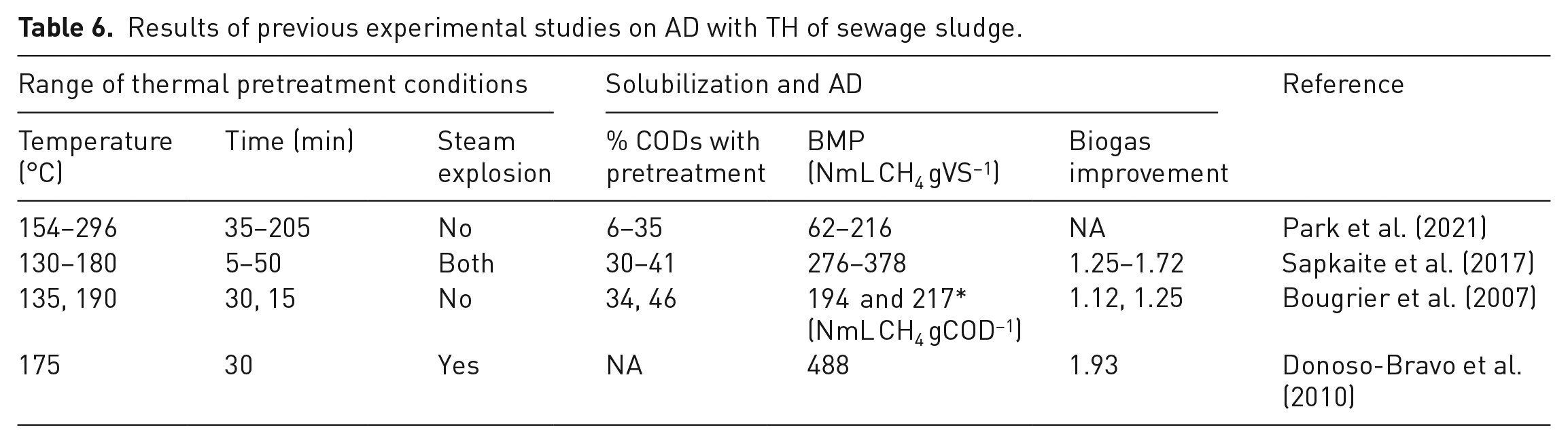
In addition, the most noticeable difference between the two pretreated biosludges was the extent to which methane production increased compared to the same waste without any treatment. Methane production increased approximately three times for the cellulose kraft industry sludge compared to increases of less than or equal to two times for sewage sludge under pretreatment conditions of 30–180 minutes at temperatures from 130 °C to 275 °C as reported in the Table 6 (Bougrier et al., 2008; Donoso-Bravo et al., 2010; Park et al., 2021; Sapkaite et al., 2017). The differences are justified by the compositional differences between the two types of biosludge. Biowaste from cellulose-producing industries has higher amounts of lignocellulosic compounds than biosludge from sewage treatment. Therefore, compositional inequalities led to differences in the biodegradability of untreated sludge, resulting in BMP values for cellulose industry sludge that were almost half of those reported for untreated sewage sludge, which is in the range of 150–250 Nm3 tonne VS−1 (Bougrier et al., 2007; Donoso-Bravo et al., 2010; Meyer and Edwards, 2014; Park et al., 2021; Sapkaite et al., 2017). Table 6 presents the BMP values obtained with thermal treatment of cellulose industry sludge. Similar values were reported for sewage biosludges with TH of 130–175 °C from 5 to 60 minutes without fast decompression, which are in the range of 180–300 Nm3 tonne VS−1 (Park et al., 2021; Sapkaite et al., 2017).
The improvement in methane production obtained by applying thermal pretreatments to cellulose industry biosludge compared to untreated waste is evident. These values are comparable to those reported for processes developed on sewage sludge. However, it is of industrial interest to know whether the process is energetically and economically feasible. The references to self-sufficiency and energy improvement by applying thermal pretreatment for subsequent AD of sewage sludge from sewage treatment are extensive (Barber, 2016; Devos et al., 2021; Gahlot et al., 2022). Nowadays, it is reported that by using cogeneration processes in conjunction with AD and pretreatment, it is possible to meet the energy needs of the system with less than a 10% increase in biogas production from the treated waste (Gahlot et al., 2022; Kor-Bicakci and Eskicioglu, 2019). Furthermore, thermal sewage sludge pretreatments are not only energy self-sufficient but are also reported to be economically feasible with interesting payback (Cano et al., 2014; Fernandez-Polanco et al., 2021). Thermal pretreatment is an accepted technology from an economic and environmental point of view based on resource recovery for sustainable management (Kor-Bicakci and Eskicioglu, 2019). In the case of pulp and paper industries, energy self-sufficiency should be achieved due to increases of even more than 100% in methane production. Therefore, the results obtained from the laboratory analyses for cellulose industry sludge encourage further research into the possibility of applying this process on a larger scale as well as optimizing it. Not only because of the reported increases in methane production but also because of the possible energy, economic and environmental advantages based on the already established sewage sludge technology.
Conclusions
The thermal pretreatment increased the solubilization of organic matter in the biosludge of a pulp industry. Both biodegradability and BMP showed significant increases compared to untreated samples, with increases on the order of 159% for BMP achieved by pretreatment at 165 °C, which provided the greatest improvement. Compared to the percentage increments reported for secondary sludge from sewage treatment, it could be stated that those obtained for cellulose industries were higher owing to the different compositions, which resulted in different values for untreated BMP. Therefore, this study represents a breakthrough in demonstrating the potential of thermal pretreatment of industrial biological sludge, particularly biological sludge from pulp mills.
The FO and MG models were adjusted to the different substrates studied, obtaining
Significant increases in the kinetic parameters associated with methane production were obtained with thermal pretreatment compared to the situation without any treatment. The increase in kinetic parameters with thermal pretreatment demonstrated a limitation in the rate of the hydrolysis step for the untreated biosludge. Maximum methane production during biodegradability tests was achieved faster for treated biosludge compared to untreated biosludge. Therefore, the posibility to operate anaerobic digesters with shorter hydraulic retention times than commonly reported is possible, which implies economic savings. However, it is not possible to decrease the hydraulic residence time more than allowed because of the growth of the anaerobic community, particularly the methanogenic archaea.
The main lines of future work will be oriented toward the study of techno-economic viability, but first of all evaluating the existence of pretreatment conditions that achieve optimum energy balance and not only parameters such as BMP or biodegradability.
Footnotes
Declaration of conflicting interests
The authors declared no potential conflicts of interest with respect to the research, authorship, and/or publication of this article.
Funding
The authors received no financial support for the research, authorship, and/or publication of this article.
