







Abstract
To move from a traditional end of pipe approach into a more sustainable solid waste management system, the Jordanian Government has recently passed a set of new regulations The National Solid Waste Management Strategy has put a road map to encourage circular economy practices. One of the considered policy instruments is the adoption of the extended producer responsibility (EPR). The current study aimed to adopt a multi-criteria decision-making method to select the most convenient EPR structure within the Jordanian context. The study used analytical hierarchy process (AHP) and fuzzy AHP (FAHP) techniques to select the suitable type of producer responsibility organization (PRO) structure. A four-level hierarchy model was constructed with 4 criteria, 10 sub-criteria and 3 PRO alternatives. The analysis revealed that the legal and administrative criteria is the most important one (0.47) followed by environmental criteria (0.22), whereas the least important ones were socio-economic (0.17) and technical criteria (0.13). The most preferable PRO alternative was found to be PRO with profit. There were slight differences between all weight values under AHP and FAHP. Despite the availability of several laws, there is a need to develop the legal and administrative framework to enable the adoption of EPR in Jordan. Research should be the first step in the process of EPR system design. None of the previous studies conducted used the AHP and FAHP in assessing and selecting the EPR systems.
Keywords
Introduction
In many developing countries around the world, poor management of solid waste leads to public health risks, negative environmental impacts and other socio-economic problems (Abu Qdais, 2007; Maalouf and Agamuthu, 2023; Zorpas 2020). In Jordan till now, solid waste is managed by end-of-pipe approach, where more than 90% of waste generated is disposed at landfills (Gibellini et al., 2022), in 2015, 3.4 million tonnes of municipal solid waste were collected (Abu Qdais et al., 2019). Jordanians produce 0.81 kg of municipal waste per capita per day (Hemidat et al., 2022). As a major step in refining the country’s SWM system, the National SWM Strategy was recently issued, the strategy aims to switch (within the next 20 years) from a traditional unsustainable SWM system (end of the pipe) towards an integrated sustainable system (such as EPR) that depends on the reducing, reusing and recycling of solid waste. As part of sustainable waste management, EPR is a powerful tool for development and a cost-efficient waste management solution (Pouikli, 2020). EPR system consisting of several stakeholders, the producer responsibility organization (PRO) is the mediator between all stakeholders and is seen as an essential part of the EPR system (OECD, 2016). Analytic hierarchy process (AHP) was introduced as a tool for making complex decisions, enabling the decision-maker to establish priorities and reach the most appropriate decision (Emrouznejad and Ho, 2017). AHP is a theory of measurement through pairwise comparisons and relies on the judgements of experts to derive priority scales (Saaty, 2008). The decision-making process often begins with experts being asked to choose between a set of available alternatives, for example, when selecting a supplier or a technology. In a single-criterion decision-making problem, experts can choose the alternative of greatest preference. Having multiple criteria complicates the process. In many cases, these criteria are not of equal importance, and the performance of the alternatives varies heavily which can result in imprecisions (Liu et al., 2020). A fuzzy set theory approach has become the preferred tool for dealing with imprecision or vagueness in real-world applications (Zadeh, 1975). Even though Jordan has enacted a National Waste Framework Law (Law 16 for the year 2020), a structure for the EPR is currently under consideration. Therefore, the purpose of this study is to examine and review the worldwide EPR systems and decide which system is most appropriate for the Jordanian circumstances. To select the most suitable alternative of PRO multi-criteria decision-making process using both AHP and fuzzy AHP (FAHP) systems was applied.
Literature review
The idea of EPR has been emerged from Sweden in 1990 by Thomas Lindhqvist of Lund University (Lindhqvist, 2000). Since then, the concept of EPR has become a major environmental policy in many OECD and non-OECD countries (Gupt and Sahay, 2015; Hilton et al., 2019). As of 2016, there were about 400 EPR systems operating globally (Mrkaji et al., 2018). Approximately 75% of these systems were implemented at the beginning of 21st century, where legislation has been considered a key factor in the success of these systems, as most of them are considered mandatory rather than voluntary (OECD, 2016).
To administer the EPR systems financial and operational issues, usually a PRO is established (Kieren and Butler, 2013). Such a setup is authorized to apply the EPR mechanism on behalf of the producers, where in return of the services PRO receives financial support to cover its operational costs (Mrkajic et al., 2018), with or without profit margin (Larrian et al., 2022).
Nowadays, the solid waste legal framework in Jordan is witnessing radical changes (Abu-Qdais et al., 2023). The ratified National Waste Management Strategy in 2015 (NSWMS, 2015) is targeting the adoption and enhancement of circular economy principles, where the EPR system is a major component of such strategy (Hemidat, 2019). Furthermore, the Waste Management Framework Law No. 16 of 2020 indicated the basic principles that should be adopted in waste management, which includes polluters pays principle and EPR system. However, there is a lack of research in Jordan on circular economy options, such as EPR (Abu-Qdais et al., 2023) so as to render it as a waste management policy instruments that support the implementation of the circular economy principles. The cost and time implications are serious obstacles for implementing EPR (Zorpas et al., 2021). Therefore, the objective of this study is to review the various EPR systems worldwide and to select the right structure of the PRO that suits the Jordanian context by using multi-criteria decision-making approach. The hypothesis of the research is that such system will enhance the adoption of circular economy options by increasing the amount of solid waste recycled in Jordan.
Reviewing the literature revealed that there are many published articles on the applications for AHP and FAHP. These include, Rouyendegh and Erkart (2012), Kim et al. (2013), Zorpas et al. (2016), Kling et al. (2016), Vardopoulos et al. (2021). However, little literature was found on applying the AHP or FAHP in selecting the right structure of EPR, while on EPR in Jordan one research article was identified (Khawaja et al., 2021). Therefore, the Green Growth National Action Plan of Jordan 2021–2025 calls for a strong research and development agenda in the waste sector that can enable adopting suitable instruments including the EPR (MOENV, 2020), where research and feasibility studies should be the first step in developing the right EPR schemes (Watkins and Gionfra, 2019). To achieve that, one of the plan objectives is to create a dialogue platform for introducing the EPR instrument into the Jordanian waste sector by enhancing the knowledge of EPR operationalization and benefits among the public and private stakeholders. Such instruments can be a source of funds to enhance the sustainability of solid waste sector in the country, which is still following the traditional unsustainable approaches (Abu-Qdais et al., 2023).
Methodology of the study
For the purpose of mapping, the existing knowledge and trends and to stand on the level of progress so far achieved in the field of the research topic, it was necessary to carry out a literature review according to a clear articulated search strategy, which utilizes the relevant databases and search engines and using proper key words. This has enabled to better understand the situation of the Jordanian solid waste sector. It also highlighted the different definitions and key characteristics of EPR and gave an insight on the major role that EPR can play in reducing the waste and enhancing the adoption of circular economy options by extending manufacturers’ and producers’ responsibilities. Moreover, a review of AHP and FAHP studies and their applications was performed to determine if these models can be applied to EPR research. An in-depth review of 21 case studies across the globe was carried out to identify the various approaches to EPR systems implemented around the world and to specify what alternatives are available, three types of PROs have been identified, namely profit PRO, non-profit PRO and governmental PRO.
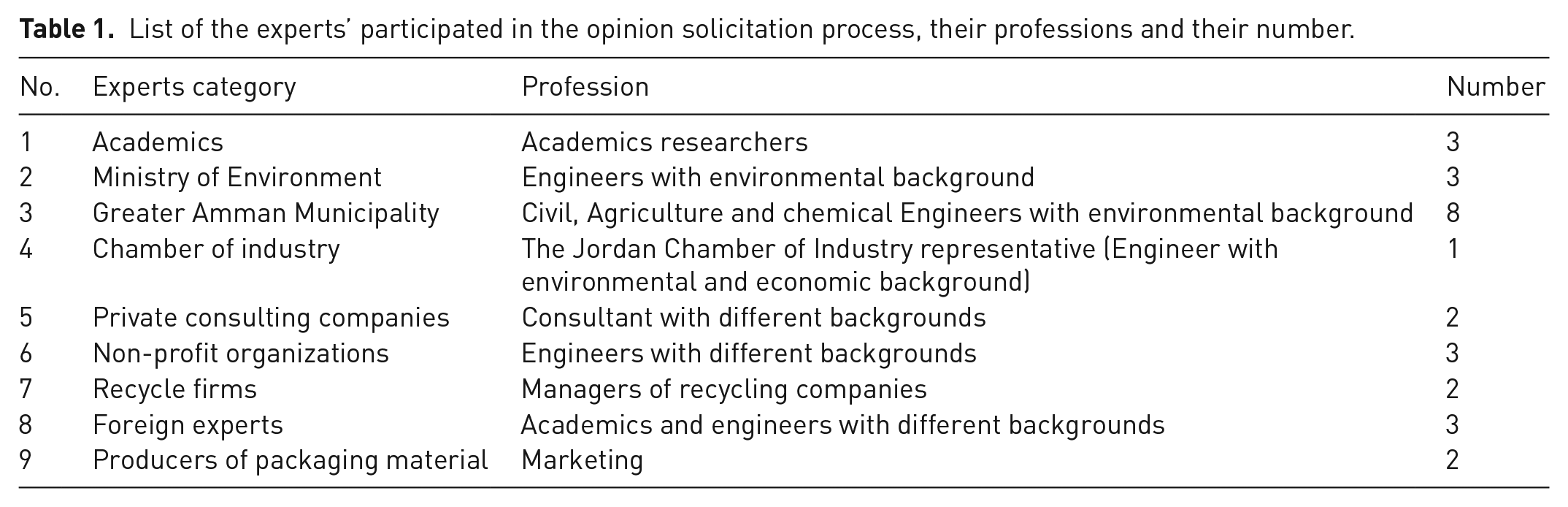
To identify the criteria and sub-criteria that will be used in the AHP and FAHP analyses, a brainstorming method was followed, which is a widely used method in FAHP decision model to identify alternatives of school food service problem (Hyun and Heung, 2006), to identify and quantify alternatives of hydrogen storage for FAHP analysis (Gumus et al., 2013) and in selecting the adaptation/mitigation sectors of climate change that were subjected to multi-criteria analysis (Abanda et al., 2022). By brainstorming, the criteria and sub-criteria were identified to be used in the selection process of the PRO system. A number of key factors (criteria) were defined, including legal and administrative, environmental, socio-economic and technical. After that, the opinions of 28 experts in different fields related to solid waste management were solicited (Table 1) via a questionnaire. To make sure that the experts representing different professional categories related to solid waste management, certain number of experts from each category was selected for interview. Initially, 35 experts were identified, after contacting them asking to give an interview, the number was dropped to 28. The interview adhered to ethical standards by respecting the interviewees’ privacy, and not asking personal or sensitive information.
List of the experts’ participated in the opinion solicitation process, their professions and their number.
Based on the experts’ judgements, the obtained data were incorporated into an AHP model for determining the most appropriate alternative in Jordan using a multicriteria decision-making approach. In addition, FAHP was used to deal with any uncertainty. A sensitivity analysis was also carried out. All the data analyses were performed using Excel. The methodology followed in AHP, FAHP and sensitivity analysis will be illustrated in the following paragraphs.
Analytic hierarchy process
According to Saaty (2008) the analytic hierarchy process (AHP) is a multicriteria decision-making approach that helps the decision-maker set relative priorities and make the best choice. It has been found that AHP is one of the most effective approaches for evaluating the relative importance of different criteria and selecting between alternatives. It has recently gained attention for a wide range of applications; for example, see (Ho and Ma, 2018). AHP is particularly useful for complex decisions that involve comparing elements that are difficult to quantify. Decision-making techniques based on a set of attributes (criterion) are used when there are limited choices. In developing waste management strategies, the pairwise comparison is an innovative aspect of AHP, where scenarios and criteria should reflect the three dimensions of sustainability (environmental, economic and social) (Zorpas, 2020). Different attributes have different values for each choice. The core of AHP can be explained by examining a very simple example of establishing relative priorities in the context of three items (El-Din et al., 2019). According to El-Din et al. (2019), AHP procedure can be described in an algorithmic way in five steps, which result in relative priorities between the criteria. The steps are as follows:
Step 1: Define the problem. Let us say we have three criteria A, B and C, and we want to know the relative priorities (importance) between these criteria to achieve a specific goal.
Step 2: Construct a simple decision hierarchy structure to emphasize the goal and the criteria.
Step 3: Construct a set of pairwise comparison matrices for all criteria. A pairwise comparison is a process used to compare the criteria in pairs based on the experts’ judgements on the importance of the criteria. by using Saaty’s nine-point scale of pairwise comparison. In general, consider a matrix Z with a dimension n by n, where n is the number of evaluation criteria considered. Each entry zij of the matrix Z represents the importance of the ith criterion relative to the jth criterion. If zij > 1, then the ith criterion is more important than the jth criterion while if zij < 1, then the ith criterion is less important than the jth criterion. If ith criterion and jth criterion have the same importance, then the entry zij is 1. The entries zij and zji satisfy the following constraint in Equation (1):

Step 4: This is the normalization step, which is divided into two parts. Firstly, each column entry is normalized according to Equation (2), then the weight wi of criterion i is calculated by taking the average of the entries on each row of matrix Z according to Equation (3).


Step 5: In the final step, the consistency ratio (CR) is calculated to evaluate the degree of consistency associated with the experts’ judgements using Equation (4). If CR < 0.1, then the pairwise comparison matrix Z is consistent otherwise, it is inconsistent. Random index (RI) is a random matrix consistency index obtained through experiments using samples of large quantities. RI values for the matrix of the order n = [1, 10] are shown in Table 2. The consistency index (CI) indicates whether a decision-maker provides the comparison of consistent values in a set of evaluations. CI is calculated using Equation (5).

where CR is the consistency ratio, CI is the consistency index and RI is the random index.

where, λmax is the principal eigenvalue, and n is the order of the matrix.
Values of the RI for small problems.

The calculation of the CI demands computing the normalized eigenvector of the matrix and the principal eigenvalue λmax of the matrix, which is obtained from summing the multiplication of the number of weights of all criteria in each column of the matrix with the eigenvector of the matrix using the Equation (6).

Fuzzy analytic hierarchy process
FAHP can be considered an advanced analytical method based on conventional AHP. It is proposed to use FAHP to find the uncertainty of AHP methods. The FAHP can be approached in a variety of ways. Geometric means, proposed by (Buckley, 1985), and extent analysis methods, proposed by (Chang, 1996), are two of the most used methods for calculating relative weights. In many applications, such as (Ge and Liu, 2018; Kubler et al., 2016; Nguyen et al., 2018; Prascevic and Prascevic, 2017) FAHP has been found to be successful. In the FAHP, the linguistic variables are represented by triangular numbers and are used in pairwise comparison of both criteria and alternatives. Even though FAHP contains many techniques, Buckley’s method is one of the most widely used methods as it is a simple method (Soberi and Ahmad, 2016). For example, recently Murty et al. (2020) applied Buckley’s method in FAHP analysis to identify the factors affecting borrowing decisions of microenterprises. Another study conducted by Kabir et al. (2022) utilized it for benchmarking the Canadian solid waste management system.
FAHP was performed according to the following steps:
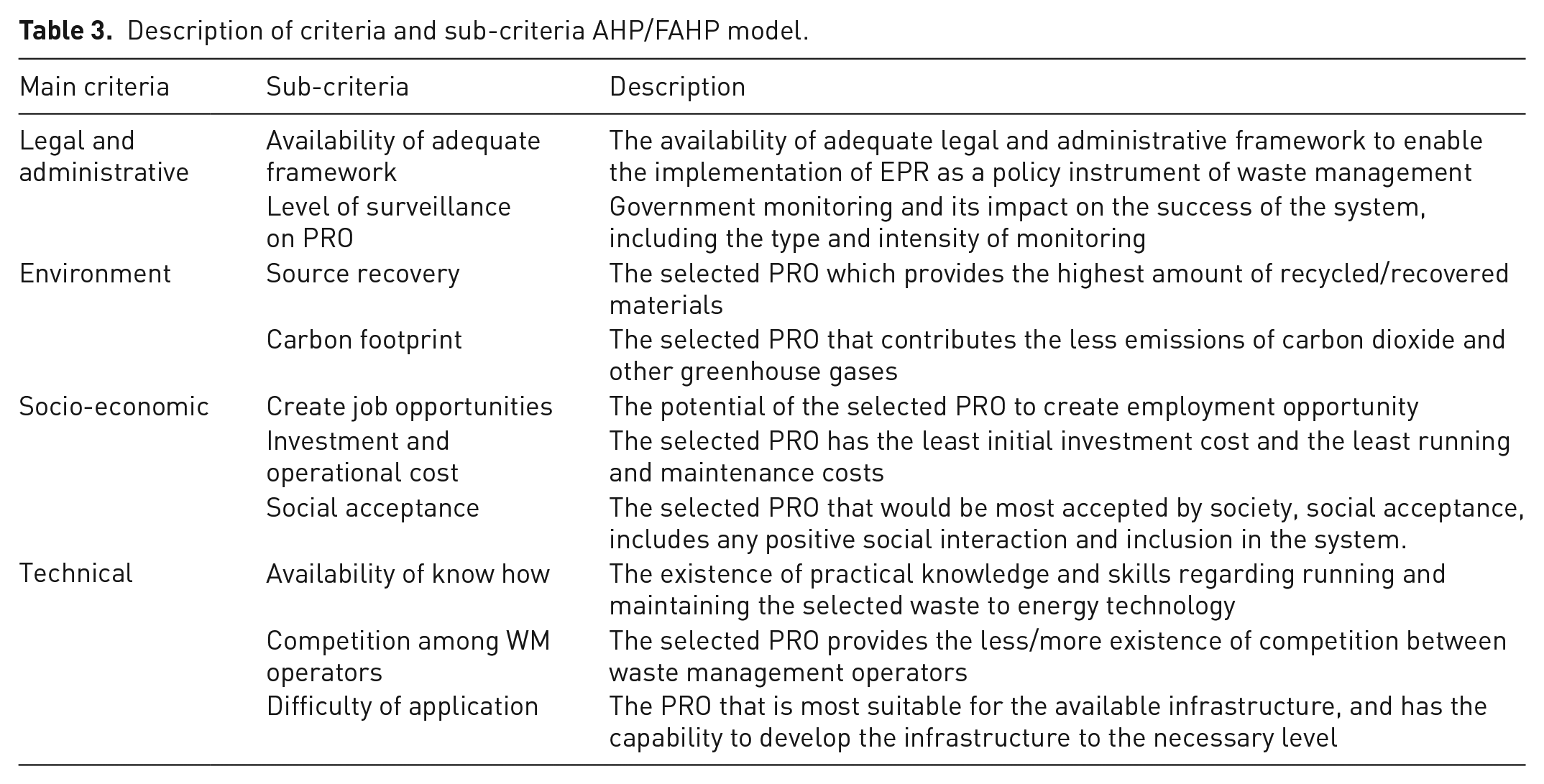
Step 1: Hierarchy construction, the hierarchy consists of different levels, from objectives to criteria to alternatives. Three feasible alternatives are selected according to related criteria and sub-criteria that are related to the goal, which is to take and select the most appropriate PRO for Jordan. As it can be seen in Figure 1, the AHP consists of four levels showing the hierarchy model used in this study, the criteria and sub-criteria description is shown in Table 3.
Step 2: Pairwise comparison matrices between criteria. The hierarchy is prioritized based on fuzzy triangular scales, which reflect the relative importance of the criteria. By using data collected from 28 experts, pairwise comparisons were made between all criteria. The collected data were averaged to compile the opinions of all 28 experts. Pairwise comparison data of each criterion were synthesized into matrices of contributions based on the triangular scale. An example of this would be if the decision-maker stated that Criteria 1 was ‘Weakly Important’ compared to Criteria 2, then the corresponding triangular scale would be (2, 3, 4). The inverse pairwise comparison matrix of Criteria 2 to Criteria 1 is (1/4, 1/3, 1/2).
Step 3: Normalized relative weights of criteria. In this step, the geometric means of fuzzy comparison value (

where
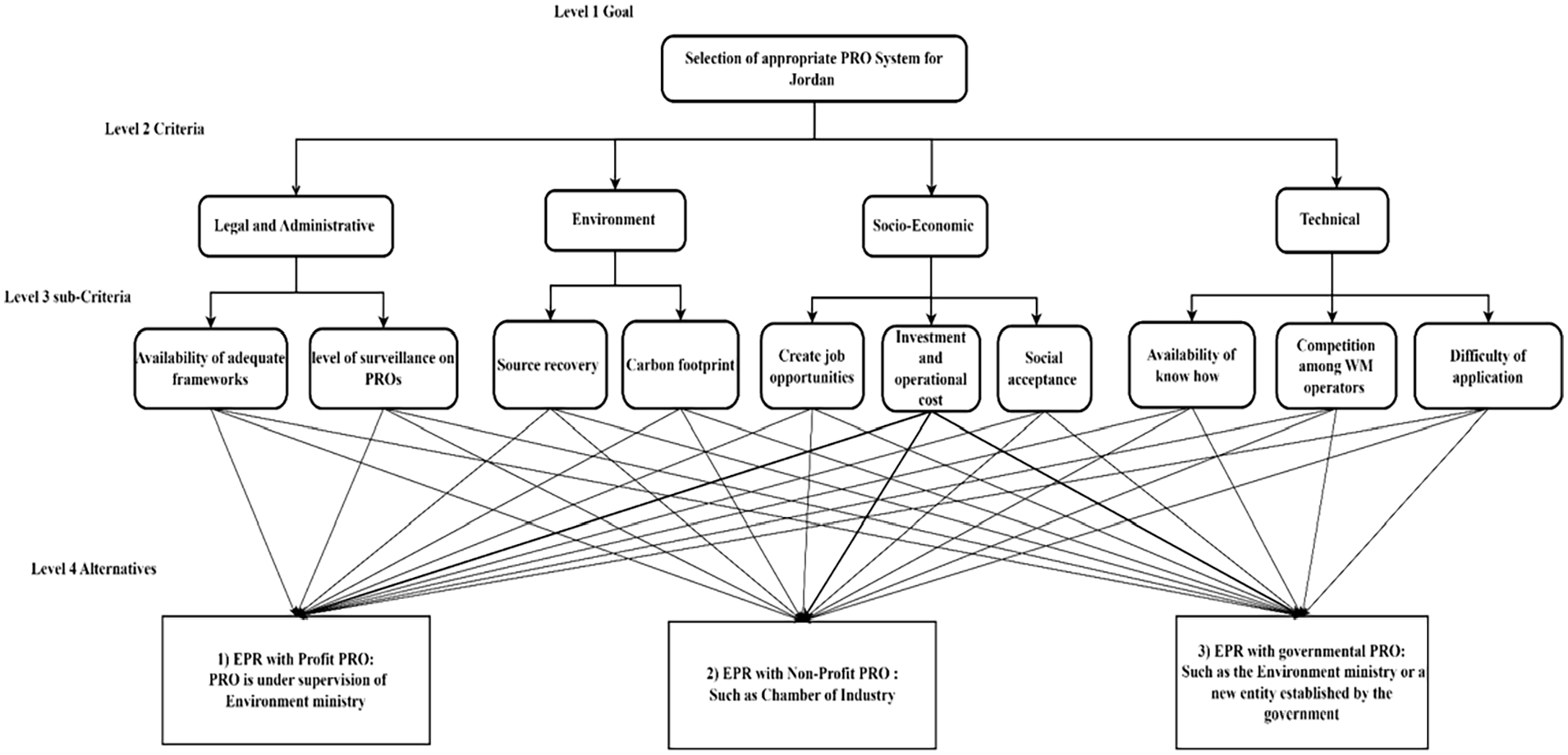
Hierarchy for selecting the most suitable PRO scheme system in Jordan.
Description of criteria and sub-criteria AHP/FAHP model.
Finally, the relative non-fuzzy weight of each criterion (Mi) is calculated by averaging the fuzzy numbers for each criterion. The normalized weights of each criterion (Ni) were calculated by dividing each value of relative non-fuzzy weight by the total of all criteria’s values using Equation (8). Accordingly, the CR is calculated similarly to the previous section.

Results and discussion
Both AHP and FAHP were used in this study. AHP is a widely used tool for decision-making processes in the field of waste management. Goulart Coelho et al. (2017) have reviewed 279 articles published between 1980 and 2015 on using multi-criteria decision-making in waste management. The authors found that AHP was the dominant decision-making process among others, where 91 articles (about 32%) have used it in the analysis. On the other hand, FAHP is a synthetic extension that was developed from the traditional AHP method to consider the fuzziness and imprecision in decision-makers’ judgements (Ozdagoglu, 2007). To avoid such instabilities that may appear in the AHP, a blended FAHP model can be used where, the AHP will quantify the variables and the fuzzy model can void the uncertainty (Wang et al., 2012). However, the extent to which FAHP can solve the problem of uncertainty is still disputed (Liu et al., 2020) and not clear if FAHP can provide quality solution than AHP (Chan et al., 2019).
Recently in Jordan, several researchers have used AHP in different fields of studies. For example, in selecting renewable energy options (Shatnawi et al., 2021), in olive mill waste management (Abu Qdais and Alshraideh, 2016), in the development of green system for building assessment (Alkubaisi and Alnsour, 2022) and in mapping potential nature based tourism (Maaiah et al., 2023). To date, none of the cited literature used AHP in studies related to EPR in Jordan. Therefore, this article is an attempt to contribute in closing such a research gap
Initially, criteria (Legal and administrative, technical, environmental and socio-economic) were subjected to pairwise comparison towards achieving the goal. The experts assigned weights to each criterion in the pairwise comparison matrices base on which the priorities were calculated. To check the consistency of experts’ judgements, the CR was calculated for the criteria and sub-criteria and found them all below 10% which is an acceptable value (Abu Qdais and Alshraideh, 2016).
PRO selection criteria
Figure 2(a) and (b) illustrates the results of the pairwise comparison of the criteria with respect to the goal for both AHP and FAHP. The legal and administrative criterion has the highest weight under AHP and FAHP analyses with almost the same weight values (0.4727 and 4644), which implies that it is the most important factor in selecting the PRO scheme for Jordan. The environmental criterion ranked in the second place with close weights values of 0.2228 and 0.2247 under AHP and FAHP, respectively. Finally, the socio-economic and technical criteria received the lowest weights of 0.17 and 0.13, under both AHP and FAHP, respectively. Similar results were reported by the researchers in developing countries, who indicated that the presence of legal framework is crucial for the promotion of EPR system in China (Shan and Yang, 2020) and where the inadequacy of legislations is a serious challenge for achieving the intended goals of EPR in Tanzania (Omar and Bullu, 2022). Therefore, regulatory provisions are one of the prominent factors for the implementation of the EPR systems (Gupt and Sahay, 2015). Designing an EPR regulation and allocating the responsibilities among the actors should be performed simultaneously (Pazoki and Zaccour, 2019). For example, the success in adopting EPR schemes for e-waste in USA and Japan is mainly due to the development and adoption of the relevant laws and polices (Faibil et al., 2023), and when the legal framework is adequately matured like the case in Greece, the legal aspects ranked last for the adaptive reuse of building projects that were subjected to AHP analysis (Vardopoulos et al., 2021).
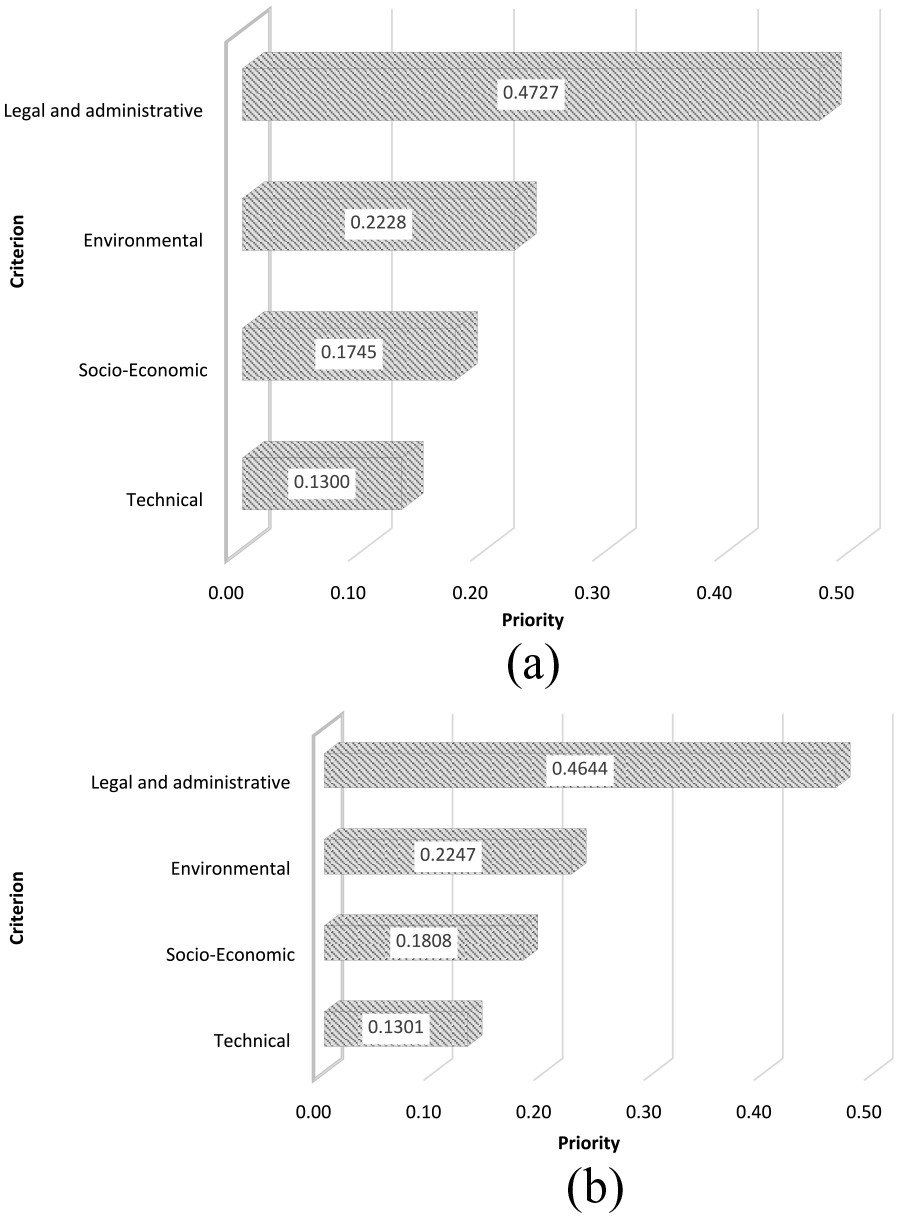
(a) Priorities of the main criteria with respect to the goal in AHP. (b) Priorities of the main criteria with respect to the goal in FAHP.
The inadequacy of the existing legal framework in Jordan to promote EPR implementation in conjunction with the traditional organizational structures of the institutions involved in the solid waste management that are characterized by a disposal-driven hierarchy (Abu-Qdais et al., 2023) is a serious barrier that faces the development of the EPR system in Jordan. Thus, for Jordan a comprehensive and regulatory framework that is supported with a robust administrative structure to facilitate the adoption of EPR is urgently needed.
The second major concern is environmental issues, as environmental criterion ranked the second. This may be attributed to the health and environmental impacts that are associated with the currently followed end of pipe approach in managing the solid waste. In Jordan, currently 6–10% of Jordan’s SW is being recycled. Citizens’ health and the environment are adversely affected by such landfilling practices due to their impact on the environment and public health (Ikhlayel et al., 2016). The socio-economic and technical criteria appeared to be the least important, as they ranked in the third and fourth places with weights of 0.17 and 0.13, respectively.
PRO selection sub-criteria
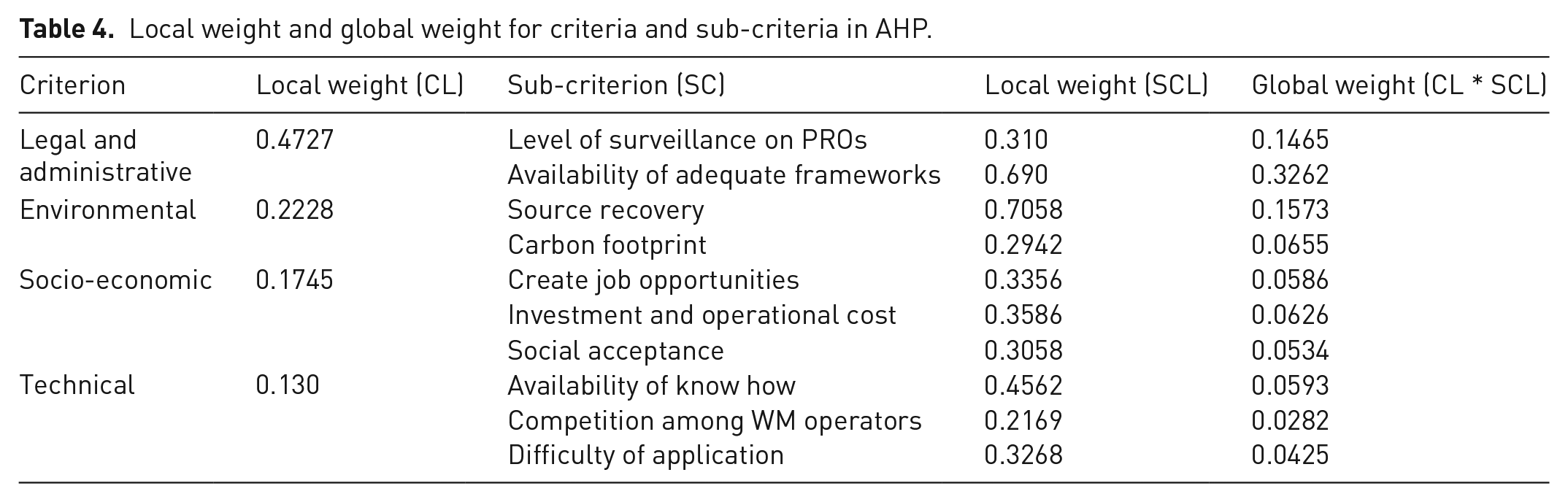
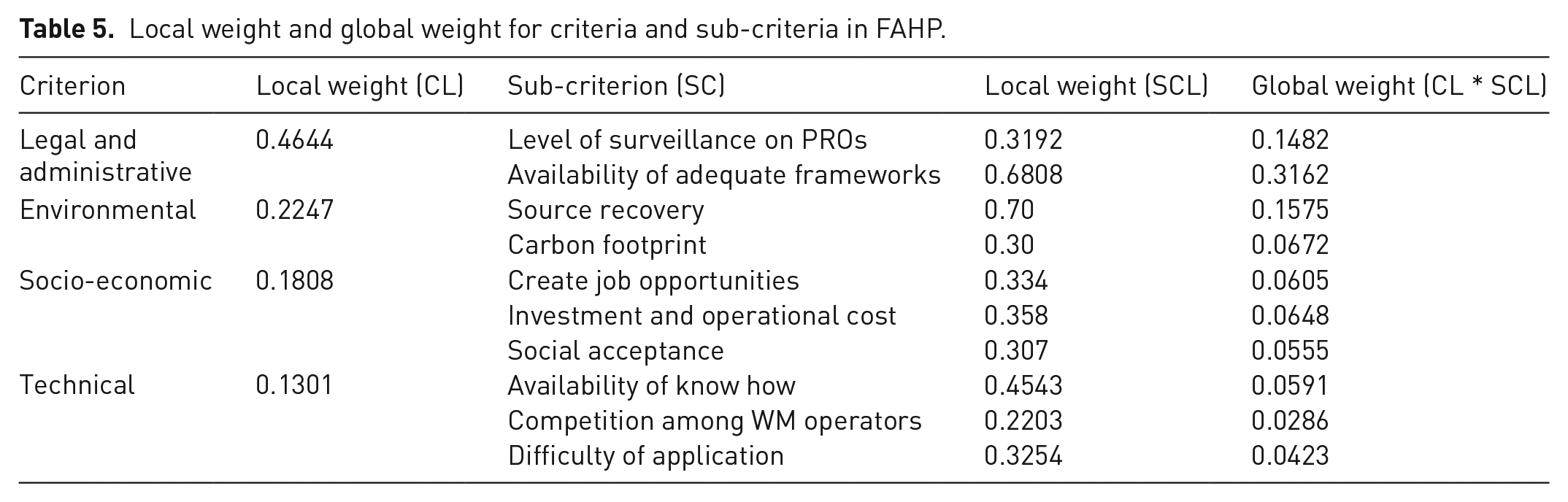
The results of the local and global weights for criteria and sub-criteria in AHP and FAHP are presented in Tables 4 and 5, respectively. As it can be observed, there are slight differences in weight values, between the AHP and FAHP analyses. Under the Legal and administrative criteria, the availability of adequate frameworks sub-criteria has received the highest rank in both AHP and FAHP with almost equal global weights of 0.326 and 316, respectively. This result is once again indicating the importance of the legal framework for the success of the EPR. At the time of conducting the interviews with the experts, there was no specific regulations that address the issue of the EPR, which put the availability of legislations as a first priority, this has been emphasized by the Waste Sector Green Growth National Action Plan 2021–2025, which indicated the need to develop EPR regulations and policies in Jordan by 2025 (MOENV, 2020). Khawaja et al. (2021) reported that the absence of enforcing regulation that will lead the consumers in Jordan to give back the end of life electric equipment will affect the execution of any EPR system. Despite the availability of numerous environmental laws and regulations, one of the obstacles facing solid waste management sector in Jordan is the absence of an effective legal framework (Abu Hajar et al., 2020). Even in the EU where countries are committed to move from linear to circular economy and enforcing legislation like the waste law, packaging directive and EPR policy, the EPR schemes still facing some challenges in promoting product durability, reuse and recyclability, which suggest revising the current regulations (Maitre-Ekern, 2021).
Local weight and global weight for criteria and sub-criteria in AHP.
Local weight and global weight for criteria and sub-criteria in FAHP.
Recently in 2022, Jordan issued a policy framework in the form of instructions to adopt EPR for packaging waste in the country based on the take back option. According to the instructions, a unit should be established within the organizational structure of the Ministry of Environment, where such unit should be managed by a steering committee (dominated by figures from the public sector). The unit will manage the financial and administrative issues of the EPR system, while the day-to-day activities of collection, sorting and recycling should be accomplished through private services providers selected thorough a tendering process. The framework gave the producers and importers of packaging materials a one-year voluntary period (until the end of 2023) to join the EPR system, after which it should be mandatory. The policy does not consider the low level of separation at source, neither the role of informal sector in the proposed EPR programme, which puts a big question on the potential success of the proposed EPR, as the experience showed that failure in not doing so can seriously undermine EPR systems (OECD, 2016). The fragmentation of the responsibility among different institution represented in the EPR steering committee is another risk factor that may lead to the failure of the EPR implementation.
The sub-criteria weight analysis under the environmental criteria indicates that material recovery sub-criteria has received the highest ranking in AHP and FAHP with weights of 0.7058 and 0.700, respectively. This result is consistent with the fact that the recycling industry in Jordan is not yet well developed, as only 6–10% of the generated waste is being recycled (Abu-Qdais et al., 2023; Hararah et al., 2016), and where most of the recycling business is being driven by the informal sector of waste pickers who are practising it in a very primitive way (Action Against Hunger, 2022). Such practices will be adversely affecting the efficiency of the planned EPR scheme, which calls for the need to integrate the informal sector into the solid waste management system (Hamdan and Saidan, 2020; Pillay, 2020). As the case in most developing countries, where robust EPR system have not yet established, the illegal and informal recycling will continue to take place in Jordan, which implies the need for deep research to avoid that (Cai and Choi, 2021). The integration of the informal sector will increase the amount of solid waste being recycled and will pave the way towards adopting circular economy, where the economic aspects are among the key drivers of the efficient EPR system (Shan and Yang, 2020).
The carbon footprint sub-criteria ranked the second with a weight of 0.29 and 0.30 under AHP and FAHP, respectively. This indicates that the experts are considering the material recovery is more important than the carbon footprint in Jordan. This is may be explained by the fact that material recovery will necessarily imply reduction in greenhouse emissions. Furthermore, Jordan’s net greenhouse emission is relatively low (29,000 Gg CO2-eq in 2016) (Abu Hajar et al., 2020) as compared to other countries, where more than 70% of such emissions are attributed to energy sector, and only 10% to waste sector (Abu Qdais et al., 2019), which renders the waste sector a minor emitter as compared to energy.
Under the socio-economic criterion, the sub-criteria assessed were job creation, investment and operational cost and social acceptance of the proposed PRO system. The three sub-criteria turned to have approximately same weights, which implies that they have equal importance. This can be understood, as the country’s economic growth in recent years suffered from the COVID-19 pandemic, when the GDP had declined to 1.6% and the unemployment rate reached 22.5% (World Bank, 2023). According to Zorpas et al. (2021), the cost and time implications are serious obstacles for implementing EPR. As for the technical criterion, the availability of know how sub-criteria received the highest weight of 0.45 under both AHP and FAHP. This is an important finding that indicates the need for having experienced personnel with sufficient skills to manage and operate the proposed EPR system. The current status of the availability of the experienced human resources in the field of solid waste management and circular economy in the whole MENA region is not encouraging (Nassour et al., 2023). Higher education institution like universities and colleges may play a vital role in building the capacity and providing the market with critical mass of specialist that have a reasonable level of know how in running EPR systems (Abu-Qdais and Kurbatova, 2022). The second rank is turned to be for the difficulty in application sub-criteria with a weight of 0.32. The ease of implementing the EPR activities is directly related to the adequacy of legal and administrative frameworks as well as the availability of the knowhow. The least important sub-criteria under the technical criterion was found to be the competition between the waste operators with a weight of 0.22 which is expected. For a country like Jordan with relatively low amount of generated solid waste (11,000 tons/day), the whole country is expected to be served by a single PRO, that will run the EPR system in a monopolistic way, where the competition is absent (OECD, 2016). In the EU, there are only nine countries with more than one packaging PRO scheme, whereas the other 12 countries have only one scheme without competition (Watkins and Gionfra, 2019).
Ranking of PRO alternatives
The final weights of the PRO type alternatives are presented in Tables 6 and 7. Based on the AHP and FAHP analyses, it is clear that profit PRO is the most preferable alternative with slightly higher weight than the non-profit PRO in terms of the four evaluation criteria. The least preferred PRO structure is the governmental PRO with a weight of 0.28. The slight difference between the rank of profit and non-profit PROs may be attributed to the fact that certain countries do not allow the for profit PROs, while they are allowed in certain countries like Germany, Austria and UK (Larrian et al., 2022). The governmental PRO ranked less preferable. Such a finding is expected, since the role of government should not be establishing and running the EPR, as this may lead to conflict of interests, where the government will regulate, control and operate the PRO. According to Watkins and Gionfra (2019), the role of the national governments should be limited to setting the policy and legislative framework, defining the roles and the responsibilities of other actors and approval and monitoring of the EPR scheme. The selected scheme should be subjected to periodic assessment using appropriate key performance indicators (Loizia et al., 2021).
Final weights of alternatives for AHP method.

Final weights of alternatives for fuzzy AHP method.

Conclusions
Realizing the fact that end of pipe approaches in managing solid waste is neither economical nor sustainable, the Jordanian Government decided to move from linear economy into circular. To achieve that, the Government recently issued a package of policies and legislation, which regulate the solid waste sector through rationalization of the management, gradual fee increases and adoption of circular economy options One of the recently policies issued in 2022 is the EPR instructions. However, such policy did not clearly identify the form of the PRO that should manage the packaging waste.
In the present study, the most suitable PRO structure for Jordan’s local context has been examined using multi-criteria decision-making tools based on a detailed analysis of legal, environmental, technical and socio-economic criteria. To make a decision between three PRO alternatives, both AHP and FAHP analyses were adopted. A four-level hierarchy model was constructed. By soliciting the opinions of 25 experts, it was possible to build the pairwise comparison matrices. Based on different criteria and sub-criteria, the considered PRO alternatives were ranked. Both AHP and FAHP gave nearly the same results of the criteria with slight differences. As per the ranking of the alternatives, EPR with profit PROs (private) was most preferred by experts. It is followed by EPR with non-profit PROs and EPR with government PROs, with weights of 0.37843, 0.34648 and 0.27508, respectively. Under FAHP, it was the same ranking but with slightly different weights of 0.377, 0.343 and 0.280, respectively. It is concluded that the process of selecting the right PRO option is a complex one and involves many factors and variables. This is the first study of its type in Jordan, which examined the PRO options using both AHP and FAHP. The outcomes of this study can serve as a guideline for designing of effective EPR as a policy instrument for developing countries that share with Jordan similar characteristics of solid waste. This opens new avenues for further research on EPR-related issues in the developing countries.
Footnotes
Declaration of conflicting interests
The authors declared no potential conflicts of interest with respect to the research, authorship, and/or publication of this article.
Funding
The authors received no financial support for the research, authorship, and/or publication of this article.
