






Abstract
Numerous marine oil spill incidents and their environmental catastrophe have raised the concern of the research community and environmental agencies on the topic of the offshore crude oil spill. The oil transport through oil tankers and pipelines has further aggravated the risk of the oil spill. This has led to the necessity to develop an effective, environment-friendly, versatile oil spill clean-up strategy. The current review article analyses various nanotechnology-based methods for marine oil spill clean-up, focusing on their recovery rate, reusability and cost. The authors weighed the three primary factors recovery, reusability and cost distinctively for the analysis based on their significance in various contexts. The findings and analysis suggest that magnetic nanomaterials and nano-sorbent have been the most effective nanotechnology-based marine oil spill remediation techniques, with the magnetic paper based on ultralong hydroxyapatite nanowires standing out with a recovery rate of over 99%. The chitosan-silica hybrid nano-sorbent and multi-wall carbon nanotubes are also promising options with high recovery rates of up to 95–98% and the ability to be reused multiple times. Although the photocatalytic biodegradation approach and the nano-dispersion method do not offer benefits for recovery or reusability, they can nevertheless help lessen the negative ecological effects of marine oil spills. Therefore, careful evaluation and selection of the most appropriate method for each marine oil spill situation is crucial. The current review article provides valuable insights into the current state of nanotechnology-based marine oil spill clean-up methods and their potential applications.
Keywords
Introduction
The importance of addressing marine oil spills cannot be overstated, given their profound ecological consequences. These incidents pose severe threats to marine ecosystems, biodiversity and coastal communities. By delving into nanotechnology-based solutions, this review aims to contribute viable strategies for mitigating the impact of marine oil spills, thereby safeguarding the delicate balance of marine environments and ensuring a sustainable future (Singh et al., 2020). The urgency to find effective and environmentally sustainable solutions is particularly emphasized by the increasing frequency of such incidents. Traditional clean-up methods are expensive, time-consuming and often inefficient, which is why the development of nanotechnology-based oil spill clean-up methods has gained significant attention in recent years. Booms, skimmers, adsorbents, dispersants, in situ burning and bioremediation are just a few of the traditional physical, chemical, thermal and remedial strategies that can be used to remove these toxins from water (Dave, 2011). The use of nanotechnology in cleaning oil spills from water is becoming progressively more important today because these methods give thorough results for total oil–water separation.
Nanotechnology offers a range of potential solutions for oil spill clean-up, leveraging the unique properties of nanoparticles to recover, disperse or biodegrade oil in the environment (Singh et al., 2020). Numerous advantages of nanoparticles include their high surface area to volume ratio, which permits optimal adsorption, and their catalytic capabilities, which speed up chemical reactions. Several nanotechnology-based marine oil spill clean-up methods have been reported in this study and evaluated, including nano-sorbents, magnetic nanomaterials, nano-dispersants, magnetic bio-nanocomposites and photocatalytic biodegradation. In the open literature better oleophilic and hydrophobic, nanoparticles have been synthesized and strategies to scale up the production of such nanoparticles also have developed significantly. Many functionalized magnetic sorbents are oleophilic in nature, therefore, absorb the oil onto themselves. The oil can then be extracted from water along with the magnetic sorbent by an application of an external magnetic field. Nano-dispersants are typically surfactants that enable the oil droplets to break down into further smaller droplets and prevent the oil particles from settling down or clustering. Magnetic nanoparticles (MNPs) have great potential to be used in organic compound degradation which makes them ideal for oil spill-related applications (Singh et al., 2020). The application of MNPs has been expanded beyond demulsification procedures in the oil and gas industry to include petrochemical industries, wastewater treatment and oil spill clean-up (OSCUP), also MNPs have an added advantage of developing composites that can be used for on-site cleaning of oil-spill using magnetic forces (Ul-Islam et al., 2017) To make this technique more feasible for real-world applications, the next step is to look at factors such as economic feasibility, extraction rate efficiency, reusability and recovery.
The environmental effects of oil spills and various clean-up techniques, such as traditional and nanotechnology-based methods, are addressed thoroughly by Singh et al. (2020). The authors compare the various approaches comprehensively, accounting for all the identified criteria. The current manuscript, on the other hand, offers a comparative review of several nanotechnology approaches based on a variety of factors, such as reusability, recovery and cost. Similarly, Fouad et al. (2016) concentrated on the creation and evaluation of biocompatible binary blends based on poly(vinyl alcohol) (PVA) nanoparticles for oil spill control. The current review article, in contrast, offers a comparative examination of several nanotechnology approaches based on a variety of factors other than only the binary blends of nanoparticles. Motivated by the imperative to address the severity of marine oil spills, the authors embark on a comprehensive exploration of nanotechnology-based strategies, recognizing their potential to revolutionize oil spill remediation. The study navigates through various techniques, considering factors such as reusability, recovery and cost, offering a detailed comparison to inform decision-makers and researchers alike.
Although the current study provides valuable insights into nanotechnology-based methods for marine oil spill remediation, it is essential to acknowledge its limitations. The focus on certain factors, such as reusability, recovery and cost, may inherently exclude a holistic consideration of all possible variables influencing the selection of remediation techniques (Hammouda et al., 2021). Furthermore, the evaluation may be influenced by the availability and comprehensiveness of existing literature. Nevertheless, these limitations pave the way for future research directions, calling for a more nuanced understanding of the broader environmental, economic, and regional factors that may impact the effectiveness of oil spill remediation strategies.
Overview of conventional oil spill clean-up strategies
Conventional oil spill clean-up strategies are booms, skimmers, sorbents, dispersants, bioremediation and elastomers. The other basic methods of oil clean-up strategies are in situ burning and natural recovery. Manual labour is also employed in places where the oil spill cannot be controlled by using the aforementioned techniques. It would be simpler to comprehend the benefits and drawbacks of conventional techniques if one had a basic understanding of what happens to oil after a spill incident. Since oil is less dense compared to water, it floats over the water’s surface. Lighter density makes it easier to control the oil spread as well as separation from ocean water. The oil forms a relatively thick layer of slick on the water’s surface. However, the area and the rate of oil spreading are dictated by several factors such as the nature of oil (crude or processed), oil properties (surface tension and viscosity), the thickness of the slick layer and chemical composition, etc. In time, the slick starts to chemically transform, decompose and break down by the agents of nature such as the sunlight, marine creatures, planktonic organisms and micro-organisms that absorb the oil. Therefore, the key to restricting the damages caused by oil spill incidents is to first slow down the spread of the oil slick to a maximum extent and speed up the oil recovery process. The latter is crucial in places where the spill occurs near the coastline.
Figure 1 presents the classification of conventional oil spill clean-up techniques, categorizing them into four primary groups: Physical Remediation Techniques, Chemical Remediation Techniques, Thermal Techniques and Bioremediation Techniques (Zhu et al., 2010). This visual representation provides a structured overview of the diverse methods used in addressing oil spills, emphasizing the distinct categories and approaches within each classification. It serves as a comprehensive guide for understanding conventional techniques employed to mitigate the environmental impact of oil spills.
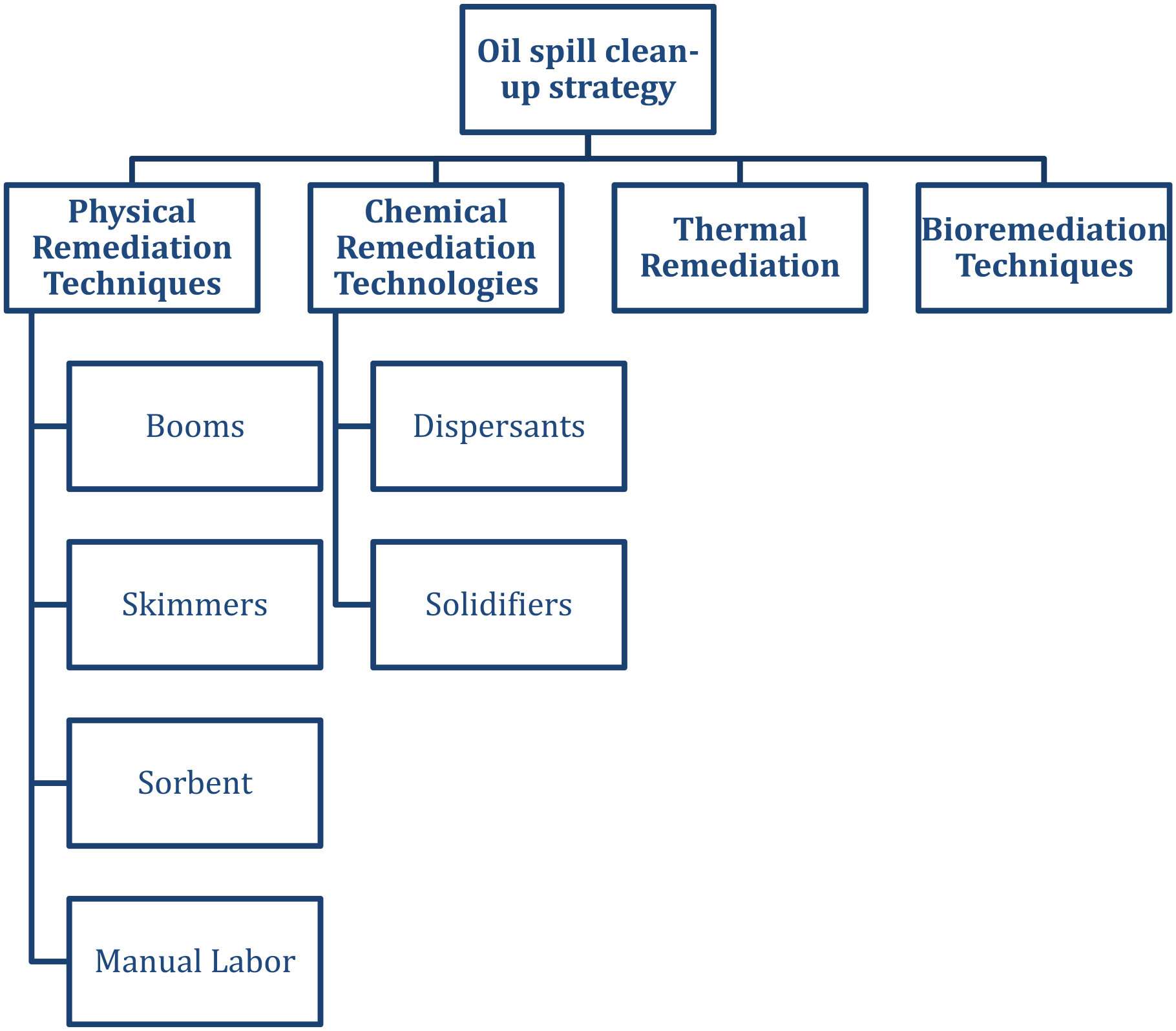
Classification of conventional oil spill clean-up techniques.
Physical remediation techniques of oil spill
It stands as one of the most efficient and environmentally friendly approaches to address an oil spill. Physical techniques, devoid of chemical usage, obviate the need for prior approval from administrative bodies to conduct clean-up operations. This section will delve extensively into the two techniques commonly employed for marine OSCUP: sorbents, as well as booms and skimmers.
Booms and skimmers
These are most commonly used and one of the first oil spill response techniques (Zhu et al., 2010). To contain and clean-up oil spills, booms and skimmers are frequently utilized in combination. Although skimmers are used to physically remove the oil from the water’s surface, booms are used to contain the oil and prevent it from spreading. Booms can be utilized to gather the oil into a more manageable region, facilitating the oil collection by the skimmers. The collected oil is then stored in a reservoir tank, where it can be further processed for refinement or burning. Controlling and reducing the effects of oil spills on the environment can be done extremely successfully by combining these strategies. It is significant to remember that the success of these methods depends on several factors, including the type of oil spilled, the weather and the closeness to delicate ecosystems.
Sorbent
To effectively address an oil spill on the sea’s surface, it is crucial to utilize appropriate sorbent substances. Sorbents offer a high capacity for oil recovery while imposing minimal harm on ecosystems and proving cost-effective. The recovery of spilled oil is facilitated through either adsorption or absorption mechanisms. Adsorption involves the distribution of the adsorbate across the surface of the sorbent, whereas absorption entails the distribution of the substance within the body of the absorbent. When sorbents are applied to an oil spill, they facilitate the transformation of the oil from a liquid to a semisolid phase, thereby enabling easy retrieval through the removal of the sorbent structure. The most significant qualities of a sorbent to consider in oil spill cleaning are hydrophobicity and oleophilicity. Other essential factors are sorbent retention over sorbed per unit weight, reusability and biodegradability. Researchers have extensively found that milkweed, kapok, cotton, fibre, polypropylene, modified expanded perlite, exfoliated graphite, carbonized for fibres, carbon fibre felts and sugi Bark Sorbent (Bayat et al., 2005). Due to their great sorption capacity and selectivity, sorbents are the most appropriate and widely used method for controlling oil spills (Zhu et al., 2010).
Manual labour
The predominant approach for shoreline clean-up is manual recovery, where teams of workers employ tools like rakes and shovels to gather oil and debris. The collected materials are then transported to processing facilities using buckets and drums. Vacuum vehicles, pumps and suction hoses may be utilized by workers to recover spilled oil. Despite its labour- and time-intensive nature, manual cleaning generates less waste compared to other methods (Karan et al., 2011).
Chemical remediation technologies
Chemical processes alter the oil’s chemical and physical characteristics. Compared to mechanical oil recovery, they are typically less expensive and need less labour. But they change the characteristics of the oil, making it impossible to reuse collected oil (Hoang et al., 2018). Emulsifiers, dispersants and solidifiers are the three primary chemical techniques for cleaning up marine oil spills (Li et al., 2016). Table 1 shows the factors involved, along with the benefits and limitations, and the description summarizes the various chemical methods in detail.
Reusability and recovery data of nano-based oil spill remediation technologies.
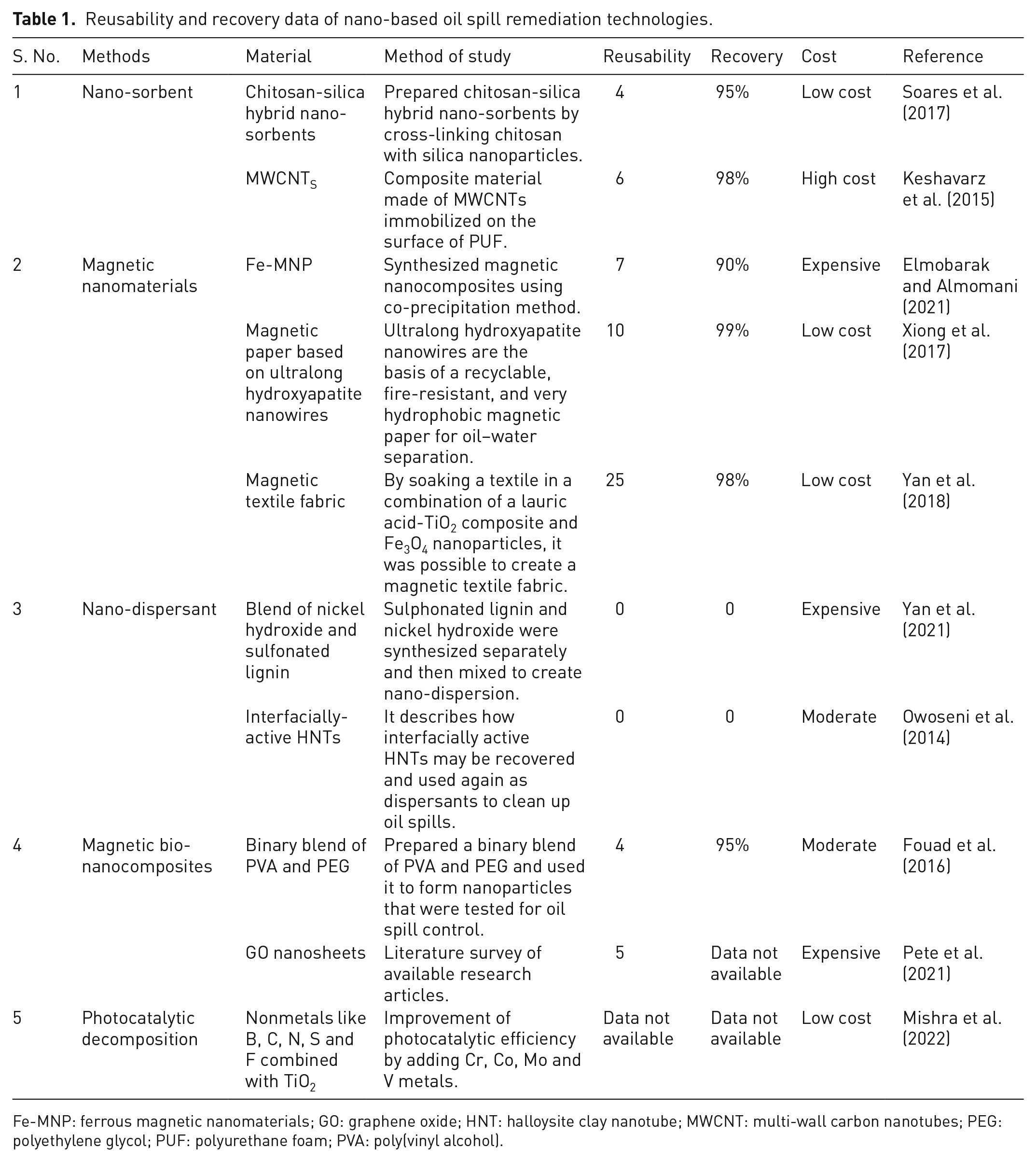
Fe-MNP: ferrous magnetic nanomaterials; GO: graphene oxide; HNT: halloysite clay nanotube; MWCNT: multi-wall carbon nanotubes; PEG: polyethylene glycol; PUF: polyurethane foam; PVA: poly(vinyl alcohol).
Dispersants
Dispersants are chemical substances that consist of two components, solvent and surfactant. These are proven to clean the oil spill even in deep water scenarios. Oil is removed from the water’s surface and re-dispersed in the same water column using dispersants. The principal elements influencing a dispersant’s effectiveness include oil composition, oil viscosity, the number of dispersants used, temperature and sea energy. Surface-active compounds (surfactants) are combined with a solvent or a stabilizer to form dispersants. They disperse them into a body of water, accelerate the biodegradation of the oil quickly diluted and lower the interfacial tension between oil and water, which causes the oil slick to break up into minute droplets. They are typically blended by a boat propeller and applied by equipped helicopters spraying on oil. Dispersants can cure more than 160 hectares of oil each hour in a fixed-wing aircraft, which is about three times as much oil as skimmers or in situ burns can treat in that period (Prendergast and Gschwend, 2014). However, dispersants continue to be debated (Blum et al., 2014) and are commonly viewed as a last choice due to the fact that they typically harm marine life and delay the creation of oil-in-water emulsions (Almeda et al., 2014).
Solidifiers
Dry or semi-solid substances called ‘solidifiers’ react with oil to change it from a liquid to a buoyant rubber-like substance that can be easily lifted from the water’s surface (Ndimele et al., 2018). Similar to dispersants, solidifiers can be utilized in challenging settings where physical techniques would be inappropriate (Hoang et al., 2018). These are the oleophilic polymers that are often added to the oil in a dry or semi-solid form. Solidifiers are frequently employed for small spills, in contrast to dispersants. Solidifiers often perform less effectively than dispersants and cannot be used with other oil spill control techniques (Li et al., 2016).
Thermal remediation
The ideal method for burning oil is in situ burning because most oil spills can be cleaned up without the use of specialized tools. The large oil slick is softly lit by the igniters and is carefully watched as it burns. It works well in mild oil spills that burn without endangering marine life in oil slicks that cover a large area and are thick enough to burn. The major downside of burning is that it results in secondary pollution, which creates hazardous by-products that endanger both the environment and human health. Burning has an impact on the marine species living close to the spill site, causing teratogenic effects.
Bioremediation techniques
One of the biological processes is the biodegradation of oil by naturally occurring, widely scattered microorganisms in marine environments. Enhancing natural biodegradation while causing no negative consequences is the aim of bioremediation. Numerous microbes are developing that can degrade petroleum hydrocarbons by utilizing them as their only carbon source. When crude oil enters the marine environment, a variety of microbial species collaborate to break it down into less dangerous compounds such as water and carbon dioxide. They release waste products such as carbon dioxide, water and heat after absorbing organic molecules into their cell biomass (Ndimele et al., 2018). Biodegradation is influenced by a variety of environmental factors, including oxygen level, pH, temperature, water salinity and the concentration of nutrients. This technique takes a great deal of time, and the algae that cover the water’s surface use up a lot of the oxygen in the air, leaving very little for the water to dissolve in and provide for the existence of underwater marine life. Therefore, shorelines, wetlands and marshes are the best places for these strategies to be used.
Brief introduction to different nanotechnology-based oil spill clean-up methods
Nanotechnology has made significant advancements in its applications to various fields of science, engineering and research domains. Researchers dedicated to wastewater treatment and environmental remediation have given it a lot of attention due to its potential in a plethora of domains including oil spill remediation. This interest is substantiated by several key attributes intrinsic to nanotechnology. Firstly, tailoring the nature of particles to be oleophilic and hydrophobic according to the specific requirements enhances their affinity for oil-based contaminants (Shahmirzaee et al., 2022). The heightened surface area to volume ratio of nanomaterials is a second crucial factor, facilitating increased reactivity and effectiveness in OSCUP. Thirdly, certain nanoparticles, exemplified by Fe3O4, exhibit superior paramagnetic properties, enabling manipulation through magnetic fields. The exceptional oil penetration ability, coupled with the economic feasibility of reusing MNPs, underscores their practicality (Debs et al., 2019). Furthermore, the integration of nanotechnology into the production of oleophilic composites, synergizing with existing remediation materials, offers enhanced strength, flexibility, lightweight attributes and superior reusability, thereby amplifying its potential impact on oil spill remediation strategies.
This section discusses the working principles, characteristics and examples of various emerging nanotechnology-based OSCUP strategies.
Nano-sorbents
As discussed in the preceding section, the fundamental operating concept of a sorbent is selective adsorption, a physical and surface phenomenon. To separate the two substances in an oil–water mixture, the sorbent must be both hydrophobic and oleophilic. Sorbents are used because of their excellent oil adsorption and water resistance. When combined with iron oxide nanoparticles, they exhibit unique properties such as hydrophobicity/oleophilicity, ferromagnetism, biocompatibility and reusability. When an oil leak occurs, the oil disperses and spreads over the water’s surface until addressed. The low density of sorbents enables iron oxide nanoparticles to remain afloat on the water’s surface for an extended duration. Due to their minimal toxicity, these nanoparticles have no adverse effects on the marine ecosystem. Magnetic particles can be swiftly recovered and reused, with a simple regeneration process involving ultrasonic washing using ethanol or benzene. Carbon nanotubes (CNTs), graphene aerogels and silica nanoparticles have garnered attention due to their excellent adsorption capacities, reusability and compatibility with sorbents. They do not, however, have the re-wettability feature (Yu et al., 2015; Zhu et al., 2010). Graphene, CNTs, activated carbon, Fe3O4, zinc oxide and many other nanomaterials have been used for oil sorption in the past.
Numerous sorbents other than those mentioned above, such as PS-CNT reinforced composite made by electrospinning Sarbatly et al. (2016), graphene-meso iron oxide composite including polyurethane foam (GPUF) and modified cellulose nano-sorbent, can be employed for comparable tasks. Nano-sorbent material, that is, modified cellulose in the nano-structured form has a low density and portrays very high oil sorption capacities along with strong hydrophobicity (Bidgoli et al., 2019). After use, the magnetic sorbents get saturated and are removed from the water using an external magnetic field (Dolbnya et al., 2018). GPUF being magnetically actuated can be used in the target area (oil spill area) using external magnetic fields, and it can be recollected back. According to research done so far, GPUF can be used for over 150 cycles and still maintain its high adsorption capacity (Anju and Renuka, 2020). Polystyrene (PS)-CNT composite made by electrospinning method displays very good oil sorption capacities. PS sorbents have lesser mechanical strength but reinforcing the same with a CNT makes them stronger and reusable. They can be reused for up to three cycles with an average removal rate of 80% (Wu et al., 2017). Many such nano-sorbents work on the aforementioned principle of sorption. The above-mentioned techniques are some examples of nano-sorbents and magnetic sorbents.
Magnetic nanomaterials
To make new, customized nanocomposites for application in oil–water separation, several techniques have been developed in recent years. One or more of the most often employed techniques is surface modification. Others include co-precipitation, thermal deposition, microemulsion, hydrothermal synthesis, grafting and microemulsion (Asif et al., 2022). The co-precipitation technique was used to create MNPs in an acidic environment (Stephens et al., 2013), To put it simply, 134 mg L−1 of FeCl3.6H2O and 200 mg L−1 of FeCl2.4H2O produced in 2.6 mol L−1 HCl were combined in a 4:1 ratio. A burette was used to add 100 mL of NH4OH (0.7 mol L−1) gently, whereas the liquid was swirled at room temperature for 30 minutes. The magnetic precipitate of the resultant suspension of nanoparticles of Fe3O4 (MNP) was decanted, washed five times with filtered water and then rinsed with 100% ethanol. After that, the MNP was stored in a desiccator (Debs et al., 2019). When designing nanocomposites, the capacity of the materials to absorb oil and resist water is crucial; thus, the wettability of the surface must be changed correspondingly. Higher oil uptake, longer oil retention, capability to absorb oil, material unsinkability and reusability are some of the material’s further characteristics. Small in size, super-paramagnetic and with a high surface area-to-volume ratio are MNPs (Jiang et al., 2018; Ul-Islam et al., 2017).
The main advantage of these nanoparticles is that they can be combined with other conventional techniques for oil spill control and recovery. Because of its simplicity (a small size that can penetrate the inner layers of the oil), low cost, structural stability, high surface area and good separation ability, this technique is highly recommended for oil spill control. Because of its advantageous properties such as bio-stability, biocompatibility and non-toxicity, superparamagnetic iron oxide is the most widely used and effective nanomaterial. Because of their magnetic properties, MNPs are used as oil–water demulsifies. The recovery and reusability of these materials is the fundamental problem with their applicability. The key challenge in the application of these materials lies in their recovery and reusability. If the adsorbents cannot be retrieved after adsorption, it may result in higher costs and potential secondary pollution. To address this issue, incorporating nanocomposites onto various substrates such as sponges and foams has been proposed to improve separation performance. The sorbed oil can then be recovered through methods like vacuum filtration, distillation or extraction techniques.
For sorbent materials to be reused, chemical, mechanical and oleophilic stability is essential. The porous nature of the materials may deform during high-pressure oil recovery, decreasing the materials’ ability to sorb oil, unless the materials are mechanically stable. Thermal and chemical stability is crucial when the recovery methods involve separation through distillation or extraction (Shahmirzaee et al., 2022). According to studies, MNPs can be recycled up to a thousand times (Pinto et al., 2018).
Nano-dispersant
Nano-dispersants are a type of chemical agent used in the control and clean-up of oil spills. They are specifically designed to break down oil into smaller droplets, allowing it to be removed from the water’s surface more easily. The nanoparticles’ small size allows them to penetrate the oil spill more effectively, increasing their efficacy in breaking down the oil and accelerating biodegradation. Nano-dispersants, in addition to breaking down the oil, can help to reduce the toxicity of the oil to marine life and other wildlife. This is because smaller droplets of oil disperse more easily in the water column, reducing the concentration of oil in any one location and limiting its environmental impact (Mishra et al., 2022).
Amphiphilic copolymer-grafted nanoparticles were created and showed stable dispersions in an aqueous media at very low concentrations. Its behaviour was extremely similar to that of an unimolecular micelle. In the structures created, smaller hydrophobic molecules can be enclosed and function as nano-dispersants (Ejaz et al., 2016). Further research can be done on the evaluation of the polymeric dispersants as they are less toxic and can gain complete control of the spill (Pi et al., 2016; Rodd et al., 2014). When a crude oil spill occurs, a layer of n-alkanes forms on the slick surface, and the layer is eventually evaporated and released into the atmosphere surrounding the oil spill zone as airborne droplets due to natural agents such as sunlight, wind and sea waves. These can cause a variety of respiratory diseases as well as cardiovascular problems.
The addition of dispersants increases the formation of airborne oil droplets from the oil slick’s n-alkane layer. It has an impact on the workers who help with oil spill clean-up as well as the marine life in the area of the spill (Afshar-Mohajer et al., 2020). According to a recent study, the use of biopolymer Xanthan Gum (XG) coupled with silica nanoparticles can provide an effective oil spill clean-up because they produce strong electrostatic interactions between the XG and the silica nanoparticles. The mechanism of this process is depicted in Figure 2. XG is an important material in this process because it forms a stable emulsion and has a unique five-fold helical structure that stabilizes the colloidal suspension (Rodd et al., 2014).
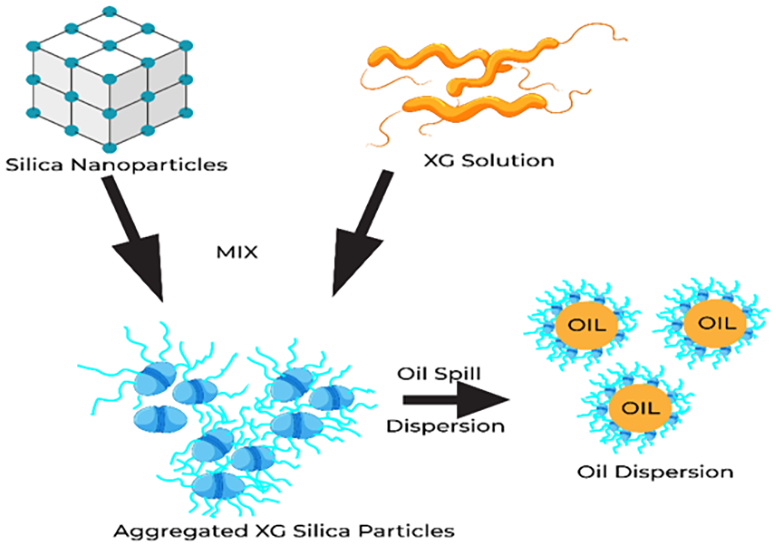
Schematic representation of the mechanism of XG and silica nanoparticles working together to trap the oil particles in the dispersion. XG, Xanthan Gum.
Nanoparticle-aided photocatalytic decomposition
Oil spills often cause saltwater pollution owing to the dissolving of water-soluble crude oil components. This polluted water, which is heavy in dissolved hydrocarbons, is very hazardous and can cause irreversible harm to the coastal ecology (Berry and Mueller, 1994; Grzechulska et al., 2000). The problem might have a workable solution in the form of photocatalytic breakdown of oil-contaminated water using nanoscale or microscale TiO2 particles. Pure TiO2 has photocatalytic activity in the near ultraviolet (λ ⩽390 nm) region, which accounts for only 4% of the solar energy spectrum. As a result, doping TiO2 with transition metal cations such as Cr, Co, Mo and V is required to improve photocatalytic efficiency. Cr, Co, Mo and V are required to improve photocatalytic efficiency (Mishra et al., 2022). Additionally, it is known that treating TiO2 with nonmetals like B, C, N, S and F increases the photocatalytic activity in the spectrum of visible light. Although TiO2 has significant promise for oil spill remediation due to its exceptional photocatalytic characteristics, it is yet to be commercially launched. This is due to its tendency to form agglomerates in powder form, which reduces its photocatalytic activity. Furthermore, its employment in oil spill cleaning involves the isolation and recovery of TiO2 nanoparticle-containing solutions since the existence of residual nano-titania in saltwater is always a possibility.
To solve the foregoing issue, it is required to immobilize the TiO2 by providing appropriate support, which would aid in avoiding the problem of clustering and agglomeration of TiO2 nanoparticles, which results in a loss in photocatalytic activity. Secondly, this technique eliminates the necessity for separation and recovery of suspensions containing micro/nano-sized TiO2 particles (which may cause toxicity if left in seawater) after usage. One technique proposed is to mix carbon with nano/micro TiO2 in the form of coatings on exfoliated graphite or doping TiO2 into expanded graphite, among other things. This combination of TiO2 and carbon may perform dual functions, namely adsorption/absorption, and breakdown, and hence plays a synergistic role in addressing oil spill concerns. TiO2 nanotubes, aerogels and fly ashcenospheres covered with TiO2 nanoparticles have all found applications in oil spill clean-up.
Magnetic bio-nanocomposites
Unfortunately, using dispersants makes organic chemicals like polycyclic aromatic hydrocarbons more soluble in water, increasing the risk of mutagenesis in many species (Allan et al., 2012). Biosorbents have been utilized to extract manufactured and natural oils from water, including egg shells, vegetable tissues, fungal and algal biomass and vegetable tissues (Mishra and Mukherji, 2012). The availability, mass manufacturing, low cost and surfaces with plenty of sorption sites are the key benefits of using biological materials for water treatment (Carrilho et al., 2002). Although they lack oil and water selectivity and absorb both water and oil at the same time, limiting separation efficiency, their performance is inadequate due to their structural features (Bhardwaj and Bhaskarwar, 2018). These biomaterials must be altered to have unique wetting characteristics that absorb oil and resist water. Hydrophobic moieties might be added, and the biomaterials could be altered, to increase their capacity for sorbing oil (Zhang et al., 2019). Since these MNPs are inexpensive, simple to make, exhibit high biocompatibility and exhibit superparamagnetic behaviour, they have been employed in combination with aerogels, foams, sponges and polymers coated with nanoparticles (Calcagnile et al., 2012; Chu and Pan, 2012) . When sorption sites are subjected to processes like heat (pyrolysis), acidification or basification, the hydrophobic features of the majority of synthetic materials increase their ability to absorb oil (Raj and Joy, 2015; Wu et al., 2014). It is believed to be expensive and time-consuming to use these strategies to boost oil intake. Nanotechnology and biosorption work together to create a new, uncharted territory. To create hybrid materials with the appropriate properties, nanoparticles and biosorbents may be a viable choice for advancing the bio-economy (Labuto et al., 2016). Except for heating the solution to 80°C before adding the yeast biomass (YB) and MNPs in an 8:1 ratio, magnetic bio-nanoparticles were made in an acidified medium using the co-precipitation technique. This mixture was vigorously agitated for 30 minutes at 80°C, and the resulting yeast magnetic bio-nanocomposite was rinsed with 100% ethanol and stored in the desiccator for later use. This method was modified by Panneerselvam et al. (2011). However, because of their structural characteristics, the performance is insufficient, lacking in water and oil selectivity and concurrently adsorbing both, which reduces the separation efficiency (Bhardwaj and Bhaskarwar, 2018). These biomaterials must be altered to have unique wetting characteristics that can absorb oil and resist water. These biomaterials might be altered and given hydrophobic moieties to increase their ability to absorb oil (Zhang et al., 2019). A 0.7 T magnet was utilized to recover the magnetic substances and oil components from the surface after YB-MNP or MNP was applied to the dispersed oil over water, and absorption was allowed to take place (Debs et al., 2019). As a result, the surface’s absorption oil and magnetic materials, such as YB-MNP or MNP, were soon removed by the magnet, leaving just the solution. The thrust created by the magnet’s attraction of YB-MNP or MNP as well as the intermolecular forces between the oil molecules help this dragging process (Debs et al., 2019). The removal of the oil from the water is caused by adhesive and cohesive forces, such as London interactions, as a result of this promoting spontaneous capillary action (Debs et al., 2019).
The leftover oil droplets contain ferromagnetic nanoparticles that are invisible to the naked eye, even after the majority of the oil has been removed (Debs et al., 2019). A stronger magnetic field system may encourage a more thorough removal of the remaining nanoparticles and oil droplets. However, the attraction between these nanomagnetic particles and the magnet was not strong enough to cause the droplets to be drawn from the water (Debs et al., 2019). As a result, the main phenomena cannot be accurately defined as a process of a material adhering to the adsorbent.
Analysis of different nanotechnology-based oil spill clean-up methods based on certain factors
The overview, working principle, characteristics and examples of various nanotechnology-based oil spill clean-up methods have been discussed in the previous section. The previous section also states that oil recovery methods under the nanotechnology domain focus on either recovering the oil through absorption, magnetism-induced collection, filtering and decomposition of oil into smaller droplets for easy bioremediation. In this section, the nanotechnology-based techniques are compared based on the following factors. Figure 3 illustrates the key factors influencing nanotechnology-based OSCUP technologies.
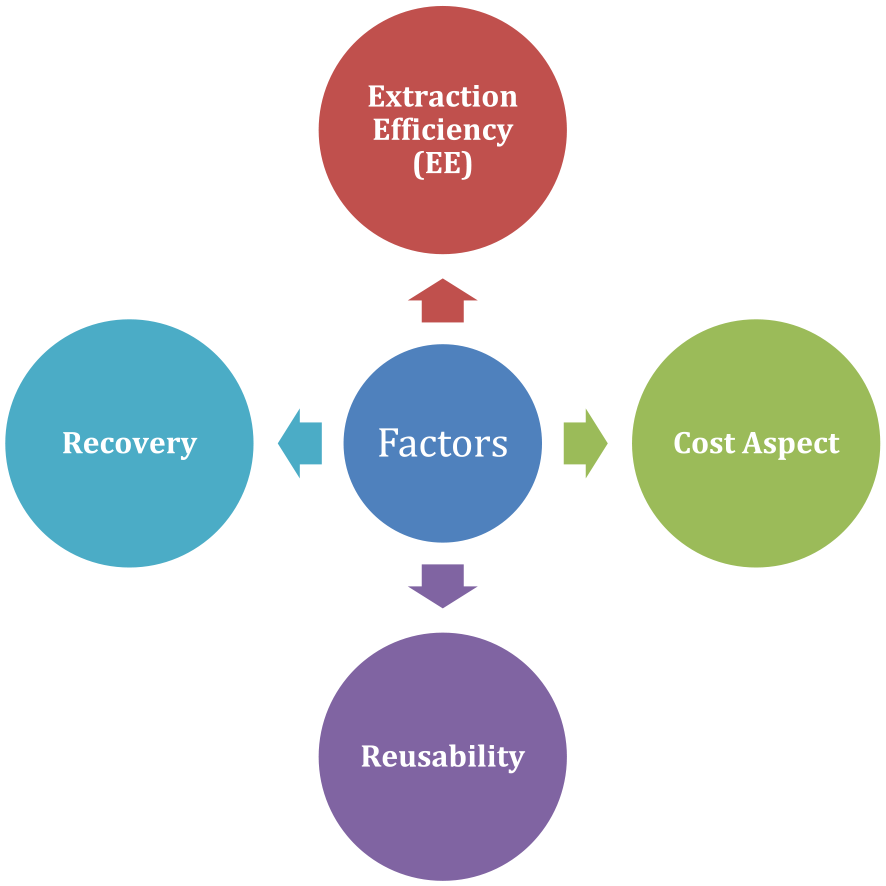
The key determinants and factors affecting nano-based oil spill clean-up technologies.
Cost aspect
Effective oil spill clean-up methods are crucial for mitigating the impact of oil spills on the environment and public health. With the emergence of nanotechnology-based solutions, remediation methods for oil spills have been created using several methods; however, the cost aspect plays a crucial role in selecting the most effective nanotechnology-based oil spill clean-up method. This aspect can vary depending on several factors, including the type and number of nanomaterials used, the size of the oil spill and the location of the spill. Understanding the cost implications of various methods is crucial for identifying economically viable, environmentally sustainable and socially acceptable approaches. Although many research articles discuss the effectiveness of nanotechnology-based OSCUP methods, explicit cost details are often lacking. Instead, costs are typically discussed in relative terms. It is essential to assess the cost aspect of different nanotechnology-based OSCUP methods to gain more insight into their feasibility and potential for real-world implementation.
The efficacy of Novel magnetic silica sorbent (MSS) materials was investigated through experiments (Kumar et al., 2021). Physical and chemical analyses are performed during these tests, such as readings of the surface pore sizes, surface area and oil absorption capacity. The review also discusses numerous laboratory-scale oil spill experiments that were carried out to assess the efficiency of the MSS material in various situations. It was found that the cost involved is very minimal. Through a literature review of pertinent scientific publications and patents (Hammouda et al., 2021) performed their study. The article provides a thorough overview of recent advancements in cellulosic sorbent materials for oil spill clean-up, including their characteristics, production methods and efficiency in removing oil from water. The cost involved in most of the articles was also very minimal (Humberto Ramirez Leyva et al., 2018).
They developed a modified Stöber method to create a nanostructured magnetic sorbent material using a mixture of sodium silicate (Na2SiO3) and tetraethyl orthosilicate as precursors. To create the final product superhydrophobic and magnetic, it was functionalized with oleic acid and covered in a layer of white graphene oxide (GO) and MNPs. The cost of the materials used in their synthesis was mentioned in this article, even though it did not provide precise pricing details. To increase the capability for absorbing oil, Chen et al. (2022) created a new type of superhydrophobic sponge that was coated in an asphaltene/kaolin nanoparticle layer. For simple oil collection after absorption, the sponges also responded magnetically. The experiment was divided into two phases: (1) creating asphaltene/kaolin nanoparticles by combining asphaltene and kaolin with a surfactant and (2) covering the superhydrophobic sponge with the nanoparticles using a dip-coating technique. The cost of preparation and extraction was determined to be minimal by the researcher. The oil separation effectiveness of the synthetic polymer-coated MNPs was assessed through oil/water separation tests, according to different research by (Mirshahghassemi et al., 2016). The outcomes demonstrated the high oil/water separation effectiveness of the synthesized nanoparticles and their simplicity in magnetically separating them from the separated oil. Despite the lack of detailed cost information in the piece of work, the authors concluded that there are lower costs involved. The literature review conducted (Cumo et al., 2007) to identify the best methods for cleaning up and containing oil spills suggested an evaluation standard to determine the Best Available Technique for an oil spill contaminant, with a focus on biodiversity preservation. He did mention in the discussion that the cost associated with using nano-dispersant technology to clean up an oil spill is moderate, and that it can be used, if necessary, after taking into account several other factors.
However, the study also shows that the cost associated with using magnetic bio-nanocomposites is significantly higher than that of using nano-dispersants. Another study (Khidhir and Sidiq, 2022) focuses on the usage of green oxide nanofluids as prospective asphaltene dispersants in Iraqi crudes, this study presents the findings of experimental, tuning and statistical analysis to maximize the performance of the nanofluids and comes to the conclusion that the cost of OSCUP is minimal. Dave (2011) performed a thorough review of the literature on the efficacy of oil spill remediation technologies. They also conducted a comparative performance analysis of the different technologies in terms of their ability to reduce oil concentrations in marine environments, and discussion revealed that the cost involved in photocatalytic decomposition is very expensive, whereas the cost involved in bio-nanocomposites is slightly less expensive than that of photocatalytic degradation. The cost of different oil spill remediation technologies is covered in Prendergast and Gschwend (2014).
The authors conduct a comprehensive analysis of cost and performance data sourced from various research articles. The authors undertake a comparative examination of clean-up techniques, determining the average cost per gallon of oil removed for each method, as well as the total cost of spill response. Based on this analysis, the authors find that photocatalytic decomposition is notably expensive and is considered more as a secondary treatment method (Prendergast and Gschwend, 2014).
Reusability/recovery
In addition to the cost aspect, the reusability and recovery of nanotechnology-based oil spill clean-up methods are also critical factors to consider when selecting the most effective technology. Reusability refers to the ability of the material to be used multiple times, whereas recovery refers to the ability to recover the absorbed oil for further use or disposal. Understanding the reusability and recovery rates of different nanotechnology-based oil spill clean-up methods can help identify those that are not only cost-effective but also environmentally sustainable and efficient. However, it is important to note that the reusability and recovery data of various nanotechnology-based oil spill clean-up methods may not be directly available in the literature and may require further experimentation or testing. By cross-linking chitosan with silica nanoparticles (Soares et al., 2017), created chitosan-silica hybrid nano-sorbents and evaluated their effectiveness at removing oil. They discovered that the sorbents had a high capacity to adsorb oil and could be recycled up to four times without suffering any appreciable decline in effectiveness.
Additionally, the researchers discovered that the micro-sorbents could extract up to 95% of the oil from the water. +++The nano-sorbents also displayed outstanding stability and could be kept in storage for up to 2 months without suffering a significant loss in adsorption capacity. The sorbents are also efficient in a variety of pH, salinity and temperature circumstances, indicating that they might be a flexible choice for removing oil from water. The effectiveness and recovery of a composite material made of multi-wall carbon nanotubes (MWCNTs) immobilized on the surface of polyurethane foam (PUF) for oil removal from water are examined in another research (Keshavarz et al., 2015). The composite material was exposed to a succession of oil–water mixtures with variable amounts of crude oil during the researchers’ experiments. They discovered that the composite substance had a high oil removal efficiency, removing oil from water by up to 98.9%. The effectiveness of the composite material’s oil removal could be used up to six more times, according to the many reported studies, which also discovered that this was possible. They also noted that the composite material’s recovery was made possible by the robust interactions between the MWCNTs and the PUF surface, which allowed for effective oil removal and recovery.
Using a co-precipitation technique (Elmobarak and Almomani, 2021), magnetic nanocomposites were developed, and they were used to remove oil from oil-in-water emulsions. Instability and reusability testing, the as-synthesized Fe-MNP showed an effective oil recovery of up to 90% after seven cycles. The researchers’ desorption tests also showed that the oil could be retrieved from the nanoparticles using the appropriate solvent. Xiong et al. (2017) conducted research on magnetic paper made of exceptionally long hydroxyapatite nanowires for oil–water separation. It has been discovered that this magnetic paper is reusable, fireproof and extremely hydrophobic. In addition to acting as a building block for the binding of MNPs, the large-scale paper created from environmentally benign, extraordinarily long inorganic hydroxyapatite nanowires assists in coating polydimethylsiloxane layers to form free-standing nanocomposite paper. They illustrated the creation of large-scale hybrid magnetic paper. The as-prepared nanocomposite paper is shown to exhibit very efficient absorption flux (2924.3 Lh−1 m−2), excellent selectivity (more than 99%) and recyclable characteristics (A minimum of 10 cycles).
For the extraction of oil from water, Yan et al. (2018) showed how to use magnetic pH-induced textile fabric. A simple and ecologically friendly method was used to create a magnetic textile fabric that can alter its wettability depending on the pH of the water, switching between superhydrophobicity and superhydrophilicity. To create such a smart textile, a fabric was mixed with a lauric acid-TiO2- and Fe3O4 nanoparticle combination. The materials as prepared showed a pH-controlled response, a high flux for oil (11,000 Lh−1 m−1), recyclability up to 25 cycles with an efficiency of 98% and the capacity to selectively separate the oil–water combination with an efficiency of more than 99%. To create nanoparticles that were evaluated for oil spill control, Fouad et al. (2016) prepared a binary mixture of PVA and polyethylene glycol (PEG). They observed that the nanoparticles could be recycled up to four times without suffering a significant decrease in efficiency and had a high oil sorption capacity. Several investigations focused on the recovery of the biocompatible PVA nanoparticle-based binary blends the authors produced for the management of oil spills. They discovered that the mixtures could recover up to 94% of the leaking oil. Pete et al. (2021) did a literature survey where one study mentioned in the article used MNPs to enhance the bioremediation of oil-contaminated soil. The MNPs were shown to increase the degradation of the oil by bacteria, and they were found to be recoverable and reusable for up to three cycles of oil spill remediation.
Another study discussed in the article used GO nanosheets to enhance the bioremediation of oil-contaminated water. The GO nanosheets were found to increase the efficiency of oil degradation by bacteria, and they were shown to be recoverable and reusable for up to five cycles of oil spill remediation. The article suggests that nanomaterials, such as MNPs and GO nanosheets, have the potential to enhance the bioremediation of oil spills and can be recovered and reused for multiple cycles, making them a promising option for more sustainable and effective oil spill clean-up strategies. Yan et al. (2021) involved the synthesis of the nano-dispersant and its evaluation for oil spill remediation. The nickel hydroxide and sulfonated lignin were first synthesized separately and then combined to form the nano-dispersant. Numerous methods, including Fourier transform infrared spectroscopy, X-ray diffraction and thermogravimetric analysis, were used to characterize the dispersant. The performance of the nano-dispersant was evaluated by conducting a series of oil–water separation tests. In these tests, different concentrations of the dispersant were added to an oil–water mixture, and the separation efficiency was measured. the recovery rate of crude oil by the nano-dispersant was more than 95%. The nano-dispersant could be reused five times with a slight decrease in oil recovery rate but with no significant change in the oil droplet size. The reuse and recovery of interracially active halloysite clay nanotubes (HNTs) as dispersants for oil spill remediation are reported (Owoseni et al., 2014).
According to the research, there is little loss in the dispersant effectiveness of the HNTs when they are simply removed from the oil–water mixture and used up to five more times. The HNTs demonstrated excellent recovery efficiency, according to the authors, with over 90% of the dispersed oil recovered using a magnetic field-assisted separation method. Mishra et al. (2022) demonstrated that nanoparticle-aided photocatalytic degradation exhibits lower reusability and recovery than any other nano-based oil spill remediation technique, is quite costly and is more often used as a secondary treatment carried out after other methods.
Extraction efficiency
The extraction efficiency (EE) essentially determines the rate at which the nanotechnology-based remediation technique can separate, extract and recover the spilled oil. The higher the EE, the faster the oil spill control takes place, thus saving time. EE or capacity does not apply to techniques such as nano-dispersants and nanoparticle-aided photocatalytic decomposition, since there is no oil being recovered here, but it is instead broken down into smaller droplets. In the case of nano-sorbents, there is a key term called sorption capacity, and how much this sorption capacity decreases after a certain number of cycles accounts for the reusability of the nano-sorbent. The higher the sorption capacity, the more efficient the sorbent. Sorption capacity is usually expressed in terms of ×grams gram−1 [g g−1], meaning × grams of absorbate gets absorbed on 1 g of sorbate in a cycle after use. Researchers have looked at the efficiency and recovery of a composite material composed of MWCNTs immobilized on the surface of PUF for removing oil from water (Keshavarz et al., 2015). PUF-MWCNTs had a sorption rate of 24.75 g g−1 for crude oil. According to the research done by authors (Elmobarak and Almomani, 2021), the Fe-MNP demulsifier, as it was synthesized, had a superb adsorption capacity of 51 mg g−1 and was best suited to the Langmuir and Freundlich models. However, extraction efficacy has not been taken into consideration in this manuscript. Since the majority of research articles do not provide any information on that aspect.
Table 1 demonstrates comprehensive details on the key elements impacting marine oil spill remediation using various nanotechnology technologies. The research findings reflect how nanotechnology-based approaches perform in terms of oil recovery efficiency, reusability and operational cost. Higher preferences have been given to strategies having higher recoverability, reusability and lower operational cost.
Comparative analysis of various nanotechnology-based oil spill clean-up techniques
Within this sub-section, the methods used to clean up oil spills will be assessed and categorized based on three factors: cost, reusability and recovery. In justifying the selection of cost, reusability and recovery as the primary factors in our study, the authors navigated practical constraints within existing literature, focusing on dimensions with consistent and quantifiable data. Recognizing the fundamental role of these factors in decision-making for oil spill remediation, the deliberate choice aims to distil complexity into a focused, meaningful analysis. This approach aligns with the pragmatic considerations of stakeholders and policymakers, addressing real-world priorities and resource constraints associated with marine oil spill response. Although acknowledging other influential factors, the study provides a targeted and actionable assessment, contributing insights directly relevant to the challenges of environmental conservation and disaster response.
Methodology for ranking nanotechnology-based OSCUP
The methodology section is significantly informed by the data provided in Table 2, serving as the cornerstone for this investigation. The dataset, sourced from several reputable research articles, is marked by its selectivity due to the scarcity of relevant literature. Despite this limitation, the authors meticulously examine three key factors: reusability, recovery and operational cost. Although acknowledging the presence of other factors that may influence marine oil spill recovery, the study primarily focuses on these prevalent factors due to the lack of sufficient research in relevant areas.
Scaling each factor based on data provided in Table 1.
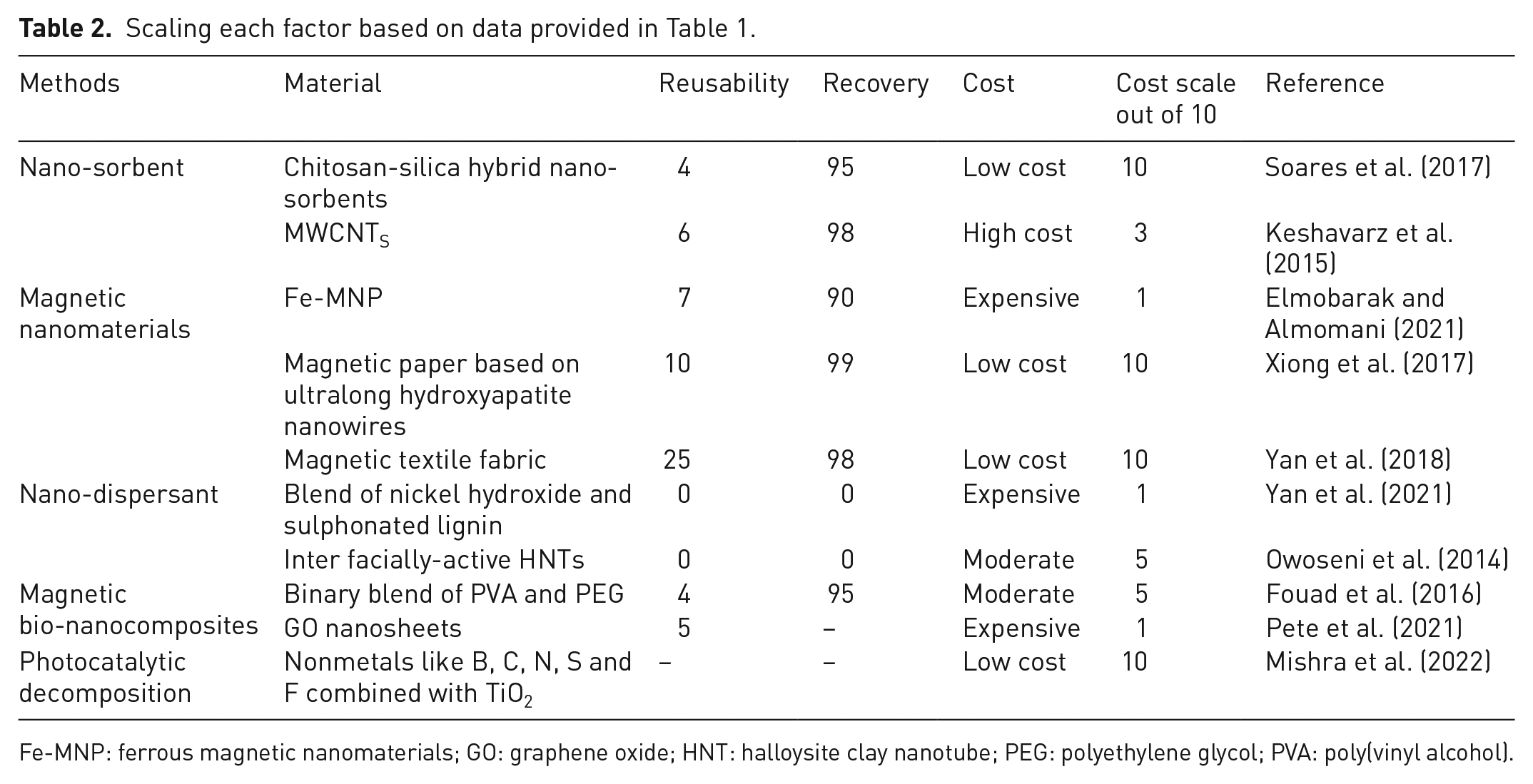
Fe-MNP: ferrous magnetic nanomaterials; GO: graphene oxide; HNT: halloysite clay nanotube; PEG: polyethylene glycol; PVA: poly(vinyl alcohol).
In the realm of cost analysis, the absence of explicit quantitative data necessitated a nuanced approach. The authors extracted qualitative descriptions from cited articles, discerning whether costs were labelled as low, high or very high. To render this qualitative information more manageable, a rating system on a scale of 1 to 10 was employed, where higher ratings signify lower costs (10 for low cost, 5 for moderate, 3 for high and 1 for very high/expensive). Quantitative data for reusability and recovery were systematically incorporated, although occasional data gaps required a judicious approach. Notably, instances such as the absence of recovery percentages in the research article on magnetic bio-nanocomposites for GO nanosheets prompted the authors to eliminate this specific factor, recalibrating normalized values through relevant equations. Certain oil spill recovery techniques, such as photocatalytic degradation, preclude the feasibility of reusability and recovery, leading to their exclusion from the calculations.
To synthesize the multi-faceted considerations of reusability, recovery and cost, the authors assigned weightages based on diverse scenarios. For an equal emphasis on all three factors, reflecting a scenario where each bears equal importance in selecting the optimal technique, a uniform weightage of 33.33% was assigned to reusability, recovery and cost in the normalized equation:

Alternatively, in situations where cost is of diminished significance, with reusability and recovery assuming greater importance, an equal weightage of 50% was accorded to each in the equation:

Lastly, in cases where cost takes precedence, yet reusability and recovery remain relevant, a weightage distribution of 50% to cost and 25% each to reusability and recovery was employed:

In case there is more than one suitable method for a particular technique, the authors have taken the average of the normalized numbers for ease of representation. Notably, the resulting normalized numbers are dimensionless, given the scaling of cost and the intrinsic dimension lessness of reusability and recovery factors.
Ranking different nanotechnology-based oil spill clean-up strategies
In the pursuit of identifying the most effective marine oil spill remediation technique, the methodology outlined in section ‘Methodology for ranking nanotechnology-based OSCUP’ was applied across three distinct scenarios, each characterized by varying weights assigned to cost, reusability and recovery factors.
Equal weightage to cost, reusability and recovery
Here all the three factors – cost, reusability and recovery – were accorded equal importance, the analysis revealed magnetic nanomaterials as the optimal technique. This finding was closely followed by nano-sorbent, magnetic bio-nanocomposites, nano-dispersant and photocatalytic decomposition (equation (1)).
Given the equal consideration of cost, reusability and recovery, Scenario I is particularly relevant in areas where a holistic approach to marine oil spill remediation is imperative. Such scenarios could include environmentally sensitive regions where comprehensive and sustainable solutions are crucial. Figure 4 shows pictorially the ranking of different nanotechnology-based oil spill remediation strategies based on equal weightage on cost, reusability and recovery.
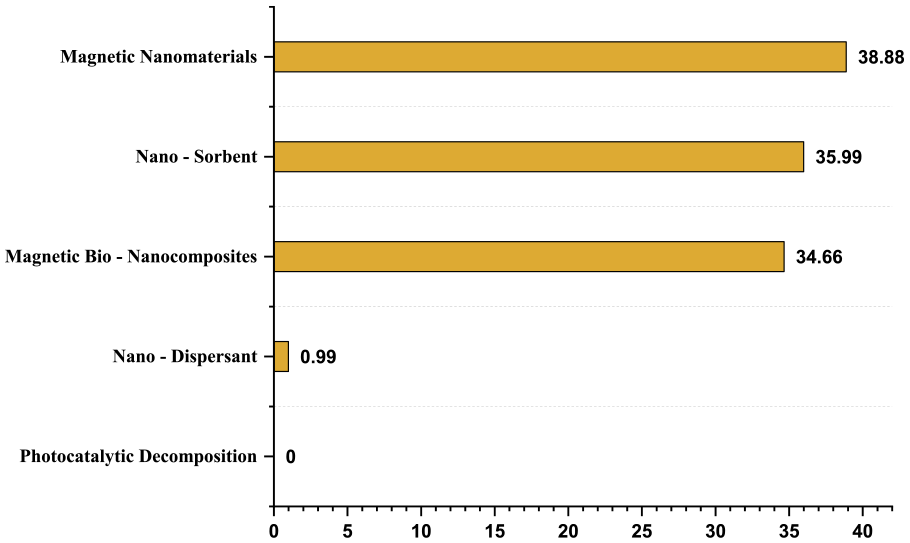
Ranking of different nanotechnology-based oil spill remediation strategies based on equal weightage on cost, reusability and recovery.
Emphasis on reusability and recovery, disregarding cost
In the second scenario, where cost was intentionally excluded from consideration, and equal importance was given to reusability and recovery, the findings aligned with those of scenario of section ‘Equal weightage to cost, reusability and recovery’ (equation (2)).
Magnetic nanomaterials once again demonstrated their effectiveness, leading the list, followed by nano-sorbent, magnetic bio-nanocomposites, nano-dispersant and photocatalytic decomposition. It finds relevance in situations where the immediate restoration of the affected ecosystem is paramount. This may be applicable in regions with endangered marine species or critical habitats, emphasizing the significance of reusability and recovery without stringent financial constraints. Figure 5 demonstrates the ranking of different nanotechnology-based oil spill remediation strategies considering only reusability and recovery and assigning equal weightage to both factors.
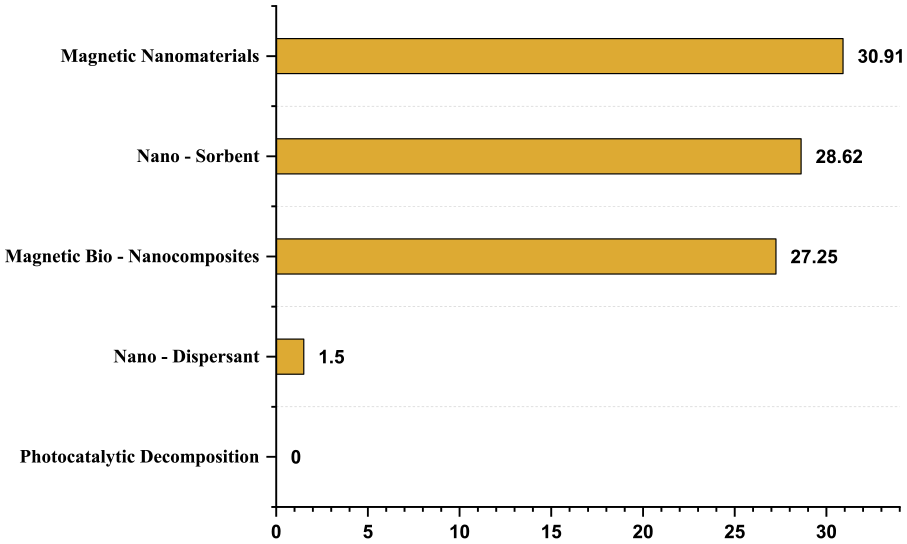
Ranking of different nanotechnology-based oil spill remediation strategies considering only reusability and recovery and assigning equal weightage to both factors.
Balancing reusability, recovery and cost
In the third scenario, where equal importance was given to reusability and recovery, with additional emphasis on cost, magnetic nanomaterials stood out as the preeminent marine oil spill remediation technique (equation (3)).
The subsequent rankings mirrored those observed in Scenarios I and II, with nano-sorbent, magnetic bio-nanocomposites, nano-dispersant and photocatalytic decomposition following suit. This case is pertinent in situations where a judicious balance between economic considerations and environmental efficacy is essential. This could be applicable in regions where cost-effectiveness is a priority without compromising the importance of reusability and recovery. Figure 6 displays the ranking of different nanotechnology-based oil spill remediation strategies considering all three factors and assigning more weightage to cost and equal weightage to others
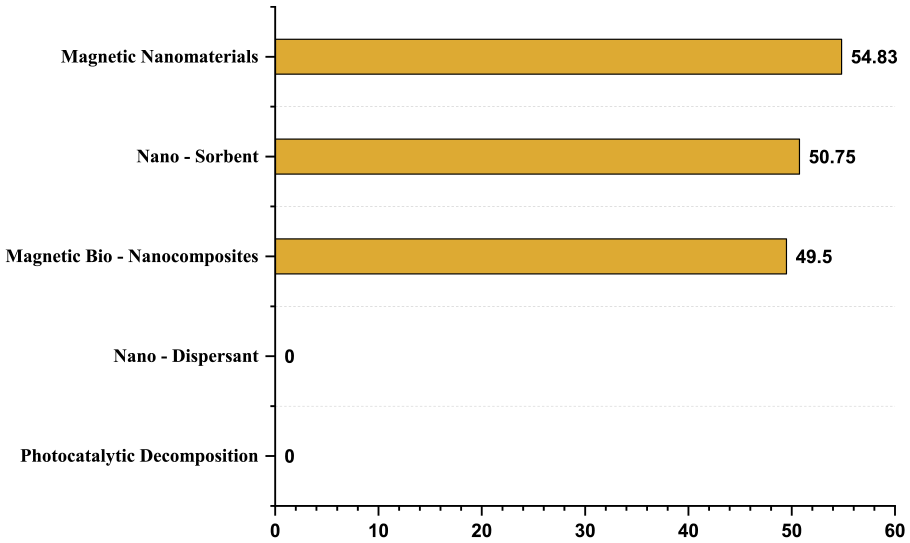
Ranking of different nanotechnology-based oil spill remediation strategies considering all three factors and assigning more weightage to cost and equal weightage to others.
The outcomes of the study unambiguously indicate that for all different cases, MNPs emerge as the most effective nanotechnology-based remediation technique. The subsequent techniques in order of effectiveness are nano-sorbents, bio-magnetic nanocomposites, nano-dispersant and photocatalytic decomposition. The analysis may have several other parameters for ranking purposes such as environmental adaptability, EE, etc. In addition, the cost is purely material based and can include various other possibilities such as cost varies from location to location and also depends on manufacturing technique, material availability and transportation costs, none of which can be easily found in the open literature.
However, the current manuscript proposes that the MNP can be employed in combination with Booms and Skimmers. The advantage of using MNPs in combination with booms and skimmers is that it may increase the efficiency of the clean-up process. The nanoparticles are highly effective at binding to oil, so they can help to remove more of the oil from the water. Additionally, the nanoparticles’ magnetic qualities could make it simpler to gather them using magnetic booms and skimmers. Magnetic booms are floating barriers that can be deployed around an oil spill to contain it and prevent it from spreading. The booms are designed to be magnetic, so they can attract and collect the MNPs that have bound to the oil. Once the nanoparticles are collected, they can be removed from the water using a magnetic skimmer. Booms and Skimmers are considered effective methods for cleaning up oil spills because they are relatively simple and can be deployed quickly. Booms and skimmers have a minimal environmental impact and do not use chemicals or other substances that may harm marine life or ecosystems. However, it is important to note that booms and skimmers may not be the best choice in all situations and the choice might differ considering various other factors involved. Future researchers and environmentalists are encouraged to add other factors as mentioned before and also include advanced data analytics like artificial neural networks and deep learning strategies to help in the choice of correct oil spill response method specific to operating conditions and proximity to coral reef and human habitat.
Conclusion
The review article offers a thorough exploration of various oil spill remediation techniques, focusing exclusively on marine oil spills. It encompasses both traditional methods and emerging nanotechnology-based approaches, providing a clear roadmap for selecting optimal nanotechnology-based methods for marine oil spill remediation. The analysis centres on three critical factors: reusability, recovery and cost. Notably, magnetic nanomaterials and nano-sorbent techniques emerge as promising methods for marine oil spill clean-up, showing potential for effective nanotechnology-based environmental remediation. Conversely, nano-dispersant methods prove costly without offering recovery or reusability benefits, whereas the low-cost photocatalytic biodegradation method lacks high recovery rates or reusability. The manuscript advocates for the synergistic use of MNPs with Booms and Skimmers to enhance marine oil spill clean-up outcomes. It also underscores the shift towards preventing marine oil spills and strengthening transportation reliability.
While recognizing its limitations, the article serves as a catalyst for ongoing exploration in the vital field of marine oil spill remediation. Limitations include the inherent constraints in the available literature, particularly the scarcity of comprehensive and quantifiable data in certain areas. The exclusion of other potentially relevant factors due to data limitations may influence the generalizability of our findings. Furthermore, the absence of specific regional considerations in the analysis highlights a notable gap, indicating the need for future research to incorporate localized factors into oil spill remediation decisions, such as regional ecosystems and regulatory frameworks.
Looking towards future directions, this review suggests that future research endeavours should explore the integration of regional nuances into the evaluation of oil spill remediation techniques, offering a more tailored and context-specific approach. Additionally, the potential role of artificial intelligence in decision-making for marine oil spill responses is an area warranting further investigation. As the field progresses, efforts should be intensified to develop cost-effective methods for nanomaterials and sorbent synthesis, facilitating scalable production and application. The manuscript highlights the significant potential demonstrated by oil–water separation and oil sorption applications for nanoparticles in the context of marine oil spills.
Footnotes
Declaration of conflicting interests
The authors declared no potential conflicts of interest with respect to the research, authorship, and/or publication of this article.
Funding
The authors received no financial support for the research, authorship, and/or publication of this article.
