







Abstract
Despite plenty of research recently conducted, household food waste still has not been comprehensively investigated. In view of this, we systematically reviewed the literature on this topic (using VOSviewer), made content analyses and identified several issues in these studies. This study aims to provide an in-depth review on household food waste research by highlighting the research gaps. Our findings indicate that the recent studies on household food waste can be broadly categorised into three interconnected segments: definition of food waste, cause analysis of household food waste and strategies for reducing household food waste. It was found that targeted strategies could reduce food waste by up to 27.85% in some regions. In addition, intervention strategies reduced total household food waste and avoidable food waste by 31% and 30%, respectively, showing excellent performance. This review highlights the importance of targeted research on consumer behaviour and regional conditions in reducing household food waste, as well as the necessity of working out solutions to household food waste within a common interest community.
Keywords
Introduction
The United Nations Food and Agriculture Organization (FAO) reported in 2023 that food valued at over 1 trillion USD was lost or wasted. Approximately 130 million tonnes of food is wasted annually, contributing to 30% of total global food production (Xue et al., 2017). Therefore, it is imperative to deeply understand food wastage and its consequences as addressing household food waste plays a crucial role in sustainable development.
Moreover, wasted food accounts for the depletion of 24% of world’s freshwater resources used in food production and preparation (Kummu et al., 2012). Food wastes also contribute to approximately 440 million tonnes of carbon dioxide equivalent greenhouse gas emissions, accounting to 8–10% of the global total (Scherhaufer et al., 2018; Skaf et al., 2021). Research indicates that on one hand, food wastage is widespread and significant, whereas on the other hand, nearly 800 million people are facing the challenge of food scarcity (de Alimentos, 2019). Therefore, studying the causes and current status of food waste is critically important. It is important to note that a substantial part of food waste is generated within household settings; therefore, it is crucial to investigate household food waste issues (Jörissen et al., 2015; Schanes et al., 2018). We endeavoured to identify literature pertaining to household food waste, and subsequently, through the analysis of inter-article relationships and developments within this field, we sought new research directions to study household food waste.
Numerous recent studies are available on household food wastage (Reynolds et al., 2019). Some studies focused on defining food wastage and assessing its impact (Parfitt et al., 2010; Popat et al., 2021), whereas other studies analysed the reasons for food wastage by consumers and examined consumer behaviour-related and consumer environment-related factors (Evans, 2011; Stancu et al., 2016). Various solutions have been proposed to address consumer-generated food waste, including raising consumer awareness and educating them about the issue of food waste, improving food labelling and packaging to reduce misunderstanding and wastage and encouraging sustainable purchasing and food storage practices. These strategies aimed to reduce food waste by altering consumer behaviour (Katare et al., 2017; Schanes et al., 2018). Research studies conducted from a policy-making perspective indicated that policy interventions are vital in reducing food waste within households (Nabi et al., 2021).
However, these review studies focused solely on specific aspects of household food waste practices, impact of policies or strategies for reducing food waste (Schanes et al., 2018, Zhang et al., 2023). these studies lack in-depth content analysis, which to some extent has failed to provide a comprehensive overview of research conducted on household food waste. Therefore, this study conducted a more comprehensive quantitative analysis of household food wastage-related literature, thereby providing an overview of progress in research and key issues in household food wastage.
The contribution of the present study is threefold. Firstly, it clarifies the definition of household food wastage. Secondly, it delivers an overview of progress in research and key issues in diverse household food wastage-related domains. Lastly, it presents the theoretical and practical significance of findings.
The study is organized as follows. The bibliometric methodology used in this study is described in Bibliometric Methodology. The findings of the bibliometric analysis are presented in Descriptive and Bibliometric Findings. The generation and development of household food wastage is discussed in Emergence and Evolution of Household Food Waste Research. In Content Analysis of Thematic Areas, various research branches are outlined based on a comprehensive literature review, building upon the content of The Generation and Development of Household Food Wastage. Finally, conclusions, highlights, key issues, and future research directions are presented in Conclusion.
Bibliometric methodology
Literature review can be conducted using various methods, such as systematic reviews, meta-analyses, content analyses and bibliometric citation analyses (Ahmad et al., 2020). This study uses a research approach that integrates bibliometric citation analysis with content analysis (Shen et al., 2023). This approach enables the determination of advancements in this particular research area and the identification of any shortcomings in existing studies. We delineated a three-step process (detailed below) to conduct a bibliometric literature review (Figure 1).
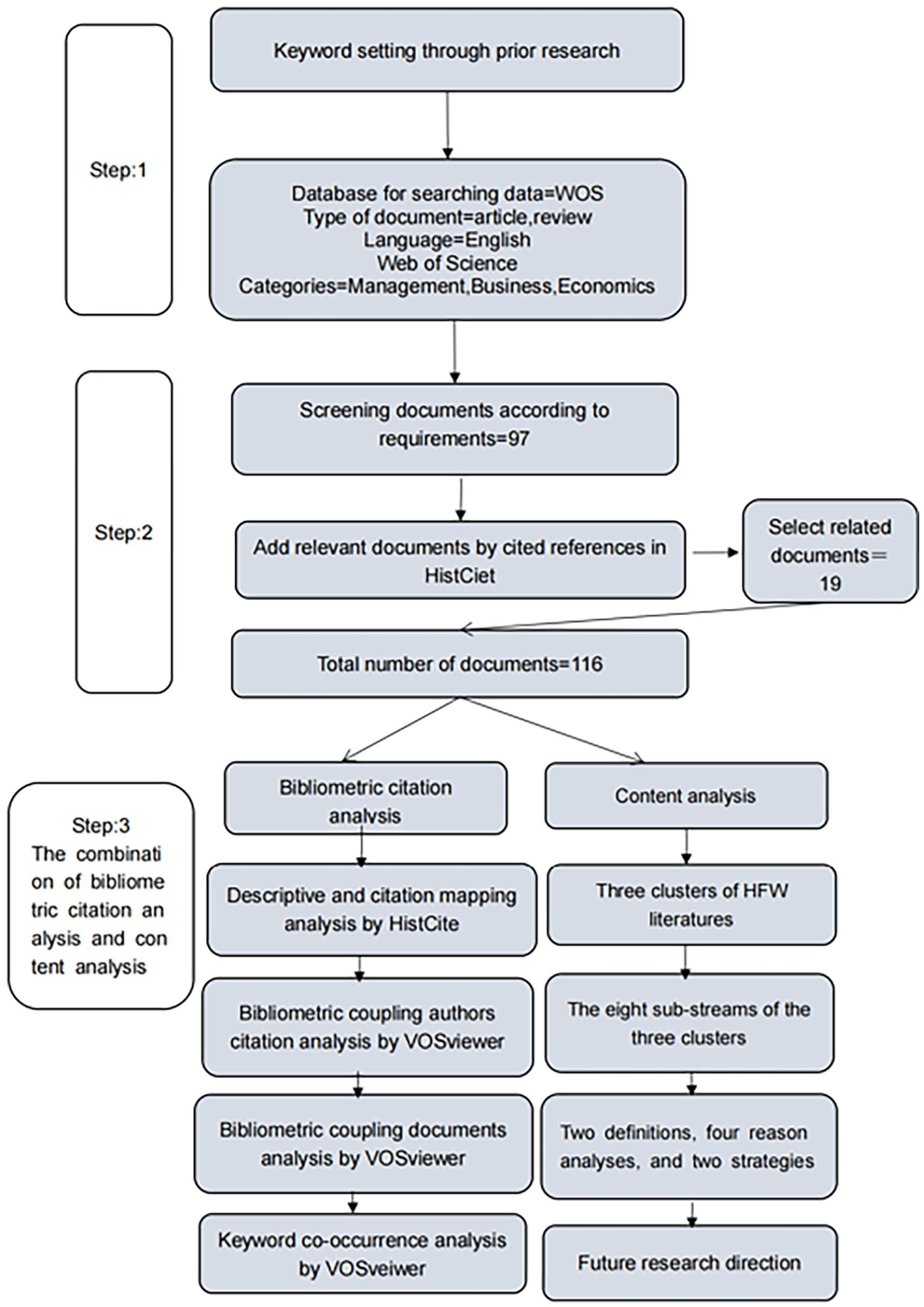
Three-step process for bibliometric literature review.
Step 1: Identifying publications
Firstly, we searched the articles related to household kitchen waste by using specific keywords (as mentioned in Table 1) in the Web of Science (WoS) Core Collection. WoS is a widely utilised global database that offers an extensive range of scientific literature and citation-related information. In the WoS database, Boolean operators, namely, ‘AND’ and ‘OR’, are used to effectively narrow down or broaden the search scope in order to locate relevant research articles (Chadegani et al., 2013). Through the combination of these diverse keywords, we further identified research articles that meet analysis criteria set in the present study. A total of 97 articles met the criteria for this study.
Household food waste related keywords used in present study.

Step 2: Sample screening
The retrieved article selection was further refined based on specific keywords or research themes (Table 1). Thereafter, a more elaborate literature selection was conducted based on the research topics. We further refined article selection by narrowing down the search to studies exploring the effect of consumer household economics and management on food waste generation. The articles on household food waste that had a significant number of citations were filtered first, and the ones with fewer citations but published in Q2 or higher ranking journals were also considered. Setting a citation threshold (e.g. 18 or more citations) can be used to measure the influence and significance of a research article (Chan et al., 2012). Additional research articles with high relevance to these were subsequently sought in HistCite (HistCite Software LLC, New York, USA). After examining article impact, citation count and journal impact factor in HistCite, we considered 19 pertinent and high quality articles for the present study, which were then downloaded from WoS database for further analysis.
Step 3: Bibliometric and content analyses
VOSviewer is key software for visualising clustering solutions (Ye et al., 2021). Using this software, articles can be categorised based on cluster analysis and common word analysis can be conducted on keywords frequently appearing in the literature to clarify study dynamics (Van Eck and Waltman, 2017). As the causes of household food waste generation are complex, recent studies have analysed them from various perspectives, such as analysing why consumers generate food waste and exploring effective strategies to reduce household food waste generation, among others (Ananda et al., 2021; Elmenofi et al., 2015; Stancu and Lähteenmäki, 2022). Therefore, a more comprehensive content analysis must be conducted to deeply understand household food waste-based research themes as well as overall progress and key issues in these research studies. This study employs bibliographic coupling and co-citation networks to explore research progress in the field. Bibliographic coupling is suited for analysing the latest research trends as it reflects more immediate research activities and interests. In contrast, co-citation networks more prominently display the long-term academic consensus that has been formed. By integrating both bibliographic coupling and co-citation networks, a more comprehensive understanding of the field’s research developments can be achieved (Biscaro and Giupponi, 2014). Content analysis refers to the detailed reading of articles included in citation mapping exported from HistCite, aiming to understand the progress and characteristics of research related to household food waste. Building on this, we further incorporated 116 (97 + 19) articles selected for this study and other related literature, followed by cluster analysis to ultimately summarise advancements and shortcomings observed in research studies conducted on household food waste.
HistCite and VOSviewer can be combined to filter important documents and extract and identify keywords, co-authors, co-occurrence of keywords, etc. (Shah et al., 2019). The keywords identified can be used to further understand research objectives (Shah et al., 2019). The research articles were searched on WoS, which is the most feasible database to study sustainable consumption behaviour (Vergura et al., 2023). The versions of HistCite and VOSviewer utilised in this study were Pro 2.1 and 1.6.18, respectively.
Descriptive and bibliometric findings
This section provides a comprehensive discussion on the current state of research conducted on household food waste. It includes an analysis of publication volume, authors’ influence, characteristics and impact of journals, and main regions conducting research on household food waste. Additionally, relationships between authors and between research articles obtained through bibliographic coupling analysis are described. Finally, an evaluation of the evolution of household food waste research is presented.
Descriptive findings
Figure 2 shows that 116 research articles were published from 1991 to 2023. Fewer than 10 research articles were published per year from 1991 to 2015; however, since 2021, the number of research articles published per year exceeded 10, indicating that research on household food waste is receiving increased attention (Figure 2): Table 2 lists the top 10 influential authors based on the total local citation score (TLCS): Lahteenmaki L, Stefan V, Tudoran AA, van Herpen E, Marsh E, Parry AD, Quested TE, Stunell D, Haugaard P and Stancu V.
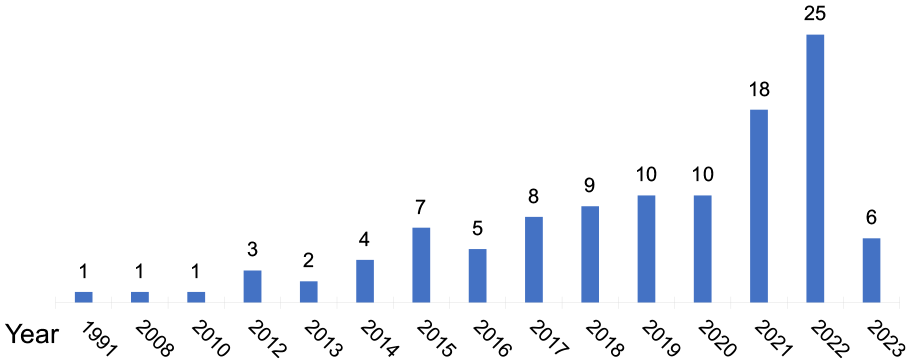
Household food waste related research articles published per year (1991–2023).
Top 10 influential authors from 116 publications.
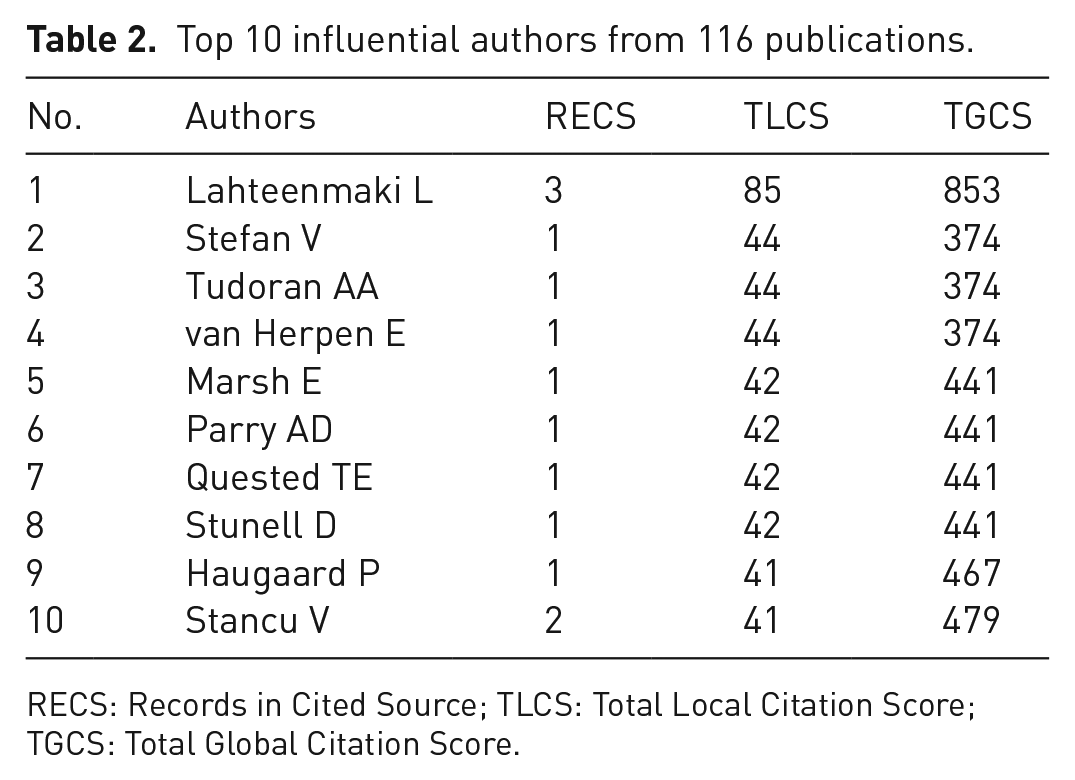
RECS: Records in Cited Source; TLCS: Total Local Citation Score; TGCS: Total Global Citation Score.
Table 3 presents the main researchers studying household food waste and the related research articles. However, a difference was noted in the top 10 authors listed in Table 2 and the top 10 authors listed as per the LCS. As per the TLCS, Stefan V, van Herpen E, Tudoran AA and Lahteenmaki L were authors with the first ranking.
Top 10 influential articles amongst 116 household food waste related research publications.
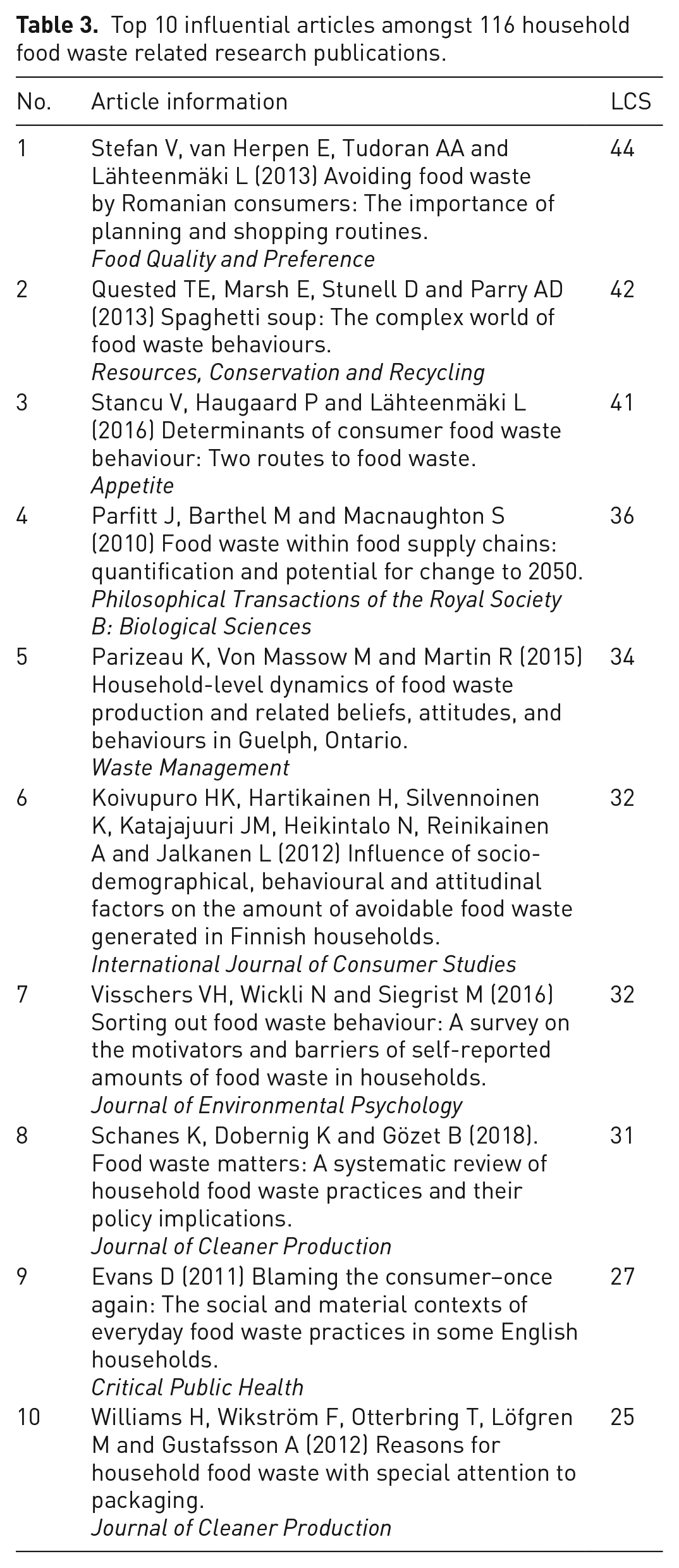
We chose the top eight journals from Table 3 and consolidated the information presented in Table 4. These journals cover various research fields, such as biotechnology, sustainable development, consumer behaviour, environmental psychology and food science. Therefore, household food waste research is a complex field requiring comprehensive analysis across multiple disciplines.
TLCS-based journal ranking.
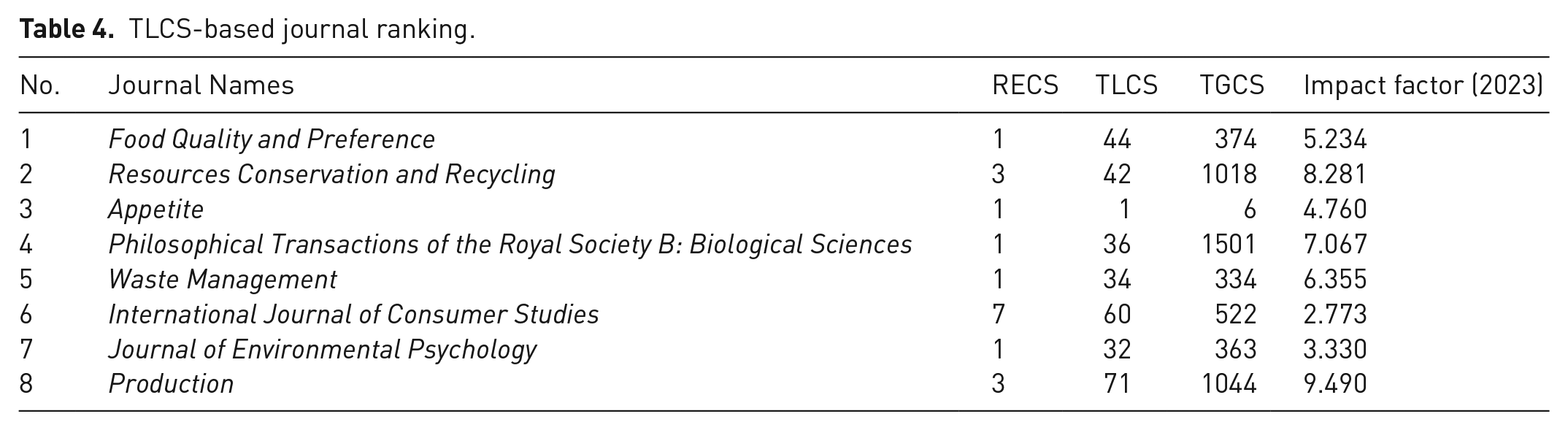
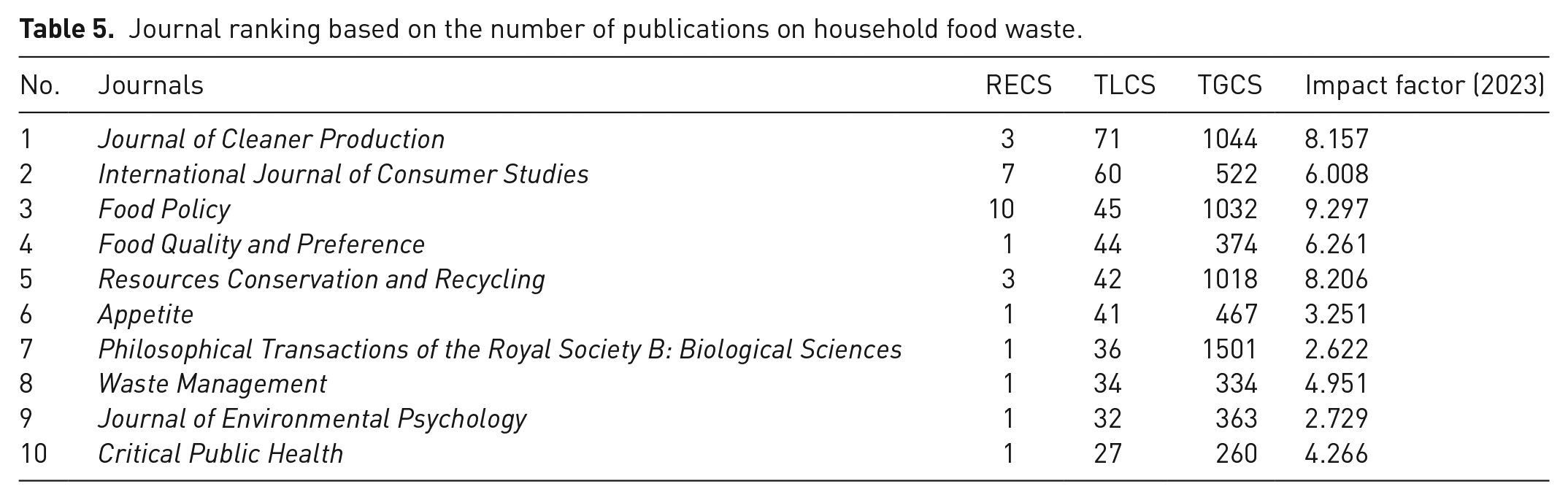
Thereafter, we ranked these journals as per the TLCS criteria (Table 5). Studies published in these journals investigated various consumer behaviour aspects, including psychological, social, cultural and economic factors. Social environment and sustainable development related research studies are also included in these journals. Therefore, the study of household food waste is multidisciplinary.
Journal ranking based on the number of publications on household food waste.
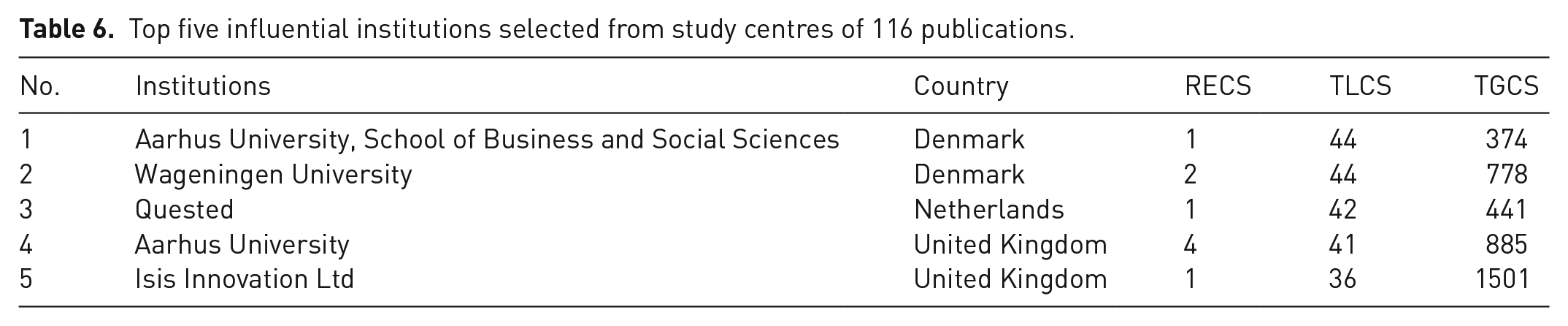
Two measures, TGCS and TLCS, were used to analyse leading institutions in the household food waste research field. We ranked the top five institutions based on the TLCS (Table 6). The results indicated that European countries, such as Denmark and the United Kingdom, are leading in the household food waste-related research studies.
Top five influential institutions selected from study centres of 116 publications.
Bibliographic coupling analysis of authors using VOSviewer
Using VOSviewer, we did bibliographic coupling analysis considering authors as the unit of analysis, using the fractional counting approach. The minimum number of publications by an author was set to 3 and the minimum number of citations was set to 50. Ten authors were observed to meet this threshold, and four groups of authors were formed after bibliographic coupling analysis (Figure 3).
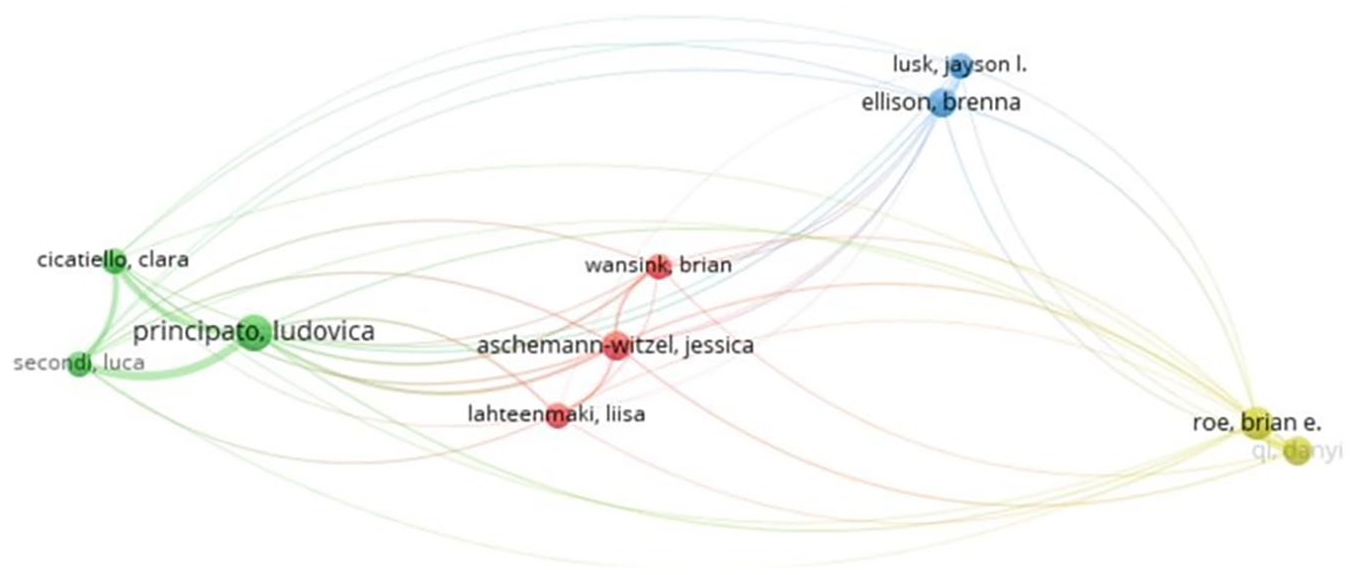
Bibliographic coupling analysis with authors.
The Witzel-led group (red) explored how consumer behaviour and attitude contribute to food waste and proposed consumer behaviour-based solutions; this group was later joined by Wansink and Lahteenmaki. As these researchers focused on food waste-reducing measures, we categorised this group separately. In contrast, the Principato-led group (green) focused on external factors contributing to food waste generation, including the impact of COVID-19 on consumer behaviour. Cicatiello and Secondi were also a part of this group. The Roe and Qi-led group (yellow) was found to collaborate frequently for research studies. This group primarily examined the psychological aspects of food waste, particularly consumer attitude towards food wastage. The green and yellow groups specifically emphasised on examining internal and external factors contributing to consumer food waste. Therefore, we grouped them together for causal analysis. Lastly, the Ellison-led group (blue), with Lusk, explored an economic perspective of household food waste behaviour. They analysed food waste by considering it a trade-off. They observed a relationship between household food waste and societal factors, such as economic factors. Therefore, we categorised this group separately to analyse social factors. After reintegration, each of the three food waste-focusing groups had their distinct characteristics and analysed the causes and solutions of food waste from various perspectives.
Bibliographic coupling analysis of research articles using VOSviewer
We selected bibliographic coupling as the analysis type, literature as the unit of analysis and fractional counts as the method in VOSviewer (Figure 4). The threshold value for the number of citations was set to 0, which was reached by all 116 publications. By setting the citation threshold to 0, VOSviewer includes all documents for a comprehensive cluster analysis and addresses issues of incorrect classification of literature in short-term analyses, aiding in the capture of all relevant publications. This generated five clusters corresponding to distinct topics (Figure 4). Although the initial VOSviewer analysis identified five clusters, we recommend consolidating these into three more targeted clusters. Specifically, we found that the definition of household food waste and its associated analyses were multidimensional, encompassing intrinsic consumer factors, external environmental influences and the interaction between consumers and their environment. Furthermore, these studies also delve into the strategic analysis of the causes of household food waste generation.
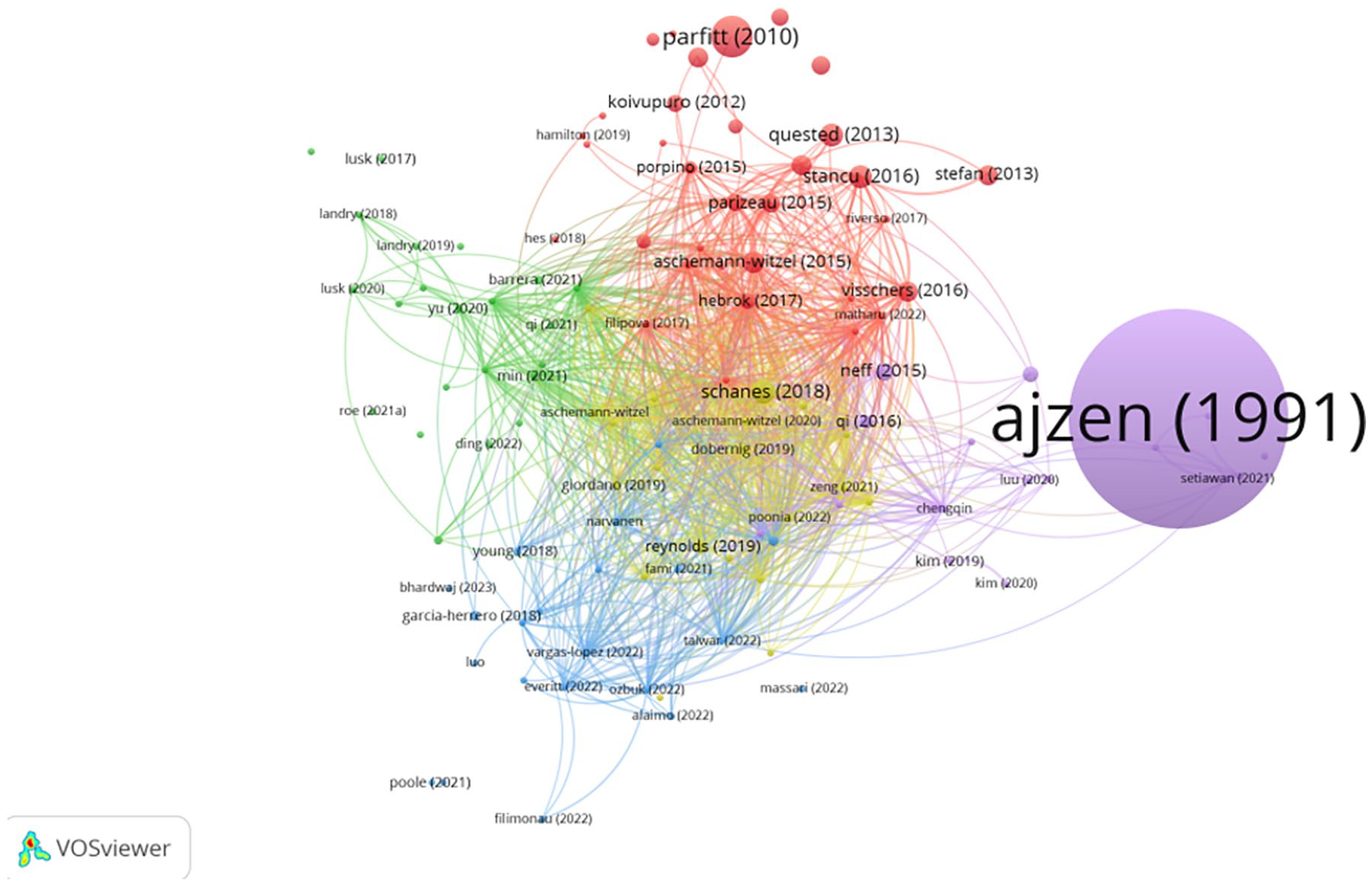
Bibliographic coupling analysis with documents.
It is worth mentioning that the Ajzen research model advanced the development of the Theory of Planned Behaviour (TPB), one of the most extensively applied models in the study of consumer behaviour (Ajzen, 2020). Consequently, while analysing the causes of household food waste generation, the TPB theory emerged as a predominant framework for interpreting consumer food waste behaviour (Coşkun and Özbük, 2020). Due to the widespread application of Ajzen’s model in this domain, it occupied a significant node in the network.
Emergence and evolution of household food waste research
In this section, the differences between food waste and food loss are explored, and a clear definition of household food waste is provided. Moreover, this section analyses the trends and characteristics of household food waste research through bibliometric relationship maps (Figure 5) exported using HistCite.
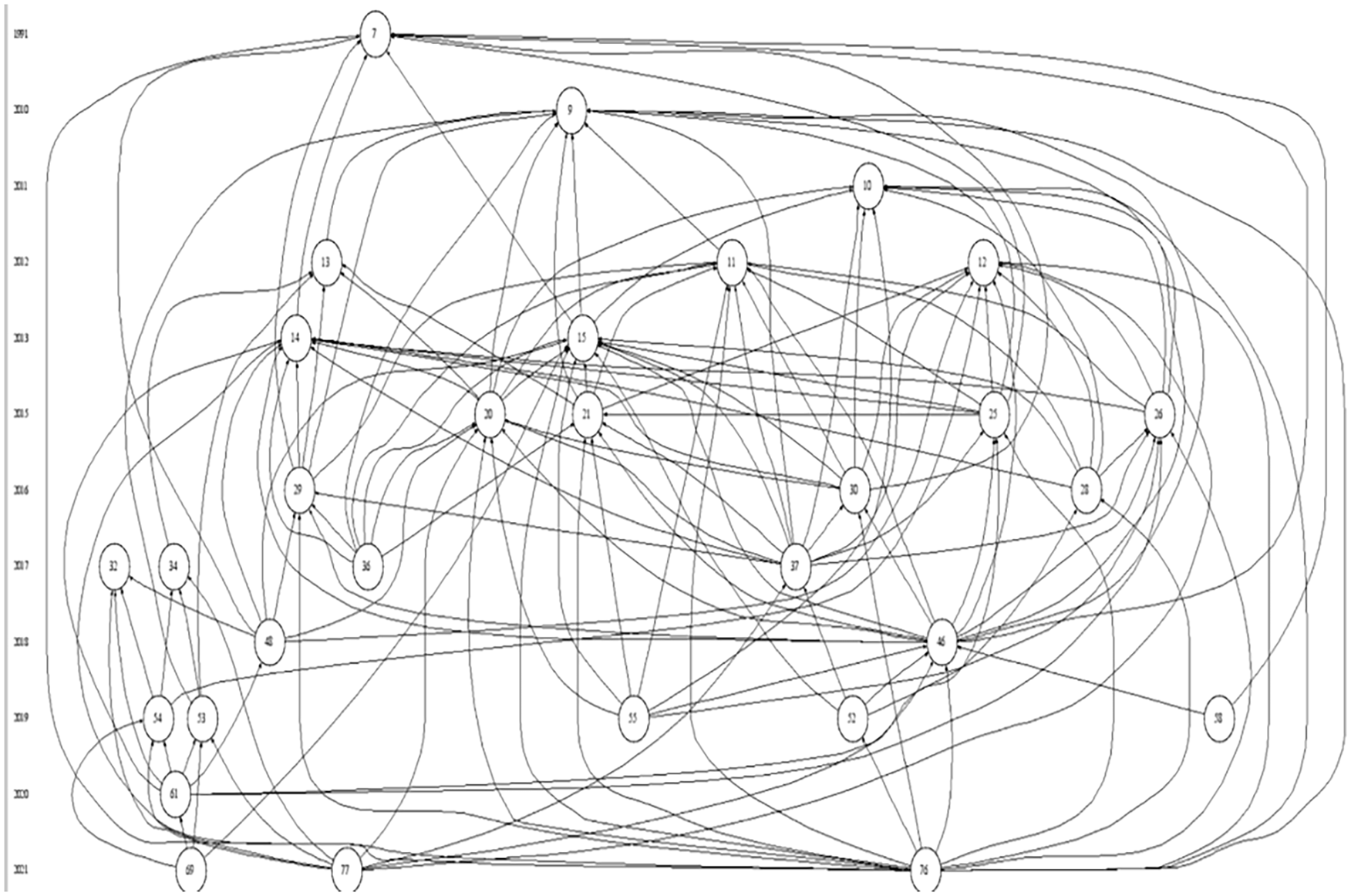
HistCite citation mapping of household food waste (top 30).
Origin of household food waste
Both food loss and food waste significantly affect food security and reducing them can allow feeding a larger population, alleviating pressure on natural resources and mitigating the adverse environmental effects of greenhouse gas emissions and biodiversity loss induced by agricultural activities in the food chain (Aktas et al., 2018). Household-generated food waste, especially in developed countries, profoundly affects both society and environment (Parfitt et al., 2010; Schanes et al., 2018; Stefan et al., 2013). Notably, consumers play a significant role in food waste generation, leading to a rise in studies conducted on household food waste (Koivupuro et al., 2012; Parfitt et al., 2010).
Notably, some studies have considered losses occurring during distribution and consumption as food waste too (Kummu et al., 2012). According to a similar study, food waste occurs throughout the entire supply chain and constitutes a portion of food loss (Bellemare et al., 2017). In contrast, FAO has defined food waste and food loss differently based on developed and developing countries. In developed countries, the term ‘food waste’ is largely used and a greater proportion of waste occurs in the later supply chain stages. Conversely, in developing countries, greater losses are observed in the early supply chain stages, including production and processing. FAO states this behaviour as ‘food loss’. Thus, although food waste is becoming an increasingly popular research topic, its definition is not entirely standardised across the board.
Evolution of household food waste research
Consumer food waste specifically refers to food loss occurring during consumption (Halloran et al., 2014). In contrast, household food waste refers to the food portion that enters a household but is not consumed and is eventually discarded. The scope of household food waste is narrower than that of consumer food waste. In order to understand the evolution of household food waste research, we used HistCite, which allows rapid identification of interconnections amongst articles within a specialised field (Boyack and Klavans, 2010).
HistCite automatically generated 30 nodes based on the highest LCS, representing the top 30 research articles on household food waste and 141 links signifying the strength of relationships among these articles (Figure 5). Every number within a circular node corresponds to one research article and larger circular nodes indicate higher citation counts. These 30 research articles offered a comprehensive overview of the development of literature on household food waste. Food waste has consistently been a prominent study area. However, introduction of concepts, such as sustainable development goals, have led to an increase in the research studies conducted on food waste generation. Through a systematic literature review, we identified the following trends in the household food waste field.
Household food waste is the fundamental reason for food waste generation in developed countries (Parfitt et al., 2010) (with node 9 in Figure 5). Therefore (Evans, 2011) (with node 10 in Figure 5), substantial attention has been provided to understand the causes of household food waste generation, and researchers have conducted comprehensive analyses, including both individual consumer behaviour and wider societal factors. These studies have emphasised the importance of considering social elements and individual actions when studying household food waste generation. Moreover, they proposed policy interventions and interventions targeting the social and material conditions of food provision to be beneficial. Consequently, research articles specifically addressing the intertwined relationship between consumers and society have emerged, offering comprehensive analyses integrating social and consumer perspectives. In one such study (Koivupuro et al., 2012) (with node 11 in Figure 5), comprehensive analyses of consumers about household food waste generation were conducted from socio-demographic and attitude viewpoints.
However, the specific focus of consumer analyses varies across studies. These analyses can be classified into single-factor analysis, which examines individual factors in isolation, and comprehensive analysis, which considers multiple factors in combination. Williams et al. (2012) (with node 12 in Figure 5) examined the relationship between food packaging and consumer food waste (Buzby and Hyman, 2012) (with node 13 in Figure 5). Consumer food waste and its relationship with overall food waste generation was analysed. Porpino et al. (2016) (with node 28 in Figure 5) and Lusk and Ellison (2017) (with node 32 in Figure 5) conducted separate studies examining the relationship between consumers and food waste from intention and income viewpoints. However, most similar studies have comprehensively analysed the relationship between consumers and food waste generation (Parizeau et al., 2015; Secondi et al., 2015) (with nodes 20, 25 in Figure 5). Numerous studies have explored the psychological aspects of consumers and attempted to identify factors that contribute to consumer food waste. McCarthy and Liu (2017) (with node 36 in Figure 5) comprehensively analysed the relationship between society and consumers.
Schanes et al. (2018) (with node 46 in Figure 5) also comprehensively analysed the relationship between consumers and society, examining its influence on food waste. Therefore, research articles on causal analysis can be broadly classified into comprehensive analyses of consumers and integrated analyses that consider the social environment of consumers and explore consumer–societal interactions. Lusk and Ellison (2017) conducted an economic analysis of reasons for consumer food waste, explaining how utility maximisation-driven consumers’ decisions lead to ultimate food disposal.
Drawing on an extensive analysis of factors contributing to consumer food waste, several studies have discussed strategies to reduce such waste (Porpino et al., 2015). Notably, they have incorporated their findings into their conclusions, offering recommendations. However, the proposed measures are often fragmented and are not practical. Schanes et al. (2018) (with node 46 in Figure 5) and Reynolds et al. (2019) (with node 52 in Figure 5) made recommendations for reducing food waste from a policy standpoint. However, other studies have emphasised the importance of guiding consumers to address food waste issues instead of relying only on policies or economic stimuli to mitigate their wasteful behaviour. Kim et al. (2019) (with node 58 in Figure 5) highlighted that social marketing is significantly crucial for addressing food waste. Concurrently, numerous studies have conducted in-depth analyses of the underlying causes of consumer food waste to provide practical implementation strategies (Principato et al., 2021) (with node 76 in Figure 5). Such studies have offered valuable insights for developing improved strategies to mitigate food waste. Moreover, COVID-19 has led to unprecedented changes in consumer behaviour, necessitating an analysis of pandemic-specific factors contributing to food waste (Roe et al., 2021). These subsequent research articles further refine the analysis of the reasons for consumer food waste and offer a profound reference and a deeper understanding to identify and apply more informed, targeted and effective interventions to mitigate the issue.
The comprehensive analysis of existing literature revealed a clear need to understand the causes of household food waste generation and formulate specific issue-tackling measures (Schanes et al., 2018). Further in-depth analysis can enhance our understanding of fundamental drivers for household food wastage and devise targeted interventions to effectively mitigate it.
Content analysis of thematic areas
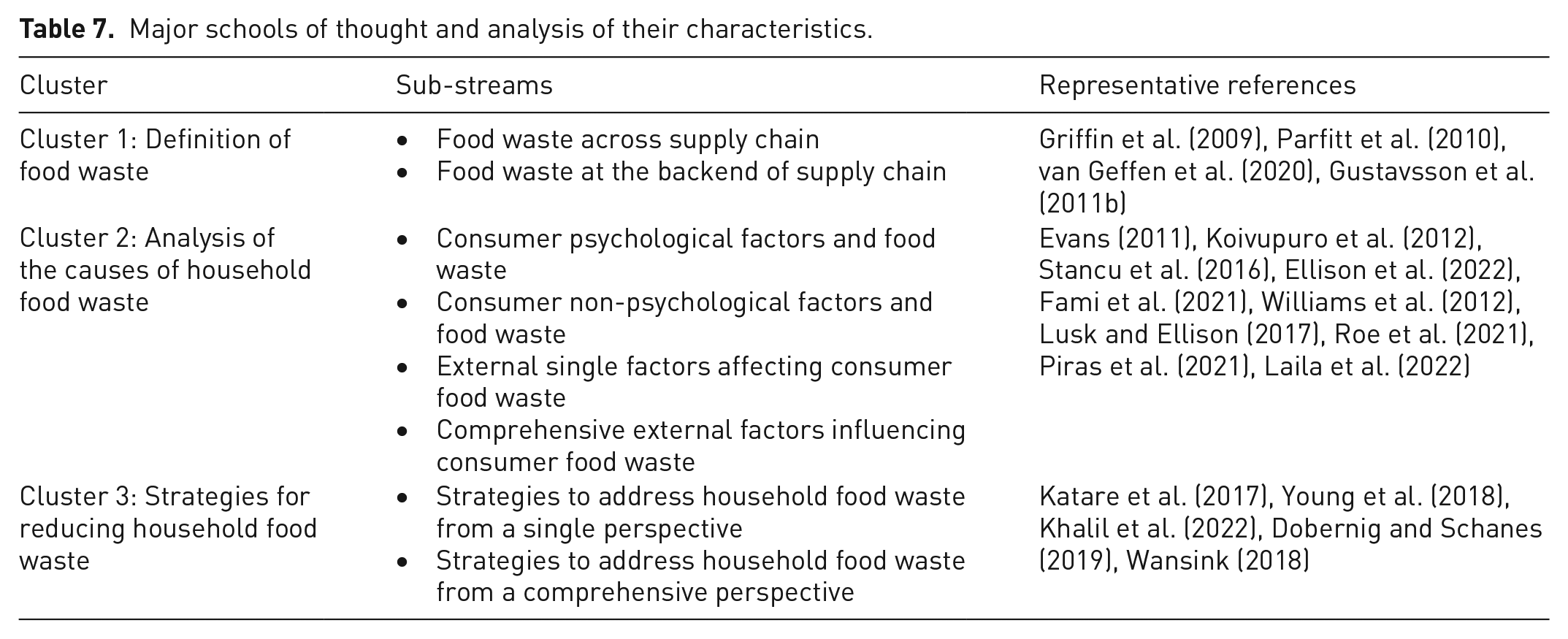
This section primarily explores the thematic connections among clusters identified in Figure 4. We conducted an exhaustive analysis of each cluster and its unique characteristics (as illustrated in Figure 6) and further identified sub-themes within each cluster. By reviewing representative articles for each theme listed in Table 7, this study delves into the characteristics and evolution of household food waste related research. Publication dates indicate that scholars, such as Griffin et al. (2009) and Parfitt et al. (2010), began exploring definitions of food waste and loss around 2009. Since around 2011, researchers, such as Evans (2012), initiated investigations into the causes of household food waste generation. Over time, researchers, such as Stancu et al. (2016) and Roe et al. (2021), studied the causes of household food waste generation from various perspectives and as notable scholars in the field, their work has been extensively cited. Scholars, such as Wansink (2018) and Khalil et al. (2022), focused on strategies to mitigate household food waste, discussing and researching from diverse perspectives. The articles cited in Table 7 were mentioned in analyses, such as HistCite and bibliographic coupling. As the external environment changed and the research scope expanded to more countries and regions, we observed a significant increase in studies related to food waste and strategies associated with the COVID-19 pandemic, particularly in 2022 and 2023.
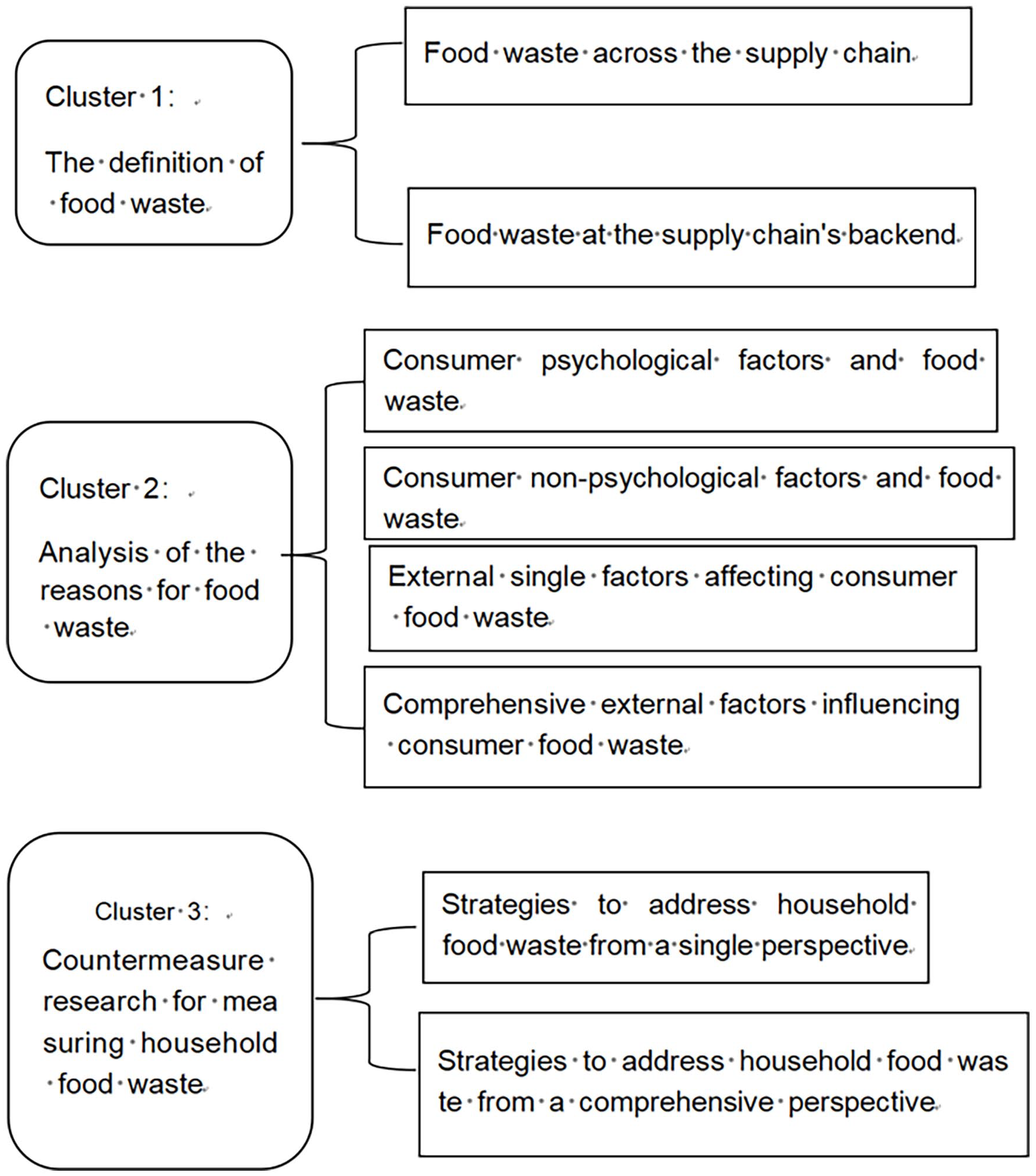
Main views of each sub-stream of food waste literature clusters.
Major schools of thought and analysis of their characteristics.
Cluster 1: Definition of food waste
The first literature category primarily focuses on the definition of food waste. Globally, universally clear definitions are lacking for both food waste and food loss (Popat et al., 2021). This ambiguity stems mainly from variations among institutions, cultural differences, disparities between countries and various other potential factors. For example, certain food components may be deemed edible or inedible as per cultural norms (Nicholes et al., 2019). The presence of certain agricultural chemicals may deem the skin of conventionally grown apples inedible, thereby resulting in wastage (Mladenova and Shtereva, 2009). Hence, as food waste definitions are evolving, a unified definition of food waste must be established.
Food waste across supply chain
Numerous studies have discussed the food waste concept to achieve a standardised definition (Govindan, 2018). Initially, food waste was deemed to occur in the production, processing, distribution, acquisition, preparation and consumption phases of the food system (Griffin et al., 2009). Food waste is food loss transpiring during distribution, retail and final consumption within the food supply chain (Griffin et al., 2009; Gustavsson et al., 2011a). Thus, food waste occurs at both production and consumption stages.
According to some scholars, while food loss and food waste definitions may differ among countries and regions, to ensure consistency across studies, we can refer grain losses and grain waste collectively as ‘food waste’ (Parfitt et al., 2010). Similarly, some studies use the term ‘food waste’ to indicate both food waste and food losses. The FUSIONS project has offered a more convenient and comprehensive definition that includes inedible food parts and does not differentiate food waste based on varying supply chain stages (Garcia-Garcia et al., 2015). Thus, based on the latest definition and its historical evolution, food that is not utilised by consumers from the production phase to the final consumption stage can collectively be referred to as food waste.
Some studies have also recently adopted a similar definition. For example, the World Resources Institute’s definition states that ‘food and associated inedible parts’ are diverted from the value chain to a stage where no further value is added. Using this definition, a research study investigated strategies to reduce food waste in developing countries (Rolker et al., 2022).
Although the definitions of food waste and food loss are still under discussion, this study has adopted a recent globally recognised definition of food waste, according to the FAO. The organisation considers all unconsumed food to be food waste.
Food wastage at backend of supply chain
With advancements in food waste research, food waste is commonly divided into the upstream stage of the supply chain and the downstream stage, which primarily involves consumers (Schanes et al., 2018; Secondi et al., 2015). Similar definitions are present in other studies. For instance, grain losses refers to losses incurred during grain production, harvesting and processing stages, whereas grain waste refers to losses incurred during distribution and consumption (Buzby et al., 2014). It is important to note that while the FAO’s definition of food loss is still not entirely clear, it has been updated, which may be relevant for further discussion in this context.
Household food waste is precisely food wastage occurring within a household. A household here is a group of two or more individuals sharing food and bearing its expenses (Ghaziani et al., 2022). Studies have also provided definitions for household food waste. According to one such definition, food waste is surplus food remaining unconsumed within a household due to the purchase of more food than what is consumed (van Geffen et al., 2020). Therefore, household food waste can be defined as all beverages and food items considered edible until a certain time point before they are discarded (Teng et al., 2020).
These studies are more often based on the definition provided by FAO. According to FAO’s definition from 2011, food loss primarily occurs in developing countries, where inadequate equipment leads to food loss during various stages, such as production, storage, packaging and transportation. This loss makes the food inconsumable. In contrast, food waste largely occurs in developed countries, generally during the food manufacturing stage (Papargyropoulou et al., 2014). Food waste-contributing factors in developed countries include overlooking best-before dates, insufficient focus on minimising waste, inadequate temperature management, leftover food and the establishment of strict quality standards (Dora et al., 2021).
Cluster 2: Analysis of causes of household food waste
The second literature category primarily focuses on analysing the diverse reasons for food waste generation, specifically from various viewpoints to identify key factors contributing to consumer food wastage. These studies also established consumer behaviour-related models to elucidate fundamental factors underlying household or consumer food waste. The subsequent section presents both intrinsic and extrinsic factors influencing consumer food waste. Additionally, the wider social environment or certain specific external factors, such as packaging or labelling, may cause consumer food waste. Therefore, studies investigating the reasons for consumer food waste can be broadly categorised into two types – studies based on internal factors affecting consumers and studies based on external factors affecting consumers.
Consumer psychological factors and food waste
Most studies analysing the reasons for consumer psychology-related food waste generation typically incorporate the TPB model (Ajzen, 2020) and include additional variables to explore how consumer attitude and behaviour contribute to food waste generation (Stefan et al., 2013). In addition to consumer psychology, some studies have explored the role of daily behaviour and social factors to understand the primary reasons for consumer food waste. While Ajzen’s TPB model highlights perceived behavioural control as a key factor, various social and habitual factors influence this control. Therefore, studies have comprehensively integrated psychological factors with the analysis of daily behaviour and social influences (Koivupuro et al., 2012). The reasons for household food waste generation were investigated by examining factors, such as household size, demographic characteristics and attitude. These factors helped gain insights into the underlying causes of household food waste generation. This approach accepts the influence of household composition, socio-demographic factors and individual attitude in shaping food waste generation behaviour within households (Parizeau et al., 2015). The relationship between beliefs, attitude and behaviour and consumer food waste has been examined. Stancu et al. (2016) conducted a comprehensive analysis by integrating the TPB model with factors, such as daily activities and socio-demographic characteristics (Porpino et al., 2016). A specific reason-based analysis was conducted by focusing on emotional attachment and food providers’ enrichment (Porpino et al., 2016). Giordano et al. (2019) examined consumer purchasing behaviour specifically related to discounted food items by investigating whether consumer attitude and behaviour contribute to further food waste.
The aforementioned studies revealed that the relationship between consumer psychological factors and food waste must be examined. However, Stancu et al. (2016) conducted the study in Denmark, whereas Evans (2011) conducted the study in Rome. Therefore, the findings of these studies may not be applicable to other countries and regions. Additionally, most studies on this topic rely on survey questionnaires, which have limitations that may affect the identification of reasons for consumer food waste (Koivupuro et al., 2012). Moreover, investigations often focus on specific populations or regions, thereby limiting the generalisability of research findings. Therefore, future research should employ methodologies encompassing a wider range of areas (e.g. feasible and universally applicable research methods would be beneficial).
Consumer non-psychological factors and food waste
Some studies have analysed food waste generation due to consumers’ non-psychological factors, whereas others have analysed consumer food knowledge and its relationship with the causes of food waste generation (Min et al., 2021). They indicated that consumers with food knowledge can significantly reduce food wastage. Consumer shopping behaviour can contribute to food wastage (Ellison et al., 2022). The present study highlights that consumers’ hesitancy to increase shopping frequency in their weekly shopping routines causes a certain level of food wastage. Therefore, appropriate stimuli motivating consumers to change their shopping frequency must be identified (Kim, 2008). Some studies have investigated the reasons for food waste arising from income and household size, whereas others examined the relationship between consumers and food waste from viewpoints, such as consumer income, marital status, household housing assets and food storage methods (Fami et al., 2021). The relationship between consumer shopping habits and food waste has also been examined (Parizeau et al., 2015). A correlation was noted between the food wastage and various factors, such as household shopping habits, food preparation behaviour and household waste management methods.
These studies indicate that besides consumer psychological factors, various other factors, such as food-related knowledge, personal consumption habits and shopping frequency and methods, significantly influence food wastage. However, these studies had various limitations. For example, Ellison et al. (2022) merely identified the causes without proposing actionable strategies to address and change consumer behaviour. Furthermore, although some studies, such as that of Fami et al. (2021), extensively investigated numerous daily factors influencing consumer food waste, they focused on female participants, limiting the generalizability of their findings. Therefore, the reasons for household food waste generation must be further explored, considering gender and daily lifestyle habits in various countries (Romani et al., 2018). Moreover, consumer daily behaviour must be explored using behavioural frameworks for in-depth analysis and research to comprehensively investigate various behaviour or factors contributing to consumer food waste.
External single factors affecting consumer food waste
While studying the relationship between consumers and the environment can offer insights into food waste generation, applying novel perspectives can give a more comprehensive understanding of consumer food waste (Schanes et al., 2018). Accordingly, researchers can uncover additional factors and dynamics contributing to food waste generation, leading to more holistic analyses and potential solutions. On analysing the relationship between food packaging size and consumer food waste, Williams et al. (2012) found that packaging functionality, size and consumer food waste were significantly associated. They highlighted the importance of considering packaging dimensions and features in understanding and addressing consumer food wastage issues. Lusk and Ellison (2017) analysed food wastage from a consumer utility maximisation perspective. The determinants of household food waste generation were examined through an economic lens. By examining food waste decisions within a framework of consumer preferences and optimisation, the study offered insights into economic factors influencing household food waste generation (Setti et al., 2016). A study exploring consumer food waste from an economic perspective also suggested that the determinants of consumer food disposal can vary with environmental changes (Ellison and Lusk, 2018). The COVID-19 pandemic profoundly influenced consumer consumption patterns (Kirk and Rifkin, 2020). Consequently, studies have examined the impact of external factors, including abrupt disruptions, on consumer food wastage-related behaviour (Roe et al., 2021).
As the reasons for food waste generation related to societal factors are being extensively analysed, key information must be further refined in future studies. Additionally, concerns, such as how to improve food packaging and other related aspects, need to be addressed. Therefore, economic phenomena contributing to food wastage must be explored (Lusk and Ellison, 2017). The number of physical stores and household food wastage are closely related. An increase in the number of retailers leads to higher food wastage levels (Landry et al., 2018). Although household food wastage has been studied extensively from various perspectives, limited research methods may have hindered a comprehensive explanation of reasons for consumer food wastage (Kirk and Rifkin, 2020). Furthermore, how the societal level can be effectively connected with consumers to improve food wastage is an area of great concern.
Comprehensive external factors influencing consumer food waste
Societal factors contributing to household food wastage include the impact of diverse social backgrounds and unforeseen events on such wastage (Thyberg and Tonjes, 2016). The impact of integrating socio-demographic factors on consumer food waste has been examined, and among several socio-demographic factors, the number of household members is a crucial player in food wastage (Koivupuro et al., 2012). Similarly, the relationship between individuals’ food wastage behaviour and their socioeconomic backgrounds has been comprehensively analysed (Monteiro et al., 2020). Age, gender and education affect food wastage (Secondi et al., 2015). Social capital and status also influence food wastage to some extent, and an upward trend in food wastage was observed in areas with lower social capital (Piras et al., 2021).
The culture within a society and material conditions surrounding consumers also affect food wastage as they permeate the entire process from production to consumption (Hebrok and Boks, 2017). Studies have indicated that infrastructure and technology impact food waste generation. Factors, such as retail density, retail characteristics and storage conditions, can cause over purchasing or food wastage (Dobernig and Schanes, 2019). Moreover, COVID-19 extensively affected household food wastage, with numerous studies investigating their relationship. The pandemic altered consumer purchasing and cooking behaviour, possibly causing changes in food wastage patterns (Laila et al., 2022). COVID-19 also led to changes in the agricultural food industry in terms of food production, storage and distribution. It has also altered food acquisition, consumption and food wastage behaviour (Amicarelli et al., 2022).
Research articles integrating various societal factors for analysing food waste mainly focused on socio-demographic elements, socio-material aspects and unforeseen social events (Chang et al., 2020). However, due to distinct national and economic development perspectives, the same conclusions may not apply to other countries. In studies examining consumer food wastage types from a socio-demographic standpoint, variations in conclusions were observed across the research locations. Therefore, separate analyses must be conducted in countries where the impact of socio-demographic factors on food wastage has not been studied yet and targeted solutions must be accordingly proposed. Furthermore, although COVID-19 has been declared over, its impact on consumer behaviour continues to persist in the short term, necessitating ongoing monitoring and investigation (Laila et al., 2022).
Cluster 3: Strategies for reducing household food waste
The third cluster includes various issues surrounding food waste generation and corresponding measures to address these issues. These studies primarily provided recommendations from multiple viewpoints, including policy and economic incentives, and suggested promoting consumer-driven food waste reduction (Govindan et al., 2017). Based on these suggestions, we proposed more strategies to address consumer food wastage. Additionally, we analysed the individual impact of specific solutions on food waste reduction and explored comprehensive approaches to food wastage minimisation.
Strategies to address household food wastage from a single perspective
Socially optimal disposal taxes, government incentives and government spending are crucial for reducing food wastage (Katare et al., 2017). Socially optimal waste disposal taxes and government incentives can minimise food wastage to the greatest possible extent if effectively implemented (Schanes et al., 2018). Economic incentives and interventions influencing consumer behaviour can be a critical player in reducing food wastage effectively (Katare et al., 2017). Food policies that improve household food utilisation and change household food-purchasing behaviour by adjusting market prices can have a relatively significant impact on household food wastage (Hamilton and Richards, 2019). The mechanisms of food wastage have been studied from a marketing perspective, particularly highlighting how changes in communication methods can effectively improve consumer food wastage behaviour (Young et al., 2018). Furthermore, interventions aimed at reducing food wastage, such as giving consumers key information regarding food acquisition and loss, can be effective as it prompts them to actively minimise food wastage (Khalil et al., 2022).
Our analysis indicates a connection between food policies aimed at improving household food utilisation and altering household food-purchasing behaviour through market price adjustments (Garcia-Garcia et al., 2015). It explains how food policies impact consumer food wastage. However, such studies rely on nation-specific data or relatively limited data sources (derived from the data). Consequently, the authenticity of findings may be somewhat influenced. Therefore, future studies can analyse primary data ’from researchers’ investigations. The latest primary data can offer more concrete and effective proposals for existing food price-related policies or regulations and on how to modify the framing of behavioural change-related information. Consumer food wastage must be reduced through effective information delivery.
Strategies to address household food wastage from a comprehensive perspective
Proposing effective strategies to reduce household food waste requires a more comprehensive analysis. For example, some studies have investigated the causes of household food wastage and categorised them into three stages: shopping, storage and consumption. Accordingly, they have proposed three specific solutions (Wansink, 2018).
Moreover, addressing the food wastage issue requires the comprehensive application of intervention measures, including information dissemination, food management technologies and policies (Reynolds et al., 2019). A study has shared strategies to tackle fruit and vegetable wastage in households. Collaborative efforts amongst stakeholders are essential for addressing the food wastage issue, given the absence of management tools and control over actual demand and inventory (Guarnieri et al., 2021). Comparative studies have also highlighted the need for implementing comprehensive measures. For example, infrastructure and technology have some influences on consumers’ food shopping and storage practices, necessitating improvements in food storage technologies and associated facilities (Dobernig and Schanes, 2019).
To formulate solutions, the quantity and types of food wastage in households must be accurately determined. However, no precise standard is available yet for such measurements, leading to a lack of comprehensive and up-to-date data regarding unused food (Yu and Jaenicke, 2020). Therefore, to design improved intervention measures, more accurate data are a must (Canali et al., 2016). Future studies can contribute by offering data or developing precise measurement methods for quantifying household food wastage (Canali et al., 2016). Furthermore, methods to address food wastage can be comprehensively implemented with the active involvement of government, retailers and households, establishing a mutually beneficial relationship among these stakeholders (Wansink, 2018). This calls for ongoing exploration and provides new avenues for future research.
Conclusion
Theoretical implications
The academic contribution of this study lies in two theoretical ways. Firstly, through a comprehensive analysis, it provides a clear definition and understanding of theories conceptualising the origins of household food wastage. The terminologies of food waste and food loss vary across countries and regions. In this study, for consistency, the FAO’s definition of ‘food waste’ was adopted to encompass all the losses occurring in the supply chain, including consumer-generated losses. Household food wastage refers to the surplus generated within households when not all food is consumed for various reasons. This clarification helps establish a common framework for the research on this phenomenon.
Secondly, this study offers insights into various perspectives from which household food wastage research has been conducted. Through cluster analysis, we observed that recent studies mainly focus on the psychological aspects of consumers (Thelwall, 2008). However, the following two aspects should also be further investigated: the influence of different social backgrounds on food wastage and the non-psychological factors of consumer behaviour. In future studies, an analytical framework can be constructed for exploring non-psychological factors, so as to specifically analyse various causes or mechanisms of food waste generation. Additionally, to find out sustainable solutions within a common interest community, studies on countermeasures should be conducted to explore the relationship between consumers and society.
In summary, this study deepens the understanding of the causes of household food wastage and its countermeasures, offers insights into various viewpoints in the existing studies and emphasises the need for the further exploration of food wastage measurements.
Practical implications
The main study insights are as follows. Firstly, the social context must be considered when making decisions. Although economic incentives or penalties can partially reduce household food wastage, policymakers, whether governmental or retail, should take the local social background into consideration and ensure that the policies prioritise the interests of as many individuals as possible. Secondly, targeted measures can be formulated. By analysing the local social factors that significantly affect food wastage, the corresponding measures can be developed to specifically address the most pressing issues.
Future research directions
The findings indicate that studies on responses to household food wastage and methods for measuring such wastage are still in their early stages. This literature review can offer valuable insights into future research on household food wastage and provide guidance for addressing this issue.
The key insights derived are as follows. Firstly, although there are numerous analyses on the causes of household food wastage, the accuracy of them is limited due to research instruments, which therefore should be refined. Secondly, most studies focus on examining the causes of food wastage, while paying inadequate attention to countermeasures, which should be explored and developed to effectively reduce household food wastage. Thirdly, studies on countermeasures require robust data support, such as accurate measurements of food wastage amount. However, the existing measurement methods are limited. Therefore, future studies should consider developing improved methods for food wastage measurement and proposing specific measures based on the results. Lastly, given that household food wastage research is mostly conducted in regions such as Europe and the United States, more regions and countries should be covered in future studies, which will contribute to a more comprehensive understanding of global household food wastage. We observed that the relevant studies from 2012 to 2022 consistently highlight the necessity of conducting more comprehensive research, covering more regions and countries, with comparative analyses between different countries, regions and urban and rural areas (Koivupuro et al., 2012; Reynolds et al., 2019; Özbük et al., 2022).
Overall, it is necessary to conduct further research to enhance the cause analysis accuracy of household food wastage, explore practical countermeasures, improve measurement methods and expand research efforts to more regions and countries.
Research limitations
Firstly, HistCite is limited to data from the WoS core collection and cannot analyse data from other sources, such as Google Scholar or Scopus. Consequently, key research articles may have been overlooked, leading to incomplete results. Secondly, bibliometrics often considers highly cited articles as indicators of influence, which may lead to newer but significant articles not being adequately analysed. This limitation can affect the comprehensiveness of the findings. Thirdly, some overlap in the content may have occurred across the research genres. For example, research articles investigating the causes of food wastage may also have focused on measurement and countermeasures. Thus, further studies on the causes of household food wastage are needed to gain a more comprehensive understanding.
Furthermore, the selection of articles and comparative analysis of results may be subject to limitations due to database constraints. This study primarily utilised the WoS database for literature collection, and future research should consider other databases, including Scopus and grey literature. Additionally, subjective judgements may influence the entire analysis process. Therefore, we recommend further advancement in bibliometric research on household food waste to overcome these limitations. To address these constraints more thoroughly, future studies could consider employing methods, such as meta-analysis. These methods can cover a broader range of databases and sources of information, allowing for a more comprehensive analysis of the literature.
