







Abstract
Grape stem is a winery by-product that it is currently disposed as waste or at best as soil conditioner. However, it is rich in fibres and polyphenols which makes it interesting for animal feeding. In this regard, rabbit farming emerges as a target livestock farming since fibre content is essential in rabbit’s diets for preventing digestive troubles and polyphenols are associated with improved performances in animals due to their antimicrobial and antioxidant activities. This study aims to assess the suitability of a grape stem-based ingredient for rabbit feeding. The stem was dried using flash drying technology to prevent rapid spoilage and stabilise the ingredient. Then, its nutritional value was evaluated resulting in a high fibre (>40%) and polyphenol (>6%) content ingredient with antioxidant and antimicrobial activity against Staphylococcus aureus. A feed efficiency trial was conducted and inclusion rates of up to 10% of grape stem-based ingredient did not affect animals’ mortality, average daily feed intake, daily gain or feed conversion ratio. In conclusion, grape stem-based ingredient arises as a secondary feedstuff for cuniculture reducing the dependence on other fibre sources, such as cereals or sunflower hulls. This could also contribute to reduce the environmental footprint of the wine sector by giving a second life to an existing waste, while generating a new activity based on circular economy.
This is a visual representation of the abstract.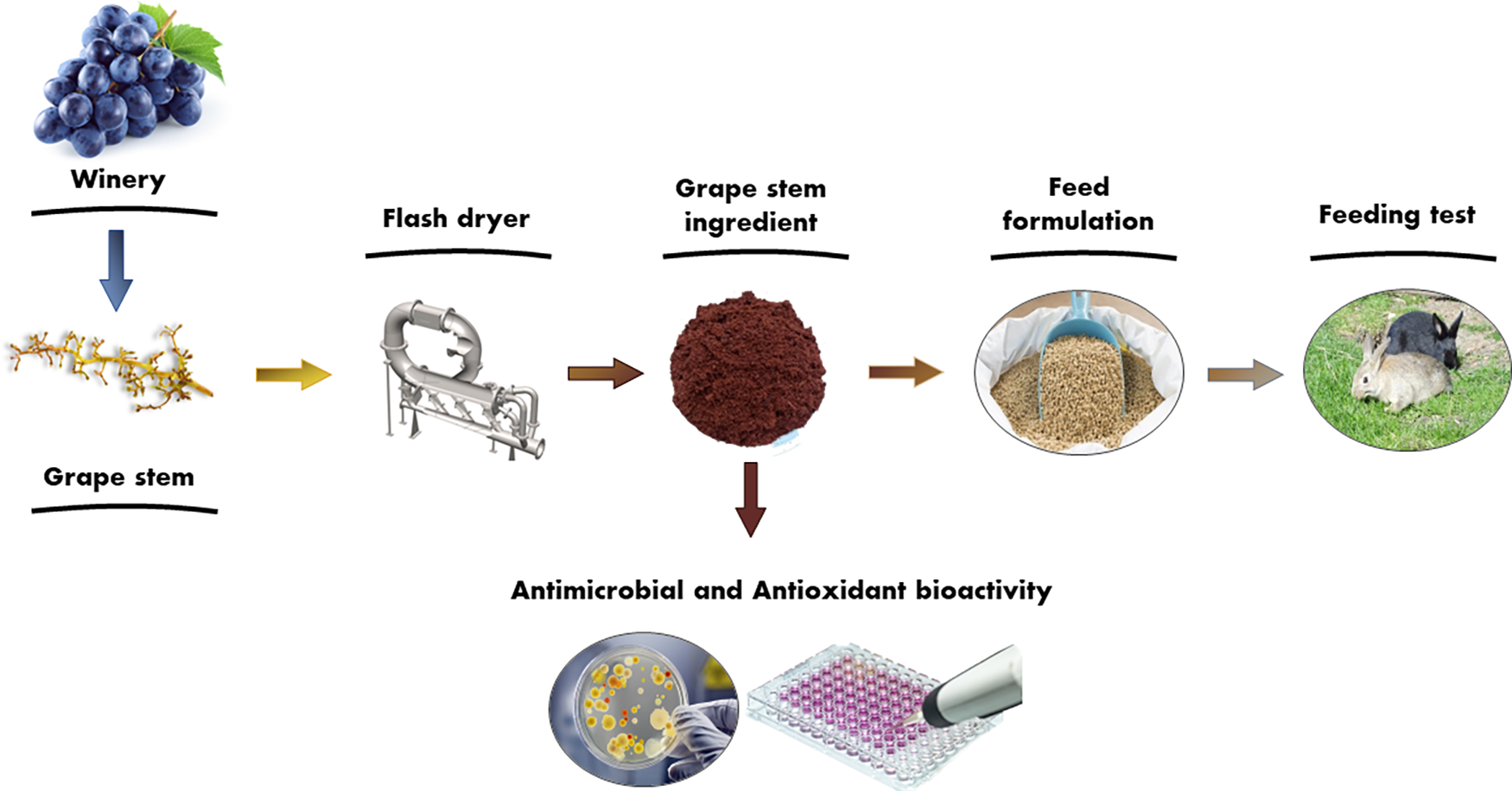
Introduction
The winemaking process produces large quantities of organic by-products such as grape pomace, seeds, skin or stems, wine lees or vine shoots (Sánchez-Gómez et al., 2017). This study is focused on grape stems, which represent about 7% w/w of the total weight of grape (Ahmad et al., 2020). Grape stems are rich in fibres, such as cellulose, hemicellulose and lignin, as well as in polyphenols (Blackford et al., 2021, Gouvinhas et al., 2018, Pintać et al., 2018, Rodríguez Montealegre et al., 2006). Although there are several studies on the potential application of grape stem due to their antioxidant properties (Anastasiadi et al., 2012, Rajha et al., 2014) or as a source of fibre (González-Centeno et al., 2010) or protein (Rajha et al., 2014), this by-product is currently managed as a waste or used as a direct soil amendment (Ferrari et al., 2019). On the other hand, the scarcity of raw materials for animal feed formulation makes necessary to search for new alternatives to current ingredients, with less external dependence and environmental impact.
Data available in the literature show that it contains flavan-3-ols, mainly flavonoids and stilbenes, which demonstrate significant antioxidant properties (Gouvinhas et al., 2020). This phenolic composition of grape stems gives them a wide range of biological and physiological effects such as anti-allergic, anti-inflammatory, antithrombotic, antioxidant, antimicrobial (antiviral, antibacterial, antifungal) and modulators of various enzyme systems (Dias et al., 2015, Gouvinhas et al., 2018, Leal et al., 2020, Poveda et al., 2018). These biological and physiological effects imply a series of healthy effects on the organism such as its activity as an anticarcinogenic, cardioprotective, dermo protective, hepatoprotective and neuroprotective agent (Saha et al., 2019). Thus, the high polyphenol content, associated with its high fibre content, makes it very interesting as a new fibre-rich functional ingredient for animal feed.
In this regard, rabbit farming is emerging as a target livestock farming, as the fibre content of rabbit’s diets is essential to prevent digestive troubles (Gidenne, 2015). Rabbit farming entails some risk factors that are associated with high mortality rates. One of the main risk factors in rabbit farming is nutritional and water imbalance (Szendrő et al., 2016) and the main diseases in rabbits are those affecting the digestive system (Gleeson and Petritz, 2020). Moreover, phenolic compounds from grape by-products in the diet have been associated with improved performances in farm animals due to their antimicrobial and antioxidant activities (Hassan et al., 2019). Consequently, the use of a new fibre-rich ingredient from grape stems could have an immuno-stimulatory effect on the animal.
However, grape stems discompose rapidly due to their high moisture content (≈78% by weight). In addition, some valuable components of grape stems, such as polyphenols, are sensitive to high temperatures. This implies the need to use a non-aggressive drying process to maintain functional properties after the stabilisation process. It has been suggested that reducing the moisture content below 12% would contribute to the grape stem’s stability, while maintaining the nutritional properties of the grape stems as an ingredient in animal feed (Vera et al., 2019).
For this purpose, the ‘flash drier’ drying technology has been identified as an appropriate alternative. On the one hand, it is suitable for temperature-sensitive products, and, on the other hand, it involves high thermal efficiency and low operating costs (San Martin et al., 2020, 2021a). Moreover, the product to be dried remains inside the dryer for a fraction of a second, minimising the residence time at high temperature, which maintains the nutritional value and safety of the final ingredients. In addition, the grape stems are broken in the chamber, significantly increasing its surface area significantly and decreasing the energy required.
Therefore, the aim of this study was to validate a sustainable solution for the reuse grape stems as a new functional feed ingredient for rabbit farming by applying a drying process as a conditioning step to obtain a secondary raw material.
Material and methods
Raw materials
Grape stem samples were provided by the Bodegas Baigorri S.A. winery, located in the Rioja Alavesa region (Samaniego, Spain). The stem samples came from a mixture of grapes composed mainly of the black grape varieties Tempranillo and Garnacha, and small proportions of other native varieties grown exclusively in Rioja Alavesa, which are used to produce red wine.
Stabilisation process
The grape stems were stabilised by drying with flash drying technology. It is based on an instantaneous, self-regulating and continuous process. Its operational performance (Figure 1) combines the effect of turbulence and vacuum with the high-speed movement of wet solid particles to obtain disintegrated and dried solid in a short time. Hot air at low pressure is introduced into a heating system. Then, this hot air passes into the chamber and creates a disintegration and circulation effect. The target raw material is introduced into the drying chamber through a feed conduit and disaggregates due to two effects: (1) the high speed acquired by the particles and (2) the turbulent flow of the hot air. This implies an increase of the contact or transfer surface, which causes an intense drying action with a minimum heating of the solid and decreasing the energy required. Finally, particles separation is caused by the centrifugal effect in the recirculating toroidal section and by the aspiration control. The wettest particles return to the chamber, whereas the dried particles are directed to the separation elements (cyclone and automatic filter).
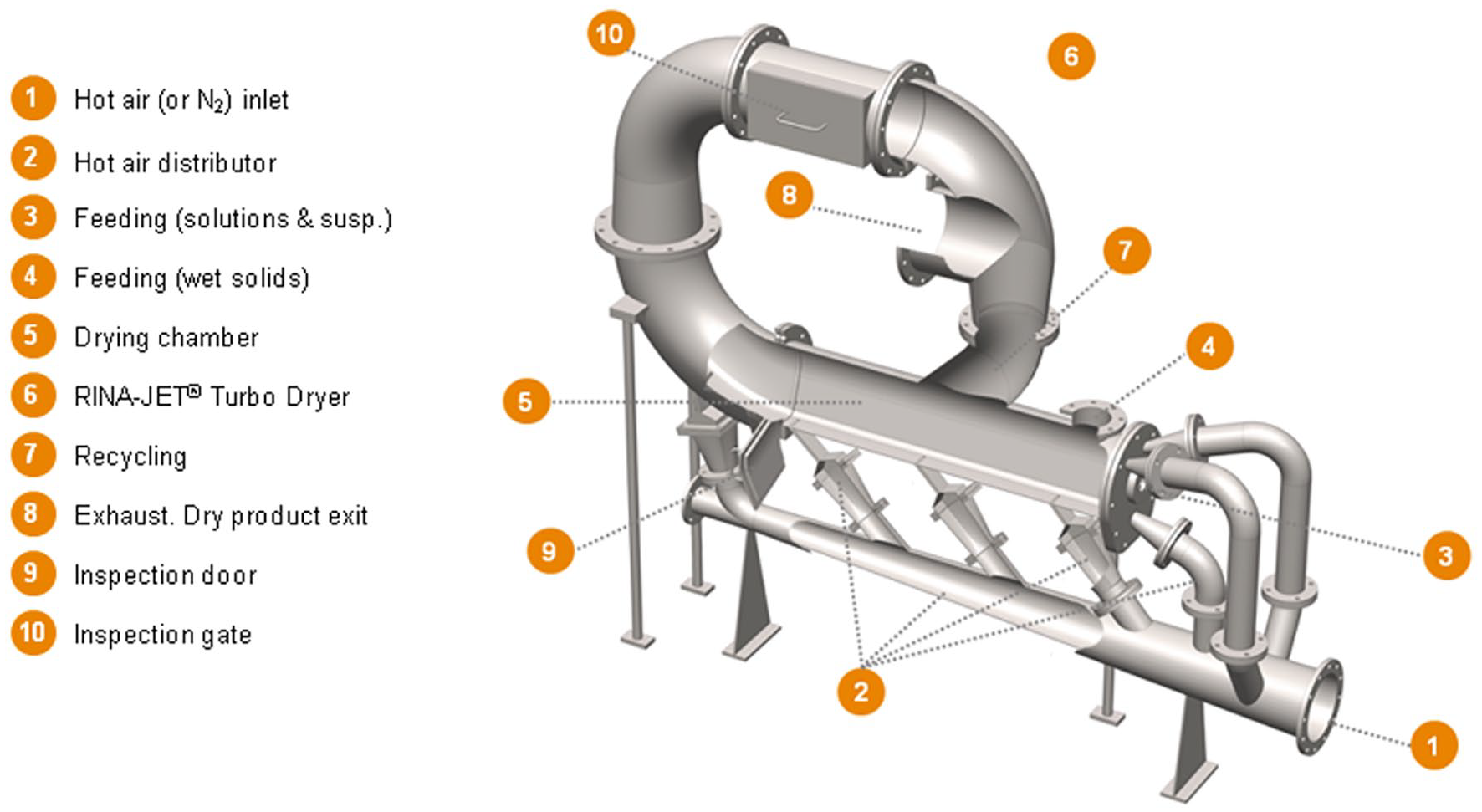
Structure of the RINA-JET flash dryer technology.
The equipment used was the flash dryer ‘RINA-JET S-1008’, owned by the company Riera Nadeu S.A. (Granollers, Spain). The final operating conditions for stabilising grape stems with flash dryer technology were defined by processing 2000 kg of grape stems in a semi-industrial scale trial to produce a dehydrated ingredient, which was used in the feed efficiency growth trials. The process conditions (feeding rate and temperatures of inlet product, inlet air and outlet air) were modified to obtain a final product with a moisture content of less than 12%.
Analytical methods
Chemical analysis
Grape stem-based ingredient was analysed for dry matter (DM, method 934.01), ash (method 942.05), Nitrogen (method 984.13) and crude fibre (method 978.10) contents following Association of Official Analytical Chemists (AOAC) (AOAC, 1996). Neutral detergent fibre (NDF) was determined by the method of (UNE EN ISO 16472) using an alpha amylase, but without sodium sulphite, and expressed as ash-free. Acid detergent fibre (ADF) and acid detergent lignin (ADL), expressed excluding residual ash, were determined by AOAC method 973.18. Ether extract content was determined without hydrolysis by the automated soxhlet method (Soxtec System HT 1043 Extraction Unit, Madrid, Spain) using hexane for 6 hours as solvent. Starch content was measured by polarimetry ((CE) nº 152/2009). Total carbohydrates and gross energy were determined by calculation and total sugars by Luff-Schoorl ((CE) nº 152/2009).
In vitro digestibility
In vitro analyses of the grape stem-based ingredient were performed following the method proposed by de Blas et al. (2018). Samples, previously ground to a pore size of 1 mm, were weighed (0.5 g) into plastic bottles and 25 mL of phosphate buffer (0.1 M, pH 6.0) and 10 mL of 0.2 M HCl solution were added to each bottle. The solutions were mixed, the pH was measured and then adjusted to pH 2 with 1 M HCl or 1 M NaOH solutions. Then, 1 mL of pepsin solution per bottle (25 mg of pepsin (pepsin from porcine mucosa, >250 units mg−1, Sigma Aldrich P7000) per mL 0.2 M HCl) was added and mixed. The bottles were incubated at 40° using orbital stirring (150 rpm) for 1.5 hours. After this incubation, 10 mL per bottle of fresh pancreatin solution were added (100 mg of pancreatin (pancreatin from porcine pancreas, 8 × USP, Sigma Aldrich P7545) per mL phosphate buffer pH 6.8). The samples were then incubated at 40°C for 3.5 hours using orbital shaking (150 rpm). After the second incubation, the pH was adjusted to 4.8 by adding acetic acid and 0.5 mL of Viscozyme® (Viscozyme® L 100 FBG per g, Novozymes, Bagsvaerd, Denmark) per bottle was added and incubated at 40°C for 16 hours with orbital shaking (150 rpm). The soluble fraction was removed by centrifugation (3000 g 10 minutes). The solids were washed three times using water and incubated for 30 minutes at 40°C. Finally, the bottles were dried at 104°C for 24 hours. Three bottles without any sample were used as blanks. In vitro DM digestibility (DMd) was calculated as:

where W1 is the weight of the bottle before starting the process, W2 is the weight of the sample, W3 is the final weight of the bottle with the non-digested dry sample and C1 is the blank correction (the weight of the blank bottle after the process of digestion and drying/the weight of the initial blank bottle).
All the experiments were performed with three replicates.
Extraction of antioxidant and antimicrobial compounds
The use of two methods for the extraction of antioxidant and antimicrobial compounds from grape stems was compared using methanol:water (M:W) (50:50) and methanol:water:formic acid (M:W:F) (75:24.9:0.1) (Luchian et al., 2019, Sette et al., 2020). M:W extraction was carried out at a sample dissolvent ratio of 0.05 w/v. The extraction was conducted at room temperature with constant stirring (250 rpm) for 24 hours protected from light. M:W:F extraction was carried out. The samples were mixed with the solvent at a ratio of 0.01 (w/v) and were subjected to ultrasound process for 15 minutes. The samples were then centrifuged at 3000g for 15 minutes. Total phenolic content, antioxidant activity and antimicrobial activity were determined from these samples. The experiments were performed with three replicates.
Total phenolic determination
The TPC of grape stem-ingredient was measured using the Folin–Ciocalteu method (Singleton et al., 1965) with modifications. Initially, 30 μL of Folin–Ciocalteu (J/4100/08, Fischer Scientific, Loughborough, UK) solution were added to 140 μL of sample, blank or standard and 140 μL of Na2CO3 7% (w/v) (Sigma Aldrich, Steinheim, Germany). The mixture was incubated at room temperature in the dark for 1 hour and the absorbance was measured at 750 nm. Gallic acid (G7384, Sigma Aldrich, Steinheim, Germany) was used as a standard in a concentration range of 1.4–20 ppm, and the results were expressed as mg gallic acid equivalent (GAE) per litre of solvent and per g of DM sample.
Antioxidant bioactivity test of final ingredients
The antioxidant activity of grape stem-based ingredient was measured using the DPPH radical scavenging activity method based on Brand-Williams et al. (1995) with slight modifications. DPPH (2,2-diphenyl-1-picrylhydrazyl, D9132 Sigma Aldrich, Steinheim, Germany) in methanol (40 ppm) was prepared and 280 μL of this solution were added to 20 μL of sample solution. The mixture was incubated at room temperature in the dark for 30 minutes. The absorbance was measured at 515 nm. The standard comprised of water–methanol (50% v/v) and different concentrations of Trolox (218940050, Acros Organics, NJ, USA). The antioxidant capacity was expressed as mg Trolox equivalent antioxidant capacity (TEAC) per g of DM using the calibration curve. The same samples were used as for the determination of polyphenols.
Antimicrobial bioactivity tests of final ingredients
Salmonella enterica (CECT 4156), Escherichia coli (CECT 516), Bacillus subtilis (CECT 39), B. cereus (CECT 131), S. aureus (CECT 435) and Aeromonas salmonicida (CECT 5173) were used as test microorganisms.
The substrates used for bacterial growth, count and dilution were Mueller–Hinton broth, bacteriological agar and buffered peptone water (both from Oxoid, Basingstoke, Hampshire, UK), respectively. The media were prepared according to the supplier’s recommendation and sterilised at 121°C for 15 minutes.
The agar diffusion method (San Martin et al., 2021b) was used for determining the antibacterial activity of the grape stem-based ingredient extracts. The test organisms were inoculated in Mueller–Hinton broth (10 mL) at 0.30 optical density reached (approx. 108 cfu mL−1). Then, 200 µL of microorganism suspension was incubated in 8 mL of Mueller–Hinton soft agar (0.7% bacteriological agar w/v) at 48°C, vortexed and cast in a Mueller–Hinton Petri plate. Once the extracts were solidified, they were included (10 μL) and incubated at 37°C 24–48 hours. The diameter of the growth inhibition zone of pathogen compared to a positive antibacterial control (2 mg mL−1 gentamicin; >98% Sigma-Aldrich, Steinheim, Germany) and a negative control (solvent) was used to determine the antimicrobial bioactivity. The same samples were used as for the determination of polyphenols.
Feed efficiency trial
Animals, housing and experimental diets
The study was carried out on a commercial farm where the animals were kept in an enclosed semi-controlled building with ambient temperature between 18 and 25°C. New Zealand White male 35 days-old-weaned rabbits with similar body weights were housed in cages.
The dietary group consisted of a control (0%) and a 10% grape stem-based ingredient supplementation level with 180 individuals in each group.
The diets (Table 1) used in this study were formulated to meet the recommended nutritional requirements for growing rabbits (National Research Council, 1977). A cycle of 14 hours of light and 10 hours of dark was used throughout these trials.
Ingredients and chemical composition of the concentrates for the feed efficiency trial.
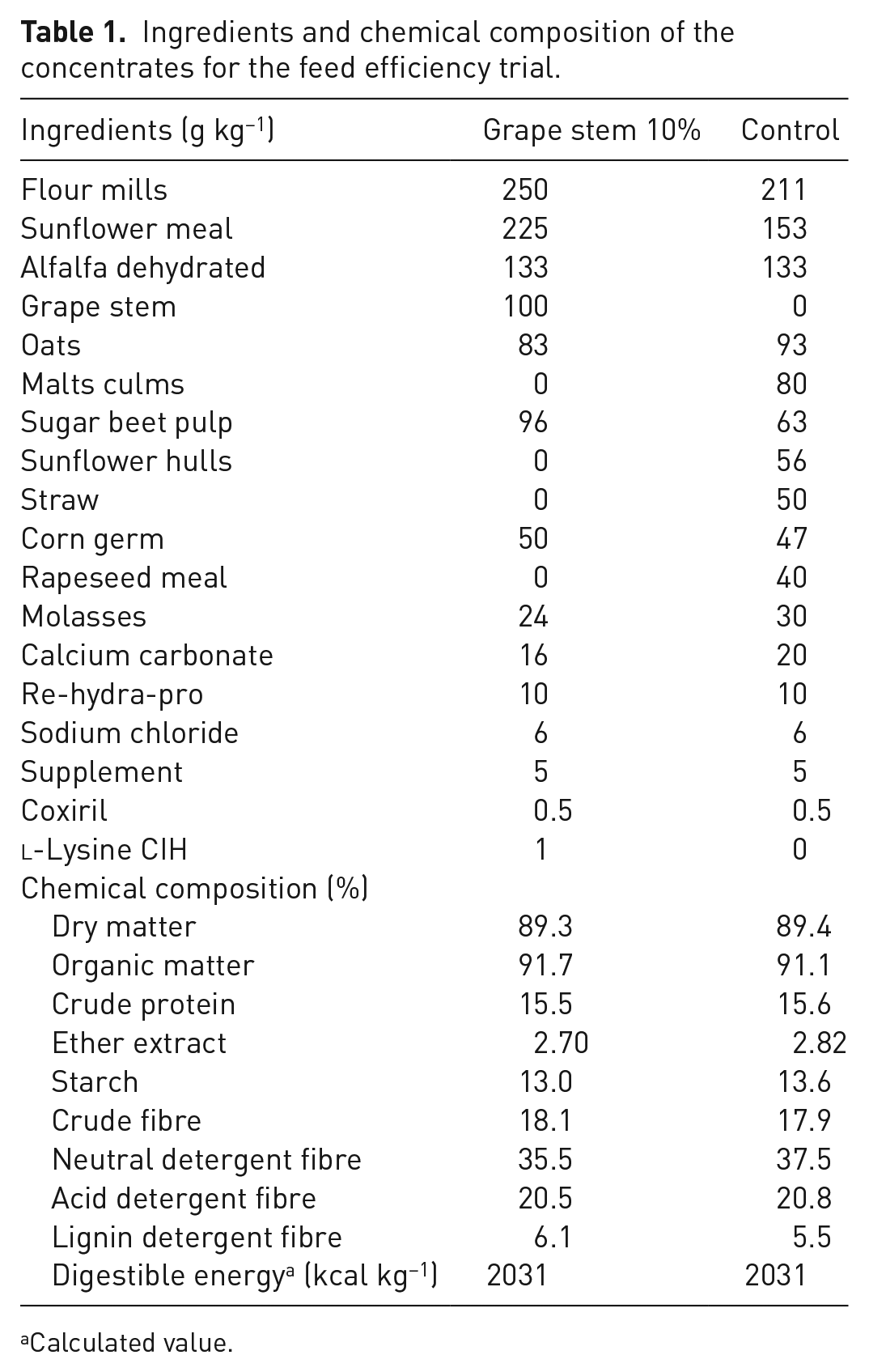
Calculated value.
Experimental design, measurements and samplings
The animals were randomly allocated into cages. Each treatment comprised 18 cages with 10 rabbits each. From day 1 to weaning (day 35) all animals were fed a basal starter diet. From weaning to slaughter, the animals received either the control or the experimental concentrate (Table 1). Animals’ weights were measured at weaning and at slaughter on cage basis. During this period, the quantity of feed offered and rejected was measured weekly and cage basis. Average Daily Gain (ADG), Average Daily Feed Intake (ADFI) and Feed Conversion Ratio (FCR) were calculated as indicators of the effect on productivity of the alternative diets. On the other hand, mortality was recorded daily as an indicator of immunostimulatory effect of the alternative diets.
Statistical analysis
Experimental factors were considered significant when their probability (p-value) was less than 0.05 and were analysed with one-way analysis of variance. The Normal distribution of the data was verified using Shapiro–Wilk test and Levene test to evaluate the equality of variances. When equal variances were not assumed, the Kruskal–Wallis statistic test was used to compare samples. All statistical analyses were performed using Statgraphics software (Statgraphics Centurion XVI software package, 16.2.04 version: Statgraphics Technologies, Inc., The Plains, VA, USA).
Results and discussion
Stabilisation process
Flash drying technology was used to stabilise grape stem. The inlet temperature was set as the minimum temperature to meet the target output moisture content of the final product (below 12%). The obtained results indicates that the drying process reduces the moisture content below 12%, which aims to avoid the degradation process and stabilise the grape stem-based ingredient. In this way, the final ingredient can be stored for longer periods without risk of microbial degradation.
Analytical results
Basic nutritional characterisation of grape stem-based ingredient and experimental feeds
The basic nutritional characterisation of grape stem-based ingredients and experimental feeds was performed with the aim of assessing their potential as new ingredient and diets in animal feed.
The average chemical composition of the grape stem-based ingredient from the Baigorri winery is shown in Table 2. The initial moisture content of the grape stem-based ingredient was 78% and, after the stabilisation process by flash drying, the water content was reduced to 7.43%.
Chemical composition of grape stem-based ingredient from Baigorri winery.
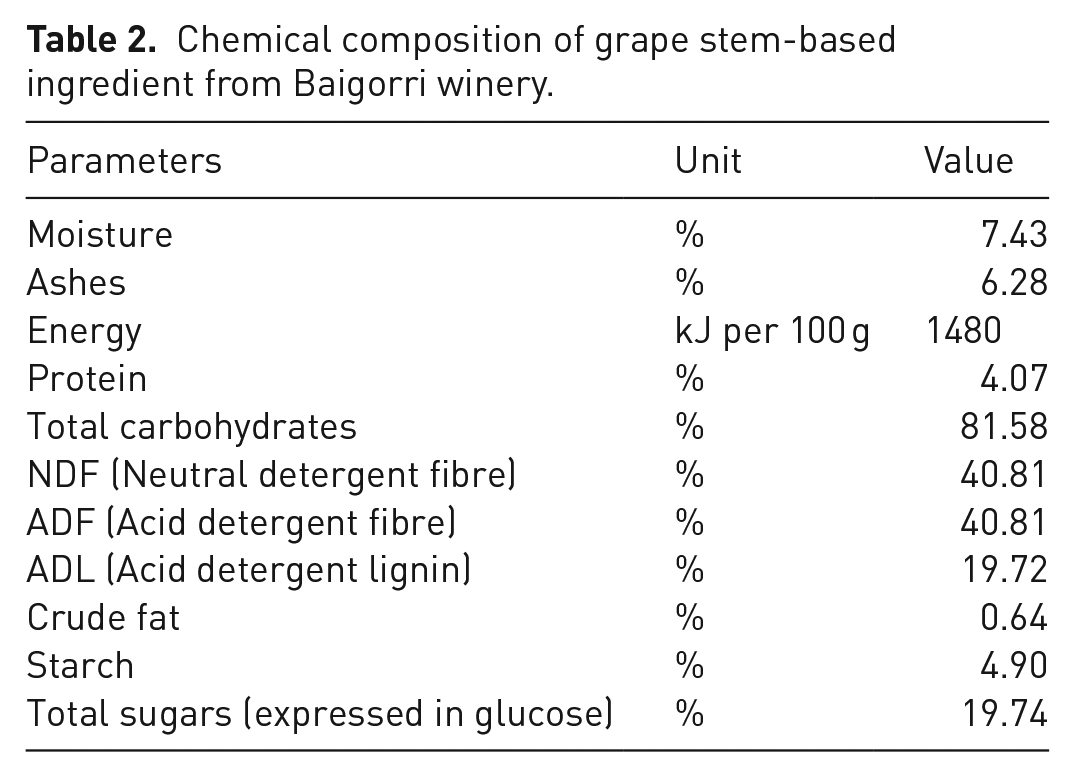
The ingredient obtained from grape stem is composed of a low content of protein (4.70%) and starch (4.90%) concomitant with a high content of neutral detergent fibre (40.81%). This results in raw material with a relatively low gross energy content (1460 kJ per 100 g).
The nutritional composition reported in the current experiment is in line with those found in the literature: 4.8–11.2% of ash; 4.9–11.2% of protein; 19.6–37.9% of cellulose (estimated by difference between ADF and ADL) and 12.8 of 47.3% in lignin, with all data provided on DM (Blackford et al., 2021, Filippi et al., 2021, Prozil et al., 2012). However, the comparison of data is difficult due to the differences between samples related to several factors, such as, grape variety, vineyard, maturity, as well as differences in extraction processes (Blackford et al., 2021).
This physicochemical composition, rich in fibre (around 40% neutral detergent fibre and 20% lignin acid detergent), makes this grape stem-based ingredient a promising feedstuff for rabbit concentrates. As a herbivorous animal, rabbits are usually fed diets containing at least 40–50% of fibres (Gidenne, 2015). The importance of fibre in the diet is due to its effects on intake, rate of passage and role as a substrate for caecal microbiota (Combes, et al., 2013). In addition, it is recognised that the fibre content in the rabbit diet is essential to prevent digestive troubles, with special focus on ADL (Gidenne, 2015). A typical pelleted feed for the growing rabbit contains between 28–46% NDF, 15–23% ADF and 4–7% ADL coming from feedstuffs such as cereal straw, dehydrated alfalfa, sunflower meal, oilseed’s hulls and sugar beet pulp (Gidenne, 2015). All these feedstuffs have a similar fibre composition to the grape stem-based ingredient and could be substitute to some extent in a equilibrated pelleted diet formulation, but the low crude protein content of this new ingredient must be taken into account for a equilibrated formula.
In vitro digestibility of new ingredients
The in vitro digestibility of the grape stem-based ingredient was 31.7 ± 3.1%, quite low compared with other food industry by-products, such as, citrus pulp with a digestibility of 86.7–95.6% (de Blas et al., 2018). This is mainly due to the high NDF content (40.81%) of the grape stem-based ingredient, which doubles that reported for citrus pulp. The low in vitro digestibility observed agrees with the high fibre and low protein contents reported in Table 2.
As previously concluded by other authors (de Blas et al., 1992, Wiseman et al., 1992), the short caecal fermentation time in these species leads to poor digestion of the fibrous fraction. In addition, the digestibility of this fraction has been inversely related to the lignin percentage (de Blas, 2013, García et al., 2000). Compared to citrus pulps, where the lignin fraction was 5.35% of total NDF, our sample was composed of almost 50% lignin (ADL) over NDF, decreasing digestibility by nearly 2.5 times.
However, the digestibility value observed in this study for the grape stem-based ingredient is very similar compared to other fibrous raw materials with a similar content of fibrous fractions, such as soybean hulls, wheat bran or sugar beet pulp, which are usually used in the formulation of pelleted feed for growing rabbits (Bachmann et al., 2021).
Although cell wall content is not well digested in rabbits, it can lead to beneficial effects like stimulation of the gut microbiota (de Blas, 2013); therefore, it is one of the main components in rabbit diets, ranging from 320 to 360 and 50 to 90 g kg−1 of insoluble and soluble fibre, respectively.
Total phenolic content and antioxidant bioactivity test of final ingredients
The total phenolic content and antioxidant bioactivity of the ingredient obtained from grape stems were analysed with the aim of assessing their potential as antioxidant functional ingredients in animal feed.
Figure 2 shows the DM content of polyphenols and compounds with antioxidant capacity in samples of grape stem-based ingredient with the two different extraction methods.
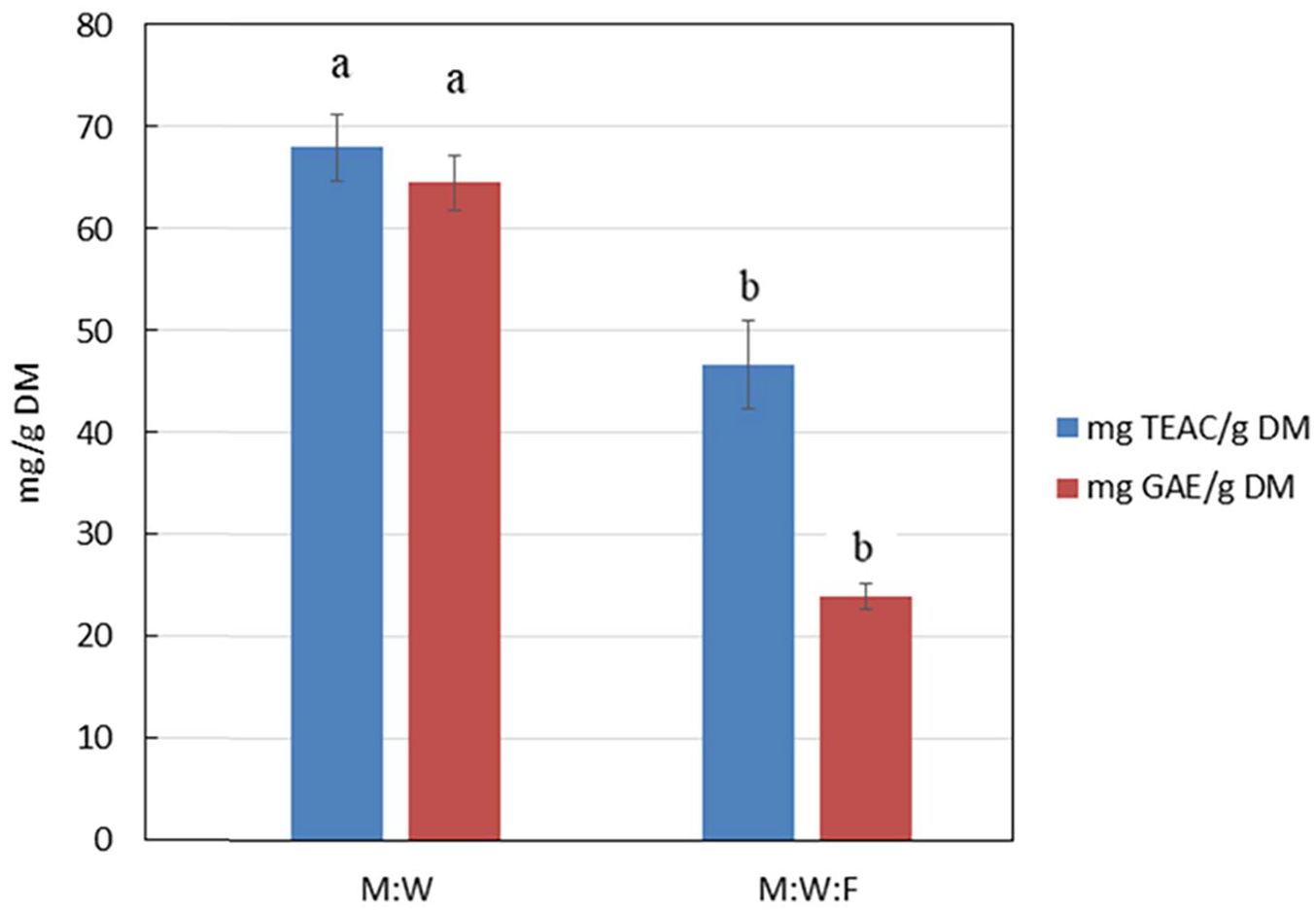
Antioxidant activity (expressed as mg TEAC per g DM) and total polyphenol content (expressed as mg GAE per g DM) extracted using M:W (methanol:water) and M:W:F (methanol:water:formic acid). Error bars represent SD (n = 3). Same letter means no statistically significant differences between the means of extraction methods for each quantification at 95% confidence.
The different extraction methods led to differences in the concentrations of polyphenol and compounds with antioxidant capacity. M:W extraction led to the highest TEAC and GAE mg per g of DM (68.0 mg TEAC per g of DM and 64.5 mg GAE per g of DM) compared to M:W:F extraction. Teixeira et al. (2018) concluded that, for organic extracts, a lower extraction temperature led to higher antiradical capacity, as happens when M:W extraction is carried out.
Nevertheless, independently of the extraction method used, the samples with the highest polyphenol content were the samples with the highest content of antioxidant compounds. Several authors have demonstrated that the antioxidant activity of grape stem-based-ingredient extracts is correlated with their phenolic composition (Anastasiadi, 2012, Barros et al., 2014, Jiménez-Moreno et al., 2019). However, other studies show contradictory results, for example in Teixeira et al., 2018, the sample with the highest antiradical and reducing capacity was not the one with the highest phenolic content and vice versa. These contradictory results could be partially explained by the analytical method. In this sense, it should be clarified that the method for determining the total polyphenol content, Folin-Ciocalteu method, can have interferences due to the presence of different compounds (of amino acids, proteins, vitamins, etc.) (Everette et al., 2010); thus, it can give a very rough approximation of total phenolic content in most cases, but, in other cases, a more specific method is required (Dudonné et al., 2009).
There are a large number of studies aiming to optimise the conditions for polyphenol extraction from winery by-products and other food industry by-products (Domínguez-Perles et al., 2014, Teixeira et al., 2018). Filippi et al. (2021) obtained a 57.34 ± 4.71 mg GAE per g grape stem extract, values similar to those reported in per gram of DM (64.5 mg GAE per g DM with M:W extraction). In some cases, comparison of results is quite difficult due to the high variety of extraction and detection methods and expression of results. In addition, other factors (the grape variety, the stages of ripeness, climatic and geographical conditions and cultivation practices) also modulate the composition of the grape stem (García-Estévez et al., 2015), which could lead also to different extracted values. Several studies use response surface methodology to optimise the extraction conditions. In general, ethanol or methanol:water in ratio between 1:1 or higher is used at a combination of temperatures and time (Domínguez-Perles et al., 2014). Although high extraction yields are obtained in some cases, it should be noted that the best conditions are usually the least industrially applicable. However, regardless of the extraction methods used, the big challenge is to keep these bioactive compounds present in the final feed and to validate their nutritional value (Yang et al., 2021) contribution with animal in vivo trials.
In this regard, one of the main bioactive components in plant derived extracts are polyphenols (Ognik et al., 2016), with several positive effects in animal diets (Manuelian et al., 2021) due to the animal metabolism modulation. These effects could be related to digestion-stimulation properties, antimicrobial activity and antioxidant effects (Kamel et al., 2001). The use of natural compounds as ingredients and/or additives in animal feed, which can partially substitute synthetic compounds, has an increasing interest, mainly because they have a positive impact on livestock nutrition and welfare (Windisch et al., 2008), and an improvement of the environment through the valorisation of food industry by-products and the reduction of antibiotics (Yang et al., 2021). In non-ruminants, mainly poultry and rabbits, the addition of plant extracts, such as, oregano extract (2% of the diet) and rosemary extract (0.1%) had a positive effect on the final body weight (+2.87%) and average daily gain (+5.1%) compared to basal diets (which included VitE 50 mg kg−1) (Cardinali et al., 2015). Polyphenols are known to exert an antioxidant effect in the gastrointestinal tract. There, they have direct contact with the cell but, since they are not absorbed and metabolised, they could have a protective effect on the cell membranes of the gastrointestinal mucosa (Surai et al., 2003). Therefore, the grape stem-based ingredient, being an ingredient rich in polyphenol with antioxidant activity, could have a beneficial impact on rabbit diets as a functional ingredient.
Antimicrobial bioactivity tests of final ingredients
The anti-microbial bioactivity of the ingredient obtained from grape stem was analysed to evaluate its potential as an anti-microbial functional ingredient in animal feed.
Some of the phenolic compounds are bacteriostatic-bactericidal against different pathogenic bacteria. In addition, phenolics from winery by-products are complex and have effect against the sensitive bacteria and could be an interesting solution in the fight against antibiotic resistance (Silva et al., 2021).
Table 3 shows the halo of inhibition formed by the extracted polyphenols for each bacterial strain. The results show that the only strains sensitive to the concentration of polyphenol studied is S. aureus, a Gram-positive bacterium (Figure 3). Gram-negative bacteria (E. coli, S. enterica and A. salmonicida) usually have higher resistance than Gram-positive bacteria, due to the external membrane present in their cell wall which may block the polyphenol absorption (Miklasińska-Majdanik et al., 2018). The extracts obtained by M:W (0.83 ± 0.06 cm) are the only ones with antimicrobial activity against S. aureus. Results are in accordance with the concentration of polyphenol in the extracts (expressed as mg L−1), where M:W extract had the highest concentration of polyphenols. The M:W:F extracts have 10 times lower polyphenol content, leading to no inhibition haloes, due to the lower sample:solvent ratio used in the extraction process. The obtained polyphenol extracts could be further stabilised by lyophilisation and minimum inhibitory concentration for bacterial growth inhibition could be calculated.
Halo of inhibition (cm) of grape stem-based extracts against bacteria.
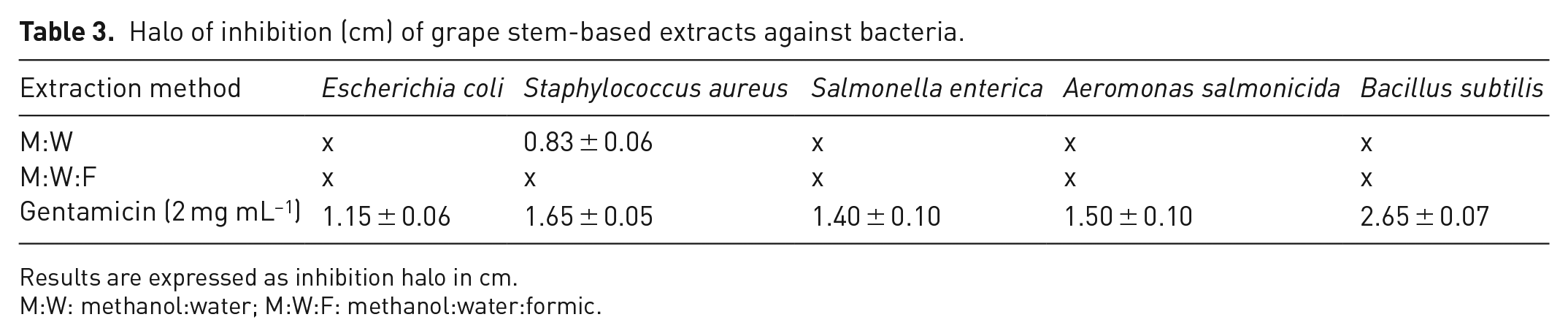
Results are expressed as inhibition halo in cm.
M:W: methanol:water; M:W:F: methanol:water:formic.
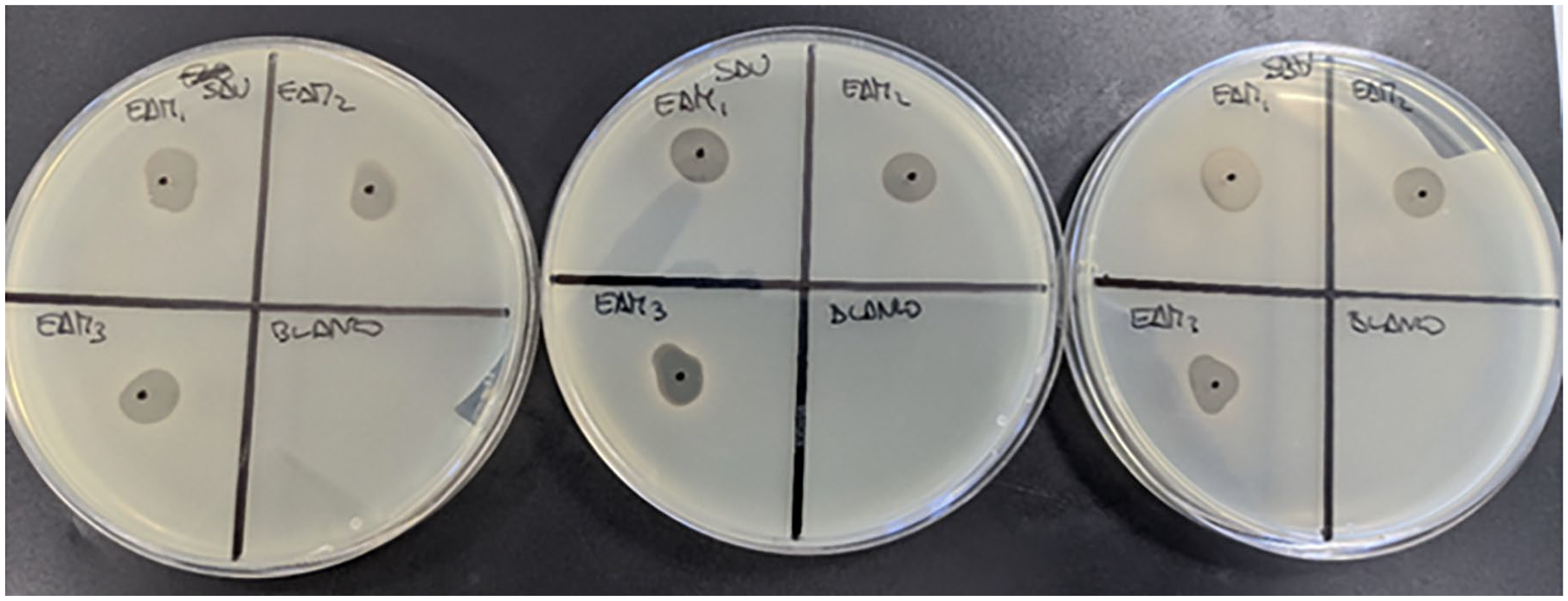
Antimicrobial activity (determined as inhibition halo) against S. aureus of M:W extracts.
The mechanism of antimicrobial action of polyphenols is not yet fully defined. It is thought that polyphenols could attach to different cell constituents, such as, cell membrane, cell wall, proteins or even adhesion structures, but they could also interfere with metabolites and act as interferents in nucleic acid synthesis and in the regulation of gene expression (Brenes et al., 2016, Górniak, et al., 2019). In Gram-positive bacteria, cell wall integrity is damaged by polyphenols (Bouarab-Chibane et al., 2019), leading to increased permeability and cell deformation (Alvarez-Martinez et al., 2020).
Feed efficiency rabbit growth trial
The ingredient obtained from grape stems was included in experimental diet and feed efficiency growth trial was carried out to evaluate its potential as an alternative ingredient in animal feed.
The concentrates in the feeding trials were formulated to provide similar amounts of crude protein and energy. However, the ingredient composition of the control concentrates and energy and crude protein contents differed in both feeding trials. The formulation with 10% grape stems required increasing the proportion of protein-rich ingredients such as flour and sunflower meal to compensate for the low protein content of the grape stem-based ingredient.
Table 4 details the effects of the inclusion of 10% grape stem-based ingredient in the concentrate on the productive performance of weaned rabbits.
Effect of feeding grape stem-based ingredient on rabbit productive performance after weaning.
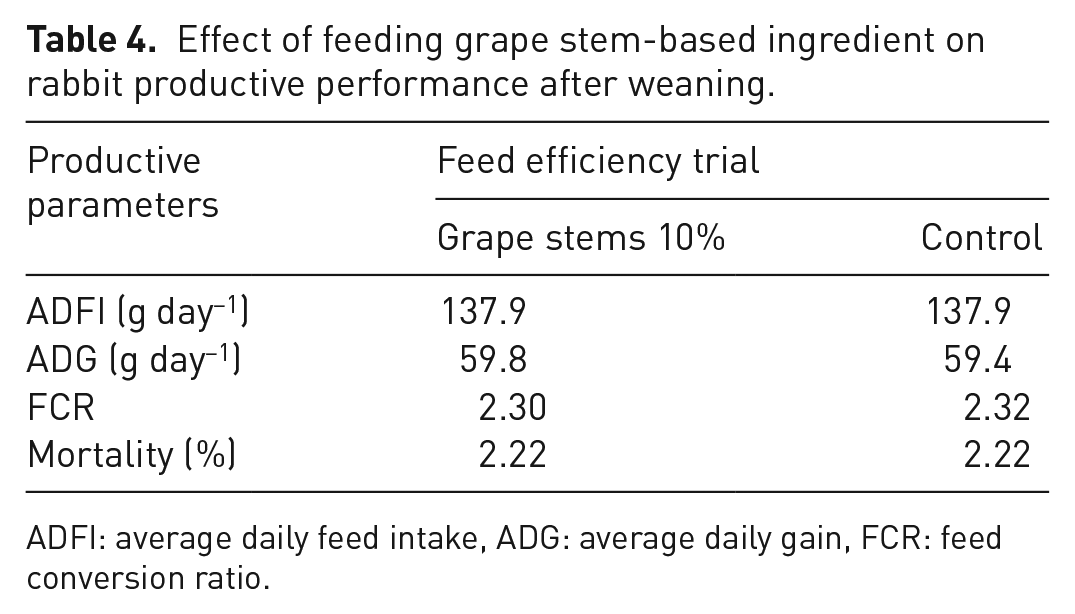
ADFI: average daily feed intake, ADG: average daily gain, FCR: feed conversion ratio.
In the feed efficiency trial, the rabbits that consumed 10% grape stem-based ingredient showed the same ADFI compared to control. The same trend was observed with ADG, rabbits consuming 10% showed a 0.7% higher ADG compared to the control group.
In case of mortality, which is closely related with the immunostimulatory effect of the new ingredients on the animal, rabbits consuming 10% showed the same mortality as the control group. It is possible that any positive effect of the ingredient on mortality can only be seen in cases where there is a health problem on the farm; therefore, its clear effect on certain diseases can only be observed in studies where the animals are subjected to the disease.
Conclusion
Grape stem-based ingredient arises as an alternative ingredient for rabbit farming due to its availability in Europe, its nutritional characteristics (high fibre and polyphenols content) and the promising results obtained in the growing trials.
The inclusion of grape stem-based ingredient up to 10% in rabbit farming diets has proven to be feasible since no differences has been showed with the control diet in productivity in terms of average daily feed intake, average daily gain or feed conversion ratio.
However, it cannot be concluded that this new ingredient implies an immuno-stimulatory effect on the animal based on mortality results as indicator of immunostimulant effect. It is possible that any positive effect on mortality of the grape stem-based ingredient may only be observed in cases where there is a health problem on the farm. Further studies would be necessary to confirm this trend.
Within this framework, the valorisation of grape stem as an alternative ingredient for rabbits feeding is a feasible potential pathway for the wine producers to valorise their residues. The necessary next steps for the validation of this development will be, on the one hand, the techno-economic feasibility analysis of the process including the potential market analysis and, on the other hand, the evaluation of the potential reduction of the environmental footprint of the wine sector as an alternative to the current direct landfilling of this biowaste stream.
Footnotes
Acknowledgements

Abbreviations
ADF: Acid Detergent Fibre
ADFI: Average Daily Feed Intake
ADG: Average Daily Gain
ADL: Acid Detergent Lignin
DM: Dry Matter
DPPH: 2,2-Diphenyl-1-picrylhydrazyl
FCR: Feed Conversion Ratio
GAE: Gallic Acid Equivalent
NDF: Neutral Detergent Fibre
SD: Standard deviation
TEAC: Trolox Equivalent Antioxidant Capacity
TPC: Total Polyphenol Content
Declaration of conflicting interests
The authors declared no potential conflicts of interest with respect to the research, authorship, and/or publication of this article.
Funding
The authors disclosed receipt of the following financial support for the research, authorship, and/or publication of this article: The research leading to these results has received funding from the Basque Country government through the FEADER funds. This article is contribution nº 1219 from AZTI, Food Research, Basque Research and Technology Alliance (BRTA).