







Abstract
The management of end-of-life vehicles (ELVs) has become a significant environmental and economic challenge due to the substantial volumes of hazardous waste generated. This article analyses sustainable practices in ELV management across Europe, with a focus on contributions to the circular economy. The systematic literature review, conducted for articles published in the period 2016–2024, identifies five topics: (1) policy and regulatory frameworks evaluations and suggestions; (2) economic and environmental benefits through optimization modelling; (3) trends and performances analysis; (4) advanced treatment technologies and their impact and (5) economic and environmental impacts assessments. The findings highlight the importance of state-of-the-art recycling processes and coordinated stakeholder efforts in improving ELV management outcomes. In addition, the correlation between ELVs recycling and gross domestic product (GDP) was analysed. Data analysis for 27 European countries in the period 2016–2021 shows a moderate correlation. Specifically, countries with stronger economies tend to produce more ELVs, distinguishing two clusters when GDP is 35,000 € per capita. By adopting best practices and innovative approaches, European countries can enhance their ELV management systems, support a more circular economy and sustainable development. This work highlights the possible correlation between GDP per capita and ELV recycling rates across the European Union, the identification of economic clusters, and the critical role that advanced recycling technologies play in improving sustainability.
Introduction
Society is shifting towards sustainable models, but in order to make the right decisions, it is crucial to investigate and analyse the available information (Bockreis and Ragossnig, 2023a) and to move towards pragmatic and not ideological choices (D’Adamo et al., 2024a). The development of end-of-life products has increased significantly, prompting the question of whether these costs should be borne by the manufacturer who put the product on the market (Wilson, 2023). The link between sustainability and the circular economy is very strong (Gheewala, 2024; Papamichael et al., 2023; Voukkali et al., 2023); thus, it is essential that prevention, waste reduction and end-of-life choices, such as reuse and recycling, should not result in unnecessary consumption (Bockreis and Ragossnig, 2023b) in order to support sustainable development goal (SDG) 12 and circular economy models (Nikolaou and Tsagarakis, 2021).
The issue of circularity is linked to waste management (Zorpas, 2024), not only based on efficient recycling technologies (Voukkali et al., 2024) geared towards maximizing the recovery of materials in waste, but also the quality of the output obtained (Molla et al., 2023a; Yang et al., 2024). In this direction, a sustainable supply chain (Golmohammadi et al., 2024) and the support of tools such as the Internet of Things (Jum’a et al., 2024) is crucial.
The primary goal of waste management policies is to combat climate change by enhancing the utilization of critical resources found in obsolete products (Cainelli et al., 2020). Reducing landfill wastes through reuse and recycle are also key objectives: closing materials’ loops by keeping them in circulation is the way to go, as also stated by the Waste Framework Directive. Different definitions of circular economy are proposed in the literature and it can be observed that in recent years there has been greater attention to reuse and recycling, which are proposed as basic principles of industrial ecology (Kirchherr et al., 2023). Some authors have identified recycling as the most used circular strategy (De Pascale et al., 2023; Kirchherr et al., 2023).
In recent decades, the management of end-of-life vehicles (ELVs) has developed into a critical environmental and economic issue due to the significant volumes and hazardous nature of the waste generated (Molla et al., 2022; Rosa and Terzi, 2018), such as lubricants, batteries and other toxic materials mainly present in vehicles’ exhaust systems. ELVs, which include passenger vehicles and small trucks, represent one of the largest waste streams by volume and material content. There is also a particular focus on electric vehicles, which can support sustainable change provided certain requirements are met such as the use of renewable energy, battery recycling, local industrial development (D’Adamo et al., 2023), investment in battery technology and strong support for recycling initiatives (Das et al., 2024).
In the European Union (EU), they are classified as hazardous waste under the Waste Framework Directive and their improper disposal can lead to severe environmental pollution (Korica et al., 2022; Schmid et al., 2013). The ELVs new regulations’ update the previous 2019/1020 and 2018/858, currently in the adoption phase, focusing on enhancing the circular design of vehicles, ensuring they are reusable and recyclable for at least 85% of their weight and recoverable for at least 95% of their weight. One of the sectors that uses the greatest resources is the automobile industry in Europe, which is the primary user of rare earth elements, magnesium, aluminium, platinum group metals and natural rubber. The total cost of the new regulation, for all economic operators and consumers, would amount to less than 70 € per vehicle placed on the market (European Commission, 2024).
In the promotion of circular economy, ELVs can prove strategic as one of the main barriers of circularity lies in the limitations related to the quality and availability of secondary material (Korhonen et al., 2018). Managing ELVs also includes managing all related asset, material, financial and information flows between all actors in the ELV chain; for example, consumers, collection centres and authorized dismantling or shredding centres, recycling centres, second-hand markets, industrial landfills and many others (Karagoz et al., 2020). Moreover, uncollected vehicles with polluting technologies are often exported to developing countries, where they are put back on the road, exacerbating environmental issues (Numfor et al., 2021; Simic, 2016a).
The transition towards a circular economy requires a pragmatic approach to overcome these challenges. In the automotive industry, efforts are being made to decouple resource consumption from vehicle sales growth by closing material cycles and increasing the share of secondary raw materials in vehicles. This approach not only reduces resource consumption but also promotes the sustainability of the automotive industry (D’Adamo et al., 2023; Prochatzki et al., 2023; Rizvi et al., 2023). It is evident that leveraging advanced recycling technologies can transform waste into valuable resources, illustrating the substantial environmental and economic benefits that can be achieved through the widespread adoption of circular economy principles. In addition, blockchain is a promising technology to facilitate the transition to circularity in the automotive industry (Grati et al., 2024).
Several reviews are proposed on the topic to assess the multiple fields of analysis: management practices, legislation, recovery strategies, automotive shredder residue, environmental impacts, economics (Shrivastava et al., 2024) and collaboration among stakeholders (Chong et al., 2024). ELV recovery management system is the focus on which most studies have focused towards sustainability goals (Yuik et al., 2022), in which knowledge and accessible infrastructure promote community acceptance (Sitinjak et al., 2024).
The aim of this work is twofold: to critically evaluate current ELVs management practices across Europe, particularly focusing on their strengths and weaknesses in contributing to a circular economy, and to propose innovative solutions that can enhance efficiency in recycling and recovery. The research aims to examine the current practices, identify areas for improvement and uncover the factors behind the varying performances of different countries. For this, a systematic literature review (SLR) will offer an in-depth analysis of the present state of ELV management, concentrating on empirical studies and case analyses within Europe.
Systematic literature review
SLR is used below to analyse the current literature on the topic of management and treatment of ELV and their link to the economy within the EU-27. In recent years, several studies have been carried out on the topic, but leaving a gap relating to an empirical study on the link between the treatment of ELV vehicles and economic values in the European countries. ELV management in Europe is studied in the literature, and CIMO (Context, Intervention, Mechanism and Outcome) is a model (Boaye Belle and Zhao, 2023; Sadic et al., 2024) that facilitates the selection of particularly relevant authors and articles that have addressed this using a specific query in the Scopus database, consulted on 20 May 2024, using the keywords derived from the preferred topics of interest (English language, publication period 2016–2024): ‘End of life vehicles; Circular Economy; Recycling and Energy Recovery’. The CIMO model is identified as follows:
• Context: End of life vehicles.
• Intervention: Study of ELV management policies and performance.
• Mechanism: Applications of methodologies, case studies or literature reviews.
• Outcome: Frame the current situation regarding the production and treatment of ELVs in the EU-27, and analyse the influence of exogenous variables.
The query produced 22 publications in the first data retrieval phase, 19 of which have been analysed in detail. In this section, we will present the results derived from our research and selection process, trying to draw conclusions following a final bibliometric analysis. According to the logic of the Preferred Reporting Items for Systematic Reviews and Meta-Analyses (PRISMA) model, we transparently expose the way in which the review was carried out, the activities carried out and the results obtained, presenting the relevant diagram deriving from the processes performed (Figure 1).
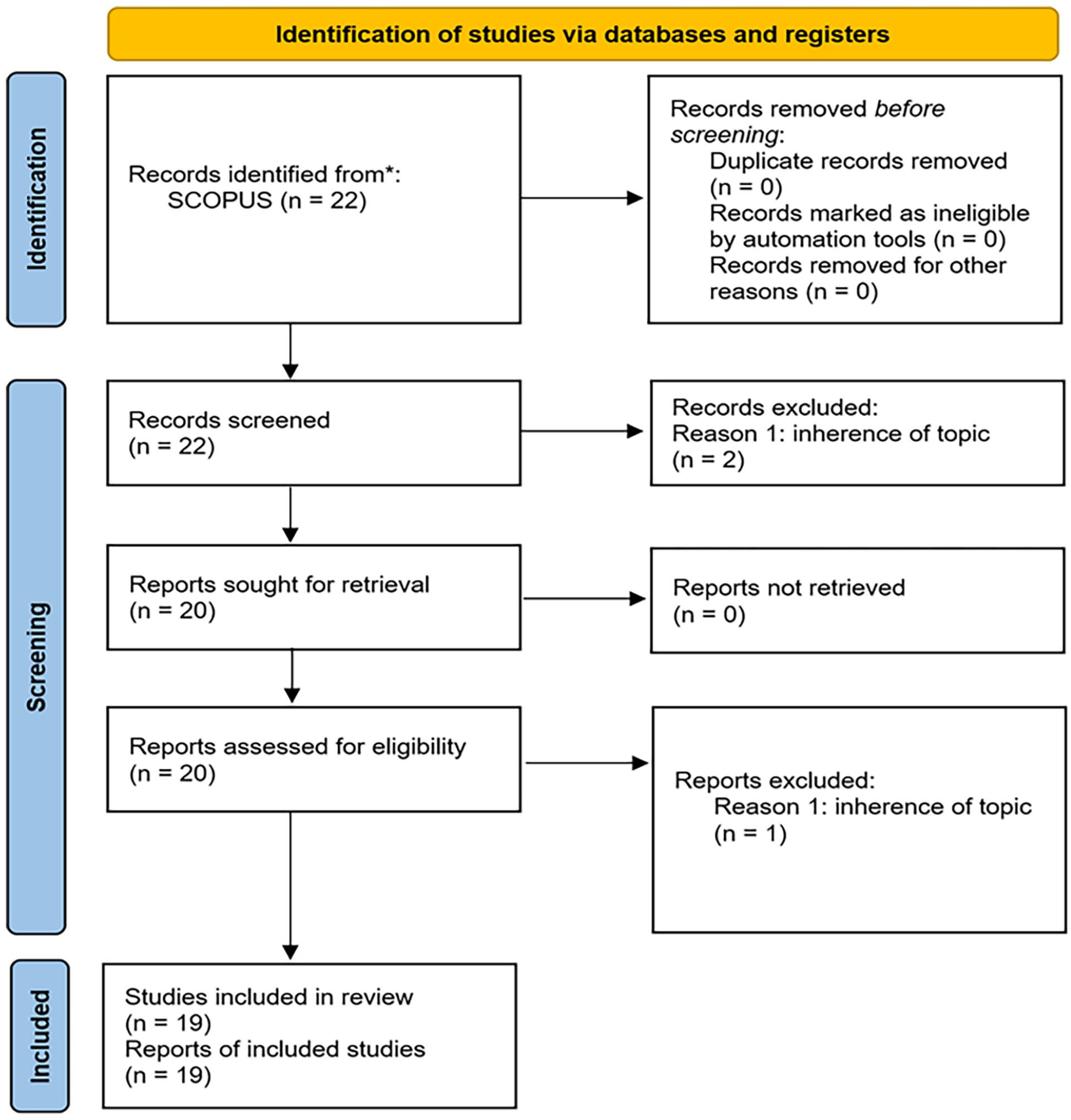
PRISMA model for this study.
From the word cloud in Figure 2, we can see a focus of the selected articles on the topics of interest, belonging to the EU, as well as on waste management. The topic is also closely connected to the sustainable development of countries, whose attention is increasingly central, especially for the automotive industry.
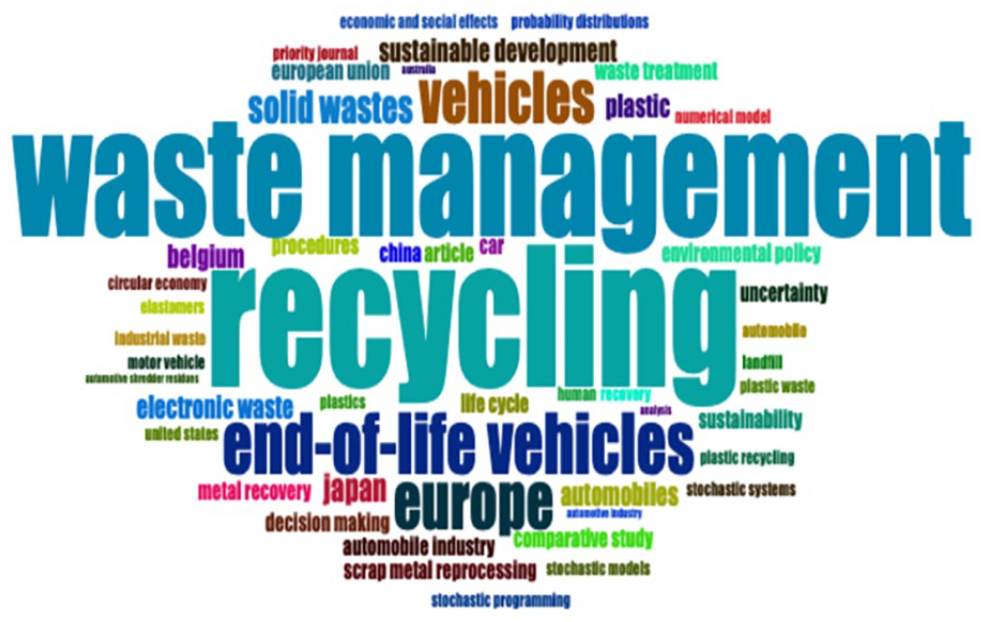
Selected documents’ word cloud.
The thematic map allows the topics to be divided into four quadrants (Figure 3). Within the motor themes the automobiles’ theme stands out and is expected given the analysis, but it emerges overwhelmingly how electronic waste and procedures have significant development and centrality. There is a strong concentration of the theme on some specific countries as China and Japan, but attention should be paid to emerging countries. Within the basic themes, End of Life (EoL) vehicles require to be evaluated from a recycling and waste management perspective. The niche themes show the role of decision-making processes in order to cope with uncertainties and social and economic effects. Finally in the emerging or declining themes we find the two terms such as sustainability and circular economy. Thus, these analyses have emphasized that ELVs move towards circularity and sustainable development, but emphasis is preferred on what leads to these regards, that is, proper waste management, and recycling is identified as an alternative deemed reliable.
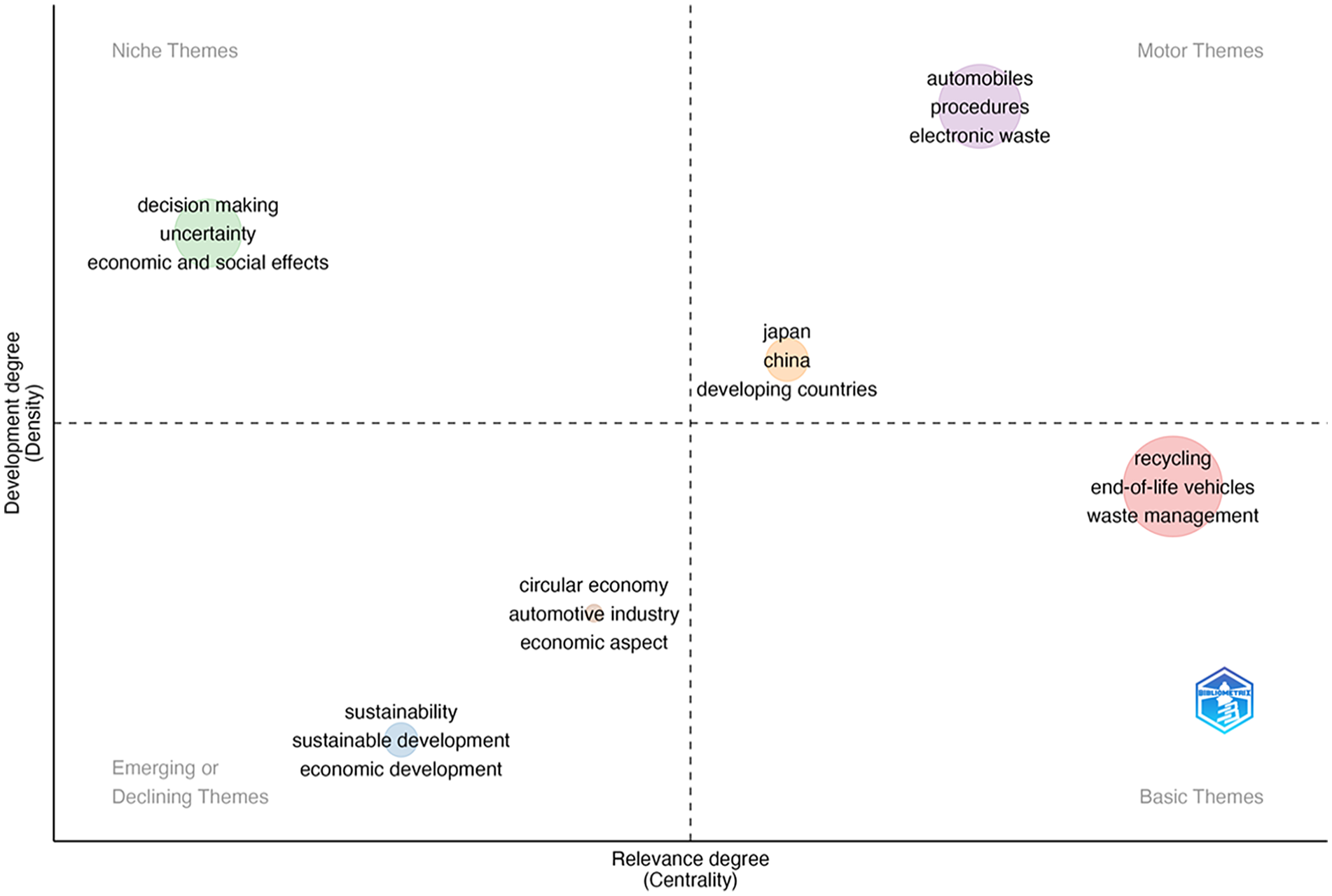
Thematic map.
Finally, it is useful to show the journals where the selected articles were published. Of note is the role played by Sustainability (four articles) and Waste Management & Research (three articles) followed by Waste Management, and Resources, Conservation & Recycling (two articles).
As the author with the most articles on the subject, Simic’s contributions are fundamental to understanding the importance of managing uncertainties in ELV allocation planning (Simic, 2016a, 2016b, 2019). His studies have shown that the adoption of advanced stochastic programming models can improve the efficiency and sustainability of ELV recycling practices. These innovative approaches are crucial to developing recycling strategies that are more resilient and adaptable to changes in market conditions and regulations.
Some articles are particularly relevant; for example, some authors evaluate the trends and performances of ELV recycling in Europe, also examining the correlation between the gross domestic product (GDP) and the quantity of ELVs generated showing how countries with stronger economies tend to generate a greater number of ELVs (D’Adamo et al., 2020). Countries such as Germany and the Netherlands, which have invested in advanced recycling technologies and implemented rigorous environmental policies, performed best in terms of recycling rates. Another notable area is the recycling of vehicle electronic components. Cucchiella et al. (2016) examine current practices in the management of automotive electronic scrap, highlighting the challenges and opportunities in recycling these complex components: recycling technologies such as robotic disassembly and material separation techniques show great potential to improve recycling efficiency. A similar evaluation has been conducted by other authors ( Cardamone et al., 2022) where in-depth evaluation of ELVs’ plastics treatment technologies has been conducted, also considering environmental and economic benefits. Like Simic, some articles have deployed mathematical methodologies to understand ELV management streams. Al-Quradaghi et al. (2022) developed a mixed-integer linear programming model to optimize the network of ELV collection point in Qatar, providing an innovative point of view in literature. Also incorporating a sensitivity analysis to ensure robustness and considering factors like profits, material flows and greenhouse gas (GHG) emissions, the study demonstrated that strategic optimization can significantly enhance the sustainability of ELV supply chain management (Al-Quradaghi et al., 2022). Another study utilized a logarithmic mean divisia index to evaluate the effectiveness and efficiency of ELV management policies across 31 EU countries, calling for increased public engagement and stricter enforcement of existing regulations (Korica et al., 2022). Specific studies for individual nations, such as Belgium and Romania, have suggested that adopting circular economy practices and investing in recycling or energy recovery technologies can offer significant environmental and economic benefits, especially in developing countries where recycling infrastructure is less developed. In particular, Romania has demonstrated excellent performance in ELV energy recovery, highlighting how targeted policies and investments in infrastructure can lead to significant improvements (Rovinaru et al., 2019). These findings have been also strengthened by Modoi and Mihai (2022). The article relating to Belgium instead examined the impacts of various factors on the generation of ELVs, implementing a model that suggests the integration of changes starting from the design of vehicles in terms of material composition, as well as greater control over car ownership and balanced management of the product life cycle, also avoiding forced extensions of useful life which would lead to greater environmental and economic externalities for owners and the population (Inghels et al., 2016). Shifting from a detailed perspective of individual nations, Singh et al. (2017) and later Soo et al. (2021) proposed a comparison between various regions, namely Europe, Japan, Australia and the United States. The articles investigated the impact of different ELV regulations on the material circularity of vehicles. Both authors constructed a Material Circularity Indicator that considers recycling rates of ELV and circular materials usage, in order to assess a mini ranking as a comparative analysis. The study has analysed these four regions because the first two have specific ELV regulations, in contrast to Australia and the United States that have no laws that regulate the ELVs stream. Another regional comparative work discussed the potential for energy recovery from ELVs in developing countries (Petronijević et al., 2020). The study links very well with the ones conducted for Romania, highlighting the economic benefits of incineration and gasification and those from reduced landfill usage, also noting that similar challenges from ELVs management are present in EU countries with less developed recycling systems and infrastructures. The article by Zhang et al. (2023) analyses 91 articles published between January 2013 and March 2023 to explore the perspective of reverse logistics in the automotive industry, highlighting the increase in environmental awareness and innovation in resource use. The importance of reverse logistics in the recycling and regeneration of automotive components to reduce environmental impact is therefore underlined: the review shows that ELVs and automotive batteries are the most studied, while tyres, engines and used oils require further attention.
Another article examines in detail the practices used for recycling plastic from ELVs (Sanz et al., 2022). The review emphasizes the problems related to traditional separation techniques, which do not allow accurate recovery of recyclable materials. The plastic materials present inside vehicles are in fact included in reinforcing fibres and other components that end up in what is called shredding residue, a heterogeneous mix of materials that includes fabrics, wood and others. Among the selected articles, two have carried out a life cycle assessment (LCA). Firstly, Nakano and Shibahara (2017) evaluated the environmental impact of ELVs from its collection to the last treatment steps, quantifying total greenhouse gas emissions. The results show mechanical recycling as a more sustainable technique, with incineration (waste-to-energy) and pyrolysis (chemical recycling) having a higher impact due to their energy-intensive nature. The second (Belboom et al., 2016) evaluates the environmental impacts of recycling hybrid vehicles through three different business lines of dismantling. This article also uses LCA to compare the environmental performance of these dismantling methods, focusing on key indicators such as greenhouse gas emissions, energy consumption and material recovery rates. The results indicate that advanced dismantling techniques and treatments are more environmentally beneficial compared to traditional methods. Moving to the remaining two literature reviews, the first conducts a bibliometric analysis on the general ELV landscape over the past two decades, examining the evolution of research, identifying key themes and trends and highlighting influential authors and countries in the field, stating that interdisciplinary collaboration and policy support could boost ELV management advancements (Yu et al., 2022), whereas the second examines a new perspective going backwards in the supply chain management of ELVs, by analysing reverse logistics with a literature review on related infrastructure across EU countries (Zhang et al., 2023).
In conclusion, the analysis of the different studies clearly highlights that countries with more stringent regulations and advanced recycling infrastructures obtain better results in the management of ELVs. This point has been discussed in depth by the comparison carried by Korica et al. (2022). Further details on the selected articles are presented in Table 1.
Characteristics of the studies.
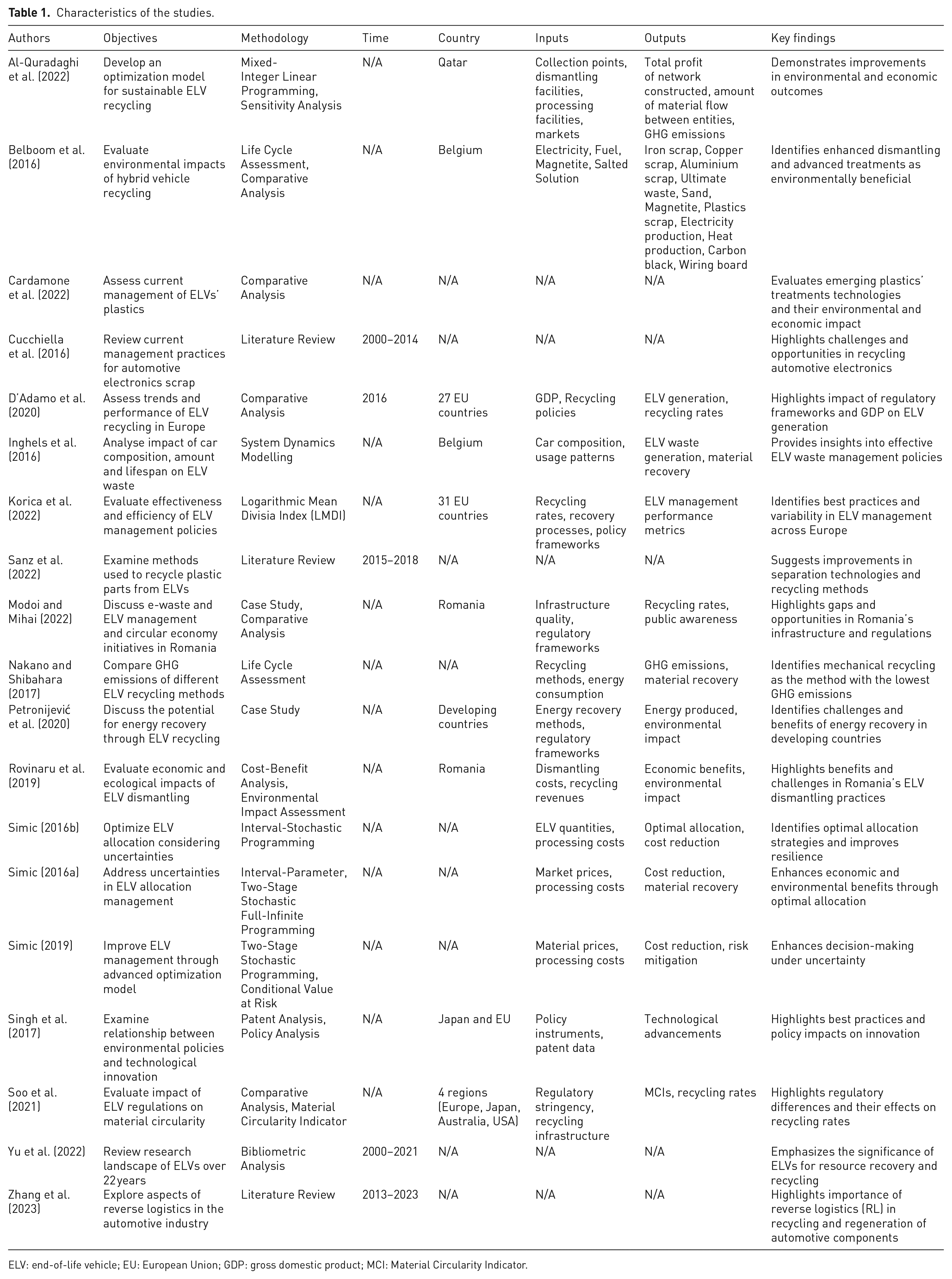
ELV: end-of-life vehicle; EU: European Union; GDP: gross domestic product; MCI: Material Circularity Indicator.
A more in-depth breakdown of the previously selected articles can be made by analysing the topics that are highlighted: studies on regulation and policy are the most numerous (equal to 5) followed by those on economic implication, performance analysis and technological impacts (equal to 4). Specifically:
• Policy and regulatory frameworks evaluations and suggestions (D’Adamo et al., 2020; Inghels et al., 2016; Korica et al., 2022; Singh et al., 2017; Soo et al., 2021).
• Economic and environmental benefits through optimization modelling (Al-Quradaghi et al., 2022; Simic, 2016a, 2016b, 2019).
• Trends and performances analysis (Cucchiella et al., 2016; Modoi and Mihai, 2022; Yu et al., 2022; Zhang et al., 2023).
• Advanced treatment technologies and their impact (Belboom et al., 2016; Cardamone et al., 2022; Nakano and Shibahara, 2017; Sanz et al., 2022).
• Economic and environmental impacts assessments (Petronijević et al., 2020; Rovinaru et al., 2019).
Finally, among the reviewed articles the one that garnered the most citations concerns the relationship between ELV recycling and economic parameters (D’Adamo et al., 2020). This dimension will be discussed in more detail in the next section.
Economic perspective and circular correlations
ELVs are among the most significant waste streams in terms of volume and composition (Mohamad-Ali et al., 2024; Rosa and Terzi, 2018). According to the analysis proposed by D’Adamo et al. (2020), all data are taken from Eurostat considering all 27 European countries within the period 2016–2021. The link to the economy within the European countries was conducted by evaluating the Pearson correlation between ELV recycling with external econometric variables, that is, GDP per capita (GDP/cap) and GDP normalized to purchasing power standard (GDP PPS; Figure 4).
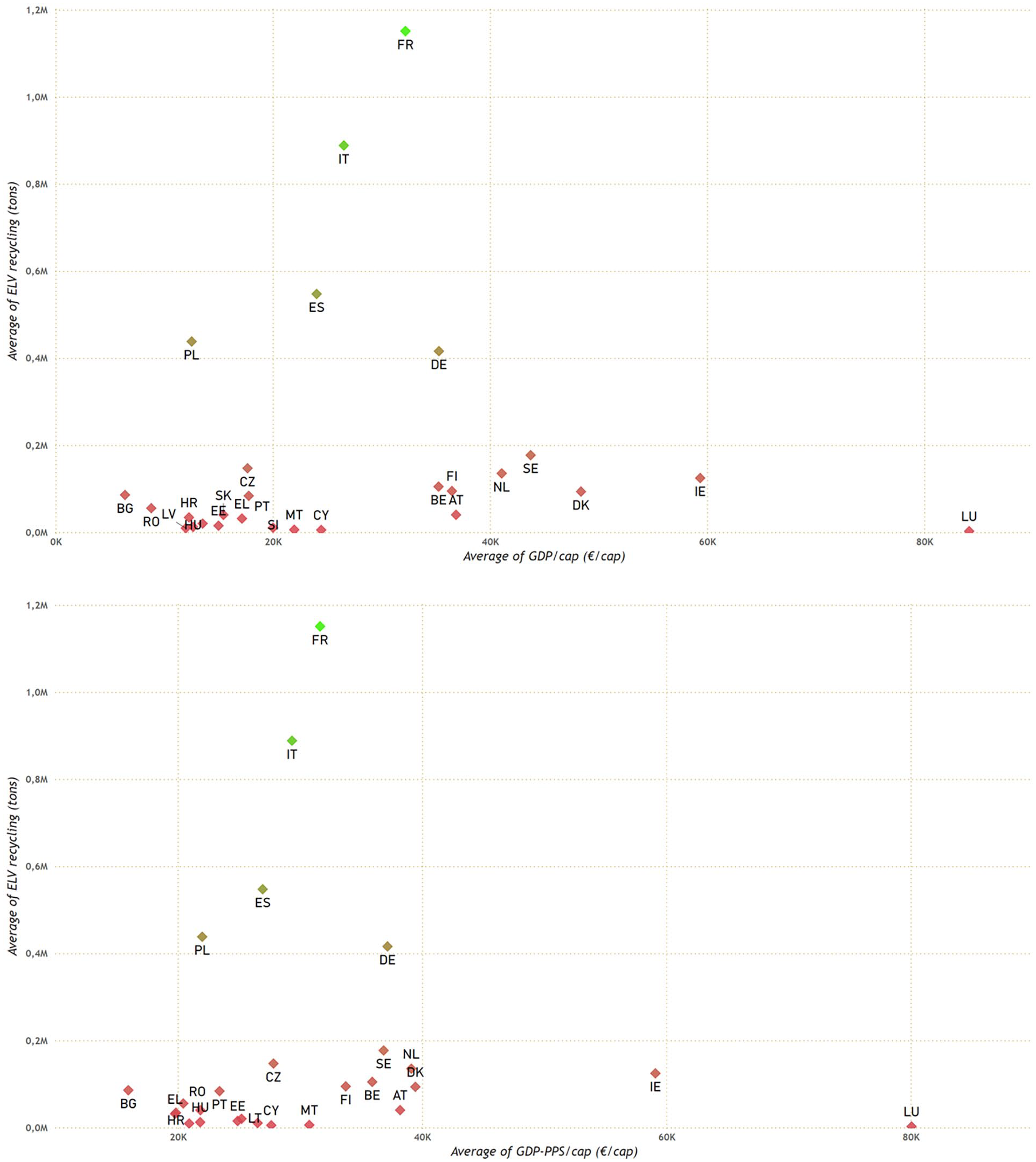
The correlation between ELV recycling and GDP per capita (and GDP PPS) in EU 27 countries (best in ELV recycling in green).
The figure highlights two clusters of countries divided by GDP/cap, those with GDP lower than 35,000 € per capita (€/cap) and the remaining ones. Some countries such as France, Italy, Spain and Germany have a considerably greater amount of recycled ELVs compared to other European countries with the same average GDP levels; the same has been observed with Poland and low GDP countries. Luxembourg has extremely high GDP levels but at the same time a relative value for ELV recycling that is practically irrelevant.
Figures 5 and 6 below show scatter plots of two groups of countries divided by GDP/cap, respectively over and under 35,000 €/cap. Both figures show trend lines for recycled ELVs per GDP-PPS and GDP/cap, with their respective correlation’s Pearson indexes.
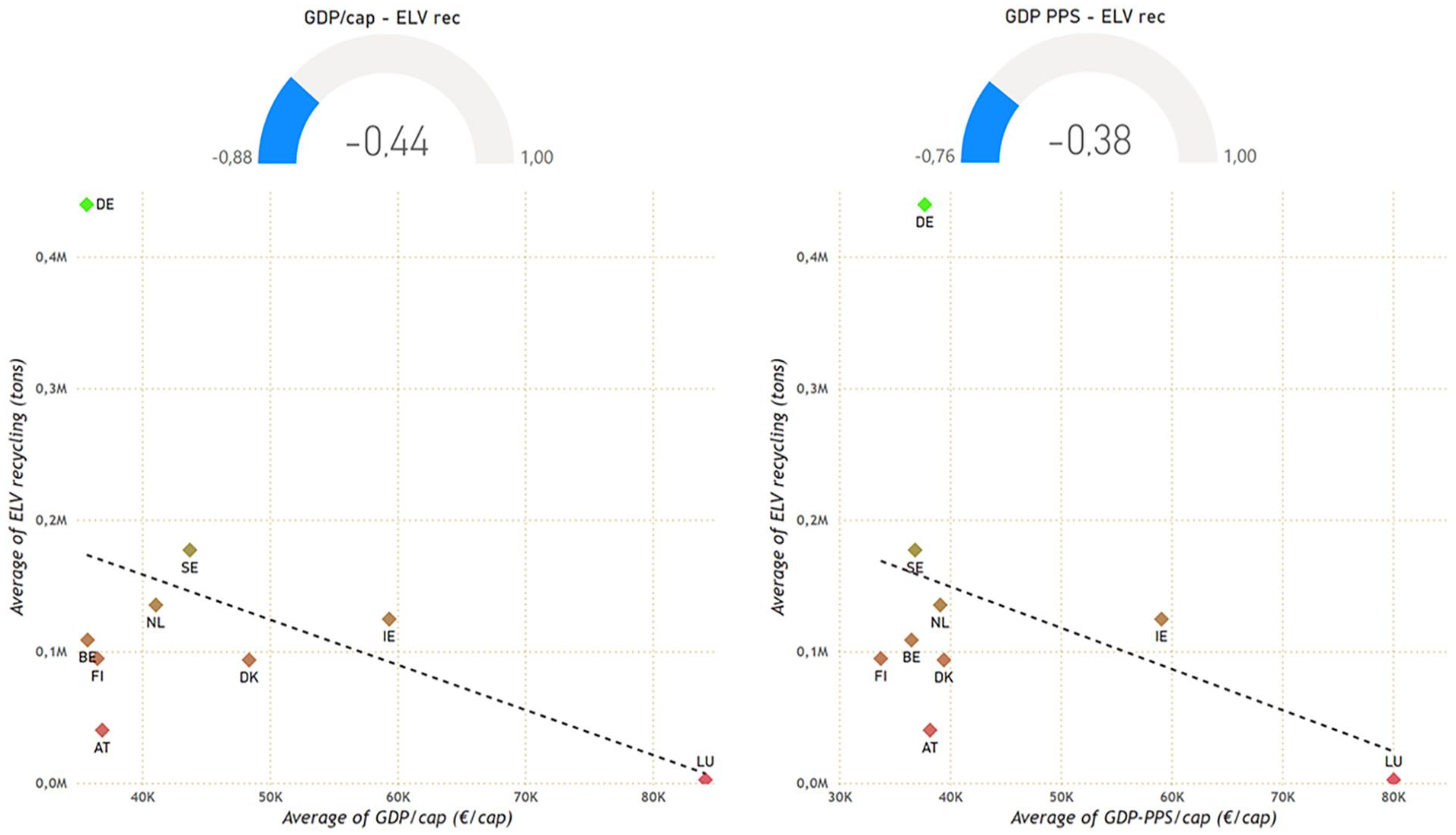
EU 27 countries correlation over 35,000 €/cap.
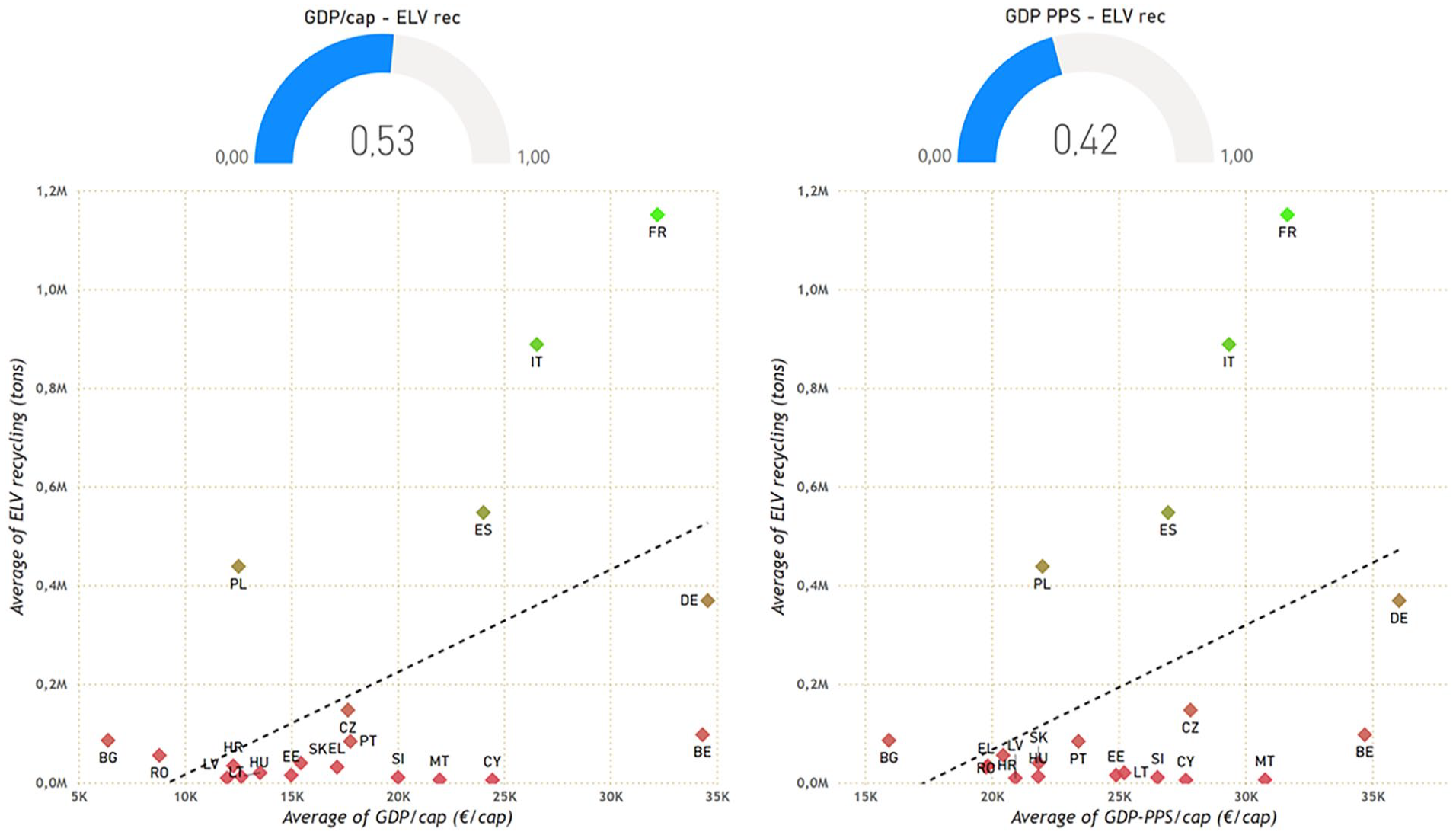
EU 27 countries correlation under 35,000 €/cap.
These groups of countries, diametrically opposed in terms of characteristics, justify the results obtained, highlighting the generation of ELVs and recycling inversely proportional to the GDP for the richest countries in EU 27, also considering the possibility for citizens to renew their car fleets before they become waste. In countries with a GDP/cap above 35,000 €/cap used vehicles are often exported to lower income countries rather than being recycled, thus reducing the number of ELVs. Furthermore, advanced technologies and more efficient practices can reduce the number of vehicles becoming ELV, with a greater emphasis on reuse and remanufacturing of parts. For the nations belonging to the cluster with GDP/cap lower than 35,000 €/cap, an increase in recycled ELVs directly proportional to the GDP is explained by the greater possibility of investments in adequate infrastructures linked to the recycling and energy recovery of ELVs, with the added resources that can be allocated to inventories, grants and programmes for the collection and treatment of ELVs.
The two critical parameters analysed (ELV recycling and GDP/cap) can be proposed in another way. Consequently, Figure 7 shows the performance of EU countries in ELV recycling calculated in tonnes/GDP per capita. It is clear how France represents a benchmark in the group of nations with a GDP lower than 35,000 €/cap, since it has always conducted important investments in waste management infrastructures, such as 126 waste-to-energy plants (for a 3.2 TWhour year−1 capacity) and 150 recycling plants with the French Paprec Group among the largest in Europe.
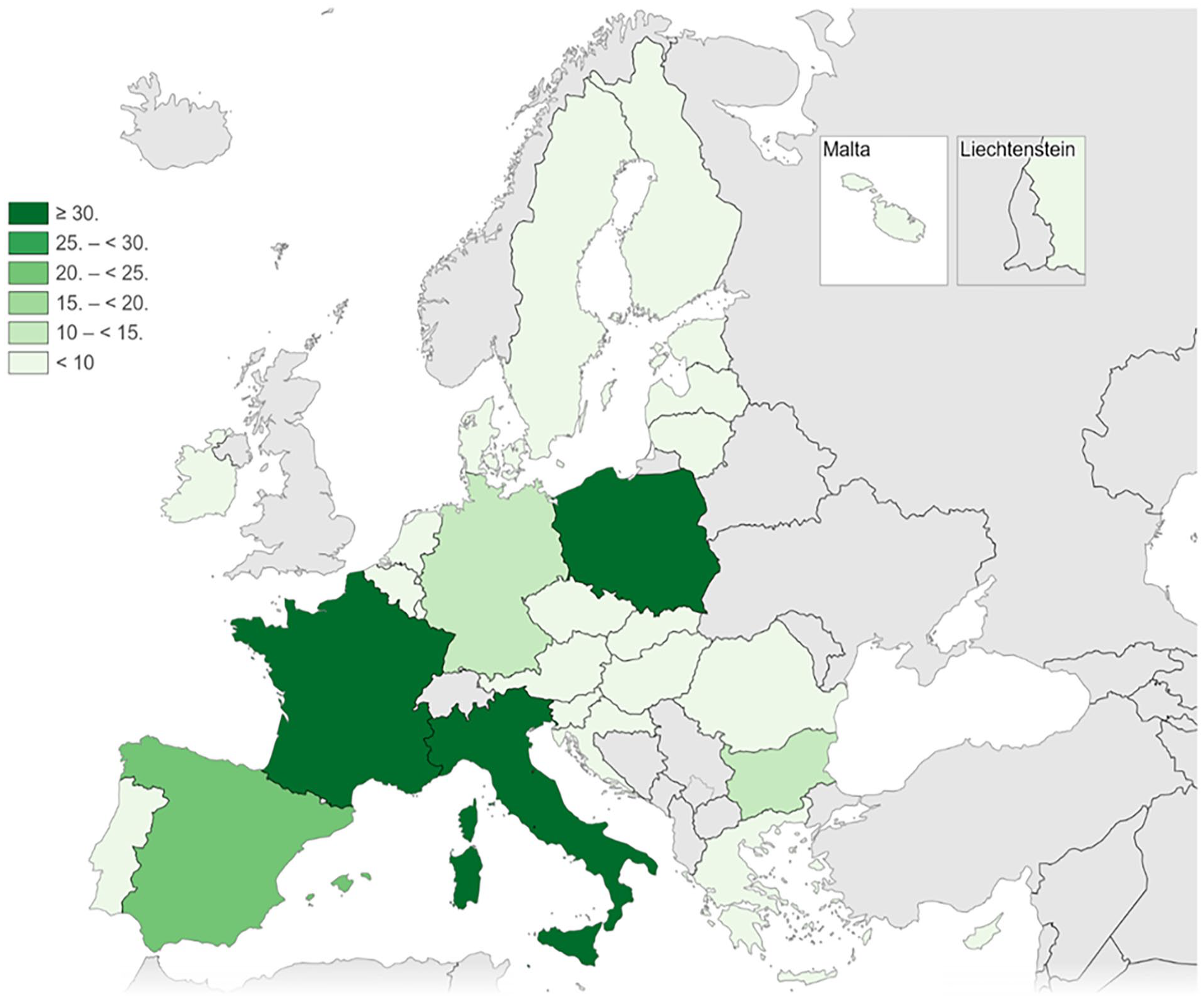
The ratio between ELV recycling and GDP per capita.
Italy and Poland are among the countries with the highest ELV recycling rates in Europe. However, the reasons behind these high rates are different for the two countries. In Italy, in 2020, the ELV reuse and recycling rate was 90.5%, slightly higher than the European average. This result is mainly attributable to European regulations that impose rigorous recycling standards, together with the efficiency of Italian infrastructure in managing the ELVs.
Poland, on the other hand, has recorded a surprisingly high reuse and recycling rate, sometimes over 100% in some reports, an anomaly due to several factors such as vehicle inventory management and export of vehicle components. This result is also attributed to specific methodologies for estimating metal content of vehicles and authorized treatment practices.
It can be seen that most of the European countries show values that are very far from those with the highest performance.
Discussion
Three obstacles must be overcome for circular economy models to flourish in Europe: (1) illegal waste management; (2) low investment and lack of knowledge in circular technologies and (3) unequal value distribution among stakeholders (D’Adamo et al., 2024b). The underlying problem is that circular economy rebound phenomena (Ferrante et al., 2024) or economic models that tend not to favour consumption may also be needed.
An uneven enforcement of ELV regulations across European countries is also a point to be discussed by the European Commission, as great heterogeneity has been seen in official datasets concerning recycling and circularity. Resource circularity indicates an effective use of resources that can also meet consumer needs (Huster et al., 2024). It is therefore crucial to propose social analyses that investigate these aspects. In fact, unsustainable behaviours also emerge, and depending on the categories of stakeholders considered, the perceived level of importance of recycling is different (D’Adamo et al., 2023). Collaboration with suppliers on green procurement are considered essential for the transformation of the automotive industry (Ghosh et al., 2023). Top management support and clear profitability conditions are seen as barriers towards circular and sustainable goals (Schöggl et al., 2024). In this direction, an integrated management system should be proposed that consider stakeholders (Ikram et al., 2019) in order to support the implementation of sustainable communities (Suguna et al., 2024).
The topic of ELV is defined to be relevant in previous literature reviews (Shrivastava et al., 2024; Yuik et al., 2022). The low number of our analysis can be attributed to the different perspectives with which the topic of ELV is investigated. It emerges, that in an era strongly oriented towards sustainability, this type of waste is also part of the need to address these challenges. The entire automotive sector requires analyses that move towards sustainability that not only address the use of green fuels but also appropriate end-of-life practices for cars on the road (Intamano et al., 2024; Lenort et al., 2023; Rizvi et al., 2023).
Some analysis have highlighted significant variability in the effectiveness of ELV management policies across Europe, identifying best practices in countries with stringent environmental policies and advanced recycling infrastructures (Korica et al., 2022). Other studies show that regions with stringent regulations and advanced recycling infrastructures, like Europe, achieve better outcomes in ELV management and circularity of materials compared to other regions that lack specific ELV regulations reinforcing the importance of robust policy frameworks in driving technological advancements and improving recycling rates (Singh et al., 2017; Soo et al., 2021). Models and suggestions provided by Simic (2019, 2016a, 2016b) have further expanded the comprehension of ELVs management’s challenges and decision-making processes using optimization methodologies, considering all frameworks presented as affected by uncertainty.
Sustainable ELV management is based on the three dimensions of sustainability; emission reductions related to recycling practices are highly significant (Mangmeechai, 2022), economic aspects are based on dismantling time, labour costs and logistical aspects (Arnold et al., 2021), and social analyses emphasize the role played by knowledge and institutional trust (Sitinjak et al., 2022). Informal aspects can undermine the development of ELVs (Molla et al., 2023b), but nevertheless even if people perceive the ELV management process positively, government input is required (Kumar et al., 2023). In this regard, a strategy of rewards and penalties is suggested to foster forms of collaboration for example between ELV manufacturers and third-party recyclers (Khan et al., 2021). However along with disposal procedures and regulation of ELVs, attention should be paid to abandoned vehicles (Ali et al., 2023).
Analysing the correlation between GDP and ELVs recycling, it has been found that with a GDP/cap lower than 35,000 €/cap stronger economies tend to recycle more ELVs, where strict regulations and a greater number of infrastructures help richer countries to boost circular economy through ELVs recycling, whereas on the other group, the phenomena previously mentioned, such as exports and the ability to renew car fleets more frequently, hold down the ELVs recycling rate. The correlation between GDP and ELV generation underscores the need for tailored policies to manage ELV waste effectively in the poorest and wealthiest countries, which respectively have lenient regulations and higher vehicle turnover rates.
Significant contributions have also been made by several automakers by focusing on the increase of secondary raw materials, improving recycling processes, ELVs tracking and traceability, increasing the percentage of recycled materials out of treated vehicles with more circular designs and collaborations with specialized recycling partners. Furthermore, adopting an integrated approach that considers economic, environmental and social aspects can help develop more effective and sustainable recycling strategies. For consumers, the work suggests policies that could promote a stronger civic responsibility towards sustainable mobility and the proper disposal of ELVs, such as incentive programmes for recycling and stricter enforcement of regulations. For businesses, there is a need to discuss how Europe can foster a competitive edge in circularity by investing in ELV recycling infrastructure and promoting industrial policies that incentivize vehicle design for recyclability.
Some limitations of the work are to extending the number of articles considered by evaluating and comparing other research strings; dynamic models to assess the relationship between the economic and technological variables related to the sustainable practices of ELVs management; social analyses to understand what citizens think about these issues and what policy approaches might be most appropriate and finally, quantitative analyses that provide rankings among European countries but also a global comparison.
Conclusions
This work has provided a comprehensive analysis of the sustainable practices in the management of ELVs across Europe, focusing on literature contributions to circular economy and SDGs.
With the SLR, several key insights have been revealed into the current state of ELV management. It highlighted the significant variability in recycling and recovery practices and the influence of national policies on these outcomes. The review emphasized the importance of advanced recycling technologies and stringent regulations in achieving high recycling rates. Additionally, the review has also included works that identified the challenges in recycling plastic and electronic components from ELVs, pointing to the need for innovation and improved separation technologies.
The main challenges identified following the study include the lack of adequate infrastructure, insufficient enforcement of existing regulations and low public awareness. However, the opportunities for improvement are numerous. Investments in recycling infrastructure, supporting EU policies and awareness campaigns can significantly increase recycling rates and reduce the environmental impact of ELVs. Promoting advanced recycling technologies, such as robotic disassembly and advanced material separation techniques, could further improve the efficiency of recycling processes. These investments, or in general, improvements, can be also reached through collaborations with vehicles manufacturers that can better monitor ELV streams through their network of authorized dealers and workshops, which in many cases are responsible themselves for ELV collection: the first step, as in the act of reaching car owners through personal contact and inform them about ELVs, could be a major factor in increasing the number of vehicles treated.
The implementation of digital tools such as blockchain for better traceability of ELVs, strengthening cross-border collaborations for recycling technologies and promoting public–private partnerships to build recycling infrastructure are also innovative points which are not talked about enough in current ELV research.
All findings of this work align with the objectives of SDG 12. By promoting efficient resource management and reducing waste through advanced recycling and recovery practices, this research contributes to the broader goal of sustainable production and consumption patterns. The emphasis on circular economy principles highlights the potential for significant environmental and economic benefits, aiding in the reduction of raw material consumption and the promotion of sustainability within the automotive industry.
The journey towards a circular economy represents a significant but necessary challenge to ensure a sustainable future. Efficient management of ELVs is a strategic component of this broader effort, holding substantial potential for reducing resource consumption and mitigating environmental impacts. Hopefully, this work has brought a deeper understanding of the factors influencing ELV management efficiency and provides actionable recommendations for policymakers and industry stakeholders.
Footnotes
Declaration of conflicting interests
The authors declared no potential conflicts of interest with respect to the research, authorship, and/or publication of this article.
Funding
The authors received no financial support for the research, authorship, and/or publication of this article.
