







Abstract
The rapid industrialization in China has led to significant environmental (especially the greenhouse effect) and human impacts resulting from the industrial hazardous waste (IHW) treatment. Given that incineration is the primary method of IHW disposal, it is imperative to conduct a thorough investigation into the characteristics of greenhouse gas (GHG) emissions and their mitigation based on the life-cycle assessment methodology. This study analysed the carbon emissions generated by the primary disposal systems within a typical IHW treatment park in Qingdao over a 3-year period. Of the park’s six systems, the carbon emissions from medical waste incineration in 2020 were found to be the highest, totalling 1,377 kg CO2-eq tonne−1. Furthermore, direct GHG emissions accounted for approximately 62% of the total emissions, while electricity and water consumption significantly contributed to indirect emissions. The study indicated a promising potential for GHG emissions reduction, with an estimated 35% decrease by 2022. Moreover, it was projected to yield 49,505 tonnes CO2-eq in carbon avoidance benefits through combined heat and power technology. A comparative analysis conducted in Shanghai highlighted its significance for advancing energy efficiency within the hazardous waste treatment sector. Consequently, this research is vital for formulating strategies to mitigate pollution and carbon emissions from IHW treatment parks.
Keywords
Highlights
Detailed GHG emissions of the HW park were calculated over 3 years.
Carbon emissions of each treatment system in the park were compared.
Conducting CHP technology was beneficial for the low-carbon emission in the park.
Highlighted the cruciality of energy utilization in mitigating carbon emissions.
Introduction
Climate change, driven by rising greenhouse gas (GHG) concentrations such as CO2, CH4 and N2O, intensifies the greenhouse effect, accelerating global warming and triggering environmental consequences like rising polar sea levels and ecosystem degradation, making it one of the most pressing challenges for humanity in the 21st century (Gallagher et al., 2019). The latest Intergovernmental Panel on Climate Change (IPCC) assessment report highlights that global GHG emissions reached record highs from 2010 to 2019, increasing from 52.5 to 59 billion tonnes, with an average annual growth of 1.3%. The report underscores the urgency of climate action and the challenges of limiting warming, calling for substantial emissions reduction in the coming decades and achieving net-zero CO2 emissions by around 2050 (Intergovernmental Panel on Climate Change [IPCC], 2021). Global efforts are being made to mitigate GHG emissions to combat global warming. China’s total GHG emissions contribute to 26.0% of global emissions. As the largest emitter of GHGs globally, China is under substantial pressure to mitigate its carbon emissions (Olivier and Peters, 2020). In 2020, the total GHG emissions from waste treatment in China amounted to 242 million tonnes of CO2 equivalent (CO2-eq; United Nations Framework Convention on Climate Change, 2022). To mitigate GHG emissions, the Chinese government has implemented strategies such as ‘Zero-Waste City’ construction and ‘Cleaner production’ in the industrial sector. The objective of enhancing the coordinated efficiency of pollution and carbon reduction has been integrated into key domestic policies as a crucial means to achieve ‘carbon peak’ (2030) and ‘carbon neutrality’ (2060). Moreover, this approach represents a significant step in implementing the ecological environmental protection management system in China.
Economic growth and rapid industrialization in China have led to a significant increase in the production of industrial hazardous waste (IHW). From 2010 to 2020, national hazardous waste (HW) production surged by 358.26%, reaching a total of 72.82 million tonnes (National Bureau of Statistics of China [NBSC], 2011, 2021). The rapid expansion of the industrial sector has raised concerns about the increasing demand for proper IHW disposal, and its management has garnered significant attention due to substantial ecological and health implications. Despite its relatively small contribution to the overall waste stream, IHW poses significant risks to human health and the environment (Hossain et al., 2020). Although infectious and toxic medical waste (MW) contributes minimally to the overall waste stream, it presents a serious threat to human health and the environment (Fikri et al., 2015). By the end of 2022, the national centralized disposal capacity for MW was approximately 2.8 million tonnes per year (NBSC, 2023). The treatment of MW is a complex aspect of waste management, with incineration being one of the most favoured methods despite its environmental risks (Sapuric et al., 2016). In addition, municipal solid waste (MSW) incinerators share similar primary technical specifications and operational parameters with MW incinerators, with instances of successful co-incineration of MW and MSW reported in the literature (Zhao et al., 2020).
The application of life cycle assessment (LCA) and life cycle inventory methodologies allowed for a precise evaluation of the overall environmental performance of waste management systems. As the most widely applied and effective modelling tool in waste management, LCA quantifies a product’s environmental impact throughout its entire lifecycle, from raw material extraction to final disposal (Christensen et al., 2020). It offers distinct advantages in assessing carbon emissions and exploring strategies for their reduction in waste disposal processes. For instance, Bian et al. (2022) applied the LCA method to assess carbon emissions associated with various domestic waste disposal methods in Qingdao city and optimized management strategies for low-carbon MSW disposal. Qiang et al. (2024) quantified the environmental benefits of packaging waste recycling by LCA method, reinforcing governmental commitment to promoting the sustainable utilization of recyclables. In China, LCA has also been used to quantify the environmental impacts associated with IHW and MW treatment and management, playing a key role in identifying critical factors for GHG reduction and mitigating potential environmental impacts (Hong et al., 2016). Similarly, Zhao et al. (2021) conducted a comprehensive evaluation of MW disposal and quantified the potential environmental impacts using the LCA method. However, the evaluation of carbon emissions from HW disposal in China primarily relied on the ‘GHG accounting methods and reporting guidelines for chemical production enterprises’ (NDRC, 2013), and existing research largely focus on resource utilization and toxicity assessments related to HW disposal. It is important to note that HW treatment is part of the environmental disposal industry, requiring significant consumption of fuel, water and chemicals for effective management. A comprehensive comparison of the two evaluation methods revealed that utilizing the full LCA method provided a more accurate estimation of carbon emissions from IHW treatment and disposal.
The detrimental effects of HW incineration on human health and the environment, compared to other forms of solid waste incineration, highlight the importance of low-carbon initiatives. Li et al. (2015) conducted an environmental impact assessment of rotary kiln incineration from IHW in eastern China, revealing that the integration of an energy recovery system in the IHW incineration process could mitigate adverse effects on human health and the environment. The integration of carbon capture, utilization and storage (CCUS) technologies in incineration plants is a widely adopted approach for mitigating carbon emissions (Huang et al., 2022). Flue gas recirculation, oxygen-enriched combustion and CO2 mineralization in fly ash enhance carbon capture by increasing CO2 concentration and promoting its reaction with alkaline oxides (CaO, MgO) to form stable carbonates. The mineralized materials can serve as secondary CO2 capture agents or be utilized in construction, contributing to emissions reduction and residue reutilization (Gao et al., 2025; Liu et al., 2023). Additionally, the steam thermal energy produced from HW incineration can serve as an alternative to traditional fossil fuels such as coke, coal and natural gas (comparable to cleaner renewable energy sources), offering a viable strategy for reducing carbon emissions (Sadala et al., 2019). Besides, by recovering and reusing the thermal energy generated by steam, along with the decentralized generation of green power through life cycle management, notable reductions in solid waste pollutants and carbon emissions can be achieved (Li et al., 2023). Consequently, the application of waste-to-energy (WtE) technology in solid waste management processes presents a promising approach for GHG reduction. However, given the significant differences between HW parks worldwide, conducting practical case studies is essential.
Based on the preceding discourse, this study employed the LCA methodology to assess the environmental impact of a HW disposal park in Qingdao, with a focus on GHG emissions. Specifically, the study estimated carbon emissions based on material and energy flows and evaluated the impact of technological reforms – including saline wastewater utilization, steam thermal energy recovery and combined heat and power (CHP) from incineration – on carbon reduction through scenario analysis. Assessing carbon emissions from each disposal system is crucial for gaining a comprehensive understanding of GHG emissions and advancing low-carbon initiatives. Further exploration of low-carbon strategies across the entire park could provide valuable insights for energy conservation and GHG reduction efforts in similar industrial treatment facilities.
Material and methods
Case description
Motivated by the goals of achieving ‘carbon peaking and carbon neutrality’ and establishing a ‘Zero-Waste City’, Qingdao has implemented significant initiatives to advance the development of solid waste disposal parks and ensure the effective management of harmless disposal of HW. This effort is exemplified by a representative chemical park in Qingdao (the focus of this study), engaged in the production of essential chemical raw materials, organic chemicals, agrochemicals and building materials. During its construction and operation phases, the park adopted advanced disposal equipment, rigorously monitored secondary pollution production and emerged as a leading example of environmental protection in the Qingdao region. The park has implemented three major incineration systems: HW incineration, MW incineration and HW/MW co-incineration. The incineration system utilizes a co-current rotary kiln followed by a secondary combustion chamber (SCC) to achieve complete waste degradation. The rotary kiln operates at a temperature range of 900°C–1,150°C, providing sufficient conditions for comprehensive thermal decomposition, with a residence time of 60–120 minutes. Combustion gases are subsequently directed to the SCC, where auxiliary burners maintain a temperature range of 1,100°C–1,180°C for a minimum duration of 2 seconds, ensuring the effective destruction of hazardous compounds, including dioxins, with a destruction efficiency exceeding 99.99%. The system uses multi-fuel burners, efficient waste feeding and durable refractory linings to optimize thermal efficiency and stability. Furthermore, supplementary physical (chemical) treatment, high-salinity wastewater treatment and fly ash/slag treatment systems have been incorporated. The material flow diagram is depicted in Figure 1. Data and detailed information for this study were derived from the processing system outlined above, as future described in section Life-cycle inventory and data sources.
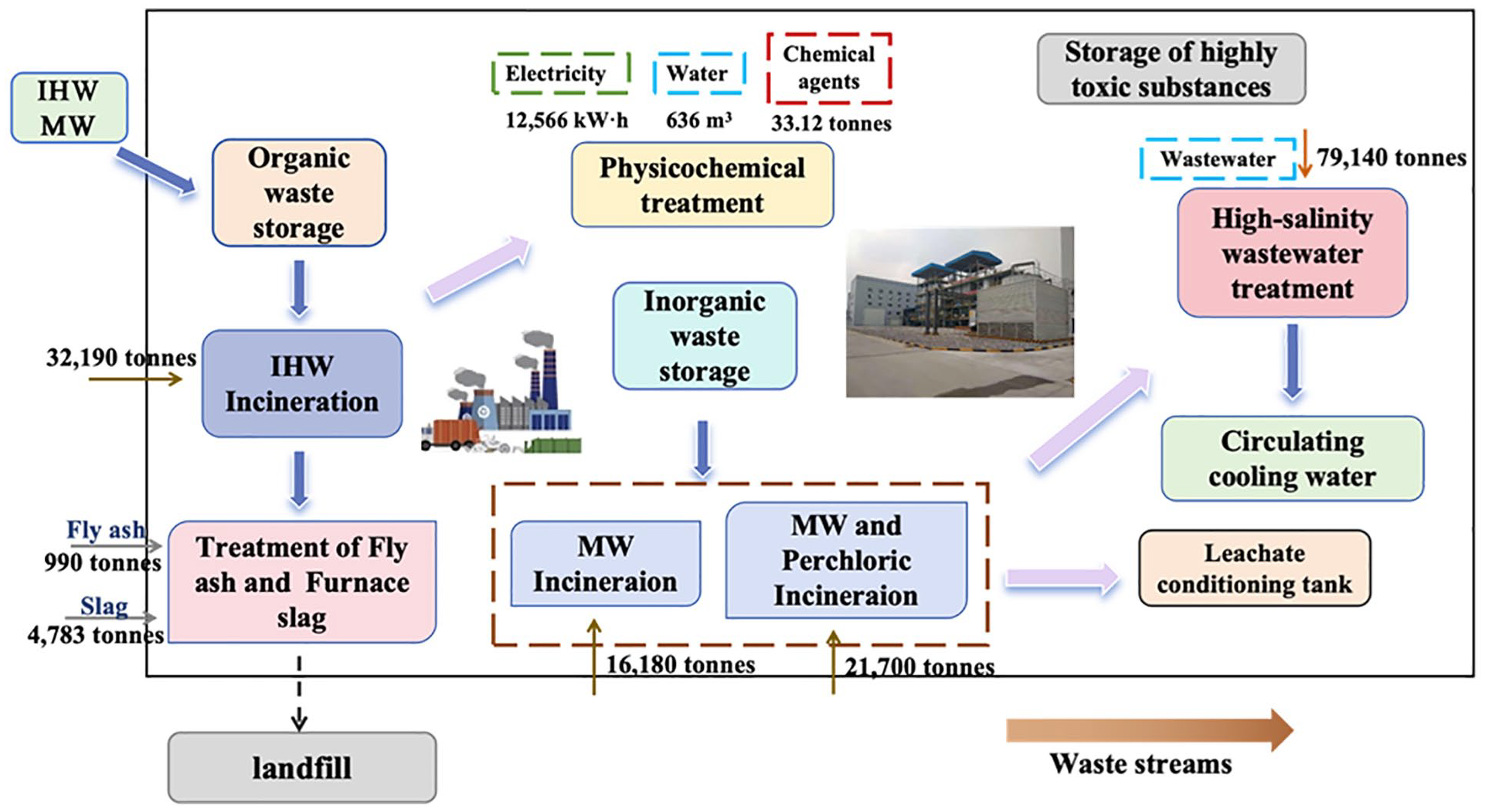
Information of material streams from study area (taking the information from 2022 as an example).
Goal and boundary definition
The LCA methodology is widely recognized as a valuable tool for decision-making in sustainability, particularly for assessing environmental impact (Han et al., 2023b). This study estimated GHG emissions from various treatment systems within the study area over 3 years using a comprehensive life-cycle carbon emissions assessment model. The system boundary and GHG emissions are visually represented in Figure 2. In order to provide a thorough evaluation of carbon emissions, emission types for each treatment system were calculated by IPCC guidelines (IPCC, 2006). A tier III approach of IPCC was primarily employed, integrating direct measurements and detailed modelling to ensure high accuracy in estimating emissions from HW treatment. Where direct data were unavailable, a tier II approach utilizing country- or region-specific emission factors was applied to enhance precision. This hybrid method optimizes both data reliability and methodological rigour. The goal of this study is to assess the carbon emissions associated with the treatment of various HW within an IHW disposal park. The scope is defined as a gate-to-gate analysis, focusing on the disposal processes within the park, including treatment and final disposal of HW, while excluding upstream and downstream impacts. The study employs two functional units: one based on the treatment and disposal of 1 tonne of HW, enabling a detailed comparison of carbon emissions per tonne of waste treated, and the other based on the total carbon emissions of the entire IHW treatment park, providing an overall view of the carbon impact of the park’s operations. Additionally, the GHGs identified in this study (CO2, CH4 and N2O) are recognized by the Kyoto Protocol as major emissions associated with combustion activities.
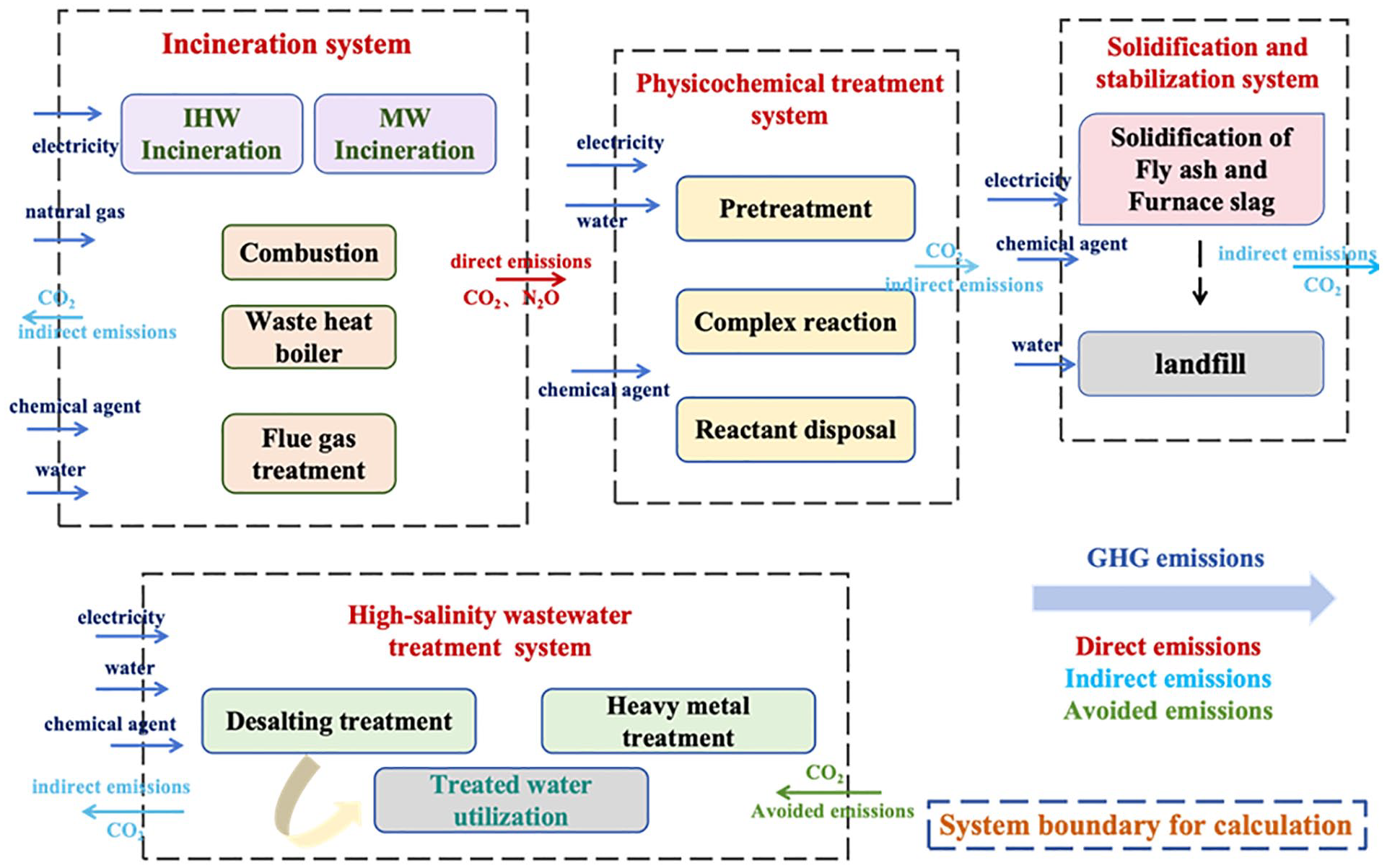
Schematic diagram of system boundary and GHG emissions.
Methodology for GHG emissions calculation
Direct GHG emissions
The primary sources of direct carbon emissions from waste disposal are the incineration processes for IHW and MW. The resulting CO2 emissions from these incineration activities can be calculated using the following formula (IPCC, 2006):

where

where N2OEmissions is the N2O emitted, kg; IWi is the mass of incineration waste of type i, kg; EF1 is the emission factor of N2O, 420 g tonne−1 (industrial waste; IPCC, 2006).
Due to the wide variety of HW incinerated in the park and the limited organic biomass content, the CO2 emissions from incineration were calculated using the method based on flue gas CO2 concentration (Han et al., 2023a). It is noteworthy that the direct emissions derived from the material accounting method, which uses the ratio of carbon content and moisture content of the waste, generally resulted in higher values. The relative standard deviation between the two calculation approaches ranged from 24.7% to 31.6% (Supplemental Table S1). A comprehensive comparison of the two methods indicates that the results obtained from method (1) provide a more accurate representation of the direct carbon emissions.
Indirect GHG emissions
The indirect GHG emissions associated with the park arise from the consumption of electricity, energy and water, the use of chemical agents and the treatment of fly ash and slag. The carbon emissions from fossil fuel consumption during the transportation of fly ash and furnace slag to landfills are considered negligible in this study due to their relatively minor contribution to the overall carbon footprint.
The carbon emissions resulting from electricity consumption during park operations can be quantified using the following formula:

where ECO2-power is the carbon emissions of electricity consumption, kg CO2-eq; Pt is the electricity consumption from the area, kW·hour; EF2 is the emission factor for electricity consumption, 0.5703 kg CO2-eq (kW·hour)−1 (Ministry of Ecology and Environment of People’s Republic of China, 2022).
The GHG emissions from the consumption of the auxiliary fuel (natural gas) used in incineration can be calculated by:

where Ef is the GHG emissions from the combustion of natural gas, tonne CO2-eq; Fuelconsumption is the consumption of natural gas for combustion as fuel, 104 Nm3; CC is the carbon content of natural gas, tc 104 Nm−3; OF is the carbon oxidation rate of fossil fuels, %.
The GHG emissions resulting from the addition of chemicals and the water consumption to corresponding disposal system are expressed as:


where Echemical is the carbon emissions from the addition of chemicals, kg CO2-eq; Mi is the quantity of chemical agent i used, kg; EF i is the emission factor for chemical agent i, kg CO2-eq kg−1; Ewater is the GHG emissions from water consumption, kg CO2-eq; Mwater is the total water consumed amount, m3; EF 3 is the carbon emission factor of industrial water demanding, 12.32 kg CO2-eq m−3.
The carbon emissions from treatment of fly ash and slag can be indicated by:


where Eash is the GHG emissions of fly ash disposal, kg CO2-eq; Mash is the treatment of fly ash, tonne; EF4 is the emission factor for fly ash disposal, 30 kg CO2-eq tonne−1 (Sun et al., 2023); Eslag is the GHG emissions of slag disposal, kg CO2-eq; Mslag is the disposal of slag, tonne; EF5 is the emission factor for slag treatment, 42.8 kg CO2-eq tonne−1 (China City Greenhouse Gas Working Group, 2022).
Carbon avoidance
The carbon avoidance from the park involves the utilization of steam thermal energy that exists from 2022 (a portion for external supply and the rest for self-use). The carbon avoidance generated by steam utilization for heating can be determined by:

where Ga1 is the GHG emissions from carbon avoidance, tonne CO2-eq; msteam is the annual steam output, tonne; Qnet is the calorific value of coal, 29,307 kJ kg−1; ηincimeration is the incineration efficiency, 90%; a is the coefficient of CO2 emission, 2.66 tCO2 tce−1; ∆Hsteam is the enthalpy of vapour, 2,783.4 kJ kg−1.
The emission reduction of power generation caused by CHP is presented as equation (10; taking co-incineration system as an example):

where Ga2 is the carbon avoided by electricity generation from the incineration, kg; M is the mass of the waste, kg; Qsteam is the total heat of steam generated by 1 tonne of waste, kJ kg−1; η is the power efficiency of incineration, 22.05% (Tsai and Kuo, 2010).
Net carbon emissions
The net GHG emissions in the park’s disposal sector are calculated by aggregating direct, indirect emissions and carbon avoidance values (negative values), according to IPCC guidelines. The global warming potential of N2O is 273 times greater than that of CO2 (Masson-Delmotte et al., 2021).
Life cycle inventory and data sources
The data used in carbon emissions inventory for waste disposal primarily come from the study area, laboratory results, relevant literature and expert input. Direct emissions data are detailed in Supplemental Table S2, while indirect emissions data are derived from available sources and environmental impact assessment reports. Emission factors are source from the IPCC, literature and the China City Greenhouse Gas Working Group (2022). Indirect emissions data for the IHW incineration system are described in Supplemental Table S3, whereas data for other disposal systems are provided in Supplemental Table S4. Information on carbon avoidance is detailed in Supplemental Table S5.
Results and discussion
Comparison of GHG emissions by disposal units
Figure 3(a) presents the GHG emissions results for the primary processes within each disposal unit. For the entire park, the net carbon emissions were 1,076, 995 and 755 kg CO2-eq tonne−1 for the IHW incineration system, 1,377, 1,314 and 1,042 kg CO2-eq tonne−1 for the MW incineration system and 951 kg CO2-eq tonne−1 (2022) for the co-incineration system, in 2020, 2021 and 2022, respectively. Additionally, the total carbon emission intensity of the physical and chemical treatment system was 8.47, 5.82 and 2.10 kg CO2-eq tonne−1, and the high-salinity wastewater treatment system emitted 3.38 kg CO2-eq tonne−1 in 2022. GHG emissions from fly ash/slag treatment were 9.70, 7.94 and 7.68 kg CO2-eq tonne−1. A detailed analysis of annual carbon emissions revealed that the disposal sectors of IHW incineration, MW incineration and physical (chemical) treatment systems recorded the highest levels in 2020. Over the past 3 years, carbon emissions from the chemical (physical) treatment system have shown a declining trend, primarily due to reductions in electricity, chemical and water consumption. In contrast, the incineration system experienced a significant decrease in carbon emissions in 2022, attributed to the implementation of carbon reduction strategies, such as the utilizing steam thermal energy for heating. Furthermore, the study found that the MW disposal system exhibited the highest GHG emissions, followed closely by the co-incineration and IHW incineration systems. These emissions were considerably higher than those of the physical (chemical) and fly ash/slag treatment system, primarily due to the substantial direct carbon emissions from combustion, as well as electricity, water and chemical consumption during disposal processes. Our findings align with those of Hong et al. (2016), who reported that the incineration scenario imposed the most significant environmental burden, whereas recycling had the least potential impact on climate change.
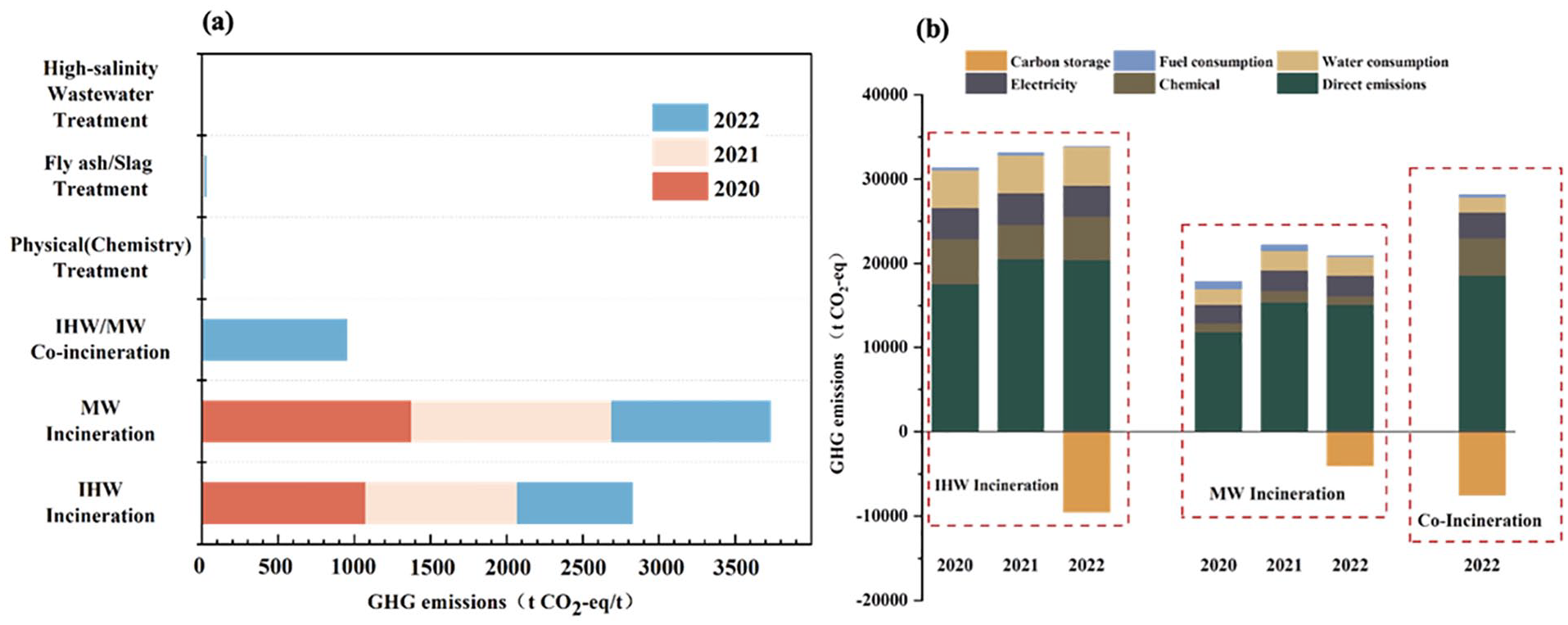
Characteristics of GHG emissions from the whole park: (a) GHG emissions from each disposal units, and (b) contribution of emission source from incineration systems.
Figure 3(b) illustrates the specific emissions contributions from three incineration systems (the carbon emissions from natural gas combustion in incineration systems account for less than 2.6% of the total indirect emissions, and therefore, are excluded from detailed calculation). In the incineration scenario, direct GHG emissions accounted for the majority, comprising approximately 62% of total emissions (both direct and indirect). Furthermore, indirect emissions from the incineration of IHW and MW were primarily attributed to the consumption of water and electricity, with a smaller portion resulting from fuel depletion. In contrast, in the co-incineration system, chemical agents emitted 204.93 kg CO2-eq tonne−1, representing approximately 47% of indirect emissions in 2022. This increase could be linked to the construction of a new treatment system and changes in the composition of incinerated waste, particularly IHW with higher chlorine content and MW, following compatibility adjustments. These findings align with those of Lin et al. (2014), who noted that elevated chloride levels in incinerators could lead to an increase in CO2 emissions. Additionally, the carbon sequestration capacity was greatest in the IHW system, followed by the co-incineration and MW incineration systems, mainly due to variations in steam generation resulting from different combustion substances. Due to the intricate nature of the waste and confidentiality constraints, a detailed sensitivity analysis of the waste composition could not be conducted in this study. If conditions permit, we will strive to perform a sensitivity analysis in future studies.
Net carbon emissions from the whole study area
Figure 4 illustrates the net GHG emissions, including direct emissions, indirect emissions and avoided carbon emissions across the study area. Specifically, total direct carbon emissions in 2020, 2021 and 2022 were 29,419, 35,968 and 54,115 tonnes CO2-eq, respectively. Concurrently, indirect emissions for the 3 years were estimated at 20,250, 19,772 and 30,241 tonnes CO2-eq. A reduction of 22,011 tonnes CO₂-eq in carbon emissions was observed in 2022. The net GHG emissions for 2020, 2021 and 2022 were calculated as 49,669, 55,740 and 62,345 tonnes CO2-eq, respectively. Despite the implementation of steam reuse for heating in 2022, the park’s carbon reduction efforts were offset by the addition of a co-incineration line and a high-salinity wastewater treatment system.
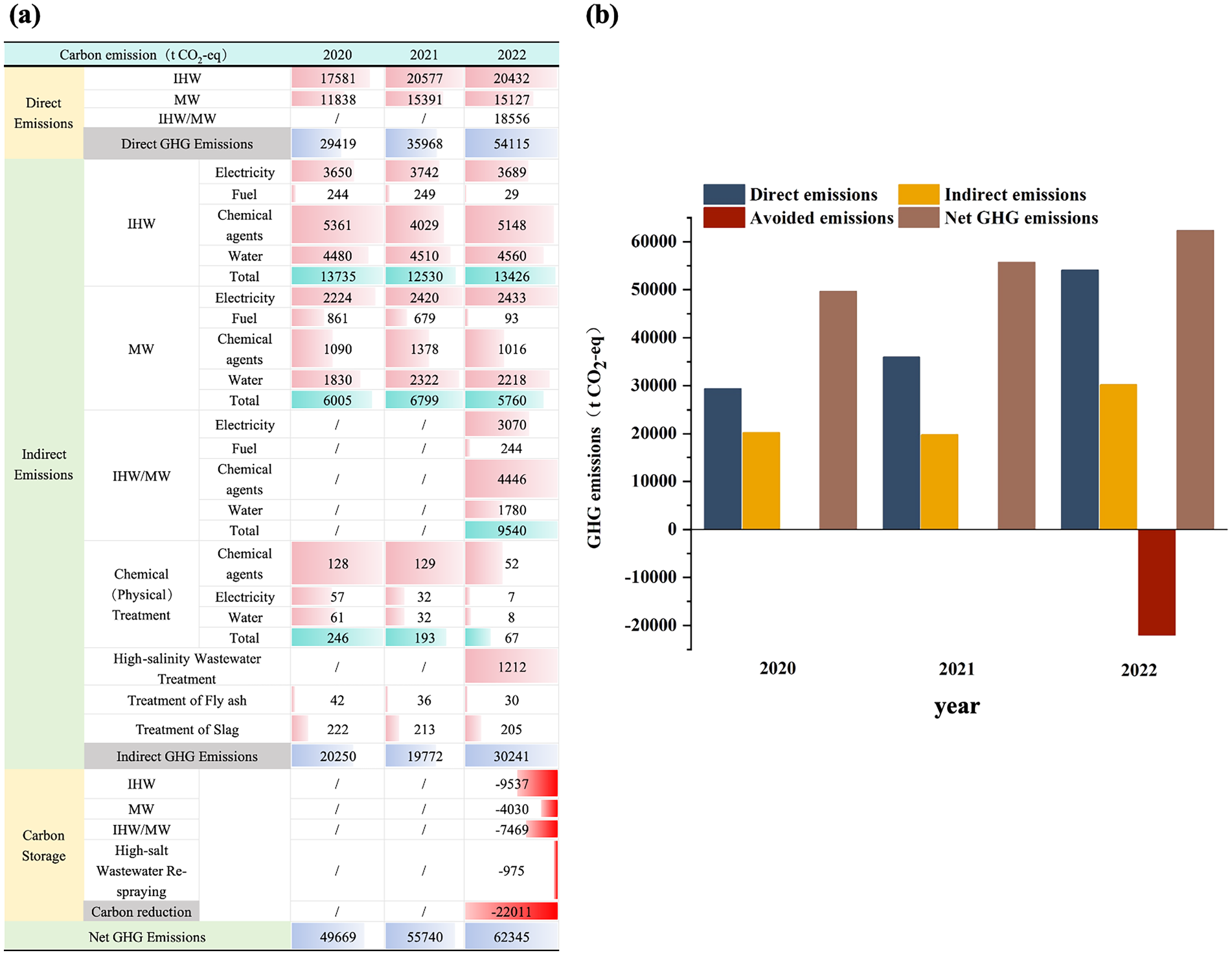
Detailed evaluation results of the park. (a) Carbon emissions from each treatment process, (b) net carbon emission of the whole park.
Moreover, direct emissions from the entire park contributed significantly to total GHG emissions, accounting for approximately 59% and 65% (direct and indirect emissions) in 2020 and 2021, respectively. In contrast, indirect emissions accounted for a smaller share, comprising approximately 41% and 35% during the same period. By utilizing steam thermal energy and reusing treated high-salinity wastewater, carbon emissions were estimated to be reduced by approximately 22,011 tonnes CO2-eq, representing 35% of net carbon emissions in 2022. In 2020, MW exhibited the highest carbon emission intensity among direct emissions, primarily due to the elevated flue gas flow resulting from its material composition (predominantly high-plastic content) and the incineration of substantial quantities of waste. The volume and concentration of flue gas were directly correlated with carbon emissions (Wang et al., 2018). Indirect emissions have consistently increased over the past 3 years, primarily due to the depletion of chemical agents and water consumption, as discussed earlier. Regarding carbon avoidance, the use of steam thermal energy for both external supply and internal consumption has effectively reduced GHG emissions. Specifically, the external supply of thermal energy is equivalent to the sale of approximately 10,000 tonnes of standard coal per year, resulting in an additional reduction of 26,000 tonnes of CO2-eq. Moreover, utilizing high-salinity wastewater in quench tower operations can conserve about 80,000 tonnes of water annually, leading to an estimated reduction of 1,000 tonnes of CO2-eq. The integration of technologies to optimize the use of steam and thermal energy produced through waste incineration has proven to be a valuable strategy for enhancing carbon mitigation and alleviating environmental pressures (Sabagh et al., 2023).
Carbon reduction exploration
Previous studies have highlighted the environmental benefits of WtE incineration, particularly in terms of GHG emissions reduction. This study aimed to explore the potential for GHG emissions reduction through power generation and CHP.
Implied carbon reduction
The overall implied carbon reduction at the park includes the recycling of scrap iron drums and the reduced consumption of steam and electricity through the reuse of high-salinity wastewater in a triple-effect evaporation system, which is not yet operational.
Scrap iron drums, including waste paint drums, waste emulsion tanks and waste packaging bottles, were sent to a third-party company for recycling, potentially reducing GHG emissions for downstream enterprise. In 2022, over 200 tonnes of scrap iron drums were processed into steel products at the park. Recycling of 1 tonne of scrap iron drums results in an avoidance of 2,300 kg of carbon emissions, totalling 489 tonnes CO2-eq. Scrap iron exhibits favourable regeneration characteristics, including reduced material costs, lower energy consumption and decreased flue gas emissions compared to traditional ironmaking processes, offering notable economic and environmental advantages (Li et al., 2020). Moreover, high-salinity wastewater is typically treated using the three-effect evaporation system, which requires substantial amounts of steam and electricity. Consequently, the reutilization of high-salinity wastewater after desalination with chemical agents provides a means of mitigating indirect carbon emissions from steam and power consumption. As the three-effect evaporation system is not currently operational, the potential reuse of high-salinity wastewater could lead to a reduction of approximately 30,000 tonnes of steam consumption, resulting in an implied reductions of 8,884 tonnes CO2-eq emissions from steam and 948 tonnes CO2-eq emissions from electricity. This would total an avoided GHG emissions of 9,832 tonnes CO2-eq. Therefore, calculating potential emissions reduction is essential for understanding the actual carbon emissions from the park.
Enhancement of technological transformation
The application of innovative technologies plays a crucial role in HW management (Li et al., 2015). This study underscores the importance of conserving water and electricity, optimizing waste treatment processes and reducing the consumption of chemical agents to effectively mitigate indirect emissions and enhance carbon reduction efforts. The carbon emissions reduction, calculated based on the emission factors for water and electricity consumption in the park, were 12.3 kg each kilogram of water conserved and 0.9 kg (kW·hour)−1 of electricity conserved, respectively, through the use of clean energy sources such as wind and solar power. Furthermore, optimizing waste treatment processes that require additional chemical agents could reduce chemical consumption, thereby preventing approximately 0.001–0.003 kg CO2-eq tonne−1 of carbon emissions.
In addition, incineration power generation represents a critical strategy for the waste treatment industry, requiring relatively less financial investment and demonstrating strong performance in emissions reduction (Kourkoumpas et al., 2015). Guo et al. (2018) conducted an environmental impact assessment of waste incineration within industrial parks using the LCA method. Their findings revealed that incineration for power generation resulted in a substantial reduction in GHG emissions compared to CHP. However, a similar conclusion was not observed in this study, due to the differing characteristics of the incinerated materials. Aligned with the current fuel consumption patterns in the research area, a 1% improvement in heat utilization efficiency through CHP technology, calculated using externally sourced data (with 50% of thermal energy allocated to power generation and 50% to heating), could potentially reduce emissions by an estimated 245.34 kg CO2-eq tonne−1. Based on historical waste treatment data from the past 3 years, specifically 32,000 tonnes of IHW, 16,000 tonnes of MW and 22,000 tonnes of co-incineration waste, the implementation of CHP could lead to a carbon emissions reduction of approximately 17,173 tonnes CO2-eq, representing a 20.35% decrease in total carbon emissions (both direct and indirect). In comparison, power generation alone could reduce carbon emissions by 11,178 tonnes CO2-eq, equivalent to approximately 13.25% of the total carbon emissions of the park.
CHP technologies, through various approaches, not only enhance the energy efficiency of treatment systems but also provide significant benefits in reducing GHG emissions (Yang et al., 2019). On one hand, they utilize residual steam heat for heating, thereby reducing fuel consumption. On the other hand, steam power generation enhances carbon emissions reduction performance. Additionally, minor adjustments to system configurations, such as integrating waste heat recovery devices into exhaust systems, can yield substantial economic and environmental benefits, with potential energy efficiency improvements of up to 95% (Alrobaian, 2020). Moreover, the flue gas treatment technology employed at the park is considered cutting-edge and widely adopted globally. This technology not only offers high efficiency in pollutant removal but also provides several advantages, including cost-effectiveness, simplicity, zero waste generation and a pollutant removal rate exceeding 99.8%. Therefore, enhancing technological transformation could offer a positive advantage for relevant managers in mitigate GHG emissions.
Future GHG emissions from a low-carbon model exploration
Based on the assumptions and estimations provided, the total potential carbon emissions reduction achievable from the park in the future is illustrated in Figure 5. The park demonstrates significant promise for carbon mitigation moving forward. Findings from related studies have underscored the influence of technological advancements, economic factors, policy considerations and public attitudes on carbon reduction efforts. Enhancing treatment technologies and exploring opportunities for energy conservation are critical strategies for reducing carbon emissions in the future. Empirical evidence suggests that the integration of various technologies into treatment systems, combined with the implementation of related policies, could lead to a 287.28% improvement in carbon reduction performance (Xiao et al., 2023). Therefore, in addition to utilizing the residual thermal energy from cogeneration plants for heat supply systems, it is essential for both government and community stakeholders to engage in transparent communication to address common misconceptions such as ‘Nimby’ (not in my back yard) (He and Lin, 2019).
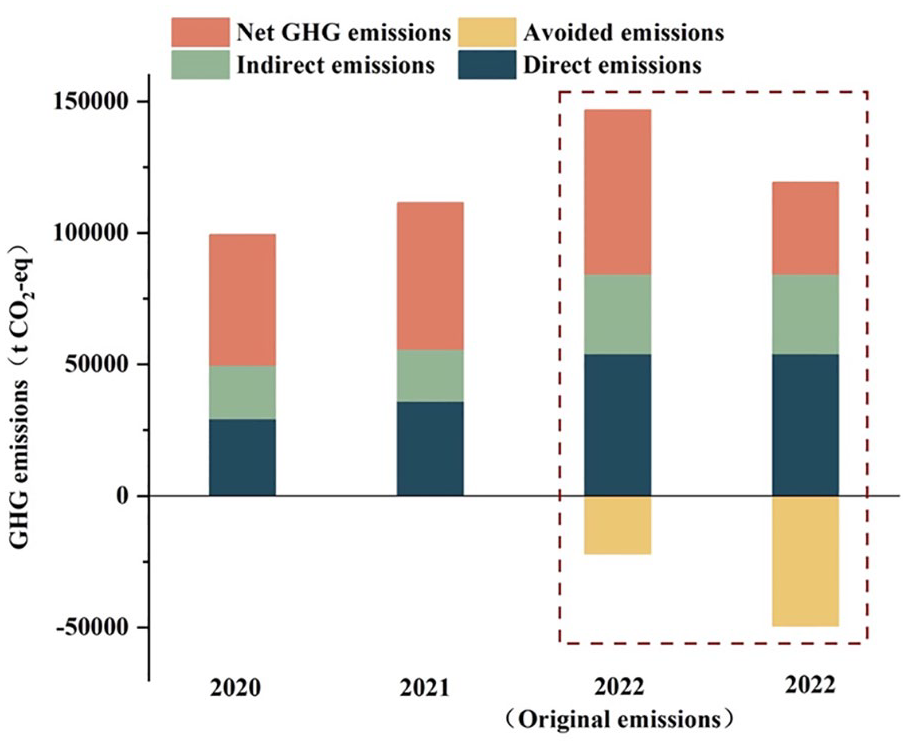
GHG emission based on assumptions of carbon reduction (including former estimation).
Comparisons with other integrated HW disposal parks in China can offer valuable insights into the management and technological strategies employed to reduce pollution and carbon emissions. This comparison was made by analysing the energy efficiency and carbon mitigation of two typical IHW disposal parks in 2022, with a focus on energy saving, water conservation and carbon reduction (Table 1). The findings of this study demonstrated superior performance in energy conservation and carbon mitigation compared to a HW disposal facility in Shanghai, China. To further enhance carbon emissions reduction, it is recommended to explore the integrating photovoltaic power generation with waste treatment systems, drawing inspiration from successful practices. Additionally, intelligent management systems were crucial in optimizing overall operational efficiency. The integration of a ‘Zero-Waste City’ framework, along with carbon footprint analysis in industrial parks (Wang et al., 2019) using advanced methodologies (Li et al., 2023), holds the great potential for achieving significant reductions in GHG emissions.
Comparison of energy saving and carbon reduction in IHW disposal parks (Qingdao and Shanghai).
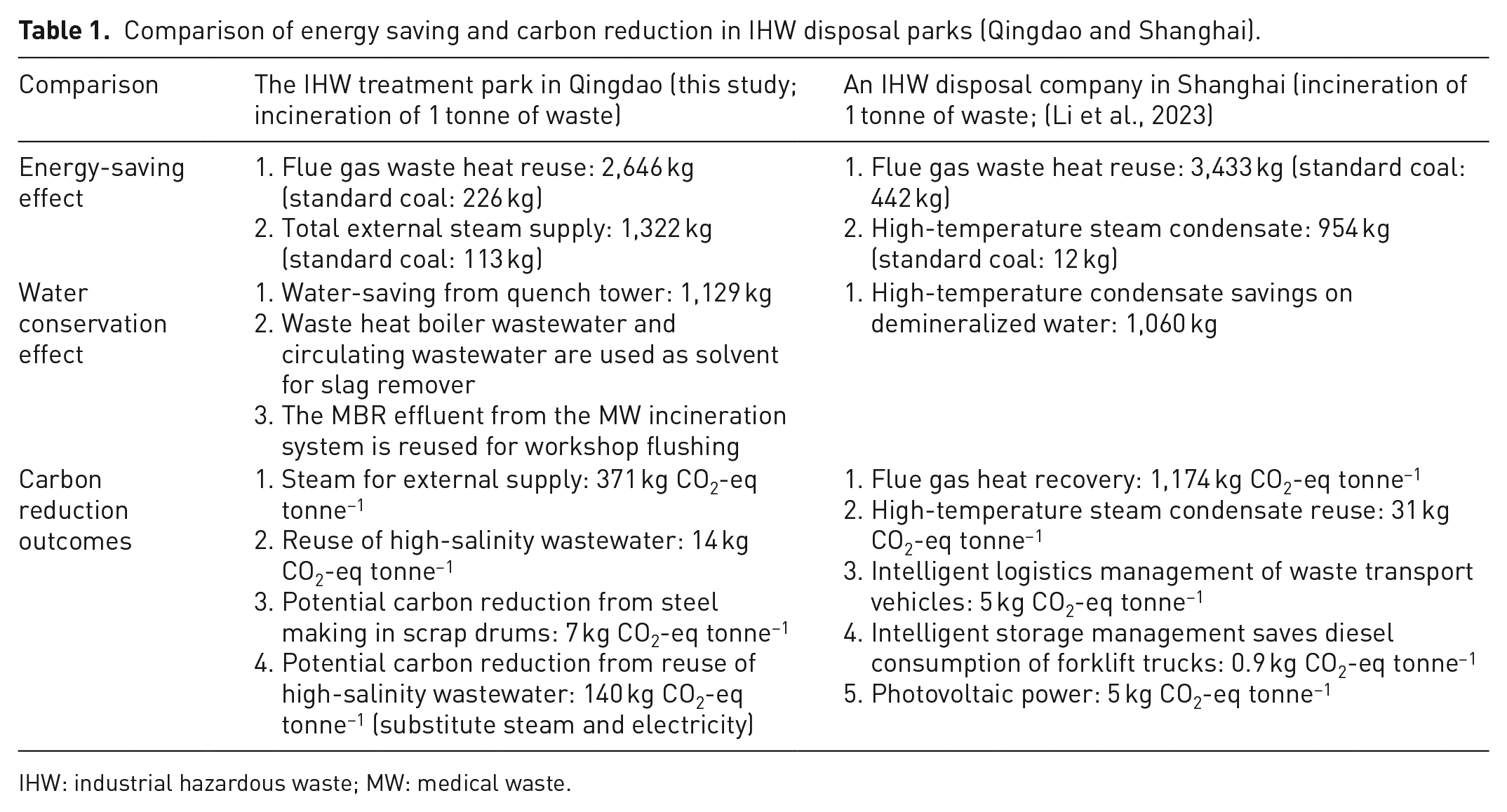
IHW: industrial hazardous waste; MW: medical waste.
Conclusions
In this study, GHG emissions from a representative IHW disposal park in Qingdao over a 3-year period were estimated using the LCA method. Additionally, an analysis of the park’s operational context was conducted to assess its potential for carbon emissions reduction, which was then compared to a typical IHW treatment facility in China. Based on these findings, the study reached the following conclusions: (1) the park comprises six primary systems, with variations in carbon emissions resulting from differences in waste composition and the application of various treatment techniques. The GHG emissions from the MW treatment system were the highest, reaching 1,377 kg CO2-eq tonne−1 in 2020. Notably, a significant increase in carbon avoidance was observed in 2022, amounting to 22,011 tonnes CO2-eq, which accounted for 35% of total emissions. (2) The park demonstrated substantial potential for carbon emissions reduction. The implementation of carbon mitigation strategies, such as CHP systems, could lead to a reduction of 49,505 tonnes CO2-eq in the park’s future carbon emissions. (3) Compared to the typical IHW incineration park in Shanghai, this study demonstrated significant benefits in energy savings and emission reduction. The findings are crucial for developing strategies to mitigate pollution and carbon emissions in IHW disposal parks. To enhance the comprehensiveness of further research, it is recommended that additional environmental impacts, such as human toxicity, be assessed. Furthermore, further exploration of economic performance using life cycle cost methods should be pursued.
Supplemental Material
sj-docx-1-wmr-10.1177_0734242X251359419 – Supplemental material for Greenhouse gas emissions analysis from industrial hazardous waste treatment: A case study in Qingdao, China
Supplemental material, sj-docx-1-wmr-10.1177_0734242X251359419 for Greenhouse gas emissions analysis from industrial hazardous waste treatment: A case study in Qingdao, China by Chenqi Gao, Rongxing Bian, Haiyu Jiang, Chengyue Yin, Runze Zhu, Haoran Han, Yingjie Sun and Ya’nan Wang in Waste Management & Research
Footnotes
Author contributions
Chenqi Gao: Conceptualization, Methodology, Writing – original draft. Rongxing Bian: Funding acquisition, Formal analysis, Writing – review & editing. Haiyu Jiang: Investigation. Chengyue Yin: Supervision, Funding acquisition. Runze Zhu: Investigation. Haoran Han: Investigation, Funding acquisition. Yingjie Sun: Supervision. Ya’nan Wang: Supervision.
Declaration of conflicting interests
The authors declared no potential conflicts of interest with respect to the research, authorship, and/or publication of this article.
Funding
The authors disclosed receipt of the following financial support for the research, authorship, and/or publication of this article: This work was financially supported by National Natural Science Foundation of China (Grant Nos. 52000112 and 52370139), China Postdoctoral Science Foundation (Grant No. 2022M711747), Youth Innovation Technology Project of Higher School in Shandong Province (No. 2023KJ117) and Innovation and Entrepreneurship Plan Project of Shandong Province College Student (S202310429204).

Supplemental material
Supplemental material for this article is available online.
References
Supplementary Material
Please find the following supplemental material available below.
For Open Access articles published under a Creative Commons License, all supplemental material carries the same license as the article it is associated with.
For non-Open Access articles published, all supplemental material carries a non-exclusive license, and permission requests for re-use of supplemental material or any part of supplemental material shall be sent directly to the copyright owner as specified in the copyright notice associated with the article.
