







Abstract
Escalating waste generation and resource depletion necessitate zero waste (ZW) approaches rooted in circular economy (CE) and sustainability. Successfully implementing these requires measuring individual ZW consciousness, yet valid, multidimensional scales are limited. This study addresses this gap by developing and validating the Zero Waste Consciousness Scale (ZWCS). The systematic process involved: (1) item pool creation from literature; (2) expert content validation (N = 6); (3) data collection from two distinct samples (pilot N = 462, validation N = 500) using a 5-point Likert scale and (4) exploratory factor analysis (EFA) and confirmatory factor analysis (CFA) for psychometric evaluation. EFA revealed a novel six-factor structure (‘Motivation and Awareness’, ‘Existing Infrastructure’, ‘Knowledge’, ‘Behaviour’, ‘Intention’, ‘Practice’) with 34 items, explaining 64.75% of total variance. CFA confirmed good model fit (χ²/df = 3.00, RMSEA = 0.07, CFI/TLI/IFI = 0.90). Reliability analyses showed high internal consistency. The ZWCS is a psychometrically sound, valid and reliable multidimensional instrument, filling a distinct gap for measuring ZW consciousness. This novel tool offers potential for research, evaluation and policy-making related to ZW, CE and sustainability.
Keywords
Introduction
Historically perceived as inevitable, escalating solid waste generation driven by population growth and industrialization, coupled with resource depletion, poses significant environmental threats (Çankaya and Sezen, 2019; Munir et al., 2024; Zaman and Swapan, 2016). Global municipal solid waste production is projected to reach 3.4 billion tonnes by 2050 (Munir et al., 2024). Facing the unsustainable linear ‘take-make-dispose’ model, approaches emphasizing resource efficiency and reuse, namely circular economy (CE) and zero waste (ZW; Agyabeng-Mensah et al., 2021; Awasthi, 2023; Munir et al., 2024), necessitate an urgent paradigm shift. These align with sustainable development goals (SDGs 12; Geissdoerfer et al., 2017; Kanojia and Visvanathan, 2021; Zaman, 2022), with ZW philosophy emphasizing prevention, reuse and recycling (Lansink, 2018; Lugo et al., 2020).
Effective implementation of CE and ZW frameworks requires coordinated action across policy, technology and crucial stakeholder engagement (Awasthi et al., 2021; Lee et al., 2020; Nassani et al., 2023). However, this transition faces numerous barriers, such as financial and regulatory limitations (Ayçin and Kayapinar Kaya, 2021; Langen et al., 2021), inadequate infrastructure (Aiguobarueghian et al., 2024; Debrah et al., 2021) and critically, resistance to behavioural change and lack of awareness/knowledge (Debrah et al., 2021; Langen et al., 2021; Trivedi et al., 2025). The critical role of individual attitudes and behaviours in achieving policy goals is underscored (Özcan and Meydan, 2024). Low education/awareness and practical knowledge deficits among educators also reinforce these barriers (Bentil et al., 2024; Debrah et al., 2021; Kayış and Yıldırım, 2022).
Türkiye faces significant waste management (WM) challenges, including high landfill dependency and low recycling rates (Ikizoglu, 2024a, 2024b). To address this, national action plans like the Zero Waste Project (initiated in 2017) have been launched (Ikizoglu, 2024a), which represents a key national strategy to improve WM and promote ZW principles. The success of this project relies heavily on individual behavioural adoption (Coşkun, 2021; Ikizoglu, 2024a, 2024b). Existing literature indicates that insufficient education/awareness, behavioural resistance and limitations in measurement tools impede ZW/CE implementation.
Previous studies have developed scales and conducted surveys measuring specific aspects of ZW awareness, attitudes or behaviours. In Türkiye, similar studies include Coşkun (2022; three-factor behaviour scale), Kayış and Yıldırım (2022; three-factor awareness scale for teacher candidates), Özcan and Meydan (2024; three-factor awareness scale) and Ikizoglu (2024b; seven-subdimension behaviour scale). These studies highlight individual factors but often focus on specific populations or limited dimensions. International studies or broader assessments identifying data/framework gaps (Lugo et al., 2020; Macin et al., 2025; Voukkali et al., 2023) collectively indicate a lack of a psychometrically sound, comprehensive, multidimensional scale measuring holistic ‘Zero Waste Consciousness – ZWC’, particularly in the Turkish context. This represents a critical research gap.
Addressing this critical research gap, the primary objective was to develop and validate the Zero Waste Consciousness Scale (ZWCS), a multidimensional, valid and reliable scale for measuring ZWC in Türkiye. Drawing on existing literature regarding behavioural barriers and measurement challenges and methodological principles from Turkish scale studies (Kayış and Yıldırım, 2022; Özcan and Meydan, 2024), the study aimed to operationalize multidimensional ZWC. The developed ZWCS structure includes seven factors: ‘Motivation and Awareness’, ‘Existing Infrastructure’, ‘Knowledge’, ‘Behaviour/Practice’, ‘Intention’, ‘Role of Administrators/Legal Status’ and ‘Understanding of Circular Economy and Sustainable Environment’.
The key contributions of this study are: (1) the development and validation of the first multidimensional ZWCS specifically for the Turkish context; (2) the identification and validation of a novel multi-factor structure reflecting holistic ‘consciousness’ and (3) providing a psychometrically sound tool addressing the need for comprehensive measurement of behavioural factors and consumer participation, crucial for ZW initiatives.
Materials and methods
This study aimed to develop and validate a multidimensional scale for measuring ZWC among individuals within the broader framework of CE and sustainability. Given the study’s objective to develop and validate a psychometric instrument, a quantitative research approach employing a descriptive survey design was deemed most appropriate (Büyüköztürk et al., 2016; Karasar, 2007). Scale development and validation efforts were conducted using a rigorous, multi-phase approach, following established guidelines for psychological and educational scale construction (Cohen and Swerdlik, 2009; DeVellis, 2017; Kayış and Yıldırım, 2022; Netemeyer et al., 2003; Özcan and Meydan, 2024).
Data collection tool: The ZWCS
The study utilized a newly developed, researcher-designed instrument: the ZWCS, featuring a 5-point Likert-type scale format. Based on a literature review, the scale began with a draft pool of 59 items covering topics such as zero waste definition, environmental behaviour, WM, individual attitudes, motivation, knowledge, infrastructure, CE and intention (see. Supplementary Material A). Content validity was ensured by obtaining opinions from six experts in the fields of educational measurement and environmental engineering (Lawshe, 1975; Polit and Beck, 2006). Items were revised based on expert feedback to form the final draft pool.
Study phases and participants
The research was conducted in two main phases for scale development and validation:
Phase 1: Pilot study (exploratory factor analysis)
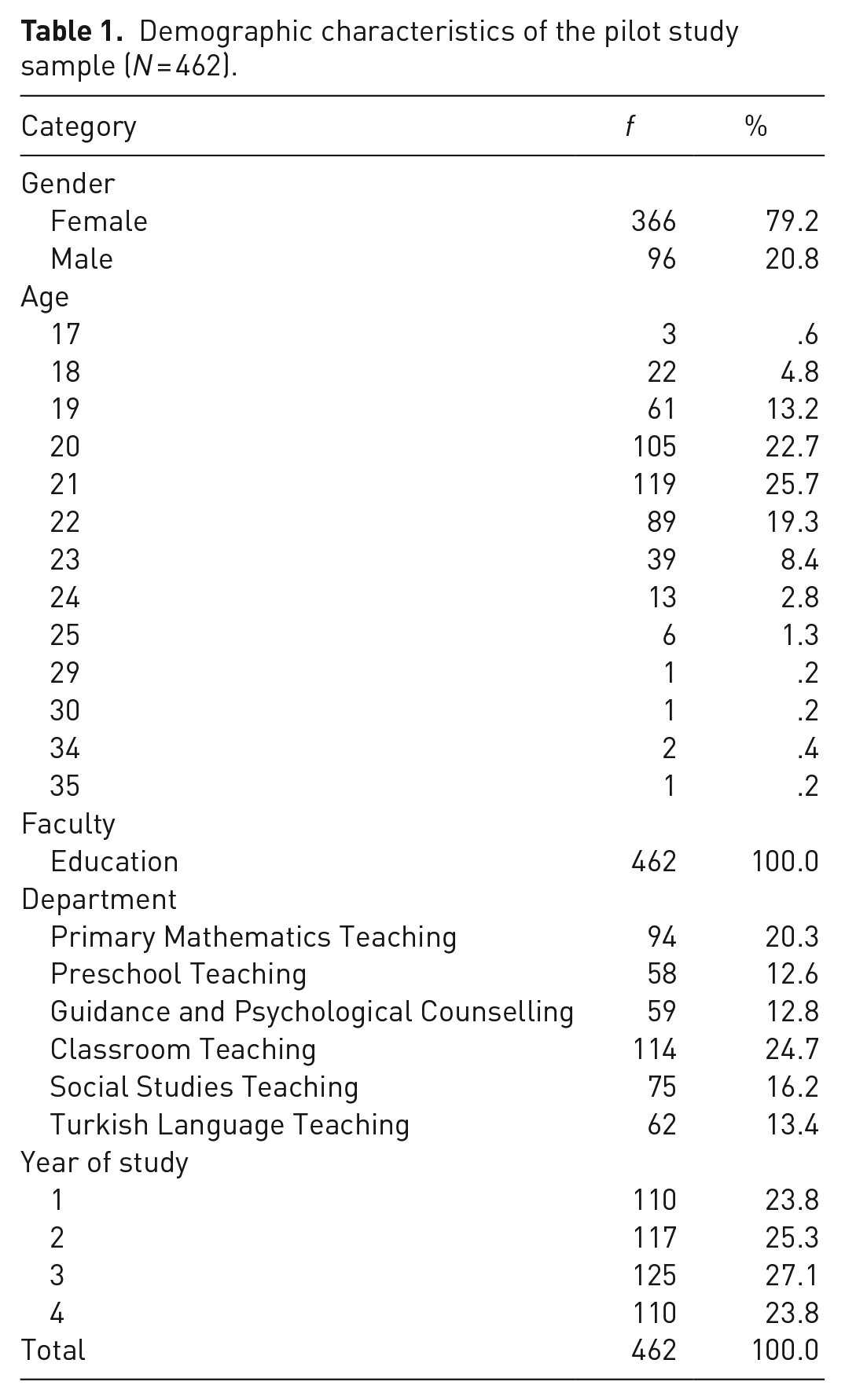
The primary goal of this phase was to uncover the basic factor structure of the scale using exploratory factor analysis (EFA). Pilot study data were collected from 462 undergraduate students. The sample was predominantly female (79.2%), with a mean age of 20.96 (SD = 1.94, range 17–35; Table 1). Following analyses for missing data and multivariate outliers, EFA was conducted on the data from the remaining 408 participants. The sample size was sufficient for EFA, exceeding commonly recommended item-to-participant ratios for the 59-item initial pool (Cohen and Swerdlik, 2009; DeVellis, 2017; Hair et al., 2019).
Demographic characteristics of the pilot study sample (N = 462).
Phase 2: Validation study (confirmatory factor analysis)
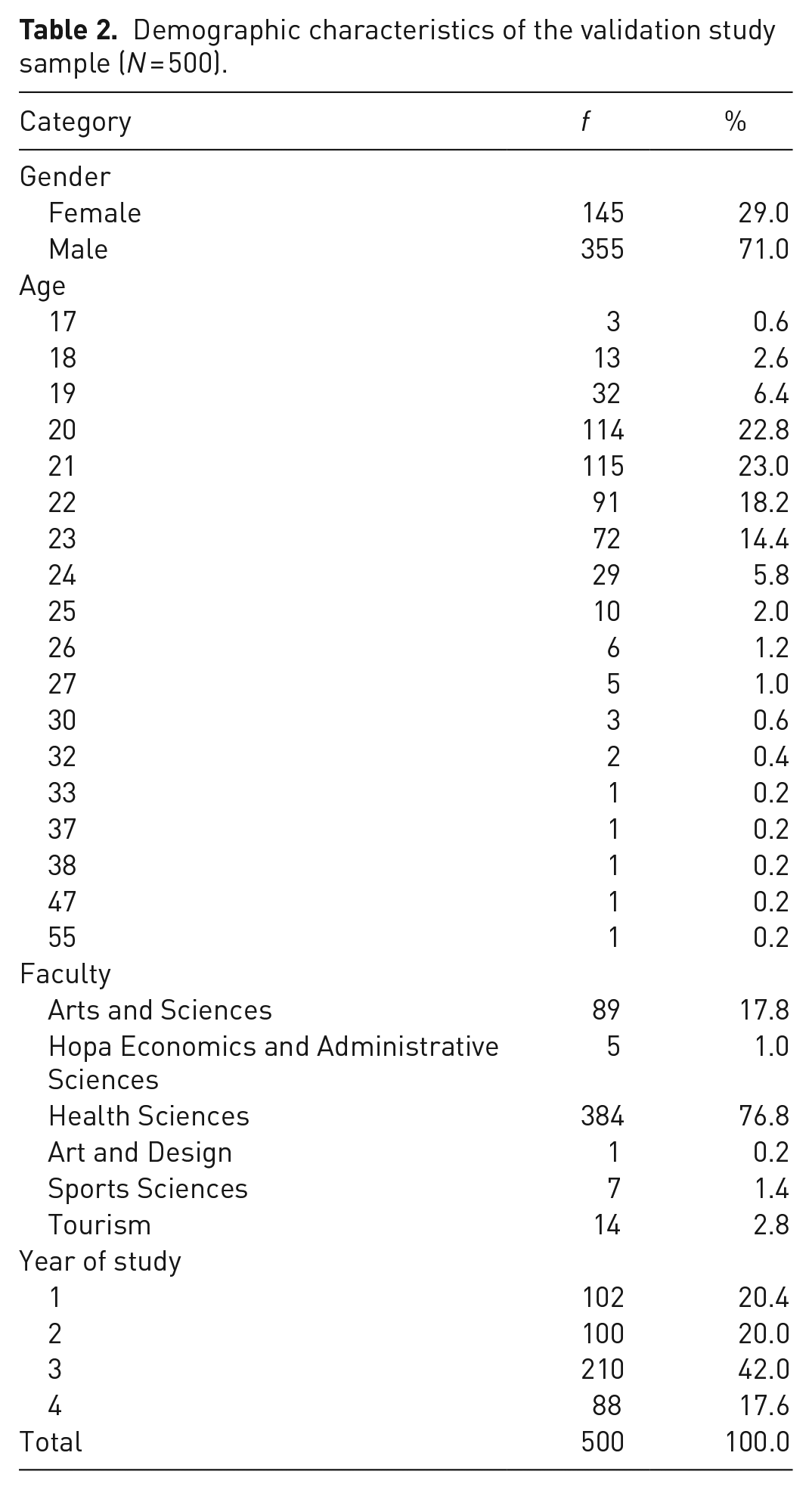
The purpose of this phase was to confirm the factor structure established in the pilot study using confirmatory factor analysis (CFA) on an independent sample. The validation sample consisted of 500 participants. The validation sample exhibited greater demographic diversity compared to the pilot sample, with a higher proportion of male participants (71.0%) and a wider age range (mean age 21.69 ± 2.95, range 17–55; Table 2). Performing CFA on a separate sample is a key step in validating a scale’s generalizability (Byrne, 2013; Hair et al., 2019).
Demographic characteristics of the validation study sample (N = 500).
Data collection process and ethical approval
The data collection process for both pilot and validation studies was conducted from Fall 2024 to Spring 2025. Data were collected from undergraduate students in different departments within the same university through face-to-face surveys in classrooms (with instructor permission) and online surveys (via student lists, email, etc.), using a convenient and purposeful sampling method (Patel et al., 2017). Prior to participation, individuals received detailed study information and provided explicit informed consent via a separate form before accessing the ZWCS.
Ethical approval for the study protocol was obtained from the relevant University Ethics Committee prior to data collection (dated 4 July 2024, reference number E-18457941-050.99-140923). All data collection procedures strictly adhered to these approved ethical guidelines.
Data analysis
The psychometric properties of the ZWCS were rigorously evaluated using a multi-stage analysis process. Statistical analyses were performed using IBM SPSS Statistics 21, SPSS AMOS 26 and RStudio software (specifically employing the RSP (Doğan et al., 2023) and MBESS (Kelley, 2022) packages).
EFA and item reduction (pilot data, N = 408)
EFA was conducted on the cleaned pilot data (N = 408) to explore the underlying structure of the initial 59-item pool (Hair et al., 2019; Kline, 2016). Data preparation included handling missing data using Multiple Imputation (Little and Rubin, 1987; Yuan, 2011) and removing multivariate outliers (Hair et al., 2019). Prior to EFA, multicollinearity (tolerance 0.14–0.66, VIF (Variance Inflation Factor). 1.52–7.40) and multivariate normality assumptions were examined and deemed acceptable (Kline, 2016). Suitability for factor analysis was confirmed by Kaiser–Meyer–Olkin (KMO; 0.94, excellent) and Bartlett’s test of sphericity (BTS; χ² = 18800.4, p < 0.001; Beavers et al., 2013; Kaiser, 1970). Principal axis factoring (PAF) with Direct Oblimin rotation was used to extract a seven-factor structure (Fabrigar et al., 1999; Tabachnick and Fidell, 2013). Items were retained based on loading criteria (0.40+), cross-loadings and theoretical relevance (Hair et al., 2019; Stevens, 2009). This led to the removal of 19 items not meeting the loading threshold (including 3 items with problematic cross-loadings), resulting in a preliminary 7-factor structure comprising 40 items.
Item analysis, CFA and final reliability (validation data, N = 500)
Item analysis (corrected item-total correlations) on the pilot data refined the preliminary scale. Six items from the ‘Role of Administrators’ factor with low discrimination were removed, proposing a 6-factor structure with 34 items. This structure was cross-validated using CFA on the independent validation data (N = 500) with maximum likelihood estimation (Byrne, 2013; Kline, 2016). Model fit was assessed using χ²/df, Comparative Fit Index (CFI), Tucker-Lewis Index (TLI), Root Mean Square Error of Approximation (RMSEA), and Standardized Root Mean Square Residual (SRMR).
Internal consistency reliability for the final 34-item 6-factor scale and its subscales was calculated using Cronbach’s alpha and McDonald’s omega. Stratified alpha was used for the overall scale due to its multidimensional structure (Cronbach et al., 1965; Kelley, 2022).
Results
EFA results
EFA was conducted on the cleaned pilot data (N = 408) using PAF extraction and Direct Oblimin rotation to explore the underlying structure of the initial 59-item pool (Hair et al., 2019; Kline, 2016). Data suitability was confirmed by an excellent KMO (0.94) and a statistically significant BTS (χ² = 18800.4, p < 0.001; Beavers et al., 2013; Hair et al., 2019; Kaiser, 1970). Item retention criteria (0.40+ loading, cross-loadings, theoretical relevance) led to removing 19 items not meeting loading thresholds (including 3 items with problematic cross-loadings; Hair et al., 2019; Stevens, 2009).
A re-run of the EFA on the remaining 40 items again confirmed data suitability (KMO = 0.94, significant BTS; Beavers et al., 2013). This final EFA resulted in a 7-factor structure (eigenvalues >1) collectively explaining 68.56% of the total variance (Table 3). These factors included ‘Motivation and Awareness’, ‘Existing Infrastructure’, ‘Knowledge’, ‘Role of Administrators’, ‘Behaviour’, ‘Intention’ and ‘Practice’. All items retained exhibited factor loadings above 0.40 (Stevens, 2009).
EFA results: factor loadings and pilot reliability coefficients (eigenvalue, variance explained, Cronbach’s alpha, McDonald omega, stratified alpha) for the initial seven-factor structure of the ZWCS.
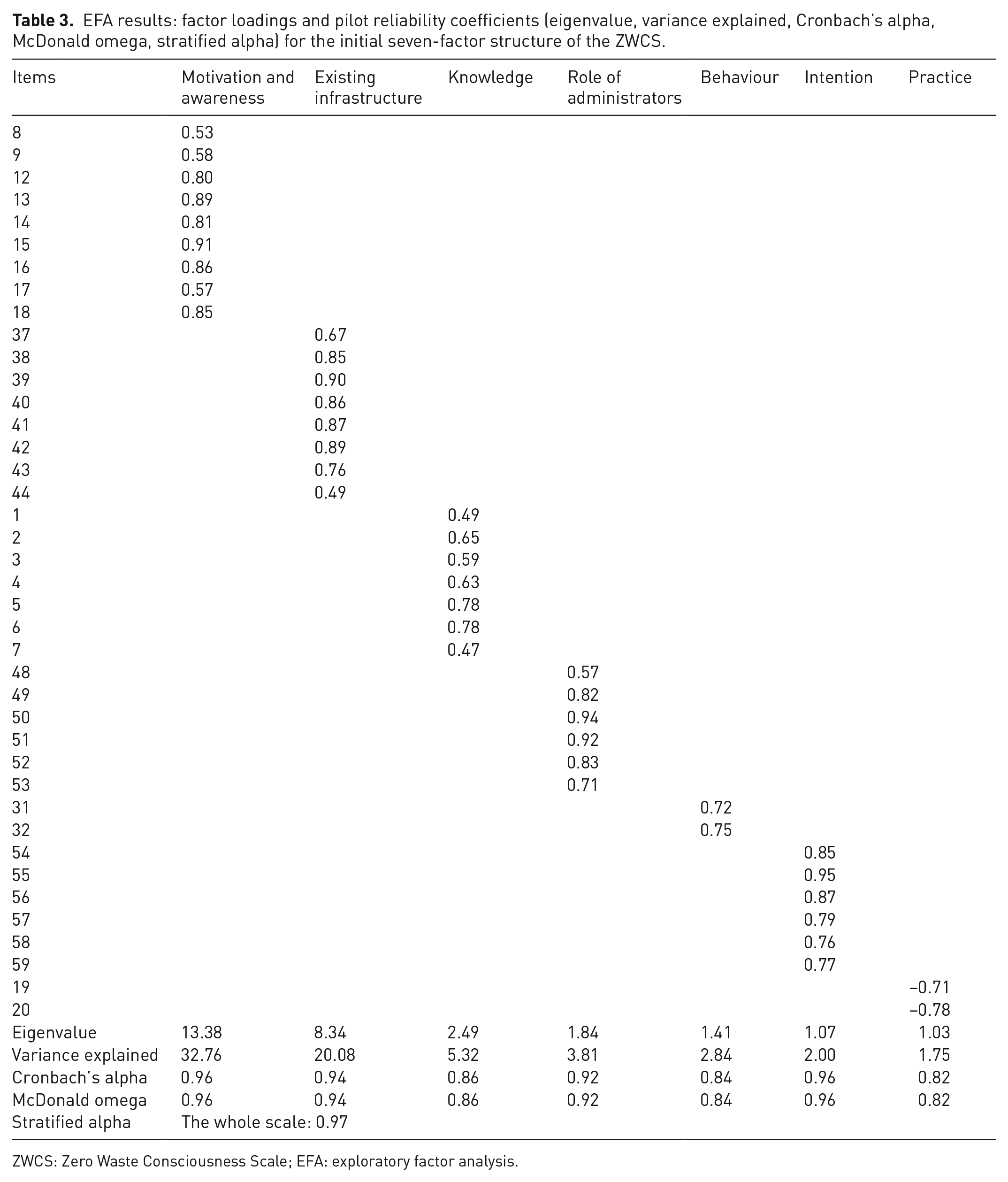
ZWCS: Zero Waste Consciousness Scale; EFA: exploratory factor analysis.
Reliability coefficients (Cronbach’s alpha, McDonald’s omega, stratified alpha) were calculated for these seven factors and the overall scale (Table 3). All coefficients exceeded the recommended threshold of 0.80, indicating high internal consistency reliability (Nájera Catalán, 2019).
Following EFA, item analysis on the 40 items using pilot data revealed low corrected item-total correlations (<0.30) for all 6 items within the ‘Role of Administrators’ factor (Hair et al., 2019). Consequently, the ‘Role of Administrators’ factor and its corresponding six items were removed from the scale for further analysis.
The item analysis statistics for the remaining factors and their constituent items are presented in Table 4.
Item statistics and item analysis results for the ZWCS (pilot study data).
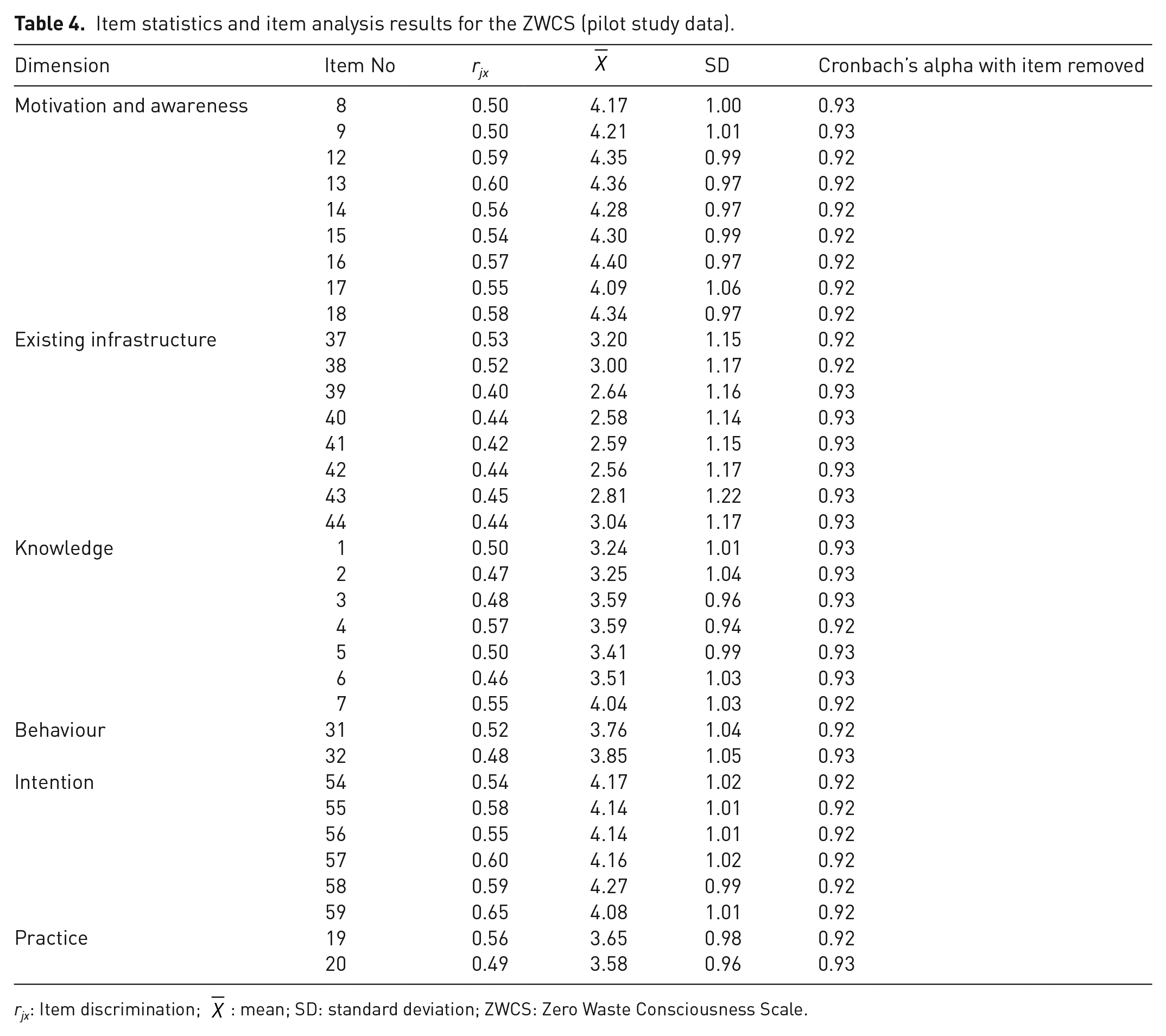
rjx: Item discrimination;
Following the EFA and item reduction, item analysis was conducted on the remaining 34 items across the 6 factors using the pilot data (N = 408). This analysis assessed item quality, including corrected item-total correlations, item means and standard deviations (SDs). The corrected item-total correlations for items across all six factors ranged from 0.40 to 0.65. Consistent with recommendations, corrected item-total correlations of 0.30 or higher indicate adequate item discrimination (Meyers et al., 2016). Therefore, the items within all six remaining factors demonstrated sufficient item discrimination. Item means and SDs also fell within expected ranges for a Likert scale (details presented in Table 4).
CFA results
CFA was applied to the validation study data (N = 500) to confirm the construct validity of the 34-item, 6-factor structure derived from EFA and item analysis. The analysis confirmed the scale’s proposed six-factor structure, with all factor loadings and error variances statistically significant (p < 0.05). Standardized factor loadings (λ) ranged from 0.48 to 0.92 across all factors (Table 5). R² values (squared multiple correlations) ranged from 0.23 to 0.85 across all factors (Table 5). These findings indicate the construct validity of the proposed six-factor model with the validation data. λ, t-values, R² values and standardized error variances (δ) are presented in Table 5.
CFA results for the six-factor ZWCS model.
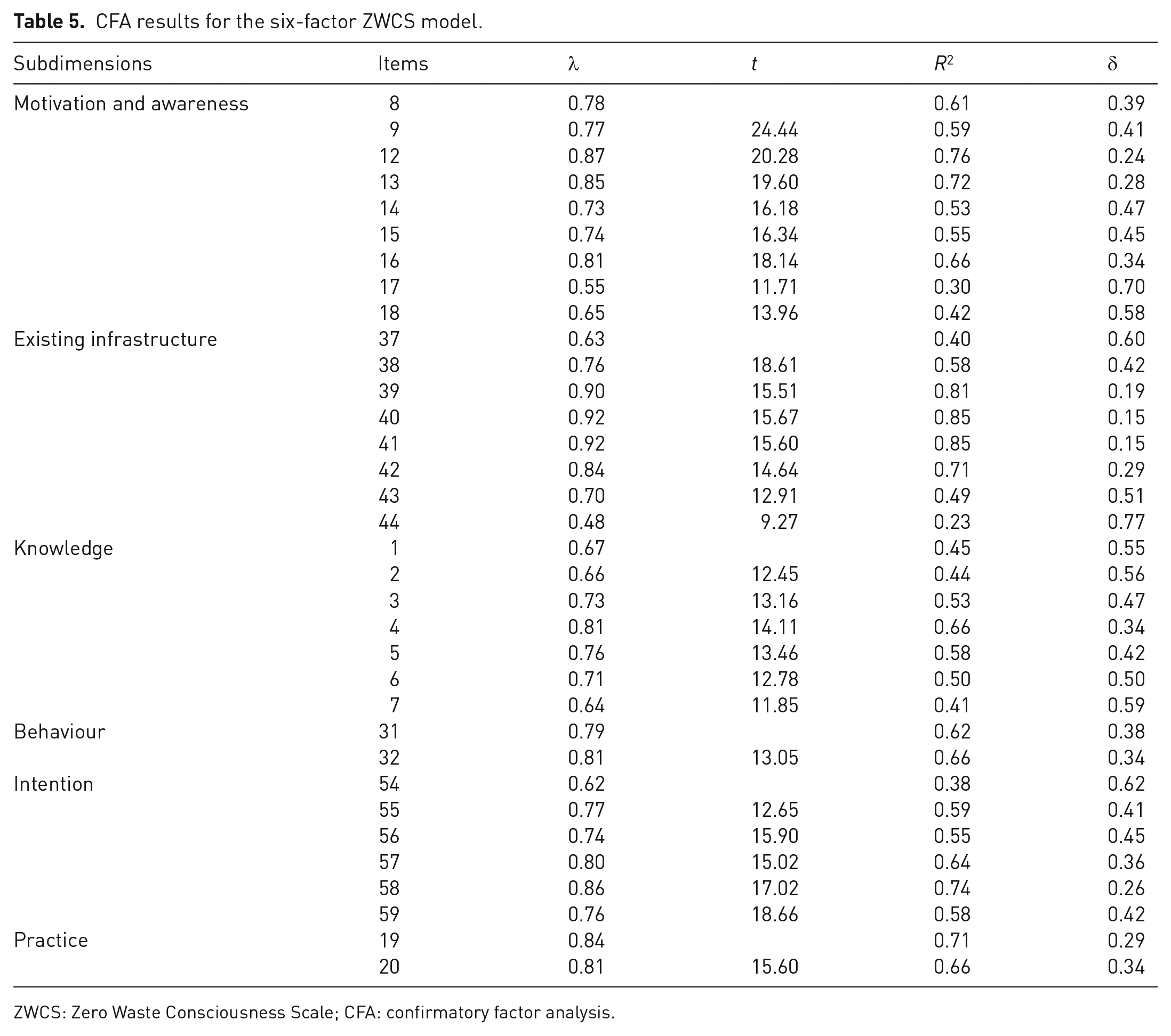
ZWCS: Zero Waste Consciousness Scale; CFA: confirmatory factor analysis.
To evaluate the overall model fit of the CFA results, goodness-of-fit indices were calculated (Table 6). The chi-square test for the 34-item, 6-factor structure was significant (χ² = 1537.50, df = 507, p < 0.001), with a χ²/df ratio of 3.00. The fit indices included RMSEA = 0.07, CFI = 0.90, TLI = 0.90 and Incremental Fitness Index (IFI) = 0.90. Considering the values in Table 6, these fit indices indicate an acceptable level of model fit for the six-dimensional structure based on CFA results (Marcoulides and Schumacker, 2001).
Goodness-of-fit indices for the CFA of the ZWCS model.

SD: standard deviation; ZWCS: Zero Waste Consciousness Scale; CFA: confirmatory factor analysis; RMSEA: Root Mean Square Error of Approximation; CFI: Comparative Fit Index; TLI: Tucker-Lewis Index; IFI: Incremental Fitness Index.
To assess the internal consistency reliability of the ZWCS during the validation phase (N = 500), Cronbach’s alpha and McDonald’s omega coefficients were calculated for the subscales and the stratified alpha coefficient for the overall scale (Table 7). As shown in Table 7, the Cronbach’s alpha and McDonald’s omega coefficients for the six subscales ranged from 0.79 to 0.93. The stratified alpha coefficient for the overall scale was 0.96. Evaluating from an internal consistency standpoint, these coefficients (ranging from 0.79 to 0.96) indicate acceptable to excellent reliability for the scores derived from both the individual factors and the overall scale (Nájera Catalán, 2019).
Internal consistency reliability coefficients for the ZWCS (validation study data).
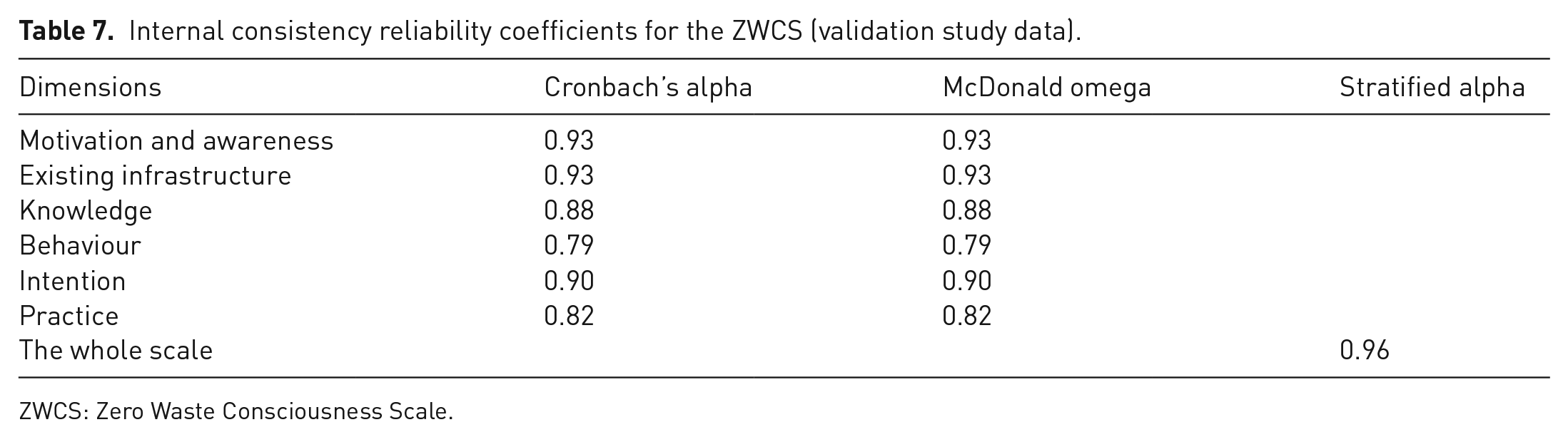
ZWCS: Zero Waste Consciousness Scale.
Discussion
The primary objective of this study was to develop a valid and reliable multidimensional scale, the ZWCS, to measure individuals’ consciousness regarding the ZW management approach within the framework of CE and sustainability in Türkiye. Following EFA and subsequent reliability analyses, a six-factor structure emerged: ‘Motivation and Awareness’, ‘Existing Infrastructure’, ‘Knowledge’, ‘Behaviour’, ‘Intention’ and ‘Practice’. This structure accounted for a substantial 68.56% of the total variance. CFA results demonstrated an acceptable level of model fit to the data (χ²/df = 3.00, RMSEA = 0.07, CFI = 0.90, TLI = 0.90, IFI = 0.90) and reliability analyses confirmed high internal consistency. The developed ZWCS is a psychometrically sound instrument for measuring the ZWC of individuals in Türkiye (see Supplementary Material B).
The resulting six-factor structure aligns with key concepts influencing (ZWC) in the literature, while offering a more nuanced perspective. ‘Motivation and Awareness’ reflects motivation, awareness and attitudes as fundamental drivers of ZW behaviour, consistent with studies (Debrah et al., 2021; Joshi and Ahmed, 2016; Langen et al., 2021; Zhang et al., 2019). Limited public awareness is a noted barrier in various contexts, including Türkiye (Kayış and Yıldırım, 2022; Mandpe et al., 2023; Özcan and Meydan, 2024). ‘Existing Infrastructure’ reflects the critical impact of facility accessibility on WM behaviours (Ayçin and Kayapinar Kaya, 2021; Coşkun, 2022; Varotto and Spagnolli, 2017). ‘Knowledge’ supports the link between understanding and practices (Bentil et al., 2024; Debrah et al., 2021; Jusoh et al., 2018; Kayış and Yıldırım, 2022). ‘Intention’ aligns with its role as a behaviour predictor (Klufová and Skibiński, 2024; Nassani et al., 2023).
The separation of ‘Behaviour’ and ‘Practice’ into two distinct factors is an original aspect. This may differentiate between general environmental behaviours and specific 3R practices, a distinction potentially valuable for targeted interventions, despite measurement challenges (Coşkun, 2021; Lugo et al., 2020; Macin et al., 2025).
A review of existing literature reveals limited scales measuring ZW management approach with this study’s scope and multidimensionality. Previous studies in Türkiye (Coşkun, 2022; Ikizoglu, 2024b; Kayış and Yıldırım, 2022; Özcan and Meydan, 2024) measured ZW aspects but generally reported fewer factors (3 or 7) or focused on limited dimensions/populations. International studies faced similar limitations or data gaps (Lugo et al., 2020; Macin et al., 2025). This collective evidence indicates a lack of a psychometrically sound, comprehensive, multidimensional scale measuring holistic ZWC, particularly in the Turkish context. This represents a critical research gap.
In conclusion, the most significant contribution is providing a psychometrically sound, validated, multidimensional (six-factor) ZWCS, filling a distinct gap in Türkiye’s literature. This scale allows simultaneous assessment of various facets of ZWC, empowering policymakers and researchers to understand behaviour and design interventions for national goals.
Limitations and recommendations for future research
Several limitations should be considered. Findings are based solely on university students, limiting generalizability to Türkiye’s broader, diverse population. Future research should validate the ZWCS across more varied demographics.
The notable gender imbalance in EFA and CFA samples poses a bias risk, particularly for validity and reliability interpretation across genders. This limitation aligns with contradictory literature on gender’s influence on ZW behaviour (Coşkun, 2022; Ikizoglu, 2024b; Kayış and Yıldırım, 2022; Özcan and Meydan, 2024) and warrants further investigation with balanced samples. Furthermore, self-report data may contain social desirability or recall biases. Future studies could enhance criterion validity by including observed behaviours. Finally, the cross-sectional design precludes analysis of changes over time or causal inference. It is recommended that longitudinal or experimental studies be conducted in the future to understand ZWC dynamics, alongside further cross-cultural adaptation and validation of the ZWCS.
Conclusion
This study successfully developed and validated the ZWCS, a multidimensional instrument assessing individuals’ consciousness regarding the ZW management approach within the framework of CE and sustainability in Türkiye. Psychometric analyses confirmed a valid and reliable 34-item, 6-factor structure (‘Motivation and Awareness’, ‘Existing Infrastructure’, ‘Knowledge’, ‘Behaviour’, ‘Intention’ and ‘Practice’), supported by strong psychometric properties.
The developed ZWCS is a psychometrically sound tool that fills a significant research gap in the literature for measuring ZWC, offering capabilities to assess ZWC across demographics, identify knowledge gaps/behavioural barriers and investigate related variables.
Most importantly, the ZWCS’s impact extends beyond this study. In the long term, its ability to comprehensively measure individual consciousness can significantly support progress in related fields (e.g. environmental psychology, WM policy). The scale offers valuable insights for policymakers, guiding targeted interventions for national Zero Waste Action Plan initiatives. ZWCS is a critical tool with the potential to create a lasting impact in enhancing individual consciousness for a sustainable future and CE goals, providing a significant contribution to stakeholder efforts.
Supplemental Material
sj-docx-1-wmr-10.1177_0734242X251364674 – Supplemental material for Measuring zero waste consciousness: Development and psychometric properties of a multidimensional scale
Supplemental material, sj-docx-1-wmr-10.1177_0734242X251364674 for Measuring zero waste consciousness: Development and psychometric properties of a multidimensional scale by Melike Özer Taymur and Elanur Adar Yazar in Waste Management & Research
Footnotes
Acknowledgements
We thank the relevant educational authorities/institutions for providing the necessary permissions to conduct this study and the Ethics Committee of Artvin Çoruh University for granting ethical approval. We are also sincerely grateful to all the students who voluntarily participated and generously dedicated their valuable time to this research.
Author contributions
Melike Özer Taymur: Investigation (survey administration); Formal Analysis (statistical analysis of data).
Elanur Adar Yazar: Conceptualization (literature review, item pool generation); Investigation (assisted with survey administration); Writing – Original Draft; Writing – Review & Editing.
Both authors have read and approved the final version of the manuscript submitted for publication.
Declaration of conflicting interests
The authors declared no potential conflicts of interest with respect to the research, authorship, and/or publication of this article.
Funding
The authors disclosed receipt of the following financial support for the research, authorship, and/or publication of this article: This study was supported by Artvin Çoruh University under Project number 2024.F87.02.01.
Ethics committee approval
The study protocol was approved by the Ethics Committee of Artvin Çoruh University (Date: 4 July 2024; Approval No: E-18457941-050.99-140923). Additionally, necessary permissions were obtained from the relevant educational authorities prior to participant recruitment and data collection.

Supplemental material
Supplemental material for this article is available online.
References
Supplementary Material
Please find the following supplemental material available below.
For Open Access articles published under a Creative Commons License, all supplemental material carries the same license as the article it is associated with.
For non-Open Access articles published, all supplemental material carries a non-exclusive license, and permission requests for re-use of supplemental material or any part of supplemental material shall be sent directly to the copyright owner as specified in the copyright notice associated with the article.
