






Abstract
Identifying the factors contributing to the intention–behaviour gap is pivotal for reducing food waste. Existing research has largely concentrated on the antecedents of food-waste intention, while neglecting not only the discrepancy between intention and actual wasteful behaviour but also the determinants underlying this discrepancy. Drawing on survey data from China, this study employs five machine learning models, Gradient Boost, Random Forest, XGBoost, K-nearest neighbours and Decision Tree to investigate key predictors of this gap. Gradient Boost and Random Forest outperformed the others in predictive accuracy. Moral disengagement emerged as the most influential determinant; a finding consistently supported by the two best-performing models. Among its mechanisms, three neutralization techniques, namely moral justification, diffusion of responsibility and advantageous comparison, were found to significantly contribute to the gap. Additionally, dining culture was identified as another critical factor, with over-ordering and food discarding behaviours playing a central role. Based on these findings, policymakers should consider practical interventions, including traceability tools, accountability reminders and culturally sensitive campaigns, to effectively reduce household and food-service waste. With the development of machine learning models, this research broadens the perspective of food waste research and provides new solutions for using complex data in this field.
Keywords
Introduction
Food waste refers to the edible proportion of food that has been discarded or wasted. As per the United Nations Environment Programme (UNEP, 2024) Food Waste Index Report 2024, one-fifth of all food produced globally is lost or wasted yearly, enough to feed 1 billion people daily. Beyond that, food wastage has a negative impact on multiple aspects ranging from economic to environment, for instance, food wastage generates about $1.88 trillion of economic losses last year, accounting for 8–10% of global greenhouse gas emissions, which is about five times as much as aviation industry. Ironically, 733 million people are still facing hunger globally according to the FAO 2024 report (FAO et al., 2024).
It is widely acknowledged that developing countries waste more food than the developed ones (UNEP, 2021). As the most populous country in the world, China contributes one-fourth of global food waste and loss (Gustavsson, 2011). According to the 2023 China Food and Nutrition Development Report, food loss and waste in China reached 460 million tonnes in 2022, resulting in estimated economic losses of approximately 1.88 trillion CNY, which accounted for 22.3% of the nation’s total agricultural output value (China Food and Nutrition Innovation Development Forum, 2023). Meanwhile, driven by the steady growth of the economy and urbanization, China’s food demand is expected to increase by 16–30% by 2050 (Zhao et al., 2021), highlighting the importance of reducing food waste. In response, General Office of the State Council of China issued the Notice on Further Strengthening Food Conservation and Opposing Food Waste in 2010, urging institutions, schools, enterprises and other organizations to improve canteen management and reduce food waste, while also promoting public awareness of food conservation through education initiatives. Furthermore, in 2021, China passed the Anti-Food Waste Law (AFWL) of the People’s Republic of China, making it the 36th country in the world to legislate against food waste. While the AFWL has been enacted and government efforts to curb food waste continue to grow, research suggests that AFWL has played a role in raising public awareness about food waste reduction (Zhou et al., 2020).
With only a few exceptions, most empirical studies have quantified the scope of the food waste problem. Cross-sectional evidence based on plate-weighing and structural equation modelling (SEM) shows that urban restaurant settings in China remain a major locus of plate waste, with larger dining groups and higher income levels increasing waste, while frugality norms and take-away practices serve as mitigating factors (Wu et al., 2023). From the perspective of social practice theory, food waste emerges not from a single motive but through the dynamic interplay of materials, competences, and meanings along the consumption process, the ‘squander sequence’ of pre-acquisition, acquisition, consumption and disposal helps locate critical points of waste generation (Block et al., 2016). Regarding the intention–behaviour relationship, Sheeran’s (2002) synthesis of 10 meta-analyses covering 422 studies reported an average correlation of r+ = 0.53, indicating that intention is an important predictor but explains only part of the variance. Subsequent studies highlight this inconsistency: in the UK, intention to reduce waste predicted subsequent self-reported reductions in fruit and vegetable waste, though the explained variance was modest (Graham-Rowe et al., 2015); in Romania, intention was not significant, with planning and shopping routines playing the decisive role (Stefan et al., 2013). Swiss and Taiwanese surveys also demonstrated elasticity in the intention–behaviour link (Teng et al., 2021; Visschers et al., 2016). More recently, research among Filipino university students confirmed that, within an extended Theory of Planned Behaviour (TPB) framework, intention remained positively associated with self-reported waste-reduction behaviours (Valentin et al., 2024). Overall, intention can predict food waste reduction to some extent, but its translation into behaviour is constrained by measurement limitations, contextual conditions, and psychological mechanisms.
The intention–behaviour gap (IBG), alternatively labelled the attitude–behaviour gap in specific inquiries, describes the divergence between individuals’ professed commitment to carry out a particular action and their observable enactment of that action (Schanes et al., 2018). Scholarly attention to the IBG has spanned several decades. Young et al. (2010) reported that while around 30% of consumers identified themselves as highly concerned about environmental issues, the market share of ethical products remained at only about 5%, highlighting a substantial value–action gap. Similarly, evidence from Uruguay indicates that although food-waste prevention is widely regarded as socially desirable and positively endorsed at the level of attitudes and intentions, the actual frequency of waste-avoidance behaviours remains limited (Ferro et al., 2022). Overlooking this discrepancy risks inflating evaluations of intervention outcomes and producing biased inferences about underlying drivers. More broadly, the persistence of attitude–behaviour gaps reduces the predictive validity of social and environmental psychology and underscores the role of entrenched routines and habits in constraining behavioural change (Tertoolen et al., 1998).
Much of the contemporary research on pro-environmental and food-related practices has emphasized the predictors of intention, while giving comparatively little attention to the gap between what people say they intend to do and what they actually do. Studies have shown that environmental attitudes, social norms, perceived behavioural control, habitual routines and value orientations strongly influence intentions to reduce food waste (Habib et al., 2023; Russell et al., 2017; Talwar et al., 2021). Yet despite the established role of these motivational, cognitive and contextual factors, little is known about whether such intentions translate into observable behaviour. As White et al. (2019) caution in their critical review, this disproportionate focus on intention risks overlooking the substantial body of research on the IBG in sustainable consumption.
Despite the presumption that intention would routinely instigate deliberate behaviour (He et al., 2022), a cohort of recent studies has turned to interrogating the mediating and moderating mechanisms that complicate the intention–action linkage.
Recent scholarship has repeatedly highlighted the IBG across diverse fields, including education (Celik and Cagiltay, 2024), ethical consumerism (Hassan et al., 2016), charitable giving (Nguyen et al., 2022), sustainable production (Yang et al., 2024) and general pro-environmental conduct (Chwialkowska et al., 2020). A variegated set of antecedents has been shown to correlate with this discrepancy between stated intention and observable conduct. Within the domain of green purchasing, operational planning proves a robust mediating variable. At the same time, the interactive force of self-efficacy surfaced as a moderating lever that tightens the linkage from stated intention to resultant purchase (Tawde et al., 2023). Encapsulation of actionable, transparently comparative labels that enumerate either environmental or corporeal impact serves as another mechanism that couples declarative buying intention to realized acquisition (Aitken et al., 2020). Concurrent studies identify femininity, habitual future orientation and cultural aversion to uncertainty as psychosociologically salient traits that consistently correlate with reduced misalignment between declared ecological intent and observed behaviour (Chwialkowska et al., 2020). Despite these insights, the translation of intention into action in the domain of food waste has attracted far less empirical attention.
In the study of food waste, the IBG remains underexplored, particularly in contexts such as China, where culinary traditions exert strong normative pressures on consumption. Empirical evidence shows that, despite professed frugality, diners frequently overorder in restaurants and subsequently discard surplus food (Filimonau et al., 2020). This reality underscores the urgency of systematically examining the divergence between stated intentions and waste-generating behaviours through analyses that account for the distinctive sociocultural and institutional dimensions of the Chinese food system.
Methodologically, a further constraint lies in the dominant reliance on the TPB, which has been extended primarily through linear frameworks such as SEM and econometric regression (Fraj-Andrés et al., 2022; Setti et al., 2018; Soorani and Ahmadvand, 2019). Within TPB, the cognitive constructs – attitude, subjective norm, and perceived behavioural control, are posited to influence behaviour only through the mediating role of intention, a mechanism that has shown considerable explanatory power in studies of food waste (Diaz-Ruiz et al., 2018; Graham-Rowe et al., 2015; Setti et al., 2018). Yet, this single-framework approach remains inadequate for capturing the multifaceted nature of actual behaviour. Peattie (2010) emphasizes that TPB and related orientations fall short of addressing the persistent IBG. This limitation is empirically evident in Zhang et al. (2023), who reported that TPB explained 60.8% of the variance in intention but only 15.1% of the variance in self-reported behaviour, with objective measures reducing this explanatory power to as little as 6.1%. Beyond theoretical limitations, further constraints stem from econometric and SEM designs, which require strict assumptions – such as correct model specification, linear relationships, and independence between exogenous and endogenous terms – conditions rarely satisfied in applied datasets. Moreover, SEM faces inherent difficulties in handling nonlinear relationships and complex moderating or mediating effects and, through repeated iterations, may risk overfitting and multicollinearity.
The identified limitations of conventional analytical methods underscore the urgency of adopting a flexible, data-centric paradigm such as machine learning, which has now pervaded nearly every disciplinary sphere. Importantly, recent advances in the field demonstrate that machine learning may perform as robustly as parametric analyses even in the presence of structured residual complexity, while simultaneously satisfying interpretive requirements. Moreover, ensembles of decision trees, such as Random Forest and Gradient Boosting, circumvent the pitfalls of multicollinearity by iteratively partitioning feature space rather than estimating linear parameters (Dormann et al., 2013; Strobl et al., 2009; Tomaschek et al., 2018). These methods, therefore, produce implicit shrinkage of correlated predictors; at the same time, internal hyperparameter tuning reduces prediction error, conserves analyst time and diminishes reliance on potentially erroneous prior theoretical constraints. The significance of these strengths is magnified by the present dataset, which is composed of ordered categorical variables and is evaluated via a multiclass classification framework; these characteristics may counteract the performance of traditional discrete analogues. An increasing number of studies have employed machine learning across diverse domains; in the medical sciences, applications include the prediction of episiotomy incidence (Banaei et al., 2025), anticipatory foetal distress modelling (Roozbeh et al., 2025), prediction of skin-to-skin contact among neonates (Safarzadeh et al., 2025), diagnosis of intrauterine growth restriction (Taeidi et al., 2023) and comprehensive evidence synthesis of preeclampsia forecasts (Ranjbar et al., 2023). Collectively, these investigations testify to the transferability and predictive prowess of data-driven techniques across heterogeneous obstetric settings.
Capitalizing on existing advantages, recent scholarship has progressively brought machine learning techniques into the investigation of food waste. Within this corpus, the predominant orientation has been the forecasting of consumer demand, a pursuit that demonstrably tightens the achievement of supply-side precision (Azman et al., 2024; Rodrigues et al., 2024). However, apart from demand-centric inferences, the technology has directed itself toward operational waste-management domains: for example, modelling composting trajectories in order to elevate the throughput efficiency of processing plants (Azman et al., 2024; Wan et al., 2022). Such diversions furnish ample proof of machine learning’s trans-domain utility, yet its deployment in the analysis of food waste-generating intention nestled in consumer activities remains, in practice, circumscribed. Attention to the IBG has proceeded through the hybridization of household surveys, food-tracking diaries and algorithmic analysis to elucidate determinants that condition an individual’s proficiency in appraising generated waste (Giordano et al., 2023). Nevertheless, investigations that assimilate algorithmic methodologies strictly from the consumer vantage point remain few, implying an untapped reservoir for methodologically rigorous inquiry worthy of more sustained pursuit.
The present study accordingly delineates the following objectives: (i) the measurement of the gap between individuals’ stated intentions to reduce food waste and their actual behaviour in the Chinese context; (ii) the comparative evaluation of multiple machine learning models to determine and retain the most effective approach for classifying food waste behaviour; (iii) the provision of insights to guide the design and implementation of policy measures that encourage genuine waste-reducing conduct; and the identification of determinants shaping both intention and behaviour. In pursuit of these aims, a self-reported questionnaire survey is administered to capture indicators of both intention and behaviour. Several machine learning techniques, including Random Forest and Gradient Boosting, are subsequently deployed to assess the influence of contextual, psychological and behavioural factors on food waste outcomes. Through a process of comparative performance appraisal, the two best-performing models are identified and retained to underpin the derivation of conclusions with practical and policy relevance.
Overall, this research makes a substantial contribution to both theoretical and practical advances in the study of food waste. It is among the few empirical attempts to specifically examine the IBG in food waste reduction, a disparity that is widely acknowledged yet rarely tested in real-world contexts. By employing self-reported questionnaires to capture both intended and actual behaviours in everyday settings, this study provides a transparent and replicable approach to measuring the gap, which has often been overlooked in sustainability research. Furthermore, situating the analysis within China’s unique cultural and social context generates novel insights into the behavioural, psychological and situational factors that shape food-related practices, thereby extending theoretical frameworks beyond generalized perspectives. Methodologically, the study applies multiple machine learning algorithms rather than relying on a single analytical model. By adopting comparative modelling techniques and drawing conclusions from consistent results across the best-performing methods, this multi-model design enhances the robustness and generalizability of the findings, while addressing some of the key limitations of traditional linear approaches in behavioural research.
The rest of this study is organized as follows: Section ‘Hypotheses and conceptual framework’ reviews pertinent contributions in the literature, establishing the positioning of the inquiry relative to prevailing scholarship, and explicates the theoretical apparatus that directs the investigation; Section ‘Material and methods’ describes the procedures of data procurement and the requisite preprocessing steps that ensure the material is suitable for the planned analysis; Section ‘Results’ conveys the main empirical findings, as derived from the completed analyses; Section ‘Discussion’ interprets and situates these findings within the theoretical and empirical frames previously presented; Section ‘Conclusions and implications’ concludes by summarizing the principal scholarly contributions of the work and proposing a set of methodological and substantive recommendations to guide future research trajectories in the domain.
Hypotheses and conceptual framework
To derive a theoretical model distinguishing between intentions and realized food waste behaviour, hypotheses positing antecedent variables are articulated. The variables are classified into three categorical domains: (1) Psychological factors, (2) Behavioural factors, and (3) Contextual factors. The resulting theoretical structure is depicted in Figure 1.

Theoretical model.
Psychological factors
Moral disengagement
Moral disengagement (MD), a concept grounded in Bandura’s (1999, 2010) social cognitive theory, describes the psychological mechanisms by which individuals distance themselves from their internal moral standards, rationalizing unethical behaviours and reducing feelings of guilt or self-sanction. In other words, it explains the cognitive strategies people use to justify actions they inherently recognize as wrong, effectively enabling them to reconcile unethical conduct with their self-image (Fukukawa et al., 2019). Kilian and Mann (2020) further demonstrated that moral disengagement lowers individuals’ willingness to reject consumption options with poor socio-ecological performance, thereby increasing their intention to select such options.
Bandura (1999) delineates eight discrete cognitive strategies employed in moral disengagement which facilitate the inhibition of self-imposed moral constraints: (1) Moral Justification employs favourable moral interpretations of otherwise condemnable deeds; (2) Advantageous Comparison minimizes the severity of the transgression by juxtaposing it with even greater misbehaviours; (3) Euphemistic Labelling reframes harmful conduct in benign terms, thereby obscuring its detrimental nature; (4) Displacement of Responsibility transfers the onus for detrimental actions to authoritative agents; (5) Diffusion of Responsibility disperses moral accountability across a collective, thereby attenuating the individual’s sense of obligation; (6) Disregard or Distortion of Consequences downplays or misrepresents the harmful outcomes of one’s actions; (7) Dehumanization denies the target groups’ human qualities, rendering them moral non-objects; and (8) Attribution of Blame situates the source of wrongdoing within the victim, thus exonerating the agent of culpability. Among the various mechanisms of moral disengagement, four are particularly salient in explaining why consumers fail to act in line with their intentions to reduce food waste: moral justification, advantageous comparison, diffusion of responsibility, and disregard or distortion of consequences. Through moral justification, individuals reframe wasteful actions as serving a higher purpose. For example, when dining out, some may prioritize offering abundant food to ensure their companions’ satisfaction, interpreting this generosity as outweighing the harm of wasted meals. Advantageous comparison, by contrast, downplays the seriousness of food waste through reference to seemingly greater environmental threats – for instance, reasoning that wasted meals cause far less damage than industrial emissions or transport pollution. Disregard or distortion of consequences reflects a tendency to minimize the impact of one’s behaviour, such as believing that throwing away leftovers is inconsequential. Similarly, diffusion of responsibility emerges when individuals perceive waste as a collective practice – ‘everyone else is doing the same’ – which weakens the sense of personal accountability. Prior studies confirm that these disengagement strategies are significant predictors of food waste, as they erode moral self-regulation and make discarding food appear less problematic (Coşkun and Filimonau, 2021; Wu et al., 2023). Recognizing how these mechanisms shape the IBG is therefore crucial for understanding and addressing consumer food waste. We posit that:
H1: Moral disengagement influences the IBG.
Anticipated guilt
Anticipated guilt (AG) represents a temporally future-focused affective state that serves as a cognitive warning signal, alerting subjects to forthcoming breaches of moral duty (Habib et al., 2023). When individuals entertain the prospect of guilt stemming from the transgression of prevailing social norms, they exhibit a heightened incentive to pre-empt morally deficient practices, as in the case of unattainable food disposal (Haj-Salem et al., 2022). Distinctions from previous investigations that construe guilt as predominantly retrospective – which comprehensively examines the affect as a sombre appraisal of past transgressions characterized by remorse or regret for not having conformed to private, imposed or communal strictures (Tangney and Tracy, 2011) – are essential for the present investigation, which casts AG as a milieu-embedded exercise that arises temporally before the actual act of disposal. Within that constitutive temporal frame, AG functions as an anticipatory agent, reducing the predictable intension-execution discontinuities (i.e. the IBG). Empirically, AG exerts a reliable and constructive influence on pro-ecological conduct, especially when activated through tailored behavioural feedback or strategically framed communications (Shipley and van Riper, 2022).
Located within an expansive affective model, AG is subsidized by the more broadly characterized emotion of guilt – both the forthcoming and the immediately experienced – established as a significant influence in cognitive and environmental behavioural research (Soorani and Ahmadvand, 2019). Empirically demonstrated formulations of food waste within Canadian domestic settings, for example, concluded that households subjected to elevated guilt sensations realized a perceptibly more precise advancement of waste disposal controls (Parizeau et al., 2015). Analogously, findings accruing from a longitudinal observational design in the Indian context report, on consistent terms, that presently surfacing guilt evidences a favourable and stable modification of proclivities to restrain food waste amid diverse food procurement manifolds (Chakraborty and Mattila, 2024), thus substantiating the prevailing supposition of guilt as a persistent emotive executor of sustainable practical provision.
Building on the findings of Xu et al. (2025), who observed that anticipated guilt and anticipated anger increasingly motivate household food disposal behaviour and that these effects have intensified in the 2010s among millennials and Generation Z, we posit that:
H2: Anticipate guilt influences the IBG.
Eating habit
One of the main criticisms directed at the TPB concerns its assumption that individuals consistently act through rational and deliberate choices. This assumption often proves inadequate when explaining behaviours that are habitual in nature. Habits are commonly defined as ‘learned dispositions to repeat past responses, triggered by associated cues’ (Wood and Neal, 2007). In the domain of food consumption, such habitual patterns are reflected in eating habits (EH), encompassing routine practices, preferences, and choices related to everyday dietary intake (Furst et al., 1996). Because these actions frequently occur outside conscious awareness, they are difficult to capture within rationalist models such as the TPB. As a result, habits are recognized as a significant factor contributing to the gap between intentions and actual behaviours. Prior research has provided evidence for this perspective: forgetting and habit formation, for example, have been shown to account for notable discrepancies between intention and actual recycling behaviours (Zhang et al., 2023). In the case of food waste, several studies similarly highlight a strong link between eating habits and wasteful practices (Aydin and Yildirim, 2021; Russell et al., 2017; Stefan et al., 2013). On this basis, we propose that eating habits constitute a critical determinant of the IBG in food waste reduction, leading to the following hypothesis:
H3: Eating habit influences the IBG.
Environmental awareness
Prior studies have consistently shown that individuals with higher levels of environmental awareness (EA) are more inclined to accept responsibility for their actions and adopt pro-environmental practices (Diaz-Ruiz et al., 2018; Mazzucchelli et al., 2021). Considering that food waste significantly contributes to avoidable carbon dioxide emissions and poses adverse effects on soil, water, and air quality (FAO, 2011), strengthening environmental awareness may act as a strong driver for reducing food waste. This perspective is further reinforced by empirical evidence from a survey of 961 Chinese consumers, which revealed that environmental awareness not only emerged as the strongest predictor of intentions to reduce food waste but also played a substantial role in lowering actual waste behaviours (Liao et al., 2020). On this basis, the following hypothesis is advanced:
H4: Environmental awareness influences the IBG.
Behavioural factors
Food planning
Food planning (FP) can be understood as the systematic practice of organizing and deciding in advance what foods to purchase, how they are stored, and when they are prepared. Routine activities such as checking existing supplies, making shopping lists, and adhering to them have been shown to reduce household food waste (Stefan et al., 2013). Within the broader process of food consumption, the planning and purchasing stage plays a particularly critical role. Because there is often a time gap between the acquisition and eventual disposal of food, uncertainties introduced at this stage may exacerbate the IBG (Setti et al., 2018). Recent studies have further emphasized that inadequate planning of meals is a major driver of avoidable household food waste. Empirical evidence suggests that consciously developing a weekly meal plan can substantially reduce food waste while simultaneously alleviating ecological burdens (van Rooijen et al., 2024). On this basis, the following research proposition is advanced:
H5: Food planning influences the IBG.
Food storage
Food storage (FS) is associated with practices such as understanding food labels, setting appropriate storage conditions, and organizing food to ensure timely consumption. Some researches argue that storage stage is the most important part of the entire food cycle (Romani et al., 2018). Graham-Rowe et al. (2014) noted that although consumers generally hold negative attitudes toward food waste and aspire to reduce it, the lack of storage skills and misunderstandings about expiration dates significantly increase the risk of waste. Many consumers lack a clear understanding of the dates and storage conditions during the storage process, which leads to food being mistakenly considered unsafe, and ultimately waste those food they could have consumed. Thus, the following hypothesis is proposed:
H6: Food storage influences the IBG.
Deal with leftovers
Leftover food – defined as edible food remaining after a meal has been prepared, served, and subsequently uneaten – represents a significant vector within the food-waste continuum (Bravi et al., 2020). Quantifiable fractions of these remnants are discarded, in some cases, in deference to perceived health risks (Porpino et al., 2015) and, in others, in response to normative pressures within domestic settings (Van Herpen et al., 2021). Conversely, some individuals elect to refrigerate leftovers as a rational, though temporary, remedy to guilt (Porpino et al., 2015); yet, this same category of food frequently lapses into oblivion, resulting in unanticipated disposal. Synthesizing these investigations, the current work posits that:
H7: Deal with Leftovers (DwL) influences the IBG.
Contextual factors
Dining culture
Dining culture (DC) includes the social norms, symbolic meanings and values that emerge from activities involving food. Food consumption goes beyond simply fulfilling nutritional requirements; it significantly represents social bonds, identities and cultural traditions embedded within dining experiences. Murcott (1982) underscores that food’s cultural significance primarily stems from its symbolic meanings and the social values it conveys, rather than its nutritional role alone. Similarly, eating behaviours inherently reflect social structures and convey individuals’ cultural affiliations and social roles. Mintz and Du Bois (2002) also address that eating is more than a physiological necessity – it is fundamentally a social and cultural act.
In strong sociocultural contexts like China, more emphasis is placed on culture’s impact on personal behaviour compared to many Western countries. A study on Consumer Decision-Making Styles showed that Chinese respondents, influenced by Confucian culture, are more hypersensitive to social group behaviour than Americans (Bao et al., 2003). With respect to food waste, Chinese dining culture may encourage over-ordering (Filimonau et al., 2020) or discarding ‘wasted’ expensive food (Zhang et al., 2013) as a use of hospitality, a phenomenon sometimes labelled as the Good Provider Identity. This proposal suggests that even when consumers aim to avoid food waste, the motivation to reduce waste may produce wasteful behaviour (Aschemann-Witzel et al., 2019; Graham-Rowe et al., 2014; Liao et al., 2018). Thus, it is postulated that:
H8: Dining Culture influences the IBG.
Policy effectiveness
Food waste governance presents significant challenges to governments worldwide, as its effectiveness depends not only on the design of sound policies but also on their successful implementation. Policy effectiveness (PE) is generally defined as the extent to which policy objectives are achieved in practice (Vedung, 1998). In this study, PE is conceptualized along two dimensions: the dissemination reach of policies (Huang et al., 2023) and the degree of public understanding and acceptance (Eun Kim and Urpelainen, 2017).
Previous research highlights the pivotal role of perceived policy effectiveness in shaping individual behaviour. For instance, Lin and Shi (2022) found that when consumers regard policies as effective, they are more likely to translate their intention to purchase new energy vehicles into actual adoption. Similarly, Wang and Mangmeechai (2021) demonstrated that residents’ perceptions of policy effectiveness significantly influenced both behavioural intentions and actual practices, thereby reducing the IBG in China’s waste-sorting initiatives. Fu et al. (2020) further confirmed this view by showing that in China’s road freight transport sector, perceived policy effectiveness reinforces the link between environmental awareness and pro-environmental behaviour, helping bridge the gap between awareness and action.
Collectively, these findings underscore the crucial role of effective policies in guiding citizen behaviour. When policies are perceived as effective, individuals are more willing to devote effort, time, and resources to preventing food waste. Based on this reasoning, the following hypothesis is proposed:
H9: Policy Effectiveness influences the IBG.
Material and methods
Samples and data collection
The self-collected primary data come from Wenjuanxing, one of the foremost web-based survey platforms in China, distinguished by its broad-based clientele ranging from institutions of higher learning to big businesses. To ascertain the instrument’s internal logical flow, stability and connotative validity before the official rollout, a pilot survey employing a snowball sampling approach was circulated among academic and professional networks via social media channels. Iterative analyses and participant commentary were engendered. Semantic and syntactic refinements of cognitive items, thus elevating both precision and internal coherence. The definitive instrument was subsequently launched on the same portal in June 2024, explicitly apprising prospective respondents of the overarching research aims to foster fully informed and uncoerced engagement, while enforcing stringent anonymity and delimiting output exclusively to scholarly application. Out of a total of 550 distributed instruments, 509 were fully and meaningfully acquired, culminating in a substantive completion rate of 92.5%.
Participants
The participants selected in the experiment were drawn from across China, of which 62% are from eastern coastal provinces and municipalities directly under the Central Government, and 19% are from central provinces, consistent with the population distribution in China (National Bureau of Statistics of China, 2021). These regions are relatively developed compared to other parts of China and contribute to most of the country’s waste. Specifically, the eastern coastal provinces account for 50.2% of total waste, while the central provinces contribute 18.4%. Given their substantial impact on both ecological conservation and economic development in China, the sample offers valuable insights into the current food waste landscape and supports further investigation into the IBG.
Beyond regional distribution, the demographic characteristics of the respondents further confirm the appropriateness of the sample. The predominance of young and middle-aged adults (18–40) captures the core decision-makers in household food waste, while the relatively higher proportion of women reflects both their survey responsiveness and their central role in household food management. The sample also includes a larger share of middle- and high-income households, consistent with evidence linking income to higher waste generation, and its household structure corresponds with national census trends of shrinking size and dominance of nuclear families.
Figure 2 presents detailed demographic data of the respondents. A detailed comparison between the demographic distribution of the survey participants and the actual population structure is provided in Tables 1–3. For clarity, age and household structure are not included in these comparisons, as the categories in national statistics are not directly comparable to the finer distinctions used in the survey.

Demographic information.
Respondent distribution: Survey sample versus actual distribution.

Source: Seventh National Population Census of China (National Bureau of Statistics of China , 2020).
Gender: Survey sample versus actual distribution.

Source: Seventh National Population Census of China.
Income: Survey sample versus actual distribution.

Source: CICC, 2024. Monthly Household Income of Chinese Residents.
The income categories in our questionnaire (e.g. 5000–8000 CNY) were designed with finer granularity, while the official statistical reports only offer broader income brackets, resulting in slight inconsistencies when making direct comparisons.
CICC: China International Capital Corporation.
Measures
Questionnaire design
The completed instrument incorporated four interspersed sections addressing the specified domains: (1) independent variables, defined as moral disengagement, habitual dietary practices, anticipated guilt, environmental cognizance, meal planning, food storage, waste management, culinary culture, and perceptions of policy efficacy; (2) the primary dependent variable, defined operationally as intention to mitigate food waste; (3) the secondary dependent variable, defined operationally as observed food-waste behaviour; and (4) variables about demographic profile.
The questions concerning the independent variables were designed to capture respondents’ psychological, behavioural, and contextual characteristics. Moral disengagement and anticipated guilt were measured using items adapted from Coşkun and Filimonau (2021) and Attiq et al. (2021), respectively. Eating habits were assessed with four scales drawn from Iori et al. (2023), while environmental awareness was measured using scales adapted from Fu et al. (2020). For behavioural factors, food planning, food storage, and practices for dealing with leftovers were evaluated with items adapted from Soorani and Ahmadvand (2019). In addition, five further scales were developed based on Filimonau et al. (2020). Policy effectiveness was measured with three items, following the approach of Lin and Guan (2021).
The intention-related section was designed to capture participants’ motivation to reduce food waste. Drawing on Visschers et al. (2016), the items covered behaviours such as reducing one’s own food waste, encouraging others to do so, and actively engaging in waste reduction initiatives.
Food waste levels were assessed to reflect respondents’ actual behaviour. Following Cheng et al. (2024), self-reported waste was measured across food categories, including vegetables, meat, and starch-based foods. Demographic questions were also constructed with reference to Cheng et al. (2024). To minimize potential bias from inaccurate recall, respondents were asked to report their food waste over the preceding 2 weeks. Furthermore, select survey items were constructed in reverse format to maintain respondent attentiveness and to mitigate the risk of careless or systematically patterned answering. Each construct in the instrument employed a five-point Likert scale, with the endpoints defined as ‘Strongly disagree’ (1) to ‘Strongly agree’ (5) (Stancu et al., 2016). Parallelly, respondents rated their observed Food Waste Level on a Likert scale, adapted in accordance with the framework specified by Stefan et al. Notably, on the analytic side, the reverse-scored item was consistent with the latent variable’s directional interpretation and, consequently, was treated as intended. Table 4 presents the detailed questionnaire.
Questionnaire and reference.

R-item was reversed for analyses.
MD: Moral disengagement; AG: Anticipated guilt; EH: Eating habit; EA: Environmental awareness; FP: Food planning; FS: Food storage; DwL: Deal with leftovers; DC: Dining culture; PE: Policy effectiveness; IN: Intention; AFWL: Anti-food waste law.
Calculate the IBG
The average food waste levels were calculated by weighting each subcategory according to data from the Statista (2023) website on the consumption of different food types in China in 2023. This study excludes waste from condiments, baby food, pet food, and oils and fats. In 2023, the total food waste in China was reported to be 279.88 million tonnes, with starch-based food waste accounting for 87.08 million tonnes, fruits and vegetables 107.53 million tonnes, meat and fish 31.36 million tonnes, dairy products 36.47 million tonnes, and snacks 17.44 million tonnes. The weighting formula for each factor is as follows:
The calculated weights for each food category are as follows: starch-based foods (31.1%), fruits and vegetables (38.5%), meat and fish (11.1%), dairy products (13.0%), and snacks (6.2%). Using these weights, the weighted average of food waste can be computed as:
The average intention was also derived by weighting the questionnaire data:
Finally, the IBG value was calculated by subtracting the average intention from the average waste levels. Based on the IBG value, respondents were classified into three categories: (i) those whose actual food waste exceeded their intention (IBG value ⩽ −0.5), (ii) those whose actual food waste was roughly aligned with their intention (−0.5 < IBG value < 0.5) and (iii) those whose actual food waste was less than their intention (IBG value ⩾ 0.5).
Common method bias
Since the data were drawn from an isolated contributor network, this investigation acknowledges the presence of Common Method Bias (CMB) as a potential systematic threat (refer to Podsakoff et al., 2003). In order to mitigate this vulnerability, the present study employed Harman’s single-factor test according to the directives given in the current published literature (Ma et al., 2023; Qi et al., 2020). A comprehensive exploratory factor analysis examined all latent constructs; factors were extracted via the principal component technique without subsequent factor rotation. The derived eigenvalue statistics, catalogued in Table 5, identify 11 factors surpassing the unity eigenvalue criterion. Notably, the leading factor accounts for 21.942% of the cumulative variance, a proportion markedly beneath the conventional 50% threshold. The data converges upon a conclusion that, under the study’s specific conditions, CMB constitutes a negligible substantive vulnerability.
Common method bias results.

Data quality checks
Prior to initiating model estimation, the complete data corpus was scanned for indicators of skewness and kurtosis. Endpoint summaries indicate that the majority of predictive variables conform to a paradigm of approximate normality (|skewness| < 2, |kurtosis| < 7), while a selected subset of indicators manifests moderate leftward skew.
Detailed skewness and kurtosis statistics for all questionnaire items are provided in Appendix 1. In addition, no missing values were found in the 509 questionnaires, as the survey platform required complete responses. All items were coded on a 5-point Likert scale and retained in their original form without further normalization, as tree-based models are scale-invariant.
Experimental setup and metrics
Synthetic minority over-sampling technique
Before conducting the actual analyses, the data revealed that respondents in categories (iii) and (iii) were significantly underrepresented compared to those in category (i), indicating a class imbalance problem – a common challenge in machine learning classification tasks. Such imbalanced distributions often hinder model performance, especially in accurately predicting minority classes, as the limited number of samples impairs the model’s ability to effectively learn from these critical but sparse instances (Bao and Yang, 2023; Chawla et al., 2002). To mitigate this issue, oversampling techniques are required to increase the representation of minority classes. Therefore, the Synthetic Minority Over-sampling Technique (SMOTE) was employed to address the class imbalance in this study.
Feature selection
To further evaluate the discriminative power of individual survey items, we applied the Kruskal–Wallis test, which is widely recommended for nonparametric comparison of ordinal responses across multiple groups (Conover, 1999; Kruskal and Wallis, 1952). Items were ranked according to their H statistics, with larger values indicating stronger between-group differentiation. The results in Table 6 show that all 37 items exhibited statistically significant differences across the three IBG categories, with the majority reaching the level of extreme significance (p < 0.001). The H statistics ranged from 148.30 to 10.14, suggesting that while some items provided stronger discrimination (e.g. items with H > 100), others contributed more modest but still significant distinctions. In terms of effect size, Cramér’s V values fell within the range of 0.105–0.321, indicating moderate levels of association in line with Cohen’s (1988) guidelines. Consistent with prior methodological discussions (Akoglu, 2018; Ellis, 2010; McHugh, 2013), such magnitudes are considered meaningful and acceptable in social science research, particularly in the context of complex behavioural phenomena. Overall, the results indicate that the vast majority of items are meaningfully associated with the outcome, warranting their inclusion in subsequent modelling, while Shapley Additive Explanations (SHAP) analysis further allowed us to evaluate the contributions of such items by capturing interactions and non-linear effects (Lundberg and Lee, 2017). Therefore, all items were retained for subsequent model development.
Feature selection test results.

N = 509.
p < 0.05. ** p < 0.01. ***p < 0.001.
Machine learning methods
This study addresses the multi-classification problem associated with the IBG in consumer food waste. Traditional approaches such as logistic regression have proven effective in binary classification, yet they often underperform when applied to multiclass settings or more complex datasets. To improve both accuracy and interpretability, four ensemble methods – decision trees, random forests, gradient boosting, and XGBoost – were adopted, representing bagging and boosting strategies. In addition, the K-nearest neighbours (KNN) algorithm was included for its straightforward implementation and practical reliability (Machova et al., 2006). Hyperparameter tuning was carried out using GridSearchCV with 5-fold cross-validation.
The decision tree, initially proposed by Quinlan (1986), was used as the baseline model given its fundamental role in the development of bagging and boosting techniques. Building on this foundation, the analysis further employed advanced ensemble variants, including random forests, gradient boosting, and XGBoost. Random forest, introduced by Breiman (2001), constructs multiple decision trees from bootstrapped samples and aggregates their predictions by averaging (Bergen et al., 2023). This method is particularly well-suited for capturing nonlinear relationships, offers interpretable feature importance measures, and has been shown to deliver strong predictive performance (Jones and Linder, 2016).
Boosting-based models such as Gradient Boosting and XGBoost differ from Random Forest in that trees are built sequentially, with each new tree correcting the errors of its predecessor (Ramsay, 2003). XGBoost, developed by Chen and Guestrin (2016), advances this approach by incorporating regularization to control model complexity and reduce overfitting, while also exploiting parallel computation to accelerate training. Although XGBoost typically achieves stronger generalization and robustness than standard Gradient Boosting, particularly with larger datasets, it also requires more extensive hyperparameter tuning. Finally, KNN was included as a benchmark model because of its conceptual simplicity and stable performance.
The dataset was initially divided into a training partition representing 80% of the entire set and a testing partition retaining the remaining 20%, a partition carried out independently of any upsampling strategy. The SMOTE was subsequently applied exclusively to the training partition in order to counter the endogenous class imbalance, while the testing partition was preserved unmodified; this approach secures the theoretical purity of the testing environment and safeguards against any inadvertent reliance by the modelling process on the statistical properties of the test cases in later performance evaluations. The process of model selection relied initially on cross-validation performance metrics computed exclusively from the balanced training subset; only thereafter was the champion model exposed to the untouched test subset, thereby permitting a definitive performance appraisal that is free from any contamination and trustworthy for evaluating generalization ability.
Performance metrics to evaluate models
The experiments were conducted using Python 3.11.9 (Python Software Foundation, Wilmington, DE, USA), utilizing libraries including scikit-learn, XGBoost, pandas and NumPy. The evaluation metrics selected for this study include accuracy, recall, F1 score, precision, Hamming score, Kappa score, logarithmic loss and area under the curve (AUC). Given the use of oversampling to balance class distributions, the study emphasizes accuracy, recall and F1 score over macro-averaged metrics. Relying solely on accuracy or recall may lead to overfitting and decreased predictive performance (Brown, 2018).
Both the Hamming score and Cohen’s Kappa indicated model fit, determined the agreement between predicted and actual classifications and gauged overall reliability and predictive accuracy (McHugh, 2012). Classification error was measured by logarithmic loss, with lower error indicating better predicted probabilities of proper labels. An additional metric of model discrimination was the AUC derived from the receiver operating characteristic (ROC) curve, known to be robust to class imbalance. For multiclass extension, a One-vs-Rest strategy was applied, whereby an AUC was calculated for each class against all others and then averaged to obtain an overall multiclass AUC. Area under the receiver operating characteristic (AUROC) values with 95% confidence intervals, estimated via bootstrapping, were reported for all models. For visualization purposes, however, ROC curves were plotted only for the two models that achieved the best performance on the independent hold-out test set.
Results
Gap between intention and actual behaviours
In this subsection, mean intention and behaviour scores were partitioned into five discrete brackets – [0, 1], (1, 2], (2, 3], (3, 4] and (4, 5] – to facilitate descriptive statistical analysis, where ascending intervals signify increasingly reduced intent or practice associated with food waste. The generalized pattern of intention and behaviour, together with the attitudinal-behavioural discrepancy, is depicted in Figure 3. Panel (a) documents waste behaviour data, producing an average food waste score of 3.58 (standard deviation (SD) = 1.09) across all respondents. Further analysis disaggregates behaviour frequencies, revealing that 40.9% of the cohort discard less than 0.1 of the weekly food inventory, while 58.9% discard between 0.1 and 0.25. Panel (b) summarizes waste-reduction intention, reporting mean and SD scores of 4.46 (SD = 0.50). The intention range spans a minimum score of 2.25 to a maximum score of 5. Further analysis indicates that 78.8% of respondents express strong agreement on reducing food waste, a proportion that exceeds those who reported engaging in low levels of actual food waste behaviour.

Frequency of (a) actual behaviour, (b) intention and (c) the gap between intention and actual behaviour.
Figure 3(c) shows that 59.1% of respondents exhibited a discrepancy characterized by self-reported future intentions exceeding observed behaviours, whereas 14.7% provided inverse assessments. Thus, merely 26.1% reported intentions that were congruent with their behaviours, producing an observed IBG that spans 73.8% of the entire sample.
After employing a paired-samples T-test via IBM SPSS Statistics 24.0 (IBM Corp., Armonk, NY, USA), the resulting correlation between expressed food-waste intentions and observed behaviours yielded a weak albeit statistically significant positive association (r = 0.272, p < 0.001). Such a weak predictive strength implies that intention, as the sole predictor, inadequately accounts for actual conduct, thereby accentuating the concept’s difficulty. Given the constraints just mentioned, the following section adopts assorted machine learning algorithms to identify and evaluate the determinants that drive the intention–behaviour divide more comprehensively.
Comparison of performance metrics of machine learning models
This paper evaluates and compares the predictive power of five models in supervised learning frameworks – Decision Tree, Random Forest, Gradient Boosting, XGBoost and KNN models using an oversampled dataset. The corpus was shuffled and distributed into an 80:20 proportion, yielding calibration and hold-out segments. Optimal hyperparameters for each architecture were elicited by an exhaustive search strategy applied through GridSearchCV, a component of the scikit-learn repository. Subsequent model evaluation was conducted by K-fold cross-validation. Table 7 encapsulates the resultant hyperparameter configurations producing maximal generalization performance for each respective architecture.
Hyperparameter selection.
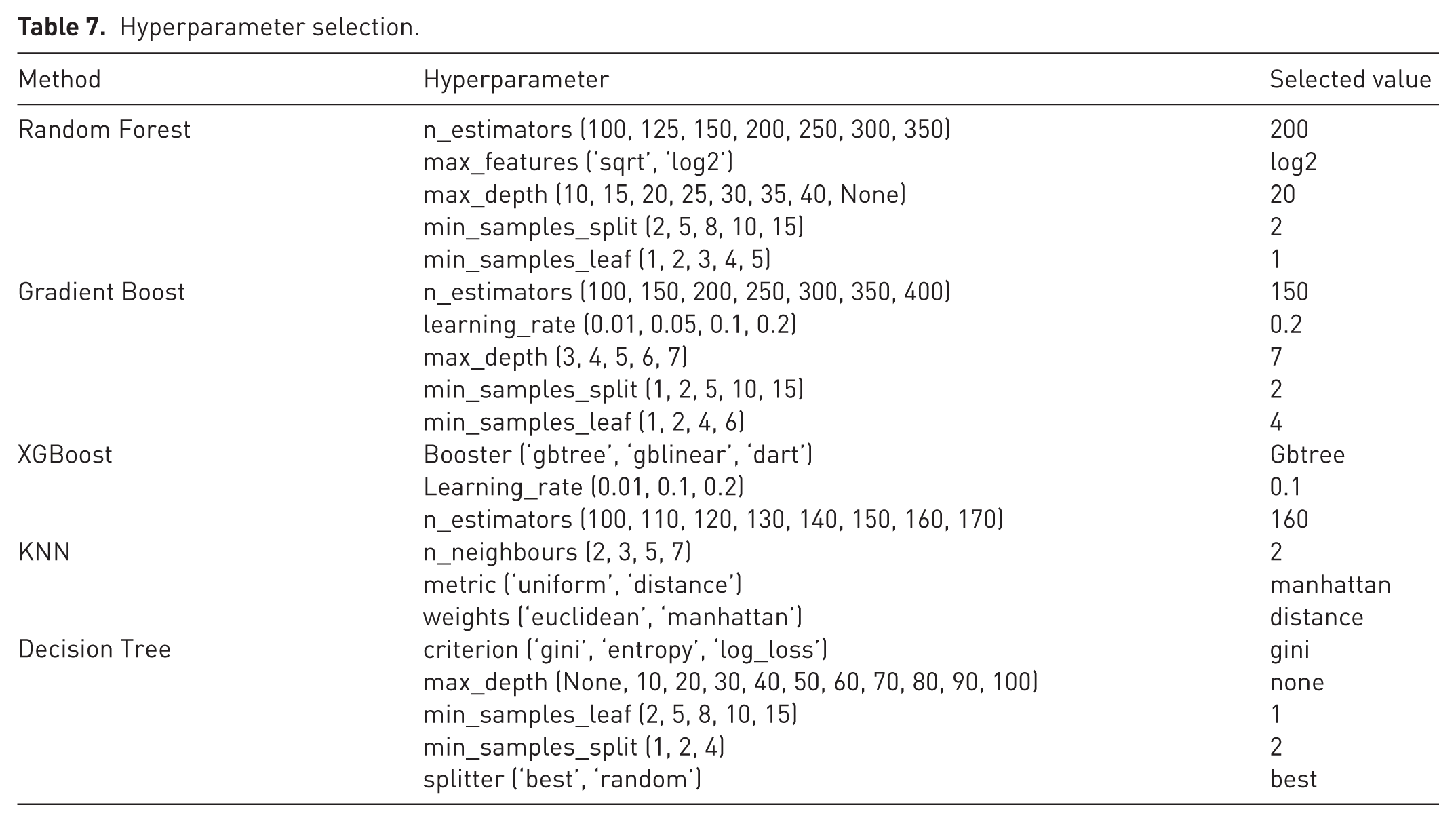
Table 8 demonstrates the analysed models’ relative performance. As expected, the Decision Tree Model scored the lowest across all evaluation metrics. This is likely due to the model’s sensitivity to minute variations in the data, as well as its general tendency to misestimate complex datasets as simple, due to the data noise. Notably, the case when one tree becomes excessively deep, where its sole focus is the provided data set, suffers immensely due to overfitting and thus loses its predictive power (Talekar, 2020). Other models did display slight variations in performance; however, Gradient Boost had the highest accuracy (0.844), followed by Random Forest (0.834), KNN (0.829), XGBoost (0.819) and the rest.
Model comparison.

AUC: Area under the curve; KNN: K-nearest neighbours; CI: Confidence interval.
XGBoost and KNN, despite coming much lower in absolute accuracy, both were classifier models with an F1 Score over 0.8 and AUC >0.9, indicating that their classifiers are indeed predictive and warrant further analysis. The primary reason Gradient Boost’s progress was so rapid at the start was due to the way in which his model stages fitting by cyclically attempting to narrow in on the cases that repeated the highest margins of error. In all other metrics, Random Forest offered the metrics that were the most optimal balance when that entire set of evaluation criteria was used. The fundamental divergence stems from Gradient Boost’s corrective focus, which may inadvertently inflate Log Loss.
In contrast, the Random Forest paradigm independently aggregates multiple decision trees, each generated from random proportions of the original feature and observation space. The resultant reduction of variance confers impressive generalization capabilities, which are especially advantageous in the presence of intricate structural patterns. It is also noteworthy that, although XGBoost was conceived to improve upon Gradient Boost by integrating techniques such as shrinkage and tree regularization, broader experimental observations indicate that the original Gradient Boost may surpass its successor within datasets of modest scale (approximately fewer than 1000 observations).
Hence, upon exhaustive review of the evaluation benchmarks – Accuracy, AUC, F1 Score, Precision, Recall, Log Loss, Hamming Loss, and Kappa Score – the comparative performance of the five candidate models, ordered in decreasing merit, is summarized as Random Forest, Gradient Boost, XGBoost, KNN, and Decision Tree.
To further validate the generalization ability of the two best-performing models, Random Forest and Gradient Boost, we evaluated them on the independent 20% hold-out test set. Their detailed classification results, including accuracy, F1-score, precision, recall, Log Loss, Hamming Loss, and Kappa Score, are summarized in Table 9. Additionally, Table 10 reports the AUROC values with 95% confidence intervals for each class as well as macro- and weighted-average scores. To provide a visual comparison of discriminatory ability, Figure 4 illustrates the ROC curves of Random Forest Figure 4(a)), Gradient Boost (Figure 4(b)), and a direct macro-average comparison of both models (Figure 4(c)). Results show that although Gradient Boost achieved slightly higher accuracy (0.7500) and precision (0.8144), Random Forest outperformed it in AUROC (macro-average = 0.903, 95%CI (0.809–0.967) versus 0.836, 95%CI (0.688–0.927)) and Log Loss (0.782 vs. 2.802), suggesting that Random Forest provides more stable probability estimates and stronger overall robustness, while Gradient Boost also demonstrated competitive performance and can be regarded as an acceptable alternative.
Base performance matrix on hold-out test set.

AUROC 95%CIs (Bootstrap, test set).

AUC: Area under the curve; CI: Confidence interval; AUROC: Area under the receiver operating characteristic.

ROC curves of RF (a), GB (b), and macro-average comparison (c).
Feature importance ranking
This subsection summarizes the importance scores computed via the Random Forest and Gradient Boost algorithms to elucidate the contributions of predictor variables. The integrative importance functions available through the Scikit-learn library in Python underpinned the calculations. Importance metrics obtained were averaged across the two models, and the resultant mean scores were subsequently employed to rank the original set of features, thereby deriving an ordering that integrates insights from both methodologies. Figure 5 and Table 11 provide an accompanying visual and tabular representation of the detailed ordered list and the pertinent averaged importance estimates.

Feature importance score.
Feature importance rank.

MD: Moral disengagement; AG: Anticipated guilt; EH: Eating habit; EA: Environmental awareness; FP: Food planning; FS: Food storage; DwL: Deal with leftovers; DC: Dining culture; PE: Policy effectiveness; IN: Intention.
It can be observed that, MD tops the list, closely followed by DC, with both factors standing out markedly above the others. Anticipated guilt, ranked third in both models. From the third position onwards, the average importance values of the remaining features are relatively close, with EA, FP, FS ranked 4th, 5th and 6th, respectively. Notably, EH achieved a slightly higher importance score of 0.1106 in the Random Forest. Finally, PE and DwL were ranked at the bottom in our study.
Critical factors
Based on the results presented in Section ‘Feature importance ranking’, MD and DC were identified as critical factors for further investigation. This section employs SHAP to examine the contributions of individual questionnaire items associated with these key factors to the predictive outcomes of the models. SHAP values provide an intuitive visual representation, clearly illustrating how specific variables affect model predictions at the individual sample level by differentiating positive and negative influences. Unlike conventional feature importance metrics, which solely yield global rankings, SHAP analysis enables a nuanced and interpretable exploration of each variable’s impact. The corresponding SHAP visualizations for MD and DC are provided in Figures 6 and 7, respectively.

SHAP analysis for MD.

SHAP analysis for DC.
Figure 6 presents the SHAP summary plot for MD, delineating the impact of each questionnaire item on the predictive outcome. Among the items analysed, Q5 (‘Even when everyone is enjoying the meal, it is not acceptable to waste food.’) emerged as the most influential, followed closely by Q1 (‘I believe my efforts to reduce food waste are meaningful even if others continue to waste food.’). Items Q2(R) (‘Compared to other industries, food waste causes less harm to the environment.’), Q4 (‘Food waste has a significant impact on both the environment and the economy, as reflected in media reports.’), and Q3(R) (‘There are more important things in life to focus on than reducing food waste.’) ranked lower in influence. Positive SHAP values indicate that higher item scores correlate with an increase in the predicted outcome, meaning that actual waste behaviours are closer to or better than intended behaviours, whereas negative SHAP values suggest the opposite. Notably, SHAP values for Q5 and Q1 exhibited a distinct clustering on the positive side, indicating their strong and consistent positive influence on model predictions. A similar pattern was observed for Q2(R) and Q4, where lower agreement with Q2(R), as a reverse-worded item, and higher agreement with Q4 were both associated with smaller IBGs. Conversely, Q3(R), displayed a more symmetrical distribution around zero, demonstrating variable influences depending on individual respondent profiles.
Figure 7 illustrates the SHAP summary plot for DC, highlighting the contribution of individual questionnaire items to the model’s predictions. Q33 (‘I believe it is reasonable to serve just enough food to guests, as it is not considered impolite and helps to reduce food waste’) was identified as the most influential item, characterized by a pronounced concentration of positive SHAP values associated with higher item scores. This distribution indicates that participants who strongly agreed with the statement tended to exhibit food waste behaviours that closely matched or improved upon their intended behaviours. Similarly, Q32 (‘I believe that serving a modest meal when entertaining guests does not diminish social respect or cause embarrassment’) and Q29 (‘I try not to waste or discard food in social settings, even if it makes me seem less generous.’) demonstrated a comparable, though slightly less pronounced, positive pattern, reinforcing the association between acceptance of modest hospitality norms and reduced food waste. In contrast, SHAP values for items Q31 (‘When preparing meals, I tend to rely more on the available food stock than on my family members’ food preferences.’) and Q30(R) (‘To be seen as a good host, I believe one must provide a large selection of dishes.’) were mostly concentrated near zero, suggesting generally positive but relatively small and less differentiated effects. Notably, Q30(R) revealed no consistent directional relationship between item scores and SHAP values, suggesting that diverse hospitality preferences may introduce nuanced effects into the model’s predictive performance.
Discussion
Discussion of key findings
This investigation conducts a nation-wide survey on food waste intentions and behaviours of individuals in China. Unlike the remaining literature, which focuses on the factors that lead to Food Waste behaviours and disregards the gap between intention and action, our study focuses on the IBG. We observed that 73.8% of respondents display a considerable level of behavioural gap, which illustrates the difficulty in turning intentions into action. In general, such a gap in behavioural intentions is illustrated by the fact that 59.1 % of respondents stated that they intended more than they actually did, while 14.7 % said that they did more than they intended. Such behaviour is not new and has been characteristic of research on pro-environmental behaviour, whereby a gap has always been observed between intention and behaviour (Laffan et al., 2023). For example, in the case of respondents to voluntary carbon offset research, it was reported that over 50% of the respondents with a positive attitude did not engage in the positive green behaviour. In comparison, 28% of the respondents with a negative attitude to the green behaviour opted to do it (Ropret Homar and Knežević Cvelbar, 2024).
Among various psychological factors examined, moral disengagement emerged as the primary determinant of the IBG. Although respondents generally disagreed with the notion that reducing food waste is unimportant (Q3), yielding an average score of 2, actual behaviours varied significantly. Specifically, SHAP analysis identified moral justification as the most influential item, suggesting individuals who view food conservation as a personal priority may willingly compromise other comforts or preferences to reduce waste (Coşkun and Filimonau, 2021). However, many participants remained neutral on this specific question, indicating there are other significant factors, such as dining culture, influencing the translation from intention to actual behaviour. Following moral justification, diffusion of responsibility (Q1) and advantageous comparison (Q2) also significantly influenced wasteful behaviours. Diffusion of responsibility implies that individuals perceive reduced personal accountability when food waste responsibility is collectively shared, such as during group dining or in buffet scenarios, thus weakening their motivation to curb waste. Advantageous comparison reflects individuals’ tendency to justify moderate food waste by contrasting their behaviour favourably with more extreme cases, thus maintaining self-esteem and diminishing motivation for improvement. Notably, many respondents agreed with the perception that food waste causes less environmental damage than other industries, revealing potential gaps in current educational initiatives, this may be caused by current educational efforts seldom comparing food waste severity explicitly with other environmental issues, limiting their effectiveness. Interestingly, disregard or distortion of consequences (Q4) showed the weakest impact on the IBG, likely because increased awareness about food waste consequences has been bolstered by legislation and environmental campaigns (Zhou et al., 2020). Therefore, future education should not only focus on the damage food waste would cause but also clearly illustrate how food waste compares with other significant environmental concerns, enhancing public understanding and fostering genuine behavioural change.
Another key finding relates to the influence of dining culture on food waste, corresponding to observations by Filimonau et al. (2020). SHAP analysis clearly demonstrates that avoiding over-serving food (Q33, Q32) significantly reduces the IBG. This aligns with established evidence identifying over-preparation as a primary precursor to food waste (Graham-Rowe et al., 2014; Schanes et al., 2018). While some studies suggest that individuals who over-serve may still avoid waste by consuming all prepared food, for example, mothers often finishing various dishes to satisfy family preferences despite their own dietary choices (Cappellini and Parsons, 2012), this behaviour was less evident in our survey. Specifically, significant number of respondents expressed neutral to negative attitudes toward the idea of minimizing waste in social settings, even if perceived generosity might be compromised (Q29, average score 2.6). This implies that within traditional Chinese dining contexts, social expectations to over-prepare food frequently result in unavoidable waste, contradicting earlier assumptions about consumption compensating for excess preparation.
Unlike other questions, in our analysis, Q31 demonstrated a limited impact on the influence IBG. As far as we know, not much has been done in exploring this relationship. One explanation could be that cooking for family or guests is part of the culture, and it is more a question of emotions than mere environmental factors. Hence, for the question whether a person’s emphasis on these preferences matters, it is answerable in the negative in the context of people’s intention behind the food waste. Much of the food variety pursued (Q30), while contributing to more food waste, also did not show much IBG in this work. One explanation could be that the more people appreciate food variety, the more dominated they are by the traits of flexibility and having reasonable control, not wasting food (Schanes et al., 2018). In context as to eating out, more often than not, the types of foods that can be eaten are limited to what is put on the menus of the restaurants or buffets. Restaurant patrons could also not spend time pondering over what foods they could buy, or instead buy, to eat. In these environments, customers will tend to order each dish in smaller sizes and sample several options, not to be wasteful and to help other people uphold the social expectations of hospitality.
Research scope and future directions
Several methodological considerations were incorporated to enhance the validity and robustness of the findings, while also highlighting areas for future research. In terms of internal validity, several safeguards were adopted, including reverse-worded items, Harman’s single-factor test for CMB and statistical checks for skewness and kurtosis. Spearman correlation and chi-square tests were used for feature selection. To avoid reliance on a single algorithm, five different machine learning models were compared and evaluated. This comparative approach enhances the robustness of the findings by ensuring that the identified predictors were not artefacts of one specific method. In addition, we employed SHAP analysis to enhance interpretability and to mitigate multicollinearity, which is common in Likert-scale surveys. Nevertheless, as the data were derived exclusively from self-reported questionnaires, recall bias and social desirability bias remained potential concerns. The application of SMOTE, while useful in addressing class imbalance, may also have introduced synthetic patterns that do not fully reflect real-world behaviours.
With respect to external validity, the demographic distribution of the sample (N = 509) broadly reflects national patterns, covering respondents from diverse regions and socio-demographic backgrounds. This provides a solid basis for examining food-waste behaviours in a comprehensive manner. At the same time, some groups were less represented, such as individuals from remote rural areas and certain age categories. This reflects a pragmatic compromise between feasibility and resource constraints rather than methodological oversight. Future studies could extend this approach by incorporating stratified sampling or targeted recruitment strategies to achieve more comprehensive coverage of underrepresented populations. Moreover, expanding the design to cross-cultural contexts would enable comparative insights and enrich the generalizability of the findings.
Finally, while the machine learning models employed here effectively identified predictive factors of the IBG, they primarily capture statistical associations rather than causal mechanisms. Future research could address this limitation by incorporating longitudinal or experimental designs and complementing self-reported data with behavioural tracking or consumption records.
Conclusions and implications
Findings
Unlike most pre-research that focused on why an individual intended to waste food and overlooked the gap between stated intentions and actual behaviours; this study not only examines this discrepancy but also investigates the factors that influence it. With the help of machine learning, we analysed the IBG, as well as the predictors of both claimed and acted-upon food waste, using the data gathered from a survey filled out by 509 people from various locations within the People’s Republic of China. This research provided several insights. First, 26.2% of the respondents were able to achieve intention–behaviour alignment; on the other hand, 59.1% self-reported having wasted more food than they intended. Second, Moral Disengagement came into focus in an attempt to explain the IBG. Specifically, the mechanisms of Moral Justification, Diffusion of Responsibility, and Advantageous Comparison were the most predominant in shifting intention into action. Finally, the data also show that dining culture in general enhances food waste through sociocultural norms that expect an individual to either waste food or over-order.
Practical implications
This study puts forward several practical recommendations. Raising awareness and strengthening the traceability of food waste behaviours is a key priority. In light of the IBG identified, policymakers and food service providers could adopt tools that enable users to monitor their waste and receive immediate feedback. Restaurants and cafeterias, for instance, might install food-weighing systems, while households could make use of mobile applications to record daily waste. Importantly, such tools should convey the clear message that food waste is unacceptable, thereby countering the moral justifications that often legitimize wasteful practices.
Another important direction is to reinforce individual accountability, particularly in group dining contexts such as cafeterias or communal meals, where responsibility can easily become diluted. Visible prompts – such as ‘Your choice matters’ or ‘Every saving counts’ – may serve as effective reminders of personal responsibility.
Attention should also be given to the environmental dimension. Public education campaigns can highlight that food waste contributes to soil degradation, water scarcity, and greenhouse gas emissions. Using visual comparisons, concrete examples and relatable scenarios can help dismantle the perception that food waste is less severe than other environmental issues, thereby reducing rationalizations for wasteful behaviour.
Finally, efforts must address cultural expectations around over-ordering and discarding food. Public campaigns led by influential figures, alongside targeted local regulations, could help embed moderation as a socially valued and acceptable practice.
Footnotes
Appendix 1
Declaration of conflicting interests
The authors declared no potential conflicts of interest with respect to the research, authorship, and/or publication of this article.
Funding
The authors received no financial support for the research, authorship, and/or publication of this article.
