






Abstract
Cities in alpine and high-altitude regions are subject to technical, environmental and economic constraints, and there are problems such as imperfect evaluation systems and immature methods for domestic waste disposal technology, which urgently require the establishment of a scientifically perfect evaluation system. This study takes Lhasa as an example and uses comparative analysis, analytic hierarchy process (AHP), ArcGIS, mathematical model and fuzzy comprehensive evaluation methods to construct the evaluation system covering the whole process of ‘classification-transfer-transportation-disposal’. Considering the progress of waste classification in Lhasa, optimization measures such as regular collection and transportation, establishment of transfer and sorting centres and on-site resource treatment are needed. Based on the ArcGIS simulation analysis and actual transfer demand, three new transfer stations were planned, and it was found that the new transfer stations could significantly reduce transfer distances of urban-suburban routes by 45.91%, labour costs by 50.00% and total CO2-eq emissions by 10.42%. Moreover, the AHP and fuzzy logic method were employed to establish an evaluation system for waste incineration power generation technology. Utilizing these methods, the comprehensive score assigned to the Lhasa waste incineration power generation technology was determined to be 91.97, thereby verifying the feasibility of the evaluation system and indicating that the technology is the leading one in China. However, environmental friendliness and economic feasibility still need improvements. This study provides a scientific basis for the decision-making process of efficient management of domestic waste in alpine and high-altitude regions.
Keywords
Introduction
Due to their unique physical geographical environment, alpine and high-altitude regions serve as crucial global ecological barriers and environmental regulators. However, factors such as complex terrain, inconvenient transportation, sparse population and lagging economic development have significantly restricted the development of waste disposal technologies (Liu et al., 2023). The accumulation of pollutant concentrations is influenced by ‘deep convection’ weather (Liu et al., 2022) and glacial ‘cold trapping’ of atmospheric Hg (Huang et al., 2020) on the Qinghai-Tibet Plateau, and as the headwaters of the three rivers (Xue et al., 2023), ecological safety is of great significance to China and other Southeast Asian countries. As the core city of the Qinghai-Tibet Plateau, Lhasa combines the typical characteristics of a city in an alpine and high-altitude ecologically fragile area with the unique value of humanistic and natural integration. In recent years, the rapid development of Lhasa’s economy and tourism industry, as well as the substantial increase in municipal solid waste generation (Statistics LMBO, 2024), have posed great challenges to the management of municipal domestic waste treatment and disposal technologies. However, the evaluation system for solid waste treatment and disposal technology in Lhasa has yet to develop a scientific and comprehensive framework, and relevant research is relatively scarce. Due to the unique climate and environmental carrying capacity characteristics of Lhasa (Fan and Fang, 2022), it is not easy to replicate the evaluation indexes and assessment models of other cities in the region. Therefore, there is an urgent need to construct a set of solid waste disposal technology evaluation systems that fit the technical, environmental and economic characteristics of the Lhasa region.
Environmental technology assessment serves as the foundation for governments and enterprises to formulate pollution prevention plans, holding significant importance for ecological conservation and environmental management (Gholian-Jouybari et al., 2024). Most existing environmental technology management systems in China are government-led and rely on expert review meetings for decision-making, which struggle to meet current environmental and economic development demands. Furthermore, existing technology evaluation systems predominantly focus on performance, educational outcomes and information-related aspects, often failing to adequately address the integrated assessment of environmental, economic and technological factors. In environmentally sensitive and fragile regions like Lhasa, extreme environmental conditions may lead to diminished technology performance or heightened risks of secondary pollution, necessitating the incorporation of sociocultural factors into evaluation systems (Duan et al., 2020). Existing literature employs Multi-Criteria Decision Analysis (MCDA) to precisely identify ecologically fragile zones, establishing evaluation frameworks encompassing natural, economic, environmental and social impacts (Zhang and Zhang, 2021). Integrating Geographic Information System (GIS) spatial analysis capabilities with MCDA (He et al., 2018), a comprehensive ecological vulnerability index reflecting the fragility status of China’s ecological hotspots has been developed. The HIVE model (Shijie et al., 2016) for regional integrated environmental risk assessment incorporates accessibility indicators related to environmental and socioeconomic factors. It comprehensively considers the impacts of diverse risk sources, pathways, receptors and risk control measures, offering a more holistic evaluation of human activities’ influence on environmental risks and management strategies than traditional models.
These methods provide an important scientific basis for urban domestic waste management in Lhasa, but the multi-criteria decision-making analysis has strong subjective bias, and its decision-making accuracy is highly dependent on the quality and completeness of the data, and insufficient or inaccurate data may lead to decision-making bias; the indicator system of HIVE model is more complete, but it mainly focuses on the river and atmospheric risks, and there is a lack of adaptability to the needs of comprehensive evaluation of such complex systems as urban domestic waste disposal technology. The HIVE model is more complete, but mainly focuses on river and atmospheric risks, and is not suitable for the comprehensive evaluation of urban domestic waste disposal technology, a complex system. Therefore, there is still a lack of a comprehensive environmental, economic and technical evaluation system that takes into account multidimensional considerations and meets the needs of the whole process of municipal solid waste management in alpine and high-altitude areas.
This paper establishes a comprehensive process evaluation system for urban domestic waste disposal technologies through the comprehensive use of Multi-Criteria Decision Making, the Analytic Hierarchy Process (AHP), fuzzy logic method and an innovative technology evaluation method, Python big data and visual data analysis. The typical alpine and high-altitude city of Lhasa is taken as an example to be analysed, aiming to provide a scientific basis and a complete methodology for the decision-making of efficient management of urban domestic waste in alpine and high-altitude cities.
Methodology
Selection of evaluation methods
Literature research, on-site visits and offline talks are used to organize the experience of classification work in combination with more than 100 garbage classification demonstration zones across the country. Using Python data analysis functions, the main factors affecting the work of garbage classification were summarized as garbage classification mode, classification publicity, supervision system, facility construction and disposal technology, and a summary of garbage classification experience was obtained. A comparative analysis method (Peng et al., 2021) was utilized to establish an evaluation method of waste classification technologies. The classification scheme most suitable for local socio-economic conditions was selected by horizontally comparing the cost-effectiveness of different classification modes, the participation of residents, the resource recovery rate and other core indicators.
The evaluation indices of waste transfer stations are quantified by AHP (Hke and Yalcinkaya, 2020), and the spatial overlay analysis of GIS (Cook and Pétursson, 2025) is combined to identify the optimal transfer station (Aasapan and Abuk, 2019; Nguyen et al., 2025) siting area and avoid negative impacts on residential areas and ecologically sensitive areas. Finally, the feasibility of the evaluation system is verified in relation to the actual waste transfer station location in Lhasa.
In terms of waste transportation, a mathematical evaluation model is established based on literature, standards and selected indicators such as transfer distance, economy and greenhouse gas emissions (Lin et al., 2020). The paths are then simulated and optimized by GIS network analysis to evaluate their technical, environmental and economic indicators (Benitez-Bravo et al., 2021).
In terms of terminal disposal of waste, a fuzzy evaluation method based on AHP has been established (Zhang et al., 2020), and the weights of the evaluation indicators have been determined through expert surveys, literature research and the comprehensive use of big data, so as to quantitatively assess the waste incineration power generation technology in Lhasa and to provide decision-makers with a scientific basis. (Please refer to the Supplemental Material for details.)
Weights determination
Determining evaluation index weights is a crucial step in decision analysis, performance assessment and system optimization. Allocating these weights reasonably is essential for ensuring the reliability of evaluation results. In this paper, the weights of the evaluation indicators were determined using a combination of expert surveys (Sokolov et al., 2025), literature surveys and big data (Alsabt et al., 2024). Firstly, Python is used to collect factors currently concerning the municipal solid waste disposal process. Secondly, the collected data are visualized and analysed. Finally, the evaluation indicator weights are determined by combining the expert scoring method. Through the integrated use of related methods, the method of determining the weights of evaluation indicators is transformed from a single expert scoring component (Delphi method) to a combination of expert scoring, learning of Python machine language and stakeholder (users, audience groups) surveys, which reduces the error of a single method and improves the scientificity and accuracy of decision-making. (Please refer to the Supplemental Material for details.)
Presentation of results
In order to be more conducive for decision-makers to make the right judgment, the way the indicators are set up has been transformed from tables and textual descriptions to a combination of graphics and text (Ma et al., 2022). The evaluation results are displayed through visualization tools such as dandelion diagrams, radar-stacking diagrams, matrix diagrams, GIS layers and others, which make the data more intuitive and clear, and significantly improve the efficiency of data analysis and communication effects. The visual analysis platform incorporates the following components: (1) GIS information data can show information on population density, waste generation, collection and transfer routes, etc., and GIS combines with AHP to analyse and get the optimized waste collection and transfer route scheme. (2) The results obtained from the five modules – waste classification, waste collection, waste transfer, incineration plant treatment and monitoring system – are presented in the form of bar charts. (3) The first-level indicators of ‘technology’, ‘environment’ and ‘economy’ were used as evaluation objects and analysed using dandelion diagrams and radar stacking diagrams. (4) Indicator analysis matrix is to analyse the overall process of solid waste disposal, with row headings for different treatment options and an analysis of the whole process of solid waste disposal.
The whole-process evaluation system for domestic waste disposal technology can be defined as ‘a comprehensive framework for multi-dimensional and quantitative analysis and assessment of the whole process of domestic waste disposal from “classification-transfer-transportation-disposal” based on the principles of systematicity, scientificity, and sustainability’. According to the characteristics of each process, the comparative analysis method, the AHP, mathematical models, fuzzy logic method and ArcGIS software analysis were used to establish the technical evaluation system of the whole process of urban domestic waste disposal; the waste classification, transfer station location suitability, transfer scheme and waste incineration power generation technology were evaluated; and the optimization scheme was proposed. The implementation process of the establishment of a domestic waste disposal technology evaluation system is illustrated in Figure 1.
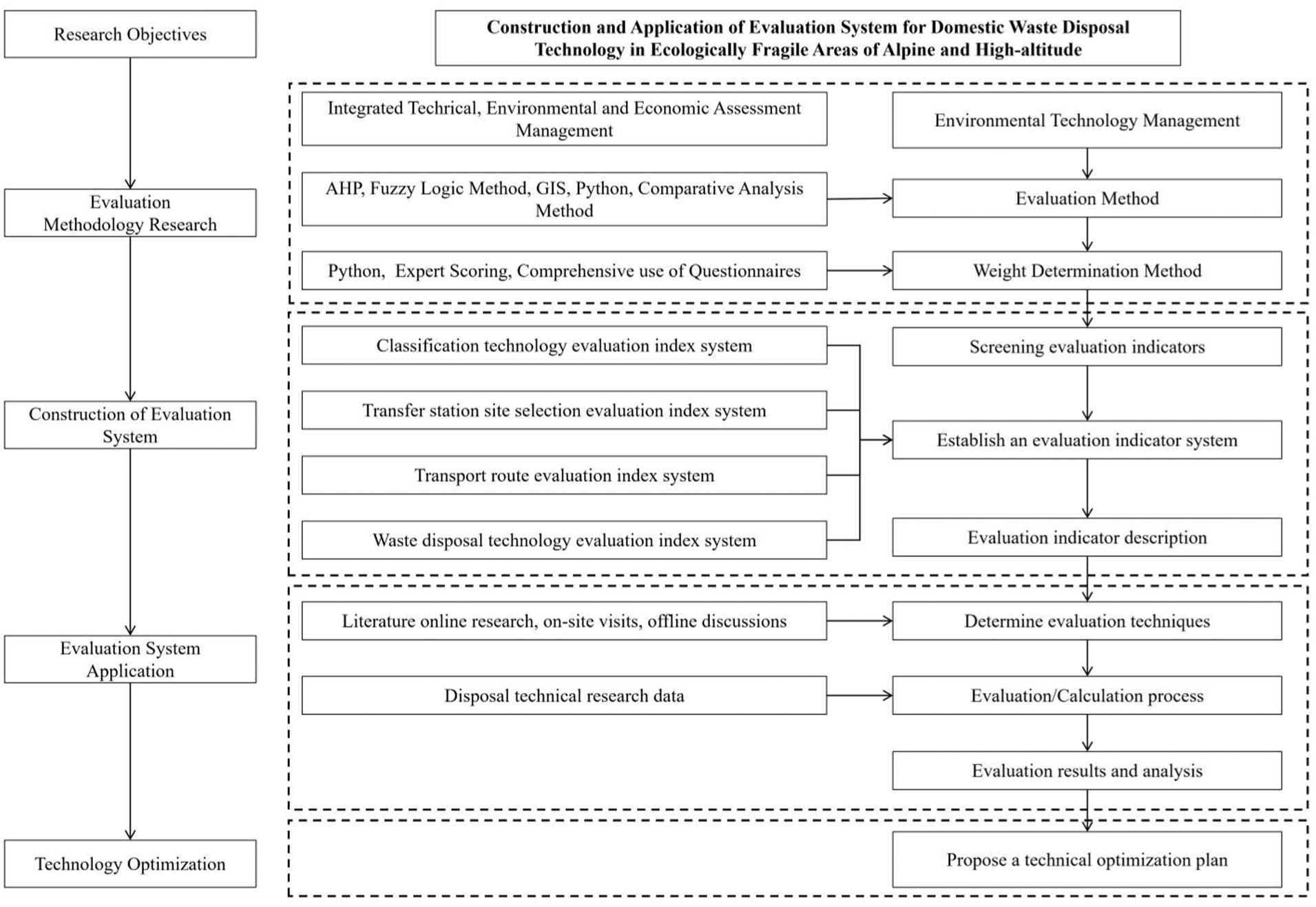
Implementation flow chart of the establishment system of solid waste disposal technology evaluation system.
As can be seen from Figure 1, we first take the construction and application of an evaluation system of domestic waste disposal technology in alpine and high-altitude ecologically fragile areas as the goal and then carry out the research on the evaluation method and the construction of the evaluation system. Then, the evaluation system is applied to the process of domestic waste disposal in Lhasa. Finally, according to the obtained results, the optimization of domestic waste disposal technology in Lhasa City is carried out.
Results and discussion
Evaluation of waste classification technology
As the primary aspect of MSW management, the accuracy and sustainability of waste segregation are key influences on the effectiveness of subsequent resource utilization (Gao et al., 2023). In this paper, the evaluation boundary of waste classification technology is defined as the whole process of ‘classification delivery–collection–transshipment–disposal’. Through literature research, network research, on-site visits and offline interviews, combined with more than 100 waste classification demonstration zones to sort out the classification word experience, Python data analysis tools were used, according to the process of ‘raw data collection-data cleaning- summary and analysis’ to carry out systematic research. (The detailed process is shown in Supplemental Figure S1.) The key factors affecting the effectiveness of waste classification were summarized as follows: the mode of waste classification, the publicity surrounding classification, the monitoring system, the construction of facilities and the technology employed for disposal.
Based on the above five key factors to analyse the situation of waste classification in Lhasa urban area (the detailed classification is shown in Supplemental Figure S2), the results show that Lhasa urban area waste implements four classifications. At the same time, the government departments give full play to Tibetan characteristics according to local conditions, vigorously promote the publicity of waste classification by combining with the internet and actively construct facilities for classified drop-off and classified disposal. However, there are still problems such as a reward and punishment system that has yet to be developed, unclear supervision responsibilities and transfer facilities that are difficult to meet demand. Supplemental Figure S3 analyses the waste classification work in Lhasa’s peri-urban and rural areas and finds that Lhasa’s rural and peri-urban areas are currently implementing the “four classifications” model and at the same time are carrying out activities for exchanging recyclables for points. The mode of collection and transport is ‘village collection, township transfer, district, and county treatment’, and the disposal technology is mainly landfill. Since November 2020, the results of the implementation of the Regulations on Municipal Domestic Waste Classification Management in Lhasa are shown in Figure 2.
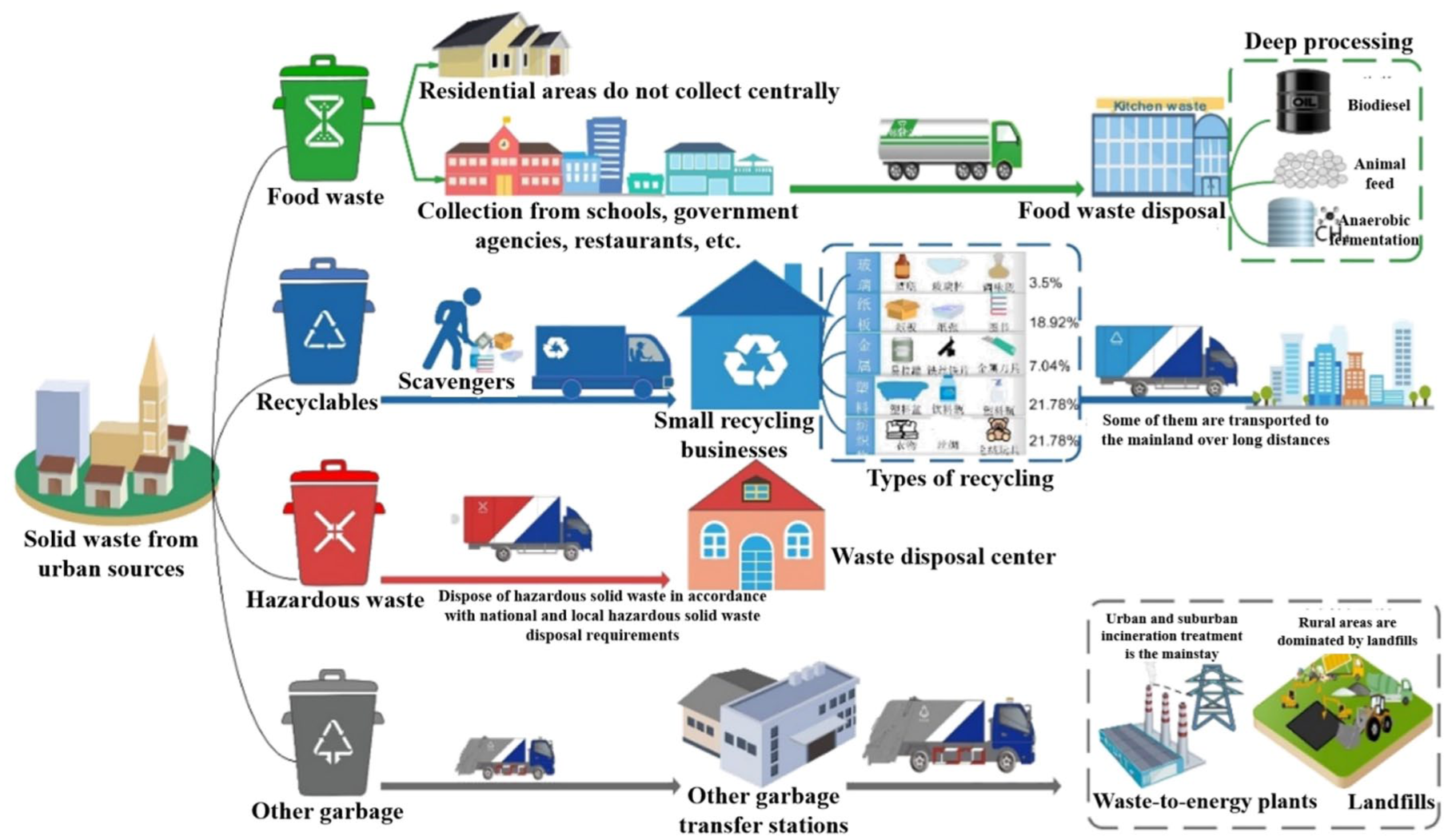
Summary of the current situation of ‘four classifications’ in Lhasa.
As can be seen from Figure 2, food waste is only collected centrally in schools, institutions and restaurants and is not collected separately in residential areas. Recyclables have the problem of being collected only by small recycling enterprises, with a low recycling rate and a lack of in situ resourcing technology, requiring long-distance transport to the hinterland for treatment, with high energy consumption and high treatment costs. For other waste, there are few transfer stations to meet the transfer demand. To address these problems, targeted optimization recommendations are made in terms of five key factors affecting waste classification, as shown in Table 1.
Implementation status and suggestions for waste separation in Lhasa.
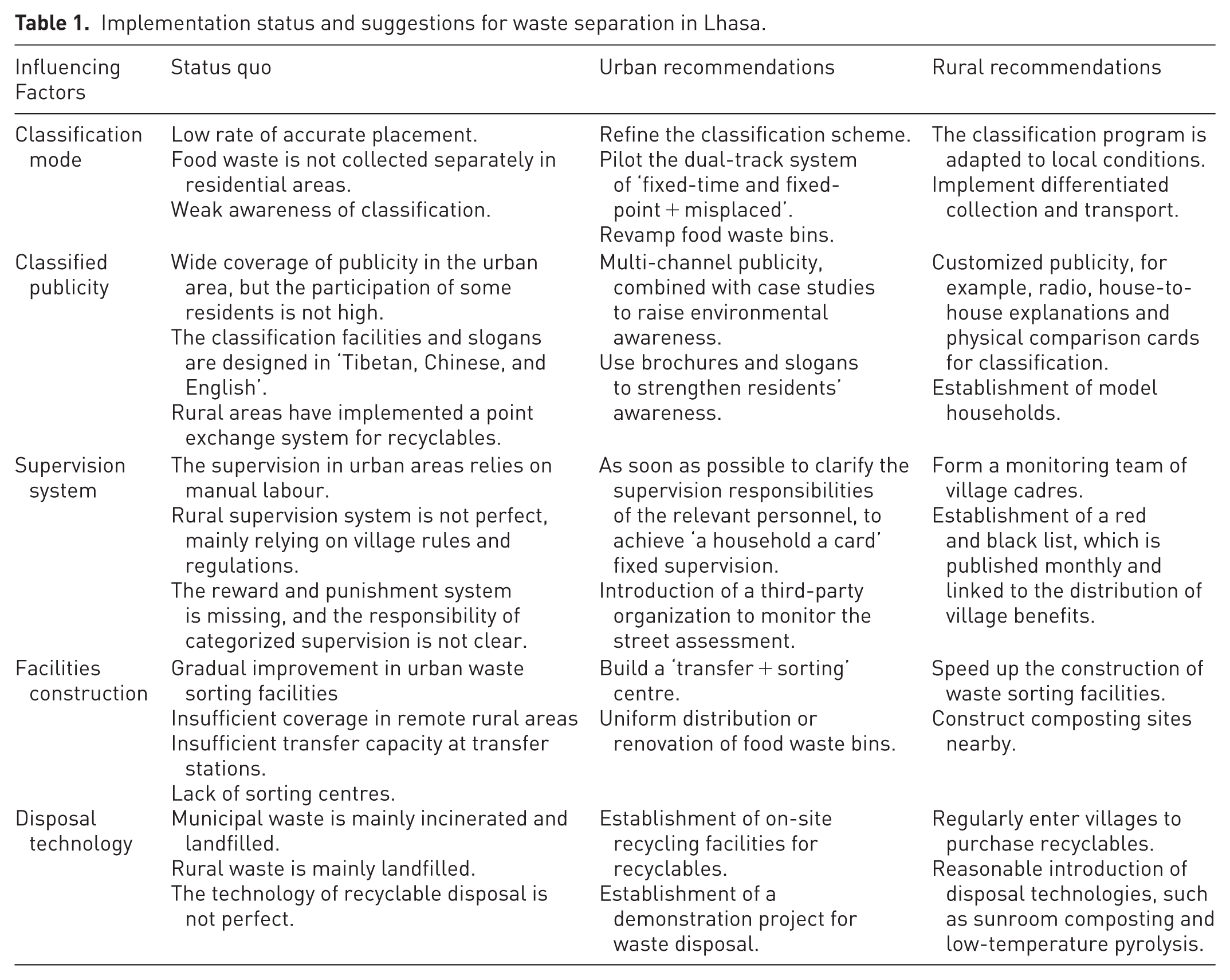
As shown in Table 1, waste classification in Lhasa has achieved notable progress, yet substantial room for improvement remains. Firstly, it is necessary to clarify the mode of separation as soon as possible, supplement the details of the separation program and carry out differentiated collection and transportation work that takes into account the realities of urban and rural areas (Zhang et al., 2024). Secondly, there should be sustained publicity work on waste classification (Li et al., 2024), and waste classification publicity and recycling policies should be formulated according to local conditions, so as to achieve universal participation in waste classification. Thirdly, the main body responsible for supervision should be established, enabling universal participation in supervision. Fourthly, accelerate the construction of waste classification facilities and improve relevant supporting facilities. Finally, rationally introduce terminal disposal technologies and develop disposal technologies with highland characteristics.
Evaluation of site suitability for waste transfer stations
The location planning and capacity allocation of waste transfer stations play a key role in improving the efficiency of domestic waste collection and transportation, reducing operating costs and reducing environmental carbon emissions (Convertino et al., 2025). In this paper, by constructing the technical route of ‘Layer Extraction–Euclidean Distance Analysis–Graded Evaluation’ (please refer to Supplemental Table S1), the results of the weighted superposition analysis of the site selection of the transfer station are obtained. Setting the level of analysis results, the suitability of site selection is divided into four levels: ‘suitable for construction’, ‘Construction is possible’, ‘Restrictions on construction’ and ‘Construction is prohibited’. The specific spatial distribution is shown in Figure 3. In the map, the green area is suitable for building, the blue area is buildable, the yellow area is restricted, and the black area is prohibited.
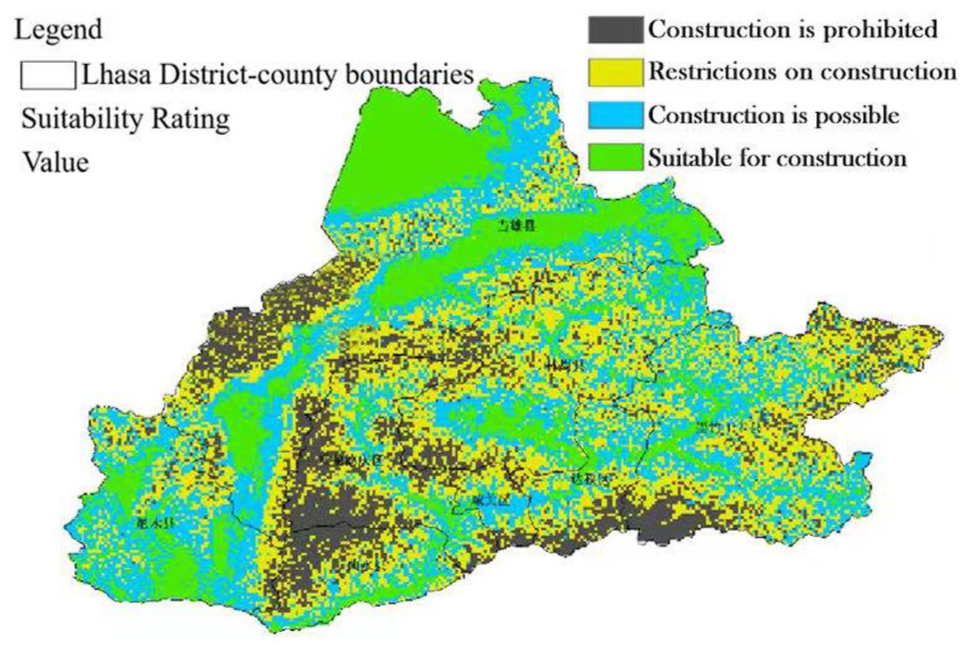
Weight overlap plus analysis results.
As can be seen from Figure 3, the site location of the transit station avoids factors such as scientific research and education, special functional areas, parks and green areas, attractions and other construction sites. And the factors such as population density, land use specification, elevation and slope are considered comprehensively.
Based on the hierarchical analyses, the preliminary candidate locations were selected within the suitable area, taking into account the constraints of ‘land value’ and ‘red line of agricultural land’. (Please refer to Supplemental Figure S4.) Combined with the land area specification and the service radius of the transfer station in the Technical Code for Transfer Station of Municipal Solid Waste (CJJ/T-47-2016), the preliminary candidate locations are optimized, and the new site of the transfer station is finally selected (as shown in Figure 4).
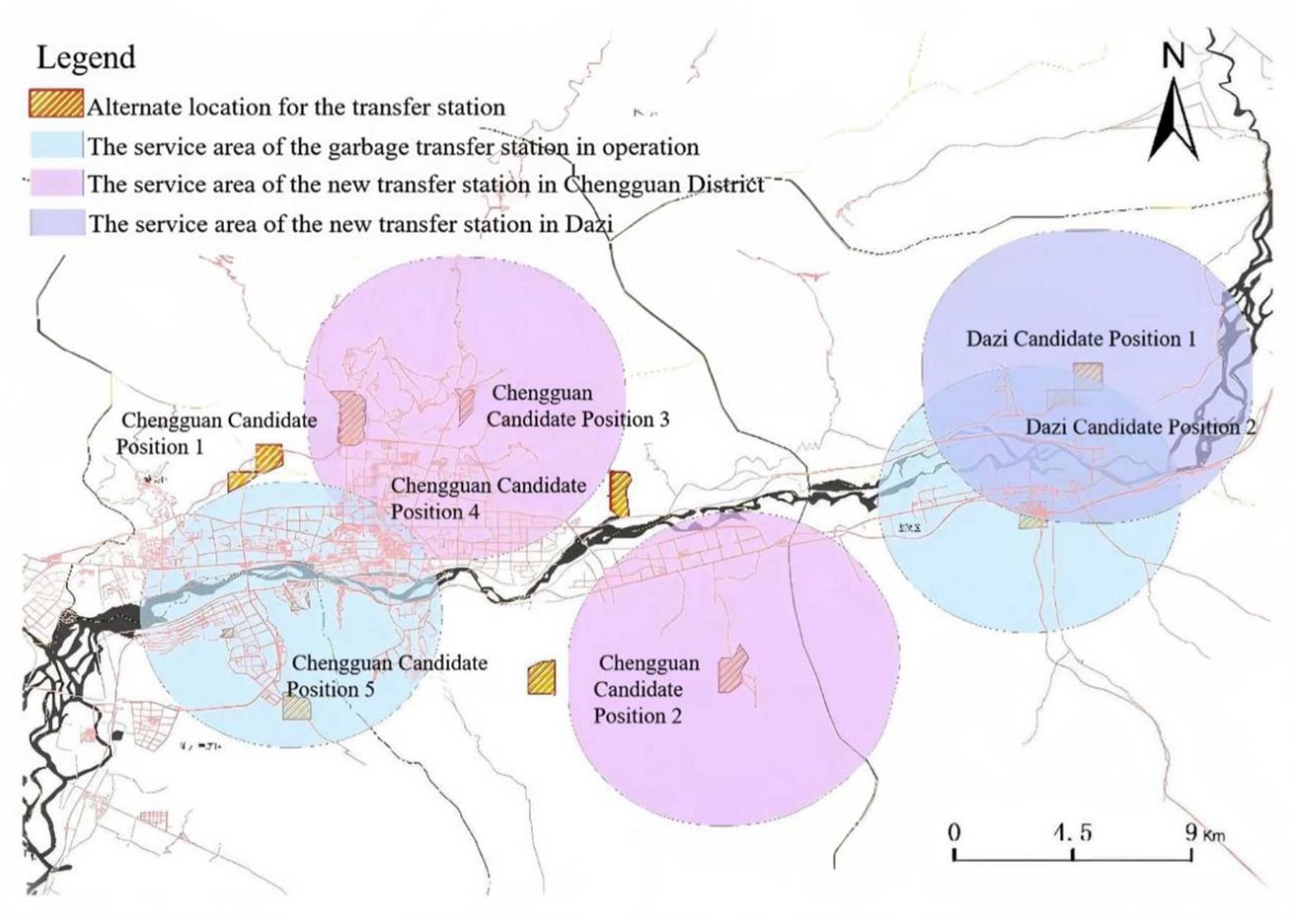
Schematic diagram of transfer station location.
As can be seen from Figure 4, most of the operating refuse transfer stations fall in the ‘suitable for construction’ of the evaluation system, indicating that the evaluation system has a high degree of feasibility. However, the small number of operating transfer stations, small service area, low transfer efficiency and high cost cannot meet the increasing demand for waste transfer, and new transfer stations are needed to solve the above problems.
Based on the comprehensive population density distribution, the sites of transfer stations are identified as the new transfer station 1 in Chengguan District, the new transfer station 2 in Chengguan District and the new transfer station in Dazi District. The basic data of the three new transfer stations are shown in Supplemental Table S2, and their transfer capacities are 450, 350 and 20 tonnes/day, respectively, among which, the construction of Dazi District transfer station is mainly to serve the demand of long-distance waste transfer.
The evaluation system comprehensively takes into account the geospatial constraints, population distribution characteristics and operational needs and provides a scientific basis for improving the overall effectiveness of the waste collection and transportation system in Lhasa.
Evaluation of waste transfer routes
As the core link of the urban waste management system, the operation efficiency, environmental performance and cost-effectiveness of waste transfer are directly related to the overall waste treatment effect. Based on the results of optimal siting of domestic waste transfer station, this paper selects the distance of transfer route, fuel cost, manpower cost and greenhouse gas (CO2, CH4, N2O and total CO2-eq) emission as the evaluation objectives and establishes the numerical models of distance, economy and greenhouse gas emission (Rattanawai et al., 2024). The mathematical model is shown in the Supplemental Material. The environmental and economic benefits before and after the construction of the new waste transfer station in ‘urban-suburban’ were compared and analysed, as shown in Table 2.
Emission index and benefit comparison of collection and transportation schemes.
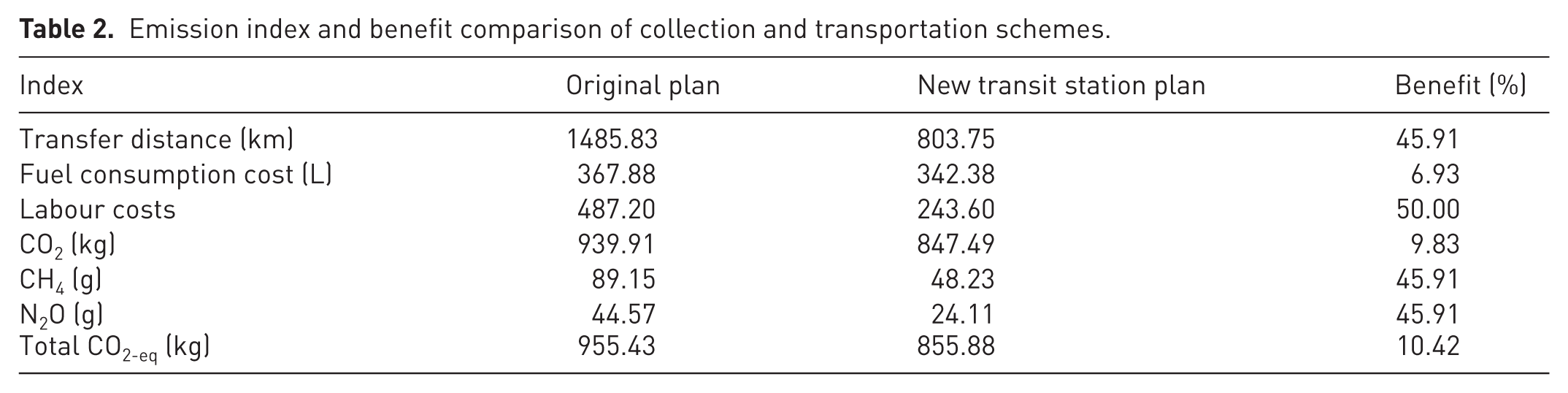
The original transfer scheme (see Supplemental Figure S5(a)) is for the direct transfer of domestic waste from urban and peri-urban areas (including Chengguan District, Dazi District, Duilongdeqing District and Qushui County) to the incineration power plant. The test scheme (new transfer stations, see Supplemental Figure S5(b)) adds four new transfer routes, transferring waste from the three new transfer stations and the transfer station in Duilongdeqing District (under construction) to Lhasa Shengyun Environmental Protection and Electric Power Co. (Lhasa, China), respectively. A comparison shows that the new transfer stations significantly reduce the transfer distance by 45.91%, fuel costs by 6.93%, labour costs by 50.00% and total CO2-eq emission by 10.42%. The location of the transfer station is in line with the spatial pattern of Lhasa, which effectively avoids the terrain obstruction and route redundancy of inter-regional direct transportation, and greatly improves the transfer efficiency. In view of the regional characteristics of Lhasa, such as high temperature, high altitude and high labour cost, the transit mode replaces decentralized direct transportation, realizes precise control of energy consumption through route intensification, reduces fuel cost and labour cost and is more suitable for regional operation and maintenance needs.
In terms of greenhouse gas emissions, the optimization of various indicators has been particularly effective: CH4 and N2O emissions have been significantly reduced, which can effectively mitigate the greenhouse effect in the plateau region and reduce the impact on the fragile ecosystems at high altitude and high cold.
Route optimization based on GIS technology not only significantly improves the transfer efficiency but also shows significant economic and environmental benefits in terms of reducing transport costs and carbon emissions (Cheng et al., 2024).
Evaluation of technology for waste incineration power plants
According to the survey results, there are only two waste disposal technologies in Lhasa: landfill and incineration power generation (He et al., 2022). Domestic waste incineration power generation technology can realize waste reduction and energy recovery through high-temperature treatment, which is an important method for managing municipal solid waste treatment; therefore, it is identified as the object of waste disposal technology evaluation. In this paper, the comprehensive use of expert surveys, literature surveys, and big data analysis is used to determine the weight of each evaluation index, and then the Assessment Guidelines for Integrated Utilization Technology of Industrial Solid Waste (GB/T 32326-2015) is referred to the calculation of the comprehensive score. The results are shown in Table 3. From the table, it can be seen that secondary pollution has the highest weight in the evaluation indexes, which means that the long-term ecological health risks caused by secondary pollution such as heavy metal pollution, dioxins, acid gases, fly ash have become the core problem restricting the promotion of this technology (Zhang et al., 2025). Therefore, it is necessary to focus on strengthening the regulation of online flue gas detection, fly ash solidification and landfill.
Weight results of comprehensive evaluation indicators.
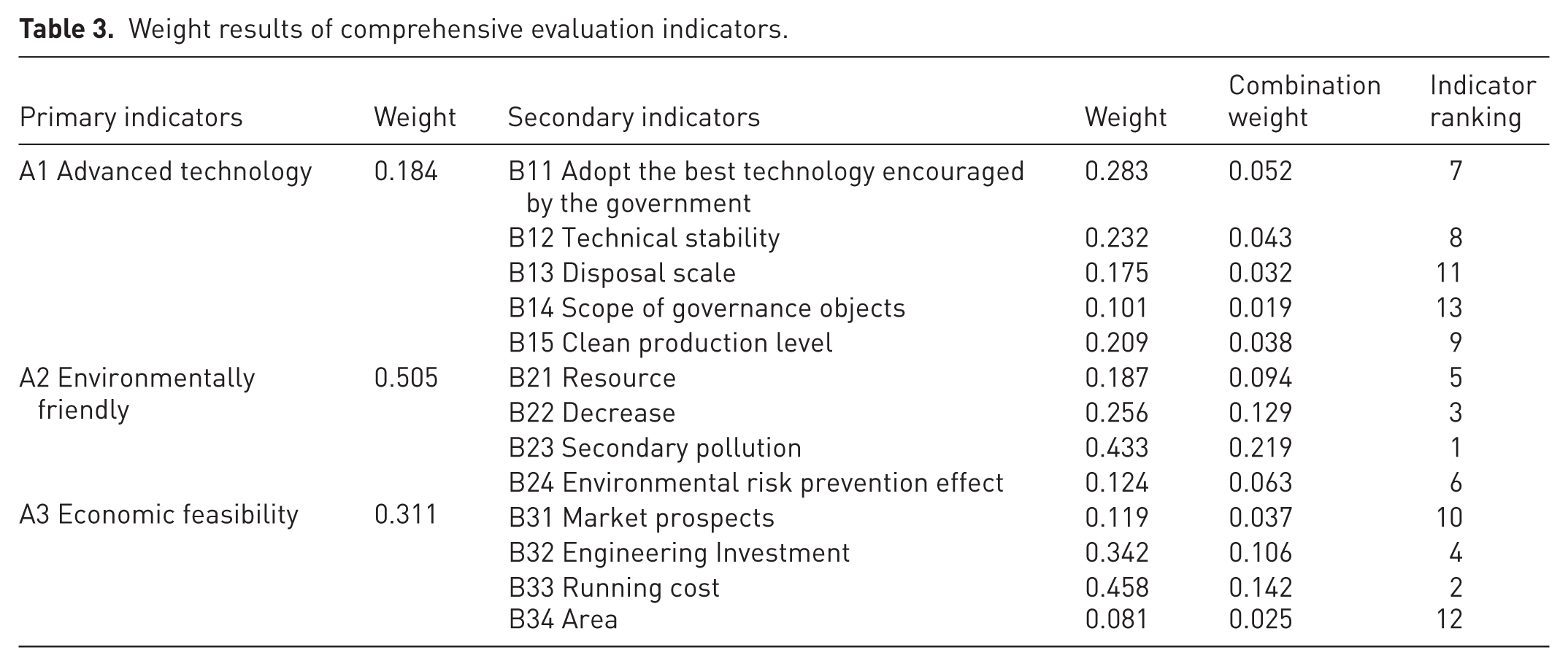
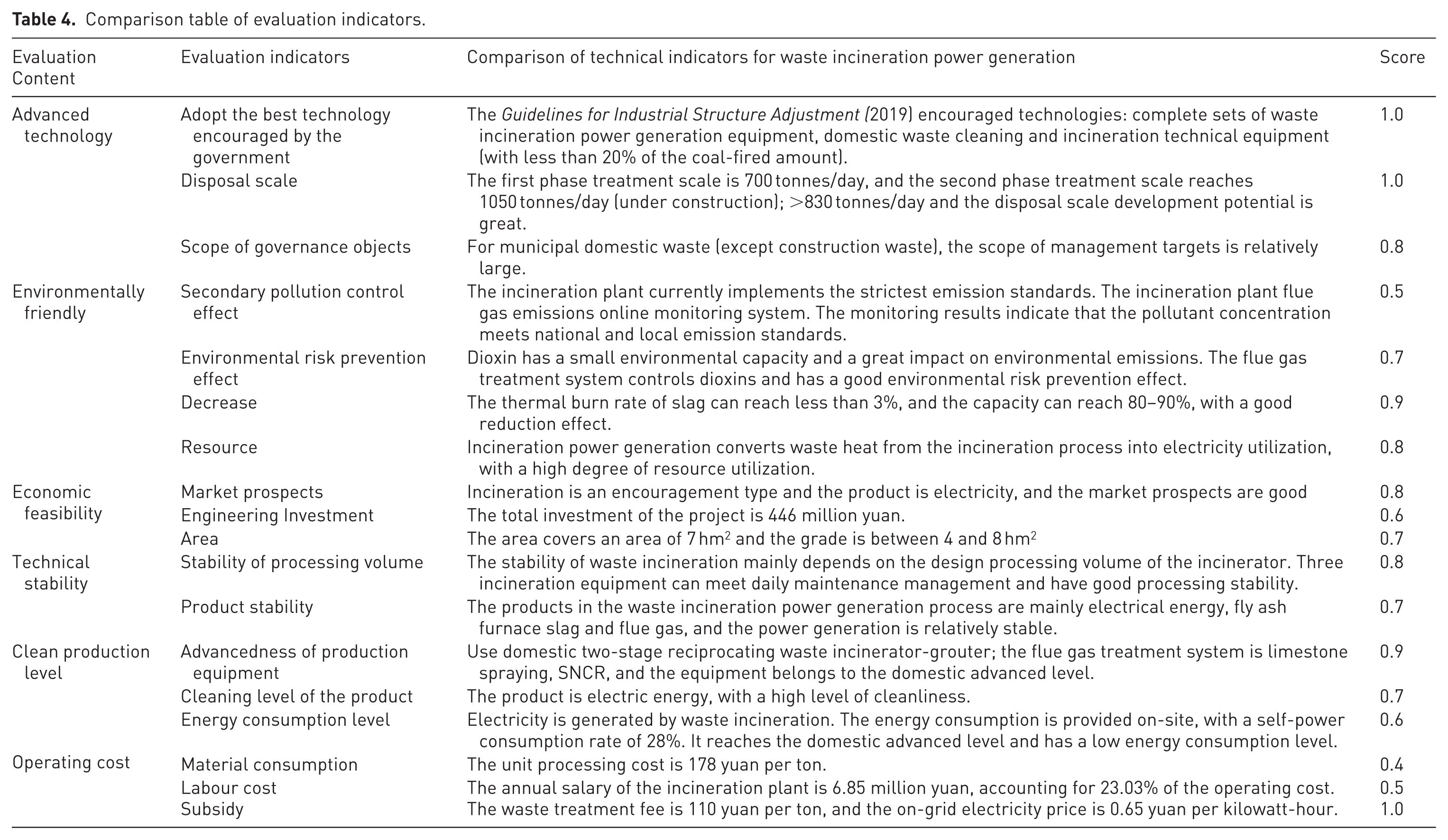
Based on the fuzzy AHP, combined with the contents of Table 3, the evaluation index system is constructed (the specific index system is shown in Supplemental Figure S6). Then, according to the enterprise research, the evaluation indices are analysed against each other, and the initial scores of the evaluation indices are obtained as shown in Table 4. The data show that the technical evaluation of the Lhasa Shengyun Waste Incineration Power Plant examines 3 primary indicators and 13 secondary indicators and obtains a comprehensive score of 91.97% for the incineration power plant, which verified the feasibility of the evaluation system. Among them, the score of technological advancement is outstanding, the effect of waste reduction is remarkable, and the market prospect is good with electricity as the end product, indicating that the domestic waste incineration power project is feasible in Lhasa, and the operational effectiveness is good (Dan et al., 2023). However, the secondary pollution control of this project needs to be strengthened, and it is recommended to add supporting measures such as leachate treatment to prevent secondary pollution. In addition, the cost of material consumption can be reduced by using local materials, and revenue can be increased by utilizing resources such as fly ash and slag.
Comparison table of evaluation indicators.
Conclusions
Aiming at the management of domestic waste in Lhasa, this paper constructs a comprehensive evaluation index system covering the whole process of ‘waste classification, transfer, transportation, and disposal’. The main conclusions are as follows:
In terms of classification evaluation, the work experience of more than 100 waste classification demonstration zones in China is summarized through Python big data analysis, and five core influencing factors are extracted, namely classification mode, classification publicity, supervision system, facility construction and disposal technology. In comparison with the current situation of waste classification in Lhasa, optimization measures are proposed, such as ‘regular collection and transportation’, the construction of ‘transfer + sorting’ centres and on-site resource recovery.
Based on the ArcGIS software, a multi-dimensional suitability evaluation system for waste transfer stations was constructed, and it was found that 11 out of 12 operational transfer stations fall within the ‘suitable for construction’ category of the evaluation system, indicating that the system is feasible. Combined with the indicators of population density and road network, three new transfer stations are planned, and their transfer capacities have been defined to address the growing demand for waste transfer.
Comparative analysis of the transit options through mathematical modelling revealed that a new transfer station for the urban-suburban route could significantly reduce the transit distance by 45.91%, labour costs by 50.00% and total CO2-eq emissions by 10.42%.
Based on the AHP and fuzzy logic method, a waste incineration power generation technology evaluation system was constructed. Lhasa’s waste incineration power generation technology was evaluated against 3 first-level indicators and 13 second-level indicators, yielding a comprehensive score of 91.97. According to the score, this technology ranks among the leading technologies in China. However, it needs to strengthen control over secondary pollution and improve its economic feasibility.
This study is the first to systematically evaluate the whole process system of domestic waste in alpine and high-altitude areas from a multidimensional perspective by integrating various research methods. Through the comprehensive use of ‘Python + expert scoring method + questionnaire method’ to optimize the weight analysis, the scientificity and objectivity of the weight measurement are further improved. The innovative combination of GIS spatial analysis and big data decision-making realizes the synergistic analysis of spatial dimension and data dimension and provides a systematic solution for waste management in high-altitude ecologically fragile areas.
Supplemental Material
sj-docx-1-wmr-10.1177_0734242X261452170 – Supplemental material for Constructing an evaluation system for the whole process of urban domestic waste disposal technology in high-altitude areas based on multiple analysis methods: Taking Lhasa as an example
Supplemental material, sj-docx-1-wmr-10.1177_0734242X261452170 for Constructing an evaluation system for the whole process of urban domestic waste disposal technology in high-altitude areas based on multiple analysis methods: Taking Lhasa as an example by Lei Ma, Wenping Qian, Haiyan Li, Yixing Ma, Xuebin Lu, Hongbo Liu, Jian Xiong, Xiao Peng, Xin Sun, Ping Ning and Kai Li in Waste Management & Research
Footnotes

Author contributions
Funding
The authors disclosed receipt of the following financial support for the research, authorship, and/or publication of this article: This work was supported by Yunnan Key Laboratory of Phosphogypsum Recycling and Ecological Utilization (202449CE340028), National Natural Science Foundation of China (52260013, 52470118, 52270106, 22266021), Guizhou Province Science and Technology Achievement Transformation Program Project (Qiankehe Achievement (2025) Major 008) and the Young Talents Specialized in the ‘Xing Dian Talents Support Program’.
Declaration of conflicting interests
The authors declared no potential conflicts of interest with respect to the research, authorship, and/or publication of this article.
Data availability statement
Data will be made available on request.
Supplemental material
Supplemental material for this article is available online.
References
Supplementary Material
Please find the following supplemental material available below.
For Open Access articles published under a Creative Commons License, all supplemental material carries the same license as the article it is associated with.
For non-Open Access articles published, all supplemental material carries a non-exclusive license, and permission requests for re-use of supplemental material or any part of supplemental material shall be sent directly to the copyright owner as specified in the copyright notice associated with the article.
