






Abstract
As many developing countries struggle to manage waste effectively and lack the resources to mechanise collection systems, there is a pressing need to identify and adopt successful interim models until adequate mechanisation becomes feasible. Haritha Karma Sena (HKS) in Kerala, one of the states in India, is a decentralised initiative responsible for door-to-door waste collection. The work of HKS women is unique and distinct from both conventional waste collection and the activities of waste pickers. According to the Kerala government’s 2024 report and field data, monthly HKS women collect approximately 4000 to 6000 tonnes of plastic and other waste from various panchayats and municipal areas across 14 districts. Semi-structured interviews with 117 HKS women revealed that most participants reported feeling satisfied and empowered in their work. Drawing on Nussbaum’s affiliation principle, the research demonstrated how the structuring of waste collection, together with administrative support, empowered HKS women, enhanced their social respect, public acceptance, and dignity, and led to the recognition of their rights and to their inclusion as valued members of society, and improved the environment. However, apart from other challenges, such as socio-cultural, political, financial, infrastructural, and logistic factors, occupational health and safety issues constitute a critical concern, with the job entailing considerable risks and workers frequently lacking adequate health insurance, an issue that must be addressed to strengthen and improve the model.
Keywords
Introduction
Waste collection is an important social service that impacts environmental sustainability, public health, and people’s well-being. Despite the important role waste collectors play in our society, they often face a lack of recognition and public and administrative support, as well as challenging working conditions. Available data show that there are approximately 1.5–4 million informal waste pickers in India, and they are known as “rag pickers” (Bandyopadhyay, 2025). Usually, waste collectors work informally, are low-paid, and are subjected to physical and psychological illnesses (Zolnikov et al., 2018). They are exposed to occupational safety and health-related risks (Gravel et al., 2023), in which socio-cognitive determinants play a major role (Lissah et al., 2025). Additionally, the public’s irresponsible behaviours and the systemic inefficiencies contribute to environmental and public health risks. The public’s recognition of waste pickers strengthens pro-environmental behaviour. Perceptions of nature, values, and related behaviours are influenced by culture (Tam, 2024). Cognitive, socio-cultural, and governance aspects influence pro-environmental behaviour and, consequently, the agency formation of waste pickers. As people’s waste-dumping behaviour poses the greatest challenge (Jiang et al., 2020), understanding cultural context is essential for measuring women’s empowerment, and agency alone cannot inform (O’Hara and Clement, 2018). It limits the basic capabilities, such as health, dignity, and social participation, of those women who are engaged in the work of waste collection, as mentioned in Martha Nussbaum’s Capabilities Approach (Nussbaum, 2013). The extent of support provided by governing bodies also plays an important role. The engagement between waste collectors and waste-governing institutions serves as a mechanism to regulate the waste collection process (Alene, 2018), indicating the need to structure informal household waste collection (Andrianisa et al., 2015). There is evidence that formal waste collection systems exist, operated through contractual or regular arrangements involving both public and private entities (Borchard et al., 2021). In these models, private-sector companies are often more efficient than their public counterparts (Katusiimeh et al., 2011; Simões et al., 2012). The present decentralised model in Kerala, India, demonstrates the effectiveness of government-managed institutions in waste management, such as Haritha Karma Sena (HKS). Though community-based waste management is prevalent in many developing countries, they have many limitations compared to the HKS model. For instance, waste-picker cooperatives of informal waste pickers (Colombijn and Morbidini, 2017), an inclusive cooperative model in Sri Lanka (Fernando and Tsuji, 2024) and a community-led model in Brazil (De Pinna Mendez et al., 2022) are not fully institutionalised, there is a lack of collaboration among stakeholders (Niroshika, 2025), have institutional structural weaknesses, are often uncoordinated (Mmereki et al., 2016), and there is a presence of middlemen (De Pinna Mendez et al., 2022). These challenges highlight the need for a new integrative sustainable model (Maalouf and Agamuthu, 2023). As many developing countries struggle to manage waste effectively and lack the resources to mechanise collection systems, there is a pressing need to identify and adopt successful interim models until adequate mechanisation becomes feasible. In that context, the HKS model is unique in its ability to effectively address the limitations mentioned above. It is a self-sustaining financial model integrated with local self-help groups (SHGs), supported by government-led infrastructure and a regulatory framework that ensures a steady income for the women engaged in waste collection. Financial independence enhances these women’s autonomy and strengthens their self-respect, thereby empowering them. In Kerala, a group of waste collectors operates within a formalised system, distinguishing them from informal waste pickers. These workers are known as the HKS. According to the Haritha Kerala Mission Website, 36,000 HKS women work in the field (2026). HKS women play an important role in Kerala’s decentralised waste management system. These women in HKS are part of SHGs. Their role starts not only with collecting non-biodegradable solid waste door to door from households but also with facilitating composting of biodegradable waste, segregating solid waste, and disseminating information on environmental cleanliness, among other things. After collecting the waste, they sort it into recyclable and non-recyclable waste and send it to recycling or disposal locations accordingly. They facilitate the diversion of non-recyclable plastic waste, commonly referred to as “reject,” which, as noted by Tiburcio et al. (2021), has alternative applications and is utilised in shredded form for the construction of rural roads (Report No. 9, Government of Kerala). Table 1 shows the generated waste across districts, as per the State of Decentralised Solid Waste Management in Kerala Report 2021, and the contributions of HKS women to waste processing. In many areas, HKS maintains a calendar specifying the categories of household items to be collected each month. HKS women also learn skills in equipment use. For instance, there are areas of baling machines that compact recyclable waste materials into dense bales using hydraulic or mechanical pressure. They learn to use these machines to compress heavy scrap into dense blocks for cheaper transport to recycling or to the Clean Kerala Company (CKLC) (the CKLC was established under the local self-government (LSG) Department of the Government of Kerala; website: www.cleankeralacompany.com). In areas where these machines are not available, all HKS women perform fieldwork, whereas in areas where they are available, some women are assigned to operate them. In this manner, HKS women play a crucial role in promoting environmental sustainability. These HKS women are considered different from regular waste pickers because they work professionally, are trained to collect, segregate, and dispose of waste. They are monitored by village officers in Panchayats and also by Health inspectors in Municipalities. Although the work contributes to their empowerment, HKS women encounter operational and structural challenges in performing their roles in the waste management process. Thus, the objectives of the research were to identify the socio-cultural and governance factors that strengthen and weaken the functioning of HKS women, how the above factors affect HKS women’s capabilities, agency formation, and their right to dignity, and to analyse the experiences of HKS women about their social and economic shifts after being part of this mission. The study aimed to generate evidence-based insights to inform interventions that can enhance the socioeconomic and occupational conditions of HKS women.
HKS women’s contribution.
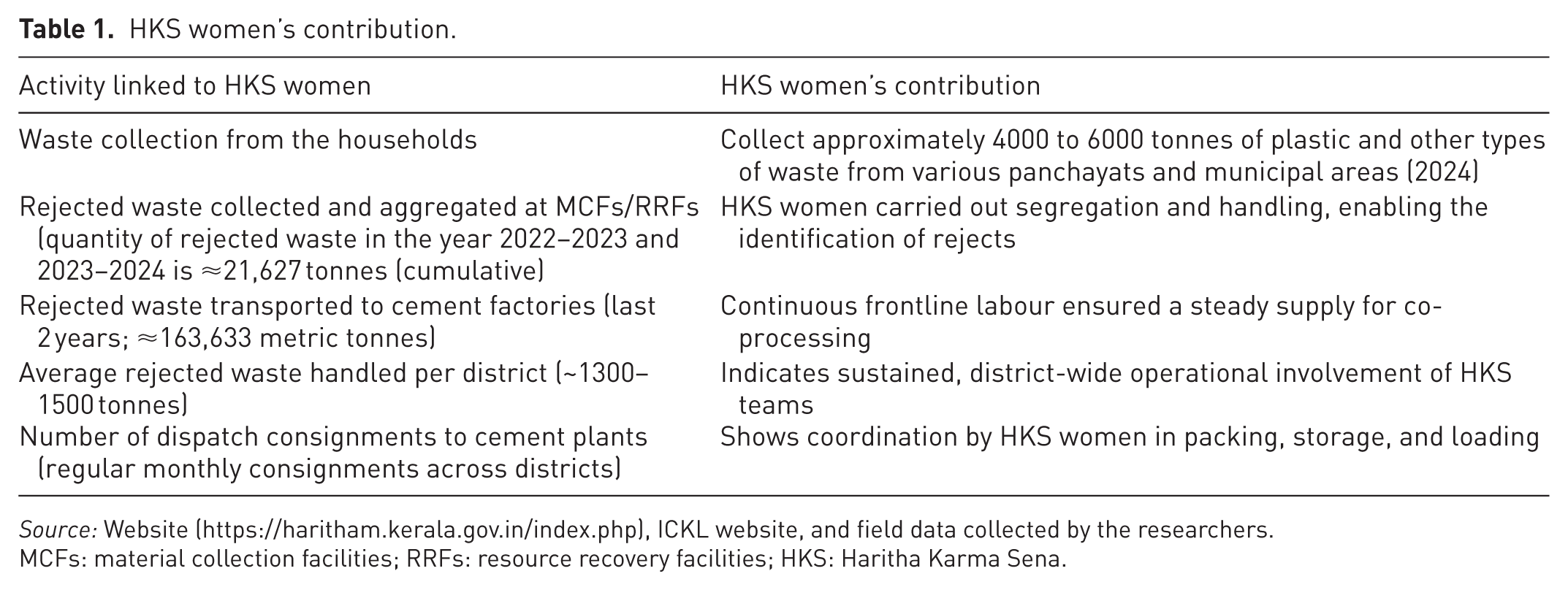
Source: Website (https://haritham.kerala.gov.in/index.php), ICKL website, and field data collected by the researchers.
MCFs: material collection facilities; RRFs: resource recovery facilities; HKS: Haritha Karma Sena.
Professionalisation as a pathway to capability enhancement
Individuals develop the capacity to act through socially embedded relationships, norms, and self-understandings that influence how they perceive and exercise their choice. The enhanced dignity, safety, and social acknowledgement strengthen their capacity to act, negotiate, and participate meaningfully in decision-making processes, which is supported by improved working conditions and recognition of their indispensability. Agency formation of women, as connected to capabilities, is understood as relational and shaped by social norms, power relations, and institutional contexts, rather than as purely individual autonomy, which involves the ability to make meaningful choices and transform them into desired outcomes (Mishra and Tripathi, 2011). In that sense, sociality and identity influence the formation of agency (Shteynberg et al., 2021). Realising one’s worth facilitates understanding one’s capabilities (Nussbaum, 2016). Recognising equal human worth requires ensuring that all genders have equal substantive opportunities, the fundamental freedoms, and capabilities to lead lives they have reason to value. Equal worth based on gender is connected to ideas of freedom and opportunity (Nussbaum, 1999). A work becomes meaningful when individuals have the autonomy, choice, and capability to engage in it with dignity. The meaning of a work is based on its experiential components (Conklin, 2011). Waste collecting work fosters financial independence, which, in turn, builds a sense of competence among women and helps them recognise their worth. Underscoring the need for formal recognition, safety standards, and institutional support to transform waste collection work from informal labour into a valued and regulated public service, thus contributing to agency formation. Individual agency is a temporally embedded process in which individuals draw on past experiences, envision future possibilities, and make judgements within present social contexts (Emirbayer and Mische, 1998). Thus, expanding individuals’ real opportunities and freedoms can enable them to make meaningful choices and act in ways they value within their social contexts, thereby enhancing their capabilities, as Nussbaum (2001) stated. Nussbaum’s model provides a conceptual basis for thinking about human development universally (Van Jaarsveld, 2020).
Unlike Sen’s model (1999), Nussbaum (1999) focused on the non-economic dimensions of capabilities, which concern what individuals can do to live with dignity. Nussbaum (2011) identified 10 central human capabilities essential to human dignity: life, bodily health, integrity, senses, imagination and thought, emotions, practical reason, affiliations, connection to others, enjoyment of life, and control over one’s environment. Among these, affiliation stands out as particularly relevant to the context of HKS members. “Affiliation refers to the capability to live with and towards others, engage in social interaction and empathy, and to enjoy the social bases of self-respect and non-humiliation, including being treated as a dignified and equal human being without discrimination” (Nussbaum, 2011, p. 34). Nussbaum (1992) argued that the capability to affiliate ensures dignity. Social interaction is one of the critical elements of claiming capabilities, as more equitable recognition and inclusion within society ensures social justice. Social justice, as a form of equality, confirms women’s understanding of their inherent dignity and their right to be respected by others (Nussbaum, 2001). Socio-cultural factors influence an individual’s judgement, and considering any job undignified undermines the self-respect and self-worth of those engaged in it. Valorising unpaid or low-paid jobs, which contribute to societal and environmental goals, impacts the capabilities of workers (Bueno, 2024). Structural upgradation of waste collection, a low-paid occupation largely undertaken by women, can transform it into a dignified and socially valued occupation and thereby improve their social and working conditions. For this, recognising HKS women as equal members of society and treating them with dignity and respect is essential. It leads to overcoming challenges that undermine their self-respect, social recognition, and freedom to participate in social and economic life.
The Kerala government has undertaken initiatives to convert waste collection into a more organised and formal system, thereby contributing to the professionalisation of waste collection work. “Professionalisation involves the development of skills, identities, norms, and values associated with becoming part of a professional group” (Levine & Bell, 2015, p. 679). It consists of developing specialised roles, standards, and recognised forms of expertise, which helps a type of work gain public legitimacy and social recognition (Forsyth and Danisiewicz, 1985). The Kerala government provides uniforms, skill training, and formal work structures and systems for HKS women. In 2026, the Kerala government introduced a new scheme for providing a common uniform for all HKS women (Photo 1 below shows a government public poster announcing the inauguration of the distribution of a common uniform for HKS women). The poster reads “a common uniform for Haritha Karma Members, state-level launch of distribution, Shornur Town Hall, 11 March 2026 at 10 AM.”
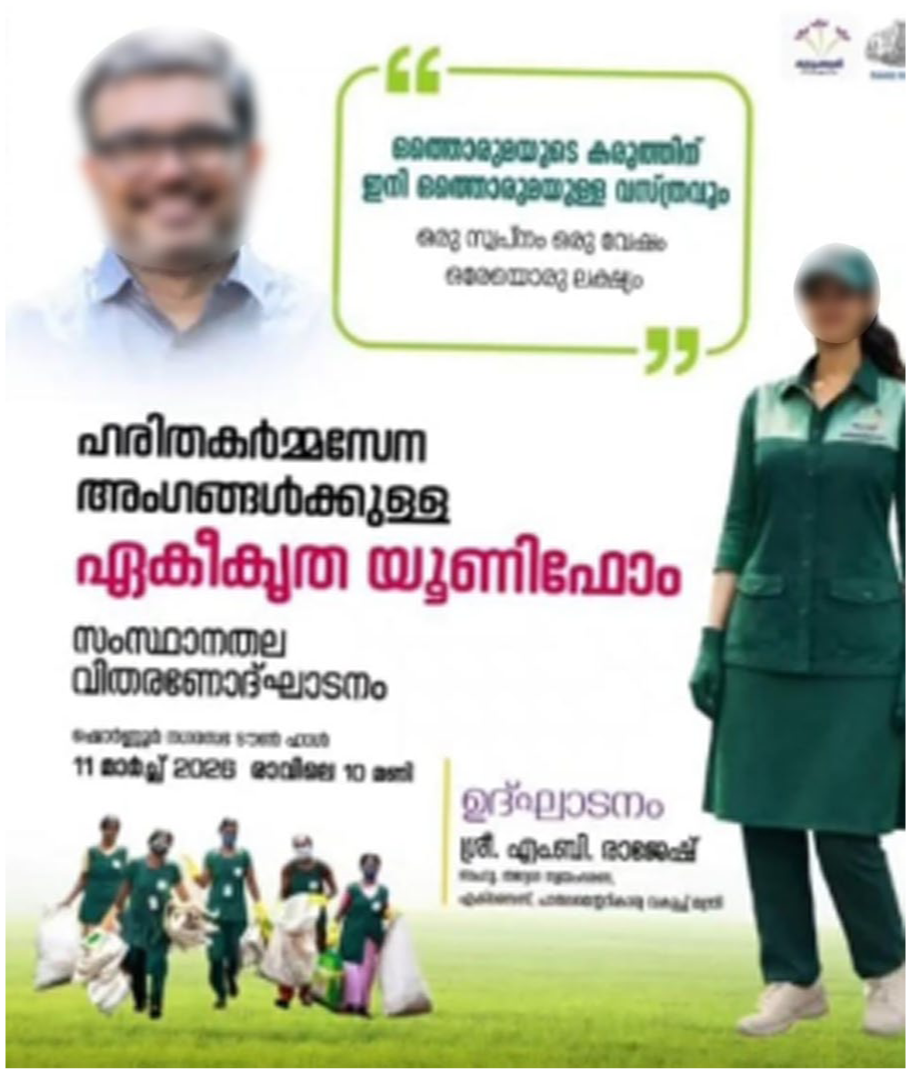
Government poster announcing common uniform distribution for Haritha Karma Sena members, January 2026.
Thus, when waste collection as an occupation is formalised through training and structured roles, it gains public approval and professional status rather than being informal labour. LSG bodies have created opportunities for HKS women to participate; however, the experiential dimension of work, specifically how HKS members derive dignity or purpose from their labour, is an aspect that has received little scholarly attention. Existing studies show the role of women in solid waste management and environmental sustainability initiatives (Rakendu et al., 2025). Most literature focuses on policy-related issues, with limited attention to how HKS members perceive their roles, navigate societal barriers, or find meaning in their work. The research also acknowledges the feminisation of waste management through HKS initiatives in Kerala. As Conklin (2011) and Nussbaum (2016) suggested, recognising one’s worth and the experiential value of work is central to freedom and well-being; it is essential to examine the extent to which HKS women get recognised in their work. Identifying logistical and infrastructural challenges, as well as the governance gap that hinders the professionalisation of this occupation, helps acknowledge the value of their work. The reliance on non-motorised transport, such as bicycles and wheelbarrows, along with inadequate waste storage facilities and poorly designed vehicles, adversely affects waste collectors’ productivity and compromises their safety (Wibin and Kalina, 2025). Therefore, a deeper qualitative understanding of HKS members’ narratives is important to improve their working conditions and capabilities.
Method
Research design and procedure
The study is grounded on Martha Nussbaum’s Capability approach, with a particular focus on the Capability of Affiliation, which helps to examine the influencing factors on the capabilities of HKS women. By focusing on affiliation, the present research highlighted that weaker individuals who are unequal in power should be treated as equals, and it is essential to ensure their right to dignity and overall well-being (Nussbaum, 2006). This framework assesses the factors that affect the dignity, freedom, and agency of HKS women. Nussbaum (2016) stated that justice is ensured when everyone can attain human capabilities and thereby flourishing. The research aimed to bridge sociocultural and governing gaps to improve the capabilities of HKS women.
Participant profile
HKS workers are recruited through a decentralised, ward-wise process across LSG bodies, with selection based on mandatory Kudumbashree 1 membership, voluntary interest, physical fitness, and good conduct; educational qualifications are not considered. The primary recruitment pool comprises Kudumbashree and Mahatma Gandhi National Rural Employment Guarantee Act (MGNREGA 2 ) workers. In rural areas, two members are selected per ward, with higher numbers permitted in Municipal/Corporation areas depending on population density. The core eligibility criteria, as per the Operational Guidelines, require candidates to be members of a Kudumbashree or Neighbourhood Group, demonstrate an interest in enterprise activities, be physically fit, and possess good conduct. Educational or professional qualifications are not treated as significant determinants of selection; the institutional emphasis is on community embeddedness rather than technical credentials. This reflects the programme’s broader orientation towards social inclusion and the economic empowerment of women from low-income households. Where services are outsourced, a hybrid governance model applies; private agencies may impose additional criteria (e.g. an age cap), and joint Kudumbashree agency panels conduct selection interviews. Post-selection, members receive 3 days of local government training, a uniform, and an ID card, followed by three stages of Kudumbashree training led by the Kerala Institute of Local Administration, covering group formation, enterprise opportunities, and sustainability initiatives (according to the Operational Guidelines). Table 2 shows the profile of the HKS women who participated in the interview.
HKS women’s profile. Socio-demographic profile of respondents (N = 117).
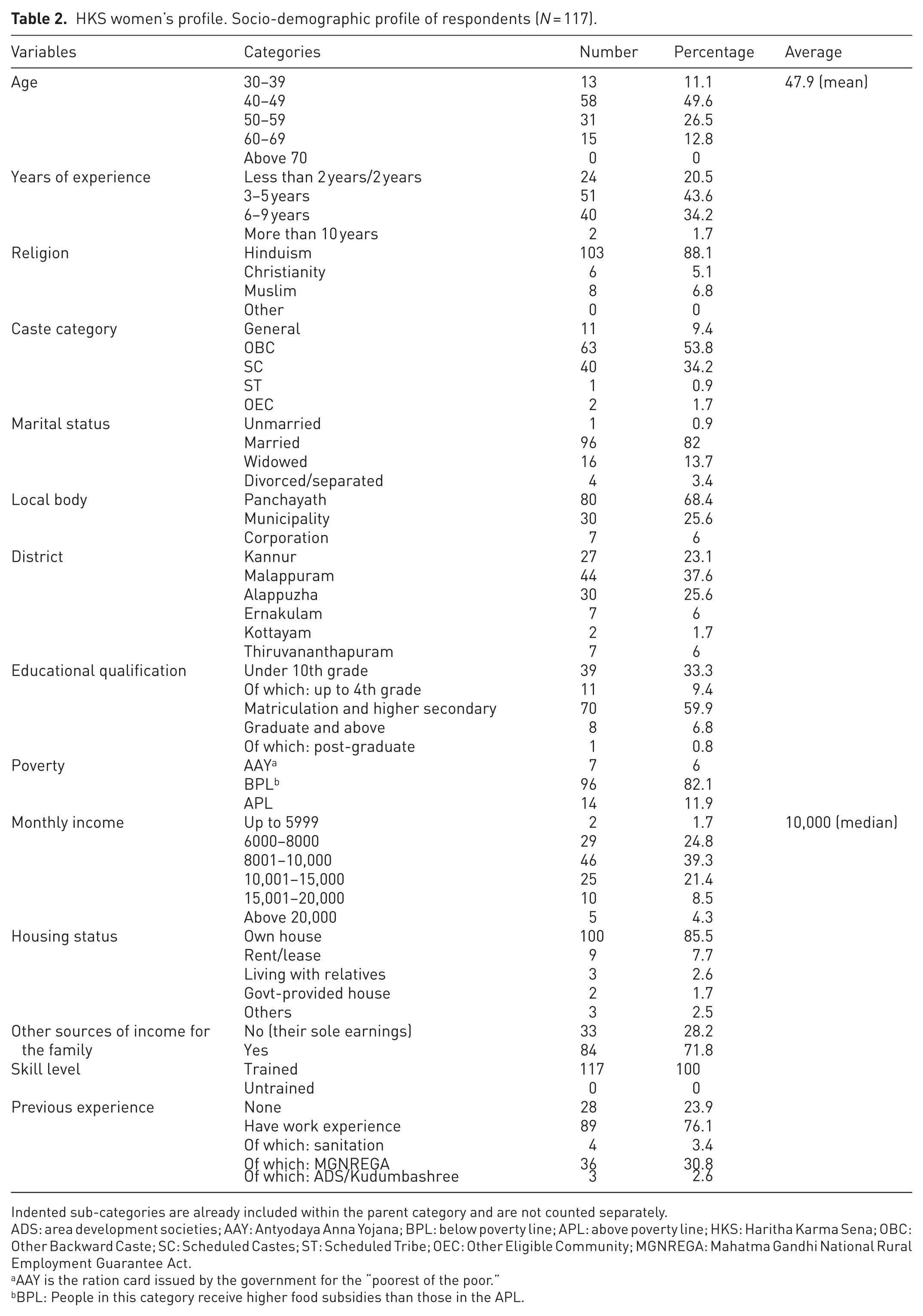
Indented sub-categories are already included within the parent category and are not counted separately.
ADS: area development societies; AAY: Antyodaya Anna Yojana; BPL: below poverty line; APL: above poverty line; HKS: Haritha Karma Sena; OBC: Other Backward Caste; SC: Scheduled Castes; ST: Scheduled Tribe; OEC: Other Eligible Community; MGNREGA: Mahatma Gandhi National Rural Employment Guarantee Act.
AAY is the ration card issued by the government for the “poorest of the poor.”
BPL: People in this category receive higher food subsidies than those in the APL.
The demographic profile indicates that the majority of participants are middle-aged, with a mean age of approximately 48 years, highlighting the pressing need for adequate health insurance coverage. The caste composition of HKS workers is: Other Backward Castes (OBCs) – 53.8%, Scheduled Castes (SC) – 34.2%, General Category (GC) – 9.4%, Other Eligible Communities (OECs) – 1.7%, and Scheduled Tribes (STs) – 0.9%. Caste hierarchy exists in India. People in the GC category are considered to belong to higher social strata in the caste hierarchy and are not eligible for reservation. OBCs, SCs, and STs are marginalised communities eligible for affirmative action. The Kerala Government circular states that Other Eligible Communities (OEC) is a Kerala-specific caste category that represents backward communities within the OBC (https://egrantz.kerala.gov.in/OEC_pre2022-23.pdf). This composition, in which OBCs, SCs, and STs together constitute nearly 88% of the workforce, is not an empirical coincidence but a structural articulation of the caste–labour nexus, in which occupational assignment and social identity are mutually constitutive rather than merely correlated. Waste picking is undertaken mainly by marginalised communities in India (Shanmugasundaram, 2024).
Ethics
The research obtained ethical clearance from the Institute Human Ethics Committee, BITS Pilani-K.K. Birla Goa Campus, Reference Number: HEC/BPGC/2025/021. Additionally, individual consent was taken from each participant. Participation was voluntary.
Data collection and instrumentation
Data were collected from November 2025 to March 2026 by five researchers. A purposive sampling technique was adopted. Purposive sampling helps to select “respondents that are most likely to yield appropriate and useful information” (Kelly, 2010, p. 317). It ensures that specific cases are included in the study (Campbell et al., 2020). As the study involved HKS women, purposive sampling is justified. Women registered with HKS Mission for waste collection were selected. They were selected from districts with high waste collection rates. The districts of Trivandrum, Kollam, Alappuzha, Kottayam, Ernakulum, Kannur, Wayanad, Malappuram, and Palakkad show higher percentages as per the Kerala Government website. They were recruited through networks, such as local HKS units and Kudumbashree coordinators or members. None of them refused to participate.
In-depth semi-structured interviews were conducted with 117 HKS women from 6 districts in Kerala: Alappuzha, Kannur, Ernakulum, Trivandrum, Kottayam, and Malappuram. Apart from interviewing the HKS members, researchers also interacted with a few households to better understand the system.
The interview questions are prepared based on Nussbaum’s concept of affiliation. It encompasses the following concepts: Sense of Dignity and Respect, Social Belonging and Inclusion, Recognition and Equality, Participation and Voice, Social Support and Relationships, and Empowerment through Work. The interview began with questions about the participants’ demographic details, such as age, religion, caste, years of experience, family background, income, and educational qualifications. It then subsequently explored their experiences as HKS women in detail. In total, the interview guide contained 15–20 questions, depending on the flow of the discussion between the interviewer and the interviewee.
The interviews were recorded in Malayalam, the regional language, and the research assistant later transcribed and translated the interview data into English. The interviews lasted between 40 and 50 minutes. The interviews were conducted in their mother tongue – Malayalam. All interviews were audio-recorded by the researchers with the participants’ consent.
Data analysis
The data were analysed using thematic analysis following Braun and Clarke’s (2006) model. A line-by-line coding approach (Gibbs, 2007) was used to construct codes that reflect the capabilities of HKS women. Researchers prepared a codebook after identifying the main themes, consisting of code concepts and descriptions, and manually coded the data. The first themes: Respect and Recognition (being acknowledged as persons of equal worth and recognition by the Panchayat, households, officials, or the broader community), Acceptance and Interaction (inclusion in social, civic, or community spaces and positive engagement with the public or officials), Perceived Role and Competence (understanding of their contribution to waste management and their confidence in performing their duties effectively), and Dignity and Rights (protection of their basic entitlements (e.g., safety measures, fair payment, institutional backing) and freedom from humiliation) were formulated applying Nussbaum’s capability approach. The analysis initially followed a deductive approach based on predefined themes, and subsequently incorporated an inductive process to identify emerging themes from the data.
ATLAS.ti 25 was used in the second stage to analyse the interview data after manual coding, and in the later stage to identify recurring concepts. ATLAS.ti 25 supported the identification of patterns, relationships, and emerging concepts within the large dataset and the collation of themes with the team’s manually coded themes, enhancing the rigour and transparency of the analysis process. Nine major themes emerged: (1) community engagement, (2) public perception, (3) recognition, (4) respect, (5) job satisfaction, (6) administrative support, (7) community support, (8) education, and (9) empowerment. The moderately strong themes are environmental awareness, collaboration, participation, and communication. It was used for keyword extraction to understand the frequency counts, as there were 117 respondents and the interviews were lengthy. The derived codes were aligned with the manually coded themes.
The following Figure 1 shows the thematic structure derived from the interviews.
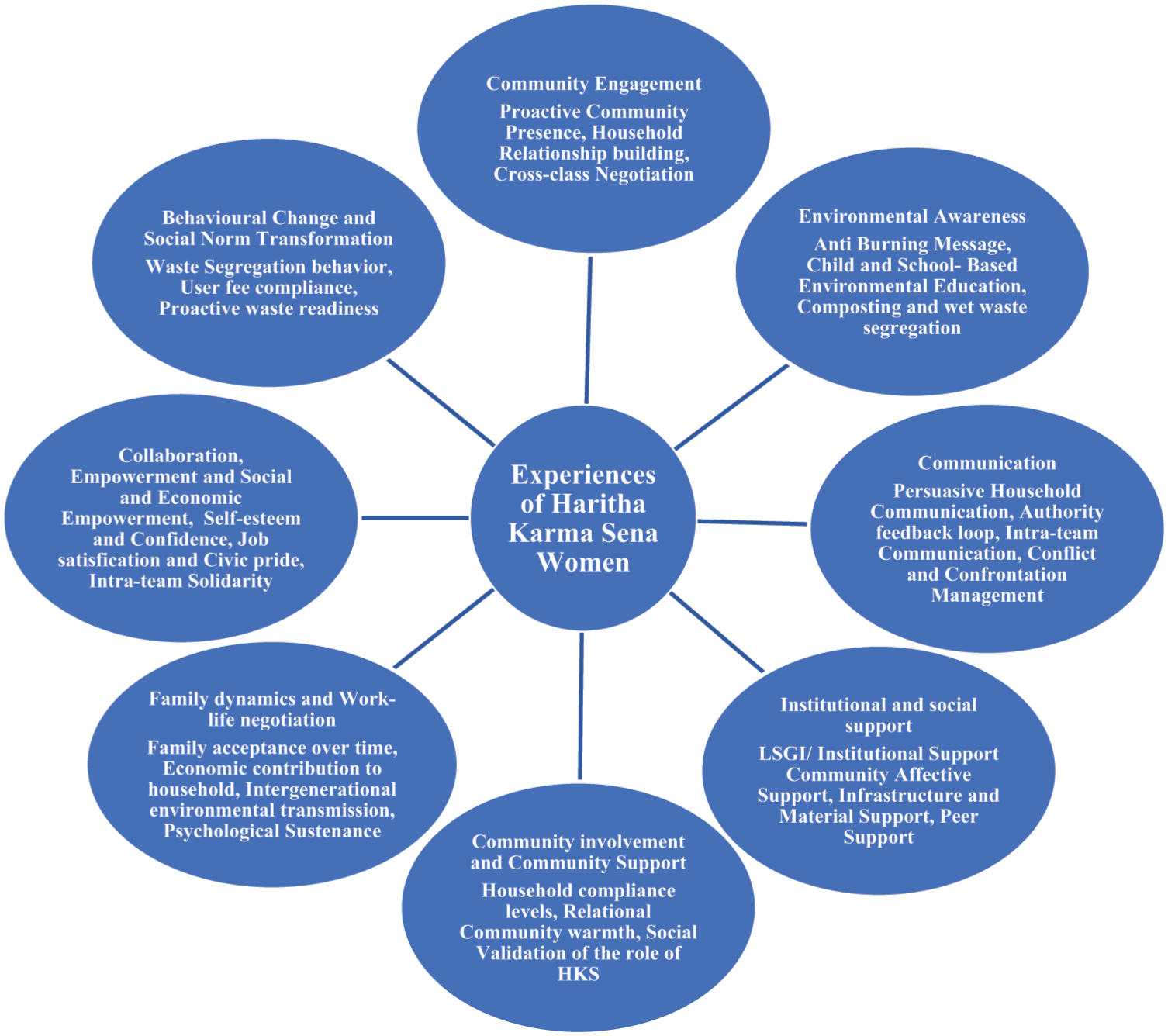
Thematic structure derived from the interviews.
Results of the interviews
Thematic analysis based on Nussbaum’s capability approach
The deductive analysis showed how the HKS women’s affiliative capabilities improved through the waste collection work.
Respect and recognition
There were mixed responses related to respect and recognition. The major concepts analysed were: the extent to which HKS women experience respectful treatment in social or institutional settings; whether HKS women’s social identity is acknowledged; whether there are any discriminatory practices; and whether their work is respected.
Participants reported being respected by other community members and the administrative staff. An HKS woman states, “Everyone treats us very well. Even if we are just passing by, people come up to us and introduce themselves, asking, ‘Aren’t you the sisters (Chechimar) from the Haritha Karma Sena?’” (HKS ALP-14)
Regarding whether others and panchayat staff listen to their opinions, many respondents stated: “They listen, they ask us if we have opinions.” (HKS ALP-2, KNR-3,5)
This indicates the public’s social respect for HKS women and recognition of their work. Narratives indicated relatively higher perceived social respect, particularly in institutional interactions. However, there are a few instances in which HKS women faced disrespect, specifically during the introductory stages of the waste collection programme. Though the majority of the public respects the value of their work, a few still consider HKS women to be mere garbage collectors. HKS workers, as women, and lower-status workers were often implicitly acknowledged but socially devalued. Some perceived fairness, others highlighted subtle differential treatment. One reason was that households objected to the 50-rupee fee for waste collection. HKS women are hopeful that public attitudes towards them are gradually changing and reported that their hard work is recognised by the panchayat and the public.
“It is a huge relief for them when we take the waste away. Even if they pay 50 rupees, they are happy the waste is gone. . . and they naturally appreciate us.” (HKS MPR-42, KNR-6) “When we went there, they asked, ‘There is no plastic, no money, and you have come to beg for money. Wouldn’t it be better if you went for some other work than this?’” (HKS ALP-10, KNR-5) “Since they (households) have to pay, they have to give 50 rupees, which causes opposition.” (HKS KNR-7, KTY-1) “They (the public) scold us.” “The habit of people throwing waste away has not changed completely.” (HKS KNR-4, MPR-11, TVM 1)
One household stated during the interview: “We already pay house tax to the Gram Panchayat, and asking for an additional fee for waste collection is unjustified.”
Political participation and acceptance as recognition
Fieldwork findings indicated that HKS women actively participated in politics, with some contesting elections and successfully winning. A winning ward member from Ernakulam noted, “I believe I won the election because of the love, respect, and care the people had for me as a Haritha Karma Sena member. They voted for me based on the certainty that if I became a Councillor, it would be beneficial for them.”
It indicates that voters’ support was shaped by the perception that the HKS woman’s governance would institutionalise the care she had already demonstrated; a direct conversion of service labour into political capital. This mirrors a broader pattern in Kerala’s Kudumbashree network, where 17,082 members contested and 7210 won (Mohan, 2025, The New Indian Express, 23 December 2025), indicating that the state’s self-help-group-to-governance pipeline is not only deepening but also diversifying its social base. The report shows “among the districts, Kozhikode recorded the largest number of wins by Kudumbashree workers, with 709, followed by Malappuram (697), Thrissur (652), Palakkad (648) and Alappuzha (643).” The Kudumbashree initiative by the Kerala government is a women-oriented poverty-eradication programme that empowers women from poor socioeconomic backgrounds not only financially but also politically by facilitating their entry into local governance (Devika and Thampi, 2007).
Acceptance and interaction
The interview results showed whether HKS women were socially accepted, how the households interacted with them, whether they were included in social spaces, and whether there were any instances of social exclusion. No one has mentioned any instances of social exclusion, though the participants belonged to different religious and caste groups. There is a sense of belonging among HKS women within the community. As part of the HKS mission, they feel proud of themselves and believe that joining the mission improved their social inclusion. Social inclusion is also evident through their participation in Kudumbashree activities. The public’s efforts to include HKS women are evident in their narratives. Some participants remarked that, “It has been a great way to interact and mingle with people. We get to know everything happening in each household, even if there is a death or any other event.” “This job has helped me get even more involved. . .This has allowed for great interaction with the public.” “If one of us fails to show up, the residents actually inquire about us. They ask why the worker didn’t come,. . ..” “It gives us a platform to express our opinions among people, Panchayat members, and other politicians.” “ Our work itself requires us to be in constant contact with various members. . ..helps us understand things and gain knowledge.” (HKS KNR-1,2) “The households invited us to have lunch.” (HKS MPR-9, KNR-1)
Though occupational stigma persists in some instances, the HKS women are hopeful. A participant stated: “In one or two places, people called us ‘those who come to take waste,’ perhaps out of ignorance. But they quickly corrected themselves to ‘those who come to take plastic’” (HKS KNR-5).
“Sustaining this work requires collaboration among parties, including us and the households.” (HKS MPR-5)
Perceived role and competence
The interview excerpts indicated whether the public recognised HKS women’s roles, approved of their competence and opinions, and allowed them to take the initiative in their roles as HKS women. Though participants generally agreed that their work is valued by the public, they noted the need for attitudinal change and for sensitising the public and administrative staff to waste management. There is a lack of public awareness about waste management. HKS women believe their work is as dignified as any other job. They take the initiative to educate the public, for instance, about the issues surrounding plastic burning. However, they acknowledge that not everyone in society shares this view. They reported having had bad experiences with households due to a lack of waste management literacy, such as being refused waste materials.
“Some people don’t have a good attitude. Some people feel that this is some kind of inferior work.” (HKS KNR-5) “It is successful when the public starts segregating the waste themselves, rather than having HKS women do that.” (HKS TVC-3, KNR-6) “A time should come when households also segregate, just like how we segregate.” (HKS ALP-15) “Many people still need to change.” (HKS ALP-17, KNR-25)
Many participants stated, “we are proud of our job. Due to us, waste does not pile up, and it reduces garbage in public places” (HKS ALP-7, MPR-43).
Some households doubt about HKS women’s competence.
“They ask, aren’t you taking this away just to burn it? So what if we burn it here?” (HKS TVC-4)
Similarly, when one of the researchers interacted with the households, some complained about HKS women. One household stated, “They collect money but do not return to collect waste afterwards, and thus, we burn the plastics.”
Households burning plastic can be interpreted as a form of resistance to the HKS women’s effort.
Dignity and rights
The interview results indicated whether HKS women were treated with respect, in ways that made them feel their self-worth was upheld in social interactions; whether they experienced that legal, institutional, or moral rights were being respected; whether they faced any humiliation; and whether they had access to grievance mechanisms.
Regular interaction during waste collection helped HKS women build a bond with the households. Some participants mentioned that they learned interaction skills.
“Having a regular income, increased interaction skills, and wearing a uniform helped us receive respect from our family and society and increased our self-confidence. . ..‘We are able to interact and talk with many people.’” (HKS KNR-5, 21, MPR-42)
After joining the job, they were motivated to study further and learned to drive the vehicle used to transfer waste. The results indicated that educated households treated them with respect, and most people valued their time and did not make them wait. None of the participants reported being ill-treated because of their caste orientation. The sample largely comprised participants from disadvantaged groups, with a smaller proportion from non-disadvantaged backgrounds. They also received honours from the panchayat or municipality for their work. Many households also approved of their work.
“One professor always says that this is a great thing we are doing.” (HKS ALP-16)
They mentioned that they have health insurance and are supported by the panchayat. Respondents indicated confidence in freely expressing their views. However, they admitted that there were instances in which their rights were not respected.
“There are still a few people who treat us with contempt.” (HKS KNR-9)
Frequency analysis of participants’ responses
The Figure 2 shows a stacked bar chart representing the frequency distribution of major themes across districts.
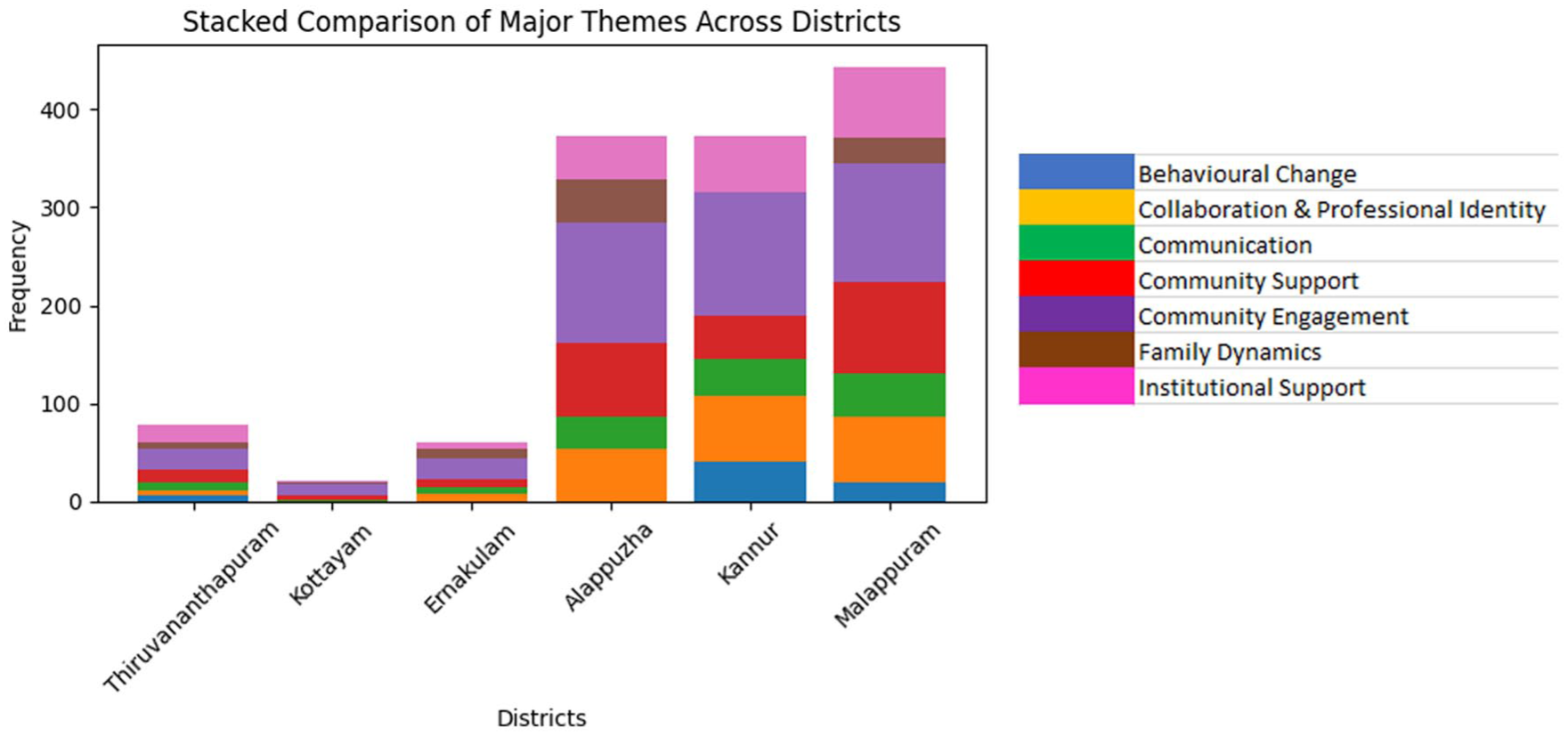
Stacked bar comparing major themes across districts.
The job brought changes in HKS women’s behaviour. As a group, they make collective decisions. Most of them have a WhatsApp group, and sometimes they go on an outing together. They consider their group as a family. Community engagement is consistently the most dominant theme, with Alappuzha reporting the highest frequency, followed by Malappuram, Kannur, Thiruvananthapuram, Ernakulam, and Kottayam. HKS women engaged in community outreach through household waste collection. HKS women from Malappuram reported that their interactions with households were enhanced through waste collection. The data demonstrated that engaging in waste collection improved HKS women’s knowledge about the environment. Most participants reported that, though some family members were initially reluctant to approve the job, support gradually improved after they became financially independent. Their condition also improved due to the support from governing bodies. Although they receive institutional support, many are unable to fully access its benefits; for example, despite paying for insurance, they often do not receive the intended coverage.
Challenges
The participants reported a few challenges, primarily occupational health and safety, socio-cultural barriers, logistical and infrastructural constraints, financial difficulties, and political and governance-related issues. The majority did not receive health insurance benefits due to unclear communication. In some areas, HKS women have to manually carry household waste to the mini-MCF if vehicles are not available (Photo 2). Consequently, infrastructural gaps weaken the transition of waste collection into a recognised and organised public service. Though HKS women received support from the administration, particularly from panchayats and municipalities, some areas need improvement in the provision of logistical and infrastructural facilities.
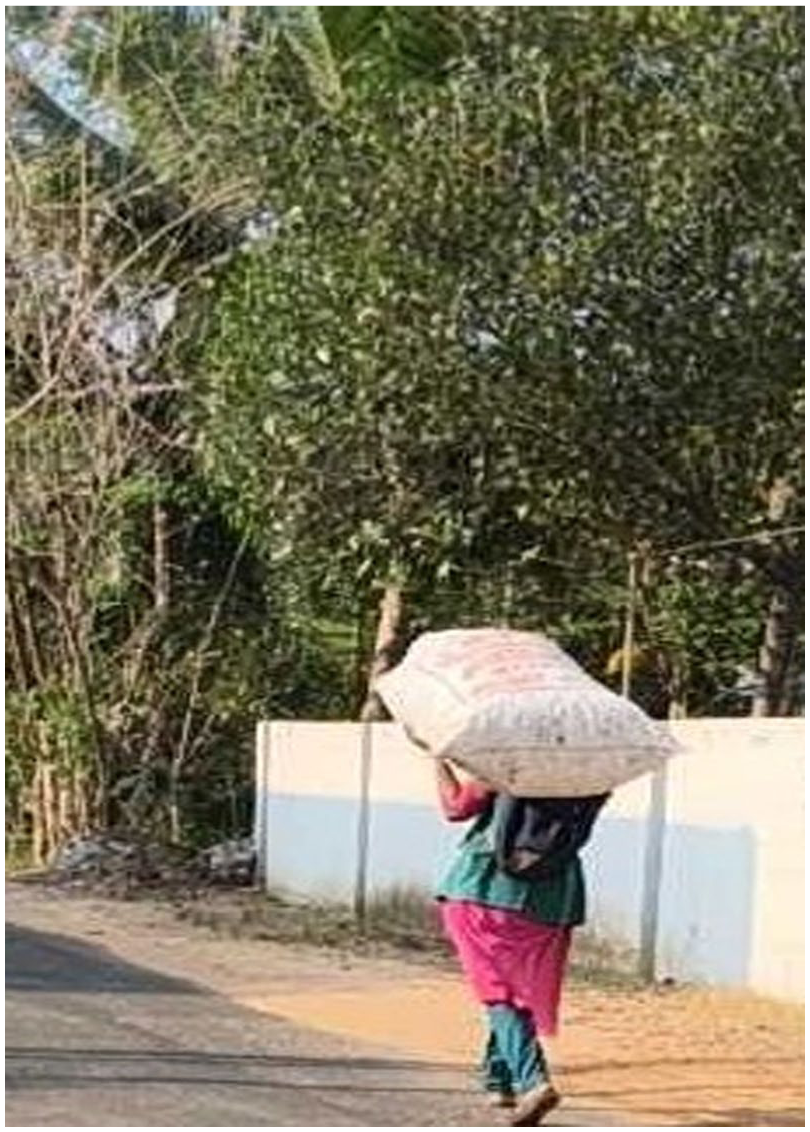
Woman carrying waste from the households approximately 1 km to the mini-MCF, repeated three to four times daily.
Tables 3 and 4 summarise the challenges faced by HKS women.
Occupational health and safety challenges faced by HKS workers.
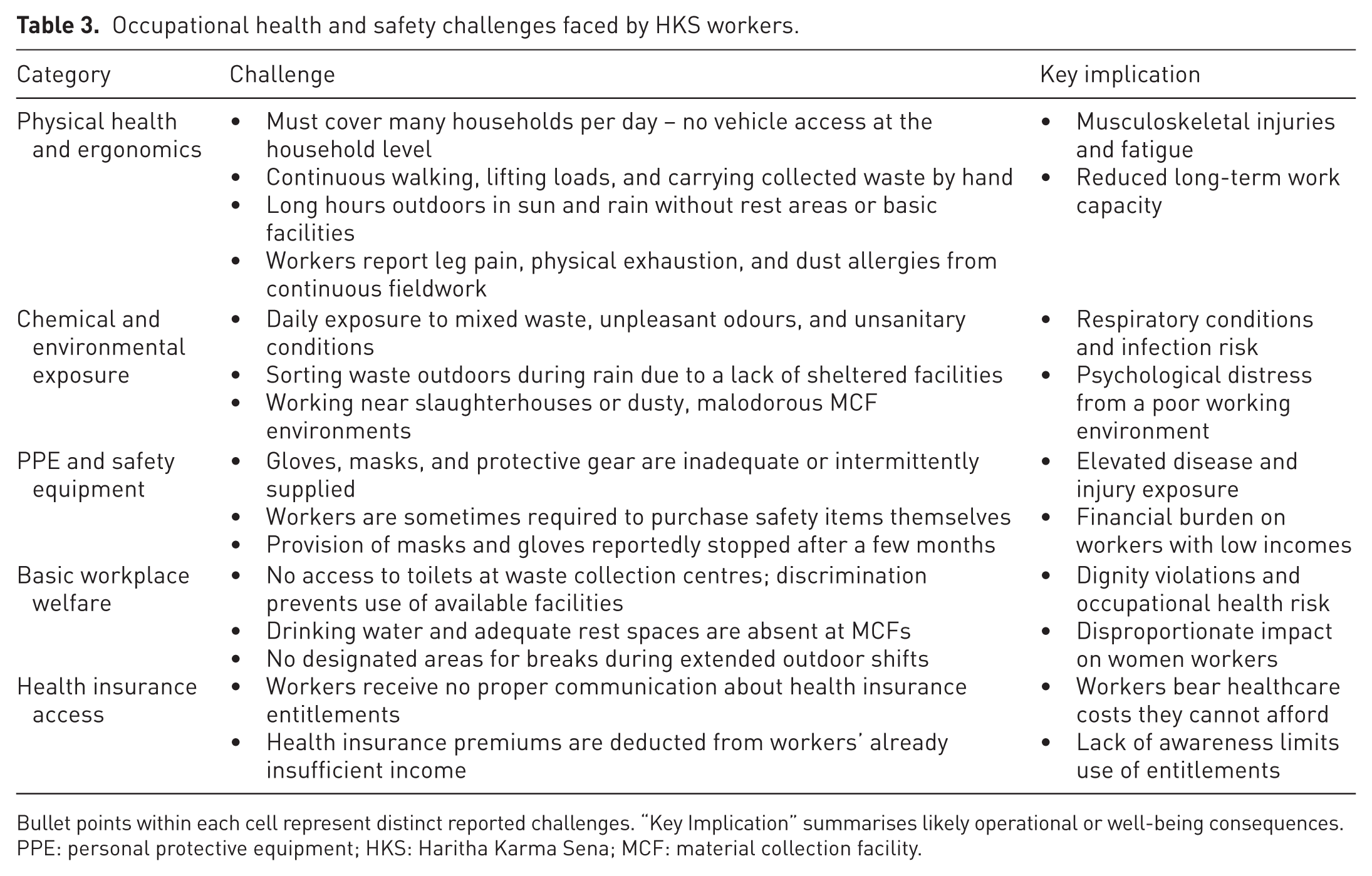
Bullet points within each cell represent distinct reported challenges. “Key Implication” summarises likely operational or well-being consequences.
PPE: personal protective equipment; HKS: Haritha Karma Sena; MCF: material collection facility.
Governance, infrastructural, socioeconomic and financial challenges.
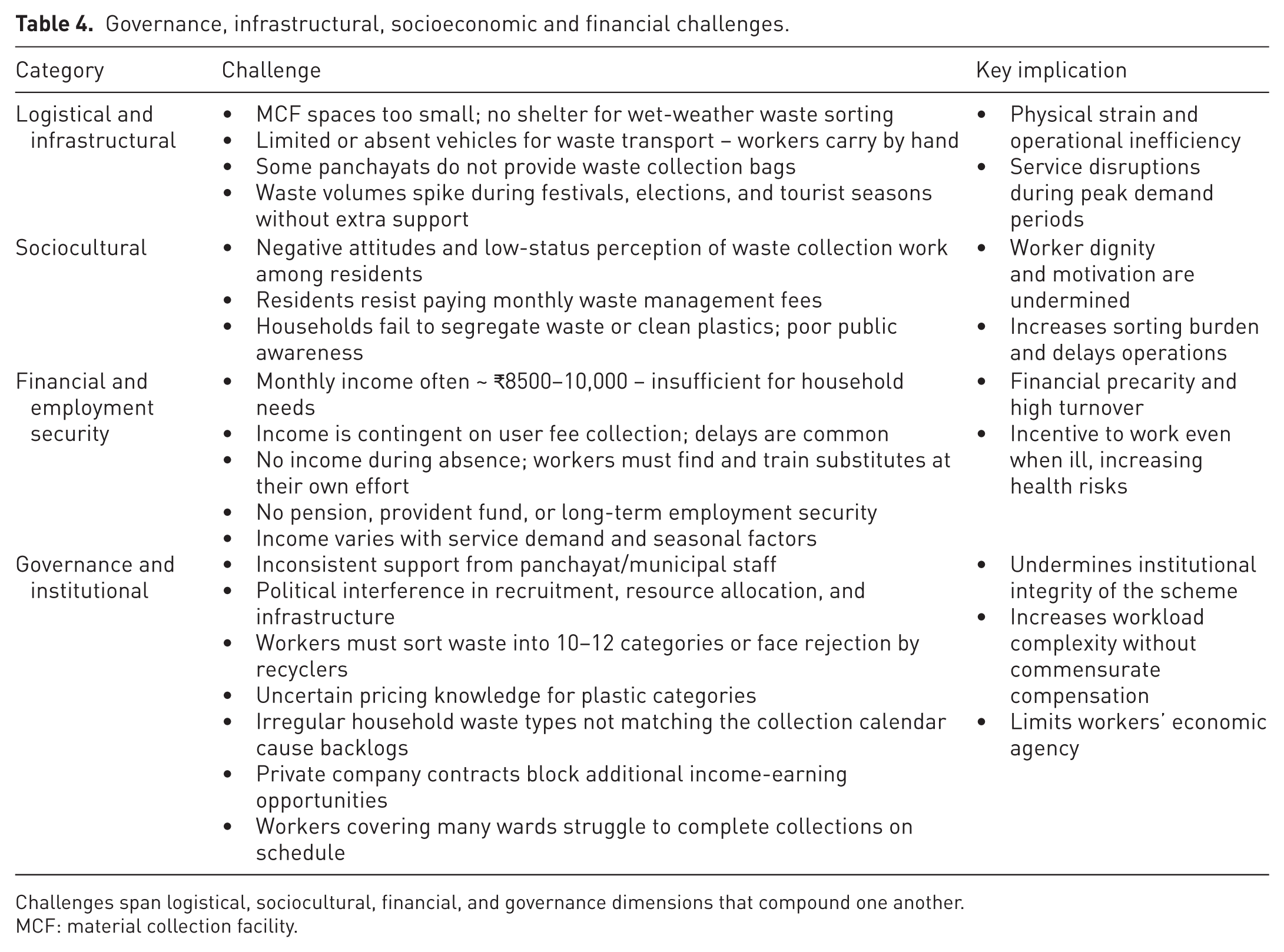
Challenges span logistical, sociocultural, financial, and governance dimensions that compound one another.
MCF: material collection facility.
Psychological impacts
Nonetheless, there is an attitudinal shift among households; some people still do not respect HKS women. In some areas, participants reported that certain households expressed hostility towards HKS women through scolding, sometimes even burning plastic waste as an act of retaliation. Such anger and vengeful attitudes contribute to feelings of distress and unhappiness among them. Participants reported psychological hardships in their work.
“We don’t feel it’s a burden. We do it with a happy heart, though the low wages cause mental distress.” (HKS KNR-20) “The challenge is that people are scolding us. Yes, people should support this a bit more. . .‘There is a lot of difficulty. People sitting in chairs don’t know our struggle.’” (HKS TVM 1)
Discussion
The objectives of the study were to examine how the regularisation and structuring of waste collection empowered HKS women. Participants’ view that panchayats and municipalities recognise their work through occasional honours, allowing them to give their opinions, and the provision of identity cards, uniforms, health insurance, and regular remuneration, indicating that their legal and occupational rights are protected. Structuring the work to ensure regular wages, provide uniforms, and provide training to HKS women to improve their skills are steps towards professionalising the work. It confirms Martha Nussbaum’s principle of affiliation, which emphasises being treated with dignity, having one’s voice respected, and participating as an equal member of society, which enhances one’s self-worth. Positive social interactions from the public provide HKS women with affirmation, respect, and a sense of belonging, helping them feel valued by others. When people receive empathy, encouragement, or recognition through social connections, they internalise these experiences, and it strengthens their self-esteem and self-respect (Yıldırım et al., 2024). Apart from recognising that the agency and empowerment contextually constructed (as stated by Wray, 2004), the present research revealed that individual financial autonomy and the degrees of independence that they achieved through the waste collection work remain central enabling conditions that expand HKS women’s capabilities and strengthen their ability to participate meaningfully in familial and social spheres in later life. Despite widespread concerns about the lack of empowerment among educated women (Ahmed and Hyndman-Rizk, 2020; Kundu et al., 2022), the HKS women participants in this study, aged 40–65 and with lower educational qualifications, reported experiencing empowerment through their work in waste collection, indicating that labour opportunities and institutional structures continue to shape women’s agency.
From the interviews, the governing bodies’ initiative to professionalise waste collection is reflected primarily through the formalisation of roles, the provision of uniforms and other safety measures such as gloves and masks, the provision of regular work schedules, and clearly assigned responsibilities. Participants were proud to be part of HKS. The overall work structure of waste collection they followed can be considered public service work, not merely informal labour. The guidelines on routine waste collection, handling payments via QR code, reporting to village field officers, and raising public awareness suggest an effort to confer legitimacy and structure on the occupation. Additionally, respectable treatment from panchayat officials and households reinforced their dignity and sense of social worth. It confirms the research that engagement between the governing institutions and HKS women (Alene, 2018) improved their dignity and rights. Together, these institutional arrangements and their learning of social interactions contribute to safeguarding the HKS workers’ rights while enhancing their self-respect and public visibility. Financial independence is an important component of women’s empowerment (Kumari et al., 2025). The professionalisation of the work enabled HKS women to experience self-respect. They receive social respect through formal recognition by governing bodies and public acceptance of their invaluable service, as evidenced by verbal encouragement. As work becomes professionalised, it enhances social status and reinforces an individual’s self-esteem by signalling that one’s labour is worthy of esteem. Consequently, perceiving oneself as respect–worthy links to secure self-worth, indicating social respect can foster internal self-regard (Clucas et al., 2022). Social respect affirms their value and dignity. It enables HKS women to experience social inclusion and mutual respect. These experiences strengthen their capability for affiliation, enhancing their self-respect and public visibility as valued contributors to the community. Unlike studies that show waste collectors do not consider their work dignified (Belarmino et al., 2022), the HKS women consider their work a good occupation. Additionally, the emergence of HKS workers as electoral candidates in Kerala’s 2025 local body election reflects a significant convergence of civic labour and deepening of democratic participation. HKS members, through their routine household visits, inculcated what may be termed proximity-based legitimacy: social trust derived not only from political patronage but also from consistent, visible service. The victory of 7210 members in the election indicates that urban density amplifies the electoral salience of frequent community interaction. This trend of HKS participation points towards substantive representation, working-class women entering electoral politics carrying specific experiential mandates around sanitation, hygiene, and community welfare.
The major concern is the inefficient health insurance procedure, which undermines the ability to affiliate, increasing vulnerability and limiting participation of HKS women. Hence, addressing the challenges related to health insurance and the lack of vehicles to transport waste, which lead to infrastructural and logistical issues that limit the efficiency of waste collection and disposal processes, can help reduce their stress. Research indicates that waste collection vehicles pose a challenge in India’s waste management (Priyadarshi et al., 2023). The public’s questioning of their job choice reflects the social stigma associated with their occupation. Social stigma and negative judgements from others can lead to stress, social exclusion, and psychological distress (Link and Phelan, 2001). Reports of being scolded by the public indicate instances of verbal humiliation and abuse. It can cause harm to one’s mental health (Tawakkol, 2025). These psychosocial work factors affect their well-being and self-esteem (Maneen et al., 2025) and thus need to be addressed. This highlights the need to raise public awareness about waste management. Additionally, in some areas, households complain about the irresponsible behaviour of HKS women. It might have resulted from HKS women’s insufficient training or from frustration with their workload. Thus, developing a suitable framework is crucial. Though social recognition and supportive relationships help them build confidence, which in turn improves their overall well-being, collecting payment from the households by HKS women and not collecting waste afterwards hinders the relationship. This contributes to the breakdown of trust among the parties involved. In waste collection, which is a low-income job, trust functions as a form of social capital that sustains everyday interactions between workers and households. Trust is an important linking factor that enables cooperation and collective action among community members (Bouma et al., 2008). The perceived lapses in service by some HKS women may also stem from economic constraints and the challenging working conditions they face. Research shows that working in low-income jobs for a longer period can have psychological effects (Řimnáčová and Kajanová, 2019). Nonetheless, the findings suggest that, despite enduring constraints and certain trade-offs, HKS women experience capabilities and social empowerment. Even though there are challenges which emerge as factors contributing to psychological stress among HKS women, such as inadequate infrastructural support, occupational health-related factors, lack of support from some households, and weak governance in some constituencies, the capabilities they develop through this job can compensate for these concerns to a greater extent. Through waste collection, they build strong social relationships with communities and sustained interactions, which constitute an important component of affiliation. Economic participation and social inclusion drive empowerment (Nussbaum, 2001). The happiness among the majority of HKS women is an indicator of this.
Conclusion
HKS members, through their door-to-door collection and segregation of non-biodegradable waste, significantly reduce the environmental footprint of waste, help minimise landfill use, and promote recycling. Regular interaction with households serves as informal environmental education, raising people’s awareness. Through waste management, HKS women gain a stable income, achieve social mobility, and experience inclusion. In short, the structuring of waste collection, together with administrative support, empowered HKS women, enhanced their social respect, public acceptance, and dignity, and led to the recognition of their rights and to their inclusion as valued members of society. The work allows them to share the economic burden within their family and have their voices heard.
Nevertheless, improving occupational health and safety, reducing psychological distress, and addressing governance and infrastructure gaps further strengthen their conditions. Recognising their achievements must not obscure the persisting structural contradictions. The women in HKS are formally recognised yet materially underprotected. Often, they have to bear the costs of gloves, masks, and sacks, on top of wages already insufficient for basic family needs. To sustain and scale this model, there are some non-negotiable conditions that must be institutionalised: guaranteed occupational safety provisions funded entirely by governing bodies, dedicated material collection facilities, permanent employment classification, etc. Without these, professionalisation remains performative rather than substantive. The HKS model offers a replicable interim framework for regions where the full mechanisation of waste collection is not yet feasible. This model is distinguished from the conventional waste labour as it is re-constitutioned as environmental work and by the institutional architecture surrounding it – structured roles, community embeddedness, and administrative accountability. Thus, this model reconstructs the social meaning of the work itself, transforming the HKS women into active citizens and environmental stewards, as evidenced by their burgeoning electoral participation. This has implications far beyond waste management, suggesting a broader link between dignified labour and democratic citizenship.
Policy recommendations
The common occupational health issues mentioned by the HKS women include body pain due to standing for a long time or carrying heavy weights, dust-related allergies, and injuries from dogs and snakes. To address this, the government should strengthen health insurance coverage for these workers through inclusive, subsidised schemes that explicitly cover occupation-specific risks, including treatment for dog and snake bites. There is a limited awareness among them about how to file an insurance claim and which hospitals are empanelled under the scheme. This needs to be clearly communicated by the Gram Panchayat officials or health inspectors, who are the reporting officers.
Limitations
The research did not include the perspectives of administrative or Panchayat staff, whose concerns regarding the implementation of the waste management project need to be studied. Only a few households were interviewed. A few private companies are involved in waste collection in Municipal areas in some districts in Kerala. The majority of participants in the study are HKS women serving in Gram panchayats or municipalities. Thus, the role of private companies and the issues faced by HKS women who work for them have not been considered in detail in this study, and this could be explored in future research.
Footnotes
Acknowledgements
This research was funded by the Indian Council of Social Science Research (ICSSR), New Delhi, under the “Punyashloka Devi Ahilyabai Holkar Special Call for Women-Led Research on Women-Led Development” scheme. The authors sincerely acknowledge this support. The authors are thankful to the valuable contributions of the field assistants – Ms Navya, Ms Sreelakshmi, and Mr Shanli Raj for their dedicated efforts in conducting field visits, engaging with participants and officials, and facilitating the data collection process. The authors also extend sincere gratitude to all the HKS women who generously shared their time and experiences with them.

Ethical considerations
The research was approved by the Institute’s Human Ethics Committee.
Consent to participate
All the participants volunteered to participate. Consent was taken from each participant.
Consent for publication
The personal details of the respondents were not collected to ensure anonymity. The respondents signed a consent form before participating in the study. Participation was voluntary. The data were stored without any personal details.
Funding
The authors disclosed receipt of the following financial support for the research, authorship, and/or publication of this article: This research was funded by the Indian Council of Social Science Research (ICSSR), New Delhi (Grant number: No.125/WLD-2025-427/SCD).
Declaration of conflicting interests
The authors declared no potential conflicts of interest with respect to the research, authorship, and/or publication of this article.
Data availability statement
Data are available as per request.