






Abstract
This study provides a social life-cycle assessment (S-LCA) of municipal solid waste management to evaluate citizen engagement in a southeastern Brazilian municipality. S-LCA followed UNEP/SETAC guidelines, including 3 social impact categories, 6 subcategories, and 13 indicators. Primary data were collected by means of a questionnaire which resulted in 413 valid responses. The results are expressed as normalized, dimensionless social performance indices on a scale of 0–1, where scores <0.5, equal to 0.5, and >0.5 indicate low, intermediate, and satisfactory performances, respectively. The analysis revealed weaknesses in transparency (0.099), driven mainly by lack of citizens’ knowledge regarding recycling and waste destination. Community satisfaction had an intermediate performance (0.382), reflecting inconsistent recyclable waste collection services. Responsibility for waste generation had also an intermediate score (0.561), but the practice of materials donation had a high score (0.884). Access to services achieved a satisfactory performance (0.829), showing availability but not necessarily user satisfaction. Governance scored 0.447, with partial effectiveness of public commitments to sustainability (0.540) and low knowledge about the municipal waste plan (0.353). Beyond confirming known transparency deficits, the findings reveal that high operational infrastructure coverage does not guarantee social satisfaction or system legitimacy without participatory governance and environmental education.
Introduction
In recent years, the need to integrate social aspects into municipal solid waste management systems (MSWMS) has become increasingly evident, as such systems affect multiple stakeholders – workers, waste pickers, communities, consumers, and society in general – demanding tools capable of capturing multidimensional impacts (Ibáñez-Forés et al., 2019; Santos et al., 2019). The evaluation of social impacts is complex because they result from relationships within society and are subject to local characteristics (politics, economics, ethics, psychology, legal issues, culture, etc.; United Nations Environment Programme [UNEP], 2009). Moreover, social impacts are often subjective and difficult to measure due to generic data, exhaustive data collection, costs, and interpretation methods (Institute for the Development of Social Investment, 2018; UNEP, 2009).
Social life-cycle assessment (S-LCA) has emerged as a promising approach within this context, offering a structured methodology to identify social performance, hotspots, and uncertainties throughout the life-cycle of products or services (UNEP, 2009, 2020). Recent studies reinforce significant methodological advances and the importance of integrating S-LCA into participatory governance structures (Ardolino et al., 2023; Costa et al., 2022; Sigcha et al., 2024). Most studies on S-LCA applied to waste management, however, focus on recycling workers, cooperatives, or sorting processes (Aparcana and Salhofer, 2013a, 2013b; Ekener-Petersen and Finnveden, 2013; Günkaya et al., 2023; Mattos and Calmon, 2023; Yildiz-Geyhan et al., 2019), whereas citizens (users) – primarily responsible for waste generation, separation, and disposal – are rarely conceptualized as core stakeholders. According to Costa et al. (2022), the ‘user category’ remains underrepresented in S-LCA studies, despite its crucial importance in preventing waste generation and in the overall performance of MSWMS.
Another important gap in this field concerns the limited incorporation of governance and transparency indicators into S-LCA models. Although these factors are crucial for the efficiency, legitimacy, and social acceptance of waste management systems, few studies establish explicit connections between user perceptions, municipal institutional structures, public sustainability commitments, and the implementation of local waste management plans. This limitation is especially relevant in developing countries where institutional weaknesses can play a decisive role in social outcomes.
As such, this study evaluated the social performance of MSWMS users in Limeira, a medium-sized municipality located in Southeast Brazil, by using a type I S-LCA approach. This municipality has representative characteristics of medium-sized cities in Brazil, since MSW management in the country is strongly dependent on landfill disposal (Alfaia et al., 2017). This scenario is also a reference worldwide, as landfilling remains the most widely adopted management practice (Maalouf and Mavropoulos, 2022). Specifically, the study identifies weaknesses and strengths associated with user behaviour, satisfaction, access to services, and governance perception. It also evaluates the alignment between municipal strategies and the population’s expectations and provides information capable of strengthening transparency, public participation, and governance in MSWMS.
Some studies consider citizens as actors in waste management systems (Ardolino et al., 2023; Azimi et al., 2020b; Foolmaun and Ramjeeawon, 2013; Ghisellini et al., 2023; Ibáñez-Forés et al., 2019), and the predominant approach considers this category as ‘local community’, with a limited focus on indirect impacts or general perceptions about the system. Conversely, our study explicitly adopts the concept of waste management system ‘users’ as a core stakeholder – that is, individuals directly responsible for generating waste and whose conduct immediately influences the system’s performance. To this end, we structured the indicators and questions in the data collection instrument to capture not only perceptions but also daily practices, levels of knowledge, engagement, behaviour, and citizen interaction with the MSWMS.
Consequently, this study addresses an underexplored aspect of S-LCA by positioning ‘users’ as core stakeholders and evaluating their social performance. We propose a context-specific assessment framework that can be adapted to other developing regions facing similar institutional challenges. Ultimately, the study demonstrates how identifying specific social hotspots can guide municipal policymakers to shift investments from mere infrastructural expansion to inclusive, transparency-driven waste management strategies.
Materials and methods
Study area
Primary data were collected in the municipality of Limeira, located in eastern São Paulo State, Brazil (Figure 1). Totalling 580.711 km², its urban area corresponds to 165.17 km² (Limeira, 2021) across which 294,492 inhabitants are distributed (State Analysis System Foundation [SEADE], 2019). The Department of Public Works and Services manages and monitors the implementation of the Municipal Solid Waste Management Plan, updated in 2021, which covers urban cleaning and solid waste management. The Plan outlines solid waste generation, rules for transportation and other management stages, targets for reduction, reuse, selective collection, and recycling, as well as the identification of final disposal sites, monitoring mechanisms, and environmental education programmes (Limeira, 2021).
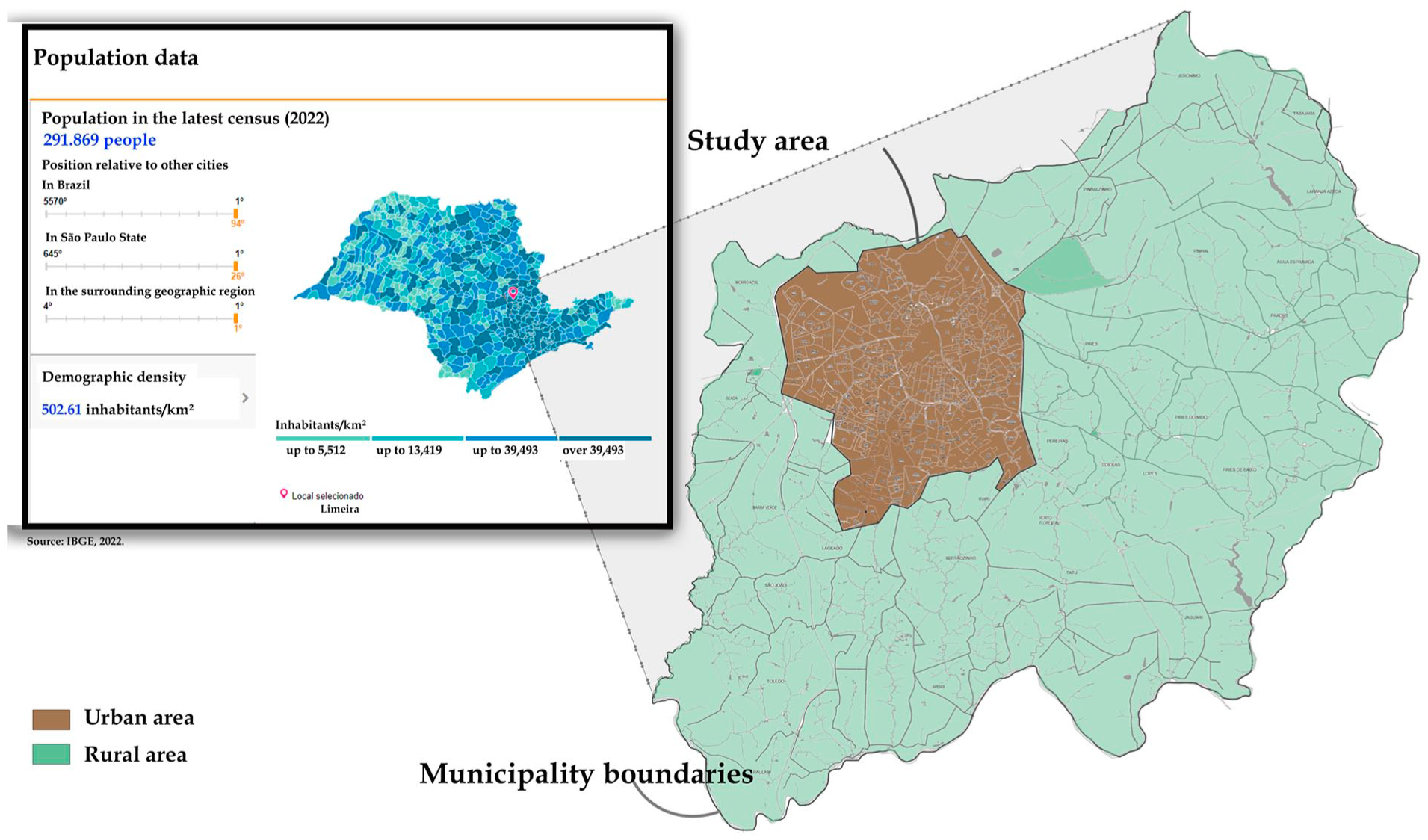
Study area – general information about the municipality.
S-LCA study
S-LCA was conducted following the UNEP/SETAC Guidelines (2009, 2020) and methodological sheets (UNEP, 2013) in four steps: (1) goal and scope definition, (2) social life-cycle inventory, (3) S-LCA, and (4) interpretation.
Goal and scope definition
The goal of this S-LCA study was to assess the social impacts of MSWMS, and intentionally focuses on the users’ group, aiming at a detailed assessment of public perception, access to services, system transparency, and behavioural engagement. By focusing exclusively on users, the study achieves greater analytical depth, offering targeted insights for municipal decision-making in waste management strategies. This methodological decision is aligned with the UNEP (2020) Guidelines, which state that stakeholder selection should be guided by the specific objective and scope of the study. Similar approaches, focused on a single stakeholder, have been adopted in other S-LCA studies to provide targeted assessments (Wang et al., 2017; Ramirez et al., 2016). Therefore, this study should be understood as a stakeholder-focused, type I S-LCA application based primarily on indicator and perception data, rather than a comprehensive LCA covering multiple stakeholder groups. This positioning is consistent with the objective of obtaining an in-depth assessment of user-related social performance within the municipal context.
Regarding the system boundaries, the scope covers the initial stages of household waste (HW) management (Figure 2). The cutoff criteria were based on social relevance and the availability of primary data. Thus, impacts related to transportation and the management of public cleaning waste were excluded due to low local representativeness and limited data reliability. The functional unit defined for the system was 75,000 tonnes of HW managed annually (base year 2023).
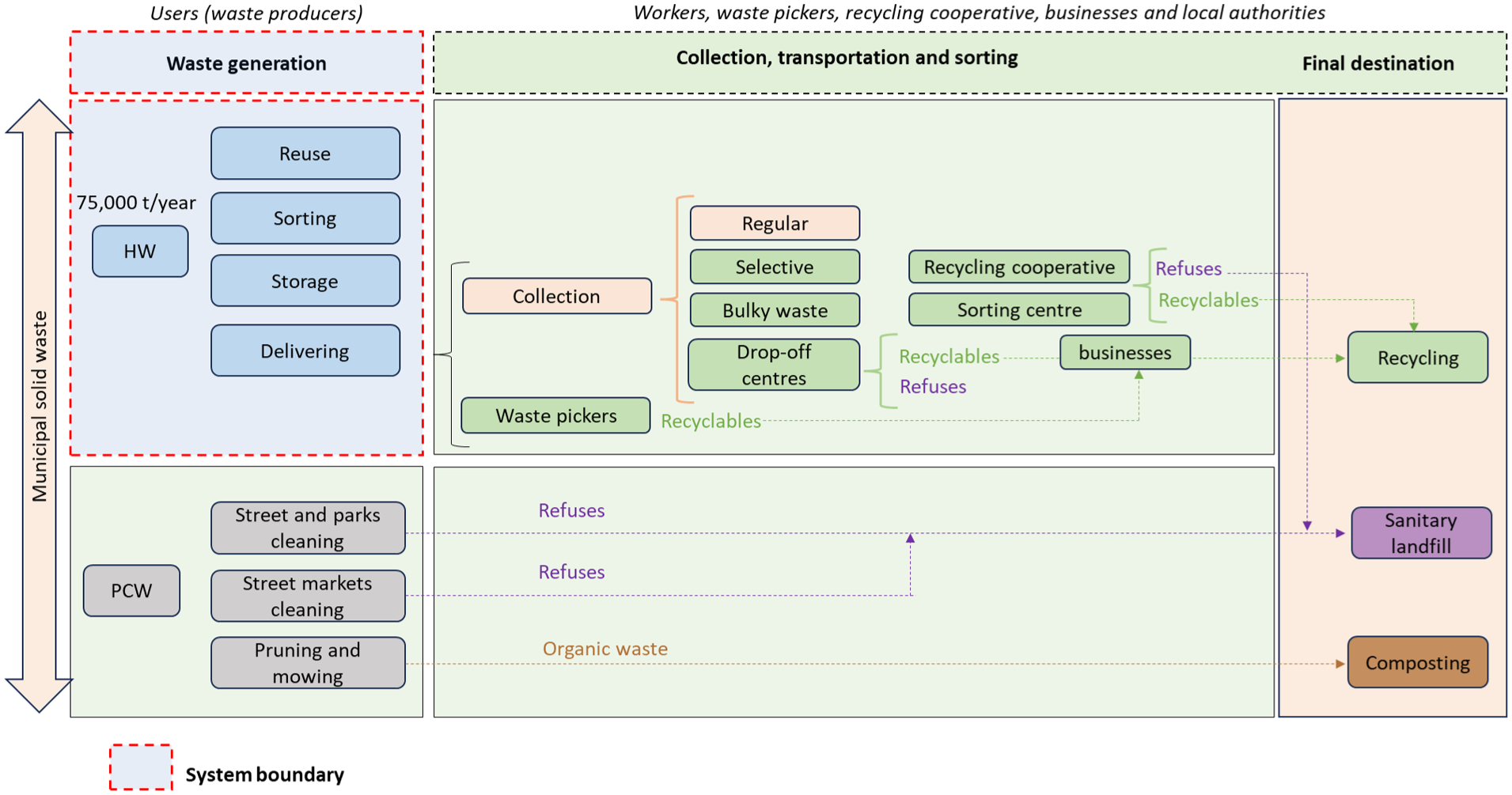
System boundaries of the MSW management system and the role of users – generation, sorting, packaging, and delivery of waste for collection.
It is important to highlight that restricting the system boundaries to user actions limits a more holistic understanding of the system. Consequently, upstream impacts (service design, municipal planning, occupational conditions of workers and waste pickers, etc.) and downstream consequences (landfilling and recycling processes) are not captured. A critical implication of this methodological choice is the potential risk of shifting the burden of responsibility for system performance – or the expectation of behavioural change – solely to the end user. This perspective may inadvertently overlook the fundamental roles and shared responsibilities of other value chain actors and public policymakers.
Figure 3 presents the categories, subcategories, and indicators used to assess the social impact of users. Their selection was based on three main factors: (1) their theoretical consistency with the guidelines of S-LCA applied specifically to municipal solid waste management; (2) their ability to measure the direct interface between the citizen and the service provided (such as transparency, environmental awareness, and access to regular collection); and (3) their causal proximity to capture user behaviour and system effectiveness from a demand perspective.
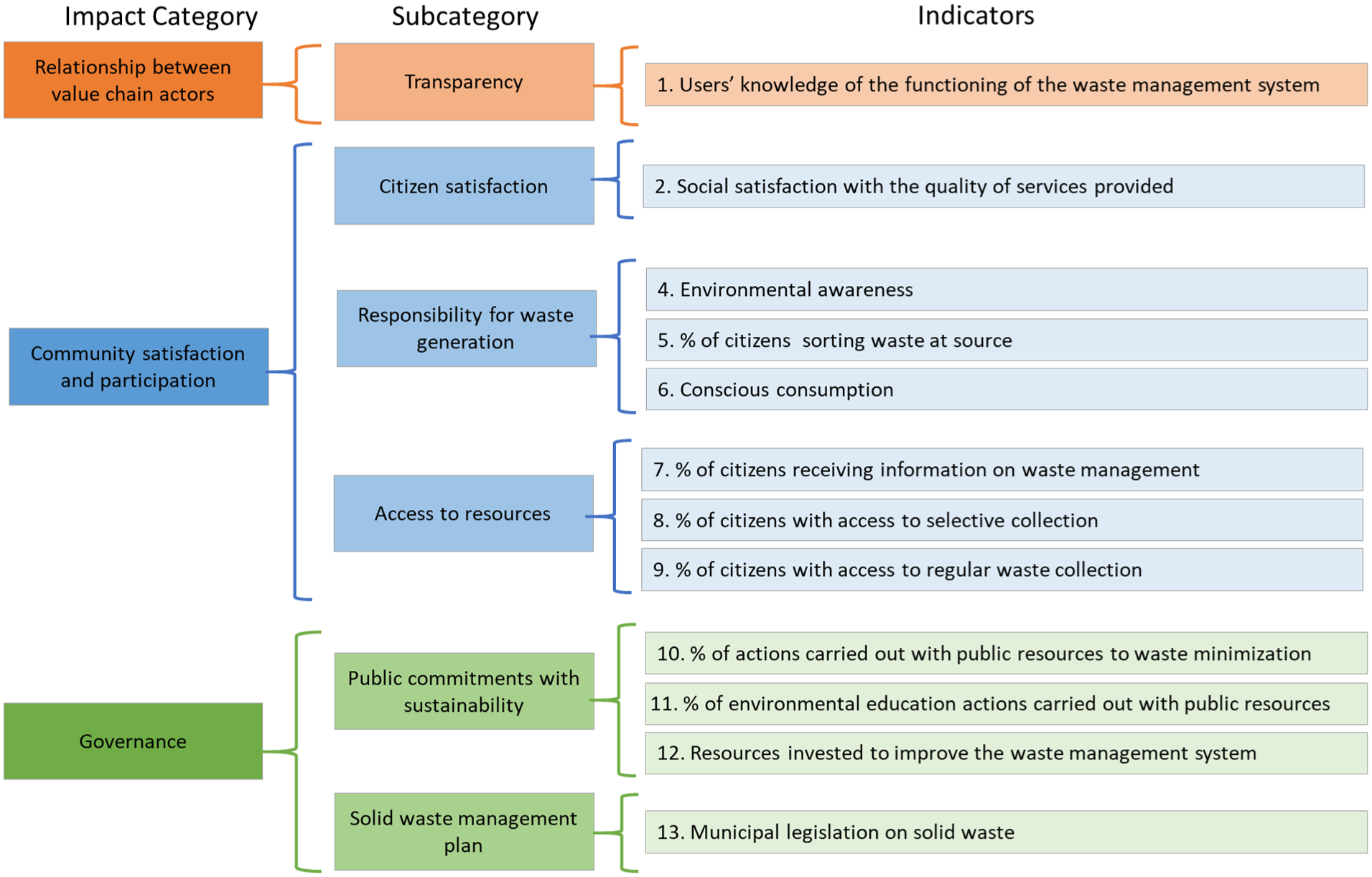
Categories, subcategories, and indicators used to assess the social impact of users.
The social impact assessment was conducted using a type I approach, which evaluates the system’s performance-based on a Reference Scale (Sigcha et al., 2024; UNEP, 2020). This method is widely applied to diagnose social contexts relying on stakeholder perceptions and questionnaire-based indicators, especially where standardized quantitative data are limited (Ardolino et al., 2023; Azimi et al., 2020a). The approach enables the conversion of qualitative responses into comparable performance levels, facilitating the identification of gaps, trends, and critical hotspots (Aparcana and Salhofer, 2013b; UNEP, 2020). Furthermore, employing a Reference Scale allows results to be interpreted in relative terms rather than absolute social impacts – a highly suitable strategy for exploratory diagnostic analyses at the municipal level (Ghisellini et al., 2023). Based on this methodological framework, scoring criteria were established, allowing for the systematization, standardization, and subsequent analysis of the collected data.
Social life-cycle inventory
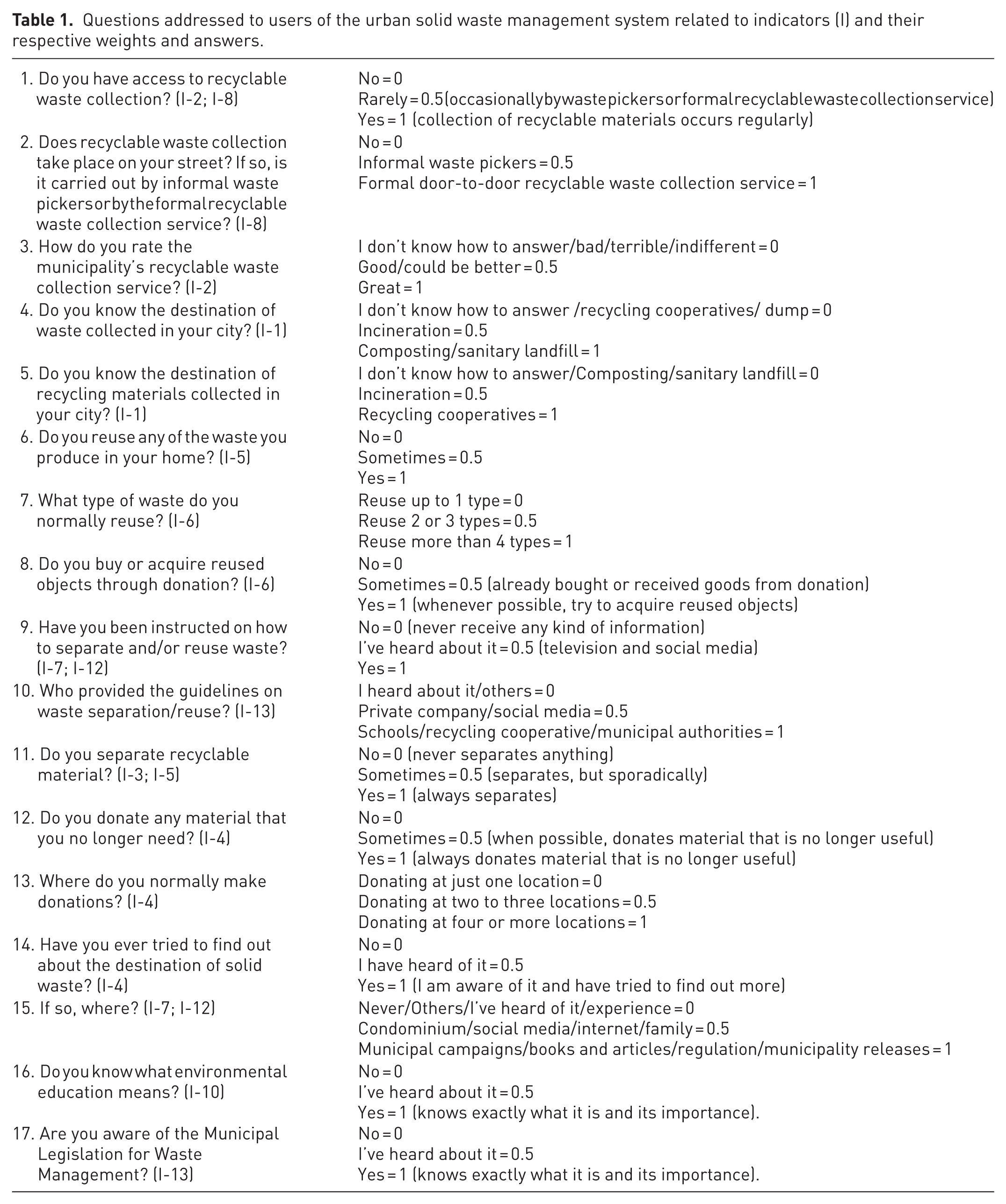
A questionnaire based on Ibáñez-Forés et al. (2019) and UNEP (2013) was developed for data collection and submitted for evaluation by the Research Ethics Committee of the University (process 5.572.395). Data collection based on the questionnaire effectively constitutes the social life-cycle inventory. This primary data collection approach was necessary due to the absence of dedicated social inventory databases (PSILCA or SHDB) that provide the level of detail and regional specificity required to assess user behaviour in a municipal context. The indicators are related to the questions presented in the questionnaire (Table 1), except for indicator 9, which was evaluated using secondary data. This indicator corresponds to the coverage rate of regular waste collection in the urban area (97.02%), obtained from the National Sanitation Information System (Brasil, 2023). Importantly, the 13 indicators received equal weight within their respective subcategories, ensuring uniformity in the contribution of each indicator to the evaluation of social performance. Although this approach improves methodological transparency and avoids introducing subjective weighting criteria, it assumes that all indicators have equal importance, which may influence the resulting social performance scores.
Questions addressed to users of the urban solid waste management system related to indicators (I) and their respective weights and answers.
After approval, the questionnaire was applied to the urban population between 2021 and 2023, both in person and remotely due to restrictions during the COVID-19 pandemic. Individuals who agreed to participate were asked to sign the ‘Authorization for Data Collection’ and the ‘Informed Consent Form’. To ensure the representativeness of user responses in a population of 294,492 inhabitants, the sample size was calculated using the equation proposed by Levine et al. (2000):

where n is the sample size; Z is the standardized normal variable associated with the confidence level; p is the true probability of success in the event; and d is the sampling error.
We adopted a confidence level of 95% (Z = 1.96), commonly used in social research, a proportion of 50% (p = 0.5) that provides the largest sample size, and a 5% (d = 0.05) margin of error, resulting in a minimum sample size of 384 individuals.
The questionnaire was applied near Limeira’s main commercial areas, health centres, and public squares, covering 76 neighbourhoods: About 10 in the North, 7 in the Northeast, 11 in the Central, 13 in the West, 18 in the East and 17 in the South. This distribution covers a variety of socio-economic and demographic profiles in the municipality, reinforcing the representativeness of the data and ensuring a comprehensive and representative analysis of the local reality. A total of 413 valid responses were obtained.
Social impact assessment
The analysis of the compiled responses determined social performance-based on the average scores of the subcategories. A numerical and colour scale ranging from 0 to 1 was applied to provide a clear and objective representation of impact levels. Based on the performance framework proposed by the UNEP/SETAC guidelines (UNEP, 2020), the original five-level type I approach was proportionally adapted into three levels to align with the Likert scale structure and maintain consistency with the unsatisfactory, intermediate, and satisfactory performance levels adopted in this study.
Accordingly, scores between 0 and 0.333 (red) were classified as unsatisfactory, representing primary social hotspots and priority areas for intervention. Scores between 0.334 and 0.666 (yellow) were considered intermediate, corresponding to secondary hotspots. Scores between 0.667 and 1.000 (green) indicate satisfactory performance and reflect the social strengths of the system.
This performance-based hotspot categorization has been widely applied in stakeholder-focused S-LCA studies to support the prioritization of social improvement actions (Ardolino et al., 2023; García-Sánchez & Güereca, 2019; Ibáñez-Forés et al., 2019).
Indicator aggregation within subcategories was performed using an equal weighting approach, whereby all indicators contributed equally to the final score. In the absence of empirically supported weighting criteria, this approach is recommended to ensure methodological transparency and avoid the introduction of normative bias (Ibáñez-Forés et al., 2019; UNEP, 2020).
Interpretation
In the interpretation phase, the reliability of the data collection instrument was evaluated by calculating the Cronbach’s alpha coefficient using IBM SPSS Statistics for Windows, Version 26.0 (IBM Corp., Armonk, NY, USA). This coefficient verifies the internal consistency of the scales (Hair, 2010), with values closer to 1 indicating higher reliability (Cronbach, 1951). The adopted classification was as follows: 0.000–0.200 (slight reliability), 0.201–0.400 (fair reliability), 0.401–0.600 (moderate reliability), 0.601–0.800 (substantial reliability), and 0.801–1.000 (almost perfect reliability; Landis and Koch, 1977).
To assess the robustness of the results, a sensitivity analysis was performed on the scoring system used to normalize questionnaire responses on a social performance scale from 0 to 1. A variation of ±10% was applied to the scoring criteria to assess whether moderate changes in the normalization parameters would affect the relative ranking of the subcategories. Similar approaches have been used to validate the stability of social performance classifications through sensitivity analysis of scoring and weighting parameters have been successfully employed in previous S-LCA studies (Ardolino et al., 2023; Huarachi et al., 2020; Zamani et al., 2018).
Results and discussion
The research achieved significant geographic coverage, encompassing 82 neighbourhoods. Most respondents were from the South region (114), followed by the East (91), North (79), Central (61), West (51), and Northeast (43). The following subsections present the results and interpretation of the three social impact categories, followed by the overall user social performance.
Relationship between actors in the value chain
This category was evaluated through the ‘transparency’ subcategory, which revealed a critical social performance score (0.099), highlighting highly ineffective communication regarding MSWMS operations: 87% (n = 357) of users are unaware of general waste destinations, and 93% (n = 385) do not know the destination of recyclable materials. Kruskal–Wallis tests indicated localized disparities, as the West region presented statistically higher knowledge indices than the North for regular (p = 0.007) and recyclable collection (p = 0.003). Nevertheless, the systemic information deficit remains uniformly critical at the municipal scale. Furthermore, the high standard deviations observed in most regions reinforce that access to system information is highly unequal among the population. From a systems perspective, this uneven informational diffusion weakens feedback mechanisms and constrains adaptive governance capacity, thereby limiting informed participation and shared responsibility.
This scenario corroborates the absence of community feedback mechanisms noted by Azimi et al. (2020b) and UNEP (2020), aligning with S-LCA expectations for stakeholder integration and participatory governance structures. If unaddressed, this deficit may compromise the long-term social legitimacy of waste management policies, reduce citizen engagement, and restrict the system’s capacity to transition from mere operational efficiency to true social sustainability.
Community satisfaction and participation
This impact category was evaluated by three subcategories: ‘citizen satisfaction’, ‘responsibility for waste generation’, and ‘access to resources’.
Citizen satisfaction
Table 2 presents the results for the ‘citizen satisfaction’ subcategory, revealing an intermediate social performance that constitutes a secondary hotspot associated with perceived service quality and system-user alignment. Most users evaluated the recyclable waste collection system as ‘good’ or ‘could be better’, with a limited incidence of ‘excellent’ ratings, suggesting functional but not fully optimized service delivery.
Average satisfaction rating by region regarding recyclable waste collection
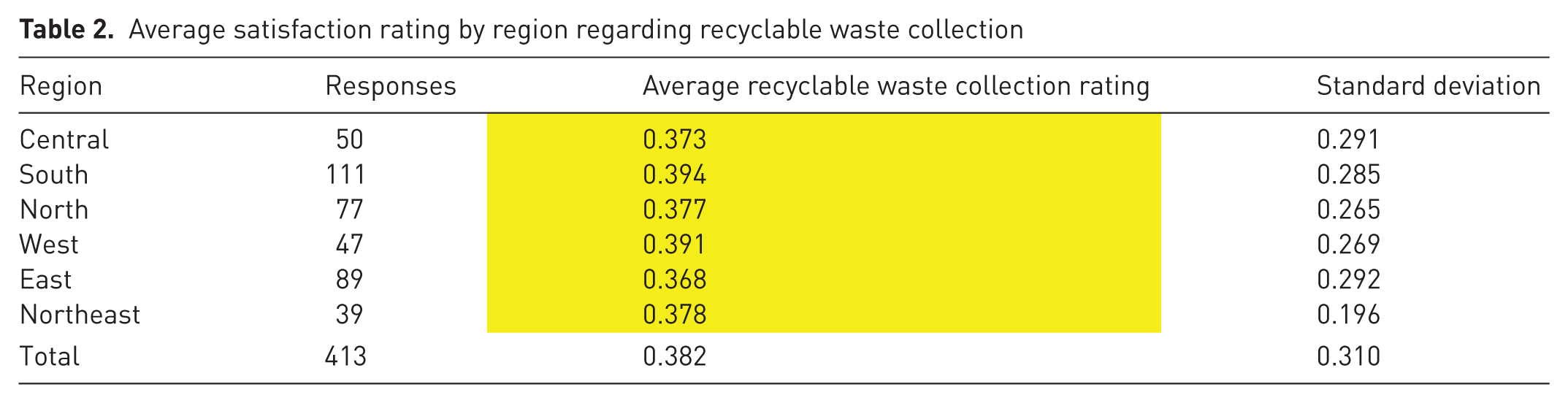
Recyclable waste collection presents deficiencies that negatively impact user perception, aggravated by a lack of information regarding service frequency and scope. This reveals a crucial insight: widespread infrastructure availability (e.g. 97% regular collection coverage) does not automatically translate into public satisfaction or perceived social value. Furthermore, this moderate satisfaction is consistent across all regions (Kruskal–Wallis, p = 0.189), confirming the presence of a municipality-wide secondary hotspot. The standard deviations (0.196–0.292) indicate moderate perception variability, suggesting unequal user experiences regarding service reliability, communication clarity, or local operational execution.
The coexistence of high service coverage and moderate satisfaction suggests stagnation in MSWMS performance, indicating that while the system operates adequately, it fails to generate a strong positive social evaluation. Therefore, future performance gains are more likely to derive from qualitative service optimization, enhanced transparency, and user engagement strategies rather than from mere infrastructure expansion. If not properly addressed, this secondary hotspot may evolve into a primary hotspot under scenarios of increased public expectations, stricter regulations, or the expansion of circular economy policies.
Responsibility for waste generation
This subcategory achieved an average score of 0.561, reflecting an intermediate social performance. Although most users demonstrate responsibility in sorting waste, the consumption of reusable or recyclable products instead of single-use items requires further encouragement. This indicates that behavioural commitment remains predominantly operational and only partially consolidated (Table 3).
Average rating by region for the subcategory ‘responsibility for waste generation’
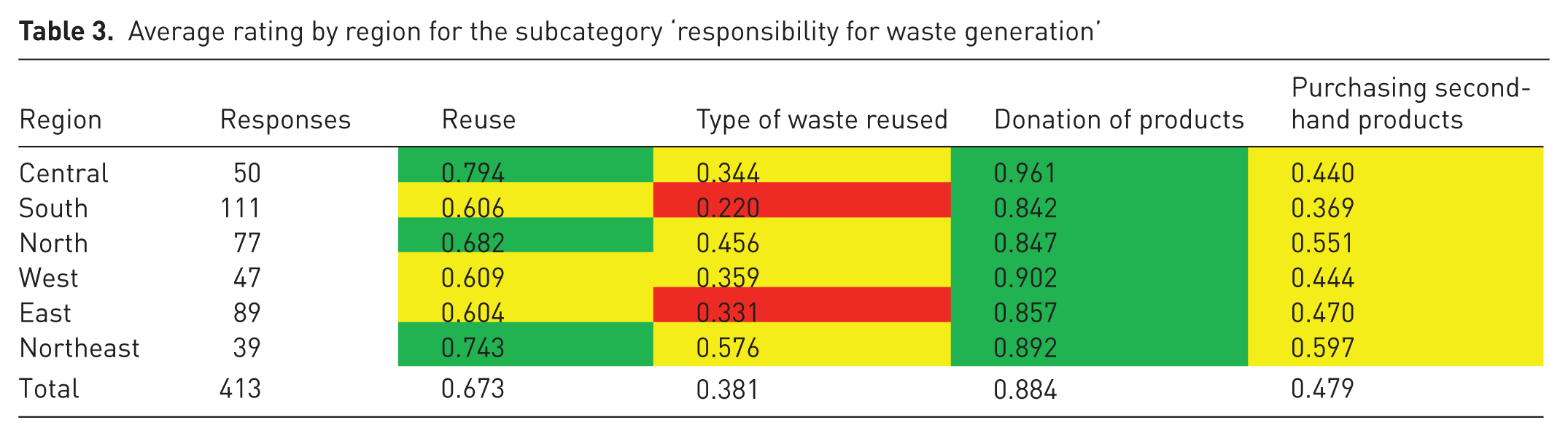
Regarding the typology of reused items, materials such as plastic (254), glass (199), and paper (103) predominate, with a low incidence of durable goods (e.g. furniture and electronics). The overall average for this indicator (0.381) was significantly lower than other metrics, revealing that the diversity of reused materials is limited. This restricts the potential for consolidating the circular economy consolidation, highlighting a priority area for intervention. Regionally, the Northeast presented the greatest propensity for material diversification (score = 0.576), suggesting a superior qualitative commitment to sustainable practices.
Furthermore, general reuse behaviour differs significantly across the municipality (p < 0.001), heavily influenced by localized socio-economic and cultural drivers. Multiple comparisons revealed that the South region, exhibiting the highest average reuse rate (0.807), stands out positively in relation to all other regions (p < 0.010), indicating a quantitatively higher level of environmental awareness in this territory.
‘Donation of Materials’ (furniture, clothing, shoes, household appliances and electronics) achieved the highest average among all variables (0.884), with statistically significant differences between regions (p < 0.001). Data dispersion was relevant, with standard deviations ranging from ±0.127 (South) to ±0.378 (Northeast and Central), indicating a deeply rooted donation behaviour, although with varying intensity across the territory. The most common donation destinations include nearby individuals (188), churches (119), recyclable material collectors (85), campaigns throughout the year (80), social entities (57), drop-off centres (52), thrift stores (25), scrapyards (20), and social media groups (12). Analysis revealed a community behaviour focused on local support networks and accessible solutions. These findings suggest that Limeira’s population prefers informal and easily accessible donation locations, reinforcing the practice as an important mechanism for redistributing resources and stimulating the circular economy.
The variable ‘’Average Acquisition of Second-Hand Materials’ presented a total average of 0.479, indicating a moderate practice of acquiring second-hand products by users. This value reflects a secondary structural hotspot, as circular consumption behaviour remains moderate and potentially economically conditioned rather than environmentally consolidated. Statistical analysis indicated significant differences between regions (p = 0.006). Important variations were also observed in the dispersion levels, with standard deviations ranging from 0.371 (West) to 0.492 (South), reflecting distinct consumption behaviours. Multiple comparisons (Dwass–Steel–Critchlow–Fligner) revealed that the West region exhibited significantly lower averages than the East (p = 0.010), North (p = 0.009), and South (p = 0.003) regions, indicating a lower propensity to purchase used items in that territory.
When these results are associated with regional purchasing power (Brazilian Institute of Geography and Statistics [IBGE], 2010), the Northeast region presents the highest reuse average (0.597) and is characterized by a predominant income of three to six minimum wages per family. This suggests that material reuse often functions as a strategy to meet economic needs.
In contrast, the South and Central regions, both with the lowest averages for second-hand acquisition (0.369 and 0.440, respectively), have distinct socio-economic profiles. In the South region, most families have incomes between three and six minimum wages, but with a lower adherence to purchasing used materials, in contrast to the Northeast. On the other hand, the Central region includes high-income neighbourhoods, predominating families with 10–20 minimum wages, and above 20 wages in 2 neighbourhoods, and a lower adherence to reuse, which can be explained by the greater purchasing power of new products instead of second-hand ones.
Additionally, the East region is socially heterogenous and presents an average adherence to material reuse of 0.470, influenced by its socio-economic diversity, whereas the West region, with a mix of all purchasing powers (0–3, 3–6, 6–10, and even 10–20 minimum wages), has an average of 0.444, indicating a slightly lower adherence than in the East.
These findings indicate that the acquisition of second-hand materials is more prevalent in lower-income regions, whereas higher-income areas are less inclined towards this practice. Donating unused goods reveals a concern for social well-being. However, reusing requires a broader environmental awareness which, according to Leff (2006), is intrinsically related to recognizing ecological limits and environmental preservation. This behavioural asymmetry suggests that residents are driven more by social solidarity (donating goods) than by environmental awareness (reusing materials). Consequently, circular practices remain economically conditioned rather than environmentally consolidated. Addressing this secondary hotspot is essential for building long-term circular economy habits that are not solely dependent on economic necessity.
Access to resources
With an average score of 0.829, the subcategory ‘Access to Resources’ achieved a satisfactory performance, indicating service availability. From an S-LCA classification perspective, this result constitutes a structural strength of the system, demonstrating consolidated operational coverage within the municipality. However, this satisfactory performance reveals a paradox when compared to the intermediate ‘citizen satisfaction’ score (0.382). It demonstrates that simply providing a service does not necessarily ensure user satisfaction, generate public trust, or establish perceived quality. This highlights the need to improve service reliability and user communication.
From a systems governance perspective, this pattern reflects a transition stage typical of consolidated service systems. Once infrastructure expansion reaches maturity, intangible factors – such as transparency, reliability, predictability, and clarity of communication – become dominant determinants of social legitimacy. Therefore, future gains in social performance are unlikely to result from further infrastructure expansion, but rather from qualitative service optimization and reinforcement of user engagement mechanisms.
Governance
The final assessment of the governance category revealed an average score of 0.447, indicating an intermediate social performance and therefore a secondary social hotspot. Governance represents a structural coordination dimension that directly influences interactions among multiple stakeholders within the MSWMS. Accordingly, this result indicates limited effectiveness of the strategies implemented and partial acceptance by the community. It suggests that the actions may have been limited in scope or face significant resistance to structural behavioural changes towards sustainability. The average standard deviation of 0.397 across the main indicators in this category corroborates this interpretation. It underscores a high dispersion in citizens’ responses and the absence of a cohesive understanding of the system’s governance policies and practices. This high variability indicates that governance policies are poorly understood across different social groups, reinforcing governance as a critical structural challenge within the system.
Public commitments to sustainability
This subcategory achieved an intermediate social performance, with an overall average of 0.540, reflecting user recognition of municipal efforts in awareness-raising and socio-environmental education initiatives. Within the governance dimension, this result represents a secondary hotspot associated with communication effectiveness and behavioural change capacity. Of the respondents, 65% (n = 267) reported having received guidance on waste sorting through school programmes or local government campaigns, whereas 35% (n = 145) do not received any guidance. The coexistence of majority exposure and significant uninformed segments indicates a structural communication coverage gap.
As highlighted by Erim (2024), citizen awareness regarding MSWMS does not necessarily translate into effective behavioural practices. The lack of actions related to waste prevention and material reuse often indicates the need to strengthen communication and environmental education strategies. However, while the perception of receiving information remains uniform across regions (p = 0.656), understanding of the concept of ‘Environmental Education’ varies significantly (p = 0.018). The high standard deviation observed for this variable across all regions (e.g. East = 0.438; South = 0.375) indicates that knowledge about the topic is heterogeneous and poorly consolidated.
This intermediate score (0.540) reflects visible institutional effort but limited behavioural internalization, pointing to limitations in the quality rather than the existence of sustainability communication strategies.
Solid waste management plan
The score of 0.353 indicates an intermediate social performance, although institutional planning structures exist, they are poorly recognized by users.
Discrepancies between the plan’s guidelines and its effective implementation are reinforced by the transparency deficits discussed earlier. The population’s lack of awareness regarding basic services, such as local recyclable waste collection services, demonstrates that formal planning instruments remain socially invisible. This disconnect fundamentally limits the plan’s capacity to influence behavioural alignment and civic engagement.
Statistical results illustrate the scale of this failure: average knowledge levels are extremely low across all regions, ranging from 0.290 (Central) to 0.462 (Northwest). Kruskal–Wallis analysis (p = 0.403) confirmed that the ignorance of the legal framework is a widespread municipal failure, rather than an isolated local issue. Moreover, the high standard deviation (e.g. South = 0.406; West = 0.412) indicates substantial variability in user awareness. Even where knowledge exists, it appears to be concentrated within small segments of informed citizens. This dispersion pattern indicates asymmetrical access to governance information, suggesting restricted informational diffusion and limited collective appropriation of planning instruments.
This disconnection between formal planning and civic awareness, as also identified by Azimi et al. (2020a), represents a critical obstacle to effective management.
Strategically, these information gaps demand the implementation of permanent transparency mechanisms such as periodic reports and public data dashboards. From a systemic governance perspective, strengthening planning intelligibility represents a high-leverage intervention. It can enhance social legitimacy, reinforce behavioural alignment, and improve adaptive management capacity. The heterogeneity observed in governance indicators reinforces the urgent need to restructure environmental education programmes. These programmes should target not only access to information but also its effective appropriation by citizens. Without improving the interpretability and transparency of planning instruments, user participation is likely to remain operational (service users) rather than systemic (co-governance actors).
Finally, the identified patterns of material reuse and donation signal opportunities to foster the circular economy through partnerships with local communities. These findings underscore that the social sustainability of the municipal solid waste management (MSWM) system depends on a governance model that integrates users as active participants in the system.
Social performance of waste management system users
Social performance of the MSWM system users analysed is heterogeneous (Figure 4), with critical areas that require intervention. These findings must be interpreted cautiously, as varying internal consistency (Cronbach’s alpha) affects the robustness of the results. Although ‘Access to Resources’ showed substantial reliability (α = 0.762), validating the positive perception of physical infrastructure, ‘Transparency’ (α = 0.374) and ‘Citizen Satisfaction’ (α = 0.400) achieved reduced consistency. This pattern underscores the multidimensional nature of governance constructs, which are inherently sensitive to contextual and experiential variability – a recognized challenge in type I S-LCA (Azimi et al., 2020b). This variability indicates that complex social constructs, such as perceived transparency, are multifaceted and may not be fully captured by single quantitative indicators. Thus, although the observed trends of low knowledge are statistically significant, conclusions regarding subjective perceptions should be interpreted cautiously. Future studies could incorporate qualitative methods to strengthen diagnostic robustness. Despite lower reliability in specific subcategories, the directionality of the results remains analytically consistent and substantively meaningful.
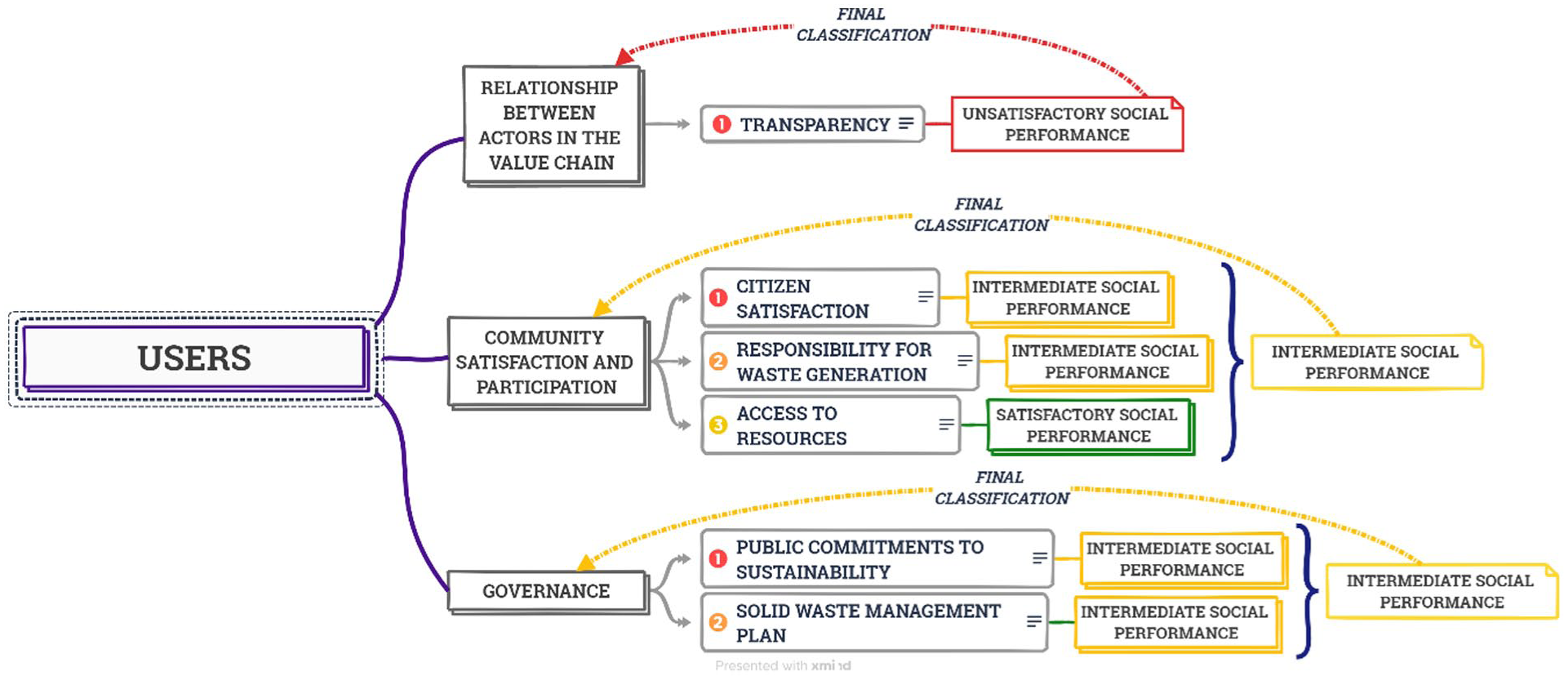
User social performance according to each subcategory.
Transparency remained in the unsatisfactory performance range (0.099), representing the most critical dimension of the system and reflecting a structural information deficit within governance processes. Rather than invalidating the findings, this coefficient signals construct complexity and reinforces the need for a cautious but not dismissive interpretation. The contrast between high infrastructure availability and low systemic knowledge is particularly noteworthy. It suggests that municipal management prioritizes operational efficiency (kerbside collection) over social effectiveness (communication and engagement).
The intermediate performance of the ‘Governance’ category (0.447) further indicates limited social legitimacy and weak public appropriation of planning instruments, suggesting that planning instruments remain only partially incorporated into public understanding, despite being formally institutionalized. The system’s inability to translate infrastructure availability into user satisfaction (0.382) and shared responsibility (0.561) highlights limitations in the immaterial dimension of public policy. These values indicate that social sustainability constraints are associated with socio-institutional integration deficits rather than financial resources and infrastructure. For the local administration, this implies that future investments should not focus solely on expanding the fleet or containers. Instead, they should prioritize policies of active transparency and continuous environmental education.
To bridge the gap between formal planning and public perception, local governments must prioritize socio-institutional integration. Rather than merely expanding infrastructure, high-leverage policy adjustments should focus on institutionalized transparency mechanisms, structured citizen feedback systems, and behaviour-oriented environmental education. These intangible improvements are essential to strengthen long-term social performance and reinforce system legitimacy.
Sensitivity analysis
A sensitivity analysis was conducted to assess whether the interpretation of social performance categories depended on the limits of the adopted reference scale. The original classification thresholds (unsatisfactory: 0.000–0.333; intermediate: 0.334–0.666; satisfactory: 0.667–1.000) were compared with an alternative scenario using slightly modified limits (unsatisfactory: 0.000–0.300; intermediate: 0.301–0.700; satisfactory: 0.701–1.000). The results showed that the classification of all subcategories remained unchanged between scenarios. Transparency remained in the unsatisfactory performance range, while governance and citizen satisfaction maintained intermediate performance, and access to resources remained within the satisfactory performance range. This stability indicates that the identification of hotspots and strengths of the social system is not sensitive to small variations in the definitions of the thresholds, reinforcing the robustness of the interpretative framework adopted in this study, as also observed in other studies that evaluate the stability of social indicators ( Ibáñez-Forés et al., 2019; Manik et al., 2013).
Reliability analysis and study limitations
Questionnaire consistency revealed varying levels of reliability. In the category ‘Relationship of Value Chain Actors’, the subcategory ‘Transparency’ resulted in α = 0.374, indicating reasonable reliability. Within ‘Community Satisfaction and Participation’, the subcategory ‘Citizen Satisfaction’ obtained a similar index (α = 0.400), also indicating reasonable reliability. In contrast, higher levels of internal consistency were observed for ‘Responsibility for waste generation’ (α = 0.631), ‘Access to resources’ (α = 0.762), and ‘Solid waste management plan’ (α = 0.613), all classified as having substantial reliability. Regarding ‘Governance’, the subcategory ‘Public commitments to sustainability’ achieved moderate reliability (α = 0.508).
The lower alpha coefficients observed for the subcategories ‘Transparency’ and ‘Citizen Satisfaction’ are partly due to their single-item structure, which inherently constrains the estimation of internal consistency.
Consequently, these indicators should be interpreted as indicative measures of social performance, rather than fully consolidated latent constructs. Nevertheless, the convergence of response patterns and the statistical stability across regions (non-significant Kruskal–Wallis results), together with the alignment with documented challenges in solid waste governance – including informational deficits and low user engagement (Azimi et al., 2020b; Ibáñez-Forés et al., 2019) – provide analytical support for the structural interpretation presented in this study.
Regarding the spatial consistency of the data, the absence of significant regional variation suggests that the identified governance deficits are not due to sampling heterogeneity, but reflect structural patterns across the municipality. Furthermore, the relatively high standard deviations observed in the governance-related indicators indicate dispersion of perception, suggesting informational asymmetry rather than measurement instability.
The robustness of these findings is supported by internal consistency metrics, non-parametric testing, and threshold sensitivity analysis, which collectively validate the identified systemic patterns.
Another limiting issue concerns the geographic scope of the analysis. Despite the municipality’s medium-sized characteristics, extrapolation of the results requires caution. Limeira’s socio-economic and cultural particularities, as well as the consumption and waste generation performance, directly influence the results. Municipalities with different demographic or economic configurations may present nuances regarding the social impact of solid waste operations not captured in this study, thus limiting the generalization of the findings.
Conclusions
This study applied S-LCA to diagnose citizen engagement with the MSWM system of a medium-sized city in Southeast Brazil. Our main results highlight a disparity in the system: while the collection infrastructure and access to services are satisfactory, the immaterial dimension of system management – transparency and communication – proves to be critical and unsatisfactory. Such structural asymmetry demonstrates that operational consolidation does not necessarily translate into social sustainability or participatory legitimacy.
An intermediate performance in the ‘governance’ category and the low score in ‘transparency’ indicate that the mere existence of a waste management plan does not guarantee social engagement. The identified hotspot configuration confirms that governance intelligibility – rather than infrastructure expansion – constitutes the principal leverage point for improving social performance. Thus, the municipal administration should redirect its investments, prioritizing permanent environmental education programmes and active transparency strategies (e.g. open data dashboards and feedback on waste disposal) to transform ‘service availability’ into ‘effective citizen participation’. The high rate of informal material donations suggests an opportunity to institutionalize existing circular economy networks in the community.
One study limitation concerns the low internal consistency within subcategories composed of single indicators, which may oversimplify complex social constructs. Moreover, the case study design limits immediate data generalization to municipalities with distinct socio-economic profiles. Future research should expand the number of indicators per subcategory and triangulate the analysis with qualitative methods (focus groups) to capture behavioural nuances with greater depth and strengthen the robustness of governance indicators. However, the analytical framework demonstrated internal coherence, statistical stability across regions, and methodological transparency, supporting its applicability in other municipal contexts. The transferability resides primarily in the structured assessment approach – combining S-LCA, statistical testing, and hotspot synthesis – rather than in absolute performance values. Longitudinal applications are recommended to test temporal robustness and evaluate the impact of governance adjustments over time. Ultimately, achieving socially sustainable waste management requires moving beyond infrastructure provision towards governance models that actively integrate citizens as informed and engaged participants in the system.
Footnotes
Acknowledgements
The authors thank Espaço da Escrita – Pró-Reitoria de Pesquisa – UNICAMP – for the language services provided, and the Brazilian Federal Agency for Support and Evaluation of Graduate Education (CAPES; Financial Code 001).
Authors’ note
The manuscript presents a detailed S-LCA study on the municipal solid waste management system of a medium-sized municipality of Southeast Brazil. The results reveal the complexity of social and economic relations in the context of waste management, highlighting the need for strategic interventions to improve governance, transparency and community participation, and specifically demonstrate that, although there have been advances in governance and worker inclusion, significant challenges still persist. This study contributes to the advancement of S-LCA applied to municipal solid waste management, providing a theoretical and methodological basis for the formulation of more efficient, equitable, and public policies, aligned to the Sustainable Development Goals and Circular Economy Principles.

Ethical considerations
A questionnaire was developed for data collection and submitted for evaluation by the Ethics Committee of the State University of Campinas (process 5.572.395), and then, it was applied to the urban population between 2021 and 2023 (in person and remotely, due to the restrictions of the COVID-19 pandemic).
Author contributions
Ana Caroline Costa Nogueira: Conceptualization Ideas; Methodology development; Formal analysis; Investigation.
Carmenlucia Santos Giordano Penteado: Writing – Original draft preparation; Supervision; Project administration.
Funding
The authors received no financial support for the research, authorship, and/or publication of this article.
Declaration of conflicting interests
The authors declared no potential conflicts of interest with respect to the research, authorship, and/or publication of this article.