






Abstract
Waste is one of the major challenges that humankind face today and by-products of different industries make it more challenging for their disposal as they can pose environmental risks. Distillery sludge from the alcohol production industry is one such waste product that presents a wide range of logistical as well as environmental challenges. This study aims at the scientific utilization of distillery sludge and its application as an agricultural amendment to improve the fertility of soil. The qualitative analysis of the distillery sludge revealed its richness in organic matter as well as essential nutrients making it a good alternative to fertilizers in agricultural fields. The presence of heavy metals was also observed; therefore, lysimeter studies were conducted with the application of sludge at different doses to soils from two different sources (agricultural and waste land soil). Sludge dose equivalent to 3 MT/acre (7.4 MT/ha) was observed to be the optimum dose for soil conditioning, whereas its repetitive application in consecutive years is not recommended. Field productivity of 26 and 24 MT/acre was observed upon application of the recommended sludge dose of 3 MT/acre and Farm Yard Manure (FYM) dose, respectively, indicating the suitability of sludge application. Furthermore, the study also confirmed that the use of distillery sludge as fertilizer did not have any adverse effects on the fruit juice quality, thereby, making it suitable for agricultural application upon regulated dosage.
Introduction
Distillery industries are often regarded as one of the most environmentally damaging sectors and are among the 17 most polluting industries as per the Central Pollution Control Board of India (CPCB, 2003), which is primarily due to the fact that 80% of their raw materials are transformed into waste products (Kharayat, 2012). Distillery industries are a rapidly growing sector, with their global market share nearly doubling from 30% to around 50% over the past 50 years (Abdelrazik et al., 2022). Distilleries generate a disproportionately high volume of wastewater, roughly 10–15 times greater than the volume of alcohol they produce (Patel and Jamaluddin, 2018). This significant wastewater production, coupled with the industry’s growth, presents a major global challenge in terms of water resource management and potential water pollution. Distillery sludge, a by-product of the alcohol production industry, poses serious environmental risks due to its challenging nature concerning management and disposal. In India, there are ~380 distilleries with annual production of around 3 billion L of alcohol and 45 billion L of wastewater consisting of 3,50,000 L/day of effluent with molasses, 1,20,000 L/day spent malt grains wash and 20,000 L/day yeast sludge (Chandra et al., 2012; Ibis Research and Information Services Pvt Ltd., 2023; Suthar, 2008; Uppal, 2004). The discharge of distillery liquid and solid waste into the environment poses serious threats to the ecosystem (Chandra and Kumar, 2017a, 2017b; Chowdhary et al., 2018a; Kumar and Chandra, 2020). Distillery residues have shown the presence of various organic and inorganic pollutants like polysaccharides, melanoidin, reduced sugar, waxes, proteins, N, K, Ca, SO42−, PO43−, etc., as reported by various researchers (Arimi et al., 2015; Chowdhary et al., 2018b). It mainly affects the soil and groundwater of the region where it is disposed off (Arimi et al., 2015; Chowdhary et al., 2018b).
Although landfilling is a prevalent method for disposing of distillery sludge, growing concerns about space limitations and environmental impact are driving a shift in practices. Incineration, while reducing volume, poses challenges with air pollution. Emerging technologies like anaerobic digestion show potential, yet they are not as established. Despite the nutrient richness of sludge, its unscientific application to land can cause an unhealthy increase in the soil organic carbon levels which could disturb the nutrient availability and microbiota of the soil. It could also lead to the exposure of soil to various heavy metals which would eventually lead to their introduction into the food chain and harm various living beings in the vicinity.
The potential for beneficial reuse of industrial by-products like distillery sludge in agriculture must be strictly governed by environmental regulations to mitigate associated risks (Hudcová et al., 2019). Regulatory bodies, such as the CPCB in India, govern the disposal and utilization of industrial waste, often drawing parallels to the standards for sludge application. These regulations primarily focus on pathogen reduction and contaminant limits, specifically, mandating stringent testing for potentially toxic elements, like heavy metals, in both the sludge and the receiving soil to prevent their introduction into the food chain (Baeyens et al., 2023). Furthermore, limits are typically placed on the maximum cumulative and annual application rates of these metals to the land. A scientifically rigorous study, therefore, must not only focus on the agronomic benefits but also ensure the proposed application rates and amendment methods adhere to national and international environmental quality standards to guarantee the long-term sustainability and safety of the agricultural ecosystem (Nunes et al., 2021). In alignment with the principles of the circular economy, which emphasize waste minimization and resource recovery, the nutrient-rich composition of distillery sludge presents an opportunity for its beneficial reuse in agriculture.
Despite the environmental challenges posed by distillery waste disposal, the underlying chemical composition presents a unique opportunity for sustainable resource recovery. Following the principles of the circular economy, this study proposes exploring the potential to convert this industrial by-product into a value-added soil improver and fertilizer (Mabrouk et al., 2023). Interestingly, distillery sludge, being rich in organic matter and essential nutrients, makes it suitable for agricultural use, provided its amendment and dose is scientifically administered. It could be utilized as a source of nitrogen, phosphorus and organic matter. The organic carbon content in sludge-amended soil can be up to three times higher than soil amended with inorganic fertilizers making it a good soil conditioner (Maggioli et al., 2022; Singh et al., 2021). Chandra et al. (2008) investigated the impact of distillery sludge on green gram cultivation, finding that 10% (w/w) sludge amendment led to optimal plant growth, evidenced by increased root length, shoot length, leaf count, biomass, photosynthetic pigment content, protein levels and starch content. Furthermore, studies suggest that applying sludge to agricultural soils can enhance soil fertility by promoting a more diverse and robust microbial population (Mishra et al., 2021; Srivastava et al., 2017). This enriched microbial community plays a crucial role in nutrient cycling and decomposition processes, ultimately contributing to improved soil health. Application of this sludge to waste lands could help in their reclamation (Antonkiewicz et al., 2025). To fully harness its potential while minimizing the environmental risks associated, a comprehensive understanding of the physicochemical properties and potential contaminants of distillery sludge is required. This research paper aims to contribute to the field by providing a thorough characterization of distillery sludge, including its nutrient content, organic composition and the presence of any potential contaminants by monitoring the quality of leachate generated. Furthermore, this study seeks to optimize the application dosage of distillery sludge as a fertilizer, considering its effects on soil health, crop growth and the surrounding ecosystem. By addressing these critical aspects, this research aims to promote the responsible utilization of distillery sludge in agriculture, thereby advancing the pursuit of sustainable and environmentally friendly waste management practices and striving towards sustainable development.
Materials and methods
This section discusses the comprehensive methodology employed during sample collection, characterization, lysimeter studies, bench-scale studies and field-scale studies conducted with distillery sludge as a soil amendment.
Sample collection
Distillery sludge samples from remediated lagoons in western Uttar Pradesh region were collected along with two different soil types and transported to CSIR–NEERI Nagpur, India for analysis. Soil I was a fertile agricultural field, whereas soil II was a piece of land in the vicinity of the region with stray vegetation (called waste land). As per the field observations and literature review, fertile alluvial soil with a sandy to clay loam texture was present in the study area (Tripathi et al., 2023). The soil is classified of the order Inceptisols and Entisol as per the Central Ground Water Board (2017) representing young soil developed from the river deposits of the Ganga basin. Composite soil samples from the top soil were collected, stored and processed for further analysis as per standard procedure (IS 2720-1; Bureau of Indian Standards, 1983).
Sample characterization
To estimate the physicochemical and biological parameters of the collected soil and sludge samples, various standard methods were adopted. pH of soil, sludge and leachate was measured by electrometric method (IS 2720-26, 1987; Bureau of Indian Standards, 1987) using pH metre (HI981999; Hanna Instruments, Woonsocket, Rhode Island, USA). Electrical conductivity (EC) of soil and sludge was estimated using conductimetric method (IS 2720-21, 1977; Bureau of Indian Standards, 1977) using Hanna instruments-HI98129 probe. Determination of water holding capacity of soil was estimated using the Keen–Rackzowski Box method (Piper, 1996, and the porosity was estimated using the standard pycnometer technique. Organic carbon in soil and sludge was estimated using the rapid wet titration method (Walkley and Black, 1934). Determination of exchangeable cations was done after extraction of soil and sludge with neutral ammonium acetate solution as an extractant using flame photometer (Merwin and Peech, 1951). Cation exchange capacity (CEC) and sodium absorption ratio were estimated using standard formulae after determining the exchangeable cations. Elemental carbon and nitrogen were assessed using CHNS analyser (Elementar Vario, Hesse, Germany), whereas total phosphorous and potassium were determined by digesting sample with nitric acid (68%) and perchloric acid (70%) and then following the vanadomolybdate method (Hesse, 1972). Heavy metals analysis for soil, sludge and leachate were carried out using inductively coupled plasma atomic optical emission spectroscopy (ICP-OES, Model: ICAP 6300 DUO and Make; Thermo Fisher Scientific, Waltham, Massachusetts, USA) after digestion with nitric acid (96%) and perchloric acid (70%; Uddin et al., 2016). Microbial study of soil was done by serial dilution plating technique. The bacteria, fungi, Actinomycetes and Azotobacter were counted on nutrient agar, Martin’s Rose Bengal Agar, Actinomycetes isolation agar and Azotobacter agar (Mannitol), respectively, and expressed as colony forming units per gram dry soil (cfu/g) (Tamizhazhagan et al., 2016). Chemical oxygen demand (COD) of leachate was estimated using standard methodology by the APHA method 5220C (APHA, 2017) and biochemical oxygen demand (BOD) was estimated using BOD 3-day test (BOD3) as given by the APHA method 5210A (APHA, 2017). For assessment of sugarcane juice quality, the total solids were measured as juice Brix (% brix) using Hand Refractometer, sucrose content was determined using a polarimeter (% pol) and purity coefficient (purity %) was measured. Sugarcane juice quality assessments were carried out using standard methodology (Spencer and Meade, 1963).
Lysimeter studies
A leaching column study was conducted at CSIR–NEERI to evaluate the leaching behaviour of sludge at varying application rates of 1, 2, 3, 4, 5 and 8 metric tonne per acre (MT/acre) amendment when applied to two different soils (soil I and soil II). Non-transparent polyvinyl chloride pipes (1500 mm length, 150 mm diameter) were used to fabricate lysimeters for the experiment. Soil columns were packed in a stratified manner. The top layer of each column was amended with the designated sludge dose along with one control representing cow dung (5 MT/acre) application. All columns were then subjected to continuous irrigation with a fixed water volume (200 mm irrigation depth) over a 25-day period.
Leachate samples were collected from each column at predetermined time intervals for analysis of various physicochemical parameters. To assess the impact of repeated sludge application on soil properties, a repeatability study was performed using the optimized sludge dose for three consecutive cycles. The amended lysimeters were re-applied with the chosen sludge dose and irrigated with 200 cm of water distributed over 25 days (cycle I). At the end of each cycle (I, II and III), the same procedure of re-amendment and irrigation was repeated. At the end of the cycle I, the columns were re-amended with the same doses of sludge and irrigated at similar level (200 cm) for 25 days (cycle II), followed by cycle III.
Bench-scale and field-scale studies for sugarcane growth
To evaluate the response of sludge dose on the growth of sugarcane crop, a bench-scale study was designed, wherein troughs (1000 × 1000 × 1000 mm) were filled with soil and the top soil was amended with sludge doses equivalent to 1, 2, 3, 4, 5 and 8 MT/acre. The evaluation of soil quality was conducted at three distinct stages: prior to any amendments, after the introduction of amendments and following the completion of the harvest. The microbial studies were conducted by choosing the control, recommended sludge dose and the highest sludge dose to draw meaningful conclusions. The sample of leachate collected from the bench-scale units of control and amended with the application of a different quantity of sludge. Leachate samples were systematically collected at five distinct intervals during the progression of sugarcane growth, specifically in months 1, 2, 4, 6 and 8. The characterization of the leachate was done for pH, COD, BOD3 and heavy metals.
Sugarcane buds of variety CO-13235 (mostly grown in western Uttar Pradesh) were selected and collected from the authorized seed supplier. Sugarcane piece of 6-inch length having two buds were selected for sowing. In a bench-scale study conducted at CSIR–NEERI, sugarcane crop yield, biomass, leaf count and juice quality were estimated for all the sludge doses. The field-scale investigation to confirm the bench-scale study was carried out in the agricultural fields of western Uttar Pradesh, which were amended with the recommended sludge dose from the bench-scale study for assessing the suitability of growing sugar cane crop. Two sets of experimental plots, each measuring 22 × 11 m, were created. One set was treated with Farm Yard Manure (FYM) at 5 MT/acre (12 MT/ha; control), whereas the other received the recommended sludge dose. The productivity and juice quality of sugarcane were analysed in this experiment.
Results and discussion
This section unveils the results derived from the experiments conducted during the study, that is, sample characterization, lysimeter studies, bench-scale and field-scale evaluations. The ensuing discussion offers a comprehensive overview, exploring the significance and implications of our research findings, providing valuable insights for a deeper understanding.
Characterization of soil and sludge
The pH of sludge was observed to be higher in comparison to typical soil pH values. High organic matter in the sludge enhances its buffering capacity which could have led to the increased pH of the sludge over the large time as the sludge was aged 10 years. EC was observed to be higher in sludge due to the presence of various soluble salts, which are easily liberated in an aqueous media as has been widely reported (Tesfamariam et al., 2009; Tsadilas et al., 1995). Substantially high levels of organic carbon in the sludge as seen in Table 1 are a consequence of the fermentation process in the production of alcoholic beverages, which is known to generate a considerable amount of organic residues (Durand et al., 2004). CEC of the sludge was also higher than that of the soils which could largely be due to the high levels of organic matter which have negatively charged sites that can attract and hold cations and hence increase the CEC (Soares and Alleoni, 2008). The presence of heavy metals viz., Cd, Cr, Cu, Fe, Mn, Ni and Zn was observed to be higher in sludge as compared to soil I and soil II, though it was observed to be within the permissible limits (Okareh and Enesi, 2015; Uddin et al., 2025). The high concentration of heavy metals in distillery sludge in comparison to the soils may be attributed to the condensation, molasses fermentation and distillation processes, which can enrich the sludge (Tripathi et al., 2021). However, it was noticed that the concentration of cadmium and nickel was higher in soil I in comparison to sludge. As this soil I was an agricultural field, this increase could be due to the application of pesticides which could have led to the accumulation of these heavy metals (Alengebawy et al., 2021; Rashid et al., 2023). All the physicochemical characteristics of the soil types and sludge were observed to be within the normal limits and an account of their observations is presented in Table 1.
Physicochemical characterization of soils and sludge.
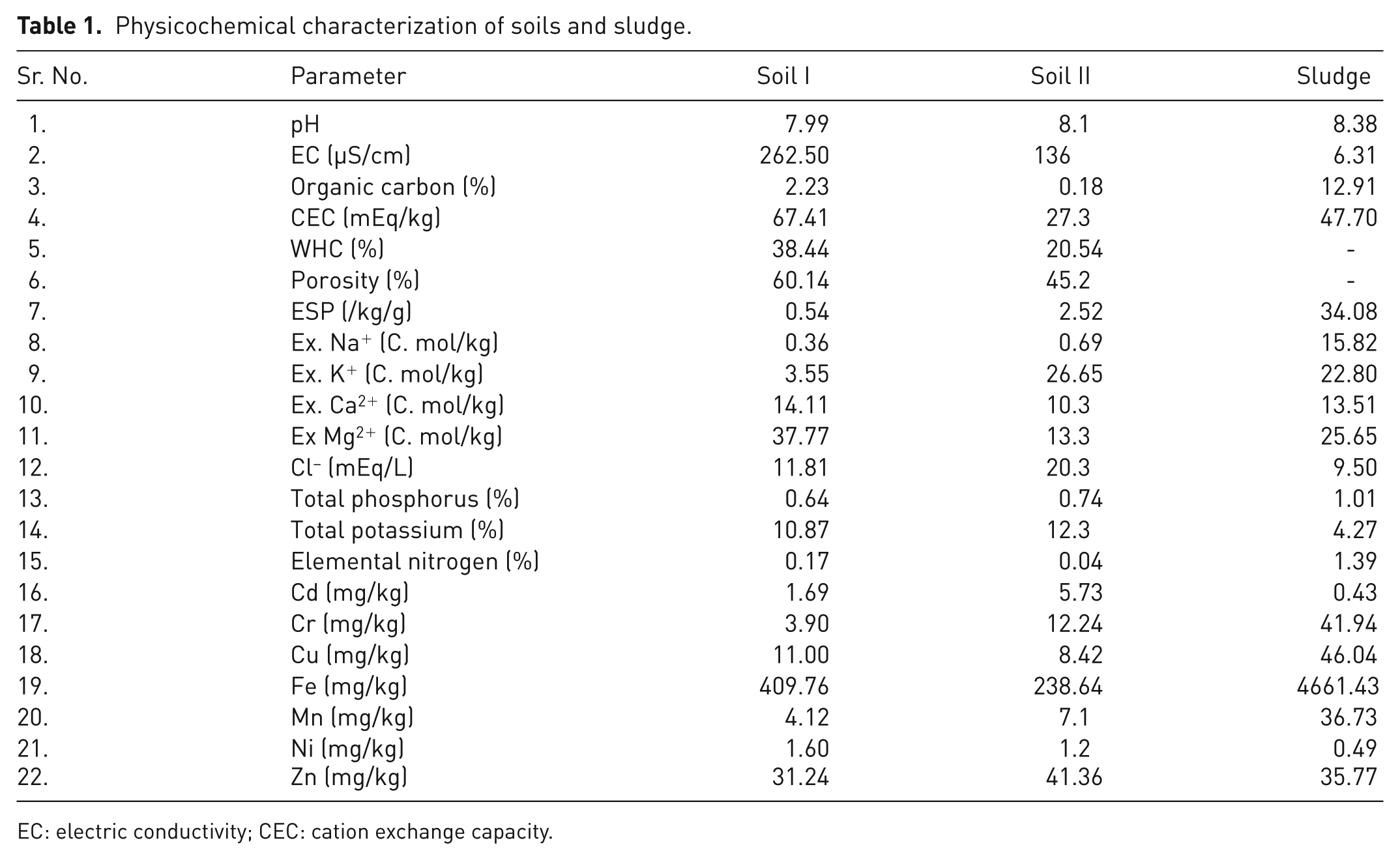
EC: electric conductivity; CEC: cation exchange capacity.
Lysimeter studies
This section presents the findings from lysimeter studies, encompassing the characterization of generated leachate and an evaluation of the feasibility of repeated application of sludge as soil amendment.
Characterization of leachate collected from the leaching columns
The COD, BOD3 and heavy metal analysis of leachate generated over a period of 25 days was monitored, and the observations are given in Figures 1 and 2. pH of the leachate varied in the range of 7.01–8.1 for soil I and was observed to fall in the range of 6.87–8.13 for soil II among all the administered sludge doses throughout the entire 25-day duration with the sludge dose of 1–8 MT/acre (2–19 MT/ha). An elevation in pH was consistently detected in all treatments with the progression of time, likely owing to the slightly alkaline characteristics of the sludge incorporated into the soil. Additionally, no relation was observed in the extent of pH change with the variation of distillery sludge doses. COD of the leachate was observed to increase up till day 7 and then slightly decrease thereafter, which could be due to the consistent irrigation. COD levels varied in the range of 55–430 mg/L across all the columns in soil I and 55–440 mg/L for soil II (Figure 1(a)). The high COD in leachate could be attributed to a complex mixture of factors like organic matter from the sludge which yields a diverse range of organic compounds, presence of various chemicals and contaminants (Cha-Um and Kirdmanee, 2011; Mojiri et al., 2021). The COD in the columns dosed with 1–2 MT/acre was observed to be lesser than that for the control column. The COD for 3 MT/acre sludge dose was observed almost identical to the control column, and its values were observed to go beyond the control value at higher doses. BOD3 levels also showed a similar pattern, wherein its level increased up till day 7 and thereby started decreasing with continued irrigation. BOD3 levels varied from 25 to 95 mg/L in soil I and from 25 to 100 mg/L in soil II (Figure 1(b)) among all the columns and its highest content was observed for the high dose of 8 MT/acre. As explained, the concentration of organic matter tends to be high in leachate generated from sludge, which is responsible for high levels of BOD3 initially, which eventually decreases upon constant irrigation (Noerfitriyani et al., 2018).
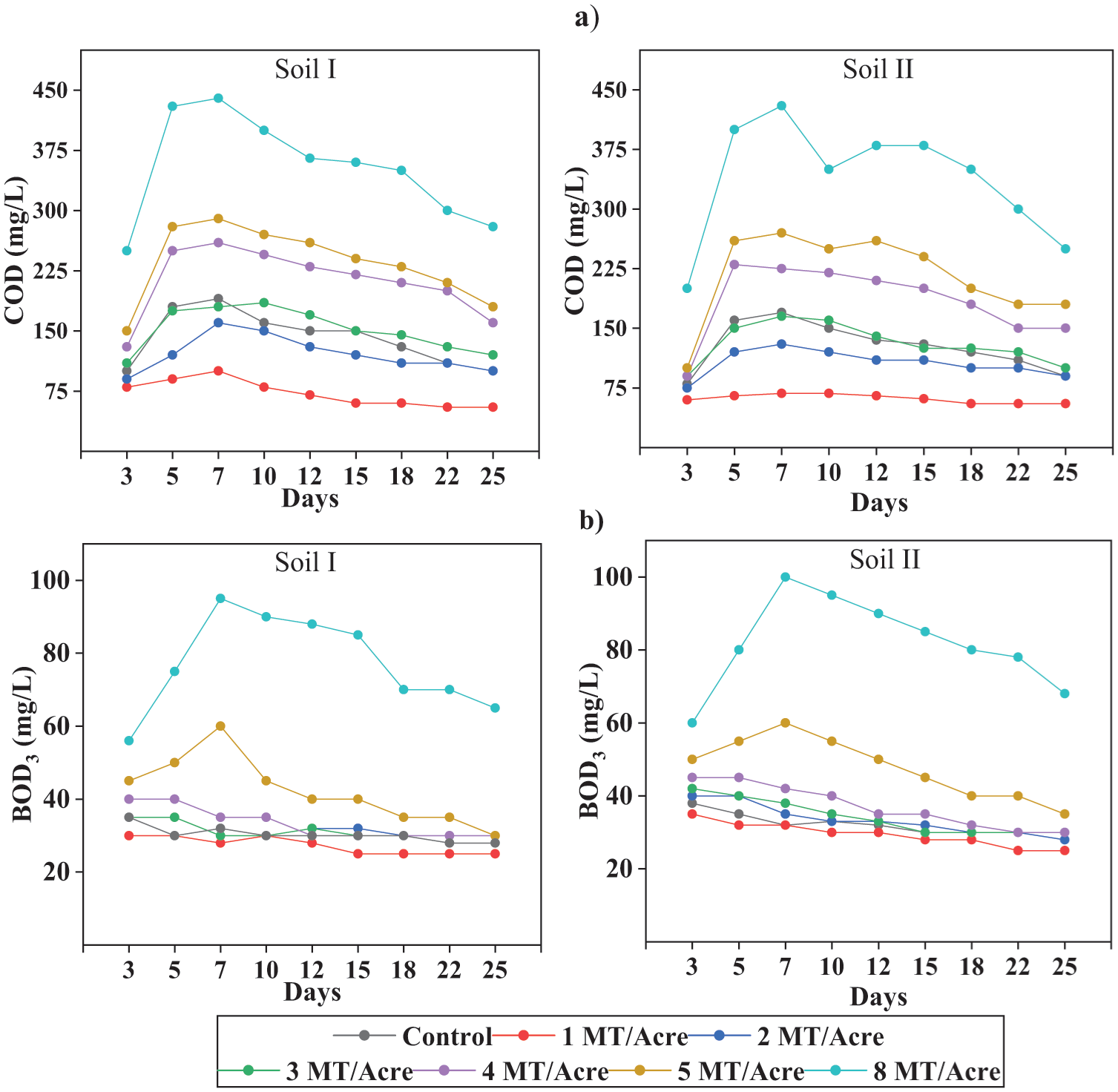
(a) COD and (b) BOD3 of leachate generated from the columns packed with soil I (agricultural soil) and soil II (waste land soil) amended with varying doses of sludge.
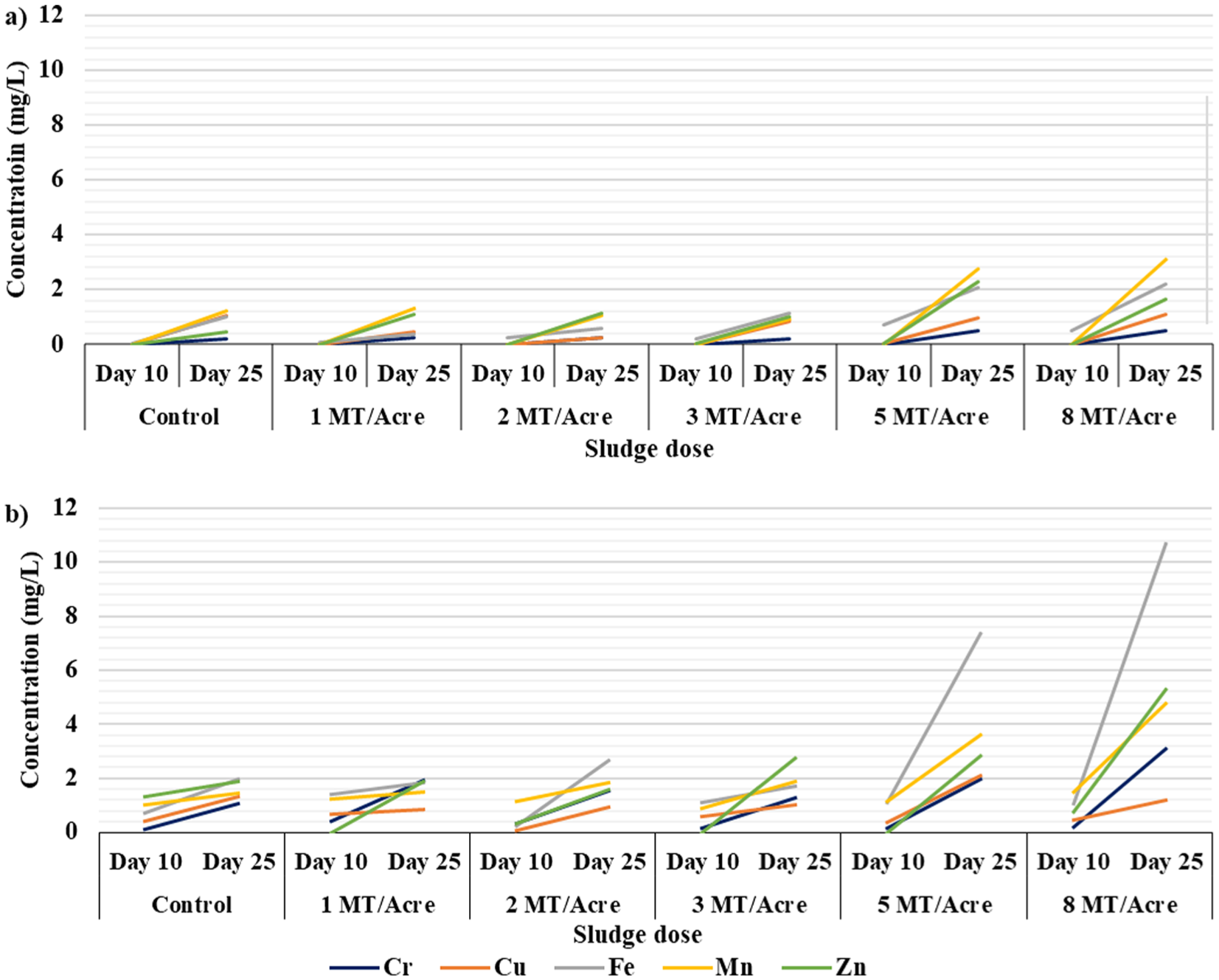
Variation in heavy metal concentrations of leachate from distillery sludge amended over a period of time in (a) soil I (agricultural soil) (b) soil II (waste land soil).
The heavy metal concentration was estimated for the leachate collected on days 10 and 25. Cd and Ni levels were observed to be below detection limits, whereas, the variation in levels of other heavy metals is shown in Figure 2(a) and (b) for soil I and soil II. The heavy metal concentration rose evidently as the dose of sludge increased beyond 3 MT/acre, which could be ascribed to the high concentration of heavy metals in the sludge applied to the soil and its dose increased, so did the concentration of heavy metals in leachate. In addition, the heavy metal levels were observed to be significantly higher in soil II in comparison to that in leachate from soil I, which could be attributed to the pre-existing occurrence of slightly higher levels of heavy metals in soil II. The concentrations of heavy metals in the samples collected on both day 10 and day 25 adhered to the regulatory standards set for both soil I and soil II. These findings indicate a low risk of heavy metal toxicity in the leachate, suggesting a promising potential for its use in the reclamation of soils. It can be concluded from above observations that the sludge dose equivalent to 3 MT/acre was observed to be the closest to the control treatment, and the levels of heavy metals were seen to rise significantly thereafter, rendering this dose to be the most suitable and was therefore used for the consequent repeatability study.
Repeatability study
pH of leachate generated from soil I (control) over a span of three cycles which lasted a total of 75 days varied from 7.10 to 7.98. Additionally, pH of leachate from soil I repeatedly amended with 3 MT/acre sludge dose varied from 6.85 to 7.90. The pH was seen to increase to a maximum value around days 50–60 and then decreased eventually. An initial increase and gradual decrease in the pH could be attributed to the buffering capability of soil which is aided by the addition of organic matter as has also been reported by various studies (Citak and Sonmez, 2005; Fu et al., 2022). The slightly alkaline nature of sludge could be responsible for the initial increase in the soil pH, which was later decreased due to the natural soil buffering, thereby altering the pH of the leachate accordingly. Similar results were obtained for soil II, as can be seen in Figure 3(a). COD of leachate generated from soil I (control) was observed to vary from 145 to 255 and 159 to 255 mg/L, for sludge-amended soil during the course of 75 days. For soil II COD leachate, levels were observed to vary in the range 205–278 mg/L for control treatment and 135–220 mg/L for sludge-amended soil during the 75-day cycle (Figure 3(b)). An increase in the COD could be attributed to the addition of organic matter and hence humic substances into the leachate which was aided by the addition of cow dung in the former as well as sludge in the latter (Kayaalp et al., 2010). BOD3 of leachate generated from soil I (control) over a span of three cycles was observed to be in the range 25–85 mg/L as can be seen in Figure 3(c), whereas for sludge-amended soil, BOD3 levels were in the range 30–120 mg/L. Similarly, for soil II, BOD3 levels were in the range 30–90 mg/L for control amended soil and 35–95 mg/L in soil amended with the recommended sludge dose of 3 MT/acre during the period of repeated application of treatments. This increased oxygen demand can be attributed to the addition of organic matter from the amended soils into the leachate.
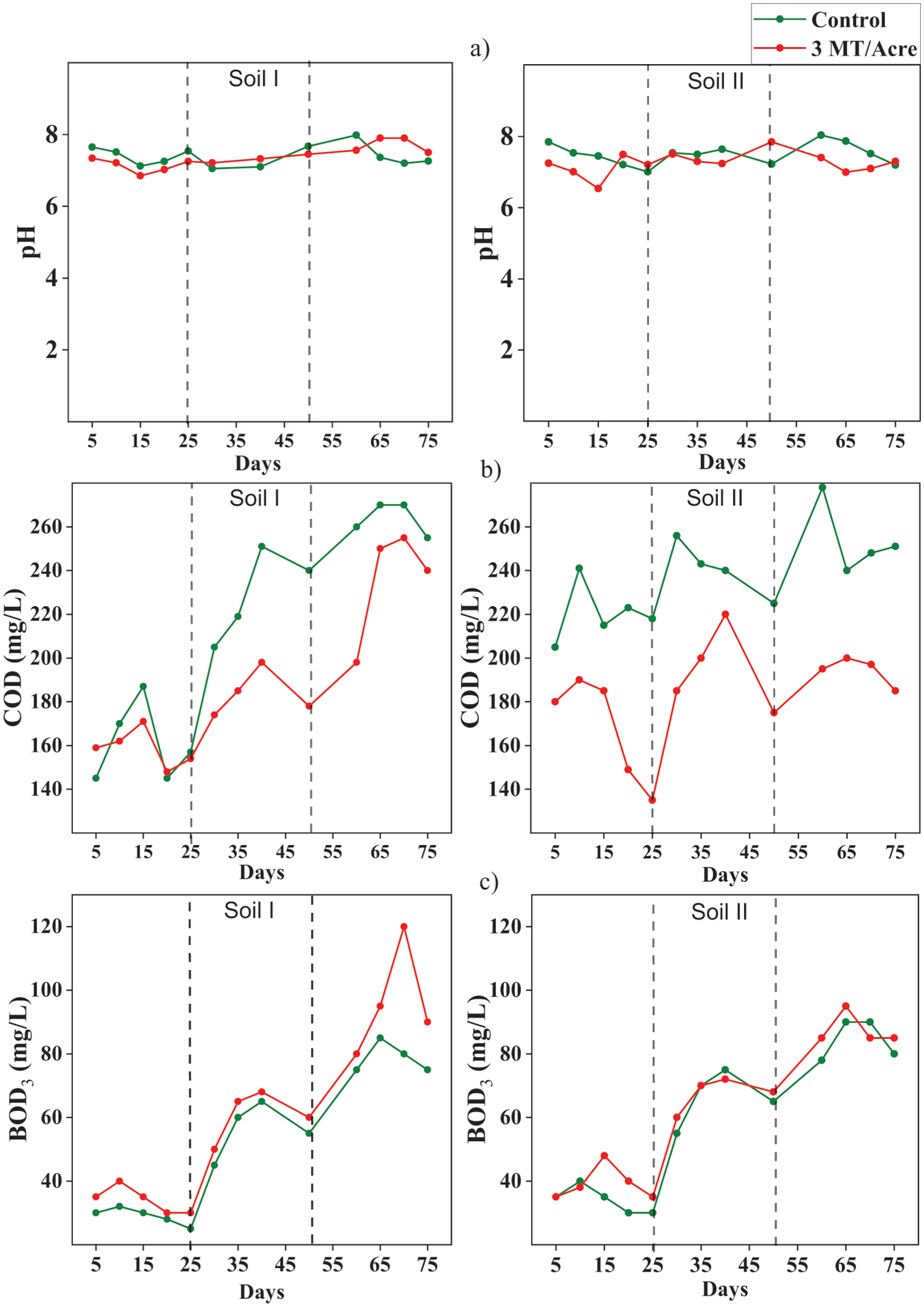
(a) pH, (b) COD and (c) BOD3 of leachate generated from the columns packed with soil I (agricultural soil) and soil II (waste land soil) amended with sludge dose of 3 MT/acre and control for three cycles.
Bench-scale study
The subsequent section details the outcomes of various attributes, encompassing chemical and microbial properties of soil and that of the leachate in the bench-scale study.
Characteristics of soil
Both soils exhibited a slight increase in alkalinity after sludge amendment, with a pre-amendment pH of 7.79–7.86 which was observed to change slightly and fall in the range of 7.34–8.43 post-harvest across the sludge doses 1–8 MT/acre. Organic carbon followed a similar pattern in soil I, increasing after amendment as the sludge dose increased from 1 to 8 MT/acre (2.23% to 2.59–4.65%) but then declining post-harvest (1.22–2.50%). Soil II showed a smaller and more persistent increase in organic carbon (0.18% to 0.39–0.67%). Exchangeable cations, like Sodium (Na), Calcium (Ca), Magnesium (Mg) and Potassium (K), were generally higher in soil I before amendment. After the amendment, both soils showed a slight increase in most cations compared to pre-amendment levels with increasing sludge dose which later decreased in post-harvest conditions in soil I and soil II. Phosphorus mirrored the organic carbon trend in soil I, rising after amendment with different sludge doses (0.59% to 0.58–2.89%) but then falling post-harvest (1.08–2.45%). Soil II showed minimal change in phosphorus throughout the experiment. Soil nitrogen responded differently between the two soils. Soil I saw a significant increase after amendment with sludge doses of 1–8 MT/acre (0.04% to 0.08–0.27%), wherein the maximum increase was observed for control with 0.27%, but returned closer to its baseline post-harvest (0.16–0.21%). Soil II showed a smaller initial rise in nitrogen (0.06–0.12%) that did not persist post-harvest (0.09–0.13%). No significant differences were observed in these soil properties between soils amended with different sludge doses and the control. Although crop removal during harvest naturally reduces soil nutrients like nitrogen, phosphorus and potassium (Hou, 2023; Pilli et al., 2018), the observed post-harvest decline in this study was less pronounced than typically expected. This suggests that sludge amendment, when implemented as part of an integrated nutrient management strategy, has the potential to partially offset nutrient losses caused by harvest. A detailed response of soil characters to different sludge doses in soil I and soil II is given in Supplemental Table S1.
Similarly, heavy metal content in soil I and soil II exhibited a dose-dependent response and has been presented in Supplemental Table S2. Both soils displayed a comparable trend across sludge application rates, with a significant decrease in post-harvest metal concentrations. The observed reduction can be attributed to two potential mechanisms. Firstly, the leaching of metals from the soil profile may occur due to sustained irrigation practices employed in sugarcane cultivation. Secondly, sugarcane root systems could contribute to the reduction through the uptake of metals, a phenomenon noted by various researchers who have obtained similar results (Eid et al., 2019, 2020). Overall, the levels of heavy metals were observed to be well within the permissible limits.
The overall soil microbial community displayed a distinct response pattern to sludge amendments (3 and 8 MT/acre), as measured by pre-amendment, post-amendment and post-harvest microbial counts (Figure 4). Initially, a slight decrease in microbial abundance was observed following sludge addition. However, post-harvest soils exhibited a recovery and increase in microbial populations. These findings suggest that sludge application may exert a short-term influence on soil microbial communities. However, over time, the continuous irrigation practices employed in sugarcane cultivation likely diminish the impact of the sludge dose on the soil microbial community (Liu et al., 2023; Zhen et al., 2014). Among the tested doses, 3 MT/acre showed minimal impact on microbial population when compared to the control, making it a suitable recommendation.
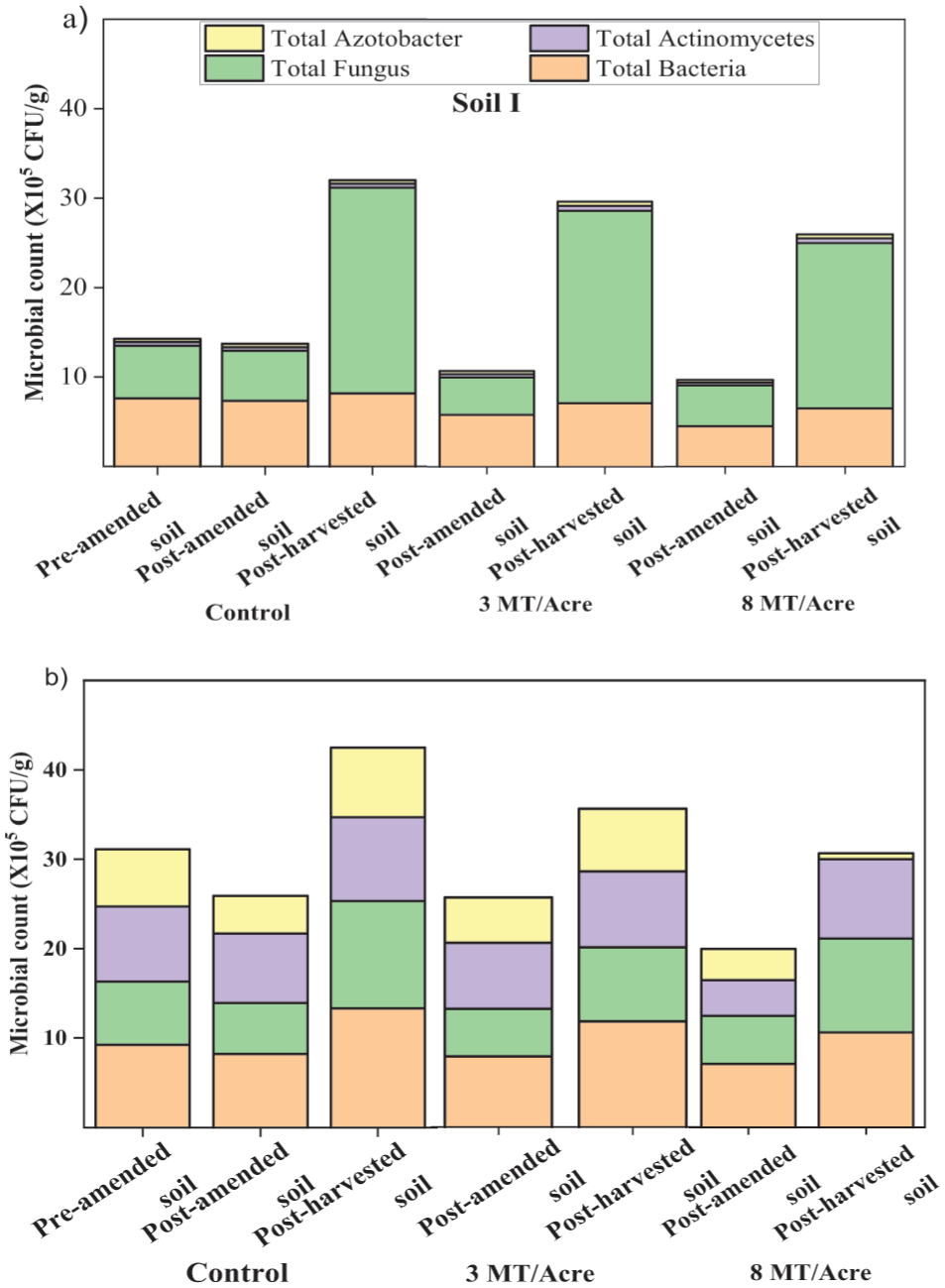
Variation in microbial count in bench-scale experimental set-up in a) soil I (agricultural soil) and b) soil II (waste land soil).
Characteristics of leachate
pH of leachate remained relatively constant throughout the monitoring period for both soil types at different sludge doses. The maximum recorded pH values were 8.92 and 8.97 for leachate from soil I and soil II, respectively, indicating slightly alkaline conditions. Leachate pH exhibited a gradual decline from 1st to 8th month in both soils. This observation could be attributed rains as well as irrigation practices which increase the net negative charges on clay particles, resulting in higher exchangeable cations and clay dispersion eventually leading to a reduction in soil pH (Ali et al., 2019; Guimarães et al., 2021).
Figure 5(a) depicts the COD of leachate collected from soil I and soil II at varying sludge application doses. A dose-dependent increase in COD was observed in both soils, with a maximum value of 160 mg/L recorded for the 8 MT/acre application in soil I. This trend reflects the release of readily degradable organic matter from the added sludge into the leachate (Yan et al., 2023). Over time, however, the COD values decreased in all treatments due to the combined effects of irrigation and rainfall. These processes promote the degradation of organic compounds present in the leachate, resulting in a decline in COD (Al-Omran et al., 2010; Condron et al., 2014). It is noteworthy that the COD values observed in the leachate from the pit experiment (conducted over 10 months) were significantly lower compared to those measured in the column study (lasting 25 days). This difference can be attributed to the extended duration of the pit experiment, which allowed for a more complete degradation of organic compounds in the leachate by soil microbial communities. The BOD3 results for leachate from various troughs are illustrated in Figure 5(b). The highest BOD3 values were observed in soil I and soil II at 5 MT/acre, reaching 35.52 and 43.45 mg/L, respectively. In soil I, control and sludge doses of 1–8 MT/acre showed BOD3 in the range of 28.65–35.52 mg/L in first month. Over time, BOD3 values decreased in both soil types due to plant root absorption and leaching from rain and continuous irrigation. This decreasing trend indicates minimal impact on groundwater quality (Noerfitriyani et al., 2018). In summary, the leachate BOD3 levels are negligible, posing no adverse effects on groundwater quality.
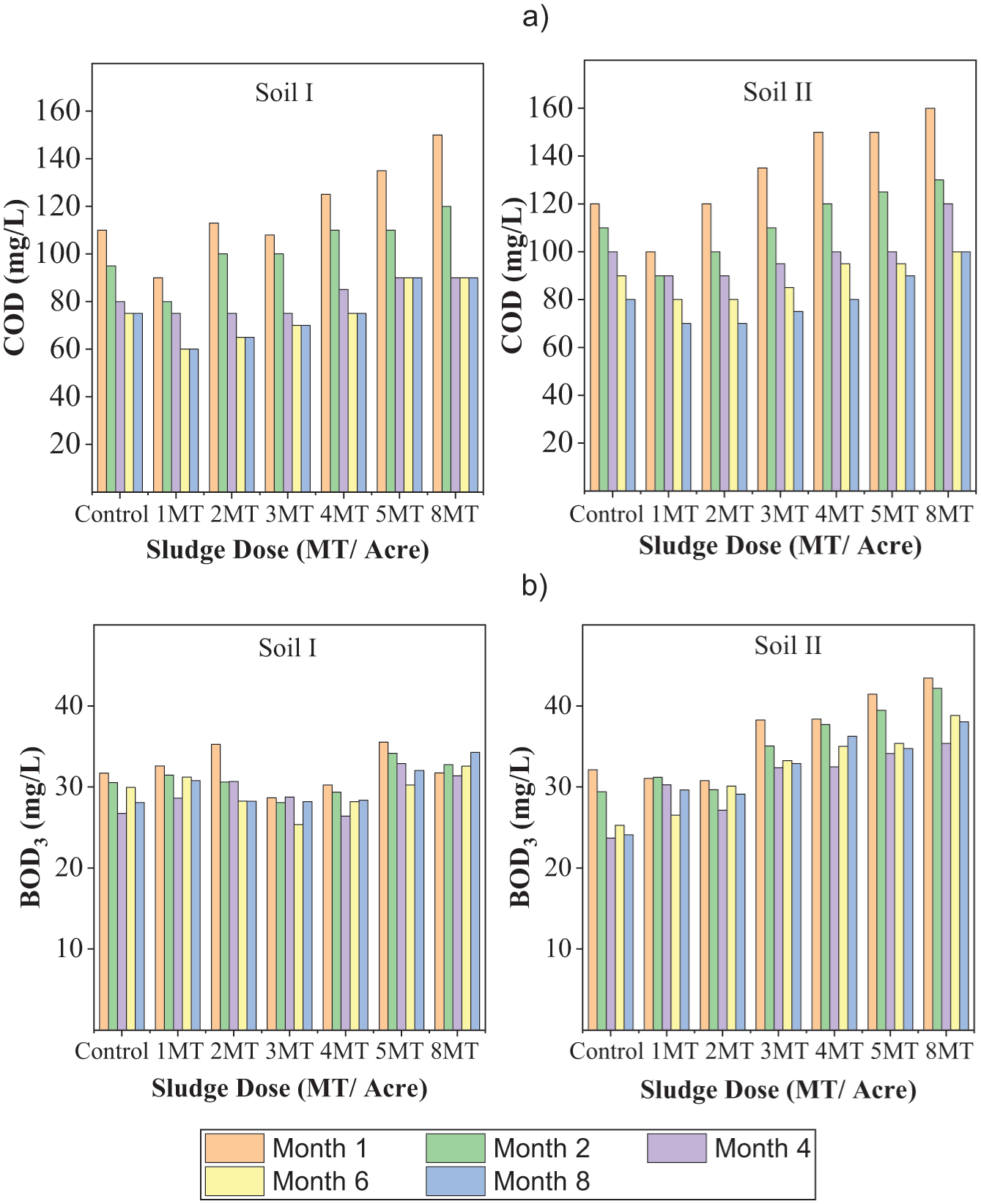
(a) COD and (b) BOD3 of leachate generated during the sludge application to soil I (agricultural soil) and soil II (waste land soil) in troughs.
The heavy metal content of the leachate sample collected from different troughs of soil I and soil II, as determined by the ICP-OES method showed significantly higher concentrations of Fe followed by Cd, Cu, Mn, Zn and Ni (Supplemental Figure S1) at different sludge doses. Chromium concentrations ranged from 0.11 to 0.15 mg/L in soil I and 0.14 to 0.23 mg/L in soil II. Copper levels were between 0.74–1.38 and 1.38–2.39 mg/L in soil I and soil II, respectively. Iron concentrations showed similar patterns, with a range of 2.86–3.48 and 2.78–3.48 mg/L in soil I and soil II, respectively. Manganese concentrations were much more variable, with levels undetectable (BDL) – 0.13 mg/L in soil I and 0.13–3.14 mg/L in soil II. Nickel ranged from 0.15 to 0.27 and 0.27 to 0.81 mg/L in soil I and soil II, respectively. Finally, zinc levels fell between 2.07 and 2.36 mg/L in soil I and increased to 2.36–4.78 mg/L in soil II. The analysis revealed that at different sludge doses (1–8 MT/acre), the leached heavy metals remained within acceptable limits. Although some variations occurred between soil types and sludge application rates, the overall levels were not a cause for concern.
Assessment of germination of sugarcane buds, leaf count and height of crop in amended soil
Vegetative parameters of the sugarcane crop grown in the bench-scale study were observed at 1–8 MT/acres sludge doses during the course of its growth. About 100% sugarcane bud germination was observed to be attained in an average time period of 40 days in soil I and 38 days in soil II for all the sludge doses. The average time period for bud germination at different sludge doses was observed to be at par with control, where it was observed after 41 days. It was observed that after 6 months of plantation of the buds, the number of leaves in all the pits were in the range 13–18 leaves per plant in soil I and 10–16 leaves per plant in soil II across all sludge doses as well as control. The height of the sugarcane plant was observed to be 86–96 inches in soil I and 68–90 inches upon maturity in soil II. A detailed response of the vegetative characteristics to different sludge doses is given in Supplemental Tables S3–S5. These results indicated that the foliar growth took place with almost same rate among all treatments and was comparable to control. Therefore, it may be concluded that the sludge used as an amendment had no adverse effect on the soil and in turn supported the healthy growth of the sugarcane by enriching the soil by providing essential organic and inorganic nutrients.
Assessment of sugarcane yield and juice quality in amended soil
Highest sugarcane yield of 69 MT/acre (170 MT/ha) was observed in the bench-scale units packed with soil I amended with 4 MT/acre and 66, 62, 57, 53 and 51 MT/acre yield was observed for 5, 3, 8, 2 and 1 MT/acre sludge dose, respectively. Yield of 65 MT/acre (160.6 MT/ha) was observed for control. Sugarcane yield in the bench-scale units packed with soil II amended with the various applications of sludge showed that the highest sugarcane yield of 39 MT/acre was obtained with sludge dose 4 MT/acre and sugarcane yields of 34, 28, 22, 19 and 14 MT/acre was observed with 5, 3, 2, 8 and 1 MT/acre sludge dose, respectively. Yield of 28 MT/acre was observed for control. The enhanced sugarcane production following sludge application indicates that nutrient absorption was stimulated in sludge modified soils and was not hampered by the nature of the sludge, resulting in improved productivity. The enhanced nutrient uptake efficiency may be because of the enriched soil with essential macro- and micronutrients, improving soil physicochemical properties and stimulating beneficial microbial activity (Curci et al., 2020; Li et al., 2024).
In the bench-scale study, sugarcane juice extracted from the pits exhibited increasing dissolved solids, sucrose content and purity up to a dose of 3 MT/acre, followed by a slight decline in these parameters. Dissolved solids were observed to be in the range 20.82–22.84% and 15.22–20.85% in soil I and soil II, respectively among sludge doses 1–8 MT/acre, and its value was observed to be 21.22% for control. Similarly, sucrose levels at different sludge doses were in the range 17.92–20.21% and 14.3–21.59% for soil I and soil II, respectively, whereas being 18.3% for control. Purity of sugarcane juice at sludge doses varying from 1 to 8 MT/acre was in the range 86.07–90.89% and 85.98–96.42% for soil I and soil II, respectively, and was observed to be 86.2% for control. An account of juice quality parameters at different sludge doses has been given in the Supplemental Table S6. It is noteworthy that the fruit juice quality was observed to be superior in case of 3 MT/acre dose in soil I, whereas 5 MT/acre dose in soil II.
Overall, the sugarcane crop quality was observed to be better in soil I in comparison to soil II. This can largely be attributed to the nutrient deficiency in soil II, owing to its origin. Similar studies by Adhikary (2014), Chandra et al. (2008), Mishra et al. (2021), and Tripathi and Tripathi (2014) have encouraged use of sludge in regulated doses for the reclamation of problem soils and increasing crop productivity.
Yield of sugarcane in field experiment
The yield of sugarcane was observed to be 24.4 and 26.3 MT/acre for field amended with control (FYM at 5 MT/acre) and sludge (3 MT/acre), respectively. The higher sugarcane production in the sludge-amended plot, despite using less sludge (3 MT/acre) compared to the control (5 MT/acre), might be due to the fact that because the sludge plot was located in the middle, it did not experience crop loss from bunds, unlike the other plots. Additionally, as per analysis the sludge has higher levels of potassium and phosphorus, which are crucial nutrients for sugarcane growth, compared to the control, which increased the productivity evidently (de Albuquerque et al., 2016; Elephant et al., 2023; Kadarwati, 2020). Additionally, the brix%, pol% and purity% for sugarcane produced in control (FYM at 5 MT/acre) amended soil were 21.42%, 18.62% and 86.92%, respectively, whereas that for sludge-amended soil (3 MT/acre) was 22.68%, 20.85% and 91.93%, respectively. As indicated by the data, the values for juice quality parameters demonstrated minimal differences between the amendments. This suggested that applying 3 MT/acre of sludge in the field for sugarcane cultivation does not have any adverse impact on the crop.
Conclusion
The findings of this study demonstrated a high potential of distillery sludge for soil reclamation and increasing crop productivity due to the nutrient-rich nature of the sludge. A dose of 3 MT/acre (7.4 MT/ha) was observed to be the best for application to soil as in addition to increasing crop productivity and soil fertility, the leachate generated form it also had acceptable levels of heavy metals. However, the presence of heavy metals in the sludge restricts its repeatability and is advised to apply only once. Furthermore, the agricultural application of sludge at a restricted dosage is encouraged as sugarcane fruit quality as well as biomass yield was observed to be at par with the conventional FYM dosage.
Supplemental Material
sj-docx-1-wmr-10.1177_0734242X261461014 – Supplemental material for Exploration of the potential of distillery sludge for sustainable agricultural application
Supplemental material, sj-docx-1-wmr-10.1177_0734242X261461014 for Exploration of the potential of distillery sludge for sustainable agricultural application by Apurva Sharma, Nitesh Machhirake, Divyani Mishra, Sunil Kumar and Bholu Ram Yadav in Waste Management & Research
Footnotes
Acknowledgements
The authors are thankful to the Director, CSIR–National Environmental Engineering Research Institute (CSIR–NEERI), Nagpur, India for facilitating the activities.

Author contributions
Funding
The authors received no financial support for the research, authorship, and/or publication of this article.
Declaration of conflicting interests
The authors declared no potential conflicts of interest with respect to the research, authorship, and/or publication of this article.
Data availability statement
Data will be made available on request.
Supplemental material
Supplemental material for this article is available online.
References
Supplementary Material
Please find the following supplemental material available below.
For Open Access articles published under a Creative Commons License, all supplemental material carries the same license as the article it is associated with.
For non-Open Access articles published, all supplemental material carries a non-exclusive license, and permission requests for re-use of supplemental material or any part of supplemental material shall be sent directly to the copyright owner as specified in the copyright notice associated with the article.
