







Abstract
This study details the development of the “Classroom Touch Concern Scale” (CTC), which was designed to measure individual differences among teachers regarding their feelings of concern when touching students in the classroom. The CTC incorporates two correlated dimensions: CTC associated with touching students of the same gender and CTC associated with touching students of a different gender. Studies 1 through 7 used various samples of university faculty and high school teachers to investigate the CTC with regard to item development, dimensionality, construct validity, linguistic validity, predictive validity, discriminant validity, and convergent validity. The results showed that the CTC has high internal consistency reliability and an acceptable to good construct validity, a good discriminant and convergent validity, linguistic validity, and predictive validity. We discuss the practical implications and limitations of using the CTC.
Introduction
The importance of the sense of touch cannot be underestimated within interpersonal communication. Touch is the first sense to develop during human gestation, occurring before the eighth week (Bernhardt, 1987). Neuroscientific research finds that a slow stroking of the skin within a velocity range of 1 to 10 cm/s induces the highest subjective perception of pleasant touch (McGlone et al., 2012). Interpersonal touch may modulate people’s compliance (Joule & Guéguen, 2007), affect attitudes (Erceau & Guéguen, 2007), and play a significant role in romantic and sexual relationships (Frohlich & Meston, 2005). The values of touch seem reasonably extended within interpersonal communication to the specific context of classroom instruction/teaching (e.g., being touched by a teacher). One study showed that students’ evaluations of the library were more favorable if the library clerk “accidentally” touched them (Fisher, Rytting, & Heslin, 1976). More directly, touching only students’ forearms by the teacher during a course exercise increased volunteer rates (Guéguen, 2004). Students who were touched during a conference showed better performance on the next course examination than untouched students (Steward & Lupfer, 1987).
Despite the potential power of a teacher’s touch, a teacher who wants to touch a student may feel stifled by profound social concerns. People may feel that embarrassing communication situations are caused by ambiguous rules regarding who is supposed to touch whom, how, where, and in which situations (Jourard, 1966), and all of these rules may be sources of social concern for teachers. In the classroom, the proliferation of social concerns regarding touch has resulted in many teachers being afraid to display physical affection (Power, 2009). For example, if a teacher’s touch is experienced as offensive, intrusive, threatening, or abusive by the receiving student in a classroom, then the teacher must avoid touching the student in that situation. This avoidance might lead the teacher to avoid touch in general classroom teaching conditions. To address teachers’ touch concerns and develop the potential benefit of touching in the classroom, a tool that considers touch concern must be developed. In fact, numerous tools have been developed to measure touch within general interpersonal communication, such as the Comfort with Interpersonal Touch Scale (Webb & Peck, 2015), the Social Touch Questionnaire (Vieira et al., 2016; Wilhelm, Kochar, Roth, & Gross, 2001), and the Touch Anxiety Scale (Fuller et al., 2011). However, these scales have not considered who initiates the touch between teachers and students in the classroom context.
Before developing a scale to examine teachers’ initiation of touch, three major issues should be noted. First, the distinction between being touched by students (receiving touch) and touching students (initiating touch) should be discussed (Webb & Peck, 2015). In general, the teacher is considered the students’ elder. Within traditional Confucian culture, it is considered extremely impolite for a student to initiate touching his or her teacher. Thus, initiating touch should be given greater weight in the study of classroom touch. Second, the gender of both the students and the teachers should be considered. Touch is often considered a potential threat to student safety in the case of sexual abuse (Mazur & Pekor, 1985). Thus, a teacher’s touch might be considered a highly risky and even abusive form of behavior. Teachers, particularly men, are often confused about when, whom, and where to touch (Appleton, 2008). A study to test perceptions of appropriateness regarding touch types between students and professors suggested a gender difference in which the least appropriate combination was a male professor touching a male student (Sanderson & Jorgensen, 1997). Third, the areas of a student’s body that a teacher can touch are an issue of concern. Barnlund (1975) found that the hands, arms, and shoulders of Japanese participants had a more than 51% likelihood of having been recently touched by participants’ friends of both the opposite and the same sex as well as by participants’ mothers and fathers. Within a classroom context among Chinese students, any part of the female body touched by male teachers might prompt serious criticism; by contrast, it might be considered appropriate for a female teacher to touch certain parts of a male student’s shoulder or hand. These nuances concerning where, whom, and how to touch may offer insight into why students hold negative beliefs about being touched by their teachers (Wilson, Stadler, Schwartz, & Goff, 2009).
This study focuses on the situation in which a teacher initiates touching of his or her students in the classroom. The study develops a scale to examine individual differences among teachers with regard to their concern about initiating touch. We pay particular attention to the congruence between student and teacher genders and instruct teachers to touch parts of a student’s body unrelated to sex.
Development of the Classroom Touch Concern Scale (CTC)
Conceptual Development
People respond differently to touching people or things because of the highly emotional meaning of touch. Regarding touching things such as products, many people may desire the pleasure of touching the product or may want to touch the product to ascertain the quality of their purchase (Peck & Childers, 2003). However, in the case of touching people, a person’s response may be conditioned by different relationship types. In a love relationship, individual attachment styles may influence feelings of enjoyment or nervousness about touching a partner (Simpson, Rholes, & Nelligan, 1992). People with secure attachment styles may enjoy touching their partners to express love, whereas people with avoidant styles may be highly anxious about touching their partners to avoid expressions of love. Regarding touching in the workspace, an initiated touch may be understood as offensive, intrusive, or even threatening. Thus, to a certain extent, touching behavior contains an emotional or perceptional element. In the classroom, however, it is difficult for a teacher to maintain a balance between touching students for potential academic benefits and not touching students to avoid possible negative consequences. Therefore, teachers avoid taking the initiative to touch a student because they are concerned about negative consequences. Accordingly, CTC is defined as a teacher’s concern about touching students in the classroom while teaching. To avoid the impression of psychological illness associated with the term “anxiety” and to match the original meaning of the concept in this study, the more neutral term “concern” was adopted. Touch concern in the classroom denotes the apprehensive perception and feelings of concern about a possible consequence regarding touching students. Concerns may include serious perceptions and highly concerned feelings regarding the potential consequences of touching students while teaching. We believe that teachers’ CTC essentially depends on their perceptions and concerns about the possibility of negative consequences from touching students in the classroom.
Method
Sample
The sample comprised students above the age of 16 years. Most students were in high school or enrolled in a university and considered legal adults according to Chinese law. For a teacher instructing students below the age of 16 years (i.e., students who are in kindergarten, junior, and primary schools), touch concerns include legal considerations. By contrast, for a teacher of high school and university students, CTC may only be related to conveying a negative impression. Thus, formal samples were selected from teachers of high school and university students.
Data collection
All high school teachers who participated in the study were recruited from a large-scale educational master’s program for high school teachers. All university teachers who participated in the study were recruited from the Teacher Human Resources Offices of three universities.
Data analysis
Exploratory factor analysis (EFA) with an oblique rotated principal component extraction method was used to examine the one- or two-factor structure of the scale. A confirmatory factor analysis (CFA) was conducted to confirm the two-factor structure. ANOVA and correlation analysis were used to examine linguistic validity, discriminant and convergent validity, and predictive validity based on different samples. See Table 1 for information on the samples and the different purposes they served in the study.
Samples of Data Used for Scale Development.
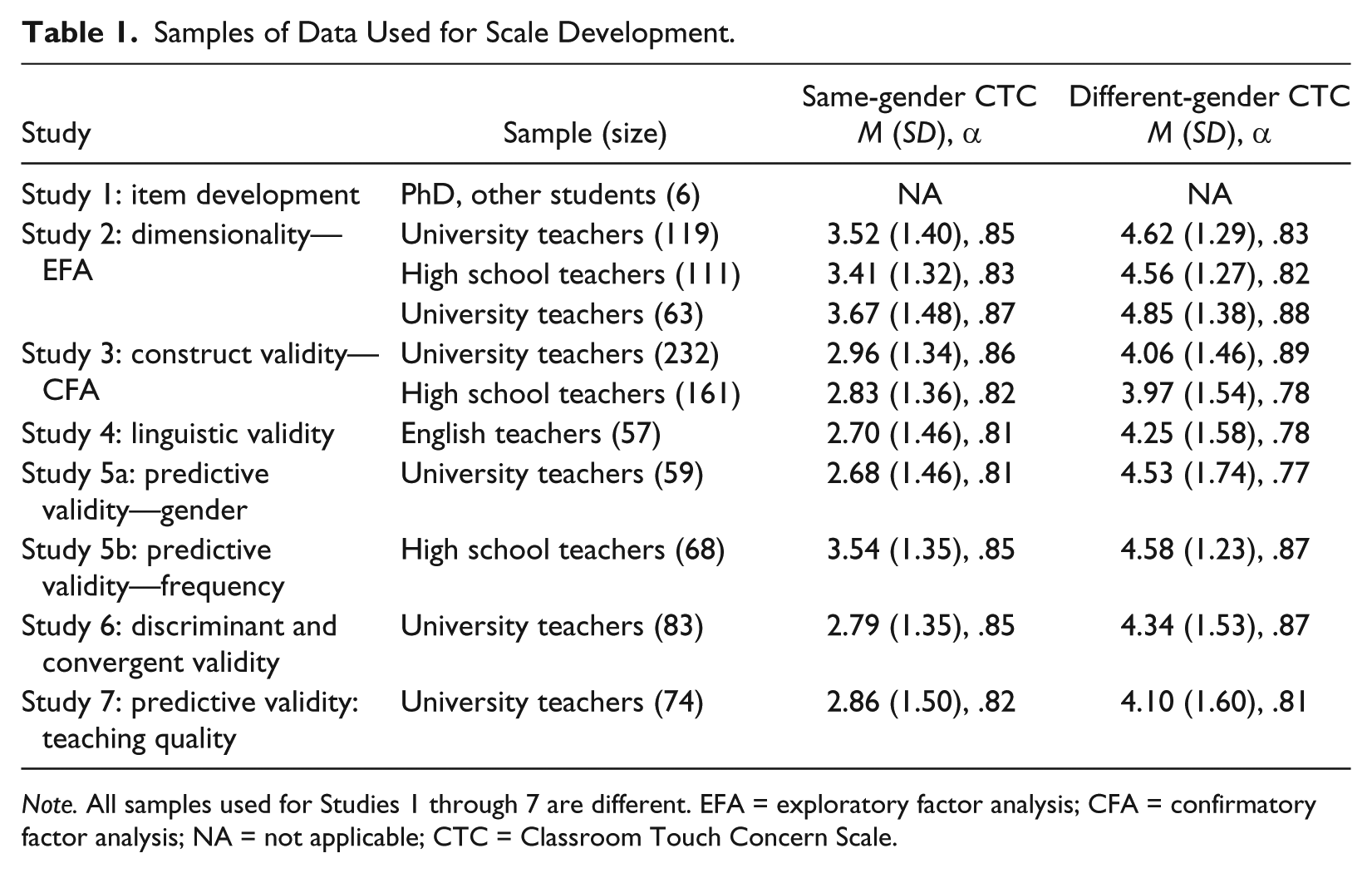
Note. All samples used for Studies 1 through 7 are different. EFA = exploratory factor analysis; CFA = confirmatory factor analysis; NA = not applicable; CTC = Classroom Touch Concern Scale.
Study 1: Item Development
An item pool was generated to capture the conceptual construct of the CTC. Item generation was performed in three steps: modifying the items of Fuller et al. (2011), referring to items related to social touch anxiety, and using the self-development items constructed by undergraduates based on the construct definition. The authors checked all the items; items that did not clearly represent the construct were discarded. Fifteen items were created. The CTC construct was measured using a 7-point Likert-type scale (7 = “strongly agree” and 1 = “strongly disagree”), which provides a more accurate measure of a participant’s true evaluation (Finstad, 2010). Three judges (a PhD in psychometrics, a graduate student, and an undergraduate student), who were told that the permitted touched positions were limited to certain parts of the body that were not associated with sex, such as head/hands/shoulder/arms within the classroom context, assessed the content validity of the 15 items. The judges were then asked to classify the statements as “applicable” or “not applicable” according to the following standards: the classroom context, the teacher’s concern about touching the student, and the gender of the teacher and the student. The “not applicable” sample items included, “I often shake a student’s hand before class begins.” For inclusion, the judges had to categorize the items, which left 11 items. The remaining items were given to three other judges who assessed the representativeness of all items using the same procedure. This process eliminated two additional items, and one item was deleted for redundancy, leaving 8 items for formal analysis. Based on the gender congruence between teacher and student, the remaining 8 items were doubled to create two theoretical dimensions: same-gender CTC and different-gender CTC. The sample item stated, “Regarding students of my gender/a different gender, I hesitate to touch a student in the classroom while teaching because the student may experience my touching as intrusive.”
Study 2: Dimensionality—EFA
Two samples were used for the EFA. Sample 1 consisted of 119 university teachers (56% males, mean age = 37.6 years). Sample 2 consisted of 111 teachers from four high schools in one city (63% females, mean age = 26.2 years). Using the university teachers from Sample 1, corrected item-to-total subscale correlations less than .50 were removed (Bearden, Netemeyer, & Teel, 1989). This process reduced the items to 7 for each dimension. Given that the questionnaire dimensions should be allowed to correlate conceptually to a certain extent, EFA using principal axis factoring with an oblique rotation and the default value of delta(0) was performed. The two factors associated with eigenvalues of more than one were retained. A competing one-factor model was tested to compare the model’s fit. Three items were eliminated with high loading values (>.30) on the two dimensions. The remaining four items (see Appendix) were subjected to the same analysis. The results are reported in Table 2. A two-factor model was compared with a one-factor model; the latter performed worse in terms of the total variance explained, with a sharp decrease from 69.83% to 50.86% for the university teacher sample and from 58.09% to 39.78% for the high school teacher sample.
EFA: Factor Loadings.
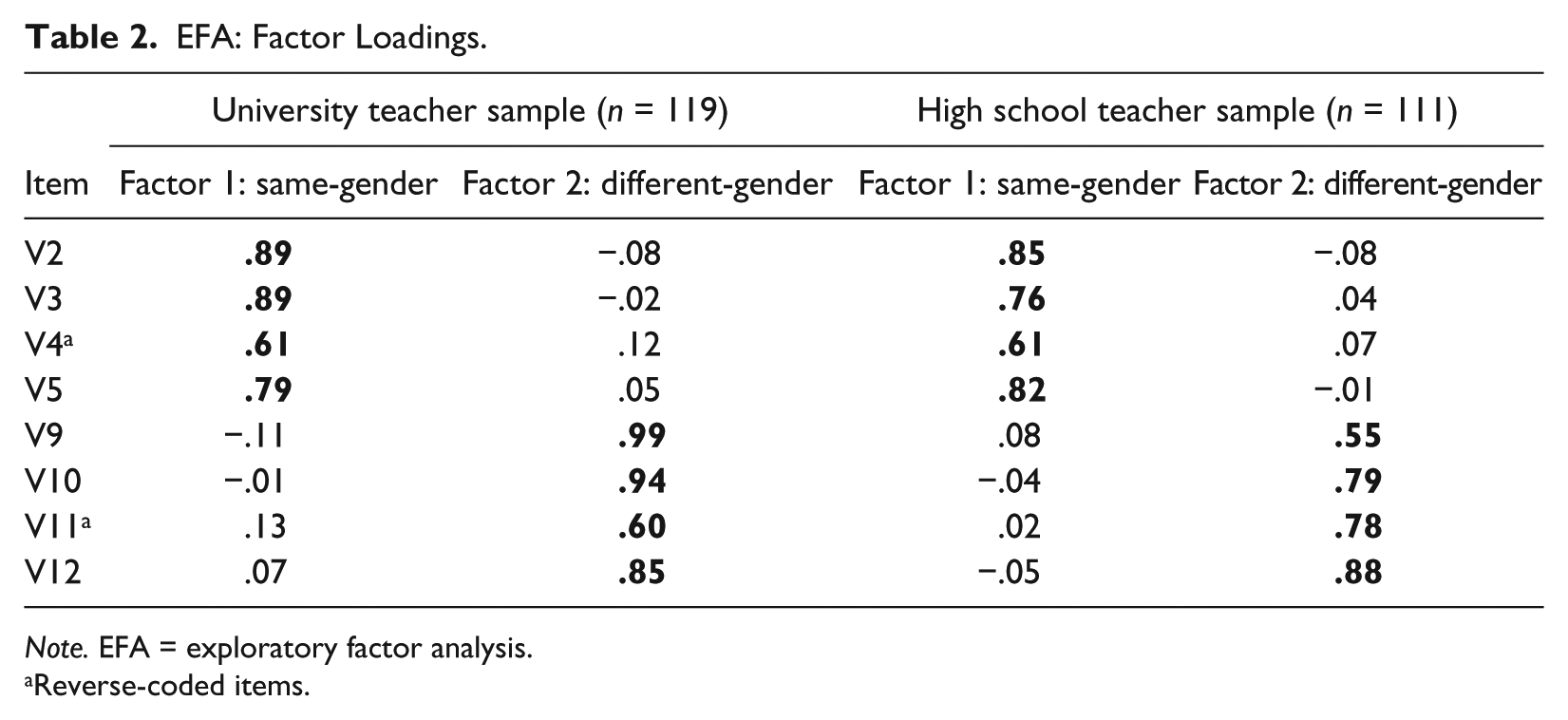
Note. EFA = exploratory factor analysis.
Reverse-coded items.
To eliminate the possibility that the original findings were due to chance, additional data were collected from 63 university teachers to assess the reliability of the CTC. The same-gender CTC dimension (α = .87) and the different-gender CTC dimension (α = .88) showed high alpha coefficients, indicating high internal consistency reliability. Overall, the results of Study 2 preliminarily confirmed a two-factor structure that was further tested through CFA.
Study 3: Construct Validity—CFA
Two samples were used for the CFA. Sample 1 consisted of 232 university teachers (54% males, mean age = 40.2 years). Sample 2 was composed of 161 high school teachers (58% females, mean age = 24.6 years). The two-factor model was further tested by fitting the CFA model to the variance–covariance matrix using LISREL statistical software. We tested both the one- and two-factor models. The former failed fit tests for both the university teacher sample, χ2 = 578.50, df = 20, p < .001, normed fit index (NFI) = .67, nonnormed fit index (NNFI) = .55, comparative fit index (CFI) = .68, incremental fit index (IFI) = .68, relative fit index (RFI) = .54, goodness of fit index (GFI) = .61, adjusted goodness of fit index (AGFI) = .31, root mean square error approximation (RMSEA) = .258, standardized root mean square residual (SRMR) = .17, Akaike information criterion (AIC) = 681.65, and the high school teacher sample (χ2 = 567.12, df = 20, p < .001, NFI = .55, NNFI = .47, CFI = .56, IFI = .45, RFI = .47, GFI = .57, AGFI = .38, RMSEA = .22, SRMR = .19, AIC = 509.72), whereas the latter model performed well on various fit indices for both the university teacher sample (χ2 = 92.90, df = 19, p < .001, NFI = .95, NNFI = .95, CFI = .96, IFI = .96, RFI = .93, GFI = .92, AGFI = .90, RMSEA = .082, SRMR = .069, AIC = 116.90) and the high school teacher sample (χ2 = 87.54, df = 19, p < .001, NFI = .94, NNFI = .92, CFI = .93, IFI = .94, RFI = .91, GFI = .90, AGFI = .88, RMSEA = .086, SRMR = .073, AIC = 121.54). RMSEA and SRMR values close to .07, an NNFI value ≥.92, and a CFI value ≥.93 indicate good fits (Bagozzi & Yi, 2012), as do cutoff values close to .95 for CFI, .08 for SRMR, and .06 for RMSEA (MacKenzie, Podsakoff, & Podsakoff, 2011). Thus, the CFA results suggest an acceptable to good-fitting model that preliminarily supported the two-factor structure (see Figure 1).
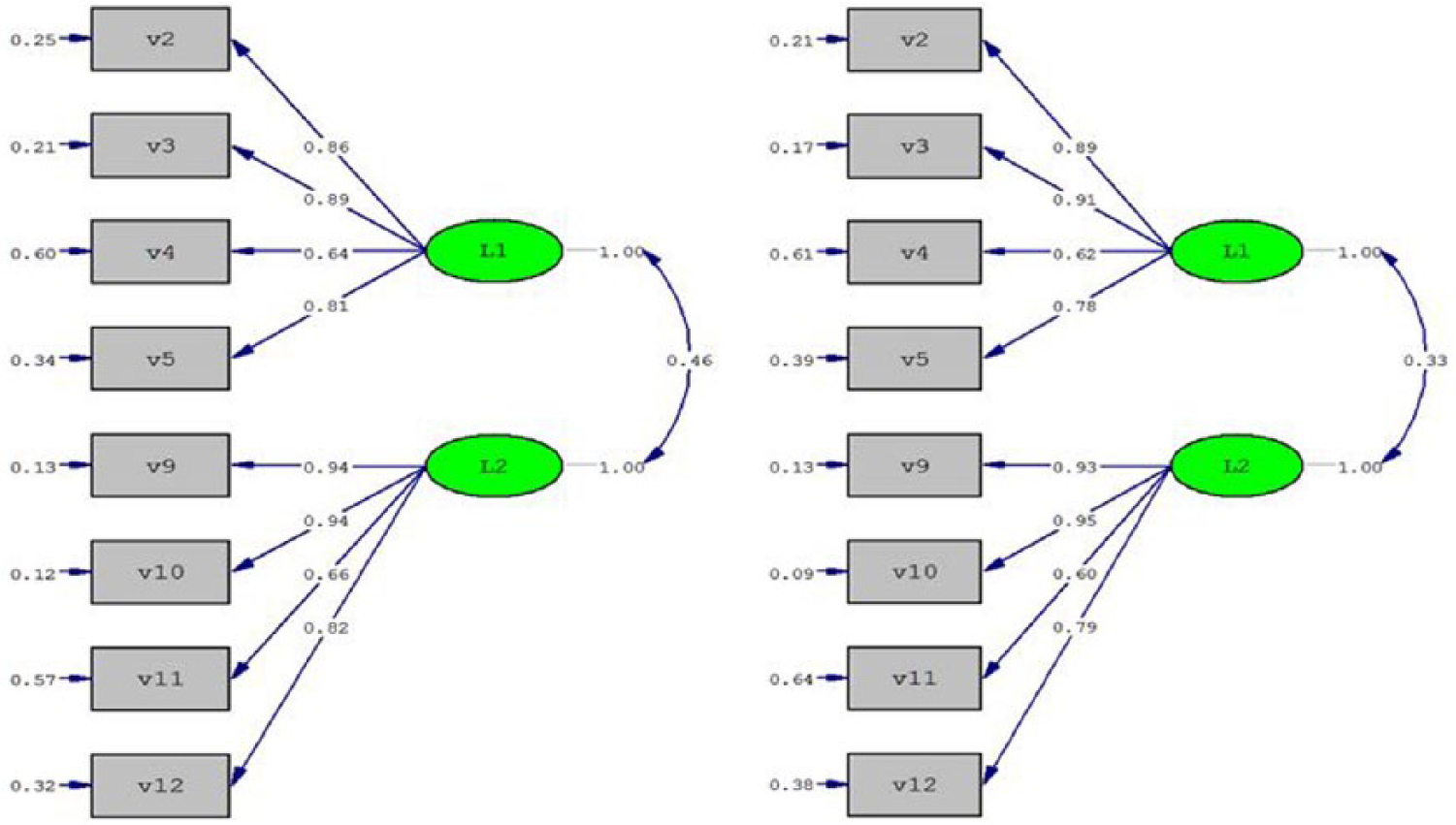
Results of the CFA for the samples of university teachers (left) and high school teachers (right).
Study 4: Linguistic Validity
Because the items originate from the Chinese culture, the statements must be made compatible with the culture to which they are adapted (i.e., Western culture). To apply a scale to another culture, the equivalence of a newly translated item is determined through an iterative process of creating harmonized forward and backward translations. The translation must be psychometrically tested to establish the validity, reliability, and responsiveness of the measures in the target language (Gawlicki, Reilly, Popielnicki, & Reilly, 2006). Therefore, all the items were examined by 57 university English-language teachers using a bilingual group design. Forward and backward translations of the scale into English were performed. Five graduate students in educational psychology translated all the items into English. These students were highly proficient in English and had undergraduate majors in English. An associate professor of British and American literature performed the back translation. The results of a correlation analysis showed a significant positive relationship between the subdimensions of same-gender CTC (r = .82, p < .01) and different-gender CTC (r = .77, p < .01). The item-to-item correlations ranged from .74 (p < .01) to .89 (p < .001). The results suggested that the English items were sufficiently satisfactory to represent the original Chinese items.
Studies 5a and 5b: Predictive Validity—Gender and Frequency of Actual Touching
Gender is an important factor for understanding interpersonal touch during classroom teaching. First, different-gender combinations might predict different touch frequencies. Touch is higher among female college students than among male college students (Willis, Rinck, & Dean, 1978). Moreover, women report feeling more positive about same-gender touch (Willis & Rawdon, 1994) and anticipate strong adverse effects from receiving gentle or forceful opposite-gender touch; however, men anticipate nearly no negative consequences resulting from being touched by a female acquaintance (Struckman-Johnson & Struckman-Johnson, 1993). Same-gender dyads tend to touch more than opposite-gender dyads, particularly, when the dyads are unlikely to be intimate (Stier & Hall, 1984). Thus, we assumed a nonsignificant mean difference for same-gender CTC and a significant mean difference for different-gender CTC among both female teachers and male teachers. Using a sample of 59 university teachers (Study 5a), the results of the ANOVA showed that the main effect of gender on same-gender CTC was not significant, F(1, 57) = 0.408, p = .526 > .05, suggesting that male teachers expressed the same level of CTC as their female counterparts within same-sex dyads. However, the result revealed a significant main effect of gender on different-gender CTC, F(1, 57) = 7.623, Mmale–female = 1.19, p = .008 < .01, indicating that in the case of different-gender dyads, male teachers in different-gender dyads feel greater concern about the possible negative consequences of initiating touch in the classroom than female teachers. Overall, gender was related to the teacher’s level of concern with regard to initiating touch, particularly, among male teachers, who tended to feel greater concern about touching than their female counterparts.
According to the definition of CTC, we predict that when a teacher has greater concerns about initiating touch with his or her students, the teacher will initiate touch with students at a lower frequency and fewer times. Thus, a significantly negative correlation between same-gender/different-gender CTC and the frequency/times of initiated touching with a same-gender student/different-gender student may be observed. Using a sample of 68 high school teachers (Study 5b), we tested the predictive validity of the same-gender CTC and the different-gender CTC for the actual touching behavior of the same- and different-gender students. The actual touching behavior was examined with four items describing the frequency and number of touches initiated by teachers in the classroom in the last week or within the most recent 2 working days. Participants were asked to indicate, “In last week’s teaching activities in the classroom the frequency with which your hands and other body parts take the initiative to touch your same-gender student/different-gender student” on a 0 to 4 scale (0 = “not at all,” 1 = “slightly,” 2 = “moderately,” 3 = “very,” and 4 = “extremely”). They were also asked to respond to the prompt: “In your teaching activities in the classroom during the previous two working days, the times your hands and other body parts take the initiative to touch your same-gender student/different-gender student.” As predicted, Pearson’s correlations revealed four significant negative relationships between same-gender CTC and the frequency of touching (r = −.42, p < .01) and the number of times (r = −.29, p < .05) that teachers took the initiative to touch a same-gender student and between different-gender CTC and the frequency of touching (r = −.50, p < .01) and the number of times (r = −.39, p < .01) that teachers took the initiative to touch a different-gender student. This finding shows that CTC has a relatively strong predictive validity, at least for gender and the frequency/number of times of actual touching.
Study 6: Discriminant and Convergent Validity
CTC was examined using scales related to social interpersonal touch, including the CIT-initiating and STQ scales. The CTC was examined using general social interpersonal anxiety scales, including the Social Interaction Anxiety Scale (SIAS) and the State-Trait Anxiety Inventory (STAI). We used a sample of 83 university teachers to assess the discriminant validity of CTC. The CIT scale was designed to measure individual differences in interpersonal touch tendencies and preferences. In this study, we tested only the correlation of CTC with the CIT-initiating dimension. A typical item of the initiating dimension is the statement: “I feel more comfortable initiating touch than most people” (Webb & Peck, 2015). We predicted a significant negative relationship between CTC and CIT-initiating because CTC reflects concerns about how and whether to touch students. The STQ assesses the behaviors and attitudes with respect to social touch in studies of college students with social anxiety. This questionnaire consists of 20 items (Wilhelm et al., 2001). To a great extent, teachers’ concerns about touching students in the classroom might drive them to avoid similar situations. Thus, CTC and the STQ might be significantly and positively correlated.
The SIAS assesses fears regarding more general social interactions when meeting and talking with other people. A typical item is the statement: “I have difficulty making eye contact with others” (Mattick & Clarke, 1998). The SIAS-Chinese version has been widely used in Chinese contexts and shows excellent reliability and validity (Ye, Qian, Liu, & Chen, 2007). The STAI has become the most widely used anxiety questionnaire among Chinese psychologists (Li & Qian, 1995). In this study, we used a 6-item state anxiety inventory, which is the short-form scale of the STAI (Marteau & Bekker, 1992), changing the instruction from “how you feel at the moment” to “how you often feel.” The Cronbach’s alpha reliability coefficient for these six items was .78. We predicted significant and relatively strong positive correlations among the CTC scale, the SIAS, and the STAI because the three concepts reflect a shared component, namely, anxiety, fear, or other concern regarding interpersonal communication.
As predicted, the results showed that the CIT, STQ, and CTC scales measure distinct constructs. Pearson’s correlations highlighted two significant negative relationships between same-gender CTC and CIT-initiating touch (r = −.18, p < .01). Furthermore, a significant positive relationship was found between same-gender CTC and the STQ (r = .15, p < .01). A significant relationship was found between different-gender CTC and CIT-initiating touch (r = −.17, p < .01) as well as between different-gender CTC and the STQ (r = .19, p < .01). We also found convergent validity between the SIAS and STAI. We observed positive relationships between same-gender CTC and the SIAS (r = .23, p < .01), between same-gender CTC and the STAI (r = .18, p < .01), between different-gender CTC and the SIAS (r = .25, p < .01), and between different-gender CTC and the STAI (r = .22, p < .01). The results of this test provide evidence of discriminant and convergent validity between CTC and the CIT-initiating, STQ, SIAS, and STAI scales.
Study 7: Predictive Validity—Subjective Teaching Quality
As mentioned, being touched by a teacher in the classroom can promote various academic-related successes. For example, the touching behavior of all classroom teachers is highly correlated with increases in students’ on-task behavior and decreases in disruptive student behavior (Wheldall, Bevan, & Shortall, 1986). Therefore, we predicted that teachers with a higher level of touch concern might reduce their frequency of initiating touching during classroom teaching, which, in turn, might decrease teacher–student interaction and the perceived teaching quality by students. The teaching quality of 74 university teachers was evaluated by students using questionnaires provided by the Teaching Affairs Office. The results of a Pearson’s correlation analysis found a significant negative relationship between same-gender CTC and subjective teaching quality (r = −.33, p < .01) as well as between different-gender CTC and subjective teaching quality (r = −.41, p < .01). Our results show that the CTC had relatively strong predictive validity for both gender and subjective teaching quality.
Discussion
This study developed a CTC measure to understand teachers’ concerns about touching students in the classroom. Similar items were doubled to create two relative scale dimensions: same-gender and different-gender CTC. The dimension, construct, linguistic, discriminant, convergent, and predictive validities of the CTC were tested, and the results revealed a two-factor model according to CFA. Moreover, the reliability of the CTC scale was tested with various samples of university and high school teachers, and the results revealed that the scale had adequate psychometric features. In practice, we recommend using the individual scores of the two dimensions independently rather than the total score.
All interventions for teachers with CTC should focus on teacher–student gender dyads. In most cases, victims of sexual harassment are female students, and the perpetrators are often their teachers, coaches, or peers (Fasting, Chroni, & Knorre, 2014). A survey of undergraduate women in the United States showed that 30% had received unwanted sexual attention from at least one of their male instructors during their 4 years at college (Benson & Thomson, 1982). Another study of 2,808 adolescents found that 27% of sexual harassment cases were perpetrated by teachers (Timmerman, 2003). These results cause male teachers to worry about touching more than female teachers. Therefore, all efforts to intervene should primarily focus on guiding male teachers on how to exercise an encouraging form of touch with female students in the classroom. However, the circumstances during which a male teacher should be allowed to touch a female student and which parts of the body are acceptable to touch are highly controversial (Power, 2009). All touching by a teacher in a classroom must be in accordance with the cultural context. For example, traditional Confucian culture is characterized by advocating knowledge and respecting teachers; therefore, a gentle touch by the teacher (particularly touch initiated by an elder teacher regardless of gender) on the student’s head would be understood by the student and their classmates as a sign of encouragement, comfort, or praise.
This study has several limitations. Given the sample of university and high school teachers, the two-factor structure of the CTC might not be generalizable to primary or middle school teachers. Future studies should verify the CTC’s validity and reliability among these samples. More importantly, cross-cultural differences might exist in the CTC because a few studies have verified the effect of culture on touch (Remland & Jones, 1988; Remland, Jones, & Brinkman, 1995). Future studies should investigate whether this two-factor structure and the current results can be replicated in other samples. Finally, in Study 7, a significant negative relationship could not clearly justify the predictive validity because of the complicated internal process of the influence of the concerns that a teacher feels toward touching students on the students’ evaluation of the teacher’s quality.
Research on teachers’ touch in the classroom is in its infancy, and many areas remain to be explored. For example, the internal process of the positive effect associated with touching students in the classroom is unclear. Teachers who touch students’ hands may be perceived by their students as friendlier and kinder, which may create better rapport between teachers and students in the classroom, thus positively affecting the students’ academic performance. Moreover, because the sense of touch is the most emotional sensory channel and is performed consciously, touching a student’s arm may unconsciously activate a positive emotional response, which may improve the student’s performance. Therefore, future studies should distinguish between the two ways touching helps improve a student’s classroom performance. However, a future study should first categorize touch behavior in the classroom into different types of touching according to a standard that includes body parts, gender, duration, location, and the conscious function of touch.
The findings of this study also have practical implications. First, an encouragement tool, such as a manual about touching in the classroom, should be developed for all teachers by school managers or an educational management agency. Second, for high school principals, university provosts, or administrative leaders in charge of local or national education affairs, the CTC can be used to diagnose teachers’ level of touch concern to screen out teachers who show a higher level of touch concern. For those teachers, detailed guidance concerning how and when to touch their students in the classroom will improve their teaching performance and benefit their students’ academic performance. Third, the CTC can help teachers be aware of their level of touching concerns (such as touch related to sex), which will help them adjust their touch behavior in the classroom to appropriately modulate the frequency of touch interaction between teachers and students.
Footnotes
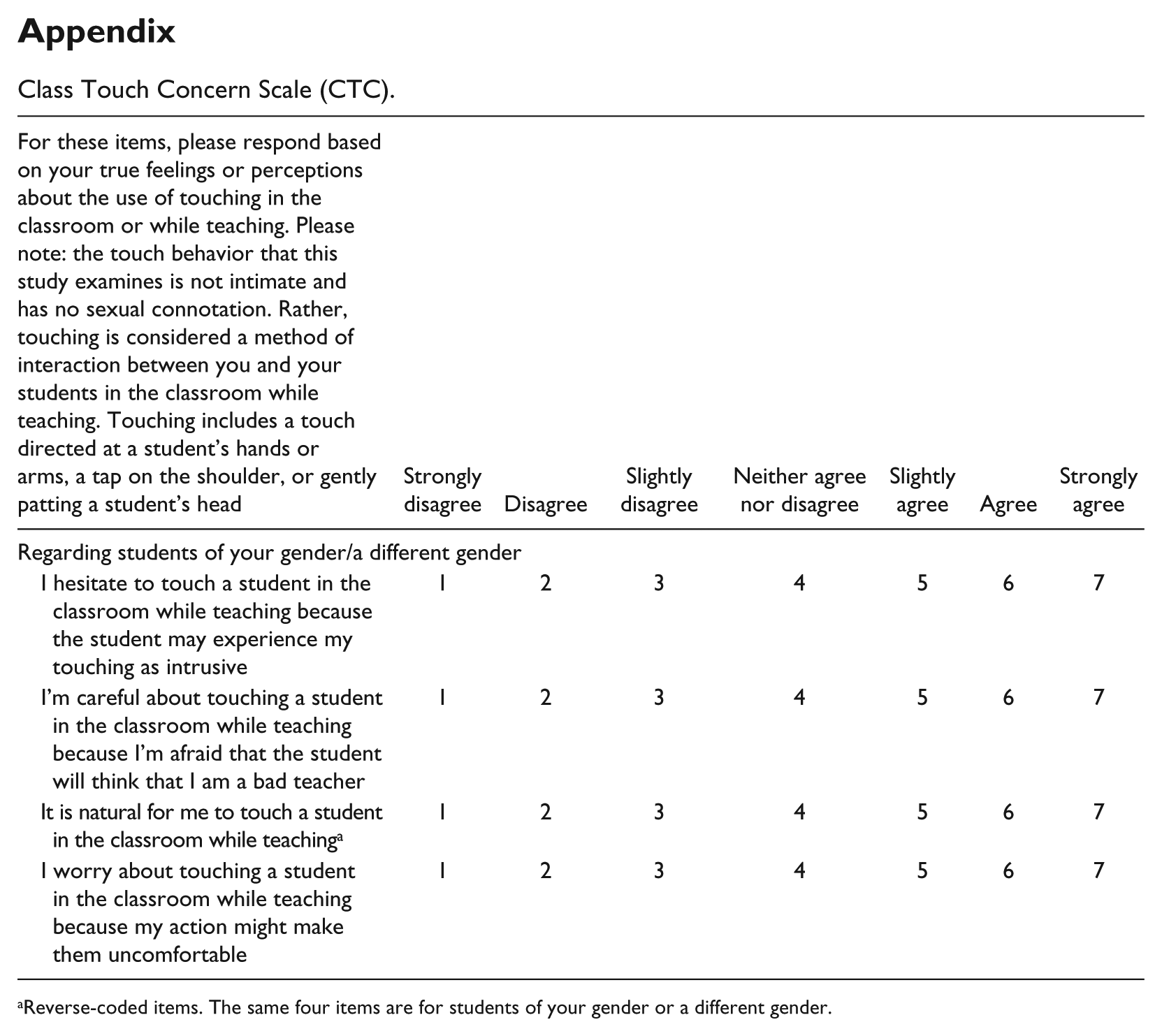
Appendix
Class Touch Concern Scale (CTC).
| For these items, please respond based on your true feelings or perceptions about the use of touching in the classroom or while teaching. Please note: the touch behavior that this study examines is not intimate and has no sexual connotation. Rather, touching is considered a method of interaction between you and your students in the classroom while teaching. Touching includes a touch directed at a student’s hands or arms, a tap on the shoulder, or gently patting a student’s head | Strongly disagree | Disagree | Slightly disagree | Neither agree nor disagree | Slightly agree | Agree | Strongly agree |
|---|---|---|---|---|---|---|---|
| Regarding students of your gender/a different gender | |||||||
| I hesitate to touch a student in the classroom while teaching because the student may experience my touching as intrusive | 1 | 2 | 3 | 4 | 5 | 6 | 7 |
| I’m careful about touching a student in the classroom while teaching because I’m afraid that the student will think that I am a bad teacher | 1 | 2 | 3 | 4 | 5 | 6 | 7 |
| It is natural for me to touch a student in the classroom while teaching a | 1 | 2 | 3 | 4 | 5 | 6 | 7 |
| I worry about touching a student in the classroom while teaching because my action might make them uncomfortable | 1 | 2 | 3 | 4 | 5 | 6 | 7 |
Reverse-coded items. The same four items are for students of your gender or a different gender.
Acknowledgements
The authors would also like to thank Prof. Deng Yuan (College of Foreign Language in Hunan University) for her help with data collection.
Declaration of Conflicting Interests
The author(s) declared no potential conflicts of interest with respect to the research, authorship, and/or publication of this article.
Funding
The author(s) disclosed receipt of the following financial support for the research, authorship, and/or publication of this article: This research was supported by the Natural Science Foundation of China 71502057, the Natural Science Foundation 13JJ3051 in Hunan province and the Social Science Foundation 12YBA065 in Hunan province. The Teaching reform project 13-2010031 in Hunan University, and the “Yulou Scholar project” Hnu16-201031 in Hunan University.