






Abstract
According to the literature, the use of the Berkeley Puppet Interview (BPI) to measure Big Five personality traits in children provides reliable and valid scores. However, the implementation of the BPI could be costly, especially when working with large sample sizes. Big Five self-reports were collected from 1118 Mexican children aged 7–8 years using a modified version of the BPI protocol and a Spanish version of the Big Five questionnaire. The main objective of this study was to inquire whether some modifications in the application protocol of the BPI could still provide reliable personality scores for the population under study. We report item–rest correlation, Cronbach’s alpha and omega as reliability measures, and confirmatory factor analytic models to investigate dimensionality. The results show that the personality trait scores are markedly reliable and that the dimensionality of the instrument holds for the Mexican sample.
Keywords
Introduction
The five-factor model of personality is nowadays one of the most popular tools used in applied work to explain interindividual differences in personality and to investigate how personality correlates with policy-relevant outcomes in many fields. The model proposes five comprehensive dimensions: extraversion, agreeableness, conscientiousness, neuroticism, and openness to new experiences—for a discussion on the historical roots and structure of the concepts of personality based on the five-factor model and its limitations; see, for instance, Digman (1990), Goldberg (1990), McAdams (1992), McCrae and John (1992), and Wiggins (1996). Briefly, extraversion is related to emotional expressiveness and sociability; agreeableness refers to interpersonal traits such as trust, altruism, and kindness; conscientiousness is characterized by impulse control and goal-oriented behaviors; neuroticism describes negative attributes such as anxiety, irritability, sadness, and emotional instability; and openness portrays intellectual characteristics such as imagination, cognitive ability, and curiosity.
A number of studies have measured and analyzed the Big Five personality traits in elementary school children in cross-sectional and longitudinal designs (e.g., Abe, 2005; Asendorpf & Van Aken, 2003; Caspi et al., 2003; Ehrler et al., 1999; Hampson et al., 2016; Resing et al., 1999). In these studies, teachers, parents, or other adults usually report on children’s personality. This practice was motivated by evidence of questionable estimates of temporal stability of children’s personality when reported by children (e.g., Roberts & DelVecchio, 2000). Thus, relying on reports from adults seemed reasonable. However, there was still interest from researchers in asking children directly about their personality characteristics because of the possibility that adults may not be aware of a number of problems that children might face at a young age (Ringoot et al., 2013).
Aiming to investigate whether it was possible to have stable and valid personality scores reported from children directly, Ablow and Measelle (1993) developed the administration and scoring system manuals for the Berkeley Puppet Interview (BPI). The BPI allows a natural conversational exchange between a child and two puppets. The puppets make positive and negative statements about themselves regarding behaviors or attributes (e.g., “I am smart”; “I am not smart”) and then ask the child to describe her/himself (e.g., “How about you?”), minimizing the socially appealing response. The interaction between the child and the two puppets is videotaped. Trained scorers watch each interview and score the answers in a 7-point Likert scale (Ablow & Measelle, 1993).
The use of puppets during the interview is crucial, and it expanded the work of a number of researchers who used puppets in their studies of young children (Eder, 1990; Irwin, 1985; Schaefer & O’Conner, 1983; Woltmann, 1952). In their seminal study, Measelle et al. (1998) discussed the psychometric properties of self-perception scales using the BPI. The authors found that children had a multidimensional self-concept that could be reliably measured. Later, Measelle et al. (2005) conducted a follow-up study where they investigated the validity and stability of self-reports of Big Five personality traits in 5–7 year old children using the BPI in conjunction with the Big Five questionnaire (BPI-BFQ hereafter). The children’s perceptions of their personality were compared with adult informants’ reports coming from the child’s mother, father, and teachers. The authors found satisfactory psychometric properties of the instrument, and most personality dimensions were stable and coherent throughout the period of the study.
Although the BPI-BFQ has been shown to provide valid and reliable scores, its implementation may turn expensive. Performing the interview, videotaping, and scoring may become impractical in certain settings. Collecting behavioral data from children in developing countries where funding is scarce, and participants are from remote areas may become unfeasible. Still, it is precisely in developing countries where studies on children’s personality are scanter, and evidence is urgently needed. Accordingly, the present study proposes a modified version of the BPI-BFQ where items from the Big Five questionnaire remain unchanged, and the scoring process is modified to obtain self-reported dichotomous data directly from children.
The main objective of the present study is to assess the dimensionality and reliability of a Spanish version of the Big Five questionnaire using our modified version of the BPI protocol. We performed item analysis and estimated confirmatory factor analytic models to investigate dimensionality. The article is structured as follows. Next section introduces the data, followed by a description of subjects and procedures, and data analysis. Results are presented, and the final section concludes with discussion, limitations, and future directions.
Methods
Data and Sample Design
We used data from the first wave of the Aguascalientes Longitudinal Study of Child Development (EDNA-Spanish acronym) (Miranda et al., 2019, 2020). EDNA is a multi-thematic, multilevel, and multidisciplinary study of 1000 students in 100 schools that are a representative sample of the population of children who started first grade in August 2016 in a public primary school of the state of Aguascalientes, Mexico. 1 EDNA interviews mothers (or the primary caretaker) in their households, children in their school, and teachers in the premises of regional units of education. The sample has a classic probabilistic stratified two-stage cluster design, where schools are selected in the first stage and pupils are selected in the second stage. Children interviews started in February 2018 and concluded in June 2018, when children were in second grade. The analytical sample used for the present analyses is comprised of 1118 children with a mean of 7 years 3 months old (SD = .49); 51% were women.
EDNA’s child questionnaire measures children’s personality traits using 58 items from the BPI-BFQ, which was graciously provided by Jeffrey Measelle, at the University of Oregon, to whom we are grateful. Given the large scale of the sample and the logistic challenges that visiting over 100 schools and 1000 households impose, achieving laboratory interviewing conditions and videotaping all children’s interviews was unfeasible. Thus, the scoring of the BPI as originally implemented by the BPI-BFQ was not viable. Hence, we established a simplified implementation that used the building blocks of the puppet interviewing techniques developed by Measelle et al. (2005), authors of the original BPI-BFQ scale, but that did not require strict laboratory conditions and/or interview videotaping, and that could be easily used with large samples. For simplicity, hereafter, we call such implementation the Field Puppet Interview-Big Five Questionnaire (FPI-BFQ). We also translated the BPI-BFQ items into Spanish. The translated version was piloted and adjusted accordingly before its field implementation. The Spanish version of the instrument is available by contacting the authors.
Subjects and Procedures
All interviews were conducted by professional and previously trained female interviewers. On the day of the interview, enumerators arrived at the school before the beginning of the morning shift (8:00 hrs.) or the afternoon shift (13:00 hrs.) to prepare the facilities. The interview room was in most cases the computer lab or the school library. The room was divided in two interviewing stations by a portable room divider. In each interviewing station, there were a table and two chairs facing each other. Attendance of each EDNA selected child was verified. Each child was then walked by his/her teacher to the interviewing room and walked back to the classroom once the interview was done. We followed international best practices, and informed consent from children’s parents was obtained in order to apply the instrument. In addition, verbal assent from children at the time of the interview was also requested.
At the beginning of the interview, a tablet was given to the child along with instructions on how to use it (see Figure 1). For the FPI-BFQ application, the interviewer explained the activity and introduced two identical hand puppets (two gray and white cats, see Figures 2 and 3) to the child, called “Iggy” and “Ziggy.” Following Measelle et al. (1998), the sex-neutral and phonetically similar names were chosen to avoid any possible bias induced by the puppets’ name. The two puppets made opposite statements about themselves and asked the child to identify her/himself with one or the other behavior. Instead of videotaping the interview and scoring the responses afterward, we implemented a dichotomous-choice response format. Children were asked to respond directly on the tablet, without taking the tablets on their hands, by touching with their finger the figure of the puppet that would match their response (see Figures 1–3). Field Puppet Interview-Big Five Questionnaire implementation: Tablet delivery to the participant. Field Puppet Interview-Big Five Questionnaire implementation: Introducing the puppets. Field Puppet Interview-Big Five Questionnaire implementation: Selecting an option.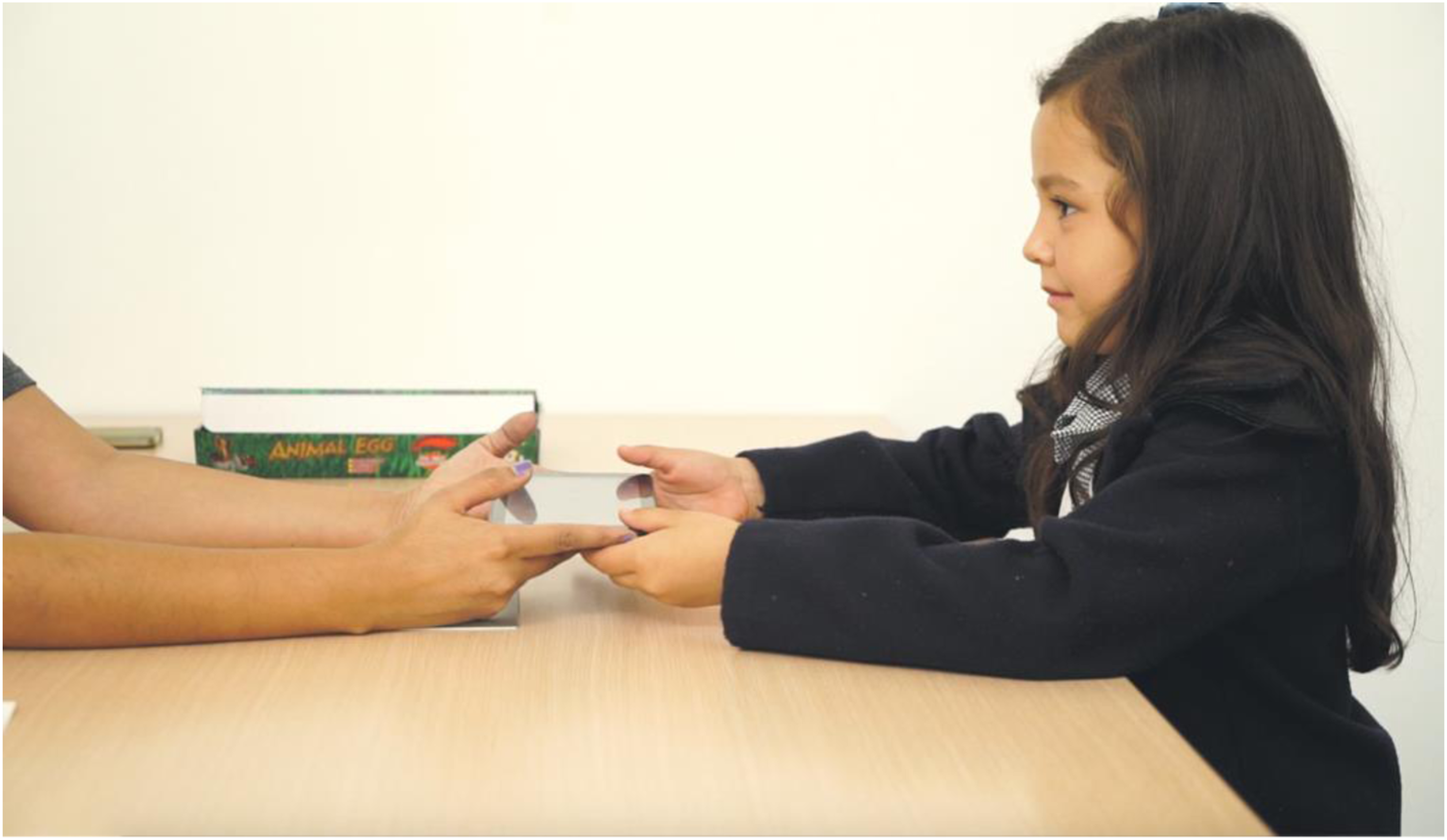
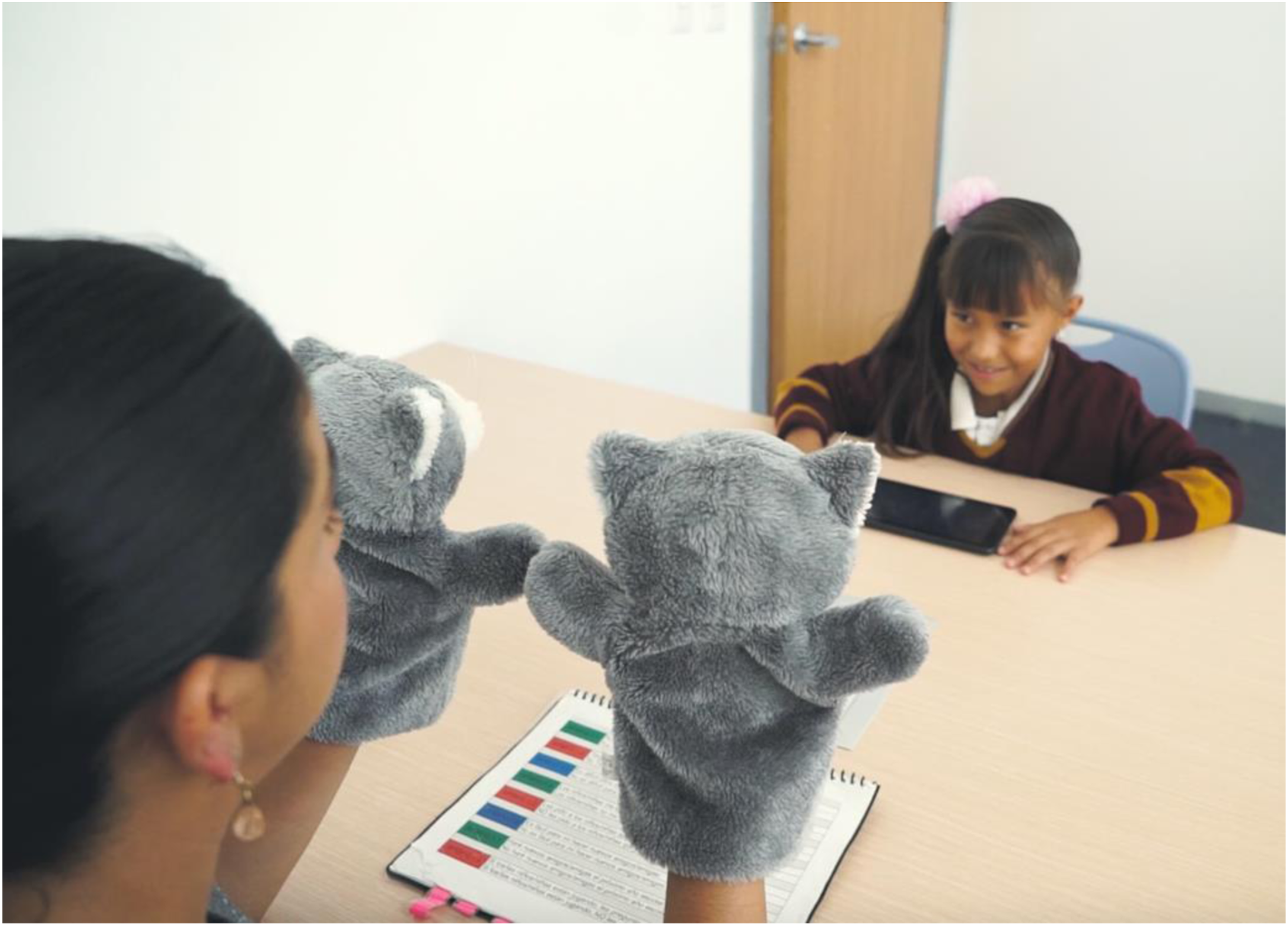
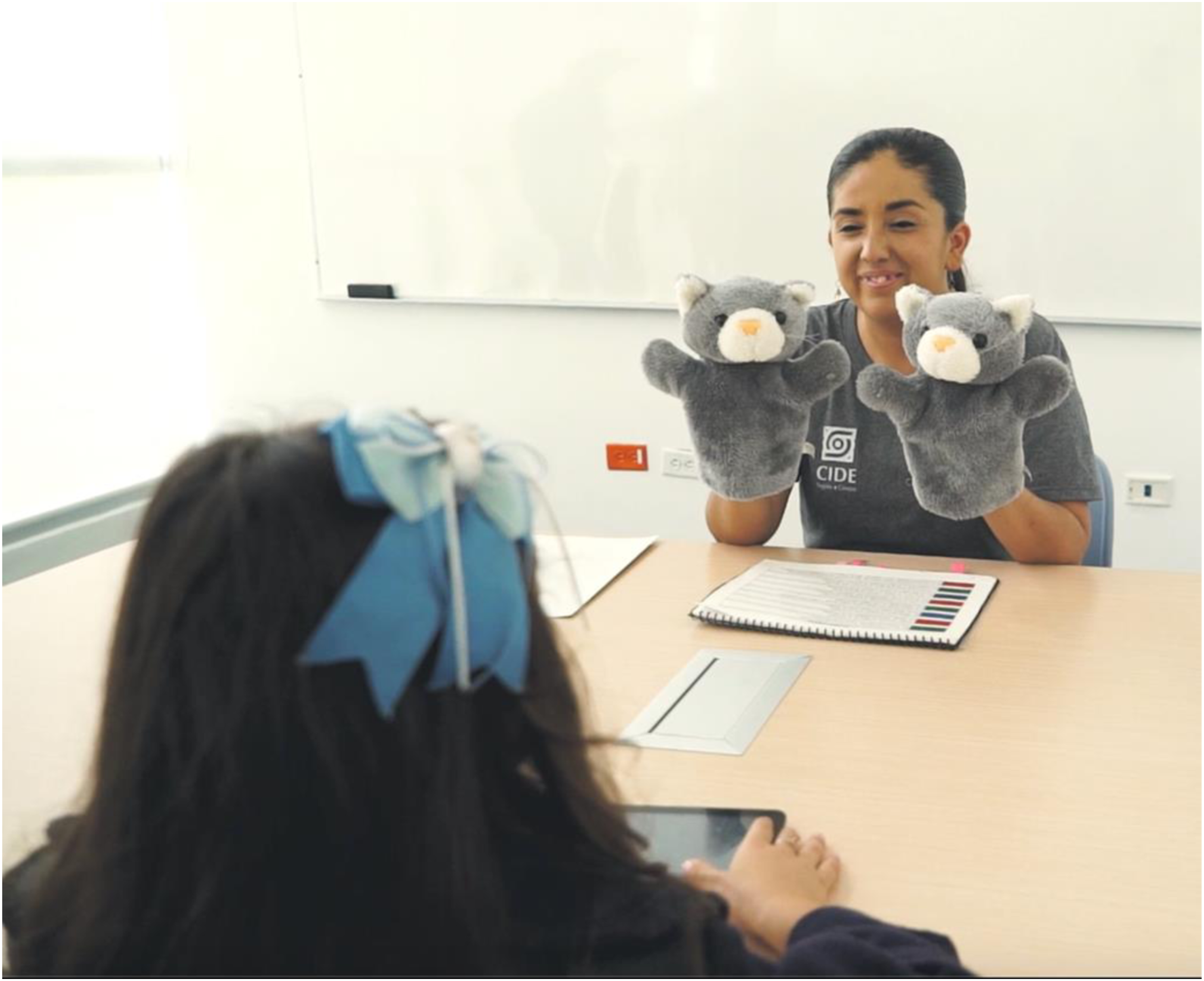
Using an item as an example, we assessed whether the procedure was clear for the child (e.g., “Hi, I am Ziggy and I am in the second grade of primary school”; “Hi, I am Iggy and I am in the fourth grade of primary school; how about you?“) and continued until the training question was answered correctly. Positive and negative responses alternate between the two puppets, in such way that “Iggy” or “Ziggy” were not associated with only positive or negative answers.
Data Analysis
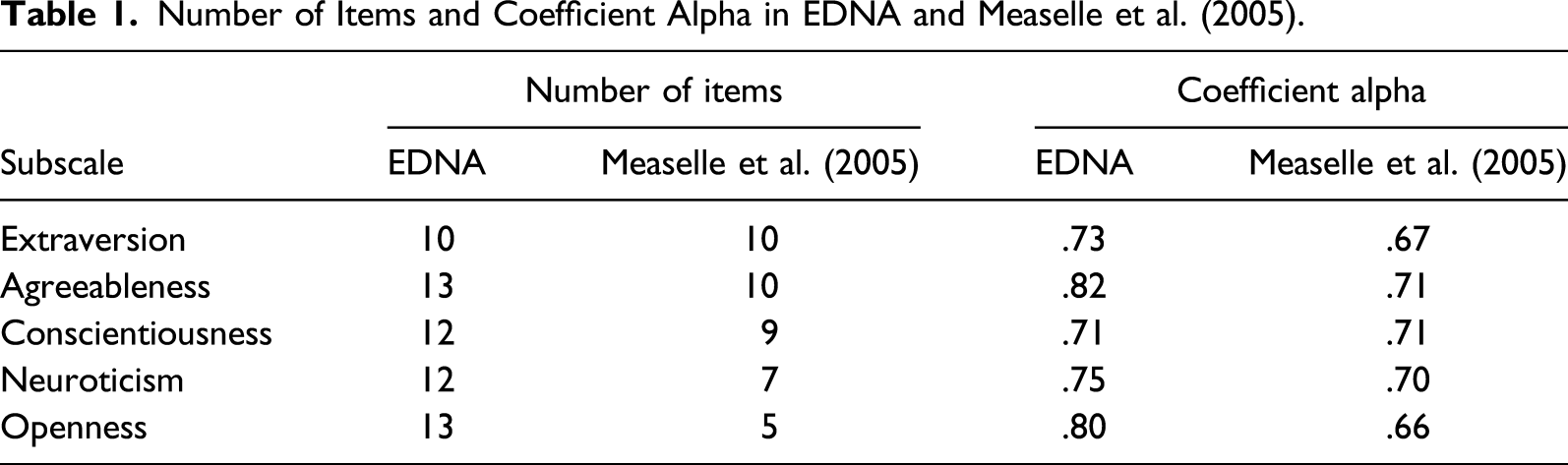
Number of Items and Coefficient Alpha in EDNA and Measelle et al. (2005).
Reliability measures
There are several measures of reliability, but Cronbach’s alpha is typically reported. Cronbach’s alpha or coefficient alpha is an estimate of internal consistency. However, several limitations of coefficient alpha have been discussed in the literature (e.g., Dunn et al., 2014; McNeish, 2018; Sijtsma, 2009; Yang & Green, 2011; Zinbarg et al., 2005). Researchers argue that coefficient alpha is an unsuitable measure of internal consistency because it relies on assumptions that are commonly violated especially when working with psychological data (Dunn et al., 2014). To elaborate, one of the main problematic assumptions is the one of tau-equivalence, which in practical terms means that all items are related equally to the construct or that each item contributes equally to the total score (McNeish, 2018). Typically, items will relate differently to the construct being measured, some items will be more strongly related than others or will measure the construct more precisely. When assumptions are violated, coefficient alpha tends to underestimate the internal consistency reliability (Dunn et al., 2014; Sijtsma, 2009; Zinbarg et al., 2005). So, what is reported is typically a lower bound of reliability. Researchers have encouraged the use of other measures of reliability. One of such measures is called omega. Omega makes less restrictive assumptions than coefficient alpha, which makes it a more suitable measure of internal consistency reliability (Dunn et al., 2014). It assumes that not all the items contribute equally to the total score. Thus, we adopted this measure by using the omega function in the psych R package (Revelle, 2019).
For the purpose of comparing results with Measelle et al. (2005), we computed coefficient alpha reliability index, as shown in Table 1. However, we used omega as a measure of reliability of the scales in the FPI-BFQ and also omega if item-deleted along with other indices when making decisions on keeping items to validate the personality scales. In addition, both reliability indices, coefficient alpha and omega, are reported using the tetrachoric covariance matrix, which is appropriate when working with dichotomous items, as recommended in the literature (Gadermann et al., 2012).
Item–rest correlation
We used item–rest correlation as an index of item discrimination to help us assess the quality of each item within each of the subscales of the FPI-BFQ. As a general rule for a discrimination index, items highly discriminating (with values of .50 or above) are retained, items with values below .20 are eliminated, and items between these two bounds should be considered for modifications (Thorndike & Thorndike-Christ, 2010). In addition, other measures were considered to make decisions on the items measuring each subscale. This process is explained below.
Factor structure
We fit a series of confirmatory factor analysis (CFA) models investigating the dimensionality of the FPI-BFQ. As an initial step toward assessing the dimensionality of the FPI-BFQ instrument, we fit the model suggested by Measelle et al. (2005). That is, we estimated a correlated (oblique) five-factor CFA model. In such model, the five factors (five subscales in the Big Five instrument) were allowed to correlate with each other. We then assessed whether the guidelines for adequate model-data fit were satisfied (Hu & Bentler, 1999). Guidelines were not satisfied as it will be shown in the results section. Thus, we validated the Big Five dimensions in an iterative manner. We analyzed the estimation results of the CFA model, the item–rest correlation, and the omega statistic if item-deleted. We decided to eliminate items that had the lowest factor loadings and item–rest correlation and that would also increase reliability measured by omega from the subsequent analyses. That is, we relied on three measures rather than a single one to decide which items were not going to be included in further analyses. Then, we fit the updated correlated five-factor CFA model to the remaining data. We repeated this process one more time and ended up with an estimated correlated five-factor CFA model that had good factor loadings. Once item elimination was no longer supported by the data, we examined modification indices of the final correlated five-factor CFA model to improve model-data fit. We only added residual covariance parameters among the observed variables within each subscale when suggested by modification indices. Thus, the latent structure of the model remained, and the parameters added to the model did not alter it theoretically (Kline, 2011).
The lavaan R package (Rosseel, 2012) was used to estimate all CFA models. Due to the nature of the data (dichotomous data), diagonally weighted least squares estimation procedures were used. Commonly applied guidelines for adequate model-data fit suggest root mean square error of approximation (RMSEA) ≤ .06, standardized root mean square residual (SRMR) ≤ .08, and comparative fit index (CFI) and Tucker-Lewis index (TLI) ≥ .95 (Hu & Bentler, 1999). In addition, ideally, the chi-square statistics must be nonsignificant to support the adequacy of the model. Regarding factor loadings, many researchers define weak factor loadings as those with values of .4 (Briggs & MacCallum, 2003; Widaman, 1993; Ximénez, 2006). But in practice, researchers might consider loadings as low as .2 and .3 (Briggs & MacCallum, 2003).
Results
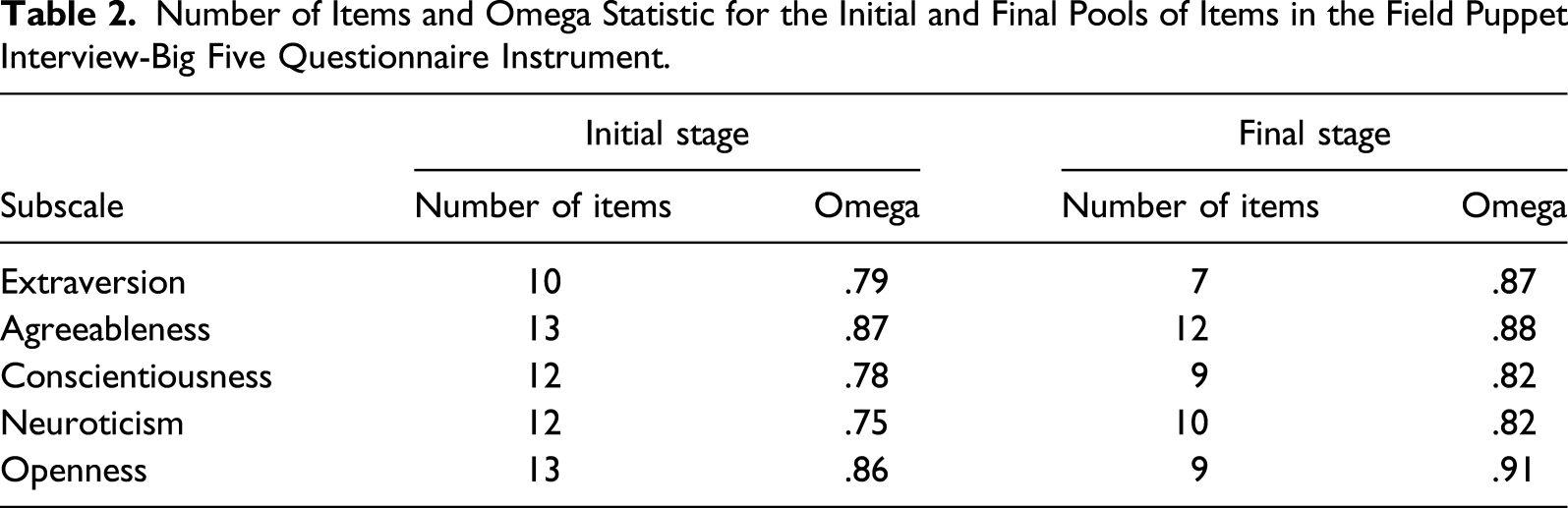
Number of Items and Omega Statistic for the Initial and Final Pools of Items in the Field Puppet Interview-Big Five Questionnaire Instrument.
Indices to Test for the Adequacy of Factor Analyses.
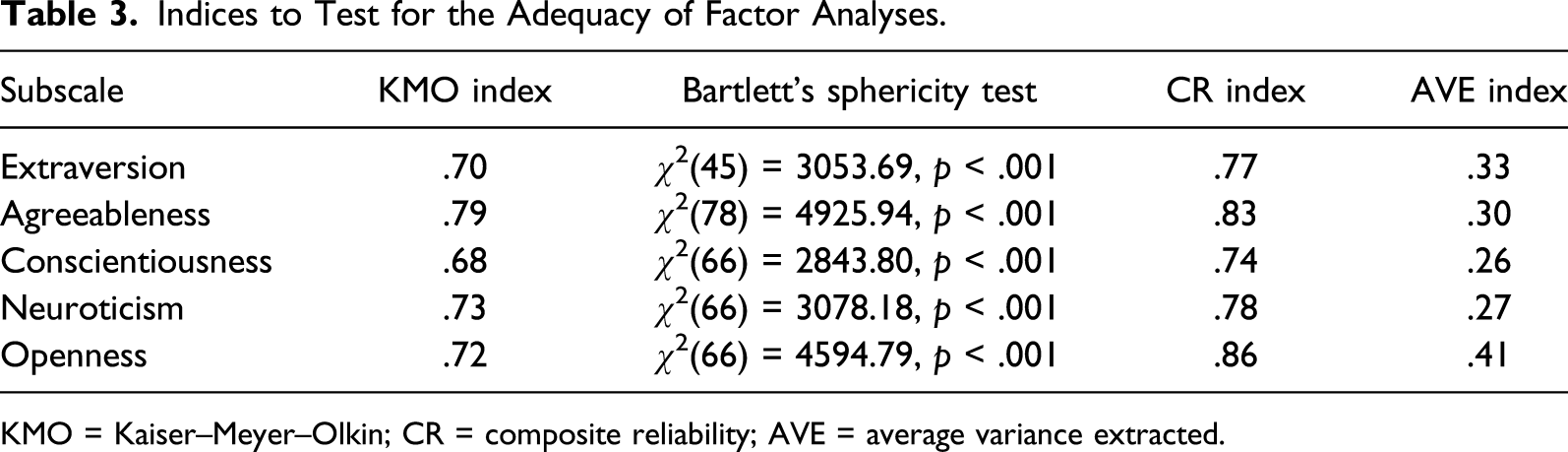
KMO = Kaiser–Meyer–Olkin; CR = composite reliability; AVE = average variance extracted.
Fit Indices of the Correlated Five-Factor CFA Models.
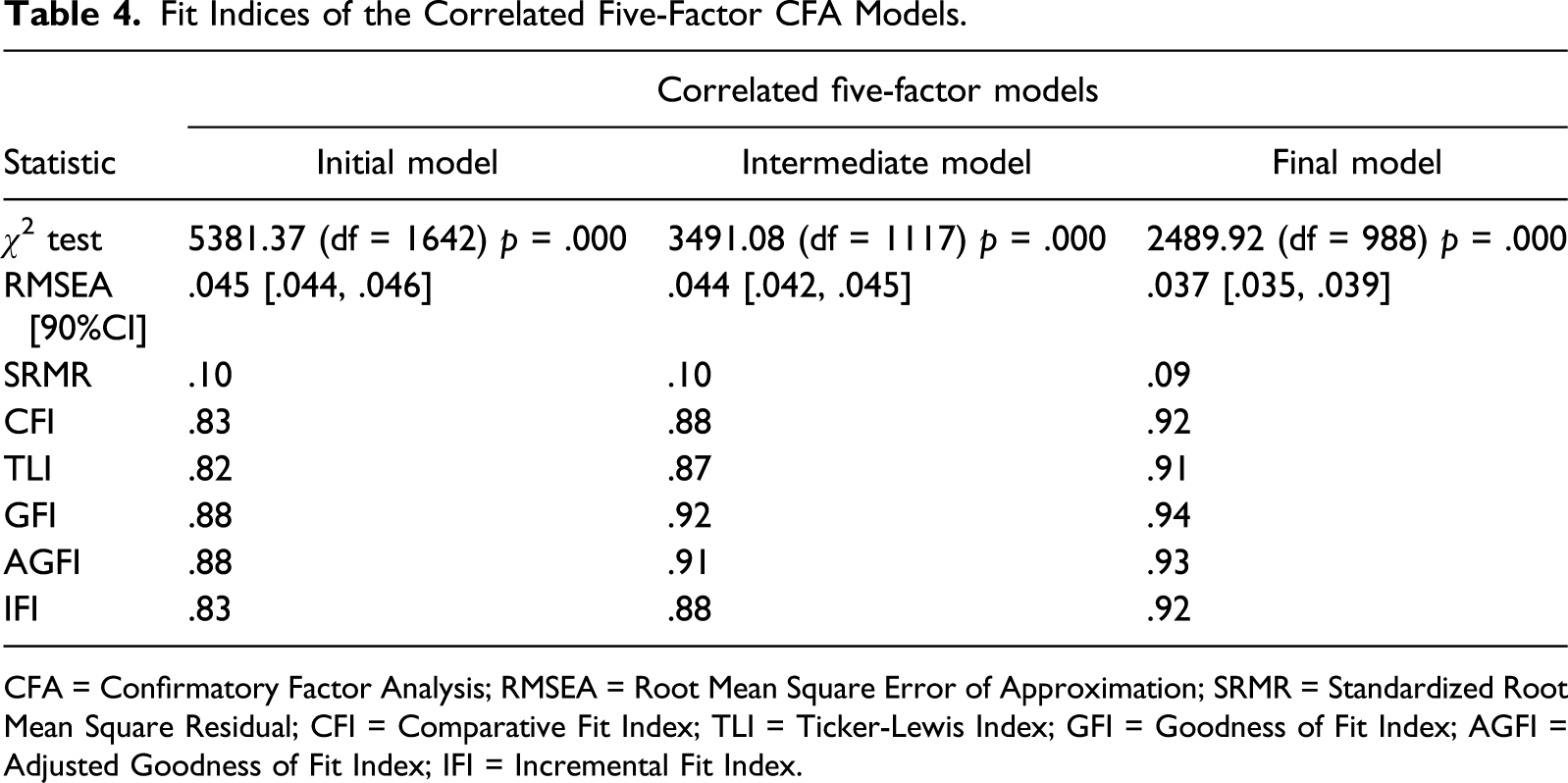
CFA = Confirmatory Factor Analysis; RMSEA = Root Mean Square Error of Approximation; SRMR = Standardized Root Mean Square Residual; CFI = Comparative Fit Index; TLI = Ticker-Lewis Index; GFI = Goodness of Fit Index; AGFI = Adjusted Goodness of Fit Index; IFI = Incremental Fit Index.
Then, we examined the factor loadings under the initial model, and we detected some items with low factor loadings. We highlighted those items and also considering results of item–rest correlation and omega if item-deleted, we decided to remove items that presented low values in these three statistics. 2 We did not want to remove unnecessary items considering the factor structure examination solely. Thus, we only dropped an item that had low factor loading, low item–rest correlation and that will increase, or maintain omega if item-deleted. Following this process, we removed items 3 and 10 from the extraversion subscale; item 2 from agreeableness; items 4 and 11 from conscientiousness; items 5 and 7 from neuroticism; and items 10, 11, and 12 from openness. We estimated again the correlated five-factor CFA model considering the remaining items. The fit indices are presented in Table 4 under the intermediate model legend. Again, RMSEA was lower than .06, but SRMR, CFI, and TLI did not satisfy their suggested thresholds. We redid the process of removing items in this second iteration and eliminated two more items: item 1 from extraversion and item 5 from conscientiousness. In addition, we considered modification indices for this final model. The extra relationships added to the model were residual covariances among the observed variables within each subscale. In this sense, the latent structure of the model remains the same, and the modifications did not alter the model theoretically (Kline, 2011).
Factor Loadings of the Correlated Five-Factor CFA Final Model.
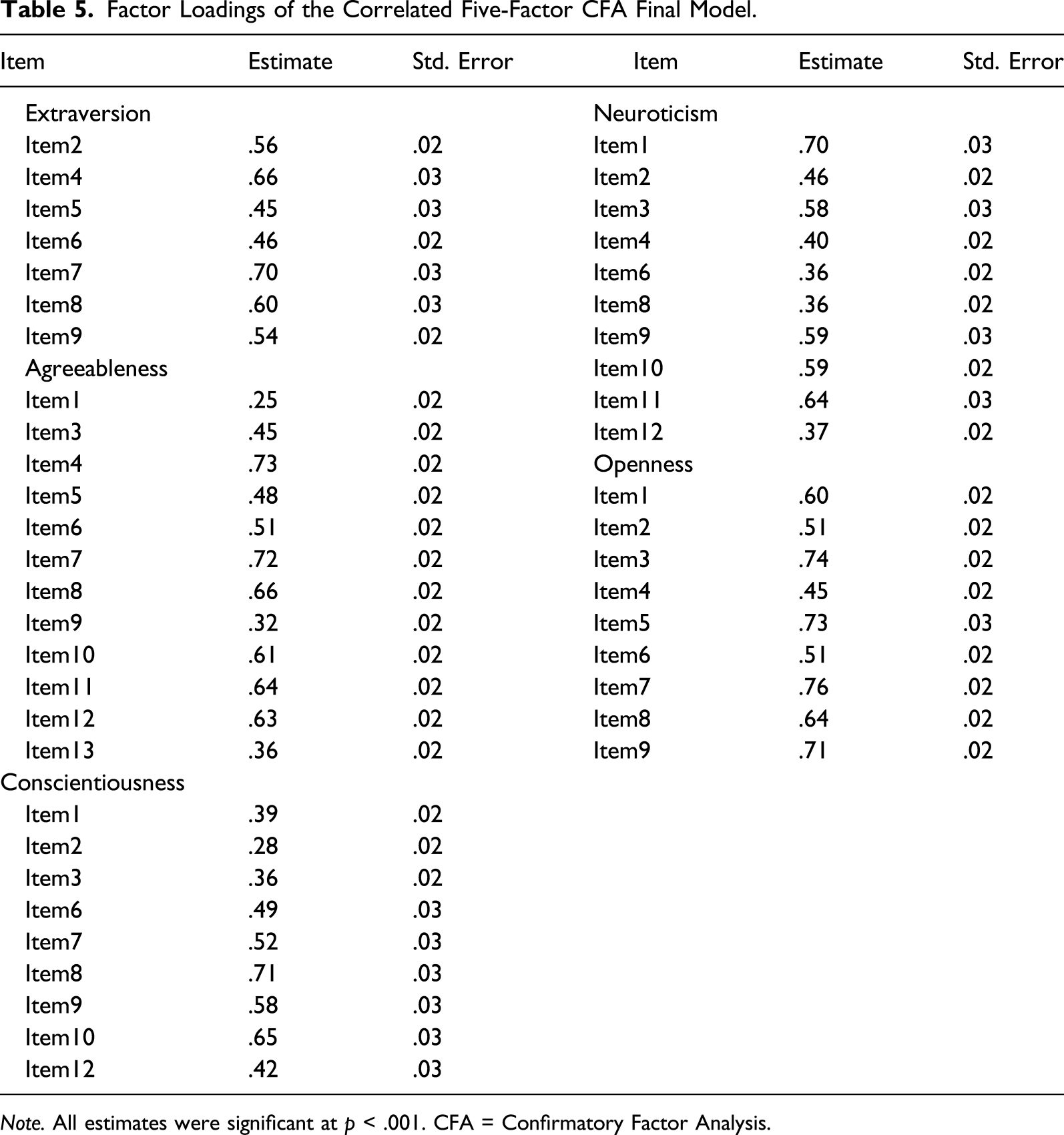
Note. All estimates were significant at p < .001. CFA = Confirmatory Factor Analysis.
Last, considering the items in the final model, we computed again omega as a measure of internal consistency reliability. This is presented in Table 2 under the final stage legend. Omega ranges from .82 to .91, which indicates scores derived from the Spanish version of the FPI-BFQ are highly consistent.
Discussion, Future Directions, and Limitations
We proposed a modified version of the BPI-BFQ, which we called the FPI-BFQ, where self-reported dichotomous data were collected directly from children using the original items from the BPI-BFQ translated into Spanish. The focus was on assessing the dimensionality and reliability of the collected data, which comes from EDNA, a pioneer study in Mexico conducted on a prospective cohort of children. The results suggest that the FPI-BFQ has adequate psychometric properties. High indices of internal consistency, measured by omega, were found for the five personality traits. Moreover, factor analytic models confirmed a five-dimensional correlated structure for the Mexican sample to which the FPI-BFQ was applied. Some of the items of the original BPI-BFQ did not work well with the population at hand. In total, 11 items were eliminated.
To the best of our knowledge, this is the first study that develops a modified scoring protocol from the original BPI. Moreover, it was applied to a large sample of children. We believe that the use of a simplified scoring process, as implemented in the FPI-BFQ instrument, diminishes financial and human costs of application and scoring. This may help expanding personality research when financial constraints are important as it is the case in developing countries where research on children’s development is scarce and funding restrictions exist. Furthermore, a paper-and-pencil version of the instrument where children directly mark their answers in a piece of paper could be an acceptable form of assessment that would certainly need further investigation. This could be an option that may encourage research in scenarios for which having or using a tablet might be problematic.
Findings suggested that gender differences exist. That is, the factor analytic structure presents some differences by gender. Future research should investigate thoroughly on such differences. Likewise, a further step on the assessment of the item and scale properties of the FPI-BFQ would be to employ item response theory (IRT) techniques. An IRT approach could enrich our understanding of the scores. For instance, we could investigate whether the FPI-BFQ can measure the personality traits with the same precision across the unobservable continuum of the personality spectrum. Another future direction would be to investigate the relation in personality traits between children and mothers or primary caretakers. The EDNA study also collected information on personality from the mother or primary caretaker, so we have readily available data.
Last, this study is not without limitations. First, stability of personality traits in children is a core subject of study that was not explored in the present article. Further research should employ longitudinal data in order to explore this matter. Furthermore, this type of data could be collected as part of the same EDNA study. Second, other Spanish-speaking populations may behave differently than the analyzed Mexican sample. Thus, if the Spanish items of the FPI-BFQ were applied to other populations, more research would be needed to validate them. Specifically, think aloud protocols or having a panel of experts in order to make any necessary changes to the wording of the items would be highly advisable.
Summarizing, the findings from this article confirm the Big Five personality structure in collected data from Mexican children using the FPI-BFQ. They also suggest that the proposed change in the BPI scoring methodology provides reliable scores for the population under study. In addition, internal consistency is congruent with previous literature in personality development. These results add to the literature of children’s self-reported personality traits by giving evidence on how young children between 7 and 8 years old are able to provide reliable information on their personality traits by themselves. Moreover, we hope the proposed scoring process in this instrument, allowing children to directly provide dichotomous responses through the use of a tablet, will help other researchers facing funding constraints and for which it is not possible to implement a more expensive protocol. Thus, the FPI-BFQ may help conduct research in scenarios where funding is limited and the implementation of the original BPI protocol impractical.
Supplemental Material
sj-pdf-1-jpa-10.1177_07342829211002581 – Supplemental Material for Dimensionality and Reliability Assessment of a Field Implementation of the Big Five in Mexican Children
Supplemental Material, sj-pdf-1-jpa-10.1177_07342829211002581 for Dimensionality and Reliability Assessment of a Field Implementation of the Big Five in Mexican Children by Yadira Peralta, Adriana Aguilar-Rodriguez, Osiel González Dávila and Alfonso Miranda in Journal of Psychoeducational Assessment
Footnotes
Acknowledgments
We would like to thank Jeffrey Measelle for kindly providing the items from the BPI-BFQ. We are grateful to our colleagues Hernán Bejarano, Daniel Zizumbo-Colunga, and Jaime Sainz who contributed to the design of the EDNA’s questionnaires; and to Sandra Nallely Núñez Nájera who was the field work coordinator during the data collection stage. In addition, we are grateful to Sandra Nallely Núñez Nájera, Valeria Gracia Olvera, and Daniel Zizumbo-Colunga for their suggestion of assigning item colors for easing the reading of the FPI-BFQ instrument during the piloting stage.
Declaration of Conflicting Interests
The author(s) declared no potential conflicts of interest with respect to the research, authorship, and/or publication of this article.
Funding
The author(s) disclosed receipt of the following financial support for the research, authorship, and/or publication of this article: This article was financially supported by the Cátedras CONACYT program [project No. 874], from The Hewlett Foundation [project No. 2013-8758], and from CIDE [project FAI 12171077].

Supplemental Material
Supplemental material for this article is available online.
Notes
References
Supplementary Material
Please find the following supplemental material available below.
For Open Access articles published under a Creative Commons License, all supplemental material carries the same license as the article it is associated with.
For non-Open Access articles published, all supplemental material carries a non-exclusive license, and permission requests for re-use of supplemental material or any part of supplemental material shall be sent directly to the copyright owner as specified in the copyright notice associated with the article.
