







Abstract
Students with Attention-Deficit/Hyperactivity Disorder (ADHD) are struggling writers. Yet no comprehensive model has been validated to explain their poor writing outcomes. This study aims to test whether an extended version of the Not-So-Simple View of Writing (NSVW) model can describe the effects of key abilities on writing performance in students with ADHD. The sample included students with and without ADHD who completed cognitive and academic measures in the Colorado Twin Project. A Multi-Group Structural Equation Model approach revealed that multiple broad cognitive abilities predicted student writing performance and basic writing skills predicted more advanced writing skills. Model fit was excellent both for a model with writing as a single latent variable (fully latent) and as interrelated manifest variables (partially latent). Furthermore, students with and without ADHD demonstrated comparable patterns of relationships among the variables in the model. Implications for the assessment of writing difficulties in students with ADHD are discussed.
Keywords
Introduction
Four in five students with Attention-Deficit/Hyperactivity Disorder (ADHD) face academic challenges related to writing (Graham et al., 2016). These challenges can be partially attributed to deficits in executive function and working memory which prevent students with ADHD from sustaining focus and effort during writing tasks, resulting in less perseverance and shorter compositions. Despite these struggles having long-term effects on their academic career, there is no comprehensive framework describing the processes underlying poor writing outcomes in students with ADHD.
A promising solution comes from the Not-So-Simple View of Writing (NSVW) model (Hayes & Berninger, 2014), a literacy framework that depicts effective writing as the result of lower and higher-level components. However, the current form of the NSVW model may not include the full range of abilities contributing to poor writing performance and has not been validated for students with ADHD. Therefore, this study aimed to validate two extended versions of the NSVW model and examine the role of key components in predicting writing performance among students with ADHD.
The Not-So-Simple View of Writing Model
The NSVW model posits that effective writing results from three key components: (a) transcription skills refer to handwriting (or typing) and spelling which enable students to execute finalized motor movements and produce written text, (b) text generation refers to the ability to translate ideas into units of language and is generally operationalized as oral language, and (c) self-regulatory processes refer to goal-directed behaviors (e.g., planning, editing, and revising) and executive function (Hayes & Berninger, 2014).
In addition to these components, effective writing is supported by working memory skills (Gwm 1 ) which enable students to hold and manipulate complex ideas as well as form cohesive and well-organized written text. Empirical evidence highlights the significant role of working memory in enhancing both writing fluency and quality (Kim & Schatschneider, 2017; McCutchen, 1996, 2000). Proficient working memory skills reduce the cognitive burden associated with transcription processes, thereby facilitating higher-level strategic and self-regulatory processes. Additionally, the NSVW model includes domain-general (inhibition, shifting, self-monitoring) and domain-specific (e.g., planning, goal setting, revising, and editing) as potential contributors to writing quality. In particular, students can use domain-general skills to select relevant information while inhibiting irrelevant distractions, switch attention between a wide range of activities, and stay on task. Domain-specific self-regulatory processes are also associated with effective writing as they enable students to use problem-solving strategies to detect issues with their compositions and evaluate discrepancies between intentions and the actual text.
Validating the NSVW Model for School-Aged Students
Recently, an early version of the NSVW model has been validated using the normative samples of broadband cognitive and achievement tests. The sample of the Woodcock-Johnson IV (WJ-IV) was employed to assess the effects of oral language (subdomain of Gc) and spelling on writing composition in school-aged students (Parkin, 2021). Two versions of the model were tested, operationalizing writing composition as a latent factor or as two intercorrelated observed variables. Findings were consistent across age groups and versions of the model, showing that oral language and spelling explained the majority of the variance of writing composition.
Another study evaluated the relationships among the model components using the sample of the Wechsler Individual Achievement Test, Third Edition (WIAT-III) (Parkin et al., 2020). The results were partially different from the WJ-IV study due to differences across the test batteries: oral language and spelling were significant predictors of sentence writing, which fully mediated the relationships with written composition. The study also included a sample of special education students which showed a weaker association between oral language and spelling, potentially as the consequence of a phonological deficit.
Although these studies included large samples, their findings were limited due to the absence of key components contributing to writing performance. To address this limitation, Ahmed et al. (2021) conducted a study using a more comprehensive testing battery to examine the NSVW model in students with learning difficulties. The sample completed measures of lower-level (i.e., handwriting and spelling) and higher-level skills (i.e., executive function, working memory, and motivation) as well as composition processes (i.e., planning, editing, and revising). Results provided empirical support for multiple direct and indirect pathways between skills and processes on writing quality. More recently, Kim and Graham (2022) have expanded the NSVW model into the Direct and Indirect Effects Model of Writing (DIEW), a comprehensive literacy framework that emphasizes the significance of foundational and high-order abilities in relation to writing performance. This model includes both direct and indirect paths underlying student writing performance. Specifically, domain-specific abilities and writing skills have direct and indirect effects on writing composition, while domain-general abilities mainly indirect relationships with writing composition.
Other cognitive abilities likely contribute to effective writing and may further explain individual differences in student performance (Hajovsky et al., 2018). For instance, retrieval fluency (Gr) may support the ability to rapidly produce words and sentences, particularly important for time-limited tasks (e.g., sentence fluency tasks or curriculum-based measures for written expression [WE-CBM]), and verbal comprehension and knowledge (Gc) might strengthen the quantity and quality of written compositions.
Another limitation in the validation efforts of the NSVW model is the lack of empirical support for its implementation with clinical groups that frequently exhibit writing weaknesses. More research is, therefore, necessary to describe writing processes based on the characteristics of specific clinical groups.
Writing Difficulties in Students with ADHD
ADHD is a neurodevelopmental disorder affecting approximately 7% of school-aged students (American Psychological Association [APA], 2022). Students with ADHD experience symptoms of inattention and/or hyperactivity-impulsivity across various settings, which likely contribute to difficulties in task organization, inefficient time management, and poor academic outcomes (DuPaul & Langberg, 2015).
Among the academic outcomes, students with ADHD often struggle with writing. Graham et al. (2016) conducted a meta-analysis in which students with and without ADHD were compared on a wide range of writing outcomes. Results revealed that students with ADHD had significantly lower performance on measures of foundational (e.g., handwriting and spelling) and high-order skills (e.g., organization and writing quality). Furthermore, they allocated little time to planning their writing and engaging in the revising and editing process (Cheng et al., 2022).
The NSVW model offers a framework for understanding the processes underlying the writing challenges in students with ADHD. According to the model, ineffective working memory and self-regulatory processes interfere with focused and sustained attention making students with ADHD easily distractible during writing tasks (Barkley, 2015). Soto et al. (2021) examined the contribution of working memory and executive function to writing for students with ADHD. Findings demonstrated that working memory skills (Gwm) predicted less developed spelling skills, writing fluency, and overall written expression, while other components of executive function (e.g., inhibitory control) were only associated with spelling skills. However, these cognitive abilities accounted only for small portions of the variance in writing outcomes.
To better explain individual differences in writing skills in students with ADHD, the NSVW model should incorporate the effect of other cognitive abilities. For instance, a study conducted on 98 students with ADHD demonstrated that verbal comprehension and knowledge (Gc) predicted writing achievement even when accounting for working memory (NoackLeSage et al., 2019). Another study showed that retrieval fluency (Gr) uniquely predicted written expression in students without ADHD (Hajovsky et al., 2018), but the same association has not been investigated in students with ADHD.
Study Purpose
Notably, the literature on the NSVW model is sparse and rarely includes the contribution of multiple cognitive abilities to writing. Also, it does not include validation studies on students with ADHD which constrains the practical utility of the model in applied settings. To fill these gaps, this study addresses three research questions: 1. Does an extended version of the NSVW model including multiple cognitive abilities explain writing performance in students with and without ADHD? In particular, do retrieval fluency, working memory, and verbal comprehension uniquely predict writing outcomes after accounting for the relationship between spelling and writing? 2. Does an alternative version of the NSVW extended model (partially latent) provide a better description of student writing performance? 3. Do model components show similar and different associations in students with and without ADHD?
Methods
Participants
Data were collected in the context of the Colorado Twin Project (CTP) conducted at the University of Colorado at Boulder (Willcutt, 2021). The overarching goal of the CTP is to develop a comprehensive framework to identify at-risk children early and guide prevention and intervention programs using twin studies. Data were made available by the study’s authors in the online LDbase repository (Hart et al., 2020).
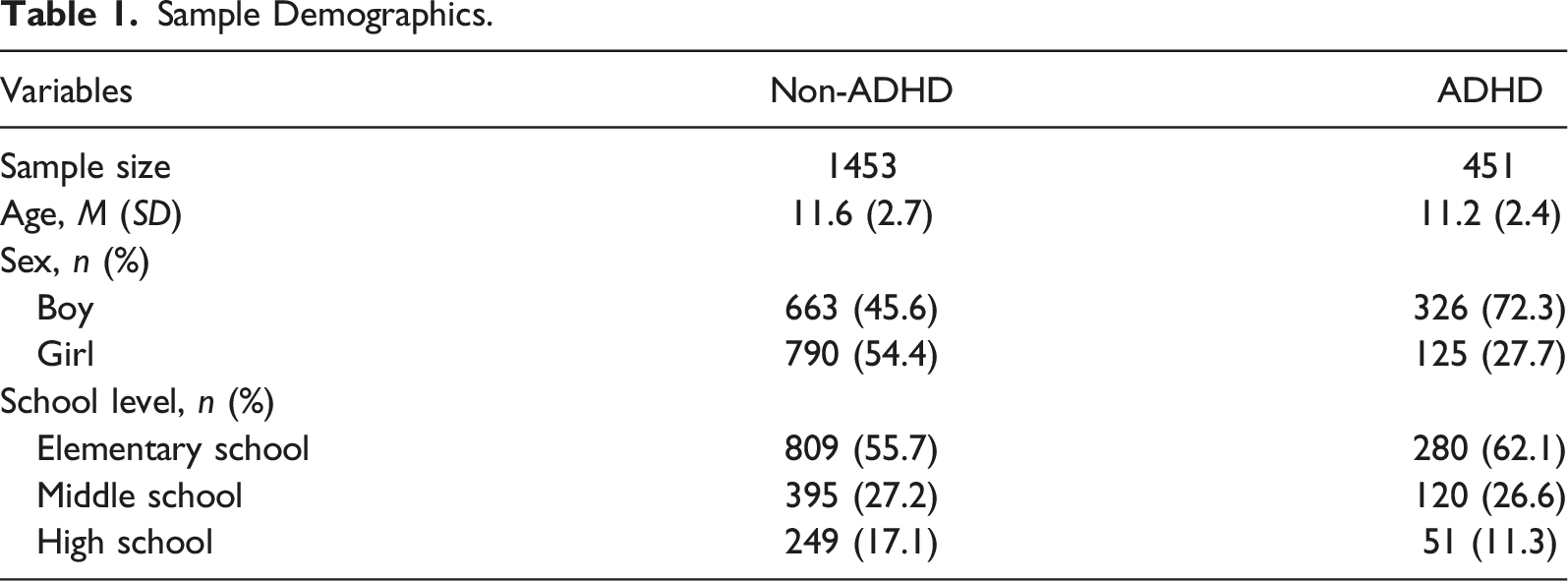
Sample Demographics.
Cognitive and Achievement Measures
Description of the Cognitive and Achievement Measures.
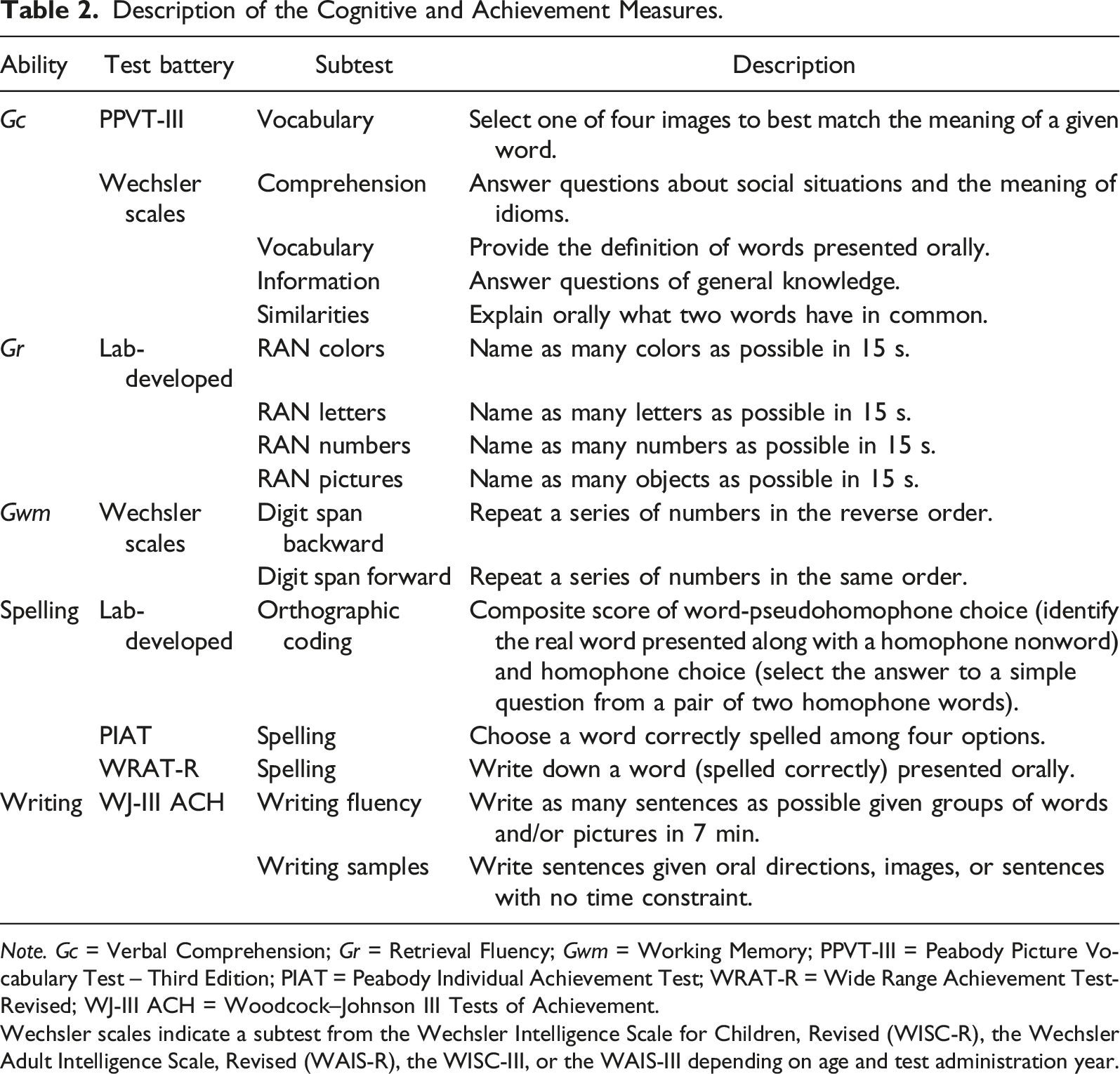
Note. Gc = Verbal Comprehension; Gr = Retrieval Fluency; Gwm = Working Memory; PPVT-III = Peabody Picture Vocabulary Test – Third Edition; PIAT = Peabody Individual Achievement Test; WRAT-R = Wide Range Achievement Test-Revised; WJ-III ACH = Woodcock–Johnson III Tests of Achievement.
Wechsler scales indicate a subtest from the Wechsler Intelligence Scale for Children, Revised (WISC-R), the Wechsler Adult Intelligence Scale, Revised (WAIS-R), the WISC-III, or the WAIS-III depending on age and test administration year.
Wechsler Scales
The Wechsler scales are the most popular batteries for the assessment of cognitive abilities. Based on the test edition available and the age at the time of the testing session, students completed five subtests from the WISC-R, WAIS-R, WISC-III, and WAIS-III (Wechsler, 1974, 1981, 1991, 1997). Empirical studies found negligible to no difference between subtests across consecutive editions of the Wechsler scales and the covariances among subtests (e.g., Dixon & Anderson, 1995). The scores from the five subtests had moderate to strong internal consistency (α = .77–.93) and test-retest reliability (r = .73–.89).
PPVT-III
The PPVT (Dunn & Dunn, 1997) is a measure of receptive vocabulary and comprehension of spoken English. The PPVT had a strong test-retest (r = .88–.96) and alternate-forms reliability (r = .91–.94). The test also showed strong concurrent validity with the WISC-III Verbal IQ (r = .91–.92).
PIAT
The PIAT (Dunn & Markwardt, 1970) is a test battery of academic achievements in K-12 students. The battery includes five subtests for the assessment of reading recognition, reading comprehension, spelling, mathematics, and general information. The PIAT spelling subtest was used in this study. The spelling subtest showed moderate test-retest reliability (Mdn = .65) and strong concurrent validity with the WRAT spelling scores (r = .85).
WRAT-R
The WRAT-R (Jastak & Wilkinson, 1984) is a brief screener of basic reading, spelling, and arithmetic. The WRAT-R spelling subtest was used in this study. The spelling subtest showed strong alternate-forms reliability (r = .90) and test-retest reliability (r = .89–.97).
WJ-III ACH
The WJ-III ACH (McGrew & Woodcock, 2001) is a comprehensive battery of academic achievements, including reading, writing, mathematics, oral skills, and academic knowledge. The Writing Fluency and Writing Samples subtests were used in this study. While the WJ III Writing Fluency is exclusively a sentence-level task, the WJ III Writing Samples subtest taps into the measurement of cohesion, which is a typical feature of discourse-level writing quality. As the items of this subtest get progressively more complex, students are asked to write the middle sentence of a paragraph. This requires them to consider both the beginning and the end of the passage to produce an appropriate response. The test-retest reliability for the two subtests was strong for Writing Fluency (Mdn = .90) and Writing Samples (Mdn = .85).
Lab-developed Measures
Lab-developed measures were employed to evaluate retrieval fluency (Gr) and spelling skills (Olson et al., 1994). The four retrieval fluency trials (Denckla & Rudel, 1976) had reliability coefficients ranging from .80 to .86. Scores from the two spelling tasks were summed to yield a composite score of student performance. Reliability estimates of the two spelling tasks ranged from .80 to .93.
Disruptive Behavior Rating Scale
The Disruptive Behavior Rating Scale (DBRS; Barkley & Murphy, 1998) is an 18-item rating scale for parents and teachers of students with attention difficulties. Each item is rated on a four-level frequency scale and encompasses ADHD symptoms from the Diagnostic and Statistical Manual of Mental Disorders, Fourth Edition (DSM-IV; APA, 1994). An item rated 2 or 3 (corresponding to Often and Very Often) is an indicator of the presence of ADHD symptoms. Parent and teacher DBRS scores had strong internal consistency (α = .92–.96) and sufficient to strong test-retest reliability (r = .59–.89; Willcutt et al., 2001).
Study Design and Procedures
Students completed the cognitive and academic measures administered by trained examiners in an individual setting over two days at the University of Colorado Boulder and the University of Denver between 2002 and 2017. To reduce the impact of medication on test scores, parents of students receiving psychostimulant medication withheld medication for 24 hours before every study session.
Upon data collection, examiners calculated scaled scores for the subtests selected from broadband batteries and age-corrected z-scores for the lab-developed measures. Given that the dataset only included the total number of correct items per student for the Wechsler Digit Span Forward and Backward trials, scores were age-corrected and then standardized.
Parents and teachers completed the DBRS. The “or rule” algorithm was used to form the group of students with ADHD (Lahey et al., 1994). Students receiving high ratings on at least six items of one ADHD type on the DBRS from either the teacher or a parent were included in the ADHD group. The use of the “or-rule” applied to rating scale scores captures students with milder manifestations of ADHD and more nuanced symptoms (e.g., Garcia-Rosales et al., 2021). In other words, the “or-rule” may be more sensitive, especially for students with ADHD from historically under-identified groups (e.g., older students and girls).
Data Analysis
Data were analyzed in RStudio using the lavaan R package (Rosseel, 2012). No variable had more than 30% of missing data. The main reasons for the missingness of scores from performance tests were modifications in the test battery due to time constraints. The completion rate of the DBRS was 96.8% for parents and 85.7% for teachers. Maximum likelihood was used to handle missing data, which were assumed to be missing at random.
First, a Multi-Group Structural Equation Modeling (MG-SEM) approach was employed to operationalize an extended, fully latent version of the NSVW model where Writing Composition was entered as a single latent factor (Figure 2(a)). To assess construct equivalence, four types of measurement invariance were tested: (a) configural invariance which examined whether the same underlying constructs were measured across the two groups, (b) metric invariance which tested whether the magnitude of the factor loadings was equivalent, (c) scalar invariance which evaluated whether the intercepts of the factors loadings were equivalent, and (d) strict invariance which examined whether the residuals were equivalent. Multiple robust indices were estimated to assess model fit, including the Comparative Fit Index (CFI), the Tucker–Lewis Index (TLI), the Root Mean Square Error of Approximation (RMSEA), and the Standardized Root Mean Square Residual (SRMSR). Fit indices were interpreted based on established rules of thumb (Hu & Bentler, 1999). A good fit is associated with CFI and TLI equal to or greater than .95 and RMSEA and SRMR lower than .08. Additional rules of thumb were used to evaluate significant differences in fit indices between nested models. A difference in CFI of .010, along with changes in RMSEA of .015 and SRMR of .030 (for metric invariance) or .015 (for scalar or residual invariance) hinted at substantial changes in model fit (Putnick & Bornstein, 2016).
After examining measurement invariance, the goodness of fit for the fully latent structural model was estimated, considering the relationships among working memory, retrieval fluency, verbal comprehension and knowledge, spelling, and writing composition. Additionally, model fit indices were re-calculated after imposing the equality of path coefficients between students with and without ADHD.
Second, a partially latent operationalization of the extended NSVW model was estimated where WJ-III Writing Fluency and Writing Samples were entered as observed variables (Figure 2(b)). Consistent with the previous research question, the measurement invariance was conducted to assess whether the latent variables were equivalent across the two groups in terms of factor structure, factor loadings, intercepts, and error variances. The goodness of fit of the structural model was calculated including the relationships among the three broad cognitive abilities, spelling, writing fluency, and writing quality. The fit indices were estimated for the unconstrained version of the structural model and the strict invariance model in combination with the equality of the regression coefficients across the two groups.
Third, the optimal operationalization of the NSVW model was identified based on changes in fit indices as well as in the Akaike Information Criterion (AIC) and the Bayesian Information Criterion (BIC). Lower AIC or BIC values indicate more parsimonious models. For the optimal model, the magnitude of the standardized beta coefficients was interpreted based on the rule of thumb for academic achievement variables (Keith, 2015). For statistically significant coefficients, effects between .05 and .10 were classified as small, between .10 and .25 as moderate, and above .25 as large. Changes in path coefficients were used to identify key similarities and differences between students with and without ADHD.
Given that the sample was collected in the context of a twin study, genetic or shared environmental variables might affect the relationships between the variables included in the models. To evaluate the effect of this decision on the results, we performed a sensitivity analysis. We randomly extracted one participant from every pair of twins and re-ran the data analyses. Results from this subset were found to be consistent with the results obtained from the entire sample.
Results
Descriptives
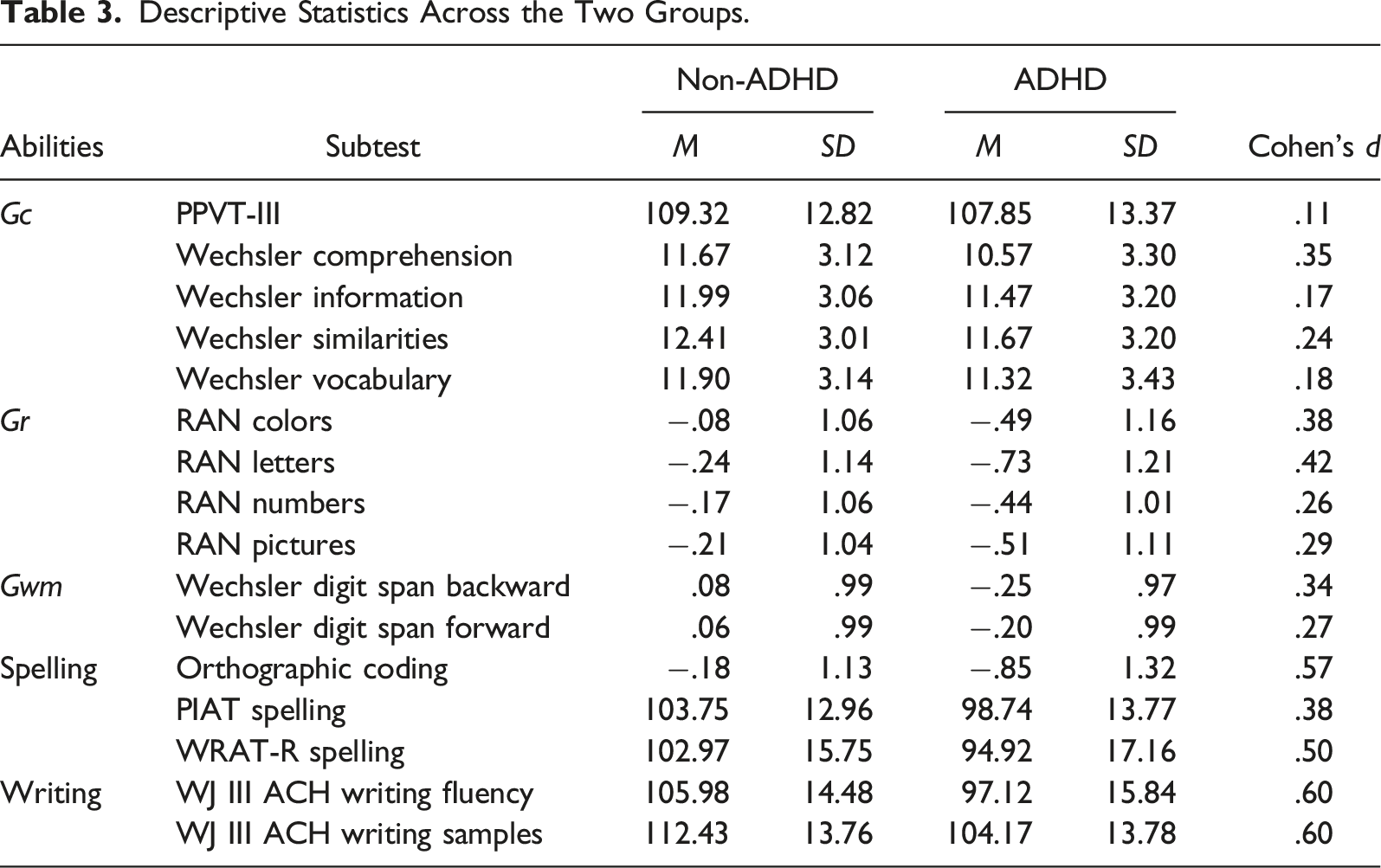
Descriptive Statistics Across the Two Groups.
Research Question #1: Does an Extended Version of the NSVW Model (Fully Latent) Including Multiple Cognitive Abilities Explain Writing Performance in Students With and Without ADHD?
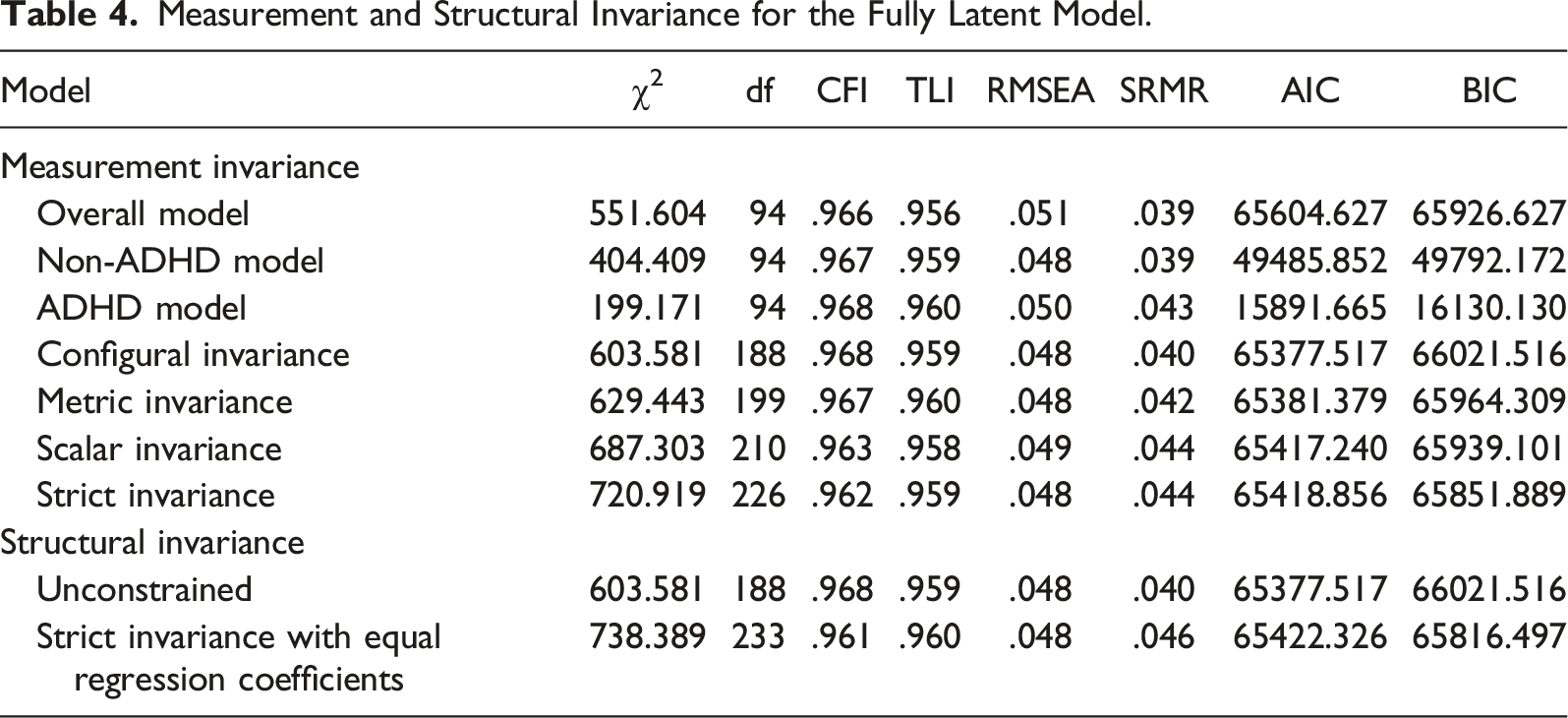
Measurement and Structural Invariance for the Fully Latent Model.
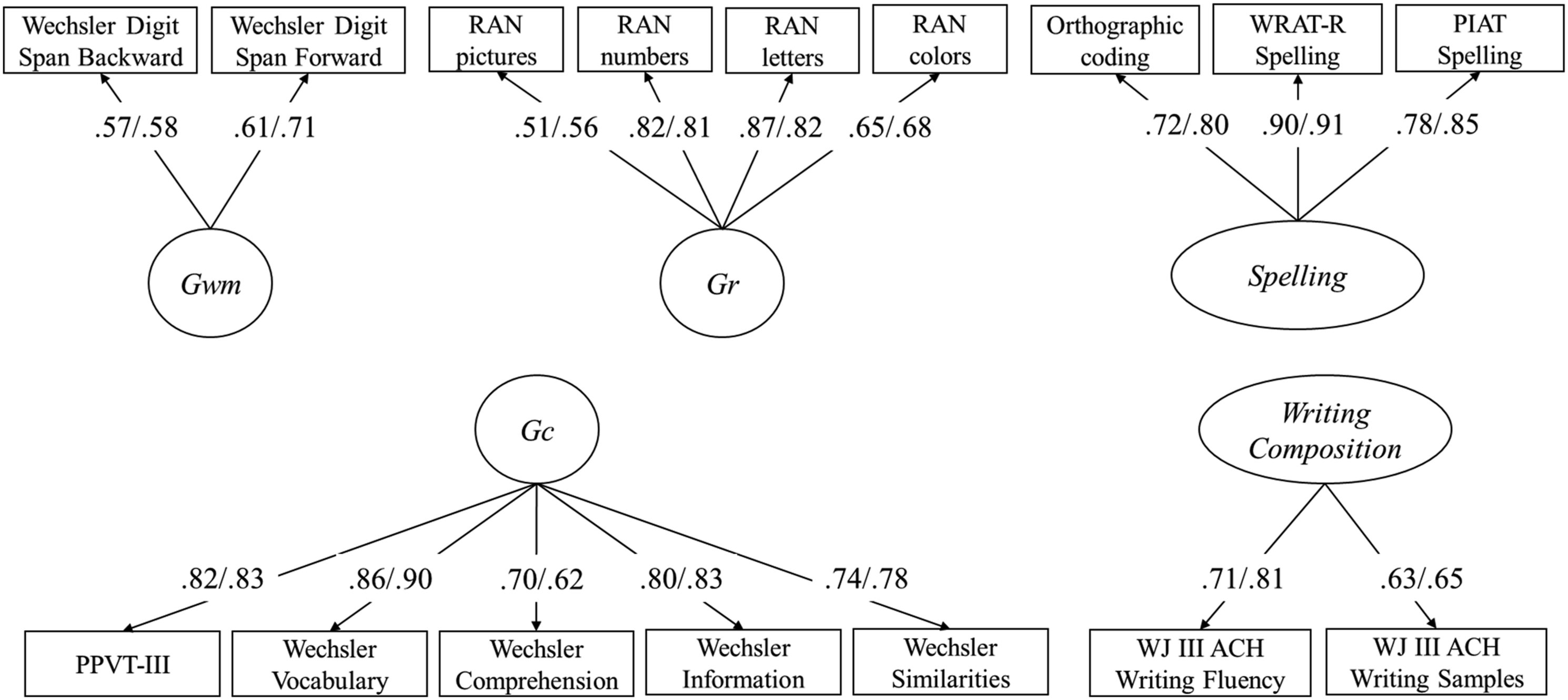
Measurement Model for Fully and Partially Latent Models.
Table 4 also includes the fit indices for the unconstrained structural model, indicating an excellent fit to the data (CFI = .968, TLI = .959, RMSEA = .048, SRMR = .040). Negligible differences in model fit were observed after the inclusion of equality constraints for the regression coefficients between the two groups (CFI = .961, TLI = .960, RMSEA = .048, SRMR = .046). Figure 2(a) includes the regression coefficients for the structural portion of the model. The three broad cognitive abilities (Gr, Gwm, and Gc) were significantly associated with Spelling. Retrieval fluency (Gr) and Verbal Comprehension (Gc) also predicted Writing Composition. Lastly, the strongest association in the model was between spelling and writing composition. Structural Relations of the Version of the Not-So-Simple View of Writing Model.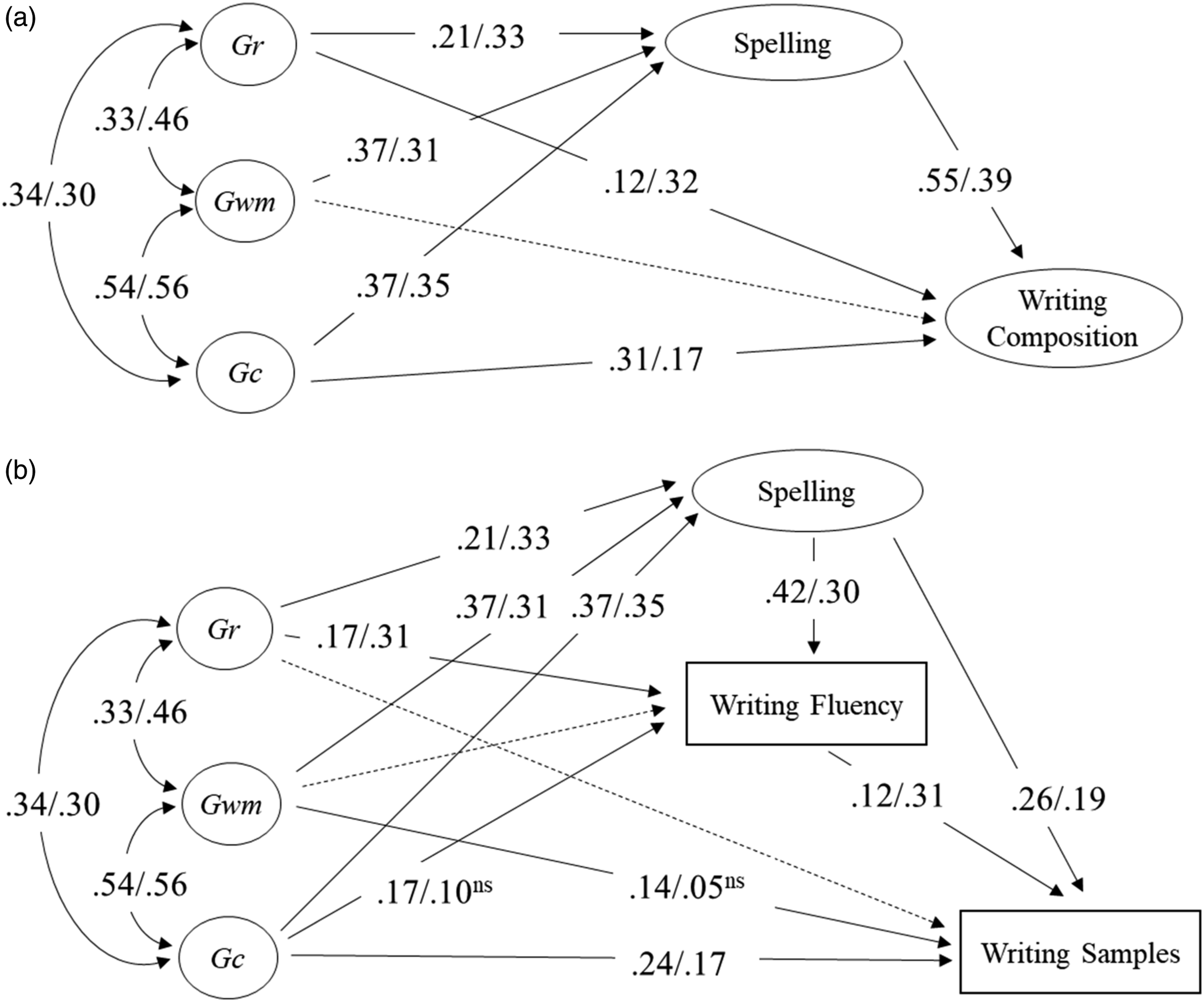
Research Question #2: Does the NSVW Extended Model (Partially Latent) Provide a Better Description of Student Writing Performance?
Measurement and Structural Invariance for the Partially Latent Model.
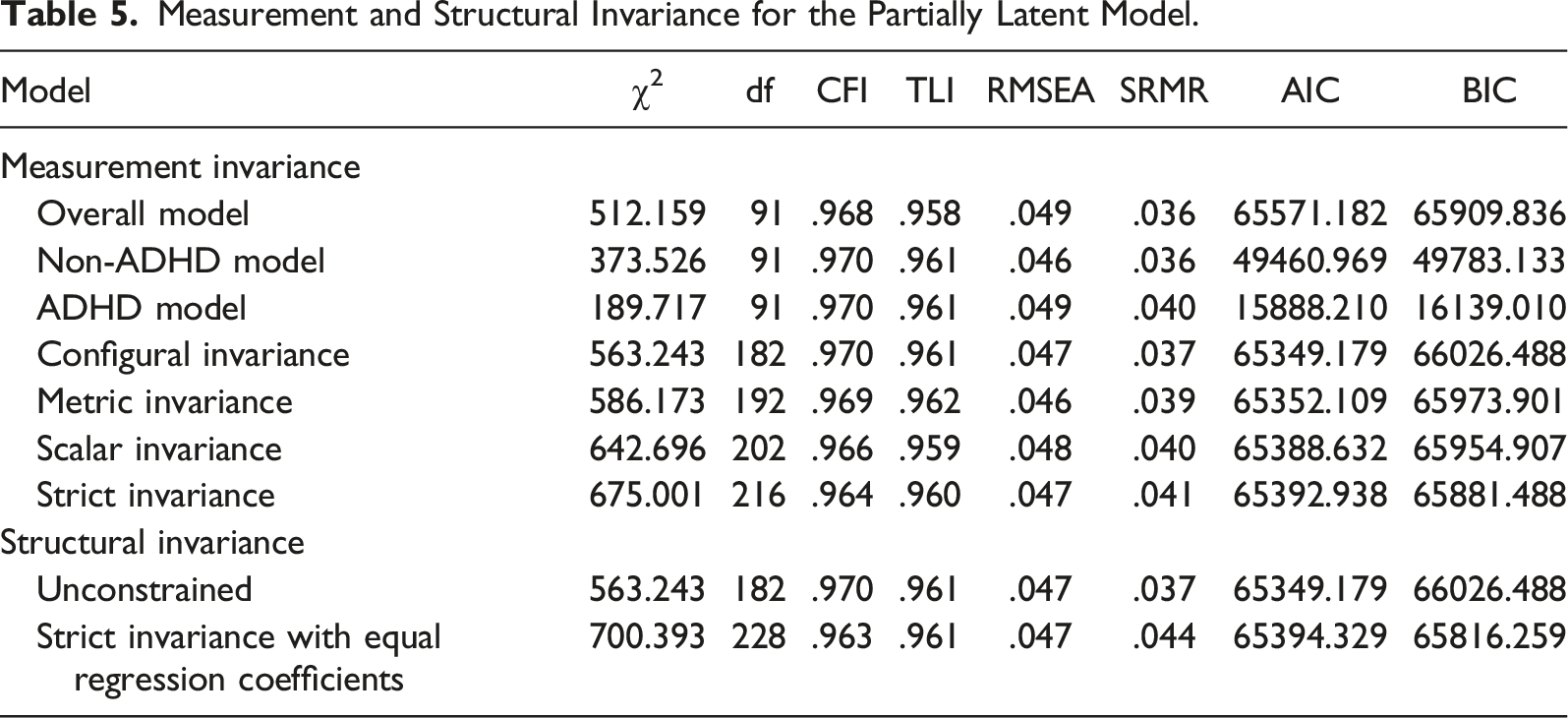
The fully and partially latent version of the NSVW model was compared to determine which model exhibited optimal fit to the data and parsimony. Based on the fit indices, both models demonstrated excellent fit with negligible differences (Tables 4 and 5). BIC values revealed no change in the model parsimony. However, AIC values indicated that the partially latent model offered a more parsimonious representation of the relationships among the variables (ΔAIC = −28.00).
Research Question #3: Do Model Components Show Similar and Different Associations in Students With and Without ADHD?
The combination of latent broad cognitive abilities and spelling and observed writing fluency and composition skills resulted in the optimal operationalization of the NSVW model. The relationships between model components were mostly similar between the two groups with some notable differences in the magnitude of the effects. Retrieval fluency (Gr) had statistically significant effects on Spelling and Writing Fluency for students with and without ADHD, with coefficients ranging from moderate to large; however, no significant effect was observed on Writing Samples. Working memory (Gwm) emerged as a significant predictor of Spelling but showed no statistically significant associations with Writing Fluency; however, the effect of Gwm on Writing Samples was statistically significant only for students without ADHD. Furthermore, Verbal Comprehension (Gc) demonstrated statistically significant effects on Spelling and Writing Samples for both groups. However, Verbal Comprehension (Gc) uniquely predicted Writing Fluency only for students without ADHD. Spelling showed a large effect on Writing Fluency and a moderate to large effect on Writing Sample across the two groups. Lastly, Writing Fluency was a statistically significant predictor of Writing Samples, ranging from a moderate effect for students without ADHD to a large effect for students with ADHD.
Discussion
This study examined two extended versions of the NSVW model and assessed whether the processes underlying writing performance were comparable between students with and without ADHD. The findings expanded the literature in three directions.
First, both versions of the NSVW model highlighted the crucial role of multiple broad cognitive abilities for writing outcomes. This stands in contrast to the traditional NSVW model which only incorporated the contribution of oral language and working memory skills. Our findings confirmed the role of retrieval fluency and verbal comprehension and knowledge on writing performance. A recent study conducted on the KABC-II and the KTEA-II came to similar conclusions showing that multiple broad cognitive abilities individually predicted student-written expression with comparable magnitudes (Hajovsky et al., 2018).
Furthermore, cognitive abilities exhibited a different pattern of relationships with basic and advanced writing skills. While direct associations were stronger with basic academic skills (e.g., spelling), they were relatively weaker with more complex abilities (e.g., writing composition). These findings suggest that broad cognitive abilities contribute to more advanced writing abilities mostly via indirect paths. Recent empirical research conducted on more comprehensive writing models (e.g., DIEW; Kim & Graham, 2022) has highlighted the significance of foundational and high-order abilities for effective writing. Consistent with our findings, the DIEW includes both direct and indirect paths underlying student writing performance. It also posits that working memory has a strong impact on writing via spelling skills, with only negligible to small direct effects on writing composition. Additionally, the weaker relationship between broad cognitive abilities and more advanced writing components may be associated with the fact that writing quality was mostly assessed at the sentence-level, which may place less demand on the student working memory, retrieval fluency, and verbal comprehension.
Second, the partially latent model offered an improved description of the associations between cognitive abilities and writing skills. This suggests that writing skills might be characterized as a combination of multiple components, rather than being viewed as a unidimensional construct. While retrieval fluency, working memory, and verbal comprehension contributed to spelling skills, they showed distinct patterns of direct associations with writing fluency and writing quality. Retrieval fluency was selectively associated with writing fluency and verbal comprehension selectively with writing quality. Additionally, enhanced working memory skills moderately predicted writing quality for students without ADHD.
Another notable result was the significant association between writing fluency and writing quality. This finding allows scholars to integrate the literature on broadband tests with WE-CBM, a popular approach to the evaluation of academic skills for screening and progress monitoring. Specifically, the use of WE-CBM for the assessment of written expression relies on the evidence that writing fluency is essential for the efficient development of writing quality. Results from meta-analyses revealed that writing fluency metrics are significant predictors of writing proficiency for K-12 students (e.g., Romig et al., 2017).
Third, students with and without ADHD displayed comparable associations between cognitive and writing skills. There were, however, slight differences in the strength of specific associations. Students with ADHD demonstrated a stronger association of writing fluency with retrieval fluency and spelling skills, while no direct link was found with working memory and verbal comprehension. These findings support the indirect contribution of working memory to writing fluency and writing quality via basic writing skills (e.g., spelling) (Cordeiro et al., 2020). Additionally, students with ADHD showed stronger associations between retrieval fluency (Gr), writing fluency, and writing quality. This pathway linking cognitive skills to writing performance could explain the preference of students with ADHD to use retrieval strategies that prioritize completing the task quickly at the expense of accuracy.
Taken together, these results have important practical implications. The NSVW model offers an evidence-based interpretational basis for the assessment of writing difficulties. Within this framework, practitioners can select measures of writing components aligning with their evaluation goals. The estimation of the different contributions of model components can enable practitioners to identify key strengths and weaknesses and have important implications for struggling writers; for instance, the extended version of the NSVW model may shift the focus of interventions from distal cognitive broad skills with far transfer (such as retrieval fluency and working memory) to more proximal skills with near transfer (such as spelling) (Ahmed et al., 2021). Empirical findings from comparative research are also necessary to understand whether commonly used cognitive and achievement test batteries offer similar information in the assessment of students with and without neurodevelopmental disorders. Students with ADHD have rarely been included in the NSVW literature, and there is sparse evidence of whether models developed for students in general education apply to their performance as well. Given that the majority of students with ADHD face writing difficulties, practitioners can benefit from the availability of evidence-based assessments and practices. The extended NSVW model can be used as an evidence-based model to select tasks to administer to students during psychoeducational assessments, organize the evaluations around such models, identify the mechanisms responsible for poor outcomes on specific writing components, and develop interventions to improve student writing performance (Parkin et al., 2020).
Limitations
Findings should be considered in relation to three important limitations. First, the group of students with ADHD included individuals who demonstrated symptoms of inattention or hyperactivity in at least one setting. However, this criterion deviates from the DSM criteria for a valid diagnosis, which requires symptoms in two or more settings (e.g., at home and school). Future studies should investigate similarities and differences between students with ADHD as defined by an alternative criterion (e.g., “and rule”). It would also be important to explore whether the NSVW model is equivalent for students with different manifestations of ADHD (e.g., inattentive vs. hyperactive).
Second, another potential issue concerns measurement practices. Working memory (Gwm) was only measured with two digit span trials. This may not fully represent the type of memory skills that contribute to writing performance. Additionally, as this study employed archival data, important componential skills of the NSVW model were not measured, such as handwriting fluency, and domain-general and domain-specific components. Future studies should include the measurement of a more comprehensive set of components contributing to effective writing to improve the model validation efforts.
Third, the SEM models in this study were designed using a cross-sectional design and a limited number of variables. The validity of the results might be limited by the presence of confounders and the longitudinal nature of mediated effects. For example, other variables, such as auditory processing (Ga) and reading comprehension, contribute to student writing performance. Future studies should investigate whether these relationships unfold over time and expand the number of variables in the model. Yet, evidence supporting causal mechanisms among cognitive and writing skills is consistent with the findings of this study (e.g., Cordeiro et al., 2020).
Conclusion
This study aimed to extend the NSVW model to describe the processes underlying poor writing outcomes in students with ADHD. Findings demonstrated that multiple broad cognitive abilities predicted student writing performance and basic writing skills predicted more advanced writing skills. The comparison between different versions of the NSVW model suggested that writing might be better described as a series of intercorrelated observed variables. Additionally, students with and without ADHD exhibited comparable patterns of associations among the components of the model. In summary, this study provides practitioners with a more comprehensive framework for writing to select appropriate tasks for psychoeducational assessments and interpret performance scores on measures of basic and advanced writing.
Footnotes
Declaration of Conflicting Interests
The author(s) declared no potential conflicts of interest with respect to the research, authorship, and/or publication of this article.
Funding
The author(s) disclosed receipt of the following financial support for the research, authorship, and/or publication of this article: The present study was supported by the Texas Woman’s University Woodcock Institute for the Advancement of Neurocognitive Research and Applied Practice (Research Grant) to Michael Matta.
