






Abstract
Motivational self-regulation is a key component of self-regulated learning. Research has revealed the variety of strategies students use to reach their learning goals, and several instruments, built on one another, have been developed. This study describes the development of the Motivational Regulation Strategies Inventory (MRSI), a French instrument that expands previous tools by measuring a broader range of strategies, including seeking support and emotion regulation. Two studies were conducted to assess its validity: one with 305 middle school students and another with 653 college students. Exploratory factor analysis (Study 1) and confirmatory factor analysis (Study 2) identified 10 strategies. Path analysis examined the nomological network of these strategies, which included intrinsic motivation, self-efficacy beliefs, and procrastination as sources, and academic perseverance as an outcome. The findings provide substantial evidence for the MRSI’s validity.
Educational Relevance and Implications Statement
This study presents a validated French-language self-report scale that measures how students regulate their motivation during academic tasks and incorporates several innovative strategies. The tool provides educators with a practical means of identifying students’ motivational strengths and challenges. Integrating this instrument into their practice allows educators to better support students in developing effective self-regulation habits, ultimately fostering greater engagement, persistence, and academic success.
Introduction
Self-regulated learning (SRL) refers to the processes learners use to activate and maintain their cognitions, emotions, and behaviors to attain personal goals (Zimmerman & Kitsantas, 2014). Research on self-regulated learning has provided insights into how students initiate, control, and adapt their learning process to learn efficiently and achieve their learning goals (Pintrich, 2003; Sitzmann & Ely, 2011; Winne, 1995; Zimmerman, 2013). Different areas of learning can be regulated. The early research on self-regulated learning mainly focused on the use of cognitive and metacognitive strategies, before expanding its scope by addressing other aspects of self-regulated learning, such as regulation of motivation and emotion (Kim et al., 2020). When working on academic assignments, students often face difficulties such as low self-efficacy beliefs or low perceived task value that can weaken their motivation—that is, “the willingness to engage and sustain a high level of effort in completing the task” (Schwinger et al., 2009, p. 622). They need to find ways to support or strengthen their motivation, and the regulation of motivation, or motivational regulation, is thus a key aspect of self-regulated learning. The goal of motivational self-regulation is to increase effort and persistence, which, in turn, leads to better performance. In other words, motivational regulation indirectly affects performance—by improving motivation, it enhances performance and persistence (Schwinger et al., 2009; Wolters, 2003; Wolters & Won, 2018). Motivational regulation must be distinguished from motivation, that is, “the willingness or the desire to be engaged and commit effort to completing a task” (Wolters, 1998). Students are not necessarily conscious of the underlying processes leading to their personal investment, such as causal attributions, value appraisals, or self-efficacy judgments, whereas they exhibit an active control of these processes to self-regulate their motivation (Trautner et al., 2025; Wolters, 2003). Several studies have confirmed the indirect link between motivational regulation and performance (Engelschalk et al., 2017; Grunschel et al., 2016; Kryshko et al., 2020; Schwinger et al., 2009; Schwinger & Stiensmeier-Pelster, 2012). In the last two decades, several studies have addressed motivational regulation, which is, arguably, no longer the underemphasized aspect of self-regulating learning that Wolters (2003) highlighted in his seminal article on the topic.
Existing instruments, such as the “Learning and Study Strategies Inventory” (LASSI; Weinstein et al., 1987) and the “Motivated Strategies for Learning Questionnaire” (MSLQ; Pintrich et al., 1991), assess motivational components in addition to cognitive components of learning. However, these instruments focus more on the motivational processes (e.g., task value, self-confidence, and interest in school) than on motivational regulation strategies (except for the control of the environment, which is referred to as “time and study environment management” in the MSLQ). Therefore, one part of the research on motivational regulation was dedicated to developing self-report scales intended to evaluate how individuals regulate their motivation by deliberately using strategies. However, few instruments are available for assessing motivational regulation and it should be noted that some potential motivation self-regulation strategies were not included in prior motivational self-regulation scales. Moreover, no motivational regulation scale is available in French, except for the translation of the Wolters and Benzon (2013) scale (Berger & Rinaldi, 2015). Considering these two reasons, this study focused on proposing a new motivational self-regulation scale in French by extending the motivational self-regulation strategies present in the most popular instruments and reframing some of them. This new instrument was aimed at being applicable to secondary education students (from middle school) up to college students.
Prior Instruments Assessing Motivational Self-Regulation
Based on the taxonomies of volitional strategies created by Kuhl (1985) and Corno (1993), the Academic Volitional Strategy Inventory (AVSI; McCann & Garcia, 1999; Mccann & Turner, 2004) was the first questionnaire designed to study the strategies for the self-regulation of motivation and emotion. However, it was essentially Wolters who, based on his initial work on the self-regulation of motivation (Wolters, 1998), sought to create an inventory of motivational self-regulation strategies. He first conducted a qualitative survey of 115 students. Several learning situations were proposed, such as preparing for an exam, writing an essay, and reading a textbook, and the students had to indicate which behaviors they would think of adopting to sustain their effort if they were confronted, in each of the situations, with three types of problems: The task is perceived as irrelevant, or difficult, or boring. Content analysis revealed 14 strategies, and their frequency of use varied greatly. Based on this initial taxonomy, Wolters designed and validated a scale that distinguishes first five (Wolters, 1998, 1999; Wolters & Rosenthal, 2000) and then six (Wolters & Benzon, 2013) different strategies for motivational self-regulation.
Motivational Self-Regulation Strategies and Comparative Distribution of Items
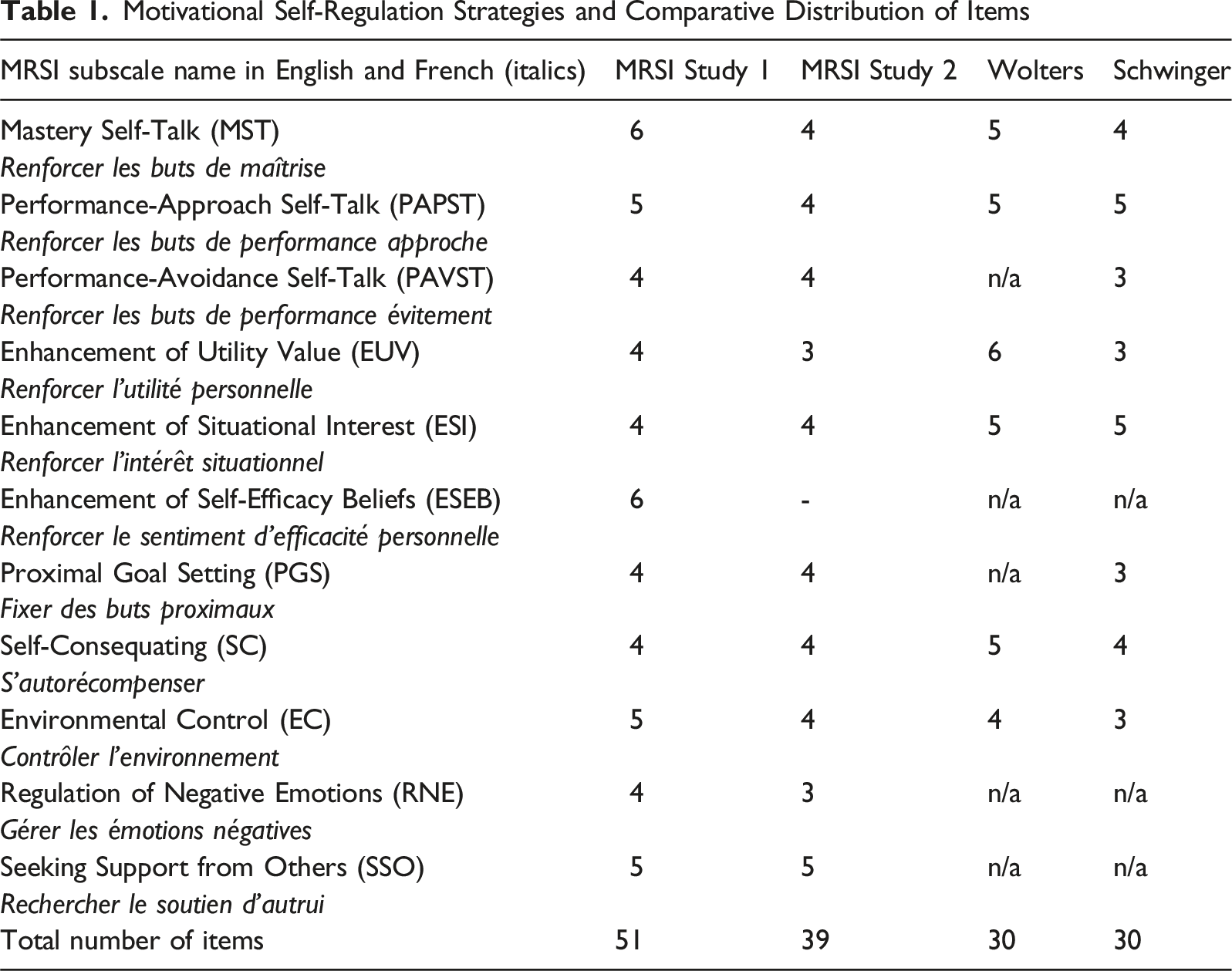
The two strategies added by Schwinger were Proximal Goal Setting and Performance-Avoidance Self-Talk. The strategies investigated were mostly identical but with slightly different wording, as illustrated by the following example related to the “environmental control” subscale: - “I make sure that distractions occur as seldom as possible” (Schwinger et al., 2009) - “I make sure that I have as few distractions as possible” (Wolters & Benzon, 2013).
The main differences in terms of content pertain to the regulation of value subscale, named “personal significance” in the Schwinger et al. (2009) instrument and consisting of three items, compared to six items in the Wolters and Benzon (2013) instrument. The Schwinger et al. (2009) items explore how what is being learned is connected to a student’s life and experiences. The items’ wording remains general. Wolters and Benzon (2013) question a similar connection with life and experience in three of their items but specifically study the usefulness of what is learned in three other items, which Schwinger et al. (2009) do not do.
The Wolters and Benzon scale (2013) was translated into French and adapted for high school students (Berger & Rinaldi, 2015). To our knowledge, no other scale that measures motivational self-regulation strategies in French exists.
Development of a New Instrument: The Motivational Regulation Strategies Inventory
By focusing on the instruments of Schwinger et al. (2009) and Wolters and Benzon (2013), we aimed to implement four kinds of changes. The first change concerned extending the number of assessed strategies from eight (Schwinger et al., 2009) to eleven by adding three subscales related to (a) help seeking (seeking support from others), (b) regulation of negative emotions, and (c) enhancement of self-efficacy beliefs. This change aimed to improve the validity based on test content by identifying construct underrepresentation (Bandalos, 2018); we argue for this extension of assessed strategies in subsection 1.2.1. The second change concerned improving the content validity of the Mastery Self-Talk scale, given its exclusive focus in prior research on self-based criterion at the expense of task-based criterion (see 1.2.2). The third change concerned revising the wordings of some items to improve their clarity. The fourth change aimed to modify the focus of the personal significance subscale developed by Schwinger et al. (2009). These subscale items focused on the significance of the learning content to one’s daily life, experience, and interest, whereas in our instrument, they focused on increasing utility in terms of future learning or activity (Enhancement of Utility Value), like Wolters and Benzon’s (2013) perspective. We reasoned that the notion of interest is already present in another strategy (Enhancement of Situational Interest), and that utility is a more valid focus for students than their daily life experiences when referring to school or academic activities.
New Motivational Regulation Scales
Seeking Support from Others
Help seeking has been studied as an important SRL strategy that uniquely integrates a social aspect (Karabenick & Gonida, 2018). Help seeking is not only a cognitive strategy but also a motivational and emotional strategy, one in which others support and recognize the value of the learning effort previously made (Boekaerts, 1993; Karabenick & Newman, 2006). In particular, emotional support can be found in group learning (Järvenoja et al., 2020) and in individual learning when task difficulty is appraised as high (Wolters, 1998). For these reasons, a subscale called Seeking Support from Others with five items (e.g., “I chat with friends to clear my head before going back to work.”) was created.
Emotion Regulation
Strategies aimed at self-regulating emotions are part of SRL (Boekaerts, 2011; Pekrun et al., 2002; Zheng et al., 2023), although most SRL models focus on cognitive and motivational self-regulation strategies. Experiencing negative emotions, such as frustration, anxiety, or boredom, can harm students’ efforts and persistence (Camacho-Morles et al., 2021). Consequently, students may need to monitor and adjust their own emotions until they attain their learning goals (Ben-Eliyahu & Linnenbrink-Garcia, 2013). Emotion regulation is included in Corno’s taxonomy of volitional strategies (Corno, 2001; Corno & Kanfer, 1993) and Wolters’ taxonomy (Wolters, 2003). Wolters (1998) found that a few students in his study tried to control their emotions, notably with emotion-related self-talk (“Don’t stress”). Controlling one’s body (e.g., slowing down breathing) is also a means of controlling emotion (Corno, 2001; Corno & Kanfer, 1993). Accordingly, a subscale called Regulation of Negative Emotions with four items (e.g., “I tell myself ‘Don’t stress, calm down’ to help me continue working”) was created.
Enhancement of Self-Efficacy Beliefs
In his seminal research, Wolters (1998) found that some of the students in his study tried to influence how competent they felt about successfully completing their tasks. He included efficacy management as a significant form of motivational regulation strategy (Wolters, 2003). Some of the prior instruments included this strategy in various forms. In the AVSI, McCann and Garcia (1999) included items that directly refer to self-efficacy enhancement (e.g., “I tell myself, “You can do this!”) as part of the “Self-talk” factor with items on emotion regulation and mastery self-talk. In Suárez Riveiro and Fernandez’s (2011) Escalas de Estrategias Motivacionales del Aprendizaje Versión Secundaria (“Motivational Learning Strategy Scales Secondary School Version”), the “Strategy for generating positive expectations” strategy is included, with items such as “When faced with a difficult task, I think of similar occasions when I was successful.” Learners’ self-efficacy beliefs are not static but fluctuating and dynamic in nature, especially when facing complex and long-lasting tasks, such as preparing for an exam or writing an essay. For example, longitudinal studies on L2 language learning revealed fluctuations in students’ self-efficacy over a one-semester course (Dörnyei, 2000; Xu et al., 2022). Cervone and Palmer (1990) also referred to the construct of “initial self-efficacy judgments,” highlighting that, in non-familiar tasks, these judgments could “change rapidly as new experiences provide important information about task demands and one’s coping skills” (p. 402). Although the proximal goal setting strategy can be used to support self-efficacy (Bandura & Schunk, 1981; Miele & Scholer, 2018; Wolters, 2003), we created a specific subscale—Enhancement of Self-Efficacy Beliefs—devoted to the other means used to sustain self-efficacy beliefs (e.g., efficacy self-talk) and created six items (e.g., “I think back to difficult situations that I managed to overcome”) by considering three sources of self-efficacy beliefs (Bandura, 1997): mastery experiences, vicarious experiences, and emotional states. Increasing self-efficacy by invoking social persuasion was considered unlikely and thus not included in the item development.
Improving Content Validity of Mastery-Self-Talk Subscale
Mastery-self talk items reflect students’ tendency to increase their desire to complete the task by intensifying the focus on mastery-approach goals such as developing his or her competence (Wolters, 1999). Mastery-approach goal is focused on approaching task/self-based competence, mastering tasks, or improving upon one’s prior performance. Consequently, two criteria can be used to evaluate competence: self-based (improving oneself) or task-based (Elliot & Sommet, 2023; Korn et al., 2019; Senko, 2019). The items that evaluate the regulation of the mastery-approach goal in the motivational self-regulation scales of Wolters and Benzon (2013) and Schwinger et al. (2009) are only based on the self-based criterion. Items related to the task-based criterion could thus be added to improve construct validity. Furthermore, achievement goals create a framework in which individuals experience achievement-related situations. Reactions to error and, more generally, to perceived difficulties and failure differ according to achievement goals. Mastery-approach goals do not trigger negative reactions regarding failure, which are considered useful information about one’s own learning process. In contrast, performance-approach or performance-avoidance goals foster a negative perception of difficulties and failure, which convey information about the abilities one may lack. In this performance goal framework, failure is a threat to self-esteem (Dweck, 1986; Steuer et al., 2013). Introducing items that evaluate reactions to difficulties or failures was thus considered.
The instrument named “Motivational Regulation Strategies Inventory” (MRSI) included 51 items in its first version and 39 in its second. The final version is provided as Supplemental Material, including both the French (used in the two studies described in this paper) and English translations of the items. We conducted two studies to assess the validity of the instrument. In these studies, the items were answered on a six-point Likert scale ranging from 1 (never or hardly ever) to 6 (always or almost always).
Aims of the Studies
We aimed to develop and assess the validity of a new self-report motivational regulation scale in French by (1) including the eight motivational regulation strategies addressed in Schwinger et al. (2009); (2) adding three new motivational regulation strategies (Seeking Support from Others, Regulating Negative Emotions, and Enhancing Self-Efficacy Beliefs); and (3) improving the content validity of the items, particularly the Mastery Self-Talk subscale.
According to Messick (1989), construct validity entails, on the one hand, determining or confirming the main components of an instrument through dimensional analysis (i.e., evidence based on internal structure) and, on the other, situating the concept in a nomological network. In other words, the goal of construct validity is to determine, based on formal hypotheses, the extent to which an instrument or its dimensions fit into a network of relationships in the expected way (Cronbach & Meehl, 1955). It is evidence based on relation to other variables as expected from theory (Bandalos, 2018). In this study, we aimed to collect evidence of construct validity by using exploratory and confirmatory factor analyses for verifying the main components of the MRSI and path analyses for studying the nomological network.
The main research question was as follows: How valid is the newly developed MRSI? This question was broken down into three specific questions: a) Regarding construct validity, how does the internal structure (factors) match the theoretical expectations, and what are the correlations between the subscales? b) Regarding reliability, what are the internal consistencies of the subscale? c) Regarding the nomological network, how do the subscales correlate with the expected sources and outcomes?
Regarding the subscale’s nomological network, our expectations relied on prior studies, notably Fong et al.’s (2024) meta-analysis. Specifically, we examined, using a cross-sectional design, three theoretical sources of motivational self-regulation strategies (self-efficacy beliefs, intrinsic motivation, and procrastination), and one theoretical outcome (perseverance in academic tasks). Fong et al. (2024) revealed positive and moderate correlations between value perceptions (mixing several components of task value, such as intrinsic value and utility value) and the use of motivational self-regulation strategies. Mastery goal orientation was positively correlated with all the motivational self-regulation strategies in Wolters and Benzon (2013) and Wolters and Rosenthal (2000). Berger (2021) and Ilishkina et al. (2022) included measures of intrinsic motivation to test their association with motivational self-regulation strategies, with both studies finding that intrinsic motivation is positively correlated with the measured motivational self-regulation strategies. In Ilishkina et al. (2022), the “intrinsic motives” to know, to achieve, and to self-develop were positively related to the six strategies assessed by Schwinger et al.’s (2009) scale. In Berger (2021), a single intrinsic motivation score aggregating the same three motives was positively related to the strategies assessed by the Wolters and Benzon (2013) scale. Based on the results of these two studies, we included intrinsic motivation as an expected source of motivational self-regulation. Another source we included was self-efficacy beliefs. Fong et al. (2024) revealed positive and moderate correlations between “competence beliefs” and the use of motivational self-regulation strategies. More generally, as per SRL research, self-efficacy beliefs play a major role in engaging in SRL processes and are thus an indispensable variable to consider when studying SRL strategies (Pajares, 2008; Zimmerman, 2000). The third source was procrastination, as we reasoned that students employ motivational self-regulation strategies if they believe that they must fight against their tendency to procrastinate on their assignments. Procrastination is also considered an outcome of using motivational self-regulation strategies, as these strategies limit procrastination (Wolters, 2003). Finally, we included perseverance in academic tasks to represent the outcome of the motivational self-regulation strategies, reasoning that perseverance is students’ goal or expected result when they decide to rely on such strategies. As observed by Fong et al. (2024), we expected each of the 10 subscales of the MRSI to relate to perseverance in academic tasks.
Study 1
Method
Participants
The participants were 305 students from 18 classes in ninth grade from two French-speaking secondary schools in Switzerland. They were distributed in three tracks based on academic abilities, which implies limited choices for their academic future: pre-gymnasium (n = 123; 40.3%), general (n = 122; 40%), and basic requirements (n = 60; 19.6%). The overall sample was 53.1% female and 46.9% male, and the mean age was 15.82 years, ranging from 12 to 18 years, with most students aged 15.
Procedure
After distributing parental consent forms in the schools and obtaining consent, the survey was distributed and administered by two graduate students. The study was authorized by the Cantonal Education Department.
Measures
First, we created a pool of 96 items. Seventeen items were taken from the French version of Wolters’ scale (Berger & Rinaldi, 2015); nine were adapted from Schwinger’s scale; and 70 were developed by the authors. After eliminating redundant and inadequately conceptualized items, the first version of the MRSI comprised 51 items, which were supposedly measuring 11 motivational self-regulation strategies: (1) Mastery Self-Talk, (2) Performance-Approach Self-Talk, (3) Performance-Avoidance Self-Talk, (4) Enhancement of Utility Value, (5) Enhancement of Situational Interest, (6) Enhancement of Self-Efficacy Beliefs, (7) Proximal Goal Setting, (8) Self-Consequating, (9) Environmental Control, 10) Regulation of Negative Emotions, and 11) Seeking Support from Others. Table 1, which includes the original name of each strategy in French and the related number of items, compares the MRSI to the Wolters and Benzon (2013) and Schwinger et al. (2009) scales.
Results
Exploratory Factor Analysis (EFA)
Pattern Matrix (Study 1)
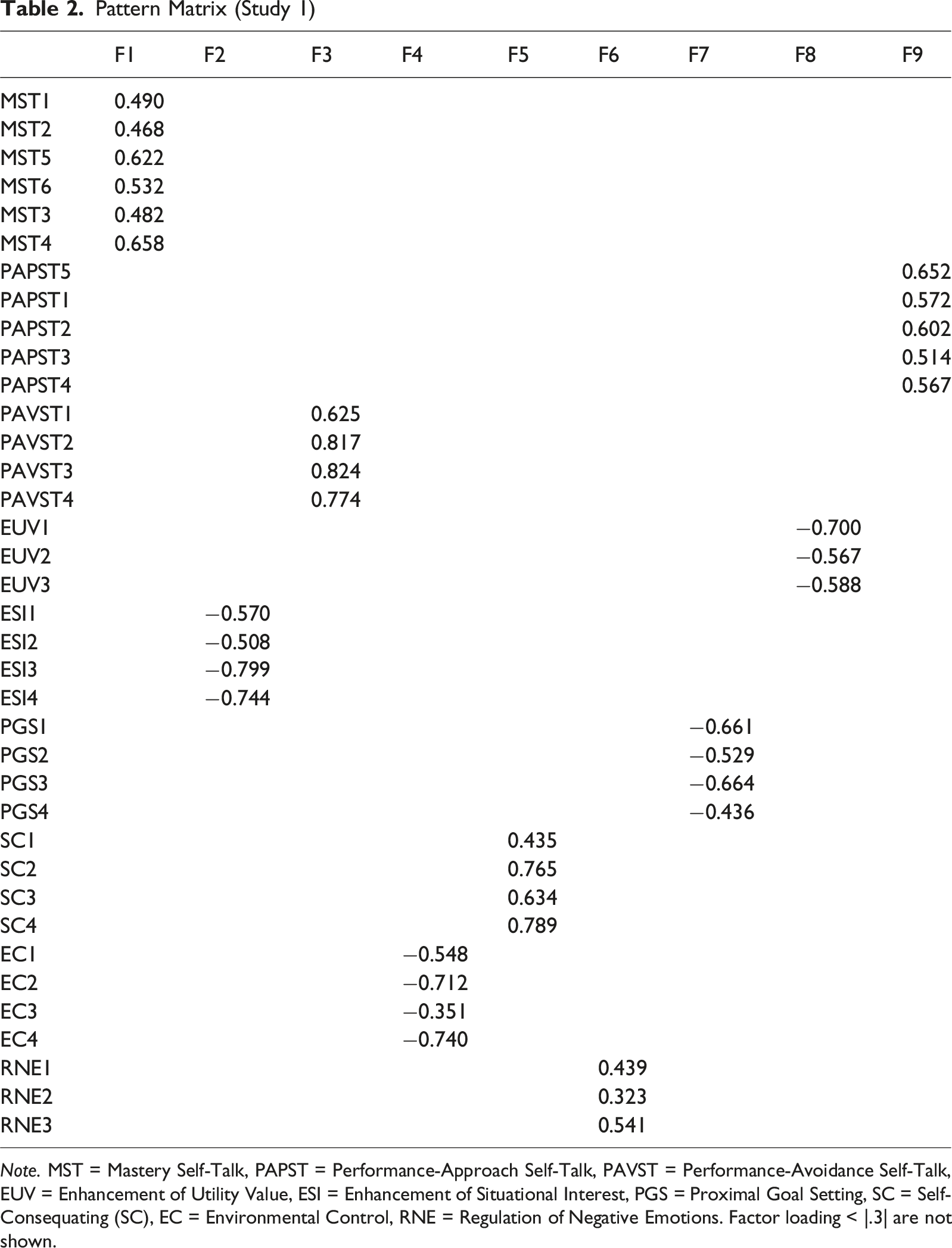
Note. MST = Mastery Self-Talk, PAPST = Performance-Approach Self-Talk, PAVST = Performance-Avoidance Self-Talk, EUV = Enhancement of Utility Value, ESI = Enhancement of Situational Interest, PGS = Proximal Goal Setting, SC = Self-Consequating (SC), EC = Environmental Control, RNE = Regulation of Negative Emotions. Factor loading < |.3| are not shown.
Together, the nine factors explained 55.8% of the total variance in the items. Each factor saturated at least three items with a factor loading λ > |.30|. Factor 6 (Regulation of Negative Emotions) counted only three items with rather low factor loadings (λ < .55).
Descriptive and Bivariate Statistics
Descriptive Statistics for Study 1
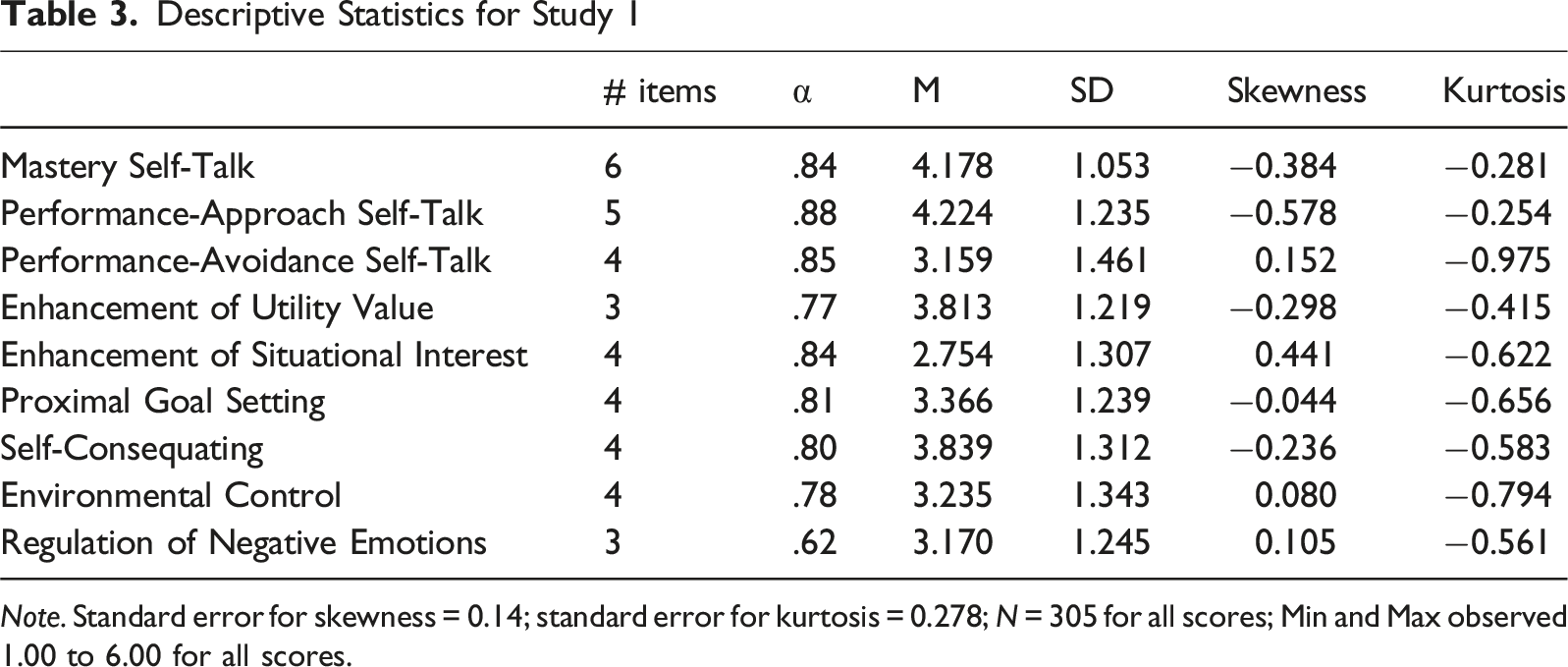
Note. Standard error for skewness = 0.14; standard error for kurtosis = 0.278; N = 305 for all scores; Min and Max observed 1.00 to 6.00 for all scores.
Zero-Order Correlations Between Scales’ Scores (Study 1)
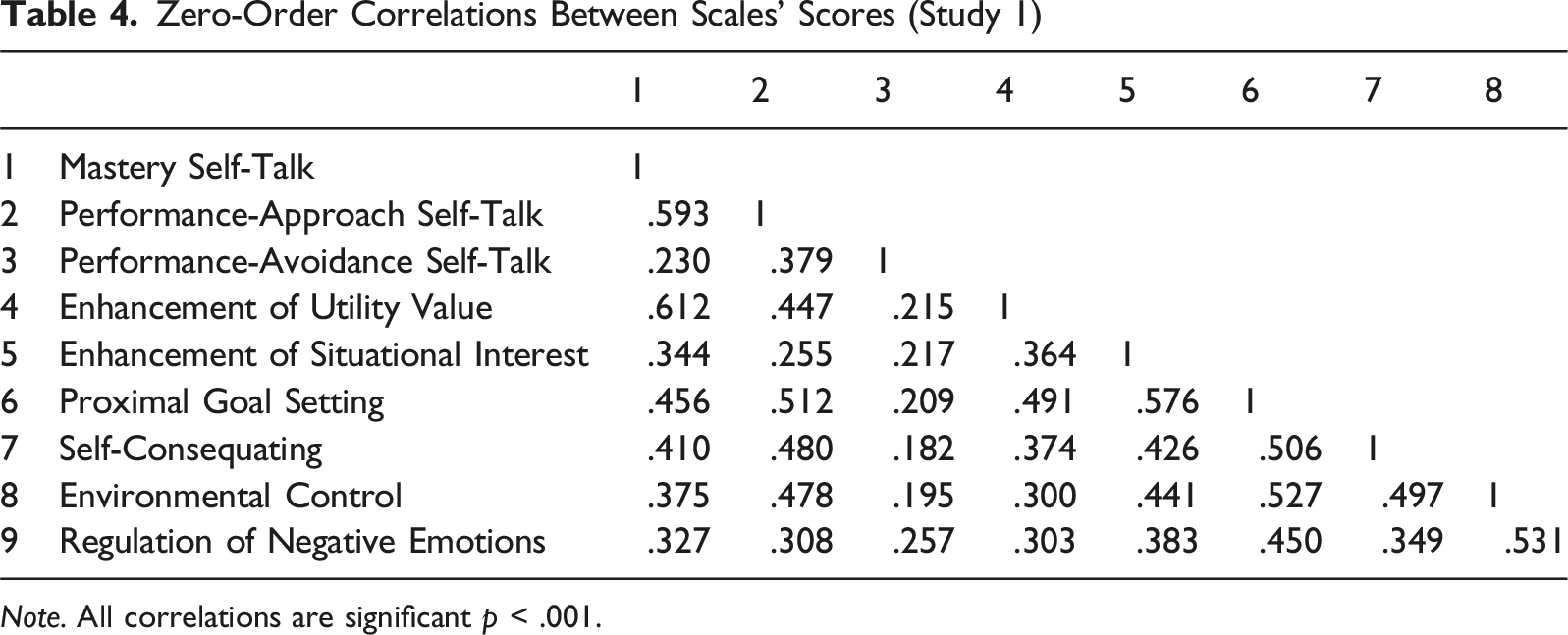
Note. All correlations are significant p < .001.
All the subscales’ mean scores were significantly (p < .001) and positively correlated. The correlations ranged from r = .182 (Performance-Avoidance Self-Talk with Self-Consequating) to r = .612 (Mastery Self-Talk with Enhancement of Utility Value). Accordingly, there seems to be a tendency to report using several strategies in combination instead of relying only on one strategy.
Conclusions From Study 1
In the first version of the MRSI, nine strategies were measured, expanding the scope of previous instruments that targeted six strategies (Wolters & Benzon, 2013) and eight strategies (Schwinger et al., 2009). The strategy Enhancement of Self-Efficacy Beliefs was not identifiable in the factor analysis, indicating that the six items developed for this purpose did not correlate sufficiently between them. The Proximal Goal Setting strategy fulfilled the same aim of supporting self-efficacy beliefs as Enhancement of Self-Efficacy Beliefs, as we argue in the general discussion below. Regulation of Negative Emotions demonstrated modest validity and reliability. In fact, only three of the four items were retained based on the EFA, and the resulting internal consistency was only moderate. Based on our findings, we made several decisions to improve the MRSI and, at the same time, to keep it as short as possible by limiting the number of items for measuring several strategies. These revision decisions are described in the method section of Study 2.
Study 2
Method
Participants
The participants were 653 French first-year students enrolled either in STEM (16.1%), education sciences (11.2%), or psychology (72.7%). The overall sample was 76.6% female, 19.1 % male, and 1.2% others; 3.1% did not respond. Most of the students (n = 444, 68%) entered university just after their high school diploma (baccalaureate in France), 84 students (12.9%) entered 1 year after the baccalaureate, 40 (6.1%) 2 years after the baccalaureate, 36 between 2 and 5 years after the baccalaureate (5.5%), and 19 (2.9%) over 5 years after the baccalaureate. Thirty students (4.6%) provided no responses.
Procedure
During the second semester of the academic year, emails inviting their participation in the survey were sent to students. They were informed about the study objectives, and after filling out the consent form, they completed the online self-report questionnaires. They were assured that their data would be kept confidential. The study was conducted in accordance with the European Union General Data Protection Regulation (GDPR), which defines the rules regarding personal data collection.
Instruments
Two types of instruments were completed by the participants—the MRSI in its revised version, and four scales that measured constructs related to motivational self-regulation: intrinsic motivation, self-efficacy beliefs, procrastination, and perseverance in academic tasks.
The Motivational Regulation Strategies Inventory
Motivational regulation strategies were measured with a 39-item revised scale using a 6-point scale from 1 (never or almost never) to 6 (always or almost always). Based on the findings of Study 1, the MRSI was modified. First, the Enhancement of Self-Efficacy Beliefs strategy was excluded. Only Proximal Goal Setting was included as a strategy supporting self-efficacy beliefs. Second, four new items that specifically targeted ways to reduce negative emotions (by taking a break or relaxing, for example) were created to measure the Regulation of Negative Emotions strategy. Third, five new items were added to measure the Seeking Support from Others strategy. Instead of targeting several sources of support (family, peers, and social media) as in Study 1, we created items centered on seeking support from peers in multiple ways (organizing study sessions with peers, looking for incentives from peers, relying on a group of friends, and so on). Finally, based on our examination of factor loadings, internal consistency, and redundancy in items meaning, we reduced the number of items, when possible, to shorten the MRSI. Specifically, five items were removed: two from Mastery Self-Talk, one from Performance-Approach Self-Talk, one from Enhancement of Utility Value, and one from Environmental Control. No changes have been made in the subscales Performance-Avoidance Self-Talk, Enhancement of Situational Interest, Proximal Goal Setting, and Self-Consequating. 1
Procrastination
Procrastination was measured using a six-item scale created by Cosnefroy (2018). Three items explored the difficulties in initiating an action (e.g., “It takes a lot of effort for me to start working”), while the other three focused on the difficulties in pursuing an action until its completion (e.g., “If I take a break when I’m studying, I have a lot of trouble getting back to work”).
Perseverance in Academic Tasks
Perseverance in academic tasks was assessed using four items (e.g., “Even when my studies require a lot of effort, I don’t give up until I have achieved my goal”) that are a subcomponent of the “Academic Engagement Scale” (Brault-Labbé & Dubé, 2008).
Intrinsic Motivation
Intrinsic motivation was measured using the four items included in the “Adult Education Motivation Scale” (Fenouillet et al., 2015; e.g., “I’m enrolled in this course because I experience pleasure and satisfaction while learning new things”).
Self-Efficacy Beliefs
Self-efficacy beliefs were assessed using six items drawn from the “Academic Self-efficacy Scale” (Schmitz & Frenay, 2013; e.g., “As a whole, I think I’m a good student”; “When I need to learn something new, I’m pretty sure I can do it”). The original scale had 10 items, but we kept only six for the sake of brevity. One item on time management was eliminated, as was one on stress management, and the other two were considered redundant.
Results
The results are presented in three parts. First, we conducted a set of confirmatory factor analyses. The first CFA, based on the results of the EFA in Study 1, assumed ten factors to confirm the internal structure of the MRSI. The second CFA assumed nine factors, excluding items measuring Regulation of Negative Emotions given their low loadings on a unique factor. The third CFA tested a model with nine first-order factors and one second-order factor loading on all the first-order factors. Second, we examined the internal consistency estimates and the descriptive and bivariate statistics. Third, we analyzed the MRSI’s nomological network using path analysis to examine how the subscales correlate with potential sources (intrinsic motivation, self-efficacy beliefs, and procrastination) and outcomes (perseverance in academic tasks).
Confirmatory Factor Analysis
CFA Models Fit Indices (Study 2)

Factors, Factor Loadings, and Standard Error (Study 2)
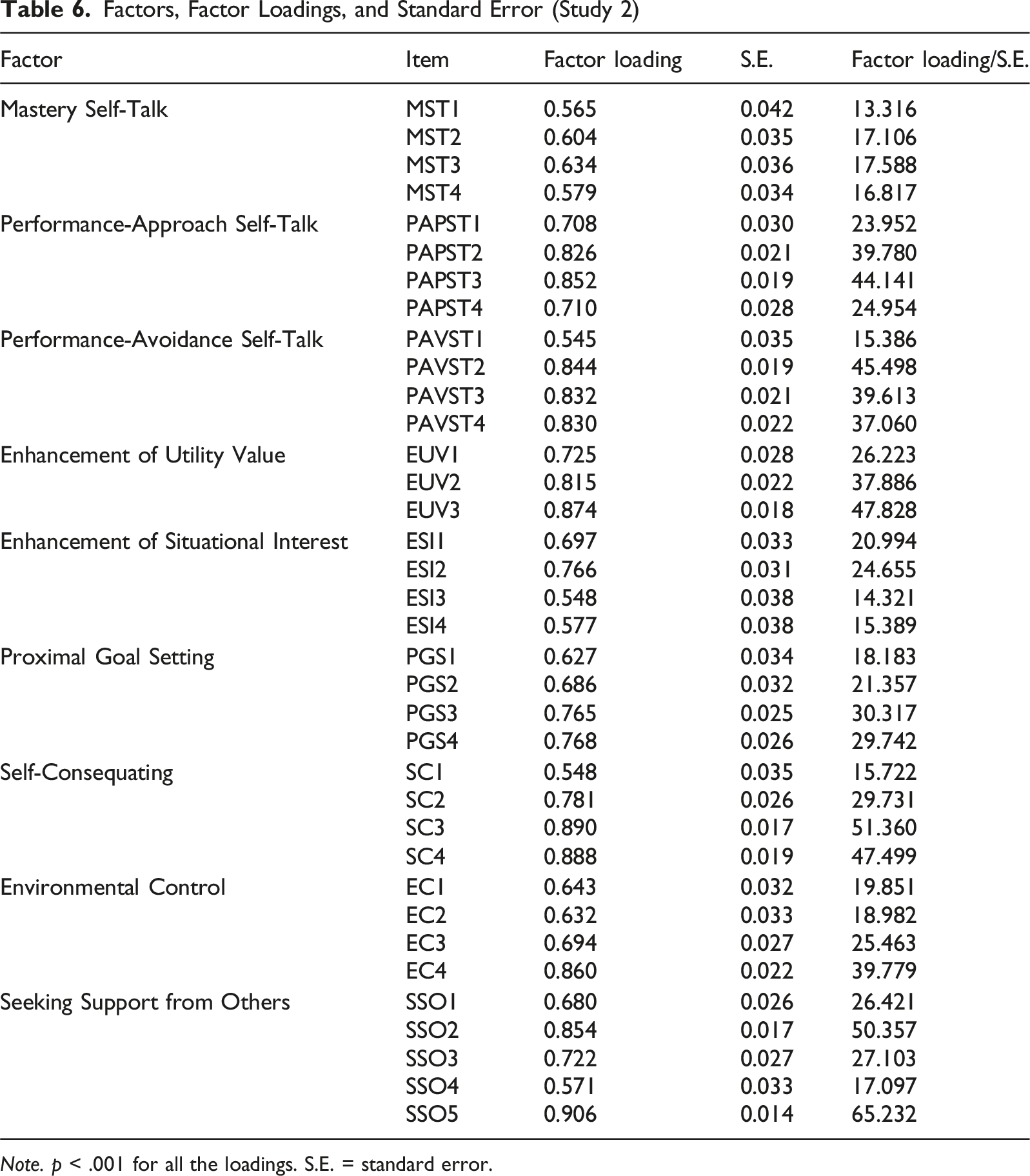
Note. p < .001 for all the loadings. S.E. = standard error.
Each factor saturated three to five items with a factor loading λ > |.545|, supporting the validity of the nine-factor solution.
Descriptive Statistics
Latent Correlations Between the MRSI Factors (Study 2)
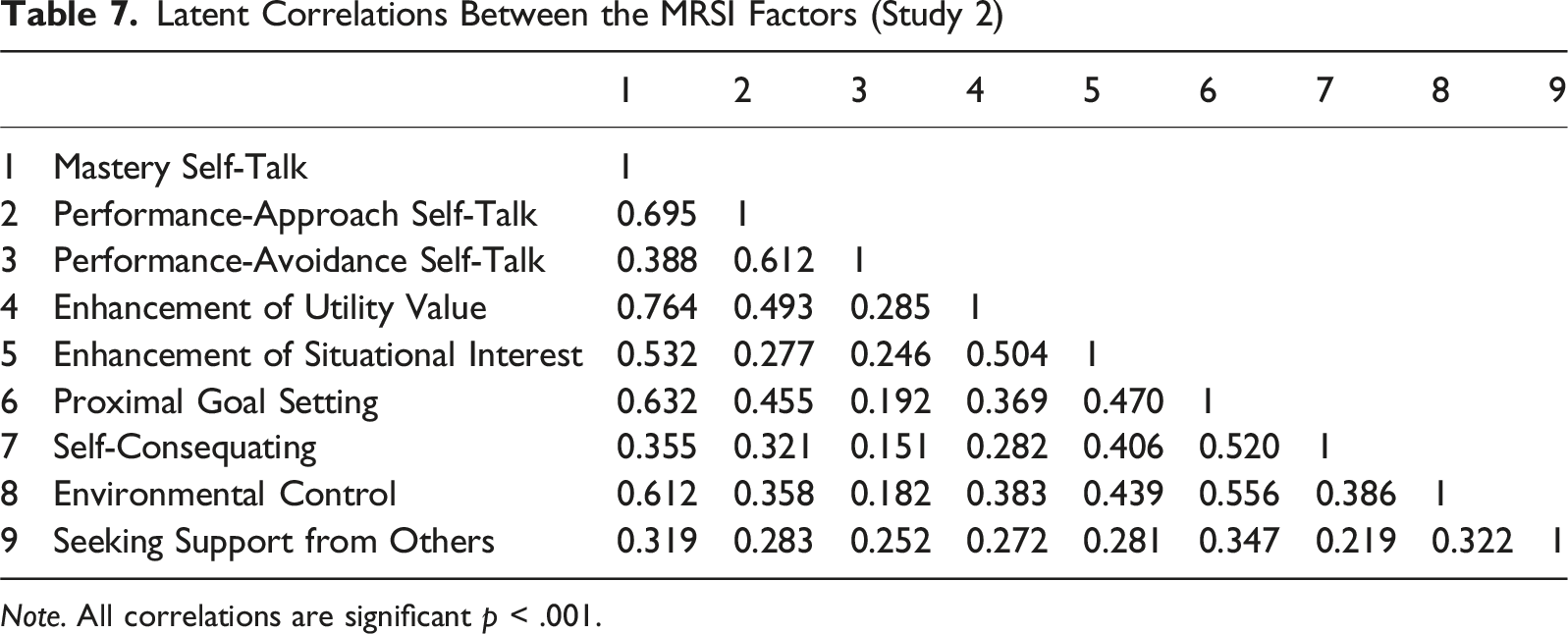
Note. All correlations are significant p < .001.
Descriptive Statistics (Study 2)
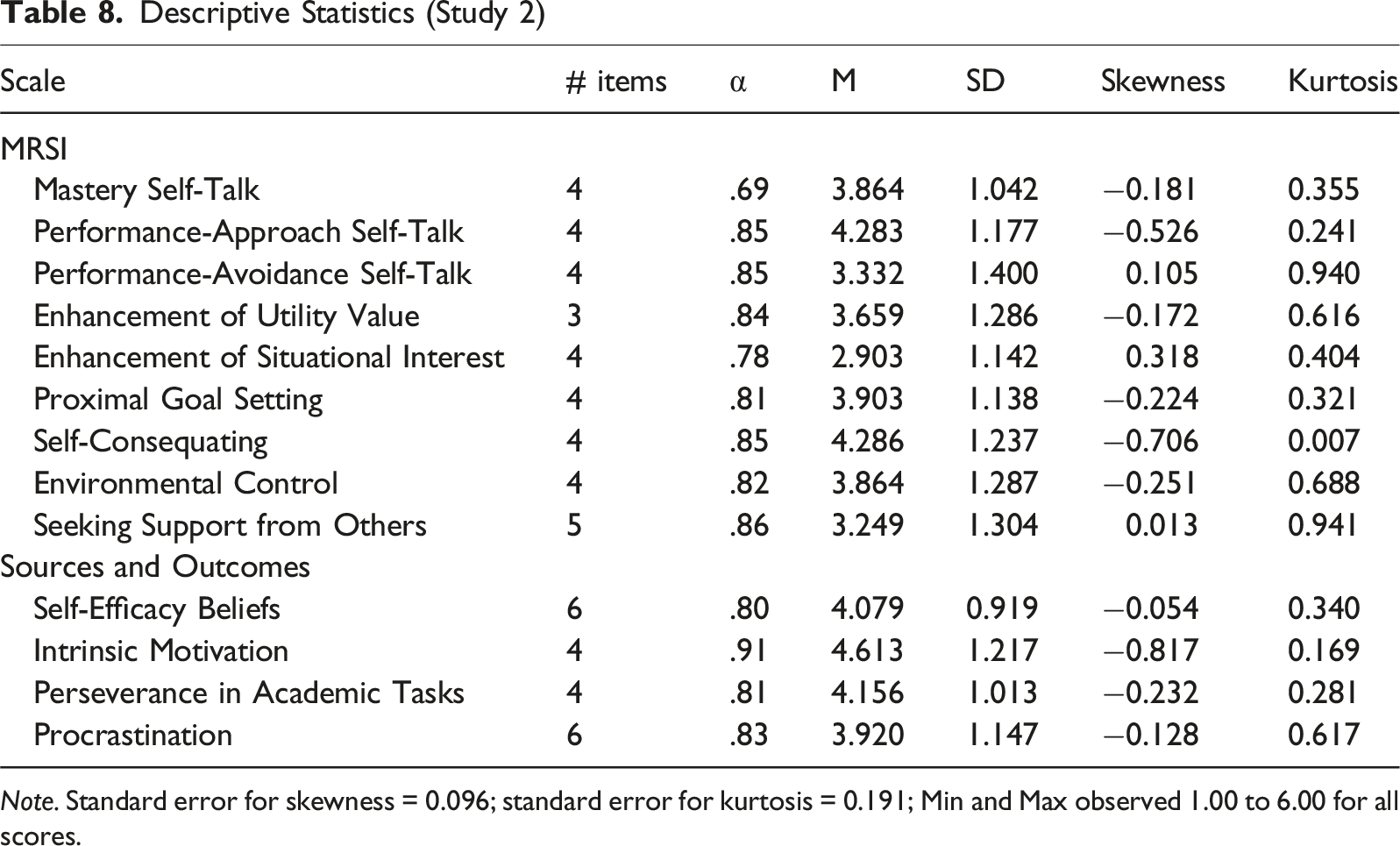
Note. Standard error for skewness = 0.096; standard error for kurtosis = 0.191; Min and Max observed 1.00 to 6.00 for all scores.
The mean scores of the 9 strategies ranged from 2.903 (Enhancement of Situational Interest) to 4.286 (Self-Consequating), suggesting the absence of a ceiling effect. Examining skewness and kurtosis revealed no issues in the characteristics of the scores’ distribution: Following Kim’s (2013) guidelines, neither skewness (maximum = |0.817|) nor kurtosis (maximum = |0.940|) seemed problematic.
Nomological Network
Zero-Order Correlations Between MRSI Strategies and Validation Scales (Study 2)
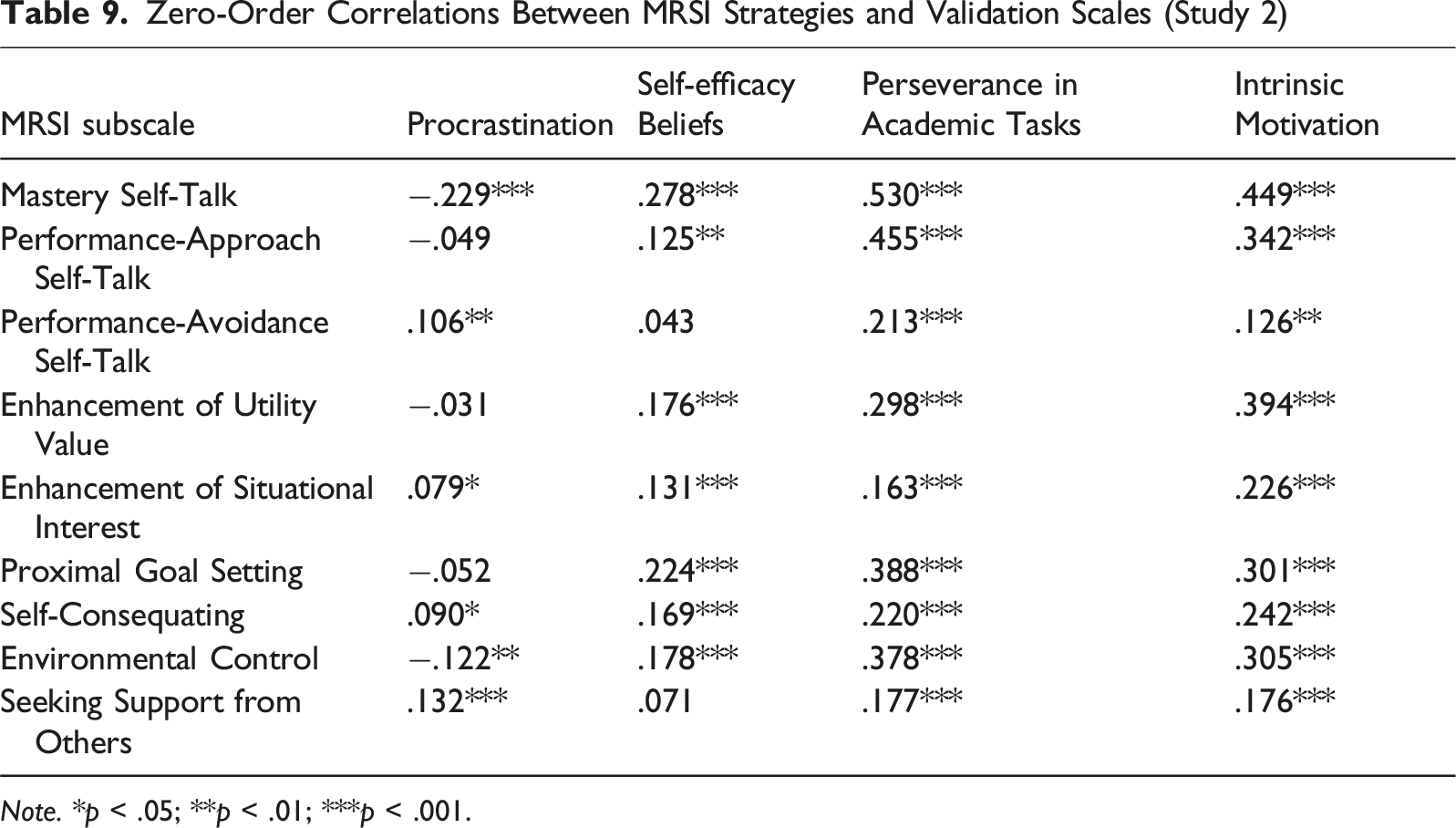
Note. *p < .05; **p < .01; ***p < .001.
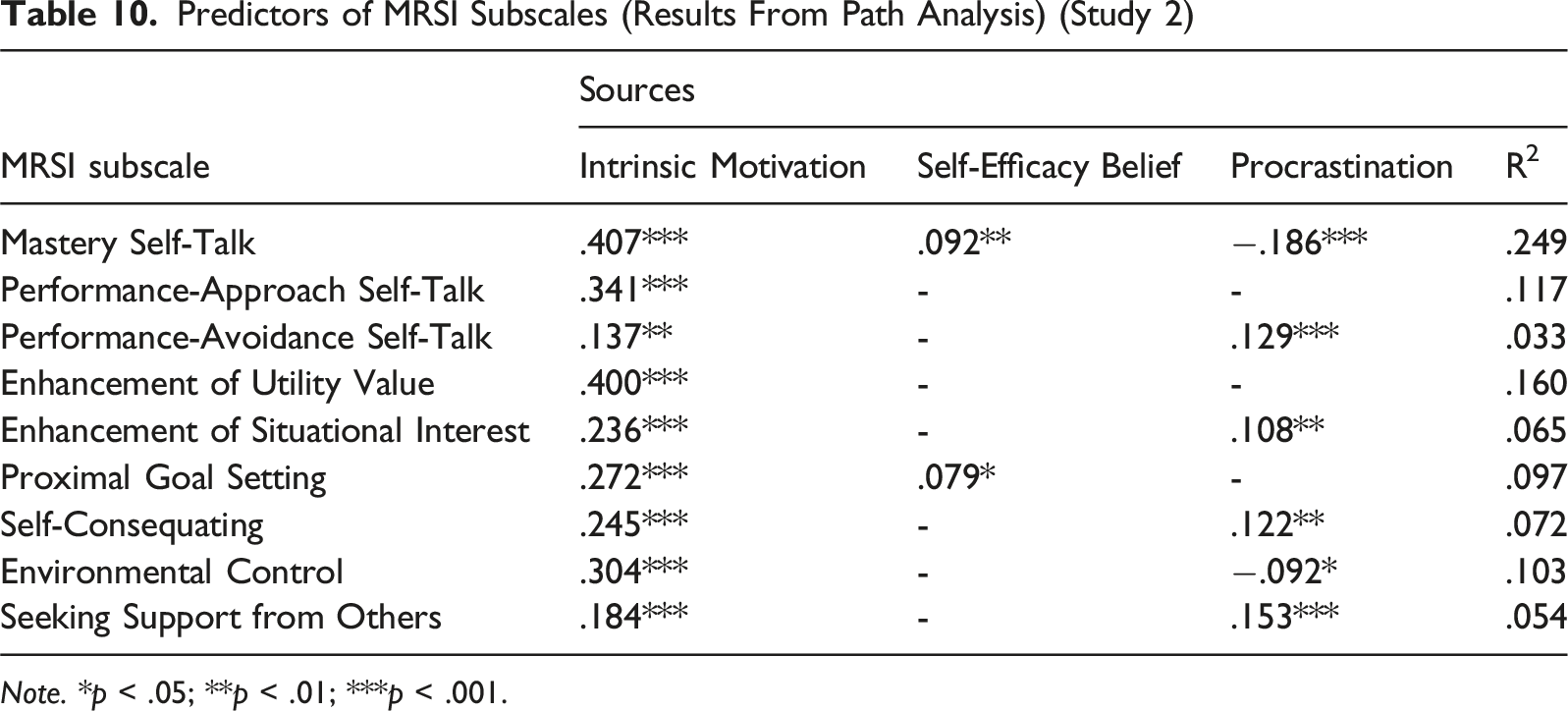
Predictors of MRSI Subscales (Results From Path Analysis) (Study 2)
Note. *p < .05; **p < .01; ***p < .001.
Intrinsic motivation was found to be the major predictor of all 9 strategies. The explained variance in the subscale scores ranged from R2 = 0.33 (Performance-Avoidance Self-Talk) to R2 = 0.249 (Mastery Self-Talk). Four strategies were found to significantly predict perseverance in academic tasks as an outcome—Mastery Self-Talk (β = .162, p < .001), Performance-Approach Self-Talk (β = .263, p < .001), Proximal Goal Setting (β = .100, p < .01), and Environment Control (β = .097, p < .01) in addition to procrastination (β = −.261, p < .001) and self-efficacy beliefs (β = .314, p < .001). Together, the model explained 50.2% of the variance in perseverance in academic tasks.
Discussion
The two studies aimed to develop an instrument, the MRSI, based on prior scales (Schwinger et al., 2009; Wolters & Benzon, 2013) and extend them by adding three new motivational self-regulation strategies. With the results obtained from the two studies, we examined the MRSI’s validity.
Regarding the evidence based on internal structure as an aspect of construct validity, the two studies revealed that the MRSI measured nine strategies, going beyond the available instruments and increasing the construct validity and, specifically, validity based on the content (Bandalos, 2018). The MRSI thus offers a broader and more representative measure of motivational self-regulation strategies than prior instruments (Schwinger et al., 2009; Wolters & Benzon, 2013). Internal consistency was at least adequate.
While the scores or factors were all positively and significantly related in both studies, they were sufficiently independent to consider that diverse strategies were measured. An observation across the two studies pertains to positive correlations between the subscales. Fong et al.’s meta-analysis (2024) revealed similar positive correlations between motivational self-regulation strategies across dozens of studies. We interpret this finding as revealing the mutual dependencies between strategies and students’ ability to adapt them as needed. For example, Mastery Self-Talk, Enhancement of Utility Value, and Enhancement of Situational Interest are interdependent, as indicated by their intercorrelation. The content of students’ self-talk may be based on the perceived value of the task, or enhancing utility value or situational interest may require the use of self-talk. Students will combine several strategies to increase their chances of maintaining their efforts toward attaining their goals. Accordingly, the three strategies related to achievement goals self-talk (Mastery Self-Talk, Performance-Approach Self-Talk, and Performance-Avoidance Self-Talk) can be combined with more concrete strategies, such as Proximal Goal Setting and Environmental Control. Overall, these results are consistent with the idea that self-regulation is not produced by the strategies taken in isolation but rather by their combination in self-regulation profiles as suggested by Kuhl (2008) and Schwinger et al. (2009).
The path analysis performed in Study 2 to examine the nomological network of strategies globally supported the MRSI’s validity. The hypothesized sources were statistically predictive of the strategies. Notably, high intrinsic motivation was found to be related to the high reported use of all strategies, as observed in prior studies (Berger, 2021; Ilishkina et al., 2022). Moreover, self-efficacy beliefs were found to have a positive but modest association with the three subscales, indicating that their role is rather secondary in motivational regulation once the task value is considered. These results are similar to those obtained by Wolters and Rosenthal (2000). Regarding the effects of motivational regulation, strategy use significantly predicted perseverance, a finding that is in accordance with previous studies (Engelschalk et al., 2017; Kryschko et al., 2020; Schwinger et al., 2009; Schwinger & Stiensmeier-Pelster, 2012). In contrast, the results were more complex regarding procrastination. The results mostly revealed positive associations between procrastination and some of the motivational self-regulation strategies, suggesting that the students who tend to procrastinate must use such strategies (Performance-Avoidance Self-Talk or Seeking Support from Others) to reach their goals. The relationships between motivation regulation and procrastination have mostly been studied with a trait-like definition of procrastination, according to which procrastination is supposed to show cross-temporal and situational stability (Steel, 2007). Within this trait-like framework, the results consistently revealed negative correlations between procrastination and motivational regulation strategy use (Grunschel et al., 2016; Ljubin-Golub et al., 2019; Park & Sperling, 2012; Wolters & Benzon, 2013). However, procrastination is also sensitive to context characteristics, so it can be considered a situation-specific behavior. Bäulke et al. (2021) highlighted that some academic tasks, such as writing a term paper or studying for exams, trigger procrastination more frequently and more strongly than other tasks. They used the term “procrastinatory behavior” to differentiate this state perspective from a trait perspective in which learners are categorized as high or low procrastinators. In this state-like framework, procrastination is considered a transient behavior that fluctuates over time and situations. Learners may struggle to initiate academic work daily, and motivational regulation strategies can help them reduce this behavior. Procrastination can thus be positively associated with motivation regulation. This is consistent with Wolters’ definition of motivation regulation, in which one aspect of motivation regulation is to help learners initiate their willingness to start a particular activity (Wolters, 2011).
The Study 2 results revealed that self-efficacy predicts the proximal goal setting strategy. Bandura and Schunk (1981) first noticed that proximal goal setting could help sustain self-efficacy beliefs by making a task appear more manageable: “Subgoal attainments provide indicants of mastery for enhancing self-efficacy” (p. 587). Both Wolters (2003) and Miele and Scholer (2018) also consider proximal goal setting one of the ways to sustain self-efficacy. The difficulty of elaborating a self-efficacy subscale based on means other than proximal goal setting (e.g., self-efficacy self-talk, activation of success memories, and comparison with others) suggests that proximal goal setting is the major strategy—and maybe the only strategy—that students employ to sustain their efficacy beliefs. In Fong et al.’s (2024) meta-analysis, the “efficacy enhancement” strategy is mostly restricted to dividing a long-term goal into smaller subgoals.
In the second version of the Regulation of Negative Emotions subscale, all items were changed. The new items were also based on the existing knowledge of emotion regulation in academic settings: body control and memories of success (Corno, 2001) and taking a break (Cosnefroy, 2008; Fischer et al., 2021). Despite these changes, the comparison of CFA models revealed that it was not adequate to include Regulation of Negative Emotions a part of the MRSI. Consequently, we decided not to include this subscale in the MRSI. This is an intriguing result. Despite the theoretical relevance of a negative emotion regulation subscale, we failed to implement it effectively. We tested four different strategies for regulating negative emotions in both versions of the MRSI. These strategies included self-encouragement (e.g., “Don’t stress”), taking breaks, using relaxation techniques, and activating memories of success in similar situations. It is possible that students use other emotion regulation strategies. The implications for future research concern further validation efforts to examine the temporal stability of the MRSI and its contextual sensitivity. In the short term, such as 1 or 2 months, temporal stability is expected. Contextual sensitivity could be tested by asking students to complete the MRSI with instructions related to different motivational difficulties (perceived task difficulty, lack of task value, and so on). In addition, the Regulation of Negative Emotions subscale must be improved. Further research on this topic could involve conducting focus groups with students to identify these strategies.
Gathering evidence based on the response process—testing whether items tap into the intended cognitive processes—is another potential research avenue that can further improve items that may have adequate statistical qualities but may not adequately assess what researchers expect to measure (Karabenick et al., 2007; Wolters & Won, 2018). The French version of the MRSI can be used with confidence to further the understanding of motivational self-regulation in middle school, in high school, and with college students. Although the final version of the scale has not been validated with high school students, we hypothesize that it could be used with this population. First, Wolters and Schwinger’s scales were used unchanged with these two populations. Second, Trautner and Pinquart’s (2025) recent review on the development of motivation regulation does not provide any decisive argument suggesting that certain strategies would be more difficult for high school students to implement. No statistical norms were calculated to enable interpretation of the scores in applied settings. Currently, the MRSI is a research tool that can help us understand the motivational regulation processes of French-speaking college students. Translating the instruments into English, Spanish, and other languages may also provide an opportunity for cross-national comparisons.
Supplemental Material
Suppplemental Material - Development and Validity Evidence of the Motivational Regulation Strategies Inventory (MRSI)
Suppplemental Material for Development and Validity Evidence of the Motivational Regulation Strategies Inventory (MRSI) by Jean-Louis Berger, Laurent Cosnefroy in Journal of Psychoeducational Assessment
Footnotes
Acknowledgement
The authors would like to express their sincere gratitude to Dyanne Escorcia and Fabien Fenouillet for their invaluable help in data collection. They are also deeply thankful to Sara Da Silva for her invaluable assistance in preparing the manuscript.

Ethical Considerations
Study 1 was approved by the Service de l’enseignement obligatoire de langue française Compulsory French Language Education Service from the Canton of Fribourg, Switzerland. This service is responsible for authorizing data collection in public schools in the canton.
Consent to Participate
Written informed consent to participate in the two studies was provided by the participants’ legal guardians/next of kin.
Funding
The authors received no financial support for the research, authorship, and/or publication of this article.
Declaration of Conflicting Interests
The authors declared no potential conflicts of interest with respect to the research, authorship, and/or publication of this article.
Data Availability Statement
The data are available on request to the corresponding author.
Supplemental Material
Supplemental material for this article is available online.
Note
References
Supplementary Material
Please find the following supplemental material available below.
For Open Access articles published under a Creative Commons License, all supplemental material carries the same license as the article it is associated with.
For non-Open Access articles published, all supplemental material carries a non-exclusive license, and permission requests for re-use of supplemental material or any part of supplemental material shall be sent directly to the copyright owner as specified in the copyright notice associated with the article.
