






Abstract
Self-determination is a key predictor of positive life outcomes for people with and without disabilities across the life course. The Self-Determination Inventory: Adult Report (SDI:AR) is a self-report measure designed to assess self-determination in adults. This study examined the psychometric properties of the SDI:AR including internal consistency, factor structure, and measurement invariance across demographic variables of gender (female and male), life stage (early and middle adulthood), and disability status (with and without disabilities). Results demonstrated excellent internal consistency (>0.90) across the full sample and all subgroups. Using a single-factor model, measurement invariance was supported across all demographic group comparisons, allowing for meaningful comparisons of latent means and variances. There is a need to further explore how intersectional identities influence self-determination, particularly among adults with disabilities. Continued validation with underrepresented groups is essential to ensure the SDI:AR aligns with the full range of adult experiences. Implications for research and practice are discussed.
Self-determination is an important construct in understanding human motivation and well-being, and a critical predictor of positive life outcomes (Wehmeyer et al., 2017). Self-determination has received significant attention in multiple marginalized communities, including the disability community where self-determination has emerged as a guiding principle and critical outcome for supporting individuals in directing their own lives. Numerous theoretical frameworks have been developed to explain how and why people become self-determined. Causal Agency Theory (Shogren et al., 2015), the most recent of these frameworks, defines self-determination as a “dispositional characteristic manifested as acting as the causal agent in one’s life” (p. 258). Causal agents act or cause things to happen to achieve their goals and self-determination develops in supportive contexts that enhance autonomy and motivation (Shogren & Raley, 2022). Causal Agency Theory outlines three self-determined actions that enable people to become causal agents in their lives. First, volitional action (DECIDE), refers to deliberate, self-initiated action based on conscious choices considerate of personal preferences, interests, beliefs, values, and needs. Second, agentic action (ACT) involves self-directing action toward a goal by purposefully determining avenues by which it can be achieved and supports needed to progress toward goals (Shogren & Raley, 2022). Third, action-control beliefs (BELIEVE) encompass a person’s beliefs regarding the relationships between (a) the self and the end goal, (b) the self and the mechanisms by which that goal is achieved, and (c) the means and the ends (Chang et al., 2017; Shogren & Raley, 2022). Developing skills associated with each of the self-determined actions (i.e., choice making, decision making, problem solving, goal setting and attainment, self-management, self-evaluation, self-advocacy, self-awareness, self-knowledge) is done through an iterative process of setting and working toward goals that are meaningful and important to the person. Importantly, development of self-determination is also shaped by supports and opportunities available in the environment to enhance motivation, as well as personal and contextual factors (Shogren & Raley, 2022). Building on aspects of Self-Determination Theory (Ryan & Deci, 2004), Causal Agency Theory further posits that people are driven to engage in self-determined actions to satisfy the basic psychological needs of autonomy, competence, and relatedness, and acknowledges the importance of motivation throughout the process (Shogren et al., 2015).
Measurement of Self-Determination
Self-Determination Inventory System
The Self-Determination Inventory System (SDIS; Shogren & Wehmeyer, 2017) was developed to measure the three self-determined actions, DECIDE, ACT, and BELIEVE, and overall self-determination as defined by Causal Agency Theory (Shogren & Raley, 2022) across the life course for people with and without disabilities. The most researched assessment in the SDIS is the Self-Determination Inventory: Student Report (SDI:SR) which has established reliability of items and validity of scores for youth aged 13–22 with and without disabilities (Shogren et al., 2017; Shogren, Little, et al., 2020). The Self-Determination Inventory: Parent Teacher Report (SDI:PTR), a proxy report for adolescents aged 13–22 (Shogren, Anderson, et al., 2020) was created, recognizing the need to understand parent and teacher perspectives of their child’s self-determination. Later, the Self-Determination Inventory: Adult Report (SDI:AR) for people over the age of 18 was developed (Shogren et al., 2021). The 21 items are the same across all three versions and are phrased in first person for the student and adult reports (e.g., I have what it takes to reach my goals), and in third person for the proxy report (e.g., This student has what it takes to reach their goals). All assessments are delivered on an accessible online platform that uses a computer scored scale of 0–99 where a higher score indicates a higher level of agreement with the statement. The system autogenerates a downloadable report showing scores for DECIDE, ACT, and BELIEVE as a bar graph along with additional resources. Figure 1 shows an example SDI user report. Sample SDI: AR Report. Note. © 2025, Kansas University Center on Disabilities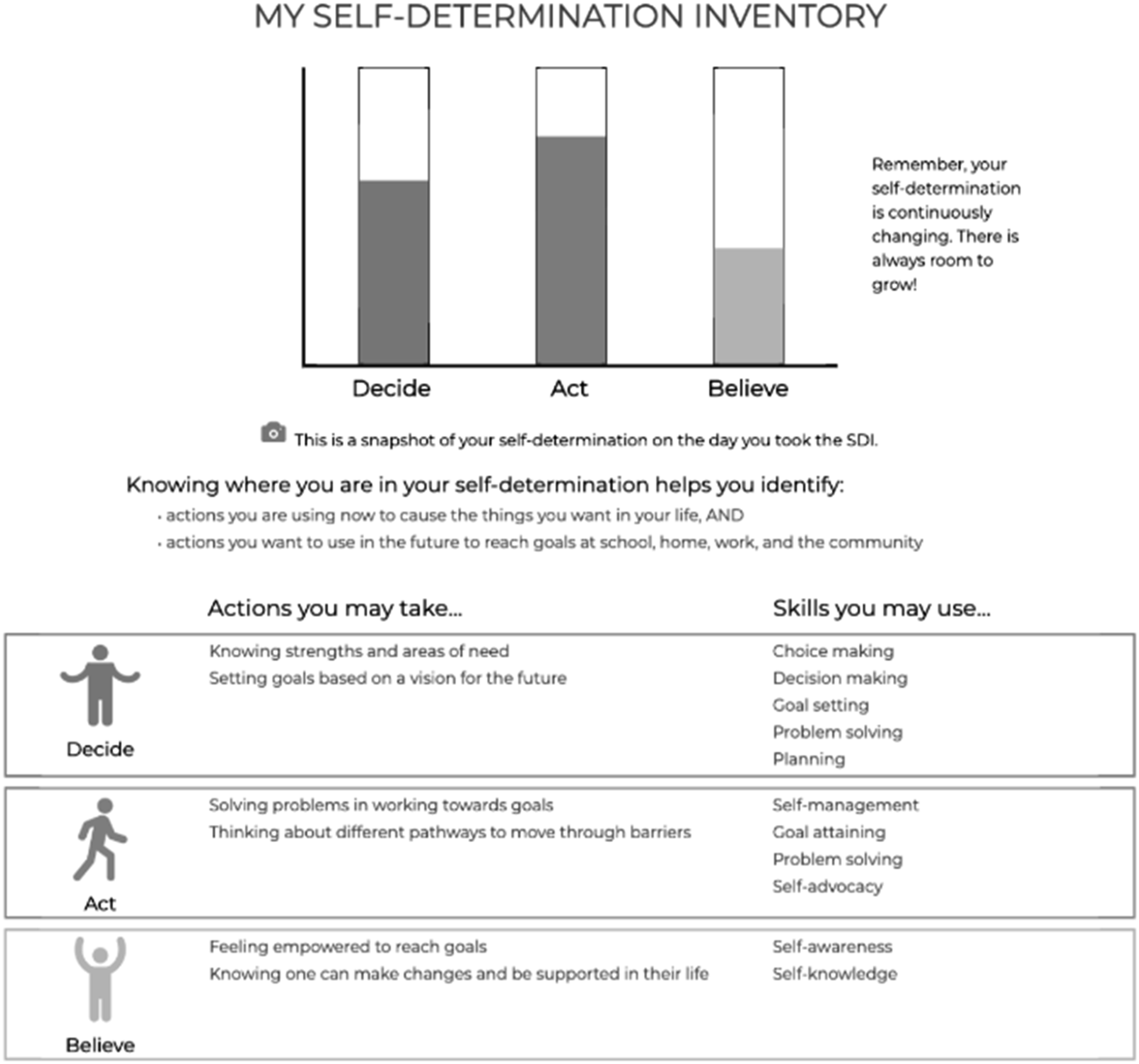
The SDIS was developed to advance self-determination assessment across disabled and non-disabled populations recognizing the importance of self-determination for all people as well as the importance of self-determination in the disability community (Wehmeyer et al., 2000). Ableism and other systemic barriers often limit the fundamental rights of people with disabilities to direct their own lives and the ability to take steps toward this outcome (Wehmeyer et al., 2000), and this can also be present for other marginalized groups. However, to capture disparities across groups, including intersecting groups, validated measures are needed.
Since its development and the establishment of reliability and validity (Shogren et al., 2017, 2019; Shogren, Little, et al., 2020), the SDI:SR has been used widely in research and practice to measure the impact of intervention to promote self-determination of youth aged 13–22 with and without disabilities (e.g., Raley et al., 2021). Additionally, researchers have explored the impact of personal characteristics (i.e., age, gender, race-ethnicity; Shogren et al., 2018b) and intersecting identities across disability, race-ethnicity, and socioeconomic status (Shogren et al., 2018a) on self-determination scores using the SDI:SR. Measurement invariance was established for males and females, and across age groups of 12–15, 16–18, and 19–22. In examining intersectionalities, White students without disabilities consistently had the highest self-determination scores compared to students of other racial-ethnic backgrounds and students with disabilities. Further, non-White students with learning disabilities showed the most disparate scores when they had lower socioeconomic status (Shogren et al., 2018a). However, such in-depth psychometric analysis has not been completed with the SDI:AR with adults ages 18+.
Self-Determination Inventory: Adult Report
Findings from the initial examination of the factor structure of the SDI:AR (Shogren et al., 2021) were consistent with the SDI:SR. Confirmatory factor analysis of a sample of adults with and without disabilities (N = 233) confirmed a single-factor structure and the overall Omega hierarchical was 0.952. Importantly, three items that caused model fit issues in the adult population were removed from analyses (i.e., I choose what my room looks like; I think of more than one way to solve a problem; I know my strengths; Shogren et al., 2021). However, ongoing work is needed to evaluate both single-factor and three-factor models with 21 and 18 items with larger samples as the theoretical framework of Causal Agency Theory (i.e., three self-determined actions of DECIDE, ACT, BELIEVE) suggests a potential three-factor structure (Shogren et al., 2017).
Existing research on the SDI:AR has also included exploration of impacts of personal factors (i.e., age, gender, disability label; Hagiwara et al., 2021) and environmental factors (i.e., educational attainment, employment status, living arrangement, having a legal guardian; Hagiwara et al., 2020) on scores. This small-sample research suggested that self-determination increases with age (i.e., on average 0.16 units per year), and females have significantly higher self-determination than males. Five disability groups in the sample were examined (i.e., intellectual disability, autism, learning disability, physical disability, and all other disabilities) and all reported lower self-determination than the “No disability” group. However, only the learning disability and intellectual disability groups showed statistically significant differences (Hagiwara et al., 2021). Research on environmental factors suggested reported self-determination was significantly lower for people without a high school diploma or GED compared to respondents with a bachelor’s or graduate degree. Respondents who were not working or worked part time also reported significantly lower self-determination than those working full time (Hagiwara et al., 2020). This research suggested that approximately 54% of the variance in SDI:AR scores can be attributed to differences between individuals, with 1%–8% accounting for each of the explored personal or environmental factors (Hagiwara et al., 2020, 2021). Ongoing work is needed to confirm these findings with larger samples particularly across demographic groups such as gender, age or life stages, and disability status (Hagiwara et al., 2020, 2021; Shogren & Raley, 2022). Without evidence of invariance, observed group differences may reflect measurement bias rather than true differences in self-determination, leading to invalid conclusions, inequitable interpretations, and potentially harmful implications for research, policy, and practice. By confirming invariance across a range of groups, subsequent comparisons of latent means and variances will be more meaningful, particularly when considering intersecting demographic characteristics. Intersectionality Theory posits social identities such as gender, race, ethnicity, disability, and class do not operate independently, but interact within systemic structures to shape lived experience (Collins & Bilge, 2020). If experiences and expressions of constructs differ at the intersections of identity, measurement tools developed or validated primarily within single-axis identity groups may not function the same across diverse populations (Cho et al., 2013).
Therefore, the purpose of this study is to confirm the factor structure of the SDI:AR using a large, diverse sample of adults with and without disabilities, and evaluate measurement invariance across intersections of key demographic variables including gender, life stage, and disability status. The following research questions guided the study: (1) What are item characteristics and internal consistency estimates of the SDI:AR? (2) Does the single-factor structure established in previous SDI:AR research replicate in the current sample? (3) Does measurement invariance of the SDI:AR hold across different combinations of gender (i.e., male, female), life stage (i.e., early adulthood, middle adulthood), and disability status (i.e., with disability, without disability)? (4) Are there differences in latent means and variances across the demographic groups?
Method
For this study, SDI:AR data from May 2018–March 2025 were pulled from the data collection system for analysis. All data pre-processing and analyses were conducted using R Statistical Software (v. 4.2.1; R Core Team, 2022). In the cleaned dataset of 6,943 responses, the majority (n = 6,258; 90.13%), completed all 21 items while 379 (5.46%) completed 20 items, 172 (2.48%) completed 19 items, and 134 (1.93%) completed 18 items. The three core measures of the Self-Determination Inventory System (i.e., SDI:SR, SDI:PTR, and SDI:AR) are openly available for anyone to complete online at https://www.self-determination.org/. These measures are also used in trainings and research activities via a paid platform that allows users to create and manage user accounts, assign surveys to participants, take surveys, and view results (Shogren & Wehmeyer, 2017). A total of 5,591 responses (80.5%) were collected via one-time open access use, while 1,352 responses (19.5%) were collected through the dashboard platform.
Sample Demographics
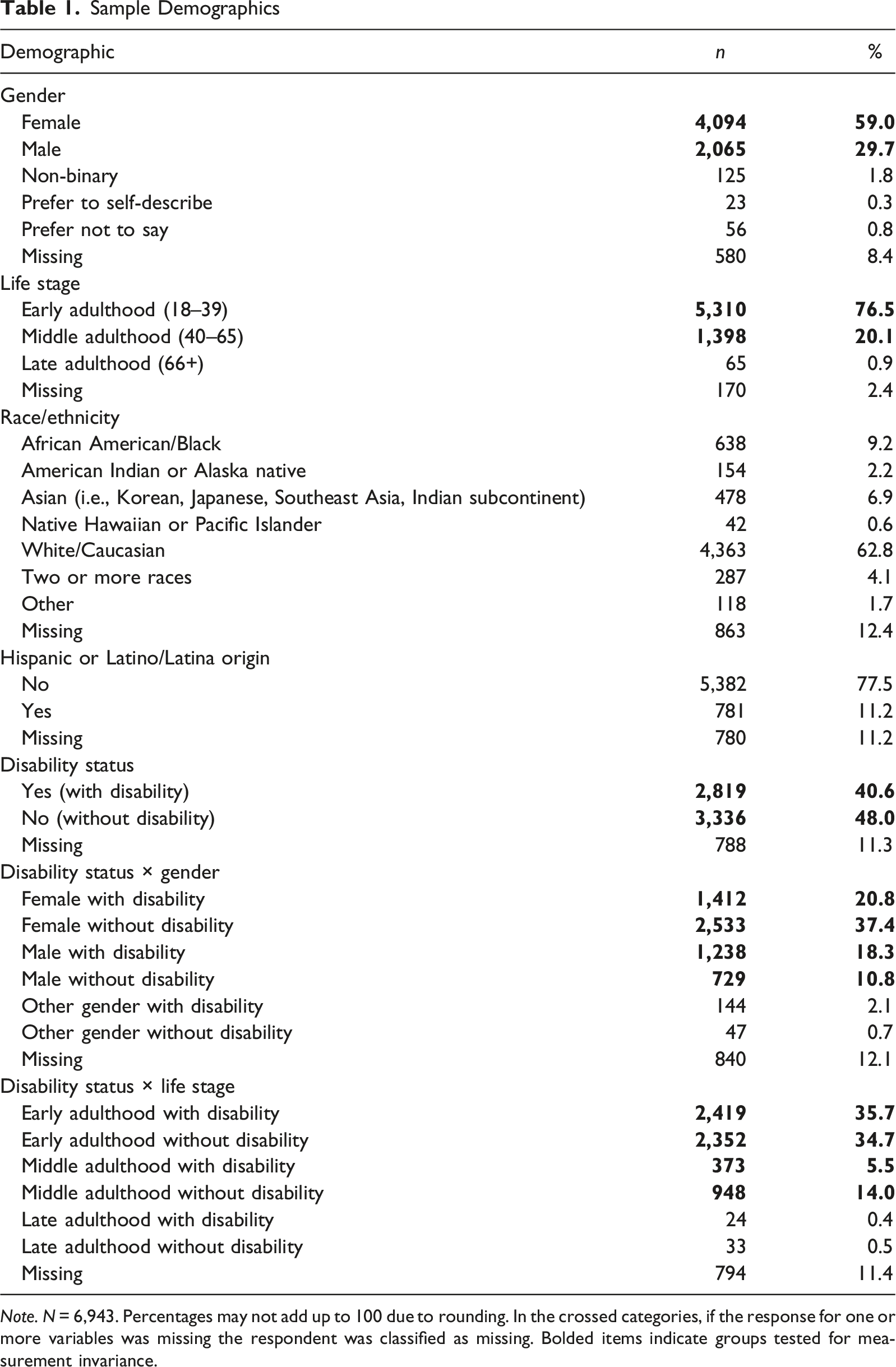
Note. N = 6,943. Percentages may not add up to 100 due to rounding. In the crossed categories, if the response for one or more variables was missing the respondent was classified as missing. Bolded items indicate groups tested for measurement invariance.
Psychometric Analysis
Confirmatory Factor Analysis
To examine the internal factor structure of the SDI:AR, a series of confirmatory factor analysis (CFA) models were compared (Brown, 2015). Psychometric analyses were conducted using R Statistical Software (R Core Team, 2022) with the lavaan package (Rosseel, 2012). The series of CFA models were estimated using maximum likelihood (ML) given that the SDI responses are considered continuous. Both three-factor and single-factor solutions were tested with the complete set of 21 items, and with the 18-item version, for a total of four models for comparison. For each fitted model, model fit was evaluated using multiple goodness-of-fit indices including Chi-Square Test (χ2) and corresponding p-value, Comparative Fit Index (CFI), Tucker-Lewis Index (TLI), Root Mean Square Error of Approximation (RMSEA), and Standardized Root Mean Square Residual (SRMR). Model fit was considered acceptable if the χ2 p-value was not significant (i.e., >.05), CFI and TLI values were ≥0.90, and RMSEA and SRMR was ≤0.08 (Hu & Bentler, 1999). Factor loadings and R 2 values were also examined with the factor loadings ≥0.50 considered acceptable and ≥0.70 considered strong (Brown, 2015). Combined, these indices offer a comprehensive evaluation of the factor structure of the SDI:AR.
Measurement Invariance
To answer Research Question 3, multigroup confirmatory factor analysis (MGCFA) was employed. MGCFA extends confirmatory factor analysis by examining whether a hypothesized measurement model fits equally well across different groups (Meredith, 1993). Establishing measurement invariance is essential to ensure the SDI:AR assesses the construct of self-determination in comparable ways across groups. For the current study, we focused on three key demographic areas: (a) gender, (b) life stage, and (c) disability status. Only female and male were used in analyses incorporating the gender variable due to the small number of respondents who reported their gender as “non-binary,” “prefer to self-describe,” and “prefer not to say” (n = 204; 2.9%). To create the life stage variable, we determined that respondents aged 18–39 would be classified as “early adulthood,” respondents aged 40–65 would be classified as “middle adulthood,” and respondents aged 66 and up would be classified as “late adulthood” based on Life Span Theory (Baltes et al., 2006). In our analyses, only early and middle adulthood were compared across combinations that included life stage due to the small number of respondents in the “late adulthood” category (n = 65; 0.9%). “With disability” and “without disability” groups were determined based on self-report of disability status in response to the survey question, “Do you have a disability?” (i.e., Yes or No). Due to limited sample sizes within specific disability categories and the exploratory nature of the current analyses, no further grouping based on type of disability was done.
We tested if measurement invariance held across gender, life stage, and disability status and the interaction between disability status and gender and life stage, respectively, by testing whether the following parameters of the measure are the same across groups: factor structure (configural invariance), factor loadings (metric invariance), and item intercepts (scalar invariance). We did not consider residual invariance (strict invariance) because previous studies have reported that scalar invariance is sufficient to establish measurement invariance (Joo & Kim, 2019). Our priority was to examine group by group comparisons: (a) female and male, (b) early adulthood and middle adulthood, and (c) with disability and without disability. Secondarily, we conducted exploratory measurement invariance models with group crossings of (a) disability status × gender, and (b) disability status × life stage.
We used the likelihood ratio test based on the chi-square difference to compare nested models and evaluate whether the added constraints significantly worsen model fit. However, this test is sensitive to large sample sizes and may indicate statistically significant differences even when practical differences in model fit are negligible (Chen, 2007; Cheung & Rensvold, 2002). Therefore, for each comparison, measurement invariance was also tested at each level using ΔRMSEA, ΔSRMR, ΔCFI, and ΔTLI. Based on previous research, the criterion for model invariance was |ΔRMSEA| <0.015, |ΔSRMR| <0.015, |ΔCFI| < 0.01, |ΔTLI| < 0.01 (Chen, 2007).
Finally, for groups where scalar invariance was established, latent factor mean and variance differences were examined. For the model identification purpose in MGCFA, the latent factor mean for the reference group was fixed to zero and freely estimated in the focal group(s). Significant latent mean differences (i.e., cross-group mean difference) were determined based on the estimated parameter values and associated p-values.
Results
Research Question 1: Item Characteristics and Internal Consistency
Descriptive Statistics of SDI:AR Items for the Overall Sample
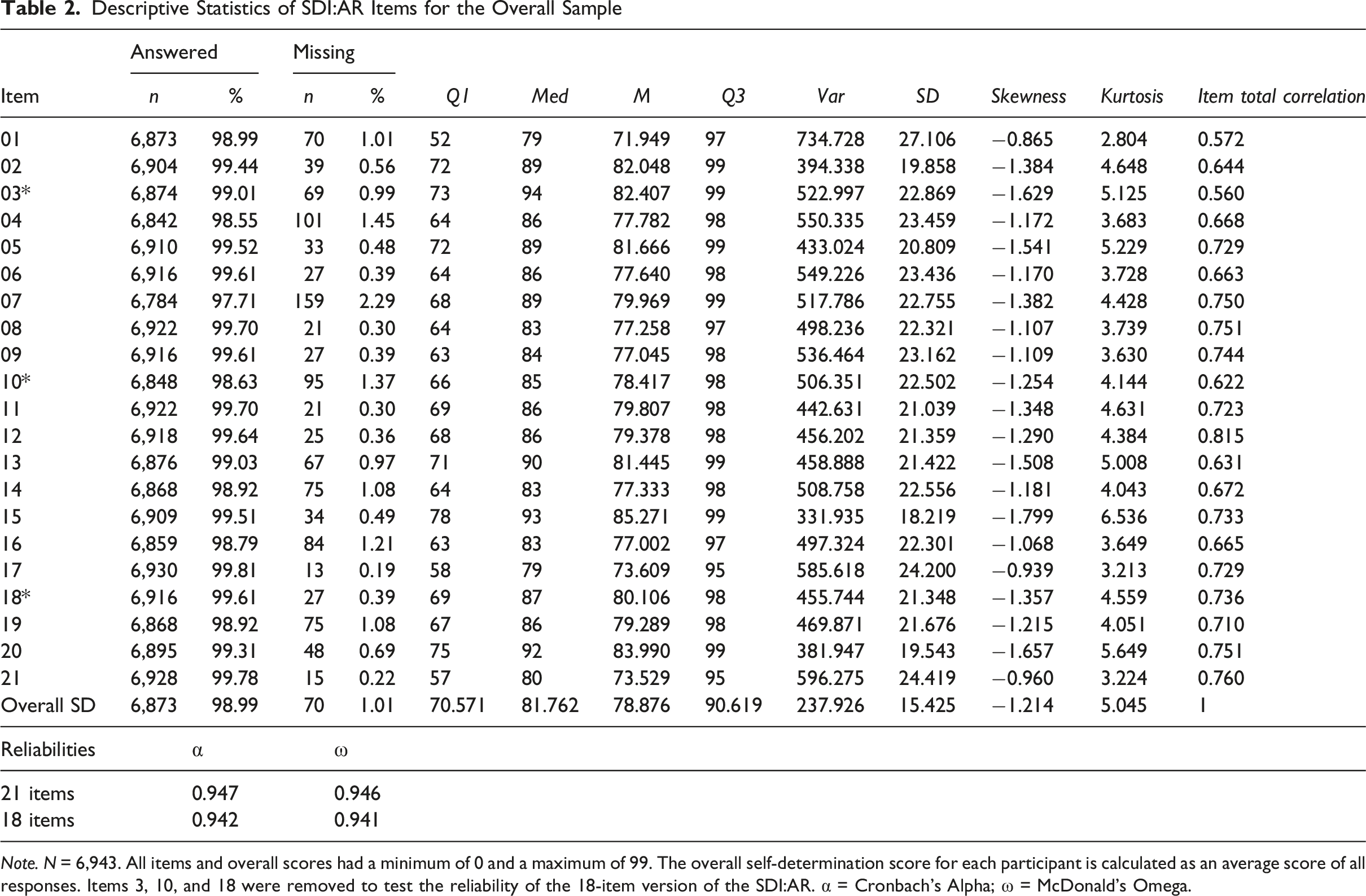
Note. N = 6,943. All items and overall scores had a minimum of 0 and a maximum of 99. The overall self-determination score for each participant is calculated as an average score of all responses. Items 3, 10, and 18 were removed to test the reliability of the 18-item version of the SDI:AR. α = Cronbach’s Alpha; ω = McDonald’s Omega.
The internal consistency of the SDI:AR was excellent for the overall sample for both the 21-item version (α = 0.947, ω = 0.946) and the 18-item version (α = 0.942, ω = 0.941). Reliabilities were also calculated for each of the subgroups that were tested for measurement invariance and reported within Tables S1–S3. In these subgroups, Cronbach’s alphas ranged from 0.933 to 0.951, and McDonald’s Omegas ranged from 0.931 to 0.950.
Research Question 2: CFA Model Comparisons
Comparison of CFA Model Fit Statistics
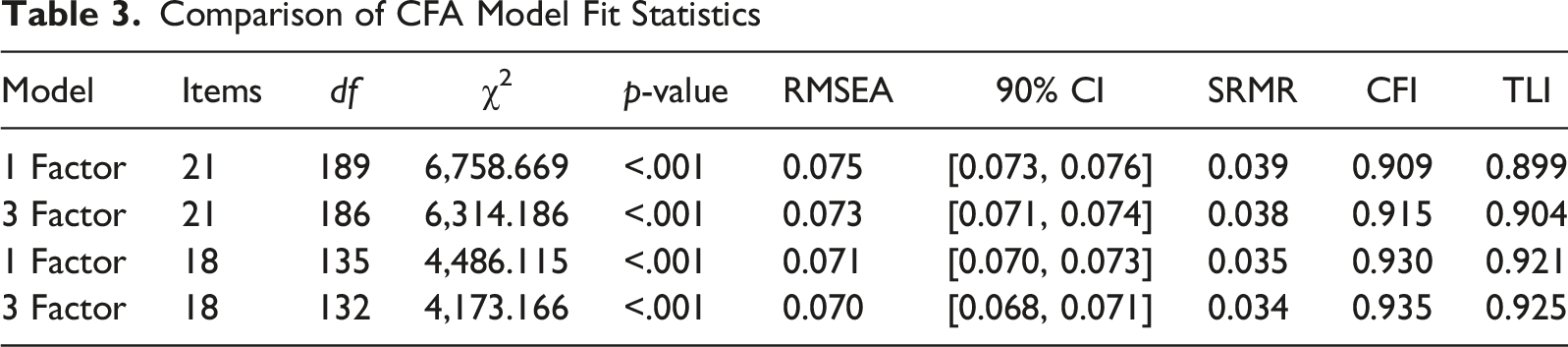
Consistent with the model fit indices, factor loadings (and therefore R2 values) for each item were slightly higher for the three-factor models (both 18 and 21-item versions) than their respective single-factor models. Across all models, factor loadings ranged from 0.516 to 0.841 (see Table S4). Overall, differences in factor loadings and R2 values across models were negligible, with absolute values ranging from 0 to 0.028 for factor loadings and from 0 to 0.03 for R 2 values (see Table S5), suggesting strong consistency across model specifications. Minimal differences in RMSEA, SRMR, CFI, TLI, and factor loadings between the two single-factor models, suggest the three items removed from the SDI:AR in the previous study (Shogren et al., 2021) do not cause significant model fit issues. For this reason, and the fact that the 21-item version is presently used in practice (i.e., on https://www.self-determination.org/), the 21-item single-factor model (χ2 (189) = 6,758.669, p < .001, RMSEA = 0.075 90% CI [0.073, 0.076], SRMR = 0.039, CFI = 0.909, TLI = 0.899) was used for testing measurement invariance.
Research Question 3: Measurement Invariance
Measurement Invariance for Group-by-Group Comparisons and Group Crossings
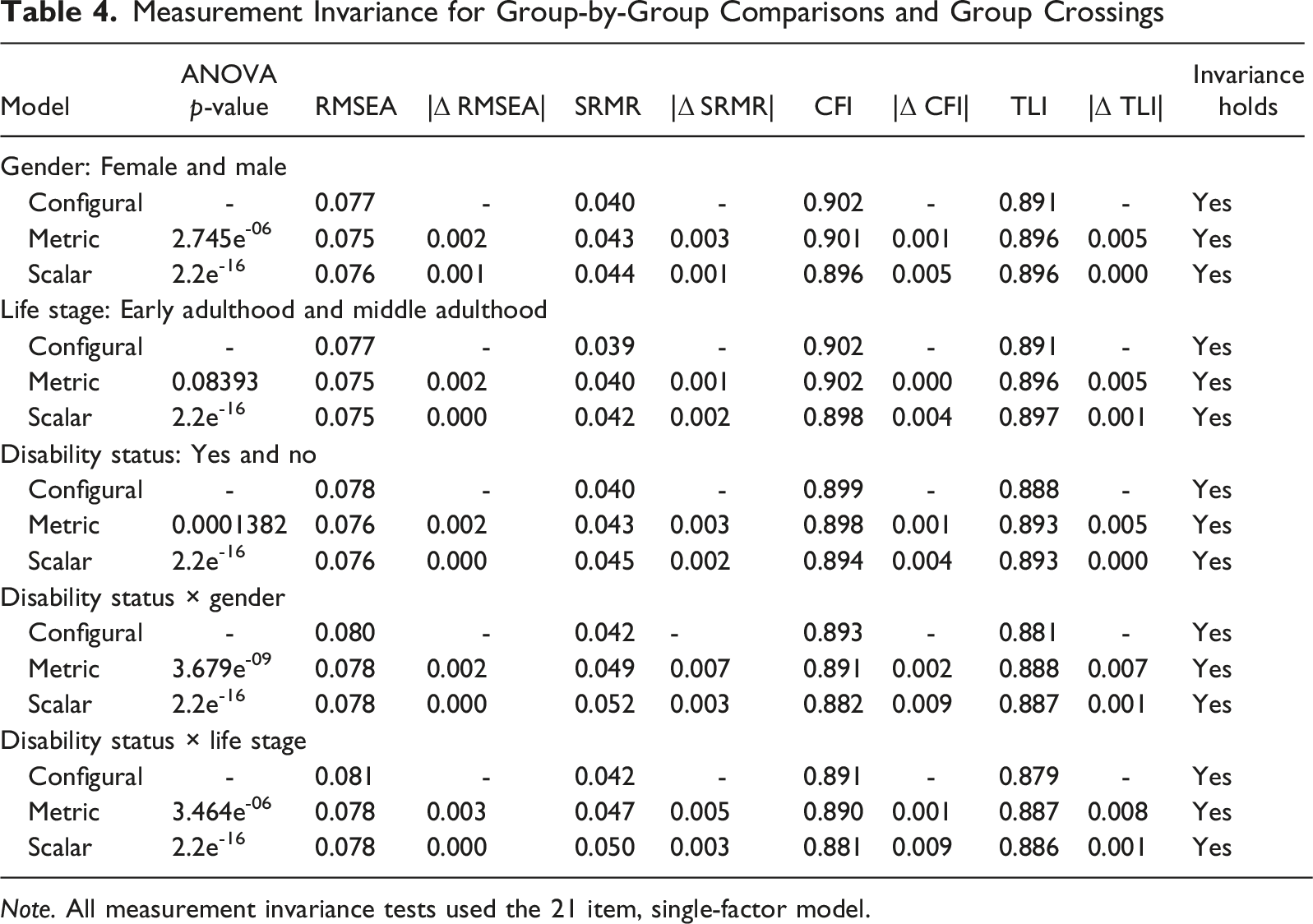
Note. All measurement invariance tests used the 21 item, single-factor model.
Gender: Male and Female
Model fit for the configural invariance model for gender was acceptable on three out of four indices, with TLI = 0.891, slightly below the commonly accepted threshold of 0.90. Metric and scalar invariance models demonstrated changes in fit indices below 0.01, with the exception of |ΔCFI| = 0.011, which slightly exceeds the recommended cutoff. Therefore, in alignment with recommendations to not interpret conventional fit thresholds in CFA too rigidly (McNeish & Wolf, 2023), scalar invariance can be considered to hold across female and male genders.
Life Stage: Early Adulthood and Middle Adulthood
Measurement invariance models for life stage demonstrated a pattern identical to that observed for gender. All model fit indices fell within acceptable ranges except for TLI, which was slightly below the 0.90 threshold at 0.891. Metric and scalar invariance were clearly supported with changes in RMSEA, SRMR, and CFI ranging from 0.001 to 0.005, well below the recommended cutoffs. Similar to gender, given the acceptable fit statistics (McNeish & Wolf, 2023), scalar invariance can be considered to hold across life stages of early and middle adulthood.
Disability Status: With Disability and Without Disability
The configural model for disability status had acceptable fit for two indices (RMSEA = 0.078; SRMR = 0.040) while CFI (0.899) and TLI (0.888) were slightly below their targeted threshold of 0.90. When testing for metric invariance by constraining the factor loadings to be the equal across groups, model fit marginally improved for two indices (RMSEA = 0.076; TLI = 0.893), and the changes in all four indices were less than 0.01, supporting metric invariance (McNeish & Wolf, 2023). Model fit remained within the acceptable change parameters for scalar invariance.
Disability Status × Gender
Crossing gender and disability status created four groups: female with disability, male with disability, female without disability, and male without disability. In the configural model, RMSEA (0.080) and SRMR (0.042) showed acceptable fit, while CFI (0.893) and TLI (0.881) fell slightly below the 0.90 threshold. In the metric model, model fit improved slightly for RMSEA (0.078) and TLI (0.889) and the changes across all four fit indices ranged from 0.001 to 0.008, well below the established thresholds of 0.015 for RMSEA and SRMR and 0.01 for CFI and TLI, supporting metric invariance. As with other group comparisons, scalar invariance held due to minimal change to fit indices.
Disability Status × Life Stage
Crossing variables of disability status and life stage yielded four groups for comparison: early adulthood with disability, early adulthood without disability, middle adulthood with disability, and middle adulthood without disability. In the configural model, three of the four fit indices were slightly outside of the acceptable range (RMSEA = 0.081; SRMR = 0.042; CFI = 0.891; TLI = 0.879). Consistent with previous groupings, model fit improved slightly in the metric model (RMSEA = 0.078; TLI = 0.887), and changes across all indices were within acceptable thresholds, supporting metric invariance. Scalar invariance was also supported, with minimal changes in all four fit indices (McNeish & Wolf, 2023).
Research Question 4: Comparison of Latent Means and Variances
Figure 2 visually depicts the patterns of latent means and variances across all groups for which scalar measurement invariance was supported. Table S6 compares latent factor means and variances across each set of groups. As a single-factor model was used, the latent means represent overall levels of self-determination. Visual comparison of self-determination means by group. Note. MD = mean difference; Var = variance. The reference group is bolded in each column. *p < .05; **p < .001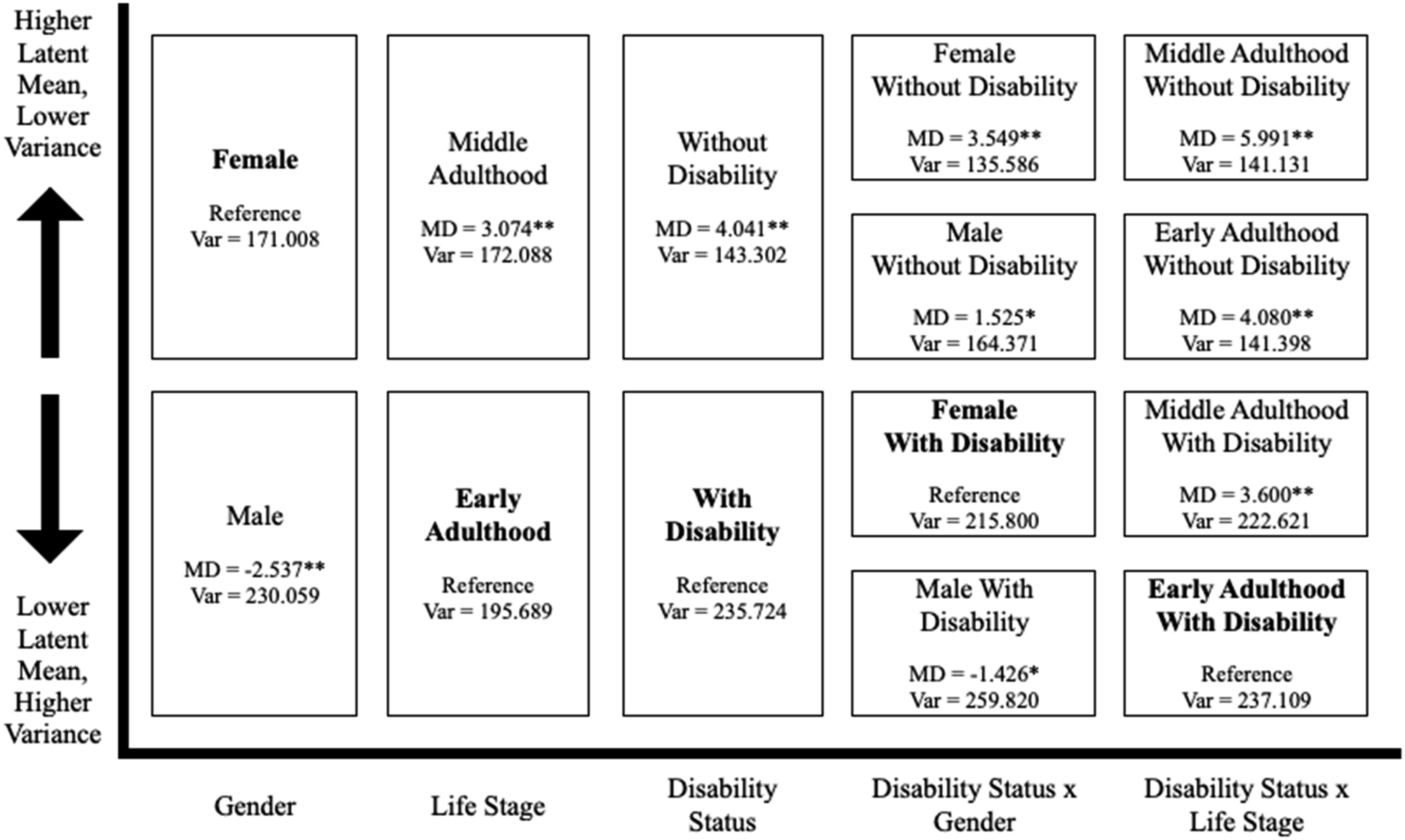
Group-by-Group Comparisons: Gender, Life Stage, and Disability Status
For gender, female was set as the reference group. Males had significantly lower latent mean compared to females (mean difference = −2.537, p < .001), indicating lower levels of self-determination. Variance estimates indicated the spread of scores was greater among males (variance = 230.059) than females (variance = 171.008). For life stage, early adulthood was set as the reference group. Respondents in the middle adulthood group had a significantly higher latent mean compared to those in the early adulthood group (mean difference = 3.074, p < .001), indicating higher levels of self-determination. Early adulthood had a wider spread (variance = 195.689) compared to middle adulthood (variance = 172.088). For disability status, the group of respondents with a disability was set as the reference group. Respondents without a disability had a significantly higher latent mean compared to the group of respondents with a disability (mean difference = 4.041, p < .001), indicating higher overall self-determination. The group with disabilities showed a substantially wider spread in self-determination scores (variance = 235.724) than the group without disabilities (variance = 143.302).
Crossed Group Comparisons
When crossing disability status × gender, the reference group was “female with disability.” Males with a disability had a significantly lower latent mean compared to the reference group (mean difference = −1.426, p = .028) while males without a disability had a significantly higher latent mean than females with a disability (mean difference = 1.525, p = .022), and females without a disability had the highest mean overall (mean difference = 3.549, p < .001). These findings indicate a clear pattern of mean self-determination scores from lowest to highest: males with a disability, females with a disability, males without a disability, and females without a disability. The highest variability was observed among males with a disability and the lowest among females without a disability.
For disability status × life stage comparisons, the reference group was “early adulthood with disability.” Individuals in middle adulthood with a disability had a significantly higher latent mean compared to the reference group (mean difference = 3.600, p < .001). Those in early adulthood without a disability had an even higher latent mean (mean difference = 4.080, p < .001), and individuals in middle adulthood without a disability had the highest latent mean overall (mean difference = 5.991, p < .001). Variability was lowest among people without a disability in both early and middle adulthood (variance = 141.398 and 141.131, respectively). Individuals in middle adulthood with a disability had a moderately higher variability (variance = 222.621), while those in early adulthood with a disability showed the greatest variability (variance = 237.109). These findings again reveal a clear pattern of increasing self-determination means. The groups from lowest to highest mean are ordered: early adulthood with disability, middle adulthood with disability, early adulthood without disability, and middle adulthood without disability.
Discussion
The purpose of this psychometric study was to further evaluate the internal structure of the SDI:AR with a larger, more diverse sample and test measurement invariance across demographic characteristics of gender, life stage, and disability status, both independently and at their intersections. The first objective was to identify the best fitting model for the current sample. The models tested varied between 18 and 21 items and one and three factors based on prior research findings and the theoretical framework that guided the development of the SDI:AR (i.e., Causal Agency Theory). The present analyses suggest minimal differences between the 18 and 21 item models, suggesting that potentially problematic items identified by Shogren et al. (2021) can be retained without compromising psychometric quality in this larger sample. Considering previous psychometric research on the SDI:SR (e.g., Shogren et al., 2021; Shogren, Little, et al., 2020), theoretical foundations (Shogren et al., 2015), the fact that the 21-item measure is currently used in practice, and findings from this study indicating model fit indices (see Table 3), factor loadings, and R 2 values across the tested models (see Tables S4 and S5), were not dramatically different, we retained the single-factor model with 21 items to examine measurement invariance and latent differences.
Measurement Equivalence and Latent Differences in Single Demographic Comparisons
The findings establishing measurement invariance indicate the SDI:AR can be interpreted consistently across the gender, life stage, and disability groups tested, substantiating its use in diverse adult populations. This strengthens the utility of the SDI:AR for making meaningful comparisons in research and applied settings, including across intervention studies targeting different demographic groups. Further, with measurement invariance established, latent means and variances were able to be meaningfully compared. Consistent with prior research (e.g., Hagiwara et al., 2021; Nota et al., 2007), this study found that females and people without disabilities demonstrated higher latent self-determination means than males and people with disabilities respectively. These differences suggest that development and expression of self-determination across genders may be impacted by socialization processes and further supports the idea that environmental and systemic factors may negatively impact the self-determination of people with disabilities (Collins & Bilge, 2020). For example, female-identifying people may be encouraged or supported to develop skills associated with self-determination (e.g., goal setting, self-awareness) earlier or more consistently than male-identifying people across the life span, potentially contributing to the observed differences in self-determination scores between genders in adulthood (Antonova & Ivanova, 2016; Lin & Chen, 2013). Similarly, systemic barriers causing limited access to opportunities to engage in self-determined actions may contribute to lower self-determination among people with disabilities throughout childhood and into adulthood (Hagiwara et al., 2020; Shogren et al., 2021).
Additionally, aligned with prior findings that self-determination increases with age (Hagiwara et al., 2021), findings from the present study indicated people in middle adulthood (i.e., ages 40–65) had higher latent means and lower latent variances than those in early adulthood (i.e., ages 18–39). This pattern suggests greater average self-determination in midlife as well as greater consistency in scores of people within this age group. One possible explanation may be that as people gain life experience, they may develop better self-awareness such as increased clarity around personal goals and values, stronger self-regulation strategies, and increased capacity to navigate and shape their environments to meet their needs (Heckhausen et al., 2010). The lower variance in the middle adulthood group may reflect increasing stability in self-determination as people age and gain experience in acting as causal agents across various life stages and demands (Baltes et al., 2006; Heckhausen et al., 2010).
Measurement Equivalence and Latent Differences in Crossed Group Comparisons
Because very little is known about how the SDI:AR functions at the intersection of multiple demographic characteristics, we treated the crossed group analyses as exploratory and focused on generating hypothesis for future research. We emphasized the disability dimension given contextual foundations of how the SDIS was developed and its continued use in practice (Hagiwara et al., 2021). Our exploratory models showed that scalar invariance held across each two-way combination: (a) disability status × gender and (b) disability status × life stage. This suggests that, within this sample, the underlying factor structure, loadings, and intercepts remain stable even in more narrowly defined subgroups.
From our analyses, group mean and variance comparisons (depicted in Figure 2) suggest that examining intersecting identities can reveal nuanced profiles of self-determination that could be minimized by looking at single demographic factors alone (Hernández-Saca et al., 2018). Specifically, both gender and disability status may moderate developmental changes in self-determination across adulthood due to systemic factors that differentially shape opportunities or expectations. The pattern of higher variances and lower means in early adulthood may reflect developmental variability, transitional life roles, or differential access to supports. Conversely, higher means and lower variances in middle adulthood could indicate stabilization of self-determined behaviors or increasing alignment between capacity, opportunity, and autonomy (Shogren & Raley, 2022). These differences may also be facilitated by systemic factors such as ableism, class-based inequities, or gendered expectations that influence opportunities for self-determination during each life stage (Collins & Bilge, 2020). Disability related differences in variances could suggest that the experience of disability might not only lower average self-determination but also increase diversity in self-determination outcomes (Nota et al., 2007). Limited work has examined the development of self-determination throughout adulthood, and though tentative, these findings provide critical information for ongoing research and systems change efforts.
These findings highlight the importance of recognizing that identity is multifaceted and that developmental trajectories of constructs like self-determination are not shaped by single demographic factors in isolation, but by their intersections and systemic factors identified by intersectionality theory (Cho et al., 2013; Collins & Bilge, 2020; Shogren & Raley, 2022). We emphasize that these findings of measurement invariance and differences in latent means and variances for crossed demographic groups should be viewed as preliminary, and caution is due when considering our interpretations particularly as we were not able to explore all identities that shape people’s experience.
Limitations
The findings should be interpreted with consideration of the following limitations. This secondary analysis required us to make decisions about the validity of responses during data cleaning. We used consistent procedures, but ongoing work is needed to further explore how to most effectively define valid responses in an online data collection system used for diverse purposes. For example, some adult professionals completed the survey as a part of training they took part in, but there was no way to confirm genuine participation (e.g., providing valid responses vs. just exploring the online survey system). Additionally, by removing repeated entries to ensure only one response per individual, we limited our ability to analyze potential changes in responses and presentation or perception of self-determination over time, although this is a direction for future research.
Though the sample was large and diverse, it may not fully represent the broader adult population and generalizability may be limited. We included data from the US and across the globe, but approximately 80 countries were represented by only a handful of respondents (e.g., less than 10). Thus, the sample was primarily US based. Relatedly, the majority of the sample was White (62.8%), limiting our ability to include on race/ethnicity as an intersection in our analyses, which will be an important area for future research. Also, for gender and life stages, only female and male, and early and middle adulthood groups were tested for measurement invariance, as the sample sizes for other genders (e.g., non-binary, prefer to self-describe; n = 204; 2.9%) and “late adulthood” (n = 65; 0.9%) were small. The age ranges used to categorize respondents into early adulthood, middle adulthood, and late adulthood were based on Lifespan Theory (Baltes et al., 2006), but combined a few levels as described by the model (e.g., “emerging adulthood” – late teens to early 20s, and “early adulthood” – late 20s to late 30s) to streamline the number of groups. As such, these groupings may not fully reflect meaningful developmental distinctions which could limit the interpretability and generalizability of findings related to life stage comparisons.
Directions for Future Research
Future research should aim to more deeply explore and understand the presented findings and fill gaps created by the acknowledged limitations. While this study further confirms previous research on the SDI:AR suggesting its utility in measuring self-determination (Hagiwara et al., 2020, 2021; Shogren et al., 2021), ongoing work is needed to determine if refinements to the SDI:AR are necessary, and if so, which items are impacted and why. Using rigorous processes to review, refine, or replace items will further strengthen the construct validity and utility of the measure for diverse adult populations. Additionally, ongoing work is needed with samples targeting groups not currently present in available SDI:AR data. Research should intentionally include testing measurement invariance at the intersections of genders (including adults who identify as non-binary, genderfluid, agender, and transgender), life stages (including late adulthood), race-ethnicities, and specific disability categories (e.g., intellectual disability, learning disabilities, physical disabilities, autism and ADHD). Level of educational attainment and socioeconomic factors may also be valuable demographics to include in intersectional analyses. Such work will be critical to advancing understanding of intersectionality and self-determination, specifically around how structural and contextual factors may interact with individual characteristics to shape self-determined action (Cho et al., 2013; Shogren et al., 2017, 2018a).
Implications for Practice
The results suggest several key implications for practice. First, because invariance was supported in the groups tested, practitioners can confidently use the SDI:AR to assess self-determination across diverse adult populations to inform intervention planning and evaluation, and also in contexts such as mental health counseling, or professional development (Townsend et al., 2025). Second, as a breadth of prior research has emphasized, individualized supports are essential to effective self-determination intervention (Raley et al., 2022); the findings of this study indicate practitioners should consider differentiating strategies based on intersecting identities. Considering Intersectionality Theory (Collins & Bilge, 2020), systemic factors, such as the ableist systems highlighted by Hernández-Saca et al. (2018), must be considered in understanding facilitators and barriers to the expression of person and collective self-determination. Finally, in alignment with Lifespan Theory (Baltes et al., 2006) the findings suggest that self-determination grows with age and experience. This links to the well-established importance of supporting self-determination through the transition to adulthood (Shogren & Wittenburg, 2020) and suggests a need for additional consideration of these factors across the life course. Further considering changes in experiences and supports for self-determination throughout adulthood including changing systemic barriers such as ableism and inequitable access to educational or community resources, ongoing supports and systems change strategies can be defined and implemented.
Conclusion
This study contributes to the growing body of research focused on the assessment of self-determination in adults by examining the factor structure and measurement invariance of the SDI:AR. Findings underscore (a) the stability of the current version of this measure in reliably assessing self-determination across various combinations of gender, life stage, and disability status, and (b) the need for ongoing research to understand how self-determination develops and presents in diverse adult populations. These findings advance understanding of how the SDI:AR functions across intersecting identities, which is essential to meaningfully exploring differences in self-determination that can inform more equitable and personalized supports for self-determination throughout adulthood in people with and without disabilities.
Supplemental Material
Supplemental material - Validation and Measurement Invariance of the Self-Determination Inventory: Adult Report Across Intersecting Demographic Groups
Supplemental material for Validation and Measurement Invariance of the Self-Determination Inventory: Adult Report Across Intersecting Demographic Groups by Rebecca J. Townsend, Karrie A. Shogren, Sean Joo, and Tyler A. Hicks in Journal of Psychoeducational Assessment
Footnotes
Acknowledgements
All individuals who contributed to this work are listed as authors; no additional acknowledgements are required.

Ethical Considerations
This study was approved by the University of Kansas Institutional Review Board (Protocol #00141099). Participants reviewed an information statement prior to participation and indicated consent by completing the open-access online survey.
Consent to Participate
A waiver of signed informed consent was approved by the University of Kansas IRB.
Funding
The authors received no financial support for the research, authorship, and/or publication of this article.
Declaration of Conflicting Interests
The authors declared no potential conflicts of interest with respect to the research, authorship, and/or publication of this article.
Data Availability Statement
The dataset analyzed for this study is available from the first author upon request.
Supplemental Material
Supplemental material for this article is available online.
References
Supplementary Material
Please find the following supplemental material available below.
For Open Access articles published under a Creative Commons License, all supplemental material carries the same license as the article it is associated with.
For non-Open Access articles published, all supplemental material carries a non-exclusive license, and permission requests for re-use of supplemental material or any part of supplemental material shall be sent directly to the copyright owner as specified in the copyright notice associated with the article.
