







Abstract
We examine incidents of workplace bullying by using an Internet-based survey. Our unique sample consists of 1,072 public-sector employees working in 12 Finnish ministries. Of those surveyed, 20.3% reported experiencing work task–related bullying multiple times per month, whereas 11.3% reported experiencing personal-level bullying. Supervisors were less likely to be bullied than subordinates, and women were more likely to experience bullying than men. Among victims who had experienced bullying during the past 12 months, nearly 60% reported that their problem had yet to be solved. To combat workplace bullying in public-sector organizations, we propose a proactive punitive strategy that includes stricter rules and severe administrative penalties to those who breach them.
Introduction
In his seminal articles, Leymann (1986, 1990) describes the processes by which workplace harassment 1 occurs. More than 30 years later, we find a plethora of empirical and theoretical literature on the subject from numerous countries (see, for example, reviews in Einarsen, Hoel, Zapf, & Cooper, 2011a; Samnani & Singh, 2012) and across many different disciplines, including psychology, psychiatry, economics, organizational behavior, labor, and management and leadership studies. Furthermore, international conferences on workplace bullying are organized on a biannual basis (Hogg, Jorgenssen, & Fedders, 2012; Nielsen, 2014), and different organizations at the national and supranational levels have been established to address the problem. For example, in 2008, the International Association on Workplace Bullying and Harassment (IAWBH) was founded with the aim of promoting fairness, justice, and dignity at work for all. The IAWBH currently has members from more than 20 countries. Moreover, in the United States, the Workplace Bullying Institute (WBI) was established in 1997; this institute publishes articles and regularly conducts surveys on workplace bullying, targeting the general population (WBI, 2007, 2010, 2014). Recently, the European Union (EU) has emphasized that work-related stress due to harassment needs to be examined thoroughly because “ . . . very little is known on how health and safety risks are managed in practice” (European Agency for Safety and Health at Work, 2010, p. 9).
Harassment and bullying at work directly and negatively affect the well-being of individuals and generate great costs for society owing to the work hours lost to sick leave and low productivity (Fisher-Blando, 2008; Giga, Hoel, & Lewis, 2008; Samnani, Singh, & Ezzedeen, 2013). Empirical evidence indicates that workplace harassment is a substantial problem in contemporary society; however, quantitatively identifying, charting, and graphing workplace harassment and establishing lasting solutions are very difficult tasks (Einarsen, Hoel, Zapf, & Cooper, 2011b). Currently, economic conditions are very uncertain, unemployment is rising, and workers’ labor rights are being sacrificed for the sake of economic development and productivity. Incidents of workplace harassment are side effects of such conditions, and unfortunately, no signs of improvement can be observed. Furthermore, a recent meta-analysis of the international literature on the frequency of bullying in different sectors suggests that “a higher risk of being bullied is reported for the social and health, public administration, and education sectors, which all belong to the Public Sector” (Zapf, Escartin, Einarsen, Hoel, & Vartia, 2011, p. 86).
Although empirical research on workplace bullying in the general public sector is abundant, research specifically on administrative organizations at the local and central levels is rather scarce. For example, Notelaers and De Witte (2003) target, among others, employees of different Belgian associations of local governments and find a bullying prevalence rate of 16%. In Germany, zur Mühlen et al. (2001; cited in Zapf et al., 2011) examine communal administration personnel and report that 10% were bullied at work. In the United Kingdom, a survey estimates that nearly 6 out of 10 public-sector workers have experienced or witnessed bullying during the last 6 months (UNISON, 2014, p. 5). 2 Lewis and Gunn (2007) measure the bullying experiences of public-sector workers at work across 13 organizations in south Wales, including four local public authorities, and find a rather high bullying prevalence of 20%. 3 In the United States, based on data from the 2010 National Health Interview Survey (NHIS), Alterman, Luckhaupt, Dahlhamer, Ward, and Calvert (2013) calculate three workplace psychosocial factors for different industrial sectors and different demographic characteristics, namely, job insecurity, work–family imbalance, and hostile work environment or bullying/harassment. The prevalence level of bullying/harassment is 14.2% for public administration, the highest among the 20 industries analyzed. Moreover, a higher prevalence rate (11.8%) of being threatened, bullied, or harassed is identified for federal, state, and local government employees than for private-sector employees (7.4%), and the self-employed (4.6%).
In Finland, empirical research on workplace harassment has been conducted for more than a decade, targeting both the general population and selected public and private sectors (Vartia-Väänänen, 2013). Public-sector research has concentrated on measuring bullying mostly in municipal organizations. For instance, Vartia (1996) examines bullying incidents among Finnish municipal employees and finds that 10.1% reported being bullied. Based on another sample of municipal employees, Vartia (2001) also finds that 10% “felt themselves bullied.” Varhama and Björkqvist (2004), however, report a higher bullying prevalence of 16.1% among municipal employees. Regarding hospital employees, Kivimäki, Elovaino, and Vahtera (2000) find that 5.3% report having experienced bullying at work, and in a subsequent study, Kivimäki et al. (2004) find that 4.8% of hospital staff reported being bullied. Vartia and Hyyti (2002) find that among prison officers, 11.8% are being bullied several times a month. Based on the “Finnish Quality of Work Life” surveys administered by Statistics Finland for the 1997 to 2009 period (Lehto & Sutela, 2009), Vartia-Väänänen (2013) reports that on average, bullying ranges from 1.6% to 6.3% in the Finnish government sector, and from 5.1% to 10% in the municipal sector. Finally, a study by Lallukka, Haukka, Partonen, Rahkonen, and Lehelma (2012) based on a comprehensive sample of City of Helsinki employees finds that 4.7% of women and 5.3% of men experienced workplace bullying.
Litigation related to workplace bullying within the public sector has escalated in recent years. For example, in the United States, LaVan, Katz, and Jedel (2010) report that 226 workplace bullying cases appeared in federal courts from 2000 to 2004, but 405 cases did so from 2005 to 2009. In Finland, a workplace bullying case did not appear in federal courts until recently. In June 2014, Finland’s Supreme Court (KKO, 2014) announced its verdict on the case of “K” versus the State. With a narrow margin of 3 votes to 2, the Supreme Court vindicated “K” and agreed that workplace bullying had taken place against the plaintiff. In its justification document, the Court noted that the State had not taken the necessary measures to prevent workplace bullying against “K” while “K” was working in the Finnish Ministry of Finance from 2007 to 2009. The State was obliged to cover all legal expenses for both parties in the dispute and to reimburse “K” for lost income and distress. For this research, it is important that a workplace dispute was characterized as bullying and was decided at the Finnish Supreme Court level. The case sets a legal precedent, and the ruling indicates the severity of the workplace bullying that can occur in contemporary Finnish public-sector organizations.
Research Goals
We contribute to the topic of workplace harassment in public-sector organizations in a number of ways. As noted above, most empirical research on workplace harassment in the Finnish public sector has focused on municipal organizations. However, surprisingly little empirical evidence on workplace harassment at “core” public-sector organizations, such as ministries, exists. We attempt to fill this research gap with our empirical analysis. In addition, for several years, Finland together with the other Nordic countries has been characterized as having one of the least corrupt and most efficient public sectors in the world (Organisation for Economic Co-operation and Development [OECD], 2013a; Transparency International, 2014). In this respect, rules to prevent and address workplace harassment incidents have been initiated by the Finnish government via established-for-the-task special work groups within ministries that are based on Occupational Safety and Health Act 23.8.2002/738. Thus, we also examine whether these rules have had any effect on the work environment within the ministries themselves. As the OECD (2013b) notes, although Finland has a general accountability framework for senior civil servants, “. . . a strategic approach to Human Resource Management (HRM) is still elusive” (p. 18).
For our empirical analysis, we gather data by using an Internet-based survey and targeting public-sector officials at a number of different Finnish ministries. Because we target a population that has rarely been surveyed in the past, the examination of whether our results coincide with or diverge from the existing literature is an important contribution of our research. Furthermore, our focus on incidents of workplace harassment within the ministries of a Nordic country that is renowned for its efficient public-sector organizations constitutes another interesting dimension of our study.
In this article, we have several goals. First, we examine whether bullying incidents in Finnish ministries occur, and if so, to what extent. Given the abovementioned difficulty of identifying bullying incidents, this is indeed a credible and important research goal. Our hypothesis is that harassment in ministries is a more widespread phenomenon than was previously believed or measured. Second, we aim to elucidate factors associated with bullying. Third, we examine several potential consequences of bullying and the effectiveness of measures to address bullying in ministries in achieving the desired results. Finally, we attempt to propose explanations for our empirical results and offer policy recommendations on how to address bullying.
In the next section, we describe the survey and the data collection. In the “Analysis” section, we analyze our data in more detail. Specifically, we discuss the observed prevalence levels of bullying, the potential consequences of bullying for the victims’ productivity levels and health, the profiles of the aggressors, the direction of bullying (who bullies whom), and, finally, the risk of experiencing bullying based on the respondents’ background characteristics. In the last section, we summarize and discuss the empirical results and offer recommendations on policies that could affect workplace bullying.
The Survey and Data
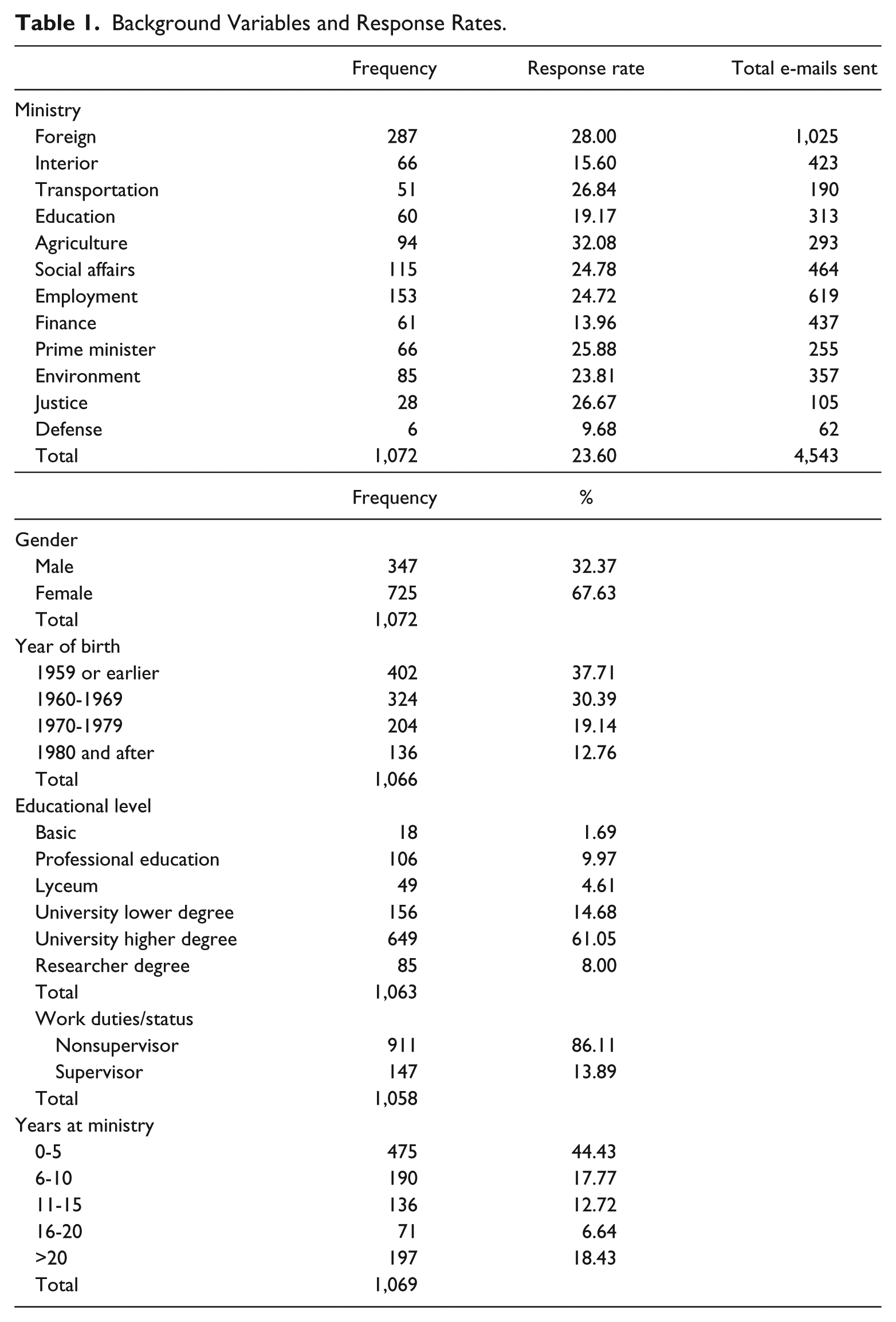
We initially created a list of e-mail addresses of all personnel in the 11 Finnish ministries and the prime minister’s office, all of which are located in Helsinki. The e-mail addresses were gathered by visiting each ministry’s web page, where up-to-date contact information for all ministry employees is listed. We designed the web-based questionnaire using specialized software (www.webropol.com). Because people can directly (albeit anonymously) accuse others of harassment in a survey, workplace harassment is a very sensitive subject. If victims suspect that they could be identified from a survey, victims may not respond out of fear of the potential further deterioration of their work status and their well-being in general (Cortina & Magley, 2003; LaVan & Martin, 2008). Aggressors may also not respond for obvious reasons. Hence, in the questionnaire, we did not request information on the respondents’ gender or ministry of employment, as we could already obtain such information from the ministry web pages. Furthermore, in the cover letter, we emphasized that the survey was of an academic nature, that all responses would be treated with the strictest confidentiality, and that the survey was conducted without prior contact with the ministries’ management. At the end of March 2014, we sent 4,543 e-mails containing the cover letter and an individual URL. Ten days later, we sent a reminder e-mail to nonrespondents. The cover letter and the survey itself were sent in both Finnish and Swedish, the two official languages of Finland. We ultimately received 1,072 replies, representing a 23.60% response rate. 4
One may argue that the obtained response rate is rather low, which may raise questions regarding the representativeness of our sample with respect to the whole population of ministry employees under scrutiny. In recent years, because web-based surveys have become common, achieving a reasonably adequate response rate has become more difficult. Many people who receive survey requests delete the messages on receiving them or after reading the cover letters. However, Visser, Krosnick, Marquette, and Curtin (1996) report that studies with response rates as low as 20% are able to produce more accurate results than studies with response rates between 60% and 70%. Moreover, in their evaluation of national surveys, Holbrook, Krosnick, and Pfent (2007) assert that surveys with low response rates are often only marginally less accurate than those with higher response rates, and according to K. B. Sheehan (2001), the response rate of Internet-based surveys had already dropped from 61.50% in 1996 to 24% in 2000. Thus, given the sensitivity of our topic and the initial negative reaction toward the survey by a number of the ministries, 5 we believe that our response rate is adequate. 6
Table 1 presents the response rates per ministry, which range from 9.68% to 32.08%. Due to the low absolute number of responses (<30) from the Ministry of Defense and the Ministry of Justice, we exclude these two ministries in the analysis of ministries’ prevalence rates using logit models. In the same table, we list respondents’ background characteristics, including gender, year of birth, education level, work duties/status, and years (working) at the ministry.
Background Variables and Response Rates.
The survey comprised 29 questions on the characteristics of aggressors, prevalence levels of bullying, and potential consequences of bullying. Because of space constraints, below, we describe and analyze only some of them. 7 A selected number of questions appeared twice in the survey. The questions initially referred to the respondents’ own experiences with workplace bullying. As such experiences are by definition subjective, verification of each individual case, perhaps by an outside observer, is impossible. Thus, the respondents were asked to answer the same questions again while thinking of incidents when a colleague might have been exposed to workplace bullying. With this approach, we attempted to verify the respondents’ self-reporting through peer confirmation.
Analysis
Measuring the Prevalence of Bullying
Although no universally accepted definition for workplace bullying exists, the definition by Einarsen et al. (2011b) captures the essence of workplace bullying:
Bullying at work means harassing, offending, socially excluding someone or negatively affecting someone’s work tasks . . . The bullying behavior has to occur repeatedly and regularly and over a period of time . . . Bullying is an escalating process in the course of which the person confronted end up in an inferior position and becomes the target of systematic negative social acts. (p. 22)
As discussed in the introduction, one of the main purposes of the survey was to establish and measure the extent of harassing incidents within each ministry, a formidable task. According to Nielsen, Notelaers, and Einarsen (2011), there are three basic methods of measuring workplace bullying: (a) the so-called “self-labeling” method, by which one measures the respondent’s overall feeling of being bullied based on a definition of bullying, (b) the “behavioral experience” method, by which one measures the respondents’ perception of being victimized using a list of specific bullying behaviors, and (c) a method that combines the two above approaches.
The self-labeling method is said to generate higher levels of reported bullying than the behavioral experience method, and the combination of the two methods is considered to produce more balanced results than either method alone. To be conservative and cautious in our estimates, we chose to adopt the third method; thus, we presented the respondents with a general definition of bullying and a list of specific bullying statements with a frequency of occurrence rating next to each one.
In designing our question measuring prevalence, we used a shorter version of the NAQ-R (Negative Acts Questionnaire–Revisited) by Einarsen, Hoel, and Notelaers (2009). We assumed that using a smaller number of carefully chosen bullying-related acts would make the questionnaire easier and faster to complete but would still capture the main problems of workplace bullying, if any. The seven items that we used measured work task–related bullying (Statements I, II, and II) and personal-level bullying (Statements IV, V, VI, and VII). The statements are shown in Table 2. The distinction between work task–related and personal-level bullying is consistent with the standard classification, which has evolved gradually from earlier studies (see, for example, Einarsen & Raknes, 1997; Hoel, Cooper, & Faragher, 2004; Mikkelsen & Einarsen, 2001; Nielsen et al., 2009; O’Moore, Seigne, McGuire, & Smith, 1998).
Questions Measuring Bullying and Frequencies of Responses (Original in Finnish and Swedish).
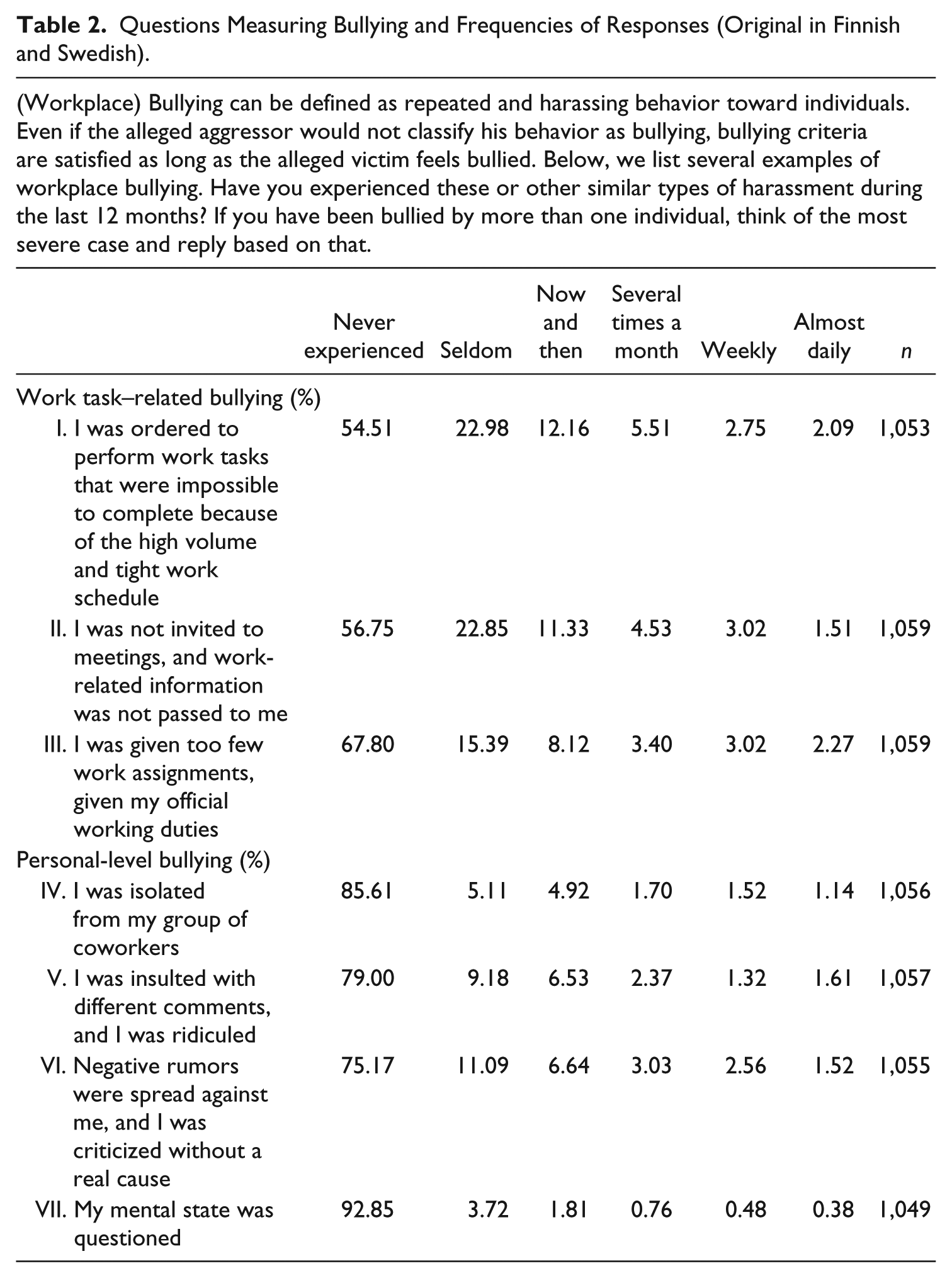
According to the definition of workplace bullying, adverse effects on the victim’s welfare are more likely when incidents of bullying occur more rather than less frequently. Regarding how the duration of workplace abuse is measured, Keashly and Jagatic (2011) note that “[w]ith few exceptions . . . the anchors on the frequency scales are not often tied to such time referents as monthly, weekly or daily occurrence. Such specificity would be necessary for determining duration of exposure” (p. 49). Following Keashly and Jagatic, we aggregated the aforementioned answers and generated three respondent categories per bullying type:
Never bullied: The respondents answered “never experienced” for all seven statements.
Seldom bullied: The respondents answered “seldom” or “now and then” for at least one of the seven statements, and they did not answer “several times a month,” “weekly,” or “almost daily” for any of the seven statements.
Frequently bullied: The respondents answered “several times a month,” “weekly,” or “almost daily” for at least one of the seven statements.
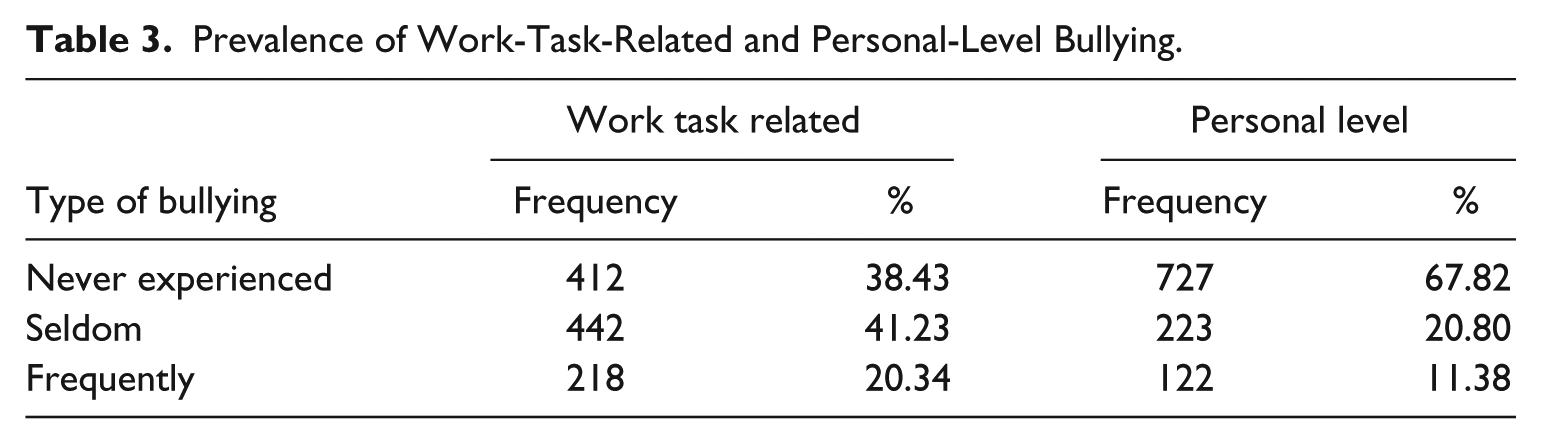
Overall, 20.34% of the respondents reported experiencing work task–related bullying several times per month or more, whereas 11.38% reported experiencing personal-level bullying at such a frequency (Table 3). As discussed in the introduction, several studies in Finland have examined workplace bullying in public-sector (mostly municipal) organizations, and most of these studies used the “self-labeling” approach to measure bullying. As such, estimates are usually positively biased (Nielsen et al., 2011), our findings indicate that the prevalence of bullying is higher in Finnish ministries than in other public-sector organizations.
Prevalence of Work-Task-Related and Personal-Level Bullying.
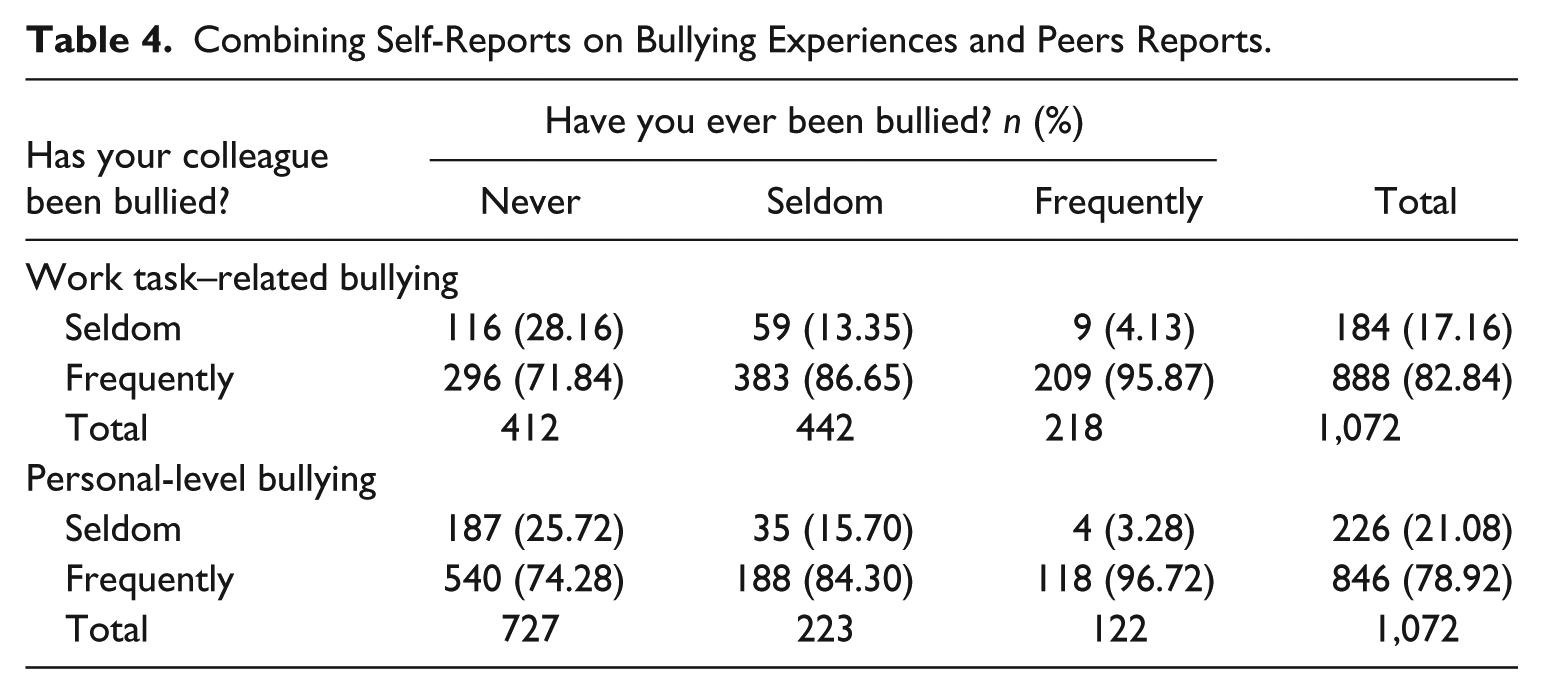
Agervold (2007) asserts that measuring bullying prevalence by “witnessing” peers rather than by directly asking victims about bullying provides a more objective and unbiased picture of the phenomenon. Cowie, Naylor, Rivers, Smith, and Pereira (2002) also observe that methodological problems arise from the sole use of self-reported bullying incidents. 8 As noted earlier, to confirm bullying incidents through peer reports, we asked the respondents to answer the same questions as presented in Table 2 while considering a colleague’s exposure to such behavior. To check for potential bias (e.g., whether only the bullied respondents dominated the peer reports), we cross-tabulated the peer reports with the self-reports. As Table 4 shows, bullying is a widespread and well-known phenomenon in Finnish ministries. Notably, all respondents, including those who reported never being harassed themselves, knew of colleagues who were being harassed. The awareness of peer coworker harassment appeared to be positively related to the severity of the respondents’ self-reported harassing experiences. That is, the more a person had been harassed, the more aware he or she was of others being harassed. Moreover, the awareness of peer coworker harassment in our study is higher than that reported in Hoel and Cooper (2000), in which approximately 55% of the harassed employees had held discussions with their peers on their traumatic experiences.
Combining Self-Reports on Bullying Experiences and Peers Reports.
Potential Consequences of Bullying
Workplace bullying is the cause of many negative outcomes. Such disputes negatively affect victims’ productivity, health, and general well-being, and thus, ministries’ operational performance. In the survey, we also asked the respondents to list several consequences of being harassed, and we present the self-reported consequences of work task–related bullying in Table 5. More than 50% of respondents who reported being harassed admitted that their work satisfaction, motivation, and productivity had decreased a little or considerably.
Potential Consequences of Workplace Bullying.
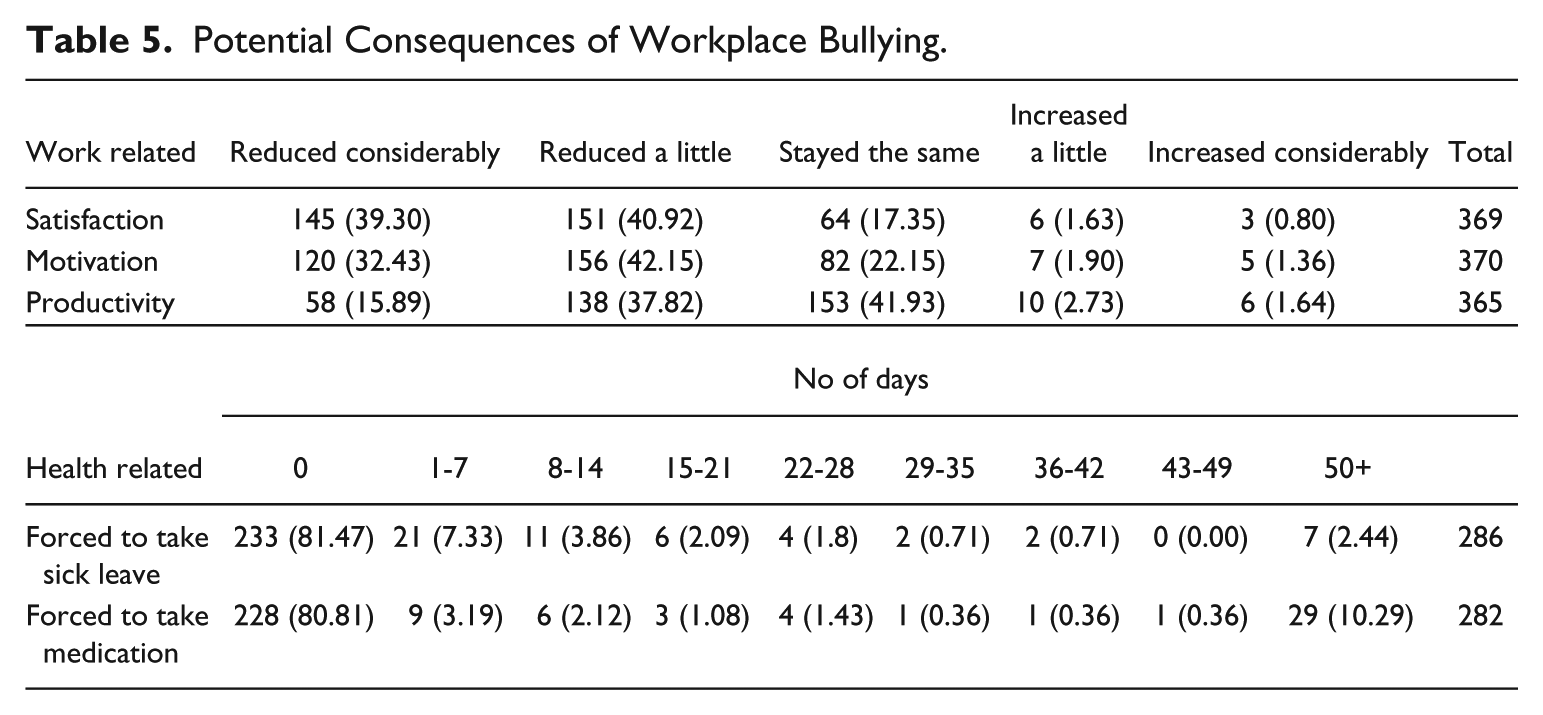
Surprisingly, however, a few of such respondents reported that bullying had made them more productive, motivated, and satisfied at work. This finding is in line with the claim by Ferris, Zinko, Brouer, Buckley, and Harvey (2007), among others, that so-called “strategic” bullying can temporarily increase work productivity.
In the same table, we report two health-related consequences of workplace bullying: days on sick leave and days on medication. Note that, fewer people answered these questions compared with the questions on work task–related consequences—perhaps because of the more private nature of these questions. As the table shows, 53 public-sector employees took sick leave, and another 54 took medication as a direct consequence of bullying. If we compare these numbers with the total sample of civil servants who responded (4.94%) or the total target population in the 12 ministries, as a percentage, these numbers are low, impeding our ability to make generalized inferences about civil servants. However, even if those 53 people (a mere 1.18% of the total population contacted) were the only ones who took sick leave and medication because of workplace bullying, that is perhaps 53 people too many.
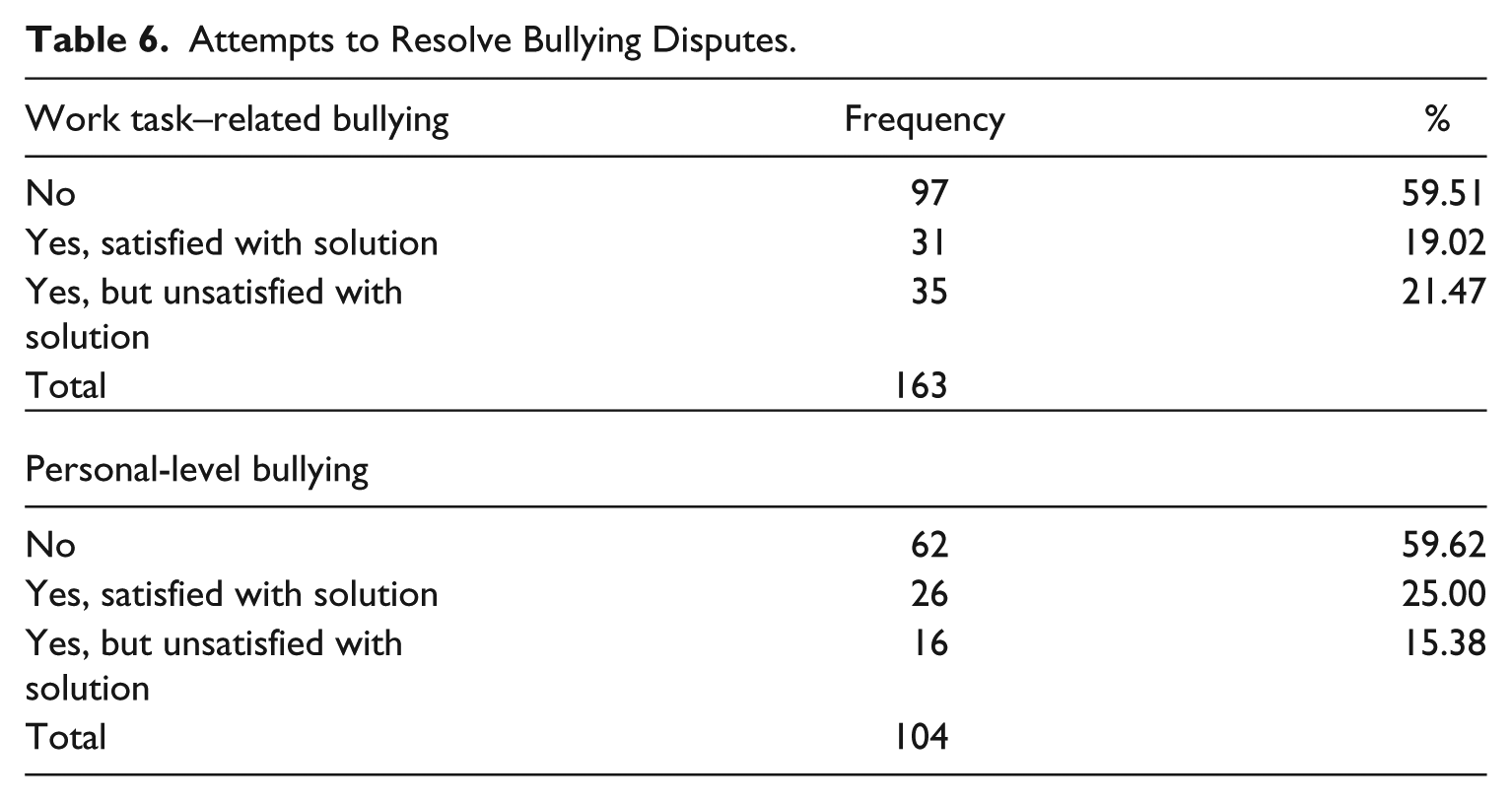
Furthermore, we asked the respondents whether their workplace harassment had stopped during the last 12 months. Table 6 presents the results based on the type of bullying experienced. For both types of bullying, approximately 60% of respondents replied that they still experienced bullying, and another 19% (25) stated that the solution to their problem had been unsatisfactory. The ineffectiveness of the procedures implemented to solve workplace bullying is, thus, quite evident.
Attempts to Resolve Bullying Disputes.
Aggressors
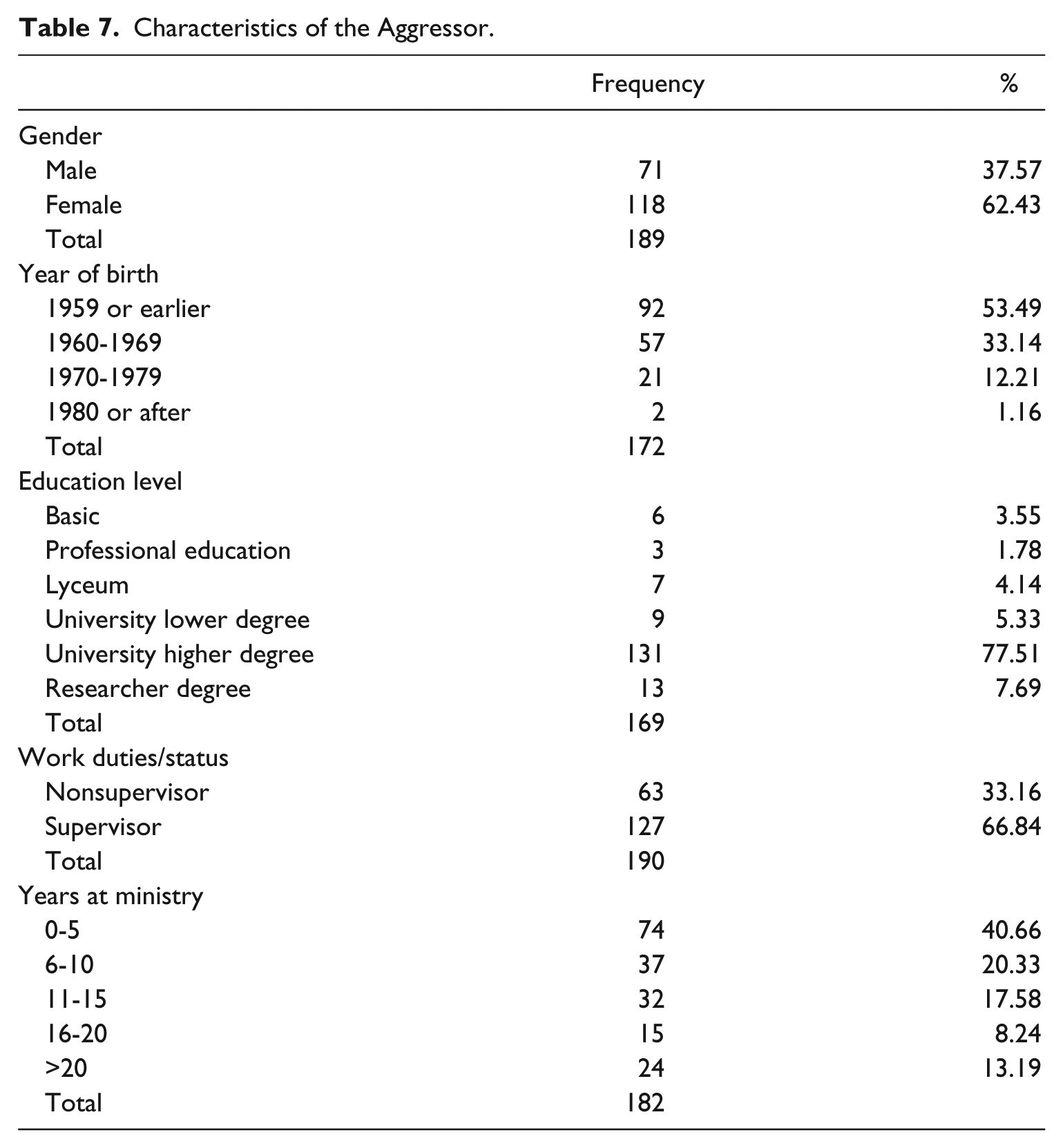
We generate an aggressor profile based on the factor variables, gender, age, education level, work duties/status, and years at the ministry. 9 To identify bullies with greater precision, in Table 7, we report the responses of only those who reported being bullied frequently. For comparison purposes, we also report the corresponding percentages for the whole sample (from Table 1) in parentheses below. Females were identified as aggressors more often than males at 62.43% (67.63), and the majority of bullies, at 53.59%, were born before 1960 (37.71). Moreover, 77.71% had a university degree (61.05), and 40.66% of the bullies had worked in their ministry for 5 years or less (44.43). We find relatively small deviations for these variables between our overall sample and the sample of bullies. However, for the work status variable, we find a large deviation between the bully sample and the whole sample. Specifically, whereas 13.89% of respondents in the whole sample had supervisory duties, nearly 5 times as many bullies (66.84%) had such duties. In our analysis of the direction of bullying (who bullies whom) and in our logit models below, this finding is confirmed.
Characteristics of the Aggressor.
Who Bullies Whom?
For this analysis, we concentrate only on those respondents who reported being frequently bullied at both the work-task and the personal levels. In Table 8, we first cross-tabulate the work status (supervisor or nonsupervisor/subordinate) of the victims and aggressors. Although bullying appears across all four work status combinations, the most common direction of bullying is from supervisor (aggressor) to nonsupervisor respondent (victim). More than half of all bullying incidents involve such a dynamic, for both work task–related (61.82%) and personal-level (60.38%) bullying. In line with this result, Cowie et al. (2002) find that bullying often occurs in a hierarchical, top-down manner, creating an environment in which the victim feels unable to defend him or herself. In addition, a meta-analysis of various empirical papers on workplace bullying reports that in 40 population samples with 6,783 victims, 65.40% reported being bullied by supervisors (Zapf et al., 2011). Hence, our results appear to coincide with most previous research on workplace bullying. Nonetheless, we must interpret these results with care. Indeed, other empirical studies show that subordinates, not supervisors, are the major perpetrators of workplace bullying (see, for example, Ortega, Hogh, & Borg, 2008), and the Pearson’s chi-square values for this association are statistically nonsignificant in both cross-tabulations.
Direction of Frequent Bullying (Who Bullies Whom).
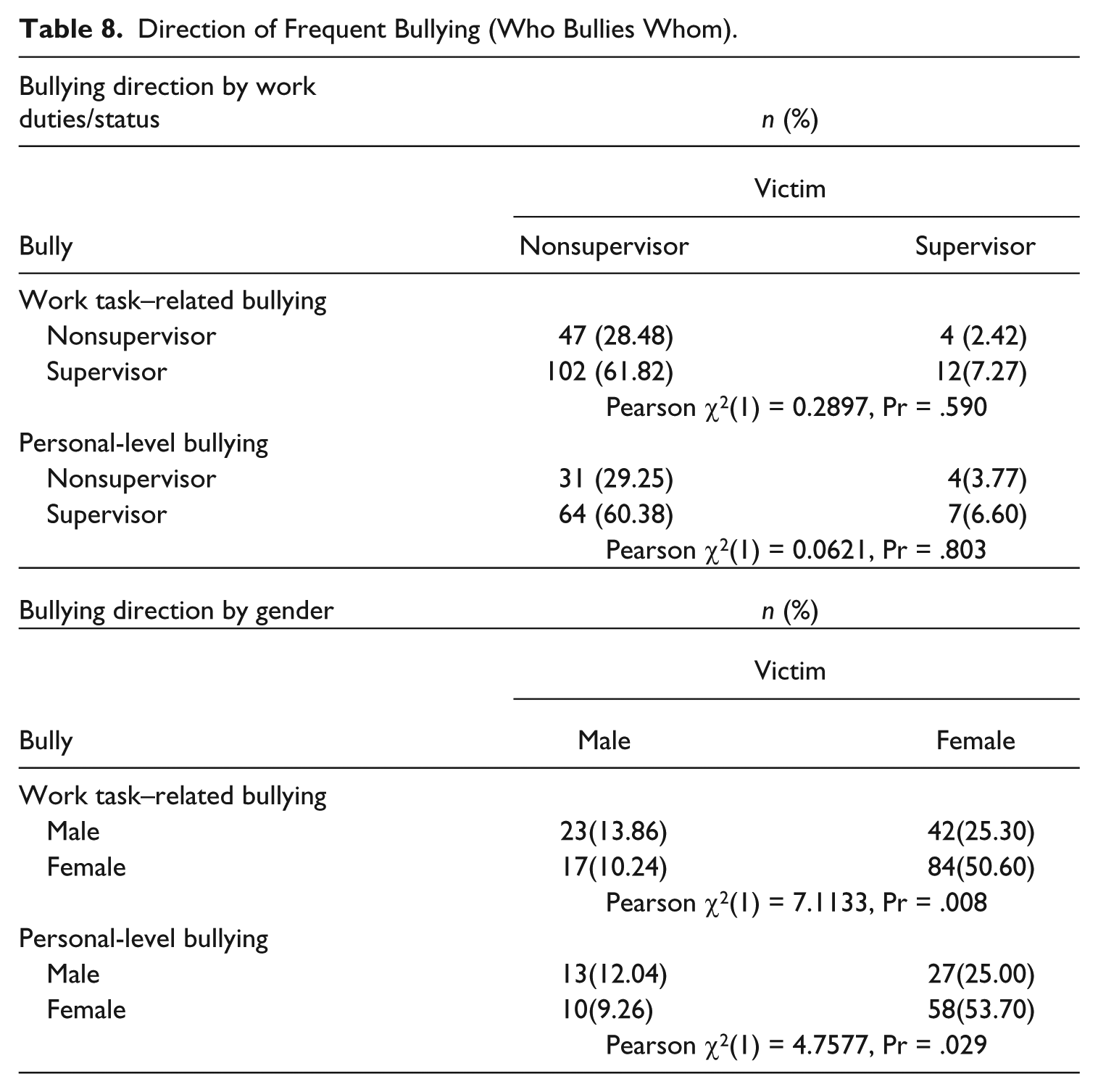
As with the work duties/status variable, we cross-tabulate the victims and aggressors by gender to produce four combinations of observations. The results reveal that the majority of bullying occurs between female aggressors and female victims, which accounts for more than half of the total bullying incidents for both work task–related (50.60) and personal-level (53.70) bullying. Moreover, the Pearson’s chi-square value is statistically significant, indicating the gender of the bully is significantly associated with that of the victim. However, yet again, because there are twice as many females as males in our sample (67.63% vs. 32.37%, respectively; see Table 1), we cannot determine with certainty whether females have a higher tendency to bully other females in particular 10 or whether these results are attributable to the overrepresentation of females.
Risk Factors Associated With Exposure to Bullying
As noted earlier, we divide the respondents into three groups based on their answers to the seven statements related to bullying. Recall also that we classify these statements into two types of bullying, with the first three describing work task–related bullying and the last four describing personal-level bullying. Thus, in our models, we use the two categorical variables from Table 3 as dependent variables. For each of the two variables, we estimate two multinomial logit models, with ministry, gender, year of birth, education level, work duties/status, and years working at the ministry (see the frequencies in Table 1 earlier) included on the right-hand side as explanatory factor variables. The inter-correlations are |.53| or less.
We compare the responses of individuals in the base category “never bullied” with those of individuals in “seldom bullied” and “frequently bullied” categories. We also examine the interactions of the ministry variable with other factors, including gender and work duties/status. Because of the relatively low number of initial observations, many of the interaction cells have few or even no observations, which may affect the confidence intervals and the statistical significance of the corresponding coefficients. The two models in Table 9 include the main effects only, and they are population weighted to account for differences in gender and ministry representation in our sample and in the target population. 11
Multinomial Logit Models.
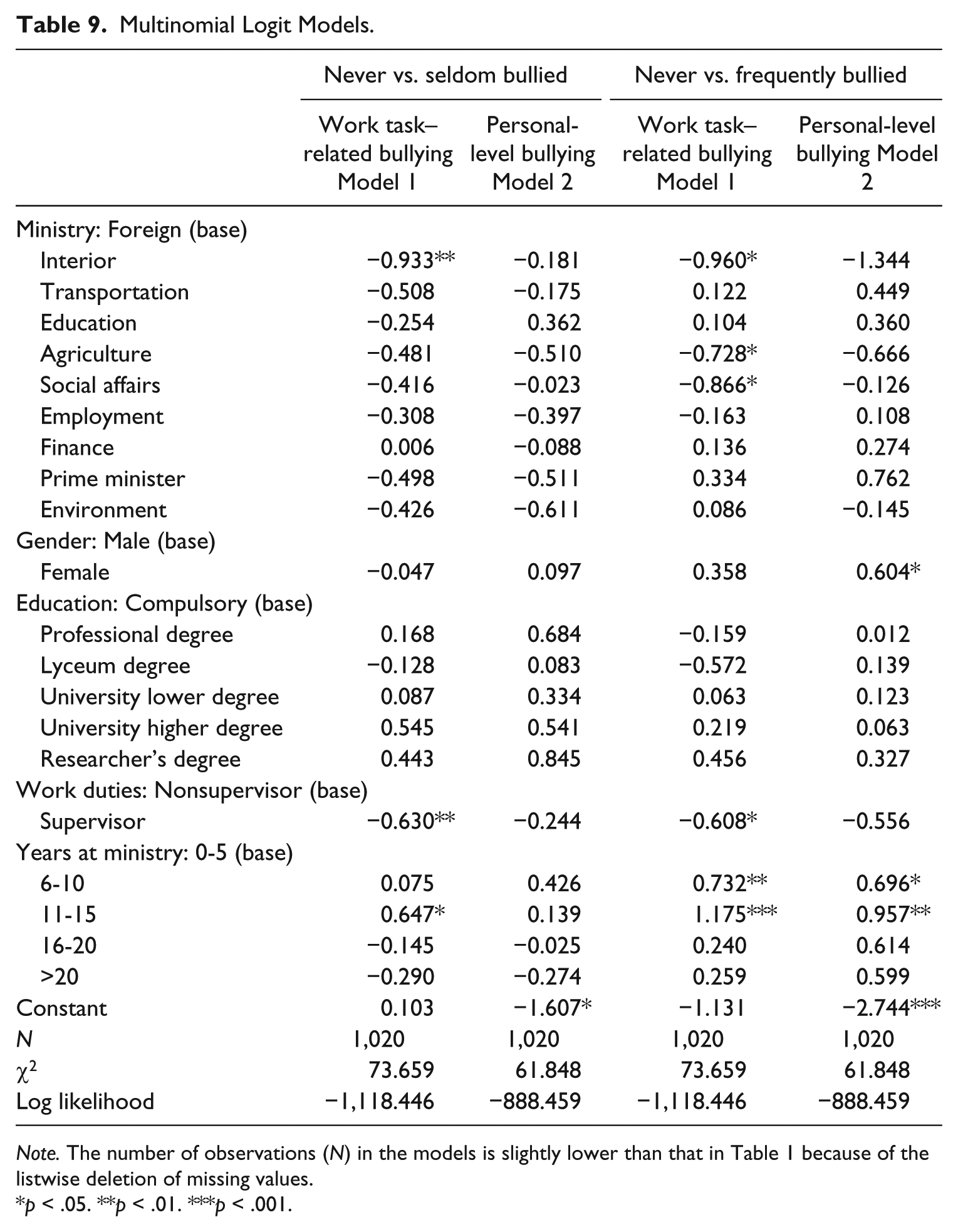
Note. The number of observations (N) in the models is slightly lower than that in Table 1 because of the listwise deletion of missing values.
p < .05. **p < .01. ***p < .001.
There are differences between and within the types of bullying. For example, we find significant differences within and between ministries for both the “seldom bullied” (Ministry of Interior) and the “frequently bullied” (Ministries of Interior, Agriculture, and Social Affairs) categories for work task–related bullying, but not for personal-level bullying. Similarly, for the work duties/status variable, we find that supervisors are less likely to experience work task–related bullying than nonsupervisory employees (−0.630, p < .01; −0.608, p < .05). This result is logical given that, by definition, supervisors are more likely to delegate and assign work tasks to others than to receive orders to complete tasks themselves. A similar result is not observed, however, for personal-level bullying. Although the sign of the coefficient for the supervisors is negative, nonsupervisory employees do not have a statistically significant higher probability of being bullied than supervisors in both the “never bullied” versus “seldom bullied” (−0.244) and the “never bullied” versus “frequently bullied” (−0.556) comparisons.
Regarding gender, we find that female employees in Finnish ministries are significantly more likely to experience bullying than their male colleagues. However, this result holds only for females who reported frequent personal-level bullying (0.604, p < .05), as the coefficient for work task–related bullying, although positive, was not significant (0.358). These results are consistent with findings reported in the literature that females are bullied more frequently than males in general (see, for example, Björkqvist, 1994). However, other articles present “a more balanced picture” (Zapf et al., 2011, p. 79).
Regarding the other independent variables, education background does not seem to be associated with bullying; at all levels examined, there are no statistically significant differences in the probabilities of being bullied either seldom or frequently, and this result holds for both work task–related and personal-level bullying. Finally, the length of time working at a ministry appears to be associated with the likelihood of being bullied. Specifically, public-sector employees with between 6 and 15 years of experience working at a ministry appear to be more likely to be bullied than not only employees with less experience (base category 0-5 years) but also those with more experience in the same ministry (16 years or more). Examining the magnitudes of the coefficients, we find that employees with 11 to 15 years of experience working at a ministry are much more likely to frequently experience both work task–related (1.175, p < .001) and personal-level (0.957, p < .01) bullying than other employees. We cannot easily contrive an explanation for this result.
Discussion
The legislation governing workplace harassment in Finland is based on Occupational Safety and Health Act 23.8.2002/738 (Ministry of Social Affairs and Health, 2002). Section 18 of the Act specifically forbids harassment between work colleagues, and Section 28 stipulates that employers must take remedial action if there is evidence of harassment in the organization. 12 To our knowledge, procedures have been established in all ministries to address harassment disputes. 13 Our results, nevertheless, clearly show that workplace bullying is a behavioral phenomenon that is quite common in Finnish Ministries. During the previous 12 months, more than 20% of the respondents reported experiencing work task–related bullying, and 11% reported experiencing personal-level bullying. These figures are well above previously reported prevalence rates, even though we used a rather conservative method for measuring bullying. One may wonder why our figures are higher than previously reported figures.
An Independent Approach?
We believe that our nonaffiliated approach (we had no discussions with any ministry before launching the survey) contributed to our observed higher bullying prevalence rates than those of previous studies. Perhaps our respondents were more comfortable with reporting honestly to an outsider than to someone within their organization. The respondents’ comments in the open-ended questions support this view (see below).
The “Who, Me?” Syndrome
We argue that the current ministry procedures for addressing harassment disputes are cumbersome and biased against harassment victims. They create, unintentionally perhaps, an environment in which the alleged bully is rarely held accountable for such behavior against another colleague, be it a subordinate or otherwise, and in turn, they may signal to aggressors that they can act as they please without fear of repercussions. Such an organizational “culture” was suggested by Brodsky (1976) as early as the 1970s. Brodsky even asserts that workplace bullying cannot possibly occur unless there is direct or indirect consent by the organization’s management. For example, in the Finnish Supreme Court’s decision in “K” versus the State (the Ministry of Finance), the State was obliged to pay all legal expenses (of both sides) for the legal battle in addition to compensation to the victim with foregone interest. The dispute lasted 5 years. The State paid “K” approximately 63,000 euro, and if we assume that the State’s legal expenses were comparable with those of “K,” the bill for the State must have totaled well above 100,000 euro. In other words, the ministry used a substantial amount of taxpayers’ money to “defend” the illegal—as determined by the court—behavior of one or more of its employees.
From the beginning, the State (ministry) clearly devoted substantial human and financial resources to the case; however, it is doubtful whether the actual aggressor(s) in the bullying dispute, as well as those who decided to pursue a legal battle, was ever held accountable for the final cost or for the productivity hours lost owing to the legal battle itself. We do not know whether there were attempts by either side to settle the case out of court, which is always a prudent approach in such disputes. One may, of course, argue that those involved from the ministry genuinely believed that they were not bullying anyone, and the narrow 3-to-2 vote margin in the Supreme Court perhaps supports such a view. In addition, when they learned of our survey, a number of ministry officials were initially suspicious and negative toward the survey. On the same day that we sent the initial batch of e-mail questionnaires, officials with managerial responsibilities from three ministries contacted us by e-mail and telephone. They questioned the right of external researchers to approach the ministries’ employees without first informing their personnel departments. 14 By contrast, when they were asked to evaluate the survey, the majority of respondents were satisfied that the issue was finally being analyzed in detail. Many respondents also noted the veil of silence that shadowed this problem in their ministries. 15
Direct Interest Missing?
Bullying appears to be more widespread in the public sector than in the private sector. The nature of ownership in private workplaces motivates management to take immediate actions to rectify bullying incidents and to establish and maintain working environments in which all employees are motivated to work hard for the prosperity of the firm. Salin (2006; cited in Salin, 2008) finds that employees in the private sector are indeed confident in their organizations’ ability to better address bullying relative to public-sector organizations. By contrast, in public-sector organizations such as ministries, personal conflicts are not easily rectified because the nature of private ownership is missing.
Pressures for Structural Changes?
In Finland, there have recently been increasing signs of a significant economic downturn and an upcoming recession. The government is faced with difficult decisions in making structural reforms, including decreasing public spending and considerably reducing the size of the public sector. The country currently has a large public budget deficit, and it is at risk of exceeding the reference value of 3% of GDP. There is an immediate need to balance the budget and reduce the state debt, which will soon exceed the EU-imposed threshold of 60% of GDP (Bank of Finland, 2014). Many have recently predicted that layoffs are inevitable (Salonen, 2014). Decisions for such economies and cuts are hierarchically applied, and as such, all ministries and other public-sector organizations face substantial pressure to decrease personnel and increase productivity. In the private sector, an owner can relatively easily terminate an employee if his or her business is not doing well. By contrast, in Finnish ministries, permanent positions (virka in Finnish) are more secure. Thus, in cases of disputes, the management of ministries may turn to bullying to force unwanted employees to resign (M. Sheehan, 2001).
However, bullying is currently a very topical and sensitive subject, and the media coverage is quite widespread. 16 One could hypothesize that there are cases in which incompetent employees invent fictitious bullying behavior by their management and use such incidents as a pretext to protect themselves from being terminated. Roles may be reversed, and the self-proclaimed victims could even be acting as bullies against their supervisors (Jenkins, Zapf, Winefield, & Sarris, 2012).
Proposal
The high prevalence of workplace bullying that we described above poses an oxymoron. The phenomenon occurs in Finnish ministries, indicating that workplace bullying occurs not only in the ministries of a Nordic country that ranks very highly in public-sector efficiency but also in public-sector organizations that are themselves designing and implementing rules on how to address bullying in the workplace. However, either these laws, rules, and directives for rectifying such problems are not being applied in these organizations’ “own backyards” or, if they are, they are ineffective. In our survey, more than 50% of those who felt harassed reported that their work satisfaction, motivation, and productivity had decreased because of bullying. More than 50 of those individuals took sick leave or medication to help them address the problem. Moreover, 75% of the victims who reported experiencing bullying during the past 12 months stated that they were still experiencing bullying or that the solution that had been applied to their problem was not satisfactory.
The majority of currently recommended interventions for workplace bullying are based on the timing of bullying incidents. So-called primary interventions are implemented ex ante with the aim of preventing bullying. Secondary interventions are ex nunc in nature, focusing on procedures that can stop disputes from escalating and support victims. Finally, tertiary interventions are implemented ex post; they are designed to reduce the negative impacts of bullying in the organizations and to help resolve the victims’ potential health problems (Leka et al., 2008). Primary interventions ideally include a statement from management that bullying is unacceptable; a clear description of actions that constitute bullying; references to relevant legislation; clear guidelines for how to proceed as a victim of bullying, as a witness, or even as an alleged aggressor; mechanisms to support victims; and specialized training on the topic (Einarsen & Hoel, 2008).
As mentioned earlier, Salin (2008) investigates the organizational measures that Finnish municipalities have implemented to combat workplace bullying. Her findings suggest that antibullying actions are often undertaken as responses to reported problems rather than as preventive measures. That is, the strategies for addressing bullying appear to be reactive rather than proactive. In a similar study, Salin (2009) finds that Finnish municipalities rely much more on reconciliatory measures and very seldom on measures that are punitive in nature. This finding is line with the claim of Franklin and Pagan (2006) that with regard to employee discipline practices, many organizations dread strict measures and avoid them.
We argue that the same approach is undertaken by Finnish ministries. When harassment complaints are reported, initial discussions typically occur between the victim and his or her supervisor. A high-ranking official from the personnel department may also participate together with the elected representatives of the employees, the working union of the victim, and an employee with occupational safety responsibilities. In some cases, occupational health doctors and psychologists may also be involved. At this stage, the parties attempt to find the causes of the problem, and proposals are offered to resolve the dispute. If the actions taken are inadequate, however, the victim is advised to contact an independent authority, namely, the Occupational Safety and Health Administration (http://www.tyosuojelu.fi/fi/workingfinland; Vartia-Väänänen, 2013), for intervention. The threshold for the active involvement of this outside organization is high, however. Specifically, the administration demands that all possible earlier steps be taken and that parties provide written documentation describing the steps that were taken in advance. It may then participate in the negotiations between the parties and ultimately give recommendations to the employer on how to solve the problem. However, the employer’s obligation to abide fully by these recommendations is nevertheless unclear.
The entire exercise is cumbersome and bureaucratic, and it can be very lengthy. The victim has the very difficult task of providing evidence of bullying and abuse, which often occur behind closed doors or at times when no witnesses are present. The procedure is somewhat necessary to establish the facts behind the victim’s complaints; however, it unfortunately places the burden mostly on the shoulders of the victim, who, by definition, is the weak party. Moreover, as our results show, the procedure is also not particularly effective at solving the problem. Indeed, bullying appears to be proliferating, and prevalence levels are unacceptably high.
We agree that the key to curtailing harassment incidents in the public sector is focusing on proactive strategies that prevent harassment from happening in the first place. However, in our opinion, increased emphasis should be placed on punitive measures, and these measures should be connected to the aggressor’s level of accountability, regardless of his or her work status. We propose that new and stricter rules that emphasize the direct responsibility of the aggressor be designed and implemented. The responsibility should be directly connected to the severity of the bullying dispute, and penalties should be imposed on the aggressor. Such penalties could range from a simple transfer to another department to temporary suspension from his or her work duties to even permanent dismissal. Pate and Beaumont (2010) report that the dismissal (or “head rolling”) of bullies gives the message of “zero tolerance” and produces a “new ethos” in an organization. If such punitive measures were to be implemented, we argue that they would increase the perception of fairness among public-sector employees, which, in turn, could increase their level of job satisfaction and productivity (Choi & Rainey, 2014). We are not aware of any administrative penalties enforced in ministries that are directly connected to workplace harassment.
We realize that both unequivocally identifying the bully and measuring the magnitude of the harassment are very difficult tasks to undertake, and even if the bully could be identified and the magnitude of the harassment measured, there is still a high threshold for imposing sanctions on the identified perpetrator. As the cases of “K” versus the State and that of “A” versus “R” (see Note 16) have shown, the dispute may easily become a civil court case and continue for many years. We, nonetheless, strongly recommend the use of proactive measures to combat bullying. As Yamada (2004, 2011) advocates, the announcement of stricter rules and punitive measures can act as an effective deterrent to would-be bullies. The threat of severe punishment for breaching these rules, combined with the other ex-ante primary interventions discussed earlier, will very likely help to reduce bullying incidents in public-sector organizations.
Footnotes
Declaration of Conflicting Interests
The author(s) declared no potential conflicts of interest with respect to the research, authorship, and/or publication of this article.
Funding
The author(s) received no financial support for the research, authorship, and/or publication of this article.