







Abstract
While pension reforms for public employees are implemented frequently around the world, there is still limited understanding of how these employees respond to and adapt to such changes. Utilizing the 2015 Public Officials Pension Reform in South Korea as the research context, this study investigates the impact of pension reform on employee satisfaction with the public service profession during the reform period and how this impact evolved in the post-reform years. Drawing on yearly repeated cross-sectional data from 15,270 public employees collected between 2013 and 2019, our empirical analysis reveals a significant decline in employee satisfaction with the public service profession following the initiation of pension reform in 2014, with a subsequent rebound to pre-reform levels in the later years. These findings offer valuable insights for navigating the challenges of pension reform and enhancing employee satisfaction during the reform process.
Introduction
Pensions hold a significant role in the overall compensation and financial security of public employees. As government-backed or publicly managed retirement plans, they provide a dependable source of income in retirement, constituting a fundamental element of financial well-being for those employed in the public sector (Reilly, 2013). Competitive pension benefits also enhance the appeal of public sector careers by attracting high-quality candidates to public service and retaining experienced employees who might otherwise seek opportunities in the private sector (Gorina & Hoang, 2020; Gough & Arkani, 2011; Terry & White, 2000). Consequently, pension systems influence not only the economic stability of individual employees but also the broader landscape of public human resource management, shaping government–employee relations and contributing to the long-term sustainability of public service.
However, many countries have encountered significant challenges in sustaining pension systems for public employees, prompting the implementation of various reforms. Since pension plans often impose a substantial financial burden on governments, reforms are typically undertaken to manage pension expenditures and ensure the long-term fiscal sustainability of these systems (Asher, 2000; Asher & Vasudevan, 2004; Palacios & Whitehouse, 2006). During economic downturns or financial crises, reducing expenditures becomes imperative for maintaining fiscal stability, and pension reforms are frequently employed to alleviate both immediate and long-term financial pressures (Asher, 2000). In addition, demographic shifts, such as population aging and increasing life expectancy, place further strain on pension systems, often leading governments to adjust pension eligibility ages and benefit formulas to address these changes (Gorina & Hoang, 2020).
In the United States, for example, Detroit declared bankruptcy in 2014 and reduced pension benefits for retirees as part of its restructuring efforts (Peck & Whiteside, 2016). Similarly, the Central States Pension Fund, one of the nation’s largest multiemployer pension funds, grappled with financial difficulties and proposed substantial benefit cuts for certain retirees (U.S. Government Accountability Office, 2018). The United Kingdom has also witnessed several alterations to its state pension system, including raising the state pension age and adjusting benefit calculations (Disney, 2016). In response to its financial crisis, Greece implemented austerity measures that included reductions in public sector pensions (Tinios, 2013).
With this growing prevalence of pension reforms for public employees, it becomes increasingly crucial to understand how these employees perceive, respond to, and adapt to such changes. For policymakers and organizational leaders alike, comprehending these dynamics is essential for effectively navigating the transitions prompted by pension reforms. However, much of the existing research on pension reform has primarily focused on the reform as a single event, often overlooking the evolving nature of employee attitudes over time. This study aims to examine the nuances of public employees’ reactions to pension reform by investigating how the reform influences employee satisfaction with the public service profession over time, analyzing their satisfaction levels before, during, and after the implementation of reform.
This study focuses on the case of the 2015 Public Officials Pension Reform in South Korea. In response to fiscal challenges exacerbated by an aging population and increasing pension obligations, South Korea has undergone substantial reforms to its pension system for public employees (P. S. Kim & Chun, 2019). The 2015 Public Officials Pension Reform marked a significant step in addressing these challenges, aiming to improve the financial health of the system while ensuring the long-term retirement security of public servants (Ministry of Personnel Management, 2016). Key measures included an increase in the employee contribution rate, a reduction in the pension payment rate, and a delay in the pensionable age (Ministry of Personnel Management, 2016). While the reform was anticipated to yield immediate and long-term savings for the government (Ministry of Personnel Management, 2016), we know relatively little about the consequences of this reform on the satisfaction of public employees. Through an analysis of data collected from 2013 to 2019, this study seeks to shed light on the nuanced effects of pension reform on employee satisfaction over time.
The findings of this study make a meaningful contribution to the existing literature by providing valuable insights into the evolving nature of employee attitudes amidst policy changes and financial constraints. Through a comprehensive examination of employee responses to pension reform, this study aims to inform policymakers and organizational leaders regarding the complex relationship between pension policies and employee satisfaction. By understanding the factors influencing employee satisfaction in the wake of pension reform, this study can equip them with the knowledge needed to develop effective strategies aimed at mitigating potential adverse effects and cultivating a more positive work environment for public employees.
In the following section, we provide a brief overview of the 2015 Public Officials Pension Reform in South Korea, which serves as the research context for this study. Next, we review the relevant literature on the relationship between pension reform and employee satisfaction and propose our hypotheses regarding the immediate and long-term impacts of pension reform. We then describe the data sources, variables, and empirical methods utilized to test these hypotheses. The subsequent section presents and examines the results of the empirical analysis. Finally, we conclude by synthesizing the key findings, discussing both theoretical and practical implications, addressing the study’s limitations, and suggesting potential avenues for future research.
Research Context: The 2015 Public Officials Pension Reform in South Korea
The pension system for public employees in South Korea was established in 1960 through the Public Officials Pension Act. Since then, it has served as a key incentive for civil servants, promoting dedicated service to the state while ensuring financial security in retirement (P. S. Kim & Chun, 2019; T. Kim & Park, 2014; Kwon, 2015). Given the significant restrictions on civil servants’ political activities and their limited rights to collective action, the system has also functioned as a compensatory mechanism, offsetting and legitimizing these constraints (Kwon, 2015; Kwon & Kim, 2011). As a central pillar of public personnel policy, it has been instrumental in fostering organizational commitment among public employees (Kwon, 2015; Kwon & Kwak, 2006).
By the 1990s, however, the pension system began facing mounting financial pressures, driven by the growing number of civil service retirees and structural challenges associated with an aging population (P. S. Kim & Chun, 2019; Kwon, 2015; Kwon & Kim, 2011). These fiscal strains undermined the system’s long-term sustainability and prompted successive waves of reform aimed at restoring its financial health. Despite these initiatives, the financial condition of the pension system continued to deteriorate, highlighting the need for further measures (Y. Kim et al., 2019). Recognizing the urgency of the issue, the Park Geun-hye Administration (2013–2017) identified civil service pension reform as a cornerstone of broader public sector reforms (Ministry of Personnel Management, 2016). Discussions on reforming the pension system commenced in early 2014, following the presidential statement that strongly emphasized the administration’s commitment to pension reform. The reform bill was passed by the National Assembly in May 2015, and the Public Officials Pension Act was amended in June 2015. Implementation of the reform began on January 1, 2016. The rapid enactment and execution of the reform, reflecting strong presidential commitment and solid legislative support, make the 2015 Public Officials Pension Reform a distinctive case for systematically evaluating the impact of pension reform on public servants.
The bill’s key provisions introduced several major changes: an increase in the employee contribution rate from 7% to 9%, a reduction in the pension payment rate from 1.9% to 1.7%, and a phased increase in the pensionable age, which was set at 61 in 2022 with incremental rises to reach 65 by 2033. According to the Ministry of Personnel Management (2016), the reform was projected to reduce the government’s financial obligations by approximately 497 trillion KRW (about 370 billion USD) over 70 years. Nevertheless, because the reform’s core principle was to “contribute more, receive less” (P. S. Kim & Chun, 2019), concerns arose regarding how public servants would respond to these changes. They might display negative reactions or even resist the reform due to heightened financial uncertainty, limited opportunities to voice their concerns during the reform process, and external pressures from politicians and the public demanding urgent action (Y. Kim et al., 2019). In light of these challenges, this study seeks to examine how public employees responded to the reform by analyzing changes in satisfaction levels following the initiation of reform discussions and how these levels evolved over time.
Pension Reform and Employee Satisfaction With the Public Service Profession
Pensions are a critical component of public sector employment, providing secure retirement income that alleviates financial pressures and enhances quality of life for public employees. They are often regarded as part of the psychological contract (Gough & Arkani, 2011; Mussagulova et al., 2022)—the unwritten set of expectations, beliefs, and perceptions between employees and employers regarding mutual obligations and commitments within the employment relationship (Rousseau, 2001). These expectations extend beyond formal, legally binding agreements and stem from perceived promises and obligations shared by both parties (Robinson, 1996). From this perspective, pensions represent a central element of the psychological contract between governments and public employees, reflecting an implicit understanding that dedication to public service will be rewarded with reliable retirement income.
However, significant changes to pension plans can disrupt this psychological contract, altering public employees’ expectations about long-term financial security. Such reforms are particularly likely to be perceived as a breach of the psychological contract when employees, retirees, or beneficiaries view the new terms unfavorably (Mussagulova et al., 2022). A contract breach occurs when employees believe their organization has failed to fulfill its commitments (Coyle-Shapiro & Kessler, 2002; Morrison & Robinson, 1997; Robinson, 1996). In the context of pension reform, public employees may lose confidence in their employer’s commitment to securing retirement benefits, reinforcing a sense of breach. Prior research has shown that breached psychological contracts can have far-reaching consequences, including reduced morale and productivity, diminished job satisfaction, lower organizational commitment, and even employee turnover (Morrison & Robinson, 1997; Zhao et al., 2007).
In this study, we specifically examine the effect of pension reform on employee satisfaction with the public service profession. This construct reflects public employees’ overall contentment with their profession, encompassing broader career trajectories and long-term professional aspirations, in contrast to job satisfaction, which generally pertains to specific job roles and workplace conditions (Judge & Church, 2000). Given the central role pensions play in public sector employment, reforms are expected to lower employee satisfaction with the public service profession relative to pre-reform levels. Therefore, the following hypothesis is proposed:
While pension reforms are often viewed as singular events, employee perceptions and responses to such reforms may evolve over time, leading to longitudinal effects. Previous research suggests that the psychological contract is dynamic, undergoing development, disruption, and restoration over time in response to changing needs, experiences, and circumstances (Hansen & Griep, 2016; Rousseau et al., 2018; Tomprou et al., 2015). Examining pension reform as a dynamic process rather than a static event can provide deeper insights into how employees respond to and navigate such changes throughout the reform process.
Scholars have argued that individuals adapt to changing circumstances in pursuit of personal goals through self-regulation—the ongoing process of monitoring, controlling, and managing their thoughts, emotions, and behaviors (Carver & Scheier, 2001; Lord et al., 2010). Self-regulation involves establishing personal standards or desired goals, comparing one’s current state against these benchmarks, and identifying any discrepancies (Carver & Scheier, 2001; Lord et al., 2010). When such discrepancies arise, individuals are motivated to employ cognitive, emotional, and behavioral strategies to bridge the gap between the current situation and desired outcomes (Carver & Scheier, 2001; Lord et al., 2010).
Self-regulation is particularly relevant for individuals seeking to address a breach in the psychological contract. In the context of pension reform, when public employees perceive substantial discrepancies between expected and actual pension benefits, they may engage in self-regulatory efforts to address perceived breaches and restore their psychological contracts (Tomprou et al., 2015). This process can entail setting new goals, reallocating resources, and developing strategies for improvement (Rousseau et al., 2018), which can help employees recover from disruptive events and ultimately enhance their satisfaction and overall well-being following pension reform. Consistent with this theoretical perspective, prior research shows that individuals experiencing breaches in their psychological contracts due to job changes initially exhibit a decline in organizational commitment but later regain their original levels of commitment as they develop renewed dedication to the organization (Solinger et al., 2016). Likewise, we expect that employee satisfaction with the public service profession will initially decline in response to pension reform but will recover over time as employees adapt to the new conditions. Thus, the following hypothesis is proposed:
Data and Method
Data
The data for the empirical analysis were derived from the annual Public Employee Perception Survey administered by the Korea Institute of Public Administration. This dataset comprises repeated cross-sectional data collected through questionnaires designed to capture various aspects of work-related perceptions and attitudes among public employees. Our analysis focuses on data spanning from 2013 to 2019, encompassing demographic, job-related, and attitudinal variables (Korea Institute of Public Administration, 2013, 2014, 2015, 2016, 2017, 2018, 2019). Our analysis sample consists of public servants who entered the public service by passing the civil service examination. They were tenured until the retirement age of 60 and were directly affected by the pension reform. As a result, the analysis sample includes 15,270 individuals and most of them started public service at Grades 5, 7, and 9, which are customary entry points for the civil service examination. The civil service system in South Korea consists of nine levels, with Grade 1 being the highest and Grade 9 the lowest.
Measurement
The dependent variable in this study is employee satisfaction with the public service profession. This variable was measured on a 5-point Likert-type scale, ranging from 1 (strongly disagree) to 5 (strongly agree), using three survey items: “I am satisfied with the stability of the public service profession,” “I am satisfied with the prospects of the public service profession,” and “I am satisfied with my status working as a public servant” (Cronbach’s alpha = .848). These items capture core aspects of public service as a profession—stability, prospect, and status—which hold particular significance in the South Korean context. Cronbach’s alpha coefficients greater than .7 are regarded as satisfactory indicators of internal consistency (Nunnally, 1978).
The year variable indicates the specific year of survey administration. Seven dummy variables were created spanning from 2013 to 2019. For instance, Year 2013 equals 1 for responses gathered in 2013 and 0 for those from other years. Year 2013 serves as the base group in subsequent analyses.
Several control variables were included in the analysis to account for potential confounding factors, including gender, marital status, age group, education level, employment location, tenure, grade, public service motivation, sense of accomplishment, the social reputation of the public service profession, and goal clarity. Gender and marital status are dichotomous, with male and single as their respective base groups. The age group variable was divided into three categories: 20 to 39 (base group), 40 to 49, and 50 or older. Education level was categorized into three groups: two-year college or lower (base group), bachelor’s degree, and master’s degree or higher. Employment location was classified as either central government (base group) or local government. Tenure was divided into three groups: 5 years or less (base group), 6 to 15 years, and 16 years or more. The South Korean civil service system features nine grades, ranging from Grade 1 (highest) to Grade 9 (lowest). The grade variable was assessed in two dimensions: the grade at employment initiation and the current grade, with Grade 9 serving as the base group.
Additional control variables included public service motivation, sense of accomplishment, the social reputation of the public service profession, and goal clarity, as these variables may influence public employees’ satisfaction with their profession. Public service motivation was surveyed using slightly different sets of questions across the years. From 2013 to 2016, nine items were utilized, including “Serving the public interest is meaningful,” “I feel compassion for the socially disadvantaged,” and “I am prepared to make enormous sacrifices for the good of society” (Cronbach’s alpha = .887). From 2017 to 2019, five items were employed, such as “Meaningful public service is very important to me,” “I am not afraid to go to bat for the rights of others even if it means I will be ridiculed,” and “Making a difference in society means more to me than personal achievements” (Cronbach’s alpha = .882). Despite the slight variation in items, these measurements align with those of widely recognized instruments, such as those proposed by Perry (1996), ensuring their validity for assessing public service motivation. Sense of accomplishment, social reputation of the public service profession, and goal clarity were each measured using a single item: “I feel a sense of accomplishment performing my job” (sense of accomplishment), “The public service profession is highly regarded in society” (social reputation), and “I have a clear understanding of the goal of my organization” (goal clarity). All items were measured on a 5-point Likert-type scale, ranging from 1 (strongly disagree) to 5 (strongly agree).
The descriptive statistics of the study variables are presented in Table 1. Employee satisfaction with the public service profession has a mean value of 3.382 and a standard deviation of 0.720. Years 2018 and 2019 represent the highest proportion of observations, accounting for 21.2% and 22.2%, respectively, while Year 2013 comprises the lowest percentage at 8.7%. 33.3% of respondents are female, and 76% are currently married. In terms of age, the 20 to 39 group constitutes the largest proportion at 43.1%. 75% of respondents hold bachelor’s degrees, while 17.5% possess master’s degrees or higher. 47.1% of respondents are employed by local government, and 44.4% have worked in public service for 16 years or more. 60% of respondents entered public service at Grade 9 (the lowest grade), while at the time of the survey, most respondents were in Grades 5 to 7. Public service motivation, sense of accomplishment, and goal clarity have mean values exceeding 3, indicating favorable perceptions, whereas the mean value of the social reputation of the public service profession is below 3, suggesting a less positive perception in this regard.
Descriptive Statistics.
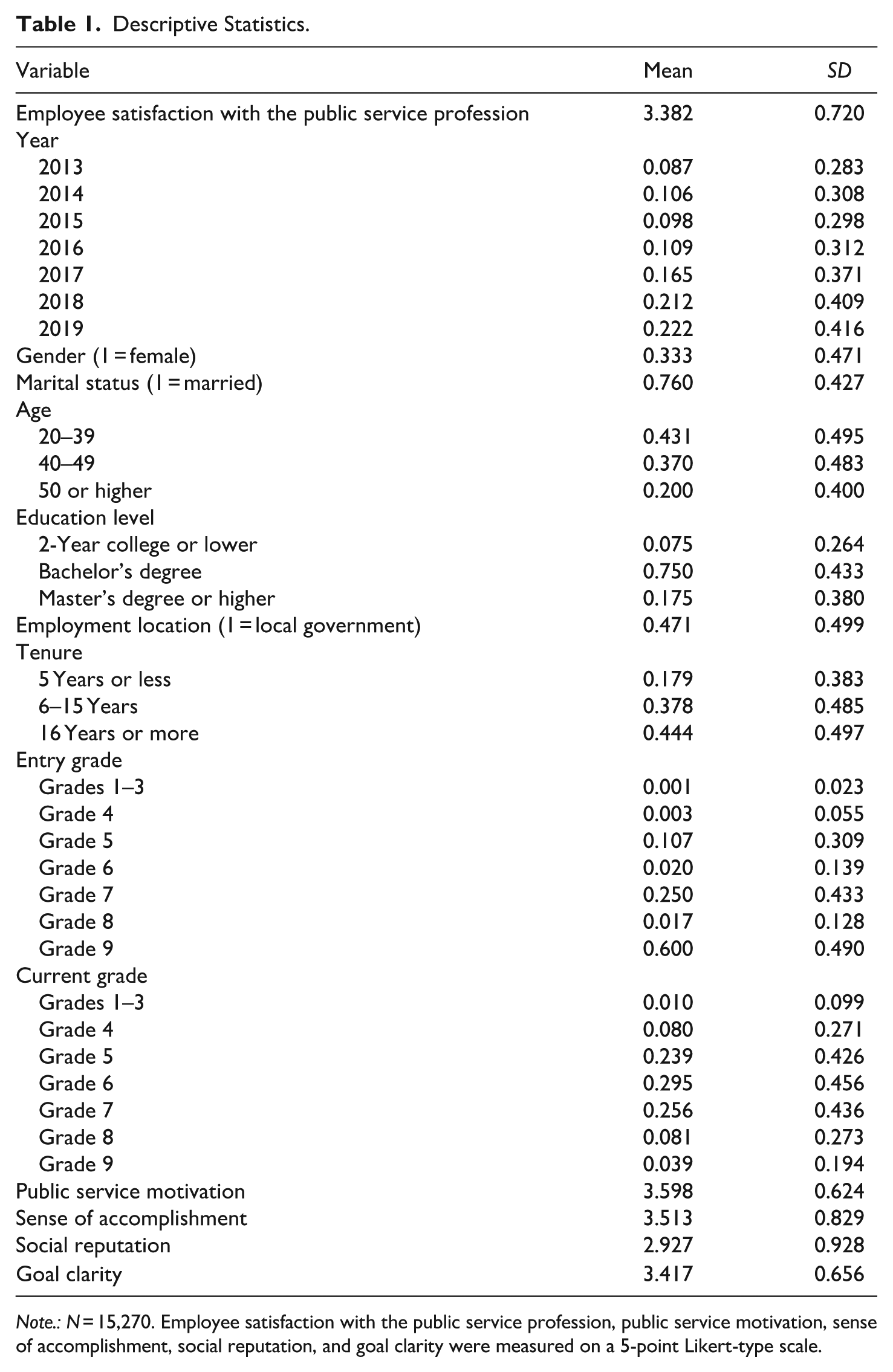
Note.: N = 15,270. Employee satisfaction with the public service profession, public service motivation, sense of accomplishment, social reputation, and goal clarity were measured on a 5-point Likert-type scale.
Empirical Methods
We conducted multivariate regression analyses with year indicators to test our hypotheses. The empirical model is as follows:

where
We examine changes in employee satisfaction before, during, and after pension reform. As noted earlier, discussions on reforming the pension system began in early 2014. The reform legislation was passed in the National Assembly in May 2015 and enacted into law in June 2015, with implementation commencing January 1, 2016. Based on this timeline, we designate 2013 as the pre-reform phase, 2014 to 2016 as the reform phase, and 2017 to 2019 as the post-reform phase. To test the first hypothesis, we focus on whether the estimated coefficients for
Our regression model controls for public servants’ characteristics by incorporating a set of explanatory variables in the vector
Results
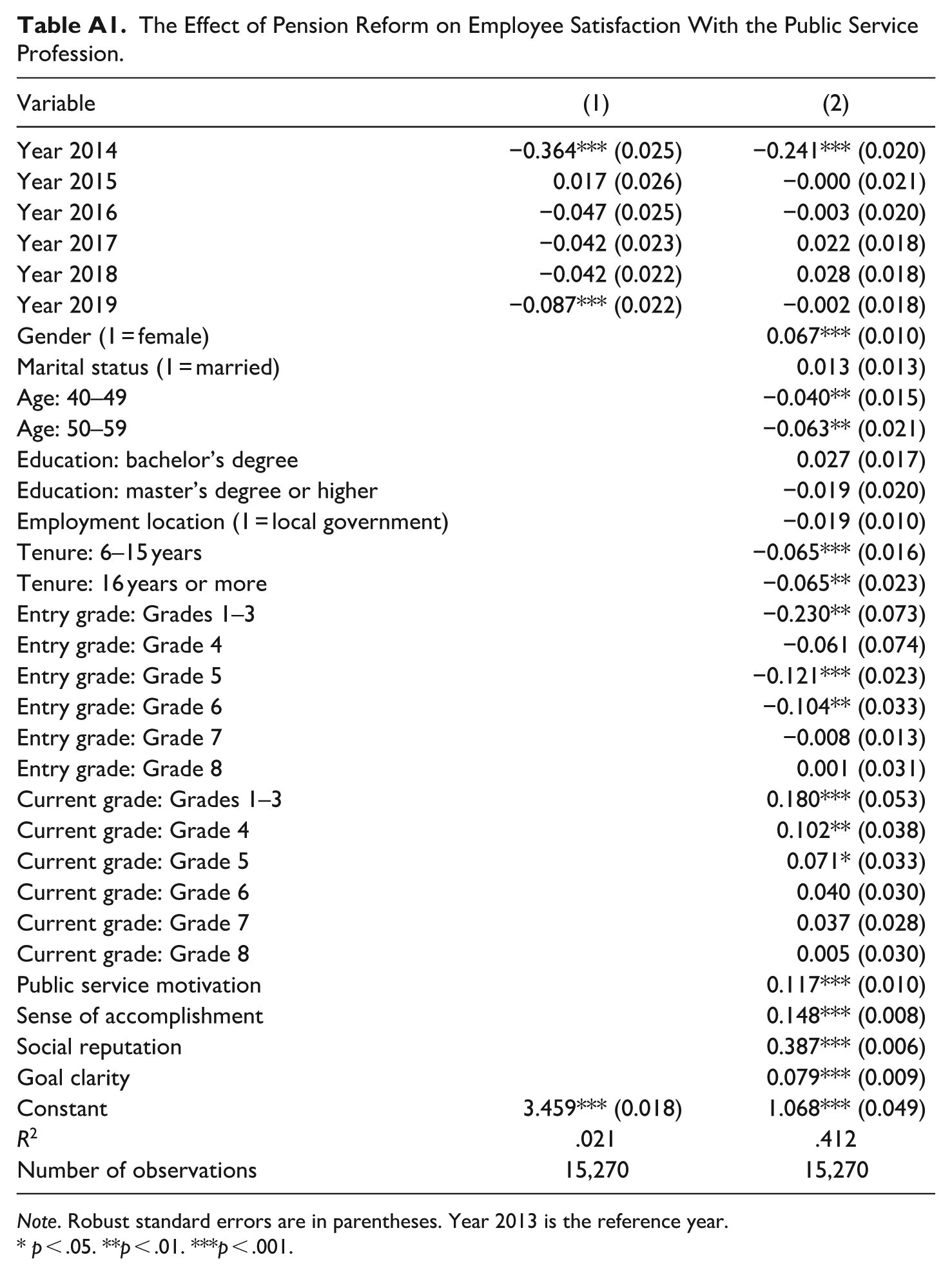
The results from the multivariate regression analysis are presented in Table 2. In Column (1), without control variables, the estimated coefficients for Year 2014 and Year 2019 are statistically significant at p < .001. When control variables are added in Column (2), only the estimated coefficient for Year 2014 remains significant at p < .001. The coefficient of −0.241 is substantial, particularly when compared to the average satisfaction level of 3.382. This indicates that employee satisfaction with the public service profession declined sharply in 2014, the year discussions on pension reform were initiated, relative to the previous year. In contrast, the estimated coefficients for Year 2015 (the year the reform was enacted) and Year 2016 (the year it was implemented) are both small and statistically insignificant, suggesting that employee satisfaction rebounded to pre-reform levels soon after the initial drop. Overall, these findings are consistent with our hypotheses. Notably, the recovery occurred quickly, emerging in the year immediately after the initial decline, indicating that the negative effects of pension reform on public employees diminished relatively swiftly. Figure 1 provides a visual summary of these results.
The Effect of Pension Reform on Employee Satisfaction With the Public Service Profession.
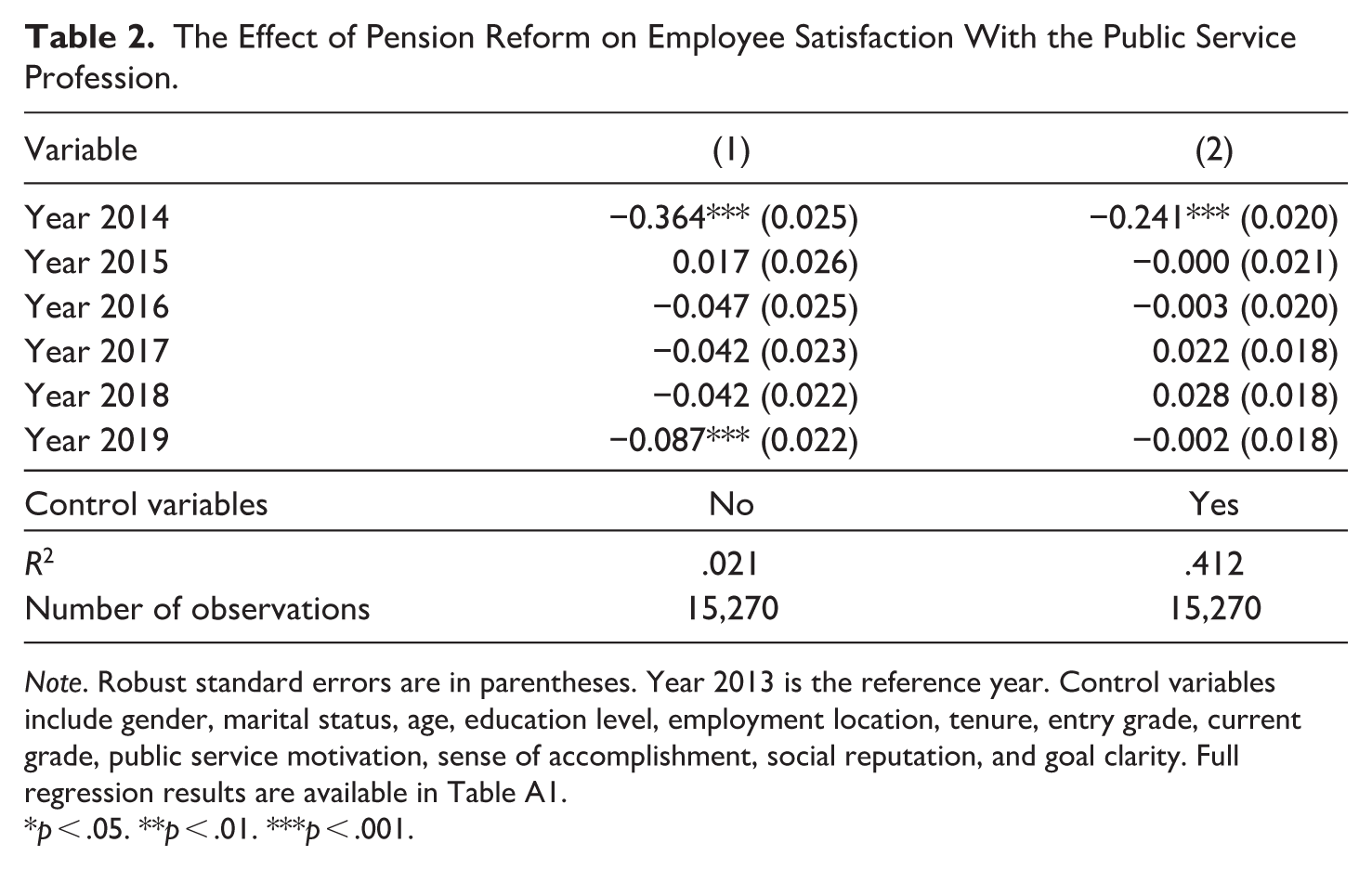
Note. Robust standard errors are in parentheses. Year 2013 is the reference year. Control variables include gender, marital status, age, education level, employment location, tenure, entry grade, current grade, public service motivation, sense of accomplishment, social reputation, and goal clarity. Full regression results are available in Table A1.
p < .05. **p < .01. ***p < .001.
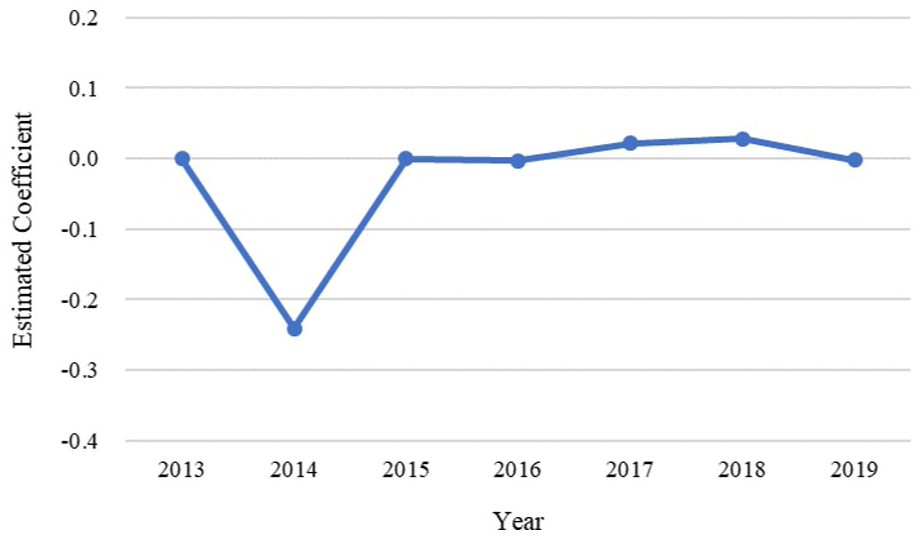
Visual representation of main results.
Additionally, to assess the robustness of the findings, we conducted subgroup analyses by entry grade, length of tenure, education level, and age group. First, the regression results for three subgroups based on entry grade (Grades 5, 7, and 9) are presented in Table 3. These grades denote the levels at which individuals can enter public service through open competitive examinations, with Grade 5 being the highest, Grade 9 the lowest, and Grade 7 in between. The results indicate that employees starting at Grades 7 and 9 exhibited statistically significant decreases in satisfaction in 2014 (−0.266 and −0.256, respectively, both significant at p < .001). In contrast, the decline for Grade 5 entrants was relatively smaller (−0.156) and significant only at p < .05. These findings suggest that, compared to their counterparts commencing at Grades 7 and 9, those beginning at Grade 5 were less affected by the initiation of pension reform in terms of satisfaction with the public service profession. However, all groups exhibited a return to pre-reform satisfaction levels by 2015. It is important to approach this interpretation cautiously, as the estimated coefficient for Year 2014 in the first column does not differ statistically from those in the second and third columns.
The Effect of Pension Reform on Employee Satisfaction With the Public Service Profession by Entry Grade.
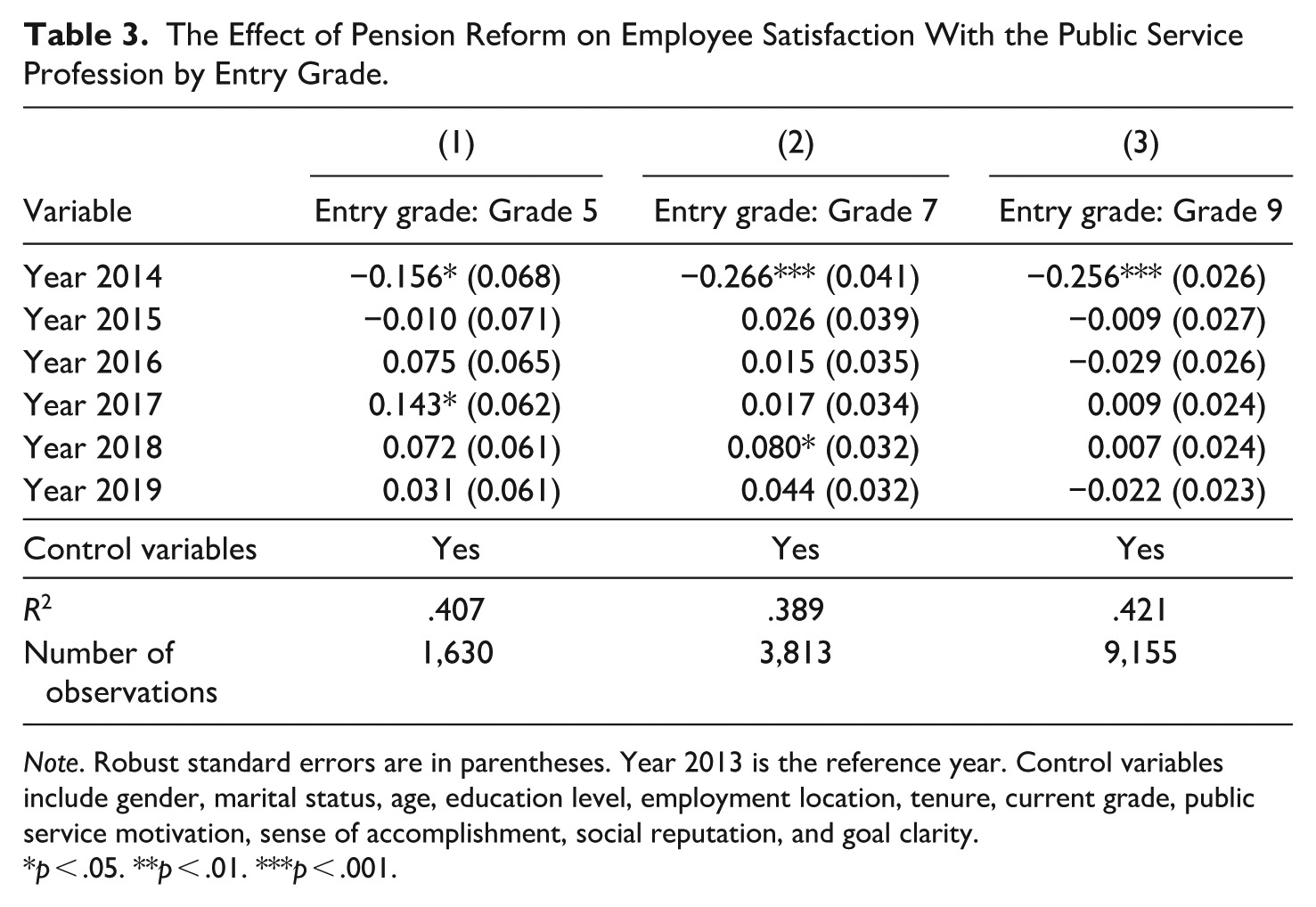
Note. Robust standard errors are in parentheses. Year 2013 is the reference year. Control variables include gender, marital status, age, education level, employment location, tenure, current grade, public service motivation, sense of accomplishment, social reputation, and goal clarity.
p < .05. **p < .01. ***p < .001.
Second, Table 4 presents the regression results for three tenure groups: 5 years or less, 6 to 15 years, and 16 years or more. Across all three groups, the estimated coefficients for Year 2014 are substantial and statistically significant at p < .001. Notably, the estimated coefficient for public servants with 5 years or less tenure is larger (−0.315) compared to the other two groups with longer tenure (−0.213 and −0.241). This suggests that individuals with shorter tenures experienced the most pronounced decline in satisfaction with the public service profession following the initiation of pension reform. All groups demonstrate a return to pre-reform satisfaction levels by 2015. However, it is important to exercise caution in interpreting these findings, as the estimated coefficient for Year 2014 in the first column does not show statistically significant differences from those in the second and third columns. Further investigation may be necessary to fully understand the interplay between grade, tenure, and the relationship between pension reform and employee satisfaction over time.
The Effect of Pension Reform on Employee Satisfaction With the Public Service Profession by Tenure.
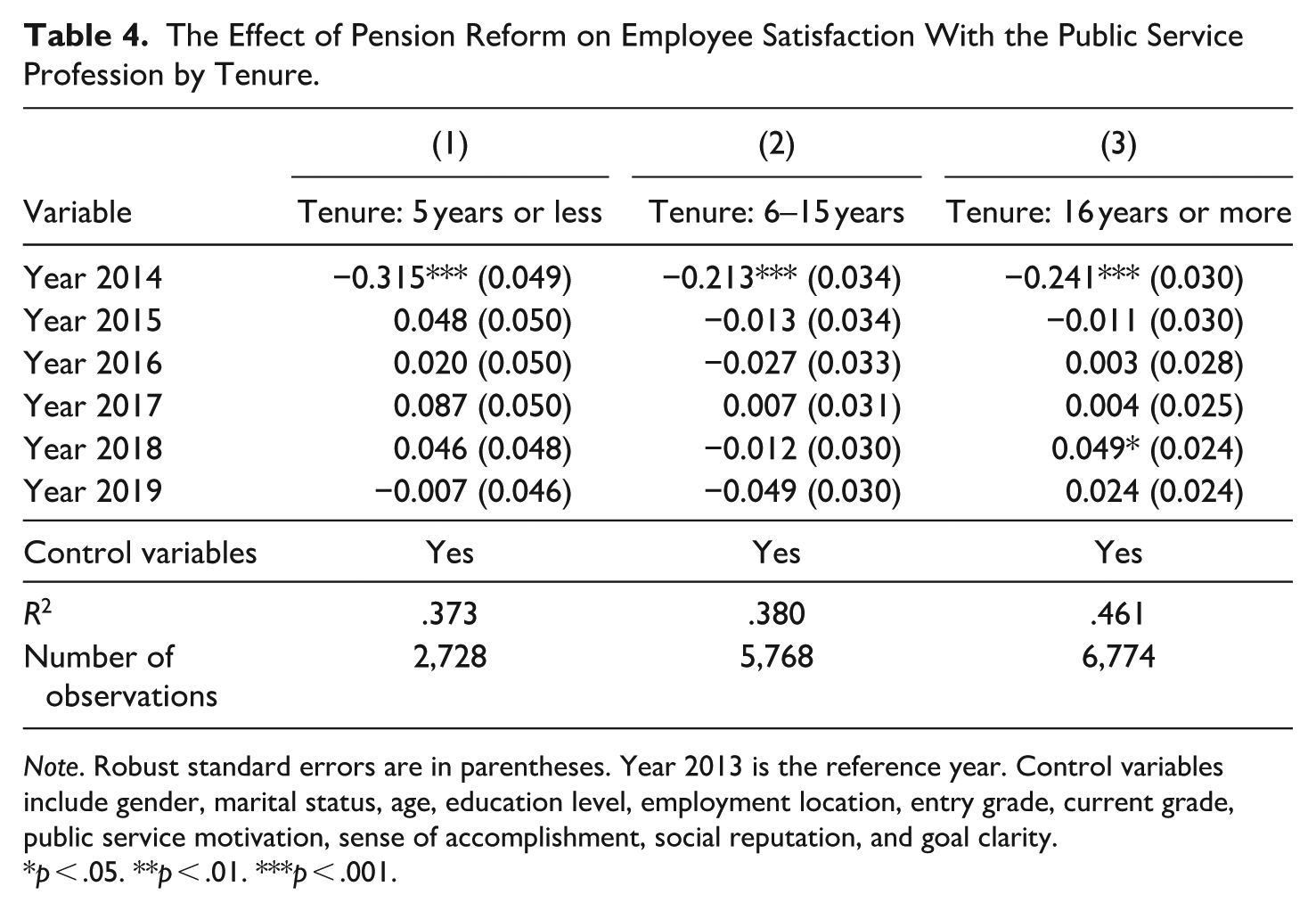
Note. Robust standard errors are in parentheses. Year 2013 is the reference year. Control variables include gender, marital status, age, education level, employment location, entry grade, current grade, public service motivation, sense of accomplishment, social reputation, and goal clarity.
p < .05. **p < .01. ***p < .001.
Tables 5 and 6 present the regression results for three education groups and three age groups, respectively. In Table 5, the estimated coefficients for Year 2014 remain consistent across the three education groups, ranging from −0.218 to −0.251, all statistically significant at p < .001. Similarly, in Table 6, the three age groups of public servants exhibit comparable estimates of Year 2014, ranging between −0.240 and −0.265, all statistically significant at p < .001. These results suggest that education levels and age do not appear to play a significant role in the sharp decline in employee satisfaction with the public service profession observed in 2014. As with other subgroups, all education and age groups exhibited a return to pre-reform satisfaction levels by 2015. A visual summary of these results is provided in Figure 2.
The Effect of Pension Reform on Employee Satisfaction With the Public Service Profession by Education Level.
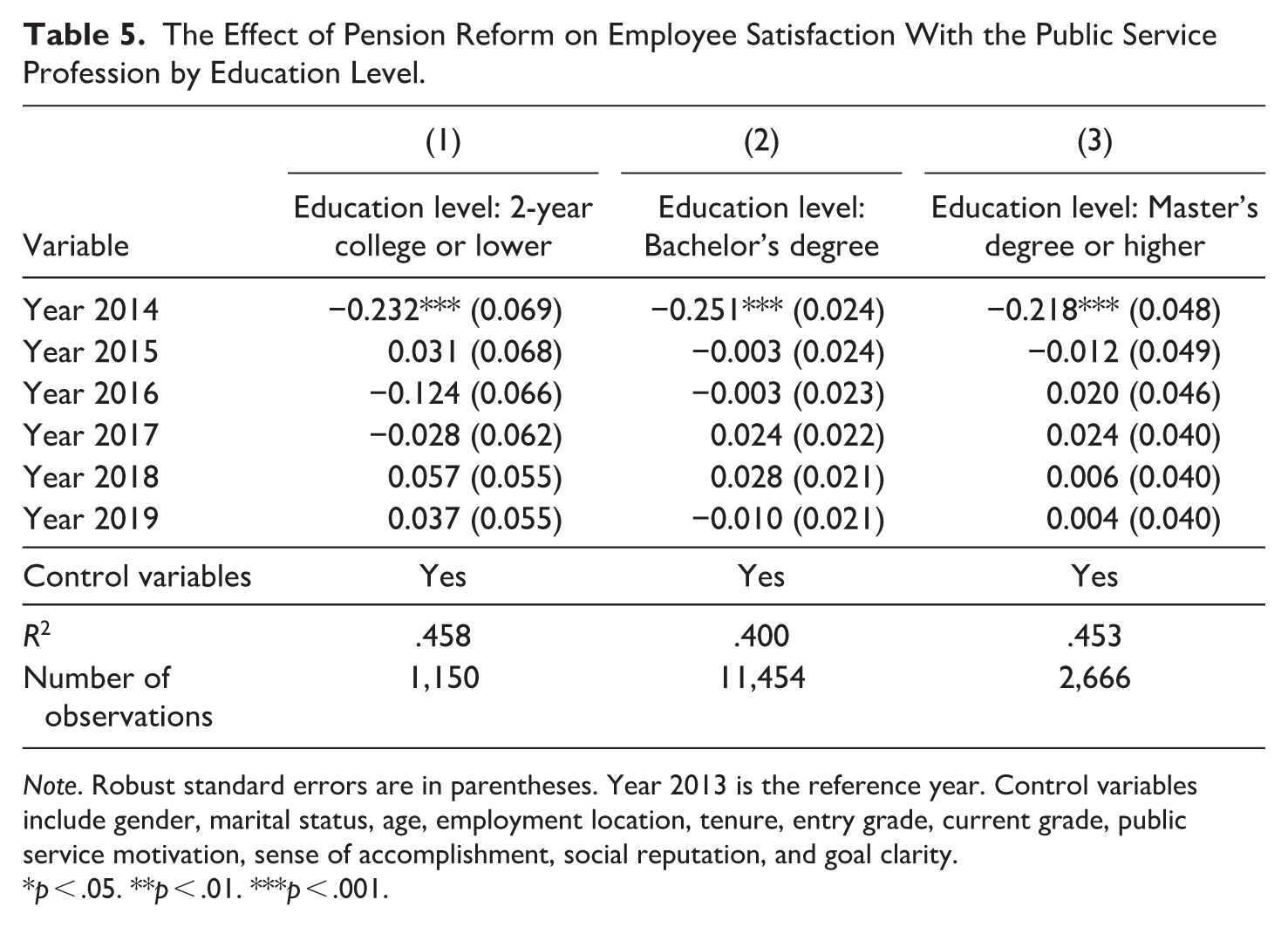
Note. Robust standard errors are in parentheses. Year 2013 is the reference year. Control variables include gender, marital status, age, employment location, tenure, entry grade, current grade, public service motivation, sense of accomplishment, social reputation, and goal clarity.
p < .05. **p < .01. ***p < .001.
The Effect of Pension Reform on Employee Satisfaction With the Public Service Profession by Age Group.
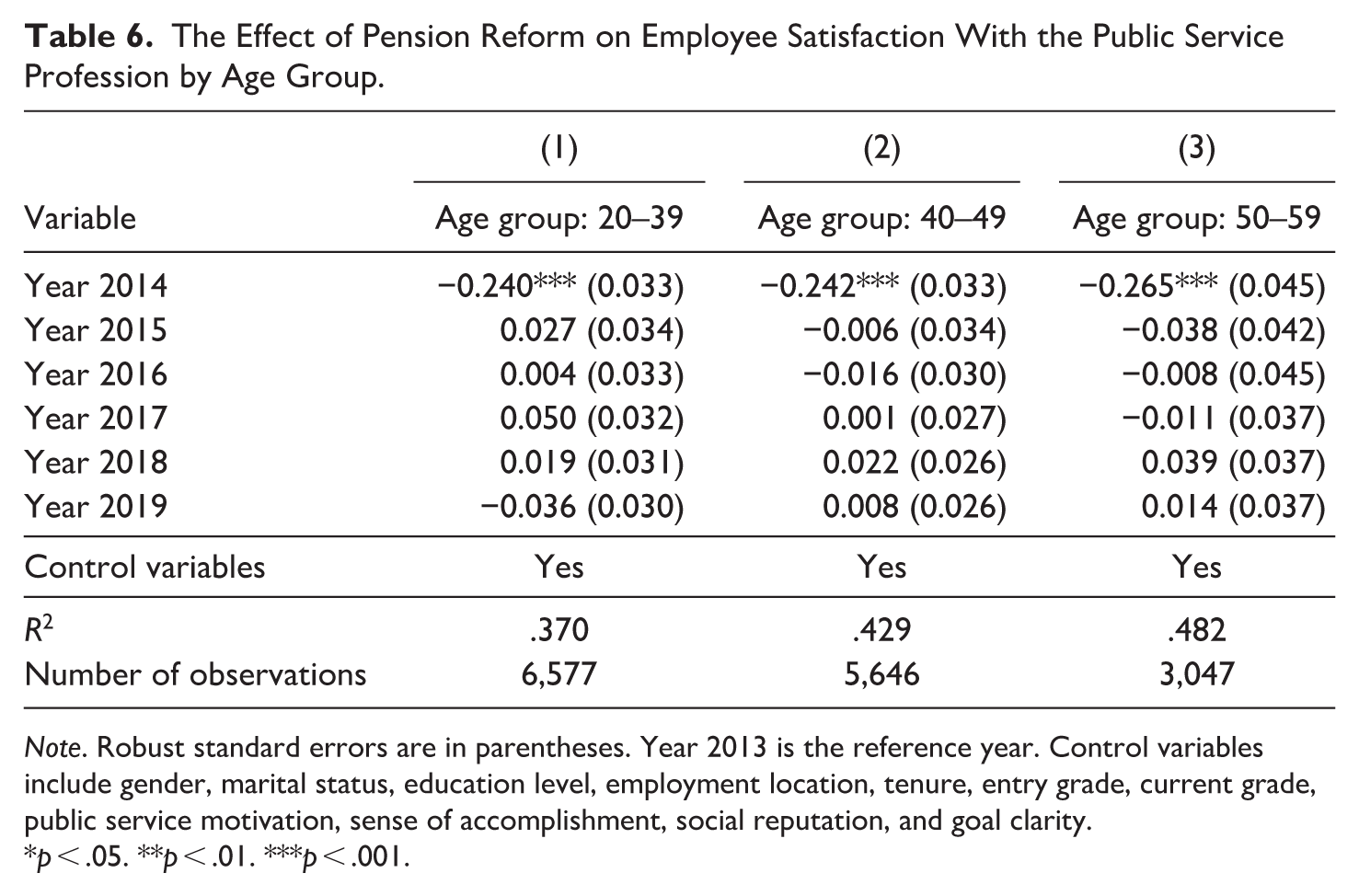
Note. Robust standard errors are in parentheses. Year 2013 is the reference year. Control variables include gender, marital status, education level, employment location, tenure, entry grade, current grade, public service motivation, sense of accomplishment, social reputation, and goal clarity.
p < .05. **p < .01. ***p < .001.
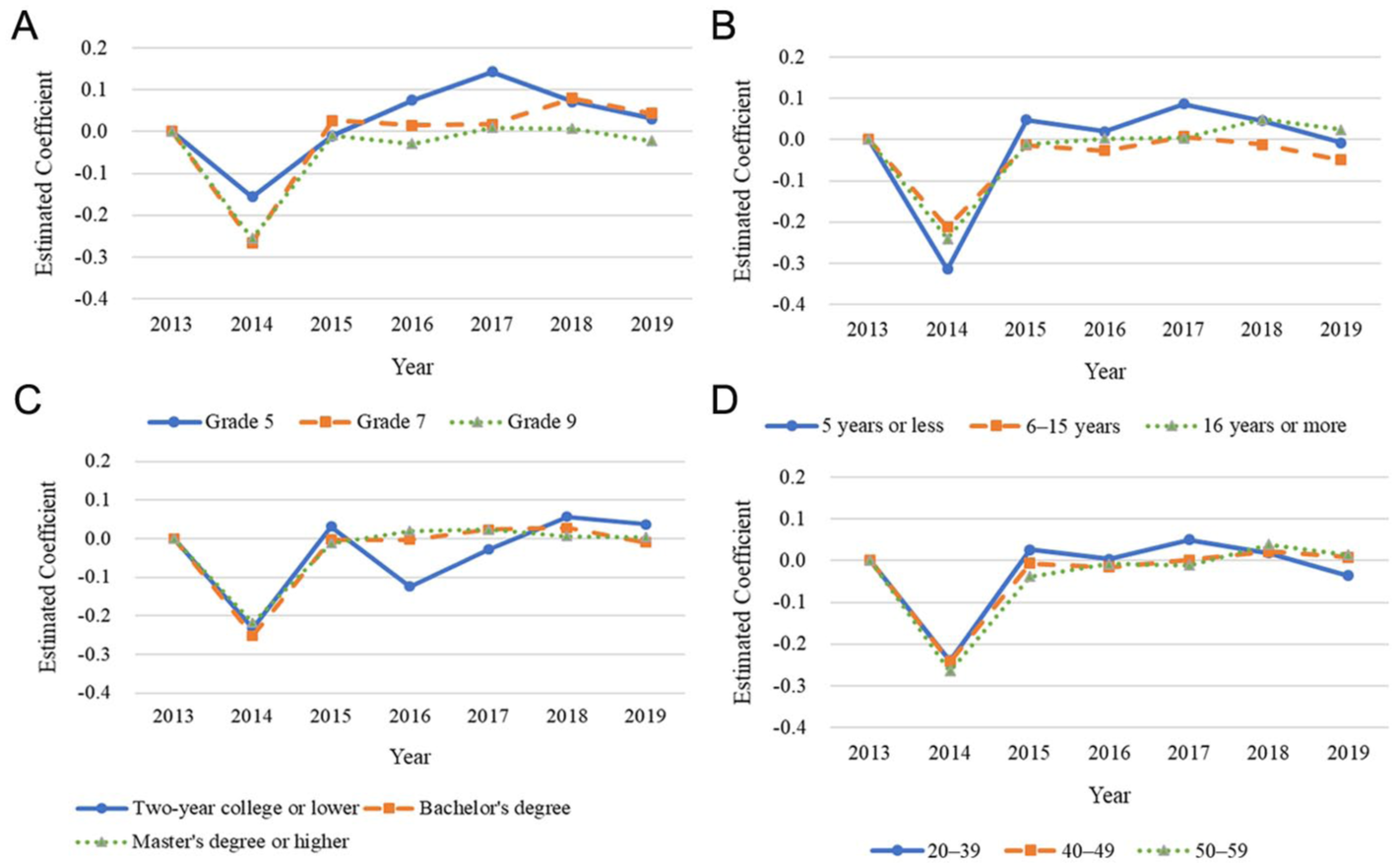
Visual representation of subgroup analyses. (A) Entry grade. (B) Tenure. (C) Education level. (D) Age group.
Discussion and Conclusion
Taking advantage of the rapid policy change facilitated by the 2015 Public Officials Pension Reform in South Korea, this study examines whether the pension reform affected public employees’ satisfaction with the public service profession during the reform period and how this impact changed over the post-reform years. Additionally, we investigate whether the effects of pension reform varied across different employee subgroups. By employing a longitudinal approach with yearly repeated cross-sectional data collected from public servants in South Korea between 2013 and 2019, this study tracks changes in satisfaction levels across various phases of the reform, providing a dynamic understanding of its impacts.
The findings of this study reveal a notable and statistically significant decline in employee satisfaction with the public service profession in 2014, coinciding with the initiation of pension reform. This aligns with the theoretical expectations based on psychological contract theory. Mussagulova et al. (2022), one of the few studies examining pension reform through the lens of the psychological contract, demonstrate that such reforms lead public employees to perceive a breach in that contract. The decline in employee satisfaction observed in our study likely reflects this strain. However, satisfaction levels rebounded to pre-reform levels in 2015 and subsequent years, suggesting that the tension caused by pension reform diminished over time. Self-regulation theory posits that individuals have the adaptive capacity to regulate their thoughts, emotions, and behaviors in response to changing circumstances (Carver & Scheier, 2001; Lord et al., 2010). While this theoretical framework accounts for the initial decline and subsequent recovery in satisfaction levels observed in our findings, further investigation into the dynamic interplay between psychological contract breaches, self-regulatory processes, and employee satisfaction could provide deeper insights into the mechanisms underlying employee adjustment to pension reform.
While these overall patterns were consistent across demographic and professional segments, such as entry grade, tenure, education level, and age group, the subgroup analyses revealed variation in the magnitude of the pension reform’s impact across different employee groups. Two observations warrant particular attention. First, employees entering at Grade 5, the highest grade attainable through open competitive examinations, experienced a less pronounced decline in satisfaction compared to those entering at lower grades, such as Grades 7 or 9. This may reflect the structured nature of South Korea’s civil service system, in which Grade 5 entrants have substantially greater prospects for advancement to senior-level positions, including the Senior Civil Service. By contrast, individuals starting at Grades 7 or 9 face more limited opportunities for such promotions. The higher career aspirations and stronger sense of professional commitment among Grade 5 entrants may have mitigated the negative impact of the reform on their satisfaction. Employee satisfaction is also likely influenced by pay levels. In South Korea, lower-ranking civil servants, such as those in Grade 9, earn salaries only marginally above the minimum wage. When coupled with reductions in pension benefits, this modest compensation may have amplified the decline in satisfaction among lower-ranking employees compared to their higher-ranking counterparts.
Second, public servants with shorter tenures reported a more pronounced decline in satisfaction than their longer-tenured peers. Under the new pension system, recently hired employees faced greater reductions in pension benefits, including higher contributions and lower pension payouts, relative to those with longer service durations. Consequently, shorter-tenured employees may have experienced heightened dissatisfaction due to these substantial reductions. By contrast, patterns of decline and subsequent recovery in satisfaction levels were consistent across other factors, such as education and age. However, further investigation is necessary to fully understand how these characteristics influence the relationship between pension reform and employee satisfaction over time.
This study provides several implications for public personnel administration by enhancing our theoretical understanding of employee responses to organizational reforms and offering valuable insights for both scholars and practitioners in navigating reform processes effectively. First, our findings contribute to the existing literature on civil service pension reforms by providing empirical evidence on how public employees respond to pension reforms and how their responses evolve over time. Previous research on pension reforms has predominantly focused on their consequences for fiscal sustainability and social welfare (Asher, 2000; Asher & Vasudevan, 2004; Palacios & Whitehouse, 2006). However, studies examining the responses of public employees, those most directly affected by such reforms, are limited. Understanding how public employees perceive, respond to, and adapt to pension reform is critical, as it can significantly impact their morale, productivity, and ultimately the quality of public service. Additionally, much of the existing research treats pension reform as a singular event (Mussagulova et al., 2022), often neglecting the temporal dimension within which employee attitudes evolve. By adopting a longitudinal approach, this study sheds light on the dynamic trajectory of employee satisfaction over time, enriching our understanding of the evolving impacts of pension reform.
Second, this study contributes to the broader literature on organizational change. In contemporary workplaces, both public and private sector organizations are implementing numerous changes to their personnel systems, including adjustments to retirement benefits. As morale problems often arise following disruptive policy changes, budget reductions, or organizational restructuring (Manson, 2000), it is essential to understand how employees respond to such changes. Pensions, as a cornerstone of public sector employment (Reilly, 2013), are particularly influential in shaping employee attitudes and behaviors. Our findings reveal that employee satisfaction with the public service profession declined significantly when pension reform was initiated, but this decline dissipated relatively quickly, suggesting that employees adapted over time. These results underscore the importance of anticipating and managing employee reactions across different phases of organizational change.
Finally, this study offers nuanced insights into how pension reform differentially affects diverse groups of public employees, thereby contributing to the literature on employee diversity in the context of organizational change. The observed variations in the effect of reform among employees with different entry grades and tenure levels highlight the role of individual characteristics, career aspirations, and perceptions of future financial security in shaping employee responses. These findings underscore the importance of accounting for individual differences and contextual factors when designing and implementing organizational reforms, ensuring that policy changes are responsive to the heterogeneous needs and expectations of the workforce.
Simultaneously, this study provides actionable guidance for policymakers, organizational leaders, and human resource practitioners tasked with managing significant reforms in the public sector. First, our findings offer insights into employee retention during organizational change. Retaining talented employees is a critical challenge for public organizations worldwide, as high employee turnover leads to the loss of institutional knowledge, declining morale, reduced productivity, and increased costs associated with recruiting, selecting, and training new employees (Cho & Lewis, 2012; S. Y. Kim & Fernandez, 2017; Selden & Moynihan, 2000). Traditionally, pension benefits in the public sector have been more generous than those in the private sector, enhancing the appeal of public service careers and fostering long-term retention (Coggburn & Kearney, 2010; Reilly, 2013). However, significant changes to pension plans can diminish this appeal and potentially increase employee turnover (Gorina & Hoang, 2020). To sustain employee commitment and satisfaction during pension reform, public organizations should proactively engage in transparent communication and employee involvement, particularly in the early stages of the reform process (T. Kim & Park, 2014). Clearly articulating the rationale for reform, providing opportunities for employee input, and addressing anticipated consequences can help mitigate negative reactions and foster employee retention (T. Kim & Park, 2014).
Second, it is essential to take into account the distinct needs and concerns of diverse employee groups when implementing organizational reforms. Recognizing the varying impacts of pension reform on employees at different hierarchical levels and tenures, public organizations can tailor support mechanisms, communication strategies, and employee assistance programs to address specific challenges and alleviate concerns. For instance, providing targeted financial planning resources for employees nearing retirement or offering career development opportunities for entry-level employees can help mitigate the adverse effects of pension reform and promote overall employee resilience and well-being. Moreover, public organizations can leverage the findings of this study to design interventions aimed at enhancing employees’ self-regulatory capacities. Programs such as resilience training workshops focused on coping strategies and adaptive responses to organizational change can equip employees with the tools to navigate reforms more effectively.
There are several caveats to consider when interpreting the findings of this study, as well as avenues for future research to enhance our understanding of employee responses to pension reforms. First, while relevant theories suggest that public employees may perceive pension reform as a breach of their psychological contract and that changes in satisfaction levels before and after the reform may reflect such perceptions, this study was unable to empirically examine psychological contract breaches due to data limitations. Future research could advance theoretical understanding by directly measuring employees’ perceptions of breach and examining their role in mediating the relationship between pension reform and employee satisfaction. It would also be valuable to investigate factors that explain variations in employee responses across demographic and occupational groups. Such insights could inform the design of targeted interventions to support the most vulnerable employee segments.
Second, the research design of this study does not allow for causal inferences about the impact of pension reform, as the before-and-after analysis lacks a perfectly controlled comparison group. While the swift and largely unanticipated enactment of the 2015 Public Officials Pension Reform in South Korea minimizes the likelihood of significant concurrent events influencing public employees’ satisfaction, the absence of a control group limits the precision of causal conclusions. Future research could benefit from experimental or quasi-experimental designs, incorporating control groups to robustly assess the causal effects of pension reform while accounting for other factors influencing employee satisfaction. Moreover, longitudinal studies tracking employee perceptions and behaviors over extended periods could provide valuable insights into the dynamic processes of adaptation, resistance, and resilience exhibited by employees in response to pension reform.
Third, caution is warranted when generalizing the findings of this study to other contexts. The organizational culture and structured nature of the civil service system in South Korea may have shaped the observed patterns. For instance, the hierarchical culture emphasizing seniority and tenure, coupled with the Confucian tradition of valuing public service as a respected profession, might have contributed to the rapid return of employee satisfaction to pre-reform levels. Additionally, South Korea’s rigorous hiring processes and lengthy promotion timelines likely shape the career trajectories and aspirations of employees at different entry grades, which may partly explain the results of our subgroup analyses. Comparative research could further illuminate the factors influencing employee responses to pension reform across different cultural and institutional contexts.
Lastly, as our empirical analysis focuses on the 2015 Public Officials Pension Reform, it is important to consider the relevance of these findings in light of ongoing pension reform debates. Over the past decade, the global economic slowdown and accelerated population aging have placed mounting pressure on public finances, keeping pension reform at the center of political and social agendas in many countries. In South Korea, for example, the National Assembly passed legislation to reform the national pension scheme in March 2025. This recent development has intensified calls for additional reform of the public officials pension system, with expectations that forthcoming measures will be more fundamental and comprehensive than previous efforts. Whereas the 2015 reform was primarily parametric, adjusting key variables such as contribution rates, payment rates, and retirement ages, future reforms are anticipated to incorporate structural measures as well, such as integrating the public officials pension system with the national pension scheme (OECD, 2022). Lessons from the 2015 reform, particularly regarding short-term declines in employee satisfaction and heightened sensitivity among lower-grade and shorter-tenured employees, offer valuable guidance for anticipating workforce reactions and designing complementary measures to mitigate adverse effects. Building on these insights, future research should examine the impacts of more recent reforms and assess their broader policy implications.
In conclusion, this study sheds light on the evolving relationship between pension reform and employee satisfaction, offering valuable insights for policymakers and public sector leaders. As governments worldwide confront the pressing challenges of pension sustainability, our findings provide guidance for designing and implementing reforms that balance fiscal responsibility with the well-being of public servants. By contributing to the broader discourse on pension reform in the public sector, this study aims to equip decision-makers with the knowledge needed to develop effective strategies that mitigate potential negative consequences, foster a supportive work environment, and strengthen workforce resilience.
Footnotes
Appendix
The Effect of Pension Reform on Employee Satisfaction With the Public Service Profession.
| Variable | (1) | (2) |
|---|---|---|
| Year 2014 | −0.364*** (0.025) | −0.241*** (0.020) |
| Year 2015 | 0.017 (0.026) | −0.000 (0.021) |
| Year 2016 | −0.047 (0.025) | −0.003 (0.020) |
| Year 2017 | −0.042 (0.023) | 0.022 (0.018) |
| Year 2018 | −0.042 (0.022) | 0.028 (0.018) |
| Year 2019 | −0.087*** (0.022) | −0.002 (0.018) |
| Gender (1 = female) | 0.067*** (0.010) | |
| Marital status (1 = married) | 0.013 (0.013) | |
| Age: 40–49 | −0.040** (0.015) | |
| Age: 50–59 | −0.063** (0.021) | |
| Education: bachelor’s degree | 0.027 (0.017) | |
| Education: master’s degree or higher | −0.019 (0.020) | |
| Employment location (1 = local government) | −0.019 (0.010) | |
| Tenure: 6–15 years | −0.065*** (0.016) | |
| Tenure: 16 years or more | −0.065** (0.023) | |
| Entry grade: Grades 1–3 | −0.230** (0.073) | |
| Entry grade: Grade 4 | −0.061 (0.074) | |
| Entry grade: Grade 5 | −0.121*** (0.023) | |
| Entry grade: Grade 6 | −0.104** (0.033) | |
| Entry grade: Grade 7 | −0.008 (0.013) | |
| Entry grade: Grade 8 | 0.001 (0.031) | |
| Current grade: Grades 1–3 | 0.180*** (0.053) | |
| Current grade: Grade 4 | 0.102** (0.038) | |
| Current grade: Grade 5 | 0.071* (0.033) | |
| Current grade: Grade 6 | 0.040 (0.030) | |
| Current grade: Grade 7 | 0.037 (0.028) | |
| Current grade: Grade 8 | 0.005 (0.030) | |
| Public service motivation | 0.117*** (0.010) | |
| Sense of accomplishment | 0.148*** (0.008) | |
| Social reputation | 0.387*** (0.006) | |
| Goal clarity | 0.079*** (0.009) | |
| Constant | 3.459*** (0.018) | 1.068*** (0.049) |
| R 2 | .021 | .412 |
| Number of observations | 15,270 | 15,270 |
Note. Robust standard errors are in parentheses. Year 2013 is the reference year.
p < .05. **p < .01. ***p < .001.
Acknowledgements
This study makes use of research material produced by the Korea Institute of Public Administration (KIPA) and has been authorized for use according to KIPA’s regulations on the ownership and use of said research material.
Declaration of Conflicting Interests
The authors declared no potential conflicts of interest with respect to the research, authorship, and/or publication of this article.
Funding
The authors disclosed receipt of the following financial support for the research, authorship, and/or publication of this article: Haeil Jung acknowledges that this study has been supported by a Korea University Grant (K2406711). Sun Young Kim notes that this work was supported by Hankuk University of Foreign Studies Research Fund.
