







Abstract
This study develops and tests an integrated model explaining both the promotion and suppression of unethical pro-organizational behavior (UPB) driven by public service motivation (PSM). While PSM is typically viewed as prosocial, growing research on the PSM’s dark side suggests that it may unintentionally foster UPB by strengthening organizational identification (OI). Drawing on the Cognitive-Affective Personality System (CAPS) theory, this study incorporates ethical leadership (EL) as a contextual moderator that shapes when OI increases or suppresses UPB. Using survey data from Korean public employees, results show that PSM enhances OI, which subsequently promotes UPB. However, EL significantly weakens both the direct effect of OI on UPB and the indirect pathway from PSM to UPB via OI. These findings advance understanding of the dual-function mechanism of PSM by integrating motivational, identity-based, and leadership factors, offering a more comprehensive explanation of when public servants’ prosocial motives lead to ethical versus unethical outcomes.
Keywords
Introduction
Public organizations rely on employees’ prosocial motivation to uphold ethical conduct, strengthen accountability, and sustain public trust. Public service motivation (PSM), defined as the desire to serve the public and advance societal well-being (Perry & Wise, 1990), has been regarded as a key driver of ethical behavior in the public sector (D. S. Lee & Park, 2025; Wright et al., 2016). Yet emerging research suggests that PSM does not uniformly produce beneficial outcomes. Recent evidence further indicates that even highly motivated public servants may experience thwarted or counterproductive motivational states depending on organizational context, suggesting that PSM’s effects are more contingent and dynamic than traditionally assumed (Franken et al., 2026). Under certain conditions, prosocial motives can prompt behaviors that benefit the organization while violating broader ethical standards, a pattern known as Unethical Pro-Organizational Behavior (UPB; Umphress & Bingham, 2011).
UPB represents a paradox in which loyalty-driven intentions produce harmful or norm-violating actions. Although initially examined in the private sector (Effelsberg et al., 2014), recent work shows that UPB can emerge in government settings where employees juggle organizational loyalty and democratic accountability (C. Kim et al., 2023; Schwarz et al., 2024). These dynamics are particularly concerning in public service, where ethical breaches can jeopardize public confidence. This tension gives rise to a central puzzle: How can public service motivation—widely associated with public values and prosocial intent—contribute to ethically problematic behavior?
Organizational identification (OI) plays a central role in this process. OI reflects the sense of psychological attachment employees feel toward their organization (Ashforth & Mael, 1989). While OI is widely associated with positive outcomes, including stronger commitment and performance (Carmeli et al., 2007; van Knippenberg, 2000), growing scholarship highlights that strong OI may elevate the risk of UPB when employees prioritize organizational interests above ethical norms (Mishra et al., 2024; Umphress et al., 2010). Individuals with high PSM may become more vulnerable to loyalty-driven rationalizations once strong organizational identification is activated. Empirical research shows that organizational identification can lead employees to downplay the ethicality of rule violations and reinterpret them as necessary contributions to organizational goals (J. G. Park et al., 2023).
Despite recent advances in research on the dark side of PSM (Ripoll & Schott, 2023; Schott & Ritz, 2018), prior studies have predominantly focused on promotive pathways linking PSM to UPB via OI, typically drawing on Social Identity Theory (SIT) and Moral Disengagement Theory (MDT) in parallel (Ahmad et al., 2024; Ashforth & Mael, 1989; Bandura, 1999; Sarwar & Song, 2025). However, these approaches often juxtapose the two frameworks rather than theoretically integrating them, thereby limiting explanation to how PSM increases UPB while overlooking mechanisms that may suppress or recalibrate this process. Accordingly, a unified framework that integrates motivational, cognitive, and contextual processes remains underdeveloped.
To address this gap, the present study develops an integrated theoretical framework grounded in the Cognitive-Affective Personality System (CAPS; Mischel & Shoda, 1995), which conceptualizes behavior as the product of dynamic interactions among motivational, affective, and contextual units. From a CAPS perspective, PSM activates OI as an affective-cognitive unit that may facilitate UPB when moral disengagement is triggered, but this outcome is not inevitable. Ethical leadership, characterized by fairness, moral clarity, and the reinforcement of ethical standards (Brown et al., 2005), functions as a contextual cue shaping how identification translates into behavior (King et al., 2023; Miao et al., 2013; J. G. Park et al., 2023). Through modeling, reinforcement, and communication of normative expectations, ethical leadership may recalibrate employees’ interpretations of loyalty and guide identification toward ethical alignment. By incorporating ethical leadership as a boundary condition, the study theorizes promotive and suppressive pathways of PSM-driven UPB.
Accordingly, this study examines the following research questions: (1) Does OI mediate the relationship between PSM and UPB? (2) Does ethical leadership moderate the relationship between OI and UPB? (3) Does ethical leadership moderate the indirect relationship between PSM and UPB via OI? Using survey data from 1,012 Korean public officials, the study empirically tests this integrated model.
By integrating social identity theory, moral disengagement theory, and CAPS theory, this study provides a more cohesive theoretical explanation of when and why prosocial motives may produce unintended ethical risks and highlights ethical leadership as a critical boundary condition that helps public organizations harness the benefits of PSM while mitigating its darker consequences.
Theoretical Background and Hypothesis Setting
Public Service Motivation and Organizational Identification
Public Service Motivation (PSM) is defined as an individual’s predisposition to serve the public interest and uphold civic values through work (Perry & Wise, 1990). Individuals with high PSM tend to find meaning and purpose in organizational environments that align with their intrinsic motivation to contribute to societal welfare (Perry, 1996). These prosocial orientations are not merely abstract ideals but often manifest in individuals’ organizational preferences, particularly within the public sector where missions and values are closely tied to serving the common good (Brewer et al., 2000).
Organizational Identification (OI), defined as the perception of oneness with or belongingness to an organization (Ashforth & Mael, 1989), strengthens when individuals perceive value congruence between themselves and the organization. From a self-concept perspective, individuals are more likely to internalize organizational goals and norms when they view those goals as extensions of their own values (Shamir et al., 1993). In public organizations, PSM provides a foundation for such identity-based assimilation because high-PSM individuals tend to see their organizations not merely as employers, but as morally legitimate entities aligned with their purpose.
Drawing on Social Identity Theory (SIT; Tajfel & Turner, 1979), individuals derive part of their self-concept from their membership in social groups that embody valued goals and norms. When public organizations are perceived as legitimate vehicles for advancing public interest, employees with high PSM are more likely to incorporate organizational membership into their self-definition. In this sense, PSM enhances the psychological salience of organizational membership, thereby strengthening OI. Empirical research supports this identity-based pathway. Karolidis and Vouzas (2019) demonstrate that OI mediates the relationship between PSM and helping behavior, indicating that public service motives are often translated into organizationally aligned actions through identification processes. Further supporting this pathway, Conway et al. (2025), in a large-scale study of Irish civil servants (N = 16,050), found that prosocial impact—closely related to public service values—significantly strengthened OI, which in turn fostered positive organizational behavior, suggesting that prosocial orientations serve as a consistent antecedent of identification processes in public sector contexts.
However, the relationship between PSM and organizationally aligned behavior may be more conditional than traditionally assumed. Shim et al. (2025) found that among Korean public sector employees, when common method bias is controlled, PSM’s positive associations with organizational commitment and citizenship behavior become substantially attenuated, underscoring that the motivational pathway from PSM to organizational behavior operates through contextual and methodological contingencies. This further justifies the need for a more nuanced examination of when and how PSM shapes identity-based outcomes.
In South Korea, cultural characteristics make a positive relationship between PSM and OI theoretically plausible. The country exhibits relatively high institutional collectivism (House et al., 2004), low individualism, and high power distance (Hofstede, 2011). Cross-national evidence shows that individualism is negatively associated with PSM (S. Kim, 2017) and that Confucian values strengthen group-oriented public service motives while shaping how these motives translate into behavior (H. J. Lee, Kim, et al., 2020). Moreover, driven by the lessons of the 1960 amendment, the South Korean public service is constitutionally mandated to maintain political neutrality under Article 7, Paragraph 2 of the Korean Constitution, ensuring officials function as non-partisan servants for the entire nation. This constitutional demand is enforced through specific regulations in related statutes, such as the National Public Officials Act, which severely restrict public officials’ political activities and thus establish an environment of highly limited political interference.
Korea’s 2024 CPI (Corruption Perceptions Index) score of 64 out of 100 also suggests a generally favorable macro-level integrity climate, which reduces the likelihood that high-PSM employees broadly disidentify from their organizations (Transparency International, 2024). The 2024 Corruption Perception Survey conducted by Korea’s Anti-Corruption and Civil Rights Commission further indicates that only 3.1% of public officials reported that “public officials are corrupt” (ACRC, 2024), suggesting that the average integrity climate perceived by Korean officials is not overwhelmingly negative. Although this is a macro-level indicator, it implies that high-PSM individuals are unlikely to generally disengage from their organizations. Together, these contextual features increase the likelihood of value alignment between high-PSM individuals and public organizations, strengthening OI.
In the Korean public sector, public interest loyalty and organizational loyalty are not typically in conflict. Due to perceived integrity, collectivist norms, and the value–mission alignment embedded in government organizations, high-PSM employees tend to channel their civic-oriented motives toward the organization rather than distinguishing sharply between serving the public and serving the organization. Thus, the risk of PSM leading to organizational disidentification is relatively limited in this context.
Organizational Identification and Unethical Pro-Organizational Behavior
OI is widely associated with positive work attitudes, such as higher job satisfaction and stronger organizational commitment (Marique & Stinglhamber, 2011), and has also been linked to improved performance in certain contexts (Carmeli et al., 2007). Recent scholarship shows that strong bonds to the organization can increase employees’ willingness to favor organizational interests even when ethical concerns are present.
Unethical Pro-Organizational Behavior (UPB) involves actions intended to benefit the organization while violating ethical or societal standards (Umphress & Bingham, 2011). Organizational identification has been found to facilitate such loyalty-driven rationalizations (e.g., Kong, 2016), while affective commitment can similarly increase the likelihood of engaging in unethical pro-organizational behaviors (Matherne & Litchfield, 2012). High-OI employees may rationalize rule-bending or minimize ethical implications when organizational outcomes are perceived to be at risk (Effelsberg et al., 2014).
Moral Disengagement Theory (MDT; Bandura, 1999) provides a useful framework for explaining how strong OI can facilitate these unethical pro-organizational behaviors. When employees perceive organizational success as central to their identity, they may morally justify questionable actions, shift responsibility to situational demands, or minimize perceived harm (Moore, 2008). Strong OI may therefore weaken ethical vigilance, particularly when employees face competing demands or performance pressures.
These dynamics are particularly salient in South Korea. Korean public organizations operate within a cultural environment influenced by Confucian authority traditions that emphasize hierarchical obedience, relational collectivism, familialism, and expectations of sacrifice (T. R. Kim, 2012; C. O. Park, 2007). Such norms promote loyalty-based and relationship-centered identification rather than value-based alignment. This form of relational identification can weaken independent ethical judgment, heighten in-group obligations, and increase the legitimacy of discretionary rule-bending intended to protect the organization. Cross-cultural research supports this interpretation. Collectivist and hierarchy-oriented cultures often normalize in-group favoritism, relational obligations, and discretionary rule-bending, particularly when formal sanctioning is weak. These conditions diffuse personal responsibility and increase the likelihood of identity-consistent justifications for unethical behavior (Hofstede, 2011; House et al., 2004; Jun, 2021).
Moreover, empirical evidence indicates that Korean public organizations maintain particularly strong hierarchical and authority-centered structures, which heighten conformity expectations and intensify relational loyalty (S. Park & Lunt, 2018). These hierarchical norms interact with OI to create organizational environments where employees may feel morally permitted—or even obligated—to engage in identity-consistent behaviors that protect the organization, even when such actions conflict with broader ethical standards.
Performance pressure further intensifies these tendencies. Research shows that aggressive performance demands can induce ethical fading, increasing employees’ willingness to stretch or violate rules to achieve desired outcomes (Ordóñez et al., 2009). In settings where organizational effectiveness is closely monitored and publicly evaluated, highly identified employees may view ethically questionable actions as necessary to protect performance goals (Kouchaki & Desai, 2015). Korean public organizations, shaped by New Public Management reforms that heightened competition, benchmarking, and evaluation-based accountability, are likely to amplify these tendencies (Moon & Ingraham, 1998).
In the Korean public sector, performance pressure often operates as an environmental condition that makes the behavioral implications of strong OI more pronounced. Recent studies provide supportive evidence. Byun et al. (2025) show that heightened performance demands in Korean policing increase employees’ willingness to engage in UPB through job strain, suggesting that pressurized environments can create openings for morally ambiguous behaviors. Similarly, H. J. Lee, Oh, et al. (2020) document that performance-driven norms have become increasingly institutionalized across Korean public organizations, reinforcing climates where employees may experience strong expectations to defend organizational performance. These institutional pressures further interact with hierarchical authority structures and relational collectivism, creating conditions under which highly identified employees may more readily justify behaviors that prioritize organizational outcomes over ethical considerations.
Empirical studies of Korean public servants directly support this logic. S. K. Lee and Baek (2019), analyzing Korean local government officials, find that OI significantly increases the likelihood of UPB, particularly under conditions where relational loyalty and organizational expectations are salient. Their findings indicate that in cultural contexts where hierarchical norms and performance expectations are deeply embedded, strong OI can more easily rationalize bending rules for the organization’s benefit.
Importantly, this argument does not contradict evidence that South Korea has developed relatively strong formal anti-corruption institutions. National-level integrity indicators primarily reflect institutional safeguards and regulatory oversight. However, while such structures may constrain overt corruption, they do not necessarily eliminate loyalty-driven moral disengagement within organizational units. The mechanisms examined in this study operate at the intra-organizational level, where hierarchical authority and performance pressures shape how organizational identification is enacted. Thus, the present argument concerns localized psychological processes rather than systemic corruption.
In sum, although OI typically enhances positive work attitudes and behaviors, its effects are context-dependent. In hierarchical, relational, and strongly performance-driven environments such as South Korea, strong OI is more likely to lead to the justification or rationalization of unethical behavior, thereby increasing the risk of UPB. This contextualized understanding supports the expectation that OI will increase UPB among Korean public officials.
Mediating Role of Organizational Identification as an Identity-Based Mechanism
Taken together, the preceding arguments suggest a sequential mechanism linking PSM to UPB through OI. Drawing on SIT, PSM strengthens OI by increasing the salience of organizational membership as part of one’s public service identity (Ashforth & Mael, 1989; Tajfel & Turner, 1979). As high-PSM employees perceive their organizations as legitimate vehicles for realizing public values (Karolidis & Vouzas, 2019; Perry & Wise, 1990), organizational identification becomes a psychologically proximal channel through which public service values are expressed.
Once OI is activated, MDT helps explain how identification-driven motives may shape ethical judgment. Strong OI increases the likelihood that ethically ambiguous actions are evaluated through an organizationally centered lens, particularly in contexts where loyalty and performance considerations are salient (Bandura, 1999; Moore, 2008). Under such conditions—which are features of the Korean public sector (Hofstede, 2011; House et al., 2004; Jun, 2021; S. Kim, 2017)—, identity-consistent interpretations may reduce ethical scrutiny and increase the plausibility of UPB as a means of advancing organizational goals.
From this perspective, OI serves as the immediate evaluative mechanism through which trait-like PSM can lead to UPB when contextual cues activate identity-relevant concerns. Accordingly, this study expects OI to mediate the effect of PSM on UPB.
Toward a Cognitive-Affective Integration of UPB: Extending the SIT–MDT Link Through Ethical Context
Although SIT and MDT together help explain how public service motivation–driven identification can promote UPB, prior research has largely treated these frameworks in parallel. Most studies emphasize the promotive pathway through which organizational identification strengthens loyalty-based rationalizations that enable morally questionable actions (e.g., Ahmad et al., 2024; Ashforth & Mael, 1989; Bandura, 1999; Sarwar & Song, 2025). Consequently, existing studies offer limited explanation for why similar identification processes may lead to different ethical outcomes across organizational contexts.
To address this limitation, this study adopts the Cognitive-Affective Personality System (CAPS) as an integrative framework (Mischel & Shoda, 1995). CAPS conceptualizes behavior as emerging from dynamic interactions between situational cues and individuals’ cognitive-affective units. Rather than assuming that traits or motivations produce uniform behavioral outcomes, CAPS emphasizes conditional behavioral patterns in which individuals respond differently depending on contextual signals. From this perspective, employees’ ethical behavior reflects the interplay between motivational dispositions, identity-based cognitions, and environmental cues that activate or constrain particular behavioral tendencies (Detert et al., 2008; Fulmore et al., 2024; Reynolds, 2008).
Within this framework, organizational identification represents an affective-cognitive mechanism that can translate public service motivation into different behavioral responses depending on contextual signals. When ethical boundaries are weak, strong identification may facilitate moral disengagement processes that legitimize rule-bending in the service of organizational interests (Ripoll & Schott, 2023). Conversely, when ethical cues are salient, the same identification processes may reinforce moral awareness and redirect employees toward ethically aligned conduct (Brown et al., 2005; Gans-Morse et al., 2022; Miao et al., 2013). This perspective suggests that identification-driven behavior is not inherently unethical but instead depends on how contextual cues shape the activation of cognitive–affective processes.
Building on this logic, the present study proposes a Cognitive-Affective Dual Path Model of UPB (Figure 1). In this model, public service motivation activates organizational identification, which may either promote or constrain UPB depending on the surrounding ethical context. By integrating SIT, MDT, and CAPS, this framework provides a unified explanation of how motivational, cognitive, and contextual processes jointly shape unethical pro-organizational behavior.
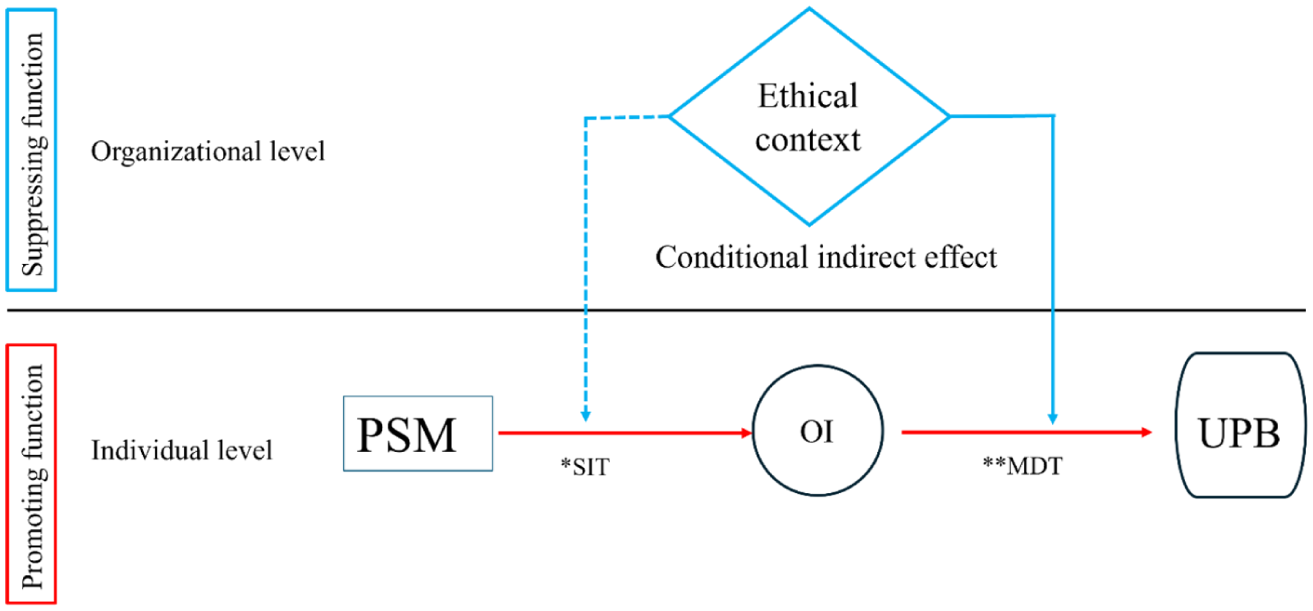
Cognitive-affective dual path model of UPB: A multi-level integration based on CAPS.
Moderating Effect of Ethical Leadership
Ethical leadership—defined as the demonstration and reinforcement of normatively appropriate conduct through leaders’ behavior, communication, and reward systems (Brown et al., 2005)—plays an important role in shaping employees’ ethical judgments. Ethical leaders communicate moral expectations, model integrity, and reinforce ethical standards, thereby influencing how employees interpret organizational goals and evaluate ethically ambiguous actions (Neubert et al., 2009). Through these processes, leaders provide normative cues that guide employees’ moral reasoning in organizational contexts.
Reynolds (2008) describes moral attentiveness as a cognitive filter that shapes how individuals notice and interpret moral cues. Within the CAPS framework, ethical leadership functions as a contextual signal that shapes the activation of cognitive–affective mechanisms associated with organizational identification. When ethical leadership is strong, employees become more attentive to ethical considerations and less likely to interpret loyalty to the organization as justification for morally questionable actions. In contrast, when ethical leadership is weak or absent, employees may rely more heavily on loyalty-driven interpretations that facilitate moral disengagement and increase the likelihood of UPB.
Empirical research supports these mechanisms. Ethical leadership has been shown to reduce moral disengagement (Payne et al., 2023), strengthen reflective ethical cognition (Miao et al., 2013), and weaken commitment-based tendencies that may encourage UPB (J. G. Park et al., 2023). Taken together, these findings suggest that ethical leadership serves as a contextual boundary that weakens the positive relationship between organizational identification and UPB.
Beyond this direct moderation, ethical leadership may also shape the broader pathway linking public service motivation to UPB. Ethical leadership provides salient normative cues that shape how employees interpret organizational goals and ethical expectations (Brown et al., 2005; Miao et al., 2013). As discussed earlier, PSM increases organizational identification, which can subsequently facilitate UPB when identification-driven loyalty activates moral disengagement. In this sense, the indirect effect of PSM on UPB through OI reflects an identity-based mechanism that is sensitive to contextual cues.
Ethical leadership can alter how this mediated process unfolds. By reinforcing ethical norms and clarifying moral expectations, ethical leaders shape how employees interpret their identification with the organization. These contextual cues reduce the likelihood that identification-based loyalty will evolve into moral disengagement (Payne et al., 2023) and instead encourage employees to align organizational commitment with broader ethical standards. Consequently, ethical leadership is expected not only to weaken the direct relationship between OI and UPB but also to attenuate the overall indirect effect of PSM on UPB through OI.
Figure 2 presents the hypothesized research model.
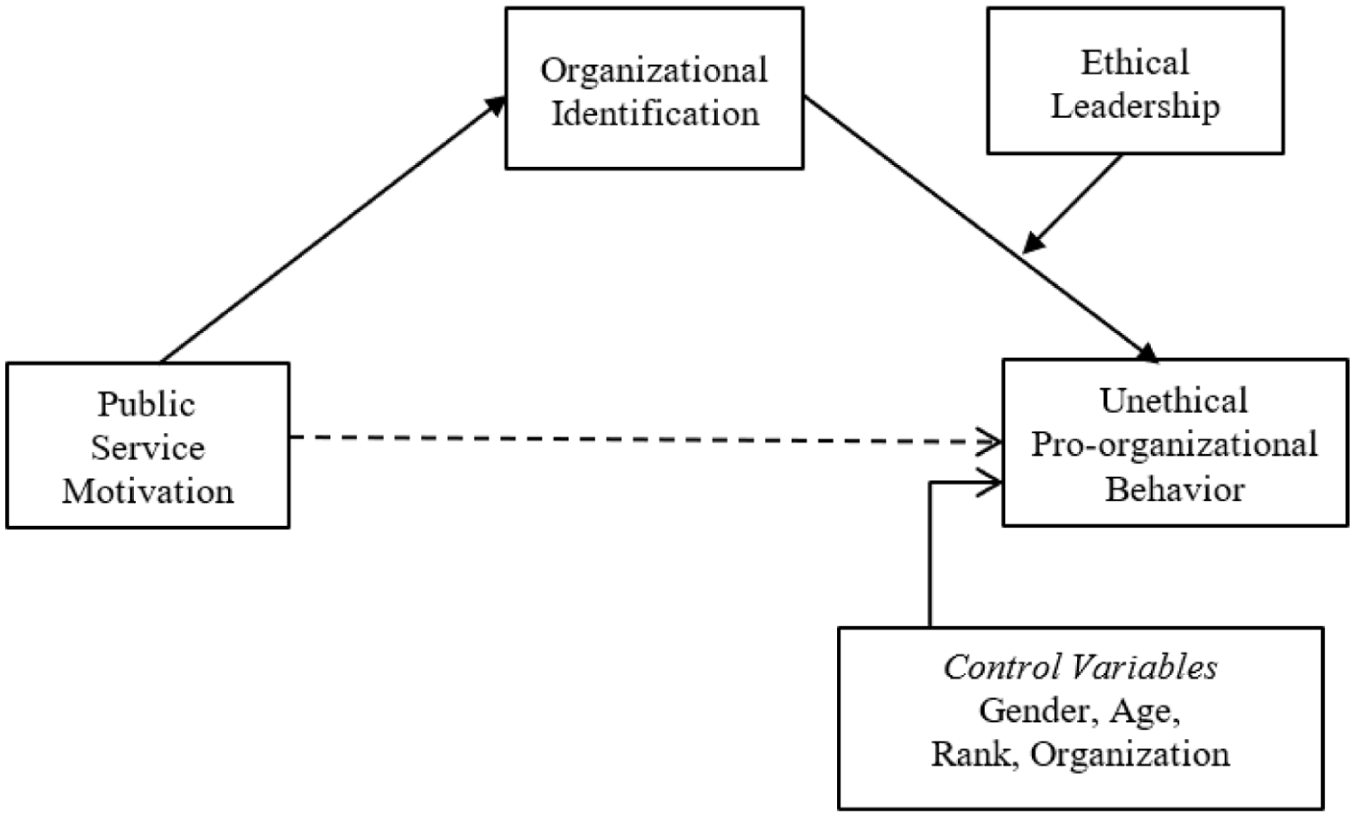
Analytic framework.
Materials and Methods
Data and Methods
The data for this study were drawn from the “Survey on Perceptions of Public and Private Sector Employees in Korea,” publicly released by the Korean Institute of Public Administration (KIPA). The survey was designed to assess employees’ perceptions of organizational conditions and support evidence-based public sector innovation. The original sample comprised 2,020 respondents—1,012 from the public sector and 1,008 from the private sector—collected via an online survey administered between October and November 2024. For the purposes of the present study, only respondents employed in public organizations were included. Individuals working for quasi-governmental or nonprofit organizations were excluded to focus the analysis on formal public sector employment.
The final analytic sample consists of 1,012 public sector employees, including civil servants from central and local government agencies. The Korean civil service operates under a hierarchical grade system ranging from Grade 1 (highest rank) to Grade 9 (entry level). Officials in Grades 1 to 5 typically occupy managerial or supervisory positions, whereas those in Grades 6 to 9 are more likely to serve in frontline or administrative roles. Promotions are largely seniority-based, although performance evaluations also play a role. This structured hierarchy defines formal authority and role differentiation within public organizations and provides institutional context for interpreting the empirical results.
Quota sampling was employed to ensure balanced representation across organizational types and demographics. The sample included both male and female respondents across all working-age groups. To evaluate the demographic representativeness of the sample, one-sample proportion tests were conducted comparing the observed and population proportions of gender and age groups. The gender distribution of the sample (male: 54.94%; female: 45.06%) did not significantly differ from national workforce statistics (male: 52.58%; female: 47.42%; p = .139, two-tailed binomial test). However, the age distribution exhibited a statistically significant deviation from population benchmarks (χ2(3) = 76.81, p < .001), with a notable overrepresentation of respondents in their 30s and underrepresentation of those in their 20s and 50s or above. To mitigate potential bias, age group was included as a control variable in all multivariate models. Table 1 presents a demographic summary of the public sector respondents, including distributions of gender and age.
Demographic Summary of the Public Sector Respondents.
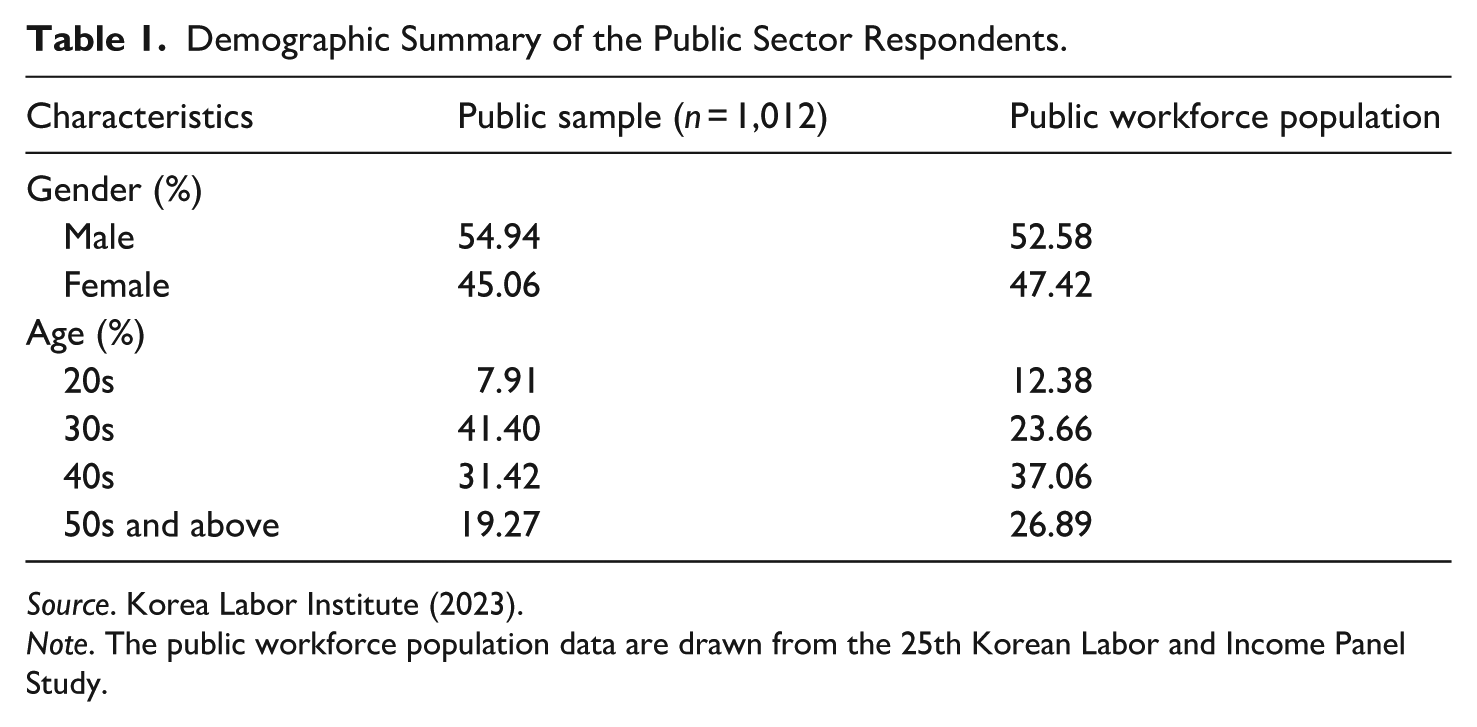
Source. Korea Labor Institute (2023).
Note. The public workforce population data are drawn from the 25th Korean Labor and Income Panel Study.
Measures
All variables were measured using multi-item scales developed or adapted by the Korean Institute of Public Administration (KIPA). Items were administered in Korean following a translation/back-translation procedure with discrepancies resolved by committee and a small cognitive pretest with public servants to ensure semantic equivalence (Brislin, 1970). Unless otherwise noted, all items were rated on a 5-point Likert scale ranging from 1 (“Strongly Disagree”) to 5 (“Strongly Agree”). Cronbach’s alpha coefficients were calculated to assess the internal reliability of each scale.
Public Service Motivation (α = .8573) was measured using four items adapted from Wright et al. (2013), which assess individuals’ commitment to public service and their willingness to prioritize collective well-being over personal interests. Example items include: “Serving the country and citizens is very important to me” and “I am prepared to make significant personal sacrifices for the public good.” PSM was measured using four items adapted from Wright et al. (2013), which function as a shortened index that reflects the construct’s multidimensional nature. Consistent with prior PSM research, these items were modeled as a formative representation of a higher-order global PSM construct, capturing employees’ overall public-service value orientation.
Organizational Identification (α = .7277) was measured using three items originally developed by Mael and Ashforth (1992), which assess the psychological attachment employees feel toward their organization. Sample statements include: “When people criticize my organization, I feel personally criticized” and “When people praise my organization, I feel personally complimented.”
Unethical Pro-Organizational Behavior (α = .8351) was assessed through four items adapted from Umphress et al. (2010), examining respondents’ willingness to engage in ethically questionable actions for the sake of organizational interests. Example items include: “If it benefits my organization, I am willing to distort facts to present the organization positively” and “If necessary, I may refrain from informing clients about errors in services provided by my organization.”
Ethical Leadership (α = .9352) was captured using five items adapted from Brown et al. (2005), evaluating the extent to which supervisors are seen as fair, trustworthy, and ethically principled. Representative items include: “My supervisor makes fair and balanced decisions” and “My supervisor considers ‘what is the right thing to do’ when making decisions.”
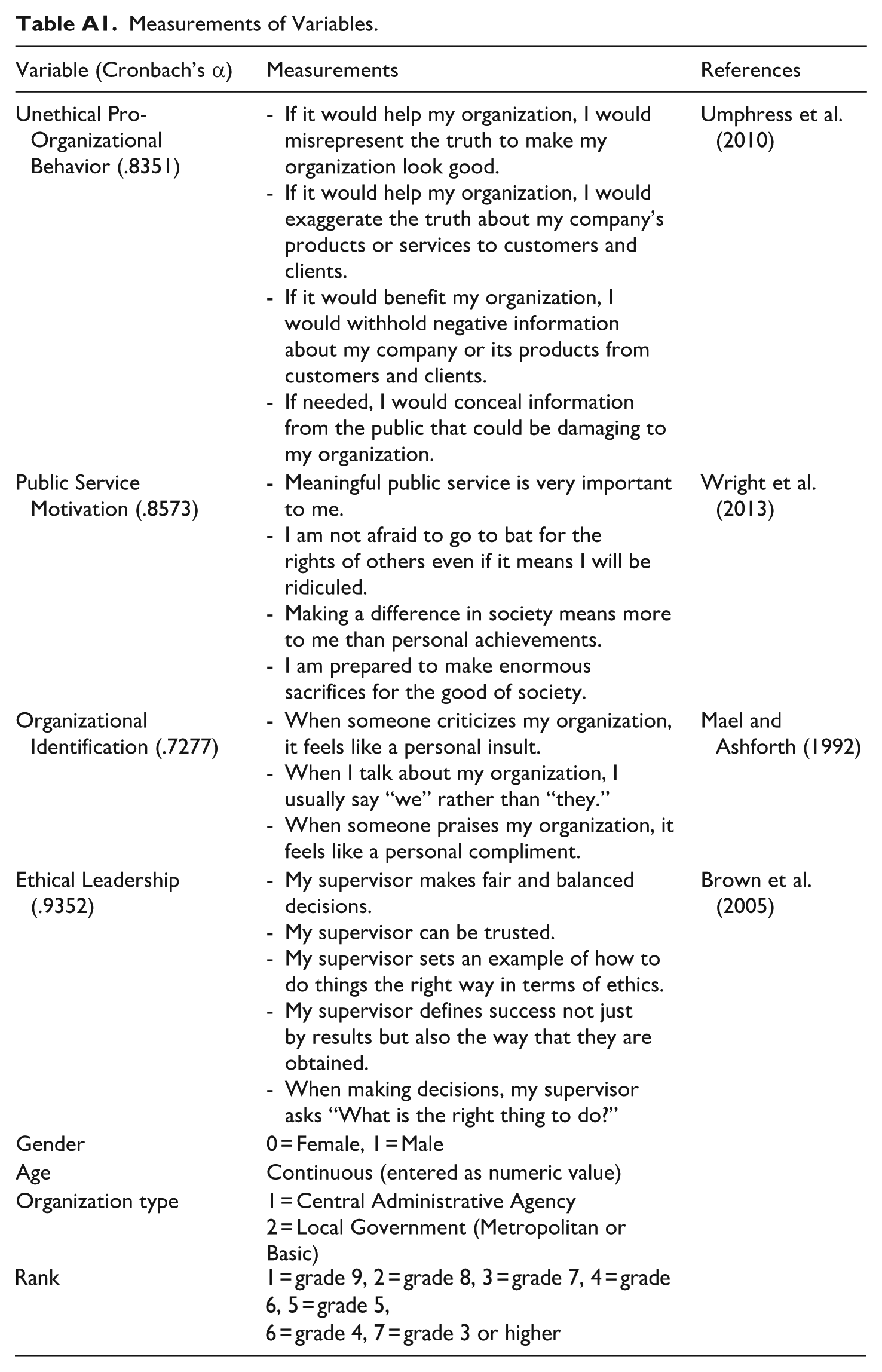
Control variables included gender (coded as 0 = Female, 1 = Male) and age (entered as a continuous variable in years). A complete list of all survey items is provided in the Table A1.
These covariates capture salient individual differences in how employees construe and respond to performance evaluations, given variation in evaluator–recipient roles and demographics. Consistent with best practice in SEM, we avoid a “kitchen-sink” approach: variables without a clear theoretical role in the focal pathways were not entered as omnibus controls because doing so can reduce degrees of freedom, attenuate substantive relations, and introduce multicollinearity or method variance (Becker, 2005; Podsakoff et al., 2003; Williams et al., 2009). Accordingly, the baseline SEM retains only exogenous background controls (e.g., age, gender, rank, organization).
Results
Descriptive Statistics and Correlation Analysis
Table 2 reports the descriptive statistics and Pearson’s correlation coefficients for the key variables. The mean value of UPB (M = 2.757, SD = 0.896) suggests a relatively low level of unethical pro-organizational behavior among respondents. PSM, OI, and EL demonstrated moderate to high mean values, reflecting overall positive motivational orientations and ethical leadership perceptions. As theoretically anticipated, PSM was positively correlated with OI (r = .407, p < .01) and EL (r = .322, p < .01), indicating that public service motivation is associated with both stronger organizational identification and higher perceptions of ethical leadership. OI also exhibited a significant positive correlation with EL (r = .356, p < .01). Notably, UPB was positively associated with OI (r = .158, p < .01), supporting the notion that heightened organizational identification can, in certain contexts, foster unethical behaviors intended to benefit the organization. Gender and age showed weak to moderate correlations with the primary variables. Furthermore, all variance inflation factor (VIF) values were well below the commonly accepted threshold, with the highest VIF recorded at 1.16, indicating that multicollinearity is not a concern in the present analysis.
Descriptive Statistics and Correlations of the Key Variables.
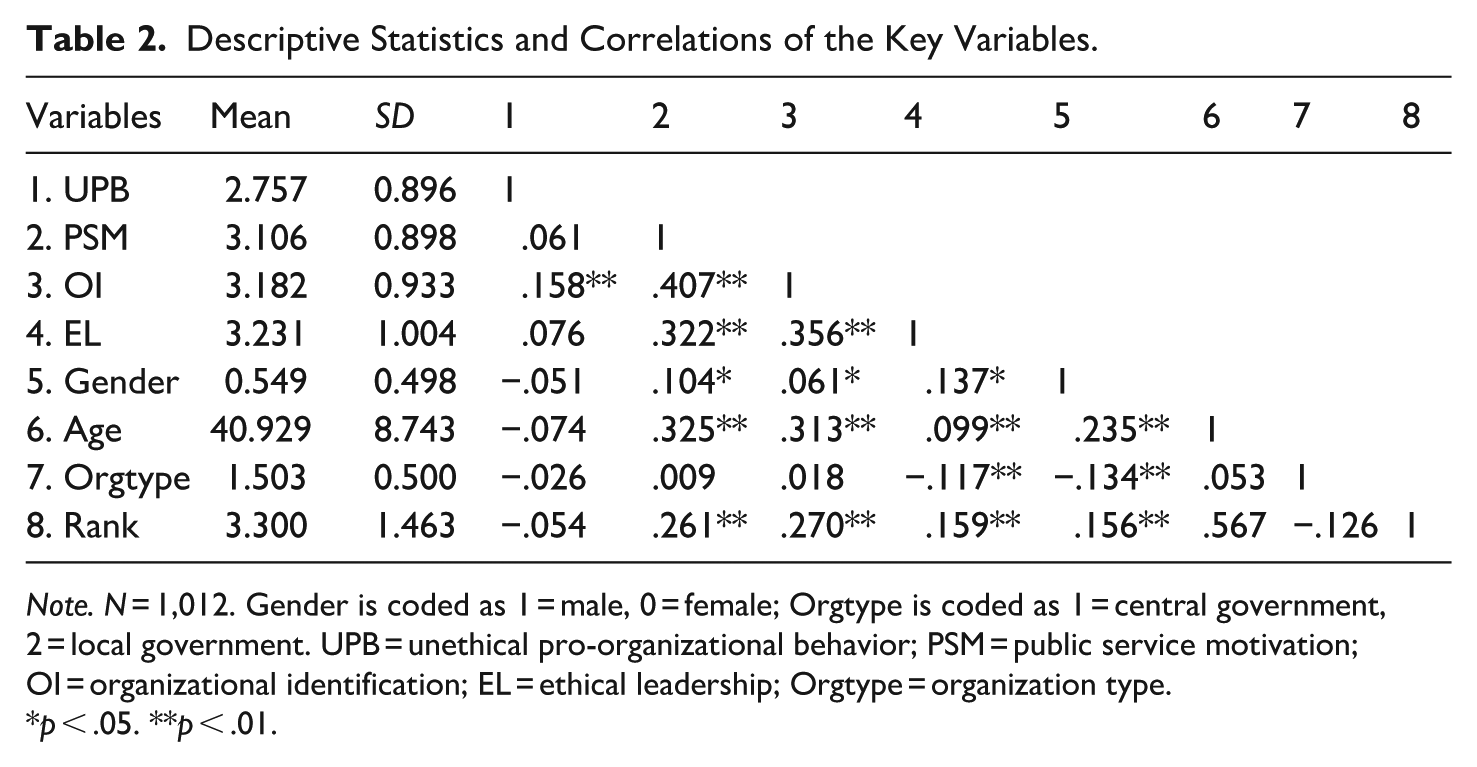
Note. N = 1,012. Gender is coded as 1 = male, 0 = female; Orgtype is coded as 1 = central government, 2 = local government. UPB = unethical pro-organizational behavior; PSM = public service motivation; OI = organizational identification; EL = ethical leadership; Orgtype = organization type.
p < .05. **p < .01.
Model Fit
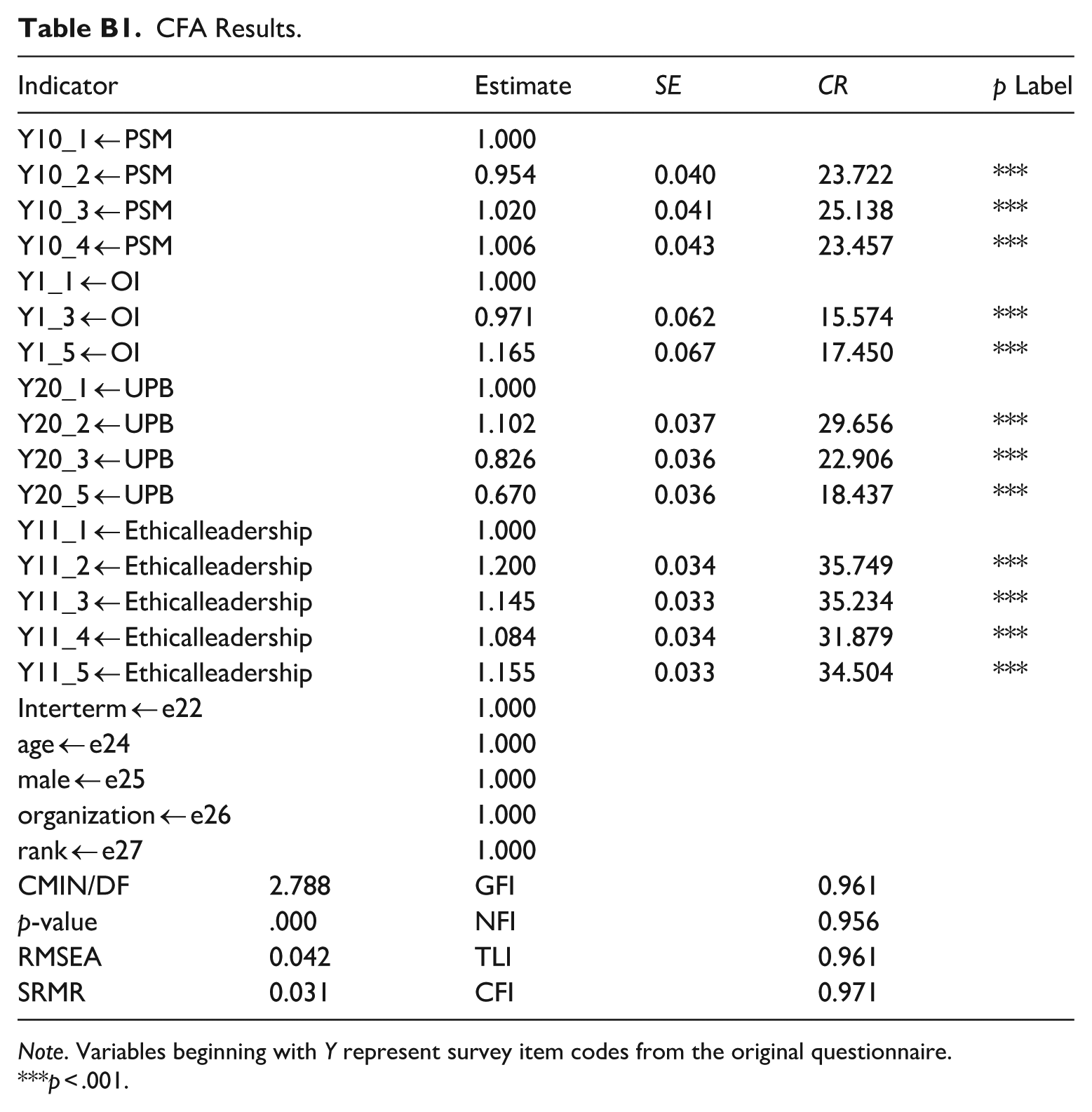
Before conducting the structural equation model (SEM) analysis, the measurement model was evaluated to assess its overall fit. The goodness-of-fit indices indicated an acceptable or good model fit. Although the Chi-square test was statistically significant (CMIN = 440.241, df = 158, p = .000), this result is expected due to the test’s sensitivity to large sample sizes. As an alternative indicator, the ratio of Chi-square to degrees of freedom (CMIN/DF) was 2.788, which is considered acceptable (less than 5, preferably below 3). The RMSEA value was 0.042, with a 90% confidence interval between 0.039 and 0.049, and a PCLOSE value of 0.998, indicating a good fit (RMSEA < 0.05).
Furthermore, other key fit indices were all above the recommended threshold of 0.90, suggesting acceptable to excellent fit: GFI = 0.961, NFI = 0.956, TLI = 0.971, and CFI = 0.971. Additionally, the standardized root mean square residual (SRMR) was 0.0306, which is well below the commonly accepted cutoff of 0.08 and also satisfies the more conservative threshold of 0.05, indicating a very good fit. In summary, based on these multiple fit indices, the measurement model demonstrated a satisfactory fit with the empirical data, allowing us to proceed confidently to the structural model analysis. Detailed loadings and fit indices are reported in Table B1.
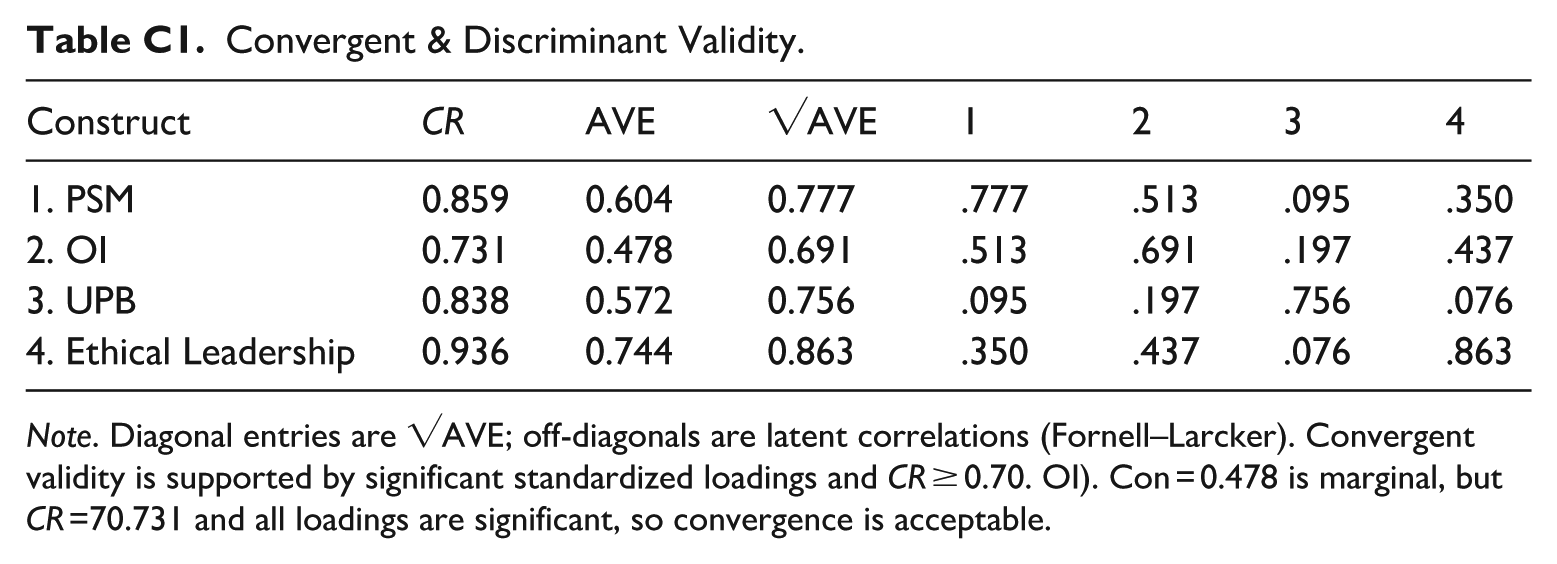
Additionally, this study assesses convergent validity via CFA standardized loadings, composite reliability (CR), and average variance extracted (AVE), and discriminant validity via the Fornell–Larcker criterion (Fornell & Larcker, 1981). Table C1 reports the summary table (CR/AVE/√AVE) and the Fornell–Larcker matrix; all criteria are met (CR ≥ 0.70; √AVE exceeds inter-construct correlations).
To address the potential concern of common method bias (CMB), two diagnostic procedures were conducted, following established recommendations by Podsakoff and Organ (1986) and Podsakoff et al. (2003). First, Harman’s single-factor test revealed that the first unrotated factor accounted for 32.85% of the total variance—well below the 50% threshold—suggesting that CMB is unlikely to be a serious concern. Second, a series of confirmatory factor analyses (CFA) compared the fit of alternative measurement models. As recommended by Podsakoff et al. (2003), the one-factor model showed poor fit (CFI = 0.441, RMSEA = 0.231, SRMR = 0.191), whereas the three-factor model exhibited excellent fit (CFI = 0.965, RMSEA = 0.062, SRMR = 0.041). The comparative fit indices for the one-factor, two-factor, and three-factor models are reported in Table 3. These results support the discriminant validity of the constructs and indicate that CMB is unlikely to substantially bias the findings. The three-factor model (PSM, OI, and UPB) showed superior fit compared to the one-factor and two-factor models, providing evidence for the discriminant validity of the constructs and mitigating concerns about common method bias (Podsakoff et al., 2003).
Comparison of Model Fit Indices.
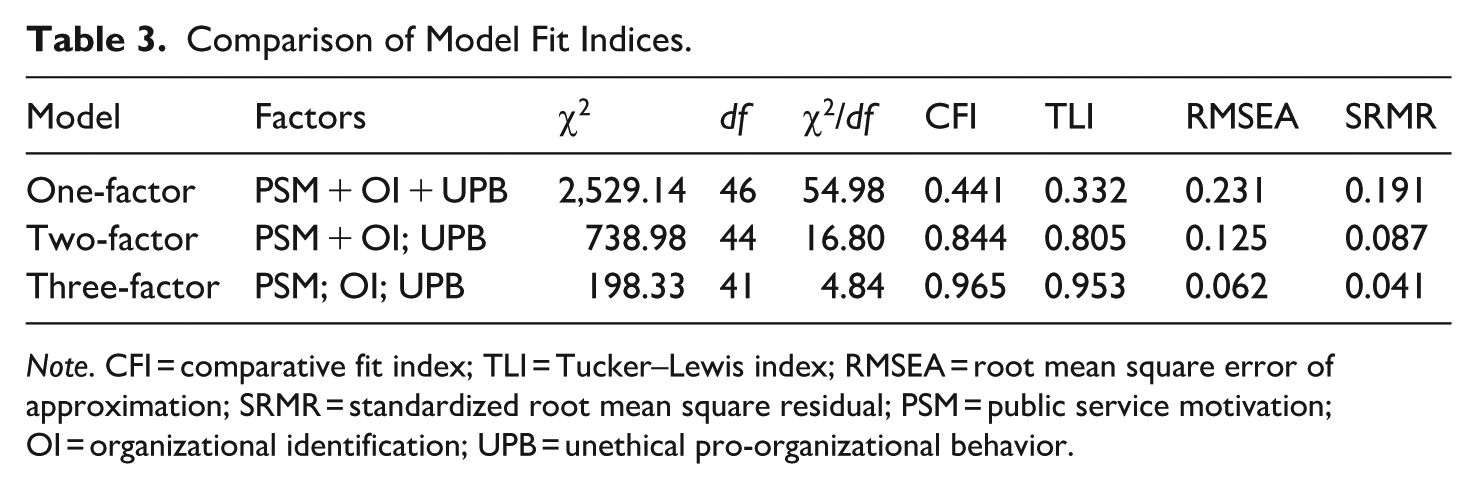
Note. CFI = comparative fit index; TLI = Tucker–Lewis index; RMSEA = root mean square error of approximation; SRMR = standardized root mean square residual; PSM = public service motivation; OI = organizational identification; UPB = unethical pro-organizational behavior.
In addition to these two techniques, the current study also implemented the CFA marker technique (Williams et al., 2009). This study used three theoretically unrelated policy-attitude items (e.g., general attitudes toward raising the mandatory retirement age) as indicators of a marker factor, collected with the same Likert scale, source, and timing as the focal measures. The marker factor was set orthogonal to substantive factors, and a single equal method loading (λ_m) was specified from the marker to all Likert-type indicators. The estimated common method loading was small and non-significant (λ_m = 0.024, SE = 0.024, p = .306). Model fit was virtually unchanged relative to the baseline specification (e.g., ΔCFI ≈ −0.002; ΔRMSEA ≈ 0), and substantive loadings/paths were stable, suggesting that common method bias is not a serious concern.
Multi-Group Invariance Across Rank and Agency Tier
We tested measurement and structural invariance across rank groups (Grade 1–5 vs. 6–9) and agency tiers (central vs. local). For ranks, the configural and metric models fit well (CFI ≈ 0.963; RMSEA ≈ 0.033), and structural weights were invariant (ΔCFI = 0.000; nested p = .752), indicating equivalent factor loadings and path coefficients across higher- and lower-rank officials. For agency tiers, model fit was similarly strong (CFI ≈ 0.960–0.964; RMSEA ≈ 0.033–0.034). Both metric (ΔCFI = +.001) and structural weights models (ΔCFI = 0.000; nested p = .928) supported invariance, showing no tier-based differences in the hypothesized relations among PSM, OI, UPB, and ethical leadership. Additional constraints on latent (co)variances and residuals yielded ΔCFI ≤ 0.01 (though some χ2 differences were significant), which we interpret as acceptable by incremental-fit criteria.
Structural Equation Modeling
Consistent with our theory, the baseline specifies a fully mediated pathway in which PSM predicts UPB only via OI, with ethical leadership (EL) moderating the OI → UPB link (and the resulting indirect effect). Exogenous controls include gender, age, rank, and agency tier. The measurement model fit was excellent; all items loaded significantly on their intended factors (details in Table B1). Table 4 reports the parameter estimates for the full-mediation structural equation model.
Analysis Results of Structural Equation Model (Full Mediation).
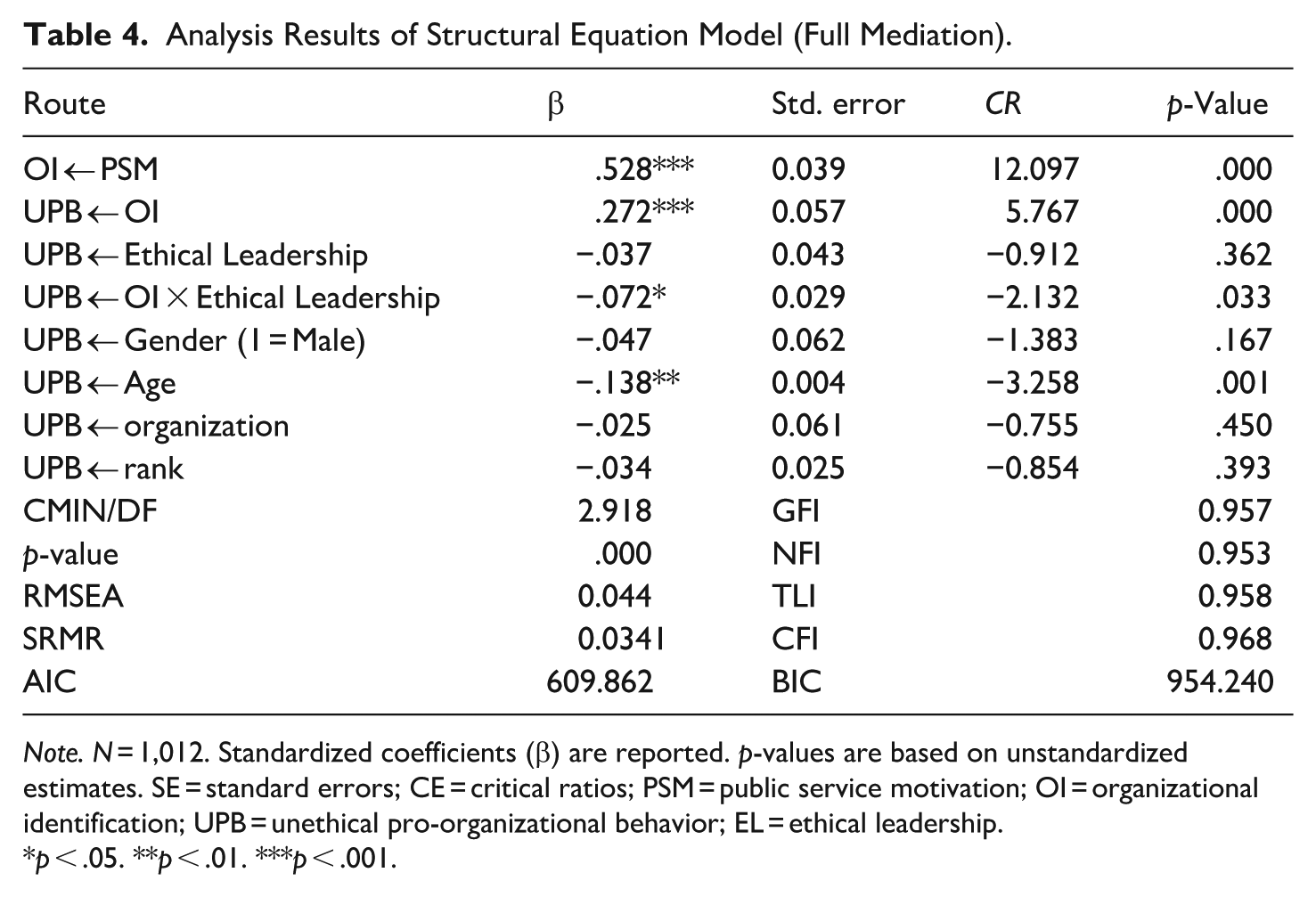
Note. N = 1,012. Standardized coefficients (β) are reported. p-values are based on unstandardized estimates. SE = standard errors; CE = critical ratios; PSM = public service motivation; OI = organizational identification; UPB = unethical pro-organizational behavior; EL = ethical leadership.
p < .05. **p < .01. ***p < .001.
Specifically, PSM positively predicted OI (β = .528, p < .001), and OI positively predicted UPB (β = .272, p < .001). EL’s main effect on UPB was not significant (β = −.037, p = .362), but the OI × EL interaction was negative and significant (β = −.072, p = .033), indicating attenuation of the OI → UPB link at higher EL. The indirect effect of PSM on UPB via OI was significant (ab = 0.155, 95% CI [0.096, 0.220]), and the index of moderated mediation was negative (index = −0.020, [−0.045, 0.000]). Among controls, age negatively predicted UPB (β = −.138, p = .001), whereas gender, rank, and agency were not significant.
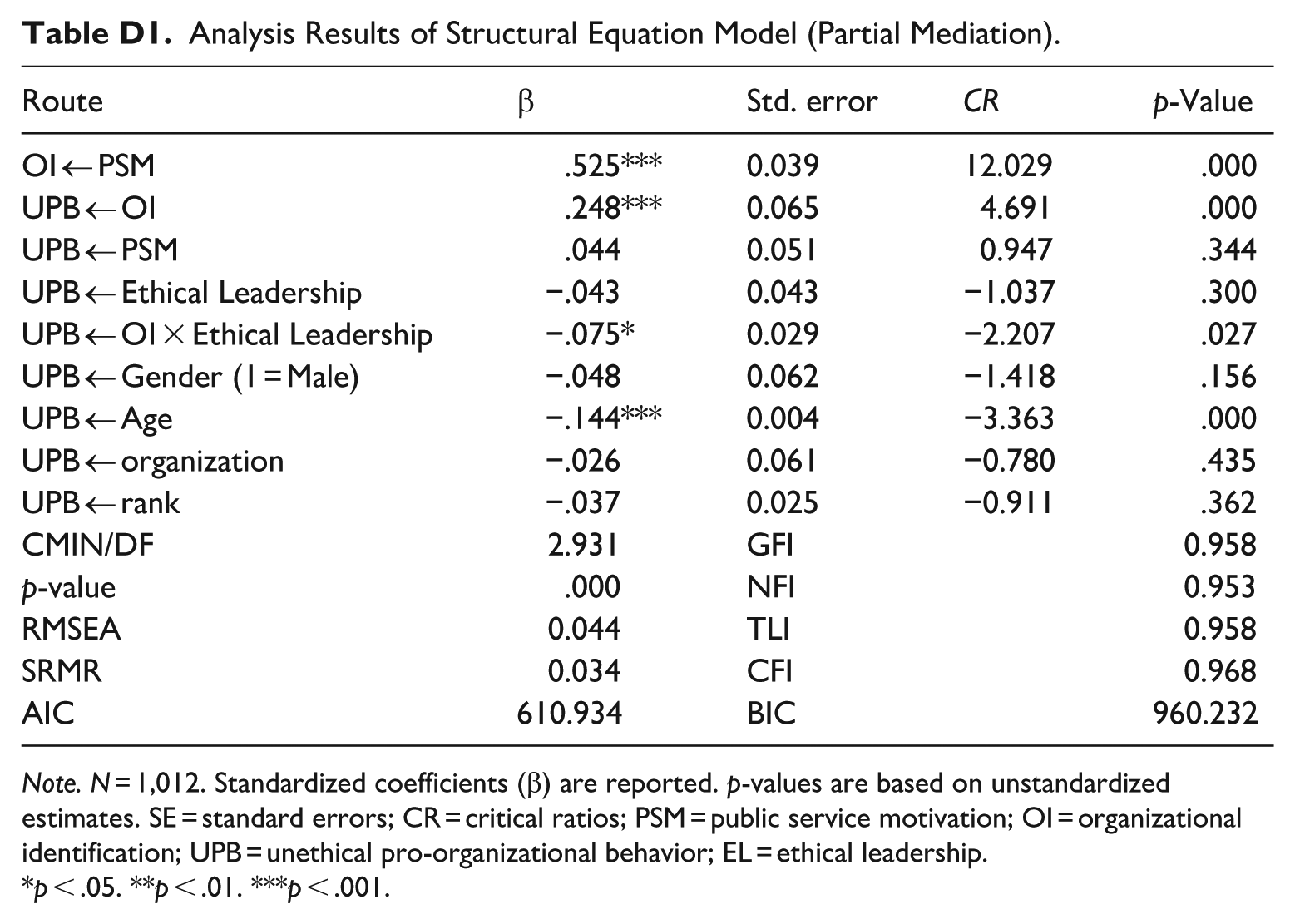
To move beyond global fit, we estimated a partial-mediation model that adds a direct PSM → UPB path. The direct path was non-significant (β = .046, p = .313) and did not improve fit relative to full mediation (Δχ2(1) = 0.93, p = .33). Information criteria favored the full-mediation model (AIC 609.86 vs. 610.93; BIC 954.24 vs. 960.23). These findings support the conclusion that PSM influences UPB primarily through its impact on OI, rather than exerting a direct effect.
This aligns with theories emphasizing organizational identification as a proximal motivational mechanism that translates broader public values into behavior aligned with organizational goals (Ashforth & Mael, 1989; Riketta, 2005). Nonetheless, the possibility remains that individuals with high PSM may refrain from engaging in UPB due to an internalized moral compass rooted in universal or societal values rather than organizational identification alone. This alternative pathway—while not statistically significant in the current study—merits further investigation, potentially involving constructs such as moral identity, ethical climate, or value-based leadership as additional mediators or moderators. Detailed coefficients and fit for the partial-mediation model are reported in Table D1.
To further illustrate the moderating effect, Figure 3 plots the interaction between OI and ethical leadership in predicting UPB. As shown in the figure, the positive relationship between OI and UPB was stronger when ethical leadership was low and weaker when ethical leadership was high. This finding supports the hypothesis that ethical leadership serves as a buffering mechanism, reducing the likelihood that high organizational identification will translate into unethical pro-organizational behavior.
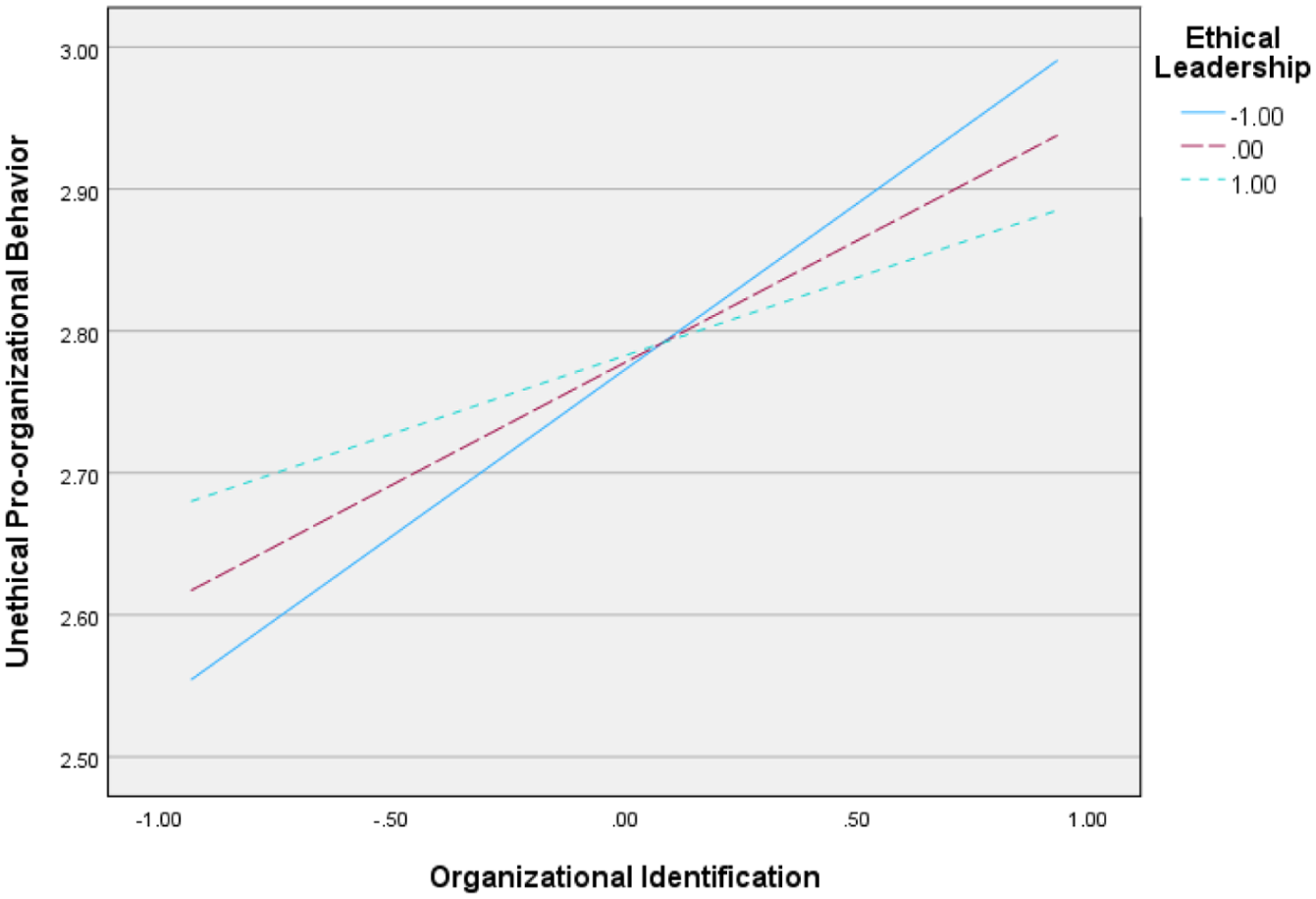
Moderating effect of ethical leadership.
Beyond statistical significance, the substantive magnitude of the moderated mediation was examined by estimating conditional indirect effects using PROCESS Macro Model 14. When ethical leadership was low (−1 SD), the indirect effect of PSM on UPB through OI was 0.083 (95% CI [0.047, 0.121]). At the mean level of ethical leadership, the indirect effect was 0.061 [0.033, 0.090], and when ethical leadership was high (+1 SD), the indirect effect declined to 0.039 [0.002, 0.074]. This represents approximately a 53% reduction in the indirect effect when comparing low and high levels of ethical leadership.
Similarly, the conditional effect of OI on UPB decreased from 0.234 at low ethical leadership to 0.110 at high ethical leadership. In predicted values, increasing OI from −1 SD to +1 SD raised UPB by 0.44 points under low ethical leadership but only by 0.21 points under high ethical leadership. These differences indicate that ethical leadership substantially attenuates the behavioral consequences of strong organizational identification.
Discussion
The purpose of this study was to clarify how Public Service Motivation (PSM) may unintentionally contribute to Unethical Pro-Organizational Behavior (UPB) through identity-driven cognitive–affective mechanisms, and to identify how Ethical Leadership shapes these pathways. By integrating Social Identity Theory (SIT), Moral Disengagement Theory (MDT), and the Cognitive–Affective Personality System (CAPS), the findings extend existing scholarship by providing a unified explanation of how prosocial motives can give rise to ethically problematic outcomes in public organizations.
First, the findings show that PSM does not directly promote UPB; instead, its influence operates through identity-based cognitive activation. This mediated pattern converges with prior research indicating that PSM often translates into behavioral outcomes through organizational identification rather than direct motivational impulses (Karolidis & Vouzas, 2019). PSM strengthens Organizational Identification (OI) when employees perceive value congruence with their organizations. Within the CAPS framework, this congruence activates self-concept–relevant cognitive units that increase the accessibility of loyalty-oriented interpretations. When ethical boundaries are weak or ambiguous, these units facilitate flexible reinterpretations of questionable behaviors, consistent with MDT’s mechanisms of moral justification. This strengthens the theoretical argument that PSM’s influence on ethical behavior unfolds through identity-based processes rather than purely motivational impulses. In this respect, the findings refine earlier “dark side” arguments (Schott & Ritz, 2018) by specifying the cognitive–affective pathway through which PSM becomes ethically consequential.
Second, the results reinforce that OI is ethically ambivalent. This aligns with studies demonstrating that strong organizational identification can simultaneously enhance commitment while increasing susceptibility to unethical pro-organizational behavior (Kong, 2016; Mishra et al., 2024; Umphress et al., 2010). Although OI often contributes to positive organizational outcomes, strong identification can activate cognitive scripts that reinterpret norm violations as legitimate acts of organizational protection. This pattern is especially plausible within hierarchical–collectivist administrative contexts, such as South Korea, where authority norms, relational obligations, and expectations of loyalty are institutionally reinforced. In such settings, the “if–then” activation patterns described in CAPS—if loyalty is culturally prioritized, then identity-based rationalizations become more accessible—operate with greater intensity. However, these mechanisms may function differently in individualistic contexts that emphasize personal ethical standards, highlighting the need for cross-national comparative research on the cultural contingencies of OI-driven UPB. These contextual findings are consistent with cross-cultural research suggesting that collectivist and high power-distance cultures intensify loyalty-based reasoning and identity-consistent moral justification (House et al., 2004; S. Kim, 2017).
Third, Ethical Leadership plays a central role in constraining these identity-driven processes. This moderating pattern is consistent with prior evidence that ethical leadership reduces moral disengagement and weakens commitment-based tendencies toward UPB (Miao et al., 2013; J. G. Park et al., 2023; Payne et al., 2023). Ethical leaders provide normative and interpretive cues that inhibit the activation of moral disengagement scripts within the CAPS system. By modeling integrity, clarifying expectations, and reinforcing ethical boundaries, ethical leaders recalibrate how employees evaluate identification-based motives, reducing the likelihood that loyalty-oriented cognitive units evolve into justifications for UPB. This not only supports SIT and Social Information Processing Theory but also demonstrates how contextual cues can alter the activation, inhibition, and recalibration mechanisms central to CAPS. By embedding these leadership effects within CAPS, the present study extends earlier leadership research by clarifying the cognitive activation mechanisms through which ethical cues inhibit unethical loyalty.
Yet, the findings also make clear that ethical leadership is not universally sufficient. In environments characterized by political pressure, aggressive performance mandates, or entrenched informal norms, competing situational cues may override leaders’ ethical messages. Under such conditions, employees may still rationalize UPB as necessary for organizational survival or to satisfy external stakeholders. This nuance suggests that ethical leadership is an important—but not singular—boundary condition for constraining identity-driven UPB.
Fourth, while this study focuses on identity-based pathways, UPB can also arise from pressure-driven mechanisms. Job insecurity, punitive performance metrics, or institutionalized expectations can activate affective–evaluative units associated with anxiety or fear, promoting unethical compliance independently of OI. Addressing the interplay between identity-based and pressure-based mechanisms remains an important direction for future research and would help refine the multidetermined understanding of UPB.
Fifth, this research advances the “dark side of PSM” literature by offering a theoretically integrated and parsimonious explanation. Whereas prior studies have typically examined PSM–UPB relationships through SIT or MDT in isolation (S. J. Park & Lee, 2025; Ripoll & Schott, 2023), this study integrates these perspectives within a unified cognitive–affective framework. Rather than juxtaposing SIT, MDT, and motivational accounts, the study positions PSM’s unintended effects within a coherent CAPS structure that specifies how cognitive–affective units are activated, under what conditions they facilitate disengagement, and how contextual cues alter these processes. Demonstrating a moderated mediation mechanism in a collectivist public-sector context provides greater clarity about when and how PSM can backfire.
Finally, the findings carry important practical implications for public organizations. Encouraging employees to identify with the organization can enhance motivation and commitment, but without ethical safeguards, strong identification may also activate cognitive blind spots that rationalize UPB. Ethical leadership is therefore essential not only for modeling moral behavior but also for shaping the interpretive filters through which employees understand their identity-based motives. Strengthening ethical climates, minimizing pressure-based triggers, and aligning performance systems with ethical standards are critical organizational strategies to prevent well-intentioned public servants from engaging in unethical conduct.
In addition, motivational enhancement efforts such as value-based recruitment or symbolic affirmations like oaths of office should be supported by ethical infrastructures that help channel prosocial motives into responsible conduct. Leadership development programs can emphasize ethical role modeling, transparent communication, and accountability reinforcement to reduce the likelihood that employees reinterpret questionable behaviors as organizationally beneficial. Performance appraisal systems should also attend to how employees pursue organizational objectives, not merely the outcomes they achieve, thereby discouraging outcomes-at-any-cost orientations that may facilitate UPB.
Ethics accountability structures such as protected reporting channels, ethics committees, and climate audits can further mitigate structural pressures that prompt employees to justify unethical acts as necessary for organizational protection. Finally, organizations should avoid overemphasizing loyalty and identification without adequate checks and balances, and regular values-alignment exercises and reflective practices may help employees assess whether their identification aligns with broader societal expectations.
Despite these contributions, several limitations should be acknowledged. First, the cross-sectional design restricts causal inference; future research should employ longitudinal or experimental approaches to validate the temporal sequencing of PSM, OI, and UPB. Second, self-reported data raises concerns about common method bias, although steps were taken to minimize its influence. Multi-source or behavioral data would strengthen future examinations. Third, the findings are situated in the Korean public sector, where hierarchical and collectivist norms may strengthen the identity-driven mechanisms observed here. Comparative research in more individualistic administrative cultures could clarify the cultural contingency of these effects.
Fourth, PSM was measured using a shortened four-item index adapted from Wright et al. (2013). Although this abbreviated measure reflects the construct’s multidimensional nature, it does not include the full set of items used in longer PSM scales. Future research employing fully specified multidimensional measures could examine whether particular PSM facets differentially predict UPB. Moreover, while the current model foregrounds identity-based loyalty as the pathway to UPB, employees may also engage in UPB due to job insecurity, punitive evaluation regimes, external political pressure, or career incentives. Although our discussion addresses these rival explanations conceptually, future research should incorporate direct measures of pressure, sanction visibility, and performance-goal salience to assess the relative influence of these forces. Finally, ethical leadership is not the only potential buffer. Other contextual factors, such as organizational justice, psychological safety, or leader–member exchange, may further shape whether prosocial motives translate into ethical or unethical behaviors.
Conclusion
This study provides new insight into the ethical complexities of public service motivation (PSM). Although PSM is widely regarded as a positive driver of public sector performance and ethical conduct, our findings show that it can also generate unintended negative consequences. Specifically, PSM increases organizational identification (OI), which then elevates the likelihood of unethical pro-organizational behavior (UPB). This evidence clarifies that the behavioral expression of prosocial motives is not uniformly beneficial and advances recent discussions on the ambivalent or paradoxical effects of PSM. By demonstrating that the PSM–UPB relationship is indirect and identity-driven, the study underscores the importance of considering psychological mechanisms rather than assuming linear motivational effects.
The findings also contribute to leadership research by identifying ethical leadership as a critical boundary condition that mitigates the risks associated with strong motivation and identification. Ethical leadership not only signals appropriate conduct but also shapes employees’ interpretive frames by reinforcing ethical norms and discouraging loyalty-based moral disengagement. The moderated mediation results illustrate how leader behavior can redirect powerful prosocial motives toward responsible stewardship rather than uncritical loyalty. This offers a theoretically coherent model linking motivation, identification, and ethical leadership, consistent with identity-based and moral cognition frameworks and with the CAPS view that contextual cues activate or inhibit cognitive–affective mechanisms.
At the same time, the findings should be interpreted as associative rather than strictly causal. Although the hypothesized model specifies directional pathways, the research design does not permit definitive causal claims. Reverse or reciprocal relationships are also plausible. For example, engagement in UPB may subsequently reinforce organizational identification as employees justify their actions in identity-consistent ways, and employees who engage in or tolerate UPB may come to perceive leadership as more or less ethical depending on how such behaviors are framed and rewarded. Clarifying these temporal and reciprocal dynamics remains an important task for future research.
Ultimately, this study contributes to the development of public organizations that can harness the benefits of prosocial motivation while minimizing its risks. By recognizing that high motivation and strong identification do not automatically guarantee ethical outcomes, public managers can cultivate organizational environments where loyalty is balanced with ethical scrutiny. Such conditions are vital for building public institutions that are both mission-driven and ethically resilient, capable of maintaining public trust while navigating increasingly complex governance challenges.
Footnotes
Appendix A
Measurements of Variables.
| Variable (Cronbach’s α) | Measurements | References |
|---|---|---|
| Unethical Pro-Organizational Behavior (.8351) | - If it would help my organization, I would misrepresent the truth to make my organization look good. - If it would help my organization, I would exaggerate the truth about my company’s products or services to customers and clients. - If it would benefit my organization, I would withhold negative information about my company or its products from customers and clients. - If needed, I would conceal information from the public that could be damaging to my organization. |
Umphress et al. (2010) |
| Public Service Motivation (.8573) | - Meaningful public service is very important to me. - I am not afraid to go to bat for the rights of others even if it means I will be ridiculed. - Making a difference in society means more to me than personal achievements. - I am prepared to make enormous sacrifices for the good of society. |
Wright et al. (2013) |
| Organizational Identification (.7277) | - When someone criticizes my organization, it feels like a personal insult. - When I talk about my organization, I usually say “we” rather than “they.” - When someone praises my organization, it feels like a personal compliment. |
Mael and Ashforth (1992) |
| Ethical Leadership (.9352) | - My supervisor makes fair and balanced decisions. - My supervisor can be trusted. - My supervisor sets an example of how to do things the right way in terms of ethics. - My supervisor defines success not just by results but also the way that they are obtained. - When making decisions, my supervisor asks “What is the right thing to do?” |
Brown et al. (2005) |
| Gender | 0 = Female, 1 = Male | |
| Age | Continuous (entered as numeric value) | |
| Organization type | 1 = Central Administrative Agency |
|
| Rank | 1 = grade 9, 2 = grade 8, 3 = grade 7, 4 = grade 6, 5 = grade 5, |
Appendix B
CFA Results.
| Indicator | Estimate | SE | CR | p Label | |
|---|---|---|---|---|---|
| Y10_1 ← PSM | 1.000 | ||||
| Y10_2 ← PSM | 0.954 | 0.040 | 23.722 | *** | |
| Y10_3 ← PSM | 1.020 | 0.041 | 25.138 | *** | |
| Y10_4 ← PSM | 1.006 | 0.043 | 23.457 | *** | |
| Y1_1 ← OI | 1.000 | ||||
| Y1_3 ← OI | 0.971 | 0.062 | 15.574 | *** | |
| Y1_5 ← OI | 1.165 | 0.067 | 17.450 | *** | |
| Y20_1 ← UPB | 1.000 | ||||
| Y20_2 ← UPB | 1.102 | 0.037 | 29.656 | *** | |
| Y20_3 ← UPB | 0.826 | 0.036 | 22.906 | *** | |
| Y20_5 ← UPB | 0.670 | 0.036 | 18.437 | *** | |
| Y11_1 ← Ethicalleadership | 1.000 | ||||
| Y11_2 ← Ethicalleadership | 1.200 | 0.034 | 35.749 | *** | |
| Y11_3 ← Ethicalleadership | 1.145 | 0.033 | 35.234 | *** | |
| Y11_4 ← Ethicalleadership | 1.084 | 0.034 | 31.879 | *** | |
| Y11_5 ← Ethicalleadership | 1.155 | 0.033 | 34.504 | *** | |
| Interterm ← e22 | 1.000 | ||||
| age ← e24 | 1.000 | ||||
| male ← e25 | 1.000 | ||||
| organization ← e26 | 1.000 | ||||
| rank ← e27 | 1.000 | ||||
| CMIN/DF | 2.788 | GFI | 0.961 | ||
| p-value | .000 | NFI | 0.956 | ||
| RMSEA | 0.042 | TLI | 0.961 | ||
| SRMR | 0.031 | CFI | 0.971 | ||
Note. Variables beginning with Y represent survey item codes from the original questionnaire.
p < .001.
Appendix C
Convergent & Discriminant Validity.
| Construct | CR | AVE | √AVE | 1 | 2 | 3 | 4 |
|---|---|---|---|---|---|---|---|
| 1. PSM | 0.859 | 0.604 | 0.777 | .777 | .513 | .095 | .350 |
| 2. OI | 0.731 | 0.478 | 0.691 | .513 | .691 | .197 | .437 |
| 3. UPB | 0.838 | 0.572 | 0.756 | .095 | .197 | .756 | .076 |
| 4. Ethical Leadership | 0.936 | 0.744 | 0.863 | .350 | .437 | .076 | .863 |
Note. Diagonal entries are √AVE; off-diagonals are latent correlations (Fornell–Larcker). Convergent validity is supported by significant standardized loadings and CR ≥ 0.70. OI). Con = 0.478 is marginal, but CR =70.731 and all loadings are significant, so convergence is acceptable.
Appendix D
Analysis Results of Structural Equation Model (Partial Mediation).
| Route | β | Std. error | CR | p-Value |
|---|---|---|---|---|
| OI ← PSM | .525*** | 0.039 | 12.029 | .000 |
| UPB ← OI | .248*** | 0.065 | 4.691 | .000 |
| UPB ← PSM | .044 | 0.051 | 0.947 | .344 |
| UPB ← Ethical Leadership | −.043 | 0.043 | −1.037 | .300 |
| UPB ← OI × Ethical Leadership | −.075* | 0.029 | −2.207 | .027 |
| UPB ← Gender (1 = Male) | −.048 | 0.062 | −1.418 | .156 |
| UPB ← Age | −.144*** | 0.004 | −3.363 | .000 |
| UPB ← organization | −.026 | 0.061 | −0.780 | .435 |
| UPB ← rank | −.037 | 0.025 | −0.911 | .362 |
| CMIN/DF | 2.931 | GFI | 0.958 | |
| p-value | .000 | NFI | 0.953 | |
| RMSEA | 0.044 | TLI | 0.958 | |
| SRMR | 0.034 | CFI | 0.968 | |
| AIC | 610.934 | BIC | 960.232 | |
Note. N = 1,012. Standardized coefficients (β) are reported. p-values are based on unstandardized estimates. SE = standard errors; CR = critical ratios; PSM = public service motivation; OI = organizational identification; UPB = unethical pro-organizational behavior; EL = ethical leadership.
p < .05. **p < .01. ***p < .001.

Funding
The authors received no financial support for the research, authorship, and/or publication of this article.
Declaration of Conflicting Interests
The authors declared no potential conflicts of interest with respect to the research, authorship, and/or publication of this article.