






Abstract
One of the major barriers to the national government achieving the sustainable development goals (SDGs) is civil servants’ lack of awareness of the SDGs’ importance and of a clear understanding of how to link between their organizational goals and the SDGs. In this article, we examine to what extent civil servants are aware of SDGs-implementation performance by illuminating the role of their public service motivation (PSM) and organizational commitment. We hypothesize that civil servants with higher PSM and organizational commitment will be better aware of SDGs implementation performance, showing a smaller gap between the actual performance in accomplishing the SDGs and their perception of it. Leveraging the original data from surveys with 2,161 civil servants in South Korea combined with the performance data from the UN Sustainable Development Solutions Network (SDSN), our analysis strongly supports our predictions. An increase from the observed median to maximum values of PSM and organizational commitment, respectively, leads to 1.43- and 1.5-times greater awareness of SDGs-implementation performance among civil servants. Our findings have important implications: strengthening PSM and organizational commitment can play a central role in increasing civil servants’ awareness of SDGs-implementation performance and ultimately facilitating the achievement of the SDGs.
Keywords
Introduction
The United Nations Sustainable Development Goals (SDGs) encompass multidimensional and complex policy objectives, and their effective achievement requires not only institutional and policy mechanisms but also the awareness and psychological engagement of civil servants (Azmat et al., 2025). However, as in the case of South Korea, civil servants often lack sufficient awareness of the importance of the SDGs or a clear understanding of how their organizational goals align with the SDGs, which has been identified as a major barrier (see Brewster & Brookes, 2024). This indicates that complex policies such as the SDGs require more than merely presenting policy objectives; they demand that civil servants on the frontline internalize these objectives as their own tasks and accurately perceive performance information in order for them to translate them into concrete actions (Bisogno et al., 2023; Locke & Latham, 2006).
In this regard, civil servants’ awareness of government performance and related information plays a central role beyond mere data utilization, as it underpins clear comprehension of policy objectives and internalization of organizational accountability (Andrews et al., 2011). Although performance information exists as objective fact, its interpretation varies depending on civil servants’ motivation, values, and attitudes toward the organization (Caillier, 2016; Moon, 2002; Perry & Vandenabeele, 2015). As Lewandowski (2019) emphasizes, the mere provision of objective information does not guarantee accurate awareness; rather, the interpretation and use of information are determined by individual motivation and attitudes.
As the effort to understand performance information and link it to organizational goals itself constitutes altruistic behavior, public service motivation (PSM)—defined as an individual’s predispositions to respond to institutions and organizations, emphasizing normative commitment to the public interest, compassion toward others, and a desire to serve society (Perry & Wise, 1990) 1 —naturally plays a critical role in this process (Moynihan & Pandey, 2010; Roach et al., 2022; Yang et al., 2026). Civil servants with higher PSM are more willing to bear the cognitive and behavioral costs to actively explore and interpret information; moreover, PSM strengthens identification with public values and organizational goals, leading civil servants to perceive performance information not as mere metrics but as essential instruments for achieving policy objectives (An et al., 2025; Moynihan & Pandey, 2010; Yang et al., 2026). Empirical evidence concerning the powerful impact of PSM on understanding performance information abounds. For instance, higher PSM is associated with an increased use of performance information and proactive behavior toward achieving organizational objectives, independently of expectations for personal rewards (Moynihan & Pandey, 2010; Roach et al., 2022; Stazyk et al., 2011).
Meanwhile, organizational commitment serves as a mechanism that stabilizes the link between perceptions of organizational goals and policy execution (Moynihan & Pandey, 2010). Civil servants with high organizational commitment exhibit psychological attachment to organizational goals and values, integrating performance information into practice rather than merely understanding it (Meyer & Allen, 1991; Mowday et al., 1979; Stazyk et al., 2011). In this way, individual perception is converted into sustained organizational engagement, reducing the gap between policy objectives and actual implementation (Caillier, 2016).
In this article, we hypothesize that civil servants with higher PSM and organizational commitment are better aware of the government’s performance in implementing the SDGs, demonstrated by their responses exhibiting a smaller gap between its actual performance and their perception of it. To test the hypotheses, we not only leverage the original data from our surveys with 2,161 civil servants in South Korea in 2022 to obtain their perceptions of the South Korean government’s implementation performance regarding the SDGs but also compare such perceptions with its actual performance, based on the Sustainable Development Solutions Network (SDSN). The results of our statistical analysis show that our predictions are empirically supported. Indeed, civil servants with higher levels of PSM and organizational commitment are better aware of the performance on implementing the SDGs, shown by their accurately perceiving in which areas the government is performing highest. Our findings have the important implication that strengthening civil servants’ PSM and organizational commitment can play a central role in improving their awareness of implementation performance regarding the SDGs and ultimately facilitate the achievement of these goals.
Understanding how civil servants’ PSM and organizational commitment shape their perceptions toward the implementation of the SDGs is particularly relevant in the South Korean context. 2 South Korea’s SDG implementation environment is characterized by structural complexity, where multiple ministries share responsibility for a single goal, and indicators and tasks are widely dispersed, creating ambiguity in civil servants’ roles and responsibilities (Sustainable Development Commission, 2022). Such structural uncertainty may undermine the consistency of performance awareness and policy execution if PSM and organizational commitment are not sufficiently activated. Therefore, as the two central elements, PSM and organizational commitment function as critical psychological and cognitive resources that facilitate performance information interpretation, internalization of policy goals, and strategic integration into daily tasks, which are essential for achieving long-term and multidimensional objectives like the SDGs (Azmat et al., 2025; Bisogno et al., 2023).
The Importance of Civil Servants’ Awareness of Government Performance and Related Information
Research on public administration has shown that civil servants’ awareness has emerged as a key determinant of policy success. Policy implementation begins with the awareness of policy objectives (Sabatier & Mazmanian, 1980), and the process by which organizations communicate policies to employees, known as internalization, is critical for transforming policies into meaningful work that aligns personal and organizational goals (Andrews et al., 2011; Kostova, 1999). Awareness, or the extent to which civil servants believe organizational goals are being achieved, shapes their attitudes and behaviors, even if it differs from actual outcomes (Hungerford & Volk, 1990; Knapp & Ferrante, 2012; Lindholm & Blinge, 2014; Yoon, 2005).
Empirical studies consistently show that policy awareness strongly influences effectiveness: manager awareness is the most direct predictor of policy success (Knapp & Ferrante, 2012), and sustainability policies in Swedish municipalities failed when civil servants lacked sufficient knowledge and awareness (Lindholm & Blinge, 2014). Similarly, evidence from Brazil demonstrates that variations in perceived governmental performance and trust among implementing agencies significantly influenced policy adherence and behavioral outcomes (Paschoalotto, 2023). In sum, these findings suggest that civil servants’ awareness is not a mere reflection of policy outcomes but can be a foundational condition for successful implementation. Ultimately, differences in awareness and perceived performance may shape the institutional environment in which policies are enacted (Paschoalotto, 2023).
In terms of the awareness of performance information among civil servants, it constitutes a prerequisite for them to connect policy goals to their own work and translate these goals into specific assignments (Locke & Latham, 2006). Complex policy agendas, such as the SDGs, require civil servants to understand performance information sufficiently prior to implementation, as only then can policy objectives become clear and internalized as concrete tasks (Kim et al., 2023; Locke & Latham, 2006). When the awareness of performance information aligns with organizational goals and policy objectives, civil servants are able to transform policies from abstract commitments into more concrete assignments, which directly influences the quality of policy implementation (Locke & Latham, 2006; Stazyk et al., 2011).
For example, Andrews et al. (2011) suggest that the awareness of performance information is not merely about understanding the use of data but rather constitutes a critical process for ensuring goal clarity and accountability for tasks. Accurate recognition strengthens responsibility for tasks, enabling civil servants to perceive performance indicators as not just numbers but as strategic tools for achieving organizational objectives. Without an attempt to clearly understand performance information, civil servants cannot effectively internalize policy objectives or translate them into concrete action (Moynihan & Pandey, 2010).
Performance information is simultaneously a cognitive product that can be interpreted differently depending on the alignment between civil servants’ motivation and organizational goals (Moon, 2002; Moynihan & Pandey, 2010). In other words, the interpretation and level of understanding of performance information vary according to individual motivation, values, and attitudes toward the organization. Lewandowski (2019) emphasizes that the mere availability of objective performance information does not guarantee accurate awareness; rather, how information is interpreted and utilized largely depends on individual motivation and attitudes. When performance information is uncertain or multidimensional, awareness of it is shaped by how civil servants assign meaning and interpret it, which subsequently affects their understanding (Andrews et al., 2011; Lewandowski, 2019). In this article, we therefore focus on the two factors that can powerfully shape civil servants’ awareness of government performance and related information, namely public service motivation (PSM) and organizational commitment.
The Role of PSM in Increasing Awareness of Government Performance on SDGs
PSM powerfully shapes civil servants’ perceptions related to policies, which in turn lead to their behavioral change. Recent research provides evidence that PSM indeed translates perceptions of policy processes or outcomes into positive behavioral changes. For instance, An et al. (2025) show that civil servants with high PSM tend to adjust their behavior depending on perceived policy performance and try to improve the circumstances they face, while those with low PSM are more likely to focus on rule-following strategies, showing less willingness to adapt policies to meet specific client circumstances and being more emotionally detached from their clients, treating all clients equally through standardized procedures. Lee and Park (2025) find that when an anti-corruption policy is implemented, civil servants with high PSM are associated with stronger integrity and anti-corruption engagement than those with low PSM. They also find a trickle-down effect of PSM, as colleagues of civil servants with high PSM are perceived to behave more ethically than those of civil servants with low PSM after the implementation of an anti-corruption policy.
While PSM primarily influences civil servants’ perceptions of policies in general, it also impacts the recognition and interpretation of performance information more specifically. Public administration research also shows that PSM plays a crucial role in shaping how civil servants understand and interpret performance information (Moynihan & Pandey, 2007, 2010). When attempting to accomplish government-wide goals such as the SDGs, civil servants are not only implementers but also interpreters of complex indicators and performance outcomes (Bisogno et al., 2023; Brewster & Brookes, 2024). Their ability to attach social value to these tasks is closely linked to PSM, which reflects civil servants’ work motivation to engage in socially meaningful work and to promote the public good (Perry, 1996; Perry & Vandenabeele, 2015). Thus, rather than viewing PSM only as a driver of enforcement, it should be understood as a motivational foundation that enables civil servants to internalize policy goals and accurately perceive performance information.
At the stage of forming awareness of performance information, the level of PSM leads to differences in how information is understood and interpreted (Moynihan & Pandey, 2010). According to Moynihan and Pandey (2010), PSM functions as a key element that enables civil servants to move beyond mere exposure to performance data toward more accurate awareness. The act of searching for and interpreting performance information involves cognitive and temporal costs, as it requires replacing familiar decision-making routines without any clear personal reward for doing so. Civil servants with higher levels of altruistic motivation, however, are more willing to bear these costs and engage more actively with complex information (Yang et al., 2026).
Moreover, PSM strengthens identification with public service values and organizational goals, leading officials to view performance information not as simple metrics but as essential instruments for achieving shared objectives (Kim et al., 2023; Moynihan & Pandey, 2010). For instance, Moynihan and Pandey (2010) show that, while managers’ reward expectations—measured as the perceived link between fulfilling objectives and pay raises or promotions—have no significant effect on performance information use, a one-unit increase in PSM leads to a 0.04-point increase in self-reported use of performance information on a 6-point scale, equivalent to a modest but statistically significant uptick in data-driven decision making. This finding suggests that PSM promotes civil servants’ awareness and use of performance data, thereby aligning personal motivation with organizational objectives and likely improving policy implementation.
As discussed above, PSM provides civil servants with motivational and cognitive resources to actively engage with complex performance information, and in the context of implementing South Korea’s multi-ministry SDGs, these conditions particularly matter, as civil servants need to not only understand their roles but also interpret and reconcile a wide range of indicators across multiple agencies. 3 Moreover, there are many indicators for which civil servants are expected to play an important role on the frontline. In the case of Goal 1 (reducing poverty and strengthening social safety nets), the task of identifying the number of people receiving basic livelihoods, healthcare, and housing requires civil servants to go out to the field and collect the data. In the case of Goal 5 (gender equality), civil servants are expected to lead the tasks of monitoring the response rate to reports of domestic violence, overseeing the adoption rate of policy improvements, and pursuing the achievement of targets for plans to increase women’s representation in the public sector (Azmat et al., 2025; Bisogno et al., 2023; Sustainable Development Commission, 2022). Therefore, PSM may help to reduce ambiguity in interpreting the SDGs and lead to a better understanding of the roles of civil servants and the means to implement the SDGs (Perry & Vandenabeele, 2015).
Ultimately, successful policy implementation requires a combination of policy design based not only on policy content but also on the awareness of civil servants (Andrews et al., 2011). They are the actual implementers of the SDGs, and how clearly they perceive and strategically interpret the goals is a key factor in determining their motivation and engagement in the implementation process (UNDP, 2015). Such policy behaviors ultimately stem from a high level of awareness of policy goals and outcomes, which can be triggered through PSM (An et al., 2025; Vinarski-Peretz & Kidron, 2024). As the basis for civil servants to internalize policy as a social value rather than a mere task, PSM can increase their understanding of policy goals, strategic job awareness, and autonomy in implementation (An et al., 2025; Caillier, 2016; Roach et al., 2022; Stazyk et al., 2011). Especially in a multilayered and complex policy environment such as the SDGs, PSM can serve as a central parameter that drives civil servants’ policy synchronization on the frontline.
Moreover, PSM is not only associated with social value orientation but also with organizational outcomes (Camilleri & Van Der Heijden, 2007; Jin et al., 2018; Perry & Wise, 1990). Past research suggests that PSM enhances the fit between person and organization, which in turn promotes performance-related behaviors (Roach et al., 2022; Vinarski-Peretz & Kidron, 2024; Yang et al., 2026). This suggests that PSM operates through psychological and cognitive mechanisms that internalize organizational goals and performance information. Extending this logic, civil servants with higher PSM are more likely to align with organizational objectives, engage more actively with performance information, and thus demonstrate greater accuracy in their awareness of the government’s SDGs-implementation performance. Therefore, our first hypothesis is:
Organizational Commitment and Its Impact on Awareness of Government Performance on SDGs
Organizational commitment is defined as an attitude in which public servants have an emotional attachment to their organization, internalize the organization’s goals and values, and regard the organization’s success as their own (Mowday et al., 1979). It is classified into affective, continuance, and normative commitment, with an emphasis on psychological motivation; thus, it is often regarded as a psychological state in which employees feel an emotional connection to the goals and values of the organization and accept it as their mission (Meyer & Allen, 1991). Organizational commitment is more than just job satisfaction; it is also an identity relationship that public servants have with their organizations and a decisive factor in the formation of attitudes and the sustainability of policy implementation (Rainey & Steinbauer, 1999; Vinarski-Peretz & Kidron, 2024).
Past research suggests that organizational commitment has a positive impact on policy performance and outcome. That is, as a psychological state, organizational commitment is not just an internal state but specifically lays out the causal pathway that leads to policy performance (Ibrada et al., 2022). According to Ibrada et al. (2022), organizational commitment provides internal motivation for policy implementation, which leads to policy outcome: they find that a one-unit increase in organizational commitment is associated with a 0.27 standard deviation increase in accounting information system success, which measures the effectiveness of policy implementation in terms of system quality, service quality, and user satisfaction. This demonstrates that emotionally committed officials play an important role in translating policy goals into observable outcomes.
Moreover, organizational commitment motivates civil servants to actively engage with information relevant to their work, so that highly committed civil servants pay closer attention to performance reports, analyze metrics more carefully, and incorporate insights into their daily work (Ibrada et al., 2022; Pandey & Wright, 2006). In this regard, organizational commitment acts as a mechanism to reinforce this cognitive alignment within the organization (Moynihan & Pandey, 2010). High levels of organizational commitment cause individuals to perceive performance information as important and motivate them to pay closer attention to and invest more cognitive effort in it (Conway et al., 2025; Meyer & Allen, 1991). Recent research based on a discrete choice experiment also shows that performance information systematically shapes issue prioritization among decision-makers, implying that motivationally committed officials are better positioned to translate performance signals into strategically relevant priorities (van der Voet & Lerusse, 2024). Similarly to PSM, higher levels of organizational commitment are thus associated with better information-seeking behavior, because organizational commitment itself is often perceived to be an extra effort to search for and understand information within the organization (Vinarski-Peretz & Kidron, 2024; Whetsell et al., 2021).
Organizational commitment translates this individual-level motivation into a sustained attachment to the organization’s goals and values, so that performance information is not only understood but also internalized into organizational practices (Conway et al., 2025; Locke & Latham, 2006). When public officials internalize organizational goals, they are better able to interpret policy outcomes, recognize strategic priorities, and perceive their work as aligned with broader public goals such as the SDGs (Ayers, 2013; Locke & Latham, 2006). Civil servants with high organizational commitment are thus more likely to interpret performance information accurately, integrate it into their work, and consistently carry out organizational priorities. In particular, given the structural complexity concerning the SDGs—characterized by disconnection between policy formulation and implementation, unclear communication of organizational priorities, and the exclusion of civil servants from the goal-setting process (Pandey & Wright, 2006)—and the multi-layered nature of the SDGs, 4 high organizational commitment will help to boost civil servants’ ability to internalize the goals and align their work with organizational strategy.
In practice, strengthening organizational commitment involves promoting goal clarity, clearly communicating organizational priorities, and supporting frontline autonomy in task execution. When civil servants internalize organizational values and perceive their work as meaningful, they are more capable of processing performance information accurately and consistently, bridging the gap between policy design and operational understanding (Conway et al., 2025; Kim et al., 2023; Meyer & Allen, 1991; Yang et al., 2026; Zahari & Kaliannan, 2023). Therefore, civil servants with higher organizational commitment are more likely to perceive the implementation performance regarding the SDGs more clearly and to interpret them as strategically relevant to their jobs. Accordingly, we propose the following as our second hypothesis:
Data and Variables
In order to test the two hypotheses proposed above, we built an original dataset of SDG achievement and awareness in South Korea. We first collected information on South Korea’s SDG implementation scores from the UN SDSN (Sustainable Development Solutions Network). 5 The SDG implementation scores are presented as percentage scores by combining scores submitted by Statistics Korea, the government organization responsible for managing South Korea’s national statistics, and those provided by the UN SDG Transformation Center. 6 Then we surveyed South Korea’s national and local civil servants to find out to what extent civil servants are accurately aware of the South Korean government’s implementation performance regarding SDGs.
We conducted the survey from December 2021 to April 2022, collecting responses from 2,161 civil servants in South Korea. The sample, drawn from all government agencies open to academic research, broadly reflects the civil service in terms of demographics and organizational size. Research & Research, a leading survey firm in South Korea, recruited participants and administered the questionnaires directly at their workplaces. Using a stratified sampling approach, we selected respondents based on gender, civil service rank, and recruitment type, ensuring balanced representation across the civil service.
The dependent variable is the degree of the civil servant’s awareness of the government’s SDGs-implementation performance. To measure this variable, civil servant respondents were first asked to choose three areas among the 17 SDGs where South Korea is leading globally. As shown in Table 1, in 2020 the South Korean government performed highest in the following areas—Goal 1 (No Poverty), Goal 9 (Industry, Innovation, and Infrastructure), Goal 4 (Quality Education), and Goal 3 (Good Health and Well-Being)—by earning higher than 90 in percentage scores. Given that our survey was conducted in late 2021, it is reasonable to use the 2020 data for the most recent performance when checking civil servants’ awareness of SDGs-implementation performance. The variable is measured on an ordinal scale, ranging from 0 to 3, as the number of questions that the respondents answered correctly. For instance, respondents who correctly answered all three were recorded as 3, while those who answered none of them correctly were recorded as 0.
UN SDG 17 Goals and South Korea’s Implementation Score and Ranking in 2020.
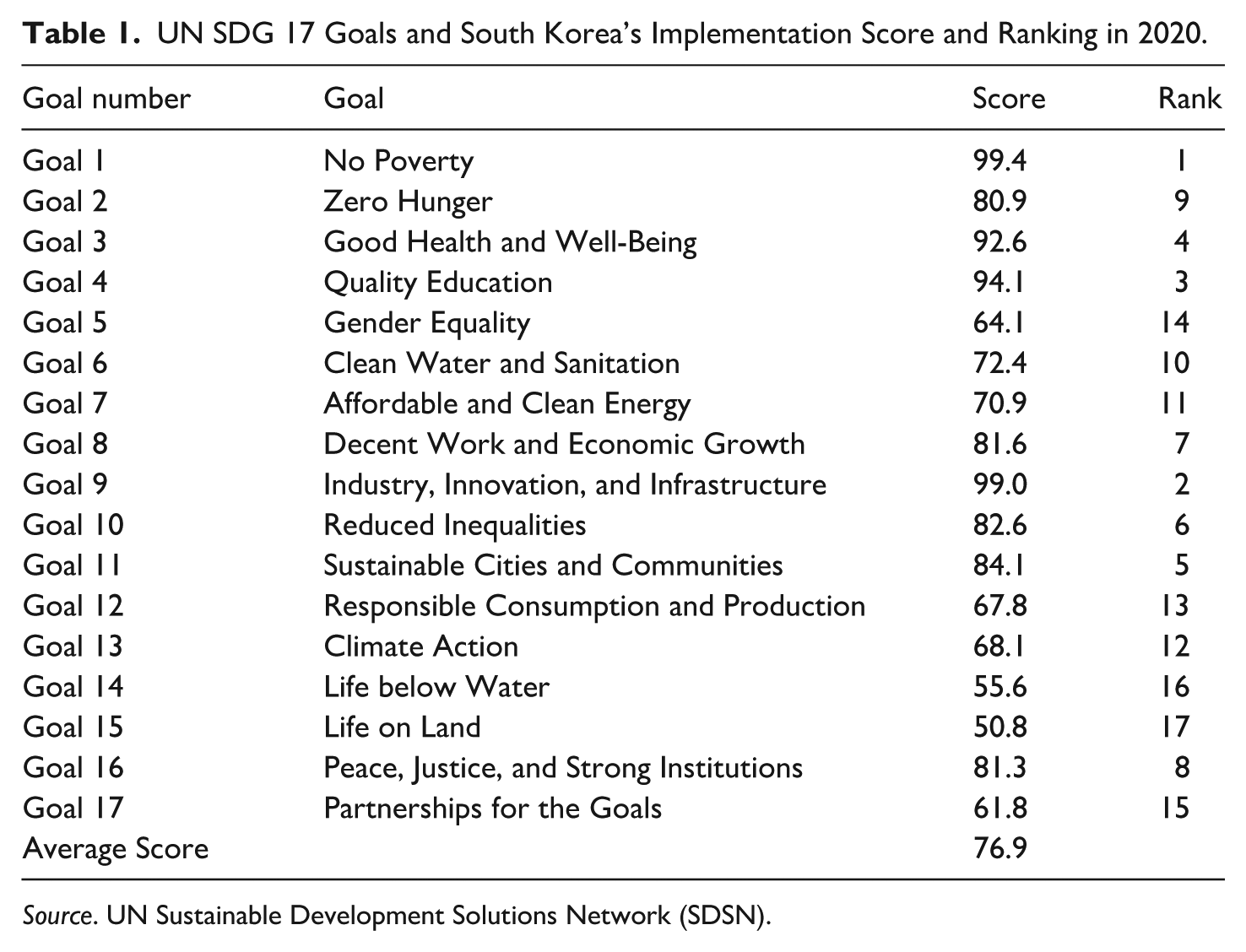
Source. UN Sustainable Development Solutions Network (SDSN).
Of the 2,161 respondents, 136 (6.3%) answered all three correctly; 814 (37.7%) and 865 (40%) answered two and one correctly, respectively; and 346 (16%) answered none correctly, showing the wide distribution of the answers.
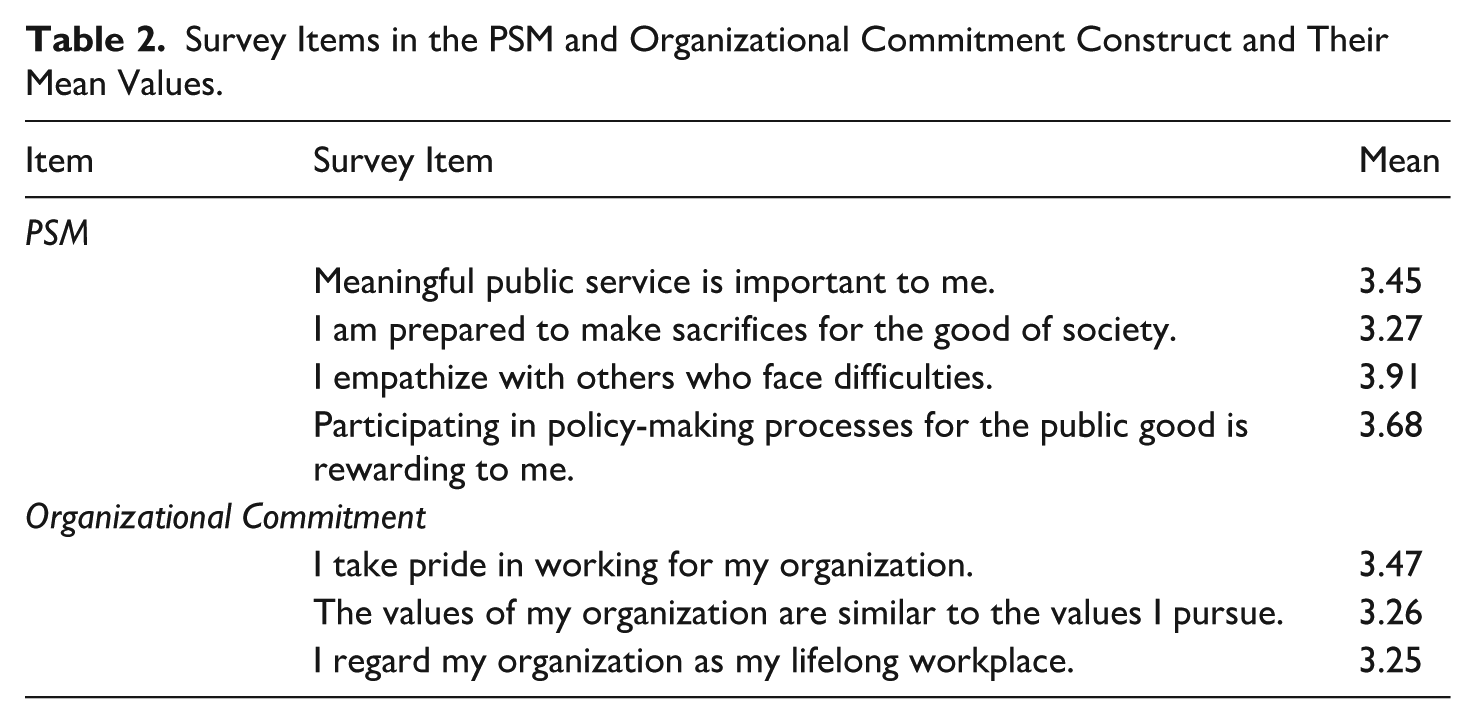
To test the two hypotheses about what impacts civil servants’ awareness of SDGs-implementation performance, we adopt and specify two independent variables. Our first independent variable is PSM. We measure PSM using four items based on established scales (Kim et al., 2013; Lee & Park, 2025; Perry, 1996). While debates about PSM measurement persist (Mikkelsen et al., 2021; Perry & Vandenabeele, 2015), these items are widely accepted. The items were piloted with South Korean civil servants from various demographic and occupational backgrounds, translated and adapted to the local context, and tested for validity and reliability. For our PSM construct, an answer to each item was recorded on a five-point scale, and these scores were added up to create a single measure.
Our second independent variable is Organizational Commitment. We measure Organizational Commitment using three items building on established scales (Ibrada et al., 2022; Pandey & Wright, 2006). Similarly to the items for our PSM construct, we ran a pilot survey with South Korea’s civil servants from various backgrounds and tested for the validity and reliability of the items. For the Organizational Commitment construct, we also recorded an answer to each item on a five-point scale and summed these up to produce a single measure. Table 2 reports the items and mean values for the PSM and Organizational Commitment construct.
Survey Items in the PSM and Organizational Commitment Construct and Their Mean Values.
Regarding our covariates, we control for six demographic and occupational characteristics in all our models. First, for demographic characteristics, we have data on age (in years), gender (1 if female, 0 if male), and level of education (1 if no higher education, 2 if completed a two-year program in community college, 3 if a B.A. as the highest degree, 4 if an M.A. as the highest degree, and 5 if a Ph.D. as the highest degree). Second, for employment characteristics, we have information on recruitment path (0 if open recruitment, 1 if centralized civil service examination), civil service rank (0 if contractors, 1 if grade 9, 2 if grade 8, 3 if grade 7, 4 if grade 6, 5 if grade 5, 6 if grade 4, and 7 if senior civil service), and administrative duty in a job category (0 if technical or others, 1 if administrative). Table 3 describes the characteristics of all variables included in our models. We also present the correlation matrix for these variables in Table 4.
Descriptive Statistics for All Variables.
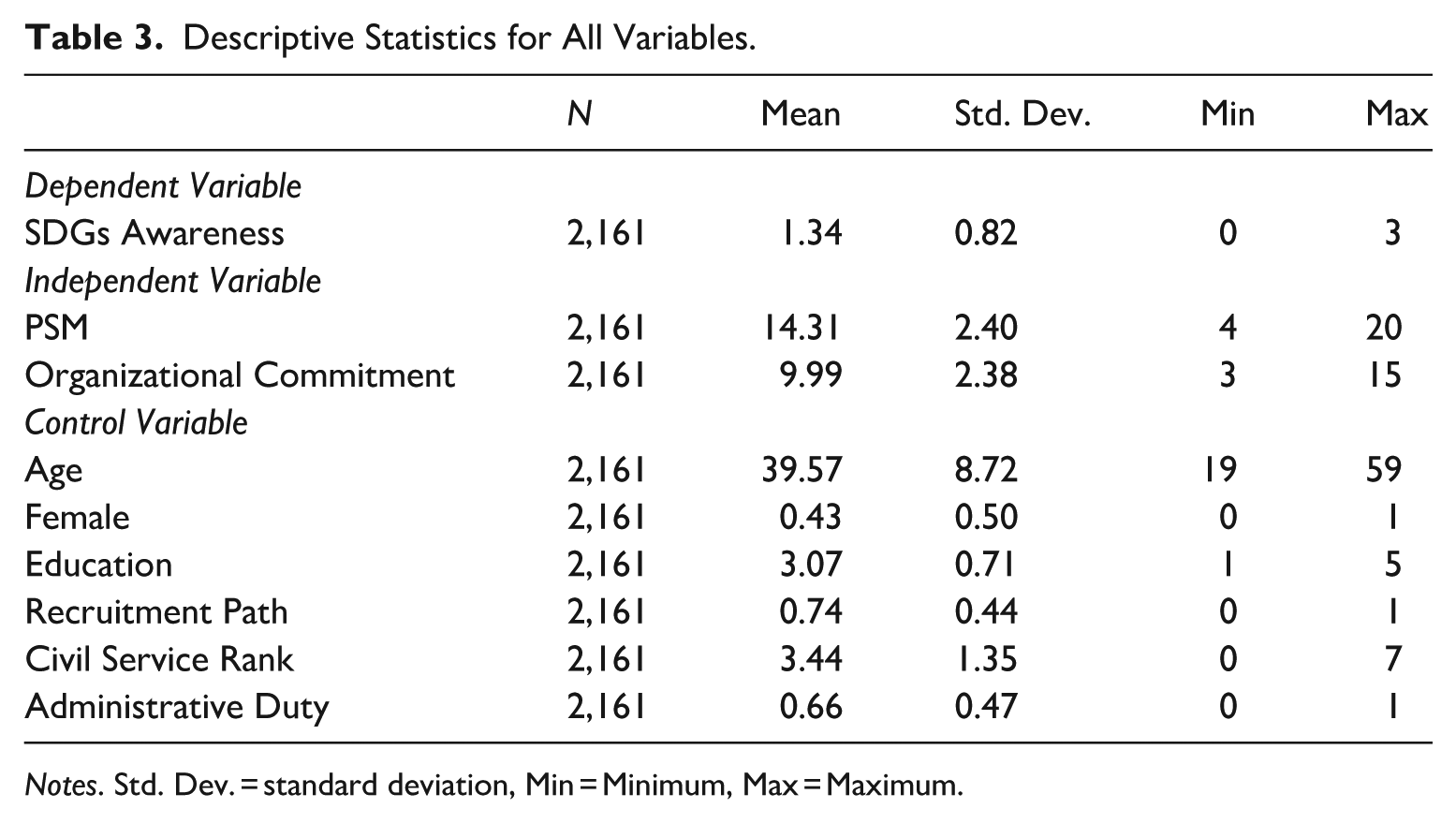
Notes. Std. Dev. = standard deviation, Min = Minimum, Max = Maximum.
Correlation Matrix: Variables in Statistical Models.
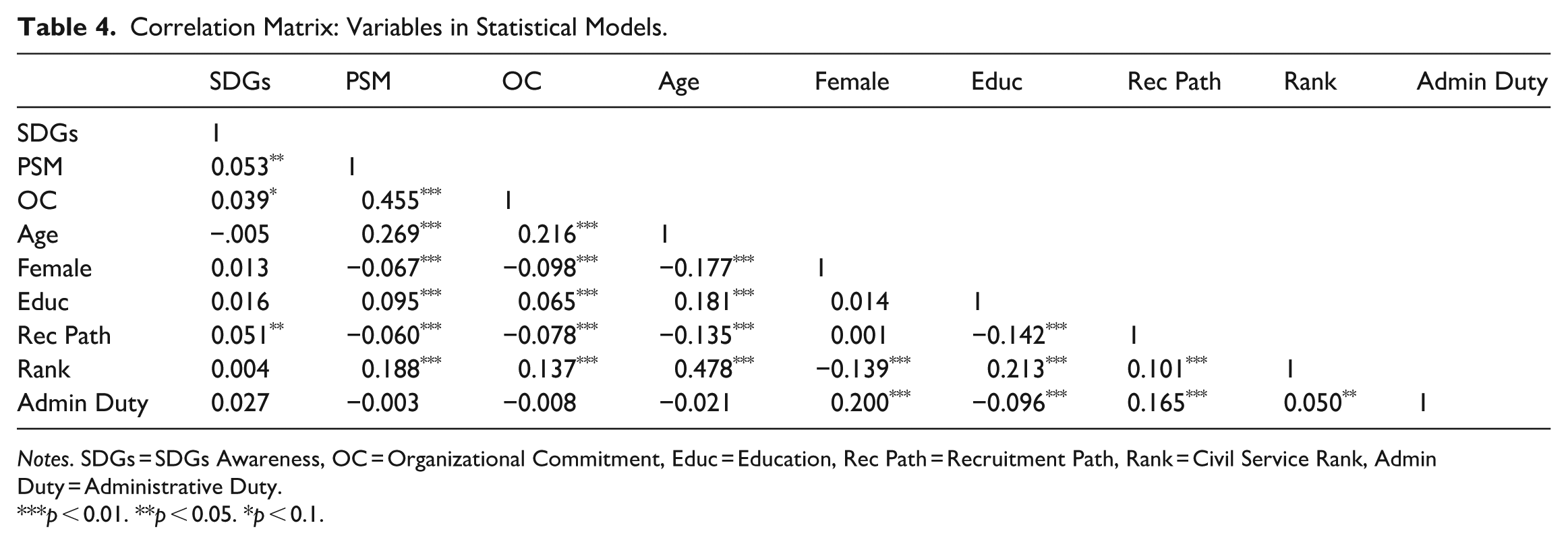
Notes. SDGs = SDGs Awareness, OC = Organizational Commitment, Educ = Education, Rec Path = Recruitment Path, Rank = Civil Service Rank, Admin Duty = Administrative Duty. ***p < 0.01. **p < 0.05. *p < 0.1.
Statistical Modeling and Empirical Results
Methods
To examine whether civil servants’ PSM and their organizational commitment influence their awareness of the government’s performance concerning SDG implementation, we employ multivariate regression models and analyze the original data based on civil servant surveys in South Korea. We conduct this analysis with our measure of SDGs awareness as the dependent variable. Since the variable is based on aggregate scores of correct answers to the SDG question, we use ordinary least squares (OLS) models. Yet, since the variable is measured on an ordinal scale, ranging from 0 to 3, we also employ ordered logit models to validate the results of OLS analysis. In all models, we use robust standard errors clustered on agencies. For robustness, we run a series of additional analyses in Tables 6–8, including agency fixed effects to control for unobserved heterogeneity across organizations.
Civil Servants’ PSM and Their Awareness of SDGs-Implementation Performance
Will civil servants’ PSM indeed shape their awareness of the government’s performance concerning SDG implementation as we predicted? In Table 5, we examine the results of our main analysis regarding the effect of civil servants’ work motivation. In Model 1, where we employ OLS, we find that the coefficient of PSM is positive and statistically significant. In Model 3, where we use ordered logit, we confirm that the coefficient of PSM is positive and statistically significant, indicating that the positive impact of PSM is robust across various model specifications.
Regression Analysis: The Impact of PSM and Organizational Commitment on Civil Servants’ Awareness of SDGs-Implementation Performance.
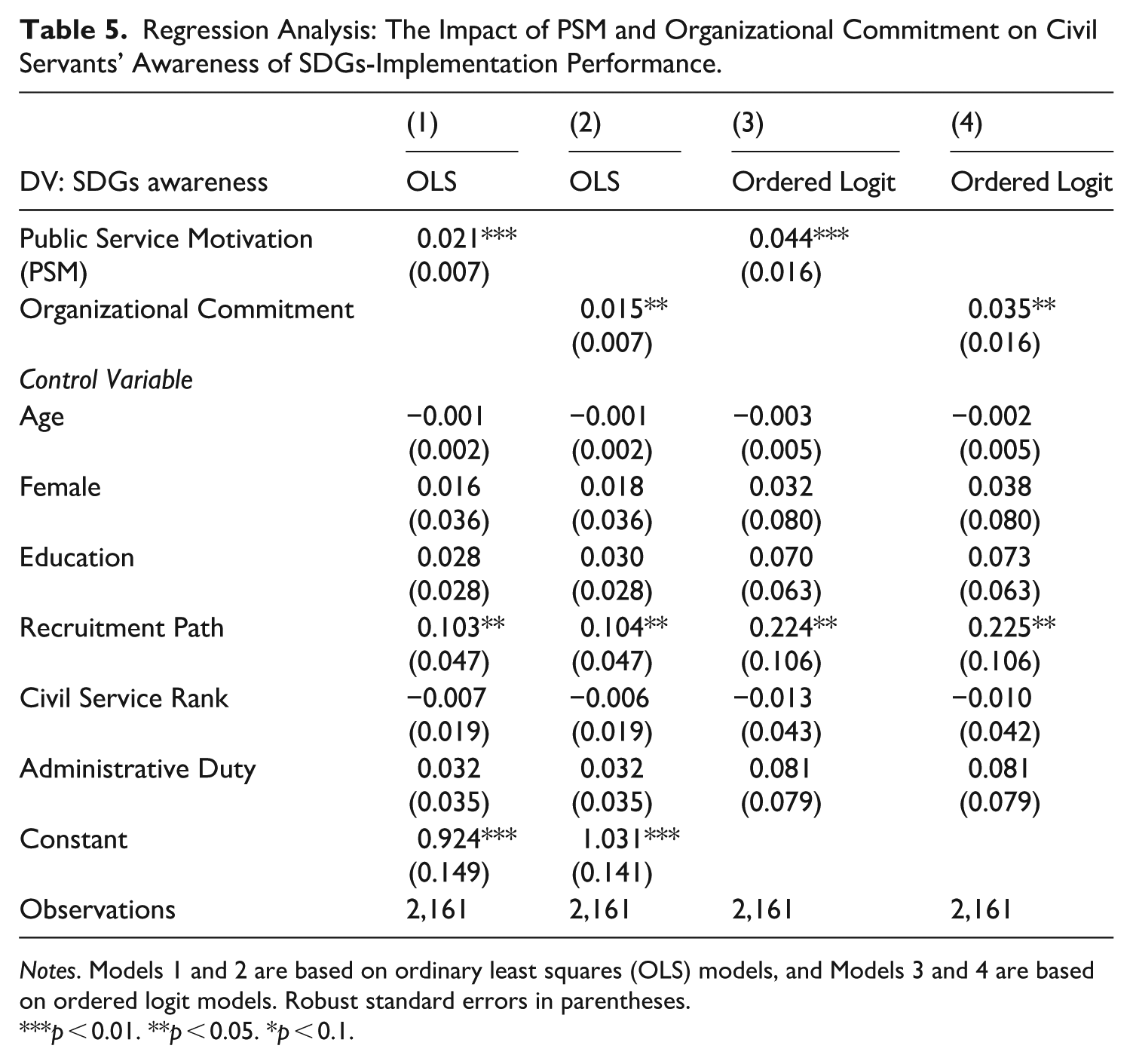
Notes. Models 1 and 2 are based on ordinary least squares (OLS) models, and Models 3 and 4 are based on ordered logit models. Robust standard errors in parentheses.
p < 0.01. **p < 0.05. *p < 0.1.
The substantive effect of PSM is also not meager. Based on the estimation in Model 1, an increase in PSM from its observed median to maximum values leads to 1.43 times greater awareness of SDGs-implementation performance among civil servants. This is graphically displayed on the left panel of Figure 1. This finding is overall in line with Moynihan and Pandey (2010), who find that PSM enhances civil servants’ awareness and use of performance data.
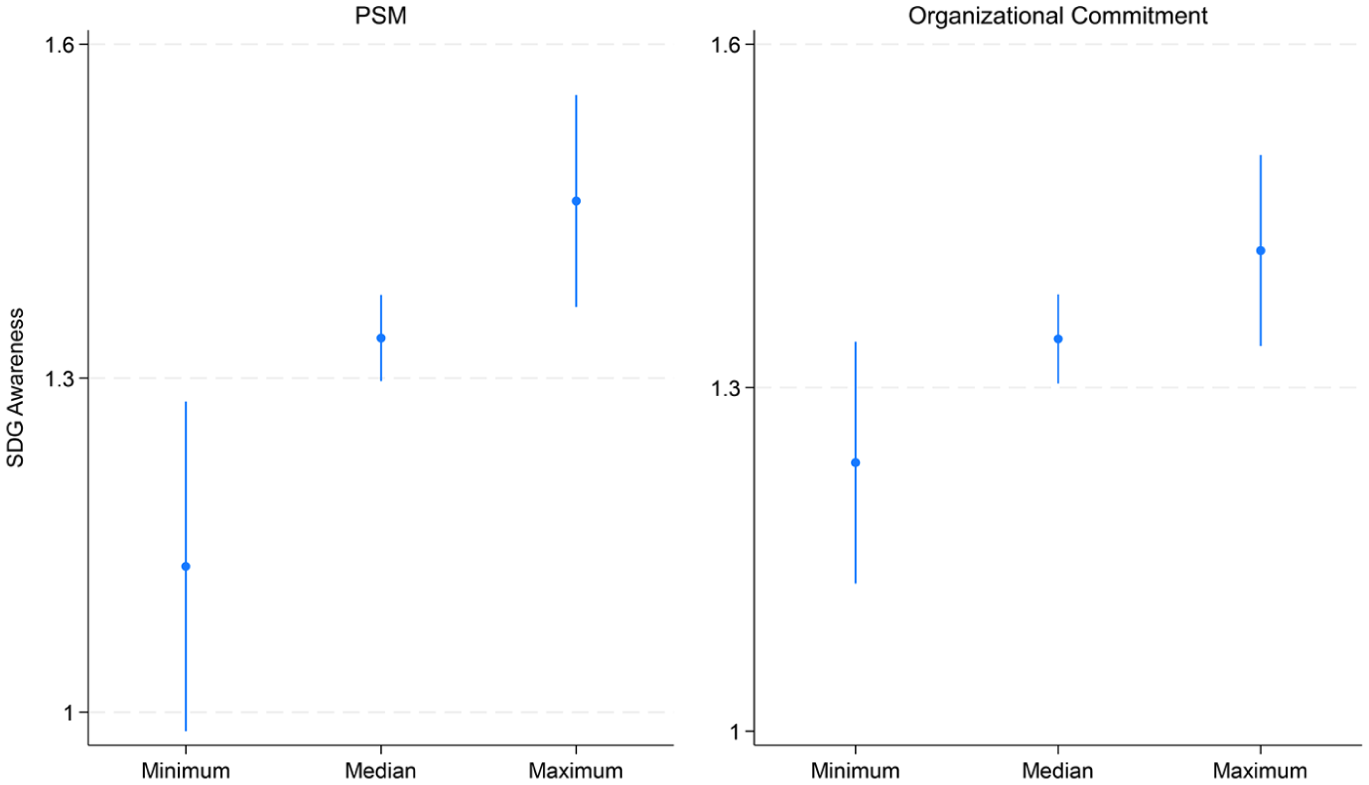
Average marginal effects of PSM and organizational commitment on civil servants’ SDGs awareness.
Civil Servants’ Organizational Commitment and Their Awareness of SDGs-Implementation Performance
How about civil servants’ organizational commitment—will it affect the awareness of SDGs-implementation performance? We report the results of our analysis regarding the effect of civil servants’ organizational commitment in Table 5. To increase the robustness of our results, we use both OLS and ordered logit, in Model 2 and Model 4, respectively. We find that, in both models, the coefficient of Organizational Commitment is positive and statistically significant. This result suggests that the positive effect of Organizational Commitment is consistent across different model specifications.
The substantive effect of Organizational Commitment is also sufficiently large. Based on the estimation in Model 2, an increase in Organizational Commitment from its observed median to maximum values results in 1.5 times greater awareness of SDGs-implementation performance among civil servants. This effect is clearly shown on the right panel of Figure 1.
This finding can be interpreted as the effect of organizational commitment on boosting internal motivation for policy implementation, which in turn results in better outcomes (Ibrada et al., 2022). It also indicates that emotionally committed employees play a key role in translating policy goals into observable outcomes.
Robustness
Given that our dependent variable is measured based on the comparison between performance indicators from the UN SDSN (i.e. South Korea’s SDGs scores) and civil servants’ answers to our survey questions, rather than civil servants’ perception itself, our analysis should be robust to reverse causality. Still, to provide robustness to our results reported in Table 5, we present the results from additional analyses including both independent variables, namely PSM and Organizational Commitment, in the same models in Table 6, as well as including agency fixed effects to account for unobserved heterogeneity across organizations in Table 7. In addition, we control for the electoral cycle in Table 8—measured as how many days left before or passed since the 2022 presidential election—as our survey was conducted around the period of the 2022 presidential election in South Korea.
Regression Analysis Including PSM and Organizational Commitment in the Same Models.
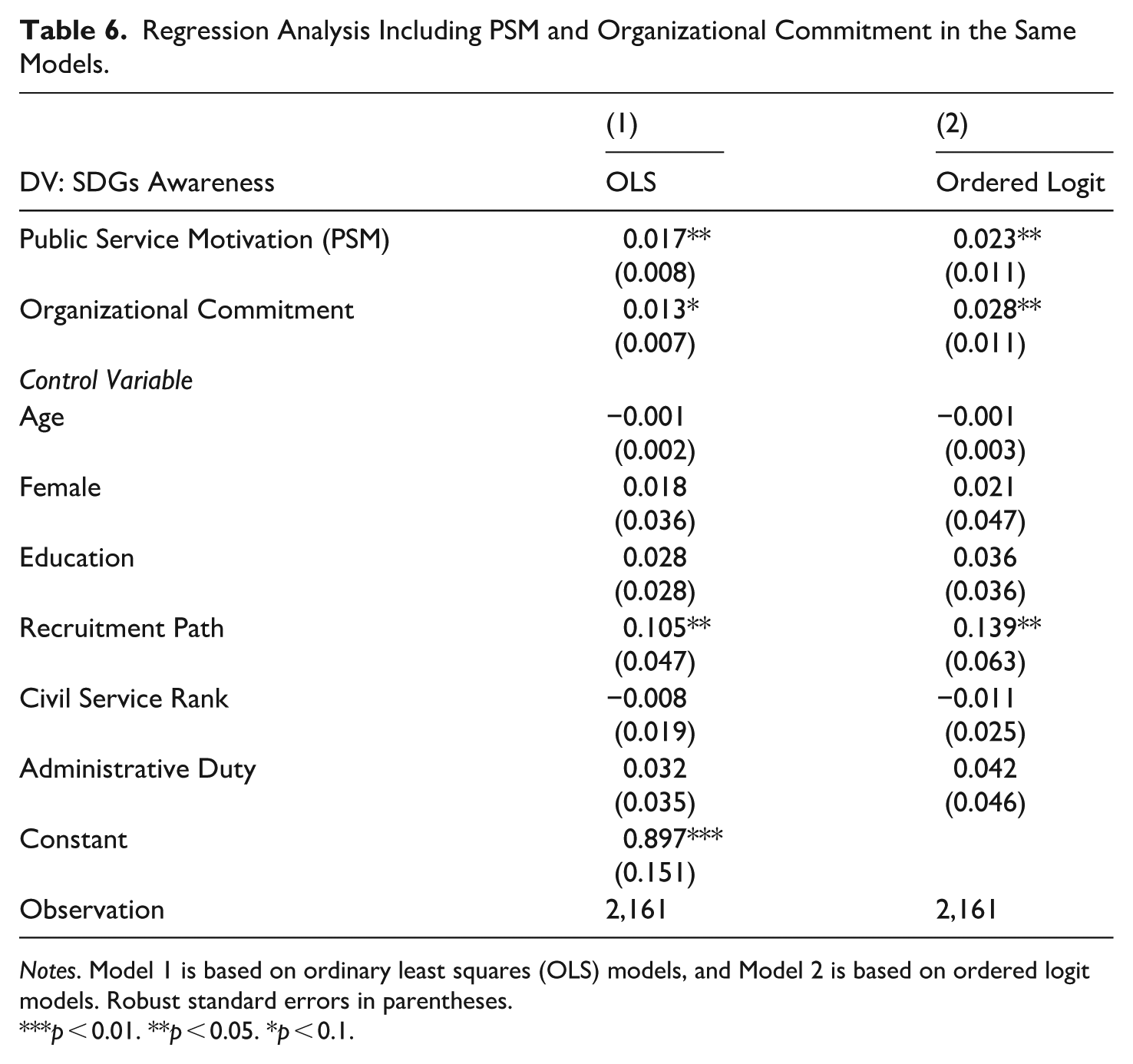
Notes. Model 1 is based on ordinary least squares (OLS) models, and Model 2 is based on ordered logit models. Robust standard errors in parentheses.
p < 0.01. **p < 0.05. *p < 0.1.
Regression Analysis with Agency Fixed Effects.
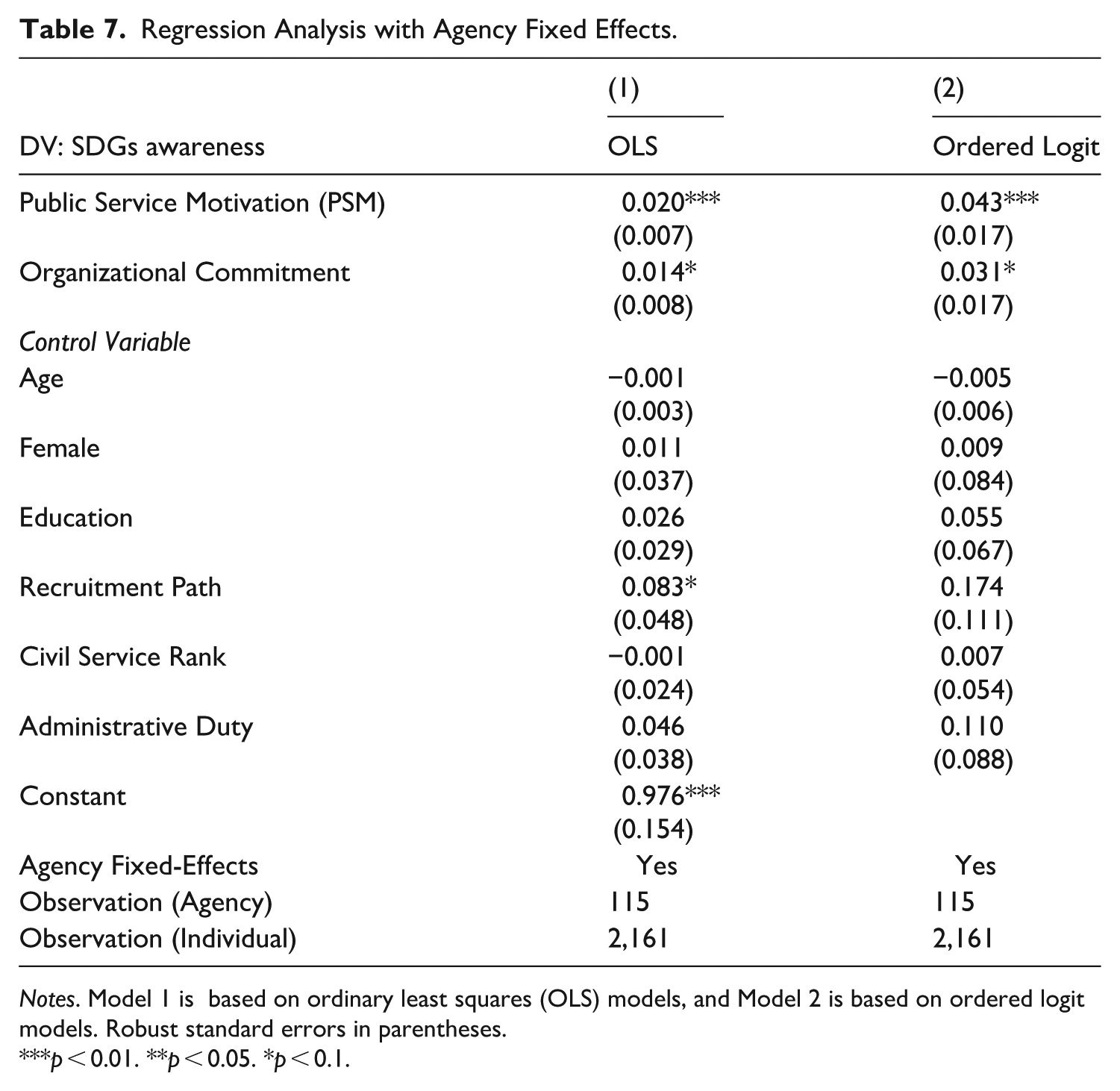
Notes. Model 1 is based on ordinary least squares (OLS) models, and Model 2 is based on ordered logit models. Robust standard errors in parentheses.
p < 0.01. **p < 0.05. *p < 0.1.
Regression Analysis with Control of Electoral Cycle.
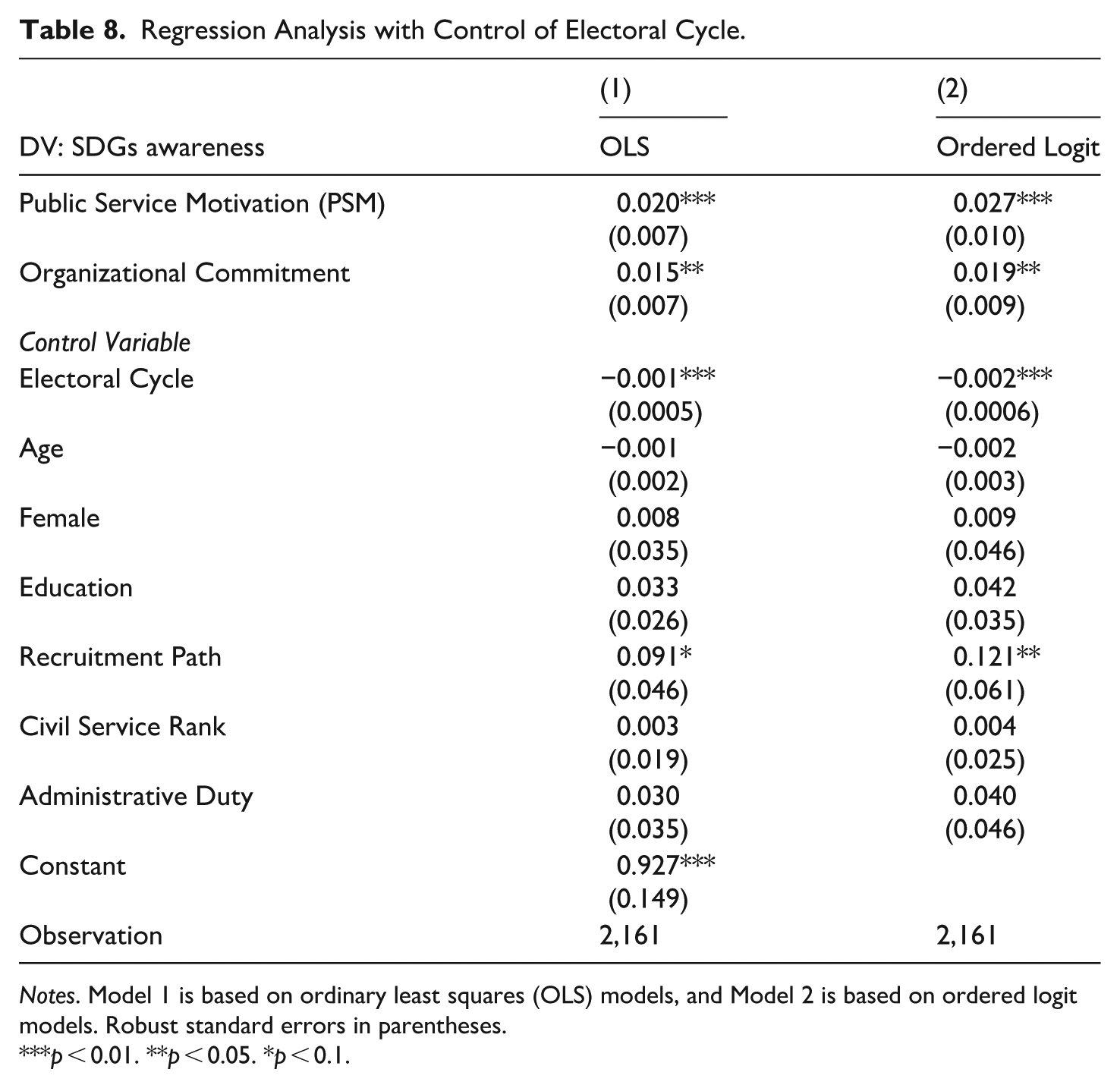
Notes. Model 1 is based on ordinary least squares (OLS) models, and Model 2 is based on ordered logit models. Robust standard errors in parentheses.
p < 0.01. **p < 0.05. *p < 0.1.
First, we address a potential omitted-variable bias by including both independent variables in the same analysis. In Table 6, we find that the coefficients on both independent variables are positive and statistically significant. Second, given that our data were collected from both central and local civil servants, we employ a government organization fixed-effects specification. In Table 7, we find that the results are qualitatively similar to our original analysis in Table 5, indicating that our results are not driven by any particular organization but hold consistently across different agencies. Third, since our survey was conducted around the 2022 presidential election, we account for the effect of election timing, as it may shape civil servant perceptions and information-processing. In Table 8, we find that the coefficients on both independent variables remain positive and statistically significant.
In sum, our robustness checks provide further confidence in our results and suggest that, based on the results from Tables 6 to 8, PSM and organizational commitment indeed have a consistently positive effect on civil servants’ awareness of government performance regarding SDG implementation.
In the appendix, to test whether organizational contexts, such as a sense of authority and culture, condition individual civil servants’ PSM and organizational commitment in impacting the latter’s awareness of SDGs-implementation performance, we create two scores based on answers to a series of questions measuring them and estimate the effect of their interaction with PSM and commitment in Tables A2 and A3. Overall, the results show that the interaction terms are not statistically significant in any model of Tables A2 and A3.
Discussion and Conclusion
This study empirically examined how civil servants’ PSM and organizational commitment affect their awareness of government performance in achieving the SDGs. To this end, survey data from 2,161 South Korean government employees were combined with the UN SDSN’s SDG performance indicators to measure the gap between actual government performance and civil servants’ awareness of such performance. The effects of the two independent variables on this gap were then tested using OLS regression and ordered logit models.
The results show that, first, civil servants with higher PSM tend to perceive SDGs-implementation performance more accurately. This suggests that PSM functions not merely as a prosocial attitude or normative belief but as a cognitive foundation for interpreting government policies and outcomes (Kim, 2012; Perry & Wise, 1990). In other words, civil servants with high PSM are more likely to evaluate policy performance realistically and concretely by linking organizational public goals to their own job responsibilities (Moynihan & Pandey, 2010). When civil servants identify themselves strongly with public service values, they allocate greater cognitive resources to monitoring and understanding policy outcomes that align with those values (Kim et al., 2025; Perry et al., 2010), directing their attention toward performance information that aligns with their public service values rather than narrow, agency-specific metrics (Moynihan & Pandey, 2010). In particular, since the three dimensions of PSM—namely commitment to public values, attraction to public service, and compassion and self-sacrifice—clearly capture the practical aspects of implementing public services, 7 this strong and positive relationship between PSM and the perception of SDGs-implementation performance is understandable.
Second, similarly, civil servants with higher organizational commitment also exhibit more accurate awareness of SDGs-implementation performance. This indicates that psychological identification with the organization and shared values enhance the understanding of policy information, allowing employees to internalize organizational goals as their own (Kim & Park, 2020; Meyer & Allen, 1991). Organizational commitment also enhances both emotional dedication and cognitive attention, serving as a key factor in improving the accuracy of SDG performance perception (Andrews et al., 2011). Specifically, when civil servants internalize organizational goals as their own, they are more likely to direct cognitive resources toward performance information that reflects those goals, enabling them to interpret complex, multidimensional indicators such as the SDGs in ways that are aligned with organizational priorities rather than individual task-level concerns (Meyer & Allen, 1991; Moynihan & Pandey, 2010).
While our study focuses on South Korean civil servants (e.g., Lee & Park, 2024; Lee, Schuler, & Park, 2023; Lee, Walter, & Park, 2023), the significance of public servants’ motivation and capacity in actual implementation of the SDGs may go beyond South Korean or Asian contexts. For example, studies of civil service systems in OECD countries emphasize the growing need for bureaucratic competencies in interpreting complex SDG indicators and coordinating policy implementation across sectors (OECD, 2021). Research by UNDP also highlights that in many developing and transitioning countries, progress toward the SDGs depends heavily on the intrinsic motivation and public passion of civil servants, as motivated officials are more likely to feel personally engaged in improving citizens’ well-being and delivering public services effectively (UNDP, 2015).
Our findings have important implications for both scholarship and practice. Academically, they provide empirical evidence that PSM and organizational commitment operate not only as motivational resources for behavioral performance but also as cognitive mechanisms for interpreting and internalizing policy information (Perry et al., 2010). This highlights the significance of perception-based approaches that have often been overlooked in performance management and governance research. In practice, the results suggest that improving SDGs-implementation performance may require attention to civil servants’ intrinsic value orientations and organizational identification, alongside institutional design and resource allocation (Azmat et al., 2025). In this regard, HRM practices—such as value-based recruitment and participatory performance feedback systems—may support employees’ engagement with complex policy information (Conway et al., 2025; Roach et al., 2022; Vinarski-Peretz & Kidron, 2024; Yang et al., 2026). In short, cultivating motivational and organizational alignment among civil servants may complement structural reforms in advancing SDGs implementation.
Nevertheless, our analysis is not without limitations, which can be addressed as future research agenda. First, because our data are based on cross-sectional surveys, the internal validity of our findings is limited, and causal inferences between variables remain tentative (Moynihan, 2008). Future research that employs panel data or experimental approaches can help to identify causal pathways through which changes in motivation and commitment affect perception. Second, since our analysis relies solely on the case of South Korea, the generalizability of our findings requires additional analysis. For instance, comparative studies across countries with diverse institutional and cultural contexts could extend the external validity of the findings. In addition, within the cases, future research incorporating micro-level factors such as organizational communication, leadership, and learning processes could offer a more comprehensive account of public organization employees’ capacity to acknowledge the status of SDGs accomplishment.
Overall, this study makes clear contributions, by demonstrating that in the context of SDGs—a global public goal—civil servants’ perceptions and value orientations play an important role in accurately assessing government performance, alongside institutional factors. Moreover, it restores an actor-centered perspective in sustainability governance and provides a novel understanding of the cognitive and psychological foundations of policy performance.
Supplemental Material
sj-docx-1-rop-10.1177_0734371X261454322 – Supplemental material for Civil Servants’ Awareness of Government Performance on the SDGs: The Role of Public Service Motivation and Organizational Commitment
Supplemental material, sj-docx-1-rop-10.1177_0734371X261454322 for Civil Servants’ Awareness of Government Performance on the SDGs: The Role of Public Service Motivation and Organizational Commitment by Don S. Lee, Mireusae Kim and Soonae Park in Review of Public Personnel Administration
Footnotes

Funding
The authors disclosed receipt of the following financial support for the research, authorship, and/or publication of this article: This study was conducted based on the data from the survey project funded by Graduate School of Public Administration, Seoul National University. This study was also financially supported by Korea University (Grant ID: K2612311).
Declaration of Conflicting Interests
The authors declared no potential conflicts of interest with respect to the research, authorship, and/or publication of this article.
Supplemental Material
Supplemental material for this article is available online.
Notes
Author Biographies
References
Supplementary Material
Please find the following supplemental material available below.
For Open Access articles published under a Creative Commons License, all supplemental material carries the same license as the article it is associated with.
For non-Open Access articles published, all supplemental material carries a non-exclusive license, and permission requests for re-use of supplemental material or any part of supplemental material shall be sent directly to the copyright owner as specified in the copyright notice associated with the article.
