







Abstract
The purpose of this study was to compare the effects of the combination of teacher-led feedback and peer review (TF + PR) and a single TF method on the writing performance of English as a foreign language (EFL) university students within a collaborative online learning system. The students' perceptions of the writing course were also examined. An experimental PR + TF group and a comparison TF group, with a total of 107 undergraduate students majoring in nursing, participated in this study during the fall semester of 2011. The results revealed that the students in the TF + PR group demonstrated greater improvements than those who received only TF in terms of holistic writing skills and the subscales of content, organization, grammar, mechanics, and style. The PR perceptions of the TF + PR group learners and the manner in which they adopted strategies for coping with peer feedback are discussed.
Learning English as a foreign language (EFL) in Taiwan has become a political and economic concern as people increasingly recognize the need to compete within global markets in which trade is predominantly conducted in English. It is generally believed that better English ability fuels upward occupational and social mobility (Lin, 2008). The demand for and supply of English language education in business and school settings, such as higher education, are mounting. Learners and teachers in Taiwan's universities recognize the acquisition of English as an important academic skill. Corresponding to this awareness, many universities in Taiwan employ English proficiency tests as the major tool to evaluate students' formative and productive capacity in English. For example, the General English Proficiency Test (GEPT), a popular local language test that has been widely recognized in Taiwan, has been used extensively, and its results have become the major graduation criteria since 2005 in many nursing universities. However, there is a gap between the expectations of universities as a whole and students' actual English abilities, especially in writing. Among the four skills in the GEPT, participants have the lowest passing rate in writing (49%) as opposed to listening (65%), speaking (78%), and reading (57%) at the beginners' level (GEPT, 2007). Researchers and teachers in Taiwan continue to search for solutions to improve students' writing ability in the areas of teaching and learning.
L2 Writing Instruction
Recent research in second language (L2) writing recommends that instruction should be elaborated by blending textual, cognitive, and social dimensions rather than involving only a simple dichotomy of a process or product approach (Ferris & Hedgcock, 2005; Matsuda, 2003). Scholars claim that course goals and students' level of writing competence may help to determine the combination of dimensions, with grammar and lexis emphasized for novice writers and genre knowledge and critical thinking for advanced ones (Cummings, Erdösy, & Cumming, 2006). Hyland (2007) suggests that teachers should include a range of model exemplars, socially and cognitively oriented activities, and a range of feedback options. Teacher-led instruction and/or collaborative peer interactions can expand learning opportunities for individuals to progress within their “zone of proximal development” (Wette, 2014). Whatever the dimensions to be blended, written corrective feedback (CF) serves an irreplaceable role as the medium between teachers and learners.
Written CF is crucial in the revision process for student writers (Sheen, Wright, & Moldawa, 2009), although the CF literature seems to assume the language teacher as the sole provider of feedback. Research in the field focuses on whether CF works (Truscott, 2004, 2007), which types of CF are most effective (Bitchener, Young, & Cameron, 2005; Ellis, Sheen, Murakami, & Takashima, 2008), which factors influence the effectiveness of CF (Sheen, 2010b), and the methodology of investigating written CF (Guénette, 2007). However, compared with the growing body of research on the written feedback strategies of teachers, fewer studies investigate the effects of other feedback modes, such as peer-editing sessions (Bitchener et al., 2005). Following the development of the peer review (PR) strategy, many writing teachers are involving EFL students with lower language competence in the revision process to help supply CF (Yang, Badger, & Yu, 2006). The effectiveness of PR on written CF has thus become a subject of debate and requires further exploration.
Peer Review
In the past two decades, PR, which is also known as peer response (PR), has been discussed in the literature on second-language writing research with diverse results (Lundstrom & Baker, 2009; Min, 2003). PR for writing instruction has emerged as an innovative method that differs from traditional teachers' written CF (Sheen, 2010b) because teachers traditionally play a dominant role in providing feedback and comments during the writing process (Sheen, 2010a). Nevertheless, PR has been increasingly explored in the literature (Hewett, 2000; Liu & Hansen, 2002), and there is general agreement regarding its benefits for both learners and teachers. A number of studies have concluded that PR is supportive for enhancing learners' writing capabilities and efficacies in terms of cognitive, affective, social, and linguistic perspectives (Connor & Asenavage, 1994). PR is considered as an effective method that is used in universities to improve the academic writing skills of students (Xiao & Lucking, 2008).
Some scholars have cautioned against forming conclusions regarding the effects of PR, given the lack of empirical evidence demonstrating its usefulness. PR activities have also been challenged and criticized (e.g., the quality of student comments may not be sufficient, interpersonal relationships may also affect learner intentions and the provision of honest comments; Lin & Yang, 2011). Other criticisms have challenged the validity of feedback associated with the use of PR in EFL classrooms, in particular, reviewers with lower language proficiency (Covill, 2010; Guenette, 2007; Min, 2003). Based on these criticisms, recent studies have suggested the importance of peer reviewer training sessions before learners can participate in PR (Min, 2005, 2006).
Despite the diverse results of PR, it provides an alternative and supplementary mechanism for a large English writing class. Teaching writing in a large class is always difficult for teachers, especially in terms of providing feedback and comments for students. The PR technique could be a solution to this problem.
Online PR
With the advent of Internet technology (IT), an increasing number of studies report that PR can be facilitated by electronic communication (Breuch, 2004; Liu & Hansen, 2002). This movement from traditional classrooms to virtual spaces appears to benefit the development of PR (Thurston, Duran, Cunningham, Blanch, & Topping, 2009). Researchers claim that these online courses not only maintain the benefits of traditional face-to-face PR but also provide the additional benefits that are associated with IT, including assisting students at any time in any location and with records of all comments and ideas exchanged (Honeycutt, 2001).
Teacher's CF
Teacher-led feedback (TF) is critical in the revision process for student writers (Sheen et al., 2009), although there is disagreement regarding how teachers should adopt which strategy (e.g., whether peers or teachers should provide feedback, responses to linguistic errors vs. content errors, the use or nonuse of code correction systems). Despite these disagreements regarding the appropriate approaches, researchers tend to agree that the strategy and influence of TF are context specific. However, this context-specific claim does not provide sufficient empirical evidence to suggest how and why language teachers should adopt a certain stance. Among these issues, PR versus TF represents a debate between innovative versus traditional modes that are often used in language classes and are worthy of comparison. Thus, the use of these types of feedback is a focus of this study.
PR Versus Teacher Feedback
The effect of feedback from teachers or peers on the English abilities of students has been a disputable issue as well. In terms of comparisons between PR and TF, some studies have shown that student writers prefer teachers' comments over those of their peers, although several studies suggest that PR is beneficial for the construction of the writing process (Yang et al., 2006). Other research indicates that EFL learners can effectively take advantage of both methods to improve their writing skills, especially in different social and cultural teaching contexts (Miao, Badger, & Zhen, 2006), through the facilitation of online learning environments.
Although research has shown that both PR and TF have positive effects on language learning, there is insufficient understanding of which mode is more effective and how students interact in and perceive these formats, particularly as mediated by IT. Given the value of IT and TF for writing, it is interesting to examine the effects of two e-feedback interventions (TF vs. TF + PR) on the writing performance of students in large classes. Because the first researcher was a college language instructor, the experimental comparisons of the two feedback interventions were implemented in the researcher's regular large class. This study contributes to the understanding of the effectiveness of PR activity for EFL teaching and learning.
Research Question
To answer our research questions regarding whether PR + TF is more effective than the traditional TF method, we conducted a quasi-experimental case study to compare the effects of the two online writing activities among the researchers' own classes. Student experiences and perceptions of the two different feedback modes in terms of group writing and teacher feedback were explored. We also examined the perceptions of PR + TF group learners with regard to PR versus TF activities and the manner in which they adopted strategies for coping with peer feedback. The three specific research objectives are as follows:
Which e-feedback intervention mode (experimental group of PR + TF vs. control group of TF) more strongly benefits the online writing performance of students? What are the experimental PR + TF students' perceptions of the PR activities? What are the differences between the two groups of students' perceptions of the TF activities?
Methods
Participants
Two classes, containing a total of 107 freshmen (aged 20–23 years) from a 2-year vocational college of nursing in southern Taiwan, participated in this study. The two classes were randomly selected from the university and were randomly assigned to a comparison (n = 53) and an experimental group (n = 54). Learners were randomly assigned into 14 groups, each consisting of three or four members. Most of the students had never learned English writing skills, so they could be considered novice writers, and their English proficiency levels could be categorized as lower than A2 (Common European Framework of Reference for Languages [CEFR]).
The language teacher (the first author), who had taught English in this context for more than 8 years, specialized in teaching writing and was primarily responsible for assisting learners in passing the GEPT at the fundamental level. He taught the two groups simultaneously and devoted careful attention to the consistency of the instructional approach to minimize bias in favor of either group during the interventions.
Research Design
Research Design of Study.
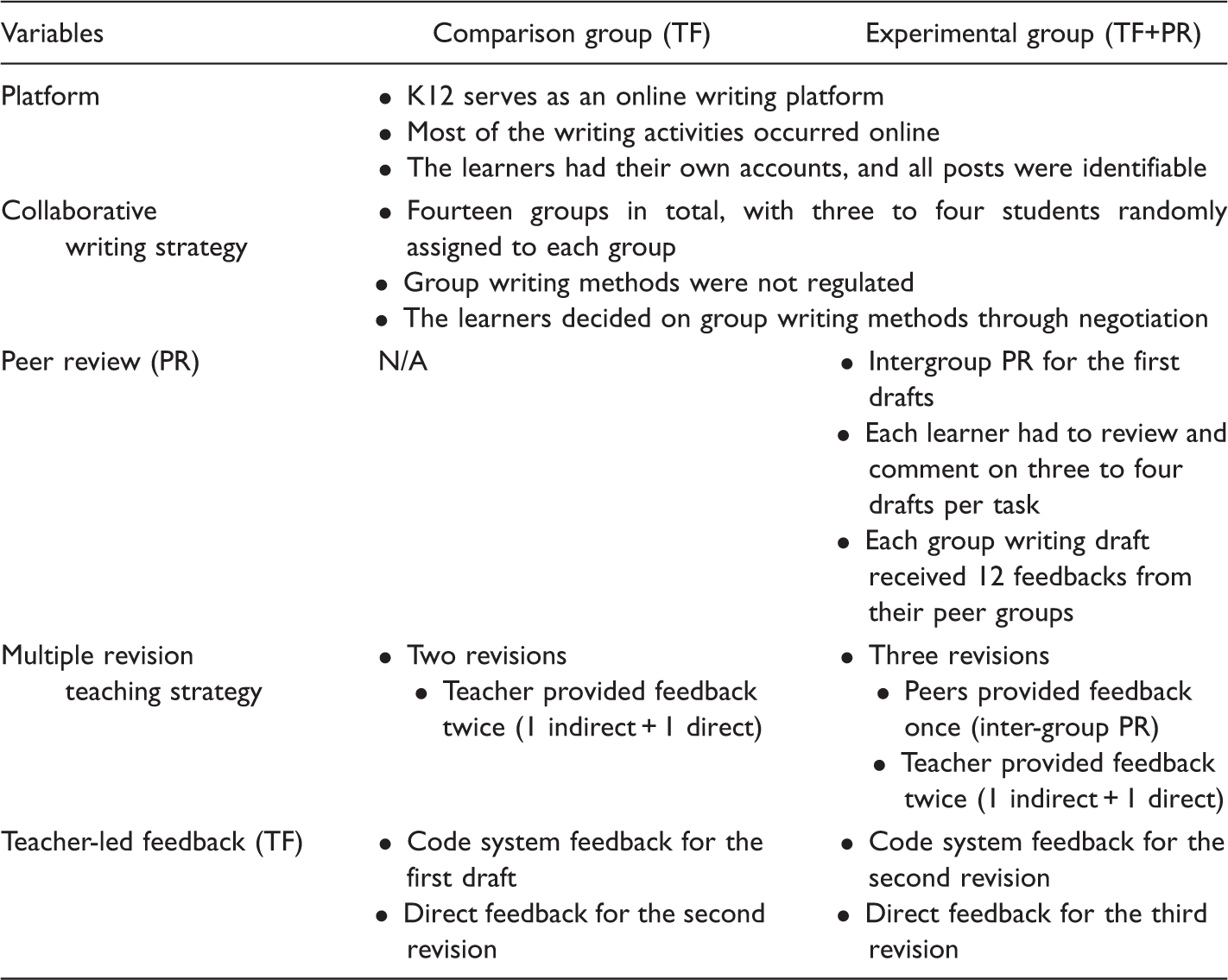
All of the students learned the same content about general linguistic knowledge, including all four skills. The GEPT writing training sessions involved only 2 hr in the classrooms based on a textbook. The key themes in the writing textbook materials were the fundamental skills and concepts of English writing, guided writing by viewing one or more pictures with stories, incorporating simple sentence structure and accurately employing linguistic knowledge and proper variance when applying discourse markers and grammar rules. Due to time constraints, the online learning platform was utilized as a complementary teaching and learning resource.
Online Teaching Platform
Most of the writing instruction occurred in an online teaching platform (see Figure 1) outside the formal classrooms. The asynchronous forum of the K–12 Digital School (http://cu.edu.tw) was the platform in which the participants engaged in collaborative writing. This forum is a learning management system and its primary functions are divided into three sections: learning interaction, evaluation and information, and individual and campus square. The learning interaction section, which comprised an intact management system for learning, includes course/syllabus announcements, the course login, course teaching and learning materials, online individual or group writing, and TF or PR feedback. All communication, student writing, and PR/TF contributions were saved and tracked for analysis at the end of the semester.
The writing teaching platform—K12.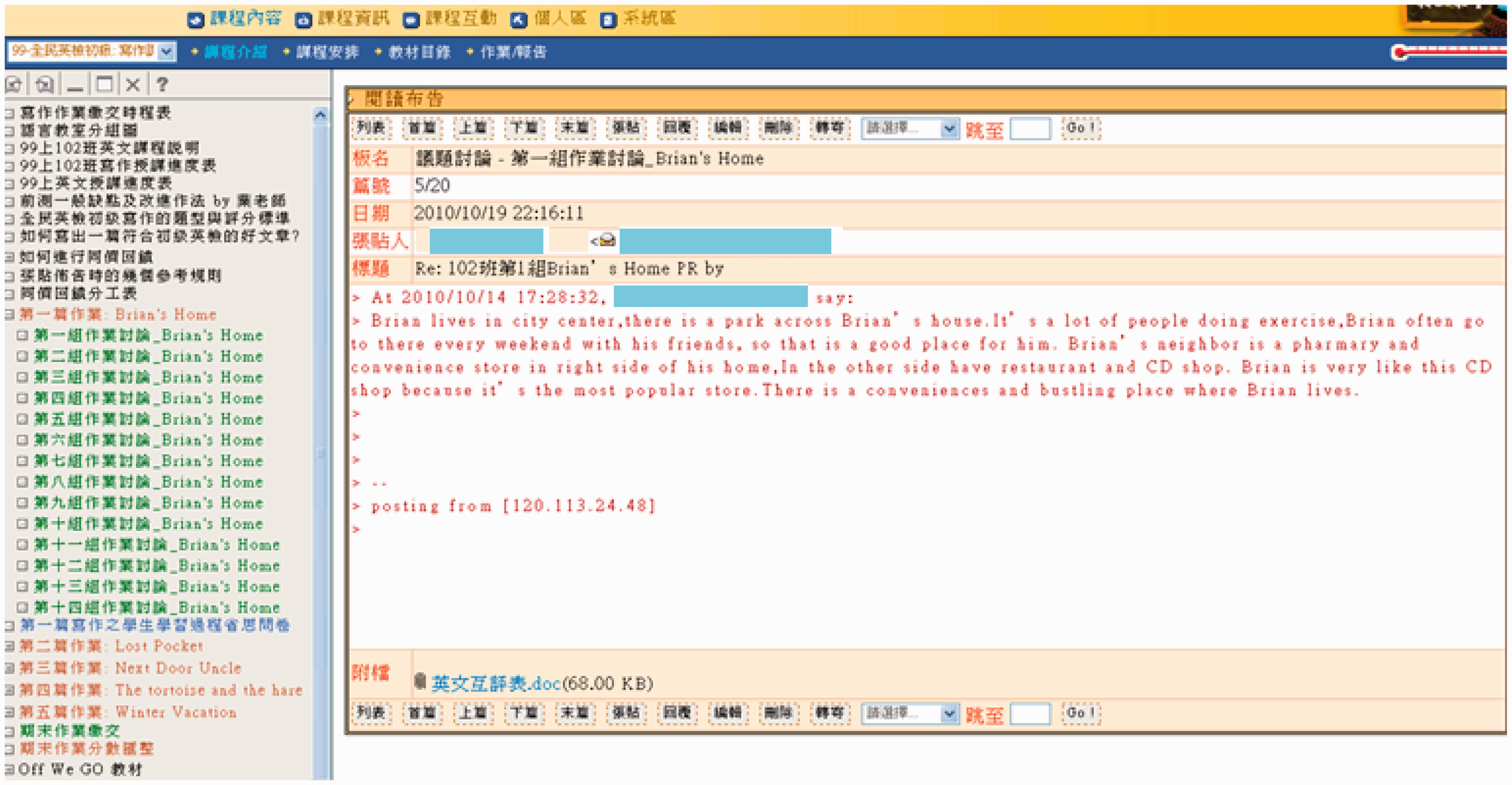
Collaborative Writing
The strategies of collaborative writing (Elola, 2010), process approaches, and multiple revisions (Hyland, 2003) were adopted for this writing course. Learners were randomly assigned into groups and were encouraged to collaborate with their peers instead of writing independently when drafting and revising compositions. They were advised to keep records in written form on the platform as much as possible. There was no individual writing practice during the training sessions. Because collaborative writing differs from the traditional individual mode, participants' perceptions regarding this strategy were investigated.
Multiple Revisions
Student writers were required to write at least three versions, initial, second revision, and final revision, before submission for evaluation. All of them received indirect feedback (Sheen, 2007) from the teacher before completing the second revisions, and then they received direct feedback from the teacher to prepare their final work for evaluation. The experimental group included an additional PR activity between the first and second revisions, so the students had to submit work at least four times. Because some students needed more help from the teacher, they produced more than this minimum amount of work. The effect of this additional PR activity was explored in this study.
Intergroup PR Activities
The intergroup PR activities required each group member to review the initial writing drafts of neighboring group members and to provide feedback and commentary by completing a PR form. Thus, each group member received 12 PRs from the other three group members and was required to modify his or her compositions after reviewing these comments. To enhance the PR competence of the learners at the beginning of the semester, the teacher provided 4-hr training sessions that consisted of a 2-hr face-to-face lecture and 2 hr of online tutorials involving reading supplemental materials. The PR form integrated five dimensions—content, organization, grammar, mechanics, and style—with a total of 33 items in a checklist format (e.g., topic sentence, concluding sentence, and punctuation). These items were presented as a guideline for the reviewers to check the target composition. Meanings and examples of each item were taught during the training sessions. The reviewers were asked to select either “yes” or “no” for each item and to provide the rationale for mistakes or inappropriateness that they marked by choosing “no” (see Appendix 1).
Teacher Feedback
The combination of indirect feedback with correction symbols and direct feedback for the learners' drafts was employed as a method of providing CF (Ellis et al., 2008). To encourage the learners to search for answers actively instead of being fed by the teacher's knowledge, the teacher provided indirect feedback by highlighting the learners' mistakes with abbreviations. For instance, spelling errors were marked “S” and “T” for tense errors. This process occurred in the control group during the initial draft revisions and the second drafts for the experimental group. A coding table listing the meaning of each symbol was attached for the learners' reference. The student writers could attempt to revise their work according to these symbols and could seek insight on how to improve their writing. In the later versions, the teacher provided direct feedback that included explicit instructions for any unresolved errors. Through these processes of revisions and reviews, the learners were able to generate quality tasks for evaluation.
Data Collection
Writing assignments
The students completed the same pretest in the beginning of the semester and posttest at the end of the course (see Appendix 2). In addition to the two writing tests, five writing cycles were employed, including two compositions prior to the midterm examinations and three tasks after. Every writing topic had a different focus in terms of genres (e.g., descriptive, narrative, and a casual letter) and grammatical features (e.g., present, past, or future tenses). To ensure the consistency of difficult levels, these seven topics (two tests and five practices) were selected from the mock tests in previous GEPTs.
Criteria for English writing
This study adopted criteria developed by Brown and Bailey (1984), called “The Composition Grading Feedback Sheet.” It consists of five equally weighted criteria: (a) content (the logical development of ideas); (b) organization (introduction, body, and conclusion); (c) grammar; (d) mechanics (punctuation, spelling, and vocabulary use); and (e) style (writing style and quality of expression). One writing task at the beginning and another task at the end of the semester each accounted for 20% of the class grade (thus, each criterion accounted for 4 points). Two senior teachers were invited to rate the compositions of the two classes to achieve high intergrader reliability. The instructor participated in the grading only when the scores for a given composition varied significantly.
Writing course survey
After the completion of the intervention, a survey was administered to both groups (PR + TF vs. TF) to elicit information on their perceptions of and attitudes toward the writing intervention. The subjects were asked about their preferences for group writing versus individual writing, how much they liked or disliked online writing, and the helpfulness or unhelpfulness of the teacher's feedback. In the experimental group, the students' comparisons of the PR + TF and TF activities based on their reasons for liking or disliking PR participation and how they coped with any dislike of PR were examined. The items were rated on a 5-point Likert-type scale ranging from 1 (strongly disagree) to 5 (strongly agree).
Results
Comparison of Writing Performance Between the PR + TF and TF Groups
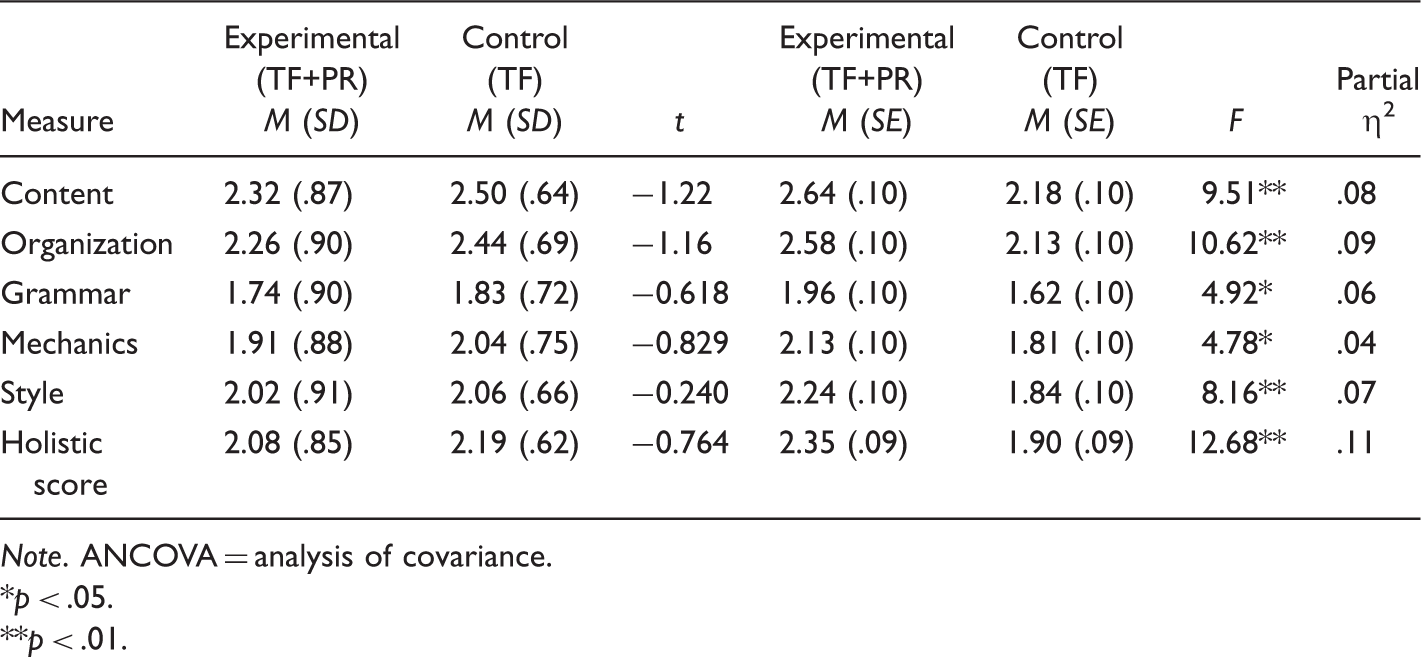
Independent t-Test of Pre-test and ANCOVA Analysis of Writing Performance.
Note. ANCOVA = analysis of covariance.
p < .05.
p < .01.
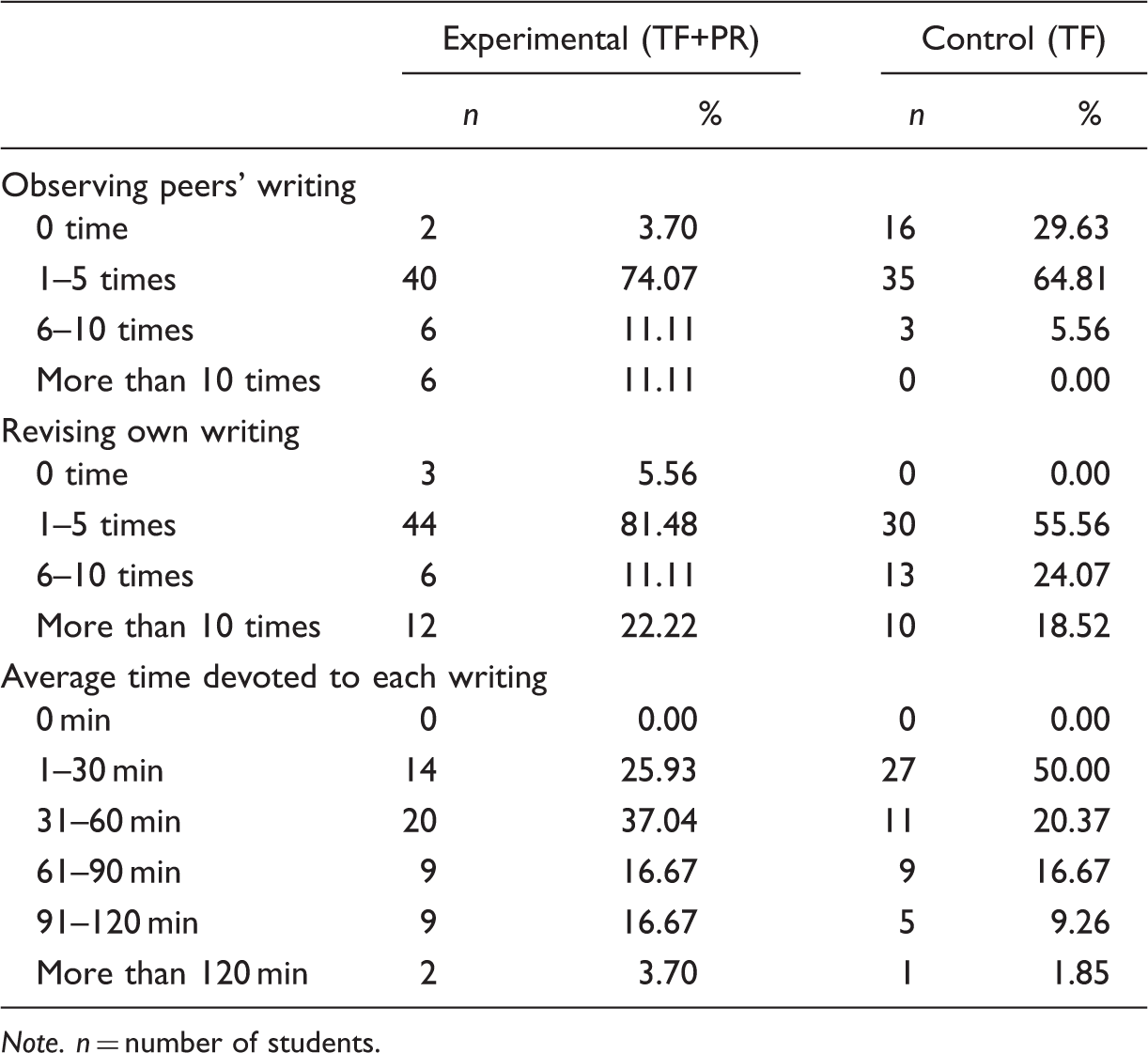
Learners' Perceptions About Their Effort in Writing.
Note. n = number of students.
PR + TF Group's Perceptions of the PR Activities
Reasons for like or dislike of PR activities
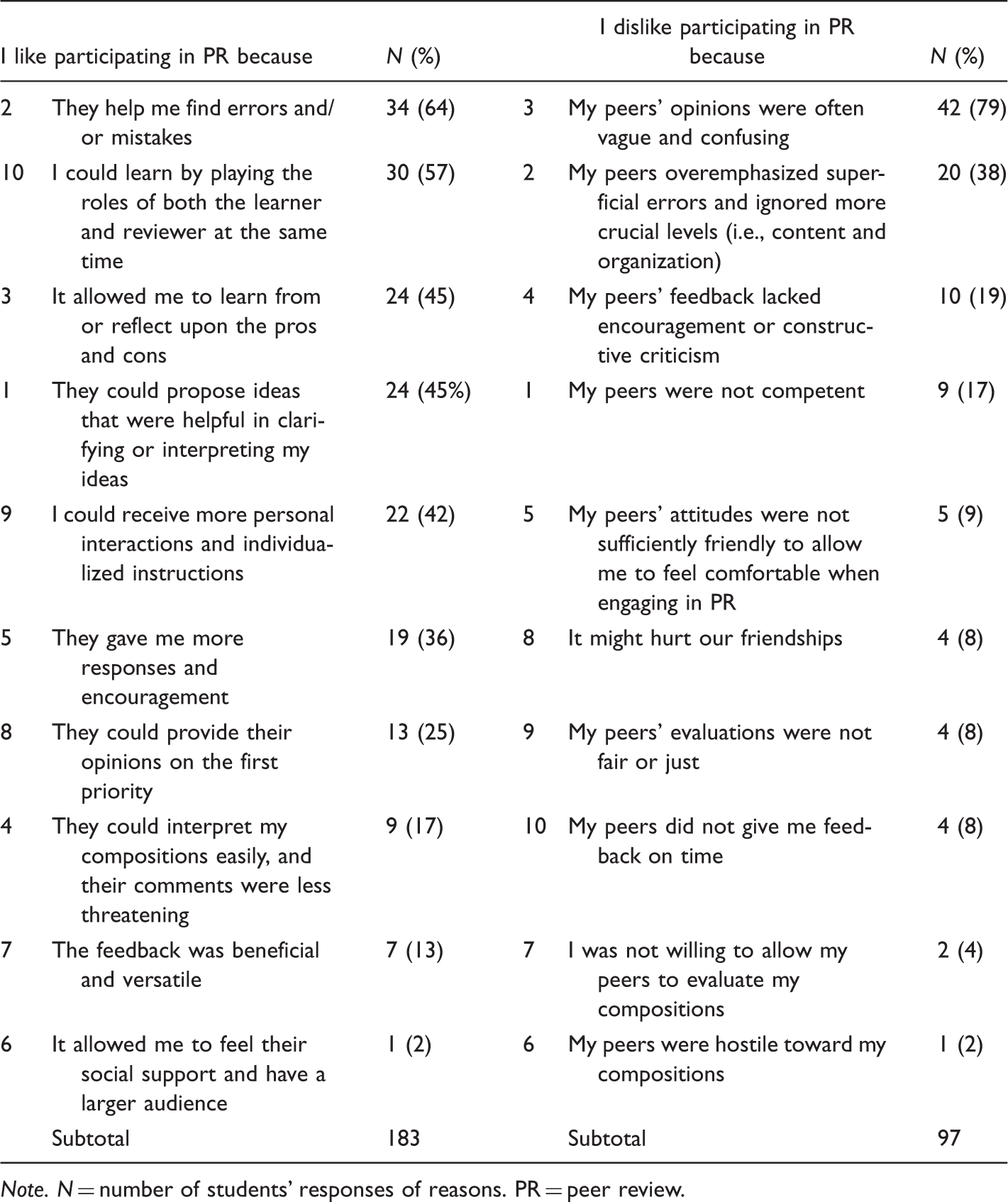
Experimental TF + PR Group Students' Reasons for Their PR Preferences.
Note. N = number of students' responses of reasons. PR = peer review.
However, concerns about PR were reported (n = 97). Among these concerns, vague and confusing PR opinions ranked highest (n = 79%), followed by concerns about PR for superficial errors rather than more crucial levels (n = 38%). Some sporadic complaints were also extracted (e.g., untimely feedback and unreliable peer competence).
Adoption of strategies for coping with peer feedback
Regarding the PR + TF students' uses of strategies for coping with PR comments, the study found that when they disagreed with peers' comments, a number of students initially either asked for more opinions from other peers (n = 28) or accepted their peers' opinions after holding further discussions with them (n = 16). Several learners maintained their own opinions (n = 5), whereas one learner remarked that she would persuade her peers to accept her opinions. In terms of their second priorities, 14 learners reported that they accepted their peers' opinions after further discussion, whereas other learners sought the opinion of their teacher (n = 5), sought opinions from other peers (n = 4), or persuaded their peers to accept their opinions (n = 3).
In sum, the majority of the learners applied two strategies for coping with PR: (a) seeking opinions from other peers (n = 34, 64%) and (b) accepting their peers' opinions after further discussion (n = 33, 62%). These learners apparently preferred negotiating and communicating with their peers when encountering arguments or disagreements, and this attitude was helpful for the cultivation of social interactions and interpersonal relationship development. Only a small proportion of the students consulted their teacher for assistance (n = 8, 15%).
Experimental group perceptions of PR implementation
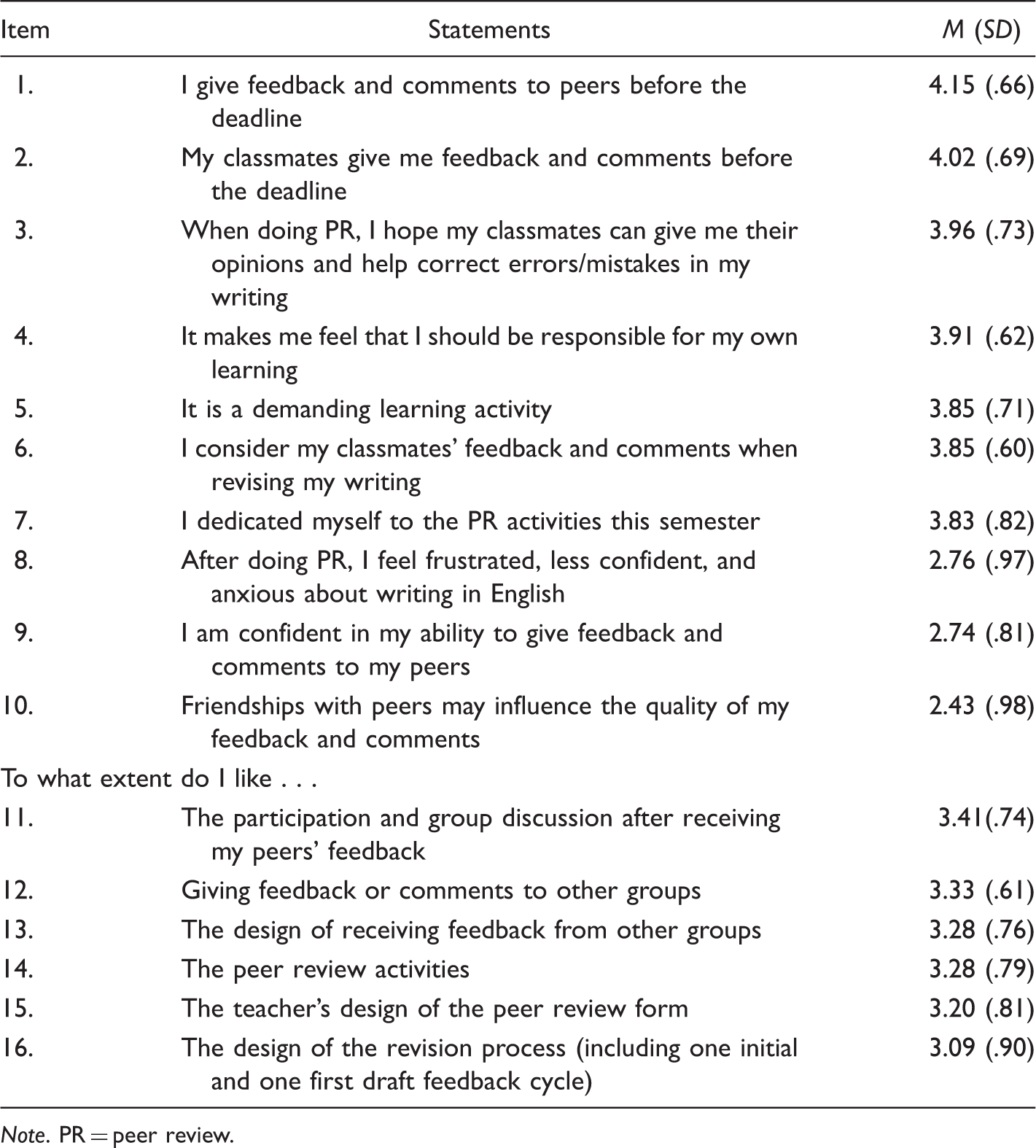
Experimental TF + PR Group Students' Perceptions of PR.
Note. PR = peer review.
Comparisons of the Perceptions of TF Between the Two Groups
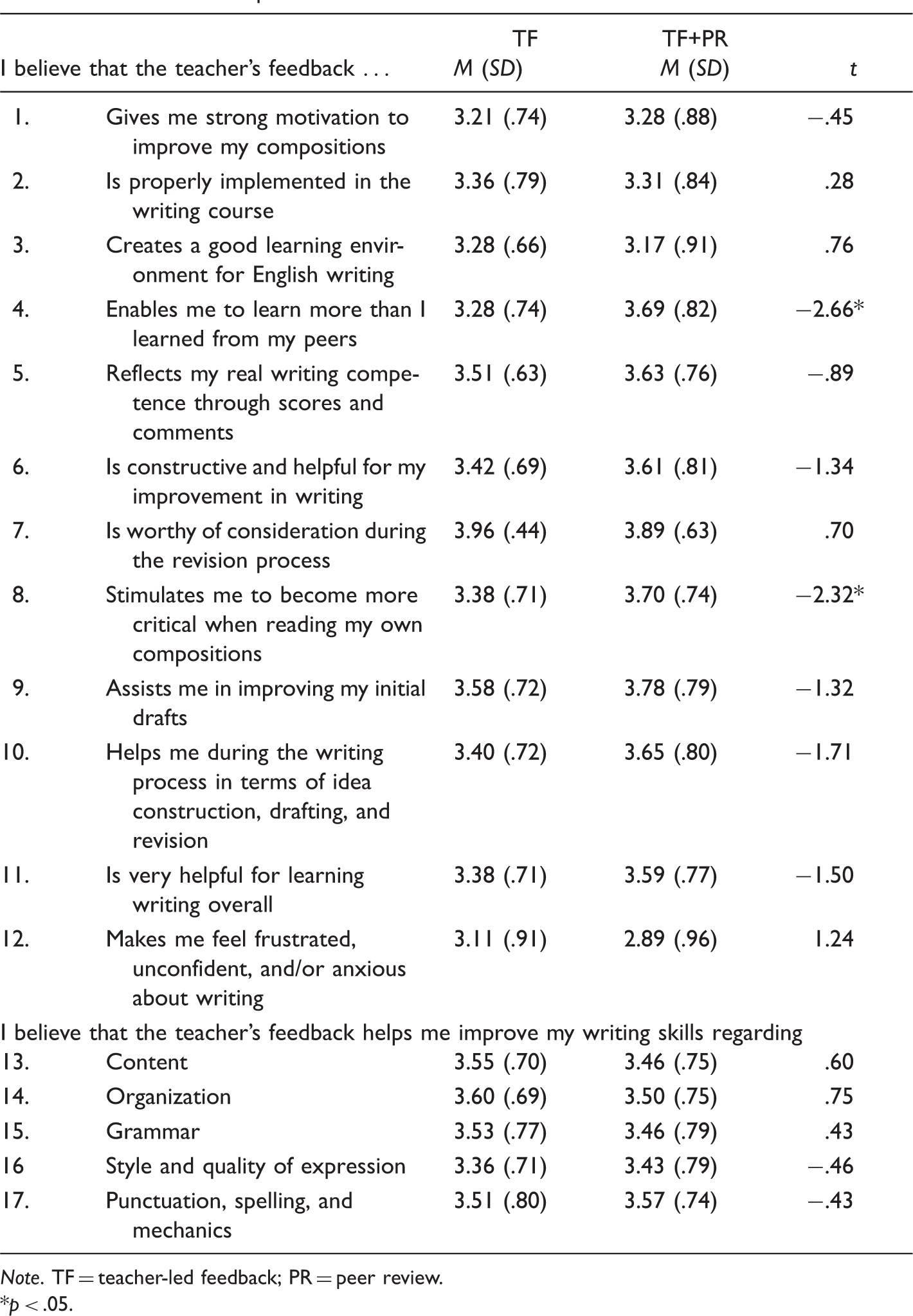
Students' Perceptions of the Teacher's Feedback.
Note. TF = teacher-led feedback; PR = peer review.
p < .05.
Discussion
PR + TF Group's Better Writing Performance
Consistent with previous studies (Xiao & Lucking, 2008), this study found that the implementation of PR + TF can effectively enhance learners' writing competence in every measured dimension compared with the traditional TF method. An implication of this effect may involve the learning efforts produced by the additional PR activities. These participants perceived PR as an activity to which they devoted a significant amount of energy, which may indicate how PR contributed to their enhanced performance. These learners also viewed PR as a demanding task, although it was reportedly helpful for their learning and their revisions in using comments from their peers. This finding is supported by previous literature exploring the value of PR from learners' perspectives (Covill, 2010; Yang, 2011).
This study found that the extra PR of the experimental group had at least four benefits: to develop their writing competence cognitively, affectively, socially, and linguistically (Connor & Asenavage, 1994). In terms of cognitive development, the learners had to devote more time to feedback for their peers and then reflect on their own work. The way their peers constructed content, expressed ideas, organized paragraphs, sequenced sentences or words, and chose the vocabulary and grammar could provide either a positive model to imitate or a negative example to avoid (Liu & Hansen, 2002). In terms of affective development, interactions with peers can further enhance mutual understanding. PR allows students to feel supported and motivated (Ho & Savignon, 2007), nurtures positive attitudes toward writing (Min, 2005), and helps to reduce anxiety.
Moreover, interactions with their intergroup peers may increase students' social awareness. When they encounter difficulties in commenting on their peer groups' drafts, students can probe by either reasonably guessing based on their similar learning background or directly asking their peers. The confirmation process enables students to realize their roles as both readers and writers (Wu, 2006). Linguistically, the PR form-filling tasks repetitively reinforce the students' familiarity with the criteria that are essential for the establishment of a composition. The feedback duty encourages them to search for linguistic knowledge to indicate their peers' errors or mistakes, although the effects are not obvious due to their lower competence in English writing. It is believed that students will improve after ongoing training and guidance.
Perceptions of PR
Like versus dislike of PR
This study found that the experimental group learners cared about PR activities and expected to receive specific and substantial feedback from others. However, most of the learners' incompetence in linguistic knowledge and writing skills impeded their functions as learning facilitators. They might be able to indicate errors from a reader's perspective, but it was difficult to supply comprehensive and persuasive feedback consistently. Feedback from different reviewers could also cause confusion. As a result, learners might appreciate the value of PR for various aspects, such as cognitive development, linguistic awareness, and social interaction. Nonetheless, they still held conservative judgments regarding the quality of PR produced by their peers (see also Yang et al., 2006).
In Taiwan's teaching context, students may attribute more authority to their teachers and perceive them as more competent and qualified than their peers. Lin and Yang (2011) examined the attitudes of Chinese EFL learners toward PR and found that Chinese students tended to be more accepting of TF than of PF when revising their writing. As previously noted, the experimental group's attitudes toward PR were generally positive, although there were concerns and sporadic complaints regarding PR (e.g., vague comments, emphasis on superficial errors, and ignorance of more crucial levels). Whether the reason for learners' preferences for TF over PR primarily results from the possibility of invalid or misleading PR feedback, which may undermine the credibility of PR, or other factors remains to be further substantiated. Indeed, methods of implementing well-established PR training programs that allow peer reviewers to gain the experience of offering higher quality revisions are important, as is the requirement that the process benefit both writers and reviewers. Learners' preferences for feedback from their teachers are understandable; however, further training and coaching for peer reviewers are also crucial to enable students to learn more and become successful writers, audiences, and reviewers (Min, 2005, 2008).
Adoption of strategies when encountering disagreements regarding PR
PR provides a channel to enrich social interactions between participants, specifically when settling arguments regarding feedback and comments. When they encounter disagreements regarding PR, some students commented that they would consult other classmates to obtain additional ideas but would not insist on retaining their existing stance. Their attitudes toward the process tended to lead to resolutions of disagreement via further discussions with their peers rather than requiring mediation from the teacher. The learners appeared to recognize the core values of PR, which requires that they negotiate/compromise with, refer to, and consult a large number of readers to revise their writing (Storch, 2005).
Noticeably, most learners did not perceive that friendships would hinder the PR process when providing feedback and comments to their peers. This finding contradicts some of the existing literature. The instructor promotes the value of PR during the PR training, and most learners recognize its importance and thus do not take critical feedback personally (Min, 2005). However, a few learners did take the feedback personally. This possibility should be carefully addressed in future studies. Moreover, most students did not feel frustrated or anxious after PR, implying that the learners regarded PR as a serious task but were able to perform this task successfully. The designs of the PR activities were modified by the teacher to ensure manageability.
PR implementation
The ideal introduction of PR provides pivotal benefits for students in remedial groups, but successful implementation depends on the language abilities of students and their attitudes toward PR (e.g., willingness of participation). In this study, following several months of collaboration, learners commented that the main contributions of their peers to others' compositions should be the identification of their errors and inappropriateness. However, the failure of their PR partners to offer quality feedback reportedly annoyed them. A critical predicament emerged from the emphases on superficial linguistic forms, an area in which the peer reviewers were also striving to improve. Thus, it was difficult for reviewers to offer valuable instructions containing precise, critical, and professional information, such as that provided by their teacher. Duplicate forms of feedback may provoke social comparisons that encourage learners to attempt to find ways to improve by observing and imitating models while reflecting upon themselves on occasions in which others have not performed as well.
The above findings appear to suggest that PR in second-language writing is an effective strategy for improving the writing of EFL learners and that the process benefitted both the writers and the reviewers (Lundstrom & Baker, 2009). As Lundstrom and Baker (2009) noted, PR provides the dual benefits of teaching and learning simultaneously. In this circumstance, students are active reviewers rather than passive recipients of knowledge. However, the results of this study also support some of the criticisms and concerns of researchers regarding the use of PR, which is typically used to identify weaknesses in linguistic form and surface errors (Guenette, 2007; Min, 2003). Students may offer vague or general comments (Wu, 2006) because of their limited language proficiency or their hesitation to critique the work of other students (Lin & Yang, 2011).
These findings should not be construed as negative but rather as indicative of the students' positive efforts toward learning. Despite their limited linguistic knowledge, intergroup PR, if properly conducted, allows substantial expression and receipt of feedback on manuscripts and has beneficial outcomes. In addition to the direct consequence of linguistic-form knowledge acquisition, a broader perspective on teaching and learning writing can be expected.
Comparisons of TF
In terms of the perceptions of TF, both groups of students believed that the teacher could identify their errors accurately, supply alternative means of expression, and identify weaknesses in content. The preference of TF is also supported by the previous studies such as Yang et al. (2006). These strengths were also the weaknesses that were specifically cited for peer feedback. However, five learners perceived the teacher's feedback as not that useful and reported that the teacher asked them to write content that differed from their original thinking. Thus, the feedback appeared to be confusing and difficult. With their lower linguistic capabilities, these students might be unable to draft a sentence correctly; thus, a short composition would be nearly impossible. Implicit feedback that aims to stimulate autonomous learning may not eradicate the deficiencies of such students. For these learners, additional scaffolding tutorials may be necessary from teachers to guide students to a level of ability necessary to construct accurate sentences.
Because the teacher applied similar effort to both groups, a comparison of TF versus PR indicated that the experimental group learners demonstrated greater awareness of the value of TF and critical reflections of their writing compared with the comparison group. The process approach in this study required the learners to submit multiple revisions for each topic, and their papers were reviewed multiple times by either their peers or teachers. Arguably, this choice of approach could explain why the combination of TF and PR supplied the teacher with opportunities to monitor the learning progress of both the writers and the peer reviewers and thus enabled him to provide more stimulation, criticism, and questions to the student learners. Such opportunities would allow for more criticism because of the additional intervention of PR feedback and the resulting scrutiny of the revisions based on PR (i.e., offering and either accepting or rejecting comments) and comparisons with TF, which can be further supplemented by evidence from other sources or follow-up studies.
Finally, the students believed that the online platform provided many advantages, such as the ability to view the compositions of peer group members, convenience and flexibility (an easily manipulated interface, convenient provision and reception of feedback, immediate access to Internet resources, and recorded revisions), and environmental protection (reduction of paper waste). Several studies have generated similar arguments to support these perceptions (S. S. J. Lin, Liu, & Yuan, 2001; Xiao & Lucking, 2008). For example, Elola (2010) claimed that the online collaborative learning environment may engage learners in content development and provide them with a tool to create, transform, track, and erase their work with built-in accountability. Students of this generation are living in an electronically mediated learning environment and are exposed to the functions and convenience of online technology during the course of English writing acquisition.
Conclusion
This study utilized a quasi-experimental approach to assess the influence of PR as a teaching intervention. The results reveal that the PR + TF group outperformed the TF group on all five subscales of English writing. We argue that in the context of a large class with more than 50 college students, the use of a collaborative online writing platform that integrates both TF and PR contributes to the abilities of students. This study found that most students recognized PR as important but did not believe that it exceeded the significance of their teacher's feedback and comments. Although they initially appeared to lack confidence in their abilities to provide quality peer responses, they still gained valuable learning experiences from this PR activity. Therefore, we suggest that language teachers adopt this combined technique to assist students with their writing skills.
This study also showed that students held varied conceptions of the PR instruction and online collaborative group writing platforms. The inclusion of learners' voices is likely to be a significant contribution to the field. How the feedback in the study was specifically conducted and the practical information regarding the online application of the feedback given to students' written work by the course teacher and peers were also provided. Students bring different perspectives; passive or anti-PR learners, for instance, require careful guidance and support for the pedagogical application of this type of self-directed curriculum. Students must be aware of the beneficial intellectual experiences of PR and understand that collaborative group writing occurs as a result of engagement, negotiation, effort, and interest in the learning process on the behalf of each party. Teachers could promote amicable group dynamics and design PR activities to support learner initiatives to amplify learners' confidence and motivation to participate in PR.
There is legitimate concern regarding the quality of peer reviewers; this quality determines the effectiveness of PR and the quality of revisions (Min, 2005, 2006). The successful implementation of high-quality PR activities cannot be achieved if qualified reviewers and learners do not understand the value of PR. Learning how to offer high-quality PR feedback and think critically about peers' comments requires time and training, which cannot be achieved in a short-time period, particularly for novice and beginning-level writers such as those in this study. Training and scaffolding in receiving and providing PR are essential to the successful implementation of collaborative group PR writing.
Finally, it is noted that one of the limitations of this study may be the contextual factor of the focus of the course instructor. To replicate similar studies based on this research, the instructors' differences, such as teacher efficacy, motivation, experiences, and teaching styles, may contribute to the differences in the results.
Footnotes
Appendix 1. Experimental Group (TF+PR) Peer Review Form.

| No. | Review items | Initial draft |
||
|---|---|---|---|---|
| Yes | No | Suggestions | ||
| Content | ||||
| 1 | Match the story with the pictures? | X | ||
| 2 | Express the content smoothly? | X | ||
| 3 | Describe the story clearly? | X | ||
| Having topical and concluding sentences | ||||
| 4 | Write topical sentence at the beginning? | X | ||
| 5 | Write concluding sentence at the end? | X | ||
| 6 | Write topical sentence properly? | X | ||
| 7 | Write concluding sentence properly? | X | ||
| Using conjunctions and transitional expressions | ||||
| 8 | Use coordinating and/or subordinating conjunctions? | X | ||
| 9 | Use transitional expressions? | X | ||
| 10 | Use coordinating and/or subordinating conjunctions properly? | X | ||
| 11 | Use transitional expressions properly? | X | ||
| Dictions | ||||
| 12 | Use vocabulary correctly? | X | ||
| 13 | Spell words correctly? | X | ||
| Punctuation and capital words | ||||
| 14 | Use commas correctly? | X | ||
| 15 | Use periods at the end of sentences? | X | ||
| 16 | Avoid using Chinese punctuation? | X | ||
| 17 | Capitalize the first word in a sentence? | X | ||
| 18 | Capitalize the proper nouns and names? | X | ||
| 19 | Avoid using abbreviations? | X | ||
| Grammar and sentence structure | ||||
| 20 | Change verb tense correctly? | X | ||
| 21 | Add “s” to singular verbs? | X | ||
| 22 | Use only one verb in a sentence? | X | ||
| 23 | Avoid adding “s” to plural verbs? | X | ||
| 24 | Add proper articles a/the before nouns? | X | ||
| 25 | Use phrases correctly? | X | ||
| 26 | Use subject in a sentence correctly? | X | ||
| 27 | Use object in a sentence correctly? | X | ||
| 28 | Use pronouns in a sentence correctly? | X | ||
| 29 | Use prepositions correctly? | X | ||
| 30 | Use adverbs correctly? | X | ||
| 31 | Use adjectives correctly? | X | 1. Brian has lived in the community for ten years which is comfortable and convenient. 2. Living in the community is more comfortable and convenient, so Brian likes it very much. more (can be deleted) and (adjectives should be used). | |
| 32 | Use auxiliary verbs correctly? | X | ||
| 33 | Use special sentence patterns correctly? | X | ||
| 34 | Any other unlisted errors? | X | ||
| Reasons for appreciating this composition: The content is proper and comprehensive. The writer noticed the grammar and verb tense. Very good.) | ||||
| Comments and suggestions by the teacher or TA: 1. Not only … . but also (is coordinating conjunctions, and the verb forms should be the same before and after it.). 2. Generally, it is not bad, although there are some improvement opportunities. | ||||
Note: 1. Reviewers should try their best to help their peers find errors as much as possible.
2. Please check “Yes” if do not find any mistakes in each item. Check “No” if you find any mistake in each item.
4. Please provide constructive comments as much as possible.
5. Give appropriate overall score according to the GEPT criteria.
6. Remember to tell your peers some good points.
Appendix 2. Sample of Writing Work.
Declaration of Conflicting Interests
The authors declared no potential conflicts of interest with respect to the research, authorship, and/or publication of this article.
Funding
The authors disclosed receipt of the following financial support for the research, authorship, and/or publication of this article: This research was partially supported by the National Science Council of Taiwan, grant number (NSC100-2628-H-110-007-MY3) and “The Aim for the Top University Plan” of the National Sun Yat-sen University and Ministry of Education, Taiwan, R.O.C