







Abstract
The current empirical study examines relationships between network measures and learning performance from a social network analysis perspective. We collected computerized, networking data to analyze how 401 junior high students connected to classroom peers using text- and video-based material on iPads. Following a period of computerized interaction, learning assessments were taken at individual or group consensus levels. Social network analysis suggested highly connected students became information sources with higher individual assessment achievements. Students receiving information from central sources exhibited higher achievements in group consensus treatments. Students acting as bridges between others on the network regulated themselves better and achieved higher academic outcomes. However, a subset of students were motivated by social interaction rather than learning task. This finding, consistent with general social networking research, cautions educators to ensure socializing does not override learning objectives when using classroom social networking.
Keywords
Introduction
Research reveals computerized social networks can be key elements in collaborative technology-supported learning environments (Lockyer & Patterson, 2008). Social networks can enhance learning processes as a channel for knowledge exchange and provide social support for learners (Haythornthwaite, 2002). Knowledge is not static; it is constructed through information exchanges and collaborations between learners in networks (Cohen & Prusak, 2001). Thus, learning through computerized social networks represents a new approach for familiar educational processes (Hemmi, Bayne, & Land, 2009), although concerns about learning in social media networks exist (Friesen & Lowe, 2012; Kirschner & Karpinski, 2010).
For instance, social-constructivist approaches suggest students play active roles in learning, and collaboration can facilitate knowledge construction and discovery learning (McHaney, 2011). Related studies report advantages of increased engagement (Chao & Chen, 2009; Sharples, Taylor, & Vavoula, 2007). Social interaction improves students’ abilities to test ideas, improve problem-solving skills, develop collaboration capabilities, and engage in deeper understanding (Woo & Reeves, 2007).
Although evidence suggests guided instructional approaches provide superior learning experiences, unguided instruction has become popular (Kirschner, Sweller, & Clark, 2006), particularly in digital environments. As Kirschner et al. (2006) suggest, “advantage of guidance begins to recede only when learners have sufficiently high prior knowledge to provide ‘internal’ guidance” (p. 75). This suggests that once established, social networks provide a venue where unguided instruction can flourish. Further, to enable advantages of social networks, pitfalls must be avoided. For instance, merely assuming participants interact because of the environment is not valid. Likewise, group formation must consider psychological dimensions (e.g., cohesion/trust) to ensure interaction effectiveness (McGrath, 1991).
We believe computerized networks can enhance pedagogical approaches to learning because of the potential to add communication and interaction channels. This could move learners closer to effective guided instruction modes (Kirschner et al., 2006). Early studies report discussion, interaction, and reflection during learning processes provide positive outcomes (Chao & Chen, 2009; Sharples et al., 2007). Likewise, computer-mediated, collaborative learning studies reported in Group Decisions Support Systems (GDSS) literature found higher levels of perceived skill development, self-reported learning, exam scores, and classroom evaluations (Alavi, 1994). These studies all suggested effective learning correlates with constant communication among peers (Chao & Chen, 2009; Sharples et al., 2007).
In our current study, we explored social networking in learning environments by measuring connections and information flows between students, their positions, and centrality levels. Central people were expected to be more influential with access to more information and have abilities to express opinions efficiently; we expected these roles to correlate with academic achievement (Childers, 1986; Friedkin, 2015; Venkatraman, 1989).
Early studies did not fully consider richness and uniqueness of social network interactions (Burt, 2000; Walker, Wasserman, & Wellman, 1994). However, recent work explored social networking within education to demonstrate the value of group learning (Cela, Sicilia, & Sanchez, 2015; Gasevic, Zouaq, & Janzen, 2013; Hommes et al., 2012, 2014). We examined classroom networks that organically emerged from interactions. Key indicators for network centrality were measured as a means of defining this interaction. This study was unique because interactions were collected empirically using software as they occurred and without self-report surveys. Data were correlated with assessment outcomes related to student success in various treatments.
Our research question was as follows: Do relationships exist between students’ computerized social network centralities and academic achievement from a social network analysis perspective? We believe the current student generation will use social networking as a primary peer interaction venue. This use has potential to either negatively or positively affect learning (Kirschner & Karpinski, 2010); so ways to improve social network use in education are important.
Background
Digital skills are required in contemporary society. Therefore, schools must use information technology to provide learning experiences (Agostini, Di Biase, & Loregian, 2010; Kirschner & Karpinski, 2010). Prior research has examined social media use in classroom settings. For instance, Twitter has been reported to make a difference in both learning and engagement for school-age learners (Becker & Bishop, 2016; Carpenter & Krutka, 2014; Hunter & Caraway, 2014). Other researchers suggest the disruptive nature of social media ultimately will enhance connectedness and improve education (Nowell, 2014). Yet, pedagogically sound implementations of digital tools pose challenges (Reychav, Ndicu, & Wu, 2016).
Several researchers have confronted these challenges and examined social network impact on learning. For instance, Dewey (2007) argued significant learning requires active student involvement. Teachers should not be the sole knowledge sources in learning processes. Cho, Gay, Davidson, and Ingraffea (2005) found that new social networks created in a collaborative learning community clearly affected learning performance and that central players received higher grades. Further, computerized social networks may contribute to effective learning environments (Lambić, 2016; Manasijević, Živković, Arsić, & Milošević, 2016). Hommes et al. (2014) suggest social networks enable students in large classes to experience intimate and effective learning environments. In another study, Hommes et al. (2012) report social capital, acquired through social networking, was correlated with academic achievement. Other studies report similar findings (Greenhow & Burton, 2011; Raza, Qazi, & Umer, 2016). Peers’ roles as knowledge suppliers support innate characteristics of social networks where knowledge is shared and learners’ senses of control are enhanced (Ellison, Vitak, Gray, & Lampe, 2014; Reynard, 2008). Supporting this, Veletsianos and Navarrete (2012) suggest students enhance peer collaborations to better manage learning strategies. This must, however, consider pitfalls that may impact effectiveness (Kreijns, Kirschner, & Jochems, 2003).
Previous research shows social capital, embodied in interpersonal relations, contributes to career success (Adler & Kwon, 2002; Bozionelos, 2003). Simultaneously, boundaries between pleasure and business uses of social networks have blurred. Online social networking allows real-life relationships mediated by technology; facilitates new connections; reinforces existing connections; and fully uses online social capital (Benson, Morgan, & Filippaios, 2013). It also can reshape interpersonal relationships (Topaloglu, Caldibi, & Oge, 2016).
Social Networks and Graph Theory
Social networks have vertices and edges. Our research uses the term players to represent individuals interacting in these social networks (Borgatti, 2006). Vertices are network players, and edges are connections between vertices (Marin & Wellman, 2011). Graph theory describes how to calculate the importance of specific vertices using network centrality (Knoke & Yang, 2008). This study uses three types of centrality: Betweenness, Closeness, and Degree (In and Out). Betweenness characterizes players as having positional advantage because they are on the shortest pathway between other players. Closeness measures the distance from player to other players on the network. Degree measures a player’s ties to other players and suggests those with more connections exist in advantaged positions. With more ties, players have alternative ways to acquire and exchange information and are less dependent on others. Each measure is important within classroom networks and appears to correlate with academic achievement.
Centrality indicators identify a network’s most important vertices and hence most important players (Newman, 2010). Research demonstrates the shortest network routes are most important. Researchers found the “small world” does not exhibit six degrees of separation but comprises under three (Burt & Merluzzi, 2013; Friedkin, 2015). We examined these network concepts:
Network centrality: individual’s level of involvement in information exchange with peers. A person’s centrality relates to their ability to influence, their involvement in innovations, and their positions toward new technologies (Sykes, Venkatesh, & Johnson, 2014). Thus, people with extroverted, entrepreneurial personalities typically accept the role of network mediators (Burt, Janotta, & Mahoney, 1998), while people with introverted personalities use network centrality to enhance influence (Mehra, Kilduff, & Brass, 2001).
Degree: number of edges connected to a specific vertex. This reflects the total number of connections a player has with others on the network. While more connections are preferable, what really matters is the direction of those connections and their links to vertexes otherwise disconnected from the network. Degree in directed graphs is composed of in and out. In-Degree is the number of connections directed toward a player in the network, while Out-Degree is the number of connections players have going out to others on the network.
Betweenness Centrality: quantifies the number of times a player has served as a bridge in the shortest route between two other players. This is a measure of players’ intermediator roles. Such players do not necessarily have many friends and may be located away from the core but still want to be involved and exercise control over information flows between others (Barthelemy, 2004).
Clustering Coefficient: ratio between number of active connections and number of potential connections in students’ environments (Carrington, Scott, & Wasserman, 2005). Higher clustering coefficients indicate higher student activity levels relative to overall network activity.
Closeness Centrality: focuses on the distance between a selected player and other players on the network. A lower value of closeness centrality means the selected player can control information flow and resources between other players. Players with low closeness centrality are key players (Carrington et al., 2005) connected to more vertices on shortest routes. Thus, they can supervise information flows. Opinion leaders have low closeness centrality.
Social Networks and Performance
Rather than focus on individual student perceptions of interaction, social and cognitive structures involved in technology-supported learning environments can be measured directly. Network characteristics can help researchers learn about collaborative relationships between network players (Palonen & Hakkarainen, 2000). An organizational social network provides advantages such as knowledge assimilation and connections to helpful individuals or disadvantages such as highlighting errors and social pressures (Borgatti & Foster, 2003).
Researchers examined implications of player centrality related to pedagogical performance. For example, Jo, Kang, and Yoon (2014) studied network indicators, influences of players’ communication skills, and centrality on grades in collaborative learning. They found participants’ communication skills played major roles in acquiring trust. This led to sharing knowledge and higher centrality, which in turn affected students’ grades. Lin, Huang, and Chuang (2015) examined centrality in computerized networks used in online learning environments and found an environment that supports social network awareness is highly efficient in enhancing player interaction and assists student learning. Results showed an online collaborative learning group with high centrality and low self-regulation had higher pedagogical achievements. Students with high self-regulation used the network to obtaining required resources (Lin et al., 2015).
Jiang, Fitzhugh, and Warschauer (2014) explored relationships between players’ centrality and performance in two multiple-player networks and found correlation with students’ grades in one. Players in both groups communicated with students from other groups, which suggested multiple-player learning groups facilitated information flow and search among peers. Furthermore, researchers suggested several students dominated discussion forums and found multiple-player networks were used mainly for sharing knowledge and less for social connections (Jiang et al., 2014).
Research Model
We seek to understand student academic performance influenced by computerized social network use as indicated by centrality and other measures. The small world concept suggests every player on the network should know her neighbors—those to approach or avoid (Burt & Merluzzi, 2013; Friedkin, 2015). This will influence academic performance. Players must develop connections that allow them to be in touch with others within the network. Successful integration provides capability to receive and transfer information to and from as many vertices as possible.
The current research looks at computerized social networking within a controlled context. Although this is a simplified version of multiple real-world, social media opportunities that students may use in concert with relationships that span online and offline spaces, we believe benefits can be derived from using a lab setting approach to explore social networking. With this approach, information sharing and peer connection formation is distilled to basic levels. The lab setting emulates an online chat room and messaging system for students. In a broad sense, this approximates Facebook where students can share information, opinions, and details about who is a good information source. Our approach is intended to help educators understand social network dynamics in a directed education setting and understand better which behaviors correlate with academic achievement and which behaviors may indicate more intervention is required.
Based on prior research, we assume a positive correlation exists between a player’s Degree (In and Out) and their academic achievements. Higher Degrees should indicate higher centrality which is a favorable outcome (Adler & Kwon, 2002; Bozionelos, 2003; Jo et al., 2014; Seibert, Kraimer, & Liden, 2001; Veletsianos & Navarrete, 2012). Primary measures examined in this study include Betweenness Centrality, Closeness Centrality, Degree, and Clustering Coefficient. All key coefficients and measures were calculated from raw data using SNA software called UCINET 6 for Windows (Borgatti, Everett, & Freeman, 2002). Figure 1 provides our research model and hypotheses testing approach.
Research model.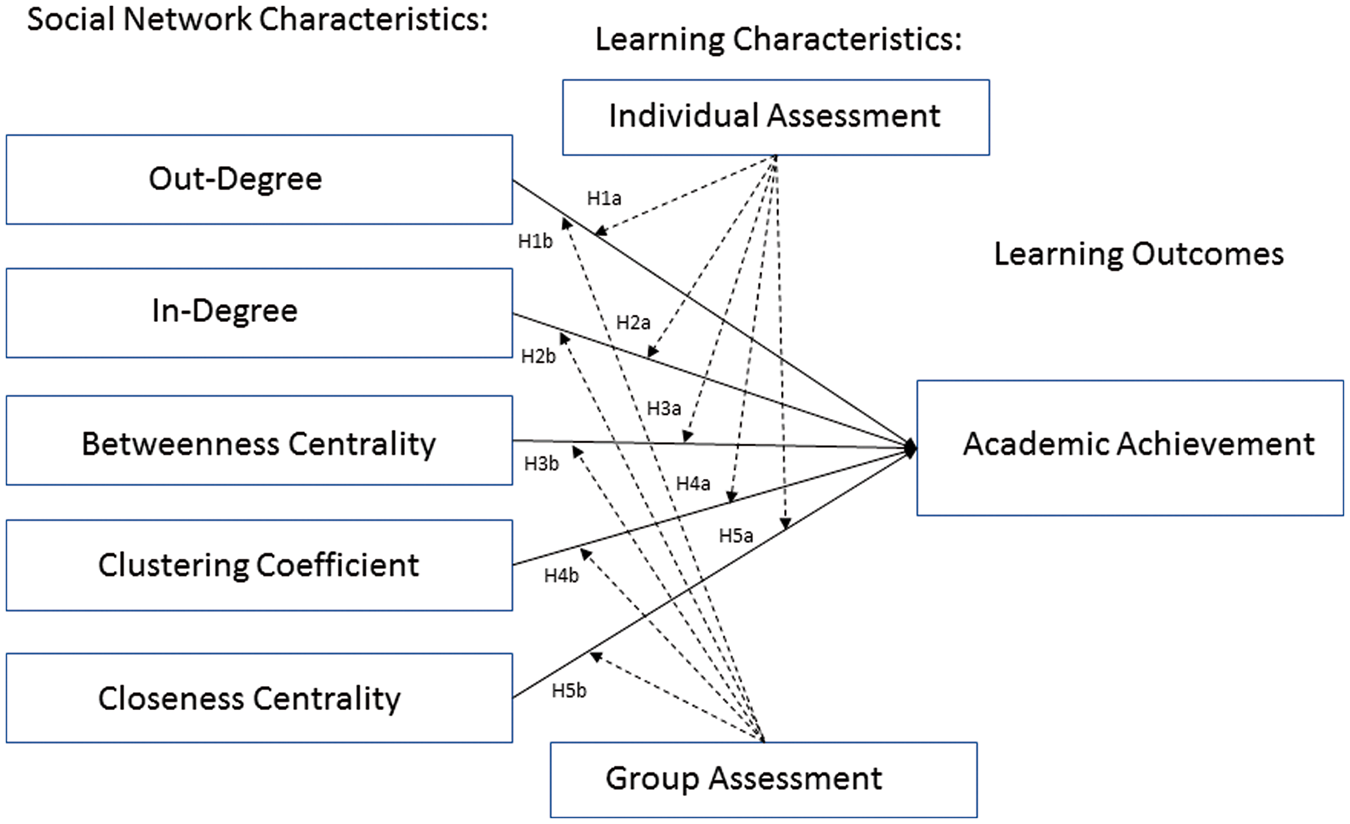
Hypotheses Development
Several hypotheses helped investigate relationships between students’ computerized network interaction and academic achievements using tablets in group and individual assessments. We believed the group treatment would lead to higher levels of interaction because students were required to achieve consensus (Reychav et al., 2016). Overall, this investigation expanded research initiated by Cho et al. (2005) suggesting computerized networks can enhance classroom learning.
First, we posit number of player connections going out to others on the network will positively impact academic achievement. Past research suggests multiple-player learning groups facilitate information flow and may increase academic achievement. Further, more connected players assist in network construction, development, and maintenance (Jiang et al., 2014). Other research suggests players should be integrated, which provides capability to receive and transfer information to and from as many vertices as possible. This may enhance academic achievement (Burt & Merluzzi, 2013; Friedkin, 2015). Hence, students with more outgoing communication (measured by Out-Degree) have higher academic achievement: H1a: Positive correlation exists between players’ Out-Degree and academic achievements when individually assessed. H1b: Positive correlation exists between players’ Out-Degree and academic achievements when assessed as a group. H2a: Positive correlation exists between players’ In-Degree and academic achievements when individually assessed. H2b: Positive correlation exists between players’ In-Degree and academic achievements when assessed as a group. H3a: Positive correlation exists between players’ Betweenness Centrality and academic achievements when individually assessed. H3b: Positive correlation exists between players’ Betweenness Centrality and academic achievements when assessed as a group. H4a: Positive correlation exists between students’ Clustering Coefficient and academic achievements when individually assessed. H4b: Positive correlation exists between students’ Clustering Coefficient and academic achievements when assessed as a group. H5a: Negative correlation exists between players’ Closeness Centrality and academic achievements when individually assessed. H5b: Negative correlation exists between players’ Closeness Centrality and academic achievements when assessed as a group.
Research Method
Sample
Our study was conducted among junior high students and included 15 varying-sized classes in central Israel. All required permissions were obtained from school officials, parents, and participants. Participation was voluntary. The school was designated as an experimental location for exploration of learning technology integration. Participating students attended a geography knowledge center designated for this experiment. The room was equipped with tables, computer network, and tablet devices. Students used custom-developed social networking applications that allowed researchers to collect information related to interactions taking place.
Experiment characteristics
The experiment required students to develop social networks using computer-enabled devices. Computerization provided access to all peers in real time, no matter where the student was physically located. Information sharing was enabled in ways not possible in face-to-face settings. Students could review comments and messages sent out to refresh their memories and help them reflect on discussions and developments of decisions.
Conducting the experiment
When students arrived, tablets were ready for use with the application open. The software permitted students to view learning material. It also simultaneously collected data regarding time spent viewing each item and recorded the number of times material was accessed. Students were provided with options to interact while they progressed through learning material, which meant they could request clarifications, share ideas, and make comments.
Experiments lasted for 45 minutes each in 90-minute class periods with teachers present. Experimenters divided students into random groups of four, responsible for assessment activities. Students in half the groups (chosen randomly) performed assignment assessment individually, with options to consult assigned group members or others. Remaining students performed assignment assessment as unified groups, reaching consensus concerning correct answers. Each group treatment member submitted the same answer. This rule was enforced. This approach was not intended to differentiate between individual and group assessment in the traditional sense (Carless, 2009; Dochy, Segers, & Sluijsmans, 1999; Moore & Hampton, 2015) because both treatments involved interaction. Instead, individual assessments permitted students to self-regulate and connect to best fulfill their own perceptions of obtaining the best assessment information. In group assessment, students were required to interact with specific people due to task nature. Questions were asked in randomized order. Each student initially chose at least five other students outside their assigned groups with whom they communicate in day-to-day lives. This helped establish a social network. During the experiment, students could only contact peers via networks on tablets devices within their classroom. No outside connections were permitted. Physical student groups communicated through provided social media systems. Students virtually saw all peers working simultaneously and chose collaboration partners using mobile apps. A teachers’ control console ensured rules were followed.
To further clarify, students used the social media system (which recorded their interactions) to obtain information. This meant social media was used by students to talk to each other during the learning phase. Members of each group connected on the social network to complete their assessment, but their information was not automatically shared with all group members. All information could be shared within the group, but students had to ensure this happened. The system recorded these interactions. Group members interacted with social media throughout the exercise and during the assessment. Students sat in groups that were randomized to mode of learning (e.g., individual or group). Also, their materials (e.g., video or text) were randomized. So, for example, if the individual mode with video was assigned, each student listened to the video learning materials with headphones and then was asked to answer the questions. There were no limitations for getting feedback from peers but ultimately, the individual entered his or her own answer. If the group mode was assigned, then students in a specific group were asked to achieve consensus within the group for a single answer.
A social network organically emerged based on interactions, communications, and information sharing. The experimenters used NODEXL software to check students’ centrality and interaction within the network. NODEXL is network analysis software that uses Microsoft Excel 2007/2010 open code modules including USINet and Gephi (Hansen, Shneiderman, & Smith, 2010).
Measurement approach
No pretest was given to assess prior learning. The experiment focused on differences between how students related to computerized social networking and impact on performance. If students had prior knowledge, they could share it via the network. During the experiment, students performed two assignments using online content: text and video—related to geography concepts. More specifically, we designed both text-based and video-based course curriculum material for use with tablet devices. The applications were intended to be familiar to students accustomed to acquiring and sharing information in both text and video formats through mobile apps. The content presented information related to geography concepts. For example, stalactite cave formation or continental drift concepts were described. Two content treatments accounted for learning style differences (Hung & Higgins, 2016; Reychav & Wu, 2015). Correct responses were tabulated as the assessment measure. Text-based knowledge questions were phrased by experts and based on excerpts from the Ministry of Education’s geography textbook. Questions were multiple choice. For example,
Question: What is the mechanism that moves the plates?
Earth’s rotation Earthquakes and volcanic eruptions Mantle convection currents The impact of sun and moon’s gravitation over Earth
Question: What is the lithosphere?
Magmatic substance from the bowels of Earth Solid plates that include Earth’s crust and part of the upper mantle A stratum of sedimentary rocks A solid substance in the nucleus
Upon completion, each student in individual treatments received grades and medals marking success level (e.g., first/second/third). Those in group consensus treatments received the same grade and medal as their teammates.
Results
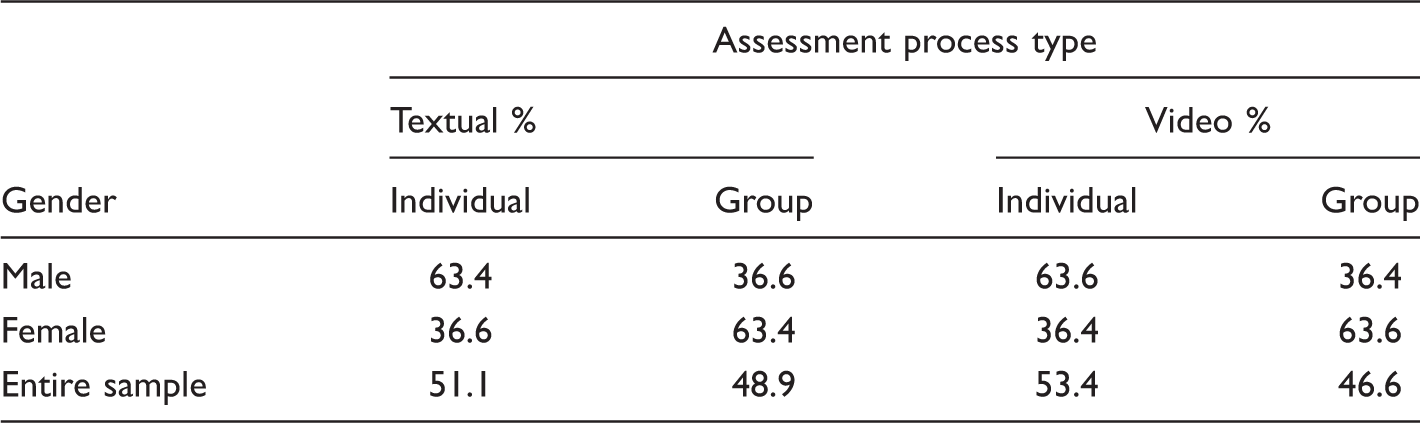
Respondents included 401 students aged 13 to 14; 53.4% were girls, and 46.6% were boys. The majority (97%) used tablet computers previously. Students’ average age to start using tablets was seven (SD = 2.7). The textual assignment was assessed individually by 205 students (51.1%), with the remainder in groups (48.9%). The video assignment was assessed individually by 214 students (53.4%), with the remainder in groups (46.6%). Thirteen students (3.2%) were assessed in the textual assignment individually and then in the video assignment as a group, while 22 students (5.5%) were assessed in the textual assignment as a group and then in the video assignment individually. On average, students in the video treatment assessed as individuals spent 3.56 minutes per curriculum item, and those assessed as a group spent 3.08 minutes. Students in the text treatment spent 4.28 minutes when assessed as individuals, and those assessed in groups spent 5.36 minutes. In both instances, the differences were significant (p < .05 for video and p < .001 for text).
Sample Distribution in Both Tasks.
Students’ Achievements
Students’ assessments suggested average geography grades of 88.78%. Students assessed in groups (M = 90.31, d = 0.18) were significantly higher (t(373) = 2.36, p < .05) than individuals (M = 87.32). In general, the average student grade assessed in textual assignments individually (M = 87.32) was significantly lower (t(388) = 2.04, p < .05) than those in groups (M = 90.31). Students who learned geography through video and were assessed in groups had significantly higher achievements (M = 90.05, t(385) = 1.91, p < .10) than those assessed individually using video (M = 87.66, d = 0.6).
Network Activity
Example Network Indicators for Out-Degree Centrality.
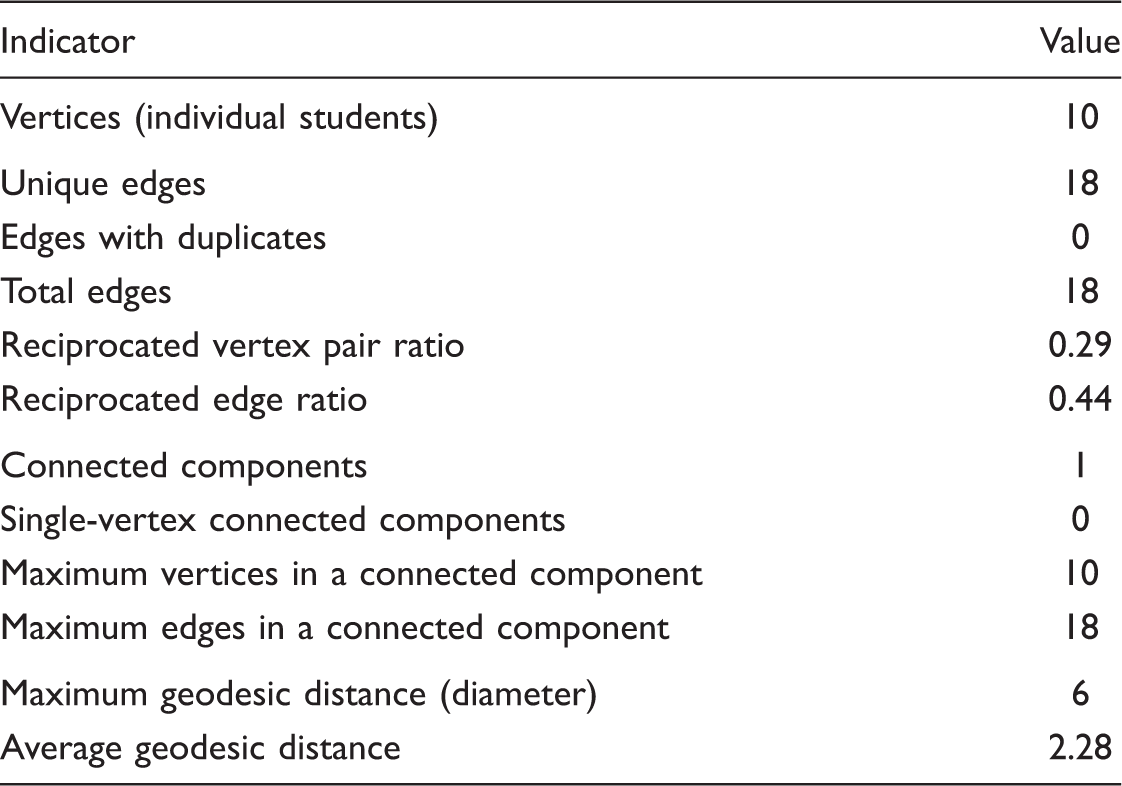
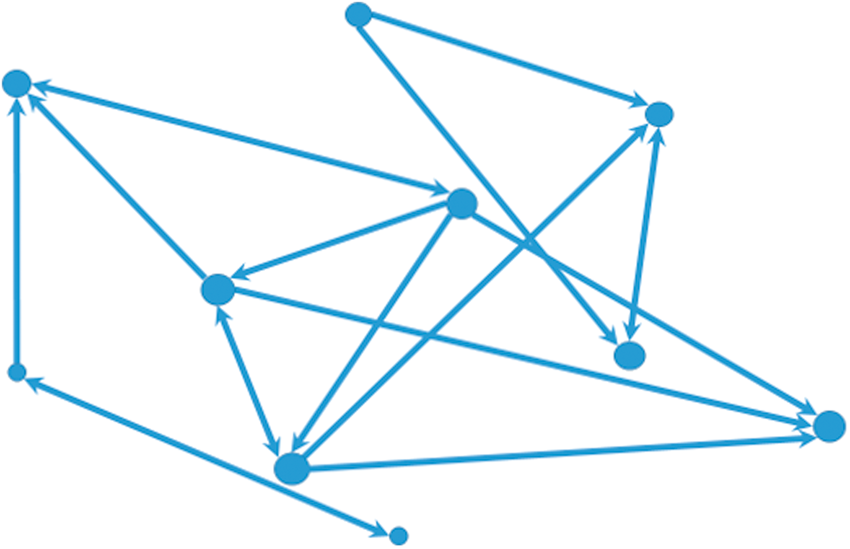
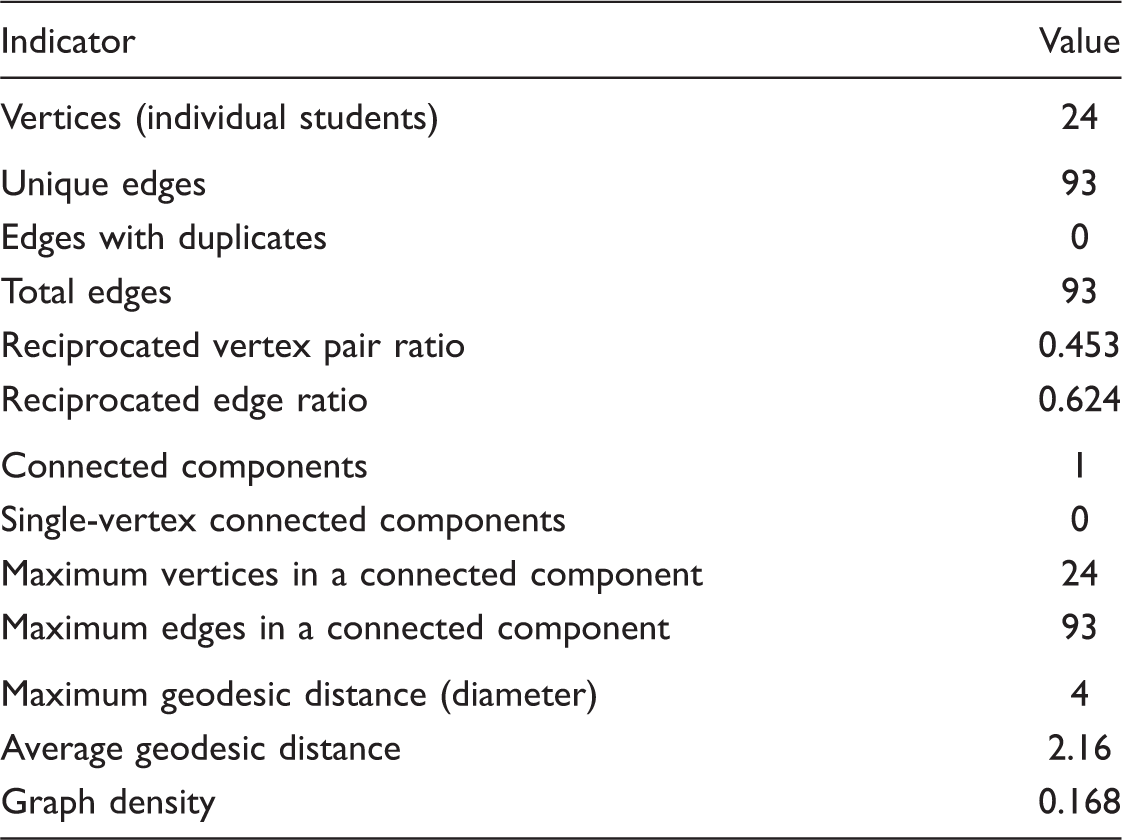
Characteristics of activity in the class network—centrality index.
Dark nodes in Figure 2 represent individual network players and suggest five central students present in this class. Those with more incoming arrows are more central. This is an example diagram that could be generated for each class.
Network Indicators for Betweenness Centrality.
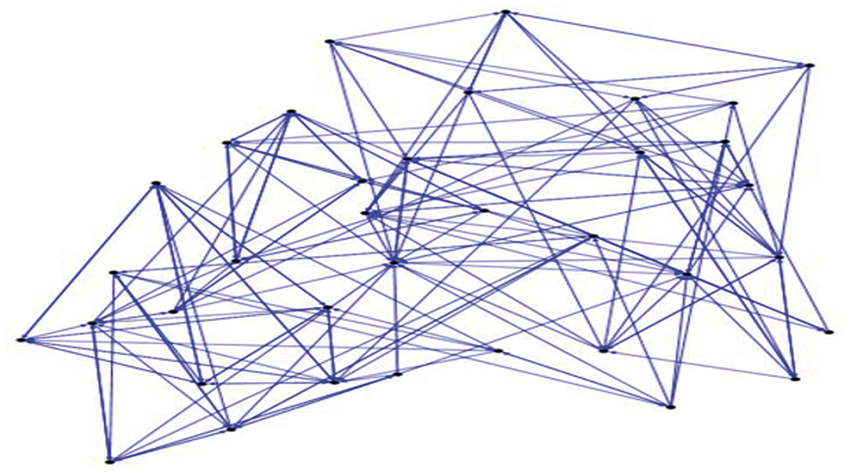
Example of activity characteristics in the class network—Betweenness Centrality.
Example Network Indicators for Closeness Centrality.
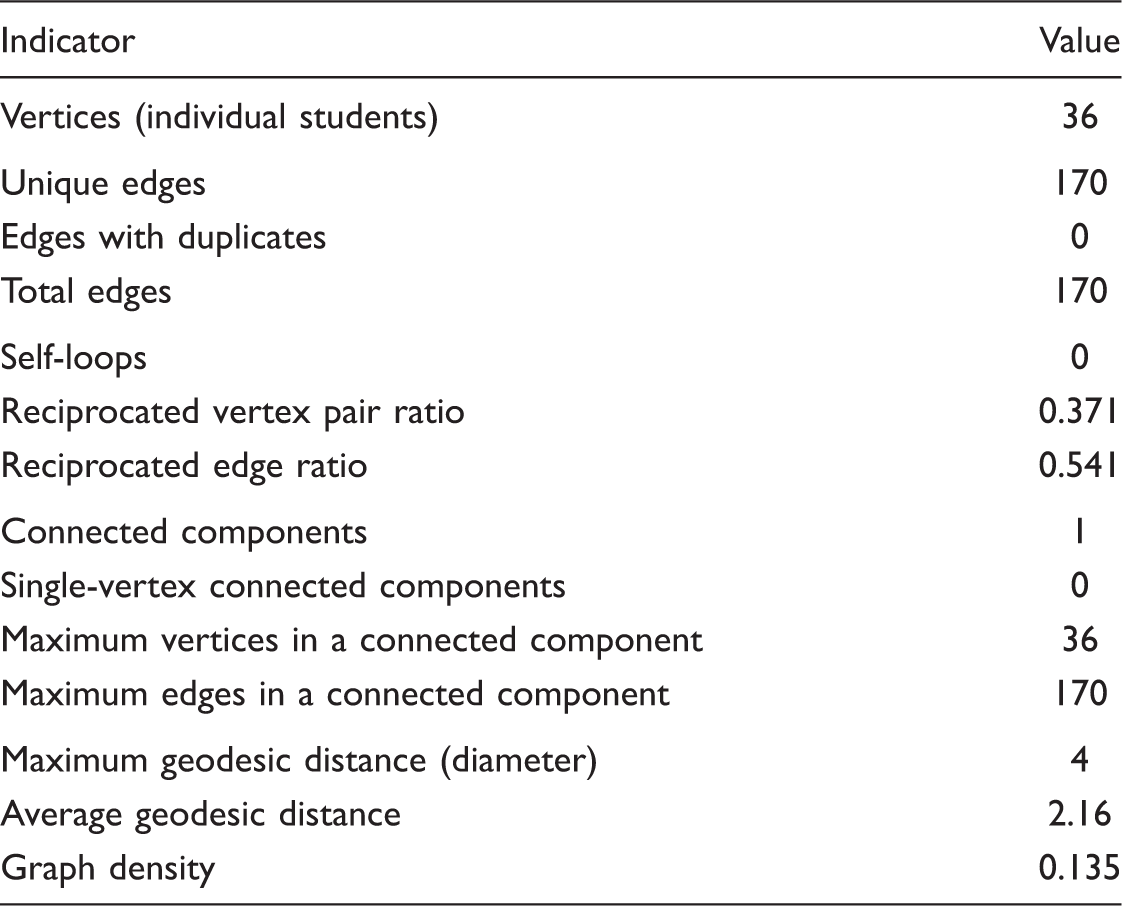
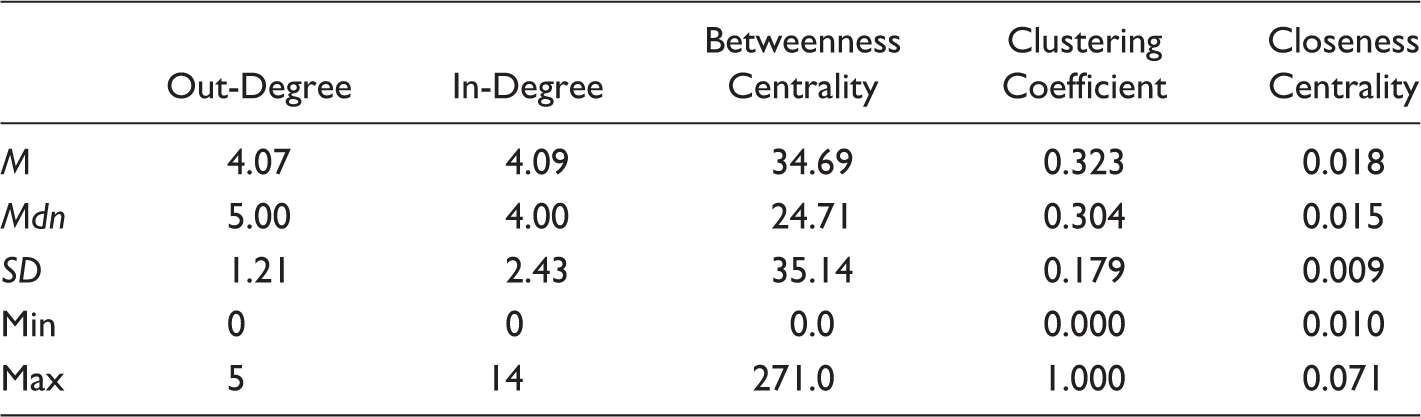
Characteristics of Network Activity—Main Dispersion Indices.
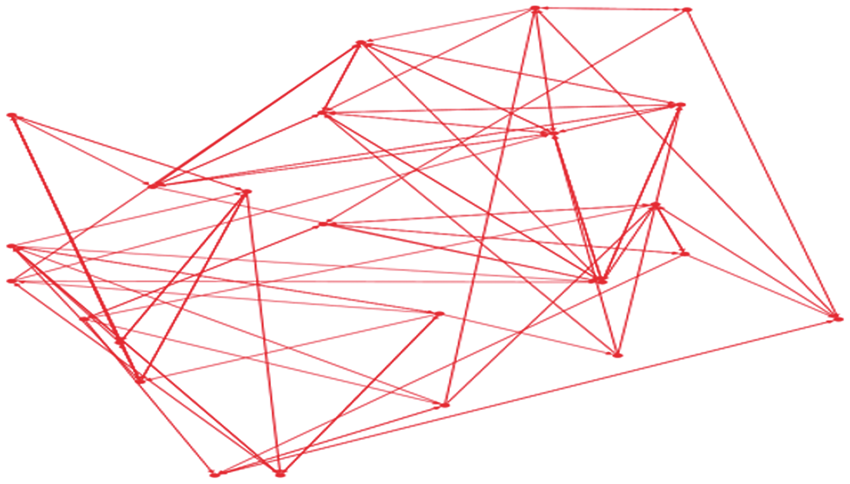
Sample characteristics of activity in the class network—Closeness Centrality.
Correlation Coefficients Between Network Activity Characteristics.
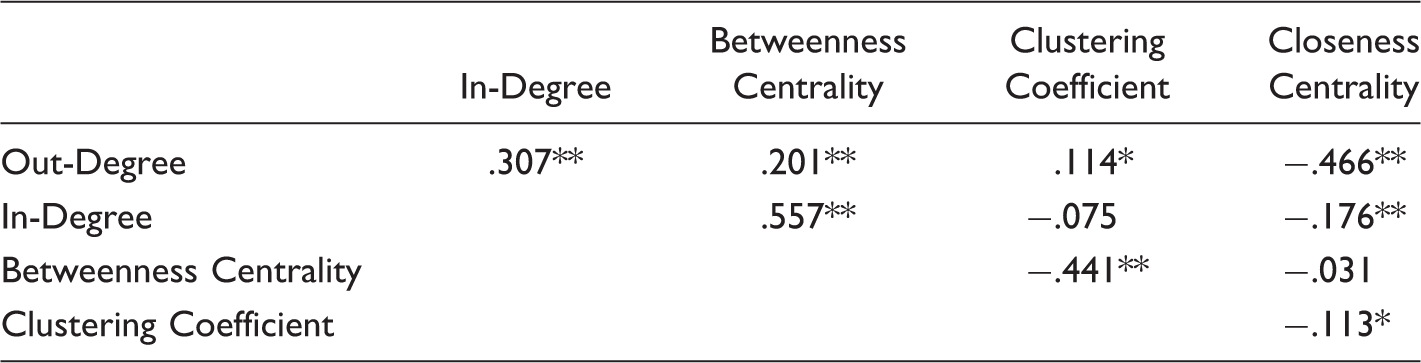
*p < .05. **p < .01.
Correlation Coefficients Between Network Activity Characteristics and Students’ Achievements.

*p < 5%.
Regression Analysis
Individual assessment
Multiple-Variable Regressions Between the Number of Correct Answers in Assessment and for Both the Text and Video Learning Task, Gender, and Network Activity Characteristics.
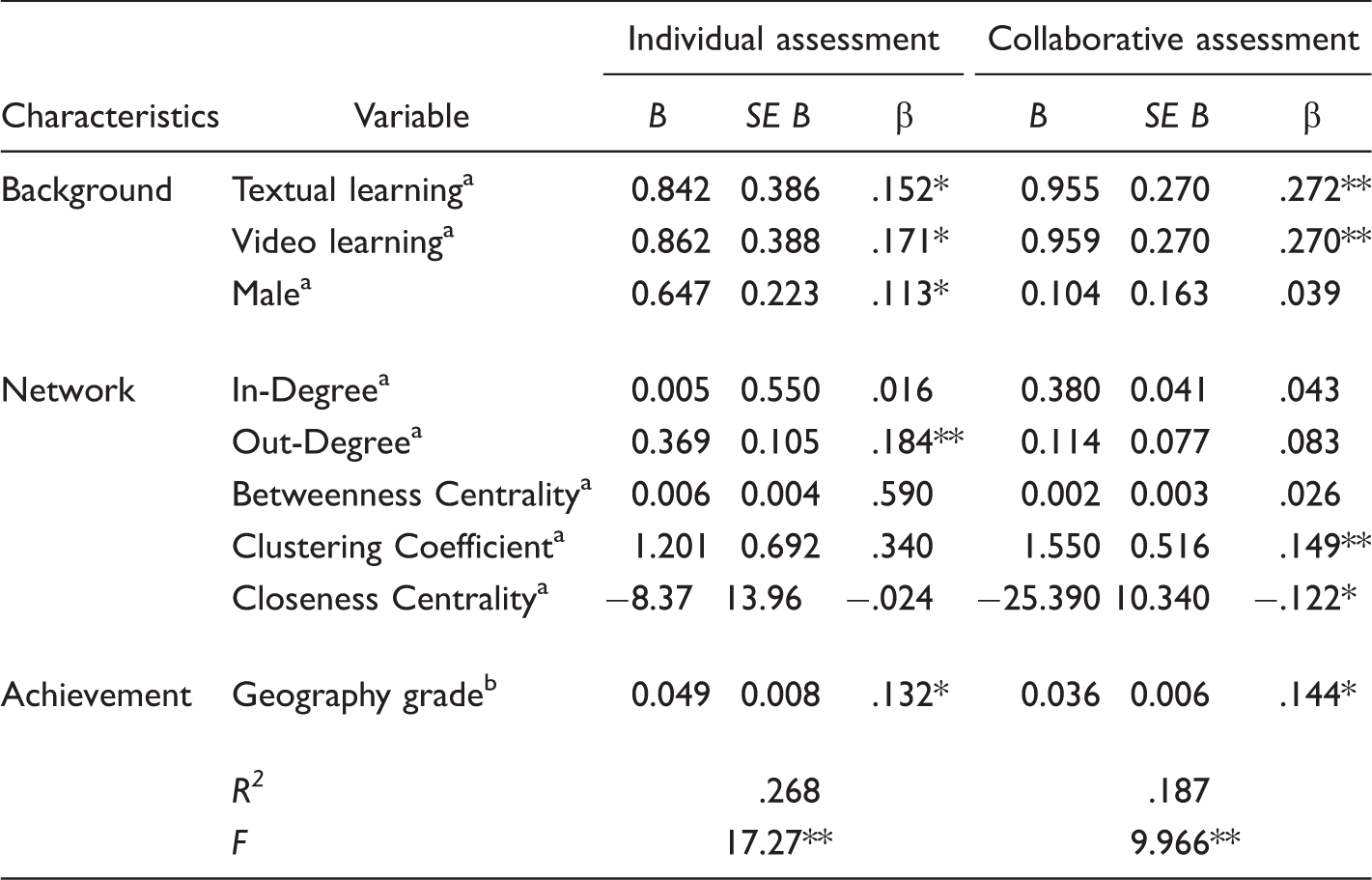
Explanatory variable. bDependent variable
p < .05. **p < .01.
The regression developed to explain the number of correct answers by individually assessed students indicated knowledge acquisition was significant (F(9, 391) = 17.27, p < .01) and explained 26.8% of the variance. Significant independent variables suggested assessment outcomes were lower among males (β = .113, p < .05) and students individually assessed in the textual assignment (β = .152, p < .05) than in the video assignment (β = .171, p < .05). This analysis further suggested correlation existed between correct answers in the individual assessment mode and students’ geography achievements (β = .132, p < .05).
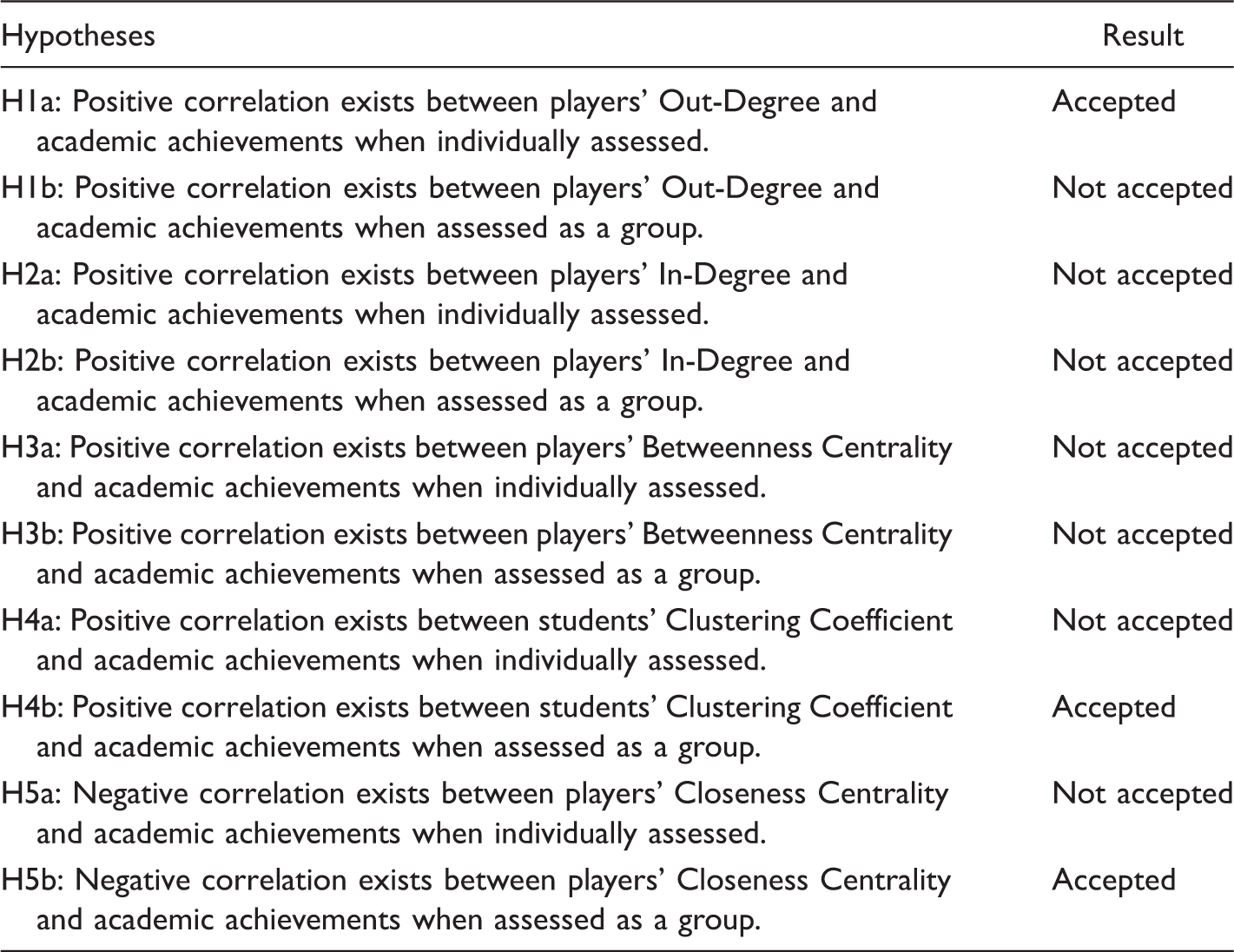
Among network activity indicators, one had significant positive influence over students’ achievements related to correct answers in the individual assessment: Out-Degree was significant (β = .184, p < .01). This meant when students served as central information sources, their test achievements were higher. Therefore, H1a was accepted. No correlation between students’ achievements and In-Degree, Betweenness Centrality, Clustering Centrality or Closeness Centrality was found. Thus, in the individual assessment scenario, H2a, H3a, H4a, and H5a were not accepted.
Group assessment
The regression model developed to explain correct answers in the group assessment mode significantly explained 18.7% of the variance (F(9, 391) = 9.966, p < .01; see Table 8).
Summary of Hypotheses Testing.
Conclusions
Results suggest interesting findings that support integrating social networking into class pedagogy. Among these,
Positive correlation exists between Out-Degree and academic achievements when students are individually assessed. More connected students are more likely to become information sources. This leads to higher academic achievements, particularly when students are individually assessed. Students were responsible for their own success and therefore likely to interact with those most likely to help obtain needed information accurately. They achieved higher academic outcomes perhaps because of interaction with knowledgeable others or because they had to rely on their own judgment informed by information gathered from peers. Their learning experience was self-regulated. Those with more access to information were more successful (Zimmerman & Schunk, 2001). It is important to note that while these students were more likely to become an information source, it was not always true. Some connected students (particularly those with high closeness centrality) may have communicated at a higher level but without the resulting high achievement. Positive correlation exists between Clustering Coefficient and academic achievements when assessed as a group. When a player has more potential connections in a class and uses these, they have greater control over information flows. This results in higher academic achievements. Students in group treatments were compelled to connect more and interact more frequently, particularly immediately prior to decision-making, because they had to achieve consensus. Other supportive research indicates students exchanged more information and enjoyed doing so interacting via social networks (Eid & Al-Jabri, 2016). This appears to indicate higher academic achievement results from required development of more connections. Negative correlation exists between Closeness Centrality and academic achievements when assessed as a group. When students maintain positions closer to central players, as indicated by a lower closeness centrality score, they feel stronger and more capable of controlling information flows between others but may cut themselves off from potential connections. This held true in group treatments where consensus was required and communication was crucial. This correlated with lower academic achievements, perhaps because these students focused on class social aspects rather than available information. This finding is unique because it suggests certain individuals in computerized networks for learning maintain illusions of social interaction. This could distract from meaningful learning experiences. These individuals try to integrate themselves and form internal success measures related to integration and social interaction without becoming knowledge sources. These individuals identify strongly with central players to gain a sense of belonging.
Discussion
Our research focused on relationships between centrality of network players within the context of group learning using computerized social networks. In general, students assessed in group settings were more successful than students assessed individually. Notable exceptions existed. For instance, correlations between individual academic success and position within classroom networks were found. These findings reinforced previous research that suggested cooperative learning encourages collective thinking and listening, and leads to higher motivation, openness, trust, and understanding among students—keys to successful learning (Siraj-Blatchford, 2010).
Influence of student centrality in a class network on academic achievements was found to be similar to Russo and Koesten (2005) but within a new context: computerized social networks for learning. Positive correlations existed between Out-Degree and academic achievements in individual treatments. This meant when a student served as a central source of online information for others, their academic achievements were better. If these students felt valued by their peers, they may have been motivated to contribute more to the class and thus enhance their standings. Research by Järvelä and Järvenoja (2011) suggests that motivation regulation such as this can be identified as a socially constructed activity. Therefore, if students feel valued, they will be more willing to contribute. This phenomenon was consistent with social constructivism, social capital, and active learning concepts. Students became more motivated to understand subject matter, which created better cognitive results. When students became hubs for information exchange, they had access to more information and were more likely to informally converge toward correct answers. This does not mean that the more a student communicates, the higher their achievement. Other factors such as closeness centrality must be considered. It is also possible that some students entered the situation with preexisting knowledge of the topics.
Our findings may have indicated peers perceive outstanding students as more responsible because these students were chosen by multiple peers when groups formed. We felt these students had better default positions within the social network, perhaps due to preexisting knowledge. As the exercise progressed, their willingness to cooperate granted them extra respect by peers. This again seems to support research by Järvelä and Järvenoja (2011) that suggests motivation to help peers is a socially constructed activity. A rehearsal effect perhaps helped explain positive correlation between students’ Out-Degree and academic achievements. Students with high Out-Degrees expressed their knowledge, almost as a test rehearsal. This crystallized their opinions and allowed them to phrase their positions and solutions resulting in higher achievement.
Our study provided insight on the positive correlation between Clustering Centrality and academic achievements. When a student had a larger intermediation potential (e.g., transferred more information), their ability to regulate themselves was better and so was their academic achievement. This may relate to student personality. When students worked toward excellence, they were more inclined to ask questions. Therefore, peers perceived them as good information sources. The thesis that central students were outstanding may have explained positive correlations between Clustering Coefficients and academic achievements. When players used more potential connections, they had greater control over information flows and better academic achievements. In this experiment, students had to develop group consensus decisions. If they networked more, their academic achievement reflected better results. The group shared information during social networking and ultimately, this appeared to result in better choices. Again, this is a unique finding for computerized social networks for learning.
Furthermore, past research suggests informal social networks are less dense than networks specifically designed for learning material exchange in classrooms. In other words, if students are not constrained to classroom peer connections, they will have broader networks connecting to more people. This emphasizes the importance of connections beyond a specific group (Divjak & Peharda, 2010). Simultaneously, this prevented us from deriving strong causal conclusions from our results concerning positive correlations between student centrality and academic success. Our results may have explained Russo and Koesten’s (2005) premise that these player measurements applied more to cognitive learning and less to effective learning.
We found student achievement in geography grades positively correlated to how they interacted with potential network connections. Lower clustering coefficients indicated students did not use network connections fully. So, students with high clustering coefficients used resources better and communicated more. When in group mode, students interacted, by necessity, more frequently. These findings suggested students’ initial capabilities made others approach them for help and reflected in connection numbers. This assumption was supported because no significant correlation existed between students’ achievements and Out-Degree, their Betweenness Centrality, or Closeness Centrality. Therefore, good students helped others initially, but their outstanding achievements did not relate to Closeness or Betweenness Centralities.
While good students were well positioned in the network, student achievements did not necessarily affect their network position. For example, socially inept but intelligent students were not necessarily positioned at the social network center and were not particularly close to most players; yet, they often were approached for information. This argument was suggested by Divjaka and Peharda (2010). Our research supported this but in context of computerized networks for learning.
We found negative correlations between Closeness Centrality and academic achievements. Unlike central students, who had greater control over information on the network and more correct answers on assessment, students with high closeness values did not focus on sharing information. They were motivated by social interaction. They had higher levels of social network interaction but had fewer correct answers on assessment, and this finding made them unique. These students maintained higher social interaction levels, and this was more important to them than learning. This finding is important to educators because it suggests caution must be used applying computerized networks for classroom learning. Need for social acceptance can distract students from more meaningful learning experiences. These individuals valued social capital more than learning. This phenomenon was reported in general social networks research (Nyland et al., 2007; Orchard et al., 2014; Shah et al., 2001; Valenzuela et al., 2009) and now appears to hold true in computerized networks in learning environments. These players satisfy recreation needs (Nyland et al., 2007), strongly identify with central players, and build appearances of social capital (McQuail, 2010). Educators must identify students within this subset then intervene to ensure learning objectives are reinforced.
Alternate explanations to our findings exist. New group formation dynamics may be at work where students are compelled to develop new connections. Students are exposed to different people and may need to develop relational links and attempt to understand new social contexts (Warkentin, Sayeed, & Hightower, 1997). Likewise, students may focus on sharing information without true interaction. Students learn who can be trusted for accurate information over time and different dynamics result. This does open interesting possibilities. For instance, smart, well-connected students could receive access to more information to enhance achievement. Another possible explanation could be rooted in Social Interdependence Theory (Johnson & Johnson, 2009). Because the experiment created an environment that supports interdependence among students, we would expect to find greater member interaction, although more research on application of this theory in synchronous, online environments is recommended (Roseth, Saltarelli, & Glass, 2011).
Summary
This study helps researchers better understand how student academic achievement can be positively influenced by a computerized social network and how various indicators may predict classroom success. Our findings support and extend previous work, which suggests player centrality allows participants to be in touch more with online peers and enjoy more information sources. The current study moves this finding into computerized networks in learning environments. Central students have more direct contact with peers and thus more opportunities to receive help (Hanneman & Mark, 2005). Central network players demonstrate higher tendencies to use their advantage and ask for peer help, get content, and create relations/collaborations (Lin & Lai, 2013). Thus, it is not surprising highly central students have better pedagogic achievements (Cadima, Ojeda, & Monguet, 2012).
Perhaps the most interesting finding relates negative correlations between Closeness Centrality and achievement. Some students valued social standing more than learning. These students position themselves close to central players to achieve their personal goals, which may be related to fun, or enhancement of social capital (Nyland et al., 2007; Orchard et al., 2014; Shah et al., 2001; Valenzuela et al., 2009). This finding is unique within this study’s domain.
Limitations and Future
This study does not fully explore reasons for creating naturally occurring communication networks. Rather, we stimulated development from an informal network existing among student peers. In various treatments, we compelled students to extend the network. We recommend further exploration of this issue. For example, our experiment contained elements found in social media platforms such as chat rooms, messaging systems, Facebook, and course management systems. In the real world, students must navigate these choices and span both online and offline interactions with peers. Our experiment could only approximate these complexities with a subset of capabilities. Another limitation involves the gender distribution of our treatment groups. We had higher proportions of males in the individual treatments (although randomly assigned). More investigation of gender differences is warranted and may provide useful insights. Other future study could include investigation of relationships between student technology use and success in various subjects. In addition, it would be helpful to collect measures of motivation, openness, trust, and understanding among students rather than infer these based upon communication patterns. It is also possible that students entered the situation with preexisting knowledge on the topics, and this provided confidence to interact more and score higher on the assessments. This, however, would be consistent with peers making these students default central nodes on the classroom networks. Other research into how centrality and influence develop in computerized networks is recommended. Further research into ways educators can identify socially motivated students close to central players is warranted. These students are at risk of not reaching their potential.
Footnotes
Declaration of Conflicting Interests
The authors declared no potential conflicts of interest with respect to the research, authorship, and/or publication of this article.
Funding
The authors received no financial support for the research, authorship, and/or publication of this article.