







Abstract
Schools around the globe increasingly realized the importance of technology and its application in the education system. To guarantee a successful educational innovation, schools seek out different parties for valuable opinions. Among them, parents are the important feedback providers, because their attitudes are influential on children’s academic performance. Moreover, their involvement and support are considered the key factor that facilitates an effective implementation of programming education at schools. This study aimed at developing and validating an instrument measuring parents’ perceptions of programming education among P-12 schools in Hong Kong. We propose that parents’ perceptions of programming education is a multidimensional construct which constitutes (a) understanding, (b) support, and (c) expectation. In total, 524 questionnaires were collected from the parents who attended programming workshops and seminars. Exploratory factor analysis shows evidence for the three-dimensional construct. Confirmatory factor analysis reconfirms the measurement structure. Implications of the study are discussed.
There is a growing need of nurturing the young generation as active creators of technology, instead of passive consumers of technology (Sinha & Rauscher, 2014). One way to achieve this goal is to design and integrate programming education in the school curriculum, because programming education can nurture the young generation to become problem-solvers with proficient digital literacy. Schools around the world started to integrate programming education into the P-12 curriculum. For example, the United Kingdom introduced a new subject named “Computing” for learners aged from 5 to 16 (Department for Education, 2013). Russia, Australia, and New Zealand integrated computer science into their P-12 curriculum (Grover & Pea, 2013). Moreover, computational thinking was promoted in primary and secondary school education in Hong Kong (Education Bureau, 2015).
Past educational research predominantly focused on the perceptions of learners (Chilana et al., 2015; Sheehan, 2003; Wong, Cheung, Ching, & Huen, 2015; Zainal et al., 2012) and teachers (Sosulski, 2005) about programming education because of two reasons: First, learners’ views on the learning subjects are considered as the determining factor of their academic achievement (Centra & Gaubatz, 2000); second, teachers’ perceptions determine the effective implementation of an instructional design in class (Trigwell, Prosser, & Waterhouse, 1999). Nevertheless, parents’ perceptions of education are also considered as an essential factor of school achievement and improvement (Epstein, 1996; Walker & Maclure, 2005). However, the existing studies have not yet fully explored how parents perceive the development of programming education in P-12 schools. This creates a research need to understand parents’ perception of programming education in P-12 schools for the purpose of more effective implementation and future improvements of the programming course. With a thorough understanding of the concerns and expectations of these stakeholders such as parents, teachers, and students, educational policy-makers might be able to design an effective curriculum that appeals to all parties. However, to the best of our knowledge, there are no existing instruments in the educational field available for measuring perceptions of programming education from parents’ side. A few research studies did touch upon parents’ perceptions of technology use (e.g., Sandlund, Dock, Häger, & Waterworth, 2012; Ortiz, Green, & Lim, 2011; Pal, Lakshmanan, & Toyama, 2009). However, none of the studies attempted to measure parents’ perceptions systematically using some specific perception scales. In addition, previous studies mainly explored parents’ perceptions of general technology use, such as computer usage. Our current study emphasized perceptions of programming education (e.g., coding) which is more domain specific than technology use. Realizing the gap in the current literature, this study attempts to develop and validate a new instrument, namely parents’ perceptions of computer programming education. This instrument will serve as a useful tool for education policy-makers and instructional designers who want to learn substantial views and opinions from parents’ side regarding the introduction of programming education in Hong Kong P-12 schools.
Literature Review
Parents’ Role in Education
Parents’ role in education is critical because of parents’ paramount influence on learners’ academic attitude and achievement (e.g., Walker & Maclure, 2005). Davis-Kean (2005) found that children’s academic achievement influenced by parents’ beliefs and behaviors such as parents’ expectation of children’s academic attainments, parent–teacher communication, parent–children discussion about school, and parents’ participation in school events (Fan & Chen, 2001). Ma’s (2001) research suggested that parental influence could be more important to their children compared with school influence (e.g., peer influence and teacher expectation), especially when parents’ expectation shows time-invariant influence on children’s class involvement. Moreover, previous studies also suggested that parental involvement enhances children’s academic performance (e.g. Hill & Tyson, 2009; Jeynes, 2007; Topor, Keane, Shelton, & Calkins, 2010). Apart from the positive influence on students, parents are also important to educational practitioners. More specifically, Phillips (2005) explained several reasons why parental involvement in children’s education is of paramount importance to educational practitioners: Their involvement facilitates teachers’ work, enhances teachers’ understanding of learners’ needs, and provides potential suggestions for future curriculum improvement and implementation.
Perceptions of Programming Education
According to Lindsay and Norman (1977), perceptions is the process in which people interpret and organize sensation, with the use of information and their understanding of the world, to produce a meaningful experience, involving the process of “recognizing, organizing, and interpreting sensory information” (p. 73). In short, it is the process where people attach meaning to experiences. The significance of examining one’s perceptions does lie not only in gaining insights into their knowledge of and attitudes towards things but also in serving as a predictor of how one processes information and behaves (Maio & Haddock, 2010), such as motivation (Bernstein, 2013; Zainal et al., 2012), satisfaction (Eom, Wen, & Ashill, 2006; Fulford & Zhang, 1993), and expectation (Mangal, 1998; Martens, Bastiaens, & Kirschner, 2007). Past literature investigated the perceptions of computer programming among student and teacher populations. For example, Zainal et al. (2012) found that the first-year university students hold more positive perceptions after taking the introductory programming course. In addition, they found that students’ positive perceptions are correlated with motivation which is found to be further correlated with achievement and skills. Wong et al. (2015) also found that the primary and secondary school students and teachers generally hold a positive perception. In their study, teachers believed that promoting programming education would be beneficial to enhance logical thinking skills, problem-solving skills, and students’ interest and motivation. Studies on parents’ perceptions of programming education are scarce. Nevertheless, a growing body of literature started to examine parents’ perceptions. For example, Ortiz et al. (2011) in their article examined the parents’ perceptions of the importance placed on computer usage for themselves and their kids. Pal et al. (2009) interviewed parents to discuss their perceived value of computer courses in rural Indian public schools. Sandlund et al. (2012) explored parents’ perceptions of using interactive video games as home training for their kids with cerebral palsy.
Parents’ Perceptions of Programming Education
In attempts to explore parents’ supportiveness of programming education, we first investigate whether they understand the importance of programming to their children’s future. Previous study from Kong (2018) about the perception of parents on e-Learning in school education indicated that parental support of e-Learning is correlated with their understanding. In other words, the more the parents understand what the activity is about, the more supportive they will be. More importantly, when parents understand the significance of programming education, their degree of supportiveness of implementing programming education will be higher. In addition, past studies suggested that parental support in their children’s schoolwork would influence their expectation for their children (e.g., Hoover‐Dempsey et al., 2005; Yamamoto & Holloway, 2010). Schools could provide sufficient guidelines to parents to foster their support for their children, which would allow parents to form proper expectations for their children regarding their academic outcomes (Yamamoto & Holloway, 2010). According to the abovementioned review, we argue that understanding, support, and expectation are closely related to each other. In addition, the three components received great discussions in early research on perceptions of technology integration in school settings (e.g., Loveless, 2003; Martinovic & Zhang, 2012; Polizzi, 2011). Therefore, we propose that parents’ perception of programming education could include the three components for investigation for our initial scale development. Parents’ understanding refers to their knowledge of the concept, the meaning, and the embedded goals of programming education. Parents’ support is defined as the behavioral support in helping their children learn programming. Parents’ expectation refers to their anticipation of how programming education could be implemented in schools and what their children can acquire through the learning process.
The second-order factor model is used to depict the characteristics of parents’ perceptions of programming education. According to Koufteros, Babbar, and Kaighobadi (2009), a higher order modeling approach (e.g., second order) would be the most suitable approach when there are several constructs that can be meaningfully conceptualized at higher orders of abstraction. A second-order model is a hierarchical structure where manifest variables can be direct to their respective first-order latent variables which can further be directed to their second-order latent variable(s). More importantly, higher-order modeling specification could also serve to alleviate some methodological problems that challenge empirical studies. Most would agree that sometimes latent variables though have something idiosyncratic about themselves, they could also be highly correlated with each other, hence raising critical issues such as multicollinearity. However, second-order models could “recognize the contribution and retain the idiosyncratic nature of each first-order construct . . ., and treat such constructs as facets of the higher-order construct” (Koufteros et al., 2009, p. 635). From the past studies, we learned that understanding, support, and expectation are closely related to each other. Therefore, we also expect that those three factors would highly be interrelated and they can further be explained by one second-order construct (Chen, Sousa, & West, 2005).
Understanding
The initial stage of perception process is recognizing information with one’s own knowledge and experience (Lindsay & Norman, 1977). It implies that people first have to gain an understanding of programming education before they can interpret and evaluate it. Anastasiades, Vitalaki, and Gertzakis (2008) studied how parents perceived their children’s opportunity to acquire educational experience through videoconferencing. The study measured parents’ understanding of technology, including their frequency of using a computer, their understanding of videoconference, and the possible risk their children may encounter in the Internet. The results suggested that parents hold a positive understanding that technological interactivity could be an alternative form of conventional communication to benefit their children in the learning process. In addition, Kong (2018) found that parents’ understanding of e-Learning is positively related to their support. Parents believed that it is important for their children to learn and practice e-Learning, and therefore, they encouraged their children to be more involved in e-Learning. Based on the abovementioned review, we posit that understanding could be a crucial element of parents’ perceptions of programming education.
Expectation
Expectation of educational stakeholders was investigated frequently in educational research as it provided potential directions for the implementation and improvement of education curriculum. Education practitioners should understand parents’ expectation in order to design a curriculum that could maximize the learning experience of students. Although existing literature did not specifically shed light on parents’ expectation and the subsequent influence on education implementation and improvement, some studies did investigate the influence of other individuals’ expectation on various aspects of education, such as the learning contents and curriculum designs. For example, Hall, Watkins, Coffey, and Redish (2011) investigated the impact of students’ expectation on tertiary biology education with the purpose of refining the content and pedagogy of the curriculum. Cox, Cekic, Ahn, and Zhu (2012) investigated engineering professionals’ expectation of undergraduate engineering education to improve the students’ learning experience in class. Similarly, we argue that parents’ expectation might also be the influential force for the curriculum implementation and improvement. Based on the abovementioned review, we propose that expectation could be an important aspect of parents’ perceptions of programming education and therefore should be taken into consideration by education practitioners.
Support
Policy-makers also realize the importance of support from parents, because their support is crucial to learning motivation and academic achievement of the students. For example, family support including parents’ academic guidance, financial support, parent–child discussion, and parent–school communication and participation in school events could enhance students’ learning outcomes (Desforges & Abouchaar, 2003). In addition, Ricard and Pelletier (2016) investigated parents’ support for children’s basic psychological needs, such as autonomy and competence. Their results suggested that parents’ support is a significant predictor of academic motivation and dropping out of school. In the past few years, more studies started to explore the influence of parents’ support on students in computer-related education. For example, Kong (2018) investigated four types of parental support in e-Learning among school students, including information and communication technology–supported learning environment at home, operational support, e-Learning policy at home, and fund-raising. He found that parents with better understanding in e-Learning are more likely to provide the abovementioned support to their children. According to the aforementioned review, we therefore propose that support could be included as the key element of parents’ perceptions of programming education.
Method
Item Development and Validation
The initial scale items were established based on the extensive literature review on perceptions and programming education. After a thorough discussion with the research team which composed of members from various backgrounds including psychology, education, and computer sciences, all the scale items developed were categorized into three areas (i.e., understanding, support, and expectation) of parents’ perceptions of programming education. For understanding, all of the items are about the importance of programming education to children’s future. In order to adapt to the digital era, it is necessary for young learners to develop “the ability to design, create, and invent with new media” (Resnick et al., 2009, p. 62). Therefore, if parents comprehend that programming education is beneficial to their children’s development, they are willing to demonstrate more support and involvement in helping their children learn programming. For support, the three items are related to how parents would provide behavioral support for their children to learn programming. The items are designed according to the levels of supportiveness. The low level of support is to merely provide financial support for children to participate in programming courses. The medium level of supportiveness is to discuss programming topics with their children at home as Ho and Willms (1996) proposed that home discussion is a kind of parental involvement. The high level of supportiveness is learning programming with their children, which required parents to engage in programming education both physically and mentally. This is a higher level of parental involvement than home discussion. For expectation, the three items are designed to measure what parents expect the school to do regarding programming education. The items are designed based on the levels of expectation. The low level of expectation deals with parents’ anticipation whether schools should provide programming courses. The medium level is whether parents’ hold the anticipation that programming education should be applied across subjects. The high level of parents’ expectation is about the anticipation related to benefits of programming education for positive school outcomes of their children (i.e., problem-solving). These scale items were discussed further for the face and content validity, by inviting some senior research colleagues to comment on the pilot questionnaire items. The discussion focused on assessing whether these items could indeed measure what they were designed for. We deleted one item in understanding and one item in expectation, as the two items were redundant in meaning. Wordings and items were modified slightly to better fit in the parent context. Finally, we conducted back-translation. Items were translated from English to Chinese. Some discrepancies were discussed and revised accordingly.
After the final amendment, understanding, support, and expectation are all composed of three items. The sample items are as follows: “It is good for my child to learn programming (understanding),” “I will discuss programming and related topics with my child after class (support),” and “My child’s problem-solving skills can be enhanced by programming (expectation).” This new scale is anchored with a 5-point Likert scale, from 1 (strongly disagree) to 5 (strongly agree).
Data Collection
A total of 787 paper-based questionnaires were distributed to the parents who joined the seminars and workshops which aimed to raise the awareness of parents regarding programming education in young learners. There were 12 seminars and workshops held in primary schools. In total, 547 questionnaires were received on site. Of them, 524 were valid for further data analysis, as 23 questionnaires left blanks for much critical information. In this regard, the response rate is 66.6%. The entire data set (N = 524) was randomly split into two samples for cross-validation purpose, one for Study 1 (N = 275)—exploratory factor analysis (EFA)—and one for Study 2 (N = 249)—confirmatory factor analysis (CFA).
Exploratory Factor Analysis
The Demographics of the Participants
Among the 275 respondents, 61 (22.2%) are men and 191 (69.5%) are women; 23 individuals (8.3%) did not report the gender information. In addition, 34 (12.3%) of the respondents know how to program while 153 (55.7%) do not; 88 individuals (32%) did not report this information. The data are fairly normal for all scale items.
Exploratory Factor Analysis
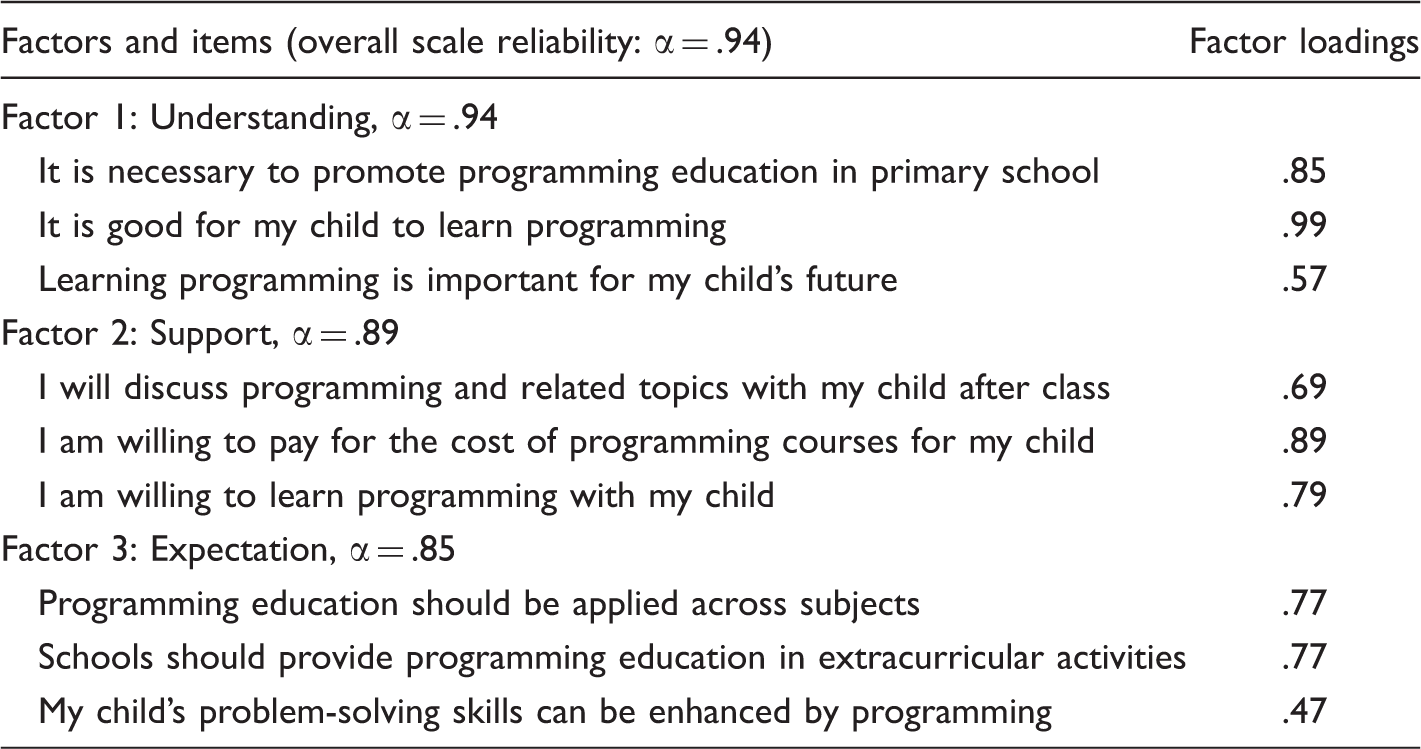
EFA was conducted with SPSS 24 to obtain a preliminary understanding of the factor structure of the parents’ perceptions of programming education. Maximum likelihood estimation with rotation method of promax with Kaiser normalization was used. Three factors were extracted according to our hypothesized factor structure of the parents’ perceptions of programming education. Based on the EFA results, the Kaiser–Meyer–Olkin measure of sampling adequacy is .92, which is greatly above the common recommended value .60. Bartlett’s test of sphericity is significant, χ2 (36) = 2136.07, p < .001. The communalities are all above .40. There are no cross-loadings among the three factors. These indicators have revealed that the factor analysis is suitable.
Exploratory Factor Analysis and Cronbach’s Alpha Reliability.
Confirmatory Factor Analysis
The Demographics of the Participants
Among those 249 respondents, 53 (21.3%) are men and 157 (63.1%) are women; 39 individuals did not report (15.7%) the gender information. In addition, 44 (17.6%) of the respondents can program while 69 (27.8%) cannot. There are 136 (54.6%) individuals who did not report this information. The data are fairly normal for all scale items.
Second-Order Confirmatory Factor Analysis
Based on the preliminary results of EFA, CFA using Amos 24 was carried out. Maximum likelihood estimation was also used in CFA, so that the estimation method was consistent with that of EFA. χ2 (df), comparative fit index (CFI), Tucker–Lewis index (TLI), and root mean square of approximation (RMSEA) were used as the fit indices for the measurement model of the parents’ perceptions of programming education. According to Hu and Bentler (1999), CFI and TLI which are greater than .90 suggest a good fit, and greater than .95 indicate an excellent fit. For RMSEA, a cut-off value close to .06 (Hu & Bentler, 1999) or the upper limit of .08 seem to be acceptable for most researchers. In the results of CFA, χ2 (23) = 48.65, p < .001, CFI = .99, TLI = .99, and RMSEA = .07; all indices suggest that the hypothesized measurement model as a second-order factor is well fitted with the current data for validating the new construct. The first-order factor loadings are ranged from .83 to .97, which confirmed convergent validity of the perception scale. The second-order factor loadings are ranged from .91 to .97. Moreover, the R2 for all subconstructs are high (understanding = .94, support = .82, and expectation = .91). The overall scale reliability is .97. To conclude, the results of the CFA study further confirm the multidimensionality of parents’ perceptions. Figure 1 shows the measurement model of the parents’ perceptions of programming education. The Cronbach’s alpha coefficients and factor loadings of the scale are listed in Table 2.
Measurement model of the parents’ perception of programming education (default model). Confirmatory Factor Analysis and Cronbach’s Alpha Reliability.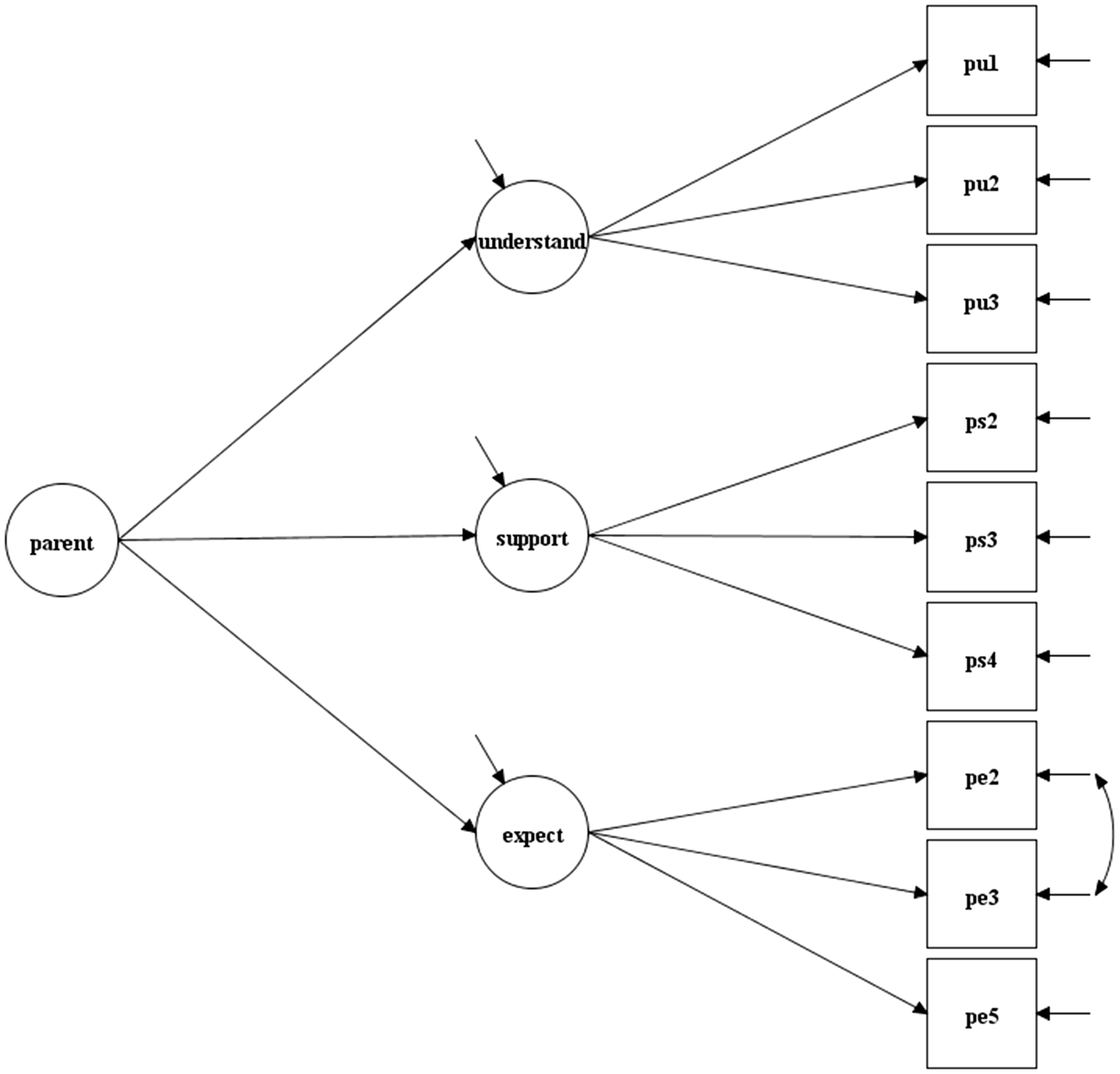
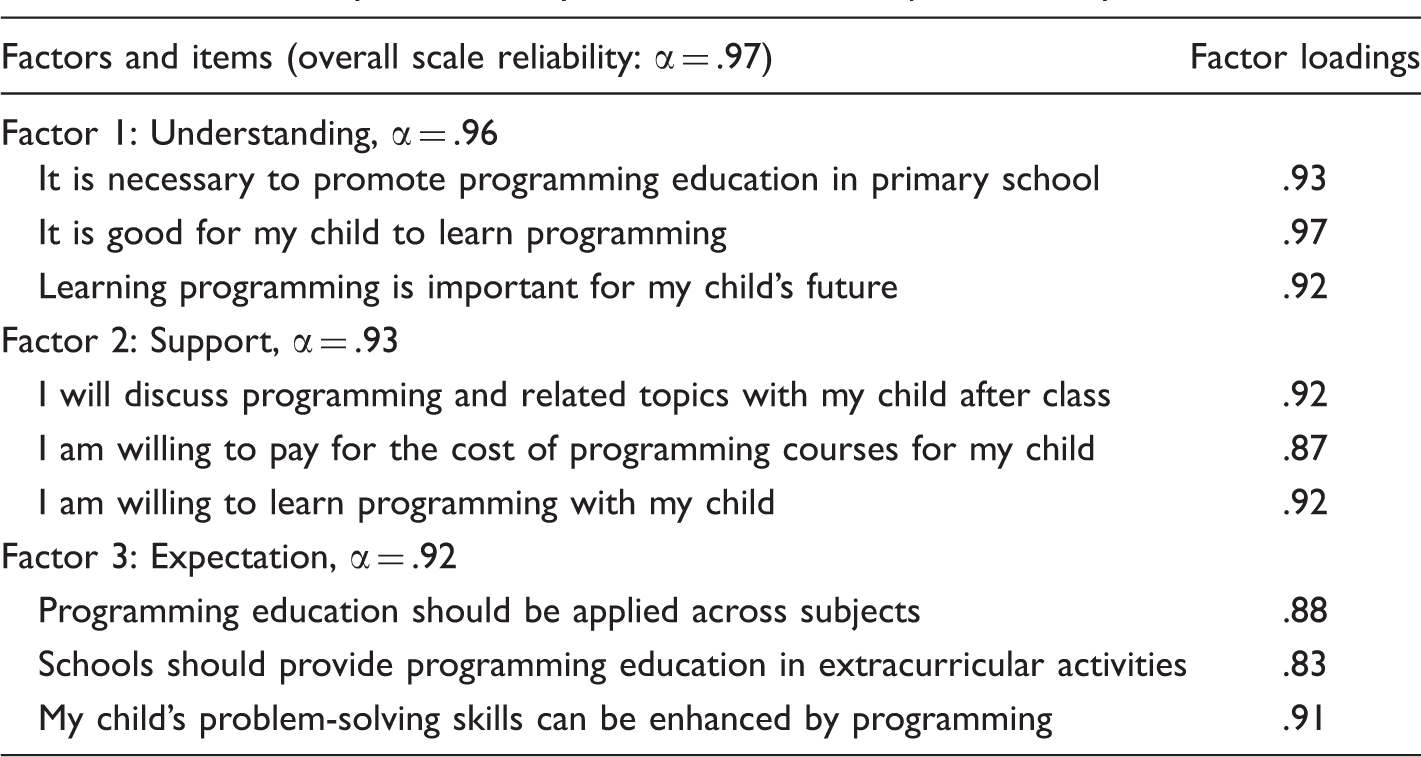
Competing Models Analysis
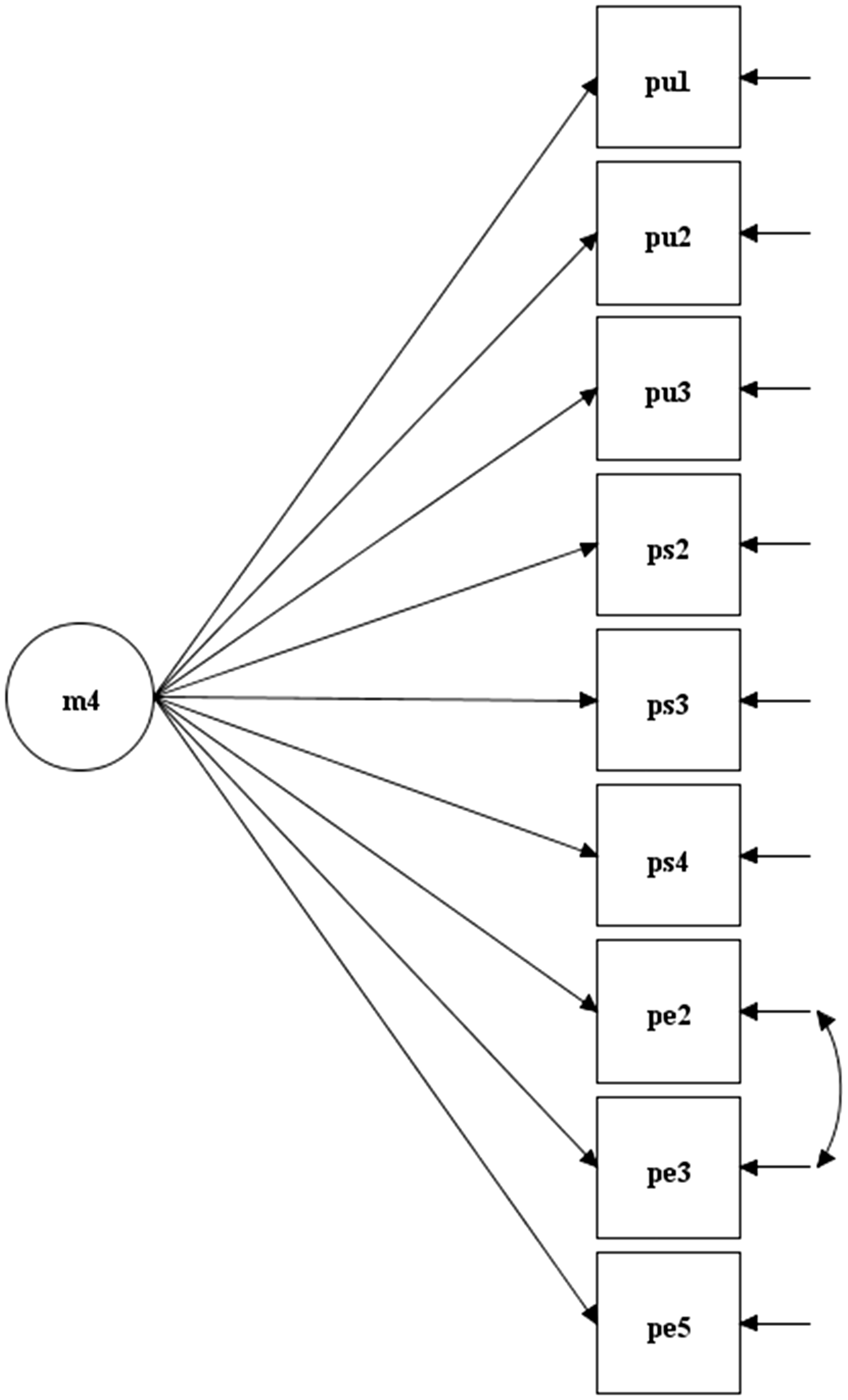
The previous CFA results demonstrate good fit of our hypothesized measurement model of parents’ perceptions of programming education as a multidimensional construct. However, there could be alternative models which fit the data equally well. Without testing for alternative models, it is “hazardous to suggest that a higher-order specification is the most suitable” (Koufteros et al. (2009, p. 634). Therefore, competing model analysis has been conducted to make comparisons between our hypothesized model (default model) and four possible options. More specifically, M1 to M3 are two-factor models by combining two subconstructs (e.g., expectation and support) into one factor. M4 is a single-factor model that all of the measuring items are loaded onto one latent variable. Figures 2 and 3 show the measurement models of M1 and M4, respectively. In the following analysis, χ2(df), CFI, TLI, and RMSEA are used as goodness of model fit indices. Also, Akaike information criterion (AIC) and Bayesian information criterion (BIC) are used for comparing separate models. Field (2009) suggested that the smaller AIC and BIC indicate better model fit.
Measurement model of M1 (two-factor model) combines support and expectation. Measurement model of M4 (single-factor model).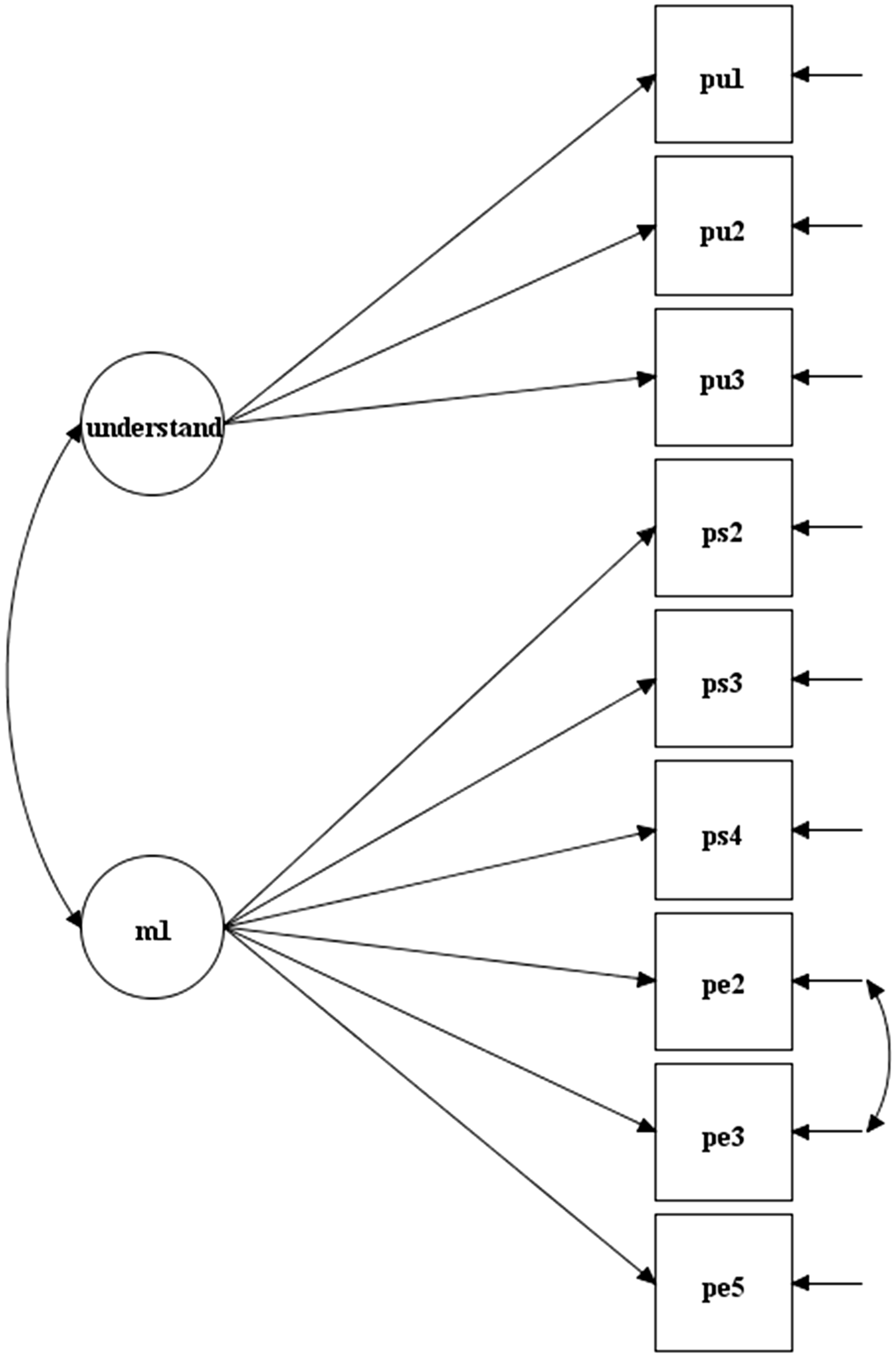
Competing Models’ Analysis for Parents’ Perception of Programming Education.
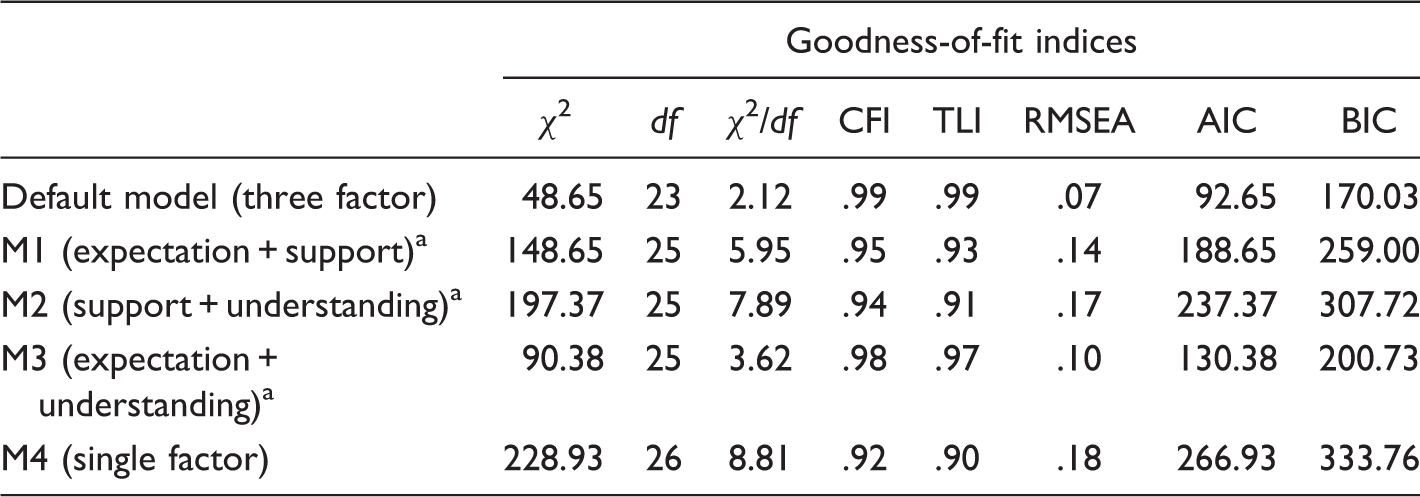
AIC = Akaike information criterion; BIC = Bayesian information criterion; CFI = comparative fit index; df = degrees of freedom; RMSEA = root man square error of approximation; TLI = Tucker–Lewis index.
aTwo-factor models.
Discussion
This research study aims at developing and validating a multidimensional measurement scale to gain insights into parents’ perceptions of programming education in P-12 schools. Overall, EFA results support the theoretical measurement structure of parents’ perceptions of programming education as a multidimensional construct. CFA further confirms the model of good fit according to the fit indices. Moreover, results of competing models analysis demonstrate that the hypothesized model is the best among all possible alternatives because the fit indices show the best fit. We therefore conclude on the newly developed scale: It sufficiently explains parents’ perceptions of programming education from the aspects of understanding, support, and expectation.
Theoretical Contributions
This study contributes to the current literature on a validated instrument for investigating the perceptions of programming education in P-12 schools from parents, an important but less-investigated stakeholder group in this aspect. There is a growing trend of developing programming education around the globe. However, the existing literature related to perceptions of programming education focuses more on the perspectives of learners and teachers (e.g., Baser, 2013; Wong et al., 2015; Zainal et al., 2012). Parents’ perceptions in this aspect have not been adequately addressed. More importantly, there is no validated instrument to assess how parents perceive programming education. In this study, the parents’ perceptions of programming education scale is developed and validated for contributing a useful tool to understand how programming education is perceived among parents. This validated scale can also serve as a stepping stone for further investigations of programming perceptions among other important stakeholder groups, such as teachers and principals. The use of validated scale for examining views from various important stakeholder groups can facilitate a comprehensive understanding of the expected programming education, and consequently a smooth development and implementation of related programming curriculum in school education (Olsen, 2004).
Limitations and Future Research Directions
Despite the contributions, there are four limitations need to be addressed for future studies. First, this study relied on the method of self-reported questionnaire survey, which may result in common-method bias that inflates relationships between variables (Podsakoff, MacKenzie, Lee, & Podsakoff, 2003). Future research could collect data from multiple sources including data of parents’ self-perceptions of programming education as well as teachers’ evaluation of parents’ involvement and attitude. Second, this study only collected quantitative data for examining perceptions. However, it is also meaningful to conduct qualitative studies on perceptions, such that researchers could “learn from the participants in a setting or a process the way they experience it, the meanings they put on it, and how they interpret what they experience” (Atieno, 2009, p. 16). In addition, longitudinal research designs could be considered for the collection of repeated observations to reveal the developmental trend of one’s perceptions across time. Third, our newly developed scale measured parents’ perceptions with a small number of items (three items for each subconstruct). It is likely that such perception scale could accommodate more measuring items for each subconstruct in the future. In addition, we recommend that researchers could explore in more depth regarding the dimensionality of this perception construct. For example, previous studies (e.g., Yamamoto, 2007; Zhan, 2005) suggested that parents with fewer resources tend to feel less confident in supporting their children with the schoolwork, and less comfortable to interact with teachers and other educational professionals, and consequently they disengage themselves from the school activities. With limited resources, parents may also develop low expectations for their children and the school because they worry that they are probably not able to provide support in a long-term base because of a lack of intellectual, material, and cultural resources (Yamamoto & Holloway, 2010). Therefore, we encourage researchers to conduct further investigation on parents’ perceived resources for children’s programming education, which might contribute to a more comprehensive understanding of parents’ perceptions of programming education in the future. Finally, this study only focused on the scale development and validation as the first priority. Future research could focus on building a nomological network of parents’ perceptions of programming education by including more predicting and outcome variables. According to Cronbach and Meehl (1955), “a necessary condition for a construct to be scientifically admissible is that it occurs in a nomological net” (p. 290). Therefore, we recommend researchers to develop more advanced hypotheses to investigate how parents’ perceptions of programming education relates to other variables, such as parents’ motivation in learning programming, parents’ programming self-efficacy, and so on.
Practical Implications
Parents understand the abilities and needs of their children. Their views and suggestions are essential for schools to develop and implement curriculum activities which enable their children to learn in the best way (Gallagher et al., 2000). The parents’ perceptions of programming education scale developed in this study provide a useful instrument for the education practitioners and the policy-makers to gain important insights from parents in three dimensions.
First, the scale can support users to reveal how much parents know about programming education. If parents show little understanding about the contents and significance of programming education for their children, policy-makers and education practitioners should enhance parents’ knowledge of programming education through, for example, seminars and workshops.
Second, the scale can support users to predict how much support parents can provide for their children in the process of learning programming. If parents show little support in this aspect, school policies should be considered to increase parents’ motivation to engage more in their children’s process of learning programming.
Third, the scale can support users to know parents’ preferred contents and ways that their children receive programming education. For example, programming education can be implemented either across school subjects or in extracurricular activities. Parents’ views on the benefits of formal versus informal curriculum arrangements in this aspect can influence their children’s persistence and motivation in learning (El Nokali, Bachman, & Votruba-Drzal, 2010; Gonzalez-DeHass, Willems, & Holbein, 2005), which will in turn affect the effectiveness of course implementation and course overall performance.
Conclusion
Parents are one of the influential stakeholder groups in school education. Their views are important for the successful establishment and implementation of education policies in schools. The current literature on programming education mainly revolves around the views of learners and teachers; less attention is put on parents’ perceptions. This study therefore fills this gap to develop the scale of parents’ perceptions of programming education in P-12 schools. The scale is validated by the EFA and CFA with competing model analysis of survey responses from 524 parents. The results of this study confirm the hypothesized construct that consists of three subcomponents, namely understanding, support, and expectation. The use of this scale can efficiently investigate how parents perceive programming education in P-12 schools. This can help policy-makers and education practitioners to better plan and improve programming education in the future.
Footnotes
Declaration of Conflicting Interests
The authors declared no potential conflicts of interest with respect to the research, authorship, and/or publication of this article.
Funding
The authors received no financial support for the research, authorship, and/or publication of this article.