







Abstract
Augmented Reality (AR) flashcards have emerged as an important educational resource for language learning. However, there is limited research on its application in early childhood education. This article aims to explore the technology’s value in early childhood education by comparing it with traditional paper flashcards. To that end, a study was conducted in which 98 children, aged between 5 and 6 years, and four teachers, all from a Macau kindergarten, took part. One group of children had animal-related vocabulary using AR flashcards, while another group used traditional flashcards. To measure the effectiveness of the two approaches, the children underwent pre- and posttests on their vocabulary and the teachers were interviewed. For the data analysis, paired-sample t tests and independent-sample t tests were utilized, and the level of effect was measured. The results showed that both AR and traditional flashcards could significantly improve children’s vocabulary learning and that there was no significant difference in effectiveness between the AR and traditional flashcard methods. The teachers indicated that the children enjoyed the AR learning activities, but that there were certain challenges associated with using AR flashcards in a kindergarten setting.
Introduction
Vocabulary expansion is quite common in early childhood, and kindergarten is an essential part of young children’s language acquisition (Miralpeix, 2006; Singleton & Ryan, 2004). Even though expanding children’s vocabulary is increasingly being recognized as critical to learning, it does not come easily to every child. Therefore, a number of learning materials and resources are provided for children to enhance their vocabulary learning (Scott & Ytreberg, 1990), including flashcards, which are one of the most common tools used by teachers for vocabulary instruction (Oxford & Crookall, 1990). There are different types of flashcards—traditional paper flashcards, virtual flashcards, and Augmented Reality (AR) flashcards.
Traditional Paper Flashcards
Traditional flashcards are made of paper and bear basic information, such as a word and the associated image. Pupils generally like using flashcards for self-testing purposes (Oxford & Crookall, 1990). Flashcards allow them to connect the meaning of new words to simple pictures. Traditional flashcards can be used in different ways to enhance children’s vocabulary learning (Nist & Joseph, 2008), and many researchers have conducted experiments and demonstrated the effectiveness and helpfulness of traditional paper flashcards in language learning. Herlina and Dewi (2017) used flashcards to teach vocabulary to grade 3 pupils in Indonesia and found that they were helpful in classroom instructions due to the relative ease in making them. Tan and Nicholson (1997) showed that flashcards increased poor readers’ speed in word reading. However, traditional paper flashcards have some limitations. For example, the visual clues are only to the meaning of the words, and the pronunciation remains absent. Children may find it hard to associate and integrate the meaning of a word with its pronunciation. Moreover, traditional flashcard images are still, and therefore children’s perception of the vocabulary may be limited to a certain perspective. They may not be able to manipulate or expand the visual clues on the flashcards due to their perceptions, and this could limit their engagement with traditional paper flashcards.
Virtual Flashcards
Since interaction is beneficial in terms of engaging learners with a creative learning experience (Beaudin, Intille, Tapia, Rockinson, & Morris, 2007; Li, Chen, & Whittinghill, 2014), flashcards with digital characteristics were developed and applied to language learning. They are called virtual or digital flashcards, come in various formats, and run on computers or mobile devices. These virtual flashcards offer users all the necessary information, such as words, images, pronunciations, animations and videos, and so on, to learn the required vocabulary in a virtual environment (Nakata, 2011). For example, Baicizhan (https://www.baicizhan.com/) is a kind of virtual flashcard application, with which users can learn words by listening to their pronunciation. They can also view short animations to understand the meaning of the vocabulary, and examples are offered of how the words are used in sentences. As a virtual tool, virtual flashcards can enrich the learning experience through a double (visual and audio) channel (Ruwe, McLaughlin, Derby, & Johnson, 2011). Animation and videos also add fun to the learning process and lead to better learning outcomes (Aghlara & Tamjid, 2011; Zhu, Fung, & Wang, 2012). Researchers have claimed that virtual flashcards have a number of advantages over traditional flashcards (Azabdaftari & Mozaheb, 2012), and are a promising alternative method to learn vocabulary (Hung, 2015). However, virtual flashcards also have some shortcomings. First, they are by necessity embedded in a computing device, and are therefore not easily transportable, compared to traditional flashcards. Second, virtual pictures are two-dimensional (2D) and lack a three-dimensional (3D) perspective that would give learners a more comprehensive view. Third, experiencing a wholly virtual environment can be less instructive than experiencing a combination of real and virtual worlds (Fujimoto, Yamamoto, Taketomi, Miyazaki, & Kato, 2013; Zacharia, 2007).
AR Flashcards
AR flashcards are relatively new to the market. AR is a technology that can superimpose upon or composite virtual objects with the real world (Azuma, 1997). AR flashcards are learning materials that go beyond both traditional paper flashcards and virtual flashcards. Learners can have the experience of conventional flashcards by holding the AR flashcards physically. In addition, they can use a mobile device to trigger the virtual features by scanning the flashcards (Cawood, Fiala, & Steinberg, 2007). Once the flashcards have been identified by the mobile device, their corresponding 3D virtual graphics can overlay onto the flashcards (Furht, 2011). Learners can interact with the virtual objects as if the objects are immersed into their environment. They can observe a specific perspective of the virtual object by controlling the mobile device. They can even take photos of the virtual object, and the 3D object comes alive if they double click on it. For example, if an AR flashcard bird is triggered, a virtual bird will appear on the mobile device and learners can control its size and bring it to life. The bird will react by flapping its wings and chirping sweetly. Researchers synthesized previous studies and summarized the characteristics of AR into five categories (Wu, Lee, Chang, & Liang, 2013). First, AR provides learning content in a 3D perspective. Second, AR applications with games, models, and simulations provide ubiquitous, collaborative, and situated learning. Third, the mix of real content and multimedia content that AR systems offer mediates children’s sense of presence, immediacy, and immersion. Fourth, visualizing the invisible is possible with AR systems. And finally, learning in formal and informal environments can be bridged with the use of AR.
The findings of previous research have shown that AR applications have the following educational uses: supporting book readings (Hornecker & Dünser, 2007), making the learning experience more interactive and appealing (Fujimoto et al., 2013; Santos et al., 2016), increasing motivation (Di Serio, Ibáñez, & Kloos, 2013), drawing attention (Aziz, Aziz, Yusof, & Paul, 2012), establishing links with real life experiences (Ternier, Klemke, Kalz, Ulzen, & Specht, 2012), offering opportunities for more authentic learning and appealing to multiple learning styles (Yuen, 2011), and increasing learners’ performance in vocabulary expansion (Solak & Cakir, 2016).
Despite its vast potential, there are limitations even with AR in the teaching and learning process, which could affect its use in classrooms. For example, students can experience a cognitive overload in an AR learning environment, where a wealth of information is presented through various technological devices (Dunleavy, Dede, & Mitchell, 2009). The students also have to use complex skills to conduct an open-ended investigation, and they might be confused in the mixed reality/fantasy situation (Wu et al., 2013). Moreover, the exploratory instructional approach of AR applications might not be compatible with the limited instructional time of a classroom environment. It can be quite challenging for teachers to design instructional practices with the use of AR applications. The inflexibility of the content of AR products is another limitation (Luckin & Fraser, 2011). Teachers might not be able to easily adapt the AR content to their instructional needs because making changes to AR content typically requires a rich skill set. And finally, the efficiency and effectiveness of AR applications can be overrated. Hornecker and Dünser (2007) found that AR applications might not always bring about better learning outcomes or higher motivation.
The application of AR in language learning has attracted the attention of numerous educators. For example, Tan and Lui (2004) designed a Mobile-Based Interactive Learning Environment (MOBILE) to help Japanese elementary school pupils improve their knowledge of English. Liu (2009) designed an AR-supported ubiquitous learning environment for teaching English. Grade 7 students’ performance in an experimental group was superior to that of a control group after a period of 8 weeks’ training. Barreira, Bessa, Pereira, Adão, Peres, and Magalhães (2012) designed an AR vocabulary game called Matching Objects and Words (MOW) and compared the learning improvements in 26 elementary school pupils, aged 7 to 9 years, using the game and traditional teaching methods. The results showed that the children learning vocabulary with AR had a learning gain. In addition, the pupils reported that the AR game was easy to use. Mahadzir and Phung (2013) designed an AR pop-up book based on Keller’s ARCS model—Attention, Relevance, Confidence, and Satisfaction. Year 1 pupils’ interview responses showed that on the whole they were motivated to read the AR book. Solak and Cakir (2016) studied the effects of AR 3D educational materials on vocabulary expansion in a fifth-grade language class in Turkey. They found that using AR materials was more effective than traditional methods in teaching vocabulary. The studies listed earlier show that AR applications can be suitable for use in various areas of language learning.
However, Antonioli, Blake, and Sparks (2014) reported that most researchers exploring the effectiveness of AR technology were focusing on adolescent and adult learners, and not on the early childhood years. This was confirmed by another systematic review conducted by Akçayır and Akçayır (2017). Their review showed that the majority of participants in studies done between the years 2007 and 2015 were K-12 and higher-education students. Only six studies had looked at kindergarten children as the target group. It is therefore clear that research exploring the impact of AR on young children’s learning performance is quite scarce, and the 2017 review called for more research on AR applications that targets young children.
Despite the ongoing debate on the use of AR in education, more and more AR products are becoming available on the market, and many of them are targeted at young children. An example is Orboot (https://www.kickstarter.com/projects/playshifu/orboot-a-magical-augmented-reality-globe), an AR product that was launched by PlayShifu, a gaming company. Orboot is a 10-in. globe that can be scanned with mobile devices through the Orboot app. Children can enjoy an immersive experience specific to a certain location on the globe by exploring various items of information, such as animals, mountains, cuisines, inventions, arts and culture, maps, and climate. Another example is an AR storybook called Wonderbook: Book of Spells (https://harrypotter.wikia.com/wiki/Wonderbook:_Book_of_Spells) that was released by Sony and J. K. Rowling in 2012. The storybook allows children to cast spells, with the resultant event taking place around them.
Various AR flashcards themes are also available on the market. For example, the Animal 4D+ is a series of AR flashcards that tell stories about animals. Children can test their knowledge of animals by playing a game provided in the app. In addition, they can feed the animals by combining the Animal 4D+ flashcards and the Animal 4D+ foodcards. Given that AR products are already being used in classrooms, it is necessary to study their impact on young children. Moreover, early childhood teachers might be interested in knowing how to integrate such products into their existing repertoire of instructional tools. To fill the gap in the literature, this study explored the use of AR flashcards for vocabulary learning in the context of early childhood education. It is hoped that the results of the study might provide insights for teachers and parents who would like to know more about the value of AR in relation to vocabulary expansion and students’ reaction.
Research Questions
Based on the literature listed earlier, the purpose of this study was to explore the effects of using AR flashcards, as opposed to traditional paper ones, on English vocabulary learning in the context of early childhood education. The specific research questions of the study are listed as follows:
Would the children see any significant improvements in their vocabulary, between the pretest and the posttest, with the use of AR flashcards? Would there be any significant differences in the learning gains from using AR flashcards or traditional paper flashcards? What would the teachers’ opinions be about using AR flashcards to support children’s vocabulary learning?
Method
Research Design
Two-Group Pretest and Posttest Experimental Design.

Participants
An invitation letter was sent to a kindergarten in Macau that follows the Cambridge curriculum. It was believed that there was a higher chance that this kindergarten would accept an innovative new practice compared to other schools. Since this school strives to create an international and multicultural atmosphere, its medium of instruction is English and the students are of diverse nationalities, while the teachers are recruited internationally. The participants were four classes of K3 pupils and their four classroom teachers. Due to their lack of experience in using AR flashcards, the four teachers did not want to carry out the AR instruction themselves, but they did agree to participate in the study by observing and discussing the design of the instructional activities. There were a total of 98 children, aged between 5 and 6 years. The four classes were divided into two groups—the experimental group and the control group—based on the results of the pretest scores, which ensured that the two groups were equivalent in knowledge and skills.
The Flashcards Used for the Intervention
AR flashcards
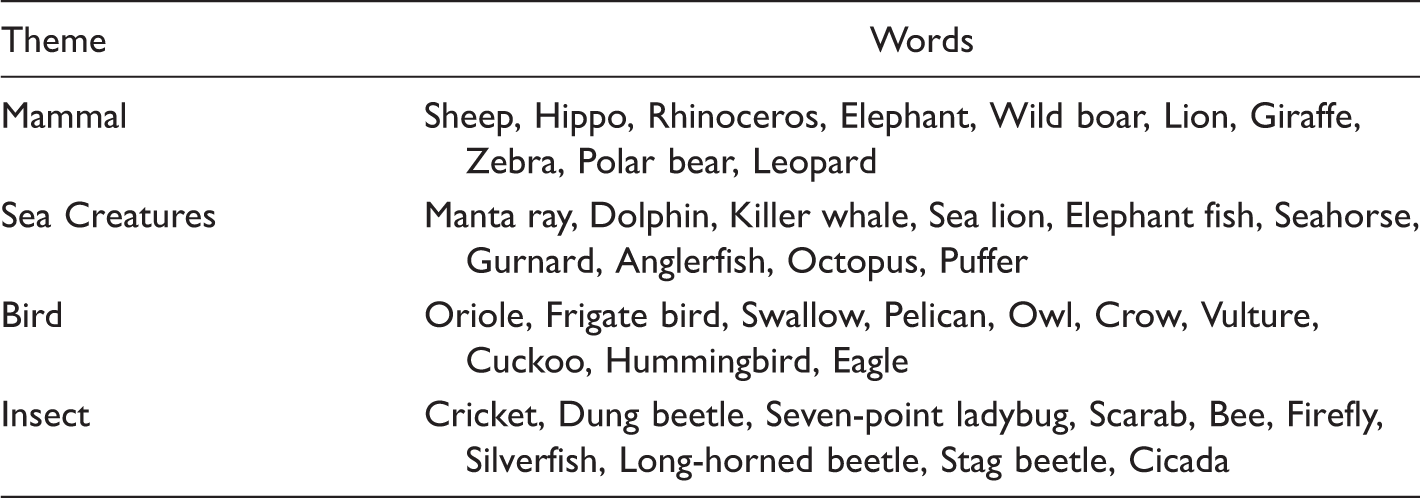
A set of AR flashcards was selected after comparing existing AR flashcards in the market. These flashcards were animal-themed, and there were 10 groups of vocabulary. After a discussion with the four kindergarten teachers, four groups—mammals, sea creatures, birds, and insects—were chosen, based on the criteria of relevance and the children’s abilities.
Traditional paper flashcards
The traditional paper flashcards were of the same target words, and were rectangular, with one side bearing the word and the other side the image. It is important to note that the pictures of the animals on the paper flashcards were the same as those on the AR flashcards.
The Process of Intervention
List of Animal Vocabulary.
Learning Activities of Experimental and Control Group.
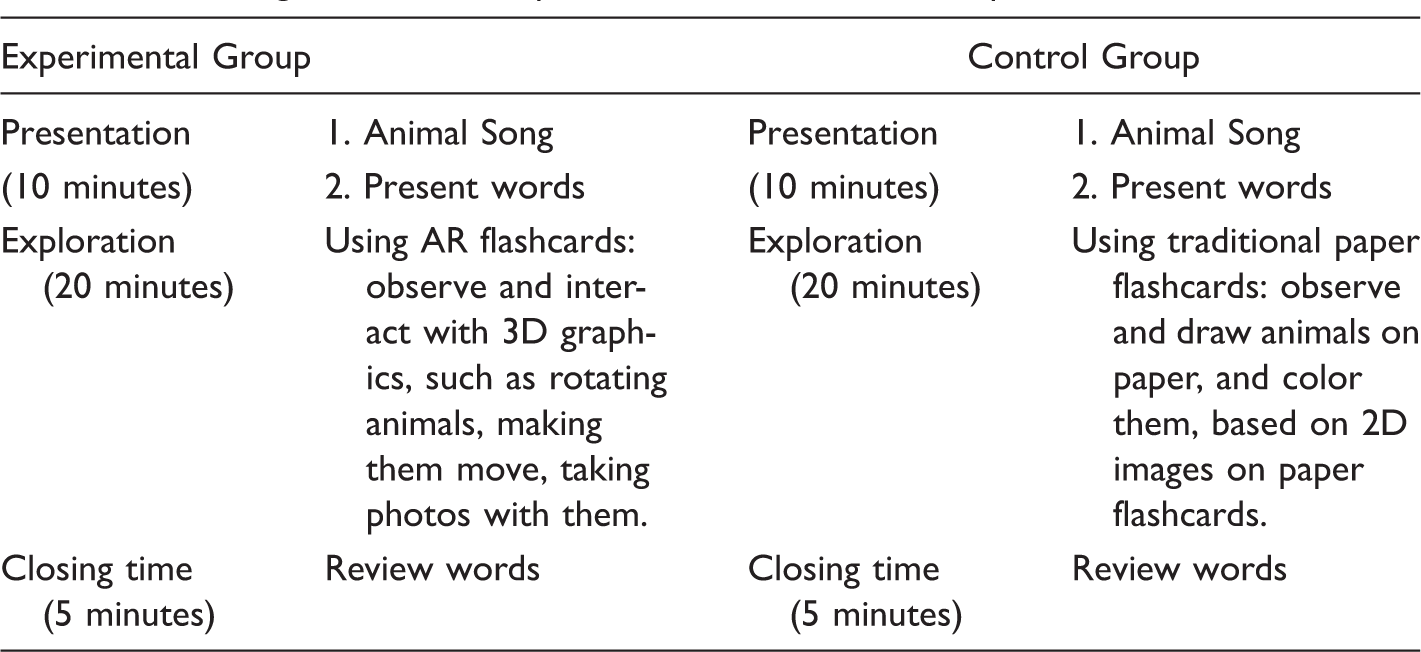
The children in the control group were shown the same animals using traditional 2D flashcards and were asked to draw their observations on a piece of paper. A snapshot of the exploration time of the experimental and the control group is shown in Figure 1.
Snapshot of exploration time of the experimental and the control group.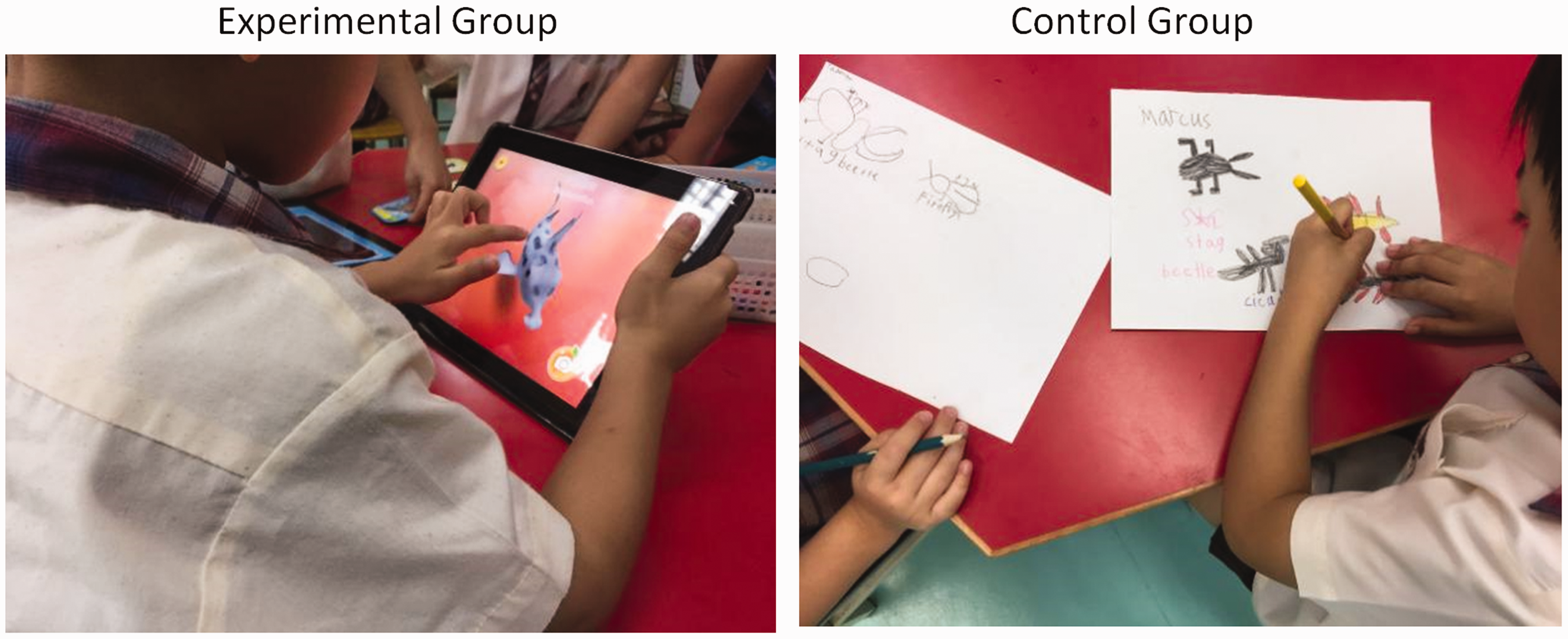
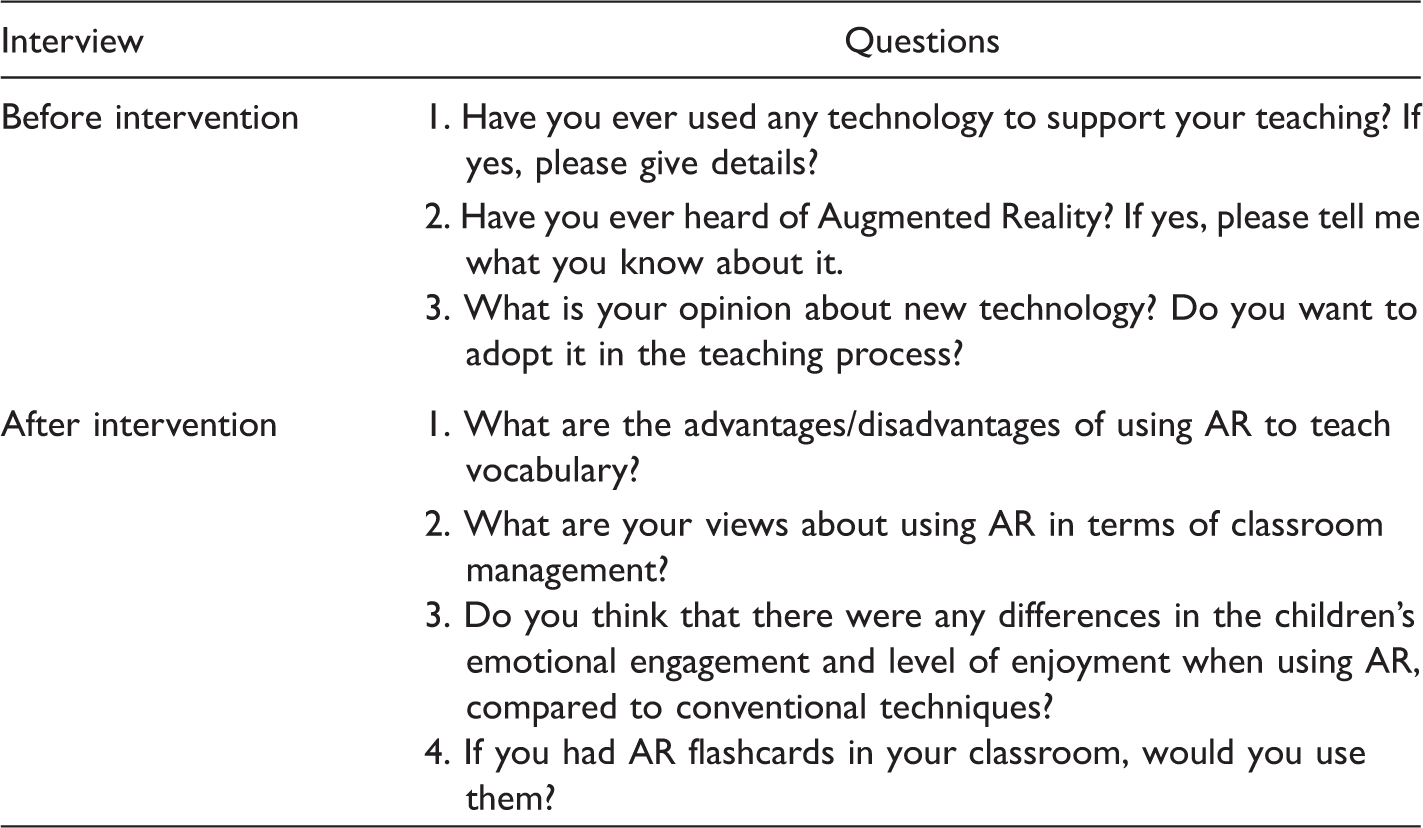
These learning activities were carried out once a week and lasted for 4 weeks, with the children learning a set of words every week. After the intervention, the children took a vocabulary posttest, and the teachers were interviewed again so that they could discuss their opinions about using AR flashcards for vocabulary learning.
The AR instructor was a Year-2 Master’s student. Her first degree was a Bachelor of Education degree on early childhood education, and she also had 2 years of work experience in kindergartens in Guangzhou, China. All the lessons she devised were endorsed by the four teachers and by a professor in teacher education. The teachers were invited to attend the lessons so that they could support the instructor in conducting the teaching. Another reason for their presence in the classrooms was to develop their understanding of and confidence in using AR flashcards for vocabulary learning.
Data Collection Tools
Two data collection tools were used. A vocabulary test was used to access the learning performance of children. It included 40 multiple-choice questions, and a sample of the test is listed in Figure 2. These questions included all of the words that the children had been taught during the study and were used in both the pretest and the posttest, but the items and the item options were presented in a different order.
A sample of vocabulary test.
Interview Protocol.
Data Analysis
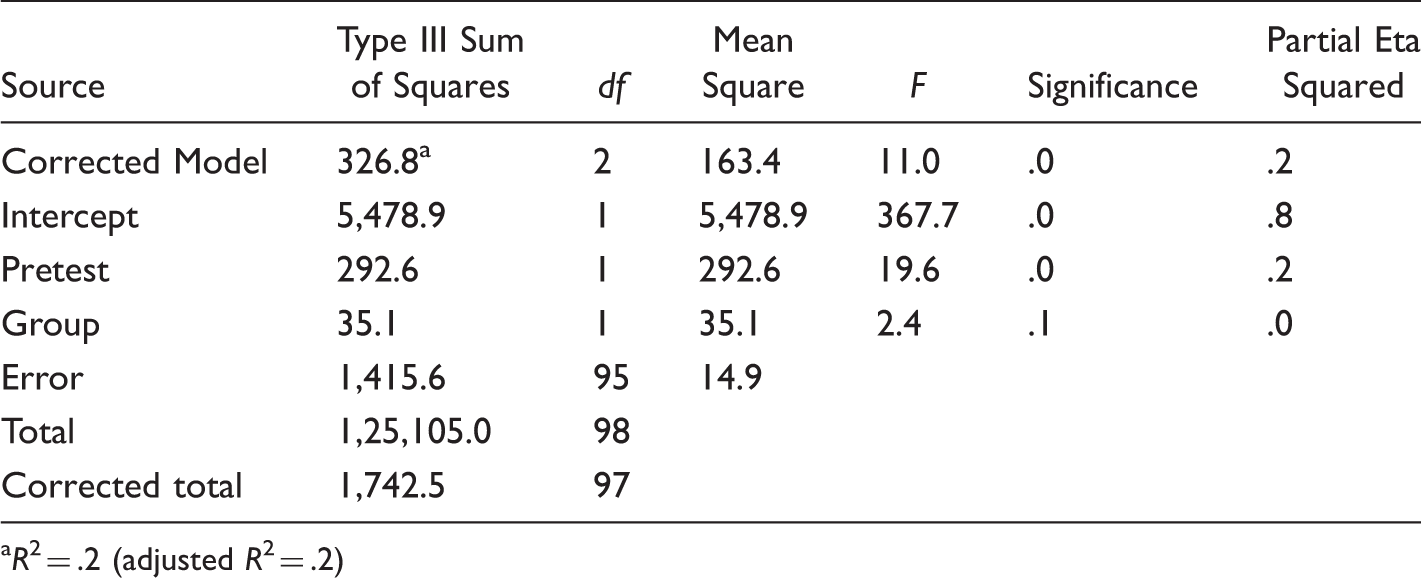
The children’s learning gains were measured using the statistical analysis of a t test in SPSS 24. A paired-sample t test was administered to establish whether there was a significant difference between the pretest results of the control and experimental groups. The pretest results of the control group (M = 22.35) were very close to the results of the experimental group (M = 22.4), and therefore no statistically significant differences were found between the two groups. This proved that the two groups were indeed equivalent and comparable. The learning gains of the two groups were then computed, and one-way analysis of covariance (ANCOVA) was conducted by controlling the pretest measure. The teachers’ opinions were recorded and fully transcribed. Their views on the use of technology were coded accordingly.
Results
Learning Gains: Using AR Flashcards, the Children Made Significant Progress
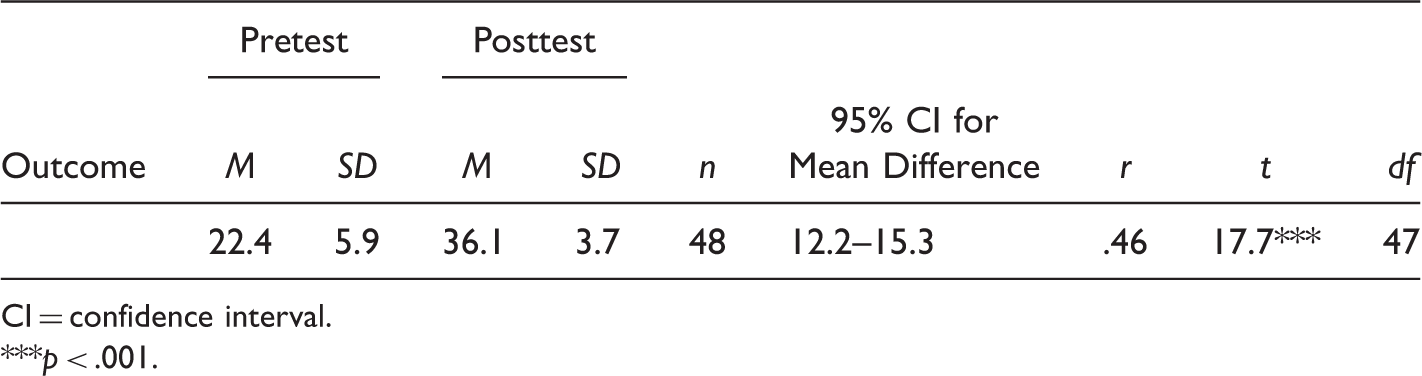
Results of t Test and Descriptive Statistics for Experimental Group Learning Scores.
CI = confidence interval.
p < .001.
Moreover, the effect size found in the experimental group was d = 2.6, and according to Cohen’s classified effect sizes (0.2 = small effect, 0.5 = medium effect, 0.8 = large effect), it is clear that the children who used AR flashcards made highly significant progress.
Learning Gains: Using Traditional Paper Flashcards, the Children Also Made Significant Progress
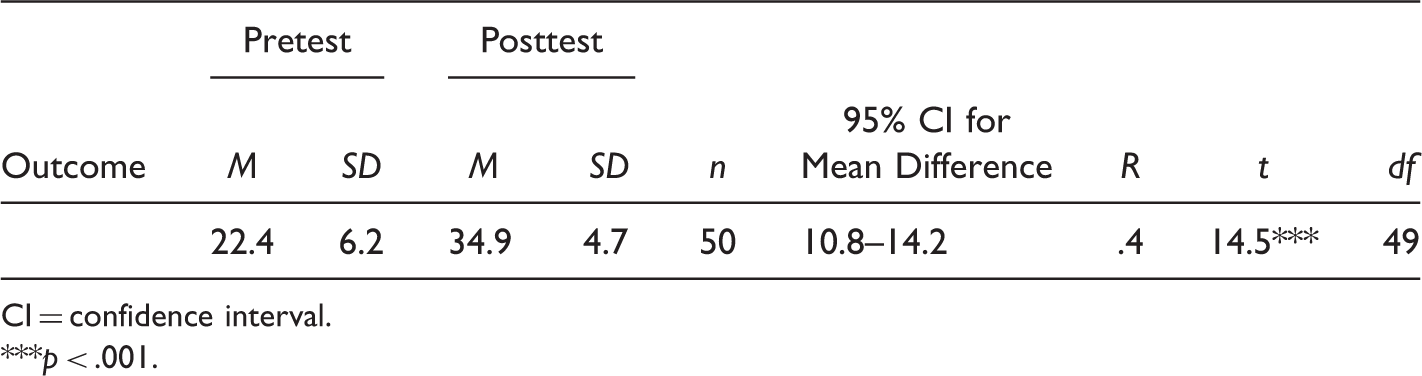
Results of t Test and Descriptive Statistics for Control Group Learning Scores.
CI = confidence interval.
p < .001.
Learning Gains: There Were No Significant Differences in The Learning Gains Between Using AR Flashcards and Traditional Paper Flashcards
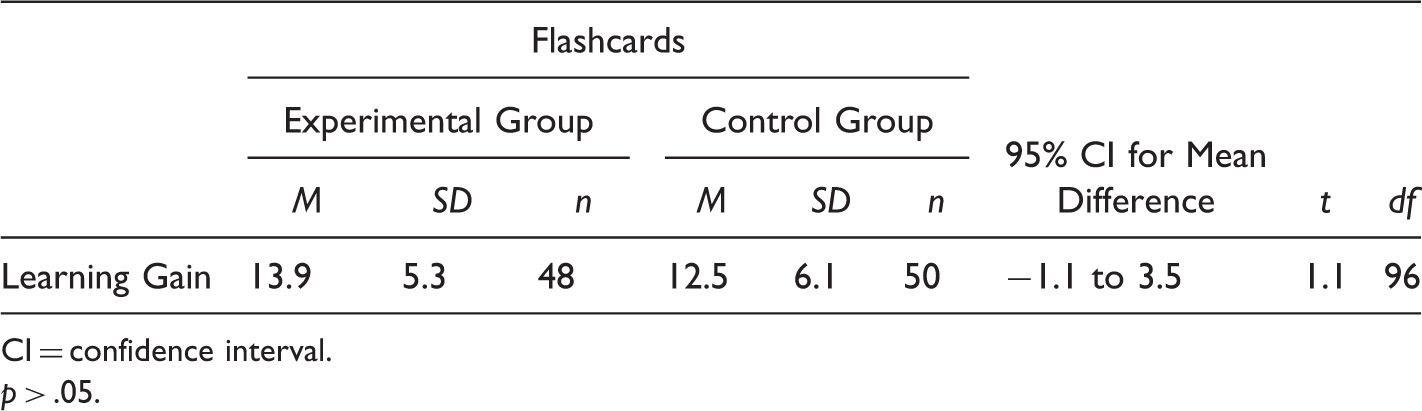
Results of t Test and Descriptive Statistics for Learning Gains of the Two Groups.
CI = confidence interval.
p > .05.
Results of One-Way ANCOVA for the Two Groups.
R2 = .2 (adjusted R2 = .2)
Teachers’ Attitudes Toward New Technology
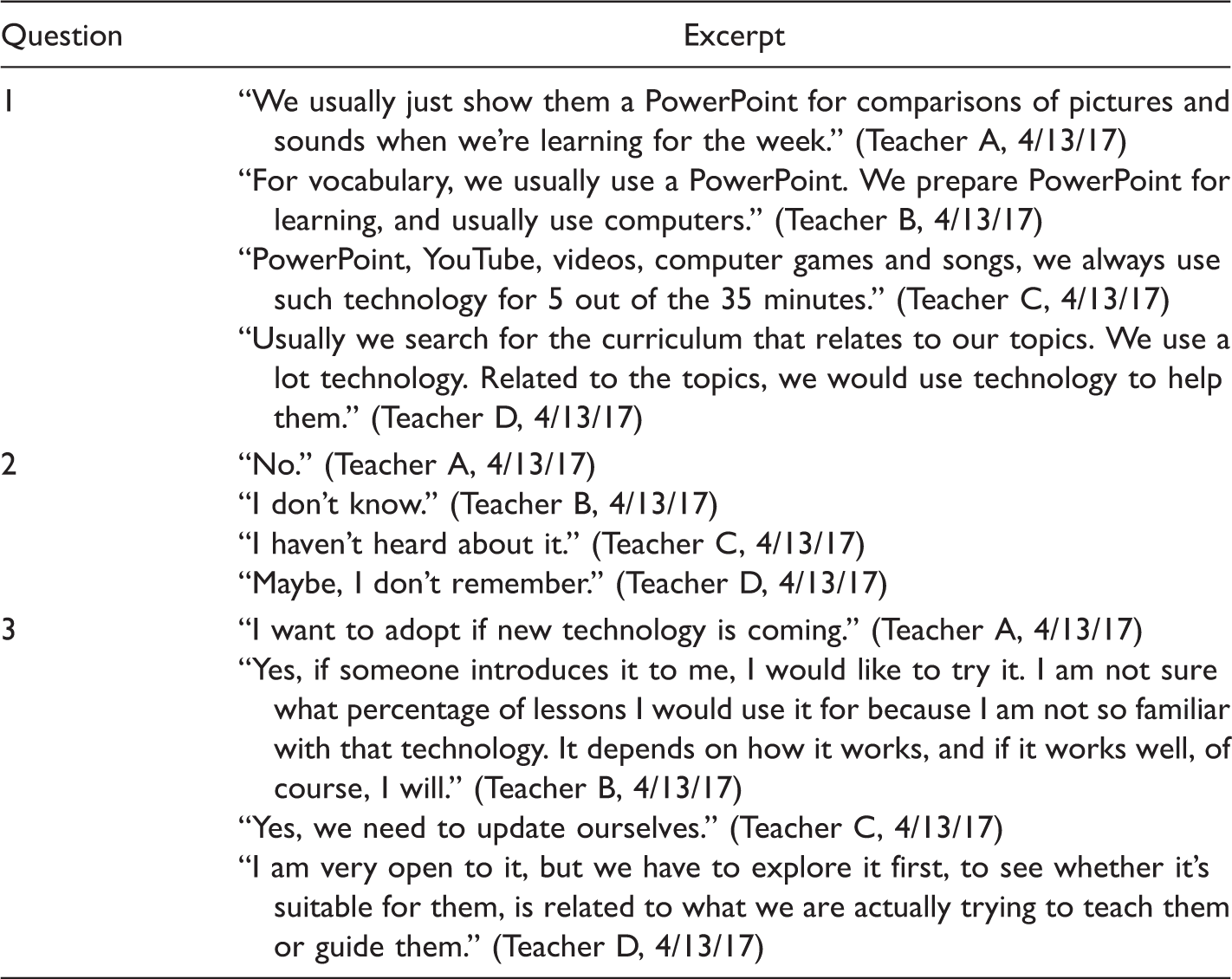
To find out the teachers’ opinions about new technology and their perceptions of the value of using AR flashcards in an early childhood context, we interviewed the teachers twice.
Teacher Responses Before the Intervention of AR Technology.
Teachers’ observations of AR instruction in the classroom
The teachers stated that using AR flashcards on iPads seemed to capture the children’s attention because they could manipulate the objects and interact with them. The children apparently found the experience highly enjoyable. The following excerpts illustrate the type of observations made by the teachers: They get to enjoy the lesson, and at the same time they learn, not just like showing pictures for one time, and then the picture doesn’t move, you know. The generation now is more into technology. Their attention span increases because the pictures are moving, and then they get to that. (Teacher A, 6/30/17) They are happy to use iPads. I think they like it because they can actually manipulate the images so that the picture jumps out, and then they see a lot of animal stuff, so that attracts them. (Teacher D, 6/30/17) I think it’s very helpful that they get to play with it, and at the same time their attention span increases because the pictures are moving and then they get to that. (Teacher A, 6/30/17) I think it would be more effective if there were fewer animals. The fewer animals you present, the better their retention. (Teacher A, 6/30/17) I think it might just be that they focus on the animations, they just focus on the pictures of the animals, and maybe some of them really do focus on the words but they don’t actually learn that recognition very well, and the information might not get stored. It would not necessarily help them retain the information for longer. (Teacher D, 6/30/17) Managing a whole class is very hard, so when using AR, we have to have a clear plan in mind so that we get a better result. (Teacher A, 6/30/17) As for an entire class, I think it’s not advisable because the children are not in an IT room, they are in a classroom, so as a whole table working together I think most of them might not be focusing, they only focus on the animation part and the sound part. It’s very noisy, and there are no rules, so they can do anything they want. (Teacher D, 6/30/17) I would if I had to, but the problem is that we will need to incorporate a lot of other tasks as well, and that means fun and playing and learning together all come in. (Teacher D, 6/30/17)
Discussion
This study explored the potential value in using AR flashcards for vocabulary learning in the context of early childhood education. The results of the learning gains using AR flashcards and traditional paper flashcards showed that both approaches were useful in helping pupils acquire vocabulary. The children made significant progress in terms of their vocabulary after flashcards were introduced. These findings seem to suggest that AR technology can help learners improve their scores, but a comparison of the effect of AR flashcards to that of traditional flashcards showed that there were no significant differences between the two methods.
This outcome contrasts with the findings of previous studies (Barreira et al., 2012; Solak & Cakir, 2016). One of the reasons for this discrepancy might be due to the relative similarity between the learning activities. The only real difference between the two groups was the exploration time. All of the children were directed to focus on the features of the animals, and the children in the experimental group were guided to zoom-in on the 3D cuckoo and watch its long tail, while the children in the control group were instructed to specifically observe the bird’s tail. The children in the experimental group could have been distracted by the animation and might not follow the instructor’s guidelines. Moreover, the rich content of an AR learning environment can overburden young children’s cognitive abilities and may affect their learning outcomes (Dunleavy et al., 2009; Wu et al., 2013).
Another potential source of cognitive overload may have been the large numbers of words that the instructor planned for each lesson. The difficulty in measuring the children’s word acquisition might also explain the insignificant differences between the experimental group and the control group. For example, the learning experience in the experimental group may include knowledge about the animals far beyond just learning the relevant words. Nevertheless, this study revealed that AR flashcards generally had the same effect as traditional paper flashcards in terms of vocabulary expansion and that kindergarten teachers could consider AR flashcards as an additional resource to improve young children’s learning of vocabulary.
The results of the teacher interviews suggested that early childhood practitioners do often use technology in the classroom. In the case of the four teachers who participated in this study, it was found that their prior knowledge of technology did not include AR flashcards. However, they were quite open to new technologies, and after the study was completed, they gained a level of understanding of AR flashcard applications in a classroom setting. They also found that the attention spans of the children were increased with the use of AR (Aziz et al., 2012), and that the children enjoyed the AR learning experience (Juan, Llop, Abad, & Lluch, 2010; Rasalingam, Muniandy, & Rass, 2014). In this study, the teachers’ opinions about AR technology were mostly positive, because the children maintained a high level of enjoyment and engagement during the process. The study also showed teacher attitudes toward AR technology were critical. They were concerned about the effects of AR flashcards in terms of learning. They expressed the view that special efforts should be made by teachers so that pupils with different learning styles can benefit from the AR learning experience to the same extent as their peers. Furthermore, the teachers appeared to develop a knowledge and understanding of the limitations AR flashcard technology in classroom settings, but their willingness to use AR technology was notable.
The attitudes of teachers and students are important in developing and promoting new learning materials and tools. This is because the teachers choose the learning materials and tools used in a lesson. Their positive attitude toward new technology is highly related to their adoption of technology in the classroom. Children’s engagement and enjoyment in the activity is critical too as enjoyment can result in better learning gains (Giannakos, 2013). In summary, the children in this study made significant progress in terms of animal vocabulary after using AR flashcards, and their teachers generally had a positive attitude toward using this emerging technology. However, we did not find significant differences between the effects of AR flashcards and traditional flashcards.
This study has contributed to existing research by presenting an instructional design using commercially available AR flashcards in a real classroom setting. It has provided empirical evidence on the effects of using AR flashcards in the context of early childhood education. It has confirmed that the use of AR flashcards with young children and kindergarten teachers developed a number of conceptions as to the value and limitations of AR flashcard technology. These may enrich the potential uses of learning materials for kindergarten children.
Limitations and Directions for the Future
This study had a few limitations. First, the testing format may not have been the best for kindergarten children. Second, at the time it was conducted, there was no existing scale that was suitable for our target participants, so we did not employ any scale to measure enjoyment. Furthermore, it would have been better if there had been a delay in the posttest so that we could verify whether the results were due to the AR technology itself or its novelty effect.
For future research, more children from different backgrounds and geographical locations should be included. Since the children who participated in this study were all from a Macau kindergarten that uses English as the medium of instruction, the results may have been different if the participants were from kindergartens that use Chinese as the medium of instruction and English as a foreign language. Moreover, children’s enjoyment, engagement, and motivation levels may be included in future work. Finally, there are a great many different topics that children learn in kindergartens, such as basic science, mathematics, and music. Therefore, future researchers may explore the potential of AR technology to improve kindergarten children’s learning in other areas.
Conclusions
AR technology is becoming a common feature in society. Its application in education has great potential. This study has shown that using AR technology can improve vocabulary learning in kindergartens, and more early childhood practitioners may devise instruction courses based on AR flashcard technology in order to enhance children’s vocabulary expansion.
Footnotes
Declaration of Conflicting Interests
The authors declared no potential conflicts of interest with respect to the research, authorship, and/or publication of this article.
Funding
The authors received no financial support for the research, authorship, and/or publication of this article.