







Abstract
A scaffolding-based mind tool was designed to allow teachers to easily create lesson plans for in-class gamified activities and to embed various scaffoldings in the lesson plan design. The purpose of this study was to investigate the learning outcomes of a scaffolding-based mind tool integrated with gamified learning activities applied to a science course. The study was conducted to investigate students' learning outcomes, flow, and qualitative feedback on the scaffolding-based mind tool. A total of 134 high school students participated in the experiment. The results showed that the gamified activity with the scaffolding-based mindtool significantly improved students' learning effectiveness, but the learning effectiveness did not differ significantly from that of the students in the lecture-based instruction. In addition, the study found that the learners' flow was high, the students were engaged in the activity. The qualitative feedback analysis also revealed high positive evaluations of the usefulness of the gamified activity, mind tool, and scaffolds. In addition, students with low prior knowledge or low learning effectiveness had significantly higher active engagement in flow than those with high prior knowledge/learning effectiveness.
Introduction
Gamification is a method of using game design elements in non-game contexts, such as in business activities and teaching practices (Deterding et al., 2011; Seaborn & Fels, 2015). While using gamification for learning is a teaching strategy that incorporates game mechanics into learning activities to engage students (Kim et al., 2018). Applying gamification in instruction, teachers can incorporate game elements into their classroom teaching, allowing students to work in groups, interact with cards, and compete for points in tasks. The most frequently used elements of gamified learning are “points, badges, and leaderboards” (Manzano-León et al., 2021). In previous studies, it has been shown that gamified activities have a positive effect on learning effectiveness and participation level (Purgina et al., 2020). Through the feedback of these three mechanisms, students are able to check their self-learning status during the process, and teachers can promote learners’ learning motivation through these mechanisms. (Kim & Castelli, 2021) Laine and Lindberg (2020) suggest that feedback on gamified learning should be immediate and positive, easily accessible to students, respond to instructional and activity goals, and promote learning motivation. On the contrary, a vague feedback design will prevent students from engaging in the gamified activities.
Gamified learning activities can be supplemented with technology to enhance immediate and explicit feedback to learners during the activities. (Deterding et al., 2011; Chang et al., 2022; Hou & Keng, 2021; Hou, Tang & Fang., in press; Wu et al., 2018) These real-time feedbacks can be used as scaffolds to assist learners' cognitive thinking and learning. The use of technology tools to provide a multi-dimensional scaffold to assist gamification and provide clear feedback is also crucial to the success of gamified teaching activities (Hou & Keng, 2021). Currently, although teachers can use online tools such as Kahoot or Socrative to conduct gamified activities, most of these tools only provide gamified tests. Hernández-Fernández et al. (2020) suggest that technology can be used in the classroom for gamified learning, and that technology tools can assist in the conceptual construction, learning guidance, and scaffolding of activities. Few studies have proposed tools that allow teachers to design their own gamified teaching activities in classrooms (e.g., setting up and implementing a point system, activity flow, and scaffolding feedback in gamified classroom activities).
Gamification is the addition of gamification elements to a regular classroom to enhance student engagement, while game-based learning is the use of an educational game in which students learn (Al-Azawi et al., 2016). When planning a gamified learning in a classroom, in addition to a point system for classroom activities, educational games (e.g., digital educational games or educational board games) can also be used to promote the motivation and richness of the entire activity.
There are different ways of presenting educational games, including digital educational games, which use computers or mobile devices as carriers for single-player or multi-player video games to learn knowledge during the game (Hou et al., in press; Tsai & Tsai, 2020; Chou et al., 2021). There are also board games, which are played with physical cards, boards, dice, and other props for learning (Bochennek et al., 2007; Hannafin, Land, & Oliver, 1999).
In addition, there are also applications that integrate digital and board games. For example, Wang et al. (2019) added QR codes to the cards in the board game so that students could scan the QR codes on the cards to access multimedia information during the board game. Learning through games is a potential way of learning, but more importantly, the design needs to balance the entertainment and cognitive learning factors in the game, and to explore the correspondence between each design and teaching methods and strategies, this can prevent students from being engaged in the game, but the game mechanism is not linked to the learning of knowledge. (All et al., 2021). Therefore, the cognitive mechanism of games designed based on cognitive theory is crucial to the effectiveness of educational games and students' engagement (Chou et al., 2021).
Moreover, when using gamified activity or educational games in the classroom, we need to pay attention to students’ cognitive load. Each game element and task content have an impact on students' cognitive load. Overly complicated rules or learning content can cause too much cognitive load for students to enjoy the activity or game and can thus prevent them from learning (Sevcenko et al., 2021). In addition, students' prior knowledge is another a factor that affects the cognitive load during game play. When students' prior knowledge is low, they may be unable to complete the activity or game, causing stress and excessive cognitive load. They may therefore be unable to understand the relationship between the game content and knowledge (Yang et al., 2021). Thus, when designing the activity or game content, in order to avoid students' resistance and rejection of the activities or games, teachers should arrange appropriate support to reduce students' stress and cognitive load (Spieler et al., 2020). For example, a procedural scaffold is used to assist learners in understanding the rules, steps, and current progress of an activity or game.
The use of mind tools in the classroom is expected to solve these classroom teaching problems. Computerized mind tools can help students summarize knowledge, construct networks between concepts, visualize abstract or difficult knowledge, and guide students in collaborative learning (Jonassen & Carr, 2000). Mind tools can be useful for learning in many ways, such as assisting students in constructing concept maps, creating learning notes, and as a formative assessment tool that allows teachers to collect student data and improve instruction, guide the learning process, and serve as scaffolding providers (Spector et al., 2013), e.g., providing cognitive scaffolds to assist learners in cognitive thinking and procedural scaffolds to assist learners in understanding the procedures and rules of gamified activities.
Not only do mind tools facilitate students' cognitive thinking, but they also reduce the amount of information processing and cognitive load, allowing students to have more cognitive resources to solve problems and learn (Reusser, 1993; Moreno & Mayer, 2007; Hou et al., 2020). Mind tools can be provided by the instructor with appropriate instructional materials and scaffolding to assist learners in developing problem-solving skills and higher-level cognitive thinking (Hou et al., 2020; Lin et al., 2020). The provision of scaffolding helps learners to interact with peers and with the cognitive guidance during the game (Hou & Keng, 2021).
However, it is practically difficult for most teachers to design mind tools for gamified classroom teaching activities. Designing such mind tools requires programming skills for developing applications and educational expertise for linking systems to learning theories (Fracaro et al., 2021). In the development of mind tools, programming with existing tools and modules is a challenging task (Aurava et al., 2021).
Currently, there are few tools that allow teachers to design their own gamified teaching activities in classrooms (e.g., allowing teachers to set the point system, scaffold settings, real-time formative assessments, and real-time feedback in gamified activities). Therefore, this study aims to develop a “Mind Tool for Gamified Learning (MTGL)" authoring tool. This tool includes an editor for teachers to design gamification activities. The editor is based on gamification mechanisms and cognitive principles (e.g., gamification theory, scaffoldings, etc.) in the hope that teachers may use the module to design their gamified activities, this tool integrates both the point system and the existing table games prepared by the teacher, as well as providing an online cognitive scaffold.
MTGL was revised from the pilot version, Computer Support Collaborative Learning Tool for Educational Board Games (CSCLBG) (Chen & Hou, 2020). In the pilot study, the researcher integrated a published educational board game with the pilot mind tool to reduce cognitive load by providing students with scaffolding and supplementary explanations through the assistance of the mind tool while playing the board game. The results of the study indicated that students had certain experience of positive technology acceptance and flow state. In this study, we extended the function of the module so that it is not limited to the use of board games, but can also be used for gamified activities in the classroom, and it now has more connections with gamification and cognitive design principles. We then conducted an empirical evaluation on the gamified learning activity. In addition, MTGL can be used by teachers to conduct gamified teaching and learning activities in the classroom for a variety of subject matter, regardless of subject matter or grade level (including lifelong learning), in order to help enhance learners' learning effectiveness and increase learning engagement.
Literature Review
Gamified learning and game-based learning
Gamification in classroom learning refers to adding gamification elements (e.g., points, leaderboards, etc.) to the general classroom to enhance student participation, while game-based learning is the use of educational games to allow students to learn through games (Al-Azawi et al., 2016). These two concepts are different, and when designing game-based learning in classrooms, in addition to the point system, educational games can also be used as part of the activity, integrating gamification and educational games to promote the motivation and enrichment of the whole activity.
In the research related to educational games, Tsai and Tsai (2020) point out that when using games in the classroom, it is important to integrate mechanisms with learning theories in the design, and that a good mechanism design should not only be integrated with educational psychology but should also avoid imposing excessive cognitive load on students, which can be counterproductive. The key to educational games is to design the cognitive mechanism of the game mechanism to achieve the learning objectives with scaffolding (Chou et al., 2021). In a study by Sanina et al. (2020), it is also suggested that games in classroom activities can help students to transfer and think about knowledge. In practice, a growing number of teachers are using games that are easier to implement than digital games to integrate into the classroom, such as board games, which can have the effect of promoting learning effectiveness, flow, and problem solving by printing paper cards and plates (Bochennek et al., 2007; Hannafin et al., 1999).
Gamification refers to the use of game elements in non-gaming environments to enhance participant motivation (Deterding et al., 2011). In a review study by Huotari and Hamari (2017), gamification serves as a communication bridge between service providers and users, and can guide users to complete real-life tasks through game elements, such as using point-for-prize mechanisms to motivate users to spend more frequently and increase satisfaction. In corporate applications, gamification has also been used to promote marketing performance improvement. Also, in manpower training, gamification has been used to enhance learning enjoyment and knowledge retention (Thomas et al., 2022). This shows that gamification has great potential for motivating participation and knowledge training. The application of gamification to teaching and learning activities in the field of education is called gamified learning activities, and the mechanism of gamification can be used to enhance learning participation and learning effectiveness. The introduction of points, badges, and leaderboards in the classroom to enhance learning engagement has become a trend in gamified teaching and learning (Lister, 2015). Zainuddin, Shujahat, & Perera (2020) analyzed the trends of gamified learning from 2016 to 2019, and all of them prefer to use points, badges, and leaderboards to enhance learning engagement, and some studies added more digital tools such as Kahoot, Quizizz, etc., and tried to add more game elements to the study. In Wang, Wu and Hou’s (2019) study, the gamified learning was combined with a computer slideshow, and QR codes were printed on the cards. The QR codes on the cards can be scanned and linked to external web resources, which can be used as scaffolding. Therefore, the integration of gamification and card games may be important in the construction of tools and environments for gamified classroom teaching.
In gamified learning, the use of digital technology can provide additional multimedia resources, simulated calculations, and the ability to record student behavior and discussions. Students' actions and discussions can be recorded in apps and games and later analyzed with video, audio, or action data (Praharaj et al., 2021). In a classroom activity where only cards and paper plates are used, recording and dynamically evaluating students' performance scores requires either on-site observation by the teacher or video recording and collation (Tsai, Liu & Chang, 2021), which is difficult for the average teacher to do. Not every teacher has the ability to incorporate technology tools into gamified teaching activities. This study aims to develop a digital tool that can integrate gamified point mechanisms with educational boardgames, and the tool can provide digital scaffolding and arrange and record the learning process. The tool is expected to solve the problem of teachers' gamified learning in the classroom. Teachers can gamify their classrooms using a mind tool with editing capabilities.
Scaffold-Based Mind Tools
Computerized mind tools can help students summarize knowledge, construct concepts, and guide them through collaborative learning (Jonassen & Carr, 2000). Mind tools can systematically help students process information or visualize abstract information to support student learning. Students can use mind tools to check their present state of learning and can apply some of their cognitive thinking to focus on the knowledge they are currently learning (Pakdaman-Savoji et al., 2019).
In addition, according to the scaffolding theory and The Zone of Proximal Development (ZPD) proposed by Vygotsky (1978), teachers can evaluate the gap between students' current abilities and learning goals in order to provide various aids when teaching, and the teacher’s task is to design the scaffolding to guide students' knowledge learning (Brown et al., 2003). According to Lin et al. (2020), mind tools can help students learn by serving as cognitive scaffolds, and by taking advantage of the internet, mind tools have the potential to visualize data, self-monitor learning progress, and provide scaffolding for gamified activities. There have been studies on the application of gamified learning in classrooms in the past, but there are few studies on the application of gamified learning in classrooms with mind tools as scaffolds. The use of mind tools to provide scaffolding to assist gamified teaching is an innovative study worth exploring and useful to the field of gamification.
Therefore, this study aims to design a mind tool editor that can be used by teachers for gamified classroom, the mind tool should be designed in such a way that teachers can edit the cognitive scaffolds provided to students to facilitate cognitive thinking and provide immediate feedback to students. Based on the CSCLBG prototype (Chen & Hou, 2020), this study developed a gamified teaching activity editor, the Mind Tool for Gamified Learning (MTGL), The conceptual framework of MTGL is shown in Figure 1. As shown in the figure, in a gamified classroom context, teachers can embed gamification mechanisms (e.g., point system) in learning activities, and can also use educational games (e.g., card games) as part of the teaching activities to promote high motivation gamified learning. Using the point system provided by MTGL, teachers can easily edit and design their own rules for gamified activities and point system/mechanism for grouped activities in the system interface. Teachers can also use MTGL to set up various scaffolds (e.g., a cognitive scaffold that provides multimedia learning clues or feedback for students to retrieve or browse, and a procedural scaffold that reminds them of the rules and progress of the game activities). In gamified learning activities, teachers can use MTGL for teaching activities, students can use MTGL app on mobile devices for learning activities, teachers can use MTGL to distribute or automatically count points, provide various forms of scaffolding, and monitor and control the progress of gamified activities at any time during the activities to promote learners' learning effectiveness and motivation. Conceptual framework of scaffold-based Mind Tool for Gamified Learning (MTGL).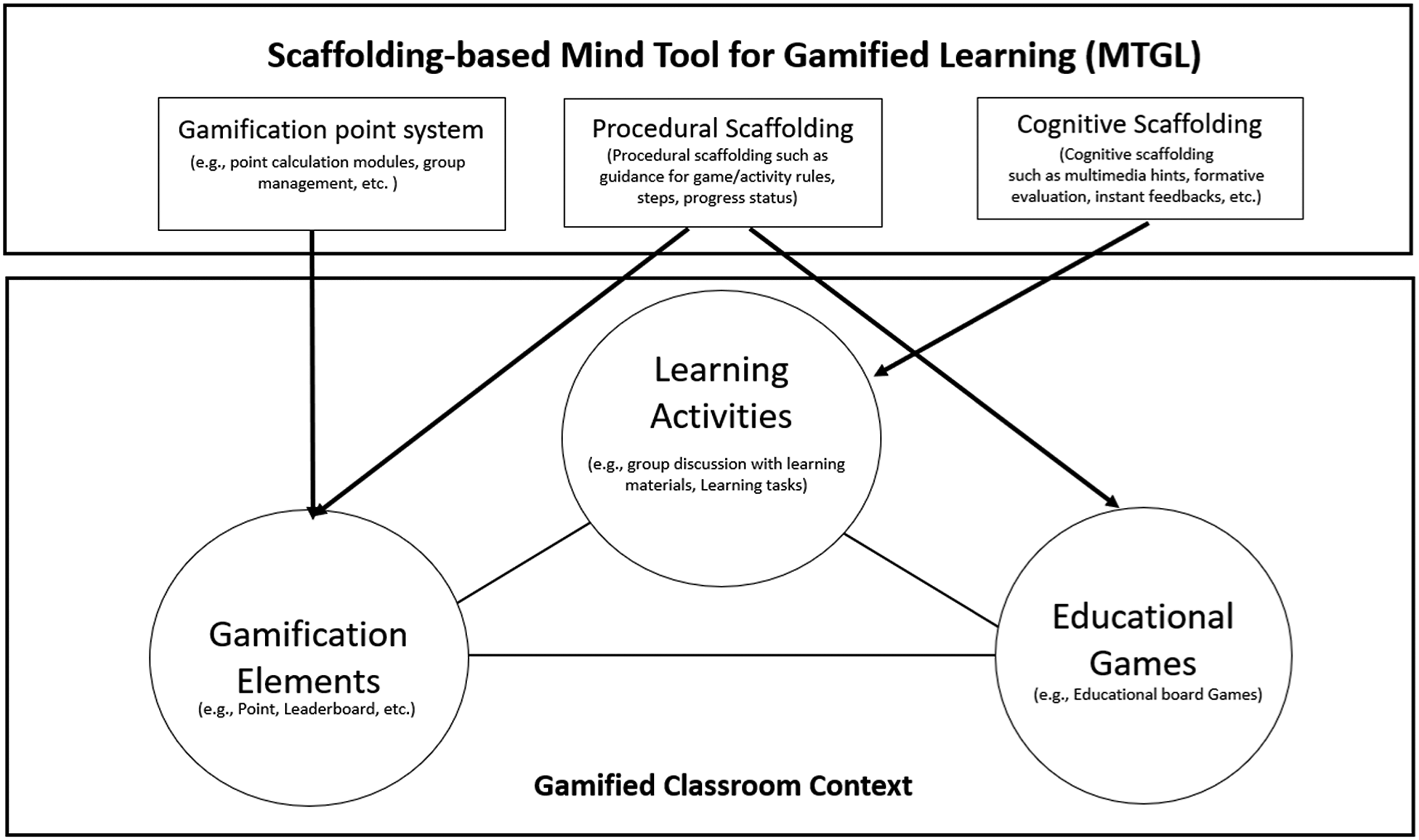
Research Questions
Past research has indicated that learning effectiveness, activity engagement, and student satisfaction with the activity mechanism are the dimensions for assessing the effectiveness of gamified activities when conducting technology-assisted gamified learning activities (Purgina et al., 2020). Therefore, the purpose of this study was to design MTGL to promote the effectiveness of gamified activities in a science classroom.
This study examined the effectiveness of learning and used flow as an indicator to assess students' engagement in learning activities. Flow was introduced by Csikszentmihalyi (1990) and refers to a state of mind in which a person is fully immersed in the activity and exhibits a high level of concentration while participating in it. Flow is also an important factor in analyzing student engagement in gamified learning research (Zainuddin, Shujahat, & Perera, 2020). Finally, open-ended qualitative feedback was collected from students on this study to understand learners' perceptions of gamified instruction and the scaffolding support provided by MTGL.
This study hypothesized that students would achieve significant improvements in learning outcomes during the gamified activities with MTGL. This study also hypothesized that learners would have a high level of flow during the gamified activities and would have positive feedback on the scaffolding support provided by MTGL.
The research questions for this study are as follows: 1. What is the performance of students' learning in the gamified activity using MTGL? 2. What is the students’ flow in the gamified activity using MTGL? 3. What are the students' feedback toward the mind tool and scaffolding support in the gamified activity using MTGL?
The Mind Tool for Gamified Learning
The Mind Tool for Gamified Learning (MTGL) is a web-based system that includes two main modules, a student end module and a teacher end module, with additional submodules underneath.
Student Module
The student module of MTGL can be divided into several different sub-modules, namely the game information module, the media scaffolding browsing module, the scaffolding query module, and the learning outcomes uploading module (Figure 2). Each module design has a corresponding scaffolding design (Table 1). Interfaces of the MTGL sub-modules in the student module. Scaffolds provided by the sub-modules in MTGL.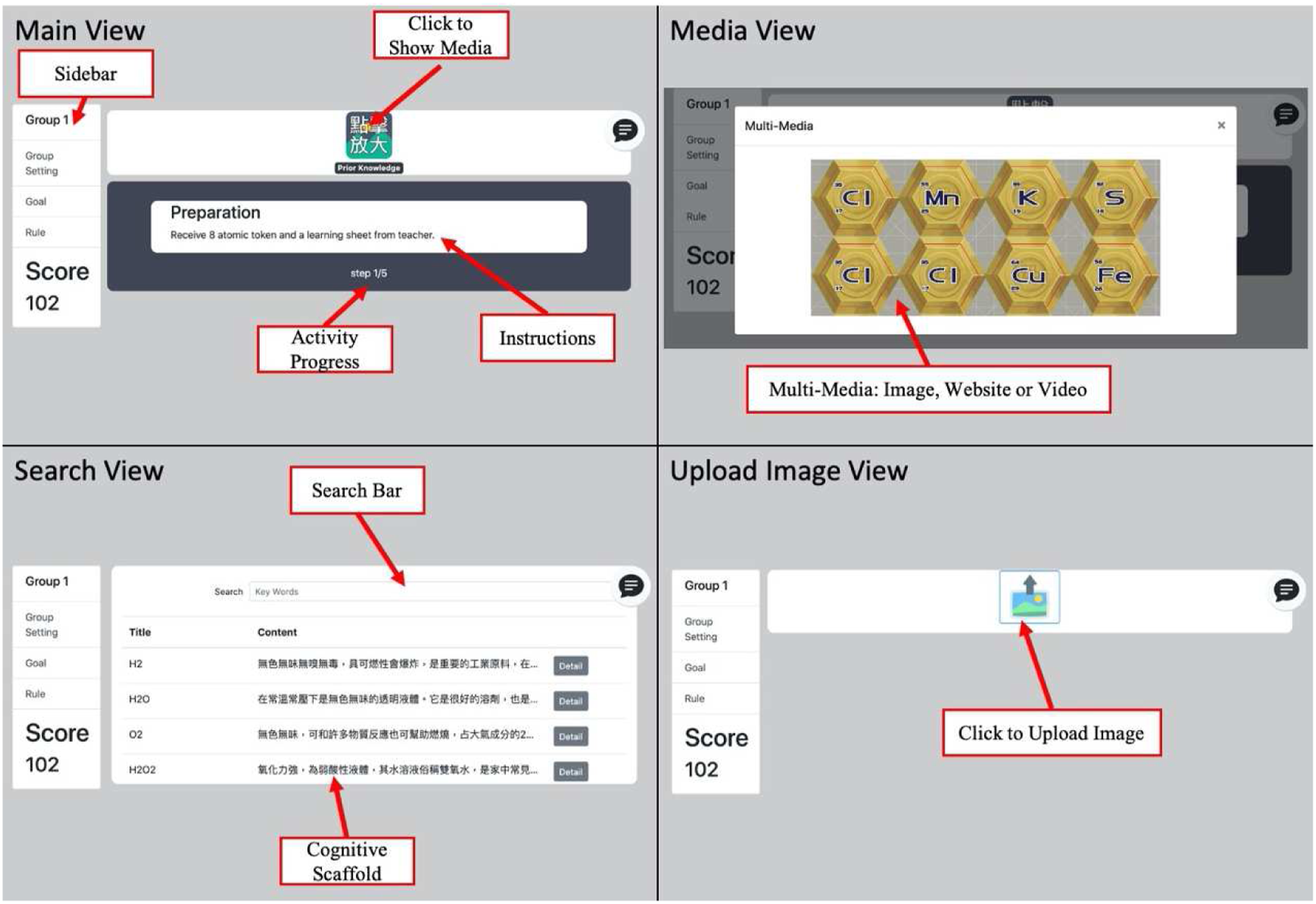
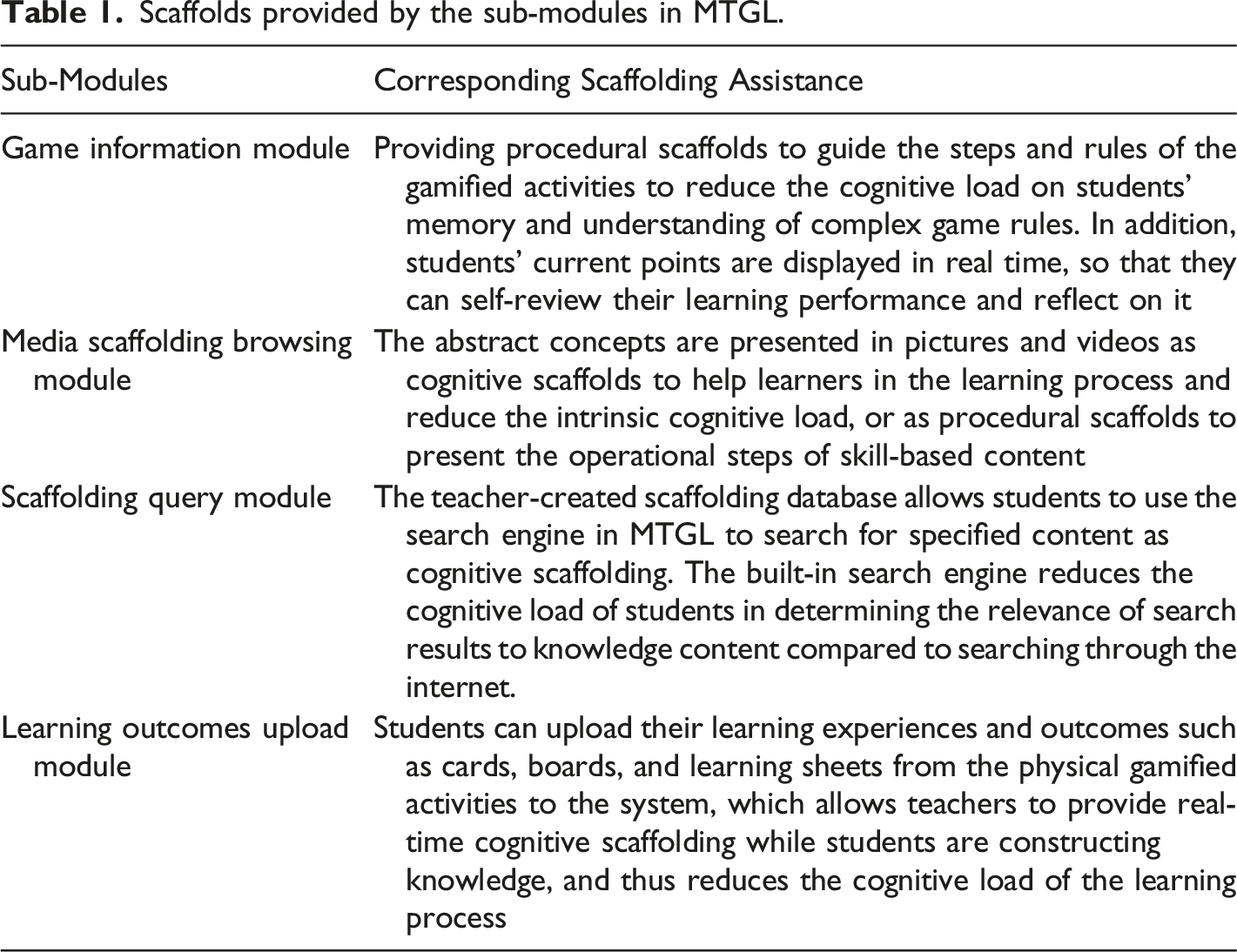
The game information module contains game information such as game goals, game rules (steps), and points. This module is designed to reduce the cognitive load on students' memory for understanding complex game rules (Sevcenko et al., 2021). The game information module also includes a real-time display of students' current points, so that students can self-review their learning performance and reflect on their points (Kim & Castelli, 2021). This study referred to the scaffolds used in the classroom by Hou and Keng (2021), including cognitive and peer scaffolds, which were presented as cognitive scaffolds in MTGL and peer scaffolds in the peer interaction during the classroom collaborative learning. Table 1 presents the design of the cognitive scaffolds in MTGL.
The media scaffold browsing module presents current task content, as well as multimedia information, with buttons to view instructional images, videos, or embedded web pages. This design allows mind tools to serve as guides for learning, and multimedia to present abstract or complex concepts as cognitive scaffolds (Moreno & Mayer, 2007).
The scaffolding query module allows teachers to create a scaffolding database in advance using the editing interface, allowing students to search for teacher-provided data from the built-in search engine as cognitive scaffoldings, reducing the cognitive load of identifying/filtering search results in general Internet searches (Gwizdka, 2010). This module is designed to allow students to search only for teacher-selected learning guides and so avoids irrelevant information (e.g., advertisements), thus reducing the cognitive load.
The learning outcomes upload module provides a channel for real-time interaction between students and teachers in the learning process. Teachers can provide scaffolding feedback to students based on their uploaded outcomes/states of the activity. This design enhances the efficiency of formative assessment and real-time scaffolding by teachers in classroom gamified activities.
Teacher module
Creating mind tools to facilitate classroom activities is a difficult task for teachers (Aurava et al., 2021); therefore, this study designed an activity editor so that teachers do not need to burden themselves with complicated programming and only need to focus on the design of the gamified activities. The operation of the editor is in the order of “Setting Basic Information,” “Setting the Game Information Module,” and “Setting Teaching Activity Steps,” as shown in Figure 3. Teaching activity editor.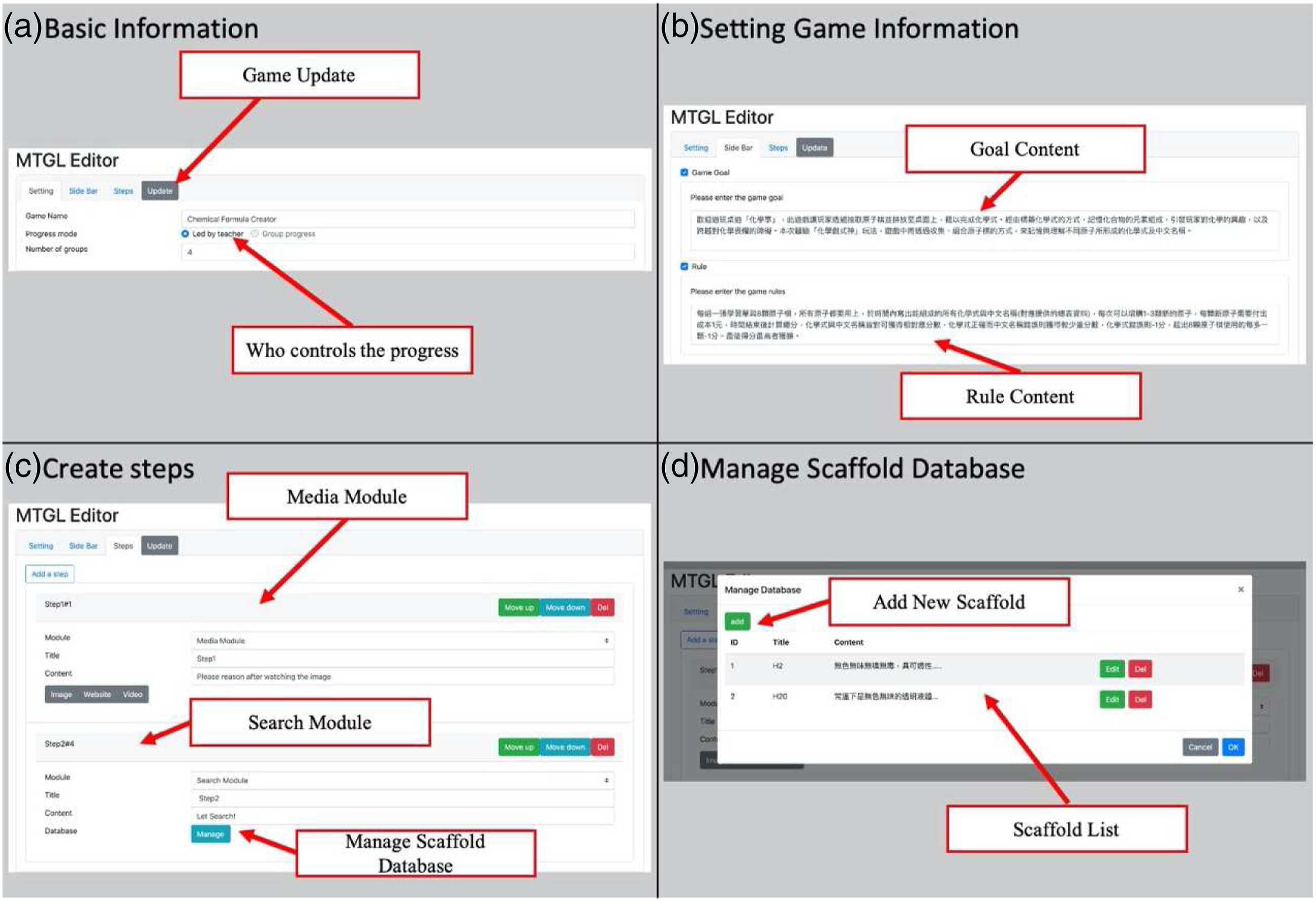
First, the teacher entered the name of the gamified activity, the number of groups, and decided whether the whole process of the gamified activity should be controlled by the teacher or the groups. In the case of teacher control, the progress of the game will be the same for all groups. In the case of group control, the progress of all groups is independent. If the group completes the task progress of the step, it can go directly to the next step without waiting for other groups. Then the teacher can set up the game goals and instructions for the game rules.
Each step can be used by choosing one of the three sub-modules: the media scaffolding browsing module, the scaffolding query module, and the learning outcomes uploading module. When using the scaffolding query module, teachers need to create scaffolding data and add scaffolding content in the database for students to search.
After the gamified teaching activity is designed, teachers can export the QR code of the activity for students to scan with their own devices and join the game. During the game, teachers can monitor and manage the learning progress, points, and learning outcomes of each group in real time (Figure 4). Based on the monitoring outcomes, the teacher can input the number of points to increase the game points for each group and provide real-time feedback by referring to the images of learning outcomes returned by students. Teaching activity monitoring interface.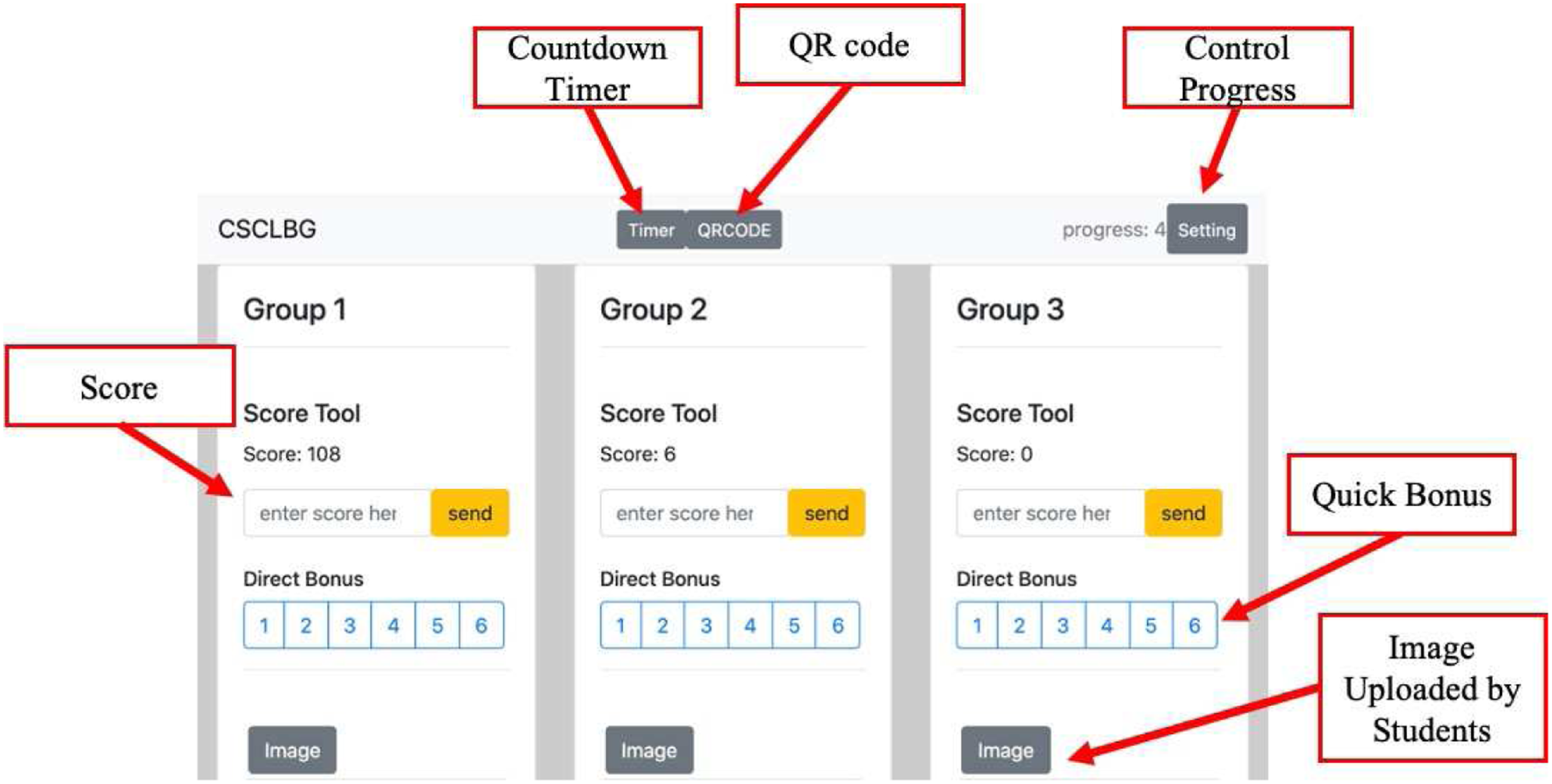
Gamified learning activity
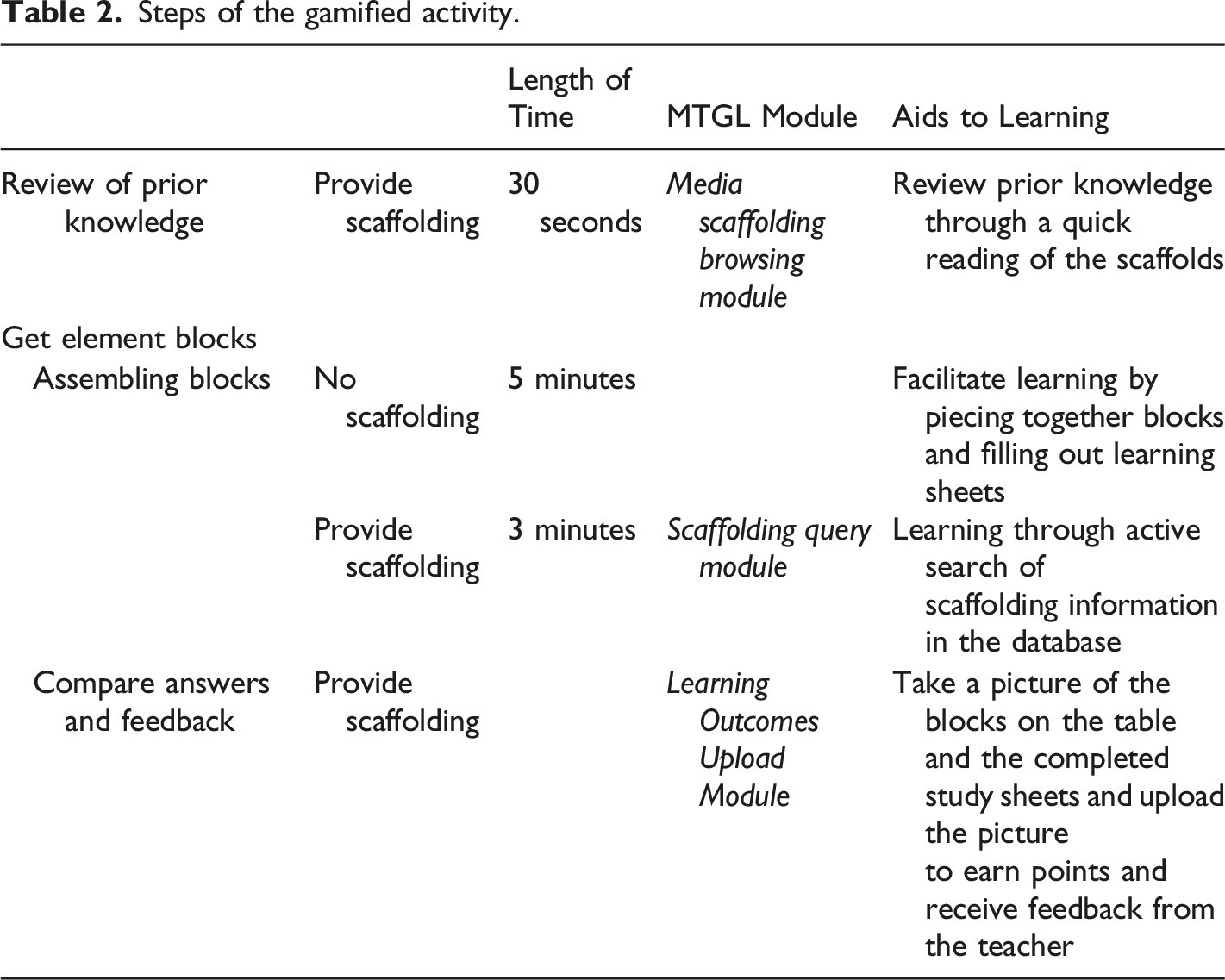
The gamified activity used in this study was designed using MTGL and the cards of the educational board game, “Chemistry Story” (Hou et al., 2016). The learning goals are to learn about the elements that make up chemical substances, the chemical formulae, and the corresponding Chinese names of each chemical substance. Adding a storyline to a gamified activity can increase students' motivation to learn (Tsai, 2018). Therefore, this study provides a task context for the gamified activity: students take on the role of a top scientist’s assistant and help compile information on the chemical formulae of various basic chemical substances to help the scientist conduct experiments to prevent human extinction at a time when humanity is on the brink of extinction.
Steps of the gamified activity.
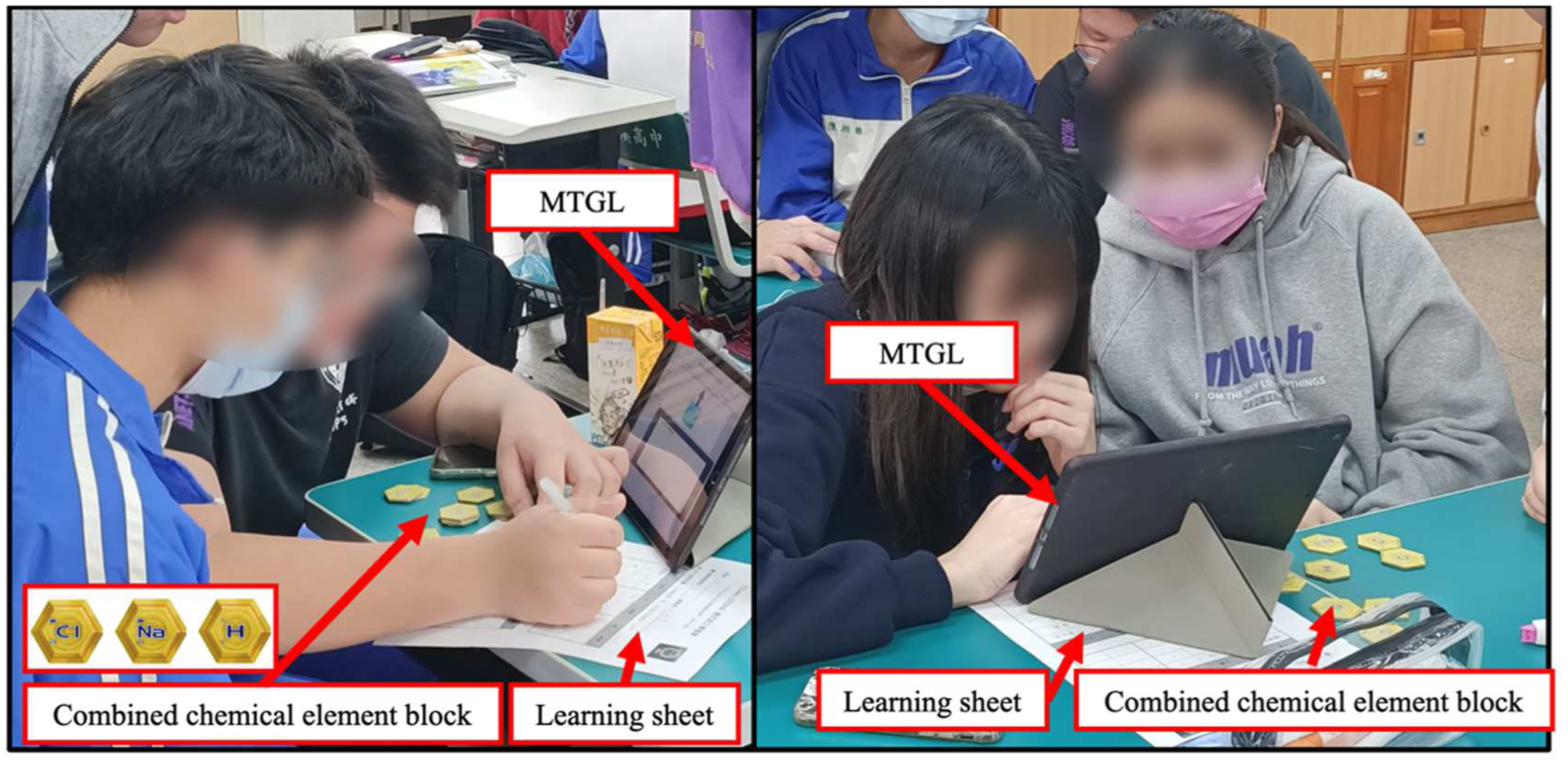
Students engage in the gamified activity.
Method
Participants
The participants of this study were 134 high school students in Northern Taiwan, aged 16–17 years, including 74 male and 60 female students. All participants had previously taken the same basic chemistry course and completed an informed consent form. Two classes were selected as experimental group and two classes were selected as control group, and the learners of experimental group were divided into small groups of two to three students for gamified activity. The total number of subjects in the experimental group was 69 and the total number of students in the control group was 65. After deducting the data of those who did not participate in the whole course or did not complete the answers, there were 52 valid data for the experimental group and 60 for the control group.
Research Design
This study used a quasi-experimental research design with two groups: an experimental group and a control group. The experimental group learned chemistry through the gamified activity with MTGL. The control group was taught chemistry through a general lecture approach. Both groups were given a pre- and post-test of chemistry knowledge. In addition to this chemistry knowledge test, the experimental group participants were asked to fill out a flow scale for the gamified activity. Besides, this study also conducted a qualitative examination apart from the experimental evaluation, and the experimental group participants were asked to answer an open-ended questionnaire to collect learners’ feedback about the scaffolding and the mindtool.
Research Tools
In addition to the MTGL tool, the research instruments used in this study also included the Learning Achievement Test, the Flow Scale, and the Qualitative Feedback Questionnaire. 1. Chemistry Learning Achievement Test: A chemistry teacher developed this test, which consists of the chemical formula listed in the question and students answering with the corresponding scientific name. A total of 20 questions were asked, such as: “Write the scientific name of H2O2” (the answer is: hydrogen peroxide). Each question is worth 1.5 points, for a total of 30 points. 2. Flow Scale: The flow questionnaire for this study was developed by Kiili (2006) This scale was developed specifically for learning activities using games and was translated into Chinese by Hou and Chou (2014). This questionnaire has been used in many other studies related to gamified learning or educational games in the past and has a high degree of internal consistency (e.g., Hou, 2015; Wang et al., 2019). This questionnaire consists of two main dimensions, flow antecedents and flow experiences. Flow antecedents refer to whether the activity has a design that promotes flow, such as clear goals and feedback. Flow experience refers to the extent to which the participant is engaged in the learning activity. The flow scale is a 5-point Likert scale with 22 questions. The overall reliability in this study was .856 (Cronbach’s Alpha = .856). 3. Qualitative Feedback Questionnaire: In this study, three open-ended questions were asked to investigate students' feedback on the design of the mechanism of the tool and activity (including the usefulness of scaffolding and real-time assessment of uploaded learning outcomes, etc.), such as “Did you think the data searching module provided by the tool in this activity was helpful for completing the tasks? Why?”
Experimental Process
The overall experimental procedure proposal was reviewed and approved by the research ethics organization for research ethics in National Chengchi University (number: NCCU-REC-201,812-E091). On the day of the experiment, all participants were asked to fill out a pre-test of the Chemistry Learning Achievement Test. The teacher then explained the teaching activity, followed by the learning activities (experimental group: gamified activity with MTGL, control group: traditional lecture), and finally all participants filled out the post-test of the chemistry learning achievement test, and the students of the experimental group were also asked to fill out the flow scale and qualitative feedback questionnaire.
Results and Discussion
Learning Achievements
ANCOVA analysis of learning achievements.

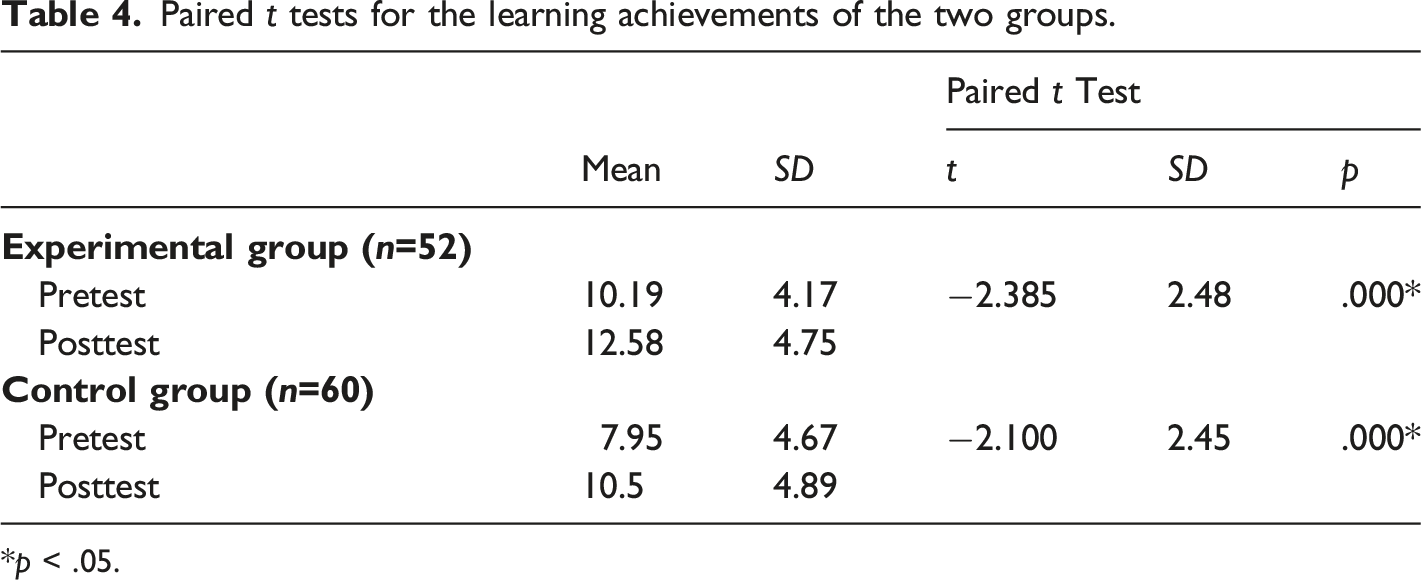
Paired t tests were conducted to determine the difference between the pre-test and post-test, and we found that there was a significant difference between the pre-test and post-test learning achievement for the experimental group (t = −2.385, p<.001) and also for the control group (t = −2.100, p<.001) (as shown in Table 4).
Paired t tests for the learning achievements of the two groups.
*p < .05.
Flow
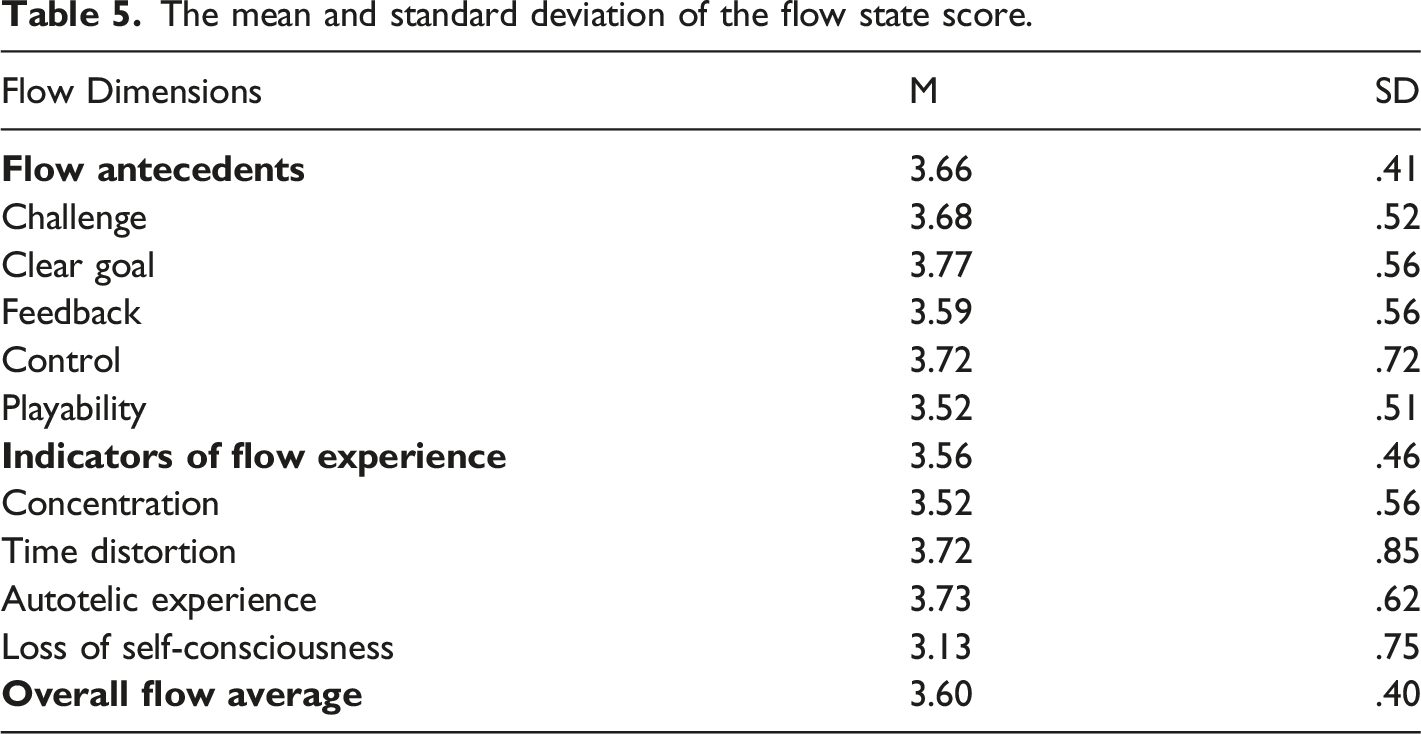
The mean and standard deviation of the flow state score.
Differences in flow between learners with high and low prior knowledge/learning effectiveness
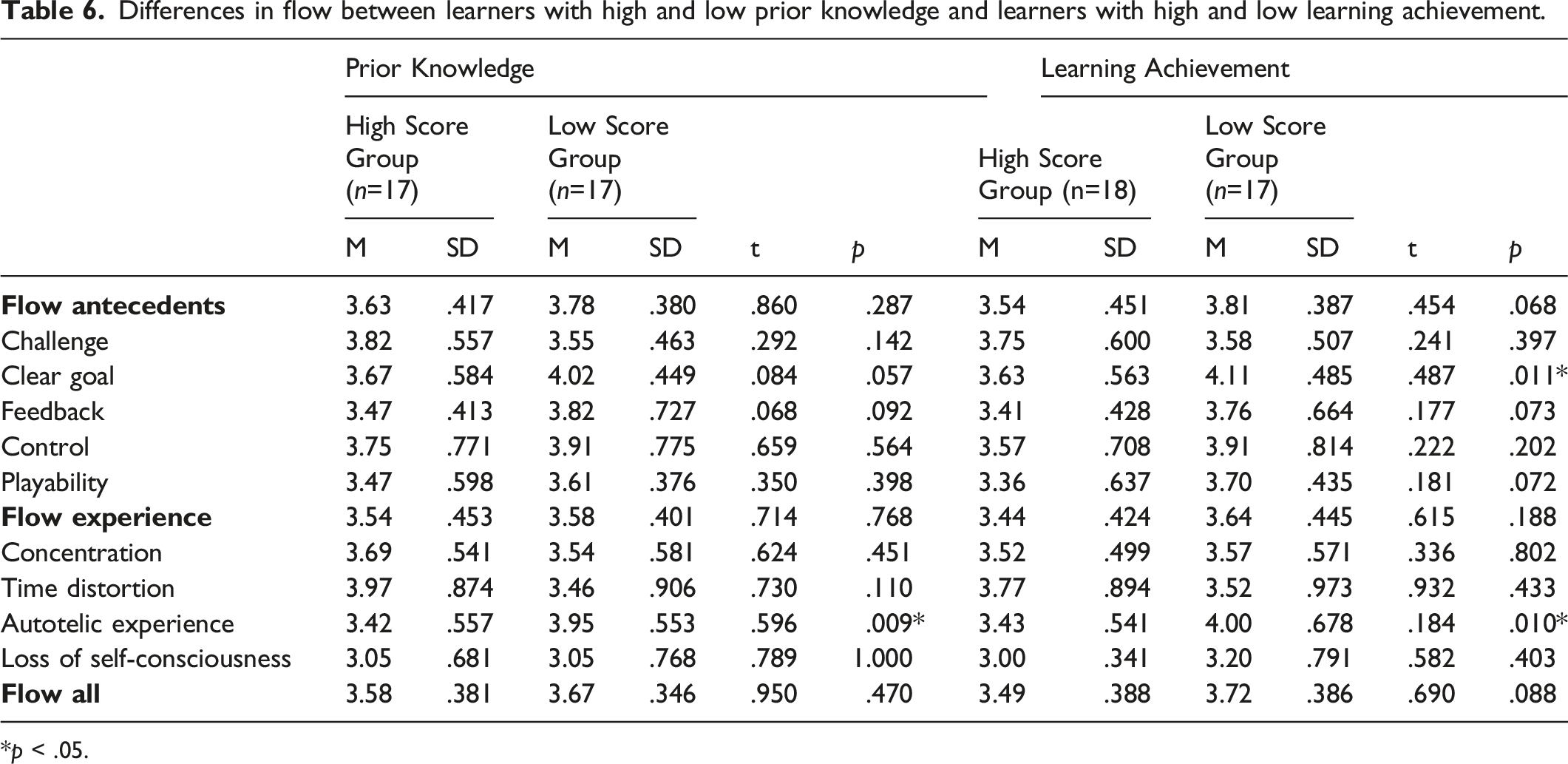
For analyzing the differences in flow between learners with high and low prior knowledge/learning effectiveness, learners were divided into high and low groups according to their pre-test and post-test scores. In the pretest (prior knowledge) grouping, the high and low groups were the top 27% and the bottom 27% scoring students, respectively. In the post-test (learning effectiveness) grouping, the high and low groups were the top 27% and the bottom 27% scoring students; the difference in flow performance between the two groups is shown in Table 6. The results showed that the Autotelic experience scores of the low-scoring groups in both the prior knowledge/learning effectiveness were significantly higher than the high-scoring groups. Autotelic experience means that the activity itself offers attractive content to the participants, such as enjoyable experiences and engaging goals (Fong et al., 2015), and in the case of Leyton-Román et al. (2020), it was noted that autotelic experience was related to students' participation in the course, such as the presence of group discussions and students' performance in the course. The results show that the active participation of the low achievers in this study was significantly higher in the teaching activities, which also indicates to some extent that the active engagement level of the low achievers can be significantly higher than that of the high achievers, even when the overall students’ flow is high.
Besides, Li et al. (2021) showed that having clear goals was related to subjects' concentration in the activity, and students with higher clear goal scores were more engaged in the activity. In this study, students in the low-earning effectiveness group were more engaged and felt clearer about the game and their learning goals during the learning process. Overall, the activity design of this study, with the integration of the game mechanism and scaffolding mechanism using the MTGL tool, may have a positive effect on the learning engagement of the low-scoring students.
Qualitative Feedback
Differences in flow between learners with high and low prior knowledge and learners with high and low learning achievement.
*p < .05.
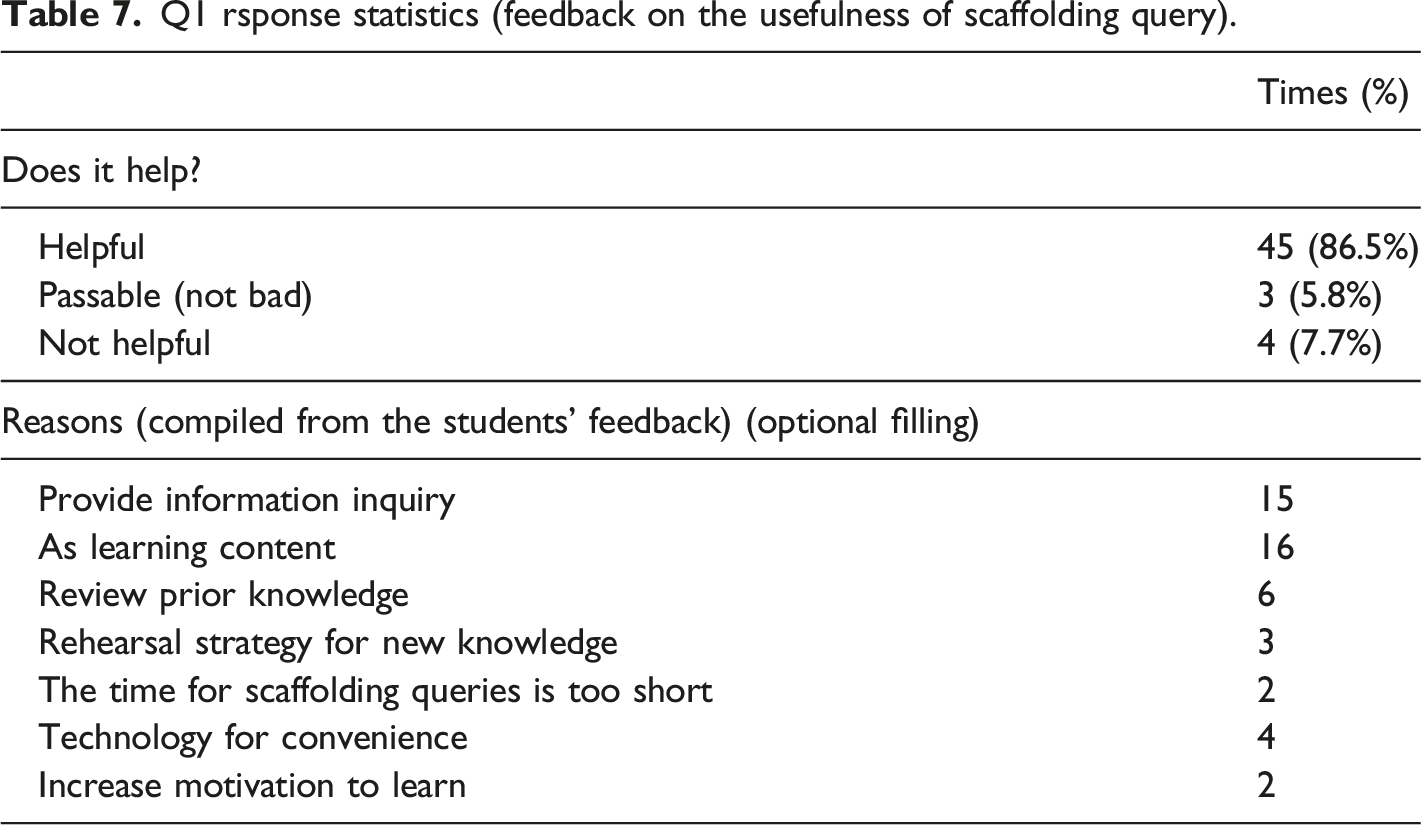
Q1 rsponse statistics (feedback on the usefulness of scaffolding query).
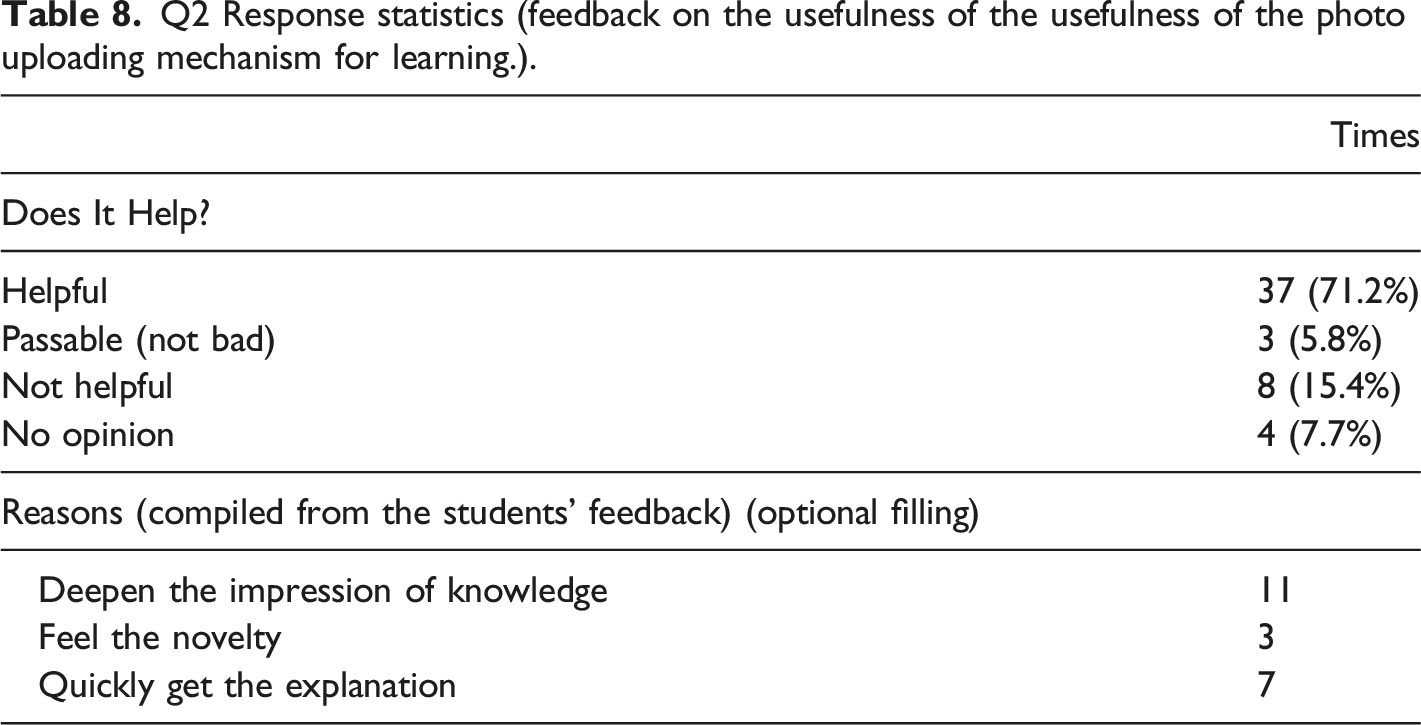
Q2 Response statistics (feedback on the usefulness of the usefulness of the photo uploading mechanism for learning.).
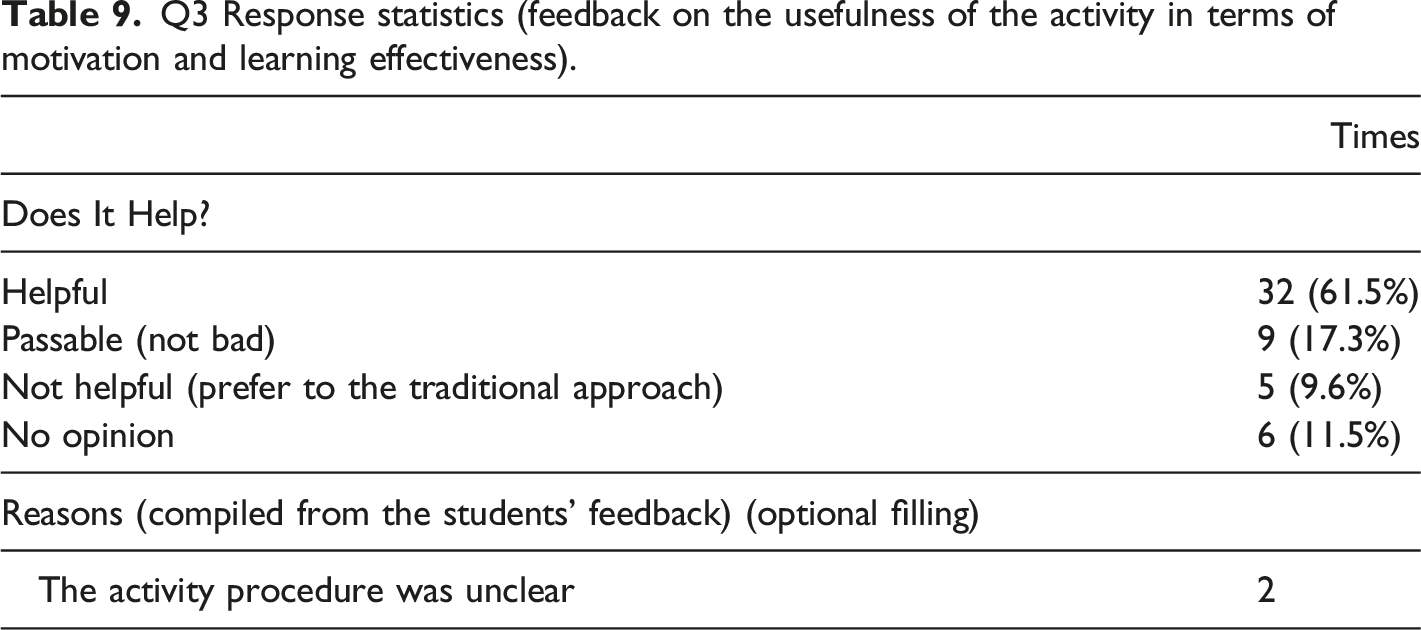
Q3 Response statistics (feedback on the usefulness of the activity in terms of motivation and learning effectiveness).
Conclusions and Suggestions
Conclusion
The purpose of this study was to design MTGL, a scaffold-based mind tool to support the design of gamified activities in the classroom. This study combines mind tools and scaffolding to facilitate gamified teaching. This theme should be useful for theoretical inquiry in the field of gamification and can also be directly applied to the practice of gamified teaching.
Regarding research question 1, the results of this study showed that the gamified activities designed by combining MTGL were able to promote students' learning, Gamified learning activities with MTGL, together with the cognitive scaffolding and formative assessment provided by the tool, help enhance learning effectiveness and echo the fact that gamification with mobile devices is a promising teaching method (e.g., Purgina et al., 2020). Besides, the gamified activity did not differ significantly from the learning effectiveness of traditional lecture-based teaching。
For research question 2, the overall score of flow of the MTGL gamified activity with the accumulation point mechanism was significantly higher than the median, indicating that students were engaged in completing the gamified tasks together. Moreover, previous research that incorporated designed contextual contexts in the gamification mechanism found that it was an effective way to enhance flow (Han et al., 2021). The gamified teaching activities in this study also included contextual background, which may have helped learners to be more engaged in the activities to some extent.
For research question 3, regarding the usefulness of the gamified learning activity combined with MTGL, students' feedback indicated that the MTGL scaffolding mechanism was effective in terms of supporting learning, but some students also fed back that the description of the game procedures was not clear enough, and that some of the modules could be made more effective if they were improved. Future research could enhance the auxiliary functions of the MTGL procedural scaffold.
In general, teaching with technology and integrating concept building, learning guidance, and scaffolding provision is one of the trends in gamified learning and teaching (Hernández-Fernández et al., 2020). Current gamification software provides few mind tools that allow teachers to design their own complete gamified teaching activities in the classroom (e.g., scoring mechanisms, scaffolding settings, real-time formative assessments, and real-time feedback), especially tools that provide both cognitive and procedural scaffolding. This study developed MTGL, a scaffold-based mind tools for gamified classroom, and found it can positively contribute to gamification for learning, it promoted learning effectiveness and a high level of student flow. In addition, it is also recommended to develop more mind tools with editing functions (e.g., MTGL in this study) to help teachers easily build scaffold-based gamified teaching activities.
Limitations and Suggestions
Since the knowledge content of this study only included scientific knowledge at the level of memory and understanding, the results of this study cannot be extrapolated to teaching in different subject areas or to learning tasks at different cognitive levels. For future research, when designing gamified activities, more types of gamification mechanisms (e.g., badges, levels, and leaderboards) are suggested to be used to explore their effectiveness in addition to the point system (e.g., Manzano-León et al., 2021). Also, tasks which require higher levels of cognitive thinking (e.g., application, analysis, or evaluation) can be chosen for the teaching content, which should be more effective in terms of promoting higher-level thinking skills with mind tools (e.g., Hou et al., 2020).
Moreover, in this study, only qualitative questionnaires were used to investigate students' motivation to perform the learning activities. In future studies, it is recommended to further investigate the relationships of learners' flow, motivation, anxiety, and emotion using quantitative methods, and to deeply explore learners' learning experiences and behavioral patterns (e.g., Hou, 2012; 2015).
Footnotes
Declaration of Conflicting Interests
The author(s) declared no potential conflicts of interest with respect to the research, authorship, and/or publication of this article.
Funding
The author(s) disclosed receipt of the following financial support for the research, authorship, and/or publication of this article: This research was supported by the projects from the Ministry of Science and Technology, under contract number MOST -108-2511-H-011 -003 -MY3 and MOST- 110-2511-H-011 -004 -MY3.
