







Abstract
Prior research has emphasized that two-tier tests are an effective approach to guiding students through game tasks; furthermore, self-efficacy, which is potentially related to students’ surroundings and academic performance, has a positive impact on students’ cognitive outcomes in games. This implies the significance of conducting a study to probe the influence of a two-tier test and self-efficacy on students’ knowledge gains, perceptions, and skills in a game-based learning context. In this study, a two-tier test-assisted game-based learning approach and an interactive guidance-assisted game-based learning approach were designed to support students’ science learning. Furthermore, an experiment was conducted on a natural science course to investigate the influences of the two-tier test and students’ self-efficacy on their science learning. The experimental results displayed that both the two-tier test-assisted learning approach and high self-efficacy can effectively enhance the problem-solving tendencies of the students with lower initial tendencies in the game-based learning activities. The students with high self-efficacy perceived a higher germane cognitive load than those with low self-efficacy. However, neither learning approaches nor self-efficacy had a significant effect on students’ knowledge gains. Moreover, the differences between the learning patterns of students with different learning approaches and self-efficacy were revealed.
Keywords
Introduction
Inquiry-based science education (IBSE) engages learners in active investigation cooperation via emphasizing the meaningful scientific discovery process, during which self-efficacy matters (Liu & Wang, 2022). IBSE is capable of obtaining domain-related knowledge, developing scientific thinking skills, and positive learning attitudes (Liu et al., 2021; Voet & de Wever, 2018). Nevertheless, inquiry learning is a complex process that comprises an interconnected cycle of stages. IBSE is not always adequately translated and supported due to instructional environments, such as restrictions on time and resources (Deehan et al., 2024). On the other hand, scaffolding, such as structured guidance and immediate feedback, can support students’ progression through inquiry stages while enhancing their self-efficacy (Shen et al., 2016).
Computer simulation, as a platform for inquiry-based science learning, has been broadly adopted to provide students with opportunities to manipulate science experiments that would be difficult or time-consuming to accomplish in a classroom setting (So et al., 2019; Sun et al., 2022). Digital game-based learning (DGBL) is one kind of computer simulation for promoting students’ knowledge gains and engagement by means of specific rules and mechanisms (Nitisakunwut & Hwang, 2023). DGBL can create meaningful contexts where students can engage themselves in the learning activities, to enhance their learning (Amzalag et al., 2024; Hung & Yeh, 2023). For example, Assapun and Thummaphan (2023) developed a GBL model based on board games, and effectively improved students’ engagement and problem-solving. It is worth investigating the utilization of GBL approaches to promote students’ engagement, problem-solving skills and learning achievements (Lester et al., 2023).
Moreover, students’ academic self-efficacy has the potential to link environmental factors to individual academic performance (Bandura, 2006). Students with higher self-efficacy are more eager to actively focus on learning activities compared to those with lower self-efficacy (Shen et al., 2016). Science self-efficacy affects students’ science-related activities as they experience success in science learning (Sun et al., 2022). Students’ self-efficacy has a positive impact on their cognitive gains during gameplay (Rachmatullah et al., 2021). Previous studies have described the importance of self-efficacy in student learning during game-based learning activities (Meccawy et al., 2023), implying the need to probe the influence of different levels of student self-efficacy on their learning effectiveness.
On the other hand, without careful design, the integration of learning support into games may generate a negative influence on students’ learning process, implying that offering effective support in educational games remains a major challenge. Guiding students in gameplay can be implemented in several ways, such as asking questions, discussing, providing immediate feedback, and strategic support (Sun et al., 2023). Since Treagust’s (1988) work, two-tiered tests have been adopted to diagnose students’ understanding of science concepts. In the first tier, each item of the test is a concept question, while the second tier comprises several possible reasons that need to confirm the response from the first tier, including the correct answer, as well as the identified alternative conception (Tsui & Treagust, 2010). Two-tier tests have been proven to be an efficient way to probe students’ prior knowledge or alternative conceptions, especially in science education (Chu et al., 2010). For example, Hwang, Chen, et al. (2023) adopted the graphic organizer-based two-tier test to examine students’ learning during the learning process, and to better improve their learning achievements.
As stated above, two-tier tests can be a useful approach to guide students to accomplish gameplay tasks; moreover, self-efficacy has a potential relationship between students’ surroundings and their academic performance. This implies the significance of conducting a study to probe the influence of a two-tier test and self-efficacy on students’ knowledge gains, perceptions, and skills in a game-based learning context.
Literature Review
Digital Game-Based Learning in Science Education
Digital game-based learning (DGBL) refers to a learning approach which integrates computer games and learning materials in an educational context (Prensky, 2001). Many studies have taken advantage of DGBL to promote students’ knowledge gains (Nitisakunwut & Hwang, 2023), learning motivation (Hwang et al., 2019), and high-order thinking skills (Vera-Monroy et al., 2024). For example, Assapun and Thummaphan (2023) developed a GBL model comprising problem-solving concepts, learning process, materials, and game mechanics, and effectively enhanced students’ problem-solving competency.
From the foundations of the sociocultural perspective, DGBL considers the interaction among participants, the construction of collective knowledge, and knowledge application in the cultural context (Barz et al., 2024; Plass et al., 2020). DGBL can provide an interactive environment to create a sense of connection and belonging (Cheng et al., 2015) in a social context for promoting learning, and can support a decision-making context for various educational settings (Hung & Yeh, 2023; Sun et al., 2023). Participants can interact with others and need to make decisions to complete the tasks in order to attain the learning objectives in a game-based learning context. Social interactions, such as competitive or collaborative play, can affect the players’ engagement, resulting in being a significant factor of DGBL (Barz et al., 2024).
DGBL adopts a task-oriented context with specific rules and principles for achieving educational goals (Chen & Syu, 2024; Huang et al., 2010). In Prensky’s (2001) work, some key components of the games have been claimed, namely “rules,” “goals and objectives,” “outcomes and feedback,” “conflict/competition/challenge/opposition,” “interaction,” and “representation or story” (p. 118). Several DGBL approaches that conform to these design principles have demonstrated their potential for enhancing student learning. For example, (Schwabe & Göth, 2005) designed a mobile game and emphasized that the features of the game design resulted in excitement and fun. Moreover, it was revealed that interesting storylines, clear goals, and problem-based tasks make learning more diverse and effectively enhance students’ learning interest and outcomes (Yang & Lu, 2021).
Although some research has declared the benefits of DGBL, not all DGBL methods are capable of advancing student learning. Prensky (2001) asserted three main requirements for DGBL work, namely the promotion of motivational engagement, interactive learning processes, and highly contextualized resources. A great deal of research has displayed that students can obtain better concept comprehension by actively engaging with the learning materials (Hulse et al., 2019). Promoting students’ engagement is significant for productive learning. The higher engagement students have, the better learning outcomes they can obtain (Bressler et al., 2019). Furthermore, regarding the interactive learning process, Ke et al. (2024) claimed that game-based problem-solving emphasizes the significance of discovering students’ patterns of interaction with game tasks and objects, which involves their cognitive operations. On the other hand, scaffolding has been widely utilized in pedagogical interactions to facilitate students’ problem-solving tasks in DGBL, aiming to enhance concept understanding and skills (Sun et al., 2023).
Self-efficacy refers to an individual’s belief in having sufficient ability to organize and perform the task required to produce particular achievements (Bandura, 2006). Students with high self-efficacy are more likely to actively focus on learning tasks than those with low self-efficacy (Shen et al., 2016). Conversely, the lower students’ self-efficacy, the more likely they are to view their efforts as futile in the face of adversity (Bandura, 2006; Chen & Syu, 2024). Some research has investigated the influences of self-efficacy in diversity courses. For example, learners’ science self-efficacy affects their science-related choices, their engagement or perseverance when they encounter difficulties, and their confidence in success during science tasks (Sun et al., 2022).
Self-efficacy affects the quality of human functioning via cognitive, emotional, and decision-making processes, contributing to self-development and changes in choice-making processes (Bandura, 2012). A great number of studies have probed the relationships between learners’ self-efficacy and their learning outcomes. For example, Shen et al. (2016) surveyed the relationships among students’ conceptions of, approaches to, and academic self-efficacy, and revealed that students’ learning conceptions made a crucial contribution to their approaches to learning, which were accordingly correlated with their self-efficacy. Moreover, in terms of students’ skills, self-efficacy may be related to their ability to learn reasoning or problem-solving skills (Tsai et al., 2024).
Self-efficacy is explored based on the social cognitive theory, including the sources of self-efficacy beliefs, their functional properties, differential effects, operational processes, and the way they can be developed to achieve personal and social change (Bandura, 2012). Social cognitive theory asserts that people are active participants in their living environment, implying that they can reflect on their learning experiences and take action to change their learning behaviors to achieve better results (Zysberg & Schwabsky, 2021). By exposing students to successes and providing encouraging feedback based on those successes, they can experience progress and success in learning. Students who have experienced learning difficulties can benefit from observing models who initially encountered problems but gradually became successful through effective coping approaches (Schunk & Zimmerman, 2007). Self-efficacy can be strengthened through learning environments that provide appropriate scaffolding, such as immediate feedback during gameplay (Sun et al., 2023), revealing a close relationship between scaffolding strategies and self-efficacy in supporting learning outcomes.
On the other hand, prior research has identified that self-efficacy plays an important role in learning and academic performance in new educational technologies, particularly games (Meccawy et al., 2023). Students’ self-efficacy has a critical impact on their learning progress, and positively affects their cognitive outcomes during gameplay (Rachmatullah et al., 2021). Research has revealed that self-efficacy affects users’ willingness to continue playing online games (Sharma et al., 2022). Therefore, it is worthwhile to investigate the reasons for the impact of students’ self-efficacy on their learning outcomes in GBL environments.
Two-Tier Tests
In recent years, two-tier tests have been widely applied in education (Wang et al., 2023). A two-tier test comprises two levels of questions to evaluate students’ understanding of a specific topic, utilizing a multiple-choice format. The first tier of each item is a content question about some specific descriptive knowledge with two or three choices; the second consists of four possible reasons or an explanation which conforms to the response from the first stage, including the right answer, and identified misconceptions (Treagust, 1988; Tsui & Treagust, 2010). Therefore, two-tier tests enable the execution of an in-depth examination of what students have learned so as to understand their learning conceptions or alternative conceptions (Yang et al., 2015). Some prior research has adopted two-tier tests to facilitate students’ learning in different subjects or fields, such as natural science (Loh et al., 2014), computer programming (Hwang, Tung, et al. 2023), and social science (Chou et al., 2007). For example, Tan et al. (2002) developed and applied a two-tier multiple-choice diagnostic tool to evaluate students’ comprehension regarding qualitative analysis of inorganic chemistry, and effectively revealed their dilemma in understanding the reactions to the identification of anions and cations.
The theoretical foundation of the two-tier diagnostic instrument is based on a multidimensional conceptual change framework (Tyson et al., 1997), which extends the epistemological model of Posner et al. (1982) by incorporating social/affective and ontological dimensions. The construction process for the two-tier test comprises three stages and 10 steps (Treagust, 1988). The first stage is to “define the content” in four steps, namely “identifying propositional knowledge statements,” “developing a concept map,” “relating propositional knowledge to the concept map,” and “validating the content.” Following that, the second stage aims to “obtain information about students’ misconceptions” via three steps, namely “examining related literature,” “conducting unstructured student interviews,” and “developing multiple-choice content items with free response.” The third stage is to “develop a diagnostic test” through three steps, consisting of “developing the two-tier diagnostic tests,” “designing a specification grid,” and “continuing refinements.” The multiple-choice format is beneficial to teachers for interpreting or grading students’ responses on two-tier tests (Tsai & Chou, 2002).
Two-tier tests assist students in recalling what they have learned and in comparing one correct answer to several incorrect answers. The multiple-choice format can be time-efficient when there is a large number of participants; however, the second-tier items would be more difficult for students without a clear understanding of the concepts underlying the first-tier items (Rahayu et al., 2022). Providing immediate and appropriate guidance in two-tier tests can aid students in identifying their alternative conceptions, and digital technology has been recognized as an effective medium for accommodating individual needs via giving appropriate feedback on their responses (Tsai & Chou, 2002; Wang et al., 2023). For example, Lin et al. (2016) designed a web-based two-tier test to evaluate students’ number sense, and stated that the test contributed to revealing a comprehensive description of students’ misconceptions and determining their understanding of the learning conceptions via identifying reasons for their choices. This implies that, in DGBL, two-tier tests function not only as assessment tools but also as scaffolding mechanisms, providing guidance and feedback (Tsai & Chou, 2002; Wang et al., 2023) that assist learners in overcoming conceptual difficulties during inquiry-based tasks (Tsui & Treagust, 2010).
On the other hand, lag sequential analyses have been adopted to discover learners’ behavior patterns in two-tier tests (Yang & Lu, 2021). For example, Yang et al. (2015) used lag sequential analysis to gain insights into students’ behavior patterns in a two-tier test system, and to reveal the reasons why the test had an impact on student learning. However, only a few studies have applied two-tier tests to digital games for promoting students’ learning effectiveness (Wang et al., 2023), implying the significance of investigating students’ learning behaviors while playing a two-tier test-assisted digital game.
In view of all that has been mentioned so far, a two-tier test-assisted game-based learning approach and an interactive guidance-assisted game-based learning approach were designed to promote students’ science learning. An experiment was executed in a natural science course in an elementary school to assess the influences of the two-tier test and students’ self-efficacy on their learning via investigating the following research questions: (1) What are the influences of the two-tier test and students’ self-efficacy on their problem-solving tendencies in the game-based learning activities? (2) What are the influences of the two-tier test and students’ self-efficacy on their knowledge gain in the game-based learning activities? (3) What are the influences of the two-tier test and students’ self-efficacy on their cognitive load during the game-based learning activities? (4) How do the learning patterns of students with the two kinds of learning approaches and different self-efficacy differ?
The Two-Tier Test-Assisted Game-Based Learning System
In this study, a two-tier test-assisted game-based learning (TT-GBL) approach was designed to integrate the advantages of the two-tier test and game-based learning (GBL) to support students’ science learning. Based on this approach, a two-tier test-assisted game-based learning system was developed utilizing RPG Maker, a digital game development system designed by Enterbrain Incorporation. It was specifically designed to address two key aspects: (1) utilizing the interactive nature of GBL to enhance student engagement, and (2) embedding two-tier tests into the learning process to diagnose and correct misconceptions effectively. The structure of the system comprises the two-tier test mechanism and the role-playing game mechanism, as portrayed in Figure 1. Furthermore, several databases were established to assist the mechanisms, such as a personal database and a learning material database. The two-tier test mechanism follows Treagust’s (1988) structured framework, which outlines three stages and 10 steps for systematically evaluating conceptual understanding. This structured approach ensures that students’ misconceptions are identified and addressed through a well-defined process integrated seamlessly into the game environment. On the other hand, the role-playing game mechanism aligns with Prensky’s (2001) key game components, including “rules,” “goals and objectives,” “outcomes and feedback,” “conflict/competition/challenge/opposition,” “interaction,” and “representation or story” (p. 118). These elements contribute to a compelling narrative that strengthens student immersion and motivation throughout the learning process. Compared to conventional assessments, the TT-GBL system offers a structured framework for probing students’ reasoning, which can effectively identify and resolve students’ misunderstandings. Structure of the two-tier test-assisted game-based learning system.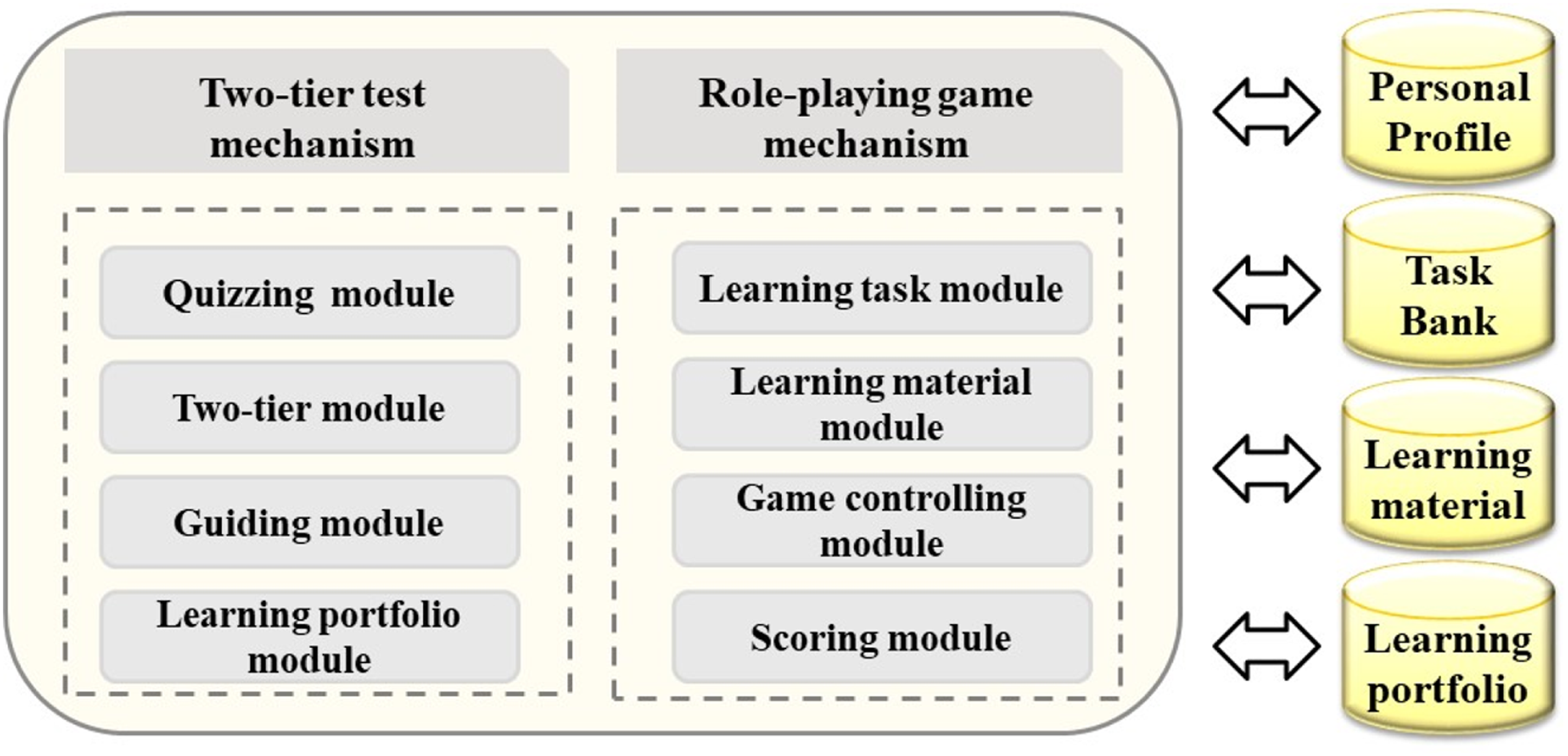
The TT-GBL system creates a virtual game-based learning environment for promoting students’ science learning. The learning concepts of “Electricity and Magnetism” were integrated into the game scenes which engaged players in probing the electromagnetic phenomena, and in solving problems in order to complete the learning tasks in the virtual game-based environment. The game was designed as a deduction story. The narration of the TT-GBL system blended real-life scenarios with fictional and fantasy scenarios based on the history of science. The story was about a student on duty (player), who unexpectedly entered the world of a book describing “Electricity and Magnetism” during the Industrial Revolution in the 18th century while cleaning the classroom after a nature science class. In the era of rapid advances in the natural sciences, the player meets some famous contemporary scientists, such as Galvani, Volta, Watt, Edison, Tesla, and Nobel in their adventures, and accidentally discovers that an epidemic of amnesia is prevalent in the region, as shown in Figure 2. Storyline of the TT-GBL system.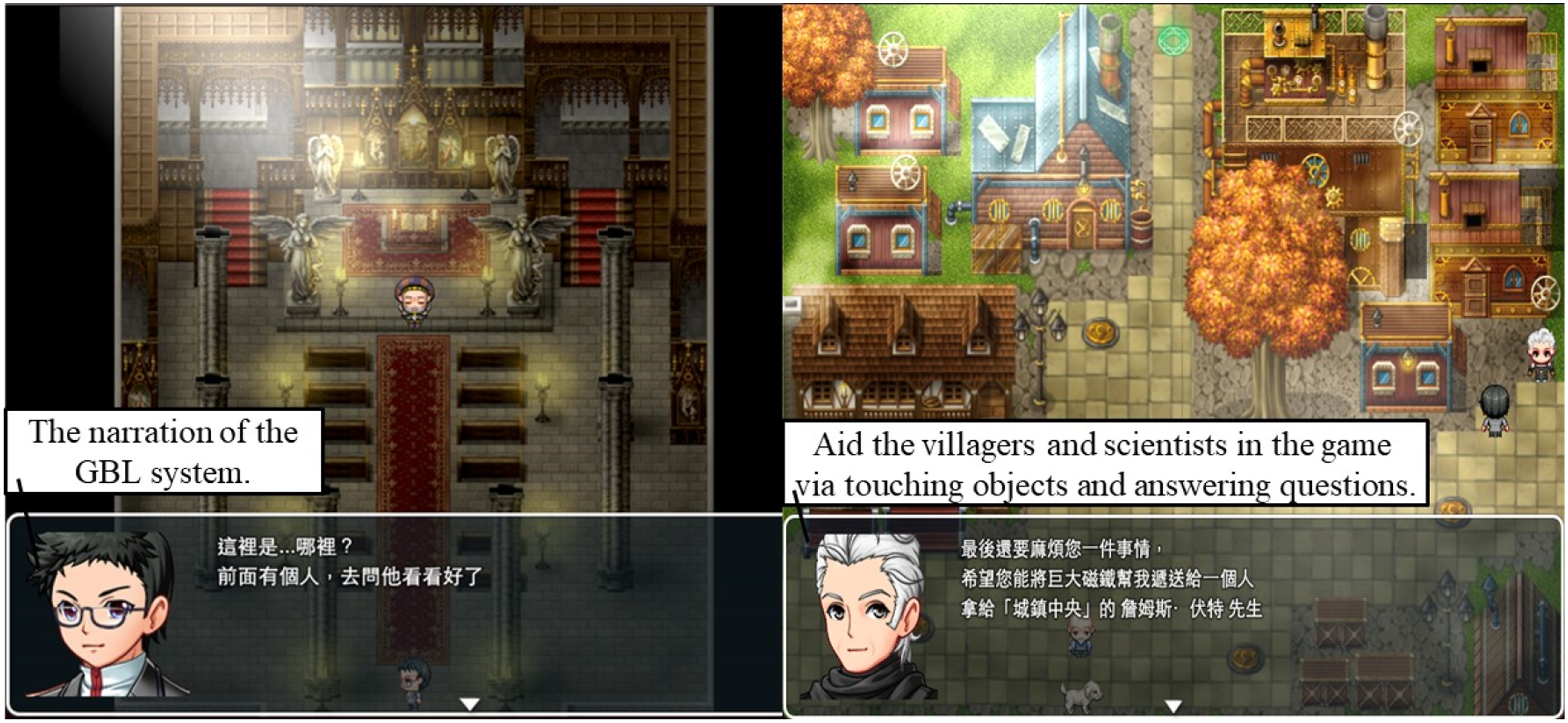
A total of 12 learning tasks were designed for the game. In the beginning, the player aids the villagers and scientists in the game by touching objects on the map and answering questions. Afterwards, the player fortunately encounters different scientists; on the other hand, some enemies intend to hurt the scientists. Therefore, the player must control various instruments to resist enemy attacks, and assist scientists in completing the discovery of electricity and magnetism. As the storyline progresses, the individual players continue to encounter problems that they need to solve by answering questions and manipulating machinery based on their knowledge of electricity and magnetism.
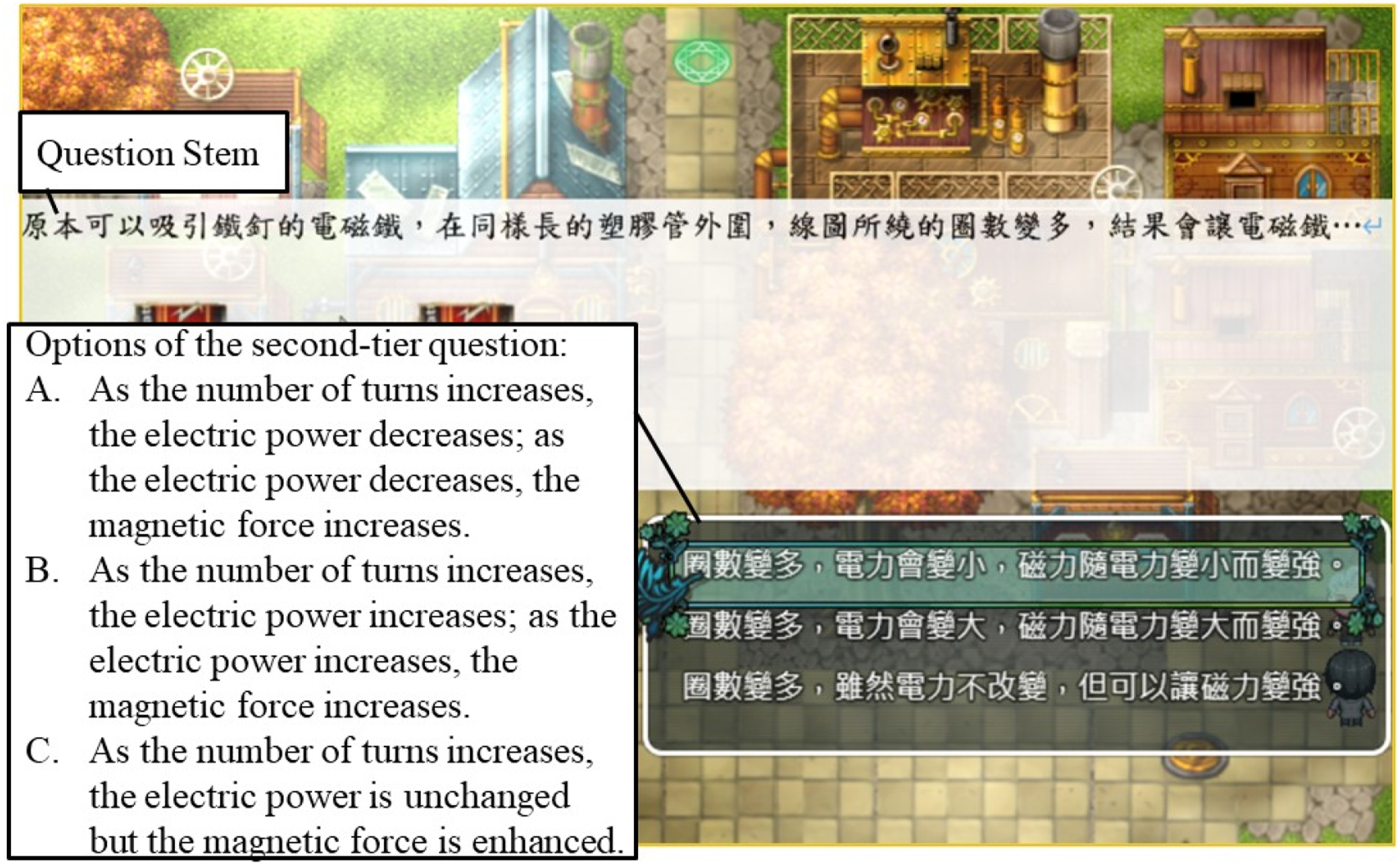
Once the individual players enter a stage, the storyline guides them to engage in dialogue with the scientists, interact with related objects, and read related learning materials. When the individual players come into contact with the relevant objects or goals, the two-tier test mechanism following Treagust’s (1988) work is activated to guide them to recall the learning materials and assess their learning concepts. The TT-GBL system reveals the first-tier question to facilitate the players’ recall and reaction. As shown in Figure 3, one sample question is: “What happens to the magnetic force of an electromagnet when the number of coils in a plastic tube of the same length increases? A. Unchanged; B. Enhanced; C. Weakened.” No matter whether their answer is correct or not, they can move to the next step. To probe the reason that the player relies on when choosing an option, the learning system proposes a second-tier question. According to the answer to the first-tier question (e.g., the answer B is submitted), the second-tier question is presented (as depicted in Figure 4): “A. As the number of turns increases, the electric power decreases; as the electric power decreases, the magnetic force increases. B. As the number of turns increases, the electric power increases; as the electric power increases, the magnetic force increases. C. As the number of turns increases, the electric power is unchanged but the magnetic force is enhanced.” An example of a first-tier question. An example of a second-tier question.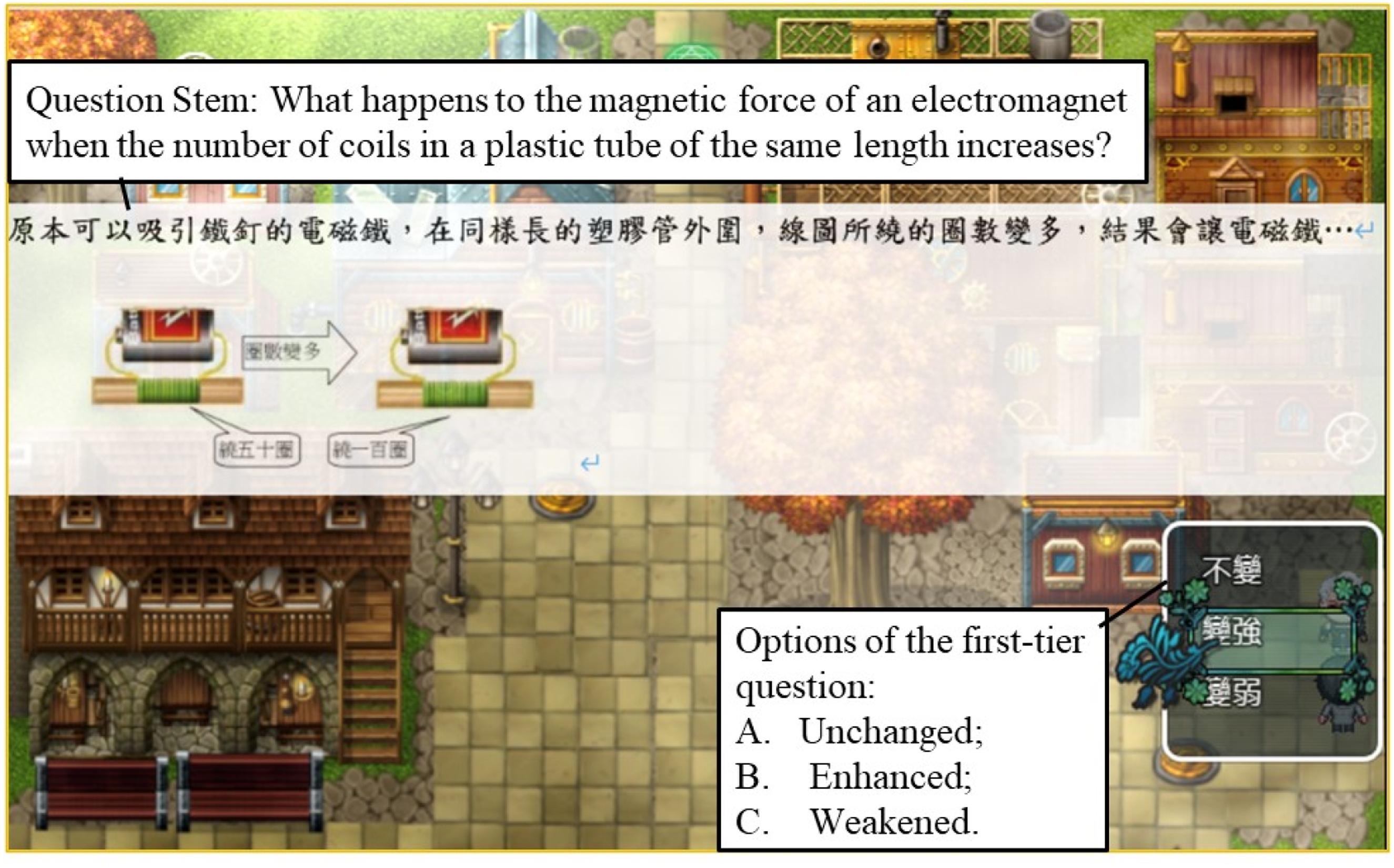
If the submitted answer is incorrect, the player receives feedback and is guided to read related supplementary learning materials to clarify the alternative conceptions. Afterwards, the player needs to resubmit the two-tier question. When the individual players correctly submit the first- and second-tier questions, they can obtain game points and science props based on the time in which they submit the answers, and the learning stage is completed. The plot guides them to the next stage. Individual players keep accumulating game points via completing tasks, helping others and solving problems using various science props. When all learning stages are completed, the player returns to the original world, and the game ends. Moreover, the modular design of the TT-GBL system allows for adaptation to other scientific topics beyond electricity and magnetism.
Method
Participants
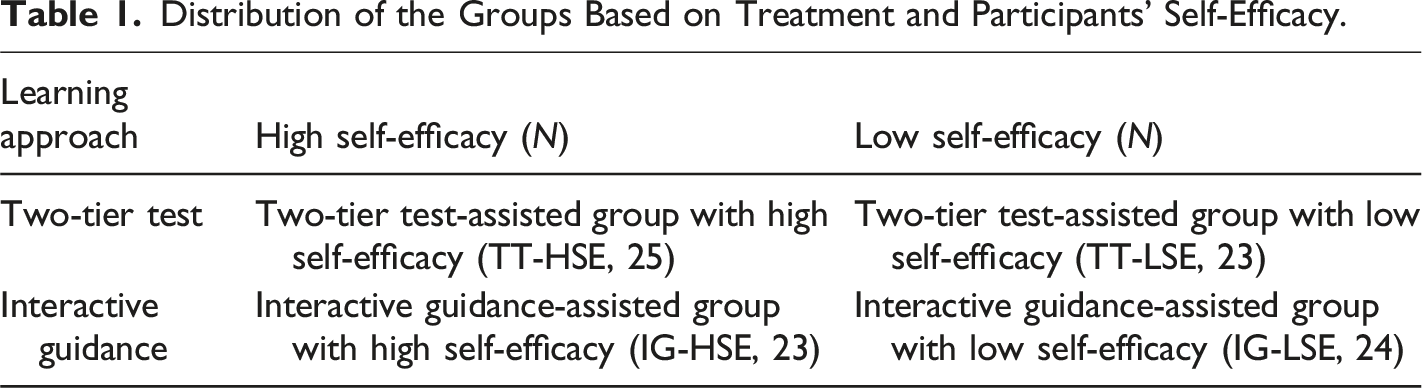
This study recruited four classes of sixth-grade students (11 and 12 years old) from an elementary school in central Taiwan, who studied four natural science lessons per week. A total of 95 students (46 girls and 49 boys) participated in the experiment. Two classes (n = 48) learned with the two-tier test-assisted game-based learning (TT-GBL) system, whereas the other two (n = 47) learned with the interactive guidance-assisted game-based learning (IG-GBL) system.
Distribution of the Groups Based on Treatment and Participants’ Self-Efficacy.
Experimental Procedure
The experimental procedure is portrayed in Figure 5. First, a four-week routine of learning the basic knowledge of the electromagnetic effect was conducted. Subsequently, all participants took the pretest on the basic concepts of electromagnetism and filled out the pre-questionnaires on self-efficacy and problem-solving tendencies. The experimental procedure.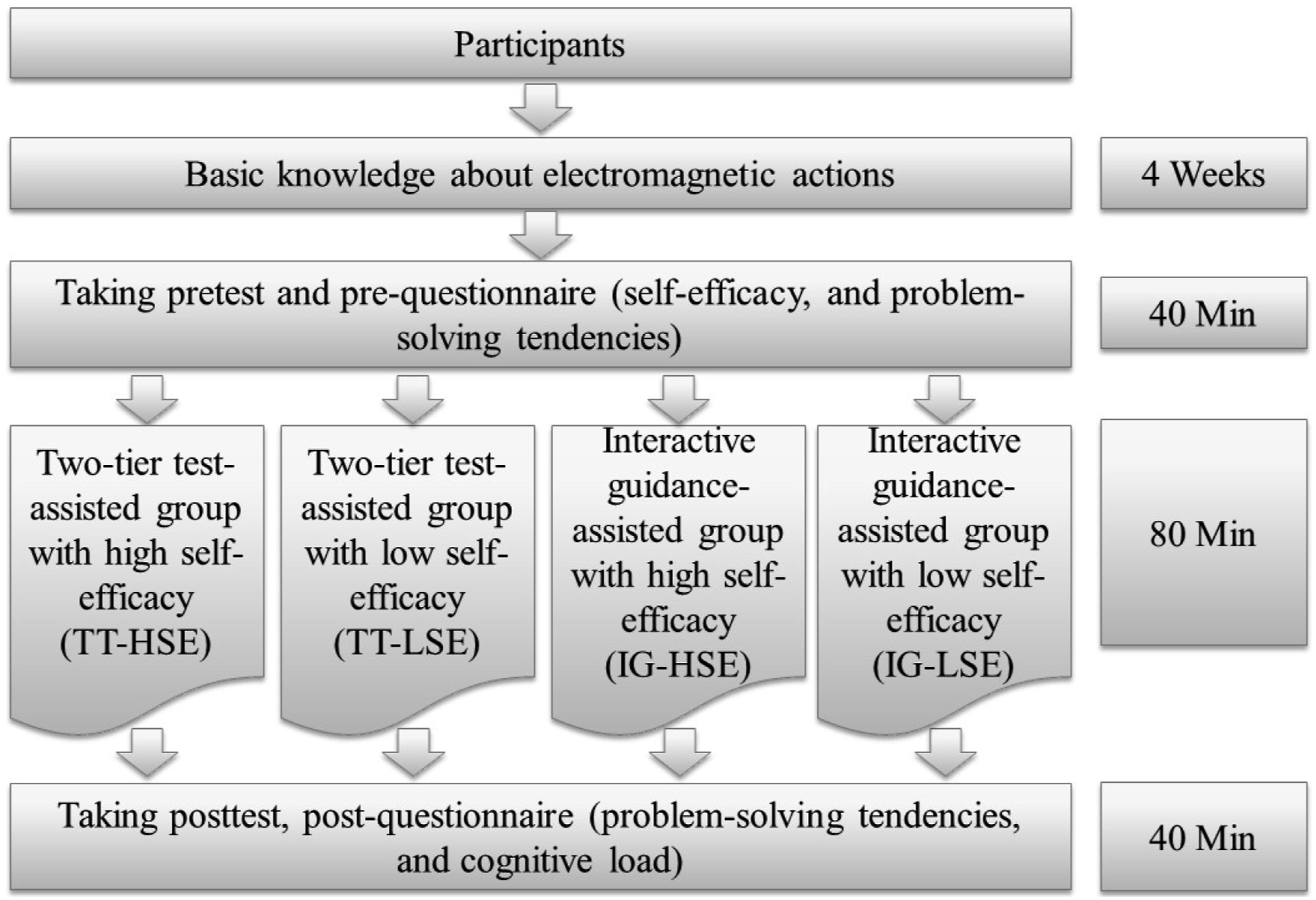
During the game-based learning activities, participants utilized the different game-based learning approaches to perform the learning tasks for 80 min. The learning materials were identical for all participants. Two kinds of learning systems were designed, namely the two-tier test-assisted game-based learning (TT-GBL) system and the interactive guidance-assisted game-based learning (IG-GBL) system. Except for the feedback mechanism, the functions of the two learning systems were the same. The storyline in each system was set in realistic day-to-day contexts and inspired by actual historical scientists, blending fictional and imaginative elements to create an engaging learning environment. As students progressed through the narrative, they encountered various problem-solving scenarios that required applying knowledge related to electricity and magnetism, including answering questions and operating virtual machinery. Compared to the two-tier tests in the TT-GBL system, the IG-GBL system provides individual students with interactive guidance to read related supplementary learning materials to probe the solution based on their responses.
After completing the learning activity, all participants took the posttest and filled out the posttest questionnaires on self-efficacy, problem-solving tendencies and cognitive load to collect their perceptions of the learning approaches.
Measuring Tools
In this study, the measuring tools comprised the pretest, the posttest and the questionnaire of self-efficacy, problem-solving tendencies, and cognitive load. The purpose of the pretest was to assess students’ basic knowledge of the electromagnetic effect. The posttest focused on three key concepts, namely compass and geomagnetism, electricity and magnetism, and their applications. Both tests consisted of 10 true-false questions and 10 multiple-choice questions, and were scored on a scale of 0–100. An example of a True or False question is: “An electromagnet powered by three batteries connected in series attracts more paper clips than an electromagnet powered by a single battery.” They were developed by one of the authors of this study, and a teacher with rich science teaching experience in an elementary school. The Kuder-Richardson coefficients were 0.85 for the pretest and 0.88 for the posttest, revealing high reliability.
The questionnaire of self-efficacy was adapted based on Pintrich et al.’s (1991) study, which comprised eight items with a 5-point rating scheme. The Cronbach’s alpha value of the adapted version utilized in this study was .92, displaying highly acceptable reliability in internal consistency for evaluating students’ self-efficacy.
The questionnaire of problem-solving tendencies was modified based on the work by Lai and Hwang (2014). It consisted of five items with a 5-point rating scheme. The Cronbach’s alpha coefficient of the adapted version was .90, indicating highly acceptable reliability in internal consistency for assessing students’ problem-solving tendencies.
The cognitive load questionnaire was modified from the survey designed by Hwang et al. (2013). It comprised six items, and was divided into three dimensions, namely “intrinsic cognitive load,” “extraneous cognitive load,” and “germane cognitive load.” The Cronbach’s alpha value of the adapted version was .78, implying acceptable reliability in internal consistency for investigating students’ cognitive load.
Data Analysis
In this study, two-way analyses of covariance (ANCOVA) were used to investigate the effects of the learning approaches (divided into the two-tier test-assisted learning approach and the interactive guidance-assisted learning approach) and participants’ self-efficacy (divided into high self-efficacy and low self-efficacy) on their problem-solving tendencies and learning achievements. Prior to the adoption of ANCOVAs, if the assumption of homogeneity of regression was not passed, the Johnson-Neyman method was executed for follow-up analyses. Moreover, two-way analyses of variance (ANOVA) were utilized to survey the influences of the learning approaches and participants’ self-efficacy on students’ cognitive load. Subsequently, lag sequential analysis was conducted to reveal the participants’ learning behavior patterns during the game-based learning activities.
Experimental Results
Students’ Problem-Solving Tendencies
To investigate the influences of the two-tier test and students’ self-efficacy on their problem-solving tendencies in the game-based learning activities, a two-way ANCOVA was adopted. The learning approaches, and self-efficacy were used as independent variables, while the pre- and post-ratings of problem-solving tendencies were respectively considered as the covariate and dependent variable. First, the homogeneity of regression slopes was checked to determine the appropriateness of using ANCOVA. The result revealed a violation of the regression homogeneity assumption (F = 6.68; p < .05). Thus, the Johnson–Neyman technique was utilized for the subsequent analysis.
Regarding the effects of the learning approaches in terms of the students’ problem-solving tendencies, the result revealed that a significant difference in the post-questionnaire ratings was confirmed. Figure 6 portrays that the significance point of the pre-questionnaire on problem-solving ratings was 3.69. This indicates that the post-questionnaire ratings of the two-tier test-assisted group were significantly higher than those of the interactive guidance-assisted group, once their pre-questionnaire ratings were below 3.69, which made up 41.05% of the students. On the other hand, no significant difference was found between the two groups who rated higher than 3.69 (58.95%) on the pre-questionnaire. Therefore, this implies that the two-tier test-assisted approach could be capable of significantly promoting the problem-solving tendencies of the students with lower initial tendencies in the game-based learning situation. Difference in the problem-solving tendencies for the two learning approaches.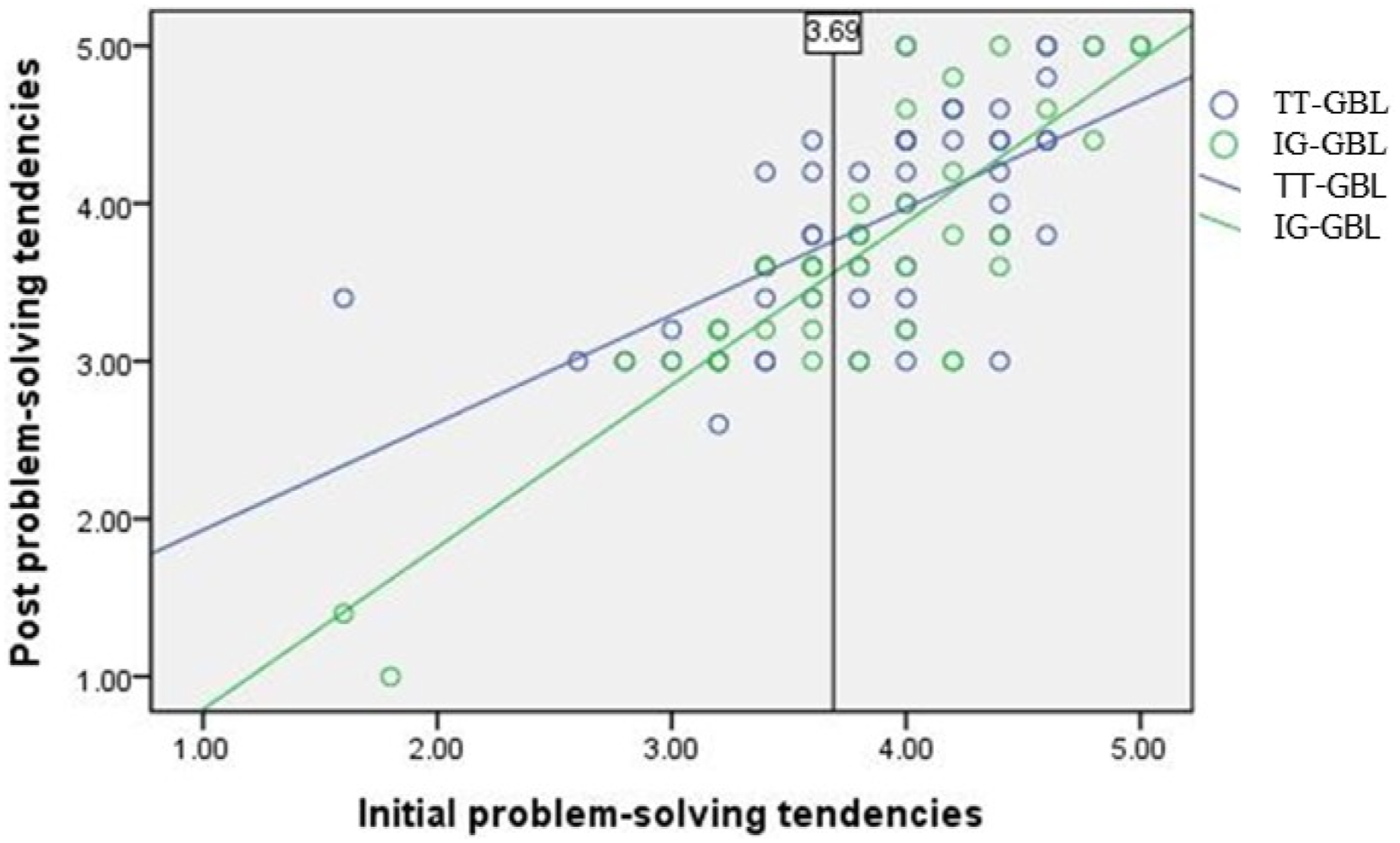
Concerning the analysis of the problem-solving tendencies of students with higher initial self-efficacy and those with lower initial self-efficacy, the result revealed a significant difference between the two groups in terms of their post-questionnaire ratings. As can be seen in Figure 7, the significance point of the two groups in the pre-questionnaire problem-solving ratings was 4.16. This implies that the post-questionnaire problem-solving rating of the students with high initial self-efficacy was significantly higher than that of the students with low initial self-efficacy, when their pre-questionnaire problem-solving ratings were below 4.16, which accounted for 64.21% of the students. Accordingly, most students with high self-efficacy perceived higher problem-solving than those with low self-efficacy in the game-based learning situation, especially students with low initial problem-solving tendencies. Difference in the problem-solving tendencies of different-order self-efficacy students.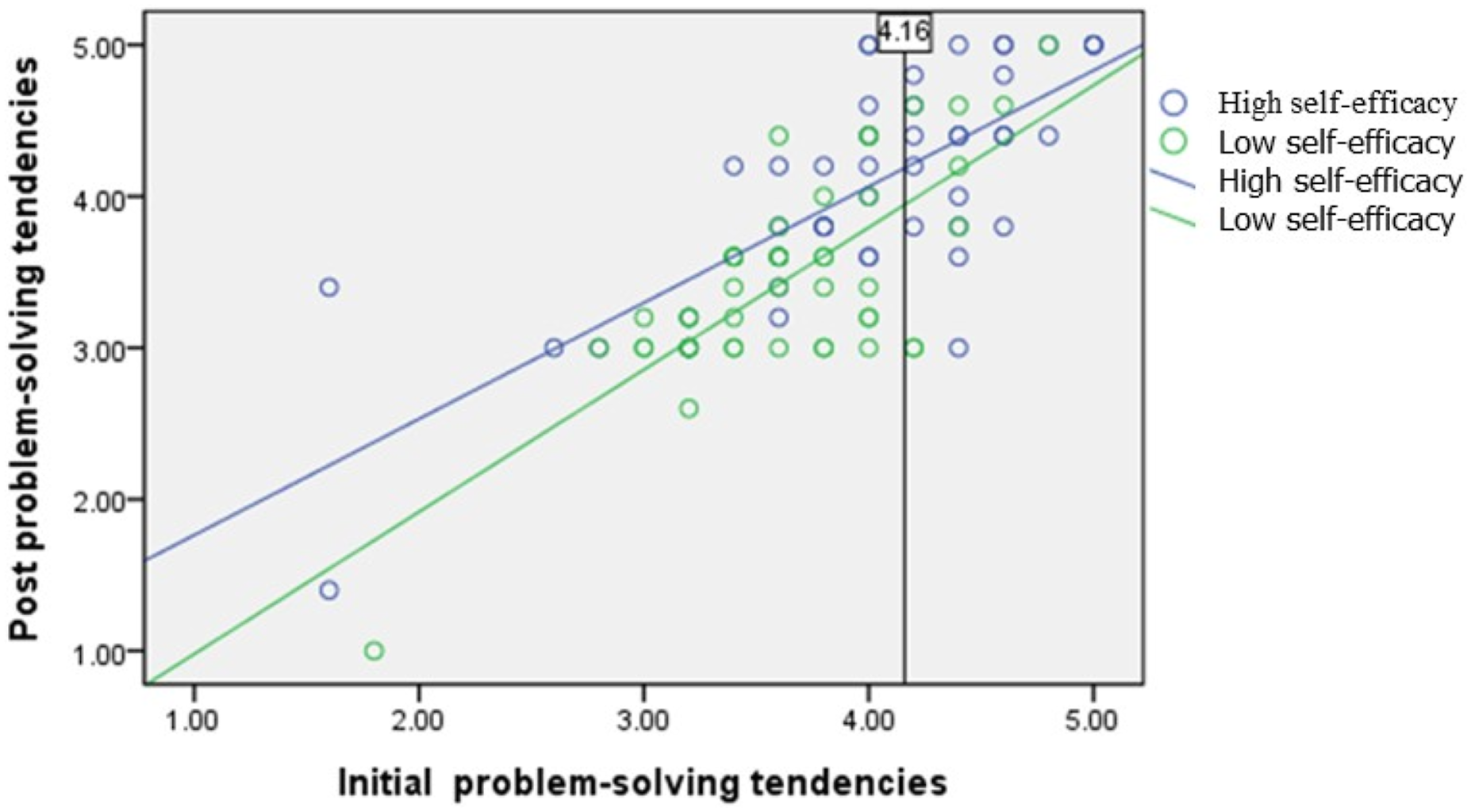
Students’ Knowledge Gains
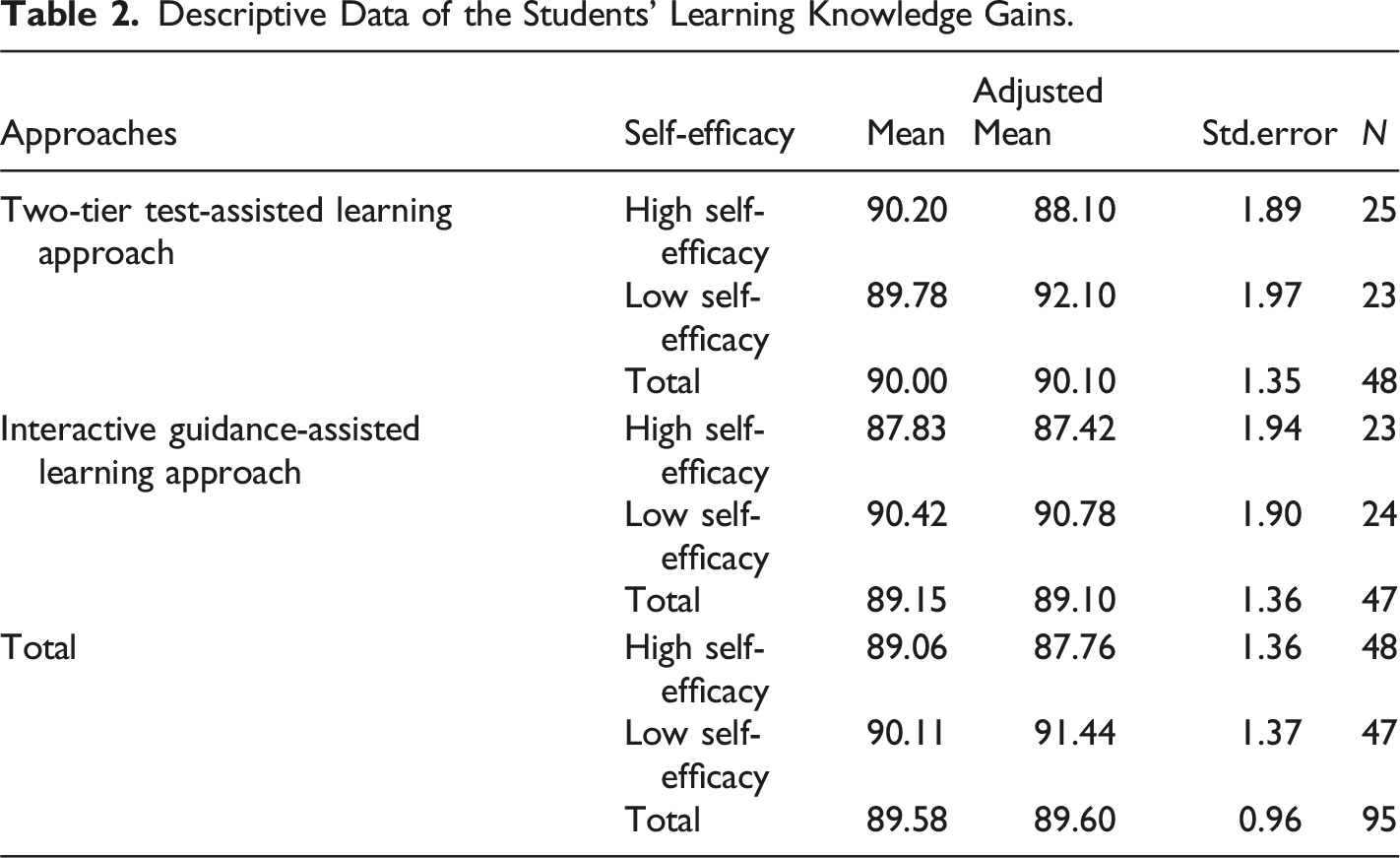
Descriptive Data of the Students’ Learning Knowledge Gains.
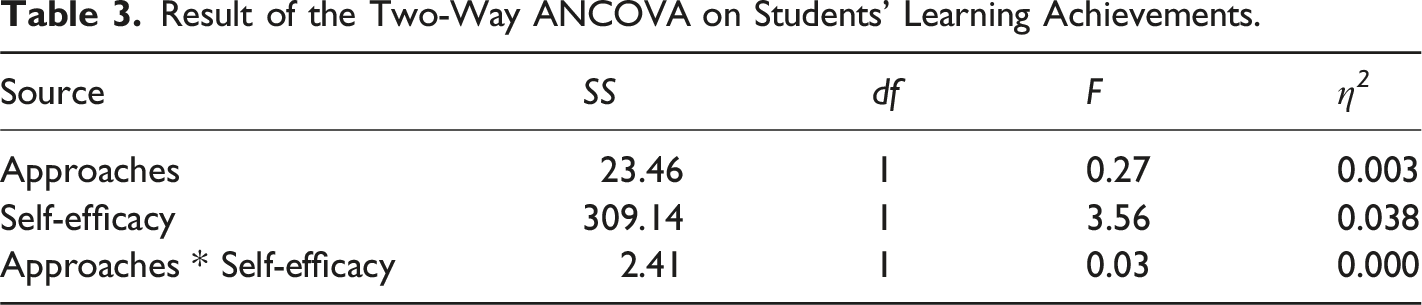
Result of the Two-Way ANCOVA on Students’ Learning Achievements.
Students’ Cognitive Load
In this study, the survey of students’ cognitive load was divided into three dimensions: namely intrinsic cognitive load, extrinsic cognitive load, and germane cognitive load. The two-way ANOVAs were adopted to investigate the influences of the learning approaches and self-efficacy on students’ cognitive load.
In terms of intrinsic cognitive load, the effect on the interaction between the learning approaches and self-efficacy was not significant (F = 3.19, p > .05, η2 = 0.034), indicating the rationality of directly investigating the main effects of the independent variables. The results revealed that neither learning approaches (F = 0.17, p > .05, η2 = 0.003) nor self-efficacy (F = 0.00, p > .05, η2 = 0.000) had a significant effect on the students’ intrinsic cognitive load. This means that no significant difference existed in the students’ intrinsic cognitive load during the two game-based learning situations, and that students with different initial self-efficacy perceived similar intrinsic cognitive load. Moreover, all participants perceived moderate intrinsic cognitive load.
Regarding extrinsic cognitive load, no significant interaction between the learning approaches and self-efficacy was found (F = 3.01, p > .05, η2 = 0.033); furthermore, neither learning approaches (F = 0.14, p > .05, η2 = 0.001) nor self-efficacy (F = 0.00, p > .05, η2 = 0.000) had a significant effect on the students’ extrinsic cognitive load. It was concluded that the different learning approaches did not affect students’ extrinsic cognitive load, and students with different initial self-efficacy perceived similar extrinsic cognitive load. They were aware of moderate extrinsic cognitive load.
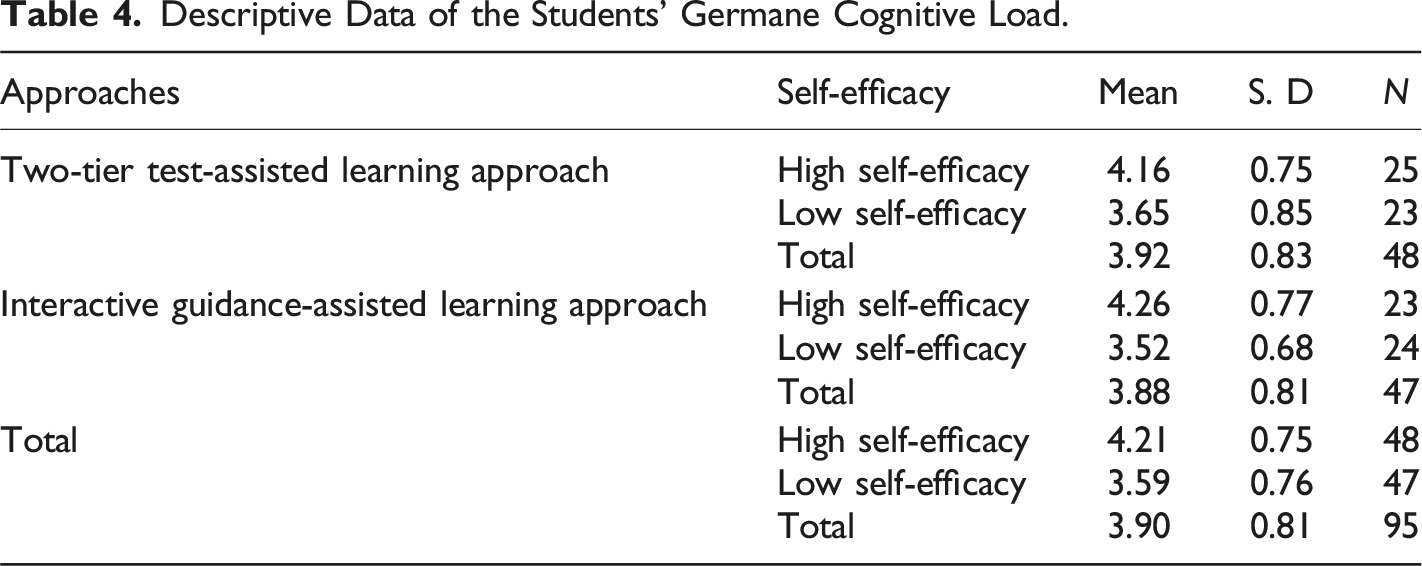
Descriptive Data of the Students’ Germane Cognitive Load.
Result of the Two-Way ANOVA on the Students’ Germane Cognitive Load.
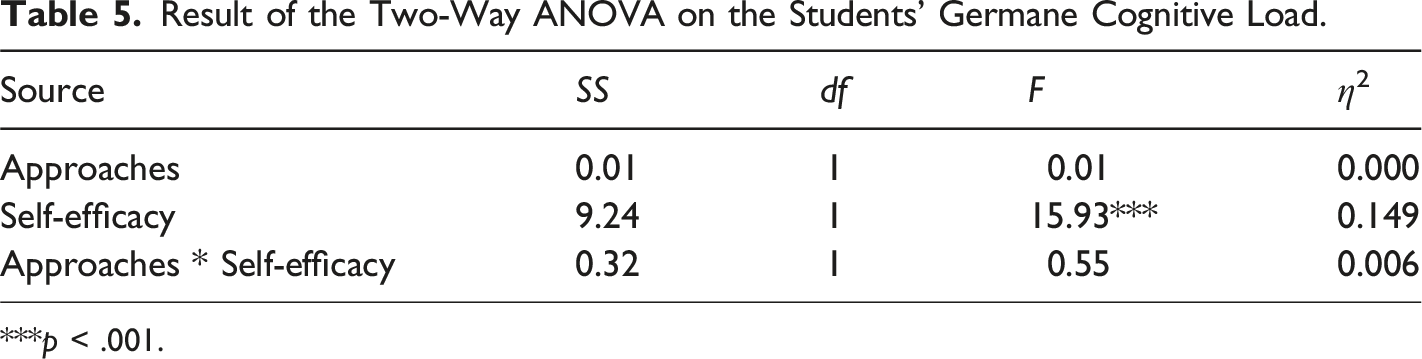
***p < .001.
Students’ Learning Behavioral Patterns
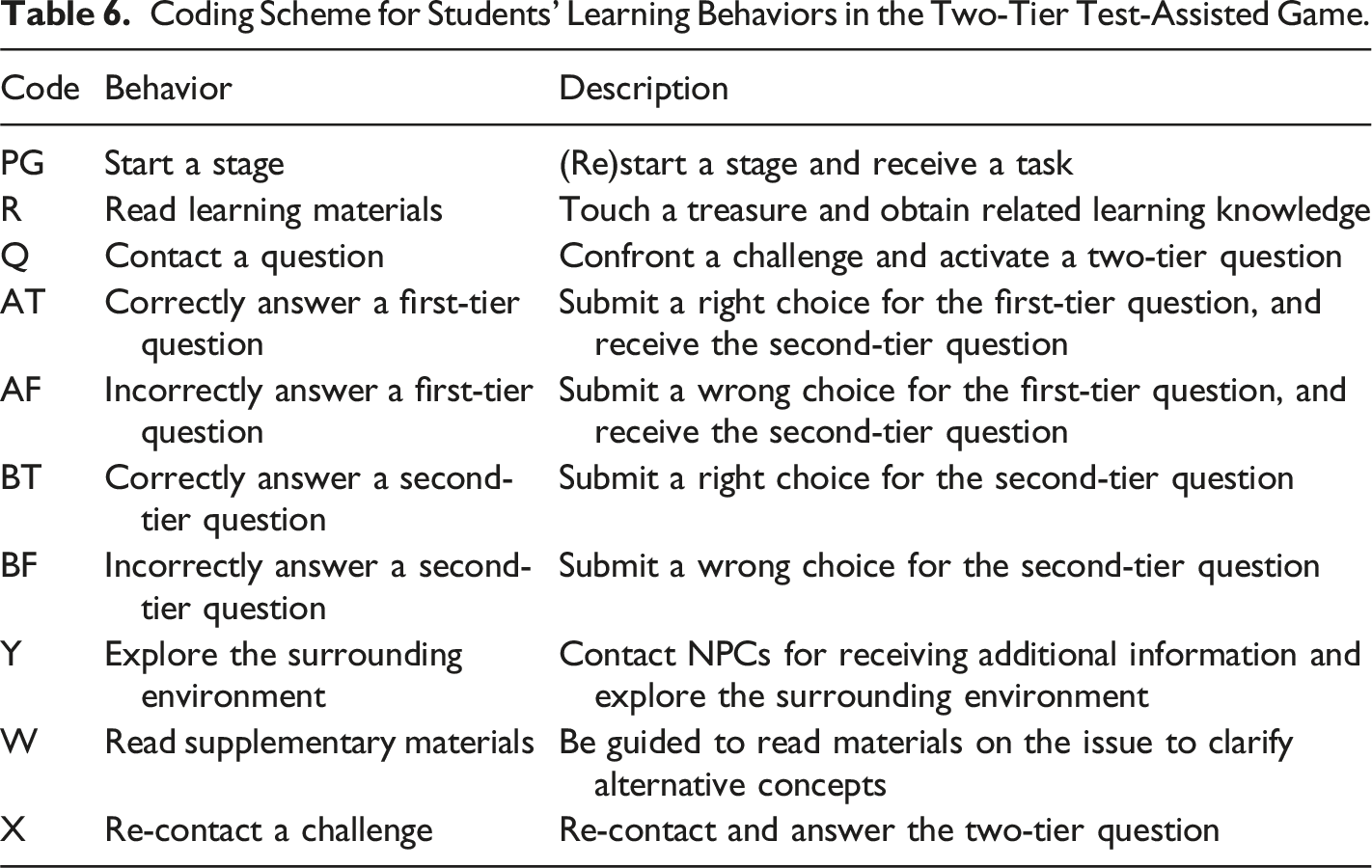
Coding Scheme for Students’ Learning Behaviors in the Two-Tier Test-Assisted Game.
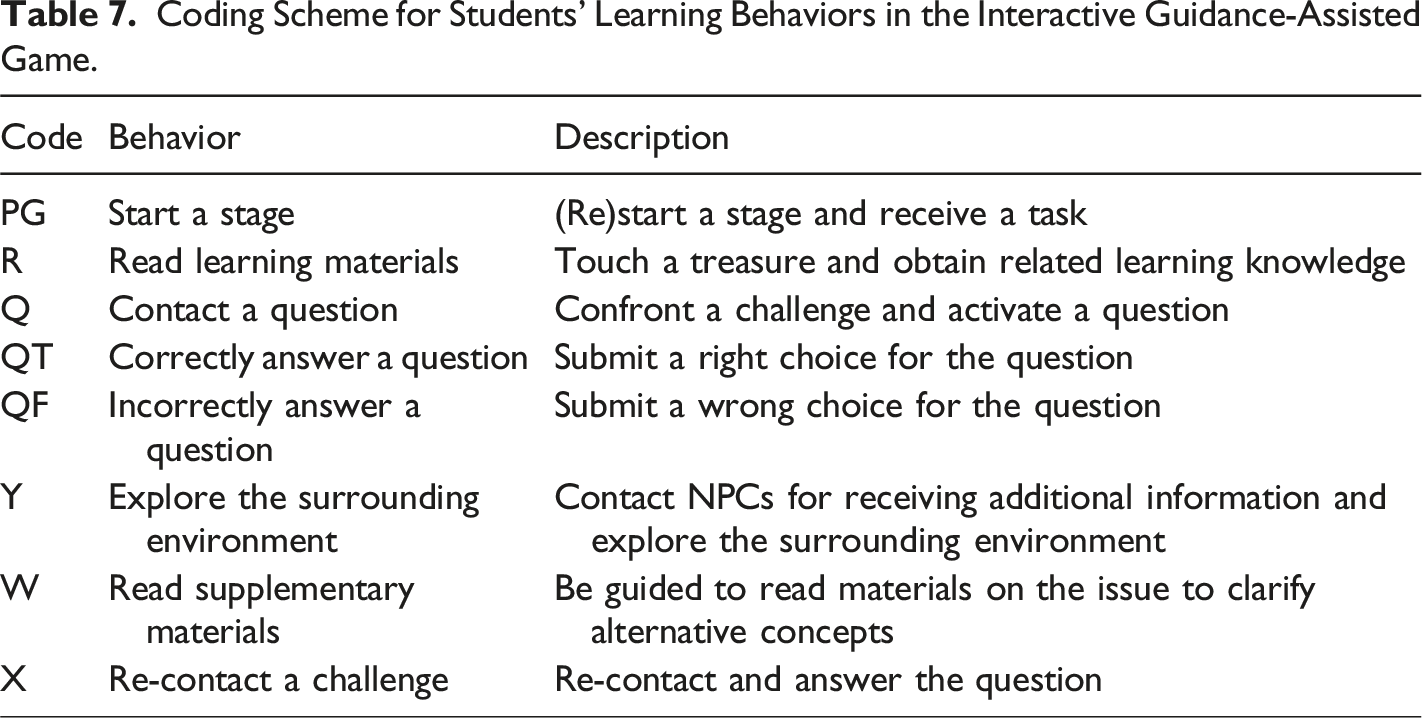
Coding Scheme for Students’ Learning Behaviors in the Interactive Guidance-Assisted Game.
A total of 6271 student learning actions were recorded in the learning portfolio database during the game play, with 3946 actions for the students who used the two-tier test-assisted game, and 2345 for those who utilized the interactive guidance-assisted game. Lag sequential analysis was conducted on the students’ learning behaviors to reveal their learning behavior patterns in the game-based learning activity. To achieve statistically significant results for the sequence, a z-score should be higher than 1.96. For the TT-HSE group, a total of 26 sequences with significant z-scores were portrayed in the behavior transfer diagrams, as displayed in Figure 8. Each arrow indicates the direction in which the action transitions. R Behavior (read learning materials) had the greatest frequency of significant sequential relationships over the game-based learning activity, including directional sequential relationships (i.e., Y→R, R→Q, BF→R, R→AT, BT→R) and bi-directional sequential relationships (i.e., X→R, R→X, W→R, R→W). This implies the significant role that the R Behavior played in the learning process during the two-tier test-assisted game. It is worth paying attention to the “ternary cycle” of reading and answering (X, R, and W behaviors), revealing the close connection between the three behaviors. Bi-directional sequential relationships between “X and W,” “W and R,” and “R and X” describe that students would read related learning materials and supplementary materials to clarify their alternative conceptions and to solve problems. Behavioral Transfer Diagram of the TT-HSE Group during Gameplay. Note. The red lines represent behaviors that are not consistent with those of the TT-LSE group.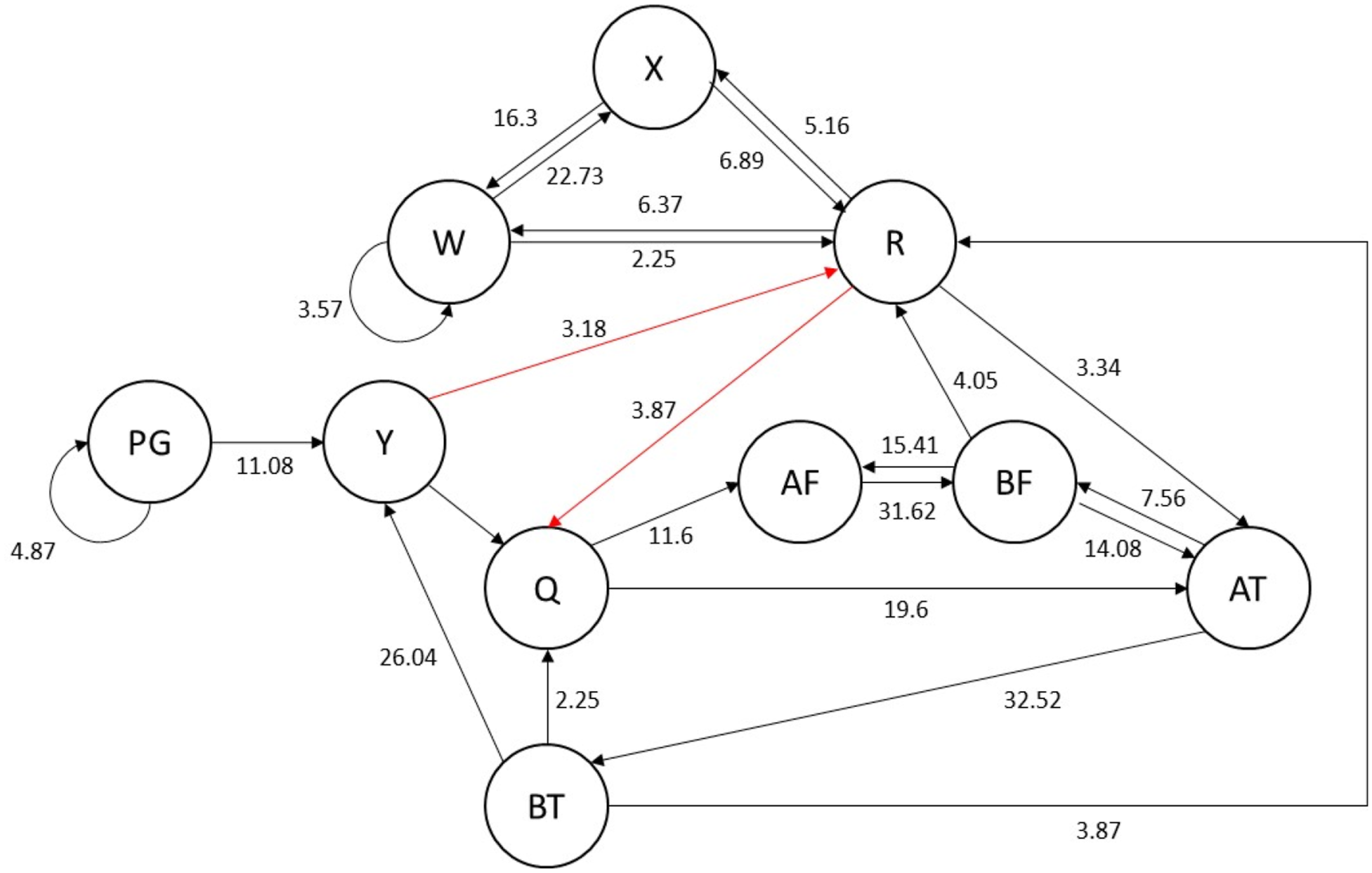
For the TT-LSE group, 24 significant sequences were found in the behavior transfer diagrams, as portrayed in Figure 9. Identical to the behavior of the TT-HSE group, R behavior had the highest frequency of significant serial relationships. On the other hand, the significant sequence from R to Q in the TT-HSE group did not exist in the TT-LSE group. Instead, the significant sequence from R to Y was displayed in the TT-LSE group. This implies that the TT-LSE group intended to contact NPCs to receive additional information and explore the surrounding environment after reading the learning materials. Moreover, the “ternary cycle” of reading and answering (X, R, and W behaviors) also existed in the TT-LSE group. However, two more significant sequences (X→X and X→PG) existed, noting that students may re-contact a challenge and repeatedly answer a question, or restart a stage. Behavioral Transfer Diagram of the TT-LSE Group during the Gameplay Note. The red lines represent behaviors that are not consistent with those of the TT-HSE group.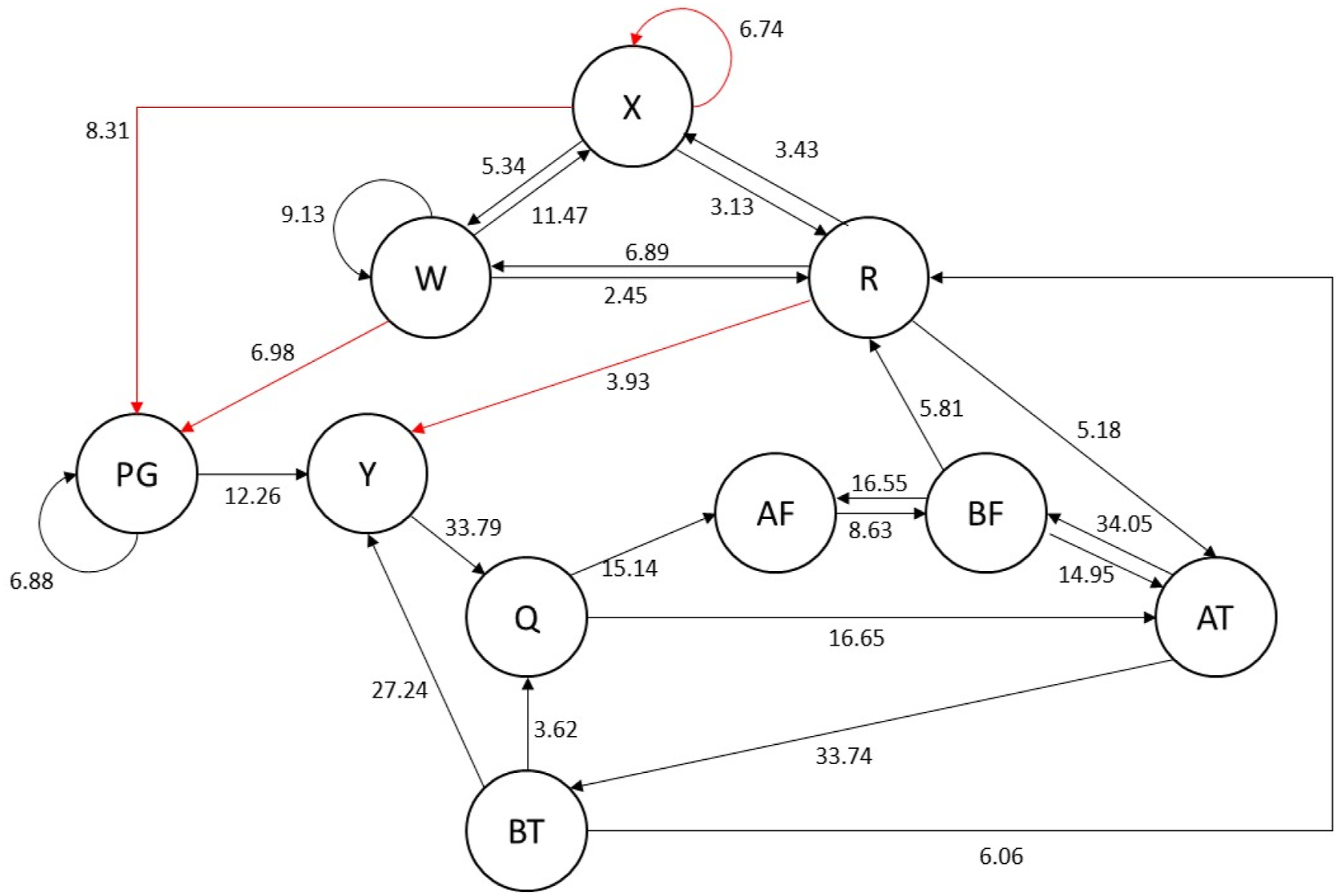
With regard to the learning behavior pattern of the IG-HSE group in the interactive guidance-assisted game-based learning activity, a total of 16 statistical sequences were displayed in the behavior transfer diagrams, as schematized in Figure 10. Both R (read learning materials) and X (re-contact a challenge) behaviors had the largest number of significant sequential relationships during the game-based learning activity. In contrast to the “ternary cycle” of reading and answering (X, R, and W behaviors) that occurred during the two-tier test-assisted game, bi-directional sequential relationships between R and W behaviors did not take place. Furthermore, the QF behavior had two statistical sequences, namely “QF→QF” and “QF→QT,” inferring that students may try to continue to answer rather than looking for additional information or evidence. Behavioral transfer diagram of the IG-HSE group during gameplay.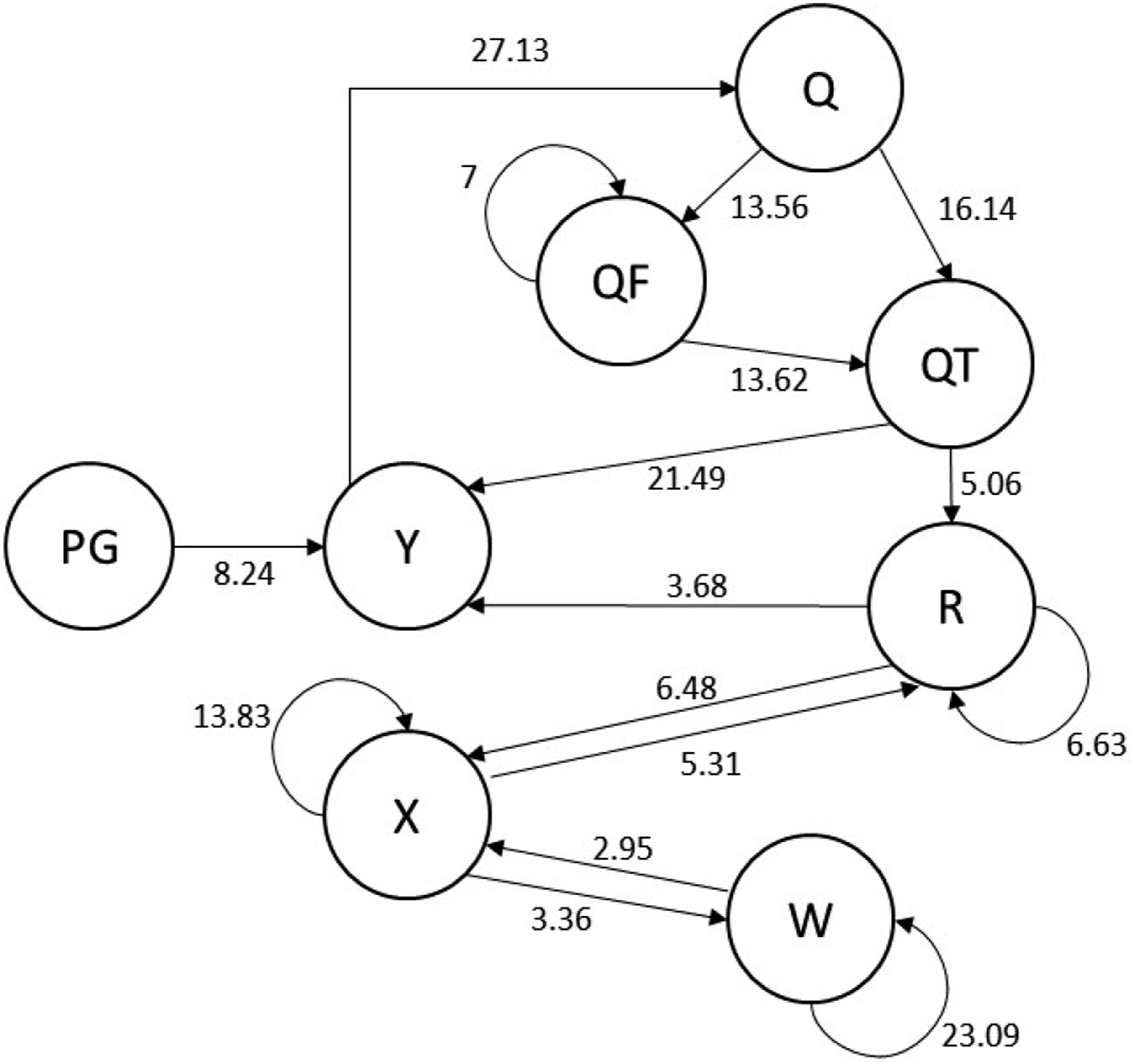
Regarding the learning behavior pattern of the IG-LSE group, 17 significant sequences were revealed in the behavior transfer diagrams, as shown in Figure 11. All significant sequences in the IG-HSE group appeared in the IG-LSE group; moreover, one more significant sequence (PG→PG) was also presented in the IG-LSE group. Behavioral Transfer Diagram of the IG-LSE Group during Gameplay. Note. The red line indicates behavior distinct from that of the IG-HSE group.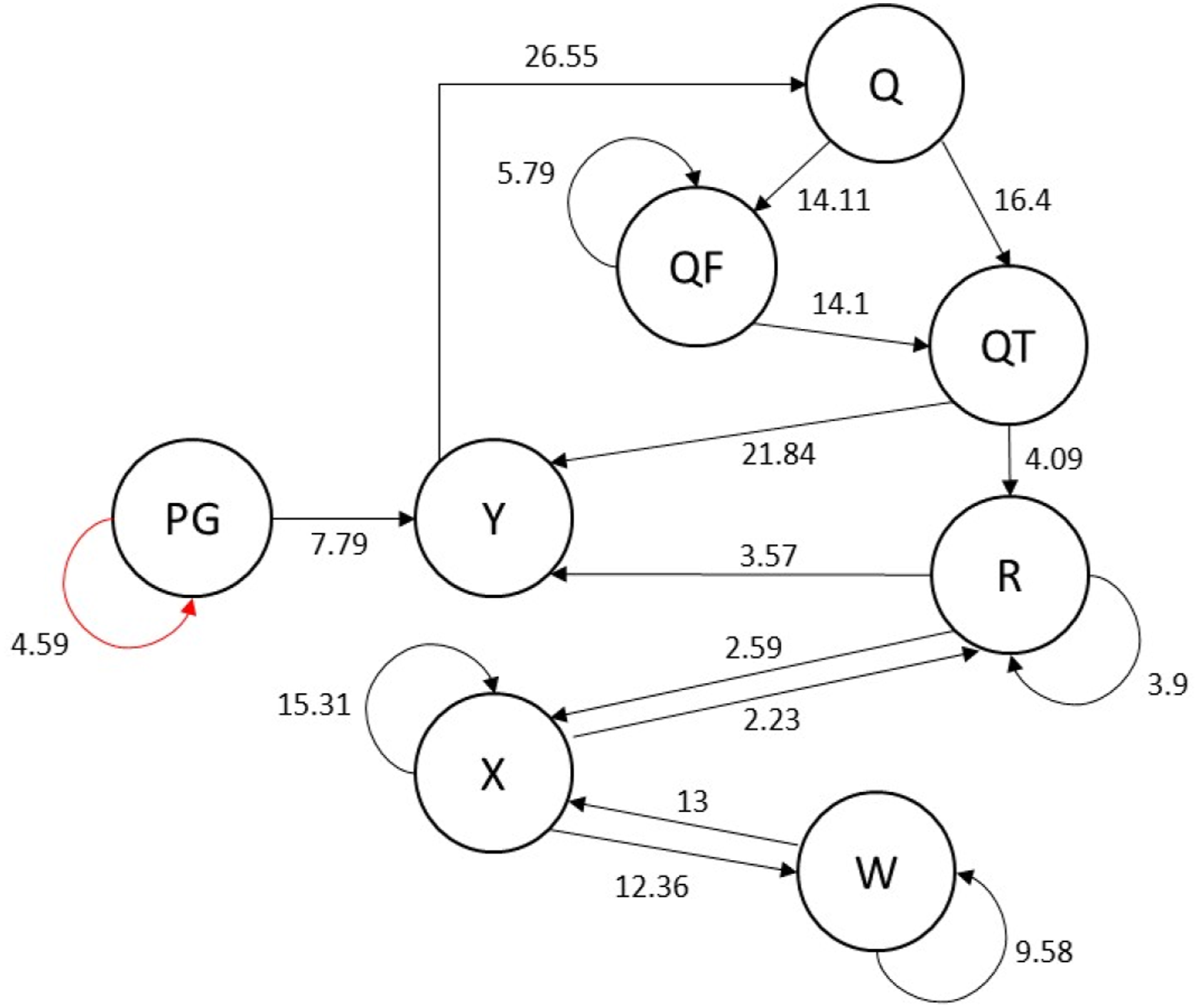
Taken together, the students who adopted the two-tier test-assisted game tended to repeatedly read and compare the learning materials and supplementary materials (bi-directional sequential relationships between R and W behaviors) more often than those who used the interactive guidance-assisted game. Moreover, the students were more likely to read the learning materials and search for evidence in the two-tier assisted game, compared to the interactive guidance-assisted game.
Discussion and Conclusions
In this study, the experimental results displayed that both the two-tier test-assisted learning approach and high self-efficacy can effectively enhance the problem-solving tendencies of students with lower initial tendencies in game-based learning activities. The students with high self-efficacy perceived a higher germane cognitive load than those with low self-efficacy. However, neither learning approaches nor self-efficacy had a significant influence on students’ knowledge gains. Moreover, the differences between the learning patterns of students with different learning approaches and self-efficacy were revealed.
Each of the TT-GBL approach and high self-efficacy showed a significantly positive impact on the students’ problem-solving tendencies, especially for those with lower initial tendencies. This result corresponds to the assertion of several studies, stating that providing appropriate scaffolding has been widely used in instructional interactions to promote students’ problem-solving in a DGBL context (Chen, 2020; Sun et al., 2023). Two-tier tests have been considered to be an effective method of investigating students’ learning concepts. This study further revealed the advantages of two-tier tests in enhancing students’ problem-solving skills. The results of the students’ learning behaviors with the two-tier test-assisted game revealed the close connection of the “ternary cycle,” consisting of reading the learning materials (X) and supplementary materials (R), and re-contacting a challenge (W), implying that students would read related learning materials and supplementary materials to facilitate their problem-solving. This could be the reason why the TT-GBL approach could benefit students’ problem-solving tendencies. Moreover, in terms of the relationship between students’ self-efficacy and their problem-solving tendencies, the result is consistent with the findings of several previous studies, stating that students’ self-efficacy may be related to their ability to solve problems (Schunk & Zimmerman, 2007; Tsai et al., 2024). Compared to the learning behaviors of the students with high self-efficacy, those with low self-efficacy tended to continue to answer rather than look for additional information or evidence. This implies that high self-efficacy significantly contributes to students’ problem-solving tendencies.
The learning approaches and self-efficacy had no significant influence on students’ knowledge gains. This was not consistent with the work of Rachmatullah et al. (2021), who asserted that students’ self-efficacy had a positive effect on their cognitive benefits in the gameplay. Some previous research has displayed that well-designed DGBL approaches can be effective in terms of enhancing students’ learning outcomes by promoting active practice and reflection on ideas in a problem-based task (Li & Tsai, 2013; Yang & Lu, 2021), and game-based problem-solving involves participants’ cognitive manipulation of game tasks and objects (Ke et al., 2024). From the revelation of students’ learning behaviors, each group had the highest frequency of significant sequential relationships of R (reading learning materials) behaviors during the game-based learning activities. This could be a great benefit for students’ knowledge gains.
In terms of students’ cognitive load, the students with high self-efficacy perceived higher germane cognitive load than those with low self-efficacy during the game-based learning activities. Germane cognitive load is related to the learner’s engagement in deep cognitive processing and construction (Huang et al., 2013). This result corresponds to Sun et al.’s (2022) work, which declared that students’ self-efficacy is related to their engagement, or choices in the face of difficulty, as well as their confidence in their ability to complete learning tasks. Furthermore, the characteristics of a game offer students opportunities to experience a sense of accomplishment by overcoming challenges and achieving goals (Tsai et al., 2024). This could explain why the students with high self-efficacy had higher germane cognitive load as well as problem-solving tendencies.
This study evidenced the potential advantages of high self-efficacy for students’ problem-solving tendencies and engagement, and further revealed that a two-tier test can foster students’ problem-solving tendencies in a game-based learning context. This could be a valuable reference for further research in game-based learning environments. On the other hand, due to the small number of participants, effect sizes were adopted to assist in explaining the experimental treatment effects of the two-way ANOVAs and the two-way ANCOVAs. It is suggested that further studies could recruit a larger number of participants for collecting and analyzing the data. Moreover, as the questionnaires used in this study contained relatively few items for each construct, future research is encouraged to adopt scales with more items. The TT-GBL approach can be applied to other game-based learning activities by replacing the learning materials and the scenarios with newly applied ones. Furthermore, with the advancements of information and technology, another issue that is worth further exploration is comparing the influences of integrating different advanced technologies into game-based learning contexts on students’ learning outcomes.
Footnotes
Author Contributions
Chieh-Ju Tsao: Formal analysis, Data Curation, Methodology, Writing-Original Draft, Writing-Review & Editing. Chun-Sheng Chang: Formal analysis, Investigation, Data Curation, Software, Writing-Review & Editing. Chih-Hung Chen: Conceptualization, Methodology, Formal analysis, Data Curation, Validation, Writing-Review & Editing.
Declaration of Conflicting interests
The authors declared no potential conflicts of interest with respect to the research, authorship, and/or publication of this article.
Funding
This study is supported in part by the National Science and Technology Council of Taiwan under contract number NSTC 113-2410-H-142-008-MY2 and NSTC 113-2410-H-142-005.

Data Availability Statement
The data that support the findings of this study are available on request from the corresponding author. The data are not publicly available due to privacy or ethical restrictions.