







Abstract
Generative AI (GenAI) has rapidly emerged as a promising tool for supporting self-regulated learning (SRL). However, little is known about how its mechanisms compare with, or extend beyond, earlier artificial intelligence (AI) approaches. Using Winne and Hadwin’s COPES (Conditions, Operations, Products, Evaluations and Standards) architecture as an organizing framework, this comparative systematic review synthesized 70 articles from 2015 to 2025 to examine how AI and GenAI were technologically and pedagogically implemented to scaffold SRL. Technically, SRL systems predominantly employed knowledge-based systems, machine learning, natural language processing, and, more recently, customized large language models, with limited integration of external knowledge bases. Pedagogically, interventions in the reviewed studies concentrated on Operations and Evaluations during task enactment, with less attention to task definition, goal setting, and adaptation. In terms of operational distinctions between AI and GenAI, AI tended to instantiate analytics-driven scaffolding (data-based adaptivity, progress monitoring, and standards setting). In contrast, GenAI more often enabled dialogic, context-adaptive cognitive scaffolding and content generation. Building on these findings, this review proposes a framework for comprehensive SRL scaffolding.
Keywords
Introduction
The ultimate aim of education is to prepare individuals for lifelong learning; therefore, self-regulation is essential (Zimmerman, 2002). In this sense, self-regulated learning (SRL) contributes to the achievement of Sustainable Development Goal 4 (SDG 4)—Quality Education, which guarantees equity, inclusion, and lifelong learning opportunities for all people (United Nations General Assembly, 2015). SRL skills can be nurtured with explicit guidance and practice (Pintrich, 1995; Zimmerman, 2000), highlighting the potential of scaffolding to foster SRL development. Winne (2017) emphasized that technology, especially learning analytics and educational data, can promote effective SRL.
Artificial intelligence (AI) has been widely used throughout its development to support SRL through intelligent tutoring systems (ITS), chatbots, machine translation, and automated feedback tools (Chang & Sun, 2024). These technologies provide scaffolding for goals and plans, self-monitoring, and cognitive, metacognitive, and affective feedback (e.g., Han et al., 2026; Mejeh & Rehm, 2024). To date, AI technologies have remained important in SRL research, despite the recent surge in generative AI (GenAI).
Since ChatGPT’s release, GenAI has been widely employed to support SRL across disciplines (e.g., M. Liu & Reinders, 2025; Neumann et al., 2025). These interventions typically respond to learners’ requests for feedback and knowledge, and generate practice exercises (e.g., Huang & Lin, 2024; Neumann et al., 2025). In this context, an important question arises concerning how GenAI has been leveraged to support SRL, particularly from both
Furthermore, although GenAI technically represents the next stage in the broader AI stream, existing systematic reviews have examined GenAI or AI mainly in isolation (e.g., Chang & Sun, 2024; Sardi et al., 2025). A recent mapping review by Banihashem et al. (2025) integrated GenAI into the broader AI stream to explore the AI–SRL relationship; however, GenAI-based interventions were not highlighted. As GenAI has rapidly emerged as a valuable SRL aid, we contend that a comparative analysis can clarify how GenAI and its mechanisms relate to, or extend beyond, those of earlier AI approaches. Additionally, although Banihashem et al. (2025) reported the most frequently used AI interventions, for instance, adaptive systems and personalization, the underlying technological and pedagogical mechanisms were not explicitly identified. We argue that clarifying both technological and pedagogical perspectives is important for guiding practical and purposeful SRL scaffolding designs with AI and GenAI.
In this vein, adopting an SRL framework, and particularly, Winne and Hadwin’s (1998) COPES (Conditions, Operations, Products, Evaluations and Standards) model, provides a structured lens for organizing the review. Despite its popularity, to the best of our knowledge, no prior systematic review has adopted COPES as its organizing lens. Collectively, this review aimed to synthesize evidence on the technological deployment of AI and GenAI for SRL scaffolding based on the COPES model, map these interventions onto the SRL process, clarify the distinct and overlapping pedagogical functions, and propose an actionable framework for comprehensive, theory-driven SRL support using generative and hybrid AI.
Literature Review
Winne and Hadwin’s (1998) Model of Self-Regulated Learning
Originating from the information-processing theory, Winne and Hadwin (1998) view SRL as a cognitive–metacognitive process across learning stages. Accordingly, they introduced a recursive four-stage SRL cycle, incorporating the COPES model, and positioned monitoring and control as central components (Figure 1). Particularly, the four SRL stages include task definition, goals and plans, enactment, and adaptation. While other multi-phase cyclical models consolidate initial regulatory processes into a single stage, such as Zimmerman’s (2000) model that positions task analysis and self-motivation beliefs within the forethought phase, or Pintrich’s (2000) framework that combines forethought, planning, and activation in phase one, Winne and Hadwin’s (1998) model separates task definition and goal setting. Greene and Azevedo (2007) contended that this enables the analysis of learners’ initial conditions and intentions. Moreover, the adaptation stage in Winne and Hadwin’s (1998) model involves the learner’s self-reflection on previous stages and long-term changes (Winne, 2018). The COPES Model of Metacognitive Monitoring and Control Across Four Stages of Studying. Note. Adapted from Figure 12.1 in “Studying as Self-Regulated Learning,” by P. H. Winne and A. F. Hadwin, in Metacognition in Educational Theory and Practice (pp. 277–304), edited by D. J. Hacker, J. Dunlosky, & A. C. Graesser, 1998, Lawrence Erlbaum Associates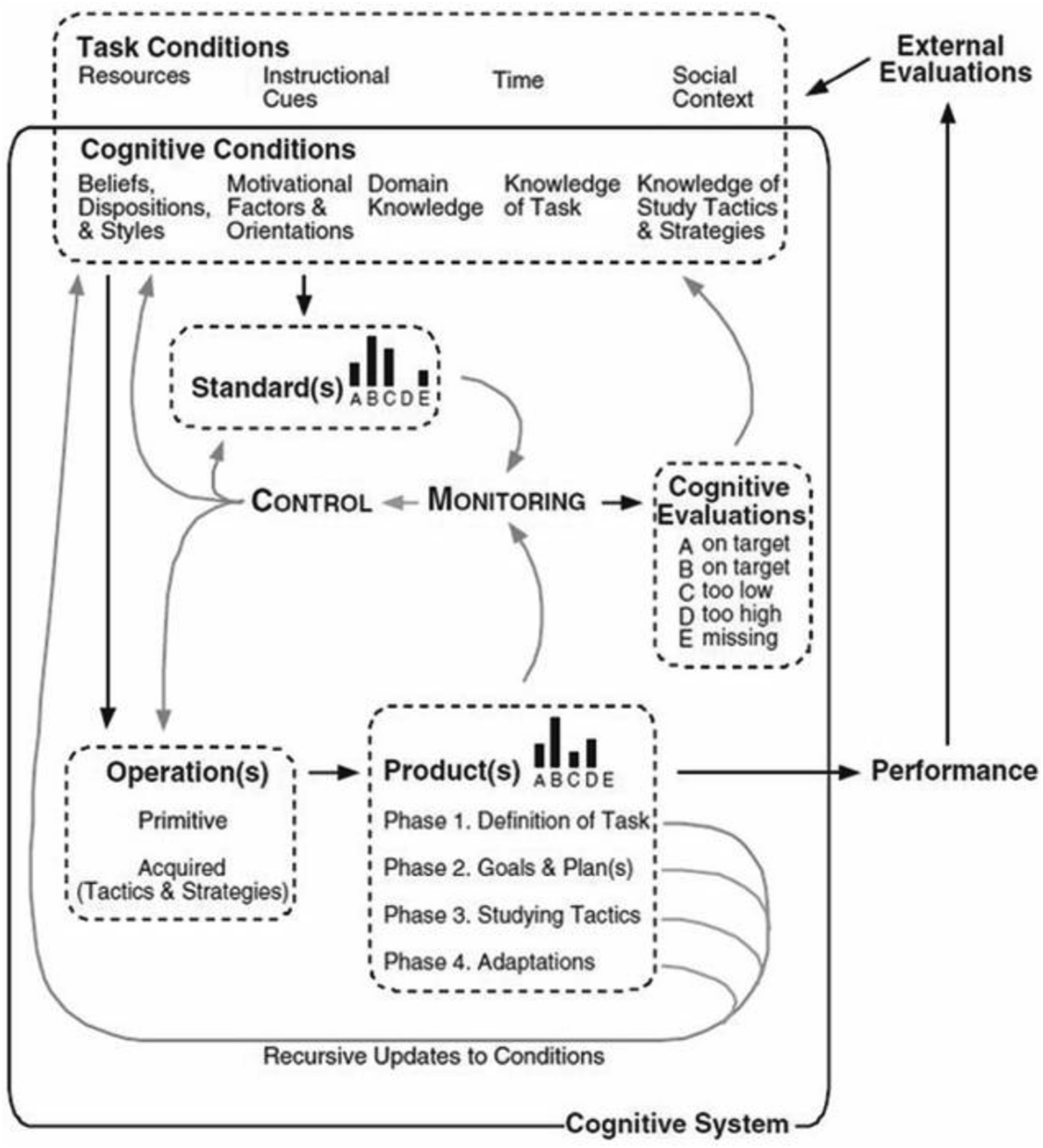
Within Winne and Hadwin’s (1998) model, each of the four SRL stages consistently encompasses the five COPES components of Conditions, Operations, Products, Evaluations, and Standards. Particularly, the learning process starts with Conditions—cognitive and task conditions that guide learners’ cognitive Operations and Standards setting (Winne, 2018). Following this, Operations include learners’ cognitive and metacognitive tactics, with the five basic cognitive SMART operations: searching, monitoring, assembling, rehearsing, and translating (Winne & Hadwin, 1998). These operations generate unique Products at each stage. In parallel, Standards serve as the criteria for learners to judge the quality of these products. Consequently, Evaluations (monitoring and control) compare the products based on standards, informing subsequent adaptations. With the COPES structure, metacognition is positioned centrally in the SRL mechanism as it reflects the continuous evaluation of the products generated and the adjustment of initial cognitive conditions. As such, Panadero (2017) contended that Winne and Hadwin’s framework is the most metacognition-focused of the major SRL models.
Moreover, unlike models that focus primarily on macro-level phases, the COPES architecture enables micro-level analysis of the interactions of components in cognitive architecture across different phases, and presents the recursive dynamics of SRL (Greene & Azevedo, 2007). Moreover, the model explicitly incorporates external evaluations into the SRL mechanism. Taken together, Winne and Hadwin’s (1998) model offers a comprehensive framework for researchers to analyze the participation of AI- and GenAI-based supports in students’ SRL processes and, ultimately, transform them into learning outputs. The model has thus been widely adopted in computer-supported learning research (Panadero et al., 2016).
AI and AI-Based Scaffolding in SRL Development
To articulate the scope of AI, Russell and Norvig (2021) employed the two dimensions of human vs. rational and thought vs. behavior, yielding four approaches: thinking humanely, acting humanely, thinking rationally, and acting rationally. Among the approaches, Russell and Norvig (2021) contended that under the standard model, AI primarily targets rational actions; that is, it chooses the best possible actions to achieve its objectives in a given situation. In the present review, we adopted the rational-agent perspective of AI to identify its scope in supporting SRL, incorporating methods from both human-like behavior (e.g., natural language processing) and rational reasoning (e.g., probability) (Russell & Norvig, 2021). Accordingly, AI includes: (a) knowledge-based systems, (b) uncertainty and probabilistic reasoning, (c) search and optimization, (d) machine learning, (e) natural language processing, (f) computer vision, and (g) robotics (Russell & Norvig, 2021). Moreover, we have further extended this scope to include: (h) multi-agent systems (a subfield of uncertain knowledge and probabilistic reasoning; Russell & Norvig, 2021) to cover scenarios involving multiple agents pursuing individual and collective goals.
AI Subfields
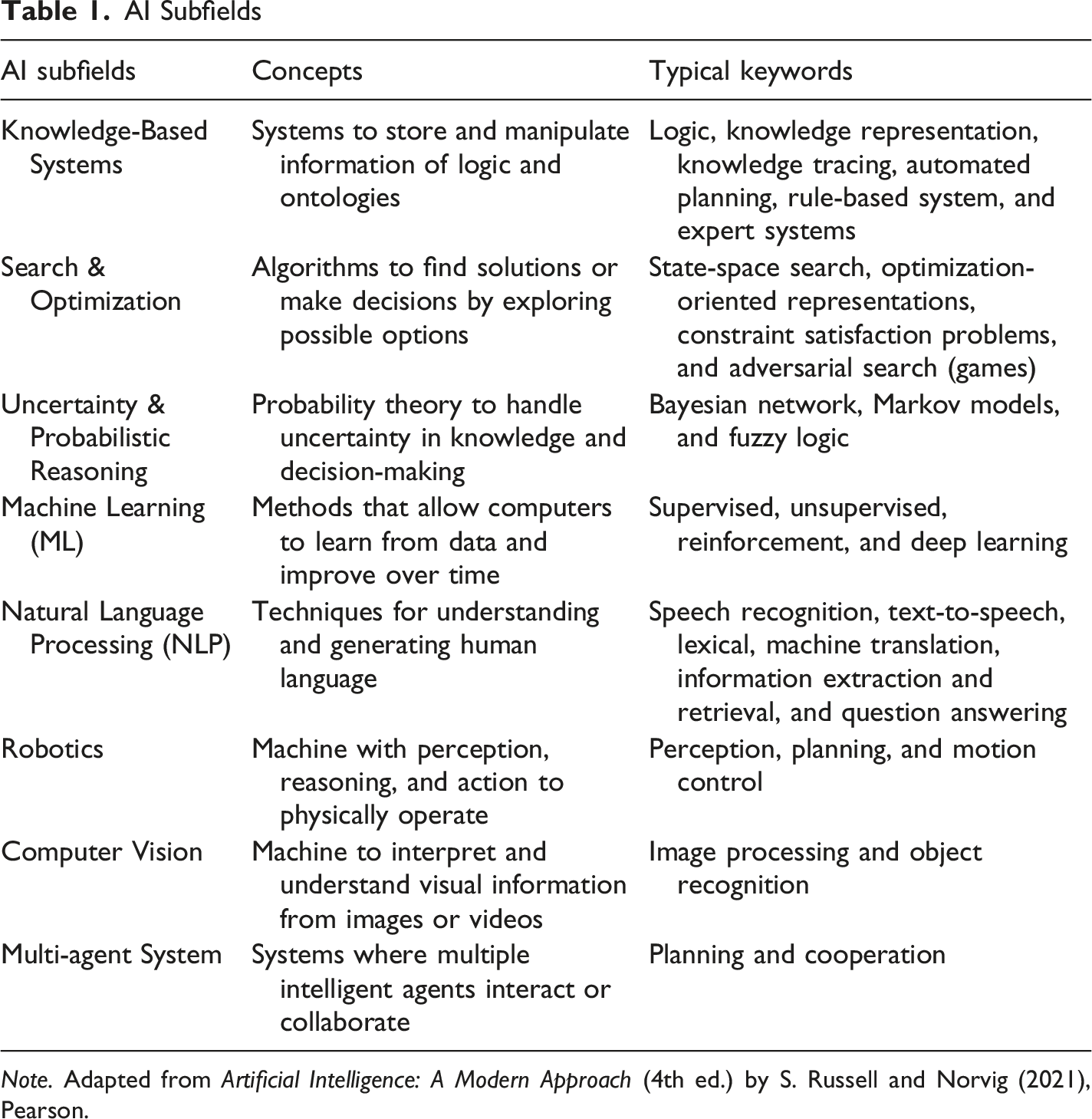
Note. Adapted from Artificial Intelligence: A Modern Approach (4th ed.) by S. Russell and Norvig (2021), Pearson.
To date, diverse AI technologies have been used in SRL development. Particularly, ML has been employed for final performance predictions (Guerrero-Roldán et al., 2021). Intelligent tutoring systems (ITSs), such as MetaTutor (Duffy & Azevedo, 2015), provide data-driven adaptive scaffolding across the SRL process. Other systems, such as DSLab-Bot (Ortega-Ochoa et al., 2024), combine multiple AI technologies to detect students’ emotions, and hence can support both cognitive and emotional aspects of SRL.
GenAI and GenAI-Based Scaffolding in SRL Development
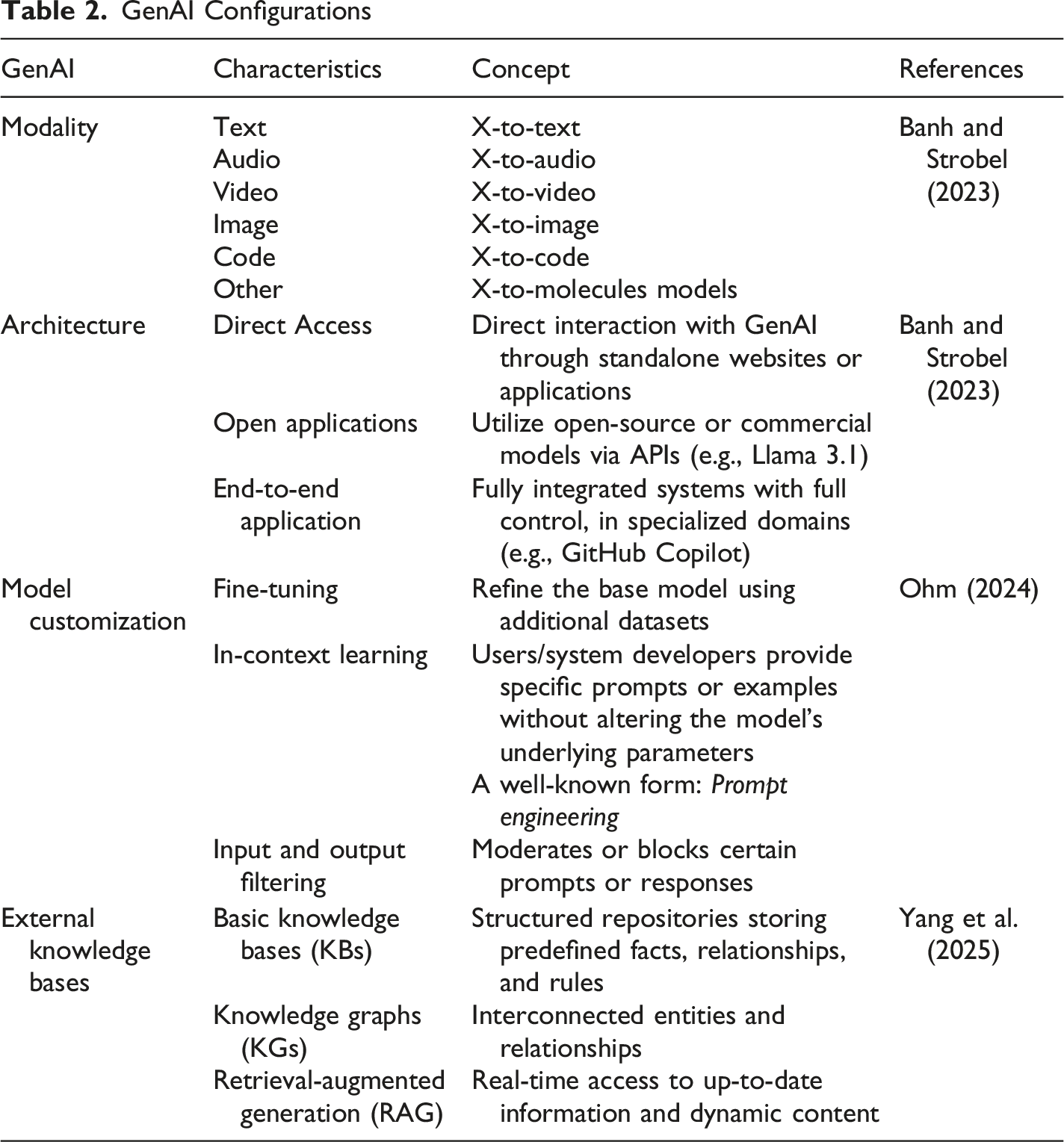
GenAI, by definition, is a subfield of deep learning and was designed to generate new content by learning from existing datasets (Tomczak, 2022). Creative intelligence distinguishes GenAI from other AI technologies, particularly discriminative AI, which focuses solely on analyzing and classifying existing data to make predictions or support decision-making (Banh & Strobel, 2023). GenAI applications encompass various modalities of text, audio, video, code, image, and others (Banh & Strobel, 2023) with large language models (LLMs) centering recent advancements (Yang et al., 2025). Regarding architecture, GenAI can be accessed through: (a) direct access to standalone websites or apps, (b) open-source or commercial models via an application programming interface (API), or (c) fully integrated end-to-end systems (Banh & Strobel, 2023).
In terms of model customization, the base model can be further customized by: (a) fine-tuning that refines the base model using additional datasets, (b) in-context learning that refers to users and system developers providing specific prompts or examples without altering the model’s underlying parameters, and (c) input and output filtering that moderates or blocks certain prompts or responses (Ohm, 2024). Of those, prompt engineering is a well-known form of in-context learning. It involves designing and iteratively refining prompts to elicit desired model output (Ohm, 2024).
GenAI Configurations
GenAI has increasingly been leveraged to scaffold SRL. For example, Pan et al. (2025) integrated ChatGPT via API with prompt engineering to generate personalized reading content and elaborate self-regulated reading strategies. Another chatbot (XtagGPT via API) sends assignment reminders, asks about students’ weekly progress, recommends help resources, and guides strategic planning (Tsai et al., 2025).
Previous Reviews and Related Work
Existing systematic reviews in AI–SRL and GenAI–SRL research have primarily focused on intervention outcomes rather than design characteristics. For AI–SRL in language learning, Chang and Sun (2024) showed that AI interventions effectively support goal setting, self-monitoring, self-reflection, and strategy use; however, most interventions have targeted a single phase of SRL. Sardi et al. (2025) reported that most GenAI interventions have positive impacts on students’ SRL, primarily through adaptive feedback, personalization, and metacognitive support. However, concerns remain about overreliance and possible harm to independent thinking. In this sense, purposeful and flexible SRL scaffolding designs are necessary.
Several conceptual papers have proposed principles for intentional design of GenAI for SRL. For example, Chang et al. (2023) suggested three key features for designing GenAI chatbots to support SRL: goal setting and prompting, self-assessment and feedback, and personalization and adaptation. They also noted that designers should pay attention to pedagogical aims, ethical issues, and academic integrity. Although these ideas offer a useful starting point, they are mainly based on conceptual reasoning and a limited set of prior studies. More systematic reviews with formal evidence synthesis are therefore still needed.
As the only study to date that integrates GenAI into the broader AI stream when examining the AI–SRL relationship, Banihashem et al.’s (2025) review provided an overview of participants, theory, implementations, and applications. The reported implementations mainly involved adaptive systems and personalization, prediction and profiling, intelligent tutoring systems, and assessment and evaluation. However, their review did not explicitly report the underlying technologies or the specific pedagogical purposes of the SRL process. Additionally, they placed insufficient emphasis on GenAI interventions despite their recent widespread employment.
Adopting a process view of SRL as learner-initiated regulation, our study aimed to: (a) synthesize evidence on AI- and GenAI-based support for SRL from both technical and pedagogical perspectives, and (b) propose an actionable framework for more comprehensive and theory-driven SRL scaffolding with AI and GenAI. We adopted Winne and Hadwin’s (1998) model of SRL as the organizing lens for this review.
The current study addressed the following research questions: (1) What AI technologies and GenAI configurations have been used for scaffolding SRL? (2) How convergently and divergently have GenAI and AI scaffolded the SRL process based on the COPES model? (3) How can GenAI and AI more comprehensively support the SRL process?
Methods
This systematic review followed the Preferred Reporting Items for Systematic Reviews and Meta-Analyses guidelines (PRISMA; Page et al., 2021; Figure 2). The procedure included the stages of identification, eligibility criteria, screening process, and data analysis and categorization. We also conducted a quality assessment of the included articles in the systematic review. Selection process based on PRISMA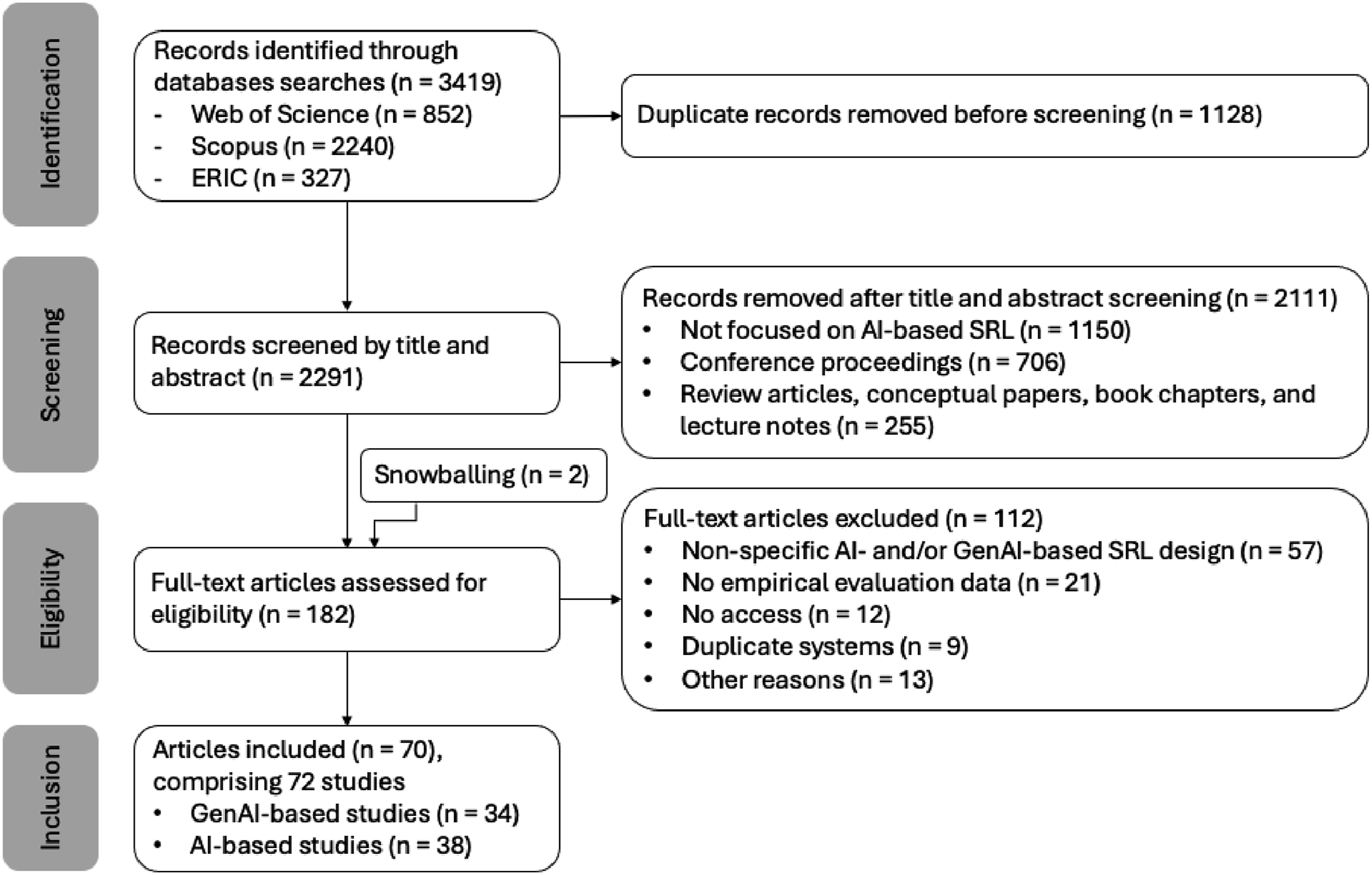
Identification
Database searches were conducted in the Web of Science, Scopus, and ERIC databases to identify articles included in the systematic review. All searches were conducted in May 2025. Moreover, the reference lists of recent reviews were also checked for additional articles. Regarding the search string, the study used three keyword categories: AI, GenAI, and SRL. The Boolean OR linked the search terms for each category. A full search string for AI-based SRL scaffolding search included keywords of AI and SRL topics, connected by the Boolean AND; a similar string was used for the GenAI articles. Appendix 4 provides detailed searching strategies for each database platform.
Eligibility Criteria
Inclusion and Exclusion Criteria
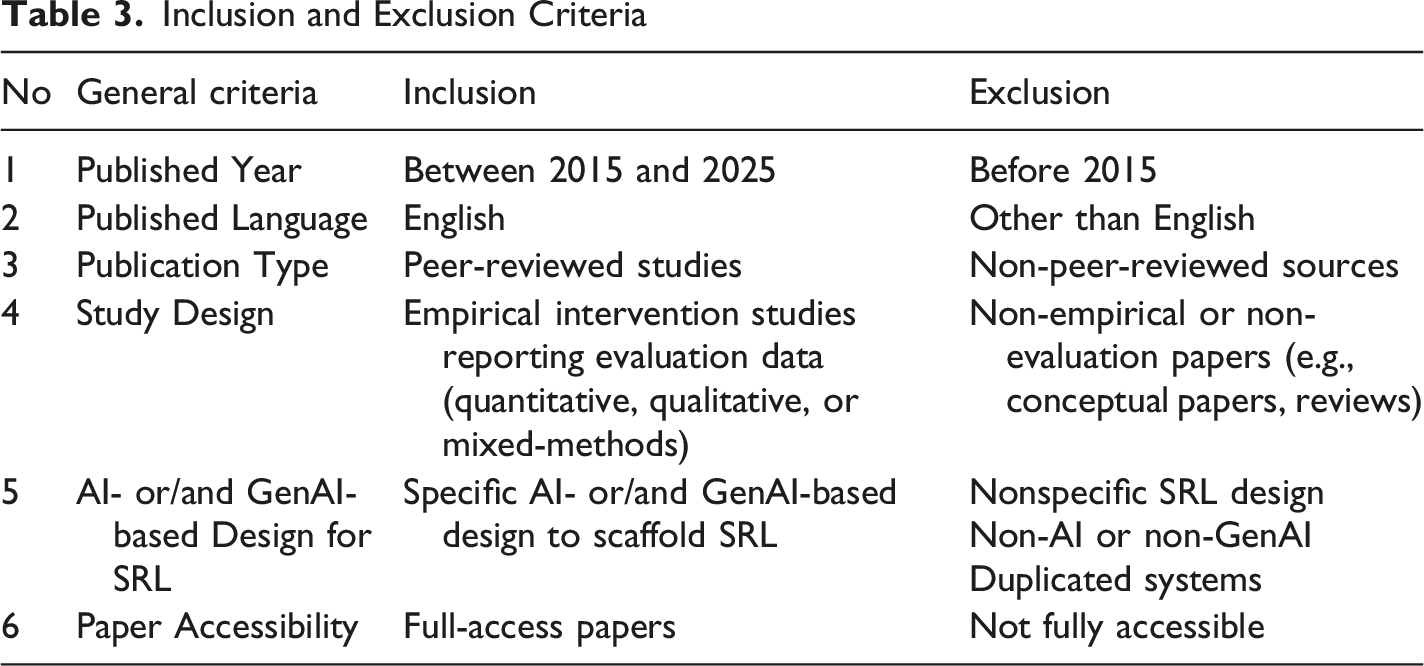
Screening Process
The screening procedure underwent the following steps: (a) Consolidating all identified articles into a single Excel file, (b) Removing duplicates manually by comparing author names, titles, and publication details, and (c) Screening titles, abstracts, and full texts against the inclusion and exclusion criteria.
The initial database contained 3,419 articles, which were reduced to 2,291 after duplicates were removed. Thereafter, titles and abstracts were screened against the inclusion and exclusion criteria, resulting in 180 articles. Moreover, from the reference lists of recent reviews, we identified two additional articles, bringing the total to 182 for full-text assessment. Finally, 70 articles (representing 72 studies) were included in the systematic review, with 38 AI-based and 34 GenAI-based studies (two articles counted for both, given their hybrid designs) (Figure 2). Included studies comprised 56 studies with experimental/quasi-experimental evaluations and 14 non-experimental qualitative, quantitative, or mixed-method evaluations.
Quality Assessment
MMAT Quality Assessment

Data Categorization and Analysis Using Coding Schemes
This review adopted the deductive and inductive content analysis methodology (Elo & Kyngäs, 2008). The coding process applied frameworks derived from AI and GenAI typologies and the COPES model. Extracted qualitative data included information on the research context, domain, technology, and system design. The analysis process was conducted using Microsoft Excel.
AI and GenAI Technologies Extraction and Categorization
Data Extraction
We scrutinized the research manuscripts and supplementary documents to extract the authors’ reported technical descriptors or model names. For example, the AI technology used in the research by Han et al. (2026) was recorded as “Dialogflow with a rule-based framework.” For the GenAI group, we extracted technical specifications according to four GenAI configurations (Table 2). For example, Wu et al. (2024) reported using “GPT-3.5, via Apple Shortcuts and LINE integration,” which we coded as the system’s modality and architecture. When the included study did not specify the underlying technology, the researchers sought related publications and publicly available materials (e.g., project pages or the tool’s websites) to obtain additional technical details. Moreover, if the technical evidence was insufficient in both the article and external materials, we coded the technology as “unclear.” For instance, Mosoteach used in Liu et al.’s (2023) study integrates AI to analyze behavioral data and provide personalized teaching and learning suggestions. However, the specific AI technology underlying the tool was not reported in either the article or the tool’s official website. Therefore, the technology was coded as “unclear.” Additionally, for the GenAI group, if a study did not utilize model customization or knowledge bases, the corresponding fields were left blank in the extracted dataset. Data extraction is recorded under the column “Reported Technology” in Appendix 1.
Data Categorization
For the AI group, we mapped each study’s reported technical description to one or more of the eight predefined AI technology categories (Table 1). For instance, in Han et al.’s (2026) study, the reported technology, “Dialogflow, rule-based framework,” was classified as “ML, NLP, and knowledge-based systems.” For the GenAI group, we extracted data by GenAI configurations and consolidated them into a single entry to represent the system’s overall technical profile. For example, in Wu et al.’s (2024) paper, modality was recorded as “text,” architecture as “via API,” model customization as “no model customization,” and external knowledge bases as “no KB”; therefore, the mapped technology was “Text; via API; no model customization; no KB.” If a study employed multiple technologies, these were recorded within the corresponding cell. Data categorization is recorded under the column “Mapped Technology” in Appendix 1.
COPES Coding Schemes
We adopted the COPES model (Winne & Hadwin, 1998) to analyze the pedagogical purposes. We scrutinized the research manuscripts and supplementary documents to extract content of AI- and GenAI-based SRL scaffolding. Subsequently, we employed deductive content analysis to categorize the extracted content by SRL stages (task definition, goals and plans, enactment, and adaptation) by the specific SRL process the intervention was intended to support, and by COPES components (conditions, operations, products, evaluations, and standards) for the primary instructional purpose of the intervention. For example, a GenAI system by H. Li (2023) offered multiple supports, including automatic daily learning tasks and task reminders, delivered learning content in response to students’ inquiries, sent reminders that encouraged users to engage in critical conversations and to be cautious about potentially incorrect ChatGPT-generated feedback, while also summarizing students’ learning participation (e.g., number of posts). In this case, we coded the daily task announcement and reminders as learning management supports because they support students’ scheduling of learning activities, but the reminders that prompt critical discussion and caution about AI-generated feedback serve as metacognitive scaffolding, as they encourage students’ self-monitoring and evaluation during the task enactment. The automated summary of students’ learning participation (e.g., number of posts), however, was coded under the adaptation stage because it was intended to support later adjustments rather than immediate task performance. Lastly, support for learning content in response to students’ inquiries was coded as Q&A and learning content generation, serving as a source of learning content and support for help-seeking. Moreover, in an AI system (Long & Aleven, 2017), a prompt asking students to rate their confidence in their answers to equation-solving questions before submission was coded as metacognitive scaffolding because it supported student self-monitoring rather than providing evaluative information. Accordingly, this was classified under enactment within operations. In contrast, the real-time skill bars that displayed the estimated mastery progress were coded as metacognitive feedback during enactment within evaluations. Subsequently, multiple supports, within the same category (e.g., cognitive scaffolding), were counted once if they shared the same primary instructional purpose. However, the same intervention, when coded across different phases, was counted separately for each phase. For example, in Mills et al. (2025), cognitive scaffolding for goals and plans (teaching on weekly tasks and SRL selection) was counted once, and cognitive scaffolding during enactment (recommending SRL activities based on online behavior) was counted as a separate instance.
To ensure the reliability of COPES’s coding, two authors independently coded 21% (n = 15) of the 70 included papers, covering as much content as possible. Discussion sessions between authors, followed by individual self-review, continued until full consensus for the predefined subcodes was achieved. Intercoder reliability was high (Cohen’s κ = .80). Thereafter, the first author coded the remaining articles, with discussion of any newly emerging subcodes.
The following part presents the COPES coding schemes from the reviewed studies. All coded interventions and their COPES mapping are provided in Appendix 3. The
The
The
Finally, we employed Python and Microsoft PowerPoint to visualize the study’s findings.
Results and Discussion
Background Information
This section provides an overview of the 70 reviewed publications. Our analysis revealed a growing scholarly focus on AI- and GenAI-based SRL, with publications between 2024 and 2025 accounting for 70% (n = 49). This finding shows how GenAI–SRL research has rapidly expanded since ChatGPT’s release, in parallel with the continued development of earlier AI systems. Moreover, consistent with Banihashem et al. (2025), we found that most research was conducted in higher education (n = 52), followed by K–12 (n = 16) and lifelong learning (n = 2). In terms of domain, work mainly focused on Language Skills (22.5%), Electrical Engineering & Computer Science (21.1%), STEM Education (18.3%), Health & Nursing (12.7%), and Education (8.5%) (Appendix 1).
Against this backdrop of rapid growth and diverse application contexts, the present review goes beyond aggregating descriptive features by offering a comparative, process-oriented explanation of how earlier AI and GenAI instantiate different regulatory mechanisms across the SRL process. Specifically, we mapped technological foundations and pedagogical applications onto Winne and Hadwin’s COPES architecture and SRL stages, enabling us to: (a) locate where supports concentrate and where they remain sparse, (b) articulate distinct affordances of analytics-driven AI versus dialogic, context-adaptive GenAI, and (c) identify systematic gaps in current AI- and GenAI-based designs for SRL scaffolding. These comparative insights are synthesized into the proposed framework presented in RQ3.
RQ1. What AI Technologies and GenAI Configurations Have Been Used to Scaffold SRL?
Among the included publications, 34 of 38 AI articles and 33 of 34 GenAI articles reported technical details. Figure 3 shows an overview of AI and GenAI technologies used to support SRL, grouped by publication year. Overall, GenAI-based SRL systems grew rapidly in 2024 and 2025. There were nine studies in 2024, which rose sharply to 25 in 2025, suggesting increasing interest in using GenAI to support SRL systems. In contrast, earlier AI approaches appeared over a longer period of time. Particularly, knowledge-based systems were used fairly consistently from 2017 to 2025, and machine learning and natural language processing gained popularity in 2024 and 2025. Trends in AI-based and GenAI-based SRL support by publication years. Note. The total count of mapped technologies exceeds the number of articles because many systems integrate multiple technologies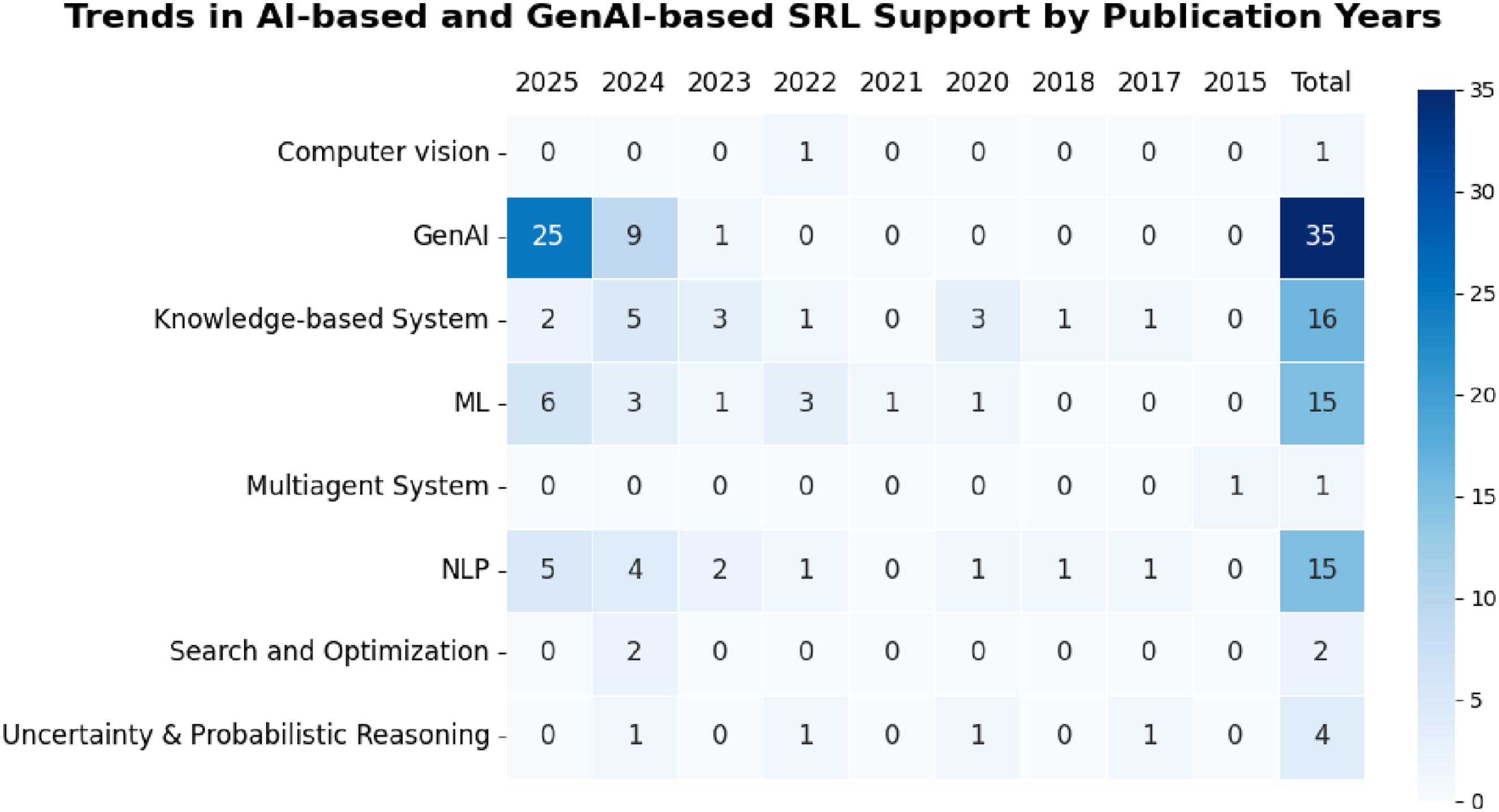
Moreover, computer vision, search and optimization, and uncertainty and probability reasoning appeared less frequently and were primarily reported in more recent years. Overall, the trends suggest that AI has continued to be utilized alongside GenAI rather than being replaced, with growing scholarly attention to multiple dimensions of SRL support (e.g., affective scaffolding and activity recommendations). The following part describes in detail AI technologies and GenAI configurations and the SRL scaffolding output they enable. Full citations for the literature on AI technologies and GenAI configurations are provided in Appendix 2.
AI Technologies for Scaffolding SRL
Knowledge-based systems, machine learning, and natural language processing were the main AI technologies used for SRL scaffolding. Other technologies included uncertainty and probabilistic reasoning, search and optimization, multi-agent systems, and computer vision (Figure 3). Full literature citations by AI technologies are provided in Appendix 2.
Moreover,
GenAI Configurations for Scaffolding SRL
GenAI-for-SRL models were configured through different combinations of modalities, architectures, customization, and external knowledge bases (Figure 4(a)). Except for one study with unspecified models, all other reviewed GenAI studies (n = 33) utilized LLMs for text generation, with ChatGPT being the most widely used, followed by Llama 3.1 and BaiChuan. Text-based modalities primarily produced dialogic outputs, functioning as learning content, instructions, feedback, prompts, and hints (e.g., Mzwri & Turcsányi-Szabo, 2025). Text modalities were also embedded in the backend analysis systems (e.g., Jin et al., 2025). Additionally, audio-to-text and text-to-speech models (n = 2) (i.e., OpenAI Whisper and ElevenLabs) were used in Mills et al.’s (2025) study for speech transcription and synthesis so that the AI Companion could provide voice-based guidance throughout VR-supported French writing activities, varying from model analysis to scaffolded feedback. In general, the dominance of text-based LLMs suggests that GenAI-based SRL systems mainly operate through dialogic and language-mediated processes rather than through embodied or sensory-rich regulation. GenAI Configurations and Co-Occurrences in SRL Scaffolding: (a) individual GenAI configurations; (b) co-occurences of GenAI configurations. Note. One study with unclear technology was excluded from the figure, and Mills et al. (2025) utilized three modalities: text generation, speech transcription, and speech synthesis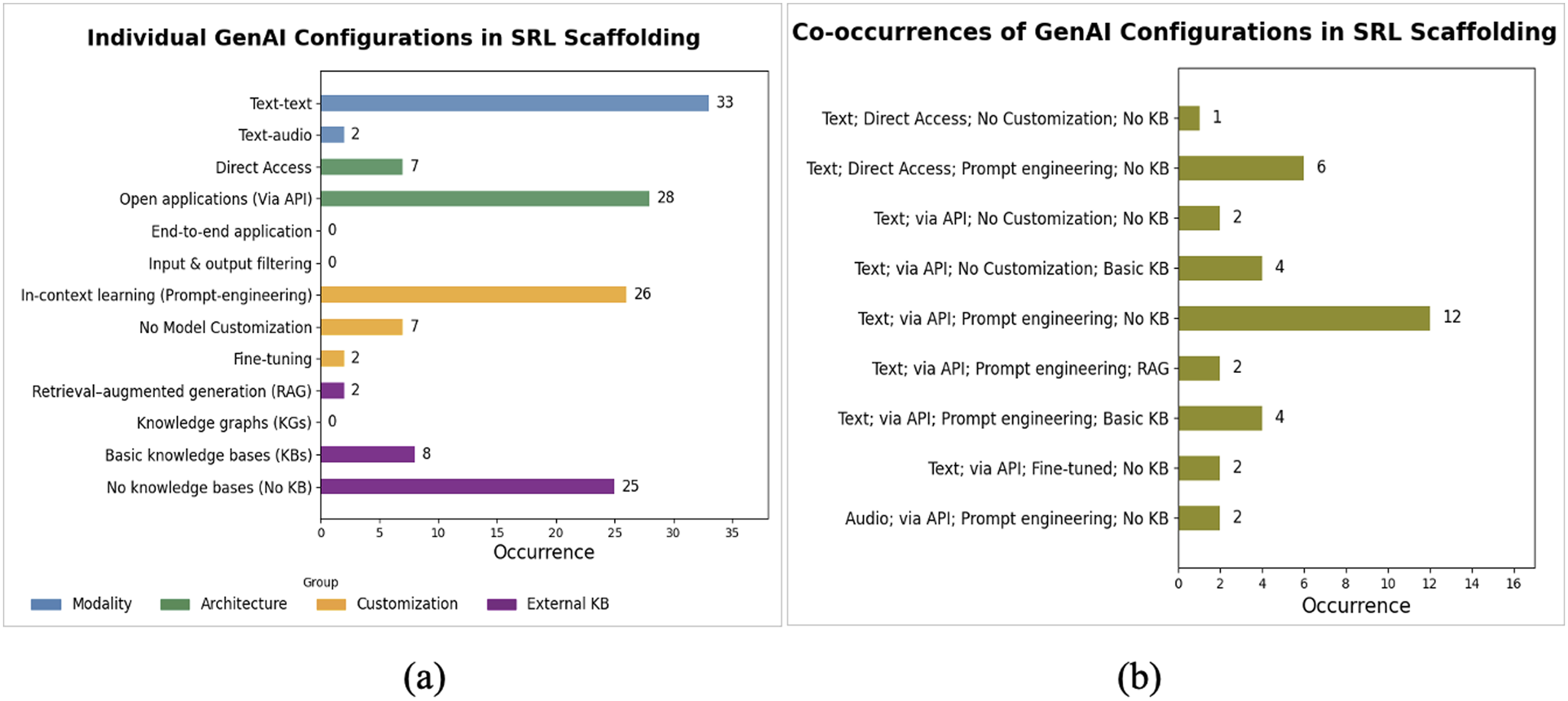
In terms of
As for
Current GenAI systems supported SRL through different combinations of the above components. In some studies (n = 6), GenAI was used via direct access for text generation, with prompt engineering, without linking to a knowledge base (e.g., Campos, 2025). In these cases, simple prompt designs, such as templates, role prompts, step prompts, and rubrics, played a central role in shaping both the generated content and the SRL scaffolding. However, more systems were built through API integration, with prompt engineering but without knowledge bases (n = 12). In these systems, GenAI worked at the backend, and prompts, prominently system-initiated prompts, translated pedagogical intentions into a controlled, predefined scaffolding sequence. Some other API-based GenAI systems (n = 4), however, relied on basic knowledge bases without model customization. In these systems, knowledge sources were mainly used to support learners’ cognitive and metacognitive processes or to provide personalized guidance and assignments (e.g., Hu et al., 2024; H. Li, 2023). In addition, a few API-based systems (n = 6) combined both prompt engineering and knowledge bases. With this design, prompt engineering ensured the generation of the right kind of SRL scaffolding, for example, the four-level scaffolding outputs (e.g., A. Y. Q. Huang et al., 2025) or targeted metalinguistic guidance and timely feedback for reflection (M.-R. Chen, 2024). The integration of learning material and task databases further allows prompts and responses to be anchored to the course workflow (e.g., materials, assignments) and can reduce the risk of hallucination. The co-occurrences of GenAI configurations are illustrated in Figure 4(b).
Summary
Grounded in rule-based algorithms, learning analytics, natural language processing, and computer vision, AI technologies analyzed a wide range of inputs (e.g., students’ inputs, real-time log data, and behavioral traces) in their analytical intelligence in combination with pedagogical rules to generate diverse data-driven SRL support, aligned with students’ learning processes. AI-based SRL systems mainly delivered structured guidance, adaptive hints, feedback, and strategy recommendations; goal-setting and planning prompts; self-monitoring and evaluation support; progress tracking; benchmark setting; performance prediction; learning administration support; pedagogical agent interactions; and responses to students’ help-seeking requests and personalized content generation. However, system outputs were occasionally perceived as lacking contextual awareness, flexibility, and interactive features, and as being less helpful for learners who already had strong SRL skills (Han et al., 2026; Hew et al., 2023).
In the GenAI group, most studies used ChatGPT, often via API integration and prompt engineering to better match learners’ goals and self-regulatory needs. Only a small number of systems used external knowledge bases to improve accuracy and make the support more context-specific. In general, GenAI-based SRL support in the included studies was predominantly text-based and conversational; it excels at delivering human-like, personalized, and context-aware outputs for instructions, prompts, feedback, learning content, visualizations, and learning administration. Nevertheless, GenAI-based chatbots were occasionally reported to be passive, with mismatched feedback, and to lack autonomous reminders (Ng et al., 2024).
In response to Research Question 1, we have described each AI technology and GenAI configuration and the SRL scaffolding output they enable. Moving beyond technical descriptions, to respond to Research Question 2, we systematically examined the pedagogical purposes of these SRL interventions, using Winne and Hadwin’s (1998) model.
RQ2. How Convergently and Divergently Have AI and GenAI Scaffolded the SRL Process Based on the COPES Model?
Building on the deductive and inductive content analyses of AI- and GenAI-based interventions, this section examines where and for what pedagogical purposes these interventions operate within the SRL process. Using Winne and Hadwin’s COPES as the organizing lens for this systematic review, we mapped the coded interventions to: (a) COPES facets (Conditions, Operations, Products, Evaluations, and Standards) and (b) SRL stages (task definition, goals and plans, enactment, and adaptation). We also analyzed how AI and GenAI scaffolded the SRL process convergently and divergently. In general, interventions across both technology groups were most concentrated in Operations and Evaluations. They were predominantly situated in the enactment stage, with comparatively limited attention to task definition, goals and plans, and adaptation. Full literature citations for each intervention, organized by COPES facets and SRL phases, are provided in Appendix 3.
AI- and GenAI-Based SRL Scaffolding in Conditions
Both AI and GenAI acted as
AI- and GenAI-Based SRL Scaffolding in Operations
In addition to the supports described above, AI and GenAI offered other distinct supports. AI provided Matrix dot plot: AI- and GenAI-based SRL scaffolding in operations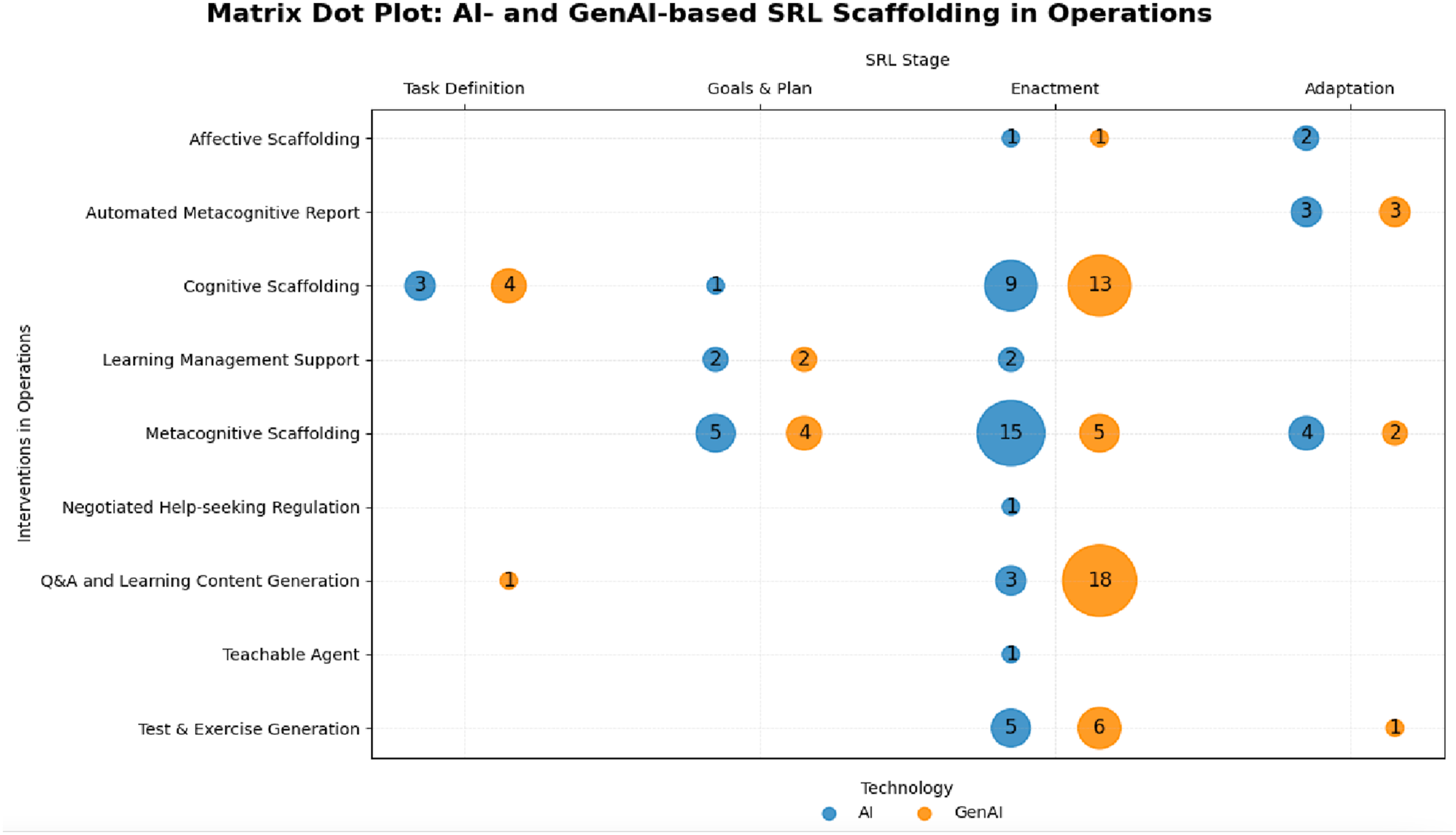
AI- and GenAI-Based SRL Scaffolding in Products
Most existing AI- and GenAI-based systems support learners in producing outputs independently, rather than generating products in place of students. Within the Products facet, both technologies mainly focused on
AI- and GenAI-Based SRL Scaffolding in Evaluations
Matrix dot plot: AI- and GenAI-based SRL scaffolding in evaluations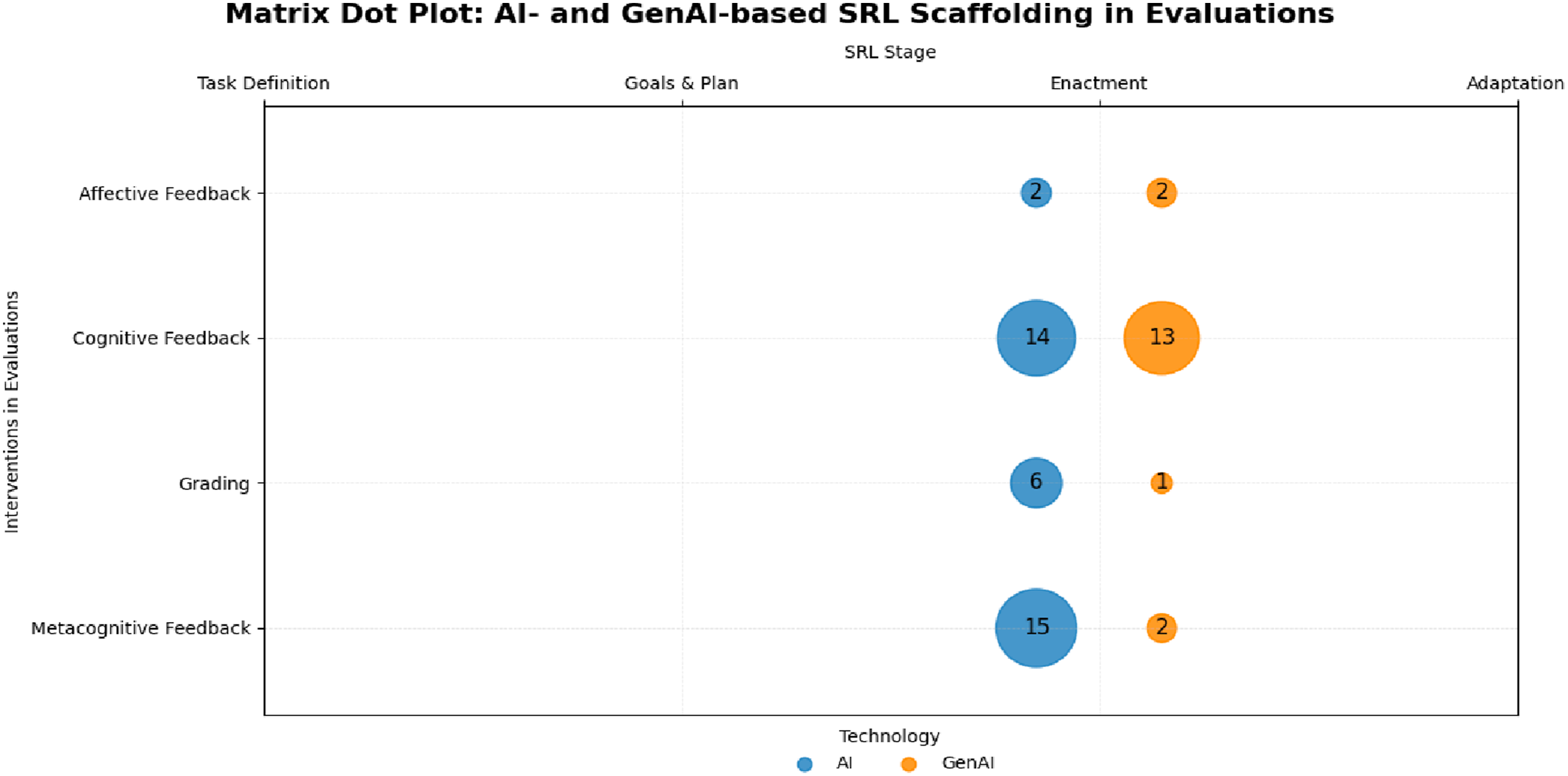
AI- and GenAI-Based SRL Scaffolding in Standards
In the Standards facet, only AI-based systems proactively addressed standards, whereas in GenAI systems, standards were either human-defined or randomly generated. Specifically,
Summary
In sum, the study revealed 19 distinct intervention types across included articles on AI- and GenAI-based SRL support systems. Collectively, both technology groups offered cognitive, metacognitive, and affective scaffolding; Q&A and learning content generation; test and exercise generation; learning management support; automated metacognitive reports; and learning path generation and updating, alongside evaluation functions, including grading and cognitive, metacognitive, and affective feedback. However, the distribution differed across groups. GenAI was primarily seen in Q&A and learning content generation, and in cognitive scaffolding and feedback, whereas the reviewed AI-based systems more strongly emphasized metacognitive scaffolding and feedback. Affective scaffolding and feedback, however, remained scarce, indicating an existing gap in supporting learners’ affective regulation in both AI- and GenAI-based SRL systems.
Beyond shared supports, each technology also afforded distinct functions. Particularly, AI evidenced negotiated help-seeking regulation and teachable-agent designs, and it proactively operationalized Standards during learning (e.g., setting benchmarks or prioritizing tasks based on learners’ goals). GenAI in the reviewed literature, by contrast, more clearly extended into the Products facet, particularly through assignment product generation and revision in collaboration with learners. However, most systems in both groups primarily aimed to scaffold learners to produce outputs independently, highlighting the importance of “self-doing” safeguards in current designs adopting generative tools.
From a COPES perspective, both AI- and GenAI-based SRL supports were concentrated in the Operations and Evaluations facets. The interventions were also predominantly situated in the enactment stage, with comparatively limited attention to task definition, goals and plans, and adaptation. This pattern indicated that current systems in both groups are still partially implementing the SRL process with an enactment bias that privileges in-task operational assistance and performance appraisal over preparatory and end-of-cycle reflective supports. The findings were aligned with prior review evidence. In particular, the forethought and self-reflection phases received relatively little attention in computer-assisted SRL supports (Prasse et al., 2024). In AI-based interventions, most studies focused on only one SRL phase (Chang & Sun, 2024), and in GenAI studies, performance and self-reflection were the most commonly targeted phases (Xia et al., 2026). Taken together, these findings suggest that partial SRL implementation is common in existing SRL scaffolding designs across different technologies. Therefore, the importance of designing for the full SRL cycle was further highlighted.
The two technology groups showed divergences in intervention approaches and formats. GenAI, grounded in generative capacities, tended to deliver operational supports and feedback through dialogic, human-like, and context-sensitive interaction to prompt actions and provide knowledge elaboration, iterative clarification, and revision guidance. Accordingly, GenAI appeared more capable of providing cognitive supports. Meanwhile, AI relied on predefined logic, structured interfaces, or learner-state modeling to provide analytics-triggered prompts, structured progress monitoring, and performance updates and reports, and was therefore more prevalently leveraged for metacognitive support. In the context where AI has continued to blossom alongside the growing applications of GenAI rather than being replaced, these differences allow the two technologies to functionally complement each other across different components, domains, and phases of the SRL architecture.
Coded AI- and GenAI-Based SRL Interventions by COPES Facets and SRL Stages
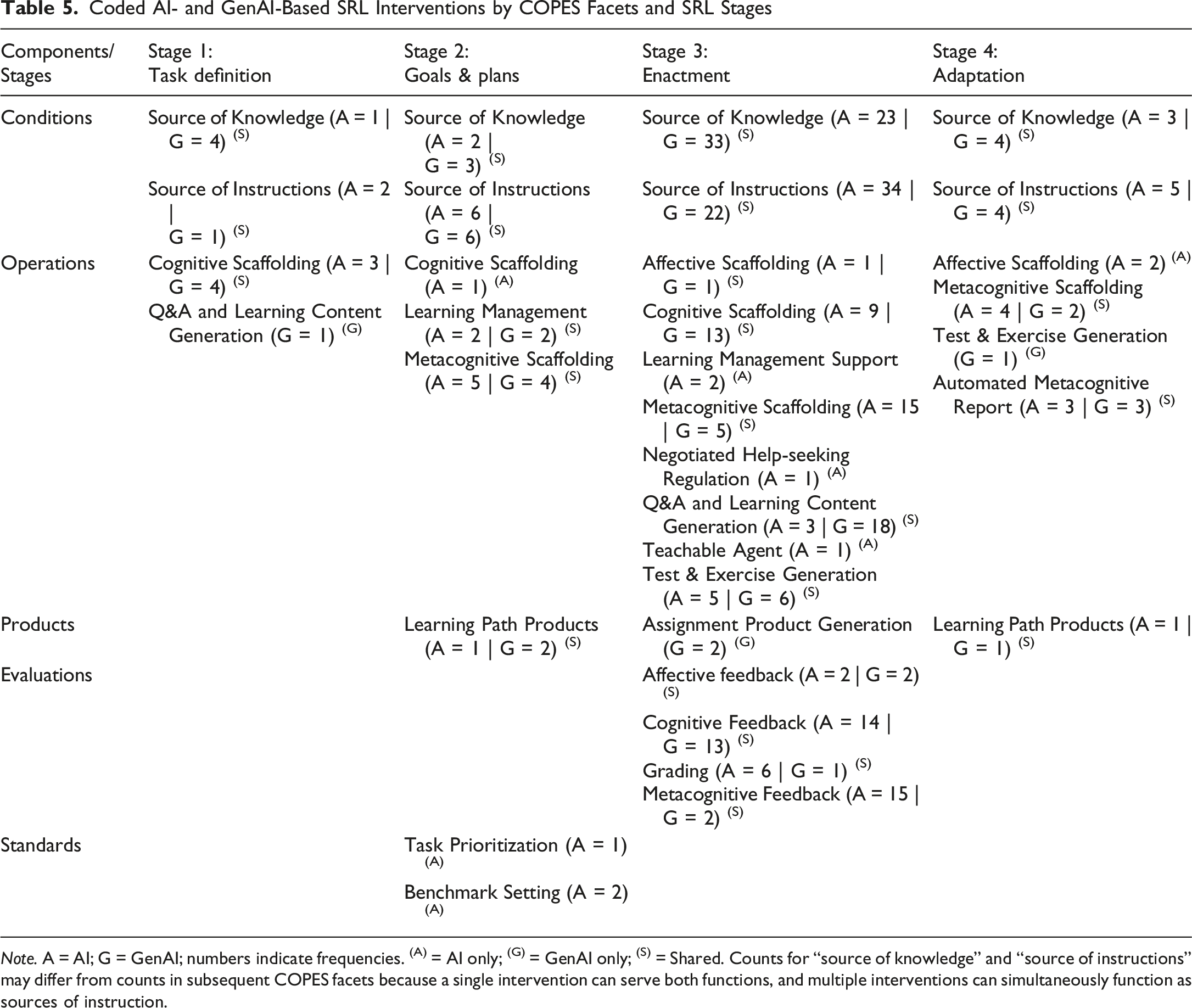
Note. A = AI; G = GenAI; numbers indicate frequencies. (A) = AI only; (G) = GenAI only; (S) = Shared. Counts for “source of knowledge” and “source of instructions” may differ from counts in subsequent COPES facets because a single intervention can serve both functions, and multiple interventions can simultaneously function as sources of instruction.
RQ3. How can GenAI and AI More Comprehensively Support the SRL Process?
Based on findings from both pedagogical and technological perspectives, this section proposes a framework for a comprehensive SRL design argument that includes potential interventions across the entire SRL cycle, with system adaptivity and learner adaptability, and the consideration of the complementary strengths of AI and GenAI (Figure 7). A framework for AI-, GenAI-, and hybrid SRL scaffolding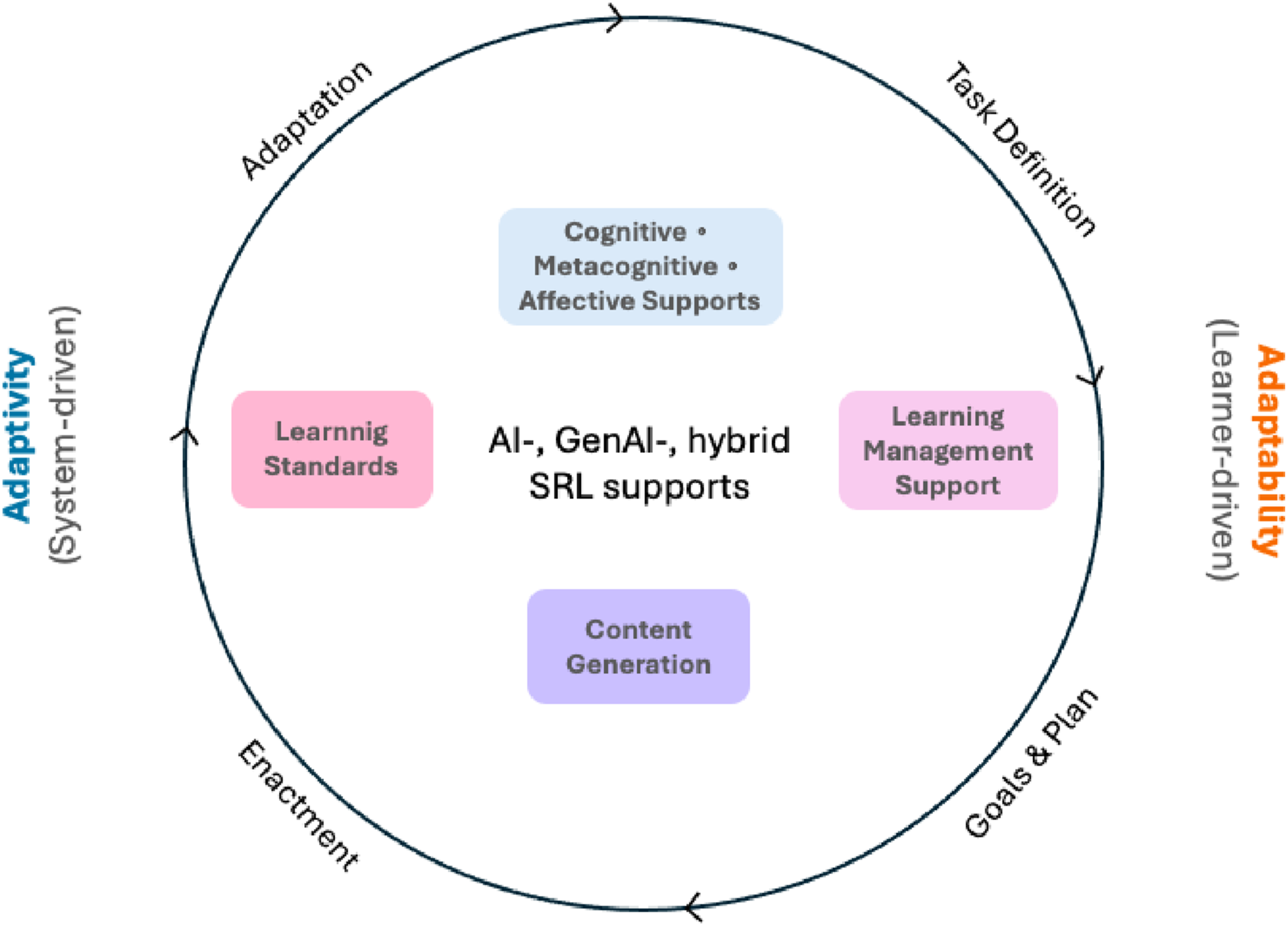
Key Design Elements for Full-Cycle SRL
First, we contend that the inclusion of affective supports is important, besides the dominant presence of cognitive and metacognitive supports. Panadero (2017) describes SRL as involving cognitive, behavioral, metacognitive, motivational, and emotional aspects. To date, AI- and GenAI-based supports have disproportionately targeted cognitive and metacognitive processes, while affective support has been underutilized. This concern is consistent with Banihashem et al. (2025). Winne (2018) emphasized motivation and emotion in the SRL process, and argued that they shape learners’ goals and influence how they monitor their learning. In this sense, affective support may help learners better manage their motivation and emotions and remain engaged in learning. Consistent with this view, some primary studies have reported that affective support increase engagement and positive emotions, including motivation and enjoyment, while reducing negative feelings, such as anxiety and isolation (Daradoumis & Arguedas, 2020; Hew et al., 2023). Based on the existing evidence, future designs can either use emotion and state sensing and monitoring to trigger adaptive support (with the integration of one or more technologies such as NLP, fuzzy logic, machine learning, and computer vision) or emotion-support messages (through prompt engineering with GenAI).
Second, support for environmental and resource management should be expanded. From a theoretical perspective, the Conditions in the COPES model refer to external resources and environmental features that shape what learners can do in subsequent processes. In this sense, relevant supports can assist students in locating and mobilizing time, resources, and social context. They also align closely with help-seeking and environmental structuring in Zimmerman’s (2000) SRL discussion, and resource management in Pintrich’s (2000) framework. Given that, we contend that SRL systems can incorporate
Third, the inclusion of Standards should be explicitly expanded. Standards in the COPES serve as criteria for evaluating performance across SRL stages, but are largely neglected in existing designs. We argue that students’ SRL can be strengthened through explicit, negotiable standards, that is, benchmarks, success criteria, and task priorities. The standards can enable students to proactively manage their performance and dynamically negotiate as learning needs evolve, for example, an existing AI system based on learners’ goals to identify the following tasks with required scores and task priority (Afzaal et al., 2024). However, our findings show that system-driven Standards were found only in AI-based systems, whereas standards in GenAI systems were often human-fed rubrics or loosely specified. We envision that future systems can further tailor standards to learners’ profiles, past performance, and prior knowledge.
Fourth, we propose incorporating
Finally, the collection of the above recommended activities can be designed within an overall full SRL cycle. Supporting the broader SRL cycle is not only theoretical but also important in practice. First, the cyclical nature of the SRL process has been well conceptualized in established SRL models (Pintrich, 2000; Winne & Hadwin, 1998; Zimmerman, 2000). However, the findings of the present study show that GenAI and AI supports were predominantly promoted during the enactment (performance) stage, with less focus on the other stages of task definition, goals and plans, and adaptation. As a result, such designs may strengthen immediate task performance and performance-related regulations, such as self-monitoring and help-seeking, but may limit learners’ long-term ability to independently and effectively regulate future learning across preparation, performance, and post-task adjustment. This concern was consistent with previous review evidence. In particular, only a minority of studies incorporated GenAI into the full SRL cycle, while the remaining studies either treated SRL as a single skill without phase division or addressed only one or two phases (Xia et al., 2026). In the broader context of computer-assisted SRL, Prasse et al. (2024) showed that full-SRL-cycle studies were limited, and recommended a comprehensive approach in future designs.
However, each intervention does not necessarily need to be distributed equally across all SRL phases. Rather, different functions may be more strongly positioned in particular phases. Our findings showed that cognitive, metacognitive, and affective supports spanned four SRL stages, whereas learning management supports were scattered across goals and plans, and enactment. Content generation is most concentrated in enactment, and standards setting is located in goals and plans. Taken together, this study recommends a design framework in which SRL-supporting technologies (GenAI, AI, and hybrid) collectively contribute to the full SRL cycle according to their pedagogical relevance.
Adaptivity and Adaptability
We propose two complementary approaches to AI- and GenAI-based SRL scaffolding.
System Adaptivity
Adaptivity is important, as it enhances students’ performance in the system. This was evident in a prior review that showed that AI adaptivity imposes medium-to-large effects on learners’ cognitive learning outcomes (X. Wang et al., 2024). In the included studies, adaptivity was observed in both technologies across COPES facets. Particularly, within Operations, systems provided real-time next-step hints, adaptive tests and content generation, and dynamic knowledge maps. Those in other facets included dynamic, personalized learning paths within Products, real-time contextual feedback within Evaluations, and adaptive benchmarks and task prioritization within Standards. In future adaptivity, scholars recommend using prior-knowledge pretests or learner profiles as a basis to customize the learning process and chatbot interactions (Gao et al., 2025; M. Liu & Reinders, 2025).
Learner Adaptability
Learner adaptability positions learners as regulators who actively accept or resist external assistance and purposefully control outputs across the SRL process. We contend that this dimension is necessary given issues of overreliance on external support, for example, overreliance on GenAI-generated feedback (e.g., Campos, 2025), the tendency of lower achievers to make immediate requests for GenAI assistance (Xu et al., 2024), and feeling overwhelmed with AI metacognitive prompts (McCarthy et al., 2018). Consequently, such issues may foster immediate task completion, but reduce the meaning of systems’ support to learners’ needs and learners’ longer-term capacity to regulate their own learning. Several supports enhancing students’ adaptability were recorded in several systems, for example, offering regulatory choices over difficulty or learning levels, implementing reward-punishment systems to encourage or reduce certain learning behaviors, and allowing learners to filter with preferences (e.g., language proficiency, length, and complexity; Chun et al., 2025; Hwang et al., 2025; Pan et al., 2025; Xu et al., 2024; Yan et al., 2024).
In conclusion, our study underscores the importance of aligning AI- and GenAI-based SRL interventions with pedagogical goals. Figure 7 illustrates the proposed conceptual framework, in which AI-, GenAI-, and hybrid supports collectively contribute to the four SRL stages: task definition, goals and plans, enactment, and adaptation. The recommended functions included cognitive, metacognitive, and affective supports; learning management support; content generation; and learning standards. These supports are shown as being applicable across the SRL cycle. The framework recommends using visualizations as design features. The framework highlights adaptivity and adaptability to support personalized learning.
Conclusion, Implications, and Limitations
Conclusions
Continuing the work of previous studies (Banihashem et al., 2025; Chang et al., 2023; Chang & Sun, 2024; Sardi et al., 2025), this study offers an evidence-based synthesis of 70 empirical articles published between 2015 and 2025, which shows how GenAI mechanisms relate to or extend beyond those of earlier AI approaches in supporting SRL. This systematic review focuses on design taxonomy with explicit identification of technological foundations and pedagogical applications. We mapped our review onto Winne and Hadwin’s (1998) COPES model to emphasize purposeful design. Ultimately, we introduce an actionable framework for AI- and GenAI-based SRL scaffolding.
Regarding technological employment, we found that existing AI-based SRL interventions primarily employed knowledge-based systems, machine learning (ML), and natural language processing (NLP), supplemented by uncertainty and probabilistic reasoning, search and optimization, multi-agent systems, and computer vision. GenAI predominantly utilized text-based LLMs, accessed through APIs, with prompt engineering, typically without knowledge bases. Although their mechanisms differ, both GenAI and AI shared the goal of providing personalized and adaptive learning processes.
From a pedagogical perspective, both AI and GenAI provided cognitive, metacognitive, and affective supports; learning content and assessments; task progress; learning administrative support; prompts for self-reflection; and automated metacognitive reports. Among those interventions, affective scaffolding and feedback remained scarce in both technologies, indicating a persistent gap in supporting learners’ affective regulation. Across the COPES facets and SRL stages, interventions primarily targeted Operations and Evaluations in the enactment phase and were less focused on other phases of task definition, goal setting, or adaptation. This reflects an enactment bias in current SRL scaffolding designs that especially promotes in-task operational assistance and evaluation. Regarding differences between the two technology groups, AI in the reviewed literature was utilized more for structured metacognitive supports and system-driven setting of Standards (e.g., benchmark setting and task prioritization). Included GenAI-based systems, however, suggested distinct effectiveness in cognitive scaffolding with context-aware dialogue and domain-adaptive content generation. Taken together, these findings suggest convergence in pedagogical coverage but divergence in scaffolding mechanisms between AI and GenAI, and also reveal underdeveloped opportunities in affective supports, Standards setting, and SRL phases beyond enactment.
Finally, this study posits that a comprehensive SRL support system should include key components of cognitive, metacognitive, and affective support; domain-specific content generation; learning administrative support; standards setting; and visualizations as an additional delivery mechanism. These supports are shown as applicable across the SRL cycle. Importantly, we underscore adaptivity and adaptability as essential components of personalization: adaptivity affords effective and timely SRL scaffolding, while adaptability enables students to control human-system interactions to meet their ongoing needs.
Implications for Research and Practice
This study aimed to deepen both theoretical and practical understandings of AI and GenAI in supporting SRL. Theoretically, this review contributes to the literature by providing deeper insights into specific AI and GenAI technologies deployed for SRL purposes, their pedagogical applications, and, ultimately, a comprehensive SRL scaffolding framework.
Practically, the proposed framework provides a comprehensive SRL design for instructional designers and educators to develop their own SRL systems using GenAI, AI, or hybrid approaches. In general, aligned with previous studies, we contend that the scaffolding design should address the full SRL cycle, ranging from supports on task analysis, goal setting, task implementation, and post-task reflection and adaptation. The following part presents several further implications that emerged from the present review.
First, we found that current systems of both technologies prefer cognitive and metacognitive over affective support, consistent with previous SRL reviews. Future studies should treat affective support as a core design element to help learners regulate their frustration, confidence, and persistence through adaptive prompts, reflective check-ins, or emotionally responsive conversational scaffolds.
Second, standards are part of COPES but are largely neglected in the current SRL system design. Future systems should make standards (e.g., benchmarks, criteria, and task priority) explicit, visible, and negotiable for students.
Third, visualization (e.g., progress, gaps, learning paths, and task structures) can serve as a delivery mechanism, improving self-monitoring and knowledge organization, reducing extraneous cognitive load, and supporting adaptation.
Fourth, GenAI has served as a highly flexible and responsive resource for learning content and help-seeking. However, learning designers should set “self-doing before auto-generation” rules and acknowledge the ethical concerns and risks of overreliance when prompting systems to generate students’ work.
Fifth, neither AI nor GenAI is better overall; rather, it is a matter of which technology is better suited to the intended SRL support. For example, if we aim to track progress or provide analytics-triggered metacognitive feedback, earlier AI may be especially suitable. When it comes to dialogic explanation and elaboration, GenAI can be an effective option. Several studies have piloted the use of GenAI in the communicative and social layers for analytics-driven “back-end” processes (e.g., H. Li, 2023), suggesting a promising direction for future hybrid design.
Lastly, personalization in GenAI-, AI-, and hybrid systems should involve both system adaptivity and learner adaptability. Future empirical studies may usefully compare the effects of system-adaptive-only designs with system-adaptive-plus-learner-controllable designs.
Limitations
This systematic review has several limitations. First, regarding the technological reports, five of the 70 articles did not specify the AI and GenAI technologies used, which limited our analysis. Second, the counts presented in the results and discussion sections of RQ1 and RQ2 were intended to be exploratory and descriptive and should not be interpreted as effect-size comparisons. Moreover, regarding technical coding, there may occasionally be minor technical specifications of the systems that were not explicitly reported, so we acknowledge that the study’s frequency analysis may not reflect the full technological landscape. Furthermore, studies that include multiple interventions or use the same intervention across several SRL phases may carry greater weight in the frequency analysis. In this sense, the frequency analysis should be interpreted as an indicator of patterns and trends in intervention types within existing SRL systems, rather than as a direct measurement of impact. Third, although the comparison of the AI and GenAI groups was feasible, broader evidence from GenAI studies over time would strengthen the observed patterns. Fourth, we encountered challenges in stage 4 (adaptation) of Winne and Hadwin’s (1998) SRL model. As Greene and Azevedo (2007) noted, it is unclear how to distinguish between long-term changes and updates in earlier phases, particularly in stage 3. Multiple authors have sought to reach consensus on the subcodes for stages 3 (evaluations) and 4. Nevertheless, Winne and Hadwin’s model remains distinct in examining how external supports (with AI and GenAI) can support the dynamic and iterative SRL process. Lastly, this review focused on the design taxonomy of AI- and GenAI-based SRL interventions (technological foundations and pedagogical applications). Future research could employ meta-analysis methods to investigate the effects of the interventions on learning outcomes.
Footnotes
Acknowledgements
We sincerely thank Dr. Abebayehu Yohannes for his valuable support and constructive feedback throughout the project development.

Ethical Considerations
Secondary analysis of published articles; no human participants or identifiable data. Ethics approval and consent not required.
Authors’ Contributions
Hue Nguyen led framework development, data collection and analysis, visualization, and preparation of the initial manuscript draft. Hsiu-Ling Chen contributed to framework development and revised subsequent drafts. Khoirudin Asfani participated in data collection and analysis and revised subsequent drafts.
Funding
The authors disclosed receipt of the following financial support for the research, authorship, and/or publication of this article: This work was supported by National Science and Technology Council [Grant number: NSTC 113-2410-H-011 -003 -MY3], the “Empower Vocational Education Research Center” of National Taiwan University of Science and Technology (NTUST) from the Featured Areas Research Center Program within the framework of the Higher Education Sprout Project by the Ministry of Education (MOE) in Taiwan.
Declaration of Conflicting Interests
The authors declared no potential conflicts of interest with respect to the research, authorship, and/or publication of this article.
Data Availability Statement
All data analyzed during this study are included in this published article and its supplementary information files.