






Abstract
The rapid integration of Generative AI in higher education has transformed teaching and learning, yet limited research explores the factors driving its adoption and impact on academic performance. This study addresses the gap in understanding how ethical principles (fairness, accountability, transparency, accuracy, autonomy) and AI characteristics (perceived anthropomorphism, perceived intelligence) influence students’ use of Generative AI tools and their subsequent academic outcomes. The research aims to develop and test a theoretical model that integrates these factors to explain Generative AI adoption and its effect on perceived academic performance among university students. Data were collected through surveys from 318 students and analyzed via Partial Least Squares-Structural Equation Modeling (PLS-SEM). Results revealed that accountability, transparency, accuracy, autonomy, perceived anthropomorphism, and perceived intelligence significantly drive Generative AI use, while fairness does not. Generative AI use, in turn, is positively associated with academic performance, explaining 49.9% of its variance. These findings advance technology adoption and educational technology research by highlighting the interplay of ethical and technical factors in AI adoption, offering practical insights for educators and developers to optimize AI tools for equitable and effective learning.
Introduction
Generative artificial intelligence (AI) is a type of AI designed to produce original outputs such as text, images, or music in response to user prompts (Mallikarjuna & Chittemsetty, 2024). Unlike conventional AI systems that identify patterns within existing datasets, Generative AI models generate new content based on probabilistic learning from vast data sources (Renugadevi et al., 2024). These systems rely on advanced neural networks and machine learning architectures to synthesize contextually appropriate and meaningful outputs (Ooi et al., 2025). The growing sophistication of these models has expanded their applicability across domains, including education, where they support adaptive learning, automated content generation, and personalized instructional feedback (Al-Dahoud et al., 2024; Gogula et al., 2025).
Generative AI is becoming a vital part of higher education, transforming the way teaching and learning unfold. It enables educators to craft tailored learning resources and assessment methods, effectively meeting the varied demands of students tackling complex technical disciplines (Ooi et al., 2025). Generative AI enhances teaching and learning practices, boosting classroom engagement and ultimately leading to better academic results (Al-Qaysi et al., 2024). It also improves students’ acceptance and classroom participation, leading to a positive impact on teaching effectiveness (Wang & Li, 2024). Tools like ChatGPT can provide real-time explanations and support, helping students understand complex concepts more effectively (Gupta et al., 2024). These tools boost accessibility by offering tailored learning support for students with disabilities and those in isolated or underserved communities, fostering greater fairness in education (Chauhan et al., 2024).
Although Generative AI is becoming more common in higher education, there is limited comprehensive research exploring what drives students to use these tools or how they affect academic success (Al-Qaysi et al., 2024). While prior research has delved into the advantages of Generative AI for education (Dwivedi et al., 2023), we still lack a clear grasp of the unique ethical and AI-specific factors that shape its widespread use. Ethical concerns such as “fairness”, “transparency”, “accountability”, “accuracy”, and “autonomy” have been widely discussed in the AI literature (Laine et al., 2024), yet their influence on students’ adoption of Generative AI tools requires further examination (Ooi et al., 2025). As an advanced machine learning model trained through unsupervised learning, Generative AI analyzes massive datasets to produce responses that closely resemble human language. However, this capability also poses risks, whether intentionally or unintentionally, as Generative AI could be misused for manipulation (Rana et al., 2024), highlighting the need to understand the influence of ethical issues on Generative AI use. Furthermore, AI characteristics such as “perceived anthropomorphism” and “perceived intelligence” may affect students’ trust and engagement with Generative AI applications. Still, there is little empirical evidence of their influence on Generative AI use (Al-Qaysi et al., 2025).
To address these gaps, this study develops a theoretical model that integrates ethical principles and AI characteristics as key determinants of Generative AI use among students. By incorporating these factors, we aim to comprehensively understand what drives students to adopt and rely on Generative AI tools. Furthermore, this study examines the perceived impact of Generative AI use on academic performance, a crucial yet understudied outcome in educational technology research.
Research Model and Hypotheses Development
The increasing integration of Generative AI into educational settings necessitates a robust framework that accounts for both ethical principles and AI-specific characteristics to understand their combined influence on perceived academic performance (Foroughi et al., 2024). This study defines Generative AI use as students’ intentional engagement with Generative AI tools for academic purposes, including the depth and frequency of interaction for tasks such as generating explanations, drafting ideas, or reviewing course content. Ethical principles such as “fairness”, “accountability”, “transparency”, and “autonomy” are foundational to ensuring that Generative AI tools are deployed responsibly in educational contexts (K. V. Nguyen, 2025). These principles are critical because they address potential risks, including bias in AI-generated content, privacy violations, and the erosion of academic integrity, which could undermine trust in AI systems and their educational efficacy (Wood & Moss, 2024). For instance, fairness ensures equitable access and outcomes across diverse student populations (Kulal et al., 2024), while transparency enables educators and learners to comprehend and scrutinize AI decision-making processes (Fu & Weng, 2024), promoting an environment of informed use. Given the transformative potential of Generative AI to personalize learning, automate content creation, and enhance pedagogical strategies, examining these ethical dimensions is imperative to safeguard the educational ecosystem and maximize its benefits (Dong et al., 2024).
Equally important are the inherent characteristics of AI systems, such as adaptability, interactivity, accuracy, and scalability, which define their functional capabilities and suitability for educational applications (Ezzaim et al., 2024). These attributes determine how effectively Generative AI can respond to individual learner needs, provide reliable outputs, and scale across diverse educational settings (Giannakos et al., 2024). For example, adaptability allows AI to tailor instructional content to varying skill levels (Hessari et al., 2024), while accuracy ensures that generated materials align with educational standards (Sun & Zhou, 2024), both of which directly influence academic outcomes (Gao et al., 2024). However, previous studies typically examined ethical principles and AI characteristics independently, either focusing on ethical governance without considering the technological affordances of AI or analyzing system capabilities without integrating ethical requirements. This separation creates a conceptual gap, as ethical principles shape expectations of responsible AI use, while AI characteristics define how those expectations materialize in actual user interactions. Ignoring this separation risks offering fragmented interpretations of AI adoption in education (Sarwari et al., 2024).
The included ethical principles (fairness, accountability, transparency, accuracy, and autonomy) are consistently identified as core dimensions in contemporary AI ethics frameworks and are directly relevant to user perceptions (Rana et al., 2024). The selected AI characteristics (perceived anthropomorphism and perceived intelligence) reflect the experiential qualities that students immediately observe when using conversational Generative AI systems (Al-Emran et al., 2024). The rationale for integrating ethical principles and AI characteristics into a single research model lies in their interdependent relationship and collective impact on Generative AI use and academic performance. Ethical guidelines form the backbone for how AI systems should operate, ensuring that technological progress stays in step with society’s values and educational aspirations (Kim et al., 2024). Conversely, AI characteristics enable the practical realization of these ethical ideals, as technical limitations or strengths can either constrain or enhance ethical implementation (Han et al., 2025). In particular, perceived anthropomorphism and intelligence operationalize ethical principles during user interactions (Nizamani et al., 2026). Human-like responsiveness may enhance perceptions of fairness and accountability, as users can question and interpret system behavior in familiar social terms (Cong-Lem, 2026). Likewise, perceived intelligence supports transparency and autonomy, because contextually appropriate and well-reasoned outputs allow students to understand, evaluate, and control how AI contributes to their learning. These characteristics make abstract ethical expectations more observable and actionable in everyday use (Tran Le Tuyet & Nguyen, 2026).
Because ethical principles and AI characteristics may influence technology use through distinct pathways, modelling them as direct predictors avoids masking their independent effects and maintains conceptual clarity. For this reason, the model does not include direct paths from these variables to academic performance; instead, Generative AI use serves as the mechanism through which both categories exert their influence. This study advances existing research by conceptualizing a synergistic alignment between ethical and technical dimensions while acknowledging that this alignment is theoretical rather than empirically modeled as an interaction. The contribution lies in extending prior frameworks that treated ethics and functionality separately by explaining how these dimensions jointly shape user experience and, through Generative AI use, influence perceived academic performance. This unified perspective foregrounds how ethical assurance and technological capability reinforce one another in supporting meaningful educational outcomes. Figure 1 illustrates the proposed theoretical model. Proposed theoretical model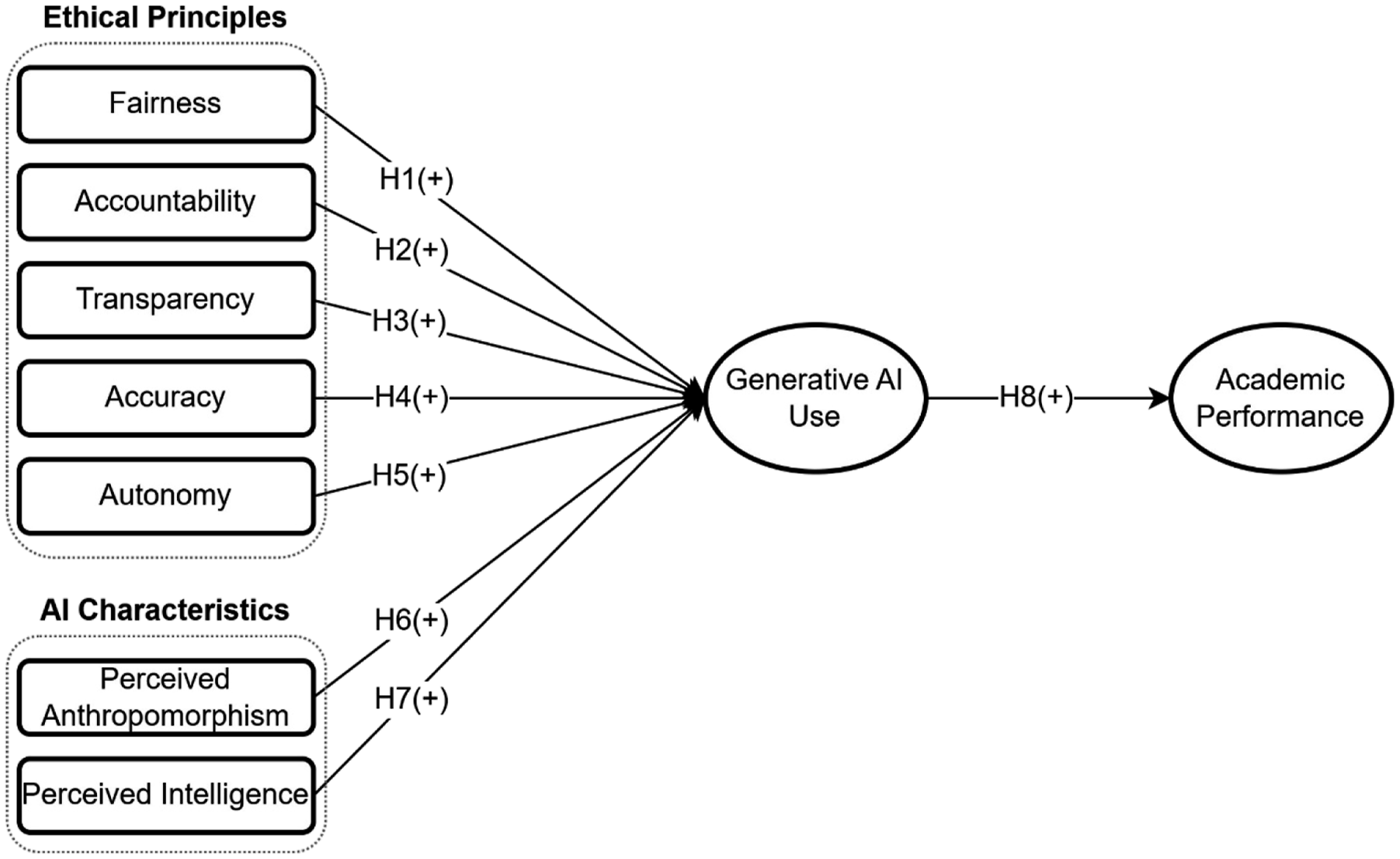
Fairness
Fairness is a cornerstone of responsible technology deployment, which ensures equitable treatment and access for all users, regardless of demographic, socioeconomic, or cognitive differences (Shahzad, Xu, & Asif, 2024). In this context, fairness manifests through unbiased algorithms, equitable resource distribution, and the absence of discriminatory outputs, which collectively enhance user trust and acceptance (Laine et al., 2024). Prior research suggests that perceived fairness in technological systems increases user engagement and adoption by mitigating concerns over inequity or exclusion (Deshpande et al., 2025; Narayanan et al., 2024). For Generative AI tools (such as those used for personalized learning content, automated grading, or instructional support), fairness is particularly critical, as biased outputs (e.g., favoring certain student groups) could erode confidence and hinder effective usage (Huynh, 2024). When students view AI systems as just and equitable, they are more inclined to weave these tools into their study habits, ultimately boosting their engagement and reliance on them (Roshanaei, 2024). Thus, this study proposes that fairness positively influences the extent to which Generative AI is employed in educational environments, as it promotes a venue where users feel supported and equitably treated by the technology. Therefore, we suggest the following:
Fairness has a positive effect on Generative AI use.
Accountability
Accountability refers to the mechanisms by which Generative AI systems and their developers are held responsible for their outputs, decisions, and impacts (Carnat, 2024). It ensures that errors or unintended consequences can be traced, addressed, and rectified effectively (Rahimi & Sevilla-Pavón, 2024). In educational contexts, where Generative AI tools may generate learning materials, provide feedback, or influence student assessments, accountability is essential to maintain credibility and reliability (Giannakos et al., 2024). Research on technology adoption highlights that systems perceived as accountable, through clear oversight, explainable processes, or redress mechanisms, increase user confidence and willingness to rely on them (Hatherall & Sethi, 2025; Nguyen et al., 2024). For example, if students can trust that an AI system’s outputs (e.g., personalized recommendations) are subject to scrutiny and correction, they are more likely to embrace its integration into learning workflows (Al-kfairy et al., 2024). Conversely, a lack of accountability could lead to skepticism or rejection, particularly if errors disproportionately affect academic outcomes. Therefore, it is proposed that:
Accountability has a positive impact on Generative AI use.
Transparency
Transparency in AI systems refers to the extent to which users can understand how the technology operates, including the logic behind its outputs, data sources, and decision-making processes (Tang et al., 2024). In educational contexts, transparency is essential for building trust, as students need to feel confident that the AI-generated content they rely on is credible and unbiased (Cui & Zhang, 2025). When Generative AI systems clearly explain their reasoning, provide citations, or disclose potential limitations, students are more likely to perceive them as reliable and integrate them into their learning processes (Cooper, 2023). Prior studies have shown that transparency enhances users’ confidence in AI technologies, reduces uncertainty, and increases adoption by promoting a sense of control over AI interactions (Bedué & Fritzsche, 2022; Hong & Cho, 2023). In educational settings, AI tools that provide clear explanations and justifications for their outputs create a learning environment in which students feel more secure in leveraging AI for academic purposes (Boubker, 2024). Considering how crucial transparency is in building trust and shaping how user-friendly something feels, it’s reasonable to anticipate that greater transparency will encourage students to embrace Generative AI more readily. Therefore, it is proposed that:
Transparency has a positive impact on Generative AI use.
Accuracy
Accuracy refers to the precision and correctness of the outputs produced, such as educational content, responses to queries, or automated assessments (Yang et al., 2021). In the context of education, where the reliability of information directly impacts learning outcomes, accuracy is a critical determinant of a system’s utility and acceptance (Dahri et al., 2024). When students view AI-generated content as reliable, they are more inclined to lean on it for academic help, which reduces their doubts and encourages wider use (Baek et al., 2024). Prior studies have demonstrated that perceived accuracy significantly influences users’ confidence in AI-driven recommendations, as reliable outputs reinforce the system’s credibility and effectiveness (Chua et al., 2023; Khan & Mishra, 2024). In educational settings, AI-generated content that consistently delivers precise and verifiable information promotes a sense of reliability and encourages students to incorporate the technology into their learning processes (Aluko et al., 2025). Considering how crucial accuracy is in building students’ confidence and encouraging them to embrace AI, it is expected that high accuracy will naturally boost the adoption of Generative AI. Hence, it is suggested that:
Accuracy has a positive impact on Generative AI use.
Autonomy
Autonomy refers to users’ ability to control and make independent decisions when interacting with AI systems (Formosa, 2021). In educational settings, autonomy is particularly important, as students seek flexible and self-directed learning experiences that align with their individual needs and preferences (Choi et al., 2024). Generative AI empowers students to take charge of their learning, letting them dive into a range of viewpoints, sharpen their insights, and interact with educational material on their own terms (Chiu, 2024). When students view AI as a tool that boosts their autonomy instead of boxing them in with strict rules, they are more inclined to weave it into their study habits (Aluko et al., 2025). Prior research has shown that technologies that enhance user autonomy increase engagement and adoption, as individuals feel empowered to make informed choices without excessive system interference (Anand et al., 2024; X.-J. Lim et al., 2024). In the context of Generative AI, providing users with control over how they interact with and apply AI-generated content promotes a sense of ownership and confidence in technology (Brüns & Meißner, 2024). Since autonomy plays a crucial role in creating positive user experiences, it’s reasonable to expect that it will also encourage greater use of Generative AI. Thus, we suppose:
Autonomy has a positive impact on Generative AI use.
Perceived Anthropomorphism
Perceived anthropomorphism is the degree to which people tend to see human qualities, like emotions, intentions, or the ability to hold a conversation in AI systems (Saputra et al., 2024). In educational settings, where relational dynamics between learners and instructional tools can shape engagement, anthropomorphism may enhance the appeal and usability of Generative AI (Al-Qaysi et al., 2025). Research in human-computer interaction suggests that anthropomorphic features, such as natural language capabilities or conversational responsiveness, promote a sense of familiarity and emotional connection, thereby increasing user acceptance and interaction frequency (Jiang & Xu, 2024; Zhang & Rau, 2023). For Generative AI tools, such as virtual tutors, chatbots, or content generators, perceived anthropomorphism could make the technology feel more approachable and relatable and encourage students to engage with it more readily (Gao et al., 2024). For instance, an AI system that mimics a supportive teacher’s tone or adapts to a learner’s emotional cues may reduce technological intimidation and promote sustained use (Lindgren, 2024). Conversely, a lack of anthropomorphic traits might render the AI impersonal or detached, potentially limiting its integration into educational practices (Al-Shafei, 2025). Hence, the following hypothesis is suggested:
Perceived anthropomorphism has a positive impact on Generative AI use.
Perceived Intelligence
Perceived intelligence refers to the extent to which users believe an AI system possesses advanced cognitive capabilities, such as understanding context, generating high-quality responses, and providing meaningful assistance (Lee & Chen, 2022). In this setting, how intelligent the system appears has a significant impact on how much confidence students place in its ability to help them learn (Al-Emran et al., 2024). When AI is perceived as highly intelligent, students are more likely to trust its outputs, view it as a reliable source of knowledge, and integrate it into their academic tasks (Bhaskar et al., 2024). Studies in technology acceptance and human-AI interaction indicate that systems perceived as intelligent enhance user trust, satisfaction, and reliance, as they signal competence and utility (Li et al., 2024; Raees et al., 2024). For Generative AI applications in education, such as intelligent tutoring systems, automated content creators, or question-answering tools, perceived intelligence can elevate their perceived value by demonstrating the ability to address complex queries, adapt to diverse learning needs, or simulate expert-level guidance (Shahzad et al., 2025). For example, students are far more inclined to interact with an AI tool that reliably delivers thoughtful, well-articulated insights, rather than one that churns out shallow or formulaic replies (Maheshwari, 2024). Therefore, it is expected that:
Perceived intelligence has a positive impact on Generative AI use.
Generative AI Use
Generative AI has quickly become a game-changer in education, offering students tailored support, dynamic content creation, and instant feedback that enriches their learning journey (Dong et al., 2024). In educational settings, the use of Generative AI can improve academic performance by facilitating deeper comprehension, increasing efficiency in completing assignments, and supporting critical thinking through interactive learning experiences (Jaboob et al., 2025). AI-powered tools assist students by summarizing complex concepts, generating structured content, and offering explanations tailored to their needs, which can lead to improved retention and understanding (ElSayary, 2024). Prior studies have demonstrated that technology-enhanced learning environments positively influence academic outcomes by promoting engagement, reducing cognitive load, and providing adaptive feedback (Sailer et al., 2024; Sui et al., 2024). As students integrate Generative AI into their academic routines, they may experience greater efficiency in information processing and problem-solving, which can enhance their academic performance (Min et al., 2025). Given the potential of Generative AI to support learning and cognitive development, it is expected that Generative AI use will positively influence perceived academic performance. Therefore, we propose that:
Generative AI use is positively associated with perceived academic performance.
Research Methodology
This study employs a cross-sectional, survey-based quantitative research design to explore the factors influencing Generative AI use among students in higher education and its impact on perceived academic performance. The survey method was chosen because it offers an efficient way to gather perceptual data from a large group of people within a set period. This approach made it possible to conduct thorough statistical analyses and explore the relationships between different variables with a solid degree of reliability (Lim, 2024). The survey method is widely used and accepted in technology adoption research, particularly at the user level (Choudrie & Dwivedi, 2005). The data were gathered from university students in Malaysia, a choice driven by the country’s forward-thinking approach to digital education and the rich cultural diversity found within its student body (Al-Emran et al., 2025). In addition, Malaysia is actively engaging with the Fourth Industrial Revolution, emphasizing the adoption of AI technologies (Mohd Rahim et al., 2022). This national focus on technological advancement makes Malaysia a relevant venue for studying Generative AI adoption.
A non-probability purposive sampling technique was employed, targeting students who have experience with Generative AI tools. For this study, prior experience was defined as having used any Generative AI tool for an academic purpose. This criterion was screened through a preliminary survey question. Only respondents who confirmed prior academic use were allowed to proceed with the full questionnaire. This sampling method is often more feasible and cost-effective, especially when studying niche or emerging technologies (Kalton, 2023). The survey was self-administered, and 318 valid responses were collected. Participants were made fully aware that their involvement was entirely voluntary, and they were assured that both their confidentiality and anonymity would be protected at every stage of the process. The questionnaire was presented in English, aligning with Malaysia’s educational context to ensure clarity and accessibility. To reduce the likelihood of incomplete responses and maintain data integrity, all questions in the survey were required to be answered. Informed consent was obtained before participation, no personal identifiers were collected, data were stored securely, and reported in aggregate. All procedures adhered to institutional ethical standards and the principles of the Declaration of Helsinki.
To guarantee both construct validity and reliability, the measurement items were drawn from previously validated scales, with slight adjustments made to fit the context. This careful adaptation helped ensure the survey effectively reflected the theoretical concepts it aimed to measure. The constructs, items, and their sources are listed in the Appendix. All items were assessed using a five-point Likert scale, ranging from 1 (“strongly disagree”) to 5 (“strongly agree”), which provides an optimal balance between participant ease and data granularity. The construct of perceived academic performance was operationalized using items that capture students’ self-reported improvements in key learning outcomes, including understanding, knowledge development, and learning efficiency. This operationalization is consistent with prior research on technology-enhanced and AI-supported learning, where academic performance is frequently measured through perceived gains in cognitive and learning-related outcomes (Al-Qaysi et al., 2024; Hosen et al., 2021). Given that Generative AI tools primarily support learning through content generation, explanation, and task facilitation, these dimensions provide a contextually appropriate representation of how students evaluate the academic benefits of such technologies. Since academic performance is perceptual, we interpret relationships involving this construct as associative or predictive rather than causal. Content validity was established through expert review and pretesting, and the construct demonstrated acceptable reliability and convergent and discriminant validity in the measurement model.
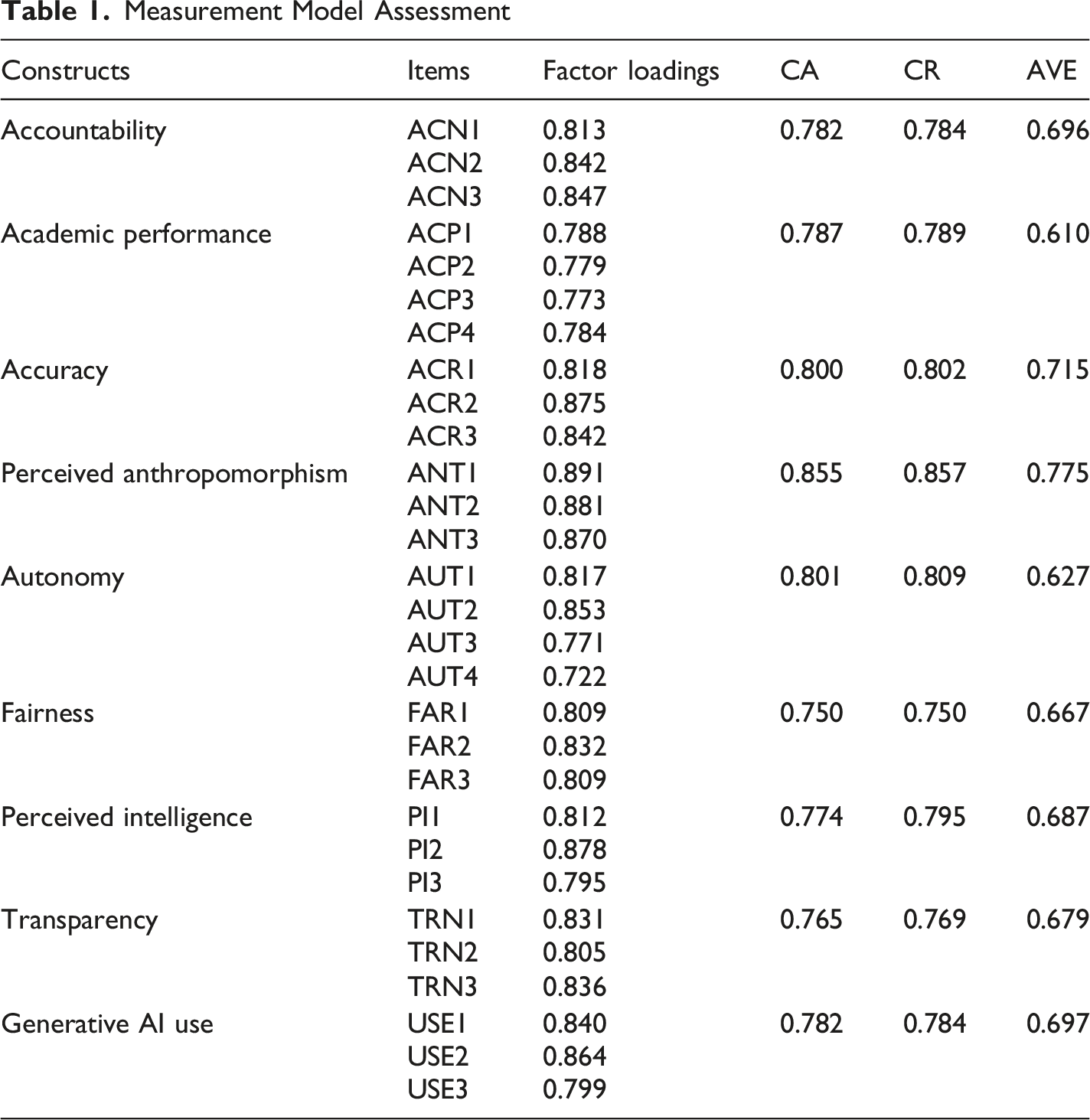
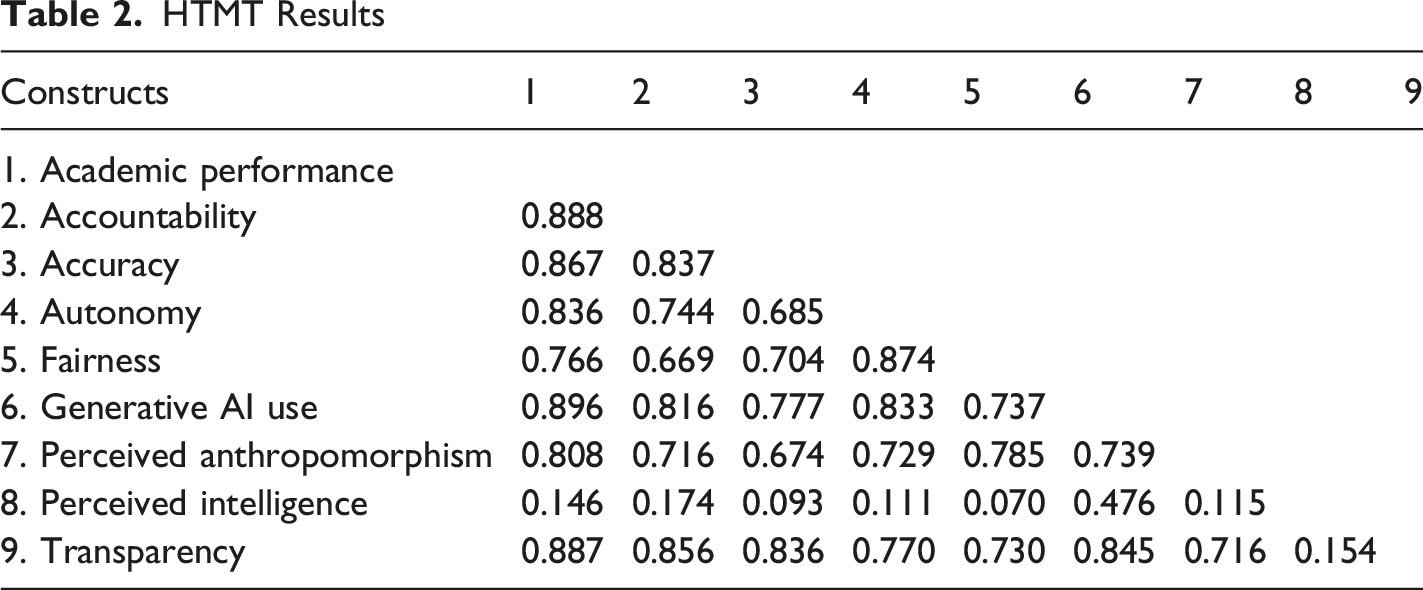
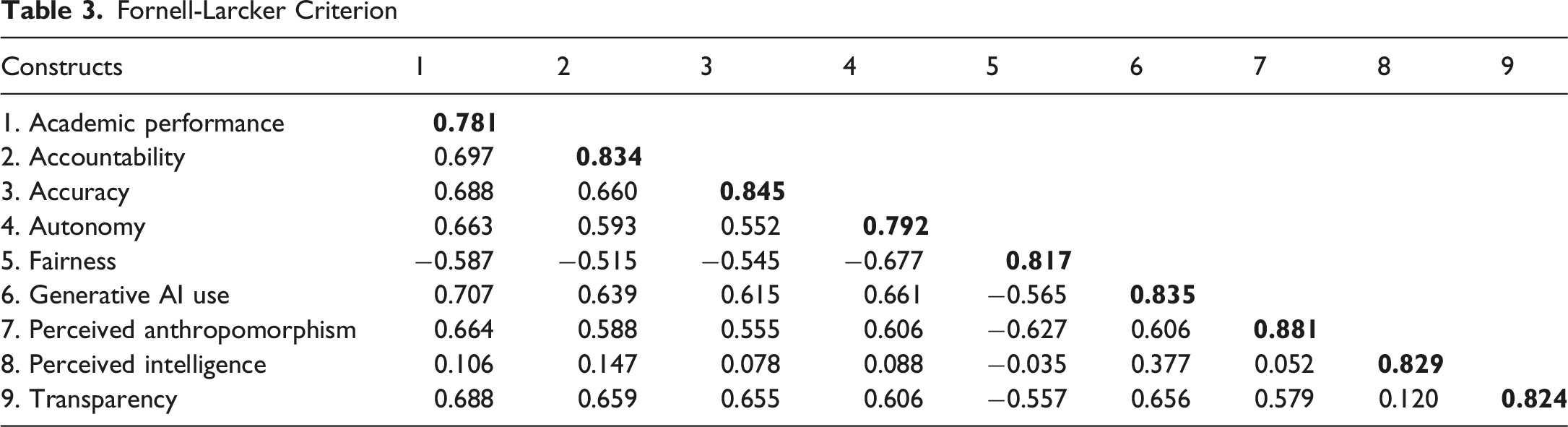
The collected data were analyzed using “Partial Least Squares-Structural Equation Modeling (PLS-SEM)” via SmartPLS 4 software. PLS-SEM was selected because it’s well-suited for managing complex models, especially when dealing with small to medium sample sizes. Its strength lies in supporting exploratory research, where the focus is more on building and shaping theoretical frameworks than on rigorously testing established ones (Hair et al., 2017). The analysis proceeded in two stages. First, the outer measurement model was evaluated to assess the reliability and validity of the constructs. This involved examining “factor loadings”, “composite reliability (CR)”, “Cronbach’s alpha”, and “average variance extracted (AVE)” values to ensure convergent validity, along with the “Heterotrait-Monotrait Ratio (HTMT)” to assess discriminant validity. In the second stage, the inner structural model was assessed by examining the path coefficients, their significance through bootstrapping (5000 resamples), and the coefficient of determination (R2) to evaluate the model’s explanatory power.
Results
Common Method Bias
Tests for common method biases were conducted following the established guidelines in the literature (Podsakoff et al., 2003, 2012). Initially, Harman’s one-factor test was applied to all observed variables. This test resulted in the extraction of nine factors that accounted for the first factor, 41.10%. This percentage is below the 50% threshold, which is considered indicative of minimal common method bias (Harman, 1976; Rogelberg, 2017). Furthermore, the study employed the full collinearity test recommended by Kock (2015). The Variance Inflation Factors (VIFs) fell between 1 and 2.355, comfortably under the commonly accepted threshold of 3.3. This suggests that multicollinearity is not an issue in this research, and as a result, common method bias is unlikely to affect the validity of the results.
Measurement Model Assessment
Measurement Model Assessment
HTMT Results
Fornell-Larcker Criterion
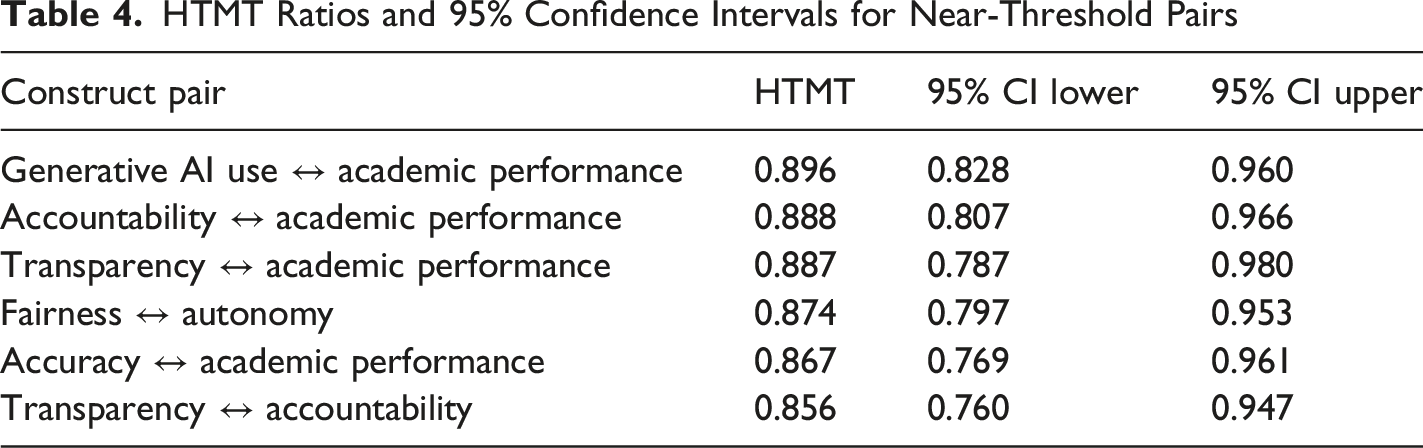
HTMT Ratios and 95% Confidence Intervals for Near-Threshold Pairs
Structural Model Assessment
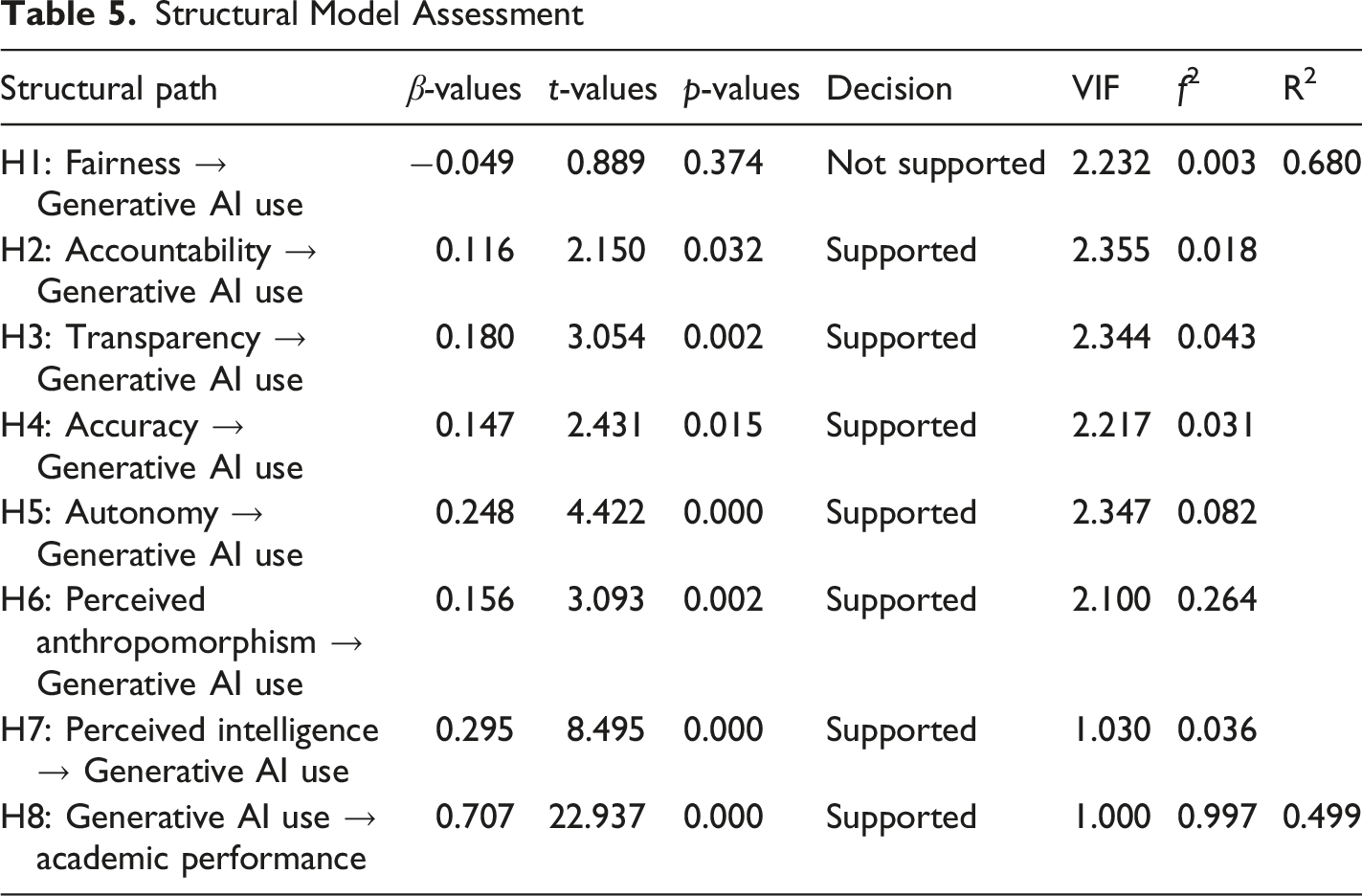
Structural Model Assessment
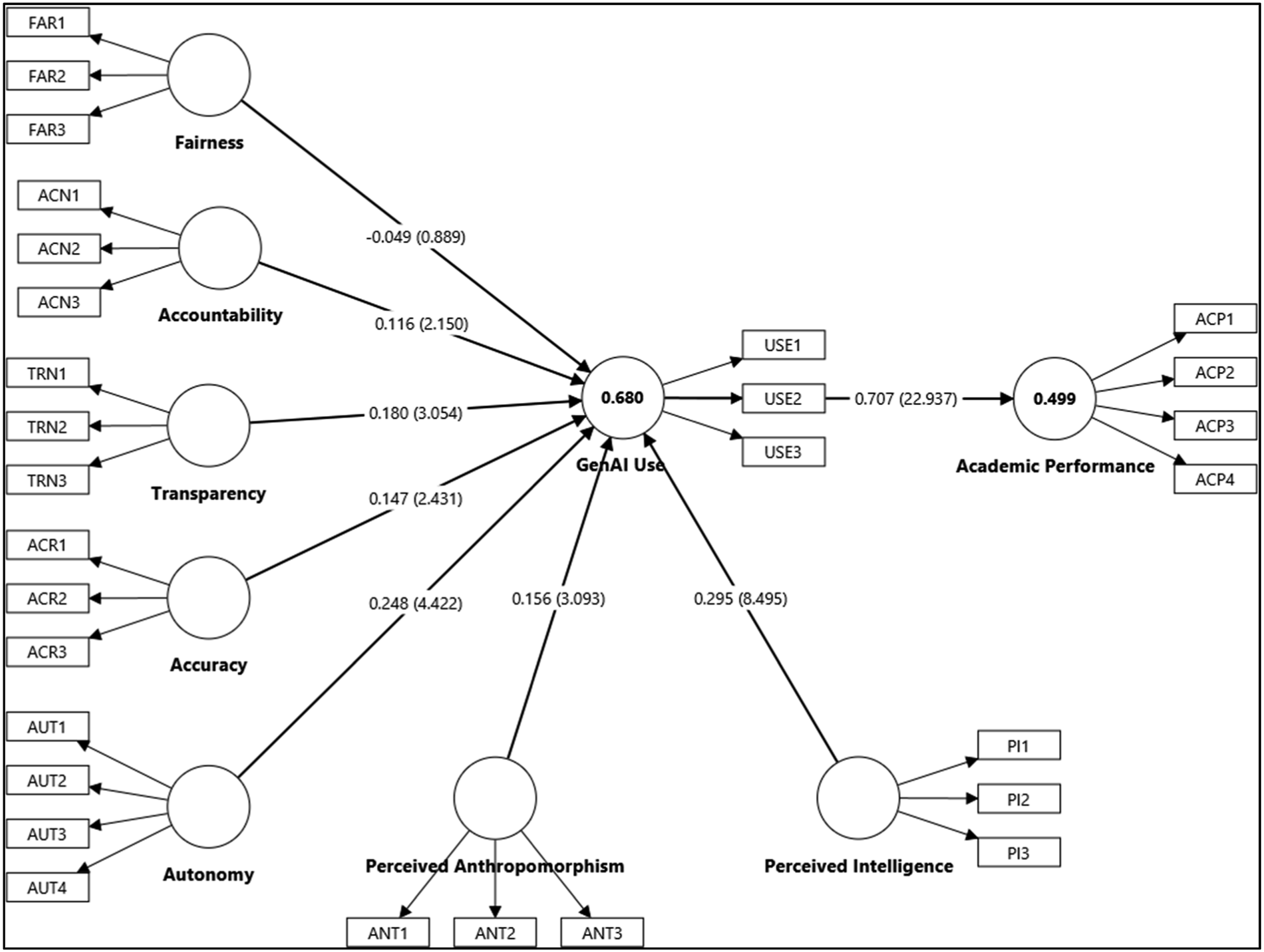
Final structural model
The coefficient of determination (R2) for the impact of Generative AI on perceived academic performance was 0.499, indicating that the model accounts for nearly 50% of the variance in academic performance due to Generative AI use. Effect sizes (f2) were interpreted using conventional thresholds from Cohen (1992), where 0.02 denotes a small effect, 0.15 denotes a medium effect, and 0.35 represents a large effect, with values below 0.02 considered negligible. Based on these thresholds, the path from Generative AI use to academic performance showed a large effect (f2 = 0.997); perceived anthropomorphism to Generative AI use showed a medium effect (f2 = 0.264); accountability to Generative AI use (f2 = 0.018) was negligible to small; transparency to Generative AI use (f2 = 0.043) was small; accuracy to Generative AI use (f2 = 0.031) was small; autonomy to Generative AI use (f2 = 0.082) was small; perceived intelligence to Generative AI use (f2 = 0.036) was small; fairness to Generative AI use (f2 = 0.003) was negligible. These interpretations clarify practical implications by highlighting that the strongest association with perceived academic performance operates through Generative AI use, while design features such as anthropomorphic cues exhibit a moderate association with use; other antecedents show smaller associations.
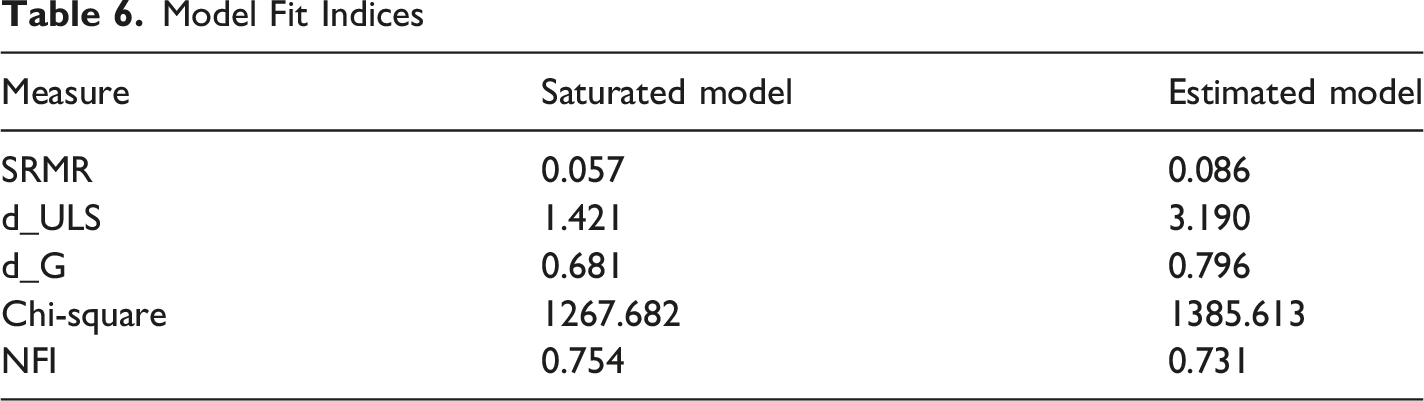
Model Fit Indices
Discussion
This study introduced a theoretical framework aimed at exploring how ethical considerations and specific attributes of Generative AI influence its usage, and in turn, how that usage affects perceived academic performance. To evaluate the model’s performance, we gathered input from university students in Malaysia who frequently use Generative AI tools in their daily workflow. The hypotheses were examined using the PLS-SEM technique. Results from the analysis confirmed seven out of the eight proposed hypotheses. Notably, the model revealed that Generative AI usage accounts for 49.9% of the variation in students’ academic performance. The discussion is organized into three subsections based on the main components of the research model: ethical principles, AI characteristics, and the relationship between Generative AI use and perceived academic performance.
Ethical Principles and Generative AI Use
Unlike previous studies (Deshpande et al., 2025; Narayanan et al., 2024), our findings did not support the relationship between fairness and Generative AI use. This finding suggests that students may not view fairness as an immediate or salient concern when engaging with Generative AI tools. One possible explanation is that fairness, as an ethical principle, often relates to systemic or algorithmic biases that operate in the background and are not easily observable through everyday user interactions. Students may therefore assume that the system already functions equitably or may lack the technical awareness needed to evaluate fairness-related issues. In the higher education context, where exposure to critical discussions of AI bias remains limited, students may prioritize more tangible ethical attributes such as accountability, transparency, and accuracy, which manifest directly in the quality and clarity of AI-generated outputs. Another theoretical explanation is that fairness may exert its influence indirectly, shaping trust perceptions or perceived credibility rather than directly predicting use. This indirect pathway was not modeled in the present study but may warrant investigation in future research.
The results supported the relationship between accountability and Generative AI use, confirming prior research outcomes (Hatherall & Sethi, 2025; Nguyen et al., 2024). In educational environments, students tend to place more trust in AI tools, such as Turnitin’s feedback systems, when they feel there is some form of supervision or a way to appeal if something goes wrong. When these safeguards are clear, learners are not only more inclined to use the technology but also more likely to benefit from it, especially when the tools are used to create learning content or evaluate performance. For example, Turnitin’s transparency about its AI detection processes, including how it flags potential plagiarism and allows for human review, reassures students and educators, encouraging consistent use. In the context of this study, the proactive adoption of AI technologies as part of the Fourth Industrial Revolution may amplify the importance of accountability, as students seek reliable systems to support their academic endeavors.
The results also suggested that transparency has a significant positive impact on Generative AI use, aligning with previous findings (Bedué & Fritzsche, 2022; Hong & Cho, 2023). This positive relationship highlights the pivotal role that clear and understandable AI operations play in encouraging students to adopt Generative AI tools in educational environments. In this context, transparency likely reassures students that AI-generated content (e.g., summaries or explanations) is credible and reliable, thus encouraging its integration into their learning routines. Where digital learning initiatives are expanding rapidly, transparent AI systems may be particularly valued as students navigate novel technologies in diverse socio-cultural contexts.
The results showed that accuracy has a significant positive effect on Generative AI use. This finding agrees with previous observations (Chua et al., 2023; Khan & Mishra, 2024). It highlights how essential accurate and trustworthy results are when it comes to encouraging students to embrace Generative AI tools in the classroom. In this context, accuracy likely plays a pivotal role because students depend on AI tools to deliver correct and verifiable information for academic tasks like essay writing or problem-solving. Accurate AI outputs are likely essential for students navigating complex coursework in diverse disciplines.
The results found a significant positive correlation between autonomy and Generative AI use. This finding confirms what has been observed in previous studies (Anand et al., 2024; X.-J. Lim et al., 2024). This positive correlation highlights the crucial role that user control and independence play in driving students’ adoption of Generative AI tools in instructional settings. When students have the freedom to take charge of their learning, they are more inclined to turn to tools like ChatGPT to dig into different viewpoints, deepen their understanding, and interact with material on their own terms. This kind of independence naturally leads them to weave these AI-driven resources into their personal study habits, making self-guided learning more effective. The ability to exercise autonomy through AI may resonate strongly with students seeking flexible, individualized educational experiences.
AI Characteristics and Generative AI Use
The results indicated that perceived anthropomorphism has a significant positive impact on Generative AI use. This finding is consistent with earlier outcomes (Al-Emran et al., 2024; Al-Qaysi et al., 2025). The positive relationship reveals that attributing human-like characteristics to AI systems markedly enhances students’ willingness to adopt Generative AI tools in educational contexts. Perceived anthropomorphism likely makes AI tools, such as chatbots or virtual tutors, appear more accessible and user-friendly, encouraging students to integrate them into their learning processes. Anthropomorphic AI may bridge cultural or technological gaps by creating a sense of personal connection, particularly for students less familiar with advanced technologies. This result emphasizes that the human-like qualities of AI systems are a significant driver of adoption, suggesting that students are more likely to engage with tools that simulate relatable, interactive experiences.
The results supported the relationship between perceived intelligence and Generative AI use. This finding echoes earlier studies (Al-Emran et al., 2024; Al-Qaysi et al., 2025). The positive relationship underscores the pivotal role that students’ perceptions of AI’s cognitive capabilities play in driving the adoption of Generative AI tools in educational settings. Perceived intelligence likely bolsters students’ confidence in AI tools, which provide thoughtful, well-reasoned outputs for complex academic queries, encouraging their integration into study routines. Students may particularly value AI systems that appear highly competent, as these tools support their academic success in a competitive educational environment. This finding underscores that how intelligent a Generative AI tool appears to be plays a major role in whether students choose to use it. In other words, learners are more likely to embrace technologies they see as dependable and mentally sharp.
Generative AI Use and Perceived Academic Performance
The results showed a strong positive correlation between Generative AI use and perceived academic performance. This outcome is in line with previous observations (Al-Qaysi et al., 2024; Sailer et al., 2024; Sui et al., 2024). This outcome suggests that adopting Generative AI tools is associated with higher academic outcomes. Moreover, it highlights how AI-driven tools enhance the learning process by offering tailored assistance, instant feedback, and streamlined handling of information, ultimately promoting better understanding and sharper critical thinking skills. Employing Generative AI tools for generating study summaries or solving complex problems is likely associated with reducing cognitive load and enabling students to engage more effectively with course material. This result emphasizes that Generative AI use is a powerful driver of academic success, highlighting its potential to transform educational practices by supporting students’ cognitive and intellectual development.
Conclusion
Theoretical Contributions
This study offered several theoretical contributions to the understanding of Generative AI adoption in educational settings by developing a comprehensive framework that integrates ethical principles and AI characteristics to explain students’ use of these tools and their impact on perceived academic performance. First, it advances technology adoption theories by introducing and testing a theoretical model that combines ethical principles with AI-specific attributes. The unexpected finding that fairness does not significantly drive Generative AI use challenges assumptions about the universal role of fairness in technology adoption, suggesting that context-specific priorities, like immediate academic needs, may outweigh certain ethical considerations, thus enriching theoretical models of ethical AI.
This study further enriches theoretical understanding by clarifying how ethical principles and AI characteristics jointly shape Generative AI adoption in educational settings. By demonstrating that accountability, transparency, accuracy, perceived anthropomorphism, and perceived intelligence significantly drive Generative AI use, the study extends existing technology adoption perspectives to highlight the importance of both ethical assurances and user-facing technical attributes. Unlike traditional models that focus primarily on perceived ease of use or usefulness, this study shows that students respond to a combination of ethical cues, such as transparent and accountable system behavior, and technical cues, such as intelligent and human-like interactions. The non-significant role of fairness further nuances these insights, suggesting that not all ethical principles carry the same weight in shaping students’ engagement with Generative AI, particularly when practical academic benefits are prioritized.
In addition, the study enhances educational technology research by demonstrating a strong connection between Generative AI use and perceived academic performance, with a notable effect size. This finding underscores the role of Generative AI in improving cognitive development and learning efficiency, building on theories that emphasize the benefits of personalized, adaptive tools for academic success. By situating the study within Malaysia, a collectivistic context, this research makes a significant theoretical contribution to technology adoption literature by illuminating how cultural values and national priorities shape the adoption of Generative AI in education. In collectivistic societies like Malaysia, where community-oriented values and group harmony often guide behavior, the study revealed that ethical principles and AI characteristics resonate strongly with students navigating shared educational goals. The emphasis on Malaysia’s rapid digital learning initiatives highlights how national technological advancements amplify the relevance of these factors, tailoring AI adoption to collective needs and aspirations. The focus on a collectivistic context enriches existing literature by demonstrating that cultural factors, such as prioritizing group success and equitable access, influence the relative importance of ethical and technical attributes.
Practical Implications
The findings of this study provide several practical implications for educators, educational institutions, and AI developers aiming to enhance the adoption and effectiveness of Generative AI tools in higher education, particularly in fostering improved academic outcomes. The strong positive correlation between Generative AI use and perceived academic performance underscores the transformative potential of AI tools in supporting student success. Educational institutions should prioritize the integration of AI-driven platforms into their teaching frameworks. These tools can assist students in mastering complex concepts by offering personalized resources, practice questions, and real-time feedback, which reduce cognitive load and enhance retention. Institutions can collaborate with faculty to embed AI tools into course designs across disciplines, ensuring that students in fields ranging from engineering to humanities benefit from customized learning aids. Additionally, universities could establish pilot programs to evaluate the effectiveness of specific AI tools in diverse academic settings, using the resulting data to refine integration strategies and maximize academic benefits for a broad student population.
The significant influence of accountability, transparency, and accuracy on Generative AI use highlights the necessity for developers to embed robust ethical frameworks into AI systems to foster student trust and engagement. AI tools should incorporate clear mechanisms for accountability, such as traceable decision-making processes or error correction protocols, as exemplified by Turnitin’s transparent approach to AI-driven plagiarism detection, which allows for human oversight. Transparency can be enhanced by providing students with detailed explanations of how AI outputs are generated, including data sources and potential limitations. Accuracy is also critical for ensuring that AI-generated content aligns with educational standards. Developers should invest in rigorous testing and continuous improvement of AI algorithms to minimize errors and maintain high-quality outputs. Educational institutions can support these efforts by offering faculty development programs that train educators to guide students in critically assessing AI outputs, ensuring that students understand the ethical underpinnings of these tools.
The positive effects of autonomy, perceived anthropomorphism, and perceived intelligence on Generative AI use suggest that AI tools should be designed to empower students with control and deliver intelligent, human-like interactions to maximize adoption. Autonomy can be enhanced by allowing students to customize their interactions with AI, such as choosing the level of detail in explanations or setting the pace of content delivery. Developers should prioritize user-friendly interfaces that give students flexibility to explore content in ways that suit their learning styles, thereby fostering a sense of ownership. Perceived anthropomorphism can be cultivated through conversational, relatable interfaces, which makes AI tools feel approachable and reduces technological intimidation, particularly for students new to digital learning. Perceived intelligence requires AI systems to deliver context-aware, high-quality responses. Educators can leverage these features by designing assignments that encourage students to use AI as a flexible, supportive tool for self-directed learning, such as generating research outlines or exploring alternative perspectives.
The non-significant role of fairness in driving Generative AI use suggests that students may prioritize functional benefits, such as accuracy or intelligence, over ethical considerations like fairness in their immediate academic contexts. However, this does not diminish the importance of fairness in ensuring equitable access to AI tools. Educational institutions should proactively address potential disparities by providing training programs and resources to underserved student groups, such as those in rural areas or from lower socio-economic backgrounds, to enhance digital literacy and familiarity with AI technologies. For example, universities could offer workshops on using AI tools effectively, ensuring that all students, regardless of prior exposure, can leverage these resources to support their learning. Institutions could also partner with AI developers to implement fairness audits, checking for biases in AI outputs that might disproportionately affect certain groups, even if fairness is not a primary driver of adoption.
Limitations and Future Work
This study is subject to several limitations that provide opportunities for future research. One primary limitation is the use of a non-probability purposive sampling technique, which targeted Malaysian university students with prior experience using Generative AI tools. Although this approach is suitable for accessing participants familiar with emerging technologies, it restricts the representativeness of the sample and limits the extent to which the findings can be generalized beyond the specific Malaysian higher education context. The results should therefore be interpreted as contextually grounded rather than universal patterns of Generative AI adoption and academic performance. Future research could employ probability sampling methods to enhance the generalizability of the findings. Besides, comparative studies across countries with varying levels of AI adoption could elucidate how cultural and technological factors shape the influence of ethical principles and AI characteristics. In addition, the unexpected non-significance of fairness suggests that additional contextual or psychological factors may moderate its influence, which were not explored in this study. Future research could expand the theoretical model to include additional variables, such as perceived privacy risks or peer influence, to provide a more comprehensive understanding of adoption drivers.
Another limitation is the cross-sectional, survey-based design, which captures students’ perceptions at a single point in time. This approach may not account for changes in attitudes toward Generative AI over time or the actual impact of AI use on academic performance. Consequently, all identified relationships were interpreted as associative or predictive rather than causal. Moreover, the use of self-reported measures for perceived academic performance may introduce potential biases, such as inflated perceptions of learning or overestimation of understanding. Students may report higher levels of academic improvement due to overconfidence or subjective evaluation, even when actual knowledge gains are limited. As a result, the findings should be interpreted as reflecting perceived rather than objective academic outcomes, which may affect the validity of the conclusions regarding performance improvements. Longitudinal studies could address this by tracking students’ AI use and academic outcomes over an extended period, providing insights into the causal relationships and long-term effects of Generative AI adoption. Furthermore, incorporating objective measures, such as actual grades or AI usage analytics, could validate the self-reported academic performance data and strengthen the findings. The use of self-reported data, while appropriate for assessing perceptions, may introduce bias; triangulating these data with institutional or behavioral records is recommended. Mixed-methods approaches, combining quantitative surveys with qualitative interviews or focus groups, could also offer deeper insights into students’ motivations and experiences with Generative AI.
Footnotes

Funding
The authors disclosed receipt of the following financial support for the research, authorship, and/or publication of this article: This work was supported by Tenaga Nasional Berhad (TNB) and UNITEN through the BOLD Refresh Postdoctoral Fellowships under the project code of J510050002-IC-6 BOLDREFRESH2025-Centre of Excellence.
Declaration of Conflicting Interests
The authors declared no potential conflicts of interest with respect to the research, authorship, and/or publication of this article.
Data Availability Statement
The data presented in this study are available on request from the authors.
Author Biographies
Appendix
Constructs, Items, and Their Sources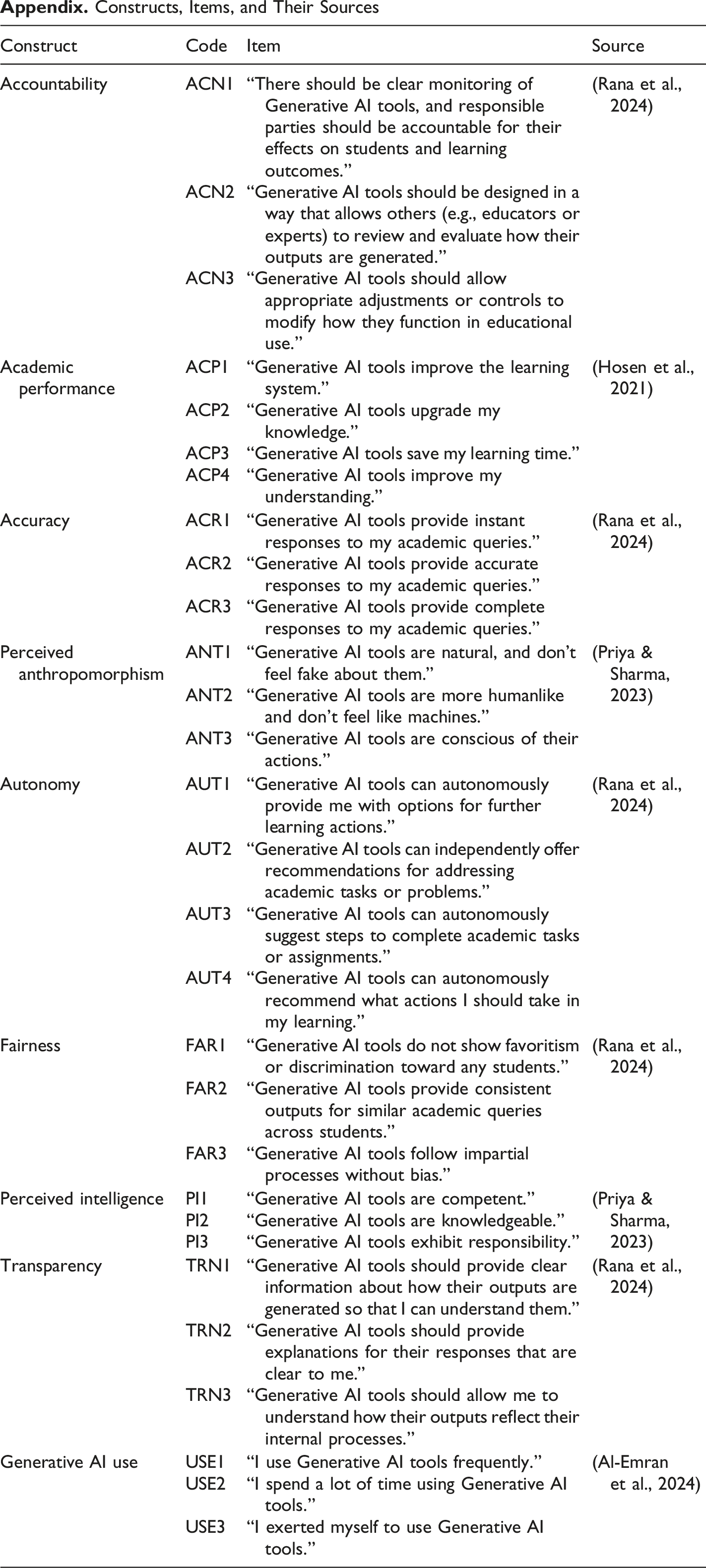
Construct
Code
Item
Source
Accountability
ACN1
“There should be clear monitoring of Generative AI tools, and responsible parties should be accountable for their effects on students and learning outcomes.”
(Rana et al., 2024)
ACN2
“Generative AI tools should be designed in a way that allows others (e.g., educators or experts) to review and evaluate how their outputs are generated.”
ACN3
“Generative AI tools should allow appropriate adjustments or controls to modify how they function in educational use.”
Academic performance
ACP1
“Generative AI tools improve the learning system.”
(Hosen et al., 2021)
ACP2
“Generative AI tools upgrade my knowledge.”
ACP3
“Generative AI tools save my learning time.”
ACP4
“Generative AI tools improve my understanding.”
Accuracy
ACR1
“Generative AI tools provide instant responses to my academic queries.”
(Rana et al., 2024)
ACR2
“Generative AI tools provide accurate responses to my academic queries.”
ACR3
“Generative AI tools provide complete responses to my academic queries.”
Perceived anthropomorphism
ANT1
“Generative AI tools are natural, and don’t feel fake about them.”
(Priya & Sharma, 2023)
ANT2
“Generative AI tools are more humanlike and don’t feel like machines.”
ANT3
“Generative AI tools are conscious of their actions.”
Autonomy
AUT1
“Generative AI tools can autonomously provide me with options for further learning actions.”
(Rana et al., 2024)
AUT2
“Generative AI tools can independently offer recommendations for addressing academic tasks or problems.”
AUT3
“Generative AI tools can autonomously suggest steps to complete academic tasks or assignments.”
AUT4
“Generative AI tools can autonomously recommend what actions I should take in my learning.”
Fairness
FAR1
“Generative AI tools do not show favoritism or discrimination toward any students.”
(Rana et al., 2024)
FAR2
“Generative AI tools provide consistent outputs for similar academic queries across students.”
FAR3
“Generative AI tools follow impartial processes without bias.”
Perceived intelligence
PI1
“Generative AI tools are competent.”
(Priya & Sharma, 2023)
PI2
“Generative AI tools are knowledgeable.”
PI3
“Generative AI tools exhibit responsibility.”
Transparency
TRN1
“Generative AI tools should provide clear information about how their outputs are generated so that I can understand them.”
(Rana et al., 2024)
TRN2
“Generative AI tools should provide explanations for their responses that are clear to me.”
TRN3
“Generative AI tools should allow me to understand how their outputs reflect their internal processes.”
Generative AI use
USE1
“I use Generative AI tools frequently.”
(Al-Emran et al., 2024)
USE2
“I spend a lot of time using Generative AI tools.”
USE3
“I exerted myself to use Generative AI tools.”
