







Abstract
Strategies to manage transportation demand are colloquially labeled carrots or sticks: carrots (or enablers) to entice desired travel behaviors and sticks (or deterrents) that discourage undesirable ones. Assessing the merits of each approach requires answering two questions: which approach is most effective at influencing travel behavior; and what is the difference in terms of ease of implementation between carrots and sticks? The literature typically examines these questions in isolation, but success depends upon both intervention efficacy and the ability to implement. Using a multiple-methods approach, we find those interventions that incorporate both enablers and deterrents are most effective at encouraging active transportation while remaining feasible to implement.
Introduction
The farmer aiming to persuade the donkey to haul a cart has traditionally resorted to two approaches: dangling a luring carrot in front or striking the donkey with a stick from behind. Such approaches—aimed at enabling (i.e., encouraging) one behavior or deterring (i.e., discouraging) another—have become commonplace to induce behavior change. Meyer (1999) employed the “carrots and sticks” metaphor with regard to travel behavior and transportation demand management in the United States; however, little research has developed this concept or provided empirical evidence to contextualize broader issues regarding enabling or deterring various travel behaviors. Furthermore, the ability of an intervention to affect travel behavior depends on its successful implementation. But existing research does not account for the implementation challenges associated with various interventions. This paper examines the effectiveness of interventions aimed at enabling active transport (walking and bicycling), those meant to deter automobile use, as well as the combined impact of enablers and deterrents on active travel. We then weigh intervention effectiveness against the challenges of implementation in US cities.
When communities aim to spur active transport—and also reduce automobile use—their strategies to do so are wide-ranging. For our purposes, enabling strategies are classified as any policy, infrastructure investment, or social program that encourages active transport while deterrents consist of any intervention meant to discourage driving. The perspective of the user is important for understanding how interventions are perceived (i.e., augmenting bicycle lanes at the expense of car lanes would be seen as enablers to bicyclists and deterrents to auto drivers). Available evidence suggests that enablers to active travel may only modestly impact mode share (Ogilvie et al. 2007; Yang et al. 2010). For instance, it is possible that the primary impact of enabling strategies is to create a more pleasant climate for existing active transport users and those already predisposed to walk or bicycle. In contrast, European case studies suggest that enacting deterrents to driving—in addition to enablers to active modes—may be more effective at changing behavior (Gössling 2013; Pucher, Buehler, and Seinen 2011; Buehler, Pucher, and Altshuler 2017). Deterrents, such as road tolls and parking fees, are sparingly employed in the United States as they raise significant equity concerns (Eliasson and Mattsson 2006) and are typically called for based on efficiency and fundraising arguments rather than mode shift (Arnott and Inci 2006; Li 2000). The literature does not examine the combined effect of enablers and deterrents (particularly in the United States) on active travel, nor does it weigh effectiveness against implementation challenges. Our research aims to shed light on these gaps.
Our research uses multiple methods: a structural equation model to address intervention effectiveness and key-informant interviews to capture implementation challenges. The quantitative analysis is conducted on a multicity travel survey collected as part of the US Department of Transportation’s Non-Motorized Transportation Pilot Program. We employ a structural equation model to operationalize multiple perceptions of the built environment concerning mode choice options. More specifically, we test the mediating effect of negative perceptions of the environment as inconvenient for driving on positive perceptions of the environment as supportive of walking and bicycling. Our aim is to strengthen the evidence base for effective active transport promotional strategies—whether enablers, deterrents, or a combination of the two. The qualitative analysis pulls from interviews with practitioners and advocates in each of the Pilot Program cities. The purpose of the interviews is to understand implementation challenges associated with a range of interventions. Taken together, mixed-methods findings indicate appropriate strategies for active transportation promotion based on community goals.
In this article, we first review the pertinent literature establishing a conceptual foundation for examining the interplay of enablers and deterrents (i.e., carrots and sticks) in the decision-making process. Next, we provide an overview of recent empirical research identifying the effectiveness of enabling-type and deterrent-type interventions, respectively. Third, the quantitative analysis is presented, including a theoretical foundation for a mediation structural equation model, data, methods, and findings. Fourth, the qualitative analysis is described in detail. Finally, we bring together the results of the multiple methods with limitations and implications for research and practice.
Literature Review
Conceptual Foundation: Modest Impact of Enabling Active Travel in the United States
Active transport is not a viable mode choice in many communities in the United States. In this context, enabling walking and bicycling improves the active transport user’s experience in an auto-dominated environment but has little effect in the absence of deterrents to driving; we borrow a conceptual model from the environment and behavior literature to specify this. The interplay of enablers and deterrents is succinctly specified in the ABC model (Stern et al. 1999), which describes behavior as a function of the individual and their environment. According to Stern et al. (1999), “behavior (B) is an interactive product of personal-sphere attitudes (A) and contextual factors (C).” If external conditions become neutral (the center point of the [C] axis in Figure 1), then the decision to walk or bicycle depends on positive attitudes. Thus, in many US cities, interventions support the behavior of individuals predisposed to walk or bicycle but are insufficient alone to spur broad mode shifts.
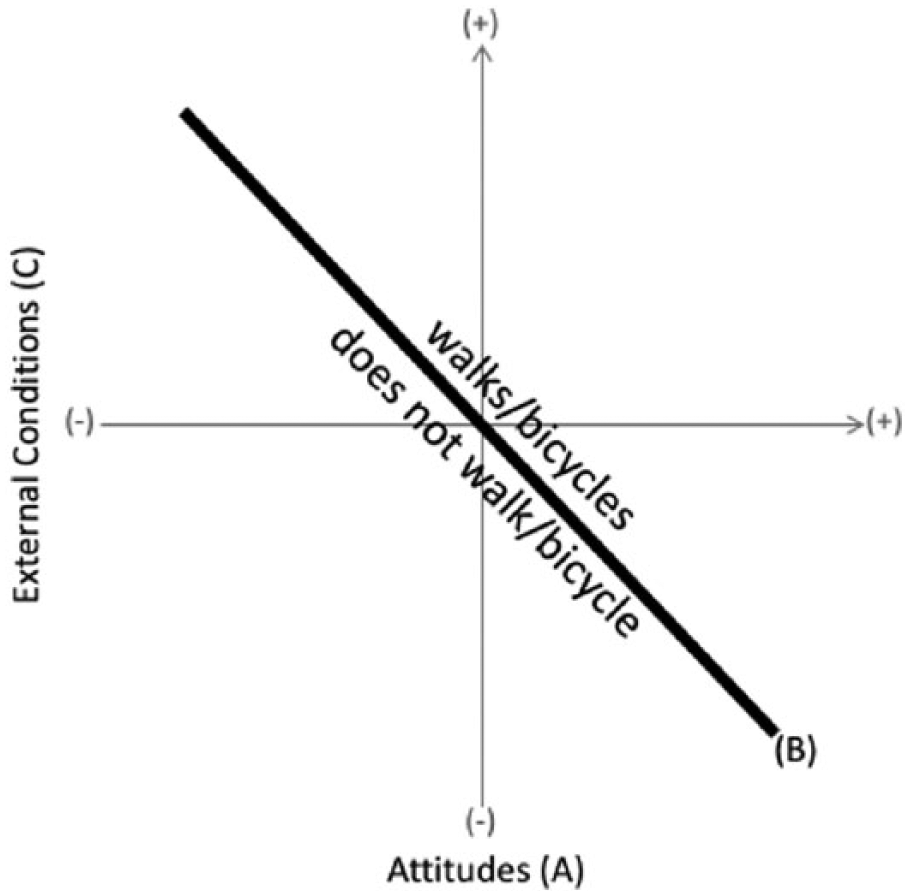
The ABC model applied to active transport.
Defining Terms
In this study, we distill the myriad interventions—policies, programs, and infrastructure investments that can impact the decision to walk or bicycle—into two broad categories: enablers (i.e., carrots) and deterrents (i.e., sticks). We do this to shift the focus from what an intervention is to how it is meant to impact travel behavior. Doing so allows us to better understand why some interventions are less successful than others at encouraging active travel. Existing literature guides this approach: characterizing interventions as “carrots or sticks” (Meyer 1999), or relatedly as “push or pull” measures (Erickson, Garvill, and Nordlund 2008; Gärling et al. 2002). Active transport research has followed suit, employing the “carrots and sticks” dichotomy (Krizek, Forsyth, and Baum 2009), as well as “enabler and deterrent” labels (Daley, Rissel, and Lloyd 2007; Lee and Moudon 2004). However, the literature does not specify what types of interventions act as enablers and deterrents. Table 1 (below) addresses this gap to clarify terms within this paper.
Intervention Typology. a
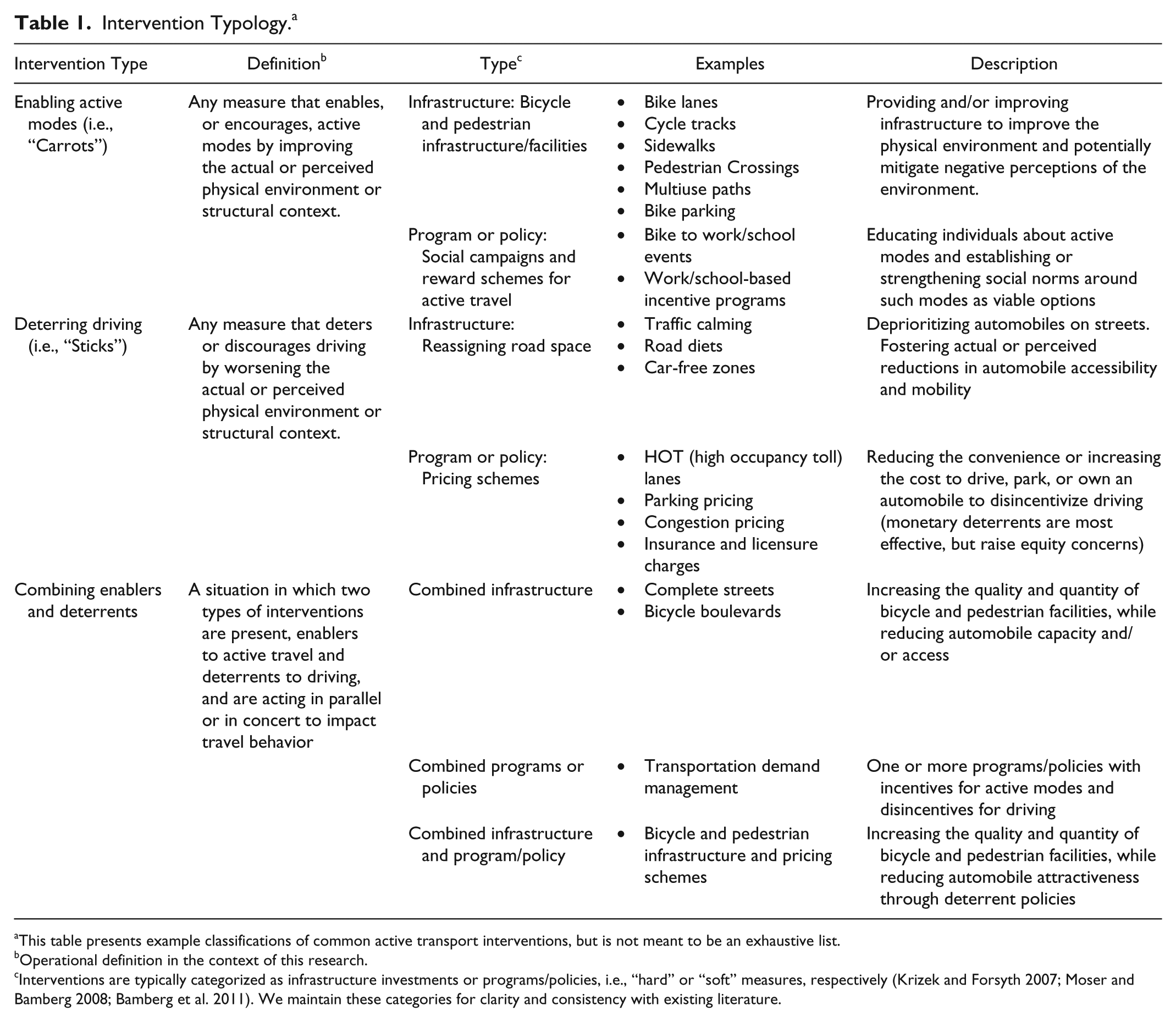
This table presents example classifications of common active transport interventions, but is not meant to be an exhaustive list.
Operational definition in the context of this research.
Interventions are typically categorized as infrastructure investments or programs/policies, i.e., “hard” or “soft” measures, respectively (Krizek and Forsyth 2007; Moser and Bamberg 2008; Bamberg et al. 2011). We maintain these categories for clarity and consistency with existing literature.
Intervention Effectiveness: Enablers versus Deterrents
This literature review takes the perspective of the active transport user in examining the relative effectiveness of interventions based on their intended affect (enabling active transport vs. deterring driving) to influence mode shifts. Bicycle and pedestrian studies focus overwhelmingly on interventions aimed at enabling active transport with a focus on bicycling specifically (Pucher, Dill, and Handy 2010), physical activity (Heath et al. 2006, 2012; Sallis, Bauman, and Pratt 1998), and to a lesser extent, all active modes (Krizek, Forsyth, and Baum 2009). Evaluation studies of interventions that provide rewards for not driving are less common (Shoup 1997; Ben-Elia and Ettema 2009).
Systematic literature reviews find that interventions aimed specifically at enabling active transport have modest (Yang et al. 2010), often short-term, impacts (Ogilvie et al. 2007) resulting in, at best, 5% mode shifts to active modes at the population level (Ogilvie et al. 2004). Such mode shifts may be impressive by US standards but lag far behind walking and bicycling rates in many European cities; in contrast, the rare US city that inherently features extensive deterrents to auto travel, New York City, finds pedestrian and transit mode shares comparable to European cities (Pucher and Buehler 2008).
Policies centered on deterring auto use have primarily been employed to address congestion in urban areas (Harrington, Krupnick, and Alberini 2001; Hensher and Puckett 2007). Such policies are not widely accepted as they face political opposition and raise significant equity concerns for their disproportionate impact on those who have no choice but to drive (Ben-Elia and Ettema 2009; Eliasson and Mattsson 2006; Gärling and Schuitema 2007). Reducing parking subsidies or increasing the price of parking has been established as an effective means to reduce car commuting (as early as Shoup’s [1990)] review of parking subsidies). Despite the effectiveness of interventions that deter driving, there is a gap in the literature linking the effect of deterrents to driving on increases in active transport.
Given the right context, Americans will reduce auto use, but that combination of physical, social, and policy factors is exceedingly rare. The effectiveness of enabling shifts toward active modes in the United States is modest; deterrents against driving may be more effective, but they carry implementation challenges and equity concerns. Combining these approaches may provide a way forward, but such interventions (i.e., combinations of interventions) are rare, and we posit that this is due to implementation challenges. Our research addresses this gap in knowledge using a multiple-methods approach to assess the efficacy and challenges to implement interventions aimed at increasing walking and bicycling in US cities.
Multiple-Methods Approach
We address two research questions in succession: (1) can combining enablers of active transport with deterrents to driving be more effective than either approach in isolation at encouraging active travel; and (2) what are the implementation challenges associated with enablers to active transport deterrents to driving, and combinations of the two? In this section, we present our multiple-methods research as two distinct subsections, one quantitative and the other qualitative, to first assess intervention impacts (research question 1). A structural equation model examines perceptions of the built environment as supportive of walking and bicycling, given perceived built-environment barriers to driving, while controlling for city of residence, sociodemographics, and current behavior. Second, we assess challenges in implementing each type of approach through key-informant interviews with practitioners, advocates, and researchers engaged in active transport promotion (research question 2). We then discuss the mixed-methods findings, with implications for research and practice.
Research Question 1: To What Extent Can Combining Enablers of Active Transport with Deterrents to Driving Be More Effective Than Either Approach in Isolation at Encouraging Active Transport
This is an exploratory investigation into the combined effectiveness of enabling active transport while simultaneously deterring driving. The data used were not collected expressly for this purpose; however, upon initial analysis, they revealed latent factors, providing the opportunity to test an interrelationship between enablers and deterrents. We used a mediation structural equation model to test this. Below we describe the data, theoretical framework, and methods.
Quantitative Data and Latent Factor Identification
We use data collected by the Non-motorized Transportation Pilot Program (NTPP) (see Table 2). The NTPP was a US federally funded program starting in 2006 to provide $25 million each to four US cities (Columbia, Missouri; Marin County, California; Minneapolis, Minnesota; Sheboygan County, Wisconsin). Probability-sampled population surveys were administered in each city in 2010, as well as in Spokane, Washington, a “control” city that did not receive NTPP funds (see CTS [2007, 2011] and FHWA [2012] for comprehensive details on the NTPP and corresponding survey).
Descriptive Statistics.
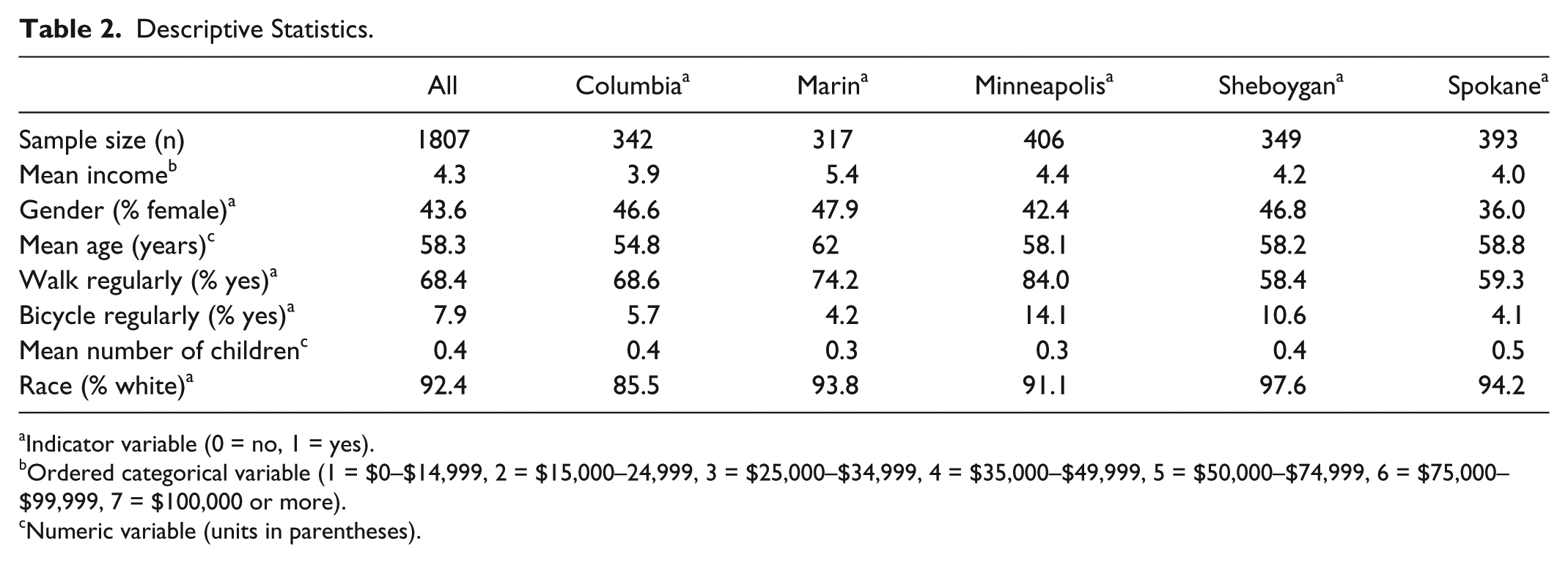
Indicator variable (0 = no, 1 = yes).
Ordered categorical variable (1 = $0–$14,999, 2 = $15,000–24,999, 3 = $25,000–$34,999, 4 = $35,000–$49,999, 5 = $50,000–$74,999, 6 = $75,000–$99,999, 7 = $100,000 or more).
Numeric variable (units in parentheses).
In addition to sociodemographic variables, the data included twenty questions regarding a range of attitudes and preferences. We used the twenty attitude/preference variables to identify latent factors regarding perceptions of the extent to which the built environment enabled or discouraged certain mode choices via exploratory then confirmatory factor analysis (Table 3). From this, we identified three factors: two enablers of active transport modes (one walking, one bicycling) and a deterrent to driving factor. The factors are then modeled as outcome measures in a structural equation model. The latent factors are useful proxies for perceived mode choice because they represent perceptions of the built environment as enabling or discouraging mode choices, as specified in the horizontal axis (C) of the ABC Model (Figure 1). Latent factor interrelationships expressed in the structural equation model are then used to identify strategies for promoting walking and bicycling in the United States.
Exploratory and Confirmatory Factor Analysis Results.
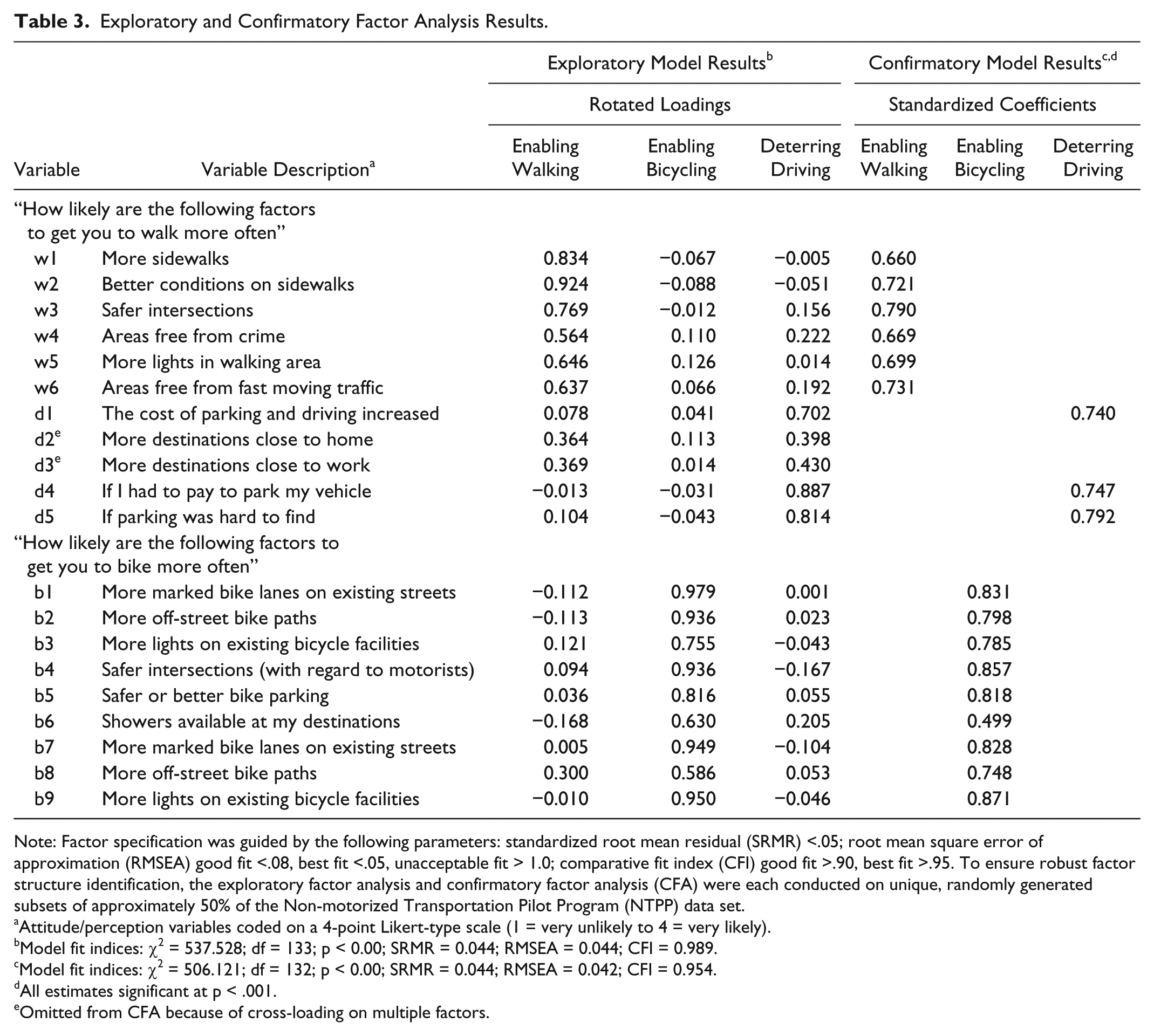
Note: Factor specification was guided by the following parameters: standardized root mean residual (SRMR) <.05; root mean square error of approximation (RMSEA) good fit <.08, best fit <.05, unacceptable fit > 1.0; comparative fit index (CFI) good fit >.90, best fit >.95. To ensure robust factor structure identification, the exploratory factor analysis and confirmatory factor analysis (CFA) were each conducted on unique, randomly generated subsets of approximately 50% of the Non-motorized Transportation Pilot Program (NTPP) data set.
Attitude/perception variables coded on a 4-point Likert-type scale (1 = very unlikely to 4 = very likely).
Model fit indices: χ2 = 537.528; df = 133; p < 0.00; SRMR = 0.044; RMSEA = 0.044; CFI = 0.989.
Model fit indices: χ2 = 506.121; df = 132; p < 0.00; SRMR = 0.044; RMSEA = 0.042; CFI = 0.954.
All estimates significant at p < .001.
Omitted from CFA because of cross-loading on multiple factors.
We identified three- and four-factor models through exploratory factor analysis (Table 3), but rejected the four-factor model as overspecified because the fourth factor was composed of two variables (Table 3; w4, b8) that cross-loaded on existing factors. We verified the factor structure through a confirmatory factor analysis. Table 3 includes exploratory and confirmatory results. Significant standardized coefficients (reported under Table 3) are interpreted as the correlation between the measured and latent variable and are all moderate to highly correlated, supporting a three-factor model. The three latent factors are interpreted as “enabling walking,” “enabling bicycling,” and “deterring driving.”
Modeling Latent Factors—Theoretical Framework
Tracing the development of the theory of travel decision making provides the theoretical foundation for the mediation model we test herein: the travel decision-making framework is informed by the Normative Decision-Making Model (Klockner and Matthies 2004), the comprehensive action determination model (Klockner and Blobaum 2010), the social-ecological framework for walking (Alfonso 2005), and the theory of routine mode choice (Schneider 2013), each of which operationalize perceptions in a mediation pathway. Perceived positive or negative consequences of a behavior are present as a mediator of behavior in the normative decision-making model, subjective constraints are operationalized as a mediator in the comprehensive action determination model, and perceptions (in general) mediate walking behavior in the social-ecological framework for walking. Further, the theory of routine mode choice options identifies “awareness and availability [of mode choice options]” as mediating the cyclical process of routine mode choice decisions. Taken together, we find that a mediation model best reflects current theoretical understanding of active transport mode choice.
Structural Equation Model Specification
We operationalized the “deterring driving” factor as a mediator between independent variables and perceptions of walking and bicycling (Figure 2). Squares represent measured variables, circles denote latent variables, single-headed arrows with numbers are used to show measurement error when associated with measured variables and residual error when associated with latent variables, the double-headed arrow denotes that correlation among latent factors is assumed.
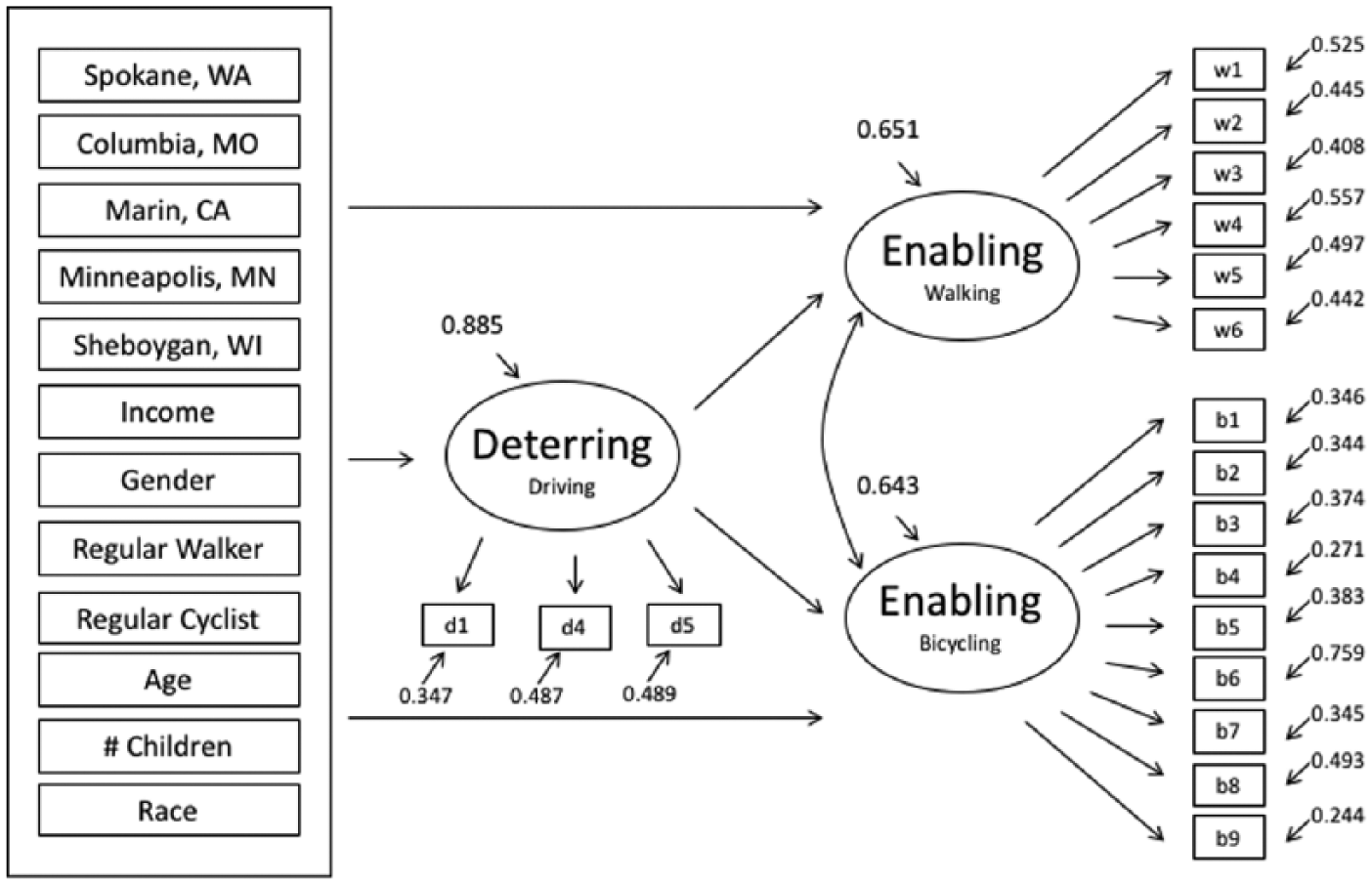
Mediation structural equation model.
We selected independent variables (boxes on the left side of Figure 2) based on existing literature and available data. Given the significance of the built environment on travel behavior (e.g., Ewing and Cervero 2010) and walking and bicycling specifically (Heinen, van Wee, and Maat 2010; Pucher, Dill, and Handy 2010; Marshall and Garrick 2010), we included indicator variables for city of residence. Sociodemographic factors are also consistently associated with mode choice; therefore, we include income, gender, age, number of children, and race in the statistical model. Habit, previous experience, and awareness of options have also been cited as predictors of mode choice decisions (Singleton 2013, 2015; Ettema et al. 2010; Gärling and Axhausen 2003; Schneider 2013). To best account for this, we included indicator variables for “regular walker” and “regular cyclist” (i.e., individuals that report walking or bicycling for any reason, for at least ten minutes, in the previous week). Our findings are limited because of indicator variables for the built environment (i.e., city of residence) and coarse behavior measures.
Dependent variables represent perceptions of the extent to which an individual’s neighborhood enables walking and bicycling (i.e., “Enabling Walking” and “Enabling Bicycling”) as mediated by perceptions of how the local environment may be “Deterring Driving.” We compared this model to a direct path model in which all three latent factors were outcomes with no mediator. R-squared values for the deterrents to drive factor were identical to the mediation model (R2 = 0.12 in both models). But R-squared values for the enablers of walking and enablers of bicycling factors were lower in the direct path model than the mediation model (direct path model R2 = 0.09 [walk], 0.18 [bike]; mediation model R2 = 0.35 [walk], 0.36 [bike]), indicating that the inclusion of a mediator increases the model’s explanatory power.
Quantitative Results
Results indicate a significant interrelationship between the enabling and deterring factors: the deterrents to driving factor is positively associated with increased values on enabling walking and enabling bicycling factors (full model results are presented in Table 4). For example, a unit increase in deterring driving is associated with a 0.539 (p < .001) unit increase in enablers to walking and a 0.450 (p < .001) unit increase in enablers to bicycling. This relationship between latent factors is explored in greater detail with respect to specific mediation pathways below.
Structural Equation Model Results.
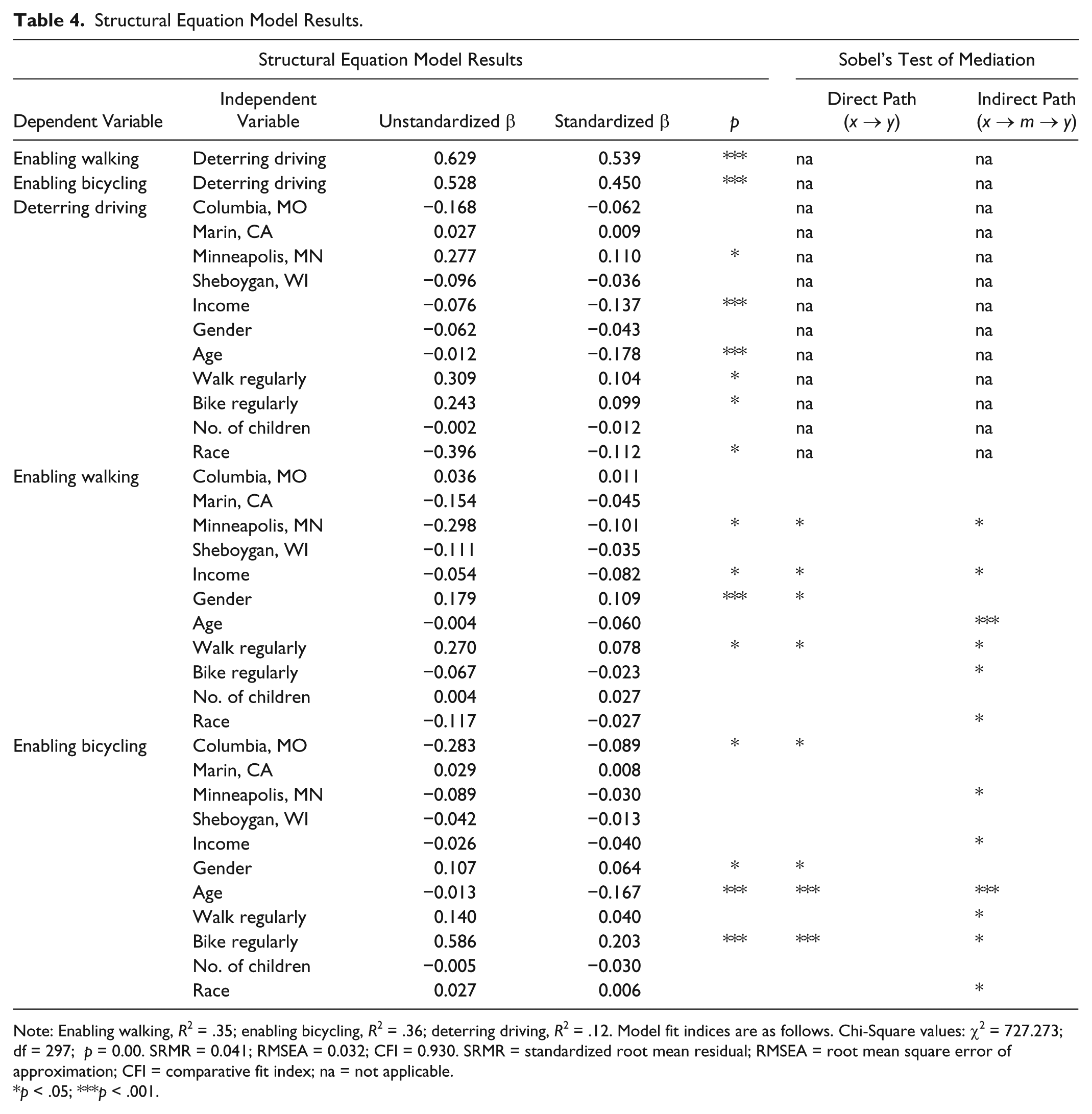
Note: Enabling walking, R2 = .35; enabling bicycling, R2 = .36; deterring driving, R2 = .12. Model fit indices are as follows. Chi-Square values: χ2 = 727.273; df = 297; p = 0.00. SRMR = 0.041; RMSEA = 0.032; CFI = 0.930. SRMR = standardized root mean residual; RMSEA = root mean square error of approximation; CFI = comparative fit index; na = not applicable.
p < .05; ***p < .001.
Mediation effects: An example interpretation
We tested for significant partial coefficients using Sobel’s test of mediation (MacKinnon, Fairchild, and Fritz 2007) (Table 4). Significant mediation pathways require careful interpretation; for instance, consider the example of the variable “regular walker” predicting “enabling walking” as mediated by “deterring driving.” In this case, findings indicate that regular walkers are more likely to report enhanced perceived efficacy of enablers to walking (as driving becomes increasingly inconvenient). Based on the direction of the partial coefficients in the structural equation model (illustrated in Figure 3). Consider:
Deterring driving = higher values indicate increased willingness to walk as driving is perceived as less convenient
Enabling walking = higher values indicate increased agreement that enhancing neighborhood quality with regard to walking will make one more likely to walk

Regular Walker mediation illustration.
The direct (c′) and indirect (a and b) pathways indicate significant positive effects. This is an example of partial mediation; it would be considered complete mediation if the c′ pathway was insignificant. It is possible that individuals who regularly walk or bicycle (model results show a similar directional effect for regular cyclists; Table 4) are more familiar with enablers and deterrents. Thus, a regular walker or rider might be more sensitive to additional deterrents to driving because they already recognize alternative mode choices.
All mediation pathway findings are exploratory and should not be used as a measure of success for specific locations or interventions implemented as part of the NTPP. For example, while there is a significant partial mediation pathway where the variable “Minneapolis” predicts increased enabling walking, as mediated by deterring driving, this cannot be linked to a specific intervention. Thus, while the indicator variable for Minneapolis residents differs significantly from other cities, this difference cannot be linked to a specific factor or factors. Additional city-specific data and analysis are necessary to make conclusions regarding this (and similar) model’s results that are not easily interpretable in isolation. The findings provide directions for further research but are outside of the scope of this work. Our contribution to the literature is demonstrating the significance of the mediating effect of deterrents to driving.
Model results: Limitations and future directions
This work is exploratory in nature, balancing data constraints against application to practice. Sample sizes are small within each community surveyed, and the surveys were probability-sampled for generalizability, meaning very few respondents reported any walking or bicycling. In the case of bicycling measures, of those who reported having ridden a bicycle in the past year (n = 1,354), the average number of days since last riding a bike was 325. Moreover, only 329 individuals across the five cities reported riding at least once per week, an average of 66 people per city (see CTS [2011] for full details of the survey, the methodology, and limitations). Behavioral outcome measures in the survey for both active modes also failed to distinguish between utilitarian and recreational travel. Taken together, data constraints precluded the inclusion of behavioral outcomes in our analysis.
In the absence of a robust accounting for both walking and bicycling behavior, we used perceptions of built environment support for the use of these modes in the full sample population. One benefit of this approach is that our findings are not limited to increasing rates of active transport among those who may already occasionally do so, but rather how comprehensive approaches to travel demand management may impact the general population. This is arguably more useful information for practitioners as so few people use active modes regularly in the United States.
The value of these findings for communities seeking to encourage active transport depends entirely on whether or not such interventions are implementable. Deterrents to driving are particularly unpopular, despite their demonstrated impact on automobile use, but it is unclear how this compares to implementing other types of interventions. For example, a community may spend more energy and resources promoting a parking policy that could ultimately be rejected than it costs to implement a complete streets or safe routes to school project. A parking policy may influence city-scale travel behavior, but ultimately the only project with any impact is the one that is implemented. In an effort to provide an evidence base to address this issue, we present a qualitative supplement to the quantitative analysis described above. The qualitative component addresses implementation challenges experienced by practitioners. These experiences are then to be weighed against quantitative findings regarding the effectiveness of such interventions at influencing travel behavior.
Research Question 2: What Are the Implementation Challenges Associated with Enablers to Active Transport Deterrents to Driving, and Combinations of the Two?
The second part of this research uses key-informant interviews with policy makers, planners, public works officials, and advocates in each of the study cities concerning the implementation process, and implementation challenges, associated with different types of interventions. Qualitative methods have been applied with increasing frequency to better understand mode choice decisions (Schneider 2013), motivations to walk or bicycle (Jones and Ogilvie 2012), and attitudes and perceptions toward active transport (Daley and Rissel 2011). Existing research tends to focus on user experiences and perceptions, but there is a dearth of literature aimed at the practitioner and advocate experience in implementing bicycle and pedestrian interventions.
Qualitative Data and Methods
Interviews were conducted in the fall of 2012 and spring of 2013 with key informants involved in the planning and implementation of the Non-Motorized Transportation Pilot Program (the same communities who received federal funds and from which the quantitative data was collected). Specific improvements and interventions for the Pilot Program were guided collectively in each community by local officials, planners, and advocates and overseen by a national coordination team.
The national team was made up of state and federal government planners and policy makers, as well as academic researchers and representatives from advocacy organizations. The group was tasked with coordination and evaluation of the NTPP and totaled approximately 50 people. Local teams varied widely in size, but typically averaged core groups of 5 to 10 individuals. We interviewed subjects at both the local and national level. Subjects were selected based on their willingness to participate and their ability to speak to the practical aspects (e.g., what was implemented, and both the process and rationale of implementation).
We interviewed a total of fifteen people, five women and ten men, including eight practitioners and seven advocates. Interviews were conducted in each community that received funds (Columbia, MO; Marin County, CA; Minneapolis, MN; Sheboygan County, WI) with at least three people from each community, and three individuals involved at the national level. There were three aims to the interviews: (1) to identify primary interventions and improvements in each community; (2) to assess the degree to which specific interventions functioned as enablers of active travel, deterrents of driving, or combinations of the two; and (3) to understand the implementation process for each type of intervention.
We interviewed at least one advocate and one practitioner in each community and nationally. The local interviews were conducted in a variety of locations but most typically in either a state government office or quiet public place (e.g., a local coffee shop). In some cases, local interviews included walking/windshield tours of specific interventions. Interviews with national-level stakeholders were conducted over the phone.
The interviews were semidirected, following a predefined thematic script, and were recorded. Existing literature on implementation challenges offers little guidance in structuring our thematic script. What is available falls into two categories: the first category includes European case studies that broadly reflect on long-term policy trends associated with increased bicycle, pedestrian, and transit use (e.g., Buehler and Pucher 2011). The second category focuses on the challenges and pitfalls in implementing deterrents to driving via parking price and supply and vehicle tolls or restricted lanes on existing roadways. The primary pitfall identified in the literature is equity concerns around the price to drive and park (Eliasson and Mattsson 2006) while the challenges include extreme unpopularity of such measures by the general public as they are often perceived as punitive and coercive (Ben-Elia and Ettema 2009).
Prior to conducting interviews, we developed a thematic script based on our knowledge of bicycle and pedestrian promotion efforts, available literature, and our quantitative findings (presented above). The script addressed the following areas in the general order presented below:
Understanding local context: Exploring the history of active transport promotion and community perspectives on active transport (e.g., as a recreational activity or mode of transport?)
Identifying community-level strategies to increase bicycle and pedestrian travel (and the rationale behind such strategies): Identifying local priorities and approaches considered by key-informants.
Establishing the type and extent of interventions proposed and completed: What is the focus of NTPP-related efforts and the extent to which they have been implemented?
Exploring the experience of proposing and implementing a range of interventions: Based on responses to previous questions. Focused on drawing connections between strategic approaches to achieving active transport goals and the viability of such approaches in the context of the implementation process.
Identifying innovative programs, policies, or infrastructure: Establishing what was considered “innovative” by the interview subject, and lessons regarding the implementation process and impact of such interventions.
Exploring respondent perspectives on deterrents to driving.
Data analysis proceeded through a series of steps to address implementation challenges associated with interventions aimed at enabling walking and bicycling, those meant to deter driving, and interventions that included both enablers and deterrents. Analysis began with “interview field notes” (Johnson 2017) completed within twenty-four hours after each interview. These field notes are similar in function to a “contact summary sheet” (Miles and Huberman 1996) and are generally descriptive (i.e., nonanalytical) in function. Interview field notes included basic information and initial observations, including (below list drawn from Miles and Huberman 1996):
Basic interview details (who, what, where, when)
Main concepts, issues, and themes raised during the interview
A summary of the information gained (or missed) during the interview from the thematic script
Aspects of the thematic script did the interview address most centrally
Anything interesting, salient, illuminating, or otherwise important about the interview
New observations, speculations, or hypotheses raised during the interview (particularly that may inform future interview)
We then completed brief “interview summaries” (Rubin and Rubin 2012). These summaries serve as a second-stage, largely nonanalytic step in process that is distinguished from coding in that they are descriptive in nature. Following Rubin and Rubin (2012), the summaries include initial memos (Glaser 1978), noteworthy quotations, and any practical details that may inform coding (e.g., the participant’s role in the pilot program and perspective on the projects).
After reviewing interview field notes and summaries, we developed and reviewed codes in a two-stage process: within (stage 1) and across (stage 2) interviews (a process described by Rubin and Rubin [2012] and Saldana [2009). We then linked codes to the thematic areas of interest based on applicability. We then developed and refined themes across the complete data set (i.e., across all of the thematic categories), reviewed, and revised as a research team until we reached consensus.
Qualitative Results
We identified four themes in the interview data that inform challenges cities are facing (in terms of unrealized active transport goals) and their experiences in implementing various types of interventions. The themes illustrate a timeline common to the NTPP communities, starting when each community received program funds and began to build institutional capacity and complete previously infeasible projects (theme 1). Community priorities then gradually shifted from encouraging recreational walking and bicycling to influencing mode shift for utilitarian travel (theme 2). As communities shifted goals, they in turn adjusted their approach to include deterrents to driving. This process highlighted how such efforts can potentially become “pitched battles” (theme 3), damaging promotional efforts. Recognizing that such battles can be counterproductive, we identified efforts that circumvented controversy in the implementation of high-quality pilot projects, rather than simply investing in a high quantity of interventions that may have little impact (theme 4).
Theme 1: Leveraging opportunity
The $25 million awarded to each community was unprecedented, allowing for previously infeasible investments in walking and bicycling. Communities in turn were able to leverage funds to build both physical infrastructure and institutional capacity. As one practitioner said, simply:
Funding has a way of bringing people to the table.
In practice, this meant two things: first, planners, policy makers, engineers, and advocates could come together to consider projects that were previously infeasible. Second, communities could institutionalize bicycle and pedestrian planning. In some cases, communities had been able to build and maintain modest bicycle and pedestrian infrastructure, but had been working on a project-to-project basis, largely dependent on available funds. Interviews illustrated how this changed with the NTPP:
[The NTPP] allowed us to raise the bar. We could move from focusing on projects to focusing on the network. (advocate) There were a lot of critical connections, like intersections between the bike trail and busy streets, that we would never have even been considered without pilot funds. (planner)
For example, in Marin County, planners were interested in repurposing a rail tunnel to accommodate bicycles and pedestrians. This project was seen as a critical connection between local communities separated by hills and regional connections to San Francisco. Planners were able to leverage NTPP funds with other funding sources to implement this project.
In addition to infrastructure construction, interviews described how the opportunity created by the NTPP could be used to institutionalize bicycle and pedestrian planning. Across the United States, bicycle and pedestrian promotion is often hampered by jurisdiction; off-street projects may fall under Parks Departments, while on-street investments may be under the purview of local Public Works or State Departments of Transportation. Under the NTPP, communities were able to, at a minimum, create a nexus for coordinating between agencies:
Just having a full-time staffer working on the NTPP made all the difference. (planner)
In the City of Minneapolis, for example, a practitioner we interviewed credited the NTPP with creating a “culture” and “momentum” leading to the eventual creation of a bicycle and pedestrian coordinator position (in Public Works). In addition to the creation of bicycle and pedestrian staff and general institutional capacity, City employees in Minneapolis also credit the Pilot Program with providing capacity to establish a number of programs that then continued after the NTPP, including
bicycle and pedestrian counts,
bikeway resurfacing coordination to install bike lanes with resurfacing, and
new and flexible street design solutions to accommodate bicycles.
The example in Minneapolis illustrates how communities could leverage the unique opportunity of a one-time influx in funds to develop lasting institutional change.
Theme 2: Shifting priorities
All interviews addressed local history and context of bicycle and pedestrian promotion. In recounting this history, similar narratives emerged. Interview subjects in each of the NTPP communities described, either implicitly or explicitly, the trend of historically focusing on recreational facilities. Subjects indicated a long-term goal of creating a utilitarian active transport system by building on the existing recreational infrastructure (and public support for active travel) that recreational investments have generated. Indeed, all communities studied boast long histories of recreational bicycle and pedestrian facilities, often spanning decades (CTS 2007). Projects including off-street paths and Rails-to-Trails conversions are common. Interview subjects frequently stated that off-street infrastructure is largely supported by the public:
Our [community] had a more recreational-based plan in place; it didn’t really have a utilitarian focus. (practitioner) Trails have always been important. The city is proud of its trail system and will continue to build that. . . . Without the Pilot Program, we would probably not have done any of the on-street infrastructure. (practitioner)
The stated goals of the Pilot Program were utilitarian in nature: “to demonstrate the extent to which bicycling and walking can carry a significant part of the transportation load.” To accommodate this goal, most communities added on-street bicycle and pedestrian infrastructure (CTS 2007) of varying types; including sharrows, striped bicycle lanes, sidewalks, and crosswalks. In many cases, communities lacked these basic facilities, and they were generally placed at crucial connections between existing bicycle and pedestrian facilities in the hope of maximizing use.
We were missing a number of key connections. Our goal was going from a fragmented system to a connected system. (practitioner)
Perhaps as evidence of the dearth of basic bicycle and pedestrian facilities, interviews indicate that in addition to positive responses from advocates and existing active travel users, some comments from the general public were generally informational in nature. For example,
When we started striping bike lanes and painting sharrows, we got a lot of calls from people asking what they were for. . . . We are starting from a very basic level. (practitioner)
Implemented interventions were designed to encourage (or enable) active transport by providing better infrastructure. There is no question that basic infrastructure is essential, but the question is one of extent; what is the minimum required infrastructure to enable safe walking and/or bicycling? Focusing on comprehensive infrastructure may not be the most cost-effective way of realizing significant travel behavior change.
Theme 3: Picking battles
When we asked respondents to think conceptually about “sticks” (i.e., deterrents to driving) and weigh their impact against potential implementation challenges, related stories emerged. First, there were few examples of deterrents to auto use in the NTPP cities. Second, when asked why, we found that even modest attempts at discouraging driving were considered politically infeasible and may have unforeseen consequences. Simply:
Taking away a vehicle lane to put in a bike lane is a political problem. (practitioner)
For example, one community sought to remove two or three parking spaces from a lot with approximately fifty spaces to provide space for a connection between existing on- and off-street multiuse trails. Despite extensive outreach by local advocates, business owners refused to support the project. A representative from the organization stated:
Multiple projects have been stopped because of a fear of losing two or three parking spaces. (advocate)
Investing in those interventions that have been shown empirically to be most impactful (i.e., deterrents to driving) meant deciding to instigate a conflict with potentially lasting repercussions. While it is unsurprising that deterrents to driving are unpopular, interviews revealed that such interventions, even if successfully implemented, had long-term and unforeseen consequences. Efforts to discourage driving can be counterproductive to long-term active transport promotional efforts by mobilizing opposition.
It’s a pitched battle. It is “us vs. them” (cyclists vs. drivers) and everybody is really entrenched. (advocate)
These “battles” played out both on and offline. One example can be seen in Columbia, MO. Between 2008 and 2009, the city implemented two ordnances: one reducing residential speed limits from 30 to 25 miles per hour (mph), and the other an anti-harassment ordnance to curb driver harassment of bicyclists. These ordnances do not appreciably limit, deter, or disincentivize driving from a mobility, accessibility, or economic perspective; however, interviews indicated that the ordnances faced extensive opposition, illustrated in the online comment section of the local paper prior to and during implementation. Local advocates noted that passage of these ordnances may have fueled a backlash against future projects that may previously have been uncontentious.
Theme 4: From quantity to quality
This theme arose from interview subjects expressing varying levels of frustration that (a) focusing on recreational trails and (b) providing basic infrastructure would not yield significant mode shifts. One practitioner explained regarding on-street bicycle infrastructure:
We could continue striping bike lanes wherever there is space, but instead we have shifted from quantity to quality. (practitioner)
Our literature review and quantitative analysis supports the challenge described in the above quote: what is the path forward for communities not realizing significant returns on enabling-type interventions, and are unable or unwilling to press for deterrents to driving? Interviews suggest experimentation with combinations of enablers and deterrents as a path forward. Combined approaches in the NTPP communities were modest in scale but may signal a new direction for on-street infrastructure in the United States. Modest combined approaches consisted of “bicycle boulevard” treatments completed in Minneapolis as a result of the Non-Motorized Transportation Pilot Program.
Once we installed our first bicycle boulevard, we could show people how well this “pilot” project worked in a neighborhood. (practitioner)
Bicycle boulevards are broadly defined as a collection of street design and infrastructure treatments aimed at reducing vehicle speeds and through-traffic while simultaneously encouraging active modes. Such interventions include components that may be construed by drivers as deterrents because they limit vehicle speeds and occasionally reduce auto mobility. Despite the limited extent to which these may deter driving, such interventions require extensive education and outreach beyond those required for enablers to active modes. Once in place, bicycle boulevards then served as educational tools for other neighborhoods. This approach has proven successful in Minneapolis (in 2015, Minneapolis became the only US city to rank as a “Worldwide Bicycle Friendly City” (http://copenhagenize.eu/index/) and has been instrumental in successfully implementing combined interventions in other US cities; for example, the closure of Times Square to vehicle traffic in New York City in 2010 (Sadik-Khan and Solomonow 2016). Thus, we conclude that successful implementation of combined interventions depends on framing them in terms of benefits for the local community, rather than the limitations they may impose on drivers.
Multiple Methods Results
Combining the qualitative and quantitative findings presents a path forward for communities seeking to encourage active transport. The quantitative analysis addresses intervention effectiveness, while the qualitative component presents lessons in intervention implementation from the NTPP communities. Quantitative results indicate that the effectiveness of enablers to active modes may be mediated by the presence of deterrents to driving; that is, combining interventions that enable active transport with those that deter driving are more effective than either in isolation. Interview findings demonstrate that it is easy to implement enablers to active transport, particularly those aimed at recreational uses, but when combined with the quantitative results show that this approach has two drawbacks: (1) such interventions have little impact on mode share and thus (2) are not an efficient use of limited funds. Interviews also show that deterrents to driving, regardless of their impact on travel behavior, can damage efforts to promote active transport, potentially spurring heightened tensions in which previously easy-to-implement interventions face new challenges.
Combining enablers to active modes and deterrents to driving may be most effective at influencing travel behavior, but doing so requires an incremental approach. Such interventions can then be valuable educational tools to demonstrate their benefits and dispel concerns regarding perceived pitfalls.
Conclusion
This study addresses the challenge of increasing active transport in US cities. We shed light on two related research questions: (1) the relative effectiveness of three types of interventions, those that enable active modes, those that deter auto use, and those that combine enabling active modes with deterring driving; and (2) the implementation challenges associated with these three categories of interventions. We posit that interventions put in place to enable (or encourage) active transport are inherently limited in their effectiveness in the United States. Their limited impact is due to incomplete efforts to make walking and bicycling competitive options compared to driving. Doing so would likely require interventions that reduce the attractiveness of driving, thereby acting as a deterrent. As the qualitative analysis reveals, comprehensive transportation demand management strategies that reduce the utility of driving run up against issues of political feasibility and equity concerns, particularly in most North American communities.
This research fills a critical gap for planners and policy makers by providing quantitative evidence that Americans may decide whether to walk or cycle in part based on the convenience of driving. Accordingly, the right combination of physical, social, and policy factors can lead to a significant increase in active travel. It should be noted, however, that the processes and outcomes of creating a context that balances both enablers and deterrents to support active transport assumes a degree of normative rationality (as opposed to “real rationality” [Flyvbjerg 1996]) in both process and outcome. This may be overly optimistic, ignoring the “dark side” of planning (Flyvbjerg and Richardson 2002; Yiftachel 1998), so we suggest caution for practitioners pursuing comprehensive approaches to meaningfully impacting city-scale travel behavior.
Specific limitations of the quantitative analysis relate to data constraints. The latent factors are drawn from observed variables and were not explicitly created to evaluate intervention effectiveness. The sample sizes and variables available in the quantitative data also do not support a spatially disaggregate analysis of the effects of such interventions. That is, we are unable to link a specific intervention to outcomes for individuals living nearby because the sample size is small and it is unclear what the reach of a specific intervention may be. (Note: evaluation studies of the NTPP indicate the survey data we use is not well suited to evaluating the program [CTS 2011], and existing reports evaluating the NTPP rely on other metrics [see FHWA 2012]). Specific limitations of the qualitative analysis include its lack of generalizability. It would be instructive to compare the experiences of those involved in the NTPP with regard to implementation challenges to that of advocates, researchers, and practitioners in other US communities.
Using enablers and/or deterrents to increase active transport mode share requires many tradeoffs—the effectiveness of each is likely highly context dependent. Enabling active modes through basic infrastructure may be a necessary first step for many communities lacking such, but this approach is likely to have only modest impacts on travel behavior. Significantly changing the ways in which Americans travel may not be possible without policies and infrastructure levers aimed at deterring people from driving. Leveraging both enablers and deterrents in concert will yield the greatest progress toward increasing active travel.
Footnotes
Declaration of Conflicting Interests
The author(s) declared no potential conflicts of interest with respect to the research, authorship, and/or publication of this article.
Funding
The author(s) received no financial support for the research, authorship, and/or publication of this article.