







Abstract

This essay is the thirteenth in a series on the recipients of the Association of Collegiate Schools of Planning Distinguished Educator Award, ACSP’s highest honor. The essays appear in the order the honorees received the award.
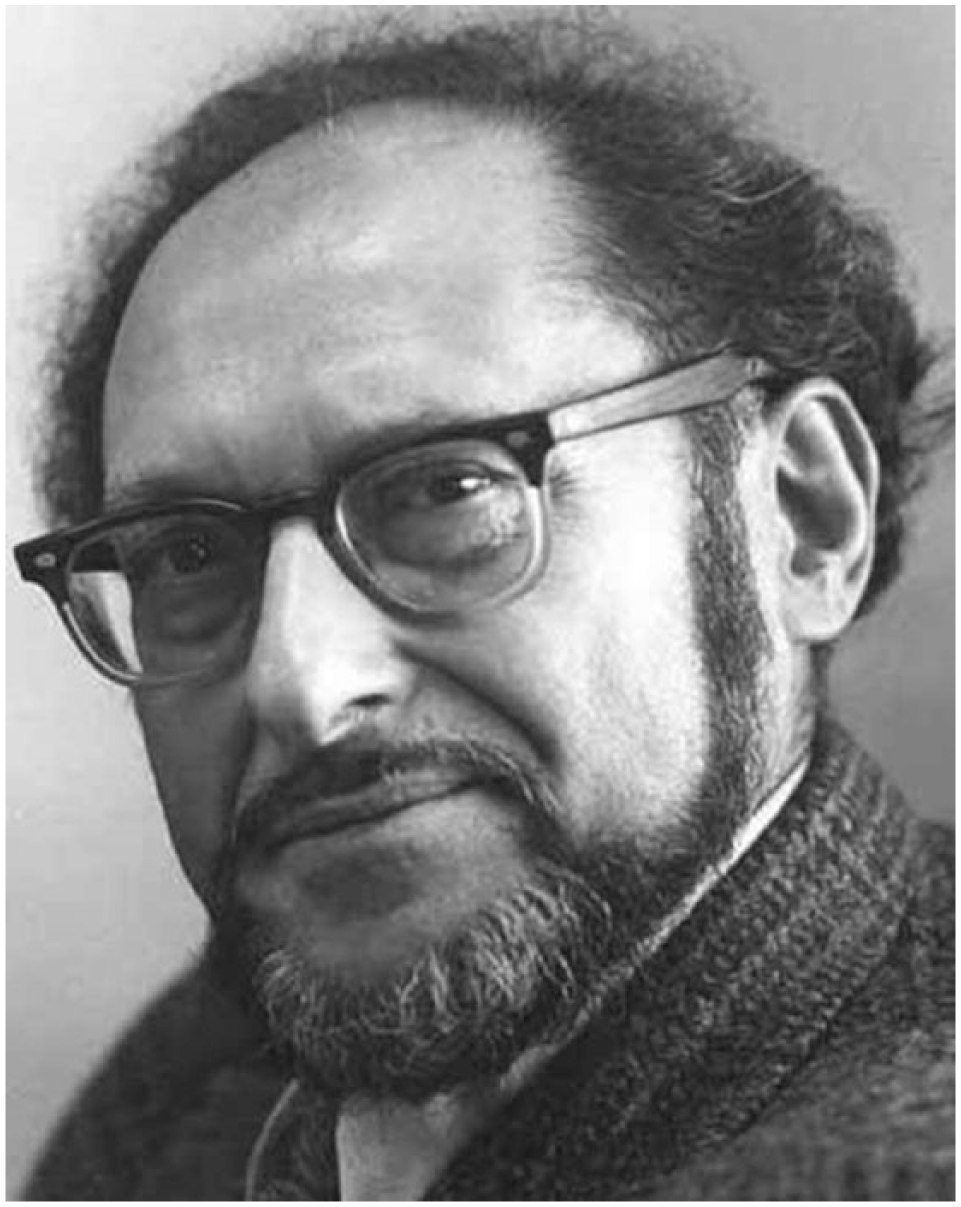
I learned three things from Lloyd Rodwin as a planning educator and mentor. First, “bet on the people.” If Lloyd wanted to make something happen, he searched for someone he could count on to accomplish the task. No matter how appealing an idea or a strategy, he tried to make sure that the right people were involved. Second, “writing is always a process of continuous improvement.” No matter how many times he revised his own writing or someone else’s, he could always find a better way of sharpening the focus or adding a more felicitous phrase. Third, “look for the larger connections or the bigger picture.” Lloyd invariably took a comparative perspective. That is what drove his efforts to make planning education and MIT more of a global enterprise.
Few academic planners have left such a mark on their universities and the study of city and regional planning as Lloyd Rodwin. He was born in 1919 and graduated from City College of New York in 1939 after majoring in history and philosophy. It was there that he developed a love for intellectual debate and Socratic dialogue. After taking a course on housing from Charles Abrams at the New School, he worked in one of the defense housing agencies in Washington, D.C. Lloyd then studied institutional economics at the University of Wisconsin, Madison.
His reading and research in Madison nurtured his vision of city planning—one rather different from what prevailed at the time. Planners of that era were generally trained in the architectural tradition that relied mostly on the tools of design—maps, photos, and land-use plans. Lloyd was among a group of students trained in the social sciences who believed that planners should study the lives of the people in the cities and regions they serve and not learn just the place-making tools at the heart of professional practice at the time. His critique of the British New Towns policy (Rodwin 1956) provoked some stinging reactions from formidable figures in the field—Catherine Bauer Wurster and Lewis Mumford (Newbrun and Oberlander 2000, 230–35). His critics, however, propelled his career by encouraging him to complete an MPA and PhD at Harvard’s Littauer School of Public Administration. This eventually led to his appointment in 1957 as assistant professor of land economics in MIT’s Department of City and Regional Planning.
During his tenure as chair of the MIT department (1969–1973), Lloyd reshaped it—even changing its name to the Department of Urban Studies and Planning (DUSP) to reflect his strong sense that the field required an interdisciplinary research focus closely tied to action on the ground. Before taking on the challenge of revamping planning education at MIT, Lloyd had cofounded (with Martin Meyerson, the twelfth recipient of ACSP’s Distinguished Educator award) the MIT-Harvard Joint Center for Urban Studies, a research institute where scholars like Kevin Lynch, William Alonzo, James Q. Wilson, Edward Banfield, Oscar Handlin, Nathan Glazer, Daniel Patrick Moynihan, and its founders could work together with their doctoral students and generate even more “intellectual capital,” as he would say. For decades, scholars from a dozen departments at Harvard and MIT produced working papers, articles, and a library of books demonstrating that applied social science could help public officials come to grips with the urban and regional problems they faced.
When Lloyd became the chair of DUSP, there were six full-time faculty members, mostly designers and planning practitioners; there are now forty full- and part-time scholars and practitioners. As chair, Lloyd pushed for an expanded doctoral program to develop interdisciplinary scholarship. He believed that most disciplines were more interested in contributing to theory than to practice and that they were all inadequate for solving urban problems. Likewise, he felt that a PhD should be more than an advanced professional degree. He hoped to train new generations of scholars who would add to planning and urban theory. Lloyd established an undergraduate degree program in urban studies at a time when cities were centers of social ferment. He encouraged all his students to understand that urban challenges were not solvable engineering problems and pushed them to delve more deeply into their more complex social dimensions.
Lloyd also created the Special Program in Urban and Regional Studies (SPURS) for urbanists, elected officials, planners, architects, and engineers from the developing world who spend a year at MIT studying policy ideas, issues, and programs that they seek to implement when they return home. SPURS now has 700 alumni from 120 developing countries and just celebrated its fiftieth anniversary. At its inception, it was not common for urban planning schools to incorporate midcareer professionals from around the world; now it is.
Beyond his scholarly pursuits, Lloyd always tried to help those who did not grow up with the skills and know-how of more privileged members of our society. For example, he worked with Mel King, a Boston activist, to create the Community Fellows Program aimed at opening up MIT to community organizers, nonprofit developers, and leaders of communities of color who wanted the same opportunity to tap MIT’s expertise and networks that Lloyd had extended to SPURS fellows. Decades later, the MIT Community Innovators Lab in DUSP continues to foster long-term relationships with neighborhood and community leaders and to collaborate in building local economies, creating wealth in minority communities and fighting for social justice from the edges of power. Mel and Lloyd pressed successfully for the inclusion of more faculty and students of color in the department, and they made it happen, announcing at one point that DUSP had secured enough funding so that 25 percent of each entering MCP class would be students of color.
In expanding DUSP’s faculty, Lloyd broadened its range of disciplinary perspectives beyond architecture and physical planning. He negotiated joint appointments for new faculty in operations research, civil engineering, and the social sciences. He also was careful to foster diverse political perspectives because he believed that faculty and students should be exposed to diverse points of view to stimulate intellectual debate. Today, DUSP plays an important role at MIT, leading campuswide initiatives in big data, sustainability issues, transportation, health, energy, and water policy. Few at MIT question why the planning department in a school of architecture might have competence in all these areas. Fifty years ago, though, Lloyd fought hard to convince MIT’s leadership that resources were required to finance his expansionary agenda.
Lloyd’s scholarly books included his study Housing and Economic Progress, regarding Boston (Rodwin 1961b), and perhaps most important, his comparative study Nations and Cities (Rodwin 1970). Lloyd encouraged the emergence of national urban policies around the world. Building in part on his initial training as a land economist, he believed that government could play an important role in channeling the forces of urbanization and that improving quality of life, particularly for the poor and the disadvantaged, ought to be the objective of such interventions. By the time he wrote Nations and Cities, it was his close analysis of the unique history, geography, culture, economic forces, and politics in each of the places he wrote about that distinguished Lloyd’s recommendations from those of other regional planners and geographers who talked more in terms of universal truths. Lloyd was much more a pragmatist than an idealist. He aimed to make things a little better than they were, particularly for people who couldn’t fend for themselves. And he was strategic about the support he generated to make implementation possible.
Since Lloyd was keen on juxtaposing multiple disciplinary and professional perspectives, he spent much of his intellectual energy convening colleagues he respected and editing stimulating collections of essays around planning challenges and other themes he considered important at different stages of his career. Lloyd’s first collection in this vein, The Future Metropolis (Rodwin 1961a), was sponsored by Daedalus and was reprinted many times. Another important book, Planning Urban Growth and Regional Development: The Experience of the Guayana Program in Venezuela (Rodwin and Associates 1969), grew out of his experience in leading the MIT-Harvard Joint Center’s contract to assist Venezuela’s development corporation in planning a new city to open up the regional hinterlands of Venezuela. Following these two books, Lloyd returned to some of the themes of his teaching: how do different disciplines view the city? He brought a collection of academics he admired to speak to his seminar and edited Cities of the Mind with Robert Hollister (Rodwin and Hollister 1984).
His last two important collections proceeded in similar fashion. In 1996, Lloyd organized a DUSP faculty seminar to consider a range of issues dear to planners, and together with Don Schön, he introduced and edited the collected essays (Rodwin and Schön 1994). For his final collaborative book, Lloyd organized another faculty seminar at DUSP that enabled him to review a range of conflicting perspectives on the evolution of city and regional planning since he had entered the field. Based on papers presented to DUSP colleagues and others read by the seminar participants, together with Bish Sanyal, Lloyd edited The Profession of City Planning (Rodwin and Sanyal 1999).
Lloyd loved intellectual conflict and wanted students to be exposed to competing views on every topic imaginable, most of which he could link to planning issues. When he died, in 1999, at 80 years of age, he was the Ford International Professor Emeritus of Urban Studies. He reshaped part of MIT and the way urban planning is taught; his former students have assumed significant leadership and teaching positions throughout the world.
Footnotes
Declaration of Conflicting Interests
The author declared no potential conflicts of interest with respect to the research, authorship, and/or publication of this article.
Funding
The author received no financial support for the research, authorship, and/or publication of this article.