







Abstract

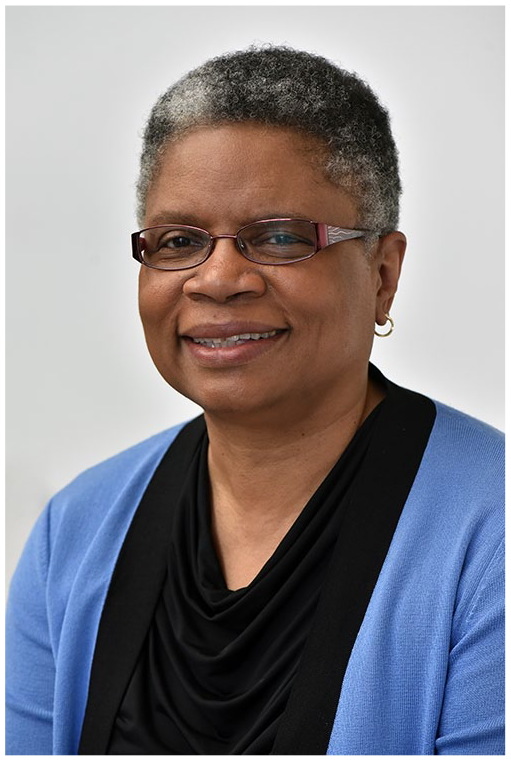
This essay is the thirtieth in a series on the recipients of the Association of Collegiate Schools of Planning Distinguished Educator Award, ACSP’s highest honor. The essays appear in the order the honorees received the award.
As I read the nomination and support letters for June Manning Thomas for this award, I was awed but not surprised by their passion and appreciation. At the award celebration, I watched a line of younger faculty congratulate and thank her and tell her how she had influenced them. Thomas inspires that because of her formidable scholarship focusing on urban planning and racial justice, her teaching and mentoring of urban planning students and junior faculty, and her leadership in the Association of Collegiate Schools of Planning (ACSP) in bringing a greater diversity of people into urban planning and in imbuing the organization with greater focus on racial justice. Reflecting on Thomas’s work is especially fitting as I write this in 2025 when powerful forces focus on rolling back much of this country’s progress toward social justice and appreciation of diversity over the last 60 years. My perspective is that of a long-time friend, co-author, and colleague.
June Manning was born in 1950 in South Carolina. Her father became the president of Claflin College, the state’s oldest historically Black college or university, in 1956, and her mother became a faculty member teaching mathematics and statistics. June grew up on the campus in an environment that helped shelter children from Jim Crow restrictions and threats. But in 1964, she was 1 of 13 Black students who desegregated the all-white Orangeburg High School. She wrote the story of that searing experience of profound ostracism and harassment in Struggling to Learn (Thomas 2021). June’s son, introducing her to speak about her book Redevelopment and Race (Thomas 1997) at our college, recounted his grandmother saying that she washed spit out of June’s sweater many nights. June attended Furman University in Greenville, SC, in that school’s third year of enrolling a small number of Black students, and then transferred to Michigan State University in 1968 to get away from the South to a more accepting environment following the trauma of the 1968 Orangeburg Massacre when police attacked and killed students protesting segregation. She graduated from Michigan State in 1970. June earned her Ph.D. in 1977 at the University of Michigan, and she and her husband Richard Thomas (who also earned his Ph.D. at Michigan) returned to Michigan State as faculty. Her research and practice while at Michigan State earned her the designation as a Fellow of the American Institute of Certified Planners (AICP) in 2003. June joined the University of Michigan’s Urban and Regional Planning Program as Centennial Professor in 2007. In 2016, she became the Mary Frances Berry Distinguished University Professor when she received one of the highest awards the University of Michigan grants to faculty; she remains the only awardee from our college in the history of those professorships.
Through a substantial body of research, Thomas became the preeminent scholar in understanding how urban planning has historically dealt with racial issues and social justice. As a new professor, she knew she wanted to study the connection of urban planning to Black communities and resolved to make that her professional focus. Her major work examined the history of urban planning in Detroit, the subject of Redevelopment and Race and articles (Thomas 1997, 1988, 1990). She showed that urban planners carried out projects that, at best, disregarded the needs of the growing Black population and, at worst, destroyed their neighborhoods and kept Blacks isolated from whites in poor living conditions. Planners who sought to strengthen neighborhoods for all residents failed in their efforts because of the unwillingness of whites to accept Blacks as neighbors. Planners were thus instruments of a racist society, and that racist society defeated planners who sought to work in other ways. Redevelopment and Race won the Paul Davidoff award from ACSP. This remarkable book provides a history with insights into the perspectives of political leaders but also into the views of urban planning professionals over a 50-year period. It remains one of a small group of books that help us understand the role urban planning played in affecting the lives of Blacks who migrated to northern cities.
When it appeared, Thomas’s co-authored book, Detroit: Race and Uneven Development (Darden et al. 1987), offered the best explanation for why this American city faced severe challenges by the 1980s. Thomas, with a historian, an economist, and a geographer, provided an interdisciplinary perspective. The book’s objective, the authors stated, was “to understand the human damage done by inequality in order that we might contribute to the creation of a more just city” (Darden et al. 1987: ix).
Urban Planning and the African American Community (Thomas and Ritzdorf 1997) presented research aiming to make visible the relationship between urban planning and the Black community. Many of the authors used history to show the imprint of urban planning on Blacks’ well-being, a sorry tale of complicity with racist society. Several chapters showed how Blacks planned their neighborhoods when they received no positive assistance from city employees. The volume responded to near silence in the urban planning literature on planning’s role in race relations. The book was the first comprehensive critical assessment of how urban planning interventions affected Black communities across time and space. It became a significant resource for anyone teaching or seeking to understand the connections between race and urban planning. Much scholarship has appeared since, in part due to Thomas’s pioneering work, and planning’s role in race relations has become a richer field in urban planning and urban planning history.
Thomas also addresses race and social equity in urban planning in research on contemporary topics. She has written about the process of applying for Detroit’s Empowerment Zone, showing the lack of coherent federal urban policy; the role of faith-based organizations in neighborhood planning; and Detroit nonprofits’ efforts to strengthen neighborhoods by building housing (Thomas 1995, 2013; Thomas and Blake 1996). Throughout, she addresses the challenges facing disadvantaged and minority people and raises questions about planners’ moral responsibility.
Thomas builds on scholarship to prescribe ways to overcome the problems of the past. Her research shows the need for planners who will confront racial prejudice and institutionalized racism and work on behalf of disadvantaged and minority residents of cities. The next question is how planning educators can reform planning education to produce more of such planners. Thomas laid out prescriptions in “Educating Planners” (Thomas 1996). “Teaching Planning History as a Path to Social Justice” (Thomas 2006) details ways to use history to foster a sense of social consciousness in planning students. Her articles have become a guide for those aspiring to greater diversity and multiculturalism in many urban planning departments. Students in our program praised her planning theory course for guiding them in thinking hard about how they could themselves practice social justice.
Thomas also has practiced as a planner in her university roles. At Michigan State, she was the co-director of the Urban Collaborators Program and the founding co-director of Urban Planning Partnerships; both brought urban planning knowledge to bear on local challenges in numerous smaller cities in Michigan. She co-led Michigan State’s work in the joint University of Michigan-Michigan State-Wayne State Detroit Community Outreach Partnership Center. She taught numerous courses where teams of students developed plans that advanced the work of state and local government officials and of community-based organizations, thus guiding students in completing their first professional planning work with a partner who had a vested interest in it.
Thomas has brought her research and ethical position as a planner to strengthening ACSP and therefore to enriching teaching and practice. She has been involved in diversity and social justice efforts in ACSP for decades. In recent work, she co-founded and served as the founding co-director of the Planners of Color Interest Group (POCIG) to support minority faculty and Ph.D. students in their careers as urban planning scholars and professors and to increase their presence among faculty. That organization is thriving. She co-created a nationwide mentoring program within POCIG and served as a mentor. When the American Institute of Certified Planners revised the AICP code of ethics, she followed their proposed changes and wrote detailed rebuttals to the softening of standards. Her position carried the argument. While she was the president of ACSP, she oversaw the institutionalization of a biennial workshop that she had co-designed to support junior faculty of color.
Nationally and locally, she accepted most invitations to speak or to contribute a chapter to a new volume. When I asked her how she managed to do so much, she told me she was afraid that if she did not, the organizers would leave out the topic of racial, class, and social justice, and she felt she had to make sure the topic was on the agenda.
Thomas has made a strong impression in how she advocates for change as well as through the substance of her arguments. Letters supporting her nomination for this award mentioned her calm, logical, evidence-based arguments. She also works transparently; she does not buttonhole people in hallways to politic for her positions. Thomas led the strategic planning process for Detroit’s application for federal Empowerment Zone designation in 1994. The director of Detroit’s planning department told a planners’ gathering that after a lengthy session without progress, June slammed her notebook on the table. The room became silent. No one had seen June lose her calm; the surprise made people pause, rethink, and find agreement. Many who have been part of governance with June in ACSP or in our departments would understand the shock of that moment.
Thomas has articulated her thinking on bringing about positive change. For instance, in Urban Planning and the African American Community, she and Marsha Ritzdorf called for remaking planning schools into environments of “cooperation and inclusion” to provide meaningful solutions for planners in “fulfilling their ethical obligations to others” (Thomas and Ritzdorf 1997, 18). In Struggling to Learn, Thomas discussed “constructive resistance,” which “implies a higher moral framework and a visionary process of building a better future, a step above simple resistance” (Thomas 2021: 8). That moral framework and sense of visionary process are fully evident in Thomas’s life’s work of making urban planning scholarship, teaching, and practice more inclusive and socially just.
Footnotes
Declaration of Conflicting Interests
The author(s) declared no potential conflicts of interest with respect to the research, authorship, and/or publication of this article.
Funding
The author(s) received no financial support for the research, authorship, and/or publication of this article.
