






Abstract
Urban greenspaces are vital for enhancing well-being, particularly during public health crises. This study investigates the effects of indoor greenery, green window views, and outdoor greenspaces on subjective well-being in Shanghai during COVID-19 confinement transitions (N = 3,010). High-quality outdoor greenspace and green window views enhanced well-being during confinement but diminished afterward. Inside-community greenspaces supported well-being post-confinement, while outside-community greenspaces benefited affluent residents but were less effective for low-income groups. Age-specific differences further shaped greenspace benefits. Findings support planning strategies to foster community self-organizing initiatives, emphasizing improved access and quality to enhance well-being during crises and promote resilience in urban living.
Keywords
Introduction
Urban greenspaces (UGS), including outdoor parks, gardens, tree-lined streets, and indoor greenspaces, are integral parts of urban landscapes (Fonseca, Paschoalino, and Silva 2023; Isabella et al. 2022). These spaces contribute significantly to environmental quality, including air purification and climate regulation, while enhancing human health and well-being (de Bell et al. 2020; Dennis and James 2017; Twohig-Bennett and Jones 2018). Extensive research has demonstrated that greenspaces can alleviate stress, reduce depressive symptoms, and foster social connections, making them indispensable tools for mitigating the growing mental health challenges associated with urbanization (van den Berg et al. 2015).
The COVID-19 pandemic significantly altered the residents’ interactions with UGS as lockdowns and confinement measures restricted access to outdoor spaces and altered daily routines. These restrictions intensified mental health challenges for urban populations, exacerbating the effects of social isolation, economic uncertainty, and fear of infection (Dzhambov et al. 2021; Rajkumar 2020). However, greenspaces emerged as essential resources during this crisis, providing not only opportunities for physical activity but also psychological buffers against the stress of the pandemic (Marconi, Perelman, and Salgado 2022). This dual role underscores the potential of UGS to support public health during both emergencies and recovery phases.
Despite growing recognition of the importance of UGS, critical gaps in understanding persist. While prior studies have highlighted the general benefits of outdoor greenspaces, limited attention has been paid to nature exposure accessible from home, including indoor greenery and green window views, both of which became particularly relevant during lockdowns when physical access to outdoor spaces was restricted (Dennis and James 2017; L. Wu et al. 2026). Moreover, the benefits of greenspaces are not uniform; they are shaped by contextual factors such as community type and sociodemographic characteristics. Yet few studies have investigated how these factors moderate the relationship between greenspaces and well-being, particularly during the transition from confinement to reopening periods. Addressing these gaps is essential for designing equitable and targeted urban planning interventions that cater to the diverse needs of urban populations.
This study investigates the influence of indoor and outdoor greenspaces on subjective well-being during the critical transition from home confinement in Shanghai, China. Three research questions guided our investigation: (1) How does exposure to indoor and outdoor greenspaces affect subjective well-being? (2) How do these effects vary before and after the end of home confinement? (3) How do community and sociodemographic factors moderate these relationships? Using data from 3,010 respondents collected through an online survey and analyzed with a sequential interaction ordinary least squares (OLS) model, this research provides insights into the dynamic interplay between greenspaces and subjective well-being. Our findings offer practical insights for urban planners, community managers, and self-organizers, highlighting the importance of greenspaces as essential infrastructure for supporting resilience and enhancing well-being during public health crises. As cities continue to grapple with the challenges of urbanization and global health threats, this research underscores the need for greenspace planning that prioritizes accessibility, equity, and subjective well-being.
Literature Review
The Role of Greenspaces in Enhancing Subjective Well-Being
UGS are increasingly recognized for their critical role in enhancing human health and well-being. A growing body of research highlights their psychological and social benefits, linking greenspaces to stress reduction, decreased depressive symptoms, and improved social cohesion (de Bell et al. 2020; Poortinga et al. 2021; Ribeiro et al. 2021; Twohig-Bennett and Jones 2018). These benefits align with broader public health research, which underscores the importance of natural environments in fostering resilience, improving mental health, and enhancing overall quality of life in urban populations (de Bell et al. 2020; Fernandez Nunez et al. 2022; Poortinga et al. 2021). As cities grow denser and more complex, the integration of greenspaces into urban planning has become essential for addressing mental health disparities and enhancing livability (de Bell et al. 2020; Dennis and James 2017; Zhang et al. 2022).
Outdoor greenspaces have been the primary focus of much of the existing literature, demonstrating consistent stress-buffering effects across diverse age groups and urban contexts. For instance, greenspaces have been shown to alleviate psychological distress among children (Wells and Evans 2003), reduce job-related stress in urban workers (Leather et al. 1998), and foster stronger social ties within communities (Fernandez Nunez et al. 2022; Gómez-Varo et al. 2023; Wells and Evans 2003). The accessibility and design of outdoor greenspaces have also been linked to increased physical activity (Lin et al. 2023; L. Wu et al. 2024), further contributing to improved mental and physical health outcomes. In addition to their direct health benefits, greenspaces contribute to a sense of community and belonging, especially in urban settings (Csomós et al. 2023; Loukaitou-Sideris 1995). Well-designed greenspaces encourage positive social interactions, reduce urban noise, and create opportunities for cultural and recreational activities, enhancing urban livability and social well-being (Gómez-Varo et al. 2023). This multidimensional role positions greenspaces as crucial tools for addressing the challenges of urbanization and improving the well-being of residents across different demographic groups (Abraham Cottagiri et al. 2022; Poortinga et al. 2021).
In addition to outdoor greenspaces, indoor greenery and green window views are becoming important contributors to mental health and well-being (Dennis and James 2017; L. Wu, Zhou, et al. 2026). Research has demonstrated that exposure to indoor greenery evokes positive emotions, reduces anxiety, and enhances cognitive functioning in specific settings such as hospitals (Ulrich 1984), classrooms (Lee et al. 2015), and workplaces (Evensen et al. 2017). These benefits highlight the potential of indoor greenspaces to complement outdoor environments, particularly in urban areas where outdoor access may be constrained by limited space or other factors (Contini et al. 2022). By providing opportunities for relaxation, restoration, and connection with nature, greenspaces, both indoor and outdoor, are vital resources for enhancing subjective well-being.
Greenspaces during the Pandemic: New Perspectives and Research Gaps
The COVID-19 pandemic reshaped the discourse on greenspaces, highlighting their role as vital well-being resources under conditions of restricted mobility and heightened stress. Lockdowns and mobility restrictions significantly limited access to outdoor greenspaces, prompting a shift in how people interacted with their environments. Outdoor greenspaces became essential refuges for physical activity and psychological relief, but their benefits were heavily influenced by accessibility, quality, and perceived safety (Reid et al. 2022; Zhang et al. 2022).
Indoor greenery and green window views were prominent during this period when outdoor access was restricted. Studies indicated that indoor greenery and residential green visibility were effective in mitigating negative emotional states, reducing depressive symptoms, and enhancing emotional stability during lockdowns (Perez-Urrestarazu et al. 2021; Spano et al. 2021; Zhao et al. 2023). These findings emphasized the role of indoor greenspaces in supporting mental health when outdoor environments were inaccessible, providing new perspectives on how greenspaces can complement each other under different conditions.
Despite the growing recognition of greenspaces during the pandemic, significant research gaps remain. The transition from confinement to post-confinement phases presents unique challenges, as shifting safety perceptions, social norms, and behavioral patterns redefine interactions with greenspaces. Few studies have examined how these changes affect subjective well-being or how greenspace usage varies across sociodemographic and community contexts during these transitional periods. Additionally, comparative research on indoor and outdoor greenspaces remains limited. While outdoor greenspaces are often studied at broader spatial and temporal scales, indoor greenspaces are typically investigated in isolated settings such as offices or hospitals, with limited attention to residential contexts (Evensen et al. 2017; Nieberler-Walker et al. 2023; van den Berg et al. 2015). Understanding how these different forms of nature exposure complement each other is critical for developing comprehensive urban green infrastructures. Outdoor greenspace design and landscaping that enhances green window views fall within planning strategies, while indoor greenery adoption, though primarily a household decision, can be supported through community programs and incentive policies.
Materials and Methods
Study Area
The study was conducted in Shanghai (Figure 1), a densely populated metropolis in China with a total administrative area of 6,340 km2 and a built-up urban area of 1,242 km2, with a population of 24.76 million in 2022 (Shanghai Municipal Statistics Bureau 2023). Renowned as China’s economic hub and a symbol of rapid urbanization, the city features a diverse population, comprising both long-term residents and a significant proportion of migrant workers, who constitute over 40 percent of the total population (Shanghai Municipal Statistics Bureau 2023). The city exhibits a balanced gender distribution and a rapidly aging demographic, with nearly 22 percent of residents aged sixty and older (Shanghai Municipal Statistics Bureau 2023). Shanghai is striving to become an ecologically sustainable and livable city (Fan et al. 2017; Shanghai Municipal Government 2017). The city boasts an extensive network of UGS, including 439 parks averaging 52.35 hectares each, which collectively attracted over twenty million annual visitors before the COVID-19 pandemic (Shanghai Municipal Bureau of Greening and City Appearance Management 2023). The city provides 9.3 square meters of park area per capita and has consistently added at least 1,000 hectares of greenspaces and 40,000 street trees annually since 2000 (Z. Wu et al. 2019). By 2022, each resident shared over seventy square meters of greenspace (Shanghai Municipal Bureau of Greening and City Appearance Management 2023; Shanghai Municipal Statistics Bureau 2023).
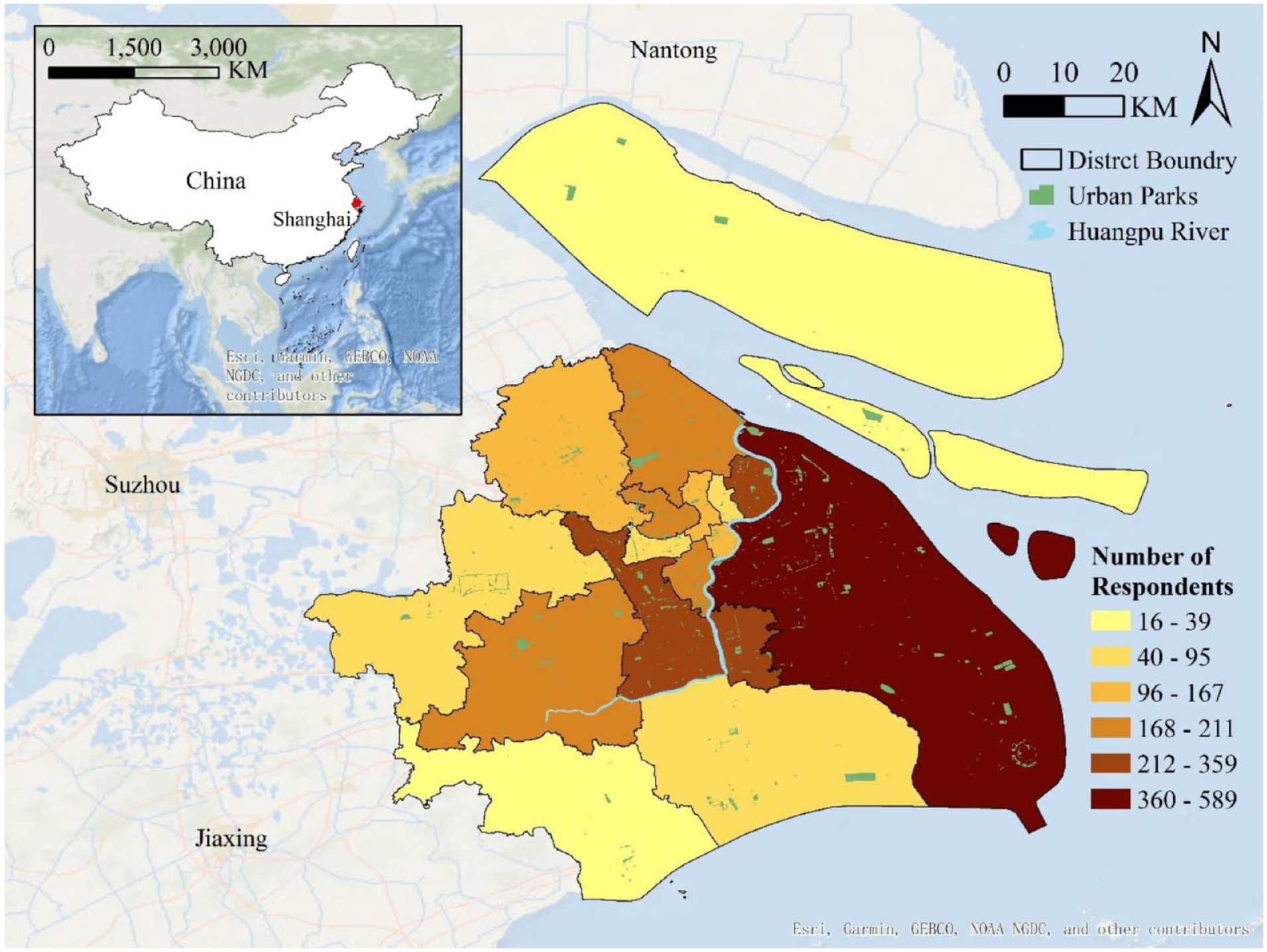
Study area, greenspaces, and distribution of survey respondents.
Since the COVID-19 outbreak in 2019, complying with China’s stringent containment policy (Leung et al. 2023), Shanghai implemented various measures to control virus transmission, including mandatory nucleic acid testing for accessing public amenities, including greenspaces, along with contact tracing and isolation of infected individuals. In 2022, the city underwent several pandemic outbreaks, resulting in varying degrees of lockdowns, including a citywide lockdown from April to June. A significant policy change occurred on December 7, with Shanghai easing the rigid restrictions (Shanghai Municipal Government 2022), marking an end of strict COVID-19 control and reinstating unrestricted access to greenspaces.
Data and Analytic Framework
Online Survey
We conducted an online survey in Shanghai from October 11 to December 29, 2022, spanning the period of easing COVID-19 policies, capturing residents’ changing interactions with greenspaces from a stricter lockdown to relaxed measures after December 7. This continuous data collection allowed us to document the dynamic shifts in greenspace usage during this period. Responses were categorized based on completion dates, with December 7 serving as the breakpoint to distinguish between the periods before and after policy relaxation. A total of 3,010 validated responses were collected, comprising 2,373 responses before and 637 after the policy changes.
Participants were recruited through a professional online survey platform, targeting residents who had lived in Shanghai for at least six months and were over the age of eighteen. This method was selected due to its ability to efficiently access a broad pool of respondents while ensuring data quality and compliance with ethical standards. The prevalence of gated communities in Shanghai, which posed logistical challenges for in-person data collection, further reinforced the practicality of an online approach (Chen and Guo 2020; L. Wu et al. 2024). The survey’s participant selection followed a quota sampling method, ensuring diverse representation across demographics, including gender, age, sub-districts, and education levels.
The survey was designed based on established frameworks from prior studies (de Bell et al. 2020; Han and Ruan 2019) and tailored to the Shanghai context to ensure relevance and comprehensiveness. It consisted of seven sections: demographic (eleven questions), employment (three questions), housing conditions (five questions), lifestyle (four questions), health status (twenty-five questions), pandemic circumstances (four questions), and greenspace usage (thirty-three questions). Each section was carefully structured to align with the study’s objectives, focusing on factors influencing greenspace interactions and subjective well-being during the COVID-19 transition.
The survey was designed to take approximately fifteen to twenty minutes to complete. Before its full implementation, a pilot test involving fifty respondents was conducted to validate the questions and refine their clarity and structure. To ensure data quality, several measures were employed, including logic checks, rapid completion flags, and a “red herring” question to identify and exclude inattentive responses. Monetary incentives were offered to encourage participation and enhance data reliability.
The final dataset achieved an even gender distribution, with age groups of 35 percent (eighteen to twenty-nine), 45 percent (thirty to forty-nine), and 20 percent (fifty and above). Approximately half of the respondents had a high school education or lower, while the other half held a college degree or higher. Geographically, respondents were distributed across Shanghai’s urban sub-districts, as illustrated in Figure 1. A comparison between the sample distribution and Shanghai’s census population by district is provided in Supplementary Table S1, indicating reasonable geographic representativeness.
Outcome Variable, Key Variables, and Covariates
The primary outcome variable is individual subjective well-being, measured by the ten-item Center for Epidemiologic Studies Depression Scale (CES-D-10), a widely recognized tool for depression diagnosis and validated in the Chinese context (Z.-H. Wang et al. 2020). The CES-D-10 uses a ten-item Likert-type scale to measure depressive symptoms over the past week, with higher cumulative scores indicating more severe symptoms.
The nine primary independent variables include various measures of nature exposure. Indoor greenery is measured by the number of houseplants (Supplementary Material question a). Green window views, representing visual access to outdoor greenery from home, are measured by the extent of visible greenery from windows (question b). Additionally, the visibility of waterbodies is also considered to provide a more comprehensive evaluation of exposure to natural elements (question c) (Zhang et al. 2023). Outdoor greenspaces are divided into two subcategories: inside-community greenspaces (question d-f) and outside-community greenspaces (question g-i). Inside-community greenspaces are located within the boundaries of residential communities and are accessible exclusively to residents. Outside-community greenspaces are publicly accessible spaces outside residential communities, which during the study period required a negative nucleic acid test for entry. These definitions were clearly provided in the survey, and exposure was assessed through frequency of visits, visit duration, and perceived quality.
Community type and sociodemographic factors, including age and gender, were also considered. Community types included old urban areas, single or mixed unit communities (Danwei), affordable housing, commercial residential areas, high-end residential sectors (villas), resettlement housing, and communities transformed from urban villages. These types, each with distinct characteristics, were expected to influence the frequency, duration, and quality of greenspace exposure. For instance, high-end residential sectors typically provide more abundant and higher quality inside-community greenspaces compared to older urban areas. Age was grouped into three cohorts (eighteen to twenty-nine, thirty to forty-nine, and fifty and above), and gender differences were also analyzed.
To capture lifestyle, housing, and socioeconomic conditions, the survey included variables informed by prior studies (Contini et al. 2022; W. Wang and Wang 2021). Binary factors assessed marital status, employment status, childcare responsibilities, and the household registration system (Hukou), which is crucial for accessing services and welfare in China. Additional variables included length of residence in Shanghai (years), perceived health status, and lifestyle behaviors such as smoking, alcohol consumption, and exercise frequency. Other factors included remote working hours, education level, and 2021 household income. Housing-related variables, such as property price, size (m2), and occupancy, were also analyzed.
Analytical Methods
Figure 2 presents the integration of data and variables into the analytical framework, highlighting the process from data collection and variable identification to their application in the analytic methods.
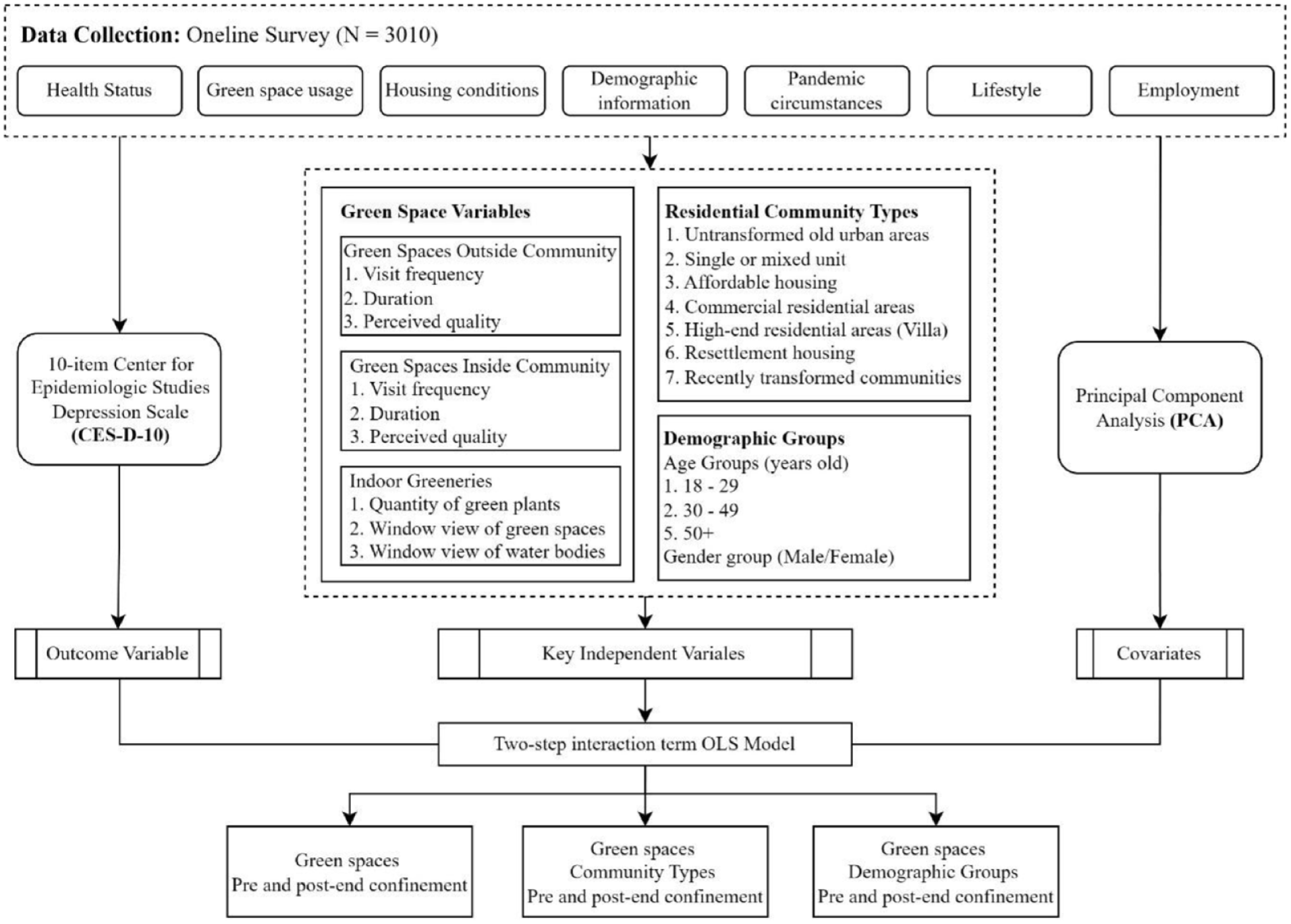
Analytic framework.
Our analytical strategy proceeds in two stages. The first stage examines whether the relationship between greenspace exposure and subjective well-being differed before and after confinement ended. The second stage extends this analysis to assess whether these temporal patterns varied across community types and sociodemographic groups. This sequential approach allows us to isolate the moderating effects of the policy transition and identify subgroups for whom greenspace benefits were amplified or diminished.
Before regression analyses, we implemented principal component analysis (PCA) to streamline our high-dimensional dataset. The PCA facilitated the extraction of principal components that accounted for a significant proportion of the variance, thereby simplifying our dataset, and focusing our analysis on the most influential factors. Following PCA, we conducted a multicollinearity check among main variables, with a maximum variance inflation factor (VIF) of 8.71, within the suggested threshold of 10, thus substantiating the validity of our subsequent analysis.
In the first stage, we formulate a two-way interaction model incorporating greenspace exposure and a binary indicator of whether confinement has ended. The interaction term captures how the effect of greenspace exposure shifts once confinement ends, making it possible to distinguish the differential impact across the two time periods. For example, a significant interaction would indicate that the well-being benefit of visiting outside-community greenspaces four times per week during confinement differed from the benefit of the same visit frequency after confinement ended. In the second stage, we extend the model to a three-way interaction that incorporates community type or sociodemographic group, allowing us to identify how greenspace effects on well-being vary across both time and population subgroups. A significant three-way interaction would indicate, for example, that the post-confinement shift in greenspace benefits differed between residents of high-end communities and those in older urban areas, or between younger and older adults. Full model specifications, including equations and coefficient definitions, are provided in Supplementary Material Section S1.
We examine nine indicators of greenspace exposure to capture the multidimensional nature of engagement with indoor and outdoor environments. For outdoor greenspaces, we measure three attributes (1) frequency of visits, (2) duration of visits, and (3) perceived quality, in two different settings, inside-community and outside-community. This yields six distinct variables for outdoor green exposure. For nature exposure accessible from home, we assess (1) the number of green plants at home, (2) the extent of greenery views, and (3) the extent of water-body views. Disaggregating exposure into these nine measures allows us to more precisely evaluate how different dimensions of greenspace contribute to subjective well-being.
Results
Summary Statistics
Table 1 presents summary statistics for subjective well-being (CES-D score), greenspace variables, key sociodemographic characteristics, and community types. The mean CES-D-10 score is 17.925 (SD = 5.030), ranging from 10 to 40, echoing earlier studies (Z.-H. Wang et al. 2020). Average weekly visits to inside-community and outside-community greenspaces are approximately 1.725 and 1.849, respectively, with greater variation in the latter. Longer visit durations were observed for outside-community greenspaces (2.094) compared to those within (1.095), but higher perceived quality for inside-community greenspaces (2.455) versus outside-community (2.150). Indoor greenery, measured by the number of houseplants, averages 2.061, while green window views, measured by visibility of greenery from windows, averages 2.927. Most respondents reside in commercial residential quarters (65.4%), followed by 12.8 percent in old urban areas, and smaller percentages in other types of communities.
Summary Statistics of Key Variables.
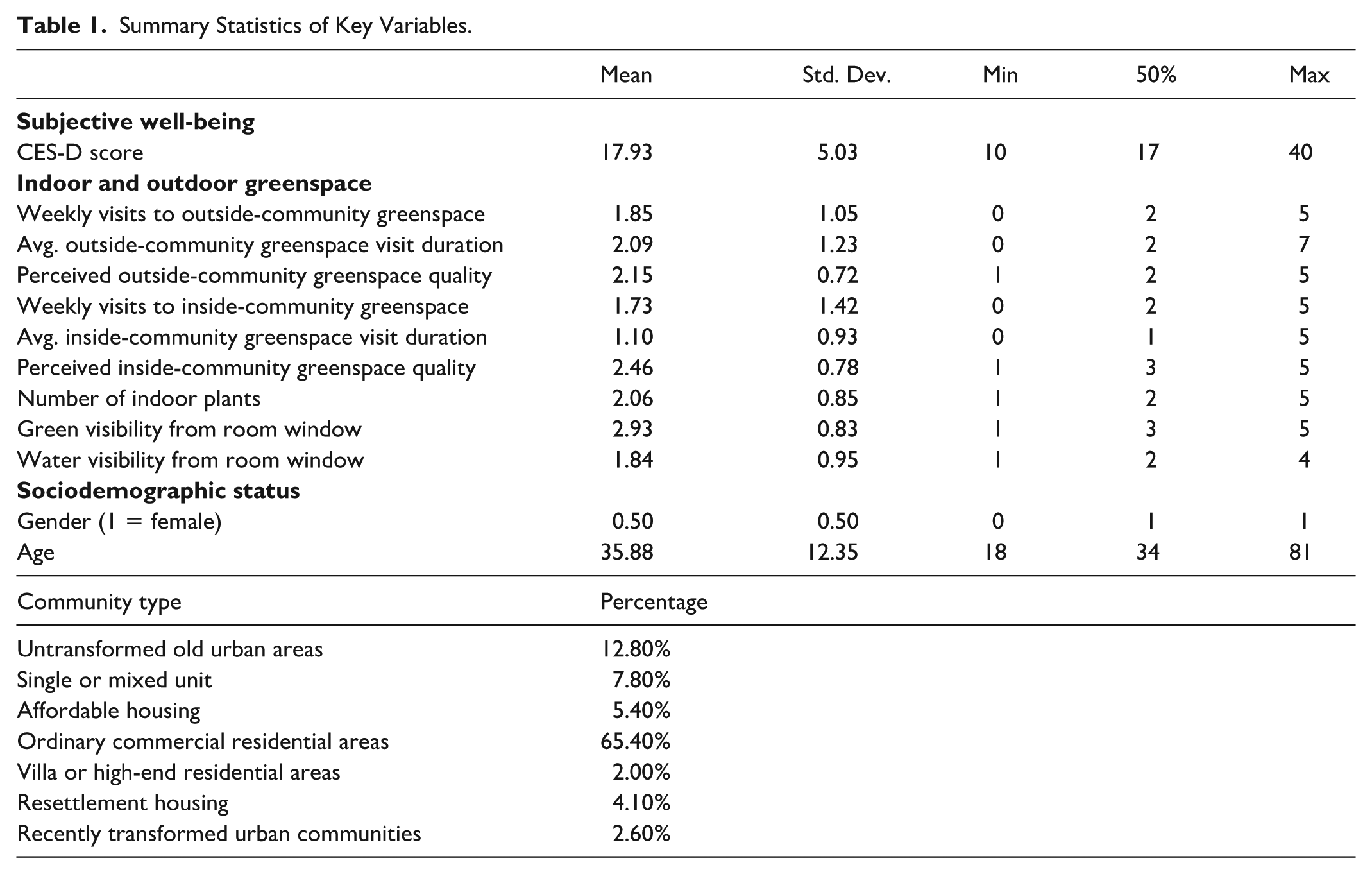
Detailed statistics for all variables are presented in Supplementary Table S2, while descriptive statistics by community type, gender, and age subgroups are provided in Supplementary Tables S3, S4, and S5, respectively. Statistics before and after the end of confinement are summarized in Supplementary Table S6. PCA on the covariates identified seven dimensions, explaining approximately 73.6 percent of the total variance, with variable loadings detailed in Supplementary Table S7.
Influence of Greenspaces on Subjective Well-Being before and after Confinement Ends
Our initial analysis, shown in Figure 3 and Supplementary Table S8, revealed notable shifts in how greenspaces influenced subjective well-being before and after confinement. Prior to the end of confinement, higher perceived quality of outdoor greenspaces and greater visibility of greenery from home windows were associated with better subjective well-being. After confinement ended, only more frequent visits to inside-community greenspaces showed a marginally significant association with better subjective well-being (Figure 3D). Other greenspace variables, including exposure to outside-community greenspaces and indoor greenspaces, did not show significant associations during this period.
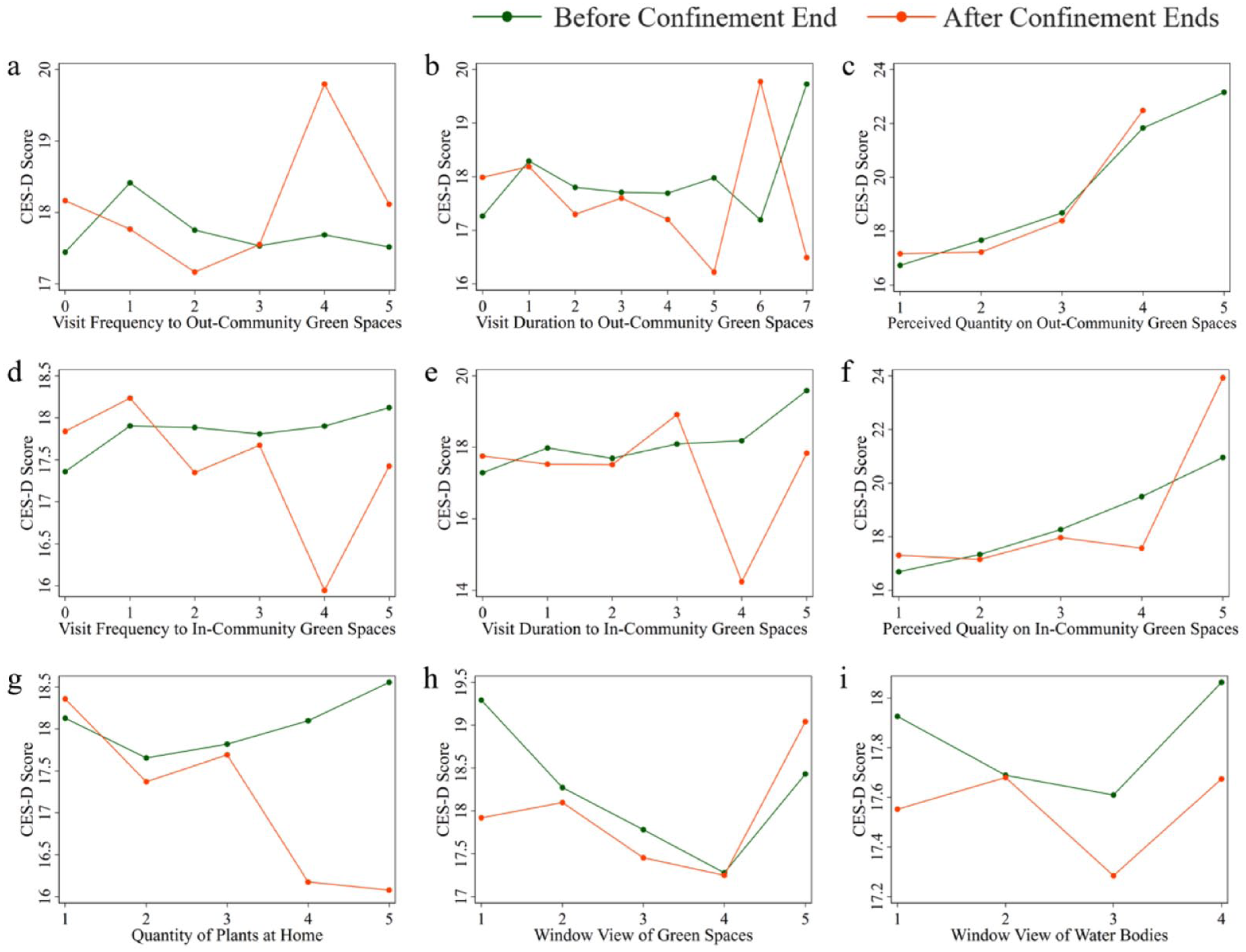
The influence of greenspaces on subjective well-being before and after COVID-19 confinement. (a–c) Outside-community greenspaces, by frequency of visits, duration of visits, and perceived quality. (d–f) Inside-community greenspaces, by the same three measures in the same order. (g) Number of indoor plants. (h) Greenery visible from the room window. (i) Water bodies visible from the room window. The vertical axis is the CES-D-10 score, where higher values indicate lower subjective well-being; green lines show the period before confinement ended, orange lines the period after. Vertical axis scales differ across panels.
These findings suggest that the value of greenspaces for well-being shifted alongside changes in mobility restrictions. During confinement, when outdoor access was limited, greenspace quality and visual connections to nature from home played a more prominent role. After restrictions lifted, physical engagement with nearby inside-community greenspaces became more salient.
Moderation Effects of Community Type on Subjective Well-Being Benefits of Greenspaces
Figure 4 and Supplementary Table S9 reveal how community type moderates the relationship between greenspace exposure and subjective well-being after confinement. In high-end communities, higher visit frequency and longer durations in outside-community greenspaces were associated with better subjective well-being (Figure 4A and B). Conversely, in old urban areas, longer visit durations to outside-community greenspaces were marginally associated with worse subjective well-being (Figure 4C), and longer visit durations to inside-community greenspaces were associated with worse subjective well-being (Figure 4D). Regarding indoor greenspaces, an increase in the number of home green plants in high-end communities was marginally associated with better subjective well-being (Figure 4E).
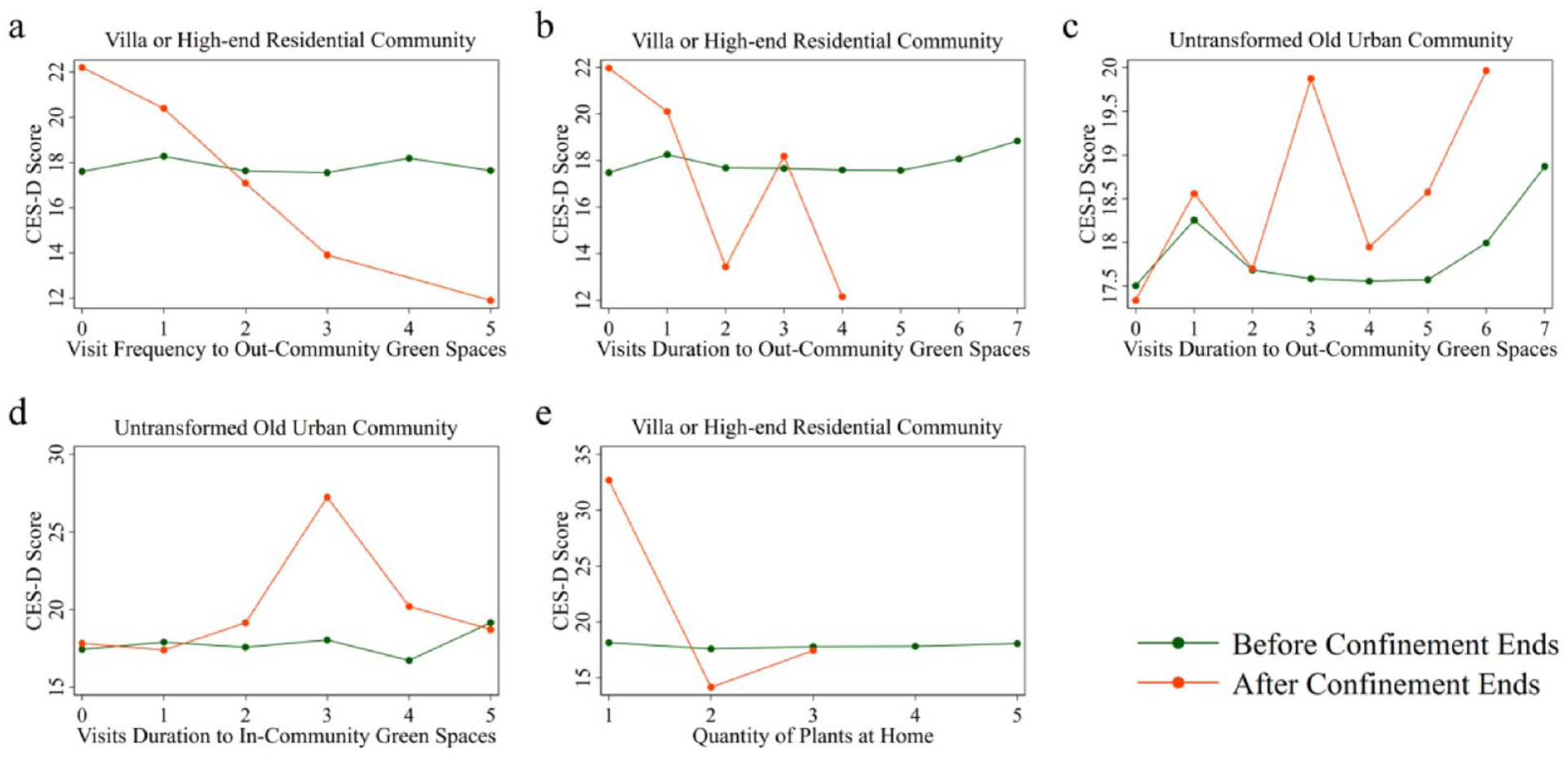
Impact of greenspaces on subjective well-being in various communities. (a) High-end residential (villa) communities, frequency of visits to outside-community greenspaces. (b) The same communities, duration of visits to outside-community greenspaces. (c) Untransformed old urban communities, duration of visits to outside-community greenspaces. (d) The same communities, duration of visits to inside-community greenspaces. (e) High-end residential (villa) communities, number of indoor plants. Only combinations with significant or marginally significant interactions are shown. The vertical axis is the CES-D-10 score, where higher values indicate lower subjective well-being; green lines show the period before confinement ended, orange lines the period after. Vertical axis scales differ across panels.
These patterns indicate that greenspace benefits are contingent on neighborhood context and on the structural conditions that shape greenspace exposure. In high-end communities, where residents typically have greater capacity to access less-crowded peripheral parks and to invest in diverse home plants, outside-community visits and indoor greenery translated into measurable well-being gains during the transition. By contrast, in older urban areas, where high population density and aging greenspace infrastructure are common, longer visits to both inside-community and outside-community greenspaces may have exposed residents to overcrowding and substandard environments rather than restoration. Future research employing longitudinal designs could test whether these community-level mechanisms, including capacity advantage, overcrowding strain, and investment capacity, operate as hypothesized.
Influence of Sociodemographic Subgroups on Subjective Well-Being Benefits of Greenspaces
Figure 5 and Supplementary Table S10 illustrate the differential effects of greenspace engagement on subjective well-being across age groups after confinement. No significant differences were observed among gender subgroups. Before confinement ended, no significant associations were observed between subjective well-being and visits to outside-community greenspaces for the eighteen to twenty-nine and thirty to forty-nine age groups. After confinement, among the eighteen to twenty-nine age group, up to four weekly visits to outside-community greenspaces were associated with better subjective well-being, while more frequent visits were associated with worse subjective well-being. For the thirty to forty-nine age group, three to six weekly visits to outside-community greenspaces were associated with worse subjective well-being. In contrast, more frequent visits to inside-community greenspaces among the fifty and above age group were associated with better subjective well-being.
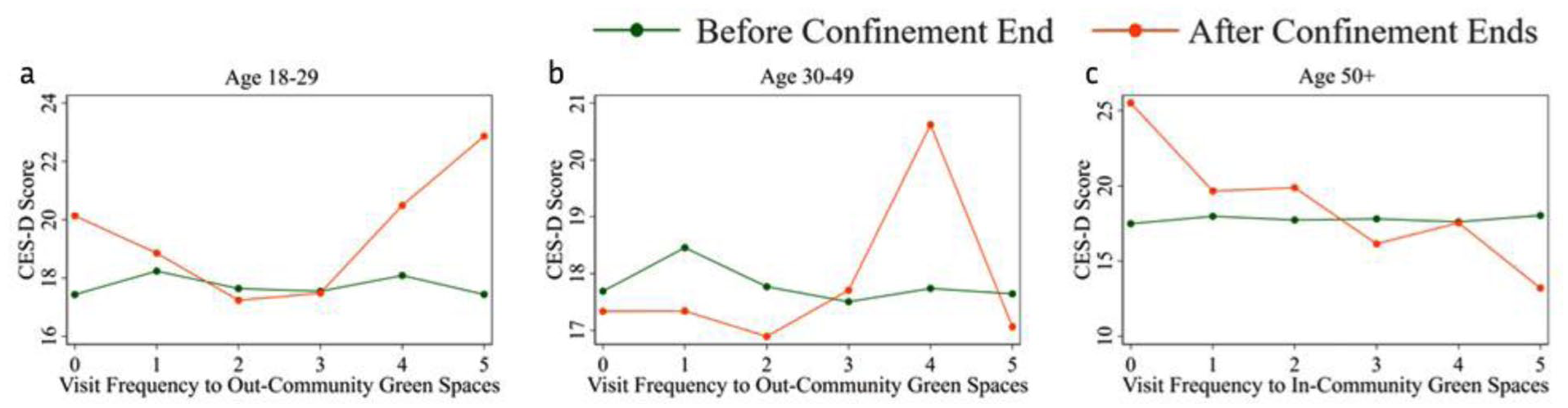
Impact of greenspaces on subjective well-being among different age groups. (a) Residents aged 18 to 29, frequency of visits to outside-community greenspaces. (b) Residents aged 30 to 49, the same measure. (c) Residents aged 50 and above, frequency of visits to inside-community greenspaces. Only combinations with significant interactions are shown. The vertical axis is the CES-D-10 score, where higher values indicate lower subjective well-being; green lines show the period before confinement ended, orange lines the period after. Vertical axis scales differ across panels.
These age-related variations highlight how life stage shapes greenspace engagement and its outcomes. Younger adults may benefit from moderate outdoor engagement but experience diminishing returns at higher frequencies, potentially due to lingering post-confinement anxieties. Middle-aged residents face competing professional and family demands that may limit the restorative potential of greenspace visits. Older adults derive consistent benefits from accessible, familiar inside-community spaces.
Synthesis of Findings
The results reveal three overarching patterns. First, the transition from confinement to post-confinement marked a shift in which dimensions of greenspace exposure were associated with subjective well-being. The interaction tests indicated that the associations of perceived quality of outdoor greenspaces and green window views with subjective well-being unchanged after confinement, while more frequent visits to inside-community greenspaces emerged as a significant correlate of better subjective well-being only in the post-confinement period.
Second, community context shaped greenspace benefits in distinct ways. In high-end communities, more frequent and longer visits to outside-community greenspaces were associated with better subjective well-being, and indoor greenery was likewise associated with better subjective well-being. In older urban areas, longer visits to both outside-community and inside-community greenspaces were associated with worse subjective well-being.
Third, age moderated greenspace effects. Younger adults benefited from moderate outside-community greenspace visits, though more frequent visits were associated with worse subjective well-being. Among middle-aged residents, more frequent greenspace visits were associated with worse subjective well-being. Older adults consistently derived better subjective well-being from inside-community greenspaces.
Discussion
Subjective Well-Being Benefits of Indoor and Outdoor Greenspaces
Our findings reveal nuanced insights into the role of greenspaces in enhancing subjective well-being during and after COVID-19 confinement. While previous studies have established that higher quality outside-community greenspaces positively affect well-being (Isabella et al. 2022; Lin et al. 2023; Reid, Rieves, and Carlson 2022; W. Wang and Wang 2021; Zhang et al. 2022, 2023), our results show that this benefit not increased post-confinement. Public apprehension about infection risks likely muted the psychological benefits of these spaces during the transition period (Rajkumar 2020; Ribeiro et al. 2021), suggesting that perceived safety is a critical mediator of greenspace benefits, particularly in times of health crises.
Inside-community greenspaces showed a distinct pattern. Their quality was positively associated with subjective well-being during confinement, but this effect also unchanged afterward. Intriguingly, more frequent visits to inside-community greenspaces were significantly associated with better subjective well-being post-confinement. During confinement, overcrowding within the community due to “zero-COVID” policy restrictions (Lin et al. 2023; Zhang et al. 2023) might have limited the benefits of these visits. After confinement, residents who feared contact with outsiders (Ribeiro et al. 2021) may have felt safer in inside-community greenspaces, thereby enhancing their subjective well-being.
Longer visit durations to both inside-community and outside-community greenspaces were not associated with better well-being, which contrasts with previous studies (Lin et al. 2023). Instead, our results emphasize the critical role of perceived safety and psychological comfort over quantitative measures like visit duration. This insight contributes to a growing body of literature suggesting that qualitative aspects of greenspace experiences may have a more profound impact on well-being than previously recognized (Dzhambov et al. 2021; Labib et al. 2022; Theodorou et al. 2021; Zhou et al. 2026).
Regarding indoor greenspaces, the number of plants showed no significant association with well-being during or after confinement. This finding may reflect the limited impact of passive exposure to greenery without active engagement (Ribeiro et al. 2021; Theodorou et al. 2021). Conversely, green window views were associated with better subjective well-being during confinement but the association became inconclusive afterward. The resumption of outdoor activities and the emergence of new stressors, such as work and social obligations, may have diminished the benefits of green window views (Zhang et al. 2022).
Heterogeneous Subjective Well-Being Benefits in Different Communities
Our findings highlight distinct variations in the relationship between greenspace engagement and subjective well-being across community types during the transition from confinement. In wealthier communities, the relaxation of confinement, coupled with more frequent and longer visits to outside-community greenspaces, and the presence of indoor green plants, was associated with better subjective well-being. Several factors may contribute to this pattern. Affluent residents might have greater social support and resilience, facilitating their comfort and sense of security in public spaces like parks, even during crises (Csomós et al. 2023; He, Wu and Wang 2020). This increased sense of preparedness and ability to navigate risks may help alleviate fears of infection. Additionally, wealthier residents may have the capacity to access larger, peripheral parks with fewer visitors, as reflected in the increased popularity of camping in Shanghai’s peri-urban parks (Gu, Li and Chand 2020), a phenomenon also observed in other cities worldwide. Regarding indoor greenspaces, affluent residents may invest in diverse plant species that vary in scent, color, and foliage, which are linked to higher satisfaction and well-being (Han and Ruan 2019). This socioeconomic disparity aligns with findings from other high-density Asian cities. Research from Hong Kong offers both confirmation and contrast for these socioeconomic patterns. Low-income residents in Hong Kong faced significant barriers to greenspace access during pandemic restrictions, paralleling the disadvantages observed among residents of older urban communities in our Shanghai sample (Villani and Talamini 2023). The shared pattern confirms that the socioeconomic gradient in greenspace access generalizes across high-density Asian cities, where the combination of high density and uneven greenspace distribution amplifies advantages for affluent residents. The contrast lies in institutional capacity. Shanghai relies on state-led greenspace expansion programs for targeted interventions in underserved neighborhoods, whereas Hong Kong’s land-constrained regime limits comparable policy responses despite the use of market-oriented mechanisms. This distinction suggests that while the pattern of inequality travels across contexts, the policy pathways for addressing it may not transfer directly.
Conversely, in older urban residential areas, longer visits to both inside-community and outside-community greenspaces after reopening were associated with worse subjective well-being. High population density, a common characteristic of these areas in Shanghai, may have led to overcrowding of greenspaces post-confinement, exacerbating stress levels and diminishing the subjective well-being benefits of greenspace use (Zhang et al. 2023). The substandard quality of inside-community greenspaces in these neighborhoods, which often serve as the primary avenue for outdoor recreation, further compromises their therapeutic potential (Fernandez Nunez et al. 2022). Older urban communities in Shanghai typically feature aging greenspace infrastructure, limited maintenance budgets, and constrained space for vegetation renewal, resulting in deteriorated amenities and less appealing environments compared to newer developments (F. Wu 2016; Zuniga-Teran and Gerlak 2019). Without quality, accessible greenspaces, residents may lack sufficient opportunities for restoration and stress relief (Abraham Cottagiri et al. 2022). Budapest offers a European point of comparison that confirms the socioeconomic gradient in greenspace satisfaction while highlighting a key contextual divergence. Csomós et al. (2023) found that greenspace satisfaction varied across socioeconomic groups, with higher satisfaction in affluent districts due to better-maintained parks. Our findings confirm that this satisfaction gradient generalizes across urban contexts; however, its consequences diverge because Shanghai’s substantially higher population density amplifies the role of overcrowding, particularly in older urban neighborhoods where per capita greenspace falls below the citywide average. This suggests that while the socioeconomic gradient in greenspace satisfaction is a broadly transferable pattern, density-mediated mechanisms may require context-specific policy responses.
Subjective Well-Being Benefits of Greenspace among Different Age Groups
Our findings reveal distinct subjective well-being responses to greenspace exposure across age groups, highlighting how age-specific needs and contexts influence greenspace benefits post-confinement. For those aged eighteen to twenty-nine, moderate visits to outside-community greenspaces were generally associated with better subjective well-being. However, this association reversed at higher visit frequencies, potentially due to lingering anxiety about infection despite the lifting of lockdown measures (Dzhambov et al. 2021; Fonseca, Paschoalino, and Silva 2023). This finding challenges the assumption that greater greenspace exposure consistently enhances well-being and suggests that psychological factors, such as perceived safety, might play a critical role in moderating greenspace benefits (Rajkumar 2020; Ribeiro et al. 2021; Zhang et al. 2023).
We propose three candidate mechanisms that warrant investigation in future research. First, the abrupt transition from remote work or schooling to in-person activities may have created competing time pressures (Lin et al. 2023). Attempting to maintain high greenspace engagement while meeting professional or academic obligations may have generated stress rather than restoration. Second, younger adults in China reported higher levels of COVID-related anxiety than older cohorts (Z.-H. Wang et al. 2020), and this residual anxiety may have been activated by frequent exposure to crowded public spaces. Third, drawing on Attention Restoration Theory (Kaplan 1995), which posits that exposure to natural environments helps restore directed attention depleted by daily demands, reducing mental fatigue through effortless engagement with natural stimuli, the restorative capacity of nature exposure may plateau when visits feel obligatory rather than voluntary. These proposed mechanisms though remain untested in our data, they represent directions for future longitudinal research that tracks time-use patterns alongside well-being outcomes.
For residents aged thirty to forty-nine, three to six weekly visits to outside-community greenspaces were associated with worse subjective well-being (Dzhambov et al. 2021; Ribeiro et al. 2021). This pattern may reflect the pressures of readjusting to pre-confinement routines, such as returning to office work, while attempting to maintain greenspace engagement (Abraham Cottagiri et al. 2022). Middle-aged adults typically face substantial competing demands from career, childcare, and eldercare obligations. During the post-confinement transition, adding greenspace visits to already-strained schedules may have depleted rather than replenished psychological resources, particularly when visits required travel to outside-community locations (L. Wu, Geng, and Zhang 2026; L. Wu, Zhou, et al. 2026). Future research incorporating detailed time-use data could clarify whether competing scheduling demands mediate the observed pattern among this age group.
For older adults aged fifty and above, more frequent visits to inside-community greenspaces were strongly associated with better subjective well-being post-confinement. The proximity, familiarity, and perceived safety of these spaces likely make them ideal for older residents, providing both physical and psychological benefits. These results align with prior studies emphasizing the importance of easy-to-access and safe greenspaces for older populations (Abraham Cottagiri et al. 2022; Isabella et al. 2022). Additionally, inside-community greenspaces may foster social interactions and a sense of belonging, further contributing to better well-being outcomes for this demographic. This finding is confirmed by research from Kanazawa, Japan, where the pandemic similarly prompted a shift toward nearby greenspaces among older residents (Ueno et al. 2022). The consistency of this pattern across Shanghai and Kanazawa suggests that proximity and familiarity are fundamental determinants of greenspace benefits for older populations during periods of heightened health risk, a finding that appears to generalize across East Asian urban settings. However, direct comparison should account for differences in pandemic policy stringency and community spatial organization between Shanghai’s enclosed residential compounds and Kanazawa’s more open neighborhood structure, which may shape how proximity is experienced in practice.
These findings provide additional insights into the age-specific dynamics of greenspace use. While younger adults benefit from reconnecting with nature and engaging in outdoor activities, their well-being may be undermined by lingering anxiety or post-confinement stressors. Middle-aged residents face unique challenges in balancing greenspace use with professional responsibilities, suggesting the need for targeted interventions that support work-life balance. For older adults, the importance of proximity, safety, and community in greenspace design is paramount. By highlighting these distinct needs, our study contributes to a more nuanced understanding of how greenspaces can be tailored to maximize their benefits across different age groups.
Planning Strategy Implementations
The findings of this study underscore the critical need for equitable and context-sensitive greenspace planning to enhance subjective well-being, particularly during periods of crisis and recovery. To address disparities, urban planners should prioritize improving greenspaces in densely populated, low-income older urban neighborhoods (de Bell et al. 2020; Reid, Rieves, and Carlson 2022). Enhancing the quality of existing greenspaces by introducing diverse vegetation, maintaining clean and accessible amenities, and reducing noise pollution can significantly improve their therapeutic potential. Creating new greenspaces, such as community gardens or pocket parks in underutilized urban areas, can further provide vital opportunities for recreation and stress relief in underserved communities. Our results showed that green window views were significantly associated with better subjective well-being during confinement (Figure 3), indicating that visual access to nature serves as a psychological buffer when physical access to outdoor spaces is restricted. Building on this finding, planners can enhance residents’ green window views through street tree planting programs, minimum green coverage requirements for new residential developments (L. Wu and Chen 2023; R. Wang et al. 2021), and courtyard greening standards in apartment complexes. Indoor greenery adoption, while primarily a household decision beyond direct planning control, can be encouraged through community-led initiatives such as plant distribution programs and gardening workshops organized by neighborhood committees (Dzhambov et al. 2021; Fonseca, Paschoalino, and Silva 2023; Zhang et al. 2023).
Implementation faces practical constraints that policymakers should anticipate. Land-use conflicts represent a primary obstacle, as underutilized spaces in older neighborhoods are often contested by competing demands for parking, commercial development, or infrastructure. Funding sustainability poses another challenge, as initial capital investments typically attract greater support than ongoing maintenance budgets. Singapore’s public housing model extends our findings by offering a concrete institutional mechanism that Shanghai currently lacks, namely integrating greenspace maintenance into public housing management fees (Dell’Anna, Bravi, and Bottero 2022; Er 2021). Whether this centralized model transfers to Shanghai’s more heterogeneous community governance structure, where property management varies widely across community types, remains an open question for future policy research. Additionally, greenspace improvements may increase property values and inadvertently displace low-income residents, suggesting the need for complementary affordable housing protections.
Proximity and safety emerged as critical factors in greenspace effectiveness, particularly for older adults and residents in low-income neighborhoods. Local governments and planners should focus on creating accessible and safe greenspaces within residential areas. Efforts such as improving neighborhood walkability, enhancing lighting, and ensuring clear signage can increase perceptions of safety and encourage usage. The adverse associations between longer greenspace visits and subjective well-being observed in densely populated older urban communities (Figure 4) point to overcrowding as a potential constraint. Managing overcrowding is essential to maintaining the therapeutic value of greenspaces, especially in high-density urban areas. Strategies such as extending operating hours, promoting less frequented greenspaces, and distributing visitor flows across multiple locations can reduce crowding in popular areas (Fan et al. 2017; Gu, Li, and Chand 2020; Zhang et al. 2023). Regular maintenance is equally critical. Neglected greenspaces with overgrown vegetation, litter, or deteriorating infrastructure lose their appeal and effectiveness. Ensuring that amenities such as seating, restrooms, and trash disposal facilities are well maintained can significantly enhance user experience and preserve the mental health benefits of greenspaces (Fernandez Nunez et al. 2022; Fonseca, Paschoalino, and Silva 2023; Labib et al. 2022; Ribeiro et al. 2021).
The study also highlights the importance of tailoring greenspace planning to the distinct needs of different age groups (Abraham Cottagiri et al. 2022; Contini et al. 2022; Isabella et al. 2022). Our analysis found that younger adults (eighteen to twenty-nine) benefited from moderate weekly visits to outside-community greenspaces, but more frequent visits were associated with declining subjective well-being (Figure 5A). For this group, greenspaces should emphasize opportunities for physical activity and social interaction. Clear communication about safety measures, particularly in post-crisis periods, can alleviate lingering fears and promote greater engagement. For the thirty to forty-nine age group, three to six weekly visits to outside-community greenspaces were associated with worse subjective well-being (Figure 5B), suggesting that the challenge lies in balancing greenspace engagement with professional responsibilities. Greenspaces near workplaces or flexible work policies that encourage outdoor activity could help mitigate stress and promote well-being. Our results showed that older adults (50+) derived the strongest well-being benefits from more frequent visits to inside-community greenspaces (Figure 5C). For this group, inside-community greenspaces should prioritize accessibility, proximity, and opportunities for social interaction, fostering a sense of safety and belonging.
Cities with constrained land resources can prioritize optimizing existing greenspaces, enhancing green window views through street tree programs and residential greening requirements, and encouraging indoor greenery through community-led initiatives, as demonstrated by various studies in Asia and Europe. Collaboration among urban planners, community managers, and self-organizing groups is critical to effective greenspace planning. Policymakers should integrate these stakeholders into the decision-making process to ensure greenspace designs reflect community needs. Community managers can play a key role in maintaining greenspaces, organizing events, and advocating for their use, particularly among older residents (Zhang et al. 2023). Meanwhile, self-organizing groups can promote indoor gardening, facilitate diverse greenspace activities, and manage schedules to prevent overcrowding. These collaborative efforts can ensure that greenspaces remain accessible, inclusive, and effective in enhancing subjective well-being.
Limitation and Future Study
The limitation of our study involves the geographical constraint of data collection to Shanghai, potentially limiting the applicability of our findings to other urban contexts. Additionally, relying on self-reported data may introduce biases that affect the accuracy of reported greenspace exposure and well-being statuses, potentially obscuring the relationship between the objective features of the built environment and their subjective perceptions. Comparing survey responses collected immediately before and after a specific date presents another limitation, as responses may not fully capture abrupt shifts in behavior or well-being measures. Future research could address this by incorporating sensitivity analyses to account for time lags and applying causal inference models, such as regression discontinuity designs, to investigate these transitions in greater depth.
Furthermore, the use of an online platform to collect survey responses may have limited the representativeness of the sample, particularly for certain demographic groups such as retired individuals (e.g., sixty-five and above) who may be underrepresented. This may restrict the ability to fully examine differences in greenspace use and attitudes across distinct life stages, including working-age versus retired populations. Lastly, the uneven distribution of observation data across neighborhoods and insufficiently granular analysis of certain sociodemographic groups, such as children, pose additional challenges. Future studies should prioritize more balanced sampling across diverse neighborhoods and conduct targeted analyses of underrepresented groups to capture a more comprehensive understanding of greenspace impacts on different communities.
Conclusion
This study investigated the relationship between exposure to indoor and outdoor greenspaces and subjective well-being during and after COVID-19 confinement in Shanghai. Our findings highlight the dynamic role of greenspaces in supporting subjective well-being, with variations across confinement phases, community types, and age groups. Before confinement ended, higher outdoor greenspace quality and greater visibility of greenery from windows were associated with better subjective well-being. These associations did not improve significantly post-confinement, while more frequent visits to inside-community greenspaces emerged as a significant correlate of better well-being, highlighting the importance of proximity and familiarity in recovery phases.
The benefits of greenspaces were not uniform. In high-end communities, residents derived well-being gains from outside-community greenspace visits and from indoor greenery, while in older urban areas longer greenspace visits were associated with worse subjective well-being, reflecting the burdens of overcrowding and substandard greenspace quality. Age-specific differences showed younger adults benefited from moderate outside-community greenspace visits, middle-aged groups experienced stress balancing greenspace use with professional responsibilities, and older adults derived strong well-being benefits from inside-community greenspaces. These findings challenge the assumption of uniform greenspace benefits, emphasizing the need for tailored strategies.
The study underscores the importance of equitable greenspace planning, prioritizing upgrades in low-income areas, promoting indoor greenery, and ensuring greenspace accessibility and safety. Age-specific interventions, such as recreational spaces for young adults and walkable, social greenspaces for older residents, can maximize benefits. Future research should explore long-term greenspace impacts, comparative studies across cities, and the role of indoor greenery in urban resilience.
Supplemental Material
sj-docx-1-jpe-10.1177_0739456X261449791 – Supplemental material for Enhancing Subjective Well-Being through Indoor and Outdoor Greenspace Planning: Community and Sociodemographic Moderators during and after COVID-19 Confinement
Supplemental material, sj-docx-1-jpe-10.1177_0739456X261449791 for Enhancing Subjective Well-Being through Indoor and Outdoor Greenspace Planning: Community and Sociodemographic Moderators during and after COVID-19 Confinement by Longfeng Wu, Yichun Zhou, Xuanyi Nie and ChengHe Guan in Journal of Planning Education and Research
Footnotes

Funding
The authors disclosed receipt of the following financial support for the research, authorship, and/or publication of this article: This research was supported by the Shanghai Key Laboratory of Urban Design and Urban Science and NYU Shanghai (Grant No. 2024LFWu_LOUD), the National Natural Science Foundation of China (No. 52308041), the Shanghai Nature and Health Foundation (Grant No. 20230701 SNHF), the Pudong Pearl Program Leading Scheme 2023 (Pudong Talents Office), the Program for Professor of Special Appointment (Eastern Scholar) at Shanghai Institutions of Higher Learning (Grant No. 20230111 SMEC), the National Foreign Young Talents Program from the State Administration of Foreign Experts Affairs (Grant No. 10109_Special Grant), the Winston Foundation, the Spring 2022 Climate Change Initiative Seed Grants (Grant No. 22-2126) at New York University, and the Shanghai Municipal Education Commission Key Program of AI-Driven Initiative to Promote Research Paradigm Reform and Empower Disciplinary Advancement (Grant No. 20240101B).
Declaration of Conflicting Interests
The authors declared no potential conflicts of interest with respect to the research, authorship, and/or publication of this article.
Supplemental Material
Supplemental material for this article is available online.
Author Biographies
References
Supplementary Material
Please find the following supplemental material available below.
For Open Access articles published under a Creative Commons License, all supplemental material carries the same license as the article it is associated with.
For non-Open Access articles published, all supplemental material carries a non-exclusive license, and permission requests for re-use of supplemental material or any part of supplemental material shall be sent directly to the copyright owner as specified in the copyright notice associated with the article.
